INTRODUCTION
Rice bears a panicle-type inflorescence in which spikelets are individual flowering units. Each spikelet produces a caryopsis-type grain at maturity. The hull (husk) comprising two bract-like structures, the lemma and palea, wrap around the caryopsis. The caryopsis coat has three parts: pericarp, thin seed coat and nucellus. The aleurone layer, interior to the caryopsis coat, adheres tightly to the embryo and endosperm (Bechtel & Pomeranz Reference Bechtel and Pomeranz1977; Yu et al. Reference Yu, Zhou, Xiong and Wang2014). The weight distribution of various parts of the caryopsis is, by proportion: pericarp 0·01–0·02, seed coat and aleurone 0·05, starchy endosperm 0·89–0·91 and embryo 0·02–0·03 (Lu & Luh Reference Lu, Luh and Luh1991). At maturity, the hull is approximately 0·20 of the total seed weight. Because the caryopsis coat is thin, the hull protects the developing caryopsis; the space between lemma and palea, i.e. the hull space, determines the final size of the grain. During seed ripening, the caryopsis becomes tightly enclosed by the hull. These chaffy, hard protective structures can be removed mechanically from the edible caryopsis by an agricultural machine called a rice de-huller (husker). It is reported that the presence of the hull contributes immensely to seed dormancy by acting as a physical barrier to radicle growth upon imbibition (Bewley & Black Reference Bewley and Black1994). In rice, seed dormancy distributes germination over time, which is an agronomically undesirable trait but necessary to prevent viviparous germination of mature seeds when untimely rains frequent rice fields (Gu et al. Reference Gu, Chen and Foley2003). Viviparous germination causes loss of grain quality and reduces the market value of the produce (Huh et al. Reference Huh, Hwang, Shin, Nam, Kim and Yoon2013). Seed dormancy is an essential factor for plant survival under natural conditions, but for crops strong dormancy is undesirable because it leads to inadequate germination and poor stand development. Tight packing of the caryopsis inside the hull has been considered to be a key factor controlling seed dormancy because it affects diffusion of oxygen to the embryo, leading to dormancy. However, this concept has been challenged by Miyoshi & Sato (Reference Miyoshi and Sato1997). De-husking of rice seeds under aerobic conditions influenced germination negatively and it was implied that oxygen in the atmosphere surrounding the de-husked seed actually had an inhibitory effect on the process. Aside from these observations, which could be genotype- or development-stage-specific, hull tightness inhibits seed germination and can be neutralized by complete or partial removal of the hull in rice (Roberts Reference Roberts1961).
In addition to the tightly adhering lemma and palea, changes in the caryopsis hormonal balance at physiological maturity have been considered essential for induction of seed dormancy in grasses (Simpson Reference Simpson1990). In particular, the balance between gibberellins (GA) and abscisic acid (ABA) has been considered most important for the regulation of seed germination and dormancy, where the former promotes germination and the latter induces dormancy. Most of the literature suggests that biosynthesis of active GA in the embryo and its transport to the aleurone layer triggers expression of α-amylase at the transcriptional level (Gubler et al. Reference Gubler, Kalla, Roberts and Jacobsen1995), leading to secretion of the enzyme from the aleurone layer to endosperm. The enzyme causes hydrolysis of stored starch to soluble sugars and provides energy for the metabolic needs of germinating seeds. Although GA are not involved directly in the control of seed dormancy, they can play a role in activating seed tissue for germination (Miransari & Smith Reference Miransari and Smith2009, Reference Miransari and Smith2014). On the other hand, ABA inhibits seed germination by depressing the expression of cell cycle activity (Miransari & Smith Reference Miransari and Smith2014). Mutation of genes involved in the ABA biosynthetic pathway encourages viviparous germination in rice seeds through reduced production of the hormone (Fang & Chu Reference Fang and Chu2008). Although a hormonal balance between GA and ABA is primarily responsible for seed germination, the role of ethylene is considered crucial for dormancy release (Corbineau et al. Reference Corbineau, Xia, Bailly and El-Maarouf-Bouteau2014). Synthesis of ethylene can be a pre-requisite for breaking of dormancy in several plants (Matilla Reference Matilla2000); in rice, its application in combination with gibberellic acid (GA3) has been found to have an additive effect on elongation of the mesocotyl (Suge Reference Suge1971). Ethylene production begins immediately after imbibition and pericarp splitting in non-dormant weedy rice; thereafter, growth of the nascent seedling is accelerated with increasing ethylene production (Gianinetti et al. Reference Gianinetti, Laarhoven, Persijn, Harren and Petruzzelli2007). However, information is scarce on the relationship between ethylene production and mechanistic details of germination in cultivated rice. The number of rice cultigens (i.e. varieties resulting from artificial selection by humans) is very high because the plant has migrated to widely contrasting environmental conditions around the globe, differing in levels of soil moisture, salinity, land topology and temperature. Under a fluctuating environment, seed dormancy might have been an essential trait evolved as an adaptation to sub-optimal conditions. Variation in seed dormancy of paddy genotypes has been reported by several workers (Agrawal Reference Agrawal1981; Sheshu & Dadlani Reference Sheshu and Dadlani1991; Hanumanthappa et al. Reference Hanumanthappa, Vasudevan, Ibrahim, Shakuntala, Amaregouda and Doddagoudar2015). The cultivars not only differ in grain size and corresponding hull dimensions, but also in dormancy period; traditional cultivars and wild Oryza species are more dormant compared with new, high-yielding cultivars because of their long association with natural environments. Based on this simple hypothesis, it was assumed that hull size and its association with the caryopsis differs between rice genotypes and such differences contribute to variations in dormancy release. The present study compares the contribution of these organs to dormancy in some widely contrasting genotypes.
MATERIALS AND METHODS
Plant materials and experimental site
Seeds of six rice genotypes were used for the experiment, categorized on the basis of their dormancy period as dormant (Oryza rufipogon, Oryza nivara), semi-dormant (Jayanti Jhuli, TJ-30) and non-dormant (Samalaibhog, Pooja). The semi-dormant and non-dormant cultivars belonged to the species Oryza sativa. Jayanti Jhuli and Samalaibhog are traditional rice cultivars, whereas Pooja (Designation -CR 629-256, derivative of Vijaya/T141) and TJ-30 (Designation – CR2678-5-3-2-1-1, derivative of Gayatri/CR2081-92) are newly developed indica inbred rice cultivars. The seeds were obtained from the germplasm conservation centre of the National Rice Research Institute, Cuttack, India. The genotypes were grown under open field conditions at the School of Life Sciences, Sambalpur University (21°28′N, 83°53′E, 173 m a.s.l.) during the Kharif or monsoon season (June–December) of 2012. At maturity, the seeds were harvested, dried under the sun for 7 days and stored in airtight containers at 25 °C. After 7 months, germination-related traits were assayed for the matured (brown colour) seeds. The experiment was repeated in 2016 for measurement of grain carbohydrate content and to conduct a month-wise germination test after harvest. In this second experiment, the sun-dried seeds were kept preserved at a low temperature of 4 °C.
Germination test
Seeds (150) of uniform size and high density were selected manually every month from the stored seeds of each variety. Half were kept intact, whereas the hull (lemma and palea) of the remainder was removed gently using forceps, avoiding injury to the kernel. After soaking overnight in distilled water, 25 seeds (with three replicates) from both intact and de-hulled categories were kept separately in sterilized Petri plates on three layers of moist blotting paper. The Petri plates were kept under laboratory conditions with a light/dark period of 12/12 h and constant temperature of 27 °C. Germination was marked by protrusion of the radicle. This phenology was used to avoid variation in incubation time for germination among the genotypes after soaking with water and to make the calibration more specific to the morpho-physiological changes taking place during germination. The time of radicle emergence (germination; day ‘0’) was established with the help of a trial experiment. Germination percentage (G%) and time taken for germination (Gt) were noted when the radicle emerged from the caryopsis (Counce et al. Reference Counce, Keisling and Mitchell2000; Ruan et al. Reference Ruan, Xue and Tylkowska2002; Kucera et al. Reference Kucera, Cohn and Leubner-Metzger2005).
Other morphological parameters such as radicle-to-plumule ratio (R/P value) (Abdul-Baki & Anderson Reference Abdul-Baki and Anderson1973) and seed vigour index (SVI) (Janmohammadi et al. Reference Janmohammadi, Dezfuli and Sharifzadeh2008) were measured daily in the seedlings for 8 days, i.e. from 0 to 8 days after germination in each genotype. They were calculated as:
 $$\eqalign{&{\rm R}/{\rm P\; value} = {\rm \;} \displaystyle{{{\rm Length\; of\; root\;} ({\rm mm})} \over {{\rm Length\; of\; shoot\;} ({\rm mm})}} \cr & {\rm SVI} = \left\{ {{\rm radicle} \;{\rm length} \;( {\rm mm})}\right.\cr & \quad \quad \left. + {\rm plumule} \;{\rm length} \;( {\rm mm} ) \right\} \times {\rm G}\%}$$
Difference in germination time between genotypes was not taken into account in the SVI measurement. In fact, setting the time (day) of germination (radicle protrusion) of each sample as 0 h in each time course made differences in the lag time prior to radicle protrusion irrelevant. Thereby, the growth of radicle and plumule was made independent of any previous delay in germination. Using trial samples, the time of radicle emergence (germination; day 0) was noted for each cultivar after soaking the seeds in water. For estimation of biochemical parameters, samples were collected on days −1, 0, 1 and 3 from germination.
Carbohydrate estimation
The kernels of both intact and de-hulled seeds were dried in an oven at 80 °C for 1 h and the temperature was lowered to 35 °C thereafter till attainment of constant dry weight. The sample was ground to a powder and boiled in 80% methanol in a hot water bath for 10 min and the extracts were transferred to volumetric flasks. The residue after extraction was boiled for a second time in 50% aqueous methanol for 5 min and the extracts were pooled together in a volumetric flask: the final volume was made up to 10 ml with distilled water. An aliquot of the extract was taken for estimation of soluble sugars by phenol–sulphuric acid reagent (Mohapatra & Kariali Reference Mohapatra and Kariali2008). The residue after methanolic extraction was dried in an oven at 80 °C and digested in 3% hydrochloric acid (HCl) for 3 h in a hot water bath for conversion of starch into glucose. The glucose content obtained was analysed by phenol–sulphuric acid reagent as detailed above. The starch concentration of the sample was obtained by multiplication with the factor of 0·9.
Ethylene estimation
Ethylene production of the germinating seeds was measured on −1, 0, 1 and 3 days from germination. On each occasion, ten seeds were incubated in moist air-tight vials (3 ml) for 2 h at 27 °C. Using an air-tight syringe, 1 ml of the head space gas was collected from the vial. The gas sample was injected into a Gas Chromatograph System (Model No. 6890, Hewlett Packard Company, Palo Alto, CA, USA) fitted with a flame ionization detector and a microcapillary column (length 30 m and internal diameter 0·53 mm) for estimation of ethylene (Naik & Mohapatra Reference Naik and Mohapatra2000; Kariali & Mohapatra Reference Kariali and Mohapatra2007). The oven, inlet and detector temperatures were maintained at 130, 150 and 200 °C, respectively.
Statistical analysis
Data obtained from the experiments were analysed statistically by t-test, ANOVA and also by regression equation using Microsoft Excel. The level of significance was tested by DMRT using CROPSTAT software.
RESULTS
Morphological characters
Germination percentage and time required for germination
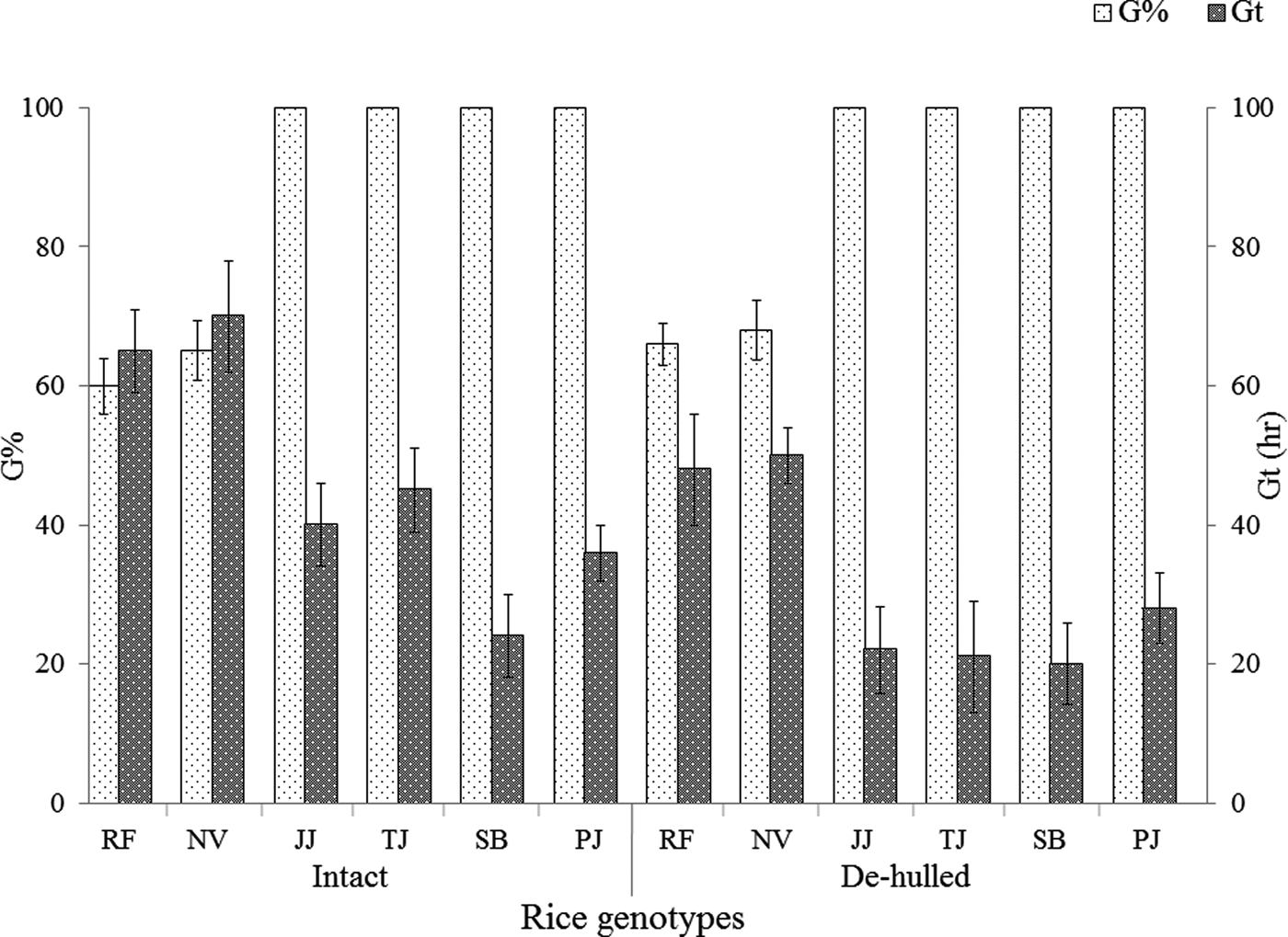
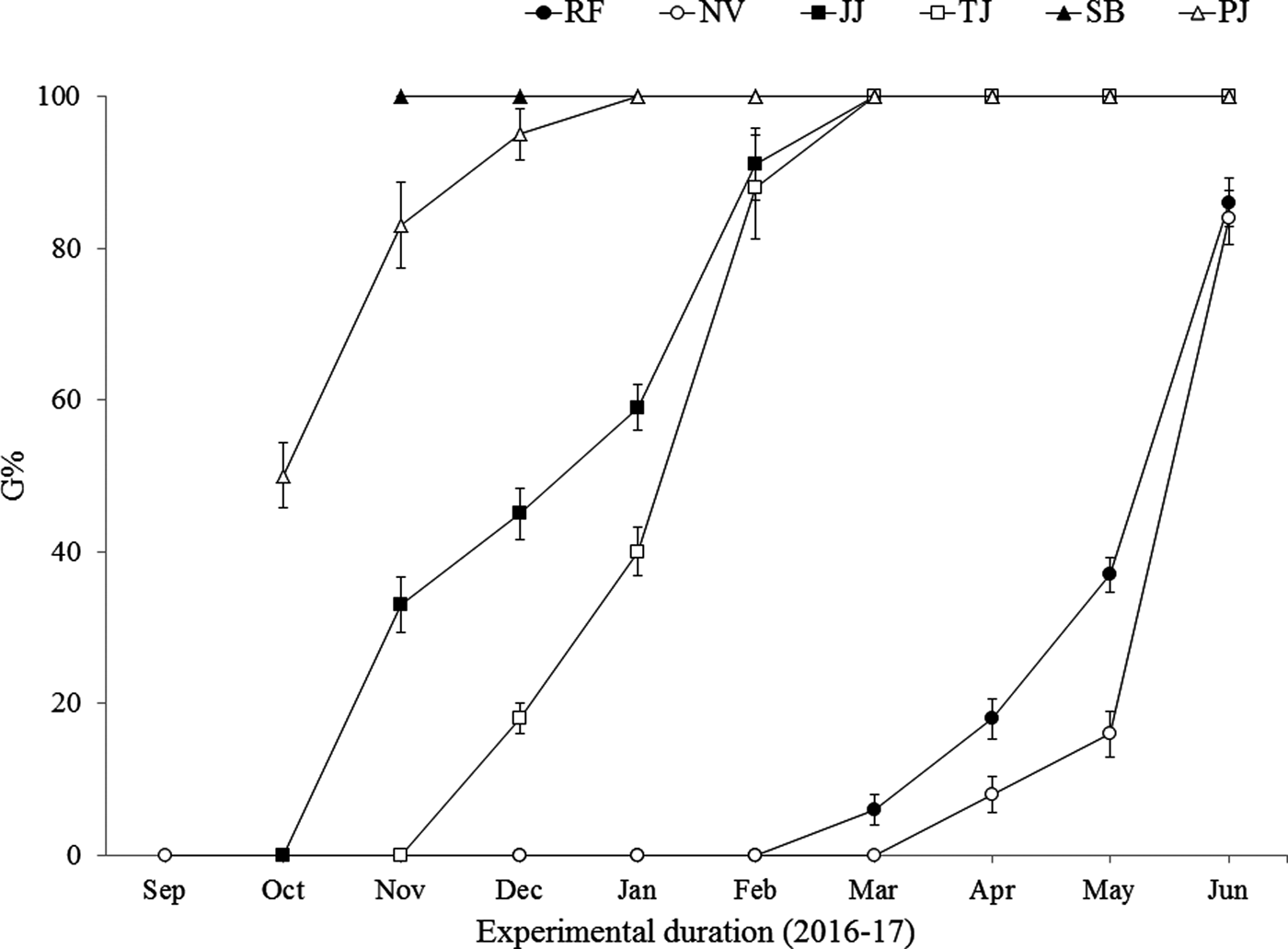
Germination percentage was almost 100% in the semi-dormant and non-dormant cultivars, irrespective of de-hulling treatment imposed (Fig. 1). The percentage was significantly (P < 0·001) lower in the control seeds of dormant varieties and removal of the hull did not improve germination percentage significantly. In contrast, germination time followed the opposite trend, with that for dormant cultivars being longer (at over 60 h) than for semi- and non-dormant cultivars (averaging 40 and 24 h, respectively). De-hulling treatment reduced germination time significantly (P < 0·001) in all cultivars and the effect was most prominent for the semi-dormant seeds. Both semi- and non-dormant seeds germinated within the first 24 h of incubation with water, whereas germination in dormant seeds was delayed by a day. Absence of the mechanical restraint imposed by the hull facilitated rapid stimulation of the dormant embryo for germination in the de-hulled seeds. As germination was recorded when the radicle emerged from the caryopsis, it should be noted that in de-hulled caryopses, the radicle did not have to penetrate the hull, whereas in hulled caryopses the radicle had to pierce through the hull to emerge. Obviously, therefore, de-hulling resulted in earlier evidence of germination, so with regard to the time of germination, this was a detection effect rather than a physiological one. Even though there was a physiological effect, it was masked and hidden by the detection effect. The month-wise germination test confirmed diversity of dormancy release among the six genotypes used (Fig. 2). Dormancy period was short in the non-dormant rice cultivars Samalaibhog and Pooja, which had germinated fully by November. In comparison, traditional cultivars Jayanti Jhuli and TJ-30 exhibited germination >90% by February. In contrast, wild rice species expressed full germination potential after May, which coincided with the beginning of the plant's life-cycle under natural conditions (Fig. 2).
The effect of de-hulling on germination percentage (G%) (left column) and time taken for germination (Gt) (right column) of seeds of different rice genotypes; Dormant O. rufipogon (RF) and O. nivara (NV), Semi-dormant Jayanti Jhuli (JJ) and TJ-30 (TJ) and Non-dormant Samalaibhog (SB) and Pooja (PJ). Data presented are the mean of three replicates; the vertical bars at top of each column represent the ± s.d. values. Absence of bar on any point indicates that the ± s.d. value is too small for presentation. Analyses of data for differences between treatments (intact and de-hulled) and treatments and genotypes are significantly different (P < 0·05) by Duncan's multiple range test (DMRT).

Month-wise distribution of germination percentage (G%) of seeds of different genotypes of rice during the post-harvest period; Dormant O. rufipogon (RF) and O. nivara (NV), Semi-dormant Jayanti Jhuli (JJ) and TJ-30 (TJ) and Non-dormant Samalaibhog (SB) and Pooja (PJ). Data presented are the mean of three replicates and the vertical bars represent the ± s.d. values. Absence of bar on any point indicates that the ± s.d. value is too small for presentation.

Radicle-to-plumule ratio
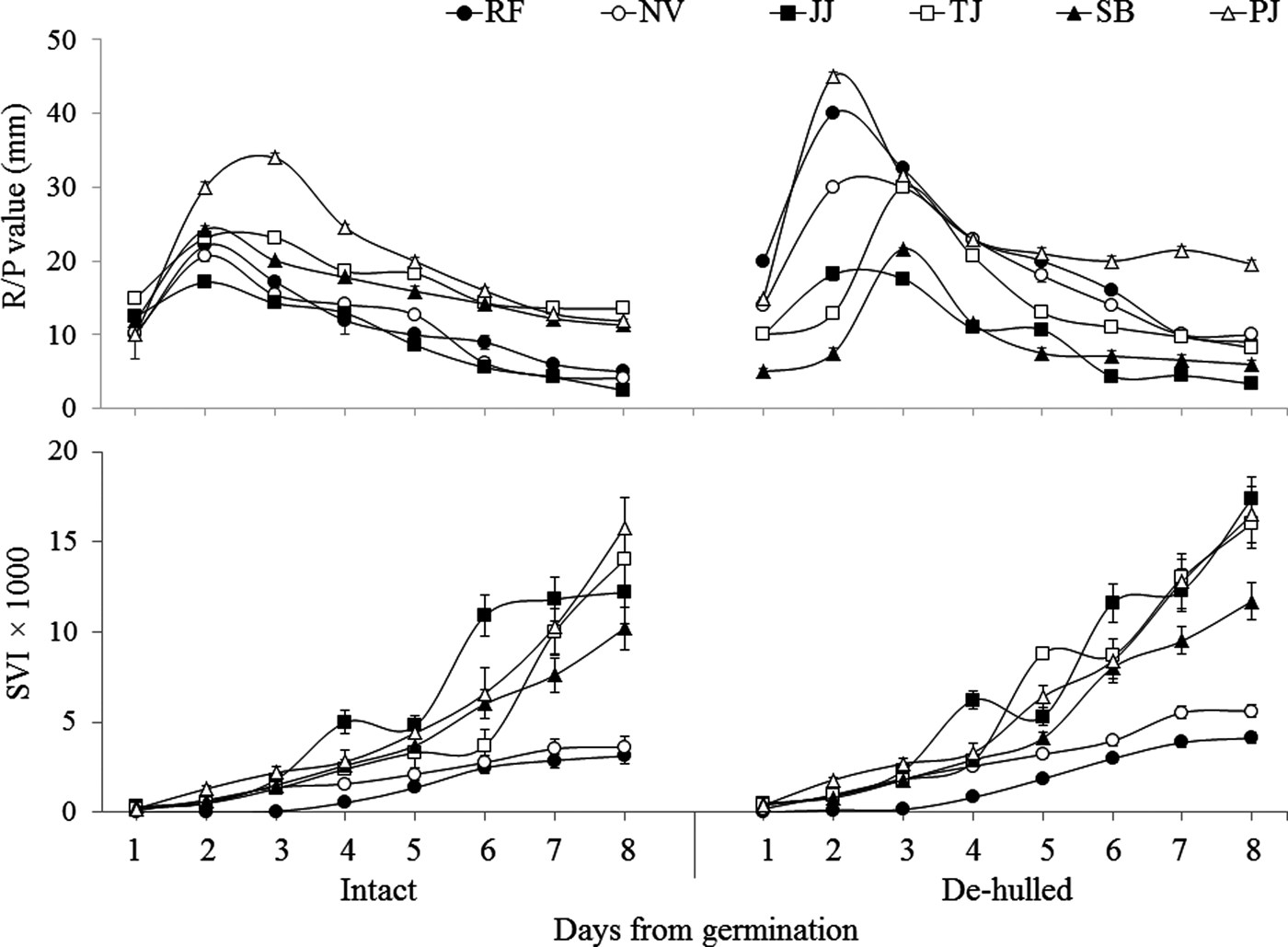
Radicle-to-plumule ratio peaked during the initial period of observation and declined continuously thereafter in the seeds of all Oryza species under control conditions (Fig. 3, upper plots). In the dormant species, the R/P value was lower than that of the semi- or non-dormant cultivars under control conditions. Hull removal increased the R/P value significantly (P < 0·001) during the first 24 h of germination in dormant varieties. In comparison, the treatment was not as effective for semi- and non-dormant cultivars, where the R/P value increased slowly during the first 3 days of treatment before declining later.
The effect of de-hulling on radicle-to-plumule ratio (R/P, upper plots) and seed vigour index (SVI, lower plots) of germinating seeds of different rice genotypes; Dormant O. rufipogon (RF) and O. nivara (NV), Semi-dormant Jayanti Jhuli (JJ) and TJ-30 (TJ) and Non-dormant Samalaibhog (SB) and Pooja (PJ). Data presented are the mean of three replicates and the vertical bars represent ± s.d. values. Absence of bar on any point indicates that the ± s.d. value is too small for presentation.

Seed vigour index
The SVI increased over time after germination in all Oryza species irrespective of de-hulling treatment (Fig. 3, lower plots). The value was low in dormant seeds and relatively high in non-dormant seeds. Semi-dormant cultivars showed intermediate values, both in the control and de-hulled conditions. The de-hulling treatment did not improve SVI in Oryza seeds on most sampling occasions. During the germination of de-hulled grains, the radicle did not have to pierce through the hull and therefore grew immediately, without the lag phase that would otherwise be necessary to emerge from the hull. Although de-hulling shortened the time taken for germination, in the present study this effect was irrelevant for calculation of SVI since the day of germination was counted as day 0; hence, the treatment showed no additional effect on the subsequent growth of seedlings.
Biochemical features
Soluble sugars
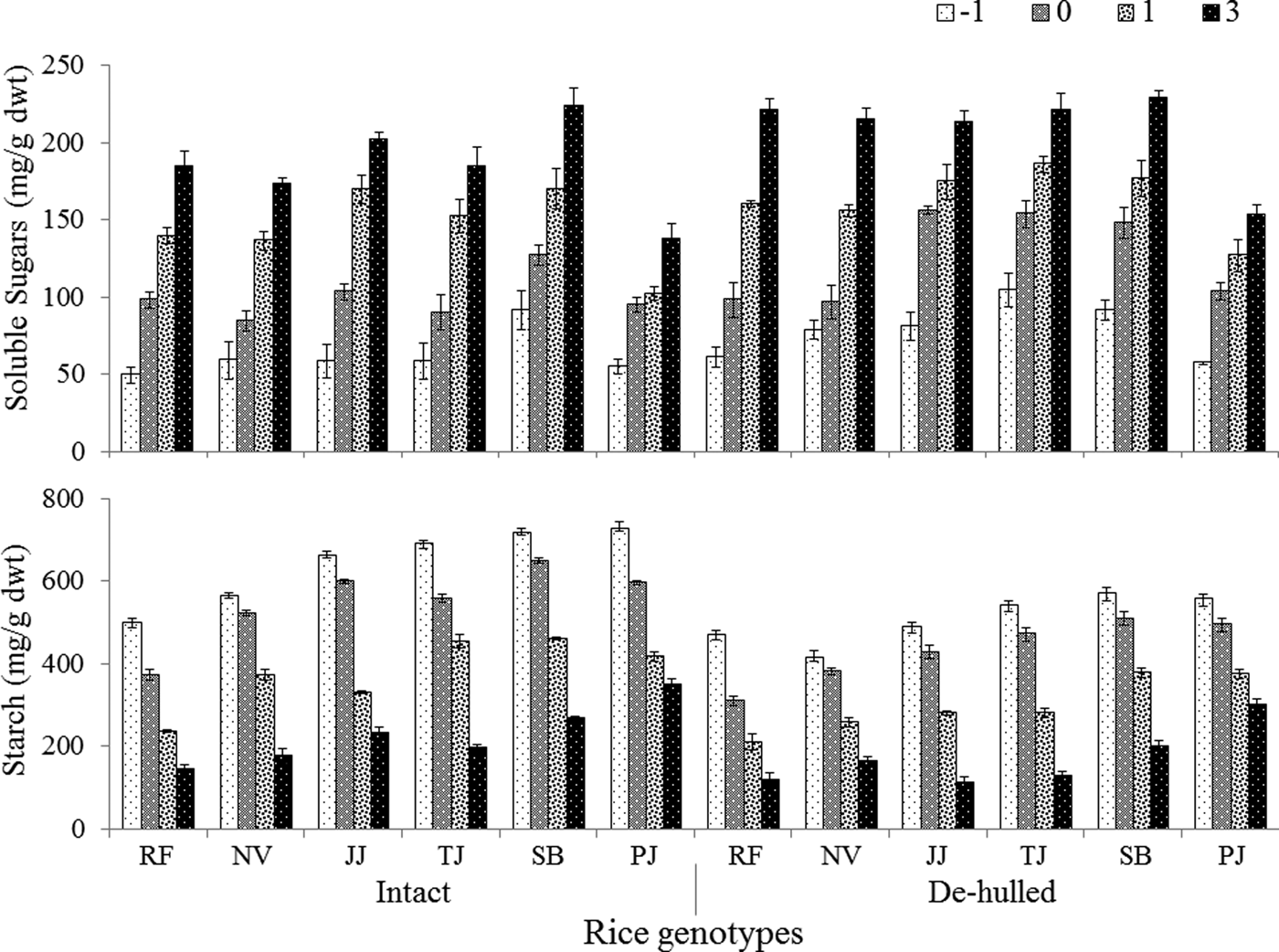
Soluble carbohydrate concentration in the seeds was low on the day before germination and it increased over time after germination in all Oryza species, irrespective of the de-hulling treatment. Dormant species had a low concentration of soluble carbohydrates, while the concentration was high in semi-dormant and non-dormant cultivars, with the exception of Pooja, in both control and de-hulled conditions during the period of germination. De-hulling treatment significantly (P < 0·001) enhanced the soluble sugar concentration in dormant and semi-dormant cultivars, but it was not as effective in non-dormant cultivars (Fig. 4, upper plot).
The effect of de-hulling on soluble sugars (upper plot) and starch (lower plot) concentrations of kernels of seeds of different rice genotypes during the early period of germination (−1, 0, 1, 3 days from germination); Dormant O. rufipogon (RF) and O. nivara (NV), Semi-dormant Jayanti Jhuli (JJ) and TJ-30 (TJ) and Non-dormant Samalaibhog (SB) and Pooja (PJ). Data presented are the mean of three replicates and the vertical bars at the top of each column represent ± s.d. values. Absence of bar on any point indicates that the ± s.d. value is too small for presentation. Analyses of data for differences between different days of germination (−1, 0, +1 and +3) and days of germination and treatments (intact and de-hulled) are significantly different (P < 0·05) by Duncan's multiple range test (DMRT).

Starch concentration
Changes over time in the concentration of starch in germinating seeds followed the opposite trend to that for soluble carbohydrates. Starch concentration was high on the day before germination and declined progressively during germination in seeds of all Oryza species in both de-hulled and control conditions. Starch concentration was low in dormant, high in non-dormant and intermediate in semi-dormant seeds. Removal of the hull significantly (P < 0·001) reduced starch concentration in the kernel one day after imbibition and this effect continued as germination progressed (Fig. 4, lower plot).
Ethylene production
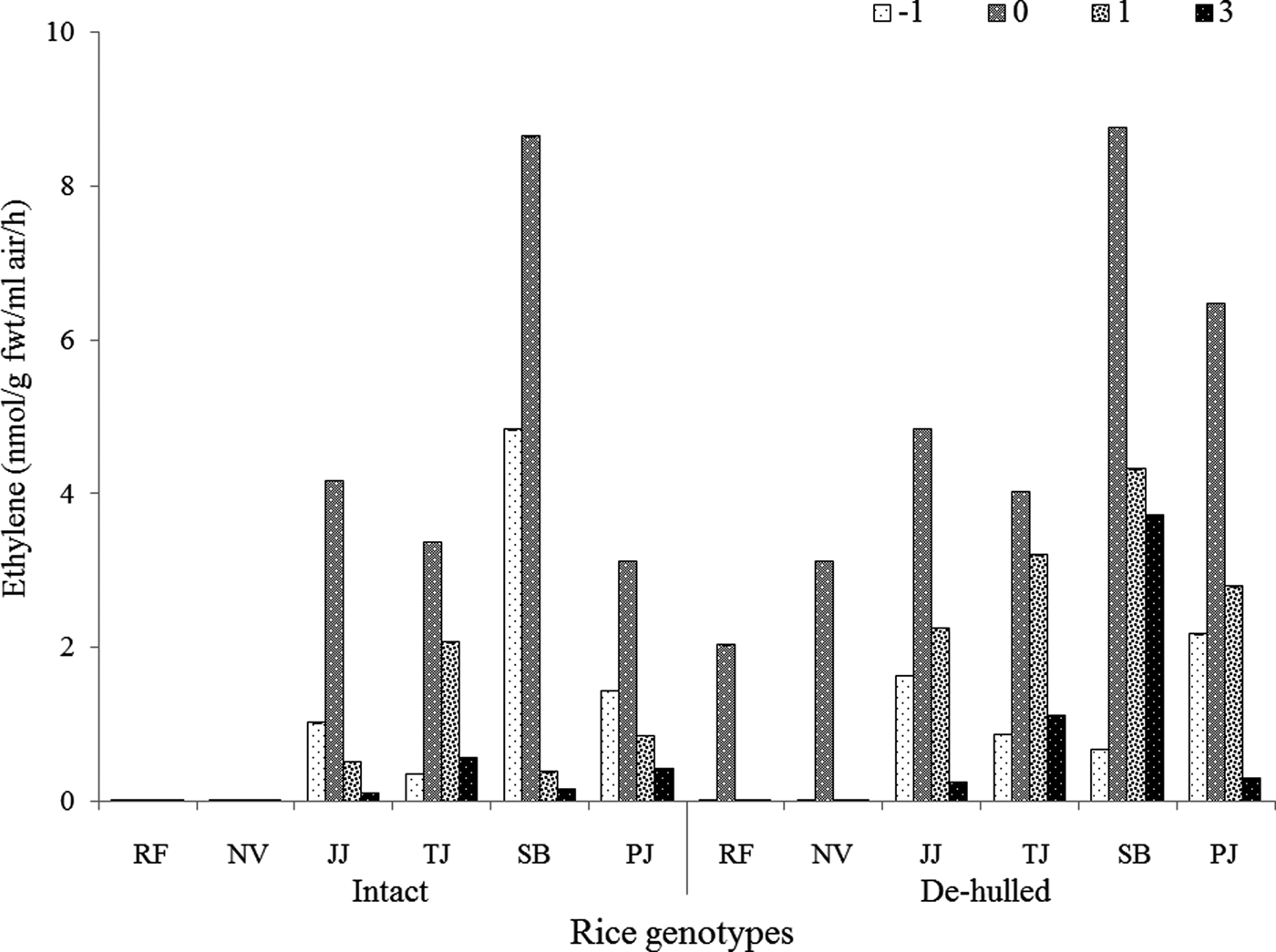
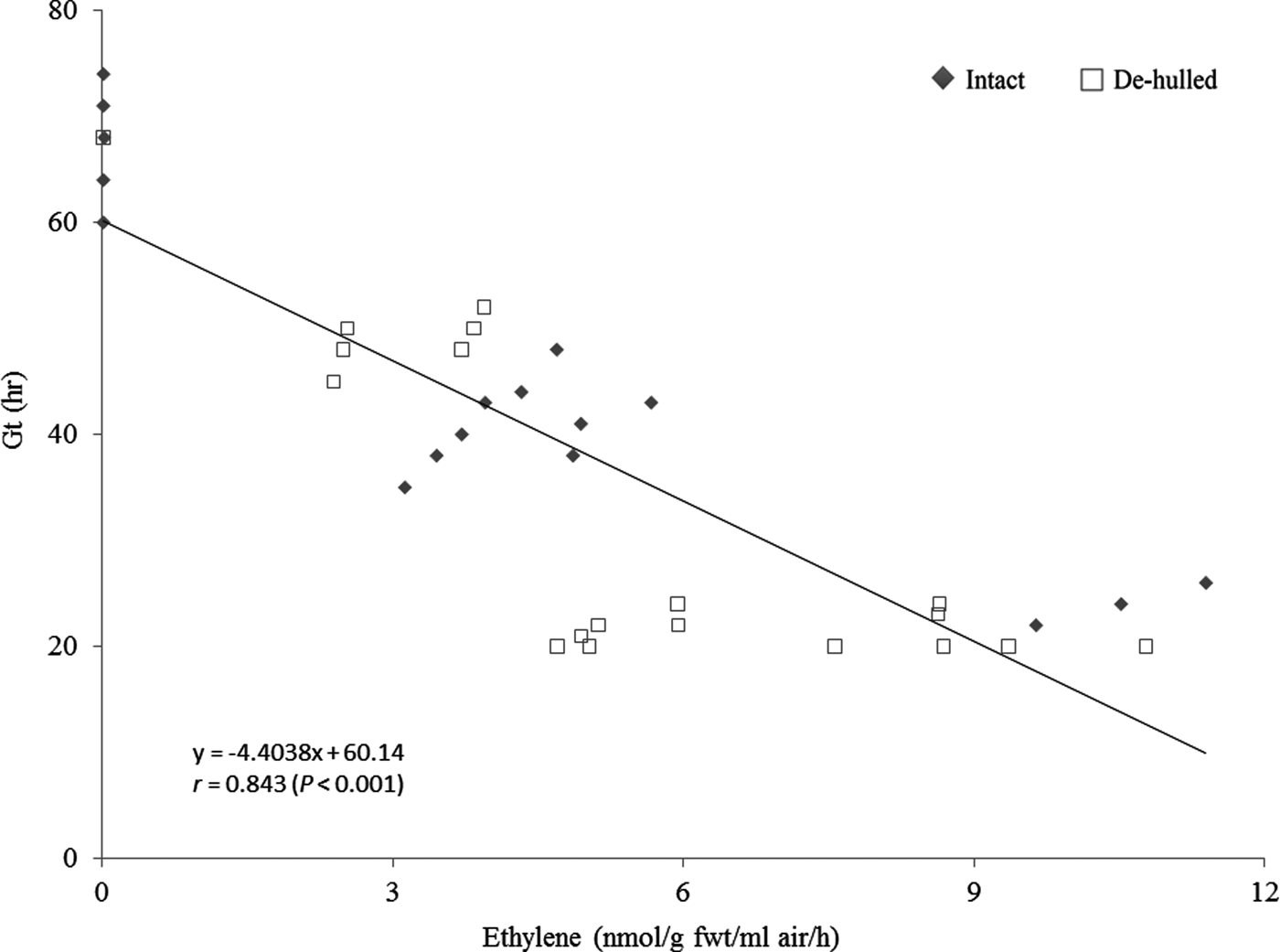
Ethylene production in germinating seeds was low in the dormant wild Oryza species and removal of the hull promoted ethylene production dramatically at day 0 (Fig. 5). In contrast, ethylene production in the other cultivars was initiated one day prior to germination; it culminated at germination and declined sharply thereafter. Under control conditions, the non-dormant cultivar Samalaibhog produced more ethylene than the other semi- and non-dormant cultivars during the initial period of germination. Similar to the dormant Oryza species, removal of the hull promoted ethylene production in semi- and non-dormant cultivars and the effect was highly evident at day 0 of germination, although it was not noticed on other occasions of sampling. On day 0, the level of ethylene production was low in dormant and high in non-dormant seeds, whereas semi-dormant seeds showed intermediate levels. Production of ethylene at germination correlated negatively and significantly (P < 0·001) with germination time of all rice cultivars taken together (Fig. 6).
The effect of de-hulling on ethylene production of seeds of different rice genotypes during the early period of germination (−1, 0, 1, 3 days from germination); Dormant O. rufipogon (RF) and O. nivara (NV), Semi-dormant Jayanti Jhuli (JJ) and TJ-30 (TJ) and Non-dormant Samalaibhog (SB) and Pooja (PJ). Data presented are the mean of three replicates and the vertical bars represent ± s.d. values. Absence of bar on any point indicates that the ± s.d. value is too small for presentation. Analyses of data for differences between different days of germination (−1, 0, +1 and +3) and days of germination and treatments (intact and de-hulled) are significantly different (P < 0·05) by Duncan's multiple range test (DMRT).

Correlation between time taken for germination (Gt) and ethylene production during the early period of germination of seeds (intact-closed symbol and de-hulled-open symbol) of different rice genotypes; Dormant O. rufipogon (RF) and O. nivara (NV), Semi-dormant Jayanti Jhuli (JJ) and TJ-30 (TJ) and Non-dormant Samalaibhog (SB) and Pooja (PJ).

Statistical calculations and correlations
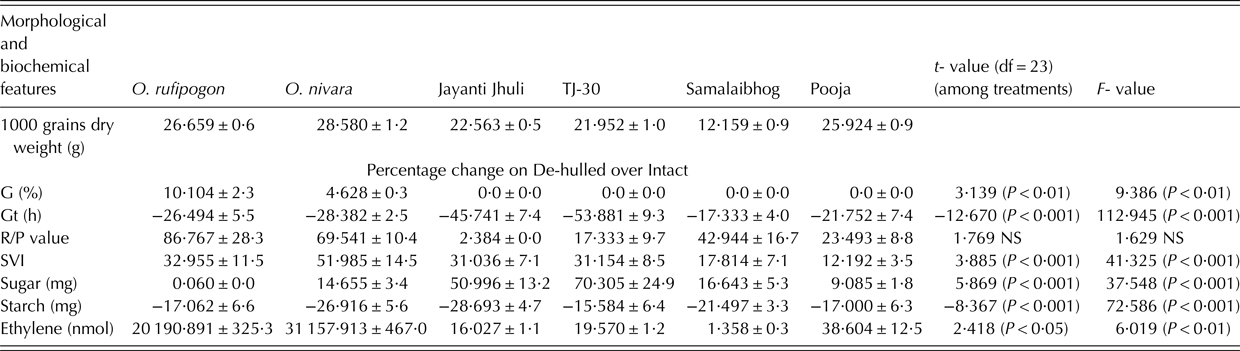
Statistical calculations revealed the diversity of grain weight between seeds of the Oryza species used in the experiment (Table 1). Seed weight was significantly (P < 0·05) higher in the dormant varieties compared with the non-dormant cultivars. Removal of the hull significantly enhanced germination percentage (P < 0·01), SVI (P < 0·001) and soluble sugar concentration (P < 0·001) and negatively correlated with germination time (P < 0·001), ethylene production (P < 0·05) and starch concentration (P < 0·001) of the germinating seeds of the rice varieties used, although the effect was not significant on R/P ratio (Table 1).
The effect of de-hulling on various morphological and biochemical features of different rice genotypes during the period of germination. Data were analysed with t-test and ANOVA

G%, germination percentage; Gt, time taken for germination; R/P value, radicle-to-plumule ratio; SVI, seed vigour index; df, degree of freedom; ±values, standard deviations of three replicates, NS, non-significant.
DISCUSSION
In the present study, germination has been compared in the matured seeds of six rice varieties differing in dormancy level. The diversity in germination percentage, germination time, radicle:plumule ratio and SVI after imbibition of water among the varieties used has confirmed the lingering effects of dormancy induction attained during the period of seed maturation. Seed dormancy is defined as a physiological trait, where the viable seed remains temporarily quiescent for a specific length of time even though environmental conditions for germination are favourable and germination is induced when natural or artificial conditions terminate the restrictive state (Takahashi Reference Takahashi, Tsunoda and Takahashi1984; Simpson Reference Simpson1990; Bewley Reference Bewley1997). Huh et al. (Reference Huh, Hwang, Shin, Nam, Kim and Yoon2013) reported that the transcriptomic profile of the caryopsis during the maturation phase is correlated strongly with establishment of dormancy in rice and differential gene expression levels between the genotypes may account for variation in dormancy. The present investigation precluded the study of physiological or biochemical factors during the period of seed maturation that could be responsible for differences in dormancy of the six genotypes used, but variation in germination response among them has been expressed in the differences of both morphological as well as physiological traits. Compared with the non- or semi-dormant genotypes, dormant genotypes had lower germination percentage and longer germination time. Similarly, SVI and R/P values were poorer in dormant genotypes compared with the other morphological features. According to Black & Bewley (Reference Black and Bewley2000), amyloplasts lose their integrity during seed dehydration in the maturation phase and therefore starch is generically said to be stored in the endosperm as granules embedded in a matrix of protein enclosed by the walls of dead cells of the starchy endosperm. Because germination induces mobilization of stored seed reserves, most prominently the starch stored in amyloplasts, the present study analysed concentrations of both soluble carbohydrates and starch after the seeds were soaked in water. As expected, the concentration of soluble carbohydrates increased and that of starch decreased with progress of germination in all genotypes. However, among the genotypes tested, the pattern of rise and fall in the concentration of the corresponding bio-chemicals during germination were not similar. The seeds of dormant genotypes had low starch reserves, but these were mobilized identically compared to non- or less-dormant genotypes during germination. In contrast, the presence of high concentrations of starch and soluble carbohydrates might have reduced germination time in the non-dormant genotypes. Although it is not appropriate to suggest that low starch content causes seed dormancy, more soluble sugars were present in the non-dormant varieties in the present experiment as a consequence of lower dormancy, which is supportive of causality in rapid seed germination. Additionally, the current study also revealed the pleiotropic relationship that exists between intrinsically produced ethylene with various morphological features of germination and seed reserve mobilization. Ethylene production was triggered when the dry seeds imbibed water and the process of germination was initiated. Actually, it has been shown by Gianinetti et al. (Reference Gianinetti, Laarhoven, Persijn, Harren and Petruzzelli2007) that during rice germination, ethylene evolution never precedes the first visible stage of germination (pericarp splitting), and at that point narrow-sense germination is over. The production of the hormone peaked on the day of radicle protrusion, which coincided with mobilization of assimilates. Germination of the dormant genotypes was linked to lower ethylene production. The results of the present work support the proposition that ethylene production is associated with radicle protrusion and velocity of germination (inverse of germination time).
The de-hulling treatment imposed on the cultivars provided additional evidence in favour of the intangible influence of ethylene in promotion of rice seed germination. De-hulling accelerated morphological parameters such as germination percentage and R/P ratio and reduced germination time. It also advanced physiological parameters such as ethylene production and mobilization of carbohydrate reserves in germinating seeds at the time of radicle protrusion. The rise in concentration of soluble sugars at the cost of reduction of starch could be attributed to the fact that food reserves in the endosperm were used more quickly for embryo growth following removal of the mechanical restraint of external covers like the lemma and palea. This would presumably support the idea that the earlier germination observed after de-hulling really represents a physiological effect (i.e. the hull delays emergence of the radicle from the underlying caryopsis coat and also delays metabolic modifications of the seed) rather than just a detection effect (i.e. emergence of the radicle can be detected earlier in de-hulled kernels only because it is hidden by the hull in intact ones). However, the intrinsic concentration of a cell metabolite is dynamic, being influenced by both supply and demand in consumption; therefore, a change in carbohydrate concentration may not be considered a perfect indicator for germination of seeds. In comparison, a rise in ethylene concentration coincided with promotion of morphological parameters such as germination percentage and R/P values, suggesting its close association with germination. Decrease of germination time with increase of ethylene concentration further confirmed a correlation, supportive of causality. In the present study, hull removal increased germination and ethylene production in seeds of all varieties, but the response was most dramatic in the wild dormant Oryza species. The presence of the hull acting as a physical (Bewley & Black Reference Bewley and Black1994) and/or chemical barrier (Sheshu & Dadlani Reference Sheshu and Dadlani1991) to radicle growth has been discussed in the literature, with a presumption that hull removal facilitates contact with oxygen. The promotion of radicle growth in de-hulled seeds, therefore, could be due to diverse levels of oxygenation in the hulled vs. de-hulled seeds. The effects of oxygen on the radicle and plumule were also reported in early work by Taylor (Reference Taylor1942) and Vlamis & Davis (Reference Vlamis and Davis1943). The present work has added a new dimension to these reports by suggesting that removal of seed-coat-imposed dormancy promotes ethylene production in germinating rice seeds in conjunction with the acceleration of germination. In particular, the de-hulled seeds of less dormant cultivars germinated in the first 24 h of incubation with water and produced an ethylene burst. From the current findings, it may be assumed that adherence of the hull to the caryopsis in dormant varieties could be stronger than in non-dormant genotypes. Tight packing in the hull might have precluded ethylene production after incubation in water and physical removal of the structure gave a boost to ethylene evolution as well as germination, i.e. reduction of germination time. Bewley (Reference Bewley1997) reported that entry of water during germination into a dry seed is tri-phasic; uptake is very rapid in the first phase, followed by a plateau in the second and lastly, an exponential increase in the third phase, coinciding with radicle emergence. In the present study, ethylene evolution was initiated when the dry seeds most likely imbibed water on day −1 (incubation period) and reached climax on day 0, i.e. the time of radicle protrusion. This observation pointed to the presence of a lag period before germination; during this period, rupturing of the caryopsis coat is initiated for complete emergence of radicle at germination. A simple reduction in the lag time for imbibition (Heydecker & Coolbear Reference Heydecker and Coolbear1977; Brocklehurst & Dearman Reference Brocklehurst and Dearman1983) by de-hulling promoted germination of the seeds in all six genotypes used in the present study. Ethylene production might have continued to increase as the rupture widened, until emergence of the radicle at germination, and declined thereafter. Similarly, Corbineau et al. (Reference Corbineau, Xia, Bailly and El-Maarouf-Bouteau2014) stated that ethylene production in germinating seeds coincides with radicle protrusion in several plants, and the current observation in rice confirms this coincidence. The dormant rice varieties had poor seed vigour, because ethylene production was restricted by the hull. In the present study, removal of the hull might have facilitated easy rupture of the caryopsis coat, boosting ethylene production and seed germination. Ethylene has an antagonistic effect on ABA production, allowing a favourable response for GA-induced growth of the embryonic axis (Corbineau et al. Reference Corbineau, Xia, Bailly and El-Maarouf-Bouteau2014). This effect was evident in the present study because the temporal enhancement of ethylene production coincided with a similar rise in soluble carbohydrate concentration and gradual reduction in starch concentration. The concentration of soluble carbon metabolites might have increased to sustain seed vigour.
In conclusion, the present study has identified the importance of the lemma and palea in coordinating seed germination of rice, linking it to ethylene production. It is known that the palea locks into the lemma to provide a close-fitting enclosure (Lombardo & Yoshida Reference Lombardo and Yoshida2015) which protects the caryopsis inside the caryopsis coat. Gianinetti et al. (Reference Gianinetti, Laarhoven, Persijn, Harren and Petruzzelli2007) proposed that ethylene stimulates growth of the nascent seedling but does not influence dormancy or germination inception (the time germination starts), although both phenomena are intricately related. In the present work, germination of the dormant cultivars was poor because they produced less ethylene and ethylene production was associated with radicle protrusion, mobilization of reserve carbohydrates and speed of germination (inverse of germination time). De-hulling removed the mechanical restraints of the external covers and promoted germination, implying that the hull not only delays radicle emergence, but also the metabolic processes associated with germination. Hence, the results of the current work indicate that ethylene production starts with rupture of the caryopsis coat and culminates with radicle emergence. The hormone has a physiological significance for seed dormancy, a detailed study of which will be of immense importance to distinguish genotypes for high and low tendencies for dormancy. It is presumptive that a stronger binding of lemma and palea to the caryopsis in dormant genotypes reduced oxygen diffusion to the enclosure, down-regulating ACC oxidase activity for ethylene production in Yang's cycle. This hypothesis is partially supported by Hayashi & Hidaka (Reference Hayashi and Hidaka1979), although some deeply dormant rice species do not show significant improvement of germination following de-hulling and priming with hormones such as GA and kinetin improve germination significantly (Miyoshi & Sato Reference Miyoshi and Sato1997). From the findings of the current work, it is assumed that a structurally weaker/thinner hull fitting the caryopsis less tightly in non-dormant or less dormant cultivars might have permitted easier protrusion of the radicle and thereby facilitated an oxygenic environment for boosting ethylene production.
JKB and EK acknowledge financial support through RGNF scheme and major research project given by the University Grants Commission, New Delhi. JKB laboratory and field work, data analysis, EK concept, experimental design, communication, SKP genealogy of genotypes, PKM manuscript writing and revision.