Adolescence is characterized by a dramatic escalation in rates of risky behaviors. Illicit substance use specifically increases markedly over this developmental period, with rates of alcohol and drug use nearly tripling between middle and late adolescence (Johnston et al., Reference Johnston, Miech, O'Malley, Bachman, Schulenberg and Patrick2018). Early onset and steep elevations of substance use during adolescence are associated with myriad negative outcomes, including the development of substance use disorders (Grant & Dawson, Reference Grant and Dawson1997), as well as physical health problems (McGinnis & Foege, Reference McGinnis and Foege1999), injury (Sindelar, Barnett, & Spirito, Reference Sindelar, Barnett and Spirito2004), and early mortality (Clark, Martin, & Cornelius, Reference Clark, Martin and Cornelius2008). Thus, identifying predictors of, and pathways to, escalations in substance use across this vulnerable developmental period is critical for effectively targeting prevention approaches and improving adolescent health outcomes.
Exposure to maternal depression has been implicated as an important predictor of adolescent substance use (Flouri, Ruddy, & Midouhas, Reference Flouri, Ruddy and Midouhas2017; Lamis, Malone, Lansford, & Lochman, Reference Lamis, Malone, Lansford and Lochman2012). For instance, research utilizing prospective, longitudinal approaches has demonstrated that rates of maternal depression predict later adolescent alcohol (Lieb, Isensee, Höfler, Pfister, & Wittchen, Reference Lieb, Isensee, Höfler, Pfister and Wittchen2002) and illicit substance use (Gallerani, Garber, & Martin, Reference Gallerani, Garber and Martin2010; Kessler, Reference Kessler2003; Kessler et al., Reference Kessler, Berglund, Demler, Jin, Koretz, Merikangas and Wang2003; Lieb et al., Reference Lieb, Isensee, Höfler, Pfister and Wittchen2002; Weissman et al., Reference Weissman, Pilowsky, Wickramaratne, Talati, Wisniewski and Fava2006). Moreover, one study that followed two groups of children of depressed and nonpsychiatric comparison parents found that over a 20-year period, offspring of depressed parents were more than twice as likely to meet clinical criteria for alcohol dependence and more than six times as likely to be diagnosed with drug dependence (Weissman et al., Reference Weissman, Pilowsky, Wickramaratne, Talati, Wisniewski and Fava2006). Despite these strong prospective associations, however, specific mechanisms linking maternal depression to subsequent adolescent substance use remain unclear.
The role of delay discounting
One possible consequence of maternal depression is increased rates of adolescent delay discounting. Indeed, some researchers theorize that maternal symptoms of depression may generate instability within the family by increasing the number of negative life events, disrupting relationships, and impacting families’ socioeconomic status (Davies & Cummings, Reference Davies and Cummings1994; Downey & Coyne, Reference Downey and Coyne1990). For instance, families of mothers who are depressed evidence higher rates of familial conflict, dysfunction within the parent–child relationship, and parental distress (McCue Horwitz, Briggs-Gowan, Storfer-Isser, & Carter, Reference McCue Horwitz, Briggs-Gowan, Storfer-Isser and Carter2007).
Delay discounting, defined as the devaluation of rewards as a function of the delay of their receipt, has also been found to be associated with exposure to unstable environmental contexts. Specifically, an emergent literature has demonstrated that children who grow up in disadvantaged neighborhoods, characterized by higher rates of instability and scarcity, are more likely to choose smaller rewards that are immediately available relative to larger rewards that are delayed (Jachimowicz, Chafik, Munrat, Prabhu, & Weber, Reference Jachimowicz, Chafik, Munrat, Prabhu and Weber2017). For instance, related literature suggest that individuals who grow up in poverty or experience significant fluctuations in income are more likely to evidence higher rates of discounting (Bickel, Wilson, Chen, Koffarnus, & Franck, Reference Bickel, Wilson, Chen, Koffarnus and Franck2016; Jachimowicz et al., Reference Jachimowicz, Chafik, Munrat, Prabhu and Weber2017; Kirby et al., Reference Kirby, Godoy, Reyes-Garcıa, Byron, Apaza, Leonard and Wilkie2002). These findings support other research that posits natural selection processes favor individuals with a tendency to select proximate rewards in highly variable and erratic environments (Belsky, Steinberg, & Draper, Reference Belsky, Steinberg and Draper1991; Griskevicius, Tybur, Delton, & Robertson, Reference Griskevicius, Tybur, Delton and Robertson2011). Stated differently, unstable environments may promote an individual's tendency to focus on his or her immediate needs and deter longer-term planning when the future is perceived as uncertain.
The impact that this environmental uncertainty has on children has also been demonstrated in research from a related literature on delay of gratification. In one experimental study, a sample of 4-year-olds was randomized to interact with researchers who behaved in either a predictable or unpredictable manner (Kidd, Palmeri, & Aslin, Reference Kidd, Palmeri and Aslin2013). They were then given the opportunity to eat one marshmallow right away or two marshmallows following a brief delay, during which time the researcher would return with the second marshmallow. Children exposed to the unpredictable researcher were more likely to eat the single marshmallow immediately, suggesting that even young children make decisions about the perceived likelihood of a potential outcome based on the stability of their current environment. Considered together, it may be that mothers’ depressive symptoms create an unstable environmental context that promotes children's tendency to discount delayed rewards. Alternatively, it is possible that these relations are attributable to intergenerational transmission of delay discounting and depressive symptoms, which may covary in both mothers and their children. In other words, mothers with elevated depressive symptoms may also be more likely to have higher rates of delay discounting that confers risk for increases in adolescents’ own rates of delay discounting; or, maternal depressive symptoms may increase rates of adolescents’ depression which, in turn, may be associated with higher rates of delay discounting. Indeed, research has demonstrated a small-to-medium association between delay discounting and major depressive disorder (Amlung et al., Reference Amlung, Marsden, Holshausen, Morris, Patel, Vedelago and McCabe2019), suggesting that individuals with higher rates of discounting are more likely to be diagnosed with this mood disorder. Further, research suggests strong heritability of delay discounting, specifically during middle adolescence (Anokhin, Golosheykin, Grant, & Heath, Reference Anokhin, Golosheykin, Grant and Heath2011).
A large extant of literature has also demonstrated the role delay discounting plays in both the onset and escalation of substance use. Delay discounting is thought to be particularly relevant to alcohol and drug use, because the reinforcing properties of substances tend to be immediate (e.g., intoxication, perceived social benefits), while the relative rewards associated with sobriety are typically delayed (e.g., school attendance leading to graduation, or avoidance of substance-related physical health problems). Elevated, more problematic, rates of delay discounting are associated with self-reported earlier initiation of tobacco, alcohol, and drug use (Cheong, Tucker, Simpson, & Chandler, Reference Cheong, Tucker, Simpson and Chandler2014; Dom, D'haene, Hulstijn, & Sabbe, Reference Dom, D'haene, Hulstijn and Sabbe2006; Kim-Spoon, McCullough, Bickel, Farley, & Longo, Reference Kim-Spoon, McCullough, Bickel, Farley and Longo2015; Kollins, Reference Kollins2003; Reynolds & Fields, Reference Reynolds and Fields2012; Richardson & Edalati, Reference Richardson and Edalati2016). Moreover, higher rates of discounting predict increases in both smoking (Audrain-McGovern et al., Reference Audrain-McGovern, Rodriguez, Epstein, Cuevas, Rodgers and Wileyto2009) and alcohol use (Fernie et al., Reference Fernie, Peeters, Gullo, Christiansen, Cole, Sumnall and Field2013; Khurana et al., Reference Khurana, Romer, Betancourt, Brodsky, Giannetta and Hurt2013; Wang, Pandika, Chassin, Lee, & King, Reference Wang, Pandika, Chassin, Lee and King2016) across adolescence, pointing to its central role in setting early substance use trajectories. However, this literature has been largely limited by its reliance on cross-sectional methods (Kollins, Reference Kollins2003; Reynolds & Fields, Reference Reynolds and Fields2012; Richardson & Edalati, Reference Richardson and Edalati2016), which may introduce bias (Hofer & Sliwinski, Reference Hofer, Sliwinski, Birren, Schaie, Abeless, Gatz and Salthouse2006) and prevent understanding the temporal ordering of these constructs. Further, little attention has been paid to identifying early predictors of adolescents’ delay discounting (such as maternal depressive symptoms and/or maternal delay discounting) and their subsequent links to adolescent substance use.
Current study
Despite conceptual links between maternal depressive symptoms and offspring delay discounting, we are unaware of any research that has examined delay discounting as a potential pathway linking maternal depression to subsequent adolescent substance use. The present longitudinal study proposed to evaluate several aspects of these relations, including whether: (a) maternal depressive symptoms are associated with changes in the development of adolescent delay discounting above and beyond the impact of the mothers’ own rates of delay discounting, family socioeconomic status, and adolescents’ depressive symptoms; and (b) these changes in the adolescents’ delay discounting mediate the relation between maternal depressive symptoms and escalations in youth substance use across a 6-year period, from middle to late adolescence. We hypothesized that higher levels of maternal depressive symptoms would predict increases in rates of adolescent delay discounting, which, in turn, would predict steeper elevations in youth substance use.
Methods
Participants and procedures
Youth and their mothers included in the current study were drawn from a larger longitudinal study examining predictors of risky behaviors across adolescence. Parent–child dyads were recruited from a large metropolitan area using media outreach along with fliers and posters displayed at schools, community centers, and libraries. Families were eligible to participate if parents and their children were proficient in English and reported an ability to participate in annual data collection. All measures were administered in a university laboratory setting and adolescents were compensated up to $40 for completing assessment measures. Study procedures were approved through the University of Maryland Institutional Review Board and all participants provided informed consent before taking part in any portion of the research. Parents and adolescents were informed that all data would be kept confidential to the greatest extent possible and that parents would not be informed if adolescents reported using substances.
Participants in the original sample were recruited when youth were early adolescents (M age = 11.00, SD age = 0.81) and took part in annual assessments. Because rates of substance use rise precipitously across middle to late adolescence, and measures of delay discounting were not included in the first two waves of data collection, all analyses were conducted on Waves 3 through 8. Of the original sample of 277 adolescents recruited for the first data collection, 247 participated in the third wave, and 233, 213, 193, 152, and 78 participated in Waves 4 through 8, respectively. Data collection waves were relabeled as Time 1–6, below, for clarity. At Time 1, adolescents were, on average, in the 8th grade, ranging in age from 11 to 15 years (M age = 13.06, SD age = 0.89), and were 56.4% male. Reflective of the urban environment from which the adolescents were drawn from, 52.7% of the sample identified as White, 37.9% as Black, and 9.4% identifying as “other race/ethnicity.” The sample was also diverse with regard to family income, ranging from $0 to $325,000 (M income = $103,187, SD income = $55,832).
Measures
Delay discounting
The Monetary Choice Questionnaire (MCQ; Kirby, Petry, & Bickel, Reference Kirby, Petry and Bickel1999) was administered to both adolescents and their mothers at Time 1 and Time 2. Participants were asked to indicate their preference on 27 binary-choice items between a smaller, immediately available monetary reward (e.g., $15 today) or a larger, delayed reward (e.g., $35 in 13 days). Each item corresponds to a different discount rate, with delays ranging from 7 to 186 days. The final pattern of choices was used to calculate a discounting index, k (Mazur, Reference Mazur, Commons, Mazur, Nevin and Rachlin1987). The k value represents an estimated parameter that is greater for individuals who discount the value of future rewards and, therefore, prefer immediate rewards. As the distribution of k is typically skewed, a natural log transformation is used to normalize the distribution and allow for parametric analyses. Though the MCQ was originally developed and validated for adults (Kirby et al., Reference Kirby, Petry and Bickel1999), it has demonstrated validity in adolescent samples (Anokhin, Golosheykin, & Mulligan, Reference Anokhin, Golosheykin and Mulligan2015; Audrain-McGovern et al., Reference Audrain-McGovern, Rodriguez, Epstein, Cuevas, Rodgers and Wileyto2009; Hendrickson & Rasmussen, Reference Hendrickson and Rasmussen2017).
Adolescent substance use index
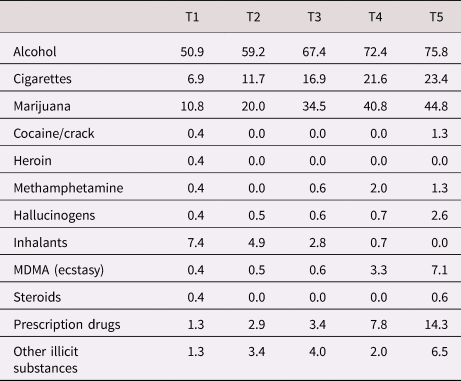
A composite of the number of illicit substances a participant used over the past year was created from a modified version (Aklin, Lejuez, Zvolensky, Kahler, & Gwadz, Reference Aklin, Lejuez, Zvolensky, Kahler and Gwadz2005) of the Youth Risk Behavior Surveillance System (YRBSS; Eaton et al., Reference Eaton, Kann, Kinchen, Shanklin, Ross, Hawkins and Wechsler2008). Participants completed the measure annually over a 6-year period. At each timepoint, they were asked to report their use of each of the following substances: alcohol, cigarettes, marijuana, cocaine/crack, heroin, methamphetamine, hallucinogens, aerosol cans/huffing materials, ecstasy, steroids, prescription medications, or other drugs, rated on a scale from (0) zero to (5) almost every day or more. For the current study, an index of the number of illicit substances used was created by summing all drug and alcohol items for which an adolescent reported using at least one or more times over the past year. Similar approaches have been used to index problematic substance use, suggesting this approach is a valid indicator in adolescents (Felton, Kofler, Lopez, Saunders, & Kilpatrick, Reference Felton, Kofler, Lopez, Saunders and Kilpatrick2015; Kirisci, Vanyukov, Dunn, & Tarter, Reference Kirisci, Vanyukov, Dunn and Tarter2002). The YRBSS has demonstrated convergent validity among youth on measures of dating violence, aggression, and suicidal behaviors (Belshaw, Siddique, Tanner, & Osho, Reference Belshaw, Siddique, Tanner and Osho2012; Ferguson & Meehan, Reference Ferguson and Meehan2010), co-occurring risky health behaviors (Dowdell & Santucci, Reference Dowdell and Santucci2004; Pena, Matthieu, Zayas, Masyn, & Caine, Reference Pena, Matthieu, Zayas, Masyn and Caine2012), and disordered eating and substance use (O'Connor et al., Reference O'Connor, Lee, Mehta, Thompson, Bhargava, Carlson and Stevens2015; Pisetsky, Chao, Dierker, May, & Striegel-Moore, Reference Pisetsky, Chao, Dierker, May and Striegel-Moore2008). Percentages of adolescents endorsing use of each substance are reported, by wave, in Table 1.
Percentage of youth reporting using a substance over the previous year

Maternal depressive symptoms
The Center for Epidemiologic Studies Depression Scale (CES-D; Radloff, Reference Radloff1977) was administered to mothers to assess current maternal depressive symptoms at Time 1. The CES-D is a 20-item self-report questionnaire that asks about depression symptomology in the past week, including “I felt sad” and “I thought my life had been a failure.” Each item is scored from 0 (rarely or none of the time) to 3 (most or almost all the time) and final scores range from 0 to 60, with higher scores indicating greater depressive symptomology. The CES-D has been found to be valid and reliable across a variety of populations (Radloff, Reference Radloff1977; Runeson, Tidemalm, Dahlin, Lichtenstein, & Långström, Reference Runeson, Tidemalm, Dahlin, Lichtenstein and Långström2010; Yu, Li, Cuijpers, Wu, & Wu, Reference Yu, Li, Cuijpers, Wu and Wu2012; Zhang, Sun, Kong, & Wang, Reference Zhang, Sun, Kong and Wang2012). The measure demonstrated strong reliability in the current sample (coefficient alpha = .87). Using a standard cut-off of 16, 17.8% of the sample were at or over this threshold, indicating these individuals were at risk for Major depressive disorder.
Adolescent depressive symptoms
The Revised Children's Anxiety and Depression Scale (RCADS; Chorpita, Yim, Moffitt, Umemoto, & Francis, Reference Chorpita, Yim, Moffitt, Umemoto and Francis2000) depression subscale was administered to adolescents at Time 1. The depression subscale consists of ten items that asks the participant to rate how often each of the items happen to them. Example items include: “I feel sad or empty” and “I feel worthless.” Responses were recorded on a 4-point rating scale ranging from (0) never to (3) always. The RCADS has demonstrated strong validity in assessing anxiety and depression in children (Chorpita et al., Reference Chorpita, Yim, Moffitt, Umemoto and Francis2000) and adolescents (Piqueras, Martín-Vivar, Sandin, San Luis, & Pineda, Reference Piqueras, Martín-Vivar, Sandin, San Luis and Pineda2017; Ross et al., Reference Ross, Roeltgen, Kushner, Zinn, Reiss, Bardsley and Tartaglia2012). In the current study, the measure demonstrated adequate internal reliability (coefficient alpha = .84).
Maternal marijuana use
The current dataset contained only a single item (designed specifically for this study) that assessed one aspect of maternal substance use: marijuana use. Mothers of participants were asked to report “About how often did you smoke marijuana in the past 12 months?” Response options included: never, one time, monthly or less, 2–4 times a month, 2–3 times a week, and 4 or more times a week.
Family socioeconomic status
Family socioeconomic status was estimated by dividing the z-score of mother-reported annual family income by the number of dependents in the household (in line with federal guidelines for determining family-level poverty).
Data analytic approach
A series of structural equation models (SEMs) were used to examine each of our hypotheses. All analyses were conducted using Mplus 6.0 (Muthén & Muthén, Reference Muthén and Muthén2010) and maximum likelihood (ML) estimation. ML is robust to nonnormally distributed observations and estimates missing data for all endogenous variables. However, because 62 participants were missing data on at least one exogenous variable, only 185 participants were included in the final models.
In order to evaluate Hypothesis 1, we created a model in which maternal depressive symptoms at Time 1 predicted adolescent's delay discounting at Time 2, controlling for Time 1 delay discounting and youth demographic factors (sex, grade, and race/ethnicity). In order to ensure that any relation was due to the impact of maternal depressive symptoms specifically, maternal rates of delay discounting, maternal marijuana use, family socioeconomic status, and adolescent depressive symptoms (all measured at baseline) were added as additional predictors, and their impact on changes in adolescent discounting was also evaluated.
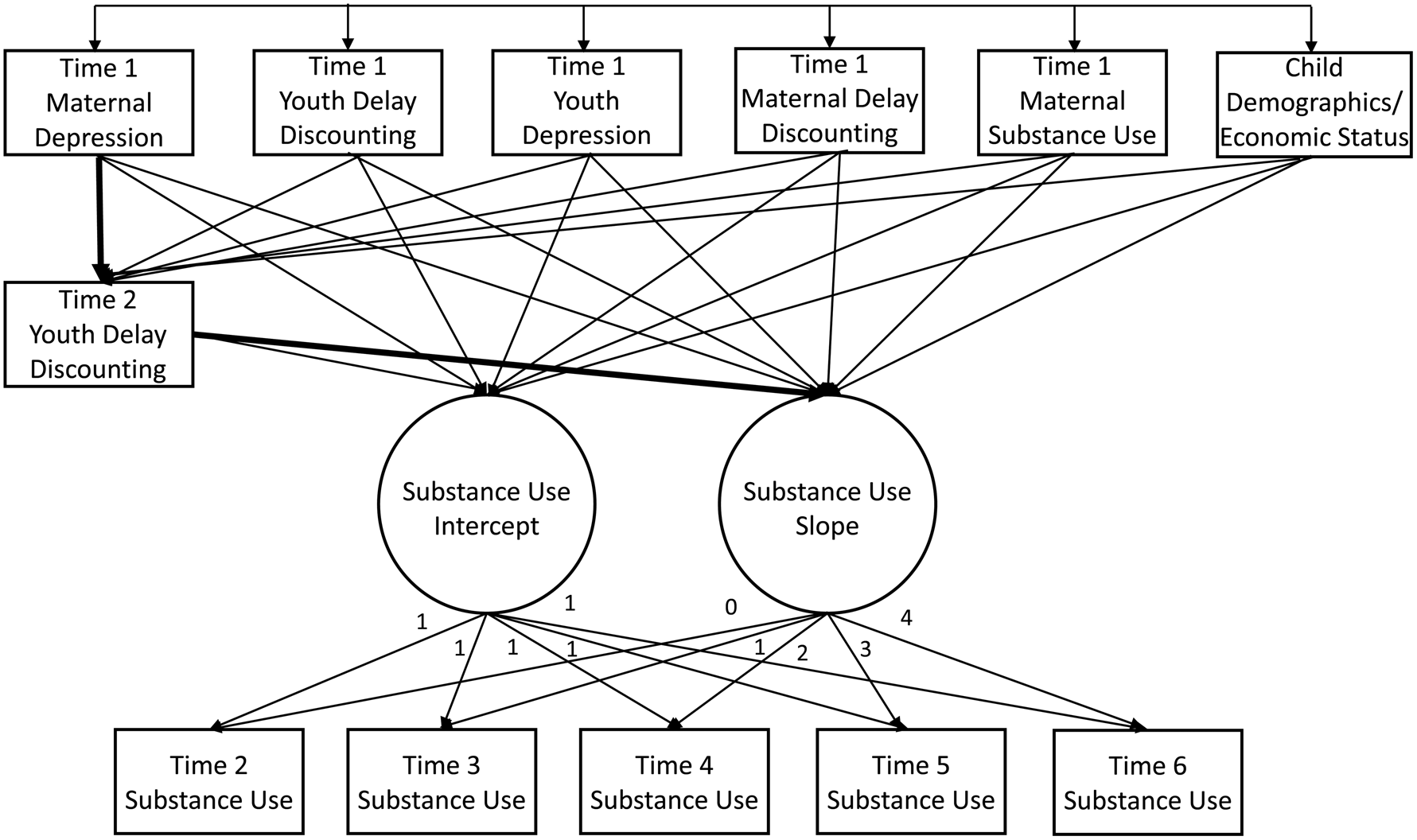
We then examined changes in adolescent delay discounting from Time 1 to Time 2 as a predictor of the trajectory of substance use from Time 2 to Time 6. Latent growth modeling (LGM) was used to examine predictors of the trajectory of adolescent substance use across time. LGM is a special case of SEM and allows for the examination of multiple waves of data to estimate a latent intercept and slope factor, reflecting baseline levels and change of time in rates of substance use. Models are estimated by constraining loadings from the latent intercept and slope factor to the manifest measure of adolescent substance use at each wave. All pathways from the intercept to measures of substance use were constrained to be 1.0, while pathways from the latent slope factor to each measure of substance use were constrained to be 0.0, 1.0, 2.0, 3.0, and 4.0, respectively, reflecting a linear trajectory of use over time. Significant intercept and slope factor means indicate that these estimates statistically differ from zero, while significant variances suggest important individual differences around these estimates and support the inclusion of predictors of these differences.
Model fit was determined by examining the χ2 statistic, the comparative fit index (CFI), the root mean square error of approximation (RMSEA), and the standardized root mean square residual (SRMR). Standard criteria suggest that nonsignificant values of the χ2, and estimates above .90 for the CFI and below .08 for the RMSEA and SRMR indicate acceptable fit (e.g., Bentler & Bonett, Reference Bentler and Bonett1980; Hu & Bentler, Reference Hu and Bentler1999).
In order to examine Hypothesis 2, we first evaluated an unconditional LGM of adolescent substance use from Time 2 to Time 6. Once a good fitting model was determined, we added both Time 2 adolescent delay discounting and Time 1 maternal depressive symptoms to the model, controlling for Time 1 adolescent and maternal delay discounting, Time 1 adolescent depressive symptoms, and demographic factors that have been found to be associated with rates of substance use, including sex, grade, and race/ethnicity (Swendsen et al., Reference Swendsen, Burstein, Case, Conway, Dierker, He and Merikangas2012). In order to ensure that any relations were not owing to confounds, such as income levels or mothers’ own substance use, we also controlled for Time 1 maternal marijuana use and family socioeconomic status. Consistent with the approach detailed in Hussong, Curran, and Chassin (Reference Hussong, Curran and Chassin1998), we then estimated the indirect path from Time 1 maternal depressive symptoms to the slope of adolescent substance use via Time 2 adolescent delay discounting. The statistical significance of the indirect effect was evaluated by creating a 95% bootstrapped confidence interval around the estimate, as recommended by Preacher and Hayes (Reference Preacher and Hayes2008). An indirect effect with a confidence interval that does not include zero is considered statistically significant.
Results
Preliminary analyses
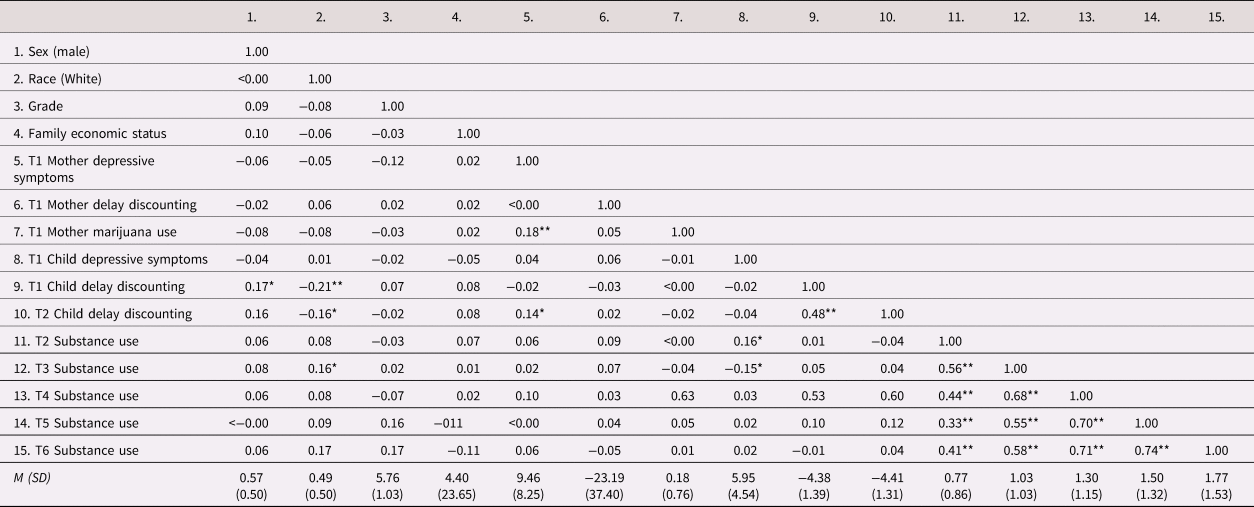
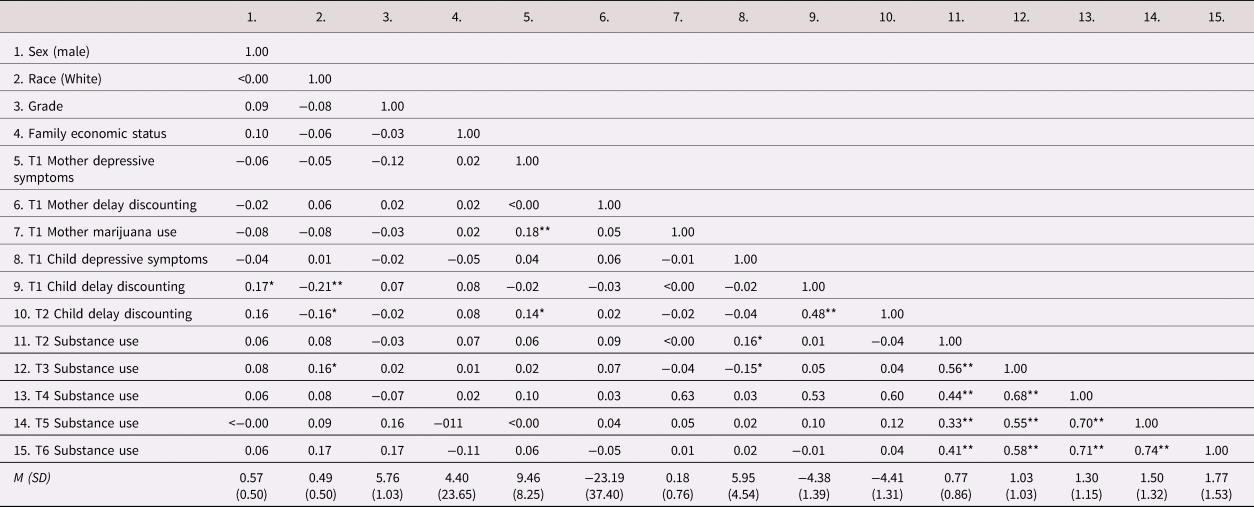
First, patterns of missingness in the data were examined using the Little's (Reference Little1988) missing completely at random (MCAR) test, which suggested data could be considered MCAR: χ2 (518) = 534.04, p = .304. Second, assumptions of distributional normality were evaluated in all study variables. Skew and kurtosis were found to be within the acceptable range (≤ 3.0) for all variables. Means, standard deviations, and bivariate correlations are presented in Table 2. Of note, adolescent's delay discounting at baseline was associated with being male and non-White. Mothers’ depressive symptoms at baseline were positively correlated with rates of maternal marijuana use at baseline and adolescents’ discounting at Time 2. Maternal and adolescent depressive symptoms did not significantly covary with delay discounting for either mothers or adolescents, respectively.
Correlations, means, and standard deviations of key constructs
Note: *p < .05, **p < .01.
Maternal depressive symptoms and change in adolescent delay discounting
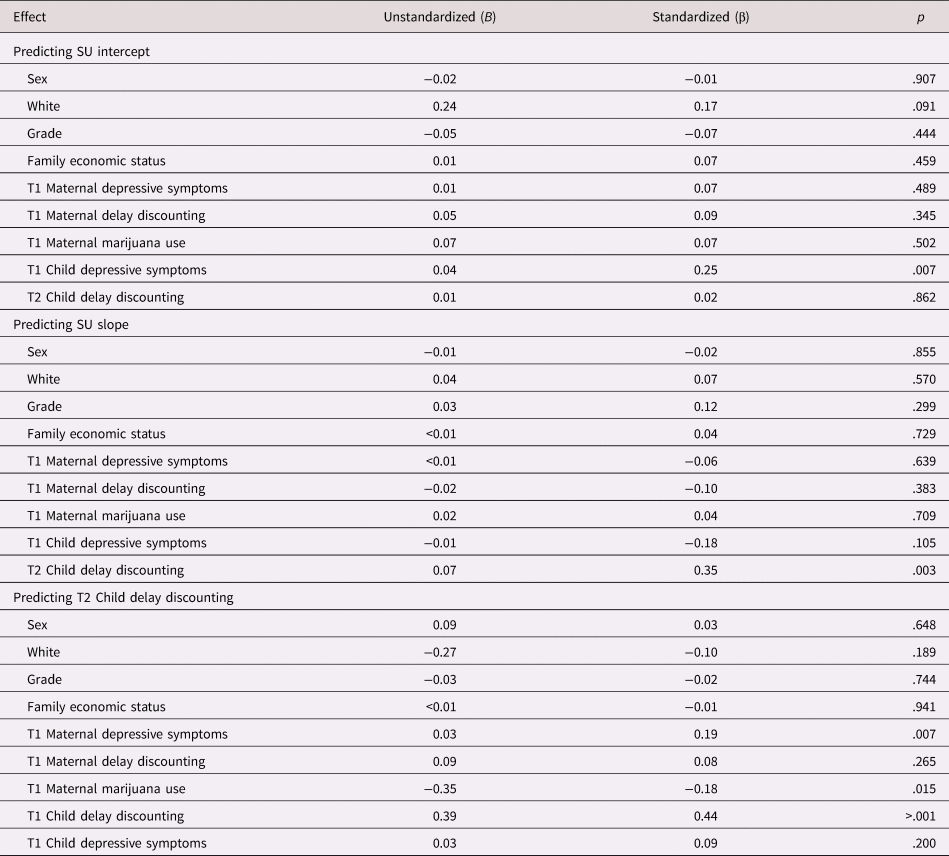
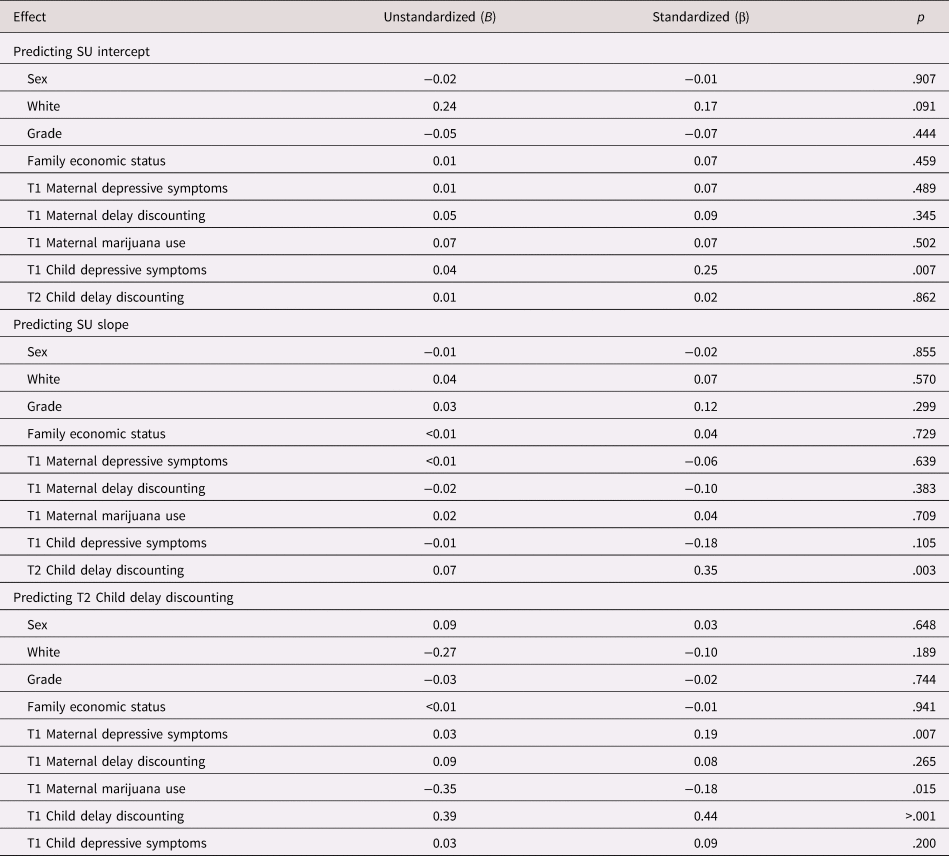
We first examined a linear regression model of the effect of maternal rates of depressive symptoms on changes in adolescent delay discounting over time. We found that only maternal depressive symptoms (β = .19, p = .010) and adolescent delay discounting (β = .43, p < .001) at baseline were significant predictors of subsequent delay discounting at Time 2. In support of Hypothesis 1, these results indicated a medium-sized effect of elevated maternal depressive symptoms predicting steeper rates of adolescent delay discounting. Neither children's demographic factors (sex, grade, and race/ethnicity), nor family socioeconomic status, maternal or child depressive symptoms were significantly associated with changes in adolescent discounting.
Adolescent delay discounting and the trajectory of substance use
In order to examine Hypothesis 2, we first created a latent growth curve (LGC) of adolescent substance use from T2–T6. The unconditional LGC fit the data well: χ2 (df = 10) = 12.47, p = .255, CFI = .99, RMSEA = .03 (90% CI = 0.00 to 0.08), SRMR = .04. The mean of both the intercept (M = 0.78, SE = 0.05, p < .001) and slope (M = 0.26, SE = 0.03, p < .001) were significant, indicating that rates of substance use were significantly greater than zero at baseline and significantly increased over time. The variance of the intercept (variance = .47, SE = .07, p < .001) and slope (variance = .08, SE = .02, p < .001) were also significant, suggesting important individual differences around these estimates and supporting the inclusion of predictors. The correlation between the latent intercept and slope was not significant: r = .09, p = .482.
Next, we added predictors to the LGC model, including adolescent's delay discounting at Time 2; maternal depressive symptoms, delay discounting, and marijuana use at Time 1; adolescent depressive symptoms at Time 1; demographic factors and family socioeconomic status. This model continued to fit the data well: χ2 (df = 37) = 53.53, p = .039, CFI = .94, RMSEA = .05 (90% CI = 0.01 to 0.09), SRMR = .04. Only adolescent's depressive symptoms were a significant predictor of the intercept of adolescent's substance use (β = .24, p = .010), suggesting higher rates of adolescent depressive symptomology were associated with elevated rates of substance use at baseline. Conversely, only adolescent delay discounting was a significant predictor of the slope of adolescent substance use (β = .36, p = .003), indicating that higher rates of adolescent delay discounting were associated with steeper increases in substance use over time.
Finally, we evaluated our second hypothesis by regressing Time 2 adolescent delay discounting onto Time 1 adolescent and maternal predictors, including maternal marijuana use (see Figure 1). The model provided an adequate fit to the data: χ2 (df = 60) = 93.47, p = .004, CFI = .91, RMSEA = .06 (90% CI = 0.03 to 0.08), SRMR = .06. Of note, maternal marijuana use was a significant predictor of Time 2 adolescent delay discounting (see Table 3). Moreover, the indirect effect of maternal depressive symptoms on the trajectory of adolescent substance use, via adolescent delay discounting was statistically significant (ind. eff. = 0.07, bootstrapped 95% CI = 0.003 to 0.13).
Proposed model with mediation pathway in bold.

Path estimates for final mediation model
Discussion
Maternal depression has been linked consistently to adolescents’ heightened risk for externalizing problems (Kim-Cohen, Moffitt, Taylor, Pawlby, & Caspi, Reference Kim-Cohen, Moffitt, Taylor, Pawlby and Caspi2005), including substance use (Brennan, Hammen, Katz, & Le Brocque, Reference Brennan, Hammen, Katz and Le Brocque2002). Despite this documented relationship, few studies have examined the pathways by which these relations unfurl or identified specific mechanisms associated with their relations that can help target future intervention efforts. Thus, the current investigation aimed to extend this research by examining whether maternal depressive symptoms predicted escalations in adolescents’ levels of delay discounting, a risk factor that has been tied to substance use across the lifespan. The study also sought to explore whether increases in delay discounting explained the association between maternal depressive symptoms and substance use trajectories across a particularly vulnerable developmental period between early and late adolescence. Consistent with our hypotheses, two novel findings emerged from this research: maternal depressive symptoms had a medium effect on adolescent delay discounting, with greater depressive symptoms predicting steeper rates of discounting, and these increases in adolescent delay discounting mediated the relationship between maternal depressive symptoms and adolescent substance use, even after accounting for key covariates like adolescent depressive symptoms and maternal marijuana use. A third study finding offered additional confirmatory evidence to extant, yet limited, research that has shown previously that high levels of adolescent delay discounting predict increased substance use in adolescence.
To our knowledge, this study is one of the first to identify that an underlying personality-linked mechanism, delay discounting, at least partially explains the demonstrated effect between maternal depressive symptoms and adolescent substance use. Although the current study did not directly examine maternal parenting practices, our findings support a related line of research that suggests mothers’ depressive symptoms may create an unstable environment (Davies & Cummings, Reference Davies and Cummings1994; Downey & Coyne, Reference Downey and Coyne1990) and that this instability may shape adolescents’ tendency to discount delayed rewards steeply. Specifically, a recent review of studies attempting to disentangle heritable versus environmental effects of parental depression found a significant association between maternal depression and subsequent psychiatric and behavioral problems in offspring via environmental pathways, even after controlling for genetic and prenatal effects (Natsuaki et al., Reference Natsuaki, Shaw, Neiderhiser, Ganiban, Harold, Reiss and Leve2014). In other words, maternal depression appears to directly impact the family environment, creating an environmental context in which their children begin to display problematic and maladaptive behaviors. Maternal depression is also associated with withdrawn, harsh, or inconsistent parenting practices (Lovejoy, Graczyk, O'Hare, & Neuman, Reference Lovejoy, Graczyk, O'Hare and Neuman2000), which may further erode the child's sense of stability. Indeed, mothers with depression are more likely than their nondepressed counterparts to report using erratic discipline strategies and feeling less confident in their ability to parent overall (Kavanaugh et al., Reference Kavanaugh, Halterman, Montes, Epstein, Hightower and Weitzman2006). Future studies should examine both instability and parenting practices to further elucidate these developmental processes.
Importantly, while the current study did not examine these associations, it is also possible that there are bidirectional relations between maternal depression and youth problem behaviors. In other words, it may be that adolescents’ impulsive choice behaviors and substance use drive increases in mothers’ depressive symptoms. For instance, recent research suggests that maternal and child internalizing symptoms simultaneously drive increases in one another, such that maternal depression predicts increases in child depression which, in turn, predicts further increases in maternal depression (Kuckertz, Mitchell, & Wiggins, Reference Kuckertz, Mitchell and Wiggins2018). Future research should examine the transactional relations between maternal depression and adolescent delay discounting across adolescence.
These findings are also consistent with an emerging and compelling line of research suggesting that perceived environmental instability contributes to greater levels of adolescent delay discounting beginning early in childhood. For instance, research has shown that children of parents who inconsistently provide promised rewards (Schneider, Peters, Peth, & Büchel, 2014) and children who view adults as “unreliable” (Kidd et al., Reference Kidd, Palmeri and Aslin2013; Michaelson & Munakata, Reference Michaelson and Munakata2016) are more likely to discount future, larger rewards in favor of smaller rewards distributed immediately. Similarly, a correlational study showed that greater delay discounting levels in adolescents was associated with a greater perceived uncertainty about obtaining the delayed rewards (Patak & Reynolds, Reference Patak and Reynolds2007).
Other recent research suggests that decision-making functions adapt as a result of unstable living environments, and result in individuals becoming more impulsive (Mittal & Griskevicius, Reference Mittal and Griskevicius2016). Additional empirical support to these adaptations of cognitive abilities (specifically executive functions) and delay discounting was provided by a study that used a functional magnetic resonance imaging (fMRI) design, which showed that parent reward inconsistency was associated with steeper delay discounting and an attenuated subjective value representation in the nucleus accumbens (NAcc) and ventromedial prefrontal cortex (vmPFC), brain regions that have also been associated with addictive behaviors (Russo et al., Reference Russo, Dietz, Dumitriu, Morrison, Malenka and Nestler2010).
The finding that maternal depressive symptoms is linked to rates of adolescent delay discounting is also consistent with a research study that showed that higher levels of the family disorganization construct (i.e., related to uncertainty in adolescents’ contexts) predict adolescents’ greater delay discounting, although the effect only applied to adolescents who had low levels of genetic risk for delay discounting (Wang et al., Reference Wang, Pandika, Chassin, Lee and King2016). That is, adolescents with a greater genetic risk for delay discounting demonstrated elevated delay discounting regardless of their family's disorganization and greater delay discounting prospectively predicted adolescents’ greater alcohol use. The research conducted by Wang and colleagues also showed that the effects of family disorganization on adolescents’ alcohol use were explained by delay discounting, but only for youth with low levels of genetic risk, which led the researchers to conclude that family disorganization was an environmental pathway to delay discounting, which in turn predicted adolescent alcohol use.
Notably, the present study's findings indicate that even after controlling for maternal levels of delay discounting, adolescent's own depressive symptoms, and maternal marijuana use, the mediation model remained significant, which mitigates the possibility that the observed effect was a result of other pathways more influenced by the heritability of related risk factors. In other words, our findings suggest that the relation between maternal depressive symptoms and adolescent discounting was not owing to an overlapping third variable, such as maternal discounting, maternal marijuana use, or adolescent depression. Indeed, we did not find that rates of depressive symptoms correlated with rates of discounting for either mothers or adolescents. This is an important point given that previous research has shown that delay discounting at ages 12 and 14 is highly heritable (Anokhin et al., Reference Anokhin, Golosheykin, Grant and Heath2011; Reynolds, Leraas, Collins, & Melanko, Reference Reynolds, Leraas, Collins and Melanko2009) and moderate associations between depression and steep discounting (Amlung et al., Reference Amlung, Marsden, Holshausen, Morris, Patel, Vedelago and McCabe2019). Thus, while genetic influences may be important contributors to delay discounting (e.g., Anokhin et al., Reference Anokhin, Golosheykin, Grant and Heath2011), mother's depressive symptoms appear to play an important role in adolescents’ decision making and substance use trajectories.
The study also replicates previous cross-sectional research studies that demonstrated that heightened levels of delay discounting among adolescents relate to problematic substance use (Fernie et al., Reference Fernie, Peeters, Gullo, Christiansen, Cole, Sumnall and Field2013; Field, Christiansen, Cole, & Goudie, Reference Field, Christiansen, Cole and Goudie2007) and the rapid progression of alcohol, marijuana, and tobacco use (Khurana, Romer, Betancourt, & Hurt, Reference Khurana, Romer, Betancourt and Hurt2017). Although fewer prospective studies exist examining the effect of delay discounting on substance use across adolescence as we do in the present study, the present findings mirror those of a longitudinal cohort study (N = 947) of youth ranging from 15–21 years old, which showed that delay discounting predicted cigarette smoking across adolescence (Audrain-McGovern et al., Reference Audrain-McGovern, Rodriguez, Epstein, Cuevas, Rodgers and Wileyto2009). The present study showed similar longitudinal results and extends them to include illicit substance use. Furthermore, the prospective longitudinal findings align the supposition that delay discounting represents a behavioral risk factor for substance use that temporally predates substance use itself (Audrain-McGovern et al., Reference Audrain-McGovern, Rodriguez, Epstein, Cuevas, Rodgers and Wileyto2009; Reynolds et al., Reference Reynolds, Leraas, Collins and Melanko2009). While these findings provide preliminary support for the relation between maternal depressive symptoms, adolescent delay discounting, and substance use broadly, subsequent studies are needed to look at pathways from maternal depression to specific substances (i.e., alcohol, marijuana use) to further elucidate specific clinical implications.
The current study capitalizes on a number of strengths that allowed for the rigorous testing of study hypotheses, including the use of multiple modalities to measure key constructs (mother-report, child-report, and behavioral tasks), as well as longitudinal data capturing a particularly vulnerable period for the development of substance use. However, these findings must be interpreted within the context of the study limitations, which provide opportunities for future research. First and foremost, the current study did not include measures of parenting or familial unstable environment, two variables that warrant additional research to elucidate the link between maternal depression and delay discounting in adolescence. As mentioned previously, a growing body of research suggests that children and adolescents who view parental responses/practices or their contexts as unreliable and inconsistent are more likely to discount future rewards. Therefore, research is necessary to elucidate how these two constructs may affect intertemporal decision making. Additionally, future research may consider examining parenting variables specifically, and adolescents’ beliefs about their home environment broadly, as well as more objective measures, including home and parenting observations (e.g., follow-through on promised rewards). Second, while all models controlled for maternal delay discounting and mothers’ reports of their own marijuana use, future studies should more directly consider genetic influences that may play a role in the intergenerational transmission of risk. Third, the current investigation included a convenience sample recruited from the surrounding areas using advertisements, which could limit the generalizability of the findings to other youth. Indeed, less than 20% of all parents met current diagnostic criteria for major depressive disorder. Thus, replication of these findings in clinical and community populations will be important. Additionally, the study utilized only a single-item measure of maternal marijuana use; future studies should control for a broader and more detailed measure of mothers’ substance use. Fourth, no biological measures of substance use were included in the current assessment battery, limiting our ability to objectively measure alcohol and drug use. Future research would benefit from including biological assessments of these constructs. Finally, the study had significant attrition in the final wave of data collection. While we do not have specific information on why these individuals did not participate, one can speculate that it may correspond to changes in life circumstances that are common to youth ages 18–19 and may impact their ability to participate in a research study, including going to college and moving out of a parents’ home. Future replication of these findings should ensure the retention of participants across this important developmental period.
In sum, these findings identify maternal depressive symptoms as a potential intervention target to prevent increases in adolescent delay discounting and subsequent substance use. These results are consistent with the proposition that preventing and treating depression in mothers may lead to more stability in adolescents’ environment; this stability could then prevent the development or progression of substance use via delay discounting. For children of mothers who have elevated depressive symptoms or depression, interventions that target delay discounting, such as episodic future thinking (Schacter, Benoit, & Szpunar, Reference Schacter, Benoit and Szpunar2017) or working memory training (Bickel, Yi, Landes, Hill, & Baxter, Reference Bickel, Yi, Landes, Hill and Baxter2011; Felton, Collado, Ingram, Doran, & Yi, Reference Felton, Collado, Ingram, Doran and Yi2019), may also be beneficial. Considered together, these findings highlight detrimental outcomes associated with maternal depressive symptoms and identify delay discounting as a critical mechanism linking maternal psychopathology and increases in adolescent substance use over time.
Financial support
This project was supported in part by a grant from the National Institute on Drug Abuse (R01 DA18647) awarded to Carl W. Lejuez. The authors declare they have no financial conflicts of interest to report.