For at least two decades, mounting evidence has suggested that the social environment can moderate the expression of genetic influences on adaptive and pathological human behavior. This broad set of phenomena is known as Gene × Environment interaction (G × E), although as we will show, this term is much in need of refinement. The evidence is drawn from two sources. First, the moderating effect of the social environment has been inferred from quantitative analyses of data from genetically informed studies, particularly twin and adoption studies. For example, an important set of adoption studies has shown that psychopathology in birth parents predicts psychopathology in their adopted offspring only when the adoptive rearing environment is adverse (Cadoret & Cain, Reference Cadoret and Cain1981; Cadoret, Cain, & Crowe, Reference Cadoret, Cain and Crowe1983; Cadoret, Winokur, Langbehn, & Troughton, Reference Cadoret, Winokur, Langbehn and Troughton1996; Cloninger, Bohman, & Sigvardsson, Reference Cloninger, Bohman and Sigvardsson1981; Sigvardsson, Bohman, & Cloninger, Reference Sigvardsson, Bohman and Cloninger1996; Tienari et al., Reference Tienari, Wynne, Sorri, Lahti, Laksy and Moring2004). Twin studies have also suggested that individuals with a genetic liability are more likely to develop disorders when subjected to stress (Kendler et al., Reference Kendler, Kessler, Walters, MacLean and Heath1995; Silberg, Rutter, Neale, & Eaves, Reference Silberg, Rutter, Neale and Eaves2001). These studies neither reveal whether one or more genes are involved nor identify the specific polymorphisms involved; rather, they focus on the phenotypic expression of the individual's entire genotype. Thus, this form of interaction is most accurately termed G × E.
Second, studies of specific alleles identified by molecular genetic techniques have informed our knowledge of G × E. In a series of studies, adverse effects of specific alleles were manifest only if a child-rearing environment was adverse (usually severely so) or if the developing adult was exposed to stress (severe in some studies, but modest in others). Because a specific allele is identified in all these studies, we use the term Allele × Environment interaction (A × E) to describe this form of interaction.
Both terms have their limits. Some forms of G × E may reflect the effects of only a single, unidentified polymorphism, whereas A × E may include more than one molecular variation at several locations on a gene or in spatially proximal genes that usually segregate together in gametogenesis; these complexes are known as haplotypes. Such studies may also include interactions among two or more genes. However, despite important strengths and overlap in the two approaches, distinctions between these two forms of interaction are useful as the field moves forward to its next crucial steps: the search for mechanisms by which the social environment can modify the expression of genetic influence on complex human behavior and how this information can be leveraged to inform preventive intervention studies.
The focus of this paper is to describe how understanding G × E mechanisms can aid in the identification of targets for preventive interventions. We do so by summarizing evidence for mechanisms of G × E, identifying areas where additional research is needed, and providing an example of how the understanding of G × E mechanisms can be leveraged in prevention research. We begin by considering, in turn, broad distinctions between research strategies for explaining G × E and how these contrast with strategies exploring mechanisms of A × E. Then we review three key components of mechanisms of G × E: the role of social relationships in the expression of genetic influence; how the covariation between genetic influences and social relationships can be moderated by more stable aspects of the social context, thereby providing clues to the mechanisms of G × E; and ways of deploying preventive interventions (within genetically informed designs) to test the validity of and to capitalize on these mechanisms.
Distinctions Between A × E and G × E Strategies
Mechanisms of A × E
A × E studies are relatively new, and arrived on the scientific scene with fanfare. They developed against a research background that did not anticipate them. For example, we have known for over two decades that differences in the human genotype interact with substantial variation in the social environment in the pathogenesis of substance abuse and major mental disorders (Cadoret & Cain, Reference Cadoret and Cain1981; Cadoret et al., Reference Cadoret, Cain and Crowe1983, Reference Cadoret, Winokur, Langbehn and Troughton1996; Cadoret, Troughton, Bagford, & Woodworth, Reference Cadoret, Troughton, Bagford and Woodworth1990; Cadoret, Yates, Troughton, Woodsworth, & Steward, Reference Cadoret, Yates, Troughton, Woodworth and Stewart1995; Cloninger et al., Reference Cloninger, Bohman and Sigvardsson1981; Sigvardsson et al., Reference Sigvardsson, Bohman and Cloninger1996; Tienari et al., Reference Tienari, Wynne, Sorri, Lahti, Laksy and Moring2004). However, these were “blockbuster” G × E: in all cases, the contrasts between those at genetic risk and control subjects were indexed by the presence or absence of severe disorder in the birth parents. In other cases, the environmental risk factors were the major contrasts (e.g., occupational status of parents; Cloninger et al., Reference Cloninger, Bohman and Sigvardsson1981; Sigvardsson et al., Reference Sigvardsson, Bohman and Cloninger1996). Powerful designs using more nuanced and continuous measures of genetic risk generally failed to find evidence for G × E (Bergeman & Plomin, Reference Bergeman, Plomin, Bornstein and Bruner1988; DeFries, Plomin, & Fulker, Reference DeFries, Plomin and Fulker1994; Plomin, DeFries, & Fulker, Reference Plomin, DeFries and Fulker1988). Moreover, there has been a widespread belief in previous decades (which continues until the present time) that genetic effects on normal and pathological development reflect the action of many genes each with a small effect (Lykken, Reference Lykken2006; Reif & Lesch, Reference Reif and Lesch2003; Risch & Merikangas, Reference Risch and Merikangas1993) or that psychiatric disorders are heterogeneous with subtypes influenced by different genes (Askland, Reference Askland2006).
Thus, it was surprising that single alleles, in interaction with adverse environments, emerged as sizable risk factors for complex and broadly defined psychiatric disorders in the affect and conduct domains. In virtually all publications reporting positive results for this phenomenon, a substantial association between allele and behavior is observed under adverse environmental circumstances but not under favorable circumstances. As is widely known, the most replicated of these findings concerns variation in the promoter region of the serotonin transporter linked promoter region gene (5-HTTLPR). The short form of the promoter region in this gene is associated with reduced transcription of the gene that regulates reuptake of synaptic serotonin which, in turn, has been linked to the mechanisms of action of antidepressants and evidence of central nervous system dysfunction in human and animal studies (Bennett et al., Reference Bennett, Lesh, Heils, Long, Lorenz and Shoaf1998, Reference Bennett, Lesch, Heils, Long, Lorenz and Shoaf2002; Caspi et al., Reference Caspi, Sugden, Moffitt, Taylor, Craig and Harrington2003; Champoux et al., Reference Champoux, Bennett, Shannon, Higley, Lesch and Suomi2002; Eley et al., Reference Eley, Sugden, Corsico, Gregory, Sham and McGuffin2004; Gillespie, Whitfield, Williams, Heath, & Martin, Reference Gillespie, Whitfield, Williams, Heath and Martin2005; Haberstick, Smolen, & Hewitt, Reference Haberstick, Smolen and Hewitt2006; Kaufman et al., Reference Kaufman, Yang, Douglas-Palumberi, Grasso, Lipschitz and Houshyar2006; Kendler, Kuhn, Vittum, Prescott, & Riley, Reference Kendler, Kuhn, Vittum, Prescott and Riley2005; Surtees et al., Reference Surtees, Wainwright, Willis-Owen, Luben, Day and Flint2006; Wilhelm et al., Reference Wilhelm, Mitchell, Niven, Finch, Wedgewood and Scimone2005). The allele has a known link to neuroregulatory dysfunction that, in turn, is plausibly linked to depression. A large number of studies have shown that the gene is associated with depression under adverse social circumstances ranging from abuse in childhood to moderate or severe stress in adult life.
Comparable strategies have been used to examine the interaction of a number of other alleles and adverse social environments. These include an allele with functional deficit in the promoter region of the X-linked monoamine oxidase A (MAOA) gene interacting with severe child maltreatment associated with conduct problems in children (Caspi et al., Reference Caspi, McClay, Moffitt, Mill, Martin and Craig2002), a functional polymorphism of the brain-derived neurotrophic factor (BDNF) gene interacting with child maltreatment and 5-HTTLPR to predict depression (Kaufman et al., Reference Kaufman, Yang, Douglas-Palumberi, Grasso, Lipschitz and Houshyar2006), a single nucleotide polymorphism variant in the GABA A receptor alpha-2 subunit (GABRA2) gene (if homozygous) interacting with marital status as risk for alcoholism (Dick et al., Reference Dick, Agrawal, Schuckit, Bierut, Hinrichs and Fox2006), and a deficient polymorphism (seven or more repeats in exon 3) of the dopamine receptor D4 (DRD4) gene interacting with maternal insensitivity to predict externalization in 2- to 3-year-olds (Bakermans-Kranenburg & van IJzendoorn, Reference Bakermans-Kranenburg and van IJzendoorn2006). Taken together, these findings suggest that a well-specified allelic variation at a single locus in a small group of genes may render individuals more susceptible to the influences of a broad range of adverse social environments.
In these first A × E studies, there has yet to be evidence suggesting that the timing of maladaptive environmental exposure is crucial. For example, either childhood exposure to maltreatment or adult exposure to severe stress interacts with the short form of the serotonin transporter gene to increase the liability for early adult onset depression (Caspi et al., Reference Caspi, Sugden, Moffitt, Taylor, Craig and Harrington2003). Moreover, the nature of environmental adversity reported to date has been nonspecific. For example, the deficient allele of the MAOA gene appears to increase the liability of externalizing behavior in adolescents boys exposed to a range of family turmoil, including interparental violence, parental neglect, or inconsistent discipline (Foley et al., Reference Foley, Eaves, Wormley, Silberg, Maes and Kuhn2004); child exposure to severe maltreatment (Caspi et al., Reference Caspi, McClay, Moffitt, Mill, Martin and Craig2002); or adolescent exposure to a broad range of family, residential, and neighborhood difficulties (Nilsson et al., Reference Nilsson, Sjoberg, Damberg, Leppert, Ohrvik and Alm2006). The specificity in these findings, where it has been examined, has resided in the alleles themselves. For example, A × E with the serotonin transporter seems to increase the likelihood of depression in combination with an adverse environment, but A × E with the MAOA gene does not (Caspi et al., Reference Caspi, Sugden, Moffitt, Taylor, Craig and Harrington2003). Conversely, A × E with MAOA have been generally associated with externalizing and not internalizing disorders. However, a recent well-crafted study using MAOA in a large sample suggests a broad spectrum of pathological outcomes associated with the interaction of this polymorphism with parental abuse of 7-year-old children (Kim-Cohen et al., Reference Kim-Cohen, Caspi, Taylor, Williams, Newcombe and Craig2006).
These A × E findings reflect a sharp departure from previous work in the field of human genetics. A wide interest in their significance has prompted three major questions. First, do these findings replicate in other studies? For some of these A × E findings, as in the case of BNDF, DRD4, and GABRA2, there were no published replications at the time this was written. For A × E for the MAOA gene, there have been replications (see above) and nonreplications (Eley et al., Reference Eley, Sugden, Corsico, Gregory, Sham and McGuffin2004; Haberstick et al., Reference Haberstick, Lessem, Hopfer, Smolen, Ehringer and Timberlake2005; Young et al., Reference Young, Smolen, Hewitt, Haberstick, Stallings and Corley2006). There have also been two published nonreplications for the 5-HTTLPR A × E findings (Gillespie et al., Reference Gillespie, Whitfield, Williams, Heath and Martin2005; Surtees et al., Reference Surtees, Wainwright, Willis-Owen, Luben, Day and Flint2006).
Second, to what extent might these findings reflect artifacts? For example, few published studies address allele–environment correlation (in which case the allele may be associated both with elevated environmental risk and with psychopathology) or Gene × Gene interaction (A × A; one type of which involves a measured allele being associated with the pathological outcome and an unmeasured allele being associated with elevated environmental risk). In the latter case, A × A interaction may masquerade as A × E because the second (unmeasured) polymorphism may evoke the environmental risk factor. Moreover, although the artifact of population stratification is widely recognized, it is not routinely examined in A × E reports. Thus, an apparent effect of a variant allele may be because of a greater frequency of both the allele and the phenotype that the investigator failed to identify in a subpopulation. Early reports of A × E attended to many of these problems (Caspi et al., Reference Caspi, Sugden, Moffitt, Taylor, Craig and Harrington2003), but a number of more recent reports have not (Bakermans-Kranenburg & van IJzendoorn, Reference Bakermans-Kranenburg and van IJzendoorn2006; Grabe et al., Reference Grabe, Lange, Wolff, Volzke, Lucht and Freyberger2005; Wilhelm et al., Reference Wilhelm, Mitchell, Niven, Finch, Wedgewood and Scimone2005). Similarly, it is rare that positive reports of A × E consider and fully rule out the artifact of passive gene–environment correlation caused by children and their parents sharing both genes and a rearing environment (Foley et al., Reference Foley, Eaves, Wormley, Silberg, Maes and Kuhn2004; Kim-Cohen et al., Reference Kim-Cohen, Caspi, Taylor, Williams, Newcombe and Craig2006). Kaufman et al. (Reference Kaufman, Yang, Douglas-Palumberi, Grasso, Lipschitz and Houshyar2006) circumvented this problem to the extent that the measures of social support—an environmental interaction variable—reflect a child's connection to supporting figures genetically unrelated to them. However, to our knowledge, only one published study examined the possibility that the measured allele might interact with the influence of another (unmeasured) allele that might evoke the environmental adversity under study (Caspi et al., Reference Caspi, Sugden, Moffitt, Taylor, Craig and Harrington2003).
Third, and most pertinent for the current paper, assuming the striking A × E findings replicate and artifacts are ruled out, what mechanisms might account for these findings? As is noted above, A × E studies all focus on genetically influenced neurobiological mechanisms by which allelic variations are linked to increased sensitivity to adversities in the social environment. Promising lines of research have, for example, linked variations in the 5-HTTLPR allele and the MAOA allele to specific abnormalities of neuroregulation, which in turn, have been linked to temperamental traits that may render subjects vulnerable to psychopathology (e.g., Bertolino et al., Reference Bertolino, Arciero, Rubino, Latorre, De Candia and Mazzola2005; Hariri et al., Reference Hariri, Drabant, Munoz, Kolachana, Mattay and Egan2005; Pezawas et al., Reference Pezawas, Meyer-Lindenberg, Drabant, Verchinski, Munoz and Kolachana2005).
However, efforts to search for A × E mechanisms have not addressed genetic factors influencing an individual's active transformation of the social environment (usually referred to as “evocative or active gene–environment correlation”) except to rule them out as potential artifacts. These effects are a major focus of the search for G × E mechanisms, are well established, and have immediate implications for the design of prevention studies that target caregiver interactions with their young children. For example, without intervention, starting in infancy, heritable, temperamental features of children may evoke adverse responses from their parents (Boivin et al., Reference Boivin, Perusse, Dionne, Saysset, Zoccolillo and Tarabulsy2005). Later in development, heritable characteristics of adolescents can influence their actively seeking out and being accepted by deviant or prosocial peer groups (Iervolino et al., Reference Iervolino, Pike, Manke, Reiss, Hetherington and Plomin2002; Manke, McGuire, Reiss, Hetherington, & Plomin, Reference Manke, McGuire, Reiss, Hetherington and Plomin1995). As Kendler and Eaves (Reference Kendler and Eaves1986) noted, favorable environments may moderate adverse genetic influences by resisting the effects of heritable traits of children and adults on the environment. An example might be a parent who does not respond with counteraggression to heritable irritability and aggression in their child. Recently, Shanahan and Hofer (Reference Shanahan and Hofer2005) have updated this analysis by reviewing evidence that favorable environments may exert effective social control over young people with a heritable risk for deviant behavior such as drinking and sexual promiscuity. Thus, G × E studies can provide a wealth of information to guide the development of interventions that target the social interactions within a family or other social system.
Mechanisms of G × E
The search for mechanisms of G × E has illuminated findings that may rival the importance of the initial reports of A × E. Although greeted with less fanfare, G × E findings promise to open up a second line of inquiry on mechanisms of gene–environment interaction, and, central to the improvement of child well-being, pave the way for the development of specified preventive interventions that can help buffer against genetic risk and enhance genetically influenced resilience (as described later in this article). Research examining G × E mechanisms across the last two decades in a broad range of domains has highlighted several major findings: genetically influenced characteristics of children and adults reliably evoke specific responses from parents and broader social environments; genetically influenced characteristics favor the selection of children and adolescents into peer groups (Iervolino et al., Reference Iervolino, Pike, Manke, Reiss, Hetherington and Plomin2002; Manke et al., Reference Manke, McGuire, Reiss, Hetherington and Plomin1995); and genetically influenced characteristics influence marital adversity (Spotts, Neiderhiser, Towers, et al., Reference Spotts, Neiderhiser, Towers, Hansson, Lichtenstein and Cederblad2004), the exposure to stressful life events and securing social support (Kessler, Kendler, Heath, Neale, & Eaves, Reference Kessler, Kendler, Heath, Neale and Eaves1992, Reference Kessler, Kendler, Heath, Neale and Eaves1994; Plomin, Pedersen, Lichtenstein, McClearn, & Nesselrode, Reference Plomin, Pedersen, Lichtenstein, McClearn and Nesselrode1990; Saudino, Pedersen, Lichtenstein, McClearn, & Plomin, Reference Saudino, Pedersen, Lichtenstein, McClearn and Plomin1997), and the selection of individuals into occupational or educational strata (Lichtenstein & Pedersen, Reference Lichtenstein and Pedersen1997; Lichtenstein, Pedersen, & McClearn, Reference Lichtenstein, Pedersen and McClearn1992). Thus, measures of parenting, sibling and peer relationships, marital quality and social class—formally believed to assess qualities of the social environment—are now understood to partially reflect genetic influences.
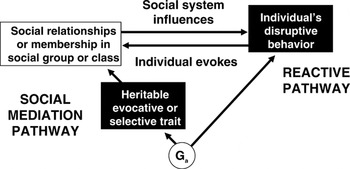
These data have led to a fundamental question: if genetic factors influence the social environment and these same factors also influence individual adjustment, might the association between the social environment and individual adjustment be attributable, in part, to genetic mechanisms rather than purely environmental mechanisms? The startling finding, in a broad range of studies, is that genetic factors account, in part, for a notable portion of covariance between “environmental” measures and adjustment. For example, in one large study, the association between carefully measured negative relationships between mothers and antisocial behavior in their adolescent children was observed to be .59 (Reiss, Neiderhiser, Hetherington, & Plomin, Reference Reiss, Neiderhiser, Hetherington and Plomin2000), a finding that, by itself, simply replicates many previous studies linking family processes to conduct problems in children and adolescents (Dishion, Patterson, & Kavanagh, Reference Dishion, Patterson, Kavanagh, McCord and Tremblay1992; Forgatch, Patterson, & Ray, Reference Forgatch, Patterson, Ray and Hetherington1996; Larzelere & Patterson, Reference Larzelere and Patterson1990; Patterson, Reference Patterson1982; Stoolmiller, Patterson, & Snyder, Reference Stoolmiller, Patterson and Snyder1997). However, genetic factors accounted not only for most of the variance in mother–child negativity and antisocial behavior but also for 69% of the covariance between the two (Reiss et al., Reference Reiss, Neiderhiser, Hetherington and Plomin2000). Such findings suggest that genetic factors play an entirely unanticipated role in observed links between measures of the social environment and adolescent adjustment. In some cases, genetic factors might be a primary influence on measures of individual adjustment, such as antisocial behavior; family difficulties might then serve as a consequence, not as a cause of children's adjustment problems. In other cases, genetic factors might evoke or select salient characteristics of the social environment prior to the advent of psychopathology. The adverse social environment might then amplify the adverse heritable trait, a process that, over time, might lead to pathological development. The two possibilities are shown in Figure 1. The sequence from genes to pathological behavior to difficulties in the social environment is labeled the reactive pathway. This pathway suggests that disruptions in the social environment are secondary epiphenomena arising through genetic influences on socially disruptive behavior of individuals. The sequence from genes to social environment to adjustment is labeled the social mediation pathway. In this case, disruptions in the social environment may precede and mediate the expression of genetic influence on disruptive behavior.
The role of genetic influences on links between the social environment and individual adjustment: two hypothesized pathways.

Mediating effects of the social environment can occur in at least three ways. First, heritable characteristics of children (and adults) can evoke adverse or favorable responses from the social environment. For example, heritable fussiness in a child can evoke irritability from a caretaker. Second, heritable characteristics may favor an individual's choice of and engagement in social settings, such as schools and after school activities, with consequent success and advancement to higher education and better employment. Third, heritable characteristics not only may influence people's choice of a particular social group but also may be appealing to the group and influence the groups choice of them; the heritable feature influences the responses of the social group rather than just the active strivings of the children under study. Social mediation occurs if the response of the social environment to the heritable characteristics then plays an important subsequent role in the evolution of the problem or adaptive behavior. For example, if irritable parenting—originally evoked by children's characteristics—amplifies impulsivity in children that is not yet at the problem level, then it becomes integrated or recruited into the mechanisms of expression of genetic influence on children's subsequent problem behavior.
Evidence supporting the social mediation pathway elevates the role of the social environment. This evidence would suggest that, in many pathways of social and cognitive development, the social environment has an importance beyond its main effects on adjustment, independent of genotype. Indeed, genetically informed studies, in many cases, have supported these main effects, although their magnitude is sometimes less than previously supposed. Evidence supporting the social mediation pathway suggests that the social environment, in addition to its main effects, is a crucial final pathway in mechanisms by which genetic influence is expressed in normal and pathological development. The implications of this possibility suggest that planned interventions to alter the response of the social environment to heritable characteristics of children and adults might improve individual adjustment by blunting a critical mechanism of genetic expression. There is now accumulating evidence supporting the idea of social mediation.
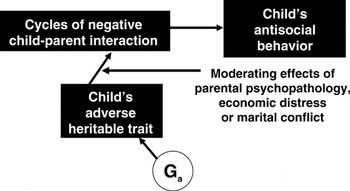
For example, at least seven studies have suggested that the social mediation pathway might account for the important role of genetic factors in the covariance between family structure or parent–child conflict on the one hand and antisocial behavior on the other (Burt, Krueger, McGue, & Iacono, Reference Burt, Krueger, McGue and Iacono2003; Burt, McGue, Krueger, & Iacono, Reference Burt, McGue, Krueger and Iacono2005; Cleveland, Wiebe, van den Oord, & Rowe, Reference Cleveland, Wiebe, van den Oord and Rowe2000; Ge et al., Reference Ge, Conger, Cadoret, Neiderhiser, Yates and Troughton1996; Narusyte, Andershed, Neiderhiser, & Lichtenstein, Reference Narusyte, Andershed, Neiderhiser and Lichtenstein2007; O'Connor, Deater-Deckard, Fulker, Rutter, & Plomin, Reference O'Connor, Deater-Deckard, Fulker, Rutter and Plomin1998; Reiss et al., Reference Reiss, Neiderhiser, Hetherington and Plomin2000). This pathway is presented, schematically, in Figure 2. The pathway starts with heritable patterns of behavior in the child that have not reached levels of clinical significance. Data suggest that genetically influenced aggressive temperament or patterns in children, below clinical thresholds, may evoke harsh parental responses (Ge et al., Reference Ge, Conger, Cadoret, Neiderhiser, Yates and Troughton1996; Narusyte et al., Reference Narusyte, Andershed, Neiderhiser and Lichtenstein2007).
The social mediation pathway as a mechanism of Gene × Environment interaction.

The second step is that the evoked parental negativity intensifies the aggressive trait over time, into conduct problems that emerge well above clinical thresholds. As we review below, several factors are known to intensify adverse parental responses to difficult children. These include economic adversity, marital conflict, and parental psychopathology. The latter two are known, from adoption studies, to interact with genetic factors in the etiology of conduct problems, severe aggression, and antisocial behavior in adolescents and adults (Cadoret et al., Reference Cadoret, Cain and Crowe1983, Reference Cadoret, Yates, Troughton, Woodworth and Stewart1995). Thus, these three features of the family's social and psychological context are shown as interaction terms in Figure 2. If economic distress, marital conflict, and parental psychopathology are severe, we might expect the social mediation of genetic expression to be enhanced. Social mediation may diminish or vanish in the context of no economic distress, high marital satisfaction with little conflict, and no parental psychopathology.
Figure 2 illustrates how evidence for the social mediation pathway constitutes the spine for investigations of mechanisms of G × E. The implication of this work—unique to G × E work—is that preventive interventions will be successful if they decrease the sensitivity of individuals to their social environment or if they decrease the consequences of that sensitivity. In the next section, we describe how the research to date has made substantive progress in the search for mechanisms of G × E, with an eye toward the development of preventive interventions to improve outcomes for individuals exposed to adverse environments and/or who are at genetic risk for problems.
Steps in the Search for Mechanisms of G × E
Genetically influenced characteristics of the individual impact their social environment
Genetic influences of individuals on their social environments have been observed across the life span. At age 5 months, there is a notable influence of an infant's phenotype on hostile parenting behavior, an effect that appears to be mediated by genetic influences on child temperament, particularly irritable unsoothability (Boivin et al., Reference Boivin, Perusse, Dionne, Saysset, Zoccolillo and Tarabulsy2005). Substantial effects have also been observed in the toddler period on measures of cognitive stimulation from the Home Observation for Measurement of the Environment measure (Braungart, Fulker, & Plomin, Reference Braungart, Fulker and Plomin1992), for videocoded affection and control at age 3 (Dunn & Plomin, Reference Dunn and Plomin1986), and for maternal control and for competitive and positive sibling behavior from ages 4 to 7 (Rende, Slomkowski, Stocker, Fulker, & Plomin, Reference Rende, Slomkowski, Stocker, Fulker and Plomin1992). Similar genetically influenced evocative process have been observed in the transition to adolescence (Deater-Deckard, Fulker, & Plomin, Reference Deater-Deckard, Fulker and Plomin1999; O'Connor et al., Reference O'Connor, Deater-Deckard, Fulker, Rutter and Plomin1998). For adolescents, genetically influenced evocative effects have been reported using adoption (Ge et al., Reference Ge, Conger, Cadoret, Neiderhiser, Yates and Troughton1996) and twin and sibling designs (Reiss et al., Reference Reiss, Neiderhiser, Hetherington and Plomin2000). Substantial influences have been reported for hostile and negative parenting as well as for parental warmth and control on positive and negative responses to the target adolescent. These evoked parental responses seem to reflect both generalized dispositions of the adolescent for aggressive behavior (Ge et al., Reference Ge, Conger, Cadoret, Neiderhiser, Yates and Troughton1996) and specific interactive behaviors directed at a particular parent (O'Connor, Hetherington, Reiss, & Plomin, Reference O'Connor, Hetherington, Reiss and Plomin1995). The genetic influences on how older adolescents and adults actively shape their own environments have also indicated substantial heritable influences on the quality of peer groups that adolescents select or heritable qualities lead them to be selected by peers (Iervolino et al., Reference Iervolino, Pike, Manke, Reiss, Hetherington and Plomin2002; Manke et al., Reference Manke, McGuire, Reiss, Hetherington and Plomin1995). Further, women across a broad range of ages from early to later adulthood show substantial genetic influence on their active engagement in social groups, their perceived support from friends and relatives (Kessler et al., Reference Kessler, Kendler, Heath, Neale and Eaves1992), and their involvement with satisfying marriages as measured from the women's and their spouses' perspectives and from the probability of divorce (D'Onofrio et al., Reference D'Onofrio, Turkheimer, Emery, Slutske, Heath and Madden2005; McGue & Lykken, Reference McGue and Lykken1992; Spotts, Neiderhiser, Towers, et al., Reference Spotts, Neiderhiser, Ganiban, Reiss, Lichtenstein and Hansson2004). Together, this large body of research provides strong evidence that genetically influenced characteristics of the individual impact the social environment, a key clue in guiding the search for mechanisms of G × E.
Genetic influences on the environment may mediate the influences of genes on adjustment
The next body of research guiding the search for G × E mechanisms has shown that, in many instances, there is substantial overlap in the genetic factors that influence the social environment and those that influence child, adolescent, and adult adjustment. The most thorough analyses are from the Nonshared Environment in Adolescent Development (NEAD) study, a comprehensive, longitudinal, genetically informed study that has measured a broad range of relationships (parent–child, sibling, marital, and peer) using self-reports, informant reports, and observational measures across a broad range of adjustment (depression, antisocial behavior, social responsibility, sociability, cognitive competence, and engagement and autonomy; Reiss et al., Reference Reiss, Neiderhiser, Hetherington and Plomin2000). Across numerous behavioral constructs, data from NEAD indicate a central role of genetic factors in accounting for the sizable association between measures of the social environment and of adjustment. We reviewed the role of genetic factors in accounting for the covariance of maternal negativity and adolescent antisocial behavior (Pike, McGuire, Hetherington, Reiss, & Plomin, Reference Pike, McGuire, Hetherington, Reiss and Plomin1996). Beyond that, genetic factors played a major role in the association between maternal and paternal negativity, maternal and paternal positivity, and maternal and paternal strategies for controlling their adolescents on the one hand, and negative and the positive adolescent adjustment on the other. The major results of the NEAD study have been reported in Reiss et al. (Reference Reiss, Neiderhiser, Hetherington and Plomin2000).
Although no study has been designed to replicate the NEAD study, there have been many reports on the role of genetic factors in accounting for a substantial component of the covariation between the social environment and child, adolescent, and adult adjustment. For example, genetic factors account for the covariance of family structure (two parent vs. mother only) or family closeness and adolescent problem behavior (Cleveland et al., Reference Cleveland, Wiebe, van den Oord and Rowe2000; Jacobson & Rowe, Reference Jacobson and Rowe1999). A substantial role for genetic factors in the covariation between harsh parenting and externalizing in 11-year-olds has also been confirmed (Burt et al., Reference Burt, Krueger, McGue and Iacono2003). Studies of adults have shown similar results (Kendler, Reference Kendler2001; Lichtenstein, Harris, Pedersen, & McClearn, Reference Lichtenstein, Harris, Pedersen and McClearn1993; Lichtenstein & Pedersen, Reference Lichtenstein and Pedersen1995).
These mediation findings pose several questions about the nature of G × E mechanisms. Does this evidence support the proposed social mediation pathway from genotype to heritable trait to evoked social response to psychopathology? Or might the pathway lead from genotype to psychopathology to evoked family response, as suggested by the reactive pathway (see Figure 1)? Neiderhiser reported the first evidence to support the former pathway (Neiderhiser, Reiss, Hetherington, & Plomin, Reference Neiderhiser, Reiss, Hetherington and Plomin1999), a finding that was replicated many times in the NEAD study (Reiss et al., Reference Reiss, Neiderhiser, Hetherington and Plomin2000). By adolescence, there is evidence for a reciprocal relationships among heritable trait, family response, and emerging psychopathology, a finding replicated by Burt et al. (Reference Burt, McGue, Krueger and Iacono2005).
Another question posed by these mediation findings is whether the effects of heritable traits on relationships are specific or nonspecific. For example, in the nonspecific case, genetically influenced irritability in children might elicit high parental negativity, low parental warmth, and reduced parental monitoring. In contrast, specific effects might make it more likely that social systems can mediate genetically specific effects on major indices of adjustment. For example, we know that social support, physical health, and substance abuse are each influenced by distinct genetic factors (Kendler, Myers, & Neale, Reference Kendler, Myers and Neale2000), with little overlap of genetic influences. Likewise, genetic factors that are common to major depression and anxiety disorders are distinct from those that influence situation phobias and animal phobias (Kendler, Prescott, Myers, & Neale, Reference Kendler, Prescott, Myers and Neale2003). Similarly, in adolescence, the genetic influences on antisocial behavior are distinct from the genetic influences on self-worth and genetic influences on sociability are distinct from those on social responsibility and from those on antisocial behavior (Reiss et al., Reference Reiss, Neiderhiser, Hetherington and Plomin2000). This distinctiveness of genetic influences on different lines of development suggests an important requirement for any theory of social mediation. For example, if family relationships and other specifiable components of the social environment play a mediating role in the expression of these distinctive genetic influences, then evocative effects of the genotype must be distinct rather than general.
The NEAD study is the sole source of data on this point, as no other longitudinal, genetically informed study to date has measured such a wide range of social relationships and dimensions of adjustment. Results suggest a high degree of genetic specificity for heritable evocative effects in adolescence. For example, heritable characteristics of adolescents that evoke warmth from mothers are almost completely uncorrelated with those that evoke warmth from fathers. Indeed, of 78 such comparisons, 72 showed more genetic specificity than genetic overlap (Reiss et al., Reference Reiss, Neiderhiser, Hetherington and Plomin2000).
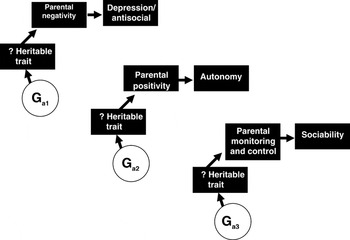
In a reanalysis of NEAD data, Loehlin, Neiderhiser, and Reiss (Reference Loehlin, Neiderhiser and Reiss2005) conducted a factor analysis of the correlations among the latent genetic influences on three measures of parenting (parental negativity, positivity, and control) and five dimensions of adolescent adjustment (antisocial behavior, autonomy, depressive symptoms, cognitive competence, sociability, and social responsibility). This revealed underlying associations between specific evocative effects and specific dimensions of adolescent adjustment. For example, the latent genetic influences on parental negativity loaded on a factor that had loadings only from antisocial behavior and depressive symptoms and not from other measures of parenting or adjustment. A similarly specific pattern of loadings (both positive) was found for parental monitoring and adolescent sociability. The latent genetic influences on adolescent autonomy were the only ones to load on a factor defined primarily by parental positivity (with a negative loading on parental negativity).Footnote 1
These data suggest, but do not by themselves prove, at least three different pathways of social mediation in adolescence (see Figure 3). As a cross-sectional report, the directionality of the arrows is schematic and untested. These finding delineate at least three sets of genetic factors that may initiate three different developmental pathways. Each may be a single polymorphism, as yet undiscovered, or a set of polymorphisms. This approach centers on the discovery of evocative phenotypes: distinctive features of children that evoke strong responses from others and that are genetically influenced and genetically distinct. If single alleles or haplotypes play a role, social mediation approaches like these are necessary to discover them and to bring together A × E and G × E lines of research.
Specificity in genotype–environment covariation: three domain-specific pathways of social mediation.

A third major question stemming from these mediation studies is whether social mediation is restricted to particular periods in development. This is crucial for planning preventive interventions. Thus far, A × E studies have yielded very little information about the temporal specificity of mechanisms linking adverse environmental events, genetic expression, and adverse outcomes. As is reviewed above, social mediation processes appear to occur across the life span starting in early childhood. However, as development unfolds, many of these mediational pathways reflect the cumulative effects of genetically influenced differences in personality features. For example, genetic influences on the traits of neuroticism, extraversion, and openness account for all of the genetic influences of stressful life events of older adults (Saudino et al., Reference Saudino, Pedersen, Lichtenstein, McClearn and Plomin1997), and genetic influences on cognitive abilities account for a notable portion of genetic influences on education and occupational status (Lichtenstein & Pedersen, Reference Lichtenstein and Pedersen1997).
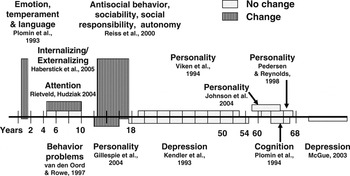
Indeed, there are now many published studies on the balance between the expressions of new genetic influences versus stable genetic influences on a range of psychological factors across the life span. These studies can estimate, using twin designs and latent variable analyses, whether genetic or environmental factors contribute to change or to stability in a trait across time. For example, suppose a trait is highly heritable at two time periods, is moderately stable across time, but shows no correlation between its genetic factors at Times 1 and 2. We can conclude that the genetic factors influencing the trait at Time 1 “turn off” and that the genetic factors influential at Time 2 “turn on” in the interval between Times 1 and 2. This might occur at the molecular level or might reflect alterations in the social system in response to heritable traits (or both). Two studies (Plomin et al., Reference Plomin, Emde, Braungart, Campos, Corley and Fulker1993; Reiss et al., Reference Reiss, Neiderhiser, Hetherington and Plomin2000) have suggested substantial changes in genetic expression during toddlerhood and adolescence, respectively. A third study found smaller but notable changes in genetic expression for personality in adolescence (Gillespie, Evans, Wright, & Martin, Reference Gillespie, Evans, Wright and Martin2004). One study (Rietveld, Hudziak, Bartels, van Beijsterveldt, & Boomsma, Reference Rietveld, Hudziak, Bartels, van Beijsterveldt and Boomsma2004) suggested modest change in genetic expression during the school age years, but another suggested very little change (van den Oord & Rowe, Reference van den Oord and Rowe1997). Six studies of long periods of adult life (Johnson, McGue, & Krueger, Reference Johnson, McGue and Krueger2005; Kendler, Neale, Kessler, Heath, & Eaves, Reference Kendler, Neale, Kessler, Heath and Eaves1993; McGue & Christensen, Reference McGue and Christensen2003; Pedersen & Reynolds, Reference Pedersen and Reynolds1998; Plomin, Pedersen, Lichtenstein, & McClearn, Reference Plomin, Pedersen, Lichtenstein and McClearn1994; Viken, Rose, Kaprio, & Koskenvuo, Reference Viken, Rose, Kaprio and Koskenvuo1994) have suggested very little or no change in genetic expression during this period. In terms of new genetic influences, toddlerhood and adolescence are periods of substantial genetic innovation, whereas broad spans of adult are more likely to be quiescent. These studies are summarized in Figure 4.
Temporal specificity: change and stability of genetic influences across development.

Taken together, this body of work suggests that new genetic influences appear early in development, particularly toddlerhood, but that, by adulthood, genetic influences on many traits are typically the same as those expressed earlier in development. These data support the hypothesis that adverse social responses to heritable traits across broad spans of adult development are responding to stable genetic influences that exert unchanging influences across broad spans of time and possibly across widely different cultural contexts (Furukawa & Shibayama, Reference Furukawa and Shibayama1997). However, in earlier development, the intimate social environment (i.e., parents, siblings, and the parents' marriage) is responding to fresh or novel genetic influences and/or may be eliciting new genetic influences to be expressed in the young child; changes in heritable behavioral traits may be the socially relevant signals that herald these new genetic influences. Data from the NEAD study suggest that these heritable signals might be quite specific for specific relationships at specific points in development. Thus, social mediation of genetic influence across broad spans of adult development may show the “social scars” of the hardening and stabilization of adverse genetic influences on cognition and personality that spoil broad areas of academic, economic, and social achievement with serious consequences for psychopathology. Earlier in development, social mediation may be more fluid, reciprocal, and specific. Changes in adverse heritable traits may “recruit” specific qualities in specific family relationships. As we detail in the final section of this paper, family members may enlist in a third process by responding to these heritable traits with adverse responses, or may disengage from the adverse behavior of the child. Such parent–child interactions resulting from G × E processes have clear implications for the design of preventive interventions; by specifying such sequences, G × E work can help to identify parent–child interactions at specified points in development that may be most malleable.
The results from the Twins and Offspring Study in Sweden (TOSS) add another dimension to our understanding of timing. This was the first study designed to directly compare social mediation in adolescents and their parents (Reiss, Cederblad, et al., Reference Reiss, Cederblad, Pedersen, Lichtenstein, Elthammar and Neiderhiser2001; Reiss, Pedersen, et al., Reference Reiss, Pedersen, Cederblad, Lichtenstein, Hansson and Neiderhiser2001). It is also a generational mirror of the NEAD study. Mothers and fathers who were dizygotic or monozygotic twins were included in the study along with their spouses or partners and their adolescent children; the cousin/children of each twin pair were the same gender and were close in age to each other and to the adolescents in the NEAD study. The TOSS asked whether social mediation might occur in women in midlife in the same way it does for their children in adolescence. Although there are conspicuous differences between parent–child and marital relationships, they have important features in common: they generally involve frequent daily contact over time and reflect intense emotional bonds. The significant other in this relationship, in many cases, has a major if not central role in individual's social world.
Given the centrality of marriage in the life of parents of adolescents, would this relationship mediate genetic influences on parental adjustment? If so, we would observe the following sequence: heritable trait (of married mothers of adolescents) to marital dissatisfaction to depression. In the TOSS, there were notable correlations between father reports of marital satisfaction and mother reports of her depressive symptoms, suggesting an association between marital quality and depression independent of common source (i.e., wives) bias. Moreover, wives' genes influenced husband reports of satisfaction, an influence mediated in part by mother's heritable characteristics: her optimism and lack of aggression. However, genetic factors accounted for none of the covariation of father reports of marital satisfaction and depression. The TOSS replicated these findings for two indices of positive mental health: self esteem and feelings of well-being (Spotts, Neiderhiser, Ganiban, et al., Reference Spotts, Neiderhiser, Ganiban, Reiss, Lichtenstein and Hansson2004; Spotts et al., Reference Spotts, Pederson, Neiderhiser, Reiss, Lichtenstein and Hansson2005).
Paradoxically, marriage failed to show mediation, although other social circumstances (including social support from a broad range of others) showed such mediation. Kendler (Reference Kendler2001) has estimated that at least 16% of the genetic effect on depression is mediated through genetic influences on stressful life events that are under individual control. One way to understand the striking difference between adolescents and their mothers is that, for adolescents, parents are responding to freshly minted heritable traits in their adolescents; in adulthood, husbands are responding to very chronic dispositions in their wives. Although these dispositions have an influence on the tenor of the marital relationship, they have no salience for the effect of marriage on adult developmental trajectories of their wives. Heritable signals for marital relationships, because they are chronic, may be less compelling, and may allow more latitude for either spousal disengagement or for other sources of the quality of the marriage to over ride such influences.
Evidence for mechanisms that moderate the social mediation of genetic expression
The sequence of events implied by social mediation of genetic influences provides many tempting preventive intervention targets. For example, successful intervention in any of the three sequences illustrated in Figure 3 would provide salutary results. Interventions to promote parental warmth might enhance genetic propensities to autonomy, whereas interventions to reduce parental negative response to heritable aggression might reduce the liability for depression and antisocial behavior. In contrast to all previous attempts at intervention, there is hope here that one could document that well-focused and well-timed interventions would enhance or interrupt genetic mechanisms carried forward outside the skin. Indeed, interventions of this kind, if they were successful, would constitute a delicious paradox: psychosocial intervention to alter genetic mechanisms. Such a paradox would circumvent entirely many of the ethical dilemmas involved in preventive biological interventions contemplated as potential modification of cellular mechanisms of genetic expression, as potentially indicated from A × E findings. For example, the prospect and problems in gene therapy in preventive psychiatry have been reviewed (Sapolsky, Reference Sapolsky2003). However, we are not quite to the point of designing such preventive interventions and must, however impatiently, specify the scientific steps that need to be taken.
First, we need to acquire evidence that these pathways of social mediation are modified by naturally occurring variations in the social environment. So far, the evidence is, at best, circumstantial and comes from four sources: (a) a welter of evidence relating large-scale variations in the social environment—economic stress, marital discord, and parental psychopathology—to parent–child relationships; (b) a very small body of evidence that these large-scale variations might influence parent sensitivity to the social signals generated by heritable dispositions in children; (c) an equally small body of neuroimaging data that suggests particular brain regions that might account for this sensitivity; and (d) a very small body of genetically informed data that suggests the plausibility of these notions. Each of these research literatures is described below as it relates to guiding the search for G × E mechanisms.
Associations between variations in the social contextual environment and parent–child relationships
The relationships among economic stress, marital conflict, parental psychological symptoms, and quality of parenting have been extensively reported and hardly need review here. Suffice it to say that these variables have been shown to be repeatedly linked for both children and adolescents across ethnic groups (Conger, Reference Conger1996; Conger et al., Reference Conger, Conger, Elder, Lorenz, Simons and Whitbeck1992, Reference Conger, Conger, Elder, Lorenz, Simons and Whitbeck1993, Reference Conger, Wallace, Sun, Simons, McLoyd and Brody2002; Conger, Ge, Elder, & Simons, Reference Conger, Ge, Elder and Simons1994; Dunn, Deater-Deckard, Pickering, & Golding, Reference Dunn, Deater-Deckard, Pickering and Golding1999; Eiden, Chavez, & Leonard, Reference Eiden, Chavez and Leonard1999; Eiden, Teti, & Corns, Reference Eiden, Teti and Corns1995; Ge et al., Reference Ge, Conger, Lorenz, Elder, Montague and Simons1992; Harold, Shelton, Goeke-Morey, & Cummings, Reference Harold, Shelton, Goeke-Morey and Cummings2004; Lee, Harkness, Sabbagh, & Jacobson, Reference Lee, Harkness, Sabbagh and Jacobson2005; Lorenz, Conger, Simons, Whitbeck, & Elder, Reference Lorenz, Conger, Simons, Whitbeck and Elder1991). Taken together, these studies suggest that variations along three broad dimensions in the social environment may alter parenting behavior but do not clarify whether these effects on parenting arise from alterations in how the parent responds to the child's temperament and personality or from effects on parental styles that are independent of a child's evocative characteristics.
The influence of social contextual factors on the association between parenting and genetically influenced characteristics of children
More critical data come from studies that directly examine socially relevant, heritable features of children, and the extent to which characteristics of the social environment influence parental, sibling, or others' responses to these features. A small number of studies have indicated that parental psychopathology, particularly depression, enhances the negative reactivity of parents to aversive temperaments in their children (Edhborg, Seimyr, Lundh, & Widstrom, Reference Edhborg, Seimyr, Lundh and Widstrom2000; Eiden et al., Reference Eiden, Chavez and Leonard1999), whereas personal strengths such as positive attributional style (no dispositional self-blaming for negative events) may make mothers less sensitive to adverse temperamental displays (Fish, Stifter, & Belsky, Reference Fish, Stifter and Belsky1991). A variety of parenting styles interact with child temperament to enhance or reduce the likelihood that they will develop into clinical problems. For example, maternal harsh discipline interacts with both temperamental shyness and with temperamental impulsivity to predict subsequent conduct problems in girls (Leve, Kim, & Pears, Reference Leve, Kim and Pears2005). Further, a recent intervention trial has provided the first evidence that interventions aimed at reducing parental depression also significantly reduce child behavior problems (Weissman et al., Reference Weissman, Pilowsky, Wickramaratne, Talati, Wisniewski and Fava2006), suggesting a clear directional yet malleable link between child behavior and the social context. However, in each of these studies, the mechanisms of change remain unclear and, without a genetically informed design, we can only infer the extent to which the child behaviors under investigation reflect genetically influenced characteristics.
Even studies of the interplay between temperament where temperament is directly assessed and family processes provide only indirect evidence for the impact of social context on differential sensitivity of parents to their child's characteristics. In these studies, sensitivity to infant temperament is implied either by an apparent change in the parent over a period of months subsequent to exposure to a difficult infant (Sugawara, Kitamura, Toda, & Shima, Reference Sugawara, Kitamura, Toda and Shima1999) or, alternatively, by steadfast parenting in the face of a difficult temperament (perhaps through being less reactive emotionally themselves or by seeing matters from the perspective of the infant), which might result in a reduction of the intensity of an adverse temperament. Several studies using direct observations of infant temperamental and maternal responses have partially filled in this gap. For example, economic distress, maternal depression, or mother's difficulties with her own childhood caretaker impair their sensitive and accurate appraisal of their infant's temperament and its moment-to-moment manifestations (Leerkes & Crockenberg, Reference Leerkes and Crockenberg2003; van den Boom, Reference van den Boom1994). Clearly, additional research connecting the role of social context on the association between parenting behavior and children's genetically influenced characteristics is needed to help guide the search for possible mechanisms of G × E.
Neuroimaging studies as tools for investigating mechanisms of G × E
Recently, social cognitive science and neuroimaging researchers have joined forces to search for mechanisms of G × E. Several investigators have developed techniques for imaging brain oxygen responses in adults in response to stimuli relevant to members of their family. These stimuli can be delivered to adults immobilized in magnetic resonance imaging tubes. For example, brain imaging has been conducted with adults while responding to recordings of their mothers' voices (Hooley, Gruber, Scott, Hiller, & Yurgelun-Todd, Reference Hooley, Gruber, Scott, Hiller and Yurgelun-Todd2005), while responding to infant cries (Lorberbaum et al., Reference Lorberbaum, Newman, Horwitz, Dubno, Lydiard and Hamner2002), and while responding to pictures and videos of their children (Leibenluft, Gobbini, Harrison, & Haxby, Reference Leibenluft, Gobbini, Harrison and Haxby2004; Ranote et al., Reference Ranote, Elliott, Abel, Mitchell, Deakin and Appleby2004). There are several advantages to neuroimaging techniques within a parenting framework. First, they allow observation of immediate responses in parents to emotional signals and behavior of their children even when parents are unaware of these responses and before the responses can be detected in sustained changes in parental behavior, mood, or parenting style. Second, they provide clues to the processes regulating parental responses. Third, they may provide data on how marital strife, economic stress, or depression may impair the mechanisms regulating parental responses to their children.
Two neuroregulatory systems are candidates for closer inspection in G × E investigations. The first concerns the response to startling social stimuli. Using functional magnetic imaging studies, researchers have found that specific regions of the amygdala respond to startling or fearful features of human faces but these responses can be downregulated by the dorsolateral prefrontal cortex. In depressed individuals, this downregulation is defective, leading to unusually high amygdala responses (Phillips, Drevets, Rauch, & Lane, Reference Phillips, Drevets, Rauch and Lane2003). Hooley et al. (Reference Hooley, Gruber, Scott, Hiller and Yurgelun-Todd2005) reported that even remitted depressed patients fail to activate their dorsolateral prefrontal cortex in response to recorded critical remarks from their mothers. This may explain the high sensitivity of remitted depressed patients to criticism from relatives and their ensuing relapses. It might be the case that the amygdalae in depressed mothers respond excessively to negative emotionality in infants and, as a consequence, prompt them to begin the process of withdrawal that is so devastating in the unfolding of adverse parent–child relationships as documented by van den Boom (van den Boom & Hoeksma, Reference van den Boom and Hoeksma1994).
A second domain for early study is the neuroregulatory mechanisms underlying a mother's capacity to understand the perceptions, perspective, and beliefs of her young child. These skills are embraced by studies of theory of mind (ToM). Studies have established that deficits in ToM are characteristic of depressed and remitted patients and are risk factors for relapse (Inoue, Tonooka, Yamada, & Kanba, Reference Inoue, Tonooka, Yamada and Kanba2004; Inoue, Yamada, & Kanba, Reference Inoue, Yamada and Kanba2006; Lee et al., Reference Lee, Harkness, Sabbagh and Jacobson2005). Moreover, considerable progress has been made in isolating specific brain regions associated with competence in ToM, especially the left and right temporoparietal junction and the posterior cingulate gyrus (Saxe & Powell, Reference Saxe and Powell2006). Further, psychologically healthy mothers in functional magnetic resonance imaging studies responding to pictures of their own children in comparison to familiar and unfamiliar children show activation of areas that have been associated with ToM (Leibenluft et al., Reference Leibenluft, Gobbini, Harrison and Haxby2004). Further work bridging neuroimaging technology with theoretically driven hypotheses about parents' sensitivity to their child's genetically influenced characteristics could help guide the search for G × E mechanisms and inform preventive intervention research about malleable underlying processes.
Genetically informed studies guiding the search for G × E mechanisms
We have reviewed findings that support the plausibility of our hypothesis that social context may alter parents' responses to heritable social behavior in their infants and young children, and may thus alter the probability that genetic influences on problem behavior and resilience will be expressed. These data on the association of context variables to parenting, the response of parents to infant temperament, and emerging neuroimaging data need to be supplemented by genetically informed findings. More specifically, we need to assess parental responses to heritable child behaviors. We know of only two relevant studies. First, Riggins-Caspers, Cadoret, Knutson, and Langbehn (Reference Riggins-Caspers, Cadoret, Knutson and Langbehn2003) used an adoption design to test whether an adverse social context would alter parental responses to adolescent problem behavior. They reported that parental harsh discipline was more likely in response to heritable problem behavior when parents had legal or psychological difficulties or a troubled marriage. A major limitation of this study was that data on parental discipline and adolescent problem behavior was obtained retrospectively from the child and parents when most children had reached adulthood. More recently, Ulbricht, Neiderhiser, Ganiban, and Button (Reference Ulbricht, Neiderhiser, Ganiban and Button2006) conducted a twin study using contemporaneous self-report and observational measures of parent–child relationships and marital difficulties. They reported that mothers and fathers were more likely to respond to heritable traits of adolescents with harsh parenting when there was marital discord. Although both of these studies have helped specify potential G × E mechanisms, additional genetically informed studies are needed to further refine and guide the search for mechanisms, thereby increasing our understanding of the etiology of problematic outcomes and guiding the search for malleable preventive intervention targets across development.
The Adoption Design: Critical Evidence for Social Mediation
More rigorous evidence of the mechanisms of genetic expression outside the skin requires advances in research design. In addition to the data reviewed throughout this manuscript, one critical advance is the prospective adoption design. Historically, adoption studies have been pivotal in the formulation of the social mediation hypothesis; however, data about genetic risk and protection and about the social environment has been largely retrospective. Birth parent psychopathology has been gleaned from records or from diagnostic interviews long after the children at risk are born. Thus, early childhood experiences have been assessed during adolescence and adulthood, years after events have occurred. A well-crafted prospective design follows the birth parents, the child (adopted at birth), and the adoptive family from infancy onward, assesses intrapartum exposure of the fetus to drugs, toxins, maternal illness, and psychological distress, and performs detailed assessments of parent–child interaction and the social context in the rearing family. A design of this kind has many advantages.
First, it captures a broad range of maladaptive and adaptive behaviors in birth parents that are known to be heritable, stable over time, and associated within families, thereby providing strong clues as to relevant endophenotypes for maladaptive behavior (Waldman, Reference Waldman2005). Second, it allows for the study of how children fare given adverse or favorable rearing environments. Thus, by considering the birth parent, adoptive parent, and adopted child data together, the prospective adoption design can estimate G × E from infancy onwards. Third, it allows for rigorous testing of the social mediation hypothesis by observing how children with known heritable risks evoke responses from parents and, later in development, from others in the social environment. More important, it allows for the study of a range of specific social contexts at specific points in development that can moderate these evocative effects and, longitudinally, the consequences of this moderation on the child's development. Thus, it allows not only for rigorous tests of the social mediation hypothesis but also for very specific targeting of high-risk situations where genetic risk and rearing environments conspire to increase the child's liability for psychiatric disorders. Fourth, this design provides solutions to some of the basic confounding flaws of prior A × E and G × E studies. Because it is a within-family design measuring birth parent and adopted child characteristics, it sidesteps problems of population stratification common to A × E studies. Moreover, it directly examines the role of evocative gene–environment correlation and eliminates passive gene–environment correlation by assessing children who do not share the same genes as their rearing parents. In addition, it is a powerful vehicle for ferreting out G (influencing child adjustment) × G (influencing child's rearing environment) interaction masquerading as either A × E or G × E. Genetic effects on the rearing environments can be broadly assessed by observing associations between relevant birth parent variables and rearing environment variables. Indeed, here is another intersection between A × E and G × E. The adoption design is the most powerful instrument for assuring that A × A(unmeasured) interaction (the latter influenced the social environment) is not masquerading as A × E.
Prior to 2002, only one large-scale prospective adoption design, the Colorado Adoption Project, had been attempted (Plomin et al., Reference Plomin, DeFries and Fulker1988). Begun in the 1970s, it was a scientific cornerstone that produced important findings about the heritability of cognitive abilities (DeFries et al., Reference DeFries, Plomin and Fulker1994) and spawned interest in numerous research groups to understand G × E processes. Because, in part, it was the first study of its kind, the Colorado Adoption Project obtained little data about birth fathers, did not follow birth mothers prospectively, and did not intensively focus on parent–child social interaction during early childhood. The full use of the prospective adoption study requires a comprehensive understanding of the links between early childhood behavior and early adult behavior to fashion clear hypothesis on expected associations between birth parents and infants and toddlers. Thus, the Colorado study could not take advantage of the recent explosion in knowledge of developmental psychopathology that now more securely links behavior in early childhood with behavior in early adulthood.
In 2002, the Early Growth and Development Study (EGDS), a careful extension of the NEAD and TOSS studies that drew on the exploding body of research in developmental psychopathology from the past two decades, began and successfully recruited 358 triads (birth mother, adopted infant, and adoptive parents). In one-third of the triads, birth fathers were also recruited and intensively studied, and good quality information is available for most of the remaining birth fathers (Leve et al., Reference Leve, Neiderhiser, Ge, Scaramella, Conger and Reid2007). Prenatal exposure has been successfully monitored, and a wide variation in rearing environments has been observed. Preliminary findings suggest notable G × E and evocative gene–environment correlations in infancy (Reiss, Reference Reiss2006).
Preventive Intervention Implications
The EGDS provides a unique opportunity to blend the knowledge learned from rigorous tests of the social mediation and reactive pathway hypotheses with knowledge learned from efficacious preventive intervention trials to inform the development of highly specified, genetically informed preventive intervention trials. We believe that the field is at an optimal juncture to pursue such translational work and merge knowledge across the two fields to move beyond the separate examination of focused interventions that test enhanced parent–child interactions with little consideration of specific genetic influences and genetic studies that describe environmentally mediated and moderated effects but do not directly apply this knowledge to benefit children and families. Developmental models that specify the mediating and moderating processes whereby neurobiological influences, genetic factors, and family environmental processes jointly produce maladaptive behaviors are becoming well developed and lead quite naturally to consideration of how preventive interventions could be implemented to alter multidetermined maladaptive trajectories (e.g., van Goozen, Snoek, Fairchild, & Harold, Reference van Goozen, Snoek, Fairchild and Harold2007).
EGDS provides an opportunity to draw on the work described throughout this manuscript to test theory-based hypotheses about the mechanisms of G × E. We can integrate this knowledge with the extant knowledge about family–environmental mediators of child adjustment (e.g., Eddy & Chamberlain, 2001; Martinez & Forgatch, Reference Martinez and Forgatch2001) to generate hypotheses about how to adapt evidence-based psychosocial interventions to disrupt well-specified mechanisms of expression of adverse genetic influence. Specific hypotheses regarding the outcomes of a genetically informed preventive intervention trial would be twofold.
First, if successful, genetically informed interventions would alter parental responses to heritable evocative behavior in their children, leading to a mean level shift in behavior among children in the intervention condition. Evidence for mean level shifts in child and parenting behavior has been noted in randomized preventive intervention trials (Chamberlain & Reid, Reference Chamberlain and Reid1998; DeGarmo & Forgatch, Reference DeGarmo and Forgatch2005). However, pure psychosocial studies are not able to differentiate whether the mediators of change are genetically influenced. Refining our intervention models to consider the pathways whereby genetic characteristics of the child may influence parenting behavior should enable us to develop more precise and effective interventions.
Second, in a genetically informed preventive intervention trial, we would hypothesize that the rank-order correlations between birth parents and child characteristics that were the foci of the intervention would be diminished or eliminated, whereas those that were not the foci of the intervention would remain equivalent between the intervention and control conditions, reflecting the specificity of the genetically influenced processes targeted for intervention (see earlier discussion on the specificity of environmental mediation of genetic influences as shown in Figure 3). Thus, the social mediation pathway would be disrupted and adverse heritable traits in the child would not be associated with adverse social responses in families in the intervention condition, with families in the control condition continuing to evidence such pathways. Unique to G × E studies, this hypothesis can test the specificity of the social environment on hypothesized child behaviors.
To highlight the translational process across genetic research and preventive intervention research, we provide below an illustration of how multidimensional treatment foster care (MTFC), an intervention model with replicated efficacy, might be further enhanced by consideration of the type of genetically informed research reviewed in this manuscript. We use MTFC solely as an illustrative example; similar extensions of this translational approach can be generated with any number of efficacious interventions targeting a wide array of maladaptive outcomes across development.
MTFC was originally developed to provide a community-based alternative to incarceration for boys with serious and chronic delinquency. It consists of a family-based intervention model in which youth from the child welfare and juvenile justice systems are placed with highly trained and supervised foster homes with state-certified foster parents. Youth and their caregivers are provided a set of seven coordinated services including (a) daily telephone contact with the foster parents to monitor case progress and foster parents adherence to the MTFC model; (b) weekly group supervision and support meetings for foster parents; (c) foster parent's use of an individualized daily behavior management program for the youth; (d) individual therapy for youth; (e) family therapy (for the family of origin) focusing on parent management strategies; (f) close monitoring of school attendance, performance, and homework completion; and (g) case management to coordinate the interventions in the foster family, peer, and school settings. Program staff on call at all times for foster and biological parents, and psychiatric consultation is provided as needed (Chamberlain, Reference Chamberlain2003). Although the MTFC model has demonstrated efficacy in preventing delinquency outcomes and placement disruptions across genders, developmental age ranges, and contexts (Chamberlain, Leve, & DeGarmo, Reference Chamberlain, Leve and DeGarmo2007; Chamberlain & Reid, Reference Chamberlain and Reid1998; Fisher, Burraston, & Pears, Reference Fisher, Burraston and Pears2005; Leve, Chamberlain, & Reid, Reference Leve, Chamberlain and Reid2005; Price et al., Reference Price, Chamberlain, Landsverk, Leve, Laurent and Reid2007), there remain some youth who receive MTFC services but who fail to make improvements and/or maintain stable placement settings upon completion of treatment.
The research presented throughout this article provides clues as to the mechanisms through which individual treatment failures may arise, and has direct implications for improving the efficacy of interventions by disrupting specified gene–environment interplay. Drawing from the model in Figure 1, some youths' inherited maladaptive tendencies may evoke nonoptimal caregiving environments, thereby leading to delinquent behaviors. Consistent with the social mediational pathway, successful MTFC intervention cases may represent those families in which the intervention helped caregivers effectively disregard the genetic predispositions that the child presented with, thereby preventing the escalation of risk. Conversely, less successful cases may be those in which the caregiver's monitoring, discipline, and support/warmth behaviors were influenced by the adverse genetic influences in the child, thereby escalating problem behavior, or cases in which the child's sensitivity and reactivity to such caregiver behavior was not ameliorated as a result of the intervention. A preventive intervention trial that utilized a prospective adoption sample such as EGDS would allow such associations between specific genetically influenced child characteristics and specific parenting responses to be disentangled and subsequently targeted for intervention at the dyadic or family level. For example, a genetically enhanced intervention might augment the standard MTFC intervention with components designed to help caregivers identify the associations between the child's inherited maladaptive characteristics and their own caregiving responses, and then use the role modeling, family therapy, and individual therapy approaches that form the core of the basic MTFC model to focus on breaking the associations between children's inherited risk behaviors and nonoptimal caregiving responses.
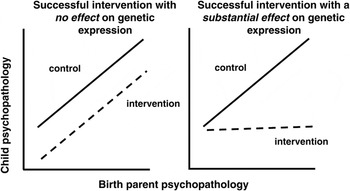
Building on this MTFC example, hypothetical results that support the effectiveness of a modified intervention to reduce or eliminate adverse genetic influences on individual differences in children while at the same time increasing their exposure to a warm and sensitive caregiving environment are shown in Figure 5. As is shown on the left half of the figure, support for the first hypothesis would be indicated by a mean level shift of children's psychopathology, such that children in the intervention condition whose caregiving families had been given the genetically informed version of the intervention would manifest lower levels of psychopathology compared to children in the control condition. However, the expression of genetic influences would remain identical across the two conditions. The right half of the figure illustrates support for the second hypothesis, that the evocative correlations between a child's genetic predisposition and the response of the social environment would be disrupted in the intervention condition. Such a pattern of findings would provide support for the social mediation hypothesis.
Hypothetical results supporting the effectiveness of an intervention to reduce adverse genetic influences on individual differences in psychopathology.

Drawing on evidence for the mechanisms of G × E described throughout this article, the illustrations in Figure 5 can be further specified by including groups of families that vary across social contexts (e.g., depressed and nondepressed parents, economically stressed and noneconomically stressed families, and maritally stressed and nonmaritally stressed families). The evidence reviewed above would suggest that the hypothesized social mediation pathway would likely be influenced by levels of social contextual stress and that interventions might be more likely to show group differences when the specific nature of the associations between the social context and parenting is considered and carefully targeted.
Finally, an additional advance that G × E studies can offer to the development of preventive interventions is to help specify the optimal recipient and developmental period for a preventive intervention. For example, when specific developmental periods and/or specific behavioral characteristics support the social mediation pathway, members of the social environment that act as responders to the individual's genetically influenced characteristics may be the optimal entry into breaking the maladaptive cycle. Alternatively, when specific developmental periods and/or specific behavioral characteristics support the reactive pathway, preventive interventions that target the individual and train him/her to be less reactive to the social environment may be the more optimal intervention path.
The work summarized in this manuscript provides detailed clues as to where to search for mechanisms of G × E and how an understanding of such mechanisms can help further specify preventive interventions for families at risk. Although G × E studies and A × E studies have their divergences, we have demonstrated here how both are essential to furthering the understanding of the basic developmental processes that affect the likelihood that an individual with a given set of characteristics and given genes will be more or less likely to develop healthy outcomes as a function of his/her environment. Future research could be optimized by integrating what we are learning from A × E research with what we are learning from G × E research. Specifically, we need to know how polymorphisms that are associated with psychopathology in adolescents and adults are presented at the behavioral level in toddlers and preschoolers, prior to the onset of problem behavior. The blending of knowledge from these two areas of G × E research will provide the strongest clues for where, when, and how to intervene to prevent the onset of psychopathology in children, adolescents, and adults.