Introduction
Levänluhta, in the municipality of Isokyrö in southern Ostrobothnia, is one of Finland's most fascinating archaeological sites (Figure 1). While the norm in the Iron Age was to cremate the dead, the people using the Levänluhta site chose a different and quite unique way of burying their dead: in water (Wessman, Reference Wessman2009a, Reference Wessman2010). This wetland find consists of unburnt but mixed and fragmentary bone remains from almost 100 human individuals along with artefacts and animal bones. The material has traditionally been thought to have been placed in a bog or natural spring over a short period during the Iron Age, namely ad 600–650 (e.g. Kivikoski, Reference Kivikoski1961; Seger, Reference Seger1982; Lehtosalo-Hilander, Reference Lehtosalo-Hilander1984; Formisto, Reference Formisto1993; Niskanen Reference Niskanen2006). The prehistoric human bone assemblage is strikingly well preserved for Finland thanks to the wet clay, although the iron-rich water has darkened the bones. In addition to human and animal bones, metal artefacts (Figure 2a–f, Figure 3a–b), pieces of wood, burnt clay, daub, and unidentified metal rods have been found (Wessman, Reference Wessman2009a, Reference Wessman2010).
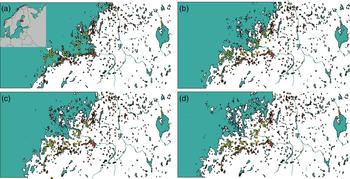
Location of the study area and shore displacement maps for the following periods: (a): 950 bc (2900 bp); (b): ad 50 (1900 bp); (c): ad 450 (1500 bp); and (d): ad 850 (1100 bp), with plots of archaeological sites dating to the Bronze Age (small triangles) and Iron Age (circles). Levänluhta is marked with a star and Käldamäki with a large triangle. Shore displacement data by J. Daniels and T. Påsse, modified by S: Vanhanen.

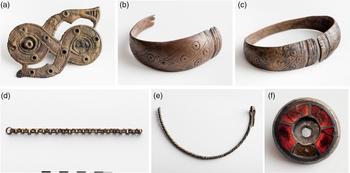
A loop-shaped dragon brooch (NM 21926:1) (a); two concave-convex arm-rings (NM 2440:3, 5) (b) and (c); a brass chain (NM 6373:5) (d); a silver-coated neck ring (NM 6373:6) (e); and a disc from a disc-on-bow brooch (NM22440: 6) (f). Photographs: National Board of Antiquities, Finland.

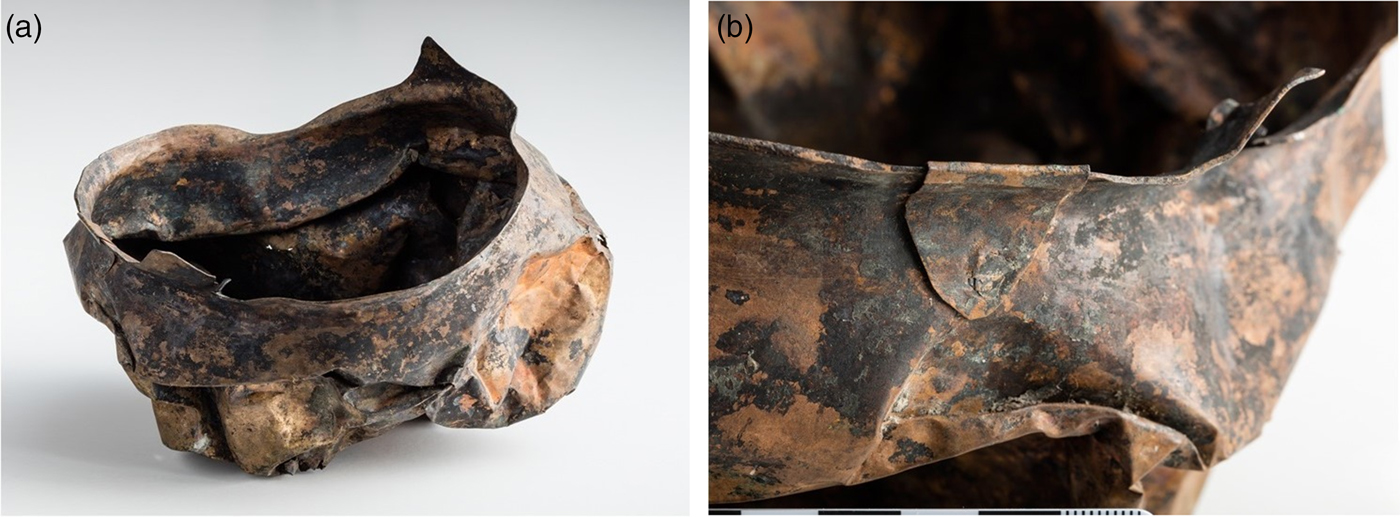
The Westland-type cauldron (a) with a later repair to its rim (b). Photographs: National Board of Antiquities, Finland.

The first notices regarding the human remains found at Levänluhta date from as early as ad 1674, when the vicar of Isokyrö parish wrote to the Antiquity Commission in Stockholm about human bones found inside a spring in the wet meadows of Orismala parish (Meinander, Reference Meinander1950: 136). However, when the marsh meadows were drained for arable land in autumn 1884 the site was no longer remembered by the local people. The first human bones that were recovered at this time were reburied at the same find spot in the belief that they were recent. The first excavation in 1886 also deemed the bones to be fairly recent, assigning them to the Cudgel War (1596–1597), and it was not until new excavations in 1912 that Levänluhta was interpreted as an Iron Age burial site (Wessman, Reference Wessman2009a: 82–84). Excavations took place in Levänluhta on several occasions up to 1984 (see Wessman, Reference Wessman2009a: 82–84). Yet, local folklore from the middle of the 1930s still relates the site of Levänluhta to the Cudgel War or to the war of 1808–1809, attributing these watery graves to Russian soldiers (Haavio, Reference Haavio1937: 157–58).
The first systematic academic study of the osteological materials from Levänluhta was undertaken in 1993 by Formisto, who published her PhD dissertation on the human remains. Later, Niskanen (Reference Niskanen2006) published a new osteological study of a sample of the human bones. The bone assemblages, consisting of almost 74 kg of bones, can be defined as belonging to ninety-eight individuals, of which thirty-two are infants, six sub-adults, forty-one adults, eighteen mature adults, and one old adult (Formisto, Reference Formisto1993: 103). According to Niskanen (Reference Niskanen2006: 29–30), the majority of the bones belong to females. Past interpretations regarding the Levänluhta spring have ranged from it being a place for human sacrifice or punishment to being a mass grave for those who had perished from famine, plague, or war (Hackman, Reference Hackman1913; Leppäaho, Reference Leppäaho, Heporauta and Haavio1949; Seger, Reference Seger1982; Niskanen, Reference Niskanen2006).
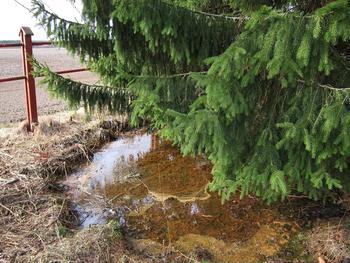
In 2009, Wessman (Reference Wessman2009a) published a synthesis of the data available from the Levänluhta archaeological investigations. She argued that the people buried there were ordinary people buried in a wetland, which was, at the time, a lake or pond rather than a bog. In the early 1970s, there were still three springs at the site, but today only two springs are active (Figure 4). The previous osteological analysis indicates that the hypothesis of a sacrificial site can be dismissed. There are no signs of trauma on the bones, only a few animal bones are present, and astonishingly no ceramics or weapons to support an interpretation as sacrificial site (Wessman, Reference Wessman2009a).
The spring at Levänluhta. Photograph: Tarja Sundell, 2014.

Although Levänluhta appears to be a unique burial type in Finland and northern Europe, a similar site exists nearby. Käldamäki, in Vöyri parish, located some 35 km from Levänluhta, is also a lake burial site that yielded unburnt human and animal remains. The site was excavated in 1936 and 1937, and the excavations are described in publications by the archaeologist that attended the excavations (Meinander, Reference Meinander1950, Reference Meinander and Hägg1977; Wessman, Reference Wessman2009a). The minimum number of buried individuals is six, and among the deceased there are at least two adult males, two adult females and juveniles (Formisto, Reference Formisto1993: 153). In addition to human and animal bones, some other finds were retrieved from the site: a wooden axe shaft, a fish trap and a small bronze rod. A radiocarbon measurement from one human bone provides a date in the Migration period (Formisto, Reference Formisto1993: 152–53; Wessman, Reference Wessman2009a: 90). The existence of two very similar sites dating to the same period suggests that even more sites may be found if systematically searched for.
Despite the uniqueness of the site and the numerous previous studies, most details about the origin, economy, life, and death of the people using Levänluhta are speculation. Until now, the artefacts recovered at the site had not been thoroughly studied and, for example, the type of alloy of the metal artefacts remains undetermined. The aim of this study is threefold. First, we aim to characterize in detail the metal artefacts by comparative typological analysis and determination of their alloy composition by non-destructive portable energy dispersive X-ray fluorescence spectrometry (pXRF). Second, we examine the settlement history around the Levänluhta site through pollen analysis and archaeological survey. And third, the animal bones from Levänluhta and Käldamäki are re-analysed. Seventeen animal bones have been AMS-dated in order to find out more about the burial customs at Levänluhta. Since the aim of this article is to use contextual information about Levänluhta and to re-interpret the site, we have left the osteological analysis of the human remains out of this article's scope.
Materials and Methods
The fieldwork carried out for this study consists of an archaeological survey of the region and a pollen analysis. The Ostrobothnian coast began to emerge from the Baltic Sea around 950 bc (Figure 1a). Rapid land uplift changed the topography dramatically, and by ad 850 the seashore had extended to close to its present position, approximately 50 km from the Levänluhta site. During the main period of use of Levänluhta, from around ad 400 to 800, the shoreline was already some 20–30 km from the site (Figure 1c–d). Even today, the land uplift (c. 8 mm per year) is gradually changing the shoreline, exposing new land areas. Today, Levänluhta is located between 20 and 30 m a.s.l., and the area as a whole is characterized by a flat topography (Geological Survey of Finland, Map of Quaternary Deposits), with clay as the dominant soil type. Currently, most of the flat areas around Levänluhta and by the rivers Kyrönjoki and Orismalanjoki are cultivated fields. The rocky and uneven areas consisting of moraine sometimes contain settlements and, in some cases, they are forested.
Pollen analysis
The samples for pollen analysis were obtained from the centre of the Isoneva mire, at an altitude of 25 m a.s.l. and 3 km south-east of the Levänluhta water burial site (Figure 1). The mire is approximately 200 ha in size and has a radius of approximately 300 m. The sample site was selected out of necessity because all the small lakes in the area have been dredged, and most of the mires in the area have been heavily drained. Simulation-based calculations have demonstrated that the relative pollen source area in basins with a radius of 250 m varies between 2000 and 3000 m (Hellman et al., Reference Hellman, Bunting and Gaillard2009). However, these simulations show that the relative source area has varied over time, depending on variations in the patterning of the vegetation, that is, the size of the vegetation patches over the landscape (Nielsen & Sugita, Reference Nielsen and Sugita2005). Thus, estimating the pollen source area is difficult; and, perhaps, roughly estimated, it could be somewhere over 3000 m in the Isoneva mire.
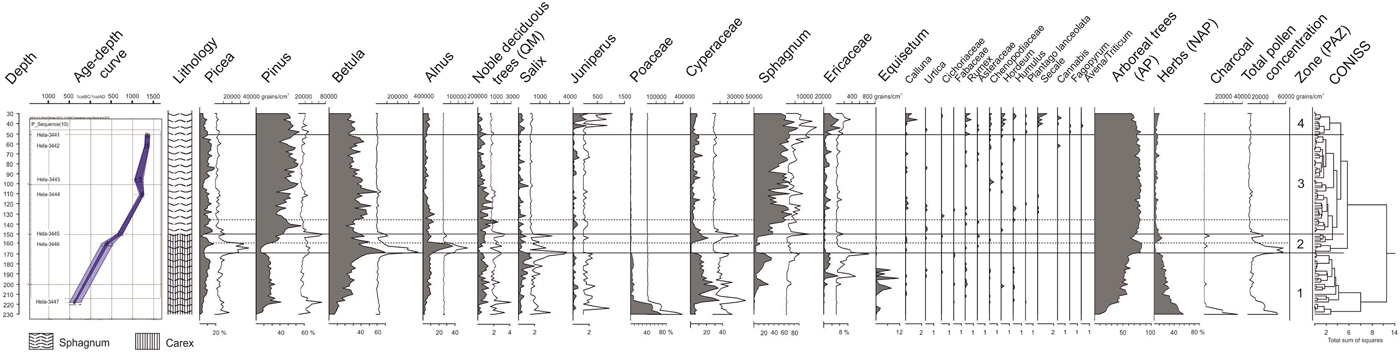
A 250-cm-long sample was obtained using a Russian peat corer. From the surface to a depth of 150 cm, the peat was Sphagnum dominant, while between 150 and 230 cm Carex and Sphagnum were dominant. The deepest part of the sample (between 230 and 250 cm) consisted of clay. Samples for pollen and charcoal particle analyses were taken every other cm along the core. Pollen preparation followed the standard procedure (Bennett & Willis, Reference Bennett, Willis, Smol, Birks and Last2001). For calculations of pollen and charcoal concentrations, two Lycopodium tablets (Stockmarr, Reference Stockmarr1971) were added to samples of 1 cm3 in volume before preparation. A minimum number of 500 pollen grains and spores were counted per sample. The number of microscopic charcoal particles (≥10 μm in size) on the pollen slides was counted. Identification of pollen species was based on the publications of Faegri and Iversen (Reference Faegri and Iversen1989), Moore et al. (Reference Moore, Webb and Collison1991), Reille (Reference Reille1992, Reference Reille1995), and Beug (Reference Beug2004). Biostratigraphic data treatment and diagrams were handled with Grimm's (Reference Grimm1991–2011) Tilia programs. Stratigraphically-constrained cluster analysis (CONISS) was used to assist zonation.
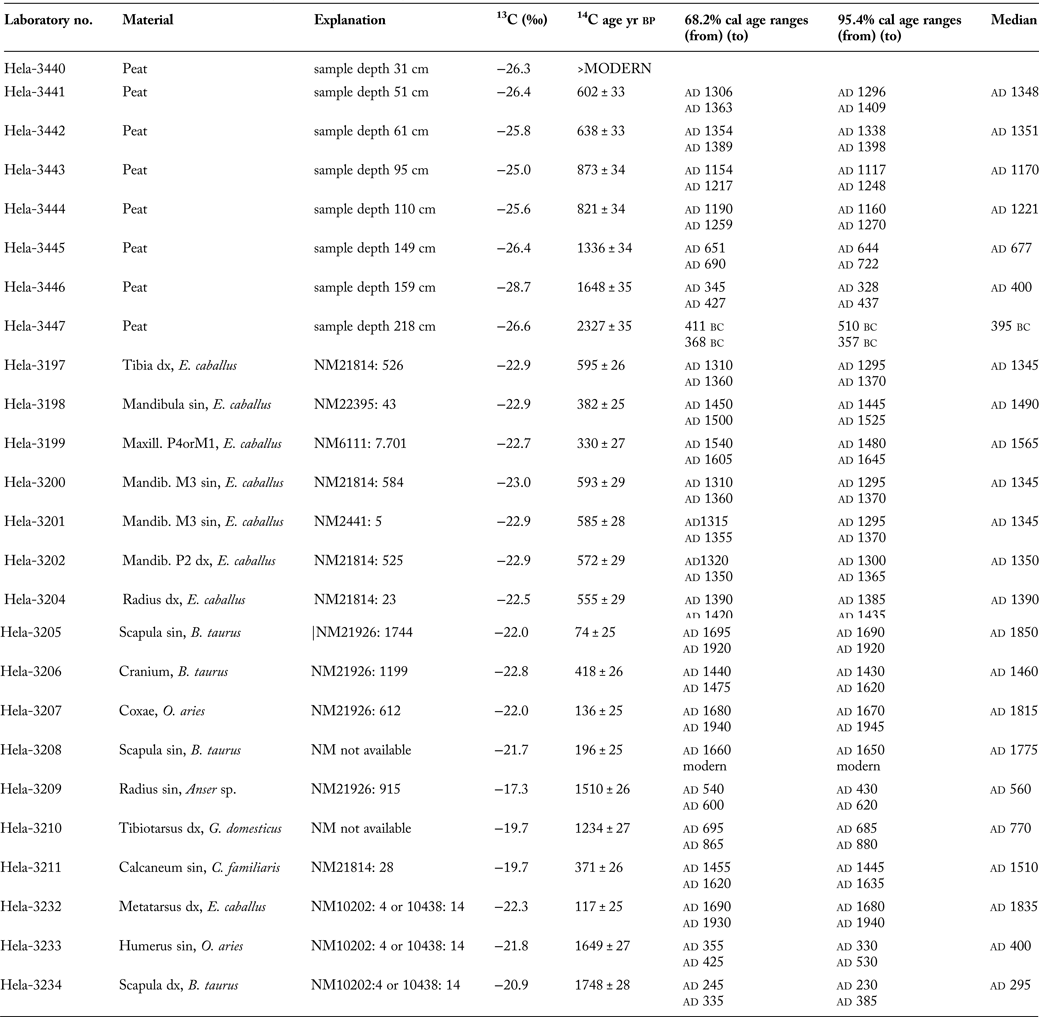
The pollen sequence was dated by means of eight AMS measurements obtained from 1-cm-thick peat samples (Table 2). All the dates were calibrated with OxCal v4.2.4 (Bronk Ramsey, Reference Bronk Ramsey2009), which employs the calibration curve published by Reimer et al. (Reference Reimer, Bard, Bayliss, Becks, Blackwell and Bronk Ramsey2013). The age-depth model for the pollen sequence was likewise created with OxCal v4.2.4, using the deposition model P_Sequence (Bronk Ramsey, Reference Bronk Ramsey2008) (Figure 5).
The pollen percentages (in grey outline) and pollen concentrations (grains/cm3) (in hollow outline). Selected species only. The pollen percentages of arboreal pollen (AP) (including Picea (spruce), Pinus (pine), Betula (birch), Alnus (Alder)), non-arboreal pollen (NAP), and noble deciduous trees (QM) (including Corylus (hazel), Ulmus (elm), Quercus (oak), Tilia (lime), Carpinus (hornbeam), Fraxinus (ash), Fagus (beech)) were calculated from the basic sum of terrestrial pollen grains, P = AP + NAP + QM. The aquatic pollen (AqP) and spores were calculated from the sums P + AqP and P + Spores. The Levänluhta period (ad 400–800) is marked with a dashed line. The age-depth model (on the left) of the Isoneva mire, based on seven calibrated radiocarbon dates (for measurements, see Table 2). Charcoal concentration, total pollen concentration of land pollen, local pollen assemblage zones (PAZ 1–4) and CONISS zonation are shown on the right hand side of the diagram.

Archaeological survey
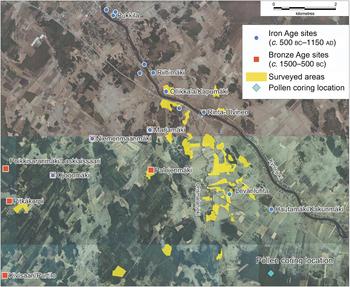
Habitation and other prehistoric activity were sought around the Levänluhta site both in the immediate vicinity (Figure 7) and in areas mostly around the rivers Orismalanjoki and Kyrönjoki (Figure 6). The investigations comprised fieldwalking and digging trial pits.
Main surveyed areas, which are mostly in the vicinity of Orismalanjoki and Kyrönjoki, marked by shading. The map shows the location of the pollen coring together with Bronze and Iron Age sites. © Ortho Image normal colour, Maanmittauslaitos, 1996–2001.

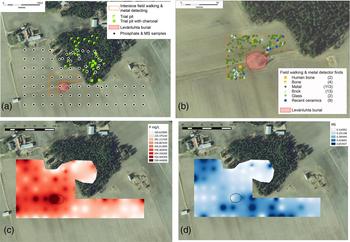
Investigations carried out in the immediate vicinity of the Levänluhta burial site: (a): areas of intensive fieldwalking and metal detecting, trial pits in Momminmäki, coring locations for Phosphate and MS samples; (b): finds from intensive fieldwalking and metal detecting; (c): results of phosphate survey; and (d): results of magnetic susceptibility.

The following methods were used in the immediate vicinity of the site:
1) An area of 3.3 ha was mapped using phosphate analysis and analysis of magnetic susceptibility. Samples for these analyses were cored with a 3-cm-wide corer from the bottom 5 cm of the Ap-horizon (cultivated field layer) in the field area, and the lowest 5 cm above the sandy subsoil in the forested area of Momminmäki. Eighty-two samples were collected at c. 25 m intervals (Figure 7a). Phosphate samples were treated with 10 per cent citric acid and analysed using the molybdenum-blue method and Ultrospec 7000 spectrophotometer. Magnetic susceptibility (MS) was measured with a ZH Instruments SM100/105 multifrequency susceptibility meter.
2) Altogether thirty-seven trial pits measuring c. 50 × 50 cm were dug in the forested area of Momminmäki in the immediate vicinity of Levänluhta (Figure 7a).
3) Intensive fieldwalking and metal detecting were conducted in the field area of 0.25 ha around Levänluhta (Figure 7b). This involved setting up areas of 20 × 20 m with a total station and dividing them into 20-m-long and 1-m-wide lanes with plastic measuring tapes. These lanes were systematically fieldwalked and swept with a metal detector (White's Spectra VX3) by students on an archaeological field course. All the signals were excavated and metals sought with the help of a pinpointer (Minelab Pro-Find 25). Pits were dug only in the Ap-horizon. All finds were documented with a total station.
Metal finds and their alloy composition
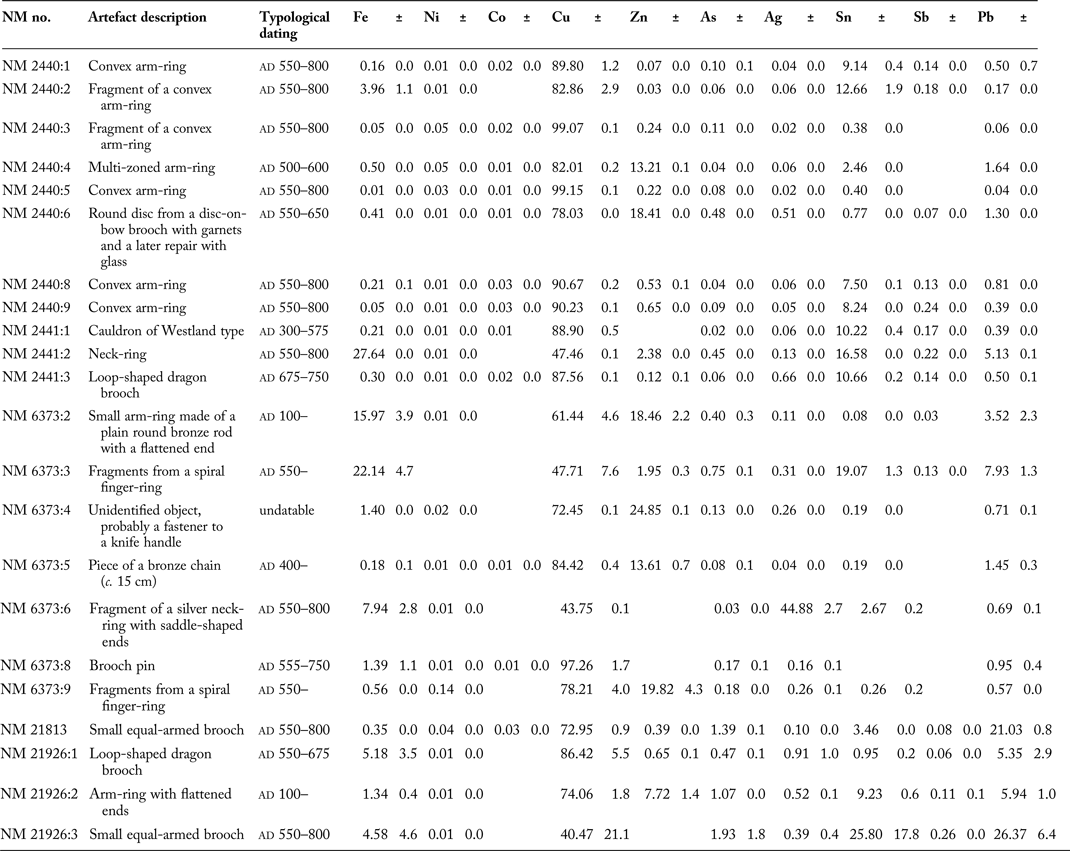
The alloy type of the Levänluhta copper and copper-based metal artefacts was analysed using a portable, handheld energy dispersive X-ray fluorescence spectrometer (pXRF), nowadays commonly applied in non-destructive, non-invasive chemical characterization of archaeological materials, including copper-based metal artefacts (e.g. Smith, Reference Smith, Shugar and Mass2012; Charalambous et al., Reference Charalambous, Kassianidou and Papasavvas2014; Orfanou & Rehren, Reference Orfanou and Rehren2014; Dussubieux & Walder, Reference Dussubieux and Walder2015; Holmqvist, Reference Holmqvist and Hunt2017). The instrument employed was a Bruker S1 Titan analyser (SDD-detector, 120 s acquisition time, copper alloy calibration, spot size 8 mm). Quantitative results were calculated by the instrument's software. The reported result for each artefact is a mean value of 3–5 measurements conducted on seemingly corrosion free, even areas on the artefact surfaces (Table 1). Surface analyses by pXRF of copper or copper-based artefacts are prone to problems related to surface corrosion and patination (Dussubieux & Walder, Reference Dussubieux and Walder2015: 170), thus it is not always possible to estimate the original composition of the alloy.
Elemental concentrations measured by non-invasive pXRF from unprepared artefact surfaces. Mean values (n = 3–5) and standard deviation reported. NM = National Museum Number.

Animal bones
In this study, the animal bones from Levänluhta and Käldamäki were re-analysed using the animal bone reference material of the Zoological Museum of the University of Helsinki. The age estimations of the domestic animals are based on teeth eruption and abrasion and epiphyseal fusion (Silver, Reference Silver1969; Habermehl, Reference Habermehl1975; Grant, Reference Grant, Wilson, Grigson and Payne1982; Vretemark, Reference Vretemark1997). The bones from Levänluhta come from the excavations conducted between 1886 and 1984 (National Museum Numbers, NM 2441, 2996, 6110, 6373, 21814, 21926, 22403, and 22395). The bones from Käldamäki originate from excavations in 1937 (NM 10202) and 1938 (NM 10438). The material consists of unburnt but mixed fragmentary bones and teeth. Like the human bones, the animal bones cannot be associated with, or reconstructed into, any specific individual animal.
Twelve animal bones from Levänluhta (five from horse, three from cattle, and one each from dog, sheep, chicken, and goose) and three from Käldamäki (one each from cattle, horse, and sheep) were subjected to new radiocarbon dating (AMS) and C stable isotopes analysis (Table 2).
Radiocarbon dates and 13C stable isotope values obtained from the animal bones from Levänluhta and Käldamäki, and peat profile obtained from the Isoneva mire. Calibration data: Intcal13 (Reimer et al., Reference Reimer, Bard, Bayliss, Becks, Blackwell and Bronk Ramsey2013). NM = National Museum Number.

Results
Archaeological survey
The phosphate analysis (Figure 7c) showed raised values around the Levänluhta burial site and near the currently inhabited farm north-west of the burial site, and lower values in Momminmäki (forested area on the map) and in the fields east of the burial site. Magnetic Susceptibility values were generally low in the Momminmäki area (Figure 7d). Raised MS values were present in fields both south of Momminmäki and near the present-day farm. It seems clear that phosphate analysis correlates much better than MS with the burial site values, where phosphate values were raised by the accumulation of bones. Raised phosphate values west of the burial site may indicate that the site extended further in that direction. It is also possible that groundwater moved soil containing raised phosphate values, or that the elevated values are caused by some other factor. High MS values south of the modern farm may be connected to activities conducted on the current or preceding farm. Raised MS values east of the burial site could also be caused by a barn visible in a survey map of 1906 (Hackman, Reference Hackman1906).
Trial pits dug in the moraine hill of Momminmäki gave only weak indications of seemingly recent activity in the form of brick fragments and pieces of charcoal (Figure 7a). It thus seems that that there is no evidence of Iron Age activity on the Momminmäki hill corresponding to the activities carried out at the Levänluhta burial site.
Finds discovered during fieldwalking and metal detecting consisted mainly of metal objects of recent date (Figure 7b). No metal finds clearly dating to any prehistoric period could be identified. Brick, glass, recent ceramics, and bone were also found. Two bones were identified as human, indicating that bones still occur around the burial site.
No clear signs of Iron Age habitation were discovered, even though relatively large areas were surveyed. Most of the surveyed hills were rocky, uneven, and contained areas of bare bedrock. Habitation seems to have intensified since the Iron Age and it is possible that Iron Age settlements are situated below modern habitation, where investigations were not conducted.
Pollen
The age-depth model, presented in Figure 5, is based on seven radiocarbon measurements (see Table 2). The uppermost radiocarbon date (Hela-3440) was excluded from the model because the radiocarbon date was modern. The age-depth model suggests fluctuations in peat accumulation throughout the history of the mire. Such fluctuations in deposition rate are expected, as the former sea floor gave way first to pioneer species such as Poaceae, Cyperaceae, and Equisetum species, and later to peat dominated by Sphagnum with Ericaceae.
The pollen analysis was divided into four local pollen assemblage zones (PAZ 1–4) based on the CONISS cluster analysis (Figure 5). The lowermost section of the pollen diagram (PAZ 1) (230–169 cm), dating to between c. 560 bc and ad 280, represents the early stages of vegetation development in the area and consists of Carex peat. It is characterized by a high proportion of non-arboreal taxa, such as Poaceae (grasses), Cyperaceae (sedges), Equisetum (horsetail), and Potentilla (cinquefoil), which first colonized the newly exposed wetland area. The section clearly contains substantial amounts of redeposited pollen and charcoal particles that are recorded in high values in the lowermost 10 cm.
PAZ 2 (169–150 cm) dates to between c. ad 280 and 690. It is characterized by a high total pollen concentration, with arboreal species dominating, clearly indicating a slow peat accumulation rate. This 450-year-long phase represents the continuation of successive stages, as a newly exposed wetland area, visible in the lowermost pollen assemblage zone (PAZ 1), is gradually followed by drier conditions.
PAZ 3 (150–51 cm) dates to between c. ad 690 and 1350 and, along with the uppermost zone, represents the Sphagnum dominated mire. The primary elements in this pollen assemblage zone are arboreal species (Pinus, Betula, Picea, and Alnus), along with Sphagnum and Cyperaceae. The total pollen concentration remains approximately 50,000 grains per cm3, suggesting a stable peat accumulation. Sporadic occurrence of Hordeum (barley), Secale (rye), Chenopodiaceae (goosefoot), Asteraceae (aster), Cichoriaceae (chicories), Urtica (nettle), Rumex (sorrel), and Plantago lanceolata (ribwort plantain) indicate minor and sporadic land use in the area. The concentration of charcoal particles remains low, with a peak at 152 cm, dating to c. ad 600.
The uppermost pollen assemblage zone, PAZ 4 (51–30 cm), dated to c. ad 1350 onwards, shows a decrease in arboreal pollen (AP) and increase in grasses and herbs (NAP), indicating increasing land use in the area. Anthropogenic pollen types are abundant and Hordeum pollen is recorded throughout the zone. An increase in the concentration of charcoal particles indicates the use of fire in the area.
Elemental and archaeological analysis of the copper-based metal artefacts
A pXRF analysis was conducted on the twenty-two metal artefacts recovered at the site. Four of the arm-rings (NM2440: 1, NM2440: 2, NM2440: 8, and NM2440: 9) are made of a good quality bronze with c. 10 per cent tin; two are made of brass (NM6373: 2 and NM2440: 4); and two (NM2440: 3, 5) are made of copper. The arm-ring consisting of a plain round rod (NM21926: 2) is likely to be made of bronze, its elevated Zn, Fe, and Pb concentrations being probably caused by corrosion (see Jenkins, Reference Jenkins1989, 57–59; Orfanou & Rehren, Reference Orfanou and Rehren2014). Similarly, one of the neck-rings is made of bronze (NM2441: 2), its high Fe, Zn, and Pb values probably representing impurities that derive from surface contamination. The other neck-ring (NM6373: 6) is most likely to be a copper-based metal artefact coated with silver (44.9 per cent Ag by weight). The chain from a dress ornament (NM6373: 5) is made of brass, and the same applies to the unidentified, unnumbered object, probably a fastener to a knife handle. The two spiral finger-rings (NM6373: 3 and NM6373: 9) appear to be made of different alloys (bronze and brass, respectively), but it is difficult to examine their chemistry with surface analysis. Based on their typology, it is possible that most of the artefacts from Levänluhta, the arm- and finger-rings especially, are of domestic design.
The assemblage contains two typologically very similar, small, equal-armed brooches (NM21926: 3 and NM21913: 1), but their comparative compositional examination is hindered by the high error range, suggesting corrosion caused Pb enrichment on their surfaces, which thus prohibits us from securely identifying their type of alloy. Of the two loop-shaped dragon-brooches (NM21926: 1 and NM2441: 3), at least the latter is made of bronze. The pin from probably a similar brooch (NM6373: 8) is made of copper.
The disc from the disc-on-bow brooch (NM22440: 6) is made of brass and decorated with inlaid red garnets (Figure 2f). It is a rare brooch type in Finland: only a few brooches have been found, mostly in Ostrobothnia (Wessman, Reference Wessman2009a: 87). The disc must have been originally riveted on top of a gilded copper alloy brooch, probably richly ornamented in Salin I style. These brooches were commonly worn by women (Arrhenius, Reference Arrhenius1971: 203, Reference Arrhenius1985: 182; Glørstad & Røstad, Reference Glørstad, Røstad, Vedeler and Røstad2015: 181).
Even though it is difficult to determine the type of the original brooch by the disc only, its small size suggests that it derives from an early brooch variant (either types E0, E1, or E4), dating to the beginning of Merovingian period (see Ørsnes, Reference Ørsnes1966; Glørstad & Røstad, Reference Glørstad, Røstad, Vedeler and Røstad2015: 186). The surface bears many traces of wear and tear. This could be explained by the fact that the brooch was considered valuable and, thus, circulated for a long time. Of the five zones of thinly cut garnets on the disc, one is missing and has been, quite crudely, replaced at some point with brown glass from a glass beaker, probably datable to the first millennium. Previous studies have shown that, elsewhere in Scandinavia, such brooches remained in circulation for several generations (at least 100 years) before being deposited in burials (Glørstad & Røstad, Reference Glørstad, Røstad, Vedeler and Røstad2015: 193).
The Westland-type cauldron (Figure 3a–b) (NM2441: 1) is chemically of high-quality bronze, which corresponds well to other trace element analyses undertaken on the Norwegian Westland cauldrons (Dahlin Hauken, Reference Dahlin Hauken2005: 46–50). These cauldrons are of provincial Roman origin, named after their primary find location in western Norway. They are believed to have been brought to Norway as part of successive long-distance trade episodes and to have spread intra-regionally through gift-exchange between allied elite communities (Dahlin Hauken, Reference Dahlin Hauken2005: 61–63) or as loot by returning armies (Oestigaard, Reference Oestigaard1999: 357).
The cauldron from Levänluhta is much damaged, and its original shape and typology is difficult to determine. Its triangular lugs suggest that it is of type 2, but the subtype can unfortunately not be identified because its profile has been dented. Hence, it seems that the Levänluhta cauldron was produced sometime between ad 300 and 575 (Dahlin Hauken, Reference Dahlin Hauken2005: 28, 45). It differs from other Westland cauldrons in that the lugs do not have holes for a handle. It suggests that the cauldron was, perhaps, not finished when put into circulation. Moreover, the repair on its rim suggests that it was in circulation for a long time and mended at some point before being deposited in the burial (Figure 3b).
The Westland cauldron and the disc from the disc-on-bow brooch imply contacts with Scandinavia, possibly even Norway. These exclusive objects can be connected to the Scandinavian elite (Ørsnes, Reference Ørsnes1966: 105–06; Oestigaard, Reference Oestigaard1999; Dahlin Hauken, Reference Dahlin Hauken2005), but the unfinished nature of the cauldron may also indicate that it was never meant to be a high-quality vessel when it came on the market. The repairs on the cauldron and on the garneted disc could, on the other hand, imply that these objects were indeed valued by their owners. The fact that they were both in use for a very long time before being placed inside the water burial also points in that direction. It is worth noting that both artefact types are very rare in Finland and are products of exchange, which supports the idea of exclusivity. Moreover, it is very rare for only the button or the disc of a brooch to be found inside a burial, as at Levänluhta. Elsewhere in Scandinavia, it is more common to find the brooch without its disc, which suggests some kind of pars pro toto. By removing the disc from the brooch, new meanings were attached to it (Glørstad & Røstad, Reference Glørstad, Røstad, Vedeler and Røstad2015: 181–82, 192–93); and the disc may have been in use for a long time as some kind of pendant. In Scandinavia, disc-on-bow brooches, which are commonly found in female burials, have been associated with the cult of the fertility goddess Freya and perhaps even functioned as attributes to her, giving the objects themselves a symbolic meaning (Arrhenius, Reference Arrhenius1962: 97; Arrhenius, Reference Arrhenius1971: 203; Olsen, Reference Olsen2006). Although this is speculative, it may be that the disc from Levänluhta was an important heirloom which was passed on from mothers to daughters. Its mnemonic value, biography, or personhood should therefore not be overlooked (see Wessman, Reference Wessman, Sne and Vasks2009b).
Animal bones
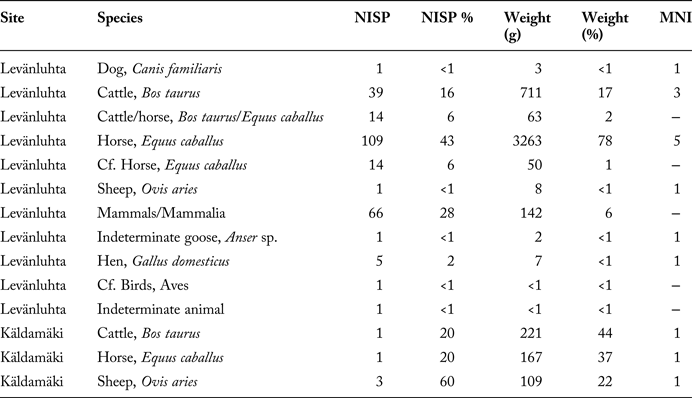
The taxonomic distribution of animal bones at Levänluhta and Käldamäki is presented in Table 3. Based on the Number of Identified Specimens (NISP), the most common species in the assemblages are horse (Equus caballus) and cattle (Bos taurus). All the other species, i.e. sheep (Ovis aries), dog (Canis familiaris), and chicken (Gallus domesticus), are represented only by single finds. The radius of a goose could only be identified at the genus level (Anser sp.), but its size suggests that it may belong to a bean goose (Anser fabalis) or a graylag goose (Anser anser). The Minimum Number of Individuals (MNI) for horse is 5, based on the mandibular third molar and the epiphyseal age estimations. The MNI for cattle is 3, based on the left scapula and mandibular molars. The horse bones derive from all parts of the skeleton, which indicates that complete horses were probably deposited.
Taxonomic distribution of animal bones at Levänluhta in Isokyrö, and Käldamäki in Vöyri. NISP = Number of Identified Specimens, MNI = Minimum Number of Individuals.

Dates and stable isotope 13C values for the animal bones are presented in Table 2. The results of AMS analysis show that most of the dated animal bones from Levänluhta and Käldamäki are significantly more recent than the human burials at the site.
Discussion and Conclusions
Settlement history
The fieldwork did not produce any traces of settlement sites close to the cemetery, suggesting that the burial site was located in a peripheral location. This is not unexpected, as archaeological finds from the Iron Age and medieval period are concentrated along the river Kyrönjoki, where habitation is shown by burial finds (Figures 1 and 6). The Levänluhta burial, on the other hand, is not located by the larger river Kyrönjoki, but on its small tributary, the Orismalanjoki. The absence of settlements close to the cemetery suggests that during its use phase the Levänluhta burial site was marginal, clearly outside the central habitation, perhaps in a liminal and sacred space, far from the settlement sites.
In the pollen analysis, the period of use of Levänluhta (ad 400–800) is present in PAZ 2 and the lower part of PAZ 3. According to this analysis, human activity was sparse until c. ad 1350. The pollen analytical study shows that the area around Levänluhta was well suited to animal grazing, because it was open with copious sedges and grasses growing nearby. No pollen from actual cultivars was found in the Levänluhta era, but earlier pollen analyses from Ostrobothnia show that cultivation and animal husbandry took place there throughout the Iron Age (Wallin & Segerström, Reference Wallin and Segrström1994).
The interpretation of the pollen results from the Isoneva mire are complicated by the fact that, during the period of use of Levänluhta, the mire had developed from a Carex to a Sphagnum dominated mire and, as a result of this natural succession, the peat accumulation rate varied. Another factor affecting the results is the marginal location of the Isoneva mire with respect to the Levänluhta burial site. The mire is situated some 3 km south of the Levänluhta burial site, and the results of the pollen analyses, therefore, mainly reflect the regional vegetation on the southern side of the burial site, with the Levänluhta burial site being at the northern edge of the pollen source area. The weak signs of human activity shown in the pollen analysis before c. ad 1350 nevertheless correspond to the results of the archaeological survey, as the number of Iron Age sites is low in the areas surrounding the pollen-coring site. It is only from c. ad 1350 onwards that the pollen analysis shows increasing forest clearing, grazing, and cultivation in the area.
Animal bones in Levänluhta and Käldamäki: offerings and later depositions
The radiocarbon results clearly show that the mammals in Levänluhta did not form part of the burial practices. The only animal bones from Levänluhta whose AMS date goes back to the Iron Age are those of a chicken and a goose. The Levänluhta chicken (ad 775) and goose (ad 565) are the earliest dated individuals belonging to these species found in Finland. It may seem surprising that just the two birds should form part of the burial rituals, rather than the horses, cattle, sheep, and dog which are present in many other Late Iron Age burial sites in Finland (e.g. Blomqvist & Fortelius, Reference Blomqvist, Fortelius and Lehtosalo-Hilander1982; Formisto, Reference Formisto and Purhonen1996: 84; Hårding, Reference Hårding, Viklund and Gullberg2002: 215–17; Salo, Reference Salo2004, Reference Salo2005; Kivikero, Reference Kivikero2008, Reference Kivikero2009). However, the presence of birds on Iron Age burial sites is not rare in European contexts (e.g. Serjeantson, Reference Serjeantson2009: 340–48). Domestic birds, chicken, and domestic geese are even more common on Iron Age burial sites in northern and central Europe, especially in the Roman period (ad 1–375) (Benecke, Reference Benecke1993; Albarella, Reference Albarella, Grupe and Peters2005; Gal, Reference Gal, Grupe and Peters2005; Gotfredsen, Reference Gotfredsen2013). For example, greylag geese (or domestic geese) have been identified in several boat graves in Sweden dated to ad 500–600 (Jennbert, Reference Jennbert2011: 159–60).
In Käldamäki, the remains of cattle and sheep date to the very early phase of use of the site: ad 295 and ad 400, respectively. If we assume that these animals were part of the burial rites, the use period of the site started in late third century ad, much earlier than previously estimated.
All dated cattle and horse bones in Levänluhta (Hela-3197–3206 and 3208) date to the period from ad 1345 to 1850. The remains of three horses were deposited at the site in the fourteenth century, one horse in the sixteenth century, and two cattle in the eighteenth and nineteenth centuries. They are part of later farming land use of the medieval or post-medieval periods, which here dates from around ad 1350. From this date onwards, pollen analysis shows that the landscape became increasingly open as a result of forest clearing and cultivation. An increase in juniper values can be connected to grazing in the area. Because our results indicate that the cattle and horses in Levänluhta, and the horse in Käldamäki are medieval, they cannot be used in the study of the prehistoric burial rites. However, they still provide interesting information about the later uses of the site and the agrarian history of the area. In fact, it is possible that the people who buried these animals knew about the sacred history of the site, transmitted through folklore or religious traditions as a cemetery and, thus, a sacred place.
Formisto obtained one radiocarbon date from a cattle bone (a rib) from Levänluhta in 1993. The result, 429 cal bc to cal ad 76, is too old to be connected to the cemetery and could imply earlier activity at the site. This date may be an indication that the pond or lake at Levänluhta had been utilized long before the cemetery was established. We cannot exclude the possibility that the cattle remains have a natural explanation, for example drowning, but it is tempting to think that the site has a history as an offering site or other ritual place from a time prior to the cemetery even though, unlike elsewhere in Scandinavia, there is no other evidence for a prehistoric tradition of bog or lake offerings in Finland.
Networks
Our analysis on the Levänluhta copper-based metal artefacts provides new information concerning the metallurgical traditions and the possible sources of the objects. Our combined elemental (pXRF) and artefact analyses give indications about the level of technology and the socio-cultural set-up related to the manufacture of these objects. While many of the artefacts are domestic in style, the compositional variety among the objects can be indicative of multiple sources rather than one workshop used by the local community. There are no similar studies from Finland, which means that there are no comparable materials to investigate the metal economy in a wider context. All in all, the assemblage consists of high-quality objects by their design and alloy composition, most of which were probably manufactured, if not locally, within this cultural setting given their domestic designs. In addition to these, there are objects that are likely to be foreign imports, such as the cauldron, which is made of high-quality bronze; their technical accomplishment further suggests that they are imports and adds to their value as status objects, gifts, or traded items. The artefact analysis indicates continuity on the site for a long time, from approximately ad 350 to 800. The artefacts are mostly jewellery or female dress items. Only the Westland cauldron, probably produced in Germania Inferior on the west bank of the Rhine (Dahlin Hauken, Reference Dahlin Hauken2005: 50–51), differs, partly because it is rare in Finland, but also because it is an offering in a grave. Only four cauldrons of this type are known from Finland, three of which have been found in Ostrobothnia (Wessman, Reference Wessman2009a). It bears witness to either direct trade or networks of contacts and gift-exchange with the west.
It is likely that trading routes went across the Bothnian Gulf to the Medelpad area in Sweden, where the majority of the Swedish cauldrons of this type have been found, such as at the famous Högom site, and at Gene (Ramqvist, Reference Ramqvist1992: 140–41; Viklund, Reference Viklund, Viklund and Gullberg2002: 26). Ramqvist has described Högom as a petty kingdom with long distance contacts during its period of occupation from ad 250 to 500. Several cauldrons have also been found further west in the Trondheim area in Norway (Dahlin Hauken, Reference Dahlin Hauken2005: 10). It seems that Norrland and Trøndelagen were joined by an ancient trade route that crossed the mountains (Storm Munch, Reference Storm Munch1956: 119; Bergman et. al., Reference Bergman, Östlund, Zackrisson and Liedgren2007: 404). The spread of relief brooches also forms a distinctive regional ‘Bothnian group’ that covers the same geographical area from coast to coast (Røstad, Reference Røstad2016: 305–07, 311–12). This implies established contacts existed before the Merovingian period and indicates that the areas were influenced by each other.
Both the cauldron and disc from Levänluhta suggest that the ancient community had connections to the west, probably through a system of prestige goods and perhaps even political gift-exchange. Strong, personal relationships were necessary to create and maintain alliances during the Iron Age and in that the system of gift-exchange was an especially important vehicle. To maintain these relationships, feasting and banqueting were key elements for strengthening established bonds, and cauldrons fit well into that. Because Westland cauldrons are often found in burials it is possible that they even played a role in funeral rites (Oestigaard, Reference Oestigaard1999; Dahlin Hauken, Reference Dahlin Hauken2005).
A burial type out of the norm
The Levänluhta cemetery contained mostly women and children, the men being in a clear minority in the bone assemblages. This is unusual within Finnish Iron Age burial practices, since men and women are rarely separated or treated differently.
When looking at the metal objects, it is evident that not all the dead were accompanied by grave goods. There are too few objects (twenty-two) in relation to the number of deceased (ninety-eight). This can be explained in several ways: 1) only a limited number of the individuals were buried with grave goods; 2) the majority of the grave goods were made of organic material which deteriorated in the ferrous water; 3) some of the grave goods were later retrieved from the water; or 4) poor excavation techniques, such as not sieving the muddy soil during most of the excavations may account for the paucity of finds.
It has been widely recognized elsewhere that material elements were not given to all in mortuary practice during prehistoric times. The absence of grave goods could, thus, indicate formal versus informal burial, where furnished burials would have been a sign of social competitiveness (see, for example, Jennbert, Reference Jennbert2011; Raninen & Wessman, Reference Raninen, Wessman, Haggén, Halinen, Lavento, Raninen and Wessman2015).
It has not been possible to determine with certainty to which individual the grave goods belonged, given that the bones were so mixed up. Only one arm-ring was found attached to an ‘armbone’ implying that the deceased was indeed wearing the item when he or she was buried in the water (NBA, 1886). Indeed, wetland burials are the source of speculation about taphonomic factors (see Monikander, Reference Monikander2010: 11 with references). Moreover, we still do not know whether this is a peculiar way of disposing of the dead or is actually unique only because this particular burial site has been found, excavated, and documented. The collective nature of the Levänluhta site may be explained merely because water caused the burials and bodies to become mixed up.
Burying in water was probably a complicated process, where the cadavers were not visible to spectators, being hidden and kept under water by wooden poles throughout the various stages of bodily decomposition (see Wessman, Reference Wessman2009a with references). As a funerary ritual, burying in water could have been either private, only performed in front of a selected group in an isolated location, or alternatively a public spectacle with processions and embodied interactions with the cadaver(s) before burial. This method of disposal, which may seem odd to us, probably reflected a range of different aspects, such as religious, social, economic, environmental, and perhaps even ethnic considerations, which are difficult or impossible for us to understand.
The peripheral location of the site, separated from the rest of the contemporary cemeteries, underlines the hidden nature of this burial custom. Furthermore, this area must have been wet and perhaps even marshy already at the time it was in use, which perhaps explains why people did not live nearby.
The uniqueness of Levänluhta and Käldamäki imply that mortuary behaviour was site specific and regional during the Iron Age. In this respect, burying in water can be considered a new aspect of treating the dead, one that provided an exceptional way of transferring the body to the Afterworld. This atypical way of disposing of the dead suggests to us that the deceased were socially, ideologically, or ethnically different and, hence, needed to be buried peripherally and in a way that differed from the norm, which was cremation. The complete absence of iron weapons, knives and tools, glass beads, and even pottery suggests that the selection of grave goods was also different from that applied in other contemporary burial sites in the vicinity. It is possible that most of the initial grave goods are lost, especially if they were made of organic material, which would have decayed in the water. In order for us to understand the complexity of this site, further studies are required.
Acknowledgements
This work benefitted from the financial support of the Emil Aaltonen Foundation. The authors wish to thank the National Board of Antiquities of Finland and especially L. Ruonavaara and P. Pykälä-aho for providing the Levänluhta project with material for several analyses and studies. P. Rahkonen is thanked for his input researching the place names in the Isokyrö-Vöyri area, and P. Kouki is acknowledged for conducting phosphate and MS measurements. J. Daniels and T. Påsse from Sveriges geologiska undersökning are thanked for producing the shore displacement maps, and G. Haggrén for his valuable insights regarding the piece of glass found inside the disc-on-bow brooch. The following members of the Archaeological Department at the University of Helsinki are also thanked for their help during fieldwork: T. Heinonen, M. Marila, T. Kirkinen, A. Lahelma, and the students taking part in the survey course.