INTRODUCTION
In analysing the global patterns of acanthocephalan distribution, Kennedy (Reference Kennedy2006) reported that acanthocephalans are more common in northern temperate than in tropical regions; a finding contrary to the reported distribution of many other parasite groups. Moreover reported parasite species richness is far greater in North America and Europe than in Australia and New Zealand, both when a single host species is considered and when all species are considered (Kennedy, Reference Kennedy2006). Lack of sampling effort in Australia and New Zealand; however, may well be influencing the results. Freshwater fishes, especially species with omnivorous or piscivorous diets, frequently harbour acanthocephalans, and in some hosts and localities are the dominant intestinal parasites (Kennedy, Reference Kennedy2006). In addition, Poulin (Reference Poulin2016) indicated that species richness of parasites in freshwater systems is disproportionately high compared with that of oceans because of higher diversification rates in isolated and heterogeneous freshwater habitats. Presence and abundance in host species for acanthocephalans, however, may be related to limited possibilities for parasite exchange, the lack of suitable intermediate hosts in a particular habitat and, the physiology, behaviour and diet of each host species (Kennedy, Reference Kennedy2006).
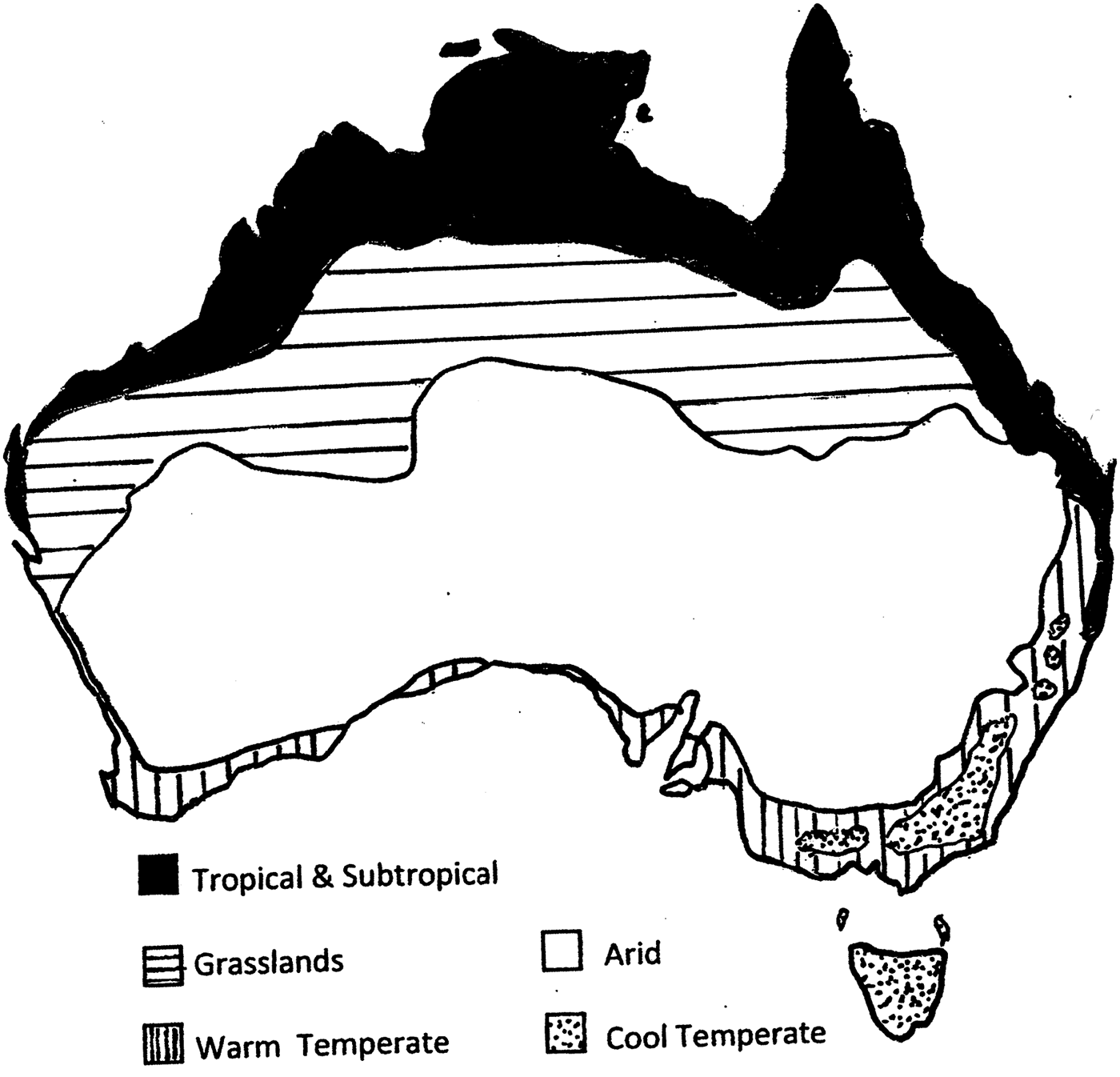
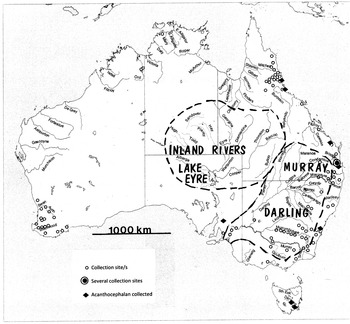
Australia has a sufficiently large land mass that it extends from tropical to temperate climatic regions. On average, the climate is dry to very dry with some 50% of the land mass receiving <300 mm rain per year and the average rainfall being 419 mm (Fig. 1) (Wikipedia, 2017a ). There are approximately 1125 rivers and creeks when totalled by state (some rivers cross-state borders), 8 being 1000 km or longer and 69 considered major rivers. Although most rivers flow towards the coast and into the surrounding ocean, the Central Australian drainage system flows into Lake Eyre. These rivers may not flow during the dry season or in times of drought (Fig. 2) and as a result the inland lakes may also be dry. There are thought to be 354 species of freshwater fish inhabiting Australian rivers, 37 of them introduced (Froese and Pauly, Reference Froese and Pauly2017). A large number of these rivers and their endemic freshwater fish species have not been surveyed for helminths, and consequently, the species richness and prevalence of their acanthocephalan fauna largely remains unknown.
Map of Australia showing the climatic regions.

Map of Australia showing the major rivers and indicating the inland and Murray–Darling drainage systems with the approximate localities of the collecting sites of the fish.

While compiling a checklist of the known species of acanthocephalan in Australian fish hosts (Smales and Weaver, Reference Smales and Weaver2015) it became apparent that very few species had been reported from freshwater habitats. In contrast to the analysis above only five freshwater and four estuarine species had been recorded as compared with 70 fully marine species of acanthocephalan. This suggests that either the Australian freshwater acanthocephalan fauna is depauperate, in contrast to that of the northern hemisphere (Kennedy, Reference Kennedy2006), or that a more intensive survey effort would reveal more species. The purpose of this study was to improve documentation of the acanthocephalan fauna of freshwater fishes using data from field surveys, a review of the literature and examination of specimens registered in Australian museums. The data thus obtained were used in a preliminary analysis of the fauna.
MATERIALS AND METHODS
Field surveys
Fishes were collected from seven sites along the Murrumbidgee River in New South Wales (NSW): Two Bridges Swamp, Waugora Lagoon, Telephone Creek, Avalon Swamp, Molley's Lagoon, Gooragool Lagoon, and Yarrada, in November 2015 and March 2016, especially for this project, by the Institute for Land, Water and Society, Charles Sturt University using fyke nets left overnight. Trapped fish were then released into a large square plastic tub and scooped into a soft dip net for further examination. All 668 fish were collected, euthanized according to NSW Fisheries ACEC guidelines and stored on ice for identification and examination for helminths using a stereo microscope.
Fishes from 17 sites along 14 creeks and rivers from Western Australia (WA), the Northern Territory (NT) and Queensland (Qld) were collected between May 2014 and July 2015 as part of an ongoing investigation into the health of catfishes in Northern Australia undertaken by the Freshwater Fish Group & Fish Health Unit, Murdoch University. A total of 252 native catfishes representing 6 species were collected using a combination of electro fishing, fyke nets and hand lines. Fishes were either euthanized immediately post capture in the field or transported live to the laboratory and kept in aquaria before being euthanized by prolonged immersion in an anaesthetic bath of isoeugenol (Aqui-S, Lower Hutt, New Zealand). A standard post-mortem was undertaken, as outlined by Stephens et al. (Reference Stephens, Jones and Hillier2016), although gill and skin scrapings were not collected routinely. Parasites and cysts observed by eye during the post-mortem were placed in 70% ethanol. Helminths were dissected from cysts and mounted in Hoyer's medium for microscopic examination.
Another 181 individuals were examined from 18 sites in northern Qld as follows: from the eastern drainage from Hartley's Creek north of Cairns, the western drainage, the Mcleod River and Atherton Creek on the Tablelands. Collection of fishes was carried out in November 2015, and May/June and November 2016 as part of a wider survey of the parasite fauna of freshwater fish by the Parasitology Section, Queensland Museum (QM). Fish were collected by angling using small lures or baited hooks, by fish trap and by net where possible. All fish were transported live in aerated drums to the laboratory and kept in aerated tanks until euthanized. Fish were anaesthetized without recovery and full necropsies were undertaken. Acanthocephalan specimens encountered were excised from the intestine and either relaxed overnight in tap water then preserved in 10% buffered formalin, or placed directly into 90% ethanol.
In each of the field surveys the fishing techniques used were designed to collect as many of the fish as possible that were present at each sampling site.
Literature surveys
Data were extracted from the following publications. A paper on the parasites of fishes from south-western WA, by Lymbery et al. (Reference Lymbery, Hassan, Morgan, Beatty and Doupé2010); a series of papers on parasites of fishes from Qld, northern NSW, Victoria (Vic) and the Australian Capital Territory (ACT) by Dove et al. (Reference Dove, Cribb, Mockler and Lintermans1997); Dove and Ernst (Reference Dove and Ernst1998); Dove (Reference Dove2000); Dove and Fletcher (Reference Dove and Fletcher2000); a paper on the parasites of tropical eels by Kennedy (Reference Kennedy1995); a series of papers on the parasites of freshwater fishes from South Australia (SA), NSW, Qld and Vic by Johnston and Bancroft (Reference Johnston and Bancroft1918); Johnston and Mawson (Reference Johnston and Mawson1940, Reference Johnston and Mawson1947, Reference Johnston and Mawson1951); Edmonds (Reference Edmonds1964, Reference Edmonds1967); Angel and Manter (Reference Angel and Manter1970); Angel (Reference Angel1971).
Museum specimens
All the available registered material from freshwater fishes held in the QM and the South Australian Museum (SAM), as listed by Smales and Weaver (Reference Smales and Weaver2015), was re-analysed.
Species identification
All of the acanthocephalans reported in this study, both from the field surveys and the literature reports were examined as follows: Specimens collected in the field surveys and any museum specimens stored in 70% ethanol were cleared in beechwood creosote prior to examination as temporary wet mounts using an Olympus BH2 differential interference microscope. Similarly, museum specimens that had been previously stained and mounted in Canada balsam were examined microscopically. The key to the genera of Acanthocephala from Australian fish of Smales and Weaver (Reference Smales and Weaver2015) was used for initial identification and the original descriptions were consulted for identification to species level (Edmonds, Reference Edmonds1964, Reference Edmonds1967; Smales, 2009). None of the small number of specimens held in museum collections was suitable for molecular analysis. Only 1 species of acanthocephalan was recovered from the field surveys, some specimens of which are being held for possible later molecular analysis.
The list of Australian rivers (Wikipedia, 2017b ) was used to determine the number of rivers in Australia on a State by State basis; Froese and Pauly (Reference Froese and Pauly2017), NSW Department of Primary Industries (2012), Queensland Museum (2017), SA Department of Environment Water and Natural Resources (2017) and Lymbery et al. (Reference Lymbery, Hassan, Morgan, Beatty and Doupé2010) were used to determine the potential number of fish species present in each state.
RESULTS
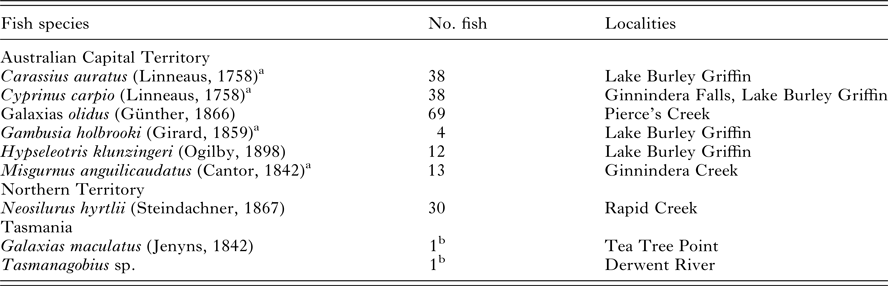
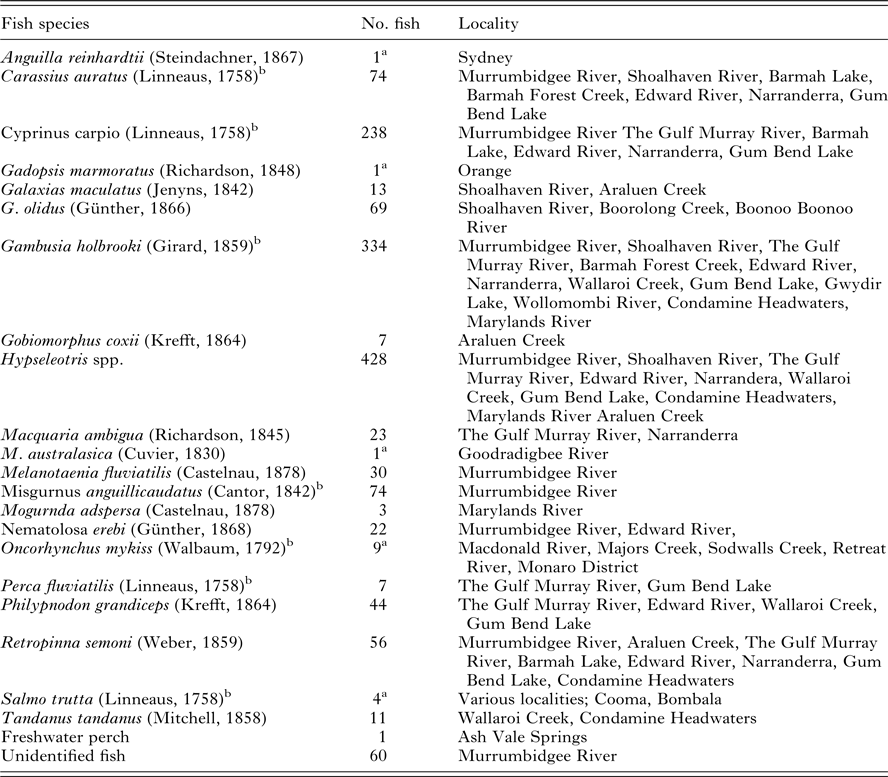
A total of 4030 fishes were collected in our field surveys or reported in the literature; 117 from the ACT, 1748 from NSW, 30 from the NT, 1290 from Qld, 189 from SA, two from Tasmania (Tas), 211 from Vic, 1458 from WA, representing 78 of the 354 species of freshwater fish reported in Australia. In total 14 of the 37 introduced and 64 of the 317 native species were examined (Froese and Pauly, Reference Froese and Pauly2017). The numbers and species of fishes examined and the rivers surveyed are summarized in Tables 1–6 and approximate collection localities are shown in Fig. 2. In some instances, the total number of fish examined for helminths was reported in the literature and in others only the number of infected fish was given. In the latter cases, therefore, the numbers of fish examined may be underreported.
Data from fish collected in the ACT, four collecting sites, were taken from Dove and Fletcher (Reference Dove and Fletcher2000) who reported the total number as well as the species fish examined in their study. These ACT localities, geographically speaking, belong in NSW. Only one of 48 rivers was sampled from the NT and that sampling was limited to a single species of fish, Neosilurus hyrtlii, with an acanthocephalan infection reported for the first time in this study. The data from Tas is from specimens deposited in SAM and re-examined for this study. No information was given either about the number of fish examined to recover the acanthocephalans or of any other localities along Tas's 91 rivers that might have been sampled to collect the specimens (Table 1).
A total of 206 freshwater fish comprising 9 species from the Australian Capital Territory, the Northern Territory and Tasmania examined for helminths

Data from Dove and Fletcher (Reference Dove and Fletcher2000); this study.
a Indicates an exotic species.
b Indicates that in some cases only the number of infected fish, not the total number of fish examined, was reported.
A total of 1748 freshwater fish comprising 25 species from New South Wales examined for helminths

Data from Johnston and Mawson (Reference Johnston and Mawson1940, Reference Johnston and Mawson1951); Dove et al. (Reference Dove, Cribb, Mockler and Lintermans1997); Dove (Reference Dove2000); Dove and Fletcher (Reference Dove and Fletcher2000); this study.
a Indicates that in some cases only the number of infected fish, not the total number of fish examined, was reported.
b Indicates an exotic species.
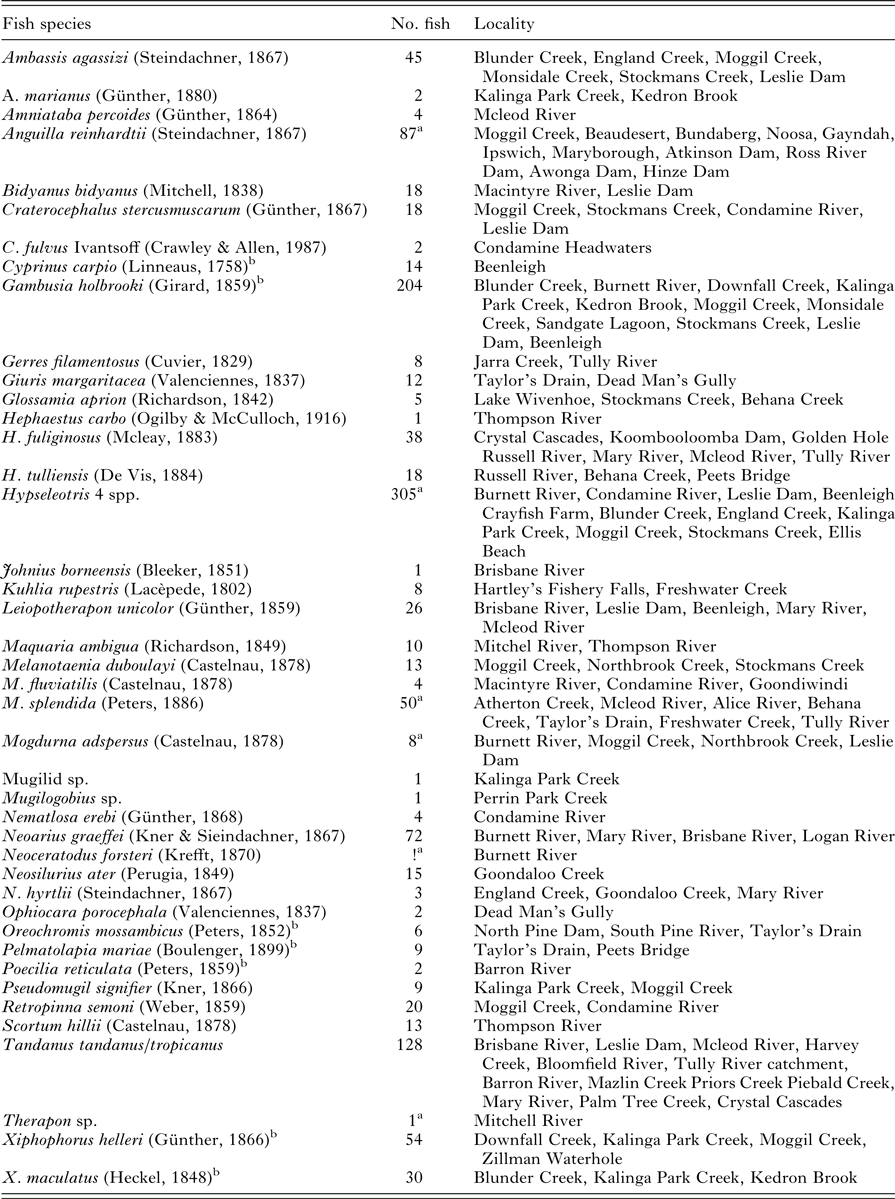
A total of 1290 freshwater fish comprising 47 species from Queensland

Data from Johnston and Bancroft (Reference Johnston and Bancroft1918), Johnston and Mawson (Reference Johnston and Mawson1940); Edmonds (Reference Edmonds1964); Angel and Manter (Reference Angel and Manter1970); Kennedy (Reference Kennedy1995); Dove and Ernst (Reference Dove and Ernst1998); Dove (Reference Dove2000); Dove and Fletcher (Reference Dove and Fletcher2000); Smales (2009); this study.
a Indicates that in some cases only the number of infected fish, not the total number of fish examined, was reported.
b Indicates an exotic species.
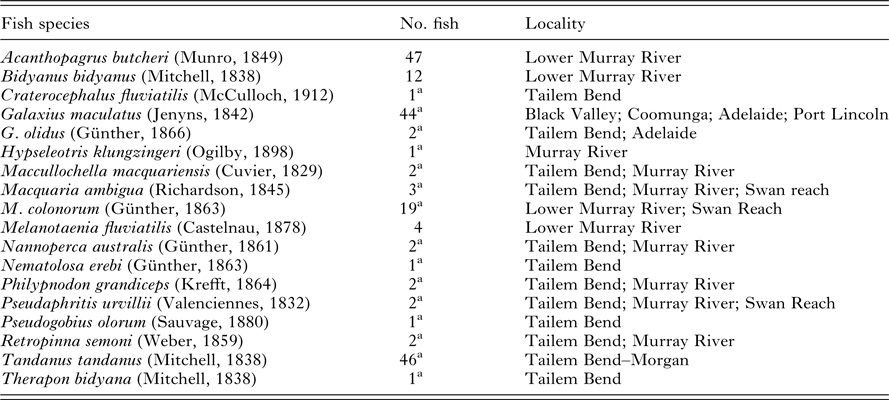
A total of 189 a freshwater fish comprising 18 species from South Australia examined for helminths

Data from Johnston and Mawson (Reference Johnston and Mawson1940, Reference Johnston and Mawson1947, Reference Johnston and Mawson1951); Edmonds (Reference Edmonds1967); Angel (Reference Angel1971); Angel and Manter (Reference Angel and Manter1970); Smales and Weaver (Reference Smales and Weaver2015); this study.
a Indicates that in some cases only the number of infected fish, not the total number of fish examined, was reported.
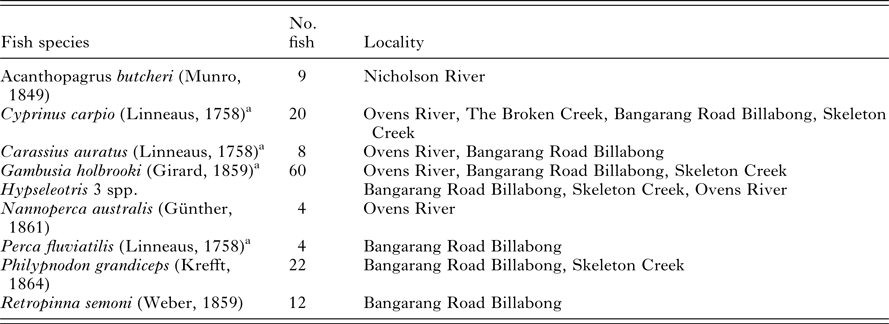
A total of 139 freshwater fish comprising 11 species from Victoria examined for helminths

Data from Angel and Manter (Reference Angel and Manter1970); Dove et al. (Reference Dove, Cribb, Mockler and Lintermans1997); Dove and Fletcher (Reference Dove and Fletcher2000).
a Indicates an exotic species.
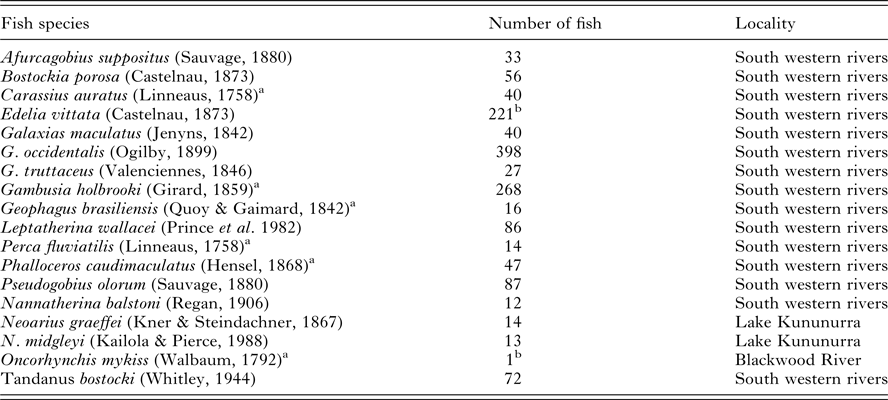
A total of 1458 freshwater fish, comprising 18 species examined from Western Australia

Data from Johnston and Mawson, Reference Johnston and Mawson1951; Lymbery et al. Reference Lymbery, Hassan, Morgan, Beatty and Doupé2010; this study.
a Indicates an exotic species.
b Indicates that in some cases only the number of infected fish, not the total number of fish examined, was recorded.
The data for NSW came from three sources. Dove (Reference Dove2000), Dove and Fletcher (Reference Dove and Fletcher2000) and Dove et al. (Reference Dove, Cribb, Mockler and Lintermans1997) reported the numbers of fish examined as well as specific collecting sites in their surveys. Johnston and Mawson (Reference Johnston and Mawson1940, Reference Johnston and Mawson1951) did not indicate how many fish were examined in their reports of helminths from Anguilla reinhardtii, Maquaria ambigua, Onchorhynchus mykiss and Salmo trutta. The other source of data was the survey carried out along the Murrumbidgee River, southern NSW, for this study. In this survey the exotic fish species, Carassius auratus, 44, Cyprinus carpio, 148, Gambusia holbrooki, 125 and Misgurnus anguillicaudatus, 74 individuals, dominated the fauna. In total, 31 of the 439 rivers in NSW were surveyed and 23 of a possible 65 species of fish (Table 2).
Similarly, the data from Qld were derived from several sources. The surveys carried out by Dove (Reference Dove2000), Dove and Ernst (Reference Dove and Ernst1998), Dove and Fletcher (Reference Dove and Fletcher2000) and for this study included records of the number of individuals of each species examined. The study by Kennedy (Reference Kennedy1995), however, was restricted to a known number of individuals of A. reinhardtii but additional records from that host were listed in Edmonds, Reference Edmonds1964. Smales (2009) described a new species of acanthocephalan recovered from an unknown number of Melanotaenia splendida from the Alice River. Johnston and Mawson (Reference Johnston and Mawson1940) recorded helminths from Hypseleotris klunzingeri Mogdurna adspersa, Therapon sp., Maquaria ambigua and Neocerotadus forsteri but not numbers of fish examined and Angel and Manter (Reference Angel and Manter1970) examined 2 individuals of Bidyanus bidyanus and an unspecified number of Melanotaenia fluviatilis. Catfish numbers in Qld included 181 individuals from the targeted survey of northern Australia (this study) as well as 181 fish collected in a general survey of northern Qld rivers (this study), two of which were infected with acanthocephalans (Table 3). In all 46 of the 151 rivers in Qld (30%) were sampled with 47 of a possible 156 species of fish examined. Sampling effort was largest in northern Qld, comprising 15 species of fish from 18 sites, and species of catfish from 8 sites (Table 3).
The sources of information for SA were from the published literature and the SAM helminth collection, with 18 of a possible 60 species of fish examined. Melanotaenia fluviatilis, four individuals and Macquaria colonorum,17 individuals, were examined by Angel and Manter (Reference Angel and Manter1970); 46 individuals of Tandanus tandanus by Angel (Reference Angel1971); and 40 individuals of Galaxias maculatus by Edmonds (Reference Edmonds1967). Acanthocephalans from additional specimens of G. maculatus from the SAM collection were also examined for this study. The numbers of fish examined by Johnston and Mawson (Reference Johnston and Mawson1940, Reference Johnston and Mawson1947, Reference Johnston and Mawson1951), the remaining hosts listed in the table, were not reported, although the Murray River was intensively sampled in SA (Table 4).
Victorian rivers were not well sampled. Only 11 fish species, four of them exotic, were examined from five of a possible 180 rivers. All the data presented were from three studies (Angel and Manter, Reference Angel and Manter1970; Dove and Fletcher, Reference Dove and Fletcher2000; Dove et al. Reference Dove, Cribb, Mockler and Lintermans1997) (Table 5).
The WA data came predominately from the survey by Lymbery et al. (Reference Lymbery, Hassan, Morgan, Beatty and Doupé2010) of the southwestern drainage system. Collections were made from 12 of the 26 major rivers in the south west resulting in 12 of the 14 native species of fish and six of the eight exotic species known from the region being sampled. In addition, species of catfish were collected from the Ord River (this study) and individuals of Edelia vittata and O. mykiss were examined by Johnston and Mawson (Reference Johnston and Mawson1951) (Table 6). As can be seen in Fig. 2 the survey of Lymbery et al. (Reference Lymbery, Hassan, Morgan, Beatty and Doupé2010) was the most comprehensive with 82% of species of fish sampled but no acanthocephalans found (Lymbery et al. Reference Lymbery, Hassan, Morgan, Beatty and Doupé2010) (Table 6).
Neither the fish collected along the South Australian reaches of the Murray River in the 1940s and 1950s nor those collected along the Murrumbidgee River for this study were infected with acanthocephalans. Interestingly, no exotic fish were collected from sites along the SA reaches of the Murray, in contrast, the collections along the Murrumbidgee were dominated by large numbers of individuals of exotic species.
Collecting was concentrated along the eastern and south western coasts and consequently most of the continent was not included in this survey (Fig. 2). It should be noted however that most of inland Australia, including the inland drainage basin, is desert country in which rivers and creeks, if present, flow intermittently.
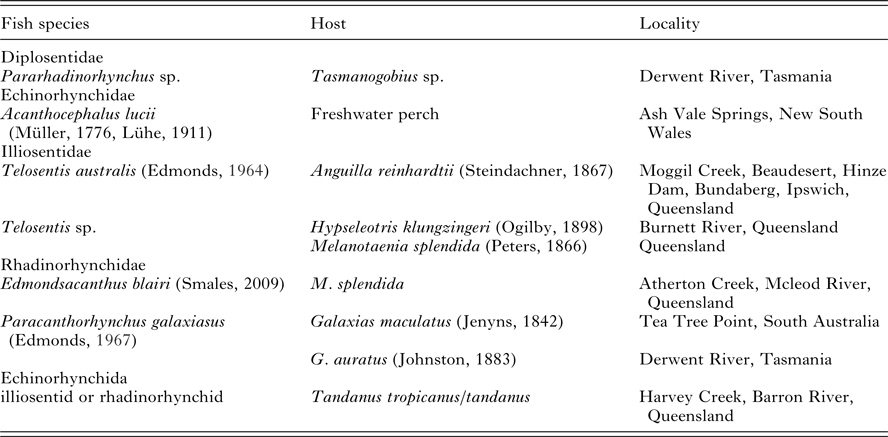
Only seven species of Acanthocephala were found (Table 7). There were 3 endemic species, Telosentis australiensis Edmonds, Reference Edmonds1964, Paracanthorhynchus galaxiasus Edmonds, Reference Edmonds1967 and Edmondsacanthus blairi Smales, 2009, 2 that could be identified only to genus level, Pararhadinorhynchus sp., and Telosentis sp., 1 that could not be fully identified and 1 exotic species, Acanthocephalus lucii (Müller, 1776). The genera Edmondsacanthus and Paracanthorhynchus from freshwater hosts and Pararhadinorhynchus from freshwater and estuarine hosts are endemic to Australia but their families, the Diplosentidae and Rhadinorhynchidae, are cosmopolitan, occurring in freshwater and marine habitats.
Seven species of Acanthocephala reported from 8/9 species of freshwater fish from Australia

The overall prevalence of infection with acanthocephalan parasites in the freshwater fish species was eight of the 78 species examined (12%). None of the fish harboured more than one species of acanthocephalan. The intensity of infection was in each case low, usually one to two worms but no more than ten. Galaxias maculatus was reported as ‘heavily infected with acanthocephalans’ by Edmonds (Reference Edmonds1967) but no prevalence or intensity data were given for P. galaxiasus. Although E. blairi from Melanotaenia splendida collected from the western drainage system and the Atherton Tableland in Northern Qld occurred in high prevalences; 17 of 22 individual hosts (77%), none of the 24 individual hosts collected from the eastern Qld drainage system were infected.
The infections of Pararhadinorhynchus sp. in Tasmanogobius sp. from Tas and the illiosentid/rhadinorhynchid in Tandanus spp. from Qld are new host records.
The single mature male from the species of Tasmanogobius could be placed in the genus Pararhadinorhynchus but differed from the two species described by Edmonds (Reference Edmonds1973). The 2 specimens, one from each of two hosts, a female cystacanth and an immature male, neither fully extended, from Tandanus tandanus and T. tropicanus could not be fully identified because the number of cement glands, the presence or absence of genital spines and the definitive formula of the proboscis armature could not be determined. Additional specimens are required to characterize these specimens completely.
DISCUSSION
This survey is constrained by the limitations of the available data. Intensive field sampling was not carried out across the whole continent and large areas were untouched. As can be seen in Fig. 2, of the western part of Australia only in the south western drainage was there any significant sampling effort. Apart from a single locality in each of the Kimberley Region of northern WA and the NT intensive sampling in northern Australia was limited to sites in north eastern Qld. The Inland River drainage system, was virtually untouched, although it should be recognized that the desert climate and intermittent flows of many of the inland rivers may not provide suitable habitats for helminth infections. There were limited data available for Vic and only a small number of opportunistic collections were made in Tas. Clearly more work needs to be done. Data from northern and southern Qld, the Murray–Darling drainage system and the south western drainage system where more intensive sampling was carried out, do provide insights into the Australian fauna.
The identification of the species of catfish in Qld is complex. The newly described species, Tandanus tropicanus Welsh, Jerry and Burrows, Reference Welsh, Jerry and Burrows2014, is reported to occur in the Daintree, Mulgrave-Russell, Johnstone, Tully and Five Mile Creek drainage basins but not the nearby Barron River catchment (Welsh et al. Reference Welsh, Jerry and Burrows2014). The eel-tailed or freshwater catfish or tandan, Tandanus tandanus (Mitchell, 1838), has a normal distribution throughout the Murray–Darling river basin and along the eastern seaboard from the Hunter River north to Central Qld. It has also been translocated to the Wet Tropics, including the Barron River catchment, as a sportfish (Burrows, Reference Burrows2004) and therefore both species occur in the same region. As molecular identification was not done for the catfish we examined we have not tried to distinguish between the two species in our analysis.
The finding of the exotic species, A. lucii is problematic. The specimens an adult male, two females and a detached proboscis are held in the SAM. The registration details and slide labels give the collection data as: from a freshwater perch from Ashvale Springs, Lower Darling River, NSW (no date or collector noted) and the identification as A. lucii vouchers, on the back of the slides, and the types of a new species of Acanthocephalus on the fronts. This latter determination was never published. On examination for this study the specimens could not be differentiated from voucher specimens of A. lucii that had been examined for comparative purposes and the specific identification of the infected freshwater perch could not be determined. Acanthocephalus lucii has been reported in many freshwater fish species throughout Europe, including Perca fluviatilis Linneaus, 1758, the European perch (see Golvan, Reference Golvan1969). Perca fluviatilis was introduced into Australia and has been collected from NSW, south western Australian, and Victorian rivers. No infections with A. lucii or any other acanthocephalan have been recorded, however, for P. fluviatilis collected in Australia, either in the literature or recovered in this study. There are a number of explanations for this finding, none of which can be confirmed. Perhaps individuals of P. fluviatilis infected with A. lucii have been introduced into Australia in the past and either the infection has become a rare occurrence, not found in more recent surveys, or has not been sustained in P. fluviatilis since introduction. Alternatively, A. lucii infections may have become established in a native species. The freshwater perch listed as the host, in this case, could have been any of the species of native perch, such as Maquaria ambigua (Richardson, 1845) or M. australasica Cuvier, 1830, living in the Murray–Darling system (NSW Department Primary Industries, 2012). A third explanation is that the specimens of Acanthocephalus are a new species, morphologically similar to A. lucii.
Overall, in his meta-analysis of the biogeography of the Acanthocephala, Kennedy (Reference Kennedy2006) indicated that of the approximately 1000 species in the phylum, 37·9% lived in freshwater habitats and only 24·8% in marine habitats, a finding supported by Poulin (Reference Poulin2016). In the case of the Australian fauna, although many species of freshwater fish remain to be examined across the continent, in the systems that were more intensively sampled the reverse seems to be true. In southwestern Australia for example 82% of species of fish known in the region were examined and no acanthocephalan species found. Although the sampling effort in Qld was more intensive in northern and southeastern sites, nearly 30% of the possible species of fish present were sampled, and only two species of acanthocephalan were found. Likewise no acanthocephalans were found along the Murray/Murrumbidgee with only one species from the Darling River in the Murray–Darling drainage system. Our study indicates that only three endemic genera comprising six endemic species have been recorded in 78 Australian species of freshwater fish, compared with more than 50 named species from 145 marine hosts (Smales and Weaver, Reference Smales and Weaver2015). This is similar to a study from Central America which reported the virtual absence of acanthocephalans in freshwater fish (Salgado-Maldonado, Reference Salgado-Maldonado2008). In contrast, Santos et al. (Reference Santos, Gibson, Tavares and Luque2008), for example, reported 28 of 34 named and 13 unidentified species of acanthocephalans from freshwater hosts from Brazil.
Based on our study, acanthocephlan infections occur rarely and when present, are at low intensities in Australian freshwater hosts. By contrast, in Europe not only is acanthocephalan species richness greater but also acanthocephalan infections are a more common and dominant element of the parasitofauna, with acanthocephalans being present at high intensities in individual hosts (Kennedy, Reference Kennedy2006). In Central America Salgado-Maldonado (Reference Salgado-Maldonado2008) did not attribute the paucity of acanthocephalans to low numbers of individual parasites in ancestral areas but instead to the low abundance and microendemicity of possible intermediate hosts. In Australia factors affecting the availability of intermediate hosts may also have been causal. Australia is a dry continent with a changeable climate, rainfall being distributed unevenly both geographically and seasonally. Consequently, Australian rivers are characterized by variable flows (Whittington and Liston, Reference Whittington and Liston2003). The inland catchment rivers oscillate between being either dry or in flood (see above) and the flora and fauna of the rivers have evolved to adapt to this variability (Whittington and Liston, Reference Whittington and Liston2003). Therefore, it seems reasonable to suggest that the aquatic arthropod intermediate hosts required for acanthocephalan life cycles may also be variable in abundance, and dependant on the cycle of river flows.
The variable prevalence of the acanthocephalan E. blairi in the fish M. splendida, sampled from 7 north Qld sites, illustrates the potential importance of having all the ecological and host availability requirements to meet the life cycle present. The 24 fish sampled from the eastern drainage system were not infected while the 22 fish sampled from the Tableland and the western drainage had a high prevalence of infection at 77%.
The failure of any exotic acanthocephalans to maintain infection in the hosts they were introduced into Australia with, or to invade native species of fish, may also be explained by a lack of suitable intermediate host species and/ or the influence of unique Australian ecological and climatic conditions. This is in contrast to invasion of introduced species of freshwater fish along with their protozoan, monogenean and cestode parasites (Dove et al. Reference Dove, Cribb, Mockler and Lintermans1997; Dove and Ernst, Reference Dove and Ernst1998; Dove and O'Donoghue, Reference Dove and O'Donoghue2005; this study). Landscape management strategies have been proposed as a method of controlling invasive species (Lurgi et al. Reference Lurgi, Wells, Kennedy, Campbell and Fordham2016), while in Australia the nature of the freshwater landscape may have imposed a natural management strategy on invading acanthocephalans.
The host survey effort reported in this review was more or less evenly spread from northern to southern Australia, and revealed more species in tropical Qld, than in the temperate regions of southern Australia. This is the reverse of the findings of Choudhury and Dick (Reference Choudhury and Dick2000) for acanthocephalans from North America. In their analysis of the species richness of acanthocephalans in northern temperate, Nearctic, Canada and several tropical localities, Choudhury and Dick (Reference Choudhury and Dick2000) demonstrated that acanthocephalans were more common in temperate Canadian helminth communities than in the tropics. Poulin (Reference Poulin2001) in his re-examination of their data confirmed their findings but considered that the real reasons for more speciose acanthocephalan communities in the tropics were still unknown. Where the phenomenon is reversed as in the Australian case the reasons also remain unknown. Later, Poulin (Reference Poulin2016) analysed the parasitic fauna of 14 datasets of 677 species of marine and freshwater fishes and showed that the species richness of freshwater environments was disproportionately high. As previously mentioned, this is the inverse of what our Australian data suggest. They reasoned that this might be due to higher speciation rates caused by a number of factors including the fragmented nature of freshwater habitats. It may be that in Australia the high variability of climate and river flows may have had a negative effect by creating habitats too fragmented and variable to support populations of the intermediate hosts required by acanthocephalans. Additional sampling across Australia is needed before either hypothesis can be proved in the Australian situation.
The endemicity of the acanthocephalan fauna was high. With the exception of the Acanthocephalus and Telosentis spp. the worms were placed within endemic genera. The fossil record suggests that the Acanthocephala are Cambrian in origin (570 mya) (Morris and Crompton, Reference Morris and Crompton1982). Moreover, ancient species of teleost had been regularly utilized as definitive hosts (Aho et al. Reference Aho, Bush and Wolfe1991). The high number of endemic acanthocephalan genera, found only in native species of Australian freshwater fishes, suggests that their association may have been a long one. Acanthocephalans may have been isolated with their hosts since Australia began to detach and drift north from Gondwanaland some 96 mya (Vickers-Rich and Rich, Reference Vickers-Rich and Rich1993).
Approximately 22% of Australian species of freshwater fish have been studied in this review but the species of host covered represent a range of fish ecologies and, we suspect, are reflective of ichthyoparasitological trends in freshwater in this country. Our results suggest an endemic depauperate acanthocephalan fauna, which appears more diverse in tropical Australia than elsewhere in this country. Additional sampling is needed to confirm these conclusions.
ACKNOWLEDGEMENTS
Fish for this study were collected as follows: from the Murrumbidgee River fish were collected under the Charles Sturt University Animal Care and Ethics Committee approval number 15/083 and a New South Wales Fisheries permit. Thanks are due to S. Wassens Director, Institute for Land, Water and Society, Charles Sturt University for facilitating access to fish from their survey program and to B. Wolfenden and J. McPherson for doing the collecting along the Murrumbidgee River. Thanks also to I. Kane for assistance with dissection of the Murrumbidgee fish. Fish from Queensland were collected under the Queensland Museum general fisheries permit 160782 and Queensland Museum Ethics Committee approval number 14-04. All the catfish collected by Murdoch University Freshwater Fish Group & Fish Health Unit were collected under Animal Ethics Permit RW2618/13 approved by Murdoch University Research Ethics committee, and Queensland, Northern Territory and Western Australian fisheries permits. We are grateful to B. Ebner, J. Donaldson and A Davis (TropWATER JCU and CSIRO), and L. Foyle (JCU), S. Brooks (Qld DAAF), M. Hammer (MAGNT) and Bertus Hanekom for their assistance in collection of catfish. Librarians from Central Queensland University provided document delivery services.
FINANCIAL SUPPORT
Collection of parasites from the Murrumbidgee River was funded by Australian Biological Resources Study (ABRS) Australian National Taxonomy Grant Program (NTRGP) non-salaried researcher's grant CN215-04 awarded to L. Warner. Collection of parasites in far north Queensland was funded under the ABRS grant NTRGP grant RF215-05 awarded to R. D. Adlard and T. L. Miller. Collection of samples by the Murdoch University Freshwater Fish Group & Fish Health Unit was conducted under the Fisheries Research and Development Corporation (FRDC) project 2012/050 ‘Edwardsiella ictaluri survey in wild catfish populations’, supported by funding from the FRDC on behalf of the Australian Government, and also by an Australian Government Research Training Program Scholarship.