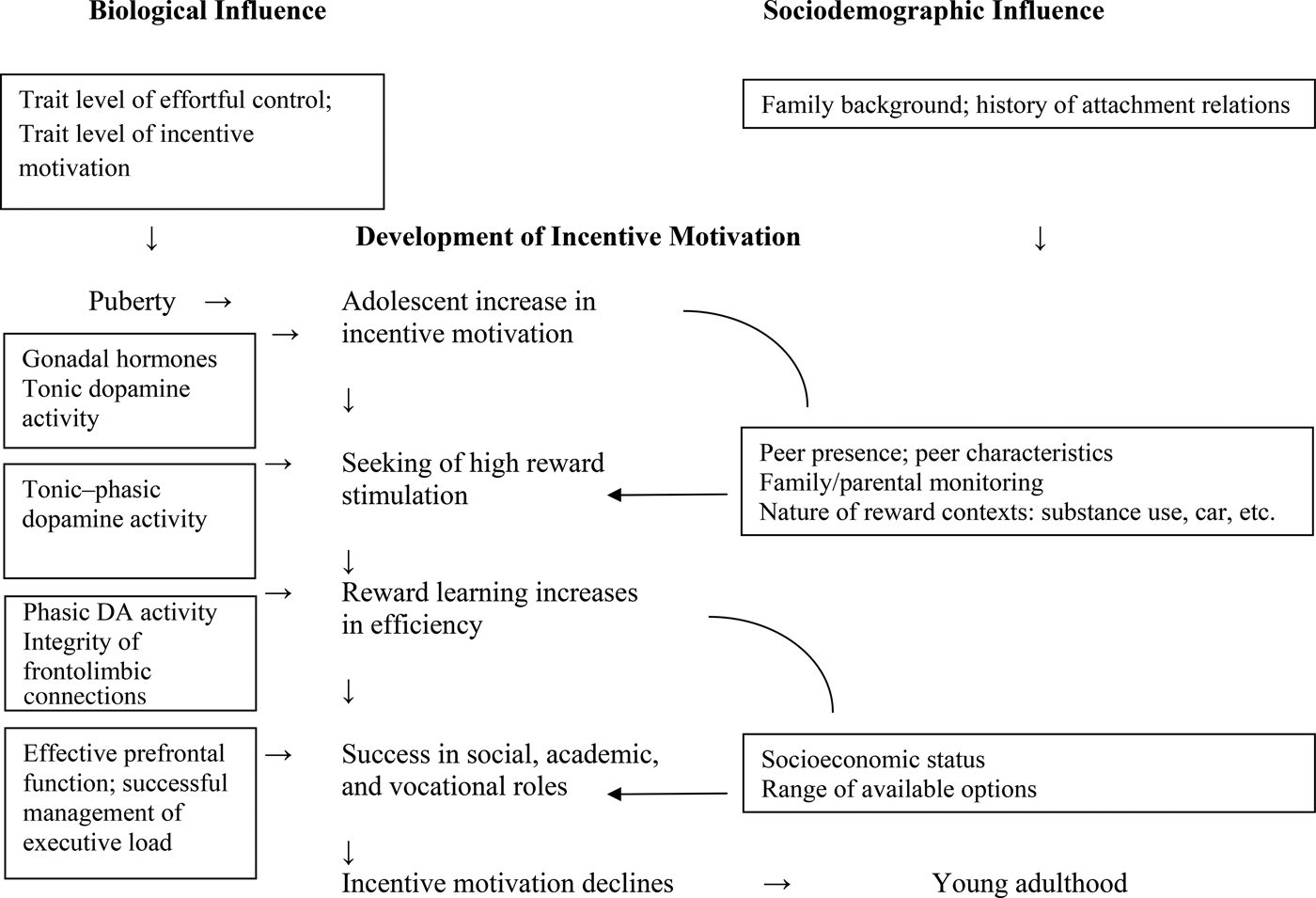
Adolescence is defined as the period between childhood and adulthood when individuals retreat from parents, increase peer relationships, and move toward independent, goal-directed living. In the United States, this period is synonymous with the teen years, but definitions of adolescence vary depending on whether one explicitly associates it with sexual maturation (puberty) or whether one focuses instead on the nature of behavioral and social accomplishments during this time (Arnett, Reference Arnett2007; Burnett & Blakemore, Reference Burnett and Blakemore2009). In Western cultures, it has been suggested that adolescence extends well into the mid-20s due to children's long-lasting dependence on their parents for economic support (Crockett, Brown, Shen, & Russell, Reference Crockett, Brown, Shen and Russell2007).
Despite differing perspectives regarding the “when” of adolescence, this period has garnered recent from developmental psychologists, public health experts, and neuroscientists because the teen years are associated with a rise in risk-taking behaviors, some of which have quantifiable negative consequences. For instance, adolescence is the time when teens initiate sexual activity, often unprotected (Centers for Disease Control, 2011). Health risks associated with unplanned pregnancy and sexually transmitted diseases are worrying (Hamilton, Martin, & Ventura, Reference Hamilton, Martin and Ventura2010). Adolescence is associated with initial experimentation with substances of abuse, including alcohol and recreational drugs (Substance Abuse and Mental Health Services Administration, 2012). Early onset alcohol use is associated with an increased risk of later alcohol dependence (Grant & Dawson, Reference Grant and Dawson1997) as well as with other forms of externalizing behavior (Iacono, Malone, & McGue, Reference Iacono, Malone and McGue2003). Moreover, many teens and young adults report engaging in unsafe behavior while intoxicated, including riding in the car with an intoxicated driver or driving while drunk (Substance Abuse and Mental Health Services Administration, 2012). According to vital statistics data collected between 1999 and 2006, deaths among teenagers account for less than 1% of total mortality in the United States. However, unlike adults, fatalities among teenagers tend to be predominantly associated with preventable events, chiefly motor vehicle accidents (48% of total deaths in this age range), suicides (11%), or homicides (13%; Minino, Reference Miniño2010). In addition, risk for several forms of psychopathology emerges during adolescence, including unipolar depression, schizophrenia, and substance use disorders (Paus, Keshavan, & Giedd, Reference Paus, Keshavan and Giedd2008; Walker, Reference Walker2002). These statistics are compelling for several reasons. They suggest that a notable proportion of teens are vulnerable to behaviors with significant potential for negative consequences. These observations reinforce the common conceptualization of adolescence as a time of “storm and stress” (Hall, Reference Hall1904). This perception is maintained by evidence that adolescence can be difficult due to conflicts with parents and other authority figures, mood lability, and increased risk-taking behaviors (Arnett, Reference Arnett1999). However, another pattern that emerges from the cited statistics is that all teens are not at equivalent risk for later problems, either because they do not demonstrate problem behaviors or because engagement in such behaviors does not lead to long-term negative consequences. The contexts and broader systems within which potentially problematic behaviors are demonstrated are important to dissect so that the multifinality of observed outcomes can be understood (Cicchetti & Rogosch, Reference Cicchetti and Rogosch1996).
For the majority of individuals, adolescence is a time of profound opportunity; relations with the social world are beneficial (Lewin-Bizan, Bowers, & Lerner, Reference Lewin-Bizan, Bowers and Lerner2010). From an evolutionary standpoint, it is reasonable that natural selection would favor those who explore under conditions of novelty, who distance themselves from the natal group to procreate and to diversify the gene pool, who adapt well within new social hierarchies, and who are able to react quickly (if not deliberately) in the context of emotionally laden, potentially dangerous situations (Ellis et al., Reference Ellis, Del Giudice, Dishion, Figueredo, Gray and Griskevicius2012). Despite engaging with potential threats, most people not only survive adolescence, but many anecdotally and retrospectively view this period as one of great promise, exhilaration in the face of new opportunities, and optimism.
Individual and system-level differences are undoubtedly crucial in determining which path characterizes which people: those who take risks and are overcome by the negative consequences of seemingly poor decisions, those who fall victim to serious psychopathology, and those who navigate the various decision-making contexts with apparent ease and positive outcomes despite engaging in risk-taking behavior (Cicchetti & Rogosch, Reference Cicchetti and Rogosch2002). Salient individual and system-level difference factors might involve neurobiology, familial and peer contexts, or demographic factors, such as socioeconomic status (Casey & Caudle, Reference Casey and Caudle2013; Farah, Noble, & Hurt, Reference Farah, Noble, Hurt, Romer and Walker2007; Klimes-Dougan, Hastings, Granger, Usher, & Zahn-Waxler, Reference Klimes-Dougan, Hastings, Granger, Usher and Zahn-Waxler2001). Dynamic interactions among factors are likely, and similar to what has been observed for negative life experiences, such as maltreatment (Thornberry, Ireland, & Smith, Reference Thornberry, Ireland and Smith2001), the timing of risk-taking behavior in relation to the achievement of specific developmental milestones, including those that are brain based, is crucial in determining outcomes.
This paper focuses on the current state of knowledge regarding neurodevelopmental models of adolescent behavior, extensions of these models to psychopathology, and future directions within this field of inquiry. A key tenet of developmental psychopathology is that an understanding of typical patterns of development (including neurodevelopment) is crucial to the identification and interpretation of pathological deviations (Cicchetti, Reference Cicchetti1989). This is an area that has emerged and blossomed since this journal's inception. Like other developmental processes, neurodevelopment can be understood from a dimensional perspective such that increasing deviations from the norm might index risk for behavioral disturbance.
Within systems theory, changes in one area of function may amplify to trigger a cascade of reverberations with broad developmental implications in the long term (Masten et al., Reference Masten, Roisman, Long, Burt, Obradović and Riley2005; Sameroff, Reference Sameroff2000; Thelen, Reference Thelen, Gunnar and Thelen1989). Transactional interactions between sources of influence occur proximally within points in time but also propagate forward, such that a given source of influence at one time point can exert distal influences over future behavior and adaptation. For example, proximal variations in social roles, such as parent–child relations, are associated with variations in risk behaviors and the persistence of such behaviors into adulthood (Staff et al., Reference Staff, Schulenberg, Maslowsky, Bachman, O'Malley and Maggs2010). Whether the same patterns of proximal and distal effects can be applied within the neurobehavioral domain has been only minimally considered but is undoubtedly relevant. To understand the full range of dynamic progressions, it is crucial not only to conceptualize biological, social, and economic influences on adolescent development at the group level but also to consider how individual variations and interactions at multiple levels impact adaptation.
In discussing neurodevelopmental models of adolescent behavior, a chronology will be provided. A retrospective will be provided regarding interpretations of adolescent behavior that focused on translational models of the prefrontal cortex (PFC) and its role in mediating the expression of executive functions (EFs). These interpretations were informed over time by advances in the understanding of the PFC's connectivity and functional heterogeneity, particularly in relation to circuitry that regulates affective behavior. Neuroimaging technologies such as functional magnetic resonance imaging (fMRI) and diffusion tensor imaging (DTI), both of which became prominent research tools since this journal's inception, have been instrumental in directing the course of work in the field. This work has informed dual systems theories (Steinberg, Reference Steinberg2010) of adolescent behavior and descriptions of the adolescent that center around cognitive versus emotional dynamics. However, the identification of normative behavioral and brain-based processes that impact adolescent development is not sufficient. A developmental psychopathological perspective requires that the mechanisms through which biological variations lead to disorder are fully explicated, including the transactional dynamics between biological processes and the social context (Cicchetti, Reference Cicchetti1989). Current studies are increasingly focused on neural and pubertal mechanisms that contribute to the regulation of affect and social behavior and how these mechanisms interact with cognitive processes, on the nature of cortical–subcortical interactions during development, and how these models and mechanisms inform our understanding of psychopathological conditions that emerge postpuberty. Mechanisms of pubertal development, as well as potential changes in neurochemistry, are receiving particular attention. Elaboration of these biological mechanisms and their contextual interactions through conceptually grounded empirical study represents the major future direction for this field of inquiry. Ways in which such models can inform developmental cascades of adolescent development and psychopathology will be discussed.
A Retrospective on Conceptual Models of Adolescent Behavior
A critical contribution of studies that emerged in the late 1980s was to establish translational models of EFs and their applicability to humans. This section will begin by describing some of the approaches adopted to conceptualize relevant issues in linking EFs to prefrontal mechanisms, measurement techniques used to assess EF, and research findings of more specific relevance to adolescence.
EF and the PFC
Stereotypical views of adolescent behavior have emphasized the nature of teens' decision-making strategies, their apparent live in the moment outlook, rebelliousness, and prioritizations of fun seeking versus more serious long-term goals (Buchanan & Holmbeck, Reference Buchanan and Holmbeck1998). Although many of these descriptors reflect affective dispositions, popular stereotypes have converged on the notion that teens exhibit deficiencies in higher order cognitive skills that regulate what many refer to as the “braking system” (e.g., see Walsh, Reference Walsh2004). Within the scientific literature, teens' failures of inhibition have typically been attributed to deficiencies in EF (for examples, see Casey & Caudle, Reference Casey and Caudle2013).
EF is the ability to maintain an appropriate problem-solving set for future goal attainment through the recruitment of several component processes, including response inhibition, strategic planning, and the mental representation of task goals (Welsh & Pennington, Reference Welsh and Pennington1998). These functions are particularly important when one is confronted by novel or unfamiliar situations (Stuss & Benson, Reference Stuss and Benson1986) and are crucial for social adaptation. A currently influential empirically derived view is that there is a unity to EF but that, within the unified structure, individual differences are reflected in subdomains of performance. Confirmatory factor-analytic models (Miyake et al., Reference Miyake, Friedman, Emerson, Witzki, Howerter and Wager2000) suggest that three major subdomains characterize EF regardless of age: inhibitory control, behavioral flexibility, and information updating in the context of working memory. Inhibitory control refers to the ability to control or suppress actions that are inappropriate to a given context and to resist interference from distracting influences. Behavioral flexibility, or shifting, is the process through which individuals are able to adjust to changing environmental conditions or feedback. Finally, working memory is an active processing system that allows multiple pieces of information to be held in mind and manipulated in response to specific goal demands. It is characterized by its limited capacity, by the process of monitoring, which allows salient pieces of information to gain access to the system and to be maintained over time, and by the process of updating, which allows new goals to access the system as time advances and as goals change. Although many models and definitions of EF are evident in the literature, these functional domains are emphasized because they account for much of what is commonly measured in laboratory studies of EF in individuals with psychopathology (Barkley, Reference Barkley1997; Pennington & Ozonoff, Reference Pennington and Ozonoff2006) and in development (Best & Miller, Reference Best and Miller2010; Diamond, Reference Diamond2013; Prencipe et al., Reference Prencipe, Kesek, Cohen, Lamm, Lewis and Zelazo2011).
A dominant conceptual view has been that EFs, whether considered singularly as one overarching “umbrella” (Duncan, Reference Duncan and Gazzaniga1995) or discretely within models of working memory and inhibitory control (Baddeley, Reference Baddeley1996; Stuss & Benson, Reference Stuss and Benson1986), are a core set of behaviors that reflect frontal lobe brain function (Stuss & Alexander, Reference Stuss and Alexander2000). This brain–behavior linkage (which many now consider to be inaccurate and oversimplified; see Alvarez & Emory, Reference Alvarez and Emory2006), was derived from correspondence between preclinical data (see Diamond & Goldman-Rakic, Reference Diamond and Goldman-Rakic1989; Diamond, Zola-Morgan, & Squire, Reference Diamond, Zola-Morgan and Squire1989; Goldman-Rakic, Reference Goldman-Rakic, Plum and Mountcastle1987a) and human lesion findings (Milner, Reference Milner1963). One major discovery that was instrumental in extending this work into the developmental realm was that animals' abilities to accurately recall the locations of objects when hidden for brief delay intervals paralleled performance on Piaget's (Reference Piaget and Cook1936) classic A-not-B task of object permanence; infant monkeys demonstrated the same developmental trajectories of performance on A-not-B as they did on the classic delayed response task, similar to patterns observed in human infants. Moreover, this patterning could be explicitly linked to prefrontal mechanisms (Diamond, Reference Diamond1990), inspiring researchers to examine the course of development from infancy through adulthood. In the 1980s and 1990s, delayed response tasks were the primary means through which working memory processes were studied in animal models. In all, this body of work established clear links between the prefrontal neurophysiology of working memory in animals and human behavior and their relevance to developmental processes.
The first fMRI studies of adults began in 1991 (Bandettini, Reference Bandettini2013) and extended this work by reliably demonstrating that regions of the dorsolateral PFC were engaged during working memory in healthy adults (Mars & Grol, Reference Mars and Grol2007; Owen, Reference Owen1997; Petrides, Reference Petrides2000; Smith & Jonides, Reference Smith and Jonides1999) and that this level of engagement, inferred through blood oxygenation level dependent signals, was either enhanced or diminished in psychopathology (schizophrenia, Manoach et al., Reference Manoach, Gollub, Benson, Searl, Golf, Halpern, Saper and Rauch2000; attention-deficit disorder, Arnsten & Rubia, Reference Arnsten and Rubia2012; Casey et al., Reference Casey, Trainor, Orendi, Schubert, Nystrom and Giedd1997; Sheridan, Hinshaw, & D'Esposito, Reference Sheridan, Hinshaw and D'Esposito2007).
As fMRI gained traction within cognitive neuroscience, the network-based organization of executive control processes was increasingly appreciated. For instance, connectivity among regions of the lateral PFC, the anterior cingulate region, parietal cortex, the thalamus, and the dorsal striatum was recognized as critical for working memory under conditions of high demand and for inhibitory control (Braver, Barch, Gray, Molfese, & Snyder, Reference Braver, Barch, Gray, Molfese and Snyder2001; Bush, Luu, & Posner, Reference Bush, Luu and Posner2000; Casey et al., Reference Casey, Trainor, Orendi, Schubert, Nystrom and Giedd1997; Durston et al., Reference Durston, Thomas, Yang, Ulug, Zimmerman and Casey2002; Manoach et al., Reference Manoach, Gollub, Benson, Searl, Golf, Halpern, Saper and Rauch2000; Selemon & Goldman-Rakic, Reference Selemon and Goldman-Rakic1988).
EFs in adolescence
Studies of typical development focused on the noninvasive behavioral examination of working memory, planning skills, and inhibitory control as reflections of function within these higher cortical networks. Consideration of the adolescent period was a natural extension of this area of inquiry, given the presumption that typically developing adolescents are deficient in EF, and by extension, prefrontal network function, at least relative to adults. Overall, behavioral studies of adolescents frequently relied on validated neuropsychological tasks drawn from the animal and human lesion literatures, and they have consistently supported a linear progression of prefrontal maturation through adolescence, with a leveling off in late adolescence and early adulthood, when focusing on functions such as working memory, inhibitory control, and set shifting (Huizinga, Dolan, & van der Molen, Reference Huizinga, Dolan and van der Molen2006; Luciana & Nelson, Reference Luciana and Nelson1998; Reference Luciana and Nelson2002; Luna, Garver, Urban, Lazar, & Sweeney, Reference Luna, Garver, Urban, Lazar and Sweeney2004; Welsh, Pennington, & Groisser, Reference Welsh, Pennington and Groisser1991).
fMRI activations of the frontal lobe
As fMRI was applied to developmental groups (Casey et al., Reference Casey, Cohen, Jezzard, Turner, Noll and Trainor1995, Reference Casey, Trainor, Orendi, Schubert, Nystrom and Giedd1997; Giedd et al., Reference Giedd, Snell, Lange, Rajapakse, Casey and Kozuch1996), reports of differences between patterns of prefrontal activation in adolescence versus children and between adolescents and adults during the performance of working memory and inhibitory control tasks emerged. An important basic finding was that the same networks appeared to be activated in both adults and children (Bunge, Dudukovic, Thomason, Vaidya, & Gabrieli, Reference Bunge, Dudukovic, Thomason, Vaidya and Gabrieli2002; Casey et al., Reference Casey, Trainor, Orendi, Schubert, Nystrom and Giedd1997; Luna et al., Reference Luna, Thulborn, Munoz, Merriam, Garver and Minshew2001). However, the findings were inconsistent regarding whether adolescents demonstrated more versus less prefrontal activation relative to children and adults. Reports of relatively more and less focal activation patterns were interpreted as reflective of increased effort, leading many to suggest that adolescents were inefficient in their recruitment of prefrontal resources (reviewed by Luna, Padmanabhan, & O'Hearn, Reference Luna, Padmanabhan and O'Hearn2010).
Although functional assessments of executive skills and their development have been prominent in this field of inquiry, given noninvasive behavioral probes as the starting point, MRI techniques have become increasingly sophisticated to permit the quantification of structural changes in the adolescent brain that are presumed to underlie functional changes. These techniques have focused on assessments of gray and white matter volumes and on patterns of white matter connectivity.
Structural brain development during adolescence
Once MRI data are collected, each tissue class is segregated from others using algorithmic techniques (Hunt & Thomas, Reference Hunt and Thomas2008). Because animal and human autopsy work suggested that the process of synaptic pruning accelerates in the pubertal period (Bourgeois, Goldman-Rakic, & Rakic, Reference Bourgeois, Goldman-Rakic and Rakic1994; Goldman-Rakic, Reference Goldman-Rakic1987b; Huttenlocher, Reference Huttenlocher1990), there was interest in identifying an MRI correlate of that process. Huttenlocher's (Reference Huttenlocher1990) human autopsy studies were important in suggesting that pruning progresses in a regionally variant manner, corresponding to a posterior-to-anterior gradient of maturation. Synapses are predominantly present on the dendritic spines of neurons and are part of the brain's gray matter (Bourgeois et al., Reference Bourgeois, Goldman-Rakic and Rakic1994), or what is commonly referred to as the “thinking” part of the brain. Declines in the numbers of synapses because of pruning reflect a sculpting of neuronal connections that is thought to occur in a “use it or lose it” fashion. Synapses that have not been strengthened through experience are eliminated as are redundant neuronal connections. Age-related changes in gray matter volume can be examined to test the hypothesis that cortical gray matter volumes show a general pattern of decline between childhood and adolescence and that the PFC is the last cortical region to level off in the rate of that decline. Unlike the atrophy observed in the context of typical aging, declining levels of gray matter as a possible reflection of synaptic pruning represent a developmental advance, leading to more efficient patterns of neural communication but at the cost of some flexibility. Findings have been consistent in suggesting regionally variant nonlinear accelerations followed by declines in gray matter volumes across cortical regions between preadolescence and adolescence (Giedd et al., Reference Giedd, Blumenthal, Jeffries, Castellanos, Liu and Zijdenbos1999; Sowell et al., Reference Sowell, Peterson, Thompson, Welcome, Henkenius and Toga2003, Reference Sowell, Thompson, Leonard, Welcome, Kan and Toga2004). Giedd et al. (Reference Giedd, Blumenthal, Jeffries, Castellanos, Liu and Zijdenbos1999) reported that frontal gray matter reached maximal levels around the age of 12 for males and around the age of 11 for females before declining thereafter. The parietal lobe showed a similar pattern, but volumes peaked slightly earlier for each sex and showed steeper patterns of decline. Temporal gray matter volume did not peak until the age of 16 in both sexes with only a slight decline thereafter. More recent work focusing on longitudinal assessments (Gogtay et al., Reference Gogtay, Giedd, Lusk, Hayashi, Greenstein and Vaituzis2004; summarized in Gogtay & Thompson, Reference Gogtay and Thompson2010) indicates that the most anterior regions of the frontal and temporal lobes are the last to volumetrically plateau. Despite the initial suggestion of a sex difference in this time course (Giedd et al., Reference Giedd, Blumenthal, Jeffries, Castellanos, Liu and Zijdenbos1999) where females were about 2 years ahead of males in peak gray matter volumes, sex differences have been inconsistently observed (Lenroot & Giedd, Reference Lenroot and Giedd2010).
White matter, which constitutes axonal structures, volumetrically increases through childhood, across adolescence, and into adulthood (Paus, Reference Paus2010; Schmithorst & Yuan, Reference Schmithorst and Yuan2010). This increase is more linear than what has been observed for gray matter and less regionally variant. Adolescent males demonstrate a steeper developmental ascent in white matter volumes relative to females (Paus, Reference Paus2010).
With DTI (Basser & Jones, Reference Basser and Jones2002; see also Hunt & Thomas, Reference Hunt and Thomas2008), the directional structure of white matter can be examined with more precision. DTI techniques calculate the diffusion of water within voxels that have been identified as white matter. The diffusion patterns offer clues regarding the structure of the fiber or set of fibers that is being examined. If the diffusion is unconstrained, it is referred to as isotropic (similar in rate of diffusion across all vectors within a three-dimensional spherical space). In contrast, if it is constrained in some directions relative to others such that the diffusion is maximal along one axis, the pattern is referred to as anisotropic. Fractional anisotropy (FA) is a scalar value that refers to the relative degree of directional diffusion within a voxel or across voxels, based on patterns of diffusion along several vectors. It is influenced not only by fiber density, myelination, and axonal diameter but also by areas of gray matter that are adjacent to white matter fibers. The axis of maximal diffusion is used to calculate axial (also termed parallel) diffusion. The axis where diffusion is most restricted is used to calculate radial (also referred to as perpendicular) diffusion. The amount of diffusion in all directions can be averaged to index mean diffusivity. The predicted pattern of development between childhood and young adulthood is for FA values to increase (reflecting relatively more directional organization of white matter) and for mean diffusivity to decrease. Preclinical work indicates that radial diffusion may reflect myelination (Janve et al., Reference Janve, Zu, Yao, Li, Zhang and Wilson2013; Song et al., Reference Song, Sun, Ramsbottom, Chang, Russell and Cross2002). As myelination increases, radial diffusion decreases, reflecting tighter spatial organization within a fiber.
DTI studies of adolescent development indicate that with increasing age, FA increases significantly throughout both cortical and subcortical regions (Asato, Terwilliger, Woo, & Luna, Reference Asato, Terwilliger, Woo and Luna2010; Ashtari et al., Reference Ashtari, Cervellione, Hasan, Wu, McIlree and Kester2007; Barnea-Goraly et al., Reference Barnea-Goraly, Menon, Eckert, Tamm, Bammer and Karchemskiy2005; Bonekamp et al., Reference Bonekamp, Nagae, Degaonkar, Matson, Abdalla and Barker2007; Fryer et al., Reference Fryer, Frank, Spadoni, Theilmann, Nagel and Schweinsburg2008; Hasan et al., Reference Hasan, Kamali, Kramer, Papnicolaou, Fletcher and Ewing-Cobbs2008; Li & Noseworthy, Reference Li and Noseworthy2002; Schmithorst & Yuan, Reference Schmithorst and Yuan2010). Probabilistic mapping techniques have been implemented to show that tracts that interconnect the frontal lobe with posterior cortical and with subcortical regions may be among the last to directionally organize (Eluvathingal, Hasan, Kramer, Fletcher, & Ewing-Cobbs, Reference Eluvathingal, Hasan, Kramer, Fletcher and Ewing-Cobbs2007; Giorgio et al., Reference Giorgio, Watkins, Douaud, James, James and De Stefano2008; Lebel, Walker, Leemans, Phillips, & Beaulieau Reference Lebel, Walker, Leemans, Phillips and Beaulieu2008).
These methodological advances and findings are important in validating the view that the adolescent brain is very much “a work in progress” (Weinberger, Elvevag, & Giedd, Reference Weinberger, Elvevag and Giedd2005) and developmentally vulnerable to context-driven perturbations. These developmental patterns, particularly those that reflect synaptic structure and connectivity, are important to our understanding of how the brain's network organization becomes coherent in ways that will best support complex behavior as well as more efficient patterns of neural communication within and across parallel networks.
A primary overall conclusion to emerge from behavioral studies and from MRI work is that adolescents do not yet have a fully mature PFC, either in terms of that region's structural integrity, its connectivity, or its function. However, it is clear that the PFC is not the only region that is undergoing structural refinement through the adolescent period. Nearly every cortical region undergoes some degree of change depending on the temporal window within which such change is captured.
However, despite evidence of pronounced structural change throughout the brain, prefrontal immaturity has been frequently invoked (often in isolation) to explain many of the behavioral difficulties associated with the adolescent period, particularly real-world failures of planning as well as deficiencies in inhibitory control due to impulsivity. This trend is driven in part by our understanding of the PFC as an executive of sorts that recruits other brain regions. However, the typical teenager is far from a frontal lesion patient, and although the PFC is still developing through middle to late adolescence, this development is best construed as refinement of circuitry that is largely intact. Moreover, although planning, working memory, and inhibitory control appear to be less developed than in adults when these functions are measured in the laboratory (Hooper, Luciana, Conklin, & Yarger, Reference Hooper, Luciana, Conklin and Yarger2004; Luciana Conklin, Hooper, & Yarger, Reference Luciana, Conklin, Hooper and Yarger2005; Luciana, Collins, Olson, & Schissel, Reference Luciana, Collins, Olson and Schissel2009), teens self-report that they routinely apply complex executive skills to risk-taking contexts (the phenomenon of reasoned risk taking: Maslowsky, Keating, Monk, & Schulenberg, Reference Maslowsky, Keating, Monk and Schulenberg2011; Reyna & Farley, Reference Reyna and Farley2006), suggesting that planning and self-organization skills may be successfully recruited under compelling circumstances, particularly where the benefits are perceived to be high. In other words, consistent with developmental psychopathological theory, the context is critical in determining if and how executive dysfunction is observed.
Even laboratory-based studies of EFs concordantly reveal that by midadolescence (around the age of 15–16), many teens are performing at adult levels (Luciana et al., Reference Luciana, Conklin, Hooper and Yarger2005; Luna et al., Reference Luna, Garver, Urban, Lazar and Sweeney2004). Steinberg and colleagues (Steinberg, Cauffman, Woolard, Graham, & Banich, Reference Steinberg, Cauffman, Woolard, Graham and Banich2009) reported a similar trend for a composite measure of working memory and verbal fluency where age-related performance differences were not significant between ages 16 and 30. Moreover, approximately 50% of 16- to 25-year-olds performed at or above the mean observed for 26- to 30-year-olds. This period of late adolescence is the time when risk taking is maximal, based on individuals' situational appraisals (Shulmann & Cauffman, Reference Shulman and Cauffman2013).
In summary, prefrontally guided EFs emerge in a dimensional fashion throughout childhood and become refined during the adolescent period, paralleled by declines in gray matter volume and white matter changes across regions through which the PFC is interconnected. Functional imaging studies suggest that adolescents may be inefficient relative to adults in their recruitment of resources needed to complete working memory and inhibitory control tasks. However, replicable structure–function correlations remain elusive and can be difficult to directionally interpret. It is doubtful that immaturities in the PFC regions that contribute to cognitive control completely account for risk-taking behaviors observed in typical adolescent development, at least when these regions are studied in relative neurobiological or contextual isolation.
The Heterogeneity of the PFC and Its Striatal Connections: A Pivotal Change in Emphasis
A pivotal expansion has slowly emerged as the network organization of the PFC has been increasingly well described in relation to its regulation of social, emotional, and affective, as well as cognitive, processes. The dorsolateral PFC is interconnected with the mediodorsal thalamus, with the dorsal striatum (primarily the caudate nucleus), with the inferior parietal cortex, and other structures within the dorsal visual system (Selemon & Goldman-Rakic, Reference Selemon and Goldman-Rakic1988). This network subserves high-level working memory abilities, such as monitoring and manipulation, planning, spatial cognition, and executive control (Owen et al., Reference Owen1997; Petrides, Reference Petrides2000; Smith & Jonides, Reference Smith and Jonides1999).
In contrast, the ventromedial PFC is more strongly interconnected with limbic structures, such as the extended amygdala, hypothalamus, the ventral striatum, and anterior portions of the temporal cortex (Bechara, Damasio, & Damasio, Reference Bechara, Damasio and Damasio2000; Bechara, Damasio, Damasio, & Lee, Reference Bechara, Damasio, Damasio and Lee1999). This circuitry is critical for reward processing, the valuation of rewarding stimuli, and autonomic responses to reward-based cues. Reports of deficits in reward-based decision making in adult patients with ventromedial PFC, but not dorsolateral, prefrontal lesions (Bechara, Damasio, Damasio, & Anderson, Reference Bechara, Damasio, Damasio and Anderson1994; Bechara et al., Reference Bechara, Damasio and Damasio2000) spawned interest in the functional heterogeneity of the PFC and the neural underpinnings of affective decision making. Similarly, the anterior cingulate region of the PFC was recognized as a major processing hub in relation to error monitoring with the suggestion of affective versus nonaffective divisions of that structure (Bush, Luu, & Posner, Reference Bush, Luu and Posner2000). In a sense, the field shifted from the view that the PFC functions in a unitary fashion to promote cognitive control to consider that distinct prefrontally guided networks exist for the regulation of cognitive versus affective processes.
Hot versus cold cognition
The notion of “hot” versus “cold” cognition (Abelson, Reference Abelson, Tomkins and Messick1963; Metcalfe & Mischel, Reference Metcalfe and Mischel1999) followed to explain the importance of this heterogeneity in prefrontal structure and function (Goel & Dolan, Reference Goel and Dolan2003), provoking the hypothesis that perhaps adolescents were deficient not simply in higher order planning and working memory skills but also in aspects of regulatory control (Seguin, Arseneault, & Tremblay, Reference Seguin, Arseneault and Tremblay2007) that demand integration between motivational drives and the processes that support deliberative decision making. That is, the importance of the PFC for affective, as well as cognitive, regulation was invoked to explain the observation that adolescents' apparent executive failures occur only in some contexts, typically those with salient emotional demands.
In support of this assertion, adults aged 18 to 25 outperformed 6- to 15-year-olds on a decision-making analog of the Iowa Gambling Task (the “hungry donkey task”: Crone & van der Molen, Reference Crone and van der Molen2004), which requires affective-based decisions to be made on the basis of feedback learning and then remembered across trials to guide future behavior; adolescents aged 13 to 15 were inferior to young adults in their rates of learning and overall performance but better than 6- to 12-year-olds. Working memory performance was distinct between groups but did not impact task performance. Hooper et al. (Reference Hooper, Luciana, Conklin and Yarger2004) reported a similar developmental trend and found that adaptive decision making in children and adolescents did not depend upon inhibitory control or working memory skills. That report, in combination with other data from our lab (Luciana et al., Reference Luciana, Conklin, Hooper and Yarger2005), supported the idea that affective decision making reached adult levels later, into the early 20s, than did nonaffective executive abilities. Figner and colleagues (Figner, Mackinlay, Wilkening, & Weber, Reference Figner, Mackinlay, Wilkening and Weber2009) used two versions of a gambling task: one designed to recruit affective decision making and the other designed to recruit cold cognition. Risk taking was elevated when adolescents performed the affective variant; performance on the purely cognitive version was predicted by nonaffective skills. These authors suggested that the affective and cognitive neural systems work in parallel but compete with one another under conditions of high arousal.
Accordingly, perhaps it is the ability to manage information-processing demands that recruit multiple brain systems (including affective systems) that improves with increasing age (Luciana et al., Reference Luciana, Conklin, Hooper and Yarger2005). In other words, with maturation, the brain must become increasingly capable of directing the internal “traffic” that comes with exposure to an increasingly complicated, often uncertain, and self-directed range of experience.
Complexity of affective and cognitive demand has rarely, if ever, been comprehensively studied in the laboratory. Imaging approaches to understanding the complexity of neural connections (which presumably supports the ability to process multiple sources of information) is a new area of methodological emphasis (Hagmann, Grant, & Fair, Reference Hagmann, Grant and Fair2012; Stevens, Pearlson, & Calhoun, Reference Stevens, Pearlson and Calhoun2009). However, together with neuroeconomic approaches to human decision making (Loewenstein, Rick, & Cohen, Reference Loewenstein, Rick and Cohen2008; Platt & Huettel, Reference Platt and Huettel2008; Rustichini, Reference Rustichini2009; Schultz, Tremblay, & Hollerman, Reference Schultz, Tremblay and Hollerman2000), an emerging interest in ventromedial prefrontal function in adolescents shifted the field's focus from higher cognition as the primary substrate of adolescent decision-making behavior to the role of limbic and striatally mediated, emotion-based processing. Although emotion is a broad term that reflects responses to positive as well as to threat-based cues, most studies have focused on adolescents' responses to positive hedonic stimuli (Fareri, Martin, & Delgado, Reference Fareri, Martin and Delgado2008).
Adolescents' responses to positive affective stimuli, to rewards of varying values, to decisions made under conditions of risk, and to reward-based learning contexts have been considered through behavioral and neuroimaging-based paradigms, as summarized in several recent reviews (Bjork, Lynne-Landsman, Sirocco, & Boyce, Reference Bjork, Lynne-Landsman, Sirocco and Boyce2012; Galván, Reference Galván2013; Luciana, Wahlstrom, Collins, & Porter, Reference Luciana, Wahlstrom, Collins and Porter2012; Pfeiffer & Blakemore, Reference Pfeifer and Blakemore2012; Richards, Plate, & Ernst, Reference Richards, Plate and Ernst2013; Spear, Reference Spear2011). Some of the relevant findings will be reviewed here.
fMRI studies of adolescent reward processing
Adolescents' decision-making patterns and the neural correlates of these patterns vary considerably, depending on paradigm and the nature of group comparisons (Bjork et al., Reference Bjork, Lynne-Landsman, Sirocco and Boyce2012). However, an intriguing pattern to emerge is that processes related to reward sensitivity, controlled at the highest level by ventromedial prefrontal regions, mature along an inverted U-shape trajectory as compared to the linear course of maturation of working memory, inhibitory control, and other measures of “cold” cognition that are enabled by dorsal prefrontal regions. That is, reward sensitivity increases into midadolescence but then declines as adulthood approaches. Moreover, it seems to be influenced more by age-related differences in striatal activation than by frontal contributions. This quadratic patterning does not emerge in all studies but varies by paradigm.
When selections are made between two choices based solely on guesses (May et al., Reference May, Delgado, Dahl, Stenger, Ryan, Fiez and Carter2004), no blood oxygenation level dependent signal differences between adolescents and adults are observed following monetary gains or losses, although gains relative to losses elicit activity in the ventral striatum and orbitofrontal cortex regardless of age. In contrast, adolescents demonstrate greater activation of the nucleus accumbens region of the ventral striatum relative to adults following reward receipt in the context of a “Wheel of Fortune” gambling task, where probabilities associated with each outcome are known (Ernst et al., Reference Ernst, Nelson, Jazbec, McClure, Monk and Leibenluft2005). Similarly, children, adolescents, and adults show increased activation in the striatum during gambling-related reward anticipation (van Leijenhorst, Zanolie, et al., Reference van Leijenhorst, Gunther Moor, Op de Macks, Rombouts, Westenberg and Crone2010), but adolescents show a unique pattern of increased activation in the ventral striatum while processing reward outcomes. This relative increase in ventral striatal activity in adolescents versus both children and adults was also reported in a study of probabilistic learning where prediction error signals were calculated and differentiated among groups (Cohen et al., Reference Cohen, Asarnow, Sabb, Bilder, Bookheimer and Knowlton2010). The Monetary Incentive Delay Task (Bjork et al., Reference Bjork, Knutson, Fong, Caggiano, Bennett and Homer2004) requires participants to learn to associate cues with specific outcomes and then respond rapidly to those cues to either win or to avoid losing money. In a comparison of adolescents and young adults, both response preparation and responses to feedback were analyzed. During the preparation phase, when rewards were anticipated, the nucleus accumbens, as well as other structures that compose the brain's reward system, was equivalently activated in both adults and adolescents. A decrement in right nucleus accumbens activation during reward anticipation was observed in adolescents but only in the context of a post hoc analysis (Bjork et al., Reference Bjork, Knutson, Fong, Caggiano, Bennett and Homer2004). Similarly, Bjork, Smith, Chen and Hommer (Reference Bjork, Smith, Chen and Hommer2010) reported reduced recruitment of the nucleus accumbens in adolescents when responses to incentive and nonincentive cues were compared.
In addition to these varying responses to reward anticipation and gain, several studies have reported that adolescents demonstrate blunted responses to loss events as measured within the amygdala (Ernst et al., Reference Ernst, Nelson, Jazbec, McClure, Monk and Leibenluft2005), the orbitofrontal cortex (van Leijenhorst, Gunther Moor, et al., Reference van Leijenhorst, Gunther Moor, Op de Macks, Rombouts, Westenberg and Crone2010) and the anterior cingulate (Bjork et al., Reference Bjork, Smith, Chen and Hommer2010). A decrease in sensitivity to loss or punishment sensitivity could lead to increased risk taking if the potential negative consequences of risks are not given the same weight as potential positive consequences. Van Leijenhorst, Gunther Moor, et al. (Reference van Leijenhorst, Gunther Moor, Op de Macks, Rombouts, Westenberg and Crone2010) concordantly found adolescents to be behaviorally less risk averse than adults.
In the context of implicit learning, Galván et al. (Reference Galván, Hare, Parra, Penn, Voss, Glover and Casey2006) reported that adolescents showed greater nucleus accumbens activity relative to both children and adults in response to large, but not moderate or small, magnitude rewards. In contrast, the extent of orbital frontal cortex activity in adolescents resembled that of children and was less focal than was observed in adults. A supplemental analysis indicated that the magnitude of nucleus accumbens activation was associated with the self-reported likelihood of engaging in risk taking (Galván, Hare, Voss, Glover, & Casey, Reference Galván, Hare, Voss, Glover and Casey2007). Participants who anticipated positive benefits from risk taking activated the nucleus accumbens more strongly. Thus, individual difference factors appear to interact with age-related changes in ventral striatal activation to influence decisions made in response to rewards of varying magnitudes.
Individuals do not have to engage in risk-related decision making for these trends to be evident. When instructed to respond to happy cues (faces) that were embedded in a series of positive, negative, and neutral stimuli, adolescents demonstrated more false alarms to neutrals, indicating a positively toned affective bias, as well as greater activation of the ventral striatum relative to children or adults (Somerville, Hare, & Casey, Reference Somerville, Hare and Casey2010). In contrast, activation was moderate in extent within the right inferior frontal gyrus, a region important for inhibitory control, within adolescents as compared to children and adults when no-go trials (those where responses had to be omitted) were compared to go trials (those that required a response).
Overall, then, a number of studies have found evidence for a quadratic developmental pattern in adolescents' behavioral and brain responses to positive affective stimuli, either through comparisons of children, adolescents, and adults (Cohen et al., Reference Cohen, Asarnow, Sabb, Bilder, Bookheimer and Knowlton2010; Galván et al., Reference Galván, Hare, Parra, Penn, Voss, Glover and Casey2006; Somerville et al., Reference Somerville, Hare and Casey2010; van Leijenhorst, Gunther Moor, et al., Reference van Leijenhorst, Gunther Moor, Op de Macks, Rombouts, Westenberg and Crone2010; van Leijenhorst, Zanolie, et al., Reference van Leijenhorst, Zanolie, Van Meel, Westenberg, Rombouts and Crone2010) or when comparing adolescents to adults (Chein, Albert, O'Brien, Uckert, & Steinberg Reference Chein, Albert, O'Brien, Uckert and Steinberg2011; Ernst et al., Reference Ernst, Nelson, Jazbec, McClure, Monk and Leibenluft2005; Geier, Terwilliger, Teslovich, Velanova, & Luna, Reference Geier, Terwilliger, Teslovich, Velanova and Luna2010). This pattern contrasts with what has been observed for dorsal prefrontally mediated skills and raises questions regarding the nature of developmental interactions between reward-based processes and the regulatory systems that control them.
A quadratic trend for the developmental expression of incentive motivation?
In reviewing this functional imaging literature together with behavioral and epidemiological trends, our group suggested (Luciana & Collins, Reference Luciana and Collins2012; Luciana et al., Reference Luciana, Wahlstrom, Collins and Porter2012) that adolescents are most likely to exhibit strong neural responses to reward anticipation and feedback under conditions that elicit particularly strong incentive motivation, such as peer interaction (Chein et al., Reference Chein, Albert, O'Brien, Uckert and Steinberg2011), or when cognitive performance is rewarded (Geier et al., Reference Geier, Terwilliger, Teslovich, Velanova and Luna2010). Incentive motivation involves the engagement of approach behaviors in pursuit of sources of potential reward or positive reinforcement. When this engagement is high, potential sources of reward are highly salient in their perceived value, potentially leading to positive affective, as well as behavioral, biases. These biases are accompanied by subjective feelings of want even in the absence of immediate rewards (Depue & Collins, Reference Depue and Collins1999). In theory, high versus low levels of such motivation are desirable, directing people to persist in pursuing rewards or self-determined goals that are not present in the immediate environment. However, in contexts where gain is uncertain, incentive motivation might encourage people to take risks or to minimize potentially negative consequences. This motivational tendency is thought to be mediated primarily by dopamine activity in midbrain, limbic, and ventral striatal regions (Depue & Collins, Reference Depue and Collins1999), but it is most adaptively directed when the PFC is also recruited to calculate the expected value of a given behavioral choice. Ultimately, incentive motivation is the foundation of personal agency.
Individual differences impact brain–behavior associations that are observed in imaging studies of adolescent reward processing (Bjork et al., Reference Bjork, Lynne-Landsman, Sirocco and Boyce2012; Eshel et al., Reference Eshel, Nelson, Blair, Dine and Ernst2007; Galván et al., Reference Galván, Hare, Voss, Glover and Casey2007), so the extent to which incentive motivation is provoked by a given task may vary within subjects.
The suggestion of an inverted U-shape patterning to incentive motivation is one of the most intriguing hypotheses within the field at present given the importance of this construct for goal-directed behavior (Luciana & Collins, Reference Luciana and Collins2012; Luciana et al., Reference Luciana, Wahlstrom, Collins and Porter2012). It should be noted that this patterning cannot be detected without comprehensive developmental assessment. Thus, adolescent behavior and patterns of neural activity can only be fully ascertained when they are compared to that of those who are older as well as to those who are younger. A critically important question concerns the mechanism that would account for an acceleration in incentive motivation from childhood to adolescence and then a decline from adolescence into young adulthood (Luciana et al., Reference Luciana, Wahlstrom, Collins and Porter2012). Both the increasing and decreasing limbs of this developmental trajectory must be explained.
Theories that focus singularly on prefrontal development cannot account for this trend, given the linear improvements in cold cognitive control functions throughout childhood and into young adulthood and the increasing levels of PFC activation in both dorsal and ventromedial regions when adolescents process rewards or make decisions in motivational contexts. Moreover, the declines in cortical thickness and gray matter volumes that have been observed in frontal regions in the postadolescent period appear to plateau just as risk taking accelerates.
How is it then that incentive motivation reaches an overly exuberant state, one that has the potential to bias responding in risk contexts toward the pursuit of positive outcomes, in the context of adequate (albeit less than fully mature) capacities for behavioral control? Why are regulatory systems not consistently engaged to harness and direct this motivation toward adaptive outcomes?
Increased incentive motivation as a primary source of adolescent “stress”
Systems models may offer some clues to addressing these questions. The ability to regulate behavior is not a fail-safe capacity even in healthy adulthood. At some level of demand, even an intact system will falter. Allostatic load is the broad systemwide term used to describe the impacts of environmental stress on physiological systems. Allostasis is the process through which homeostatic mechanisms are recruited to maintain stability in the context of pronounced perturbation, typically under conditions of stress (for a discussion, see Ganzel & Morris, Reference Ganzel and Morris2011). Through allostasis, a new range of homeostatic set points is established to meet current ongoing circumstances. This recalibration occurs across physiological systems and is taxing to those systems; this cumulative demand or cost is referred to as allostatic load. Typically, allostasis and the resultant allostatic load evolve under conditions of chronic stress or perturbation. To describe more dynamic moment-to-moment adjustments that must be made by the organism in the context of high demand, some have used terms such as allostatic accommodation (Ganzel & Morris, Reference Ganzel and Morris2011) or adaptive capacity (Hanson & Gottesman, Reference Hanson and Gottesman2012). We have used the term executive load (Luciana & Collins, Reference Luciana and Collins2012) to specifically refer to demands upon the brain's control systems.
We argued previously that executive load is uniquely increased during adolescence (Luciana & Collins, Reference Luciana and Collins2012). Executive load is defined as the demand on the brain's neural processing resources from cognitive, motivational, contextual, and intrinsic sources. The PFC, recruited in a bottom-up manner, serves as the master “recruiter” of sorts under such conditions, directing the flow of informational and affective processing in top-down fashion as the system attempts to achieve equilibrium. Such demands tax the system singularly (as in the context of a well-controlled laboratory test of working memory) but more commonly in a simultaneous fashion (as in real-life situations when one is sleep deprived, driving a car in an unfamiliar area in fast-moving traffic, and attempting a phone conversation with a potential romantic partner). We have suggested that self-regulation is the adaptive management of a situation's executive load (Luciana & Collins, Reference Luciana and Collins2012, p. 395).
To the extent that there are concerns about adolescent behavior in the context of typical development, those concerns generally emerge following situation-specific failures in adaptive management. We argue that such failures occur because demands exceed a basically intact system's capacity to manage them. How, then, is adolescence unique relative to other periods of the life span?
In children, there are many ongoing behavioral demands from intrinsic and external sources, and motivational drives are presumed to be relatively high. Executive control functions (working memory, inhibitory control, and mental flexibility) are notably immature as are the prefrontal circuits that mediate them. Under ideal circumstances, parents and other caregivers assist the child in managing these demands, serving as the child's regulators so that the otherwise high executive load is not overly taxing. In other words, under typical circumstances, the executive load is shifted to someone other than the child. Of course, if parental care is inadequate, then the child must attempt to assume this burden, which could lead to stress, poor self-regulation, and social difficulties, as observed in maltreated children (Shields, Cicchetti, & Ryan, Reference Shields, Cicchetti and Ryan1994).
In contrast, within adults, self-regulatory capacities are presumed to be relatively high in the absence of psychopathology or neurological injury. The PFC and other brain regions are as mature as they will be (allowing for individual difference factors) so that all available resources can be recruited, if needed, under high-demand situations. However, by the time one settles into adulthood, daily activities are largely routinized, so the full range of resources may be engaged relatively infrequently unless one is called upon to learn new routines or to manage stressful situations. Critically, positive motivational drives have decreased from what was an exuberant state in adolescence (Urosevic, Collins, Muetzel, & Luciana, Reference Urosevic, Collins, Muetzel and Luciana2012). Motivational drives can be conceptualized as both enabling to an intact regulatory system but also burdensome if excessive. In a day-to-day fashion, the adult's executive load is hypothetically easier to manage overall because there are fewer demands upon the system on average.
Consider, then, the case of the typical adolescent. Prefrontal circuitry is largely but not completely mature. There are increased pressures in educational and social contexts for complex information processing, for adaptation to new environments, and for the learning of new strategies to facilitate self-organization and relationship success. New social hierarchies must be navigated, often involving experimentation with different roles (Harter, Bresnick, Bouchey, & Whitesell, Reference Harter, Bresnick, Bouchey and Whitesell1997) and interests. Many of these stressors are externally imposed, but some are intrinsically driven. Physiologically, arousal systems are dysregulated, impacting circadian rhythms (Carskadon, Reference Carskadon2011; Dahl, Reference Dahl1996) and sleep quality (Telzer, Fuligni, Lieberman, & Galván, Reference Telzer, Fuligni, Lieberman and Galván2013a). Physical changes that coincide with puberty contribute to a general disequilibrium (Dahl, Reference Dahl2004) and perhaps a sense of distress. Regardless of how an objective observer might view a typical adolescent, these internal factors must be managed, together with contextual demands, in an ongoing way through self-regulatory processes. Adolescents with psychopathology would be expected to carry even more in the way of an intrinsic demand on capacities for regulation.
One could, theoretically, distinguish failures of self-regulation that are due to the nature and magnitude of this demand from those that result from an inability to recruit executive resources. In other words, at some threshold of demand, even a largely intact control system will falter when called upon. A simple illustration of that principle (though correlational) concerns the recent observation that adolescents who report poor sleep (hypothesized to increase executive demand) exhibit relative failures in cognitive control and self-reported risk-taking tendencies, together with diminished patterns of dorsal frontal but increased limbic brain responses (Telzer et al., Reference Telzer, Fuligni, Lieberman and Galván2013a).
Thus, the adolescent functions under chronic conditions of executive demand; one strong contribution to that demand comes from the adolescent him or herself, given the extreme drive to engage with and to approach contexts that may bring positive reinforcement but which are unfamiliar or uncertain. That is, the hypothesized increase in incentive motivation is but one component of the many forces that must be organized and processed as the nearly developed brain attempts to cope with the adolescent's changing internal and external environments.
An intriguing question concerns the impact of this demand state over time. It could be that repeated demands for self-regulation provoke the establishment of new thresholds for the prefrontal recruitment of coping strategies. Perhaps, in some sense, newly established set points achieved during adolescence enable more effective function in adulthood as suggested by recent animal studies of stress and resilience (Suo et al., Reference Suo, Zhao, Si, Liu, Zhu and Chai2013) and anticipated by theories of resilience that include social know-how as a protective factor under conditions of adversity (Masten, Best, & Garmezy, Reference Masten and Best1990). In other words, perhaps there is a necessary amount of executive load, part of which involves an increase in incentive motivation, which must be experienced so that the adolescent can learn effective self-regulatory skills. The neural systems that mediate affect and motivation and the prefrontal systems that direct these processes to be most adaptive must learn, through exposure to uncertain environments and associated challenges, to functionally couple.
Incentive motivation is crucial to this process, because it provides one with the drive to “get up and go,” to explore new contexts, and to tolerate the uncertainty that comes with such exploration.
The field is currently focused on dual systems accounts of adolescent behavior (Stang, Chein, & Steinberg, Reference Stang, Chein and Steinberg2013; Steinberg, Reference Steinberg2010), and much of current description focuses on isolating each proposed system. Here it is suggested that a complete understanding of how the adolescent brain functions in different contexts cannot be achieved unless neurophysiological interactions between systems are better understood, together with each system's respective contributions to behavior.
Future Directions
Many aspects of this proposed dynamic merit further investigation given that much of the work to date has emphasized methodology. That is, when new tools emerge in human neuroscience, they are sometimes applied to developmental groups in the absence of a comprehensive theory. The theory then emerges from the data. The field is now poised to take a more theory-driven approach to investigations of the adolescent brain. One fundamental question concerns the nature of the neurobiological mechanism that provokes one aspect of the increased demand on the adolescent's executive resources (the increase in incentive motivation) together with its subsequent decline.
Another question concerns the nature of the interplay between systems that regulate control processes and those responsible for motivation and emotion. Whether the systems are independent or interactive in their respective developmental patterns is unknown. If the adolescent increase in incentive motivation impacts the development of the control system in a manner that is mediated by experience, then there are important implications for neuroplasticity and for individual differences.
Finally, the delineation of motivation–control interactions during adolescence has numerous implications for specific forms of psychopathology and for developmental psychopathology theory. Although this paper has focused on the biological determinants of each system's functioning, relatively little work has been done to examine social and contextual factors that impact these biological processes. Each of these future directions will be considered in turn.
Neural mechanisms that underlie the adolescent-specific increase in incentive motivation
Structural brain changes
As reviewed above, there is a general thinning of the cortex into adolescence. These cortical changes may be paralleled by pruning in subcortical structures such as the ventral striatum (Urosevic et al., Reference Urosevic, Collins, Muetzel and Luciana2012), although assessments of age-related changes in subcortical volumes are relatively rare in the literature. White matter volume increases and becomes directionally organized throughout the brain. Together, these changes promote increasingly efficient functioning within and across networks that involve interconnections among frontal, striatal, thalamic, and brainstem regions, and functional connectivity between major information processing hubs increases during adolescence (Hwang, Hallquist, & Luna, Reference Hwang, Hallquist and Luna2013). To the extent that this overall pattern of neuronal sculpting is nonlinear, changes appear to be maximal early in adolescence with more gradual refinements thereafter. This pattern of timing is critical to our understanding of how interruptions of these ongoing processes might result in later impairments. This patterning cannot obviously account for the inverted U-shape trajectory of reward responsivity that characterizes adolescence unless it is the case that at some threshold of relatively sound structural development, the PFC more or less goes off-line as the “finishing touches” with respect to connectivity are implemented. This seems unlikely, given strong evidence for steady linear improvements in prefrontally mediated functions through adolescence.
Goldman-Rakic (1997) once likened the brain's maturational trajectory to the weaving of a tapestry, beginning at a focal point with refinements in the threading emanating from that center, leading to an increasingly intricate array of interconnections. This analogy invokes the idea that most abilities should only improve over time until an adult plateau is reached. This analogy also invokes the idea that the whole brain is involved even when organizational changes appear to have some specificity. Thus, a functional neurodynamic explanation is needed.
A puberty-driven increase in sensation seeking
Dahl (Reference Dahl2004) and Steinberg (Steinberg et al., Reference Steinberg, Albert, Cauffman, Banich, Graham and Woolard2008) have each proposed that adolescents experience a puberty-driven increase in sensation seeking relative to childhood levels. Sensation seeking is ‘‘a trait defined by the seeking of varied, novel, complex, and intense sensations and experiences, and the willingness to take physical, social, legal, and financial risks for the sake of such experience’' (Zuckerman, Reference Zuckerman1994, p. 27). As a dimension of behavior, the trait is multifaceted and can be partitioned into the subdimensions of thrill and adventure seeking, experience seeking, disinhibition, and boredom susceptibility (Zuckerman, Eysenck, & Eysenck, Reference Zuckerman, Eysenck and Eysenck1978). The hypothesis of a puberty-provoked increase is supported by self-reported increases in sensation seeking after pubertal onset (Steinberg et al., Reference Steinberg, Albert, Cauffman, Banich, Graham and Woolard2008), although not all studies have assessed pubertal status (Harden & Tucker-Drob, Reference Harden and Tucker-Drob2011). Self-reported levels reach an asymptote somewhere in the midadolescent period before declining thereafter. There are pronounced individual differences in the rate and extent of developmental change (Harden & Tucker-Drob, Reference Harden and Tucker-Drob2011; Quinn & Harden, Reference Quinn and Harden2013). Because sensation seeking leads individuals to pursue novelty, it can lead to an increase in risk taking due to the thrill-seeking aspect, particularly in the presence of peers, a context where adolescents seem inclined to engage in reckless behavior (Dishion, Capaldi, Spracklen, & Li, Reference Dishion, Capaldi, Spracklen and Li1995; Gardner & Steinberg, Reference Gardner and Steinberg2005).
Aside from the question of puberty as the impetus for change, one issue raised by this line of work concerns precisely what it is (behaviorally) that increases in response. Sensation seeking is an arousal-based construct that overlaps with, but is distinct from, reward seeking as well as incentive motivation. The neural and behavioral correlates of each construct are distinct (Depue & Collins, Reference Depue and Collins1999). Recent epidemiological studies that have focused on the development of sensation seeking across adolescence (Harden & Tucker-Drob, Reference Harden and Tucker-Drob2011; Quinn & Harden, Reference Quinn and Harden2013) have incorporated crude measures of the construct (e.g., sensation seeking has been defined by a composite of responses to three items). The field would benefit from a large-scale, longitudinal self-report assessment and comparison of sensation-seeking, reward-sensitivity, and incentive-based personality traits using psychometrically validated measures of each construct. This approach might permit a less equivocal stance regarding which features of behavior are showing the quadratic developmental trend.
Moreover, if puberty is the driving force in provoking an increase in either sensation seeking or incentive motivation, it is not clear why adolescent risk aversion is particularly low around the ages of 16 to 17 (Shulmann & Cauffman, Reference Shulman and Cauffman2013), when pubertal changes are largely resolved. One might predict that this low point (or put another way, the point of highest risk taking) would occur much earlier, closer to puberty onset. Puberty-driven increases in testosterone levels have been hypothesized to contribute to a neurobehavioral cascade (Dahl, Reference Dahl2004) that impacts structural brain development (Perrin et al., Reference Perrin, Herve, Leonard, Perron, Pike and Pitiot2008) and the emergence of risk taking. Empirical support for this hypothesis is currently minimal but emerging as more work is conducted in this area. Accordingly, the temporal trajectory and set of mechanisms that link pubertal onset with adolescent risk taking has yet to be fully defined (even on a conceptual level), which is an issue for future research.
A compelling aspect of this conceptual model is that the starting point (puberty) represents perhaps the single most salient biological change that defines the adolescent period (Dahl, Reference Dahl2004). Males and females overtly experience changes in secondary sexual characteristics due to the activation of ovarian and testicular hormone secretions. These activations facilitate sexual strivings and interest in romantic partners. Thus, there is a built-in biological mechanism to promote at least one key social transition in adolescence: the concern with sexual attractiveness, social appraisal, and approval from potential romantic partners. Moreover, receptors for gonadal hormones are present in a number of critical information-processing hubs, including the hypothalamus, amygdala, nucleus accumbens, and orbitofrontal cortex (Bramen et al., Reference Bramen, Hranilovich, Dahl, Forbes, Chen and Toga2011). These regions have been implicated in reward processing and other emotional behaviors. Animal work indicates that biologically salient experiences of reward, such as those experienced in the context of maternal caregiving or those experienced in the laboratory (drug reward), can alter the distribution of estrogen receptors in these key regions, impacting synaptic structure and efficiency in a manner that leads to sensitized responses (Meisel & Mullens, Reference Meisel and Mullins2006; Staffend, Loftus, & Meisel, Reference Staffend, Loftus and Meisel2011). Thus, reward-based experience may alter the brain's hormonal tone; this alteration may further impact the individual's pursuit of future reward-based experiences, perhaps by sensitizing those responses. Heightened pursuit of rewards could lead to risk taking if prospects for positive gain are amplified above threat-based signals.
A growing body of experimental work indicates that pubertal stage is associated with (a) distinctions in regional brain volumes (Bramen et al., Reference Bramen, Hranilovich, Dahl, Forbes, Chen and Toga2011; Perrin et al., Reference Perrin, Herve, Leonard, Perron, Pike and Pitiot2008), (b) self-reported sensation seeking (Steinberg et al., Reference Steinberg, Albert, Cauffman, Banich, Graham and Woolard2008), (c) self-reported reward sensitivity (Urosevic, Collins, Muetzel, Lim, & Luciana, Reference Urosevic, Collins, Muetzel, Lim and Luciana2013a), (d) functional brain responses following receipt of reward (Forbes & Dahl, Reference Forbes and Dahl2010), and (e) individual differences in the development of personality traits related to behavioral control/impulsivity (Schissel, Collins, Olson, & Luciana, Reference Schissel, Olson, Collins and Luciana2011). However, this work is still in its infancy and hampered in part by difficulties in the precise delineation of human puberty.
That is, the field has not yet reached consensus on a sound operational definition of puberty (Shirtcliff, Dahl, & Pollack, Reference Shirtcliff, Dahl and Pollak2009), and pubertal status as measured through indices of staging is highly correlated with age (Dahl, Reference Dahl2004; Schissel et al., Reference Schissel, Olson, Collins and Luciana2011). Thus, the variance in outcomes due to chronological age and the myriad of developmental influences that coincide with growth over time cannot be distinguished reliably from variance due to hormonal change, particularly in the context of small-sample studies. Moreover, many researchers lump pubertal stages together, comparing individuals in early to middle puberty with those for whom puberty is largely completed. Differences observed between groups cannot be mapped with any precision to hypothesized changes in hormone levels. Within the overarching theories that propose puberty to be a driving force in adolescent behavior, the most critical transition would seem to be from a nonpubertal state to pubertal onset or early puberty (Peper et al., Reference Peper, Brouwer, Schnack, van Baal, van Leeuwen and van den Berg2009). Few, if any, studies have been published that focus on this transition. The lack of work in this area is fueled in large measure by difficulties in identifying pubertal onset in humans.
Thus, reliable operational definitions of puberty at both overt physical levels and at hormonal levels of analysis are lacking. Hormonal assays are particularly challenging, given that hormonal changes that signal puberty occur long before any physical changes are evident. Moreover, even if such changes could be readily identified, they are difficult to reliably measure without repeated assays, given diurnal and monthly variations. In females, menstrual cycling must be considered. Although it might be tempting to assume that hormone levels represent a definitive indicator of pubertal status, this is far from the case (Shirtcliff et al., Reference Shirtcliff, Dahl and Pollak2009).
If pubertal onset and subsequent transitions between pubertal stages cannot be identified with a high degree of accuracy, work in this area risks becoming circular because there is no standard against which to validate any one measurement strategy. Even overt physical features, such as the distribution of pubic hair or breast and penis size (the bases of Tanner staging; Tanner, Reference Tanner1962), are not easy to discriminate, given factors such as varying grooming practices and the impact of weight variations. Although puberty is most often conceptualized as a stage-like process, whether each stage can be reliably distinguished from those that border it is unclear.
A fundamental issue for future work concerns whether biologically based pubertal change can be measured in humans at a level of precision needed to inform neuroscience-based theories of adolescent behavior. In contrast, age can be precisely measured. Moreover, any consideration of puberty as a source of important influence must be able to account for sex differences in circulating levels of estrogen and testosterone; current models of puberty and its role in adolescent behavior are strongest in identifying processes of interest in males versus females (Paus, Reference Paus2013; Steinberg et al., Reference Steinberg, Albert, Cauffman, Banich, Graham and Woolard2008).
Models that focus on the pubertal transition as the impetus for adolescent risk taking show considerable promise, but as currently articulated, such models fail to convincingly explain the time course of risk-taking behavior in both sexes relative to pubertal onset and the resolution of puberty. The descending limb of the reward-seeking curve is not easily explained. More empirical work is needed to establish definitional criteria for the various pubertal stages to establish hormonal correlates of each stage and to link these criteria with behavioral changes during adolescence.
Neurochemical shifts
Our group has proposed that neurochemical change accounts for a quadratic patterning of incentive motivation in adolescence (Luciana & Collins, Reference Luciana and Collins2012; Luciana et al., Reference Luciana, Wahlstrom, Collins and Porter2012). Functions subserved by the PFC are presumed to improve at a slow and linear rate through adolescence and into young adulthood, whereas a specific increase in positive incentive motivation (vs. sensation seeking) is hypothesized to underlie adolescents' sensitivities to reward. This increase is above and beyond that observed during childhood and is lower than that observed in adulthood. The model makes distinct predictions about expected levels of executive control in childhood (where prefrontal maturation is very much incomplete and executive control is low), in adolescence (when executive control capacities are largely present but inconsistently applied in behavioral contexts, strongly driven by motivational drives), and in adulthood (when control capacities are fully intact and incentive motivational drives have declined to more manageable levels; Luciana & Collins Reference Luciana and Collins2012). This proposal is distinct in its focus on positive incentive motivation and in its focus on neurochemical change in limbic and striatal regions as the driving force that determines the nature of interactions between behavioral regulation and affective striving at various points in development.
The neural underpinnings of positive incentive motivation have been increasingly well defined in relation to the brain's ascending monoaminergic system and the structures that contribute to this behavioral domain (Beauchaine, Neuhaus, Zalewski, Crowell, & Potopova, Reference Beauchaine, Neuhaus, Zalewski, Crowell and Potopova2011; Depue & Collins, Reference Depue and Collins1999; Koob & LeMoal, Reference Koob and LeMoal1997; Wahlstrom, Collins, White, & Luciana, Reference Wahlstrom, Collins, White and Luciana2010). Animal work supports that there is an age-dependent increase in dopaminergic tone (i.e., activity within the tonic arm of the dopamine system) that occurs early in adolescence. We view this increase as experience expectant.
By way of explanation, there are two patterns of cellular responding that characterize the dopamine system, termed tonic and phasic. Tonic activity reflects the background (generally experience independent) basal firing rate of dopamine neurons, impacting extracellular levels of the transmitter; these levels have been associated with behavioral indices of incentive motivation in animal studies (Niv, Daw, Joel, & Dayan, Reference Niv, Daw, Joel and Dayan2007; Weiner & Joel, Reference Weiner, Joel and Chiara2002) with the idea that such motivation primes an organism to seek out, and then to respond to, opportunities for reward. Phasic responses are bursts of firing that occur in response to salient environmental events, such as receipt of large unexpected rewards or in the context of reward-based learning (Grace & Bunney, Reference Grace and Bunney1984a, Reference Grace and Bunney1984b; Schultz, Reference Schultz2000; Wanat, Willuhn, Clark, & Phillips, Reference Wanat, Willuhn, Clark and Phillips2009; Willuhn, Wanat, Clark, & Phillips, Reference Willuhn, Wanat, Clark, Phillips, Self and Staley2010). Phasic signals are those that signal prediction errors to the individual in the context of learning so that behavior can be adjusted if reinforcements are not as anticipated. These firing bursts occur against the background of tonic activity. To be detected and appropriately utilized, phasic bursts must exceed tonic levels in their amplitudes.
At a broad level, one arm of the system (tonic activity) predisposes the individual to seek opportunities for positive reinforcement. This engagement is critically necessary for further development. The other arm (phasic activity) allows the individual to benefit from such experiences once they are encountered. A number of human personality studies link variations in incentive motivation to genetically driven variations in dopamine activity (for a discussion, see Wahlstrom, Collins, White, & Luciana, Reference Wahlstrom, White and Luciana2010), suggesting that the basic tone of the system is a stable individual difference factor. However, there are a number of reasons to assume that tonic dopamine levels might change with distinct phases of development.
An experience-expectant increase in tonic dopamine implies that an adolescent increase is genetically determined to prepare the organism for experiences that characterize preadulthood. For instance, much like the early attachment system in infants and toddlers promotes a mother–child bond to encourage further emotional development (Bowlby, 1969), a system is needed to ensure that individuals will want to seek out opportunities for independence, personal agency, and biologically salient rewards. This process may well be mechanistically linked to hormonal triggers, but the strivings go beyond social and sexual domains (Wahlstrom, Collins, et al., Reference Wahlstrom, White and Luciana2010).
We hypothesized that tonic levels of dopamine increase early in adolescence and that, with this increase, individuals will begin a pattern of environmental exploration. This exploration will bring the individual into contact with uncertain circumstances, many of which involve prospects for reward. Phasic signals that are triggered by reinforcement-related learning cues will be weakly detected initially because of a low signal to noise ratio. That is, tonic levels may be high enough that phasic signals cannot emerge against that background signal. This weak detection would be observed as inconsistency in the ability to learn from prediction error signals (Luciana & Collins Reference Luciana and Collins2012), a phenomenon that does seem to characterize adolescent animals (Robinson, Zitman, Smith, & Spear, Reference Robinson, Zitzman, Smith and Spear2011). Experiences need to be highly salient to provoke phasic neural responses that can be detected against the background high tonic levels. This could explain the apparent tendency for adolescents to increasingly seek opportunities for high- versus low-magnitude rewards (and their heightened responses under such conditions; Galván et al., Reference Galván, Hare, Parra, Penn, Voss, Glover and Casey2006). Those contexts, although risky, have the greatest potential for leading to adaptive incentive learning.
Although phasic signals are generated in the striatum, they are then relayed to the PFC (Tobler, O'Doherty, Dolan, & Schulz, Reference Tobler, O'Doherty, Dolan and Schulz2007), which allows decisions to be made based on reward probability and the magnitude of reward associated with a given context. Thus, exposure to uncertain (even risky) environments is necessary for this learning-based cross talk to occur between subcortical (limbic) and cortical (prefrontal) regions.
As consolidation through learning occurs through repetitive experience, phasic dopamine signals decline in amplitude to signal that the individual now knows what can be reliably predicted to occur under probabilistic conditions. Thus, approach toward situations with a high potential for reward (but also high levels of uncertainty) is necessary, as may be some degree of risk taking, so that a person can be trained to predict outcomes under such circumstances.
Each arm of this system (tonic, phasic) dynamically interacts with the other, although the nature of those interactions is not fully understood (Niv, Joel, & Dayan, Reference Niv, Joel and Dayan2006). Because learning is consolidated and phasic signals decline in amplitude across multiple contexts, we hypothesize that declines in background tonic activity will gradually occur. This decline may be facilitated by increasing top-down prefrontal influences on downstream effector regions (Hwang, Velanova, & Luna, Reference Hwang, Velanova and Luna2010). That is, phasic responses necessarily involve the recruitment of prefrontal structures that code expected value (Schultz, Reference Schultz2000). This recruitment may serve to train prefrontal systems to a more efficient state and one that transitions responding from bottom up to top down. In other words, prefrontal systems increasingly take over as the primary behavioral driver of behavior in the transition to adulthood. This dynamic may underlie the relative decline in incentive motivation that characterizes adulthood, with the caveat that the levels observed in adolescence are excessive (relative to other phases of the life span) and that full individual variation in this trait will still be evident in adulthood. The apparent decline may actually reflect a more efficient coupling between prefrontal and limbic–striatal systems, as well as a transition from bottom-up recruitment to top-down prefrontal control, in the service of adaptive behavior. The entirety of this neurobiological cascade ultimately serves to facilitate personal agency and incentive-driven learning that prepares the individual for independent living.
Similar to accounts that focus on pubertal (hormonal) change as a driving force for adolescent social and affective behaviors (Blakemore, Burnett, & Dahl, Reference Blakemore, Burnett and Dahl2010), this model emphasizes neurochemistry. Though supported by preclinical data (little of which is developmental), it is an entirely untested model. It is notable that both frameworks suggest that a paradigm shift away from the field's current focus on MRI-based research is a necessary next step in our attempts to understand the temporal aspects of adolescent risk-taking behavior and the neurodynamics that underlie the transition into adulthood.
A difficulty with the neurochemical account in terms of its ultimate explanatory power is that it is challenging to empirically test in humans in the absence of pharmacological probes or the use of positron emission tomography. Neither of these approaches is currently considered ethically acceptable for the study of typical human development. Rather, we must currently rely on animal models or on indirect (genotypic) assessments of dopamine activity. This is unfortunate, because if this theory can be more soundly researched, it holds some promise for prevention and for intervention, given that neurochemistry can be manipulated to alter behavior in individuals in whom increases in incentive motivation lead to psychopathology. The ethical prohibitions against using pharmacological probes to study high-risk stages of human development might be reexamined. This is a future direction that would involve a major paradigm shift.
Interactive versus independent systems
Dual systems accounts of adolescent behavior discuss the control and motivational systems as independent entities. That is, the theories assume that the systems develop independently, in part because of the different developmental trajectories that characterize each system.
However, neurobiological evidence suggests that there should be strong interactions between the major nodes that compose each system, assuming that the control system is centered in the PFC and that the incentive motivational system is centered in midbrain dopaminergic and ventral striatal regions. Early pharmacological evidence from animals indicates that the systems might be mutually inhibitory, at least at neurochemical levels (Piazza et al., Reference Piazza, Rougé-Pont, Deminière, Kharoubi, Le Moal and Simon1991). That is, when structures such as the ventral striatum show evidence of high dopamine turnover, prefrontal regions show the opposite. The notion of a mutual inhibition is also supported by fMRI studies of emotion regulation (Ochsner & Gross, Reference Ochsner and Gross2005). Thus, to the extent that there is strong biological specificity regarding the neural correlates of incentive motivation versus control, we might expect that these behaviors would tend to be inversely correlated within individuals, as they do seem to be, at least within given points in time (Harden & Tucker-Drob, Reference Harden and Tucker-Drob2011). On a systematic level, whether developmental changes in one system are correlated with developmental changes in the other is relatively unexplored.
Dual systems models have been recently critiqued, in part because the brain regions that comprise each system are broadly interconnected. That is, distinctions between the prefrontal networks that regulate behavioral control and the limbic–striatal networks that promote emotion, motivation, and social behavior are subtle. However, resting-state (DiMartino et al., Reference Di Martino, Scheres, Margulies, Kelly, Uddin and Shehzad2008) and functional (Cho et al., Reference Cho, Fromm, Guyer, Detloff, Pine and Fudge2013) connectivity patterns indicate some specificity in the nature of striatal connections, as hypothesized by anatomical approaches (Alexander, DeLong, & Strick, Reference Alexander, DeLong and Strick1986). Using resting-state connectivity, we have found evidence of both overlapping and distinct patterns of connectivity between innervated cortical targets of the dorsal and ventral striatum (Porter et al., Reference Porter, Roy, Benson, Carlisi, Pine and Luciana2013). The nature of functional connectivity between networks in developmental samples is important to quantify as neural systems models of adolescent behavior are refined. Although the heuristic has been useful, the notion of a “control” versus “emotional” system is highly simplistic and may not hold through multiple levels of analysis (from behavioral to neural to developmental). Thus, even if behavioral indicators (as assessed through crude questionnaire measures) suggest independent trajectories of development of impulsivity (control system) versus sensation seeking (emotional system; Harden & Tucker-Drob, Reference Harden and Tucker-Drob2011), the instantiation of this divergence on a neural level is unclear.
On a broad developmental level, it might also be the case that changes in one system impact the other. That is, some degree of limbic overactivity may provoke prefrontal systems to engage more readily, as suggested in the earlier discussion of executive load. That is, effortful control processes will need to be recruited with greater vigor when environmental demands are salient. This increase in executive load might serve over time to train prefrontal circuits to respond more vigorously under stress, ultimately encouraging, in a “use it or lose it” (Shors, Anderson, Curlik, & Nokia, Reference Shors, Anderson, Curlik and Nokia2012) fashion, more effective coping strategies, more efficient patterns of neural engagement, and, ultimately, more mature patterns of behavior. If increases in incentive motivation ultimately provoke experiences that require prefrontal “intervention,” then one system's excess serves, through the mediation of behavioral experience, to train the other system to be more effective. In theory, this dynamic might lead to a stronger inverse correlation between the systems with increasing age, particularly between midadolescence and young adulthood, accounting in part for the hypothesized decline in incentive motivation that occurs as prefrontal control functions are reaching an adult asymptote.
Motivation, Control, and Developmental Psychopathology
Developmental psychopathology, as seasoned readers of this journal are aware, involves the application of developmental principles to the study of high-risk and deviant populations (Cicchetti, Reference Cicchetti1989). A thorough understanding of normal development, and the mechanisms that promote it, allows us to understand atypical cases, because most behavior patterns are understood to be represented along a dimensional continuum from typical to atypical patterns of expression. It is important that a developmental psychopathology perspective implies that the mechanisms that promote adaptive behavior necessarily involve transactions between the individual as a biological entity, the social context, and other proximal as well as distal demographic factors that might influence level of function. A longitudinal developmental perspective is critical.
This paper has focused on the biological facets that impact adolescent development. These facets are important to identify, given that individual differences in biological characteristics could be used as targets for intervention and prevention (Beauchaine, Neuhaus, Brenner, & Gatzke-Kopp, Reference Beauchaine, Neuhaus, Brenner and Gatzke-Kopp2008). Individual differences in dopamine activity, for instance, can be identified through genetic markers and utilized to determine which individuals, in the transition from childhood to adolescence, might be at the greatest risk for problems due to exuberant reward-seeking behaviors. We have suggested (Luciana et al., Reference Luciana, Wahlstrom, Collins and Porter2012) that individual variations in dopamine transporter function, which can be quantified through genetic analyses, might index tonic dopamine levels. If the specific allele–behavior correlations change with developmental stage, then that could suggest underlying changes in the neurophysiology of the system (Wahlstrom, White, & Luciana, Reference Wahlstrom, White and Luciana2010). Thus, the achievement of a better understanding of how neurobiologically based individual difference factors function within the larger context of group-based trends is important and relatively unexplored in adolescence.
Similarly, relatively little work has been done to explore important interactions, that is, the examination of social and contextual factors that impact these biological processes.
Developmental cascades
As noted by Masten et al. (Reference Masten, Roisman, Long, Burt, Obradović and Riley2005) in their seminal paper on developmental cascades related to academic achievement, longitudinal approaches that examine both preexisting and ongoing associations between factors of interest permit progressive effects from one domain of adaptation to another to be developmentally evaluated. If neurobiological measures can be incorporated into such models, then the neural conditions under which potential negative outcomes are amplified can be identified, allowing us to target precisely when interventions might be most needed and most effective in preventing continued progression of those problems.
Perhaps one of the strongest potential contributions of the work on adolescent brain development, to date, lies in its potential to inform developmental models of biology–environment interactions. Figure 1 illustrates a hypothetical set of preexisting as well as contextual influences on the biological trends described above for the hypothesized changes in incentive motivation. Puberty is the presumed starting point for an increase in tonic dopamine levels and rising levels of incentive motivation. The magnitude of this increase is likely mediated by genetically determined prepubertal levels of the same trait and by hormonal interactions. As rising levels of incentive motivation facilitate increasing engagement with environmental rewards, the varying contexts within which the adolescent is permitted to engage will critically determine whether outcomes are positive or negative.
Biological and contextual influences on incentive motivation in adolescence.

To illustrate this dynamic, substance use will be cited as an exemplar: Teens who are not monitored and who engage in heavy substance use might fall victim to a cascade through which processes of brain and behavioral development that unfold naturally during this time are derailed, overly taxing the developing prefrontal system, and leading to allostatic changes that are detrimental versus enabling to future neurobehavioral organization and function. We know from a broad literature that the actual experience of substance use, whether it be alcohol, nicotine, or other drugs, is likely to be perceived as highly pleasant (even above what would be experienced by an adult) given the hypothesized sensitivity of the mesolimbic dopamine system as a substrate for incentive motivation. All drugs of abuse act upon that system and are more potent sources of reward than any other type of typical life experience (Koob & Volkow, Reference Koob and Volkow2010). Moreover, preclinical studies indicate that adolescents may be less sensitive than are adults to the acute aversive effects of alcohol (Spear, Reference Spear2011) and, perhaps, to other drugs as well. Thus, the perceived benefits of the experience are enhanced in the short term, whereas negative consequences are dampened. It is important that individual difference factors likely determine which teens will be most vulnerable to this experimentation, based on their baseline levels of risk taking (as illustrated by Galván et al., Reference Galván, Hare, Parra, Penn, Voss, Glover and Casey2006) as well as on personality traits related to reward-seeking behavior (Urosevic et al., Reference Urosevic, Collins, Muetzel, Lim and Luciana2013b). Those who enter adolescence with relatively enhanced levels of such traits will experience even higher levels as a consequence of increasing tonic dopamine levels and impacts on behavioral approach; our lab's data suggest that those individuals are likely to initiate substance use but also to experiment with a broader variety of substances after use onset (Urosevic et al., Reference Urosevic, Collins, Muetzel, Lim and Luciana2013b). Substance use that occurs, even in small amounts during periods of active brain development, has the potential to disrupt those normative patterns, leading to aberrant patterns of connectivity between neurons (i.e., changes in white matter structure; Bava et al., Reference Bava, Frank, McQueeny, Schweinsburg, Schweinsburg and Tapert2009; McQueeny et al., Reference McQueeny, Schweinsburg, Schweinsburg, Jacobus, Bava, Frank and Tapert2009) or, if use begins early enough, accelerations of the pattern of normative gray matter decline that characterizes early adolescence (DeBellis et al., Reference DeBellis, Clark, Beers, Soloff, Boring and Hall2000). Timing of events such as substance use will critically determine outcome and the extent to which neural network organization is permanently compromised. In the context of our lab's longitudinal work, we have observed that low-risk individuals who initiate subclinical alcohol use around the age of 17 demonstrate a number of alterations in white matter structure within the cortex but also in subcortical information processing hubs, such as the thalamus (Luciana, Collins, Muetzel, & Lim, in press). It is notable that these areas are known to be impacted by heavy alcohol dependence later in adulthood (Oscar-Berman & Marinkovic, Reference Oscar-Berman and Marinkovic2007). In addition, as substance use accelerates, we observe that adolescents who exhibited typical levels of self-control prior to use report subtle declines in that ability, suggesting that there are experience–biology interactions that affect the ongoing course of prefrontal development. Whether adult function is impacted has yet to be assessed, but cascade models would predict a continuing progression of disturbance unless the environmental context changes in ways that support adaptation.
In contrast, adolescents who are free to explore novel environments, but without overindulgence or within externally imposed limits, will theoretically emerge with a relatively more intact neural system but also a greater sense of control as a function of being able to direct incentive motivation toward adaptive activities.
Clearly, a fine line must be negotiated so that adolescents are provided with sufficient opportunities to explore novel contexts and even to engage in some risks but without harm. The timing of such opportunities is critical given that experience, whether it be positive or negative, has the greatest potential to alter neurodevelopment during the early adolescent period when changes in neuronal connectivity are maximal. Altered neurodevelopment in the context of negative experience may be permanent. The responsibility for this negotiation ultimately lies with parents, the educational system, and with society as a whole, given that these entities are the substrates through which a child's experiential realm is defined.
As opportunities for incentive-driven learning proliferate, a sense of agency will permit the individual to progress toward increasingly advantageous, or at least knowledgeable, life choices. Our prediction is that this transition is enabled by the last maturational steps in prefrontal development. These steps involve the achievement of increasing levels of top-down control over downstream structures that regulate affective responding. As incentive motivation declines from its overexuberant state to more closely approximate the individual's baseline level, there should be a decreased drive to engage contexts that bring the highest magnitude rewards, leading to more stable patterns of behavior and engagement in adulthood.
Thus, adolescence is a sensitive period within which one's contextual choices and opportunities can have long-lasting impacts on young adult development at social, behavioral, and neural levels. External sources of regulation and increased supervision are likely necessary for children who enter adolescence with known vulnerabilities.
The importance of the social context
The concurrent social context is also important in structuring adolescent behavior. It has long been observed that adolescents prefer to spend time with their peers than with parents or other family members. One recent study (Chein et al., Reference Chein, Albert, O'Brien, Uckert and Steinberg2011) provides a biologically grounded hypothesis for why this might be the case and why teens often take risks in the presence of peers. In a driving-simulation paradigm, it was shown that peer presence provoked an increase in risk-taking behavior in adolescents but not in adults and also that the combination of factors (peer–social context plus risk taking) led to increased activation of the ventral striatum, again in a manner that is specific to adolescents. Thus, this combined social–behavioral context is apparently more rewarding to the adolescent, at least on a biological level, than is the risk-taking context in isolation. There is limited correlational evidence that teens with increased family obligations appear to show an opposite tendency: a decrease in reward-system reactivity and increases in activation within cognitive-control regions during risky decision making (Telzer, Fuligni, Lieberman, & Galván, Reference Telzer, Fuligni, Lieberman and Galván2013b), although this study did not involve the presence of peers. Continued investigation of this phenomenon is sorely needed to demonstrate, for instance, that adults don't show similar patterns of brain activation in the presence of partners or spouses, who may represent the adult analog of an adolescent peer. Whether younger children show similar patterns of brain activation has not been investigated.
Again, available findings suggest that a fine line must be negotiated between permitting adolescents' involvements with peers but in the context of a lifestyle that also encourages some level of responsibility, either within the family context or in relation to external roles.
Conclusion
The past 25 years have been characterized by enormous progress in our understanding of the adolescent brain. At the time of this journal's inception, translational models of EF were being applied to adult humans as the first structural and functional neuroimaging studies were attempted. The value of this work was to establish a solid foundation of behavioral assessment upon which brain imaging studies could be designed and through which the first comprehensive studies of adolescent cognitive development occurred. For over a decade, the field focused on the PFC as a probable substrate for what was thought to be extremely deficient EF in the adolescent period. That impression was gradually dispelled as it was recognized that adolescent risk taking tends to be maximal at a time when EFs and prefrontal structure are relatively well developed.
Although some theorists focused on affective antecedents to adolescent risk taking, this realm of inquiry did not become popular in neuroscience until the middle to late 1990s. To some extent, trends have emerged first in the general realms of cognitive and affective neuroscience before finding their way into developmental theory. However, there was a paradigm shift with the birth of neuroeconomics and as translational studies described the neurophysiological substrates of reward-based learning (Schultz, Reference Schultz2000). Within the field of adolescent brain development, dual systems models were advocated (Casey, Jones, & Hare, Reference Casey, Jones and Hare2008; Steinberg, Reference Steinberg2010) to contrast the development of cognitive control functions and emotion-based behaviors. The dichotomy between cold and hot cognition remains a strong conceptual focus within the field (Stang et al., Reference Stang, Chein and Steinberg2013).
Dual systems models have a great deal of intuitive appeal despite what is undoubtedly an oversimplification of complex neural processes. Although this framework is broadly accepted currently by most scholars, the mechanisms that underlie functional and neural changes within and across cognitive and affective systems are poorly understood and much debated within the field. The utility of such models has been questioned by some (Pfeiffer & Allen, Reference Pfeifer and Blakemore2012) given that the proposed systems are not as neurobiologically distinct as the various models suggest and that the dual systems framework fails to comprehensively address interactions observed in recent studies (Hwang et al., Reference Hwang, Velanova and Luna2010) between motivational and control processes and their neural substrates. In addition, dual systems models, as currently articulated, are incomplete in explaining the full range of adolescent behavior. For instance, Ernst and colleagues (Ernst, Pine, & Hardin, Reference Ernst, Pine and Hardin2006) have suggested that not two, but three, major neurobehavioral systems are dynamically interactive during the adolescent period and the remainder of the life span. One is devoted to behavioral regulation/control (the dorsolateral prefrontal system, as described above), one is devoted to approach behavior (similar to the notion of an incentive-driven system) and one is devoted to aversive motivation (centered in the amygdala and contributory to adolescents' avoidance vs. approach responses). The advantage of this account, which expands upon a longstanding tradition in personality psychology, is that it expands the focus of inquiry within the emotion/motivation realm to include not only responses to positive cues but also reactions to negative ones as well. This is an important extension, given that many forms of psychopathology, namely anxiety disorders and affective disorders, involve altered responses to both contexts. Moreover, the triadic model describes neurocircuitry involved in approach, avoidance, and control in a comprehensive manner that involves consideration of connectivity between major affective and cortical processing nodes.
To conclude, the current status of knowledge regarding adolescent brain development is largely theoretical and empirically descriptive versus explanatory. Within this descriptive context, our understanding of the nature of reward responsivity, its intersection with social strivings, and how it is represented in the brain is limited but growing. There is broad agreement that a focus on socioemotional processes is essential (Blakemore et al., Reference Blakemore, Burnett and Dahl2010; Steinberg, Reference Steinberg2010).
Yet, the cynical consumer could review progress to date in this field and come away with the notion that the “heart versus head” or “emotion over intellect” dichotomy has characterized descriptions of adolescent behavior for hundreds of years (see Dahl, Reference Dahl2004, for examples). Perhaps brain imaging has only confirmed, using new technology, what we basically already knew (at least in terms of broad strokes) without yielding pivotal insights regarding the mechanisms underlying adolescent risk taking. This work has yielded important insights regarding the timing of neurodevelopmental milestones. As the temporal patterning of neurodevelopment during adolescence is more firmly understood and replicated across studies, the field will be better positioned to address how contextual perturbations impact this patterning and what will ultimately emerge as the “adult” brain. Important contextual variations to be assessed include risk-taking behaviors such as substance use, different family environments that demand or discourage personal and communal responsibility, and the peer environment, which is highly rewarding to the adolescent.
Future work should probe the nature of subcortical/cortical interactions through development as well as interactions between motivational–social–emotional processes and processes devoted to behavioral control. What is needed to advance the current state of knowledge are theories that offer testable predictions regarding the nature of subcortical–cortical interactions during adolescence, the mechanisms that spur the observed increase in incentive-motivated behavior from childhood to adolescence and then its decline from adolescence into adulthood, and the contextual influences on these interactions.