INTRODUCTION
The silky shark Carcharhinus falciformis (Müller & Henle, 1839) is one of the most abundant shark species in tropical waters of the eastern Pacific Ocean. This species' abundance has declined drastically in recent years, mainly due to being caught incidentally by the tuna fleet (Watson et al., Reference Watson, Essington, Lennert and Hall2008).
A few studies have reported some aspects of the reproductive biology of C. falciformis, describing mainly temporal and spatial abundance patterns, size at first maturity, fecundity and gestation period. However, there are some inconsistencies with respect to the estimation of birth period, gestation and size at maturity. Branstetter (Reference Branstetter1987) reported a 12-month gestation period for C. falciformis, with births occurring from May to June, male maturation at 210 cm total length (TL) (6–7 years old), and female maturation at 225 cm TL (7–9 years old), for the north-western Gulf of Mexico. Bonfil et al. (Reference Bonfil, Mena and de Anda1993) determined that in the Mexican Caribbean C. falciformis births occurred at the onset of summer, neonates measured 76 cm TL, males matured at 225 cm TL (10 years old), and females matured at 232–254 cm TL (>12 years old). Oshitani et al. (Reference Oshitani, Nakano and Tanaka2003) reported that in the Pacific Ocean males matured at 135–140 cm precaudal length (PL) (5–6 years old), and females matured at 145–150 cm PL (6–7 years old).
Since C. falciformis is abundant in the catches of several fisheries and there is a lack of biological information over its entire distribution range in the eastern Pacific Ocean, the objective of this study was to provide a description of the reproductive biology of the silky shark in the southern Mexican Pacific.
MATERIALS AND METHODS
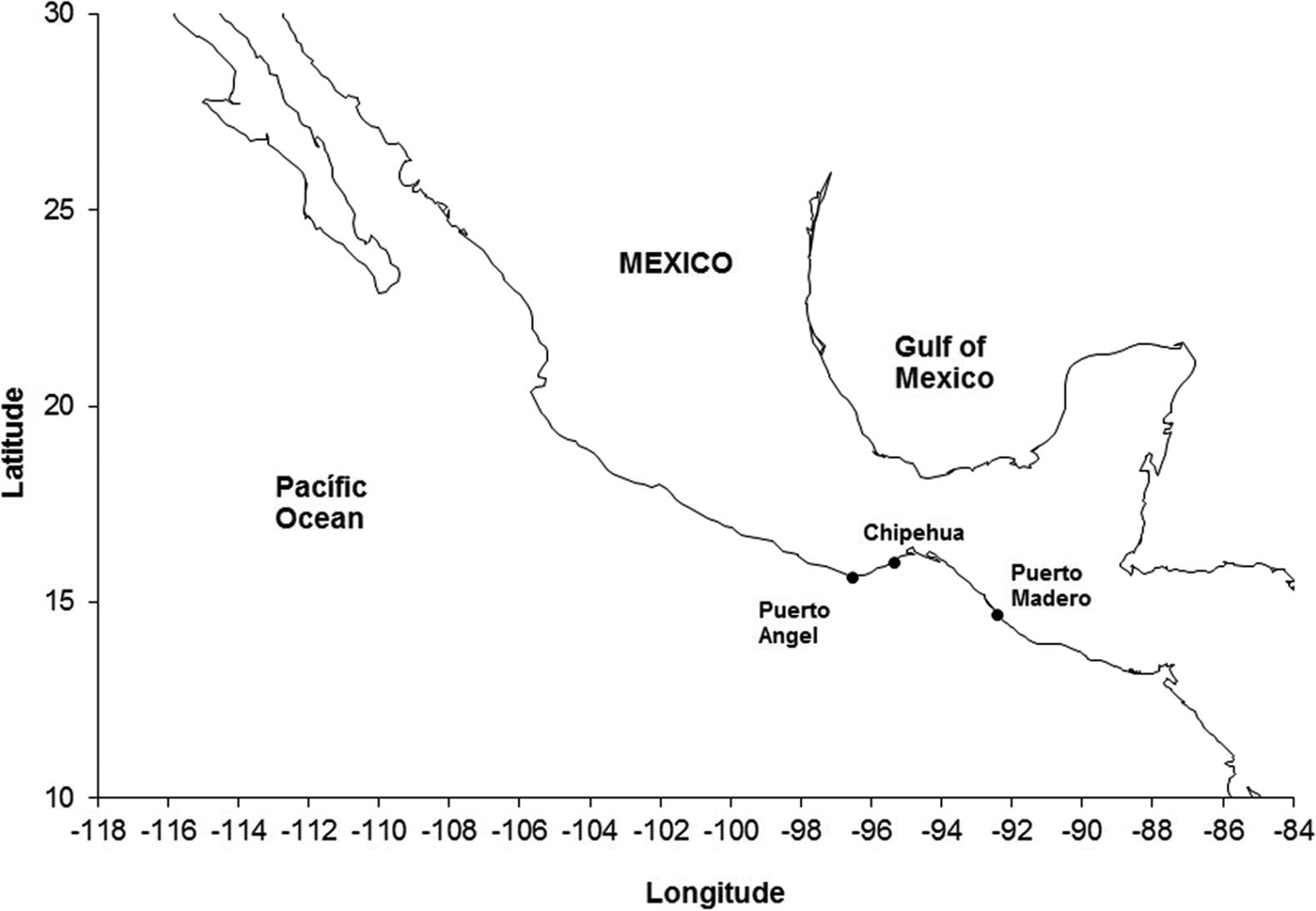
Samples for this study were obtained from September 2004 to May 2006 from commercial landings of sharks caught in the Gulf of Tehuantepec and landed at the harbours of Salina Cruz (Chipehua) and Puerto Ángel, Oaxaca, and Puerto Madero, Chiapas (Figure 1). The shark fishing fleet consists of small boats called ‘pangas’ measuring less than 10 metres in length with 75–115 hp outboard engines. Fishing gear consisted of gillnets with 8–12 inches mesh size, 150 m long by 10 m high, as well as longlines 1.5 m long with 100–150 hooks, placed between 14 and 35 nautical miles from the coast.
Study area and sampling sites. Sharks were caught between 14 and 35 nautical miles from the coast.

Sex was recorded for each shark and total length (TL) in centimetres was measured. All sizes reported in this study refer to total length. The monthly sex ratio of males to females was analysed using a Chi-square test (χ2) to determine whether there was a significant difference from the expected 1:1 ratio.
To estimate sexual maturity, morphometric and morphological indicators of reproductive structures were recorded. For males, the following characteristics were recorded: calcification and rotation of claspers, and presence of hematose spots (indicators of recent mating activity) on claspers; vascularization of the testes, and presence of semen in the seminal vesicles (Yano, Reference Yano1995). Testis and clasper length were measured in mm. For females, the following characteristics were recorded: presence of developing oocytes, eggs or embryos in the uterus, distended uteri (evidence of a previous pregnancy), and presence of scars caused by mating activity on the flanks or fins.
The uterus width was measured, as well as the diameter of the largest oocytes and the width of both oviducal glands (OG). The measurements of reproductive structures (testis and clasper length of males, uterus and oviducal gland width, and diameter of the largest oocytes of females) were graphed against shark total length to estimate the onset of maturity (Pratt, Reference Pratt1979; Natanson & Cailliet, Reference Natanson and Cailliet1986; Joung & Chen, Reference Joung and Chen1995).
Size at maturity (Pm), defined as the length at which 50% of the population is mature, was estimated using the following logistic equation, fitting a non-linear regression to the proportion of mature individuals taken in 10 cm TL intervals: Pm = 1/[1 + EXP(a + b*Lt)]. Where Pm = sex ratio of mature specimens, a and b = equation constants, Lt = total length of the shark (Conrath, Reference Conrath, Musick and Bonfil2005). The constants that resolve the model were obtained using the Solver routine in Excel.
Uterine fecundity was estimated using an embryo count or number of fertilized eggs present in each uterus. The largest oocytes in the ovary were also counted to estimate ovarian fecundity (Pratt, Reference Pratt1979). The total length and sex of each embryo were measured. To estimate gestation period, the mean length of each litter was plotted against time.
The gonadosomatic index (GSI) was calculated by dividing the testis width of mature males by the total length of the shark, and graphed against time to estimate mating period (Parsons & Grier, Reference Parsons and Grier1992). Histological sections of the testes and seminal vesicles were used to estimate seasonality and developmental stage of spermatogenesis, and to verify the maturity state of males (Conrath, Reference Conrath, Musick and Bonfil2005). The presence of large mature oocytes, scars obtained during mating, and sperm present in the uterus or cloaca of females were recorded (Branstetter, Reference Branstetter1981). We graphed average monthly oocyte size to estimate the ovulation period.
Size at birth was estimated using the size of the largest embryo and the smallest neonate captured at the same time and place (Pratt & Casey, Reference Pratt and Casey1990). To observe possible sperm storage in females, the anterior, middle and posterior parts of the oviducal glands were sectioned. Approximately 1 cm-wide transverse sections of the middle part of the testes and of the seminal vesicles were fixed in 70% alcohol for 24 h.
The histological technique used in this study followed the procedure described by Martoja & Martoja (Reference Martoja and Martoja1970). Transverse histological sections of 5–7 µm thickness (Conrath, Reference Conrath, Musick and Bonfil2005) were stained using hematoxylin-eosin.
RESULTS
Size distribution and sex ratio
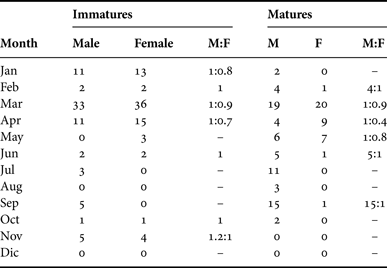
A total of 262 silky sharks were sampled, of which 145 were males and 117 were females, with a sex ratio of 1:0.81 (M:F), not significantly different from a 1:1 ratio (χ2 = 2.99). Immature sharks occurred during most of the year (Table 1). During the months when immature females and males were observed, the sexual ratio was not significantly different from 1:1 (M:F; χ2 = 0.15 on average). Mature females occurred mainly from February to June with most occurring in March and April. From July to December there were no records of mature females, except one record in September. Mature males were present in catches throughout the year except November and December. From March to May, both mature females and males were observed (Table 1). During March and May, the sex ratio was 1:1.1 (M:F), not significantly different from 1:1 (χ2 = 0.05). However, there was a greater number of females in April, with a sex ratio of 1:2.3 (M:F), which was statistically significantly different from 1:1 (χ2 = 1.92).
Monthly sex ratios of immature and mature silky sharks, Carcharhinus falciformis.
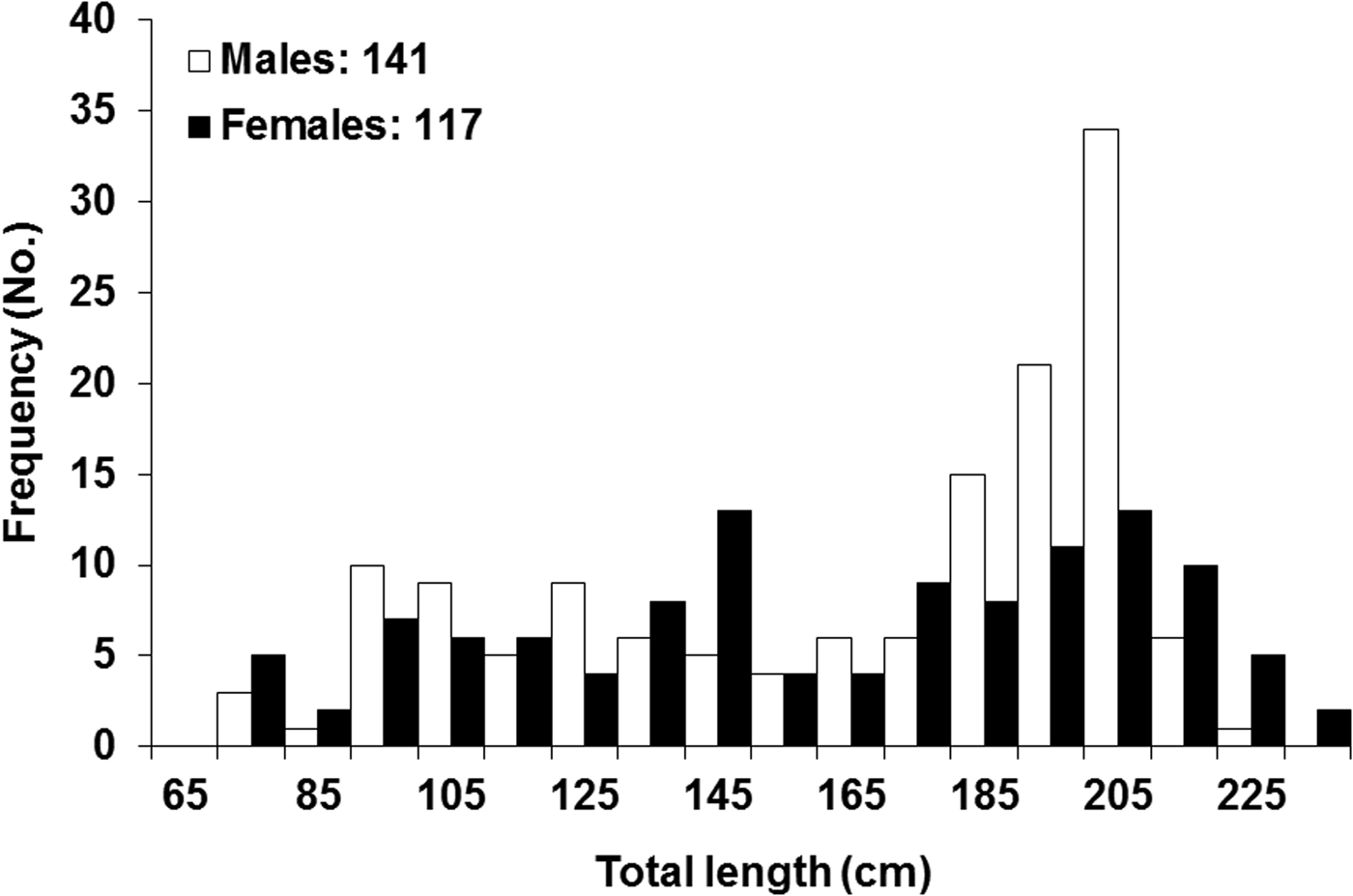
There was a continuous size distribution for both sexes (Figure 2). Males ranged in size from 69 to 220 cm; the smallest male shark was caught in March and the largest in September 2004. The more frequent size interval of males was between 180 and 210 cm, reflecting the fact that there was a slight tendency towards catching larger sharks, which represented 57% of the total catch. Females ranged in size from 70 to 229 cm. The smallest and largest females were caught in February and March 2005, respectively. There was no clear modal size for females; however, most of the total catch (70%) was made up of sharks between 130 and 210 cm.
Size frequency histogram of silky sharks captured from September 2004 to May 2006.
Sexual maturity
FEMALES
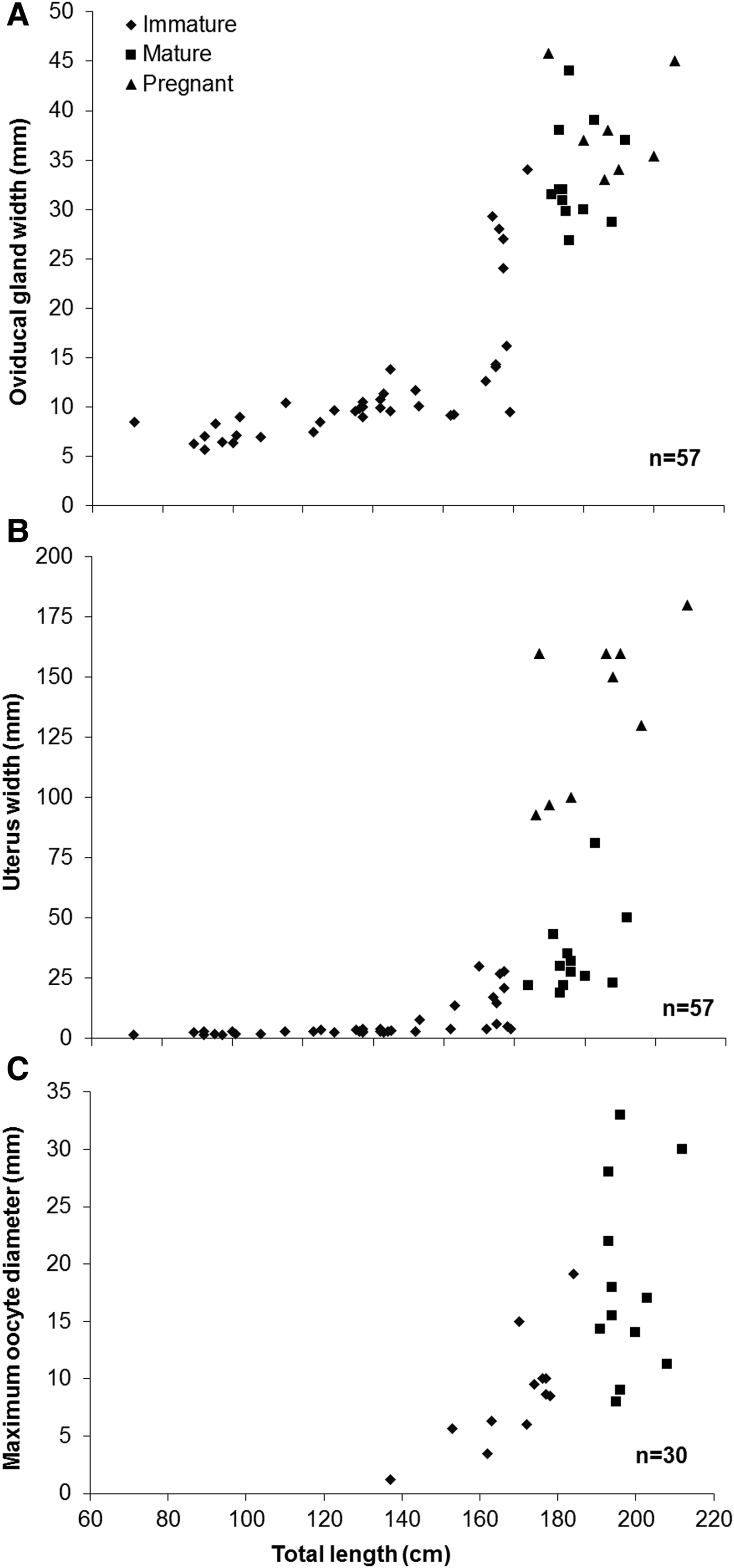
Because sharks are processed by fishermen as soon as they are landed, only 68 reproductive organs of females measuring 72 to 229 cm were extracted. The maturity process of females started at approximately 170 cm; at this size the reproductive structures (uteri, OG, oocytes) grew and developed rapidly (Figure 3).
Relationship between female total length and (A) oviducal gland width, (B) uterus width, and (C) maximum oocyte diameter, indicating maturity stage.
Twelve females had oocytes with a maximum diameter measuring between 2 and 15 mm, while 15 females had yellow oocytes measuring between 12 and 30 mm (Figure 3). The oocytes of four non-pregnant adult females were mature.
The oviducal glands of a female with mating scars measured 28 mm in diameter, and another female with uterine eggs had an oviducal gland 45 mm in diameter.
In this study, females considered as mature (>185 cm) had oviducal glands between 28 and 45 mm, uteri over 20 mm wide and oocytes with a diameter over 15 mm. The smallest mature female measured 184 cm.
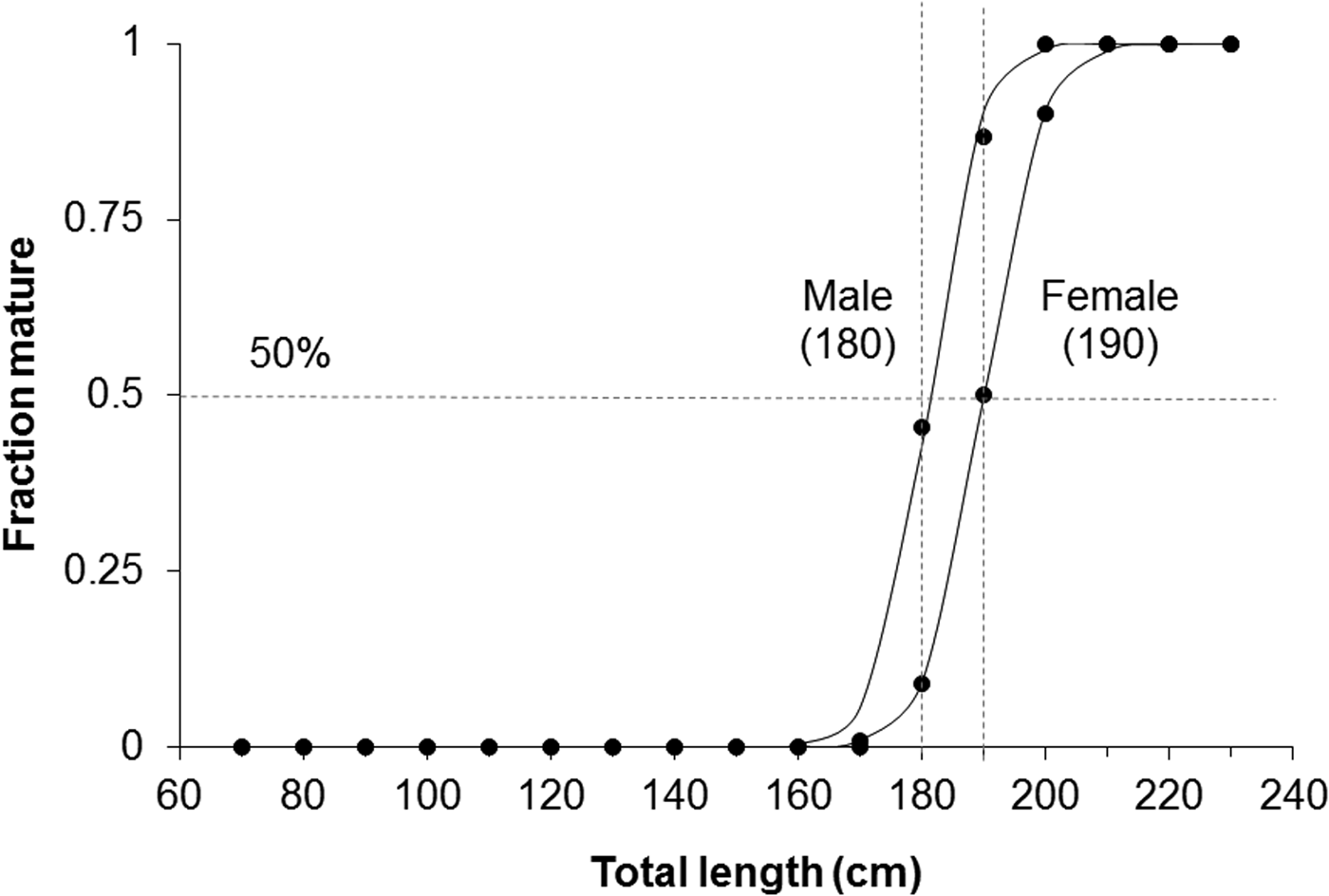
Size at 50% maturity of females was calculated using 115 individuals (76 immature females and 39 mature females). The proportion of mature females (Pm) in relation to total length followed the model: Pm = 1/[1 + exp(49.1 + 0.27LT)]. Size at maturity was estimated using this logistic adjustment; it indicated that 50% of females were mature at 190 cm.
MALES
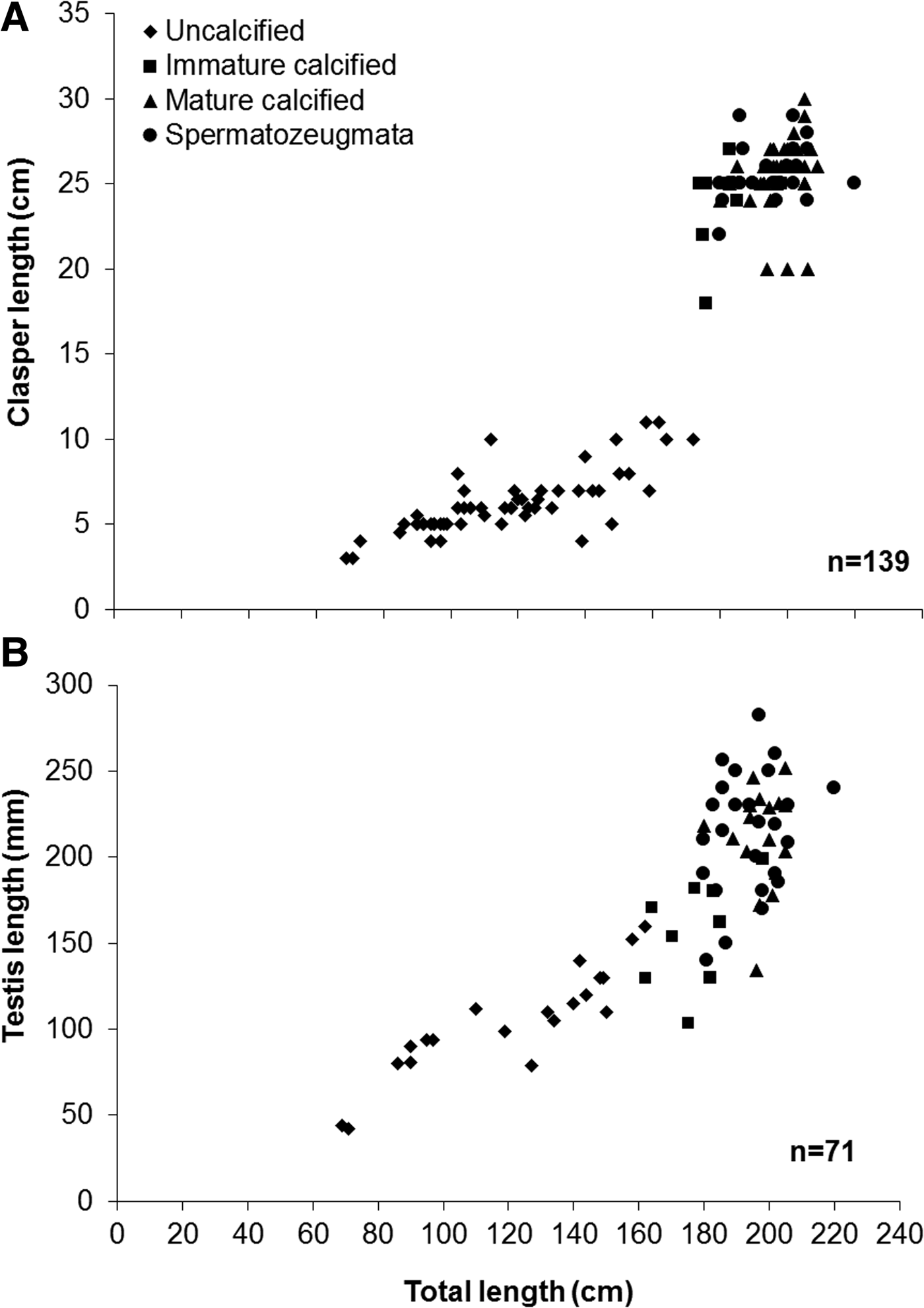
There was an evident increase in the development of reproductive structures of males larger than 160 cm. Reproductive structures were completely developed in males measuring 180 cm TL or greater. At that length testes measured over 200 mm in length, claspers were completely calcified and spermatozeugmata had formed in the seminal vesicles (Figure 4). The smaller mature male measured 180 cm.
Relationship between male total length and (A) clasper length, and (B) testis length, indicating the degree of clasper calcification and presence of spermatozeugmata in the seminal vesicles.
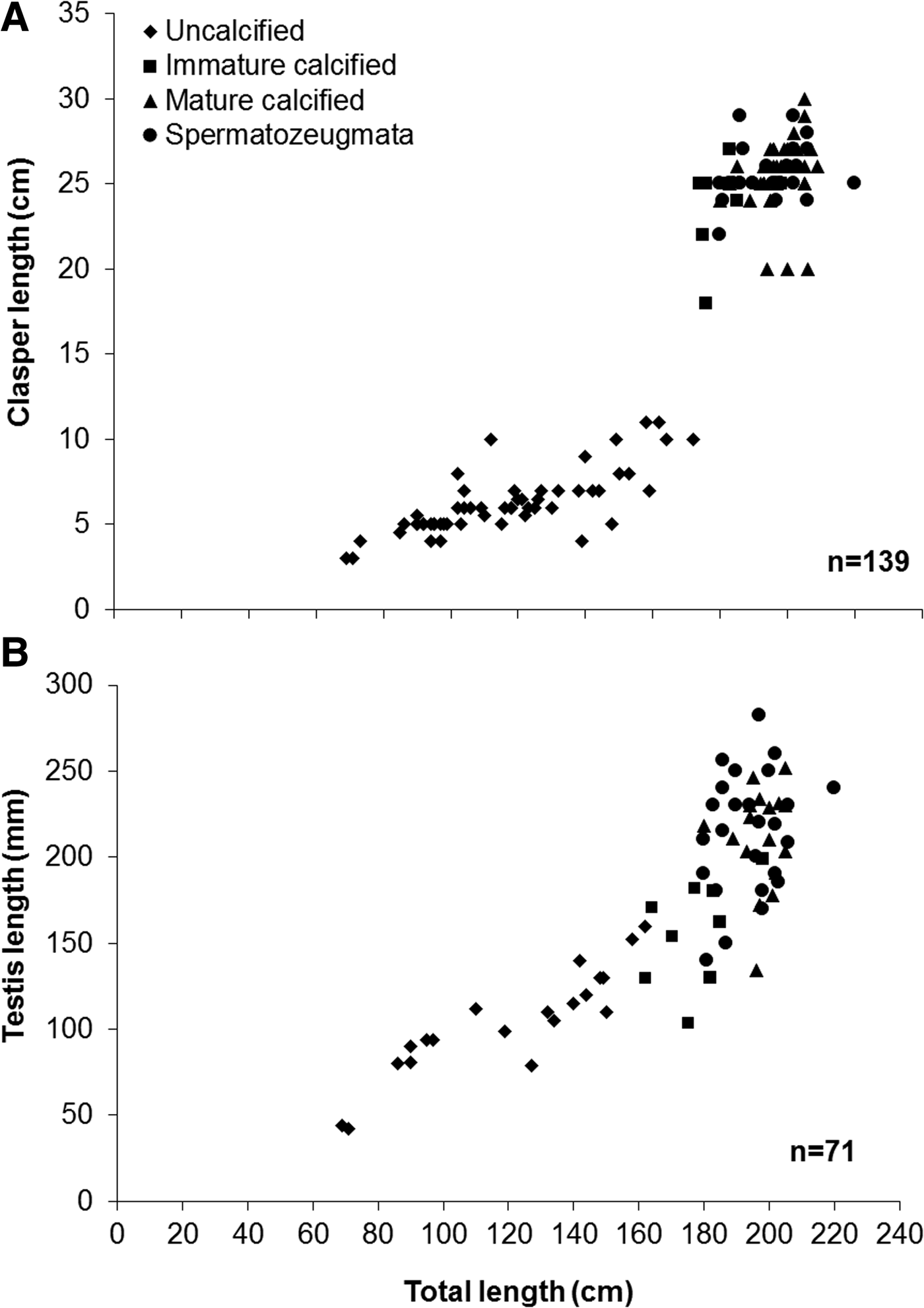
Male size at 50% maturity was calculated using 140 sharks (72 immature and 68 mature). The adjustment of total length and mature male proportion using the logistic equation indicated a size at maturity of 180 cm TL, at which 50% of males were mature (Figure 5).
Size at 50% maturity of males and females. (• = observed data, ― = calculated data, r 2=0.72).
Ovulation period and mating
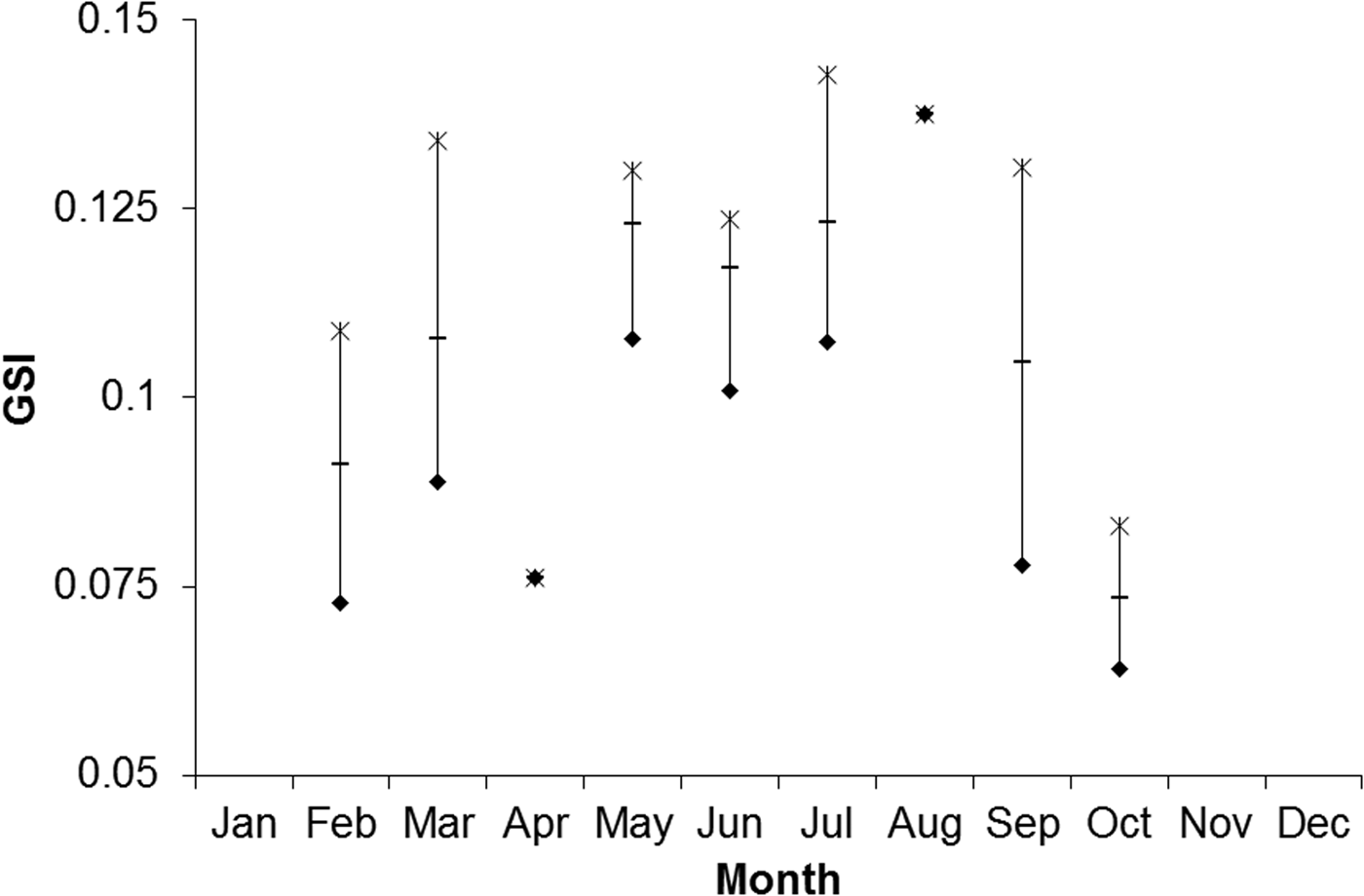
The largest oocytes of mature non-pregnant females measuring between 191 and 220 cm grew from March to June. During April and May we observed larger oocytes, corresponding to five females that had oocytes ready to be ovulated, measuring 19–33 mm diameter (Figure 6A). Pregnant females had immature oocytes, measuring between 10 and 15 mm. In September we observed a 190 cm female with 8 uterine eggs, and in March we recorded a 208 cm TL female with mating scars (Table 2).
Monthly oocyte growth of mature females and gonadosomatic index of mature males.
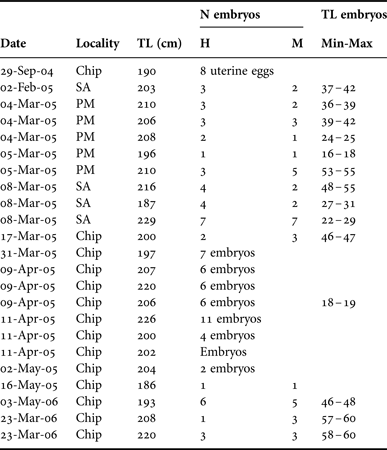
Characteristics of pregnant silky shark females caught in the southern Mexican Pacific.
In general, the GSI of mature males was higher from May to July (Figure 6B). During these months, eight of the 16 analysed males had empty seminal vesicles. During the remaining months most males had full seminal vesicles and mature/well-formed spermatozeugmata.
Fecundity and birth
We recorded 23 pregnant females measuring between 186 and 229 cm; one was caught in September and 22 were caught between February and May. Most were caught in March (12 individuals) and April (6 individuals; Table 2).
Ovarian fecundity based on the number of largest oocytes in the ovary varied between 4 and 11. Uterine fecundity (number of embryos per litter) ranged between 2 and 14 embryos.
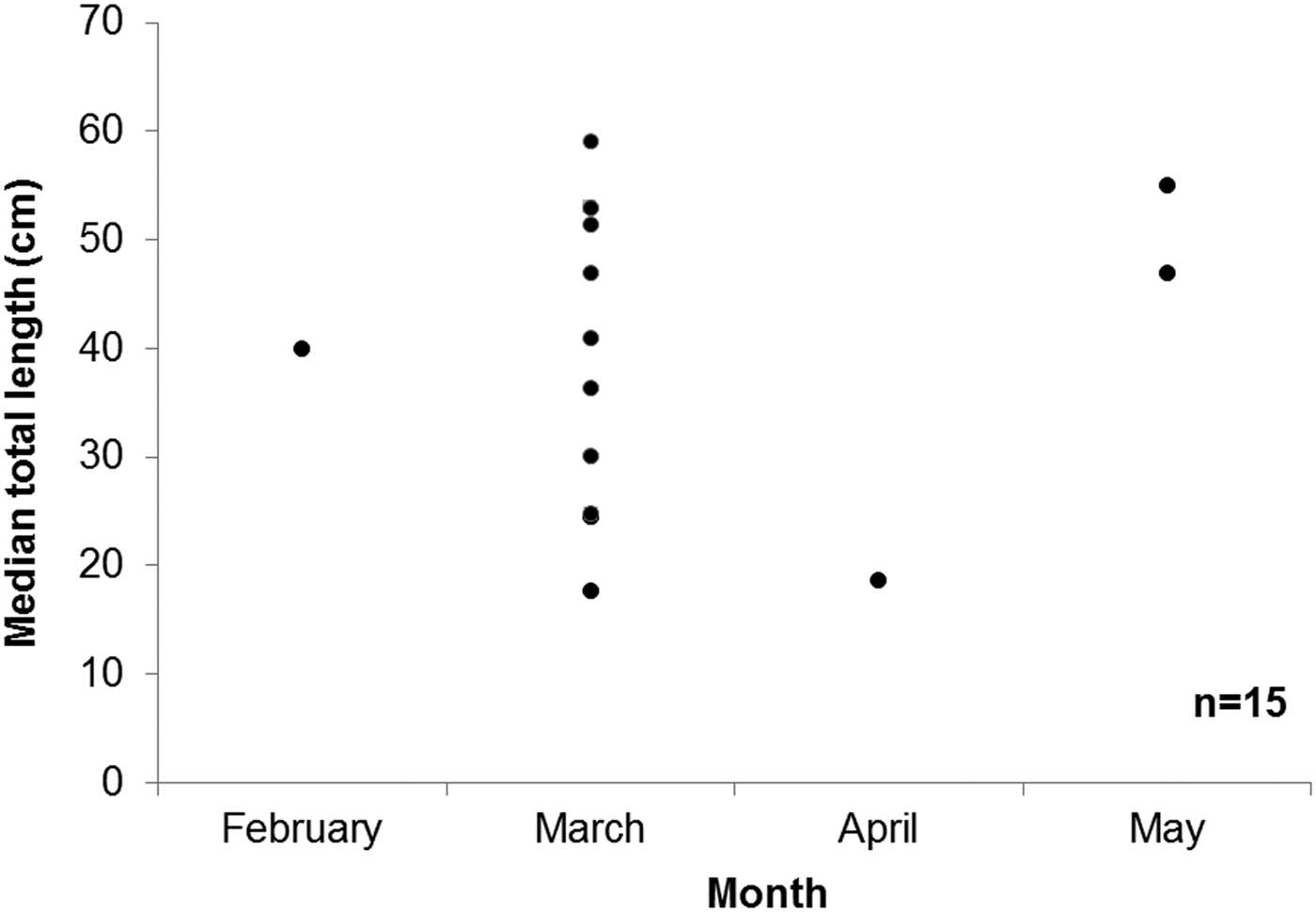
Total length measurements of embryos from 15 litters were obtained between February and May. Females were at different stages of the gestation period, and the size of embryos ranged widely. The smallest embryo measured 16.7 cm and the largest 60 cm (average 38.5 cm ± 1.64). During March embryos of different sizes and developmental stages were recorded. Of the 11 litters recorded in March, five were at the earliest sizes and developmental stages, with an average of 25 cm; the remaining litters were made up of well-developed sharks, almost at term (Figure 7).
Monthly embryonic median development of 15 C. falciformis litters.
Only six neonates measuring between 69 and 70 cm were recorded between February and March. Taking into account that the largest embryo measured 60 cm and the smallest free living shark measured 69 cm, we estimated that sharks are born between 60 and 69 cm.
Sperm storage
A histological analysis of the oviducal glands of 18 mature females showed that eight were in an advanced pregnancy stage, but there were no signs of sperm storage.
Histological sections of the testes and seminal vesicles of 32 males measuring over 165 cm were carried out. Six sharks measuring from 160 to 182 cm had uncalcified or semicalcified claspers, and the testes had a high quantity of cells in the first stages of spermatic development and few mature spermatozoids, without sperm in the seminal vesicles.
Twenty-five mature sharks over 180 cm had well-developed testes and calcified claspers, great quantities of sperm present in the testes and/or seminal vesicles, and spermatozeugmata formation. In 15 of these sharks the seminal vesicles were full, and in the remaining 10 there was little sperm without spermatozeugmata formation, or only sperm remains.
DISCUSSION
The maximum length of C. falciformis recorded in the present study (229 cm) is smaller than maximum sizes observed by Pratt & Casey (Reference Pratt and Casey1990) of 330 cm, by Bonfil et al. (Reference Bonfil, Mena and de Anda1993) of 308–314 cm and by Hoyos et al. (Reference Hoyos-Padilla, Ceballos-Vázquez and Galván-Magaña2012) of 316 cm in males and 260 cm in females. However, our maximum size is similar to that reported by Joung et al. (Reference Joung, Chen, Lee and Liu2008) of 230–256 cm TL. Castro (Reference Castro1983) reported that even though C. falciformis can reach a maximum size of 330 cm, it is more common to find average lengths between 200 and 240 cm.
Size frequency indicated that landings were made up mainly of juvenile and subadult sharks measuring between 130 and 210 cm. The fishery in the Gulf of Tehuantepec catches the bigger sharks using longlines when the season begins, but when the catches of large animals decrease, they use gillnets to catch smaller sharks. A similar pattern was observed by Alejo et al. (Reference Alejo, Márquez, Ramos and Herrera2007) off the coast of Oaxaca, Mexico. This could be due to fishing operations being carried out close to the coast where juveniles and subadults are found more frequently, and are more susceptible to fishing. If this is true, it would have repercussions on management strategies for this species, since selective capture could have an unfavourable impact on the population's ability to recover.
The sex ratio of immature males and females found in this study was close to 1 all year long. However, the sex ratio of mature sharks was 1:1 only from March to May, and during the rest of the year mostly males were caught. According to Wourms (Reference Wourms1977), sexual segregation is common in adult elasmobranchs, except during the reproductive season, when there is a 1:1 proportion. The equivalent number of juvenile female and male sharks in our landings and low frequency of gravid females suggests that mature C. falciformis segregate by sex outside of the breeding period. Juveniles remain close to the coast until the start of maturity, while mature females have more oceanic habits, which explains the low occurrence of pregnant females in catches.
Sizes at 50% maturity estimated in this study (180 cm for males and 190 cm for females) are similar to those reported by Oshitani et al. (Reference Oshitani, Nakano and Tanaka2003) of between 180 and 187 cm for males, and between 193 and 200 cm for females. Joung et al. (Reference Joung, Chen, Lee and Liu2008) reported slightly larger sizes at maturity of 212.5 cm for males and between 210 and 220 cm for females in north-eastern Taiwan, attributed to the latitude at which the study was carried out. These differences could be due to the fact that most carcharhinids tend to grow faster and mature at smaller sizes in warm areas, compared with those found in temperate areas (Hoening & Gruber, Reference Hoening and Gruber1990).
In this study, signs of reproductive activity were observed between March and the beginning of September. Monthly oocyte growth suggests ovulation occurred during April and May, since females with yellow oocytes full of vitellus were observed in those months. Males had the highest GSI averages, and a larger number of males had empty seminal vesicles starting in July. We infer that mating occurs from June to August. A female with uterine eggs at the discoblastula stage was caught in September.
The observed fecundity in this study (between 4 and 11 largest oocytes in the ovary and between 2 and 14 embryos) coincides with the 1–16 embryos reported by Oshitani et al. (Reference Oshitani, Nakano and Tanaka2003). Other carcharinid species have been observed to have a similar number of embryos, for example C. milberti (2–6 embryos; Taniuchi, Reference Taniuchi1971), C. brachyurus (16 embryos; Lucifora et al., Reference Lucifora, Menni and Escalante2005), C. acronotus (1–5 embryos; Sulikowski et al., Reference Sulikowski, Driggers, Ford, Boonstra and Carlson2007), and C. plumbeus (1–7 embryos; Hazin et al., Reference Hazin, Oliveira and Macena2007). The maximum reported fecundity for C. falciformis is 16 embryos (Stevens & McLoughlin, Reference Stevens and McLoughlin1991; Oshitani et al., Reference Oshitani, Nakano and Tanaka2003), which shows clearly that despite being one of the most abundant species in tropical waters, its reproductive capacity is limited with respect to other shark species (Cortés, Reference Cortés2000) that have a higher number of embryos, such as the scalloped hammerhead shark Sphyrna lewini (up to 40 embryos), the blue shark Prionace glauca (100 embryos) or the tiger shark Galeocerdo cuvier (82 embryos) (Compagno et al. Reference Compagno, Dando and Fowler2005).
The biennial reproductive cycle consists of consecutive ovulation and gestation cycles (Castro et al., Reference Castro, Woodley and Brudek1999). It is characterized by the non-development of oocytes until embryos are expelled, and is typical of sharks from the Carcharhinus and Negaprion genera (Clark & von Schmidt, Reference Clark and Von Schmidt1965; Castro, Reference Castro1996). It has been reported that the reproductive cycle of the oceanic whitetip shark, Carcharhinus longimanus lasts 2–3 years (Uchida et al., Reference Uchida, Toda and Kamei1990), while Musick et al. (Reference Musick, Branstetter and Colvocoresses1993) suggested that the sandbar shark, Carcharhinus plumbeus has a rest period of at least 1 year, requiring a 2-year reproductive cycle. The absence of developing oocytes in females with near-term embryos suggests that C. falciformis may have a biennial reproductive cycle, as previously reported by Branstetter (Reference Branstetter1987), although this cycle could be longer (3–4 years).
Birth size indicated by our data is 60–69 cm, which coincides with that reported by Oshitani et al. (Reference Oshitani, Nakano and Tanaka2003) of 65–81 cm and by Joung et al. (Reference Joung, Chen, Lee and Liu2008) of 65.5–75.5 cm. Hoyos et al. (Reference Hoyos-Padilla, Ceballos-Vázquez and Galván-Magaña2012) reported embryos of 80 cm in Baja California Sur, Mexico.
Taking into account the presence of pregnant near-term females in March and May, and the presence of neonates between February and March, it is possible that the birthing period starts at the beginning of the year and extends until May. In other studies done in the Pacific Ocean (Oshitani et al., Reference Oshitani, Nakano and Tanaka2003; Alejo et al., Reference Alejo, Márquez, Ramos and Herrera2007; Joung et al., Reference Joung, Chen, Lee and Liu2008) no defined birth period has been observed; these authors found near-term embryos and neonates during most of the year. Oshitani et al. (Reference Oshitani, Nakano and Tanaka2003) suggested that there is a maximum peak in silky shark births during May and July. Alejo et al. (Reference Alejo, Márquez, Ramos and Herrera2007) proposed two peaks in births, one from January to March and a longer one from May to September. Hoyos et al. (Reference Hoyos-Padilla, Ceballos-Vázquez and Galván-Magaña2012) reported that births of this species occur in June in Baja California Sur, Mexico.
Few data of pregnant females were obtained in this study and we could not define a gestation period. However, other studies have reported a gestation period of 12 months for C. falciformis. Branstetter (Reference Branstetter1987) and Bonfil et al. (1993) observed that for the Gulf of Mexico there was a clear tendency in embryo development from September to July, assuming that mating occurs in the spring. Off the Oaxaca coast, Alejo et al. (Reference Alejo, Márquez, Ramos and Herrera2007) also assumed a 12-month gestation period. However, they did not find a clear developmental pattern, recording different-sized embryos in the same month (15–60 cm on average), mainly from January to June. The lack of a well-defined reproductive pattern has already been reported for the slender smooth hound shark, Gollum attenuates, for which the population seems to be asynchronous, since females with mature oocytes, ovulated oocytes or embryos at the last stage of development can be found at the same time (Yano, Reference Yano1993).
It seems that C. falciformis can mate at any time of year, although with a period of higher mating frequency. However, to date, we can only speculate about this important event in the reproductive cycle, and more studies of the reproductive biology of C. falciformis are necessary to establish whether it presents a set reproductive pattern or if there is another mechanism not yet identified at play.
ACKNOWLEDGEMENTS
We thank Laura Sampson for editing the English version of this manuscript.
FINANCIAL SUPPORT
We thank the Instituto Politécnico Nacional (COFAA, EDI) for fellowships granted, and the Project CONACYT-SAGARPA 2003-CO1–101-/A-1 ‘CARACTERIZACION DE LA PESQUERIA ARTESANAL DE TIBURONES DESEMBARCADOS EN SALINA CRUZ, OAXACA’.