I. INTRODUCTION
The mechanical testing of most composite materials is mainly concerned with high elastic modulus and strength. High strength is not sufficient enough for some composites to withstand severe stress in operation due to their brittle behavior. One significant property is the ability to absorb energy for structural applications.Reference Broutman and Rotem1 The development of natural fiber composite materials is significant in the design of structural parts for automotive applications. The aim is to achieve lightweight, low production cost, and eventually reduced fuel consumption. Structural parts of vehicles such as front and rear bumpers are designed as energy absorbers to withstand an impact of 8 km/h without damage in low speed collision.Reference Adisa and Dan-mallam2 The choice of using a natural fiber and a thermoplastic fiber embedded in a thermoplastic matrix will not only produce the structural parts but also give the final parts its unique style and dimensional tolerance. Apart from ecological advantages, natural fibers have good mechanical properties combined with low specific gravity. In considering industrial safety, natural fibers do not cause skin irritation or allergic reactions compared with synthetic fibers.Reference Dieter Muller and Andreas3
The effect of reinforcing filler loading on the impact strength of a wood plastic composite was investigated.Reference Behzad4 The results of the notched impact test according to ASTM D256 confirmed that increasing the reinforcing filler loading reduces the flexural strength, tensile strength, impact strength, and elongation at break of the composite. The poor interfacial bonding between the fiber and the matrix caused the initiation of microcracks at the point of contact, which then propagates into the matrix thereby reducing the impact strength of the composite. The determination of the radial impact strength of fiber-reinforced composite tubes using a drop hammer was also carried out.Reference Nahas5 Glass fiber-reinforced plastics were tested using a drop hammer machine. The internal impact hoop loading was obtained by allowing the hammer to drop from a specified distance and impact the specimen. The comparison of the static and dynamic properties of the glass fiber-reinforced plastic tubes confirmed that their dynamic properties are better than the static values.
The effect of moisture absorption on the impact strength of jute and carbon fiber-reinforced epoxy hybrid composites was determined at different fiber volume fractions.Reference Lenda and Mridha6 The results of the investigation confirmed that the percentage moisture absorption of the composite increased with immersion time in water and also with increased fiber volume fraction. The impact strength of the composites decreased with increased moisture absorption in all the specimens at different fiber volume fractions. Specimens with higher moisture content with different fiber volume fractions gave an impact strength of 20–28% less than those without immersion in water. Water absorption behavior and impact strength of PVC/wood floor composites were also investigated at different fiber volume fractions. The results confirm that water absorption increases with increasing immersion time, which in turn reduces the impact strength of the composite.Reference Gisele, Maria and Leandro7 The results given above showed the hydrophilic nature of natural fibers in composites, which can be improved by either surface treatment or reinforcing the matrix with a natural fiber alongside a thermoplastic fiber.Reference Cicala, Cristaldi, Recca, Latteri and Dubrovski8
The effect of chemical treatment on the impact strength of unsaturated polyester-based sisal/glass fiber hybrid composites was studied.Reference John and Venkata Naidu9 The impact strength of the composite was observed to be higher than the matrix with marginal decrease in compressive strength compared to the matrix. There was no significant increase in impact strength due to chemical treatment of the reinforcing fibers.Reference Alexandra, Constantin, Diana and Catalina10,Reference Padma Priya and Rai11 This shows that chemical treatment has less effect on the energy absorption of a natural fiber-reinforced composite. More attention should be given to fiber orientation as the mechanics of load transfer in short fiber composite is between the fiber and the matrix.
The major constraint on the use of natural fibers in the automotive industry is due to high moisture absorption. The high moisture absorption characteristics can be minimized by hybridizing the composite with short or long thermoplastic fibers. Thermoplastic fibers are hydrophobic and have good mechanical properties when used as reinforcements in the composite.
The main objective of this paper is to study the impact strength of short fiber- and long fiber-reinforced thermoplastic hybrid composites using kenaf and polyethylene terephthalate (PET) fiber-reinforced polyoxymethylene (POM). Specific objectives are to study the moisture absorption, water absorption, porosity, and void content of the composites without surface treatment of the natural fiber.
II. MATERIALS AND METHODS
A. Materials
POM FM090 grade in the form of pellets was used as the matrix. A randomly oriented short kenaf fiber mat and long twisted kenaf fiber yarn were used as natural fiber reinforcements. The thermoplastic fiber used was PET fiber yarn of about 0.5 mm in diameter. Distilled water at a temperature of about 25 °C was used for density measurements and water absorption test.
B. Equipment
A compression molding machine with a heating capacity of 400 °C was used for producing samples. Standard mild steel mold designed according to ASTM D6110-10 specification was also used. A universal impact testing machine was used for the Charpy notched impact test. A graduated glass cylinder with a maximum volume of 250 cm3 and a digital balance of 1 kg load capacity were used for the density measurement.
C. Sample preparation
Thin layers of neat POM were produced by compression molding under a pressure of 150 MPa and at a processing temperature of 190 °C. The samples were cooled under this pressure to 100 °C before discharging from the molding machine. The kenaf/POM (20/80) composite was produced by laying short kenaf fiber mat randomly in between layers of neat POM inside a standard mold before taking into the compression molding machine for preheating. The mold was preheated for 10 min before it was compressed at 180 MPa and a processing temperature of 200 °C was maintained for 15 min before cooling to 100 °C. The same procedure was used to produce samples for both short and long fiber-reinforced hybrid composites (kenaf/PET/POM, 10/10/80).
D. Impact test
Each specimen was tested by releasing a striking hammer on the universal impact testing machine. The energy absorbed by each specimen was displayed on a digital meter and the average impact energy was used to compute the impact strength of the composites.
E. Moisture absorption
The samples produced were exposed to moisture for 96 h. The weight of the samples was then recorded from a digital balance before and after oven drying at 100 °C for 12 h for the determination of moisture content.
 $$M_{\rm{c}} = {{m_1 } \over {m_2 }}\quad.$$
In Eq. (1), M c is the moisture content, whereas m 1 and m 2 are the masses of the composite before and after drying, respectively.
F. Water absorption
The dried samples from the moisture absorption test were immersed in distilled water for 24 h, and the weight was finally taken to determine the percentage water absorption of the composite.
 $${\rm{\% }}\,W_{\rm{w}} = {{m_3 - m_2 } \over {m_2 }}{\rm{}} \times {\rm{}}100\quad.$$
In Eq. (2), W w is the percentage water absorption, whereas m 3 is the mass of the sample after immersion in distilled water.
G. Density and void content
Bulk density, dry density, void ratio, and porosity were all determined using Archimedes principle. A graduated glass cylinder with a capacity of 250 cm3 filled with distilled water to a level of 190 cm3 was used. The initial volume V 1 of the cylinder was taken before each sample was immersed inside the cylinder. The difference in volume of the displaced water by the specimens in the cylinder and the data from moisture and water absorption tests were used to compute the parameters given in the equations belowReference Head12,Reference Nicholis13 :
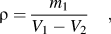 $$\rho = {{m_1} \over {V_1 - V_2 }}\quad,$$
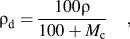 $$\rho _{\rm{d}} = {{100\rho } \over {100 + M_{\rm{c}} }}\quad,$$
 $$\varepsilon = {{V_{\rm{v}} } \over {V_{\rm{s}} }}\quad,$$
 $$\eta = {{V_{\rm{v}} } \over {V_{\rm{T}} }}\quad ,$$
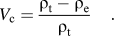 $$V_{\rm{c}} = {{\rho _{\rm{t}} - \rho _{\rm{e}} } \over {\rho _{\rm{t}} }}\quad.$$
From the equations above, the symbols ρ and ρd represents the bulk and dry density of the composite, whereas V 1 and V 2 represents the initial and final volume in the cylinder. ε is the void ratio, V v and V s are the volume of voids and volume of solid composite without voids. V T is the difference in volume between V 1 and V 2. Void content was given by V c, whereas the theoretical and experimental density were denoted as ρt and ρe. Porosity in the composite was denoted by η and M c represents moisture content.
III. RESULTS AND DISCUSSION
A. Impact test
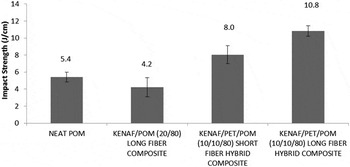
The results obtained from impact testing of long and short fiber hybrid composites are shown in Fig. 1. The results obtained showed that the long fibers increased the impact strength of the composites as compared to short fibers when reinforced in a POM matrix. This was due to the mechanics of load transfer in the short fiber composites, which is between the fibers and the matrix.Reference Gibson14,Reference Farshid, Vahidreza, Amir and Srikanth15 An impact strength of 10.8 J/cm was obtained for the long fiber hybrid composite that showed a significant improvement compared to neat POM with an impact strength of 5.4 J/cm.Reference Siregar, Sapuan, Rahman and Zaman16,Reference Girisha, Sanjeevamurthy, Gunti and Manu17 Impact energy absorbed was dissipated by fiber fracture, fiber pullout, and fiber–matrix debonding. It was observed that less energy was dissipated by samples that showed more fiber fracture compared to those with fiber pullout.Reference Mohd, Phongsakorn, Haeryip, Jeefferie, Puvanasvaran, Kamarul and Kannan18 The PET fiber was observed to have less fiber fracture due to high elongation and tensile strength compared to the kenaf fiber.
Impact strength of kenaf fiber and PET fiber-reinforced POM hybrid composites.

B. Scanning electron microscopy
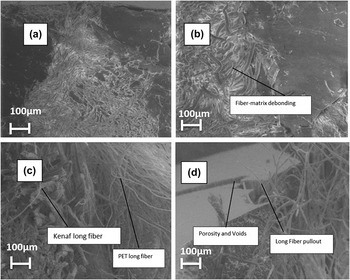
The phase morphology of the specimens showed the distribution of the fibers in the matrix as depicted in Fig. 2. The short kenaf fiber specimen after fracture showed fiber pullout and fiber debonding from the matrix. The voids caused by fiber pullout can be seen in Fig. 2(b), which are less compared to the porosity observed in Fig. 2(d). This high porosity was a result of poor fiber–matrix interfacial bonding that accounted for high moisture and water absorption in the long fiber hybrid composite. The poor interfacial bonding can be observed from the loose interface where the fibers protruded from the matrix. The sharp edged surface in Fig. 2(d) clearly represents the point where the hammer struck the specimen.
Scanning electron microscopy of short and long Kenaf/PET/POM composites (a) short fiber sample before impact, (b) short fiber sample after impact, (c) long fiber sample before impact, and (d) long fiber sample after impact.

C. Moisture and water absorption
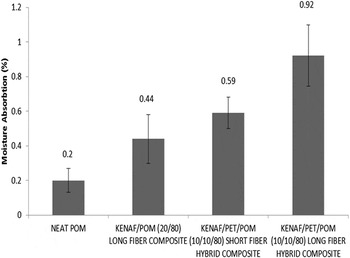
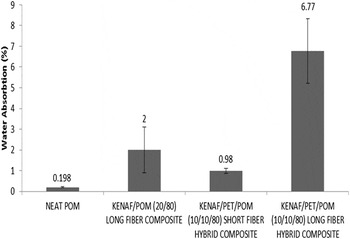
In Fig. 3, it can be seen that neat POM has a lower percentage of moisture absorption compared to the reinforced composites due to its hydrophobic characteristics when immersed in water. The high moisture and water absorption rate of kenaf fiber-reinforced POM composites was due to the presence of a natural fiber that is generally hydrophilic in nature. The kenaf fibers are prone to moisture and water absorption due to the presence of constituent materials such as cellulose and hemicellulose. Cellulose is a hydrophilic glucan polymer consisting of hydroxyl groups. The hydroxyl groups form intermolecular and intramolecular hydrogen bonds with macromolecules and polar molecules of cellulose. The water molecules formed hydrogen bonds with the hydroxyl groups of cellulose that results in high water uptake in the composite.Reference Law and Mohd Ishak19 As seen from Fig. 4, the long kenaf/PET fiber composites absorbed water more than the short kenaf/PET fiber composites. This was due to the random orientation of the short fibers in the matrix that gave room for fiber–matrix moisture uptake. This confirmed that the long twisted kenaf fibers absorb more moisture than the short kenaf fibers in a composite.
Moisture absorption results of short and long kenaf/PET/POM hybrid composites.

Water absorption results of short and long kenaf/PET/POM hybrid composites.

D. Void content, porosity and density
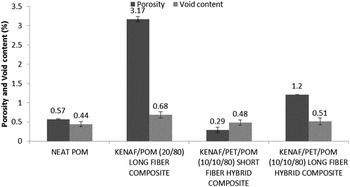
The porosity of the short kenaf/POM composite is higher than that of the kenaf fiber hybrid composite as a result of random orientation of the fibers in the matrix. It can be observed from Fig. 5 that the void content and porosity of the long kenaf fiber hybrid composite are higher due to poor fiber–matrix interfacial adhesion.Reference Rashdi, Sapaun, Ahmad and Khalina20
Porosity and void content of short and long kenaf/PET/POM hybrid composites.

The bulk and dry density of the composites are given in Table I. The results clearly showed that the hybrid composites have higher density values than the kenaf/POM composites as a result of hybridization with the PET fiber. The density of the long fiber hybrid composite is lower compared to that of the short fiber hybrid composite due to high void content and porosity that result in high moisture and water absorption. Weight reduction has been achieved theoretically and experimentally by reinforcing the matrix with low-density fibers.
Density and volume of voids for long and short kenaf/PET/POM hybrid composites.

IV. CONCLUSION
An impact strength of 10.8 J/cm for the long fiber hybrid composite showed a significant improvement in comparison to neat POM with an impact strength of 5.4 J/cm. The mechanics of load transfer between the fiber and the matrix in the short fiber hybrid composite attributed to a lower impact strength (8.0 J/cm) compared to the long fiber hybrid composite. The poor interfacial bonding between the fibers and the matrix resulted in a high void content of 0.51% and a porosity of 1.2% in the long fiber hybrid composite. The high void content and porosity accounted for high moisture and water absorption in the long fiber hybrid composite.