INTRODUCTION
The main focus of past coral work has been on tropical reefs. Investigations of peripheral coral communities, defined as a population that does not accrete a calcium carbonate reef structure, have recently, however, been subjected to increased interest. Peripheral communities provide an insight into the wider array of factors that control coral reefs and studies of them and the man-induced perturbations that affect them are, therefore, important. With reduced coral and associated species diversities too, food webs are simpler and interactions more straightforward.
Reef building scleractinian corals are at the northern limit of their range in Hong Kong (at 23°N) and survive here as a peripheral community of 84 recorded species (Lun, Reference Lun2003) although Veron (Reference Veron, Morton and Tseng1982) recorded but 49 taxa. Indo-Pacific corals do occur much further north on southern and eastern shores of Taiwan and Japan but this is because of the pervasive warming influence of the offshore Kuroshio (Veron, Reference Veron1993). The northern Chinese continental edge of the South China Sea is, however, influenced in winter by the north-east monsoon and the cool Taiwan Current and just a few degrees of latitude north-east of Hong Kong, in Fujian Province (at 25°N), corals are absent. Hong Kong's corals, therefore, survive precipitously in waters whose temperatures may fall to 13°C in winter, far lower than the figure of 18°C usually considered to limit their growth (Harriott, Reference Harriott1999). Hong Kong's corals hence grow very slowly (Collinson, Reference Collinson1997) and what we see underwater today is probably but a shadow of communities prior to human residence here. For example, up until the 1960s, local corals were collected for lime production (Morton & Ruxton, Reference Morton and Ruxton1997).
The Pearl River to the west of Hong Kong limits coral growth largely to eastern waters but, even so, spates of heavy rainfall and associated flooding and wind chill in winter when tides are low cause coral bleaching and death (Cope, Reference Cope1986). Pollution, reclamation and devastating fishing methods, including dynamiting (Cornish & McKellar, Reference Cornish and McKellar1998) have caused the wide-scale extirpation of local corals, notably in Tolo Harbour, and the degradation of communities have been documented by many authors since the 1980s (Scott & Cope, Reference Scott, Cope, Morton and Tseng1982, Reference Scott, Cope and Morton1990; Cope & Morton, Reference Cope and Morton1988; McCorry & Blackmore, Reference McCorry, Blackmore and Morton2000).
Because of stinging nematocysts, few animals can eat corals. Obvious exceptions are some fish, for example, Chaetodon spp. (Meyers, Reference Meyers1991), the Caribbean gastropod Coralliophila abbreviata (Lamarck, 1818) (Coralliophilidae) (Hayes, Reference Hayes1990a, Reference Hayesb) and the crown-of-thorns starfish, Acanthaster planci (Linnaeus, 1758), that can assume plague-like proportions on, for example, the Great Barrier Reef of Australia (Birkland & Lucas, Reference Birkland and Lucas1990). In the early 1990s, however, reported plague-like outbreaks of the corallivorous muricid gastropod Drupella cornus (Röding, 1798) were recorded from Ningaloo Reef in Western Australia (Forde, Reference Forde and Turner1992; Black & Johnson, Reference Black and Johnson1994). Similarly, Drupella rugosa (Born, 1778), a well-known corallivorous gastropod occurring throughout Asia and the Indo-West-Pacific (Taylor, Reference Taylor and Morton1980), has been identified as a plague corallivore in the Philippines (Moyer et al., Reference Moyer, Emerson and Ross1982), Japan (Fujioka & Yamazato, Reference Fujioka and Yamazato1983) and the Marshall Islands (Boucher, Reference Boucher1986).
In Hong Kong, two species of muricid gastropod, that is, Drupella rugosa and Cronia margariticola (Broderip, 1832), have been reported to feed on corals in large aggregations (Cumming & McCorry, Reference Cumming and McCorry1998). While aspects of the biology and ecology of Drupella rugosa have been studied from elsewhere, it is interesting to note that despite being present on rocky shores throughout the Indo-Pacific, and possessing a catholic diet, including carrion (Taylor & Morton, Reference Taylor and Morton1996), C. margariticola has only been reported to feed upon corals in Hong Kong (Taylor, Reference Taylor and Morton1980).
This field-based study was intended to complement an earlier experimental one on the behaviour of Drupella rugosa in the laboratory (Morton et al., Reference Morton, Blackmore and Kwok2002) that showed this species does not consume the retracted living coral polyps but rather grazes the surface coenenchyme that subsequently re-grows. This study, therefore, aimed at collecting baseline information on the biology of D. rugosa and Cronia margaraticola in Hong Kong in relation to the coral communities they interact with in the natural environment, and using both qualitative and quantitative observations. The ultimate and overall aim of the study, however, was to assess the potential threat of corallivorous gastropods, if any, to Hong Kong's delicately balanced coral communities. This is especially important because Lam et al. (Reference Lam, Shin and Hodgson2007) have reported recently that 20,000 individuals of D. rugosa were ‘removed’ from one small bay in Hong Kong, ostensibly to protect the resident corals from their feeding attentions and despite the results obtained by Morton et al. (Reference Morton, Blackmore and Kwok2002) suggesting that this muricid does not kill its grazed coral prey. Would field collected data support the earlier laboratory obtained results that feeding may occur in aggregations that only give the impression of a ‘plague’ and, if so, should our current hostile attitude to this coral predator/grazer be re-evaluated?
MATERIALS AND METHODS
Semi-quantitative observations
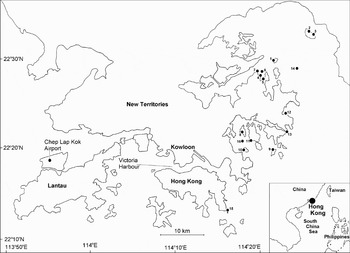
During 1999 and 2000, systematic (timed) searches using SCUBA were conducted at 16 sites: Chek Chau, Ping Chau (2 sites), Hoi Ha Wan (3 sites), Gruff Head, Sharp Island, Bluff Island, Shelter Island, Kau Sai Chau, Long Kei Wan, High Island Reservoir Dam Wall, Breakers Reef, Cape d'Aguilar Marine Reserve and Dai Pai (Port Shelter), in the coastal waters of Hong Kong (Figure 1). The sites, chosen because they possessed (locally) extensive coral cover (>30%) were surveyed for feeding corallivorous gastropods and, where identified, their prey taxa were also identified and recorded.
A map of Hong Kong showing the locations of the 16 sites that were surveyed for corallivorous gastropods: (1) Chek Chau; (2) Ping Chau; (3) Ping Chau Pier; (4) Hoi Ha Wan Coral Beach; (5) Hoi Ha Wan Pier; (6) Hoi Ha Wan Moon Island; (7) Gruff Head; (8) Sharp Island; (9) Bluff Island; (10) Shelter Island; (11) Kau Sai Chau; (12) Long Kei Wan; (13) High Island Reservoir Dam Wall; (14) Breakers Reef; (15) Cape d'Aguilar Marine Reserve; and (16) Dai Pai (Port Shelter).

Quantitative observations
Five of the above 16 sites with the richest coral communities: Bluff Island (Station 9), Sharp Island (Station 8), Shelter Island (Station 10), Coral Beach, Hoi Ha Wan (Station 4) and East Ping Chau (Station 3), were chosen for a more detailed, quantitative, study based on the results of the semi-quantitative observations.
Corallivore densities
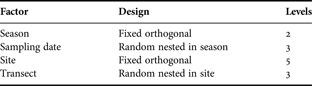
A sampling regime was used to detect significant differences in the numbers of corallivorous gastropods at the five more intensively studied sites and during two seasons, the summer of 1999 and the winter of 1999–2000. To determine the significance of any variation, both spatially and temporally, it is important to estimate the degree of short-term, within-season, variation, and small-scale, within-site, variation (Underwood, Reference Underwood1981, Reference Underwood, Calow and Petts1994; Morrisey et al., Reference Morrisey, Underwood, Howitt and Stark1992). A nested sampling protocol was, therefore, used (Table 1). Corallivorous gastropods, coral taxa and any feeding activity were recorded from each of 10 × 1 m2 quadrats placed haphazardly on three, also haphazardly-located, transects at the five sites during three sampling occasions in Hong Kong's two most extreme seasons, that is, summer (July, August and September 1999) and winter (December, January and February 1999–2000).
ANOVA model details.
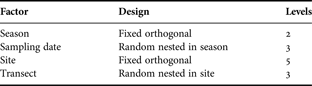
10 replicate haphazardly placed quadrats surveyed from each transect, within each site at each sampling date during each season.
Temporal variations in the distribution of corallivores were examined in more detail at Coral Beach, Hoi Ha Wan (Figure 1; Station 4). This site was chosen because it has been studied by researchers from the University of Hong Kong since the 1970s and thus has a recorded history of gastropod corallivory. In this study, the numbers of the two previously identified molluscan corallivores (Drupella rugosa and Cronia margariticola), were recorded from each of ten haphazardly-placed quadrats in three, also haphazardly-located, transects during each month from February 1999 to April 2000 inclusive, a period of 15 months. The substratum on which each grazing corallivore was seen and whether or not it was feeding were also recorded.
Corallivore prey selection
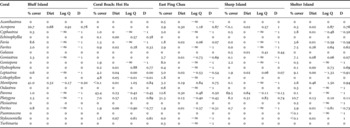
Two indices, Jacobs's (Jacobs, Reference Jacobs1974) modifications of Ivlev's electivity index (D) and the foraging ratio (LogQ), were used to determine the extent of coral prey selection by Drupella rugosa and Cronia margariticola at each of the five sites:


where r = the fraction of food in the diet and p = the fraction of food in the environment and where LogQ varies from −∞ (negative selection) to +∞ (positive selection) and D varies from −1 (negative selection) to +1 (positive selection).
Both indexes use the extent of selection in the diet as well as the abundance of prey types. Coral community composition, that is, the potential prey, was determined by methods described below and the dietary proportions of each coral species determined from feeding activity observed in the quantitative surveys.
Coral community structure
A 40 cm wide section of each 30 m transect used to assess corallivore density, was video-taped using a Hi8 video-recorder in an underwater housing. Subsequently, the tape was replayed and at each of 10 randomly-determined times paused and the percentage cover of living corals and any other substratum, that is, dead coral, mud or sand and boulder or rock, estimated using a 100 point grid. The taxa (genera and, where possible, species) and numbers of colonies of corals were also estimated from each transect recording. In the field, the area video-taped was examined and any feeding behaviour by gastropod corallivores recorded. Using these data it was possible to determine the numbers of corallivorous gastropods per coral colony, i.e. the infestation rate.
Univariate measures of community structure
A sample index (S, the total number of taxa) was calculated for the coral community at each study site. The Shannon–Wiener index of diversity (D′) using log-transformed data (Krebs, Reference Krebs1989), Margalef's index of species richness (d) (Margalef, Reference Margalef1958), and Pielou's index of evenness (J′) (Pielou, Reference Pielou1984) were calculated subsequently.
Multivariate analyses of community structure
Non-metric multidimensional scaling (MDS; Kruskal, Reference Kruskal1964), was used to compare the similarities between coral community structure within (temporal changes) and between (spatial differences) sites. Two dimensional plots were obtained which satisfy all the conditions imposed by rank, i.e. if sample 1 had a higher similarity to sample 2 than sample 3, it is placed closer to the former on the plot than the latter. The multivariate statistics were performed using PRIMER version 4.0.
Analysis of variance of corallivore density
Procedure MIXED SAS® (Version 6.12: SAS Institute Inc. Cary, NC.) was used to perform analysis of variance using methods described by Littell et al. (Reference Littell, Milliken, Stroup and Wolfinger1996).
RESULTS
Semi-quantitative observations
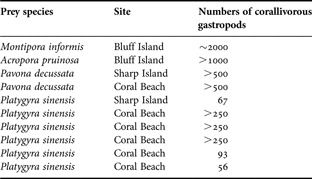
At the 16 sites initially surveyed semi-quantitatively, Drupella rugosa and Cronia margariticola were observed grazing on species of Platygyra, Leptastrea, Stylocoeniella, Porites, Favites, Cyphastrea, Goniastrea, Favia, Acropora, Montipora, Pavona, Lithophyllon, Hydnophora, Echinophyllia and Plesiastrea. Although identification of some, distinctive, corals, for example, Pavona decussata (Dana, 1846), Montipora informis Bernard, 1897, Acroporora pruinosa (Brooks, 1893) and, notably, Platygyra sinensis (Milne-Edwards & Haime, 1849) (Ng & Morton, Reference Ng and Morton2003) (Table 2), is possible to species level in the field, it is exceedingly difficult for others, for example, other less numerous and highly variable faviids, to be so recognized (Lam & Morton, Reference Lam and Morton2003). Indeed, although Veron (Reference Veron, Morton and Tseng1982) identified 49 species in a comprehensive survey of Hong Kong corals, the most recent count of 84 species by Lun (Reference Lun2003) was only obtained after the collection and examination of what were typically identified as ‘rare’ or ‘uncommon’ specimens and extensive comparison with museum collections. For this reason, during this study, corals were identified to species level in the field, where possible (and as will be stated), whereas when this was not possible they were recorded as a generic taxon.
Details of feeding aggregations of corallivorous gastropods comprising >50 individuals at various sites in Hong Kong.

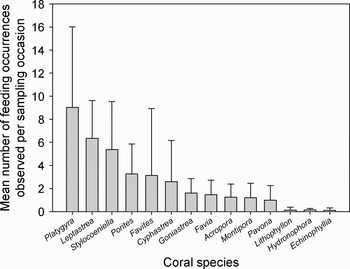
The two species of corallivorous muricids are easily identified in the field. The numbers of feeding Drupella rugosa and Cronia margariticola varied from site to site but were, in particular, high at Coral Beach (Hoi Ha Wan), Sharp Island and Shelter Island. As noted above, although 84 species of scleractinian corals are notionally recorded from Hong Kong, not all were preyed upon by corallivorous gastropods. Figure 2 identifies the coral taxa observed being fed upon by either D. rugosa or C. margariticola during the qualitative field observations. The well-known Platygyra sinensis was preyed upon most often. In contrast, other taxa, for example the well-known Goniopora columna Dana, 1846, were avoided by the gastropods.
A summary of mean numbers of feeding occurrences upon Hong Kong corals by corallivorous gastropods observed during each sampling occasion (error bars are±1 SE).

The ten greatest observed corallivore aggregations are identified in Table 2. The largest aggregation was discovered at Bluff Island on 10 July 1999, where ~2000 individuals were discovered on some 2 m2 of Montipora spp. The most frequent target for aggregative feeding was, however, Platygyra sinensis, particularly at Coral Beach (Hoi Ha Wan).
Quantitative observations
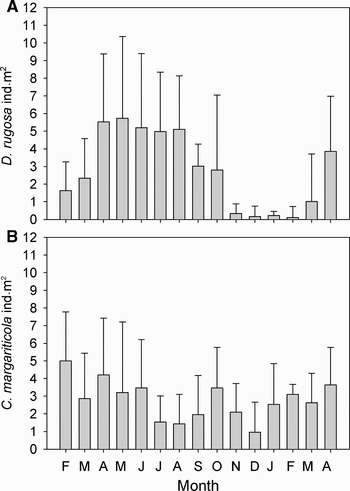
The 15-month study of the coral communities at Coral Beach (Hoi Ha Wan) detected temporal trends in the feeding behaviour of corallivorous gastropods. Densities of Drupella rugosa (Figure 3A) were low in the winter months, November to February, but increased rapidly in April of both 1999 and 2000, when sea temperatures are also rising. Densities were greatest during the summer months, May to August. In contrast, the densities of Cronia margariticola were not seasonal but more consistent over the study period (Figure 3B).
A summary of (A) Drupella rugosa and (B) Cronia margariticola densities at Coral Beach, Hoi Ha Wan (error bars are±1 SE).

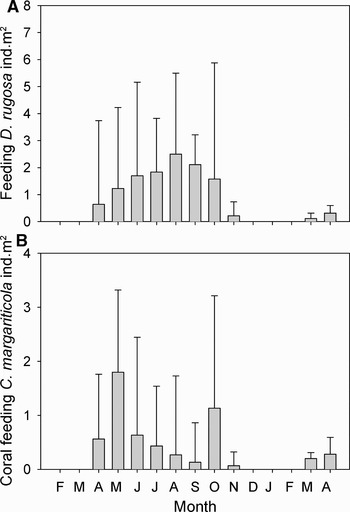
Figure 4A shows the numbers of feeding occurrences recorded for Drupella rugosa during each site visit for each month during the 15-month study period. In January, February and March (sea temperatures <20°C), no feeding individuals were observed. Sea temperatures rose in April and May and limited feeding behaviour was observed, many individuals also being seen moving on bare substrata. The greatest numbers of feeding gastropods were observed in the summer months, July to September, when sea temperatures were high (>27°C). Feeding was again reduced when temperatures declined in November and little such activity was observed until the last month surveyed, April 2000. Likewise (Figure 4B), corallivory in Cronia margariticola also had a seasonal pattern and no feeding was observed on corals during the winter months.
A summary of numbers of feeding (A) Drupella rugosa and (B) Cronia margariticola at Coral Beach, Hoi Ha Wan (error bars are±1 SE).

Corallivore densities
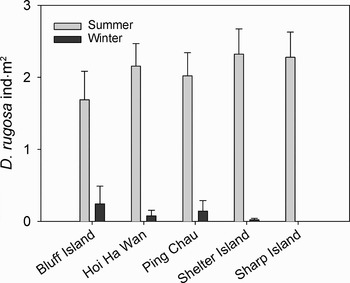
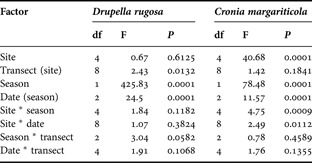
Table 3 provides details of the ANOVA carried out on Drupella rugosa densities at the five study sites during two seasons, winter and summer. The lack of a site * season interaction suggests that variation is consistent between these factors allowing them to be investigated independently. There was no significant difference in D. rugosa densities between the five sites. Figure 5 shows the similarity in D. rugosa densities at the sites during both seasons. The site * transect interaction was significant. This suggests that variations in the densities of D. rugosa were greater within than between sites, i.e. the gastropods were locally distributed patchily. Drupella rugosa densities were, however, different between seasons (Figure 5), numbers being greater in the summer than the winter. An interesting point in the temporal analyses is the presence of a significant season * date interaction and the marginal significance of the season * transect interaction, suggesting a short-term, temporal, patchiness in the distribution of D. rugosa that may be related to aggregrative reproduction. Seasonal variations were, however, greater than short-term variations.
A summary of Drupella rugosa densities at Bluff Island, Coral Beach, Hoi Ha Wan, Ping Chau, Shelter Island and Sharp Island during the summer of 1999 and the winter of 1999–2000 (error bars are ±1 SE).

A summary of ANOVA for Drupella rugosa and Cronia margariticola densities.

In contrast to Drupella rugosa, Cronia margariticola densities varied with both site and season and the presence of a site * season interaction suggests that between site variation was not consistent with season and vice versa (Table 3). The density of this species was lower than that of D. rugosa (Figure 5). Furthermore, C. margariticola was observed on many different substrata and feeding on non-scleractinian prey.
Prey selection
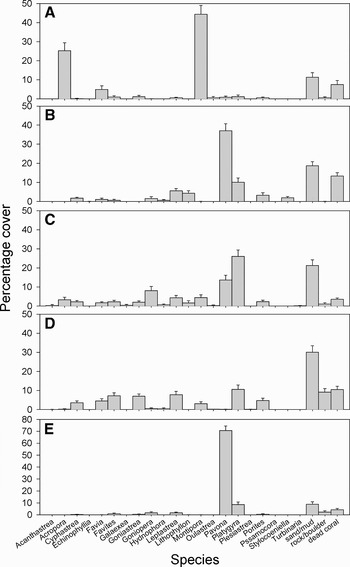
Prey selection was different at each site and complicated by the relative abundance of each coral species (Table 4). Some trends were, however, identified. Species of Acropora were strongly preferred at all sites. Although Goniopera columna was abundant it was not fed upon and, therefore, has a strong negative preference index. Species of Cyphastrea, Favia, Leptastrea, Porites, Favites and Goniastrea either had a negative or no preference index indicating that although they were fed upon, it was usually in proportions lower than expected from their abundances. Platygyra sinensis was not fed upon at Bluff Island, positively selected for at Sharp Island, Shelter Island and Hoi Ha Wan and negatively selected for at Ping Chau where it was present in the highest densities (Figure 6). Pavona decussata showed a similarly complicated picture of selection. It was not fed upon at Bluff Island and Shelter Island, negatively selected for at Sharp Island and Shelter Island and positively selected for at Ping Chau. Other coral prey genera and species were insufficiently abundant to give reliable selection figures.
Mean percentage cover of coral taxa at: (A) Bluff Island; (B) Hoi Ha Wan; (C) Ping Chau; (D) Shelter Island; and (E) Sharp Island (for locations see Figure 1: error bars are ±1 SE).

A summary of the prey preferences of Drupella rugosa feeding on common coral taxa at five sites in Hong Kong: Bluff Island, Coral Beach (Hoi Ha Wan), East Ping Chau, Sharp Island and Shelter Island, as shown by Jacob's modifications of Ivlev's electivity index (D) and the foraging ratio (LogQ).

Coral communities
Figure 6 shows the abundance of each coral species at the five sites. Bluff Island and Sharp Island were each dominated by two coral taxa, Acropora and Montipora and Pavona and Platygyra, respectively. In contrast, Hoi Ha Wan, Ping Chau and Shelter Island had more varied communities with no one taxon dominant. However, massive corals such as species of Favia, Favites, Goniastrea and Platygyra and encrusting Leptastrea and Cyphastrea were important taxa at these sites.
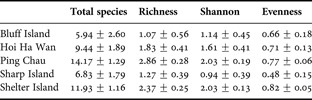
Table 5 summarizes four univariate parameters: total taxa, richness, diversity and evenness of the coral communities at each site. Ping Chau coral communities had the highest number of taxa, diversity and richness, and Sharp Island and Bluff Island the lowest. Values for Hoi Ha Wan and Shelter Island were intermediate. Evenness was highest at Shelter Island and Ping Chau, lowest at Bluff Island and intermediate at Hoi Ha Wan and Sharp Island.
A summary of univariate parameters for the coral communities at the five study sites.

Sharp Island and Bluff Island had the highest percentage cover of corals at 84.5% and 80.6%, respectively. Hoi Ha Wan (74.0%) and Ping Chau (67.9%) had intermediate values and Shelter Island had the lowest hard coral cover (50.2%).
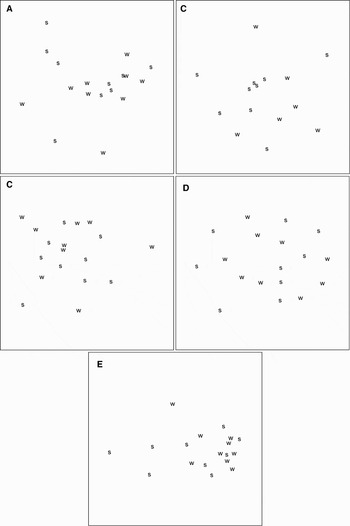
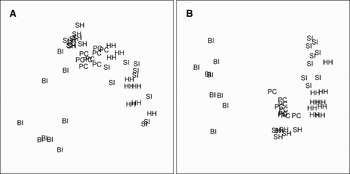
Figure 7 shows the MDS ordinations for all sites for both seasons. Groupings were obvious in both winter and summer, with samples from each site being closer to each other than samples from other ones. Bluff Island samples formed the most distant group suggesting that this site had a distinct coral community. Hoi Ha Wan and Sharp Island were close due to the high percentage cover by Pavona decussata at these sites and Shelter Island and Ping Chau were also similar having diverse communities largely composed of faviids and other massive corals. There is good evidence, therefore, to suggest that the between-site differences in community structure outlined by species-independent univariate measures were supported by taxon-dependent multivariate measures.
MDS ordinations of coral taxa data collected during two seasons, summer and winter, from five sites: (A) Bluff Island; (B) Shelter Island; (C) Ping Chau; (D) Sharp Island; and (E) Coral Beach, Hoi Ha Wan.

Figure 8 shows the MDS ordinations for both seasons at all sites. Groupings were indistinct suggesting a lack of difference in community structure between seasons. This was not unexpected due to the slow growth of local scleractinian corals (Collinson, Reference Collinson1997). It also argues that the sampling technique was giving a representative picture of the communities.
MDS ordinations of coral species data collected from the five sites: (BI) Bluff Island; (HH) Coral Beach, Hoi Ha Wan; (PC) Ping Chau; (SH) Shelter Island; and (SI) Sharp Island for the (A) summer and (B) winter seasons.

DISCUSSION
Corallivorous gastropods are most frequently observed at low densities (McClanahan, Reference McClanahan1990; McClanahan & Muthiga, 1992). Moyer et al. (Reference Moyer, Emerson and Ross1982) first documented outbreaks of Drupella rugosa causing large-scale damage to corals in 1976 at the island of Miyake-jima in southern Japan. Subsequently, outbreaks of other species of Drupella involving wide-scale coral mortality have been reported upon from several reefs in the tropical Indo-West Pacific including Japan (Moyer et al., Reference Moyer, Emerson and Ross1982, Reference Moyer, Higuchi, Matsuda and Hasegawa1985; Fujioka & Yamazato, Reference Fujioka and Yamazato1983), the Philippines (Moyer et al., Reference Moyer, Emerson and Ross1982), the Marshall Islands (Boucher, Reference Boucher1986) and Western Australia (Ayling & Ayling, Reference Ayling and Ayling1987; Forde Reference Forde and Turner1992; Osborne, Reference Osborne and Turner1992; Black & Johnson, Reference Black and Johnson1994).
The intensity, extent and biological features of the damage caused by Drupella corallivory have been reported to be similar to those resulting from Acanthaster planci infestations (Moyer et al., Reference Moyer, Emerson and Ross1982; Ayling & Ayling, Reference Ayling and Ayling1987). At Ningaloo Reef, Western Australia, where the outbreak was on a wider temporal and spatial scale than hitherto documented elsewhere in the Indo-West Pacific, there was a >75% reduction in live coral cover on back-reef areas (Forde, Reference Forde and Turner1992). Subsequently, researches investigating the general biology, ecology and genetics of Drupella spp. have been carried out (Osborne, Reference Osborne and Turner1992; Turner, Reference Turner1994a; Black & Johnson, Reference Black and Johnson1994; Holborn et al., Reference Holborn, Johnson and Black1994; Johnson & Cumming, Reference Johnson and Cumming1995). Prey-choice behaviour is complicated and the traits of the potential prey items, for example, colony morphology and tissue accessibility, nutritional value, mucus production and nematocyst defence, all of which vary in different coral species, are likely to be major factors affecting prey selection (Morton et al., 2002).
In this study, corallivorous gastropods were observed feeding on a number of different corals that occur in Hong Kong. These included species of Platygyra, Leptastrea, Stylocoeniella, Porites, Favites, Cyphastrea, Goniastrea, Favia, Acropora, Montipora, Pavona, Lithophyllon, Hydnophora, Echinophyllia and Plesiastrea. Platygyra sinensis appeared to be preyed upon most often. Not all of the corals present in Hong Kong, however, were fed upon by the corallivorous gastropods. Many of these species are uncommon although Goniopora columna is relatively common but was avoided by Drupella rugosa. The results of such qualitative observations shed some light on the extent of corallivory but give little insight into prey selection without information on the relative abundance of the potential prey coral species, i.e. choice availability.
To address the above issue, the coral communities present at five sites: Bluff Island, Hoi Ha Wan, Ping Chau, Shelter Island and Sharp Island, were surveyed. Bluff Island and Sharp Island were each dominated by two pairs of coral taxa, Acropora and Montipora and Pavona and Platygyra, respectively. In contrast Hoi Ha Wan, Ping Chau and Shelter Island had more varied communities with no one taxon dominating. Massive species of Favia, Favites, Goniastrea and Platygyra and encrusting species such as Leptastrea and Cyphastrea were all important at these sites (Figure 6). MDS ordinations of all sites for both seasons showed that coral communities were different between-site but varied little with season. Corallivore densities were similar at all sites despite differences in coral community structure. This suggests that no one site can be considered to have an especial problem with the molluscan corallivores under study.
Cumming (Reference Cumming1999) suggested that small scale (metres) variation is more important than large scale variation (100s of metres) in the distribution of Drupella spp. on the Great Barrier Reef and this appears to be also true for Hong Kong with a similar lack of inter-site difference in D. rugosa densities. Furthermore, and importantly, the mean D. rugosa densities of ~2 individuals · m2 recorded herein from Hong Kong are similar to those considered normal for predation-unaffected coral reefs in other areas of the Pacific (Turner, Reference Turner1994a).
In contrast to spatial distributions, temporal patterns were different. Drupella rugosa densities and observations of feeding behaviour by this species and Cronia margariticola were much lower in winter, as compared with summer (Figures 3 & 4). Coral communities were similar during both seasons (Figure 7). As a consequence, the observed pattern of feeding behaviour and abundance cannot be attributed to changes in prey availability. Temporal patterns of corallivore abundance and feeding were more evident at Hoi Ha Wan from where monthly samples were obtained. Densities and feeding records were low in the colder months, November to February, but increased rapidly in April 1999 and April 2000 as water temperature rose. Densities were greatest during the summer months, May to August. Density thus has a clear link with water temperature. Feeding may be reduced in the cooler winter months because D. rugosa is, in Hong Kong, like its coral prey, near the northern limit of its distribution (Taylor, Reference Taylor and Morton1980; Morton & Ruxton, 1997). These results contrast with those obtained for D. cornus on Ningaloo Reef (Turner, Reference Turner1994b). Here there was a seasonal pattern in the distribution of D. cornus, although the proportion of juveniles in the population varied, presumably due to differential recruitment (Turner, Reference Turner1994b).
Cronia margariticola does not feed on corals during winter months but was observed feeding on other prey items. Furthermore, C. margariticola was rarely observed to be corallivorous in the absence of feeding Drupella rugosa, which has several structural and behavioural adaptations that allow it to overcome coral defences. For example, the mouth lies at the anterior end of a long, muscular, pleurembolic proboscis that is cuticularized exteriorly and lined with mucous-secreting epithelial cells and sub-dermal glands (Robertson, Reference Robertson1970), which may play a role in preventing nematocysts from penetrating vulnerable soft tissues. The sole of the foot is also well supplied with mucous-secreting epithelial cells and sub-dermal glands, especially anteriorly in the vicinity of the pedal groove. Masses of mucus are pushed ahead of the mouth during feeding (Robertson, Reference Robertson1970). The reed-shaped lateral radula teeth of Drupella may also play a role in defence against nematocysts (Fujioka, Reference Fujioka1982). Without these adaptations, it is probable that C. margariticola is unable to feed on corals without D. rugosa initiating an attack. This would explain the lack of corallivory by this species in winter months and the opportunistic nature of its feeding behaviour in Hong Kong as reported upon by Taylor & Morton (Reference Taylor and Morton1996).
Drupella rugosa is long-lived and relatively slow growing (Black & Johnson, 1994; Turner, Reference Turner1994a). It is, therefore, unlikely that seasonal changes in abundance can be explained by annual recruitment, growth and death in the summer months. When the inshore seawater starts to warm up in spring in Hong Kong, D. rugosa was observed on sand moving towards corals. It is thought that this species spends winter buried in the sand until water temperature rises stimulate activity. This phenomenon has been observed for Nucella lapillus (Linnaeus, 1758) in the United Kingdom where individuals form aggregations in the sand during winter and emerge to feed in spring when inshore seawater temperatures rise (Feare, Reference Feare1970) and, more importantly, for the muricid Ergalatax contractus (Reeve, 1846) in Hong Kong (Morton, Reference Morton2006).
Numerous recorded observations on the behaviour of predatory gastropods in the field have suggested that chemoreception is the most important food-detecting mechanism (Kohn, Reference Kohn1961). It allows the organism to detect the presence and direction of potential prey species based on species-specific chemical substances, probably proteins, emanating from them (Kohn, Reference Kohn1961, Reference Kohn, Saleuddin and Wilbur1983). A general preference for species of Acropora and Montipora by species of Drupella may, therefore, be attributable to either quantitative and/or qualitative differences in the active coral component(s), which are essential for eliciting feeding responses (Turner, Reference Turner1994a).
Another factor that may influence feeding behaviour and prey selectivity by Drupella rugosa is the relative abundance of food species (Turner Reference Turner1994a). Small-polyped, branching and foliate corals such as Acropora and Montipora, generally harbour large numbers of Drupella spp. Other genera with larger polyps (>1 mm) and massive growth forms are not subject to predation, either in swarms or as individuals (Moyer et al., Reference Moyer, Emerson and Ross1982; Turner, Reference Turner1994a). Erect, branching corals are, therefore, the preferred prey of D. rugosa, but these are rare in Hong Kong (Morton, Reference Morton and Morton1992). This is possibly due to physical factors, for example, exposure to wave action, and human impacts, such as, pollution, fishery damage including dynamiting and coral collecting (Morton, Reference Morton and Morton1992). As a consequence, most coral communities in Hong Kong are dominated by massive and encrusting species. Instead of being restricted to a few areas where branching corals are available, therefore, D. rugosa locally feeds on a variety of massive and encrusting genera, i.e. species of Favia, Favites, Goniastrea, Hydnophora, Leptastrea, Mycedium, Platygyra, Plesiastrea and Porites, which are usually avoided elsewhere (Robertson, Reference Robertson1970; Moyer et al., Reference Moyer, Emerson and Ross1982; Cumming, Reference Cumming and Turner1992). Coral species have a rather narrow tolerance of changes in salinity, relatively small fluctuations in Hong Kong having detrimental effects resulting in coral bleaching (Cope, Reference Cope1986). Moreover, Hong Kong corals are increasingly being stressed by anthropogenic factors, such as pollution and amplified sedimentation (McCorry & Blackmore, Reference McCorry, Blackmore and Morton2000). Furthermore, corallivorous gastropods have been observed feeding upon corals at the site of diseased and damaged tissues, for example the white syndrome (Antonius & Riegl, Reference Antonius and Riegl1998). Baird (Reference Baird1999) reported upon a large aggregation of Drupella rugosa feeding on dying corals following a mass-bleaching event on the Great Barrier Reef of Australia. Similarly, Kobluk & Lysenko (Reference Kobluk and Lysenko1993) reported upon enhanced numbers of feeding D. rugosa, D. cornus and D. ochrostoma Blainville, 1832 following the passage of a hurricane over coral areas around the Fijian Islands.
In the Red Sea, there also appears to be correlation between the abundance of Drupella cornus and disease (Antonius & Riegl, Reference Antonius and Riegl1997). It has not been established, however, whether diseased corals either: (i) attract and benefit D. cornus thereby either promoting a population explosion; or (ii) if a plague of the corallivore promotes a disease epidemic in the prey (Antonius & Riegl, Reference Antonius and Riegl1997). It does seem likely, however, that pollution, disease, cold temperature and low salinity induced bleaching events and other stresses to corals in Hong Kong may lead to an increase in localized densities of Drupella rugosa thereby further enhancing the impression of them as agents of destruction. Such patchiness is of probable advantage to D. rugosa, as demonstrated for D. cornus by Johnson et al. (Reference Johnson, Holborn and Black1993), in promoting genetic heterogeneity.
This study shows that corallivorous gastropods are widespread but usually occur at low population densities on Hong Kong's coral communities and many species of corals are preyed upon. Coral prey selection is complicated, however, the results of field observations (present study) and complementary laboratory experiments (Morton et al., 2000) illustrating a clear preference for species of Acropora and Montipora. Turner (Reference Turner1994b) also recorded a preference for these two genera by D. cornus on Ningaloo Reef. Notwithstanding, field observations from Hong Kong and elsewhere (see above) suggest that D. rugosa is also an opportunistic predator of stressed corals and as such, as illustrated by Morton et al. (2000), may benefit them by consuming dead coenenchyme and allowing surviving polyps to re-grow.
It has been suggested, however, that D. rugosa may feed in a ‘fine-grained’ manner when the most desirable prey taxa are not present in sufficient numbers to satisfy energy requirements, i.e. the individuals will take less desirable prey and thereby become conditioned to feed on species which would not normally be selected for initially (Turner, Reference Turner1994a). Moreover, Drupella cornus was observed feeding upon less preferred prey on Ningaloo Reef where the most desirable species have reportedly become scarce due to their predatory activities (Forde, Reference Forde and Turner1992). The ability of species of Drupella to adapt to and accept less favoured corals as food thus allows them to modify their feeding strategies to suit the proportional abundance of the various coral species available to them in the specific habitat occupied. This, as demonstrated herein, appears to be the case for Drupella rugosa in Hong Kong.
In laboratory feeding experiments, Morton et al. (Reference Morton, Blackmore and Kwok2002) observed that after a few individuals of Drupella rugosa had located coral food items and commenced feeding, more individuals were attracted to them. This may be due to the release of intraspecific signalling chemicals released by the feeding activity of the Drupella rugosa individuals that initiated the attack on the corals (Pratt, Reference Pratt1976), and/or mucus or other secretions produced from polyps adjacent to freshly damaged ones. Feeding aggregations were hence formed around particular coral pieces. Such laboratory evidence is supported by the field data reported upon herein. That is, D. rugosa individuals were rarely observed feeding alone. Rather, they were generally observed feeding in small groups (Table 2). One aggregation of >2000 individuals was recorded. Similar phenomena have been observed in other locations, for example, >100 individuals of D. rugosa were counted on a single colony of Acropora hyacinthus (Dana, 1846) measuring ~18 × 17 cm on North Enewetak Pinnacle (Boucher, Reference Boucher1986). Similarly, at Lizard Island, on the Great Barrier Reef, species of Drupella were aggregated, but usually only in clusters of <10 individuals (Cumming, Reference Cumming1999). Reports of aggregative feeding are not, however, restricted to species of Drupella, the phenomenon being widely reported upon for a wide range of other muricid species both in Hong Kong and elsewhere (Tong, Reference Tong1988; Taylor & Morton, Reference Taylor and Morton1996; Morton, 2003). Thus, reported feeding clusters of D. rugosa are probably not ‘plague’ outbreaks (Cumming, Reference Cumming and Turner1992, Reference Cumming1999; Turner, Reference Turner1994a) but examples of seasonally fostered aggregations of feeding (and possibly reproducing) individuals. Indeed, no other ‘plague-like’ outbreak of any species of Drupella has been reported upon in the literature since Cumming (Reference Cumming1999). Nothing is known about reproduction in D. rugosa, other than it being an internally fertilizing, dioecious, iteroparous, perennial, species, like other muricids. In Hong Kong, Thais clavigera (Küster, 1858) forms large interacting clusters of mature individuals in summer (Tong, Reference Tong1988). If D. rugosa behaves like T. clavigera and other muricids in Hong Kong, then the observed aggregations of this species, also only in summer, may similarly represent large groups of feeding and reproducing individuals. Also, thereby, explaining the absence of the species in winter.
It is concluded from the results of this study that Drupella rugosa is not a serious predator of Hong Kong's corals. It is more likely that its abundance is maintained in a state of dynamic equilibrium by the structural composition and health of local coral communities, which it feeds on exclusively. Moreover, as demonstrated for this species by Morton et al. (2000), predated coral polyps typically survive its grazing attentions, only coenenchyme being consumed, and which can re-grow. Indeed, if such tissues are diseased or bleached, then D. rugosa may be living with its co-evolved prey for their mutual benefit as is usual for specialized predators.
In addition to Drupella rugosa, Cronia margariticola is a local predator of coral tissues. This species, however, also feeds on many other types of prey, for example, barnacles, bivalve and gastropod molluscs, polychaetes and even carrion (Taylor & Morton, Reference Taylor and Morton1996). In this study, it was rarely observed feeding upon corals on its own and it is, therefore, thought to capitalize on feeding events initiated by Drupella rugosa which it is locally opportunistically sympatric with. Futhermore, C. margariticola was never observed in large aggregations and is not, therefore, perceived to be a significant threat to Hong Kong's corals.