




No CrossRef data available.
Article contents
Infection by the respiratory syncytial virus in infants and young children at high risk
Published online by Cambridge University Press: 03 May 2005
Abstract
The respiratory syncytial virus is the most common cause of infection of the lower respiratory tract in infants and young children, and is the leading cause of hospitalisation and death due to viral illness during the first year of life. In otherwise healthy infants, the virus usually causes only mild respiratory illness, but premature babies and infants with chronic lung disease, those with congenitally malformed hearts, or those who are immunodeficient, are at increased risk of serious illness, hospitalisation, and death. Recent infection with the virus is also associated with increased postoperative complications after corrective surgery for congenitally malformed hearts. No effective vaccine is currently available, and treatment is limited to supportive therapy. Prevention in groups deemed to be at high-risk, therefore, is essential. In addition to measures for control of infection, prophylactic immunotherapy is indicated in selected patients. Palivizumab (Synagis®) is a monoclonal antibody indicated for the prevention of serious viral disease of the lower respiratory tract in premature infants, those with chronic lung disease, and those with haemodynamically significant congenital cardiac lesions. Palivizumab is given intramuscularly, usually as a monthly injection during the so-called “season”. In a recent international, randomised, double-blind, placebo-controlled trial in 1,287 children less than or equal to 2 years old with haemodynamically significant congenital cardiac malformations, prophylaxis achieved a relative reduction of 45 per cent in the incidence of antigen-confirmed viral-related hospitalisation, and reduced the duration of hospital stay by 56 per cent. National and international guidelines, therefore, now recommend routine prophylaxis in the first year of life in children with haemodynamically significant congenital cardiac disease.
Information
- Type
- Original Article
- Information
- Copyright
- © 2005 Cambridge University Press
The respiratory syncytial virus is now recognised as the leading cause of infection of the lower respiratory tract in infants and young children,1 and is the single most important cause of hospitalisation during the first year of life.2 It is also the leading cause of death due to viral illness in children younger than 1 year, with a mortality rate in this age group 10 times greater than that from influenza.3
The clinical importance of the virus was recognised more than 40 years ago. It was first isolated in 1956, from young chimpanzees, and was then recovered a year later from infants in the United States of America.4, 5 The initial name of “chimpanzee coryza agent” was changed to respiratory syncytial virus because of the characteristic tendency of infected cells to fuse together and form syncytiums. The virus is an enveloped single strand of ribonucleic acid. It belongs to the family of Paramyxoviridae, and the genus Pneumovirus.6
Epidemics caused by the virus tend to occur annually at regular and predictable intervals, varying in length from region to region, and from season to season. The agent is highly infectious, with an incubation period of from 2 to 8 days. It is shed for an average of 3 to 7 days in adults, up to 2 to 3 weeks in young infants, and for several months in immunocompromised patients, for example, those who are positive for the human immunodeficiency virus.7 Infection is spread by large droplets, in other words by coughing and sneezing, and by contact from hand to eye or nose. The survival time on hands is less than 1 hour, but the virus can survive on fomites for around 6 hours, and on hard, non-porous surfaces for at least 12 hours.7, 8 Temperatures above 37°C, however, rapidly inactivate the virus.7
Reinfection is common, as infection does not provide long-lasting immunity.9 Some children may become infected during three or four successive seasons, although reinfection is generally mild in severity. The risk of reinfection is inversely related to the level of specific neutralising antibodies in the serum.10
Epidemiology
Infection has a substantial social and economic impact. More than half of all children will be infected by their first birthday, and by the age of 2 years virtually all children have been infected at least once, and half at least twice.10 Indeed, the respiratory syncytial virus is the most frequently diagnosed infection in children hospitalised with bronchiolitis.2, 11 For example, in the United States of America, bronchiolitis due to the virus has been shown to be the leading cause of hospital admissions of infants younger than 1 year, with an estimated total of from 51,000 to 100,000 admissions each year.1, 2, 10 In Germany, one-eighth of a large cohort of children admitted to hospital for acute infection of the respiratory tract tested positive for the virus, and this was predicted to equate to 10,000 hospitalisations each year because of infection by the virus.12 The population-based incidence in other European countries, such as the United Kingdom and Scandinavia, is similar to that reported in Germany.12
This high rate of hospitalisation has significant consequences for the use and costs of healthcare. A retrospective review of premature infants with chronic lung disease demonstrated a higher total cost of care over the first 2 years of life in those who had been hospitalised with proven infection by the virus.13 Increased costs resulted from a higher rate of admissions to hospital, in particular to intensive care, longer durations of stay, and more outpatient and primary care visits for respiratory-related disorders. In a follow-up study of this cohort up to the age of 5, the group who had previously been hospitalised because of infection by the virus continued to incur greater healthcare costs, including a higher rate of prescriptions and use of inhalers. The median total cost of care for this group was 4,000 euros, compared with 2,500 euros for those who had not been hospitalised because of infection by the virus. The health-related quality of life was also lower in those who had been infected.14
Risk factors for infection in the general population include male sex, age of less than 6 months, birth in the first half of the season, attendance at daycare, and living in overcrowded conditions or having siblings (Table 1).15, 16 Nosocomial infection with the virus remains an enormous problem, with rates of infection of up to 38 per cent reported.17, 18 Moreover, recent data illustrate that a significantly higher proportion of children with non-surgically corrected congenital cardiac disease acquired the nosocomial virus than did their peers without congenitally malformed hearts.19 Indeed, in the absence of adequate practices for the control of infection, the virus can spread very rapidly in paediatric units.20, 21 It has, for example, been cultured from stethoscopes.8 Since infants hospitalised because of infection by the virus have an increased length of stay, paediatric and neonatal intensive care units should have guidelines to prevent and manage outbreaks of infection.22
Table 1. Environmental, demographic and medical risk factors for severe infection of the lower respiratory tract by the respiratory syncytial virus in infants and children.

Clinical impact
In otherwise healthy babies, the virus usually causes only mild respiratory illness, with lethargy, irritability, poor feeding, respiratory distress or apnoea. Older children experience typical symptoms emanating from the upper or lower respiratory tract, such as cough, runny nose, and wheezing. They act as vectors of transmission.6 In those at high risk, however, such as premature babies, those with chronic lung disease such as bronchopulmonary dysplasia, those with congenitally malformed hearts,23 or those immunodeficient infants (Table 1), more serious illnesses can affecting the lower respiratory tract, such as bronchiolitis or pneumonia.15 Obstruction of the lower airways with oedema, sloughing of necrotic material, loss of cilia, increased production of mucus, bronchoconstriction, hypoxaemia and, ultimately, respiratory failure may all occur.7, 24 Severe illness is associated with increased rates of hospitalisation and death, and also has implications for the timing and outcome of surgery for those with congenitally malformed hearts.9, 23, 25, 26
The effects of infection are not confined to acute illness, as severe episodes may also have long-term respiratory sequels.6 Bronchiolitis due to the virus in infancy that is serious enough to cause hospitalisation appears to be associated with the development of asthma and allergic sensitisation up to the age of 7.5 years.27 A number of other studies also support a link between the virus and reactive diseases of the airways or asthma.28–32 There is also evidence of an association between infection of the lower respiratory tract by the virus and chronic abnormalities of pulmonary function up to 8 years independent of atopy.33 The long-term effects of infection by the virus are discussed in the manuscript that follows in this issue of the journal.34
Groups at high risk
With respect to severe infection, groups at high risk may be defined as premature infants less than or equal to 36 weeks gestation, infants with chronic lung disease, infants and children with congenitally malformed hearts, and infants and children with congenital or acquired immunodeficiency states. These groups have a similar probability of acquiring infection to healthy children, but have a greater risk of developing serious illness.7
Those in these groups are more likely than other infants or children to be hospitalised for severe infection by the virus, as demonstrated by a retrospective extensive cohort study of hospitalisations conducted among all children less than 3 years old enrolled in the Tennessee Medicaid program from July 1989 to June 1993.25 During the first year of life, the number of hospitalisations due to the virus for each 1,000 children was 388 for chronic lung disease, 92 for congenital heart disease, 70 for children born at less than or equal to 28 weeks gestation, 66 for 29 to less than 33 weeks gestation, and 57 for 33 to less than 36 weeks gestation, compared with 30 for children born at term with no underlying medical condition. In the second year of life, children with chronic lung disease had 73 hospitalisations due to the virus per 1,000, compared with 18 for those with congenital heart disease, and 16 per 1,000 for premature infants. Thus, children with chronic lung disease have an increased risk of hospitalisation because of the virus up to 2 years of age, whereas in those with congenitally malformed hearts, or those born prematurely, the increased risk is mainly in the first year of life (Table 2).25
Table 2. Rates of hospitalisation because of infection by the respiratory syncytial virus in children with and without congenital heart disease, by age group, as seen in the Tennessee Medicaid programme.25

Premature infants
All infants born at less than or equal to 32 weeks gestation, and a large number of those born between 32 and 35 weeks gestation, are at significantly elevated risk for severe respiratory syncytial virus disease.15, 25, 35, 36 This increased risk results from both physical and immunological deficiencies. Thus, premature infants have altered lung development compared with those born at term.37 In addition, premature babies lack the maternal antibodies normally transferred to the fetus in the last trimester of pregnancy, and have poorly developed cellular and non-specific immunity, important for clearance of the virus from the lungs. Premature infants infected by the virus have more hospital readmissions, longer hospital stays, and higher rates of mortality than full-term infants, as well as being more likely to require mechanical ventilation.36, 38, 39
Infants and young children with chronic lung disease
Children requiring long-term medical management for chronic lung disease are particularly at risk of severe infection and disease.40 One study found that among children with chronic lung disease hospitalised due to the virus, one-third was admitted to the intensive care unit, one-sixth required mechanical ventilation, and almost one-twentieth died.41 This rate of mortality is between two and seven times greater than that seen among the whole population of all infants hospitalised because of infection with the virus.42
Infants and young children with congenitally malformed hearts
In Western industrialised countries, the prevalence of congenital heart disease has been reported as being between three and twelve cases per 1,000 live births, depending on the techniques used for diagnosis.43–45 Children with congenital heart disease have a significantly increased risk of severe disease caused by the virus, which is greatest in infants aged less than or equal to 1 year.23, 25, 41, 44, 46 This increased risk may be due to factors such as a compromised cardiorespiratory state, altered pulmonary mechanics, potential cyanosis and/or pulmonary hypertension, and mismatch of ventilation and perfusion.47
Children with congenitally malformed hearts are more likely to be hospitalised with severe illness due to the virus than those with normal hearts,25 although some studies provide more conservative estimates of increased hospitalisation rates than others.25, 48 They stay longer in hospital, and up to a third will require admission to the intensive care unit.41 Children with congenitally malformed hearts may also be more likely to die of a severe infection than otherwise previously healthy children. In prospective studies of over 1,500 children infected with the virus admitted to Canadian paediatric hospitals, the Pediatric Investigators' Network on Infections in Canada, known as PICNIC, found a rate of death of 3.4 per cent rate in children with pre-existing cardiac or pulmonary disease, compared with an overall mortality rate of 1 per cent.41 Data from another study of 740 children in the United States of America, however, suggested increased morbidity but no increased mortality in patients with congenitally malformed hearts hospitalised because of infection with the virus when compared to those with normal hearts.49
Although all infants with significant congenital cardiac disease are at elevated risk, the probability of severe disease due to the virus is greatest for those with pulmonary hypertension, congestive heart failure, or cyanotic heart disease.24 Thus, infants with congenital heart disease and pulmonary hypertension are not only more likely to have severe infections, but are more likely to die than those without pulmonary hypertension.23
Infants and young children with congenitally malformed hearts: risk of perioperative complications
In addition to the increased risk of severe infection and its sequels in infants with congenitally malformed hearts, paediatric cardiologists will also be concerned about the link between recent infection by the virus and increased postoperative complications after corrective surgery for the congenital malformations.50
In a retrospective case series of a small cohort aged from 25 days to 3.5 years, it was shown that cardiac surgery performed during the symptomatic period of infection was associated with a high risk of postoperative complications.50 Of the 13 children undergoing surgery during admission for infection by the virus, two with tetralogy of Fallot died, five experienced pulmonary hypertension, one suffered acute respiratory distress syndrome, one developed tracheal stenosis, and seven developed bacterial and/or fungal sepsis. In contrast, among the 12 children who underwent surgery after recovery from infection and discharge home, none died, and only two had minor complications. In another study, length of hospitalisation and hospital costs for those infected by the virus were double that of historical matched controls without infection.51
Given the high prevalence of infection during epidemics, there is a high risk that infection will coincide with scheduled surgery. For example, in a retrospective study of children with congenital heart disease hospitalised because of infection by the virus, nearly three-fifths were scheduled for surgery.51 All but one of the cases in this cohort had community-acquired infection. With an incubation period of from 2 to 8 days, infection acquired in the community may be subclinical at the time of surgery.51 This implies a need for preoperative screening, which is not totally effective in detecting the virus, and/or prophylaxis.51 The evidence in support of routine prophylaxis in children with haemodynamically significant congenital cardiac malformations is outlined below, and recommendations for prophylaxis in the first year of life for such children are discussed elsewhere in this issue of the Journal.52 In addition, it should be noted that elective surgery should not be performed in a child who has not fully recovered from infection by the virus. Likewise, children who have undergone corrective procedures for congenital heart disease remain at increased risk from infection until they have recovered fully from surgery.
Treatment of infection
Currently, treatment of infection is limited to supportive therapy.53 The use of the antiviral ribavirin is recommended for the treatment of bronchiolitis, but only in a highly selected group of high-risk patients with T-cell immunodeficiency.54 Corticosteroids and bronchodilators are sometimes used, but their efficacy has not been adequately documented in randomised, controlled trials. The results of studies on the efficacy of vitamin A, interferon and antibiotics have been disappointing.54
Prevention of infection in groups at high risk
Prevention of infection for those at high risk includes measures to control infection at home and in hospital, and prophylactic immunotherapy in selected individuals.
Control of infection
Education of parents of children at high risk about how to reduce the risk of infection is of great importance. Parents should wash their hands frequently, avoid exposing the child to crowds or people with infections of the respiratory tract infections, the so-called “6-foot rule”, avoid exposing the child to cigarette smoke, and avoid daycare during the season for infection (Table 3).55 Measures to prevent nosocomial infection include masks, gowns and gloves wherever direct contact with infected secretions is likely, that is within 3 feet of patient, hand-washing, early screening and identification of children infected by the virus, segregation or isolation of affected children, and exclusion of staff and visitors with infections of the respiratory tract (Table 3).7
Table 3. Measures to control infection by the respiratory syncytial virus in the community and in hospital.7,55,71,75

Vaccines
Attempts to develop an inactivated vaccine in the 1960s failed, following reports of an increase in pulmonary disease in young children who had been vaccinated.56 No safe and efficacious vaccine is currently available, although various candidates are in development.57–59 Development has been problematic for a number of reasons. Firstly, only an incomplete immune response to the virus is normally mounted. Furthermore, efficacy may be limited by the immature immune system of very young infants, and by inhibiting maternal antibodies. Other concerns include issues of safety in neonates, and possible interactions with other vaccines used in childhood.7
Immunoprophylaxis
Immunoprophylaxis refers to the passive transfer of neutralising antibodies, and is currently the main pharmacological strategy for prevention those deemed to be at high-risk. There are two types of immunoprophylaxis, using either polyclonal or monoclonal antibodies.
Respiratory syncytial virus immune globulin intravenous (RSV-IGIV, RespiGam®) is a polyclonal antibody licensed in the United States of America by the Food and Drug Administration in January, 1996, for the prevention of serious infection of the lower respiratory tract caused by the virus in children less than or equal to 24 months with chronic lung disease or a history of premature birth. The agent was the first product demonstrated to be effective in reducing the incidence and duration of hospitalisation due to the virus, and the severity of viral illness in infants at high risk, with reductions in hospitalisation of from 41 to 63 per cent.60, 61
Since the agent has to be given intravenously, it incurs a large fluid volume and protein load. In addition, administration of the agent delays the usual timing of vaccination against measles, mumps, and rubella, and is also contraindicated in infants with cyanotic congenital heart disease.62 Moreover, the product is available only in the United States of America, its territories, and Canada. For all these reasons, the intravenous agent has been largely replaced in clinical use by the monoclonal antibody palivizumab (Synagis®).
Palivizumab was first licensed in 1998 by the Food and Drug Administration for the prevention of disease produced by the virus in infants at high risk, and by the European Agency for the Evaluation of Medicinal Products in 1999. It is the first monoclonal antibody successfully developed to combat an infectious disease in humans.63–65 Palivizumab is indicated for the prevention of serious disease of the lower respiratory tract caused by the respiratory syncytial virus in children considered to be at high risk. Administration is intramuscular, usually as a monthly injection during the viral season.
Palivizumab selectively binds to the F protein on the surface of the respiratory syncytial virus.65 The F protein is essential in promoting the fusion of infected cells, and facilitating cell-to-cell transmission of the virus. Unlike the G surface protein, the F protein remains highly conserved across both major strains of the virus, and was therefore selected as an appropriate therapeutic target.
Key studies on palivizumab
Studies have been conducted on the efficacy of palivizumab in preventing serious respiratory illness and associated hospitalisation in premature infants, those with chronic lung disease, and those with congenitally malformed hearts.
Palivizumab in infants with prematurity and/or chronic lung disease
The IMpact-RSV study demonstrated that monthly intramuscular administration of palivizumab is effective in the prevention of serious disease in both premature infants and those with chronic lung disease.66 This randomised, double-blind, placebo-controlled trial was conducted at 139 centres in the United States of America, the United Kingdom and Canada, and included 1,502 infants born prematurely, less than or equal to 35 weeks gestation, or with chronic lung disease. During the season from 1996 to 1997, these infants were randomised to receive five monthly injections of either palivizumab or an equivalent volume of placebo by intramuscular injection. Over the 150-day follow-up period, those receiving prophylaxis showed a 55 per cent relative reduction in the primary endpoint of hospitalisation due to the virus (p 0.00004). Infants with prematurity but no chronic lung disease had a 78 per cent reduction in hospitalisation, and those with chronic lung disease had a 39 per cent reduction (p less than 0.001 and p 0.038, respectively).66 In addition, the group having prophylaxis had proportionally fewer total days in hospital, fewer days with increased oxygen, fewer days with moderate or severe infections of the lower respiratory tract (all p less than 0.001), and a lower incidence of admission to intensive care (p 0.026).
IMpact-RSV formed the basis of United States and European guidelines on the use of palivizumab.40, 67 In the season for 1998 and 1999, these guidelines recommended palivizumab for prophylaxis in infants with chronic lung disease, in premature babies less than or equal to 32 weeks gestation, and in selected premature babies less than or equal to 35 weeks gestation considered at high risk. Since no trial had been performed at this time in patients with congenitally malformed hearts, and palivizumab was not licensed by the Food and Drug Administration for use in such patients, the American Academy of Pediatrics did not at that time recommend palivizumab for such infants and young children, except for those with asymptomatic acyanotic congenital heart disease who also met the criterions for chronic lung disease or prematurity.40
Palvizumab in young children with haemodynamically significant congenitally malformed hearts
Recently, another trial has established that palivizumab is well-tolerated, and effective for prophylaxis of serious respiratory syncytial virus disease in young children with haemodynamically significant congenital heart disease.68 This randomised, double-blind, placebo-controlled trial was conducted at 76 sites in seven countries in Europe and North America. A total of 1,287 children were randomly assigned to receive five, monthly intramuscular injections of palivizumab or placebo during the viral season. Children were required to be less than or equal to 2 years old with documented haemodynamically significant congenital heart disease, which was uncorrected or partially corrected. The groups were evenly balanced at baseline for demographic characteristics, factors incurring risk, and parameters of cardiovascular disease.
The primary endpoint was the incidence of antigen-confirmed hospitalisation. Secondary endpoints were the duration of hospitalisation, the duration of hospitalisation with increased requirement for oxygen, the incidence and duration of admission to intensive care, and the incidence and duration of mechanical ventilation. Children were followed up for 150 days from randomisation.
The incidence of the primary endpoint was significantly reduced in those receiving palivizumab compared with those having placebo (5.3 per cent versus 9.7 per cent, a 45 per cent relative reduction, p 0.003; Fig. 1). With regard to the secondary endpoints (Table 4), the duration of hospitalisation was reduced by 56 per cent (p 0.003) in the group having prophylaxis, and the duration of hospitalisation with supplemental oxygen, a strong indicator of pulmonary performance, by 73 per cent (p 0.014). Non-significant relative reductions were observed in the other secondary endpoints. Palivizumab appeared to be equally efficacious in those with cyanotic and acyanotic cardiac defects, although the study was not powered to detect statistically significant differences between these subgroups. Overall adverse events were similar in both groups, but serious adverse events occurred more frequently in those receiving placebo (p 0.005). There were 48 deaths, with a similar incidence in the two groups.

Figure 1. Effect of palivizumab on the rate of hospitalisation due to the virus in a randomised, double-blind, placebo-controlled trial of prophylaxis in 1,287 children with haemodynamically significant congenitally malformed hearts.68
Table 4. Secondary outcomes in a randomised, double-blind, placebo-controlled trial of prophylaxis with palivizumab against infection by the respiratory syncytial virus in children with congenital heart disease.68

Current recommendations for prophylaxis in infants and young children with congenitally malformed hearts
Economic analysis of the efficacy of prophylaxis is difficult. Most published studies fail to consider a number of societal costs such as loss of parental wages, and the risk of recurrent hospitalisations in a vulnerable cohort. The avoidance of any potential detrimental long-term effects of bronchiolitis due to the virus is also overlooked. In a European study, the costs of avoiding a single hospitalisation due to the virus have been estimated at 6,639 to 204,684 euros, depending on the level of risk.69 In those at high risk, four cases would need to receive prophylaxis to avoid one hospitalisation, compared with 54 cases in those at low risk.69 At present, therefore, national and international recommendations indicate that prophylaxis should be restricted to those deemed to be at high risk, including patients with haemodynamically significant congenital cardiac disease.
Given the vulnerability of infants and young children with congenitally malformed hearts to severe infection by the virus requiring hospitalisation, and the implications for the outcomes and timing of corrective surgery, recommendations for the prophylactic use of palivizumab in infants and young children with congenital heart disease have now been developed by the American Academy of Pediatrics,55 the Canadian National Advisory Committee on Immunization,70 the British Paediatric Cardiac Association,71 the French Society of Cardiology,72 the German Society of Paediatric Cardiology,73 and the Spanish Society of Paediatric Cardiology.74
Elsewhere in this issue, Tulloh and Feltes52 report the outcome of a European forum on clinical management devoted to prophylaxis against the respiratory syncytial virus that was held in Munich, Germany, in May, 2004. This report proposes recommendations for the prophylaxis against the virus in young children with congenitally malformed hearts.
Acknowledgements
We are grateful to Thomson ACUMED® for some editorial assistance in the development of this paper. Sources of financial support: This paper is based on presentations given at a meeting funded by an unrestricted educational grant from Abbott Laboratories.
References
Shay DK, Holman RC, Newman RD, Liu LL, Stout JW, Anderson LJ. Bronchiolitis-associated hospitalizations among US children, 1980–1996. JAMA 1999; 282: 1440–1446.Google Scholar
Leader S, Kohlhase K. Respiratory syncytial virus-coded pediatric hospitalizations, 1997 to 1999. Pediatr Infect Dis J 2002; 21: 629–632.Google Scholar
Thompson WW, Shay DK, Weintraub E, et al. Mortality associated with influenza and respiratory syncytial virus in the United States. JAMA 2003; 289: 179–186.Google Scholar
Morris JA, Blount RE Jr, Savage RE. Recovery of cytopathogenic agent from chimpanzees with coryza. Proc Soc Exp Biol Med 1956; 92: 544–549.Google Scholar
Chanock R, Roizman B, Myers R. Recovery from infants with respiratory illness of a virus related to chimpanzee coryza agent (CCA). I. Isolation, properties and characterization. Am J Hyg 1957; 66: 281–290.Google Scholar
Ogra PL. Respiratory syncytial virus: the virus, the disease and the immune response. Paediatr Respir Rev 2004; (Suppl A): S119–S126.Google Scholar
Black CP. Systematic review of the biology and medical management of respiratory syncytial virus infection. Respir Care 2003; 48: 209–231; discussion 231–233.Google Scholar
Blydt-Hansen T, Subbarao K, Quennec P, McDonald J. Recovery of respiratory syncytial virus from stethoscopes by conventional viral culture and polymerase chain reaction. Pediatr Infect Dis J 1999; 18: 164–165.Google Scholar
Simoes EA. Immunoprophylaxis of respiratory syncytial virus: global experience. Respir Res 2002; 3 (Suppl 1): S26–S33.Google Scholar
Glezen WP, Taber LH, Frank AL, Kasel JA. Risk of primary infection and reinfection with respiratory syncytial virus. Am J Dis Child 1986; 140: 543–546.Google Scholar
Donati D, Cellesi C, Rossolini A, et al. Serological diagnosis of respiratory viral infections. A five-year study of hospitalised patients. New Microbiol 1998; 21: 365–374.Google Scholar
Weigl JA, Puppe W, Schmitt HJ. Incidence of respiratory syncytial virus-positive hospitalizations in Germany. Eur J Clin Microbiol Infect Dis 2001; 20: 452–459.Google Scholar
Greenough A, Cox S, Alexander J, et al. Health care utilisation of infants with chronic lung disease, related to hospitalisation for RSV infection. Arch Dis Child 2001; 85: 463–468.Google Scholar
Greenough A, Alexander J, Burgess S, et al. Health care utilisation of prematurely born, preschool children related to hospitalisation for RSV infection. Arch Dis Child 2004; 89: 673–678.Google Scholar
Meissner HC, Welliver RC, Chartrand SA, et al. Immunoprophylaxis with palivizumab, a humanized respiratory syncytial virus monoclonal antibody, for prevention of respiratory syncytial virus infection in high risk infants: a consensus opinion. Pediatr Infect Dis J 1999; 18: 223–231.Google Scholar
Simoes EA. Environmental and demographic risk factors for respiratory syncytial virus lower respiratory tract disease. J Pediatr 2003; 143 (Suppl): S118–S126.Google Scholar
Fixler DE. Respiratory syncytial virus infection in children with congenital heart disease: a review. Pediatr Cardiol 1996; 17: 163–168.Google Scholar
Berner R, Schwoerer F, Schumacher RF, Meder M, Forster J. Community and nosocomially acquired respiratory syncytial virus infection in a German paediatric hospital from 1988 to 1999. Eur J Pediatr 2001; 160: 541–547.Google Scholar
Lanari M, Rossi GA, Merolla R, di Luzio Paparatti U. High risk of nosocomial-acquired RSV infection in children with congenital heart disease. J Pediatr 2004; 145: 140; author reply 140–141.Google Scholar
Nosocomial infection with respiratory syncytial virus. Lancet 1992; 340: 1071–1073.
Heerens AT, Marshall DD, Bose CL. Nosocomial respiratory syncytial virus: a threat in the modern neonatal intensive care unit. J Perinatol 2002; 22: 306–307.Google Scholar
Thwaites R, Piercy J. Nosocomial respiratory syncytial virus infection in neonatal units in the United Kingdom. Acta Paediatr Suppl 2004; 93: 23–25.Google Scholar
MacDonald NE, Hall CB, Suffin SC, Alexson C, Harris PJ, Manning JA. Respiratory syncytial viral infection in infants with congenital heart disease. N Engl J Med 1985; 307: 397–400.Google Scholar
Welliver RC. Review of epidemiology and clinical risk factors for severe respiratory syncytial virus (RSV) infection. J Pediatr 2003; 143 (Suppl): S112–S117.Google Scholar
Boyce TG, Mellen BG, Mitchel EF Jr, Wright PF, Griffin MR. Rates of hospitalization for respiratory syncytial virus infection among children in Medicaid. J Pediatr 2000; 137: 865–870.Google Scholar
Gilchrist S, Torok TJ, Gary HE Jr, Alexander JP, Anderson LJ. National surveillance for respiratory syncytial virus, United States, 1985–1990. J Infect Dis 1994; 170: 986–990.Google Scholar
Sigurs N, Bjarnason R, Sigurbergsson F, Kjellman B. Respiratory syncytial virus bronchiolitis in infancy is an important risk factor for asthma and allergy at age 7. Am J Respir Crit Care Med 2000; 161: 1501–1507.Google Scholar
Stein RT, Sherrill D, Morgan WJ, et al. Respiratory syncytial virus in early life and risk of wheeze and allergy by age 13 years. Lancet 1999; 354: 541–545.Google Scholar
Sigurs N. Epidemiologic and clinical evidence of a respiratory syncytial virus-reactive airway disease link. Am J Respir Crit Care Med 2001; 163: S2–S6.Google Scholar
Piedimonte G. The association between respiratory syncytial virus infection and reactive airway disease. Respir Med 2002; 96 (Suppl B): S25–S29.Google Scholar
Openshaw PJ, Dean GS, Culley FJ. Links between respiratory syncytial virus bronchiolitis and childhood asthma: clinical and research approaches. Pediatr Infect Dis J 2003; 22 (Suppl): S58–S64; discussion S64–S65.Google Scholar
Peebles RS Jr, Hashimoto K, Graham BS. The complex relationship between respiratory syncytial virus and allergy in lung disease. Viral Immunol 2003; 16: 25–34.Google Scholar
Hall CB, Hall WJ, Gala CL, MaGill FB, Leddy JP. Long-term prospective study in children after respiratory syncytial virus infection. J Pediatr 1984; 105: 358–364.Google Scholar
Feltes TF, Groothuis JR. Acute and long-term effects of infection by the respiratory syncytial virus in children with congenital cardiac malformations. Cardiol Young 2005; 15: 266–273.Google Scholar
Wang EE, Law BJ, Stephens D. Pediatric Investigators Collaborative Network on Infections in Canada (PICNIC) prospective study of risk factors and outcomes in patients hospitalized with respiratory syncytial viral lower respiratory tract infection. J Pediatr 1995; 126: 212–219.Google Scholar
Horn SD, Smout RJ. Effect of prematurity on respiratory syncytial virus hospital resource use and outcomes. J Pediatr 2003; 143 (Suppl): S133–S141.Google Scholar
Weisman LE. Populations at risk for developing respiratory syncytial virus and risk factors for respiratory syncytial virus severity: infants with predisposing conditions. Pediatr Infect Dis J 2003; 22 (Suppl): S33–S37; discussion S37–S39.Google Scholar
Carbonell-Estrany X, Quero J. Hospitalization rates for respiratory syncytial virus infection in premature infants born during two consecutive seasons. Pediatr Infect Dis J 2001; 20: 874–879.Google Scholar
Liese JG, Grill E, Fischer B, et al. Incidence and risk factors of respiratory syncytial virus-related hospitalizations in premature infants in Germany. Eur J Pediatr 2003; 162: 230–236.Google Scholar
American Academy of Pediatrics Committee on Infectious Diseases and Committee on Fetus and Newborn. Prevention of respiratory syncytial virus infections: indications for the use of palivizumab and update on the use of RSV-IGIV. Pediatrics 1998; 102: 1211–1216.
Navas L, Wang E, de Carvalho V, Robinson J. Improved outcome of respiratory syncytial virus infection in a high-risk hospitalized population of Canadian children. Pediatric Investigators Collaborative Network on Infections in Canada. J Pediatr 1992; 121: 348–354.Google Scholar
La Via WV, Marks MI, Stutman HR. Respiratory syncytial virus puzzle: clinical features, pathophysiology, treatment, and prevention. J Pediatr 1992; 121: 503–510.Google Scholar
Hoffman JI. Incidence of congenital heart disease: I. Postnatal incidence. Pediatr Cardiol 1995; 16: 103–113.Google Scholar
Meissner HC, Welliver RC, Chartrand SA, Fulton DR, Rodriguez WJ, Groothuis JR. Prevention of respiratory syncytial virus infection in high risk infants: consensus opinion on the role of immunoprophylaxis with respiratory syncytial virus hyperimmune globulin. Pediatr Infect Dis J 1996; 15: 1059–1068.Google Scholar
Wren C, O'Sullivan JJ. Survival with congenital heart disease and need for follow up in adult life. Heart 2001; 85: 438–443.Google Scholar
Wang EE, Law BJ, Robinson JL, et al. PICNIC (Pediatric Investigators Collaborative Network on Infections in Canada) study of the role of age and respiratory syncytial virus neutralizing antibody on respiratory syncytial virus illness in patients with underlying heart or lung disease. Pediatrics 1997; 99: E9.Google Scholar
Cabalka AK. Physiologic risk factors for respiratory viral infections and immunoprophylaxis for respiratory syncytial virus in young children with congenital heart disease. Pediatr Infect Dis J 2004; 23 (Suppl): S41–S45.Google Scholar
Duppenthaler A, Ammann RA, Gorgievski-Hrisoho M, Pfammatter JP, Aebi C. Low incidence of respiratory syncytial virus hospitalisations in haemodynamically significant congenital heart disease. Arch Dis Child 2004; 89: 961–965.Google Scholar
Moler FW, Khan AS, Meliones JN, Custer JR, Palmisano J, Shope TC. Respiratory syncytial virus morbidity and mortality estimates in congenital heart disease patients: a recent experience. Crit Care Med 1992; 20: 1406–1413.Google Scholar
Khongphatthanayothin A, Wong PC, Samara Y, et al. Impact of respiratory syncytial virus infection on surgery for congenital heart disease: postoperative course and outcome. Crit Care Med 1999; 27: 1974–1981.Google Scholar
Altman CA, Englund JA, Demmler G, et al. Respiratory syncytial virus in patients with congenital heart disease: a contemporary look at epidemiology and success of preoperative screening. Pediatr Cardiol 2000; 21: 433–438.Google Scholar
Tulloh RM, Feltes TF. The European Forum for Clinical Management: Prophyplaxis against the respiratory syncytial virus in infants and young children with congenital cardiac disease. Cardiol Young 2005; 15: 274–278.Google Scholar
Broughton S, Greenough A. Effectiveness of drug therapies to treat or prevent respiratory syncytial virus infection-related morbidity. Expert Opin Pharmacother 2003; 4: 1801–1808.Google Scholar
Kneyber MC, Moll HA, de Groot R. Treatment and prevention of respiratory syncytial virus infection. Eur J Pediatr 2000; 159: 399–411.Google Scholar
American Academy of Pediatrics Committee on Infectious Diseases and Committee on Fetus and Newborn. Revised indications for the use of palivizumab and respiratory syncytial virus immune globulin intravenous for the prevention of respiratory syncytial virus infections. Pediatrics 2003; 112: 1442–1446.
Kapikian AZ, Mitchell RH, Chanock RM, Shvedoff RA, Stewart CE. An epidemiologic study of altered clinical reactivity to respiratory syncytial (RS) virus infection in children previously vaccinated with an inactivated RS virus vaccine. Am J Epidemiol 1969; 89: 405–421.Google Scholar
Kahn JS. Respiratory syncytial virus vaccine development. Curr Opin Pediatr 2000; 12: 257–262.Google Scholar
Piedra PA. Future directions in vaccine prevention of respiratory syncytial virus. Pediatr Infect Dis J 2002; 21: 482–487.Google Scholar
Kneyber MC, Kimpen JL. Advances in respiratory syncytial virus vaccine development. Curr Opin Investig Drugs 2004; 5: 163–170.Google Scholar
Groothuis JR, Simoes EA, Levin MJ, et al. Prophylactic administration of respiratory syncytial virus immune globulin to high-risk infants and young children. The Respiratory Syncytial Virus Immune Globulin Study Group. N Engl J Med 1993; 329: 1524–1530.Google Scholar
The PREVENT Study Group. Reduction of respiratory syncytial virus hospitalization among premature infants and infants with bronchopulmonary dysplasia using respiratory syncytial virus immune globulin prophylaxis. Pediatrics 1997; 99: 93–99.
Simoes EA, Sondheimer HM, Top FH Jr, et al. Respiratory syncytial virus immune globulin for prophylaxis against respiratory syncytial virus disease in infants and children with congenital heart disease. The Cardiac Study Group. J Pediatr 1998; 133: 492–499.Google Scholar
Krilov LR. Palivizumab in the prevention of respiratory syncytial virus disease. Expert Opin Biol Ther 2002; 2: 763–769.Google Scholar
Simoes EA, Groothuis JR. Respiratory syncytial virus prophylaxis – the story so far. Respir Med 2002; 96 (Suppl B): S15–S24.Google Scholar
Pollack P, Groothuis JR. Development and use of palivizumab (Synagis): a passive immunoprophylactic agent for RSV. J Infect Chemother 2002; 8: 201–206.Google Scholar
The IMpact-RSV Study Group. Palivizumab, a humanized respiratory syncytial virus monoclonal antibody, reduces hospitalization from respiratory syncytial virus infection in high-risk infants. Pediatrics 1998; 102: 531–537.
Carbonell-Estrany X, Giuffré L, Kimpen JL, et al. Guidelines for the use of Synagis® (palivizumab), a humanized monoclonal antibody, for the prevention of respiratory syncytial virus (RSV) disease in high-risk infants: a consensus opinion. Infect Med 1999; 16 (Suppl G): 29–33.Google Scholar
Feltes TF, Cabalka AK, Meissner HC, et al. Palivizumab prophylaxis reduces hospitalization due to respiratory syncytial virus in young children with hemodynamically significant congenital heart disease. J Pediatr 2003; 143: 532–540.Google Scholar
Roeckl-Wiedmann I, Liese JG, Grill E, Fischer B, Carr D, Belohradsky BH. Economic evaluation of possible prevention of RSV-related hospitalizations in premature infants in Germany. Eur J Pediatr 2003; 162: 237–244.Google Scholar
Canadian National Advisory Committee on Immunization. Statement on the recommended use of monoclonal anti-RSV antibody (palivizumab). Can Commun Dis Rep 2003; 29: 1–15.
Tulloh RM, Marsh M, Blackburn M, et al. Recommendations for the use of palivizumab as prophylaxis against respiratory syncytial virus in infants with congenital cardiac disease. Cardiol Young 2003; 13: 420–423.Google Scholar
Chantepie A; bureau de la Filiale de Cardiologie Pediatrique de la Societe Francaise de Cardiologie. Use of palivizumab for the prevention of respiratory syncytial virus infections in children with congenital heart disease. Recommendations from the French Paediatric Cardiac Society. Arch Pediatr 2004; 11: 1402–1405.
Schmaltz AA. Stellungnahme der Deutschen Gesellschaft für Pädiatrische Kardiologie zur RSV-Prophylaxe mit Palivizumab (Synagis®). Monatsschr Kinderheilkd 2004; 152: 222–223.Google Scholar
Suárez Cabrera P, Malo Concepción P, Maroto E, Santos de Soto J. Recomendaciones de la Sociedad Española de Cardiología Pediátrica y Cardiopatías Congénitas para la prevención de la infección por virus respiratorio sincitial en pacientes con cardiopatía congénita. 2004; http://www.secardioped.org/
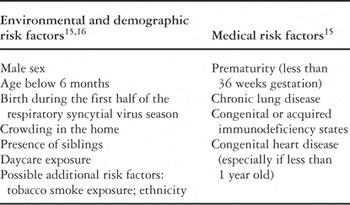
Table 1.
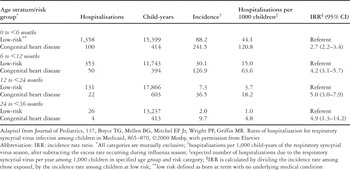
Table 2.
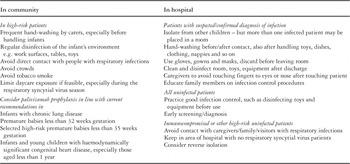
Table 3.

Effect of palivizumab on the rate of hospitalisation due to the virus in a randomised, double-blind, placebo-controlled trial of prophylaxis in 1,287 children with haemodynamically significant congenitally malformed hearts.68
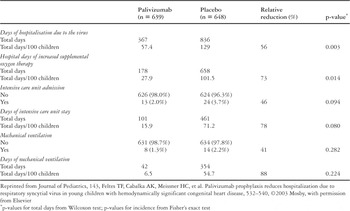
Table 4.
 You have
Access
- 16
- Cited by