An Interdisciplinary Response to a Tobacco-Cessation Case Vignette
The ‘Triple Aim’ of the healthcare system is to deliver quality, lower cost healthcare to individuals which will result in better health for the population (Berwick, Nolan, & Whittington, Reference Berwick, Nolan and Whittington2008). One of the most expedient means of accomplishing this triple aim is to address patients’ tobacco use, which remains the leading cause of preventable death and disease in the USA (U.S. Department of Health and Human Services [USDHHS], 2014). There is strong evidence for the efficacy of tobacco addiction treatment, and studies rank smoking cessation treatment as the most cost-effective preventive service due to its potential to impact public health (Maciosek et al., Reference Maciosek, Coffield, Edwards, Flottemesch, Goodman and Solberg2006; Solberg, Maciosek, Edwards, Khanchandani, & Goodman, Reference Solberg, Maciosek, Edwards, Khanchandani and Goodman2006).
In the USA, a convergence of healthcare policies and mandates are increasing attention given to tobacco cessation. The U.S. Public Health Service Clinical Practice Guideline for Treating Tobacco Use and Dependence recommends offering tobacco-cessation treatment in all healthcare settings (Fiore et al., Reference Fiore, Jaén, Baker, Bailey, Benowitz and Curry2008), and some level of tobacco treatment is now expected across hospital, primary care, and other community treatment settings (e.g., Morris, Miller, & Mahalik, Reference Morris, Miller and Mahalik2011). Under Medicaid expansion and the Essential Health Benefit for healthcare exchanges, providers must also now offer comprehensive tobacco-cessation coverage (Tobacco Control Legal Consortium, 2014).
Even with the increased attention given to tobacco use through healthcare reform, significant gaps persist between individualised, evidence-based treatment and the care patients typically receive (Kruger, Shaw, Kahende, & Frank, Reference Kruger, Shaw, Kahende and Frank2012). Tobacco use is a complex social, environmental, and biological problem, and other substance use, mental illnesses, and physical health conditions comorbid with tobacco use are the rule rather than the exception (Schroeder & Morris, Reference Schroeder and Morris2010). Moreover, tobacco addiction is often chronic and relapsing, leading to clinically significant impairment (American Psychiatric Association [APA], 2013; Steinberg, Schmelzer, Richardson, & Foulds, Reference Steinberg, Schmelzer, Richardson and Foulds2008). Unaided quit attempts are common, and those smokers facing the largest tobacco-related health disparities often have insufficient access to tobacco-cessation specialists trained to address the complexities of their addiction (Agaku, Ayo-Yusuf, & Connolly, Reference Agaku, Ayo-Yasuf and Connolly2014; Fiore et al., Reference Fiore, Jaén, Baker, Bailey, Benowitz and Curry2008). Many smokers are not receiving even minimal interventions, such as being asked about tobacco use and advised to quit by providers, which significantly increase quit attempts and cessation rates (Gordon, Albert, Crews, & Fried, Reference Gordon, Albert, Crews and Fried2009; Davis et al., Reference Davis, Ramseier, Mattheos, Schoonheim-Klein, Compton and Al-Hazmi2010).
The average smoker will recycle through multiple quit attempts and multiple interventions. Treating tobacco dependence calls for the same long-term, interdisciplinary, chronic care management approach warranted by other conditions such as asthma, diabetes, or cardiovascular disease (Gould, Reference Gould2014; Rigotti, Reference Rigotti2012; Wagner, Austin, & Von Korff, Reference Wagner, Austin and Von Korff1996). When addressing tobacco dependence from a chronic care framework, no single provider in isolation is sufficient. Treatment is most effective, when combinations of providers attend to co-occurring healthcare conditions while also utilising evidence-based cessation strategies appropriate to their scopes of practice and training (Fiore et al., Reference Fiore, Jaén, Baker, Bailey, Benowitz and Curry2008).
For patients who wish to quit smoking, providers should coordinate their treatments to insure that their patients receive both behavioural support and pharmacotherapy (Fiore et al., Reference Fiore, Jaén, Baker, Bailey, Benowitz and Curry2008; Lancaster et al., Reference Lancaster, Stead, Cahill, Lindson-Hawley, Hartmann-Boyce and West2013). There are seven U.S. Food and Drug Administration (FDA) approved smoking cessation medications (five Nicotine Replacement Therapies, bupropion, and varenicline), all of which have been shown to improve smokers’ chances of quitting (Fiore et al., Reference Fiore, Jaén, Baker, Bailey, Benowitz and Curry2008). There is strong evidence that cessation rates are higher when providers use a combination of these medications, compared to using only one medication at a time (e.g., Kozlowski et al., Reference Kozlowski, Giovino, Edwards, DiFranza and Foulds2007; Piper et al., Reference Piper, Smith, Schlam, Fiore, Jorenby and Fraser2009). And best practices for prescribing cessation medications consider a patient's health history, their experiences with past quit attempts, reasons for relapse, the amount of tobacco used, and level of dependence.
Across interdisciplinary providers, effective behavioural interventions include managing nicotine withdrawal symptoms, enhancing motivation, identifying hurdles to quitting, maximising self-regulation skills, expanding problem solving, bolstering social supports, and developing alternative healthy activities (Fiore et al., Reference Fiore, Jaén, Baker, Bailey, Benowitz and Curry2008; Michie, Hyder, Walia, & West, Reference Michie, Hyder, Walia and West2011). Even modest provider training and subsequent brief interventions increase the likelihood of increased quit attempts and abstinence rates (Chen et al., Reference Chen, Hamlett-Berry, Watanabe, Bounthavong, Zillich and Christofferson2015; Sheffer, Barone, & Anders, Reference Sheffer, Barone and Anders2009; Tong, Strouse, Hall, Kovac, & Schroeder, Reference Tong, Strouse, Hall, Kovac and Schroeder2010; Tremblay, Cournoyer, & O'Loughlin, Reference Tremblay, Cournover and O'Loughlin2009).
Typically, physicians have limited time with patients, and must focus on asking about smoking, advising patients to quit, prescribing cessation medications, and referring to behavioural treatment. A wide range of other healthcare professionals must then offer the higher intensity or more frequent interventions which predict greater long-term abstinence (Fiore et al., Reference Fiore, Jaén, Baker, Bailey, Benowitz and Curry2008). These providers offer intensive treatment based on discipline-specific tobacco treatment training (e.g., respiratory care, addictions, and counselling professionals) and/or completion of an accredited TTS program.
The ATTUD was established in 2003 as an organisation of providers dedicated to the promotion of increased access to evidence-based treatment for tobacco use and dependence. ATTUD membership has grown to over 500 members across 20 different countries. Our global community includes representatives from over 40 different healthcare professions. The association supports evidence-based specialisation through its accreditation of a national network of TTS training sites. These sites train Certified Tobacco Treatment Specialists (CTTS) that demonstrate a high level of proficiency in the treatment of tobacco dependence by completing coursework, documenting experience, and passing an examination (Sheffer et al., Reference Sheffer, Payne, Ostroff, Jolicoeur, Steinberg and Czabafy2014). CTTS coursework includes training modules on both evidence-based behavioural and pharmacological approaches to tobacco cessation.
The purpose of this case vignette is to provide an example of ATTUD's interdisciplinary approach to tobacco dependence treatment. The vignette serves both as a clinical training tool and an example of how tobacco users benefit from cessation services provided by healthcare providers from diverse professional backgrounds and treatment settings.
Methods
Participation was solicited from ATTUD Interdisciplinary Committee members, and ATTUD members broadly through the association listserv. Experts who agreed to participate represented five treatment fields that frequently integrate tobacco-cessation services into specialty care. USA healthcare providers from Psychology, Social Work, Respiratory Therapy, Nursing, and Dentistry were asked to contribute a first person response to a fictitious case vignette detailing their treatment approach. All the respondents were active members of the ATTUD Interdisciplinary Committee at the time this manuscript was submitted and represented wide geographic diversity. None of the respondents provided healthcare services directly with one another.
Through an iterative series of telephonic meetings, the ATTUD Interdisciplinary Committee created a case vignette and semi-structured questions for participating professionals. While not intended to be exhaustive, the case vignette (Gloria), is a fictitious patient representing a composite of characteristics that the participating experts agreed tobacco users commonly present with and which must be addressed to effectively intervene. Patient characteristics included race/ethnicity, family and social support dynamics, medical comorbidity, and psychiatric history.
Over several months in 2013, participants were asked to respond independently to the following semi-structured questions via e-mail: (1) What would be your general approach to this patient?; (2) What would you screen/assess/treat that other disciplines might not?; (3) Are there systemic barriers and opportunities that need to be addressed to assist this patient to receive needed cessation services?; and (4) What referrals or collaborative treatment is necessary? Based on the limited information presented in the below case vignette, participants were instructed to respond from an evidence-based perspective representing their healthcare field and common practice in the USA.
Case Vignette
Gloria responded to an Internet notice for statewide tobacco-cessation services. Demographics: She is a 35-year-old, English speaking Latina, with a high school-level education. Tobacco Use History: Gloria began smoking at age 15, and has been a pack a day smoker for the last 15 years. She has her first cigarette immediately upon awakening. She has had at least five past quit attempts, all of which were ‘cold turkey’. Her last quit attempt was over a year ago. She reports fear of withdrawal symptoms and weight gain having experienced these symptoms with past quit attempts. The longest she remained abstinent was approximately five months when she was pregnant with her daughter who is now 16 years old. Most recently, she remained abstinent for two months but resumed smoking when her father died. During the time she was abstinent, she experienced increased anxiety and depression, had frequent cravings to smoke, suffered from insomnia, and gained approximately 10 pounds. Family Structure: Gloria is married and has a teenage daughter. Her husband also smokes. While she reports her husband is supportive of her desire to quit he is not interested in quitting. It is unknown whether her husband is willing to participate in treatment, if the couple has tried to quit together previously, or if there is a policy about smoking in the home and car. Gloria's 16-year-old daughter occasionally ‘sneaks’ her cigarettes, but Gloria doesn't know her daughter's current level of use. Medical History: Gloria has USA Medicaid coverage. On a medical screen form, she reported being diagnosed with Type 2 Diabetes Mellitus (DM). She also reports shortness of breath with exertion but no chest pain. This shortness of breath when climbing even a flight of stairs is one of the main reasons she wants to quit smoking. Gloria stated that her primary care physician (PCP) has encouraged her to quit smoking but she has not received cessation treatment referrals or educational materials. Gloria also recently learned that she has periodontal disease and has been advised that she may lose teeth if she continues to smoke. Her last visit to the dentist revealed the presence of leukoplakia, a pre-cancerous condition, located on the right inside lining of the cheek. Psychiatric History: Gloria has a history of depression, and at one time was hospitalised for severe depression and thoughts of suicide. She is currently prescribed trazodone and has been on a stable dose of this medication for the last year.
Results: Interdisciplinary Responses
Psychology
Tobacco Treatment Strategy
I provide psychological services on an academic medical campus. My ultimate aim is to address both Gloria's psychological issues and the behaviours that impact her overall life functioning, particularly her history of smoking. Gloria may be presenting to counselling for a host of reasons outside of her tobacco use, such as grief regarding her father's death, anxiety, depression, and family dynamics. Taking a patient-focused, motivational approach I partner with Gloria to begin addressing her identified treatment priorities, and at the same time, begin to listen for and elicit change talk regarding her smoking (Miller & Rollnick, Reference Miller and Rollnick2013).
Based on her pre-visit paperwork, Gloria self-reported smoking and is interested in quitting. As we develop treatment goals and initiate treatment, I touch on her tobacco use as part of the counselling dialogue. While Gloria noted that she was interested in quitting, I further assess her level of nicotine dependence, readiness to quit, and her actions thus far to address her tobacco use, and tailor my intervention accordingly. I would use the Fagerstrom Test for Nicotine Dependence (FTND) (Fagerstrom, Heatherton, & Kozlowski, Reference Fagerstrom, Heatherton and Kozlowski1991), as a quick measure of dependence and potential motivational tool. I provide education regarding how tobacco use is associated with her healthcare conditions and how continued smoking might, over time, actually increase psychiatric symptoms (Taylor et al., Reference Taylor, McNeill, Girling, Farley, Lindson-Hawley and Aveyard2014). Based on Gloria's ‘high dependence’ as measured by the FTND, education would include details regarding proven cessation medications and counselling options for this level of dependence. Latino smokers use cessation aids less frequently than other ethnic/racial populations (Levinson, Borrayo, Espinoza, Flores, & Pérez-Stable, Reference Levinson, Borrayo, Espinoza, Flores and Pérez-Stable2006). Therefore, I discuss the benefits of cessation medications for decreasing the withdrawal symptoms she experienced in the past and explain that her Medicaid benefit covers two courses of any FDA-approved cessation medication annually.
As a psychologist I am a generalist and use several evidence-based treatment modalities to address Gloria's motivation, maximise self-regulation skills and problem solving, develop alternative healthy activities, and reinforce social supports (Michie et al., Reference Michie, Hyder, Walia and West2011). During weekly counselling sessions with Gloria I employ a combination of Motivational Interviewing (MI), mindfulness, Cognitive Behavioural Therapy (CBT), and behaviour activation strategies. Importantly, behavioural activation, CBT, and mindfulness strategies are also effective in treating depression, and would concurrently support Gloria's other psychiatric treatment goals (e.g., Dedert et al., Reference Dedert, Resick, Mcfall, Dennis, Olsen and Beckham2016; Dimidjian, Berrera, Martell, Muñoz, & Lewinsohn, Reference Dimidjian, Berrera, Martell, Muñoz and Lewinsohn2011; MacPherson et al., Reference MacPherson, Tull, Matusiewicz, Rodman, Strong and Kahler2010).
MI techniques facilitate a discrepancy between unhealthy behaviours and values, provide a framework for responding to resistance, and enhance Gloria's self-efficacy (Miller & Rollnick, Reference Miller and Rollnick2013). As an established motivational tool, I use a carbon monoxide (CO) monitor to provide a visual cue of her progress. CBT techniques assist in directly addressing cognitive patterns and begin to shift thoughts that reinforce undesirable behaviours. Mindfulness practices and Acceptance and Commitment Therapy (ACT) techniques increase Gloria's awareness of feelings in the moment, including an acceptance of unpleasant sensations and emotions (e.g., cravings), and help her to make value-based behaviour changes, including setting a quit date (Brewer et al., Reference Brewer, Mallik, Babuscio, Nich, Johnson and Deleone2011; Hernández-López, Luciano, Bricker, Roales-Nieto, & Montesinos, Reference Hernández-López, Luciano, Bricker, Roales-Nieto and Montesinos2009). Behaviour activation promotes the experience of positive consequences related to healthy behaviour (e.g., healthy social interactions), and therefore increases the likelihood Gloria will continue to engage in desired behaviours (Lejuez, Hopko, & Hopko, Reference Lejuez, Hopko and Hopko2001). I want to know more about Gloria's social/cultural environment so that I can assist her in identifying potential community supports. Learning new healthy behaviours that assist Gloria to minimise any weight gain through realistic exercise and nutrition strategies will be critical. I involve her husband in counselling to the degree that Gloria desires this and the husband is willing. At the very least, I urge Gloria to seek her husband's support by asking him not to smoke in the house or car.
Medical and Psychiatric Issues
A full evaluation is necessary of how health concerns, psychiatric symptoms, and tobacco use are potentially related. I provide needed evaluation under my areas of practice and share this clinical information with Gloria's other healthcare providers. As a component of our early counselling sessions, I thoroughly assess Gloria's psychiatric history using validated assessment tools such as modules from the Structured Clinical Interview (SCID) (First, Spitzer, Gibbon, & Williams, Reference First, Spitzer, Gibbon and Williams1996). Gloria has faced and overcome many life challenges. It will be important to determine what has supported her resiliency so she can utilise these personal attributes and resources during her quit attempt. I assess her current and past history of depression, particularly suicidality, and determine what led to the prior psychiatric hospitalisation, and what helped the most in her subsequent recovery. Similarly, I want to know if she is using any behavioural strategies effectively to manage her DM. If so, I would reinforce these behaviours and determine how she could use similar strategies to quit and remain tobacco free.
A key psychiatric area of assessment often missed by other healthcare providers is potential history of bipolar disorder. Diagnoses of depression are often made without evaluating for current or past mania. If Gloria were to report symptoms of mania, trazodone as well as bupropion treatment for smoking cessation would be contraindicated. Trazodone also has a clear connection to weight gain and medication levels may be affected by smoking cessation (Zevin & Benowitz, Reference Zevin and Benowitz1999). While I am not a prescriber, I have specialty training in affective disorders. I would further assess what additional prescribed and over-the-counter medications Gloria is taking, and use this information to outline a coordinated treatment plan.
In regard to depression and anxiety, I ask Gloria about her caffeine use as she may no longer tolerate the same daily use when she cuts down and ultimately quits smoking. High caffeine intake while quitting is often associated with higher levels of anxiety and sleep disturbances. I further assess for changes in depression at the time of prior quit attempts. For the current quit attempt, I track any exacerbation of depression greater than the mild dysphoria often associated with aided quit attempts, and match treatment intensity to any worsening symptoms.
Care Coordination
At the time of intake to treatment, I inquire about other healthcare she is receiving, such as who is helping manage her DM and treating symptoms of respiratory illness. I also want to know to what degree any of these healthcare providers are treating her tobacco use. I ask Gloria to provide releases of information to consult with these healthcare providers. In consultation with Gloria's prescribing provider(s), it will be important to inform them that Gloria may soon make a quit attempt, that higher blood plasma levels of trazodone and resultant side-effects are possible, and that medication dosages might need adjusting. I would also talk to the prescriber about cessation medication strategies including adding bupropion for both depression management and tobacco cessation if not contraindicated. In the short-term, bupropion might also lead to less weight gain, which might address one of Gloria's primary concerns regarding quitting.
Coordinating care with her primary care providers will insure that potential weight gain and hypoglycemia following tobacco cessation are a treatment focus. If I can coordinate with her healthcare team to normalise blood glucose levels, Gloria will fare much better with her counselling goals, as well as her attention to cessation efforts. She would further benefit by a referral to a certified diabetes educator or similarly skilled healthcare professional to learn about the connection between weight gain, diabetes, and potential onset of other chronic illness such as chronic obstructive pulmonary disease (COPD) or heart disease.
Social Work
Tobacco Treatment Strategy
I am a licensed clinical social worker and licensed addiction specialist working in a specialty tobacco treatment clinic. The setting is affiliated with and funded through a U.S. National Cancer Institute-designated Comprehensive Cancer Center. Evidence-based treatment is delivered according to the U.S. Public Health Services Clinical Practice Guidelines (Fiore et al., Reference Fiore, Jaén, Baker, Bailey, Benowitz and Curry2008) to a wide range of inpatients, outpatients, day hospital patients, and patients in active treatment for cancer. Gloria is an example of a composite patient typical of the patients we treat in our clinic, created for illustrative purposes.
Treating tobacco is the single most important thing Gloria can do to improve her health. Busy healthcare providers of all kinds routinely advise their patients to quit tobacco use. However, providing evidence-based treatment consisting of medications to manage withdrawal from tobacco and behavioural counselling and support to patients may require additional resources such as a specialty tobacco treatment clinic. As a clinical social worker, I possess knowledge and skill in the facilitation of behavioural change and I work directly with a physician who prescribes FDA-approved smoking cessation medications. I provide a one-hour assessment, build rapport, collect basic demographic information, assess her level of dependence (e.g., FTND score), discuss her previous experiences with quitting, withdrawal symptoms, and high-risk situations. I then assess motivation (e.g., Stage of Change), self-efficacy/confidence, and environmental factors such as whether Gloria smokes inside her home or spends time with others who use tobacco. I review other stressors, mindful that success in change efforts is highly dependent of Gloria's access to safe housing, secure employment and supportive community (Lambert & Barley, Reference Lambert and Barley2001), collect medical and behavioural health history and review all current medications. I will continually assess Gloria's context and her functioning within that context. I ask simple questions regarding environmental stressors and listen carefully to her responses. ‘Who lives in her world? Who shares her time?’ And a simple question; ‘Why now?’ helps me to structure treatment and support motivation. Finally, I measure her exhaled CO level and educate her regarding medication options, displaying all seven FDA-approved smoking cessation medications.
Gloria is offered the option of individual or group follow-up treatment sessions. Specific information about Gloria's relationships, her sense of self-efficacy and other psychosocial data provide content for skill development exercises that support her cessation efforts and maintain motivation to change. I ask, ‘Is she a good candidate for a fixed/specific quit date with closed group for support, or due to life circumstances will she require a more flexible, individualized approach?’ If other family members such as her husband or her daughter are available and interested in quitting tobacco use, I would offer a flexible meeting schedule that would allow for their inclusion in treatment. Including other tobacco users in Gloria's treatment provides excellent opportunities to enlist support and to practice skill development such as managing urges to smoke, tobacco refusal skills, identifying related daily decisions, managing negative thoughts, and increasing activities not associated with tobacco use. Such skill building is equally effective when provided in group or individual sessions.
When she comes to appointments with her husband, her daughter, or a friend, I ask if she would find it helpful to include them in her session. If she invites them to join, we will work together in the session and determine how these friends and family can be of best support. These relationships allow me a window into Gloria's real world—the place where change is takes place. But more importantly such inclusion allows for practicing new skills in real time with Gloria's family or friends. Facilitating limit setting such as moving smoking outside, as well as buy-in from others in this context could be particularly fruitful. Whether skill building is practiced with real family members, in individual treatment, or in the context of group, I am committed to help Gloria change her morning routine or move smoking outside of her home (Fiore et al., Reference Fiore, Jaén, Baker, Bailey, Benowitz and Curry2008).
Gloria's motivation level at assessment is high based on self-report and history of five previous quit attempts. Therefore, I reserve MI techniques for use if her motivation wanes. Frequent contact with Gloria during first months of quitting increases her chance of success. Discussion of relapse begins at assessment, as relapse has discouraged her in the past. For example, ‘is there a link between her recent quit attempt and the loss of her father? What was the cause of death? What does she understand about her own health issues?’ Ongoing encouragement to manage remaining triggers is helpful. Development of effective self-talk will assist Gloria to improve impulse control. During five previous attempts she experienced increased anxiety and depression, insomnia, and weight gain. Education will be provided to establish that all three of these problems may be symptoms of tobacco withdrawal. Providing Gloria with an understanding of brain biology and dopamine release is likely to be helpful. Additional resources are available on the Internet and I provide her with a list of vetted websites she may find helpful as she is quitting.
Medical and Psychiatric Issues
In our program, 66% of new referrals are made by healthcare professionals. At assessment I share with Gloria the benefit of her healthcare providers being aware of her quit attempt. Given her psychiatric history, I would ask clarifying questions such as ‘Have symptoms of anxiety and depression occurred in the context of losses or financial instability? Or are these areas a source of stability? Has behavioural health treatment equipped her with tools for self-talk for managing stressors? Does she work well with a behavioural health provider?’ I would insure that she was linked to psychiatric treatment as needed.
Clinical social workers seeing patients for tobacco use disorder are able to monitor compliance with smoking cessation medication plans or to work as a liaison to prescribers when medication plans require dosage change or other alteration. I would work closely with prescribers to educate Gloria regarding medication options and to facilitate prescriber consultations. I am further able to monitor access to medications, compliance, as well as side effects should they arise.
Her identification of shortness of breath when climbing stairs provides an excellent yardstick by which we can measure her overall health progress. I would learn more about the stairs in her daily environment: where they are located, how many there are and when she uses them. Measurement of CO at each contact similarly provides helpful reinforcement that her work to quit, even if incremental, is significant.
Care Coordination
My setting allows for ongoing assessment and in-person contact. I am able to coordinate my individual sessions with her existing appointments with those of her primary care provider and her endocrinologist, both located in the building where I am housed. My notes are shared with her providers. All information is entered into a confidential electronic medical record (EMR) that is available to all other providers of her care within our large healthcare network. As her providers’ notes are available to me, I am able to encourage adherence to her overall health treatment plan.
Respiratory Therapy
Tobacco Treatment Strategy
Respiratory Therapy is a medical profession that addresses one of the major driving forces in our health. The ability to breathe well influences not only our physical health but our emotional health and well-being. As Respiratory therapists we are trained in a broad spectrum of healthcare. This includes acute care in hospitals, diagnostic testing in physician offices and clinics, and Pulmonary Rehabilitation Programs (Ries et al., Reference Ries, Bauldoff, Carlin, Casaburi, Emery and Mahler2007). We typically utilise CO, and pulmonary function tests (PF) (American Association for Respiratory Care [AARC], 2008; Tønnesen et al., Reference Tønnesen, Carrozzi, Fagerstrom, Gratziou, Jimenez-Ruiz and Nardinie2007). The client we are addressing in this vignette displays many of the diagnoses seen in a complex pulmonary patient, these being COPD, DM, depression, and weight concerns (Postma & Siafakas, Reference Postma and Siafakas1998; Willi, Bodenmann, Ghali, Faris, & Cornuz, Reference Willi, Bodenmann, Ghali, Faris and Cornuz2007).
I would congratulate Gloria on her decision to explore the possibility of making a quit attempt again. I then review how important it is for her to quit and how confident she is about quitting. Using a MI style, I begin engaging her by assisting her to verbalise intrinsic reasons for thinking about quitting. One of her stated concerns is shortness of breath with exertion. I explore whether there are other, possibly less apparent, key motivators at play as well.
I begin with a decisional balance conversation by asking her to verbalise her thoughts about fears and barriers to quitting such as depression, cravings, anxiety, weight gain, and a husband not ready to quit. I also want to understand what she stands to gain by quitting. This might include better breathing, improved oral health, and potentially less-obvious, more intrinsic benefits. She quit while pregnant, and knows her daughter is smoking. Gloria may place value in her daughter's well-being, her own identity as a mother and being a healthy role model to her family. I would explore her confidence in quitting now by having Gloria verbalise strategies she used during the five months she was quit previously. I offer information about how physical and emotional discomfort may be ameliorated and weight gain delayed and/or minimised with a well-prepared quit plan. These steps would help Gloria gain confidence so that she may not experience all the ‘negatives’ to the degree she did in previous quit attempts.
I assess Gloria's level of nicotine dependence and willingness to consider medication use, honouring any personal or cultural bias against using them. If Gloria is willing to use medication, I discuss use, side effects, warnings, and contraindications of the various choices available and appropriate for her. In Gloria's case, I recommend bupropion SR as a floor medication with short acting nicotine replacement to use as needed in the morning and for breakthrough cravings.
For the cognitive-behavioural aspect of Gloria's treatment plan I recommend a pulmonary rehabilitation evaluation. Tobacco treatment is part of pulmonary rehabilitation. Pulmonary rehabilitation consists of disease management (tobacco addiction is included), exercise/activity, stress and depression evaluation, diet, sleep, and self-care management. Cognitive-behavioural concerns would also be evaluated. All information and treatment plans would be in coordination with the patient's physician.
Increased physical activity would benefit Gloria as part of both smoking cessation (coping strategy, healthy replacement activity, improved mood, and weight control) and diabetes management strategies. However, if Gloria has any degree of COPD, her ability to increase activity may be hampered by physical limitations, decreasing the likelihood she would be able to maintain an overly ambitious exercise program. Patients with COPD also often have significant elevation in CO even with a decrease in smoking. I would explain the relationship between CO and stamina in lay terms. Pulmonary rehabilitation would help her with breathing techniques to decrease and relieve shortness of breath, recover from exertion, and provide strategies to maximise endurance while monitoring a gradually increased exercise program tailored to her level of impairment, current state of fitness, and personal goals.
In addition, Gloria would receive encouragement for smoking cessation from her pulmonary rehabilitation therapists, since cessation is a goal of such programs. Gloria would have access to social support in pulmonary rehabilitation because it provides people with similar health situations, problems, barriers, and goals an opportunity to develop caring relationships and provides regular mutual support. If she is not interested in this structure, I encourage and provide as much support as possible for topics covered by pulmonary rehabilitation, especially nutrition, exercise and weight control, and encourage support group attendance.
Medical and Psychiatric Issues
There are many chronic conditions that are associated with smoking that go beyond respiratory health. As a medical professional, it is important to be able to identify and seek help for our patients from appropriate professionals. I would ask Gloria to inform both her primary care and behavioural healthcare providers that she is making a quit attempt, so that they might prescribe cessation medications, and also monitor Gloria's diabetes and mental health.
Care Coordination
I would ask for a release of information so I could discuss her treatment plan, need for increased monitoring for her ongoing health issues, and recommendations regarding medication use with her healthcare providers. As a professional who cannot prescribe, I only give recommendations regarding cessation medications, and would have Gloria further discuss these recommendations with her primary care and/or behavioural healthcare providers.
Nursing
Tobacco Treatment Strategy
Nurses are noted to be the most trustworthy healthcare providers, and the nursing workforce has the opportunity for multiple patient touch points across the continuum of care (Rifkin, Reference Rifkin2014). Nurses properly educated on tobacco dependence, evidence-based guidelines, and patient engagement, also have more positive attitudes toward tobacco dependent patients (Zarling, Burke, Gaines, & Gauvin, Reference Zarling, Burke, Gaines and Gauvin2008). As a nurse trained as a TTS, I would reinforce that tobacco cessation is a process, which may involve multiple quit attempts, and that I will assist and support Gloria in taking the next steps for a healthier life. Openly discussing the motivating factors for her decision will build a foundation, in which a trusting, credible relationship can occur. Establishing a bond at our initial meeting, will ensure Gloria and her family's needs are met, and create a stable referral process. Keeping in mind Gloria's cultural, educational background, and health literacy needs, I would choose materials and literature to assist Gloria's comprehension of tobacco dependence and tobacco-related disease processes.
Administration and utilisation of the FTND would be the basis in evaluating Gloria's smoking patterns and level of dependence. A more thorough tobacco history intake will facilitate discussion and determine an optimal plan of care. An evidence-based, tobacco-cessation treatment plan would include combination therapy of individual and/or group counselling and an FDA-approved tobacco-cessation medication. Patient-centred care is key, and treatment would be implemented via a mutually driven decision making process, respecting Gloria's autonomy.
A family history will not only contribute to the health assessment process, but open an avenue for Gloria to see both modifiable and non-modifiable risk factors relating to her chronic disease processes. This will also provide a prime opportunity to express her feelings surrounding her daughter's tobacco use and risk for tobacco-related diseases. I offer assistance to Gloria's husband and daughter as she makes a quit attempt. Despite their stage of readiness, I encourage them to give Gloria their full support, focusing on the importance of Gloria becoming tobacco free for herself, her family, and her community.
Since her last five attempts were ‘cold turkey’ and she suffered withdrawal symptoms, it may be that Gloria is averse to taking medications, and/or does not understand the neurobiological effects of nicotine and how NRT and/or bupropion could greatly benefit a quit attempt and help control her appetite. I would teach Gloria about the usage of a nicotine patch and explain how she can effectively control nicotine withdrawal symptoms, manage cravings, and stay comfortable via a clean delivery of nicotine. Highlighting the additional advantage of NRT being an effective appetite suppressant may alleviate Gloria's fear of weight gain with cessation. Acknowledging a potential mistrust for pharmacotherapy, common among the Hispanic population, I am mindful of Gloria's preferences while choosing the right FDA-approved therapies (Cabriales, Cooper, Salgado-Garcia, Naylor, & Gonzalez, Reference Cabriales, Cooper, Salgado-Garcia, Naylor and Gonzalez2012). Consultation with a PCP for prescribing bupropion would also be considered.
Medical and Psychiatric Issues
I complete a comprehensive health and physical assessment, and any abnormal findings would be discussed with Gloria's healthcare team. Gloria's answers will give me the knowledge base necessary to guide an educational and supportive nursing process. I reinforce the direct causal relationship between tobacco and chronic disease symptoms, by bringing Gloria's desire to quit, triggered by her shortness of breath, to the forefront. Relatedly, I discuss her modifiable risk factors (tobacco use being the primary) for cardiovascular disease (heart attack, stroke, and peripheral artery disease).
Gloria states that she has DM; therefore, I assess the following: ‘What age she was diagnosed? Was she symptomatic prior to diagnosis, and is she currently taking an oral hypo-glycemic agent and/or insulin?’ It is pertinent to educate Gloria about how tobacco use directly affects her diabetes, as well as every major organ and chronic disease state (Zevin & Benowitz, Reference Zevin and Benowitz1999). I would also ask Gloria if she monitors her blood glucose levels, and if so, what her readings are. Assessing her perception of how she is managing her DM and encouraging Gloria to be accountable for her health, will allow for autonomy and promote self-management skills.
Other than encouragement, it appears that Gloria's PCP has not provided any other tobacco-cessation support, resources, or referrals. I would like more information from Gloria regarding her relationship with her physician and the physician's practice. Important areas of inquiry include ‘When was her last visit?’; ‘What is their approach for treating high-risk patients, such as Gloria?’; ‘Is her PCP part of a Patient Centered Medical Home (PCMH)?’; ‘How compliant is she with healthcare provider visits?’; and ‘What is Gloria's perception of the level of care she is receiving?’ Patient-centred care is essential for Gloria's overall wellness and tobacco-cessation efforts. If need be, referring Gloria to a PCP that operates as a PCMH would be a priority not only for medical management, but also to provide access to cessation pharmacotherapy.
Care Coordination
Using a motivational approach, I would suggest individual or group counselling. Collaboration with a Latino outreach coordinator or liaison would be beneficial to Gloria's plan of care, whereby opportunities and programs are explored. Social support, whether familial or community-based, plays a crucial role in the Latino culture, and research has shown higher tobacco-cessation rates with these systems in place (Brothers & Borelli, Reference Brothers and Borrelli2011). Referral to organisations, such as the National Alliance on Mental Illness (NAMI) en Español (Latino) would offer Gloria and her family a culturally sensitive, focused approach to her behavioural health conditions, and provide essential support. Assisting Gloria in finding culturally supportive groups that do not reinforce smoking will be beneficial. It will generally be advantageous to assist her to focus attention on new endeavours that do not trigger smoking cravings.
Gloria's history of severe depression and thoughts of suicide requiring a hospitalisation are very concerning. Realising that depression is associated with a decreased likelihood of tobacco cessation, and that Latinos have a higher rate of depression when compared to other populations, I would confirm that Gloria is under the care of a psychiatric provider (Brothers & Borelli, Reference Brothers and Borrelli2011).
I briefly touch on Gloria's recent dental issues and inquire if she is currently under the care of a dentist. If not, I assist in finding a provider. Also, I assist with connecting her to the state Medicaid program that might provide covered tobacco cessation medications. Collaboration with her PCP for pharmacotherapy treatment options and referral to a Certified Diabetes Educator or Registered Dietician, would also be appropriate.
Dentistry
Tobacco Treatment Strategy
Dentistry and other professional organisations support intervention for tobacco use in the dental healthcare environment. In 1992, the American Dental Association (ADA) adopted a policy that ‘urges its members to become fully informed about tobacco cessation intervention techniques to effectively educate their patients to overcome their addiction to tobacco’ (American Dental Association [ADA], 2013). With appropriate training, a dentist, dental hygienist, or dental assistant can engage in treating a patient for tobacco dependence and provide this as a patient service. Much of the evidence-based treatment I provide for tobacco dependence as a dental professional would mirror what other healthcare providers describe. Specific to dentistry, the health history I collect, in the dental care environment would allow me to be aware of existing health conditions and medications Gloria is using. In reviewing this history with Gloria, I advise her regarding her tobacco use and begin to assist her with quitting.
The dental environment is an ideal place to interact with patients about their tobacco use because: (1) most patients are seen on an ongoing and regular basis. Periodic maintenance visits are typically scheduled every six months and many dental treatment services often require multiple visits, providing opportunities to develop trusting relationships, build receptivity to dental healthcare provider advice, and complete follow-up assessments; (2) oral health is one of the first areas negatively impacted by tobacco use and demonstration of this evidence can be a powerful motivator to quit; and (3) tobacco-cessation services are convenient when offered within the dental clinic setting, providing patients with an efficient means of initiating tobacco treatment (Johnson, Reference Johnson1999; Mecklenburg et al., Reference Mecklenburg, Greenspan, Kleinman, Manley, Niessen and Robertson2007; Winn, Reference Winn2001; World Health Organization [WHO], 2013a).
Medical and Psychiatric Issues
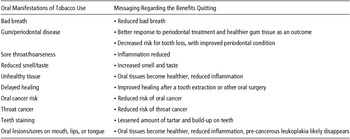
The state of a patient's oral health can offer many clues about overall health. Oral health and overall health are closely connected. Sometimes the first sign of systemic disease appears in the mouth. Some diseases that may present oral manifestations include but are not limited to, DM, HIV, Bulimia, Crohn's Disease, Leukaemia, and Lupus Erythematous (Chi, Neville, Krayer, & Gonsalves, Reference Chi, Neville, Krayer and Gonsalves2010; Gordon et al., Reference Gordon, Albert, Crews and Fried2009), all of which tobacco use worsens. The many ways oral health can be compromised by tobacco use would serve as a motivator to encourage Gloria to make a quit attempt as the direct evidence of her tobacco use can be observed through early signs such as tooth staining, oral tissue inflammation, and gum disease. I would assess for early warning signs (Table 1) and emphasise the benefits of quitting through ‘gain-framed’ messaging (McKee et al., Reference McKee, O'Malley, Steward, Neveu, Land and Salovey2004; Mecklenberg et al., Reference Mecklenburg, Greenspan, Kleinman, Manley, Niessen and Robertson2007).
Dental tobacco use assessment and gain-framed patient messaging

Dental treatment would address her diabetes and history of mental illness, as they relate to her oral health. Diabetes increases Gloria's risk of gum disease, cavities, tooth loss, dry mouth, and a variety of oral infections. Conversely, poor oral health can make her diabetes more difficult to control. Infections such as those associated with gum disease may cause her blood sugar to rise and consequently more insulin may be required to keep her diabetes under control. Thus, her continued use of tobacco further compromises both her oral health and overall health.
Care Coordination
Consultation is necessary with Gloria's other healthcare providers to determine what health considerations may impact her dental care and tobacco use treatment. This consultation can serve as a bridge for coordinated interdisciplinary healthcare, providing Gloria with personalised treatment for tobacco dependence. Since my health history has revealed Gloria's mental health condition, I advise her to consult with her mental healthcare provider as part of her quit plan. This plan would use a proactive approach that makes provisions for possible medication adjustment and initial increased depression during nicotine withdrawal.
Discussion
Some level of tobacco use screening, assessment, treatment, and referral is every healthcare providers’ responsibility, and not the exclusive purview of any one discipline. This case vignette is a fictionalised composite of characteristics that patients commonly present with in many treatment contexts. Five different types of USA healthcare providers with expertise in treating tobacco addiction shared how they would approach this case. While there were common themes across providers, such as attention to cultural/social factors, motivational counselling, and referral to other community healthcare services, experts also described how effective treatment is provided within their individual treatment settings.
This vignette highlights that providers from different backgrounds and disciplines complement each other's care. Taken together, the providers’ treatment recommendations offer the patient the rich mix of resources often needed to make a successful quit attempt. Tobacco use disorder is best approached from an interdisciplinary and coordinated approach, with an ultimate clinical goal of assessing the patient so that treatment meets the patient ‘where they are at’. To do so, a continuity-of-care is needed to treat the range of patients’ bio-psycho-social tobacco cessation needs. This care should be patient-centred and led by patients’ motivations for change, rather than the scope of practice of any one provider taken in isolation.
While the death and disability related to tobacco use is higher than any other chronic illness, tobacco addiction is a chronic condition that continues to be sub-optimally treated. Most studies of chronic illnesses have focused on improving the care of patients with diabetes, hypertension, congestive heart failure, asthma, and depression (e.g., Kilbourne et al., Reference Kilbourne, Schulberg, Post, Rollman, Belnap and Pincus2004; Parchman, Zeber, Romero, & Pugh, Reference Parchman, Zeber, Romero and Pugh2007; Pearson et al., Reference Pearson, Wu, Schaefer, Bonomi, Shortell and Mendel2005; Stroebel et al., Reference Stroebel, Gloor, Freytag, Riegert-Johnson, Smith and Huschka2005). But similar to these chronic conditions, there are proven treatments for tobacco use (Steinberg et al., Reference Steinberg, Schmelzer, Richardson and Foulds2008). In fact, the effectiveness for tobacco-cessation treatment surpasses many common interventions such as prescription of statins or antihypertensive therapy (WHO, 2013b). Gloria's case stresses the need to apply existing chronic care and patient-centred care models to tobacco use treatment across a spectrum of healthcare settings (Hung & Shelley, Reference Hung and Shelley2009). This is supported by findings that providers practicing in clinics with greater chronic care management implementation adhere more closely to clinical guidelines for tobacco use treatment (Hung & Shelly, Reference Hung and Shelley2009).
One salient healthcare model that synthesises many of the recommendations of the participating experts is the PCMH. Based on providers’ responses to the vignette, a potential gap was the lack of clarity regarding who was ultimately responsible for the Gloria's complex care. A PCMH might close this potential treatment gap by acting as the hub of care, and assuming responsibility for treatment and referral. PCMHs are defined by being patient-driven, interdisciplinary, offering care coordination with enhanced access, and a commitment to quality, safety, and evidence-based treatment (Agency for Healthcare Research and Quality [AHRQ], 2013). At the core of PCMHs, well executed care coordination requires ongoing communication, collaboration, and shared decision making amongst the healthcare team and the patient (Meyers et al., Reference Meyers, Peikes, Genevro, Greg, Fries and Lake2010). The healthcare team is encouraged to consult the patient as a whole person who has individual preferences in a social context (Dwamena et al., Reference Dwamena, Holmes-Rovner, Gaulden, Jorgenson, Sadigh and Sikorskii2012) and patients are viewed as full partners with clinicians in developing their treatment plan (Gruman, Jeffress, Edgman-Levitan, Simmons, & Kormos, Reference Gruman, Jeffress, Edgman-Levitan, Simmons and Kormos2011).
There are several limitations to this case vignette. This is not a comprehensive review of all the approaches that healthcare providers employ to treat tobacco. Responses are based on only five discipline specific treatment recommendations, and ATTUD represents up to 40 different professions treating tobacco use. Due to regional and agency differences on available cessation services, insurance coverage and billing, we were unable to provide any consistent details on expected availability of treatment options and associated costs. Also, the providers were not asked to offer their perspectives on the ‘ideal’ form of a coordinated approach to Gloria's case.
Gloria provides one example of an amalgam of common presenting issues. While but one patient, this case is an educational tool for TTSs, specific professions, or interdisciplinary healthcare settings to use as an evidence-based example of care. While more research is needed to determine the relative effectiveness of various combinations of numbers and types of clinicians (Fiore et al., Reference Fiore, Jaén, Baker, Bailey, Benowitz and Curry2008), this vignette exemplifies how access to coordinated tobacco use treatment across healthcare settings is necessary to treat the overlapping health disparities many tobacco users face.
Acknowledgements
The authors would like to acknowledge the support of the Association for the Treatment of Tobacco Use and Dependence (ATTUD).
Financial Support
This research received no specific grant from any funding agency, commercial or not-for-profit sectors.
Conflict of Interest
None.
Ethical Standards
Research did not involve human and/or animal experimentation.