Implications
This work reviews the possibility of using forage plants for feeding pigs reared in tropical areas. It highlights the constraints of forage as low digestible feed ingredients because of their high content in fibre and anti-nutritive compounds. However, their rich protein and mineral contents can be useful for improving the diets of pigs fed poorly balanced diets. The advantage of forage as pig feed, however, remains controversial as the economical and environmental implications at the farm level in mixed-farming systems have seldom been quantified.
Introduction
Forage was considered in the past as an essential component of the feed of pigs in all production environments. The development of high growth performance breeds over the past decades and the widespread adoption in developed and developing countries of industrial indoor grain-fed production systems have led to the abandonment of forage in the diets of industrially raised pigs and a scarcity in up-to-date knowledge on the nutritional value of forage plants for pigs (Blair, Reference Blair2007). Forage is nonetheless still widely used by smallholding farmers in low-input and semi-intensive pig production systems of tropical Asia, Africa and America. Forage is only one part of the various ingredients that smallholders usually feed to their pigs, which include agricultural by-products from local food-processing units, weeds that grow naturally in the forests and along the banks of rivers, aquatic plants and plant of previous crops on fallow (Kumaresan et al., Reference Kumaresan, Bujarbaruah, Pathak, Das and Bardoloi2009; Phengsavanh et al., Reference Phengsavanh, Ogle, Stur, Frankow-Lindberg and Lindberg2010). Various reasons explain why smallholders still include significant amounts of forage in the diets of their animals: their low income as compared with the high prices of imported grains or oil-seed cakes (Kagira et al., Reference Kagira, Kanyari, Maingi, Githigia, Ng’ang’a and Karuga2010; Kaensombath et al., Reference Kaensombath, Neil and Lindberg2013); the remoteness and inaccessibility of their farms increasing the energy and protein concentrate costs at the farm gate (Kumaresan et al., Reference Kumaresan, Bujarbaruah, Pathak, Chhetri, Das, Das and Ahmed2007); and the lack of accessible market (Lemke et al., Reference Lemke, Kaufmann, Thuy, Emrich and Valle Zárate2007). This maintains most smallholders in low-input agricultural systems with little room for mid- or long-term investments, as improvement in the genetics and the feeding systems would require. In addition, when the activity is driven by socio-cultural motivations and is more oriented towards auto-consumption than to the market (Lemke et al., Reference Lemke, Kaufmann, Thuy, Emrich and Valle Zárate2006; Kumaresan et al., Reference Kumaresan, Bujarbaruah, Pathak, Das and Bardoloi2009), little effort is made to improve growth performances of animals by seeking feed with high nutritional value. For example, it is reported that, in Gambia, animals are only managed intensively when they make a significant contribution to production and income, but not if savings is their main function (Bennison et al., Reference Bennison, Barton and Jaitner1997). Moreover, feeding forage is often used with indigenous pigs, which are the preferred breed of smallholders in rural areas (Lemke et al., Reference Lemke, Kaufmann, Thuy, Emrich and Valle Zárate2007; Len et al., Reference Len, Hong, Ogle and Lindberg2009a), and investigations in Burkina Faso and Cameroon reveal that under specific conditions the low-input by-products and forage-based sector can even be more profitable than industrial pigsties (Lekule and Kyvsgaard, Reference Lekule and Kyvsgaard2003).
The extent to which forage species can economically contribute to supplying pigs with nutrients for growth and reproduction will depend on the voluntary feed intake as well as the digestibility of the forage itself and the relative cost and availability of forage as opposed to concentrate feeds. The present review examines the nutritive value of several tropical forage species as well as how the breed and physiological status of the animal influence the animal’s ability to sustain on forage-based diets. Finally, the socio-economical and environmental implications of feeding forage to pigs in low-input farming systems are discussed.
Chemical composition and feeding value of tropical forage species in pigs
Diversity of tropical forage species used in pigs
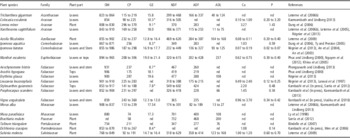
Forage used in the diets of pigs across the tropics covers a wide range of plant materials as listed in Table 1. It includes grasses, legumes, aquatic plants and leaves from shrubs and trees. Forage is fed, either in fresh or in preserved form, as hay or silage (Ogle, Reference Ogle2006). Some tropical forage species such as Manihot esculenta, Ipomoea batatas, Leucaena leucocephala, Arachis hypogaea, Stylosanthes guianensis, Colocasia esculenta, Azolla filiculoides, Salvinia molesta, Xanthosoma sagittifolium and Morus alba have been already assessed in vivo in pigs. However, although they are locally used by smallholders, most species have not been assessed further than the determination of their chemical composition and sometimes their in vitro digestibility for pigs (Feedipedia, 2013). Examples of such plants are numerous and they include, among others, Moringa oleifera, Psophocarpus scandens (Kambashi et al., Reference Kambashi, Picron, Boudry, Théwis, Kiatoko and Bindellein press), Crassocephalum crepidioides and Amaranthus viridis (Phengsavanh et al., Reference Phengsavanh, Ogle, Stur, Frankow-Lindberg and Lindberg2010).
Range of proximate chemical composition (g/kg DM) and energy (MJ/kg DM) of plant materials used in pig diets

DM=dry matter; OM=organic matter; GE=gross energy; nd=not determined.
*Metabolisable energy instead of GE.
Chemical composition and variability
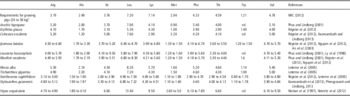
Forage ingredients are by definition rich in fibre as opposed to concentrate feed ingredients (Gillespie and Flanders, Reference Gillespie and Flanders2010). However, the composition of forage ingredients is highly variable, including within a given species, as the stage of harvesting, climatic stresses during the plant growth and variety or cultivars exert an influence on the chemical composition of the forage. This high variability coupled with unpredictability due to the factors outlined above limits the possibility of using forage plants for feeding pigs. Forage plants used as pig feed have NDF contents ranging from 174 g/kg dry matter (DM) in M. alba to 732 g/kg DM in Brachiara mulato, with a lignin fraction ranging from 13 to 200 g/kg DM. Moreover, they are usually low in crude fat and starch. As stated later in this review, if one excludes the influence on the intestinal eco-physiology, fibre is not of particular interest for pigs in terms of supply of nutrients to the animal. The benefits of forage feed ingredients for pigs lie in their richness in protein, essential amino acids (AAs) and minerals. Most forage species used by smallholders in the tropics have high CP contents (up to 370 g/kg DM, Table 1), especially fabaceae. In semi-intensive or extensive pig-rearing systems in tropical countries, many energy sources are locally available: peelings or millings of bananas, tubers and grains, palm oil by-products or sugarcane juices. Forage as an alternative ingredient should therefore supply protein, which is the most limiting nutrient in smallholder pig-feeding systems in tropical areas (Leterme et al., Reference Leterme, Londoño, Estrada, Souffrant and Buldgen2005; Martens et al., Reference Martens, Tiemann, Bindelle, Peters and Lascano2012). Some forage species such as S. guianensis, I. batatas, C. esculenta and L. leucocephala present AA profiles (Table 2) that match that of the ideal protein for pigs quite well, whereas others are deficient in one or more essential AAs (Phuc and Lindberg, Reference Phuc and Lindberg2001; An et al., Reference An, Hong and Lindberg2004; Régnier et al., Reference Régnier, Jaguelin, Noblet and Renaudeau2012; Kaensombath and Lindberg, Reference Kaensombath and Lindberg2013). Cassava (M. esculenta) and sweet potato (I. batatas) leaves, for example, are rich in protein but have a deficient profile in methionine and lysine, respectively (Nguyen et al., Reference Nguyen, Ngoan, Bosch, Verstegen and Hendriks2012). Some forage species suffer from a low bioavailability of their AAs, and from the presence of plant secondary metabolites (PSMs) that reduce protein digestibility. Using forage species therefore does not allow maximising growth performance of genetically improved breeds, but this strategy makes sense for smallholder pig producers or local breeds with lower requirements.
Amino acid profiles of some forage (% protein)

nd=not determined.
1 Calculated from amino acid estimated requirements in a diet with 2.51% nitrogen fed ad libitum to growing pigs (90% dry matter).
Several studies showed the high content of minerals in plants and plant parts (Cook et al., Reference Cook, VanderJagt, Pastuszyn, Mounkaila, Glew, Millson and Glew2000; Kumari et al., Reference Kumari, Gupta, Lakshmi and Prakash2004; Leterme et al., Reference Leterme, Buldgen, Estrada and Londoño2006a). However, the mineral content of plants varies not only between species but also on the maturity stage of the harvested material (Wawire et al., Reference Wawire, Oey, Mathooko, Njoroge, Shitanda, Sila and Hendrickx2012), the season, the number of harvests (Baloyi et al., Reference Baloyi, Ayodele and Addo-Bediako2013), the physicochemical properties of the soil and the environmental conditions, including plant stress (Kabata-Pendias, Reference Kabata-Pendias2004). A rational use of plant materials will allow the farmer to cover a significant portion of micronutrients, essential minerals and vitamins required for animal growth (Agte et al., Reference Agte, Tarwadi, Mengale and Chiplonkar2000; Ishida et al., Reference Ishida, Suzuno, Sugiyama, Innami, Tadokoro and Maekawa2000).
Besides fibre content, the second major drawback of tropical forage is related to the presence in some species of PSMs that might at best exert some anti-nutritive properties through a decrease in diet palatability and digestibility (Acamovic and Brooker, Reference Acamovic and Brooker2005; Halimani et al., Reference Halimani, Ndlovua, Dzamaa, Chimonyoa and Millera2005) and at worst be toxic for the animal, as described later in this review. Such compounds fall under different molecular families such as phenolic compounds, cyanogenic glucosides, oxalic acid, lectins, alkaloids, antitrypsic molecules, non-physiological AAs, etc. Some PSMs are rather specific to some species or botanical families, such as hydrogen cyanide (HCN) in cassava, oxalic acid in cocoyam or mimosine in L. leucocephala, whereas others such as tannins are present in plant foliage of many forage species at different concentrations (Acamovic and Brooker, Reference Acamovic and Brooker2005; Makkar, Reference Makkar2007). As for other nutrients such as fibre, protein or minerals, the content of PSM depends of course on botanical families, plant species and variety or cultivar, but in some cases also on the plant part, the stage of maturity and growing conditions such as soil fertility and season (Ravindran and Ravindran, Reference Ravindran and Ravindran1988; Acamovic and Brooker, Reference Acamovic and Brooker2005). Young leaves contain higher concentrations of PSMs than senescing tissues and stems (Wink, Reference Wink2004), similar to proteins. Conversely, lignin and fibre contents increase with age and stem-to-leaf ratio in the forage (Buxton and Redfearn, Reference Buxton and Redfearn1997).
Feeding value of tropical forage species in pigs
Energy content
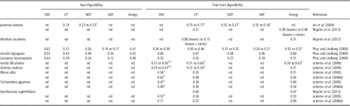
The richness in fibre as well as the degree of lignification of the fibre fraction of forage is probably the major constraint to their use as pig feed (Noblet and Le Goff, Reference Noblet and Le Goff2001; Högberg and Lindberg, Reference Högberg and Lindberg2006). Due to the lack of fore-gut fermentation and caecotrophic behaviour, the ability of pigs to recover nutrients from fibre, in particular energy, is limited to the uptake through the intestinal wall of short-chain fatty acids produced during hindgut intestinal fermentation (reviewed by Bindelle et al., Reference Bindelle, Leterme and Buldgen2008). Therefore, with total tract organic matter (OM) digestibility ranging from 0.30 to 0.63 (Table 3) as well as digestible and metabolisable energy contents ranging from 5.2 to 11.9 MJ/kg DM and from 5.0 to 8.3 MJ/kg DM, respectively (Phuc and Lindberg, Reference Phuc and Lindberg2000; Leterme et al., Reference Leterme, Botero, Londoño, Bindelle and Buldgen2006b; Régnier et al., Reference Régnier, Bocage, Archimède, Noblet and Renaudeau2013), the energy value of plant foliages is quite lower than that of concentrate feed ingredients such as cereal grains (Table 3). Cereals have OM digestibility values usually falling between 0.84 and 0.98, and digestible and metabolisable energy contents as high as 12.9 to 15.4 MJ/kg DM and 12.4 to15.0 MJ/kg DM, respectively (Sauvant et al., Reference Sauvant, Perez and Tran2004). As stated previously, the composition of forage is also more variable than that of concentrate feed ingredients. Owing to this variability, it is more difficult to study the actual nutritive value of these high fibre materials from an experimental point of view. The measured nutritive values depend on animal factors such as age or breed, experimental design such as rate of incorporation in the diet, presentation form and factors related to tropical foliage itself, as shown previously.
In vivo ileal and total tract digestibility coefficients of nutrients of tropical forage species in pigs

DM=dry matter; OM=organic matter; nd=not determined.
1 Range according to preservation method (fresh, dried, ensiled).
2 DM digestibility instead of OM digestibility.
3 Range according differences in estimates because of varying proportion of forage in the basal diet for the calculation of digestibility of leaves alone with the difference method.
As a consequence of the low digestibility of the fibre fraction, growth performances of pigs fed forage-based diets are often below those of concentrate-fed pigs, depending on the forage inclusion rate (Laswai et al., Reference Laswai, Ocran, Lekule and Sundstøl1997; Halimani et al., Reference Halimani, Ndlovua, Dzamaa, Chimonyoa and Millera2005; Phengsavanh and Lindberg, Reference Phengsavanh and Lindberg2013; Régnier et al., Reference Régnier, Bocage, Archimède, Noblet and Renaudeau2013). Nonetheless, if one goes through the list of plants that have been reported as being used for pigs in the literature, wide differences in total tract OM and energy digestibility between forage species are reported (Table 3). For example, some accessions of X. sagittifolium, M. alba, A. filiculoides and A. hypogaea have total tract OM and energy digestibility ranging, respectively, from 0.49 to 0.71 and 0.60 to 0.69. Conversely, the aquatic fern S. molesta used in production systems integrating pig production to pond aquaculture has an OM digestibility as low as 0.29 to 0.33 and an energy digestibility of 0.31. Such differences can be ascribed not only to the difference in total fibre content, which varies with (1) species, with poaceae generally containing more fibre than fabaceae, but also to (2) plant parts, as stems have higher fibre content than do leaves, and (3) maturity at harvest (Buxton and Redfearn, Reference Buxton and Redfearn1997). Other differences can be ascribed to differences in fermentability between fibre types (Noblet and Le Goff, Reference Noblet and Le Goff2001; Anguita et al., Reference Anguita, Canibe, Perez and Jensen2006) and the insoluble-to-soluble fibre ratio, with soluble fibre affecting voluntary fibre intake and ileal digestibility more negatively.
Interaction between fibre content and digestibility of nutrients
High fibre content, and especially viscous fibre, reduces enzyme contact and traps nutrients and minerals in a voluminous chyme, away from absorption sites in the intestine (Anguita et al., Reference Anguita, Canibe, Perez and Jensen2006; Urriola and Stein, Reference Urriola and Stein2012). Leterme et al. (Reference Leterme, Londoño, Munoz, Suarez, Bedoya, Souffrant and Buldgen2009), for example, observed a relatively high faecal digestibility for A. filiculoides and low digestibility for S. molesta (Table 3), a species rich in fibre with high water-holding capacity, although both species have similar NDF contents (523 v. 539 g/kg DM, Table 1).
The increase in chyme volume especially with foliage or fibre fractions with high water-holding capacity also increases the digesta passage rate, decreasing the accessibility and time of action of digestive enzymes and decreasing global digestibility (Partanen et al., Reference Partanen, Jalava and Valaja2007; Régnier et al., Reference Régnier, Bocage, Archimède, Noblet and Renaudeau2013). However, the influence of fibre on intestinal transit time is controversial, as several authors mention increases (Wilfart et al., Reference Wilfart, Montagne, Simmins, Noblet and van Milgen2007), decreases (Wenk, Reference Wenk2001) or no influence (Partanen et al., Reference Partanen, Jalava and Valaja2007) of fibre on this parameter. As mentioned above, such variability between studies may originate from differences in methodology – that is, experimental design, rate and form of forage incorporation, analytical methods, etc.
Digestibility of protein and bioavailability of AAs
CP can include non-protein nitrogen (N) as the analytical procedure for CP yields the N content×6.25 (method 981.10; Association Official Analytical Chemists (AOAC), 1990). It is reported that N-to-protein conversion factors of some vegetal materials (rice, oats and wheat) are lower than 5.36 (Chang, Reference Chang2010). For instance, Régnier et al. (Reference Régnier, Jaguelin, Noblet and Renaudeau2012) found that the sum of AA in tropical plant leaves (cassava, sweet potato, cocoyam and erythrina foliages) was 25% lower than the CP content. This gap between CP and individual AA analysis is one of the first factors to be considered when determining the actual protein value of a forage species. In addition, the individual AA profile as well as their bioavailability must be considered. Fibre strongly interferes with protein digestibility. Proteins can be bound to the NDF fraction preventing them from being hydrolysed by the digestive enzymes of pigs. This NDF-bound protein fraction is higher in dicotyledons than in grasses (Bindelle et al., Reference Bindelle, Sinnaeve, Dardenne, Leterme and Buldgen2005). This was observed, for example, by Leterme et al. (Reference Leterme, Botero, Londoño, Bindelle and Buldgen2006b) with Trichanthera gigantea, a tropical tree fed to pigs in Colombia. NDF-bound N in this species reaches 59% of the total N, leading to low ileal and faecal protein digestibility of ~0.15 and 0.30, respectively. However, low faecal-N-digestibility values not always mean low protein value. High fermentable fibre content of some forage species decreases the faecal apparent digestibility of N through a shift in N excretion from urinary-N (urea) to faecal-N (bacterial protein) without systematically altering the protein value of the diet (Bindelle et al., Reference Bindelle, Buldgen, Delacollette, Wavreille, Agneessens, Destain and Leterme2009). Therefore, the only actual protein value should mention ileal digestibility or possibly the standardised ileal digestible (SID) AAs of the forage ingredients, as these values might strongly differ from raw AA composition (Tables 2 and 4). Many authors report a decrease in N and AA digestibility in growing pigs when tropical leaves are included in a basal diet (e.g. Phuc and Lindberg, Reference Phuc and Lindberg2001; An et al., Reference An, Hong and Lindberg2004; Régnier et al., Reference Régnier, Bocage, Archimède, Noblet and Renaudeau2013). The values for apparent ileal digestibility (AID) are established when total ileal outflow of AA is related to dietary AA intake. Total ileal outflow consists of non-digested dietary AA as well as endogenous AA secretions or losses. The latter may be separated into (i) basal losses, which are considered in the SID calculations and are not influenced by feed ingredient composition, and (ii) specific losses, which are induced by feed ingredient characteristics such as fibre levels and types, the presence of PSMs, or mineral contents (Stein et al., Reference Stein, Sève, Fuller, Moughan and de Lange2007). The high content in fibre and PSMs of some forage plants that lead to the increase in specific endogenous AA losses explain the low AID of AA.
Ileal apparent digestibility of amino acid (AA) of forage species in pigs

1 Standardised ileal digestible of AA instead of ileal apparent digestibility.
Mineral digestibility
The bioavailability of minerals in tropical forage species should be investigated, as the few data available in the literature indicate that it strongly varies between plant species and the considered minerals. For example, mineral bioavailability for pigs in tropical forage ranges from 41% to 58% for P (Poulsen et al., Reference Poulsen, Carlson, Nørgaard and Blaabjerg2010), from 3% to 27% for Fe (Kumari et al., Reference Kumari, Gupta, Lakshmi and Prakash2004), from 11% to 26% for Zn and from 18% to 48% for Cu (Agte et al., Reference Agte, Tarwadi, Mengale and Chiplonkar2000). Furthermore, the high dietary mineral content of some forage species is likely to have a negative influence on energy and protein values. Noblet and Perez (Reference Noblet and Perez1993) reported that the digestibility coefficients of energy and CP were highly dependent on dietary fibre and mineral contents. They also suggested that dietary minerals increase protein endogenous losses through intestinal cell debris with subsequent increase in endogenous energy and AA losses.
PSMs
As stated before, PSMs can display various effects on the animals, including some specifically related to the feeding value of the forage ingredient such as a reduction in digestibility and voluntary intake (reviewed by Martens et al., Reference Martens, Tiemann, Bindelle, Peters and Lascano2012). Tannins are diverse regarding their chemical structure but share common biochemical properties in their ability to precipitate proteins at neutral pH. As a consequence, some tannin-containing feeds decrease the voluntary intake, which may be associated with astringency caused by the formation of tannin–salivary protein complexes in the mouth or signals of gut distension resulting from tannin interactions with proteins of the gut wall (Acamovic and Brooker, Reference Acamovic and Brooker2005). Tannins decrease protein and DM digestibility in pigs via an increase in faecal N excretion, an inhibition of digestive enzymes or intestinal microorganisms and an effect on gut permeability (Walton et al., Reference Walton, Waghorn, Plaizier, Birtles and McBride2001). Tannins also increase endogenous losses from animals, including mineral losses by chelation. Nevertheless, the effect varies with the binding strength in protein–tannin complexes, which can vary over several orders of magnitude between species (Mueller-Harvey, Reference Mueller-Harvey2006) and the total tannin content. For example, condensed tannins from L. leucocephala have the ability to precipitate proteins approximately by half than that from Leucaena pallida or Leucaena trichandra on g of protein/g of tannins basis. In addition, tannins from Leucaena collinsi precipitate almost no proteins (Osborne and McNeill, Reference Osborne and McNeill2001). However, the effect of tannins on pigs is controversial as some authors mention improvements (Myrie et al., Reference Myrie, Bertolo, Sauer and Ball2008; Biagi et al., Reference Biagi, Cipollini, Paulicks and Roth2010), whereas others report detrimental (Halimani et al., Reference Halimani, Ndlovua, Dzamaa, Chimonyoa and Millera2005; Kim et al., Reference Kim, Pluske and Mullan2007) or neutral effects on digestive processes (Lizardo et al., Reference Lizardo, Canellas, Mas, Torrallardona and Brufau2002; Stukelj et al., Reference Stukelj, Valencak, Krsnik and Svete2010). Moreover, the inclusion of 4 g/kg of tannin in the diet resulted in improved feed efficiency and reduction in intestinal bacterial proteolytic reactions (Biagi et al., Reference Biagi, Cipollini, Paulicks and Roth2010) and 15 g/kg tannin in the diet did not affect growth performance (Myrie et al., Reference Myrie, Bertolo, Sauer and Ball2008). Furthermore, when reduced growth performance is reported in monogastric animals fed tannin-rich feed, the latter are generally characterised by the presence of significant amounts of other PSMs that altogether might result in reduced animal growth (Biagi et al., Reference Biagi, Cipollini, Paulicks and Roth2010). For example, HCN increases methionine requirements for detoxication (Mansoori and Acamovic, Reference Mansoori and Acamovic2007); therefore, in M. esculenta, protein-binding tannins and HCN act together to worsen the deficiency in methionine in cassava leaves-based diets.
HCN and alkaloids decrease intake because of their bitter taste. Ingestion of a non-lethal dose of HCN (<100 ppm in the diet for pigs) also reduces growth rates associated with increased serum and urinary levels of thiocyanate, which is a continuous cause of depletion of sulphur-containing AAs and reduces the blood thyroxine levels (Tewe, Reference Tewe1992). At high concentration (>100 ppm), HCN may be lethal for the animal through the inhibition of cytochrome oxidase in the mitochondria. The lethal dose for most animal species is ~2 mg HCN/kg BW (Kahn, Reference Kahn2010). However, the intake rate is also important. Animals that eat rapidly are more likely to be poisoned as the drop in pH in the stomach destroys the enzymes responsible for the release of HCN. Finally, variety, maturity and fertiliser application levels also play a role in the possibility of using some cyanide-containing plants as forage for pig. M. esculenta, for example, displays HCN contents in foliage ranging from 80 to 2000 mg/kg DM, depending on the previously mentioned factors (Feedipedia, 2013).
Some alkaloids are hepatotoxic and can reduce the growth rate of pigs, mainly by decreasing feed intake and affecting feed efficiency (Gdala et al., Reference Gdala, Jansman, van Leeuwen, Huisman and Verstegen1996). For example, alkaloids in Erythrina glauca did not affect feed intake and health, likely because of restrictive feeding and the moderate rate of this plant in the diet. Despite this, this plant showed a low nutritive value (−0.328 and 0.266 for CP and energy, respectively; Régnier et al., Reference Régnier, Bocage, Archimède, Noblet and Renaudeau2013).
Oxalic acid is found at high levels (34.3 to 48.2 mg/g DM) in some cocoyam species (Oscarsson and Savage, Reference Oscarsson and Savage2007). With its astringent taste, it decreases intake levels and affects the physical properties of the oral mucosa by denaturing proteins in the surface epithelium, by increasing the friction of mucosa caused via aggregation of saliva (De Wijk and Prinz, Reference De Wijk and Prinz2006), and causes irritations of the gastrointestinal tract (Leterme et al., Reference Leterme, Londoño, Estrada, Souffrant and Buldgen2005). In addition to these negative effects, one notices increased kidney and liver weight (Kaensombath and Lindberg, Reference Kaensombath and Lindberg2013) probably due to the deposit of crystals of calcium oxalate.
Mimosine is known to act as a tyrosine analogue inhibiting protein biosynthesis (ter Meulen et al., Reference ter Meulen, Struck, Schulke and El Harith1979) and metal-containing enzymes because of its ability to chelate metal ions, reducing plasma AA and mineral concentrations, reducing the absorption of some AAs from the gastrointestinal tract (Smuts et al., Reference Smuts, Pierzynowski, Puchala, Al-Dehneh, Sahlu, Fernandez and Heitmann1995), and causing toxic symptoms including retardation of growth. In the pig diet, mimosine decreases feed intake (ter Meulen et al., Reference ter Meulen, Struck, Schulke and El Harith1979). Although very few studies report signs of acute short-term poisoning, long-term exposure to levels of 772 ppm in rat diets induced mild alopecia, cataract, reversible paralysis of the hind limbs, severe retardation of growth, and mortality as high as 50%, whereas the addition of 2% of FeSO4 protected the animals against these symptoms (El-Harith et al., Reference El-Harith, Schart and ter Meulen1979).
Considering these PSM-negative impacts, it is important to bear in mind that (1) some treatments such as heating or ensiling are able to significantly reduce the content in some PSMs (see Martens et al., Reference Martens, Tiemann, Bindelle, Peters and Lascano2012 for a review) and (2) forage is not intended to be fed alone and inclusion with other feed ingredients will possibly mitigate these deleterious effects. For example, HCN content in fresh cassava leaves can be as high as 349 mg/kg DM (Ty et al., Reference Ty, Preston and Khieu2007). However, when cassava is included at a level of 0.21 on DM basis in a broken rice and sugar palm juice-based diet, the HCN content of the diet is reduced to 73 mg/kg DM, a moderately poisonous range, and pigs show no symptoms of ill health, nor do they show effects on DM intake and N retention.
Effect of preservation method on feeding value
Preservation methods are used to ensure longer availability of the forage resource on the farm than the growing season itself. However, preservation can also have an interesting influence on the feeding value: enhancement in palatability, intake and digestibility, detoxication of PSM and concentration of some nutrients (Martens et al., Reference Martens, Hoedtke, Avila, Heinritz and Zeynerin press).
Nonetheless, changes in feeding value vary between preservation methods and plant species. DM intake was higher in sun-dried than in fresh and ensiled I. batatas leaves owing to their higher water content (An et al., Reference An, Hong and Lindberg2004; Khieu et al., Reference Khieu, Lindberg and Ogle2005). Drying can reduce the volume of forage to more than half and increase intake of water-rich aquatic ferns such as Azolla sp. and S. molesta in pigs (Leterme et al., Reference Leterme, Londoño, Ordonez, Rosales, Estrada, Bindelle and Buldgen2010). Milling dried forage reduces the volume and animal selectivity and increases feed efficiency (Kim et al., Reference Kim, Mullan, Heo, Hansen and Pluske2009; Martens et al., Reference Martens, Tiemann, Bindelle, Peters and Lascano2012).
An et al. (Reference An, Hong and Lindberg2004) noticed changes in AA profiles and fibre fraction between fresh, dried and ensiled I. batatas, with the highest contents of NDF and ADF in fresh leaves and lowest in ensiled leaves. The reduction in NDF during ensiling (Hunt et al., Reference Hunt, Kezar, Hinman, Combs, Loesche and Moen1993; Bagheripour et al., Reference Bagheripour, Rouzbehan and Alipour2008) originates from cell wall degradation by plant and bacterial enzymes, such as cellulase produced by Clostridia, cellulolytic clostridia, acid hydrolysis (McDonald et al., Reference McDonald, Henderson and Herson1991) and a small amount of hydrolysis of hemicellulose (Hunt et al., Reference Hunt, Kezar, Hinman, Combs, Loesche and Moen1993). A decrease in protein content may also be observed, resulting from proteolysis after harvesting, during wilting and in the silage itself. This decrease is more important when wilting occurs in a poor humid environment than under dry conditions (McDonald et al., Reference McDonald, Edwards, Greenhalgh, Morgan, Sinclair and Wilkinson2010).
As a consequence of these changes, M. esculenta leaves silage had a higher total tract apparent digestibility (TTAD) (0.84 v. 0.79, 0.71 v. 0.48, 0.54 v. 0.42 and 0.77 v. 0.70, respectively, for DM, CP, crude fibre (CF) and NDF) than sun-dried leaves (Khieu et al., Reference Khieu, Lindberg and Ogle2005). A similar trend was noticed with ensiled I. batatas leaves except for proteins (Nguyen et al., Reference Nguyen, Ngoan, Bosch, Verstegen and Hendriks2012). In contrast, no difference was observed between fresh, ensiled and sun-dried sweet potato diets in TTAD (An et al., Reference An, Hong and Lindberg2004).
Besides major nutrients, preservation also affects PSM content in forage (reviewed by Martens et al., Reference Martens, Tiemann, Bindelle, Peters and Lascano2012). Preparation steps for conservation can be necessary to eliminate the anti-nutrients in forage. For example, HCN is strongly reduced when plants are sun-wilted and chopped into small pieces before silage probably because of the action of endogenous linamarase on cyanogenic glucosides (Santana et al., Reference Santana, Vasquez, Matehus and Aldao2002). In addition, a combination of shredding and sun-drying can simultaneously reduce high HCN (by 96%), tannin (by 38%) and phytic acid (by 59%) contents of M. esculenta leaves (Fasuyi, Reference Fasuyi2005). Mechanical damage of plant tissues during chopping, wilting and ensiling promotes the contact between endogenous enzymes and PSMs and thus facilitates their removal (Lyon, Reference Lyon1985).
Forage utilisation by pigs
Forage feeding value depends not only on the forage plant itself. As it contains high levels of fibre and sometimes PSM, the age of the animal, its BW, its breed and the inclusion levels in the diet are other factors determining the efficiency of forage utilisation as feed ingredient by pigs.
Influence of physiological status
Forage is rich in fibre and has a high bulking capacity, reducing the energy density of the diet as shown before. The efficiency with which pigs are able to cope with this reduction in energy density by increasing feed intake strongly varies with their physiological status. Whittemore et al. (Reference Whittemore, Emmans and Kyriazakis2003) showed that the ability of pigs to ingest bulk feeds was correlated to live weight. While 600 g sugar beet pulp/kg of diet was constraining for pigs of 12 kg, 600 and 800 g/kg did not limit the live weight gain at 36 and 108 kg, respectively. High bulk feed causes a significant size increase in parts of the gut involved in digestion and fermentation (Whittemore et al., Reference Whittemore, Emmans and Kyriazakis2003; Len et al., Reference Len, Hong, Ogle and Lindberg2009a). Furthermore, adult pigs have a larger hindgut in proportion to their live weight and a lower feed intake relative to gut size compared with young pigs, which increases retention and fermentation times in the intestines. This change in hindgut volume affects the ability of the pig to digest fibre and consequently partially explains the higher digestibility of energy originating from fibre in adult sows (Noblet and Le Goff, Reference Noblet and Le Goff2001). Besides fibre and energy, protein digestibility of plant leaves is also influenced by live weight. Leterme et al. (Reference Leterme, Botero, Londoño, Bindelle and Buldgen2006b) observed that, when tropical foliage was included at 300 g/kg DM diet, protein digestibility was higher (0.49) in sows (0.12 to 0.36) than in pigs weighing 18 to 35 kg for which the digestibility of the diet decreased sharply when the rate of incorporation of leaves increased from 0 to 200 g/kg diet (Leterme et al., Reference Leterme, Londoño, Estrada, Souffrant and Buldgen2005; Leterme et al., Reference Leterme, Londoño, Munoz, Suarez, Bedoya, Souffrant and Buldgen2009). Therefore, in farming systems in the tropics relying partly on forage to feed pigs, this feed resource should be preferentially fed to gestating sows.
Differences in pig breeds in the ability to thrive on forage-based diets
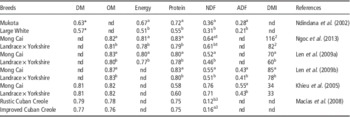
Besides live weight as discussed above, the breed can also strongly influence the potential of animals to thrive on forage and fibre-rich diets. Nevertheless, whether indigenous tropical breeds have superior ability than genetically improved breeds remains controversial depending on which parameter is taken into account: (1) the ability to consume a large amount of forage; (2) the ability to digest fibre more extensively; or (3) the feed conversion potential when consuming high levels of dietary fibre. Indeed, the negative impact of forage inclusion on performances is usually lower in local breeds with lower requirements as compared with exotic breeds with high requirements but also with high growth potential. The results of a literature overview on the comparison of indigenous and improved breeds regarding TTAD and DM intake when fed on fibre-rich diets are displayed in Table 5. When Zimbabwean Mukota (Ndindana et al., Reference Ndindana, Dzama, Ndiweni, Maswaure and Chimonyo2002) and Vietnamese Mong Cai (Ngoc et al., Reference Ngoc, Len and Lindberg2013) were compared with Large White pigs, those breeds showed no difference in intake levels when fed a high-fibre diet. However, in other studies, Mong Cai pigs consumed more (70 v. 60 and 85 v. 78 g/kg metabolic BW) compared with improved pigs (Landrace×Yorkshire) (Len et al., Reference Len, Hong, Ogle and Lindberg2009a and Reference Len, Ngoc, Ogle and Lindberg2009b). This ability is important as the low energy density of forage requires a compensation by an increase in intake to maintain energy intake in line with the requirement levels.
Comparison of digestibility and forage-based diets dry matter intake (DMI, g/kg0.75) between tropical and improved breeds

DM=dry matter; OM=organic matter; nd=not determined.
Value with different superscripts for same referenced manuscript within column are significantly different between pair of breeds on the parameter in the considered study (P<0.05).
1 Fibre is expressed as total non-starch polysaccharides instead of NDF.
2 Author value was expressed in daily feed intake (g/day) without considering the weight of pigs, which was different.
3 Fibre is expressed as total crude fibre instead of NDF.
Regarding digestibility, Mong Cai (Len et al., Reference Len, Ngoc, Ogle and Lindberg2009b) and Mukota pigs (Ndindana et al., Reference Ndindana, Dzama, Ndiweni, Maswaure and Chimonyo2002) showed higher (0.63 v. 0.57 and 0.87 v. 0.83, respectively) TTAD compared with improved pigs. Other studies showed similar trends (Len et al., Reference Len, Ngoc, Ogle and Lindberg2009b; Ngoc et al., Reference Ngoc, Len and Lindberg2013). Khieu et al. (Reference Khieu, Lindberg and Ogle2005) with Mong Cai found a higher digestibility by local breeds but only for the fibre fraction of the feed. Genetic selection of indigenous pigs also seems to allow improvement in fibre digestibility. When Macías et al. (Reference Macías, Martínez, Domínguez, Díaz, Santana and Ly2008) compared native Cuban Creole pigs with 12-year-improved Cuban Creole pigs, the latter showed an increase in ileal fibre digestibility from 12% to 16%. Although quite intriguing, the authors provided no insight on the reasons why this influence of selection was specifically observed with fibre. These initial observations therefore deserve further research. The differences in digestibilty between indigenous and improved breeds are, however, more frequent regarding TTAD than for ileal digestibilty (Table 5). Research on the effects of genotype on digestibility has been mostly carried out during a single stage of growth, either on growing or on finishing pigs. This can partially explain the lack of consistency between some studies reported in Table 5. Barea et al. (Reference Barea, Nieto, Vitari, Domeneghini and Aguilera2011) found two different trends in digestibility during growth and fattening periods when comparing Iberian and Landrace×Large White pigs. Whereas digestibility of OM and energy seem not to differ between breeds during the growing period, they were higher for Iberian pigs than for Landrace during the finishing period. This difference in response to breed effect with weight possibly originates from differences in digestive tract development between Iberian and Landrace×Large White pigs. In the study by Barea et al. (Reference Barea, Nieto, Vitari, Domeneghini and Aguilera2011), Iberian pigs had a lighter and shorter small intestine per kg BW, regardless of age. However, the size of the stomach was significantly larger, between 30 and 80 kg, and turned to be larger in Iberian pigs when the animals weighed 80 kg. Therefore, one can assume that the higher digestive tract development in Iberian pigs weighing 80 kg as opposed to Landrace×Large White pigs weighing 80 kg induces differences that are not observed with younger animals. These observations on Iberian pigs could apply to tropical pig breeds, especially those from Latin America. The high fibre digestibility of native breeds is also explained by a better adaptation to the high fibre content ascribable to high digestive enzyme activity and better adaptation of hindgut microbiota to degrade cell wall constituents of the diet (Freire et al., Reference Freire, Peiniau, Cunha, Almeida and Aumaitre1998 and Reference Freire, Dias, Cunha and Aumaitre2003), greater size of the gastrointestinal tract and longer retention time (Ngoc et al., Reference Ngoc, Len and Lindberg2013). The ability of indigenous pigs to digest fibrous fractions is more pronounced in high-fibre diets (Len et al., Reference Len, Ngoc, Ogle and Lindberg2009b), which takes place in the hindgut because ileal digestibility of a high-fibre diet is usually similar between breeds in the same trial.
Finally, tropical breeds have a lower average daily gain (ADG) and a poorer feed conversion potential (1.86 v. 1.50 (Len et al., Reference Len, Hong, Ogle and Lindberg2009a), 2.27 v. 2.05 (Ngoc et al., Reference Ngoc, Len and Lindberg2013) and 4.6 v. 2.9 (Kaensombath and Lindberg, Reference Kaensombath and Lindberg2013)) than improved ones even on high-fibre diets. As reviewed by Ly (Reference Ly2008) for Cuban and other Creole breeds, indigenous pigs have lower N retention per N intake (e.g. 0.28 v. 0.44 (Khieu et al., Reference Khieu, Lindberg and Ogle2005), 0.55 v. 0.58 (Ly, Reference Ly2008)), because of their lower growth rate, inducing low protein-to-energy requirements in their diets as opposed to improved breeds (Barea et al., Reference Barea, Nieto and Aguilera2007). The ADG difference is even greater when the protein content of the diet is higher than the protein requirements of the indigenous breeds (Barea et al., Reference Barea, Nieto, Vitari, Domeneghini and Aguilera2011). This can be explained by the low selection of indigenous pigs for high growth rate and lean tissue deposition, or for their natural high fat tissue deposition, which is more energy demanding that lean tissue (Renaudeau et al., Reference Renaudeau, Bocage and Noblet2006; Barea et al., Reference Barea, Nieto, Vitari, Domeneghini and Aguilera2011). Generally, when indigenous pigs are compared with improved breeds, the dietary CP of trial diets is fixed to meet the requirements of improved breeds.
Nevertheless, trials comparing valorisation by tropical and improved breeds of forage actually used by farmers under field conditions are scarce (Lopez-Bote, Reference Lopez-Bote1998), and it is likely that, raised under smallholder conditions, improved breeds will probably not show such a better performance compared with indigenous pigs.
Growth performances on forage-based diets
Despite the fact that inclusion of forage reduces digestibility and some inconsistency on the ability of indigenous pigs to digest fibrous feed ingredients, recent studies have shown that a significant proportion of conventional protein concentrates can be replaced by protein-rich forage without affecting either growth performances or carcass quality. Fed for about 100 days with a diet in which soybean meal was substituted on protein basis up to 0.50 with either ensiled S. guianensis or C. esculenta, growth performance and carcass traits of local and improved pigs were comparable to those fed the control diet (Kaensombath and Lindberg, Reference Kaensombath and Lindberg2013, Kaensombath et al., Reference Kaensombath, Neil and Lindberg2013). Similar results were found when fattening pigs were fed a diet containing 0.30 of Vigna unguiculata (Sarria et al., Reference Sarria, Rivera, Araujo, Martens and Peters2010). Furthermore, Kaensombath et al. (Reference Kaensombath, Neil and Lindberg2013) reported that, when S. guianensis silage was used, growth performance was two to three times higher than that of the same local breeds fed diets based on locally available agricultural by-products and green plant materials. For this reason, it is essential to select suitable preservation method and forage species with high nutritive value to adequately balance the diet for the breed that is used. Therefore, grasses showing low intake (Sarria et al., Reference Sarria, Martens, Hernández and del Mar Méndez2012) and lower digestibility compared with other plant groups should be avoided even for local breeds (Dung et al., Reference Dung, Luu, van Phuoc, Udén and Ogle2006).
Inclusion levels
Inclusion rate is of importance when supplementing pigs with forage ingredients because of (1) the presence of PSM, (2) their specific AA profile (3) and their impact on nutrient digestibility of the basal diet, which can be linear or quadratic. For example, the inclusion of Stylosanthes at 0.21 improved the ADG (312 v. 205 g/day) for the non-supplemented diet, whereas an inclusion level of 0.37 decreased the ADG to 190 g/day (Phengsavanh and Lindberg, Reference Phengsavanh and Lindberg2013). When pig diets were supplemented with Acacia karroo, Colophospermum mopane and Acacia nilotica at 100, 200 and 300 g/kg, respectively, the increased intake was striking for pigs fed the A. karroo diet, especially at 100 and 200 g/kg (1.6 and 1.7 kg/day v. 1.2 kg and 1.4 kg for the two other species), and animals performed better for both inclusion rates with an ADG of 855 and 820 v. 716 and 668 g for C. mopane and 604 and 586 g for A. nilotica due to phenolic constituents. Therefore, Halimani et al. (Reference Halimani, Ndlovua, Dzamaa, Chimonyoa and Millera2005) recommend limiting inclusion level of these legumes to 100 g/kg DM. Leterme et al. (Reference Leterme, Londoño, Munoz, Suarez, Bedoya, Souffrant and Buldgen2009) advise no more than 150 g/kg DM of aquatic fens in fattening pigs owing to their bulking capacity.
The composition in AA will also influence the optimal inclusion ratio of plants in diets. Hang (Reference Hang1998) fixed the acceptable incorporation limit of ensiled cassava leaves at 0.20 in a diet containing fish meal, which is rich in methionine, resulting in a well-balanced AA profile. In comparison, Phuc et al. (Reference Phuc, Ogle, Lindberg and Preston1996) established an optimal incorporation level of cassava leaves at 0.15 in a diet containing soybean meal proteins, which are low in methionine but rich in lysine, like cassava leaves. This means that, combined with a methionine-rich source, the inclusion rate of cassava could be revised upwards. Indeed, supplementing M. esculenta leaves with 0.2% methionine, a sulphur-containing AA essential among others in the detoxication pathway of HCN, as mentioned previously, increased the ADG of indigenous pigs from 540 to 712 g (Hang et al., Reference Hang, Linh, Preston, Everts and Beynen2009; Ly et al., Reference Ly, Ngoan, Verstegen and Hendriks2012). Daily weight gains were increased from 482 to 536 g when lysine was added to a diet containing I. batatas leaves (An et al., Reference An, Hong, Ogle and Lindberg2005).
Moreover, as stated before, PSM in forage can impose stricter limits to the inclusion levels than would the contents in fibre and other nutrients, owing to their anti-nutritive effects or toxicity. Finally, from a more practical perspective, the optimal inclusion rate varies also according to the time of distribution and whether it is mixed with the basal diet. Dung et al. (Reference Dung, Luu, van Phuoc, Udén and Ogle2006) observed that forage is more consumed when it is offered before a basal diet than after (150 to 330 v. 30 to 150 g/day).
Implications on the farming system of using forage in the diets of pigs
As shown previously in this review, including forage in well-balanced grain-based diets reduces growth performances of pigs, but, under particular conditions, this detrimental impact is lower for indigenous breeds than for high-performance European or American breeds. However, for regions where the access to balanced diets is difficult for economical or accessibility reasons, forage can improve the quality of the diet, especially by supplying proteins. For example, forage such as S. guianensis or Aeschynomene histrix was shown to improve growth performances (ADG of 394 and 396 g, respectively) of animals fed traditional poorly balanced diets (ADG of 205 g), especially regarding protein total content and AA profiles (Phengsavanh and Lindberg, Reference Phengsavanh and Lindberg2013). Nonetheless, it is not possible to definitely conclude on the actual positive outcomes of this practice without a proper socio-economic and environmental assessment of the consequences of using forage on the whole production system. Few studies report the actual feeding costs of forage-based diets as opposed to commercial concentrate diets, probably because of the difficulty in calculating opportunity costs of cultivating, collecting and handling forage against concentrate feeds. Heat treatment such as cooking mixed forage with agriculture by-product as practised by many pig smallholders in South-East Asia (Chittavong et al., Reference Chittavong, Lindberg and Jansson2012) efficiently reduces the content of heat-labile anti-nutritive factors and increases feed conversion. However, little is known on how effective this practice is from an environmental and economical perspective. In another example, the inclusion of Azolla pinnata as a protein replacer in the concentrate feed at 0%, 10% and 20% in grower and finisher diets significantly reduced the diet cost per kg weight gain by 8% for the 10% forage inclusion level (Cherryl et al., Reference Cherryl, Prasad and Jayalaxmi2013). The same trend was found when M. alba was included at 25%, 30% and 35% in commercial pig diets. The feeding cost was reduced by 28% for the 30% inclusion rate (Ordóñez, Reference Ordóñez2010). In contrast, Kaensombath and Lindberg (Reference Kaensombath and Lindberg2013) report similar prices per kg weight gain for concentrate and ensiled forage-based diets, but, as in most studies, the opportunity cost of forage cultivation and silage making on the farm is poorly documented. Preservation seems indeed very important to solve the problems of seasonality of feed availability, but they require knowledge, investment and time especially in low-input smallholder conditions. Silage seems to be ideal during the rainy season when sun-drying becomes difficult to perform.
Moreover, the cost of concentrates strongly varies within the same country or district according to the location of the farms, especially when distance to feed mills increases. As such, the use of forage might be less interesting in periurban areas than in remote countryside farms. Cultivating forage or using forage by-products of other crops to feed pigs on mixed farms associating pig production to crops has several implications on the use of land, labour and nutrient cycles at the farm level that impact the sustainability of the farm as a whole. Some green plant materials used in pig diets are crop by-products that would be merely left on the fields if they had not been used in the animals’ diets. For example, the yield of M. esculenta leaves as by-products of cassava root can reach 4.6 tonnes of DM per ha with an average content in protein of 21% DM (Ravindran and Ravindran, Reference Ravindran and Ravindran1988). As a defoliation 6 months after planting does not decrease tuber yield (Fasae et al., Reference Fasae, Adu, Aina and Elemo2009), feeding cassava leaves to pigs would increase the total amount of product harvested from a field. Legumes used as dual-purpose crops such as cowpea (V. unguiculata) or cover crops such as S. guianensis to fight erosion decrease the need for N-fertiliser (Husson et al., Reference Husson, Charpentier, Razanamparany, Moussa, Michellon, Naudin, Razafintsalama, Rakotoarinivo, Rakotondramanana and Séguy2008) and increase the OM content of the soils while they can at the same time produce high amounts of protein-rich forage valuable to a certain extent as feed ingredients for pigs without affecting their beneficial effects on soil fertility. When pigs are fed forage, harvesting shares the highest cost under hand-labour. Mechanisation needs to be developed further because of the diversity of physiognomy between forage species: trees, shrubs or vines. One alternative could be keeping grazing pigs outdoors to let them harvest the forage for themselves on the fields, as studied in tropical conditions in Guadeloupe (Burel et al., Reference Burel, Archimède, Mahieu, Fanchone and Gourdine2013). However, this method is challenging in areas where cisticercosis is still a major issue and where African swine fever is endemic. Moreover, some forage species are not accessible to grazing pigs: trees, shrubs or climbing vines and other plants such as S. guianensis or P. scandens would be destroyed by grazing pigs, impeding several harvests per year.
In order to properly address these questions it is essential to conduct life cycle multi-criteria assessments at farm level to compare social, economical and environmental performances of pigs fed partially with forage as opposed to concentrate-fed animals. Such studies exist for production systems in developed countries (Alig et al., Reference Alig, Grandl, Mieleitner, Nemecek and Gaillard2012), but unfortunately they are still too scarce in developing countries.
Conclusion
Forage is an interesting source of proteins, especially for smallholder pig-feeding systems in tropical areas, as protein concentrates are either seldom available or expensive and inaccessible to most farmers. However, using forage for pigs is not obvious as forage plants have numerous disadvantages mainly related to high fibre and low-energy contents and the presence of PSM. Their inappropriate use results in nutritionally unbalanced diets and leads to poor pig performance, both for indigenous and for improved breeds. However, this review showed that including some forage species in the right proportion in the diet allows improvement of the poor nutritional quality of traditional pig diets by increasing the CP and mineral intake and possibly maintaining the feeding cost at a low level. However, proper assessment of the social, economical and environmental consequences of feeding pigs with forage is required at the farm level to support claims for improved sustainability thanks to this practice as opposed to concentrate-fed pigs.
Acknowledgements
The authors gratefully acknowledge Wallonie-Bruxelles International (Brussels, Belgium) and the Commission universitaire pour le Développement (Brussels, Belgium) for funding their research programme in the Democratic Republic of the Congo.