Implications
Feeding practices, such as limited access to the feed, may be strategies to preserve animal health and thus to reduce medication during critical phases or in farms with poor health status. Indeed, feed restriction applied after weaning in pigs alleviates digestive disorders. Moreover, transient feed restriction applied experimentally in animal models has a positive effect on the ability to cope with inflammatory challenges. Such a strategy has been scarcely investigated in growing pigs, whose growth performance and feed efficiency are sensitive to environmental hygiene conditions. This study aims at evaluating how feed restriction and environmental hygiene conditions interact in pigs to modify animal health and performance as well as intestinal microbiota.
Introduction
To avoid the dissemination of antibiotic resistances and the reduced efficiency of antibiotics for human and animal medicine, there is now a general consensus regarding the necessity to reduce the use of antibiotics in farm animals. Alternatives to antibiotics, such as feed additives and feeding practices share the common goal of preventing health problems and maintaining the productivity of farm animals (Kil and Stein, Reference Kil and Stein2010). Strategies based on a moderate feed restriction could be used without increasing feed costs.
For healthy young growing pigs, the major objective is to optimize the feed intake to maximize the growth. During the critical phases, ad libitum (AL) feeding could be suboptimal since pigs may consume more than they can digest. If a large amount of undigested nutrients is fermented in the large intestine, it could unbalance the microbial ecosystem which in turn could result in diarrhoeas as it was shown in newly weaned piglets (Kil and Stein, Reference Kil and Stein2010). Thus, feed restriction applied during the first days after weaning reduces diarrhoeas as well as the proportion of hemolytic Escherichia coli in the faeces (Rantzer et al., Reference Rantzer, Svendsen and Westrom1996). Feed restriction strategies are now currently used from weaning and throughout almost all the growing period in rabbit farming and allow reducing mortality and morbidity (Gidenne et al., Reference Gidenne, Combes and Fortun-Lamothe2012). Data from other species also suggest that feed restriction is not only beneficial for the digestive tract, but may also efficiently alleviate the consequences of a systemic inflammatory response in growing and adult animals. In rodents, feed restriction attenuated the inflammatory response caused by a lipopolysaccharide administration (Matsuzaki et al., Reference Matsuzaki, Kuwamura, Yamaji, Inui and Nakano2001). These results reinforce the necessity to better understand the consequences of a transient feed restriction on the health and physiology of growing pigs, for which health disorders are not limited to digestive disturbances, and growth rate may be strongly impacted by subclinical and multifactorial diseases.
The objective of this study was to determine the effect of a substantial but transient feed restriction on the ability of growing pigs to face a moderate inflammatory challenge induced by the degradation of environmental hygiene conditions (Le Floc’h et al., Reference Le Floc’h, Jondreville, Matte and Sève2006; Pastorelli et al., Reference Pastorelli, Le Floc'h, Merlot, Meunier-Salaun, van Milgen and Montagne2012). To do so, we measured growth performance, nutrient digestibility as well as blood indicators of inflammation and diarrhoea in pigs submitted to a feed restriction prior and during the hygiene challenge. Additionally, the impact of hygiene and feed restriction on the gut microbiota was evaluated by sequencing the 16S rRNA of the ribosomal small-subunit from faecal samples.
Material and methods
Animals
The experiment was performed at the INRA experimental facilities in Saint-Gilles (France) in compliance with the guidelines of the French Ministry of Agriculture for animal experimentation and care. The protocol was approved by the regional ethical committee (C2EA-07). The experiment was conducted with 80 castrated male and female Piétrain×(Large White×Landrace) pigs from INRA (UMR1348 PEGASE, Saint-Gilles), in two replicates of 40 pigs each. Pigs were weaned at 4 weeks of age. Twenty blocks of four half-sibling pigs (piglets from the same boar) with a similar BW were constituted at 8 weeks of age (average weight of 20.6±2.44 kg). Within a block, each pig was affected to one of the four experimental treatments described below.
Experimental design
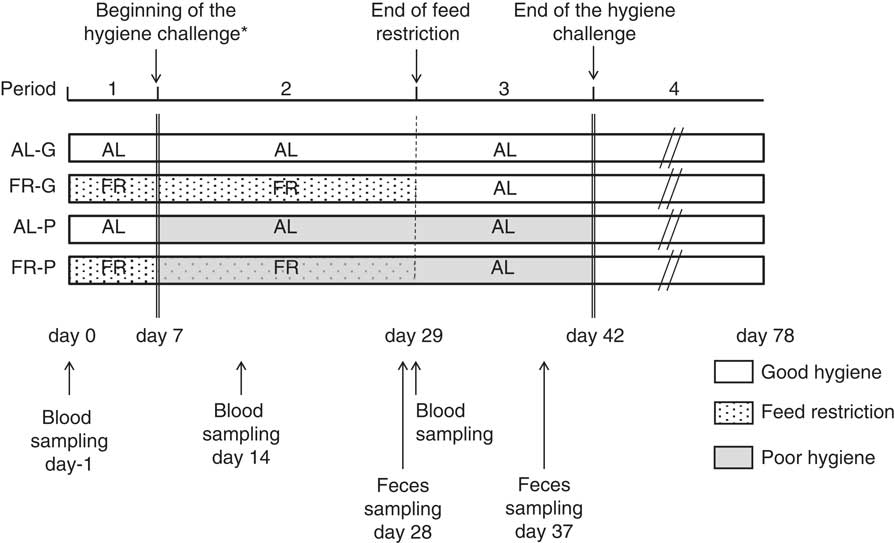
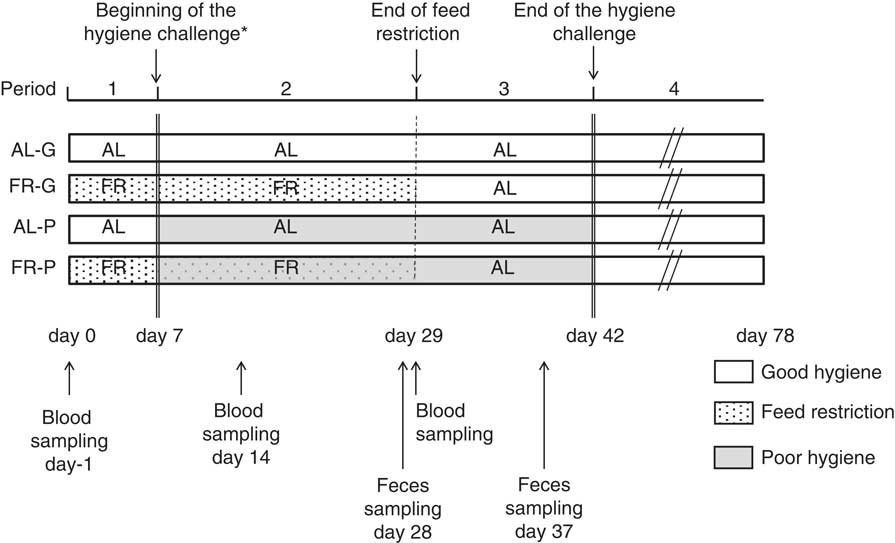
The experiment consisted in a complete 2×2 factorial design comparing two environmental hygiene conditions (Good (G) and Poor (P)) and two feeding levels (AL and feed restricted (FR) at 60% of AL). At 8 weeks of age, pigs were adapted to individual housing. Two weeks later (day 0), two pigs per block were FR (Period 1, Figure 1). At 68 days of age (day 7 of the experiment), all pigs were transferred in a growing unit. Within each block, one FR and one AL pig were transferred in good (G) hygiene conditions (FR-G and AL-G pigs), and one FR and one AL pig were housed in poor (P) hygiene conditions (FR-P and AL-P pigs). Feed restriction was maintained for 3 additional weeks in FR pigs (Period 2). From day 30 to day 42 of the trial (Period 3), pigs were housed in the same hygiene conditions as during the Period 2, but all were fed AL. From day 43 of the trial (Period 4), the hygiene challenge was stopped and all pigs were housed in conventional hygiene conditions. Pigs were vaccinated against Haemophilus parasuis at 7 and 10 weeks of age and no other medication was applied during the experimental period.
Schematic representation of the experimental design. The experimental groups are AL-G, pigs housed in good environmental hygiene conditions and fed ad libitum, FR-G, pigs housed in good environmental hygiene conditions and feed restricted, AL-P, pigs housed in poor environmental hygiene conditions and fed ad libitum, FR-P, pigs housed in poor environmental hygiene conditions and feed restricted. AL=pigs fed ad libitum; FR=feed-restricted pigs.
Housing
Pigs were housed individually throughout the experiment. From day 0 to day 7, they were housed in individual 80×60 cm cages in a post weaning unit where the room temperature was of 25°C. Then, until day 42, they were housed in 85×265 cm pens in a growing unit where the room temperature was of 22°C. Different hygiene conditions were obtained through a modification of the procedure described by Le Floc’h et al. (Reference Le Floc’h, Jondreville, Matte and Sève2006). Poor hygiene conditions were created by housing pigs in a room previously occupied by non-experimental pigs. The room was neither cleaned nor disinfected before and during the experimental period. Additionally, non-experimental pigs were also housed in the same room to increase the microbial pressure. In good hygiene conditions, pigs were housed in a room that was cleaned and disinfected before and daily throughout the experimental period. There was no mixing with non-experimental pigs and the staff put clean boots and clothes before entering the room.
Diets and feeding
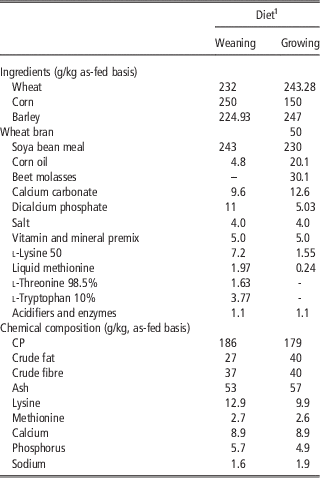
Pigs were fed a standard weaner diet during the period of adaptation and Period 1, then a standard growing diet containing 0.4% of titanium dioxide as an indigestible marker. The weaner and growing diets (Table 1) provided 9643 and 9634 kJ net energy/kg and 186 and 179 g/kg of CP, respectively. During the period of adaptation to the individual housing as well as during Periods 3 and 4, all pigs were fed AL and feed refusals were recorded every morning to calculate feed intake. During Periods 1 and 2, FR pigs were fed 60% of their feed consumption/kg BW measured during the 2 weeks of adaptation. The daily feed allowance was recalculated every day to take into account the increase in BW. Feed refusals, if any, were daily recorded. Water was provided AL throughout the experiment.
Ingredients and chemical composition of the diets

1 The weaning diet was distributed during the Period 1 and the growing diet during the Periods 2 to 4.
Measurements and biological samplings
The mornings before the allocation to each experimental group, at the beginning of the feed restriction and the transfer to the growing unit, the pigs were weighed after being fasted overnight. Then, the pigs were weighed every week without being fasted. Growth performance (average daily gain (ADG), average daily feed intake (ADFI) and feed to gain ratio (F/G)) were calculated for Periods 1, 2 and 3 whereas only ADG was calculated for Period 4. Backfat thickness was measured during Period 3 at day 30 (end of the feed restriction period) and day 42 (end of the hygiene challenge) by ultrasonic scanning (Vetko plus echograph; Noveko Inc., Boucherville, Canada).
Three blood samples were taken between 0800 and 0900 h on all the pigs the day before starting the feed restriction then on day 14 and day 28 (middle and end of Period 2) by jugular puncture. The blood sampling procedure was timed and limited to 2 min in order to limit the effect of stress on blood parameters. Blood (2×5 ml) was collected in K2-EDTA and Heparin Vacutainer tubes. The possible negative effects of feed restriction on the well-being of the animals was evaluated by measuring cortisol in the salivary samples collected on days 0, 2, 6 and 8 between 1100 and 1145 h, by allowing piglets to chew on cotton buds voluntarily until they were moistened. Blood and salivary samples were kept on ice until their transfer to the laboratory. Faeces samples were collected twice on 2 consecutive days (days 27 to 28 and days 37 to 38) for nutrient digestibility measurements. Faeces were immediately chilled on ice after collection and then freeze-dried. Samples of 2 consecutive days were pooled, ground and kept at 4°C until analysis. For microbiological analyses, faeces were collected on day 1 and day 28 and stored at −80°C. The consistency of the faeces was monitored daily during Periods 1 and 2 and scored using a 3-levels scale (0=solid or normal, 1=soft or moist and 2=diarrhoeic faeces).
Blood analyses
The total number of leukocytes and the differential count of lymphocytes and polymorphonuclear leukocytes (PMN) were measured on whole blood collected in EDTA tubes with a hematology automated cell counter calibrated for pigs (MS-9R, Melet Schloesing laboratories, Osny, France).
The blood was then centrifuged (2500×g, 20 min, 4°C) and the plasma was aliquoted and kept at −20°C until analysis. Plasma concentration of haptoglobin, a major acute-phase protein in pigs, was measured by a colorimetric method (Phase Haptoglobin assay T801, Tridelta Development Limited, Maynooth, Ireland). Plasma concentration of cortisol was assessed by a I125 radio-immunoassay (Immunotech, Prague, Czech Republic). Saliva was collected by centrifugation of the cotton buds at 3000×g for 15 min at 4°C, and stored at −20°C until cortisol measurement with a luminescence immunoassay kit (LIA, IBL, Hamburg, Germany).
Faecal scores, faecal analyses and digestibility calculations
The sum of faecal scores was calculated for both Periods 1 and 2. The number of pigs with solid, soft or diarrhoeic faeces was calculated per day during Periods 1 and 2. Then, for each period, three categories of pigs were identified as followed: pigs with solid faeces throughout the period, for at least half the duration of the period and for less than half the duration of the period. The percentage of pigs within each class was then calculated for each experimental group. Diets and faeces were analysed for dry matter, organic and mineral matters, CP (N×6.25; Dumas Method) using the AOAC procedures. Gross energy was measured in diets and faeces using an adiabatic bomb calorimeter (IKA, Staufen, Germany). The concentration of titanium dioxide in the growing diet and in the faeces was determined photometrically (Cobas Mira, Horiba ABX, Montpellier, France). The total tract apparent digestibility of nutrients and energy was calculated using the nutrients to marker (titanium dioxide) ratio in the diet and faeces as previously described (Wilfart et al., Reference Wilfart, Montagne, Simmins, van Milgen and Noblet2007).
Microbial analyses of faecal samples
The microbial DNA was extracted from 200 mg of frozen faeces by beadbeating according to a previously published protocol (Combes et al., Reference Combes, Michelland, Monteils, Cauquil, Soulie, Ngoc Uyen, Gidenne and Fortun-Lamothe2011) and sent to a molecular research laboratory (Lubbock, TX, USA) for FLX 454 pyrosequencing using the 27F and 530R primers targeting the 16S rRNA gene (Dowd et al., Reference Dowd, Callaway, Wolcott, Sun, McKeehan, Hagevoort and Edrington2008). Sequences with ambiguous base calls, homopolymer exceeding 6 bp or insufficient length (200 bp) were removed. The resulting sequences were preclustered using the naïve Bayesian classifier embedded in Mothur 1.30.1 with a cutoff of 50% (Schloss et al., Reference Schloss, Westcott, Ryabin, Hall, Hartmann, Hollister, Lesniewski, Oakley, Parks, Robinson, Sahl, Stres, Thallinger, Van Horn and Weber2009) trained on the data set 9 of the ribosomal database project (Cole et al., Reference Cole, Chai, Farris, Wang, Kulam-Syed-Mohideen, McGarrell, Bandela, Cardenas, Garrity and Tiedje2007). Each precluster was then independently divided into operational taxonomic units (OTUs) using Esprit-tree (Sun et al., Reference Sun, Cai, Huse, Knight, Farmerie, Wang and Mai2011), singletons were eliminated and non-redundancy of the OTUs was verified. Finally the phylogenetic affiliation of one representative sequence per OTU was performed using the LTP database (www.arb-silva.de/projects/living-tree).
Statistical analyses
The MIXED procedure of SAS (version 8.1, 2000; SAS Institute Inc., Cary, NC, USA) was used for all data other than faecal scores and microbial OTUs. The experimental unit was the pig. The effects of hygiene conditions (H), feeding levels (F), replicate and their interactions were first tested per period for growth performance and per date for blood, saliva and faecal analyses. The interactions of hygiene conditions and feeding levels with replicate were non-significant and were removed from the model. The block was used as a random effect. The initial BW and the weight recorded on the day of measurement were used as covariates for the analyses of growth performance and backfat thickness, respectively. Blood leukocyte numbers, haptoglobin and cortisol concentrations were submitted to a log transformation and salivary cortisol concentrations to a square root transformation to fit normal distribution. The effects were considered as significant if P<0.05 and adjusted means (LS means) were compared using the Bonferroni test.
The sum of faecal scores were analysed by Kruskal–Wallis test (Anastat software) and the frequency of pigs within each class was analysed by a χ 2 test (FREQ procedure of SAS). The statistical significance of feed restriction and hygiene on gut microbiota was determined by the discriminant analysis of the principal components or DAPC procedure with 500 group randomizations (Jombart et al., Reference Jombart, Devillard and Balloux2010).
Results
Three pigs (one AL-G, one AL-P and one FR-P) were removed from the experimental design because of health disorders (diarrhoea requiring antibiotic administration, rectal prolapses and lameness).
Feed intake and growth performance
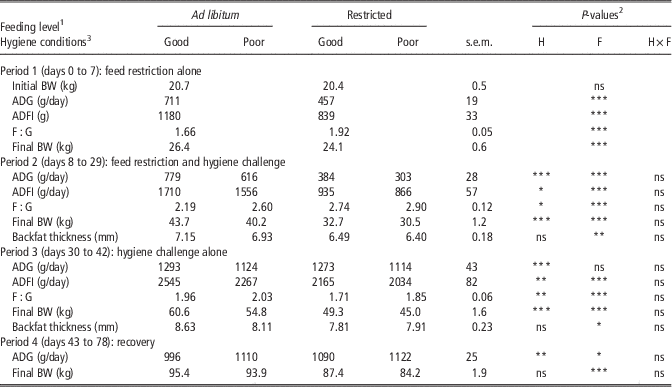
Observed average feed intake differed slightly from what was expected (Table 2). The difference between AL and FR was of 30% on average during Period 1 and, irrespective of the hygiene conditions, of 45% during Period 2, instead of the expected 40%. Both hygiene and feeding levels reflected in the performance but the interaction between hygiene and feeding level was not significant. Initial average BW was equivalent between treatments. FR pigs had lower growth rate and greater F : G than AL pigs during Period 1 (Table 2). At the beginning of the hygiene challenge, FR pigs were 2.3 kg lighter than pigs fed AL (P F<0.001). Both feed restriction and hygiene challenge reduced the growth performance and increased F : G measured during Period 2. During Period 3, growth rate did not differ between pigs previously FR and pigs previously fed AL, whereas ADFI of pigs previously FR remained lower than that of pigs previously fed AL. Consequently, F : G was lower in pigs previously FR than in pigs previously fed AL. The effect of the hygiene challenge was significant on ADG, ADFI and F : G leading to lower growth performance in pigs housed in poor compared with good hygiene conditions. At the end of both Periods 2 and 3, backfat thickness was lower in FR pigs than in AL pigs and was not affected by the hygiene challenge. During Period 4, pigs previously FR and pigs previously housed in good hygiene conditions grew faster than pigs previously fed AL and pigs previously housed in poor hygiene conditions. However, pigs previously FR were still more than 8 kg-lighter than pigs fed AL, whereas the effect of hygiene challenge on BW was no longer significant.
Consequences of feed restriction on the performance of pigs housed in good or poor environmental hygiene conditions
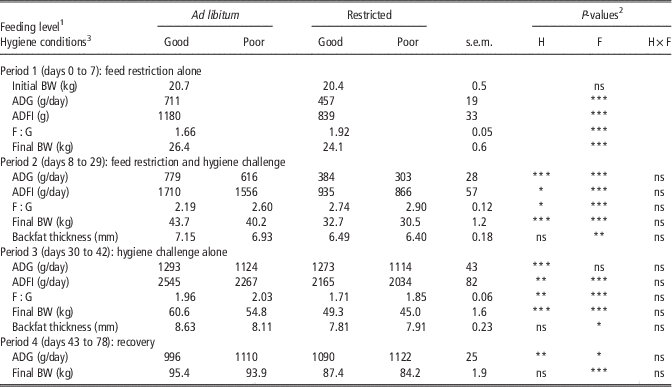
ADG=average daily gain; ADFI=average daily feed intake; F : G=feed to gain ratio.
1 Feed restriction (60% of ad libitum) was applied during Periods 1 and 2.
2 Probability values for the effect of hygiene conditions (H), feeding level (F) and the interaction (H×F); *P<0.05, **P<0.01, ***P<0.001 and ns=non-significant.
3 Pigs were housed in one of the two hygiene conditions during periods 2 and 3. Poor hygiene conditions correspond to a room that was neither cleaned after being occupied by pigs of a previous band, nor during the experimental period. Good hygiene conditions correspond to a room that was cleaned and disinfected before and during the experimental period.
Total tract digestibility coefficients
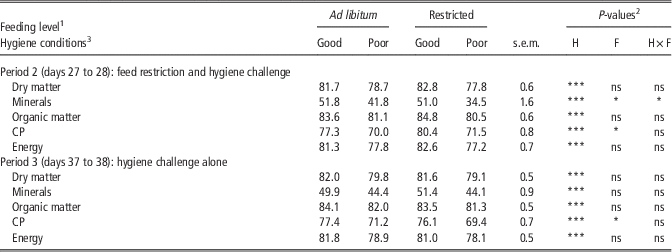
The total tract digestibility coefficients of the main dietary components were affected by hygiene conditions in both periods of measurement, that is end of Period 2 and 3 (Table 3). Pigs housed in good hygiene conditions had greater coefficients compared with pigs submitted to the hygiene challenge (P H<0.001). Feed restriction did not impact on the digestibility coefficients of dry and organic matter, and coherently of energy but negatively affected that of minerals (P F<0.05) especially in pigs submitted to the hygiene challenge (−7.3% between AL and FR in poor hygiene conditions; P H×F<0.05). Irrespectively of the hygiene conditions, FR pigs had greater digestibility of CP than AL pigs (75.9% v. 73.6%, P<0.01) at the end of Period 2. Inversely, at the end of Period 3, 1 week after the end of the feed restriction, digestibility of CP was greater in AL pigs than in FR pigs (74.3% v. 72.8%, respectively, regardless the hygiene conditions).
Consequences of feed restriction on apparent total tract digestibility (%) of nutrients and energy of pigs housed in good or poor environmental hygiene conditions
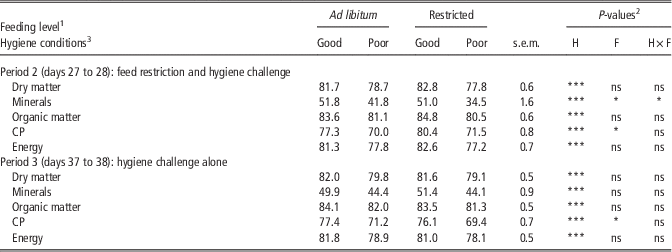
1 Feed restriction (60% of ad libitum) was applied during Periods 1 and 2.
2 Probability values for the effect of hygiene challenge (H), feeding level (F) and the interaction (H×P); *P<0.05, **P<0.01, ***P<0.001 and ns=non-significant.
3 Pigs were housed in one of the two hygiene conditions during Periods 2 and 3. Poor hygiene conditions correspond to a room that was neither cleaned after being occupied by pigs of a previous band, nor during the experimental period. Good hygiene conditions correspond to a room that was cleaned and disinfected before and during the experimental period.
Faecal scores
The sum of faecal scores was greater in AL pigs than in FR pigs during Period 2 but not during Period 1. The effect of hygiene was not significant. During Period 1, feed restriction (Table 4) did not affect the proportion of pigs with normal faeces within the three categories defined in the Material and methods section (P F=0.38). During Period 2 (hygiene challenge and feed restriction), feed restriction decreased the frequency of diarrhoeas and moist faeces as 41% of the FR pigs had normal faeces all the days of Period 2 compared with 10.5% of the AL pigs (P F=0.003). Hygiene challenge (data not shown) did not modify the proportion of pigs within each category (P H=0.74) with on average, 26% of the pigs with normal faeces during all the days of Period 2, 70% during more than half of the period and 4% during less than half of the period.
Consequences of feed restriction on the proportion (%) of pigs with normal faeces throughout the period (Category 1), more than half of the period (Category 2) or less than half of the period (Category 3)

1 Feed restriction (60% of ad libitum) was applied during Periods 1 and 2.
2 Probability values (χ 2 test) for the effect of feeding level; *P<0.05 and ns=non-significant.
Plasma haptoglobin concentrations and blood formula
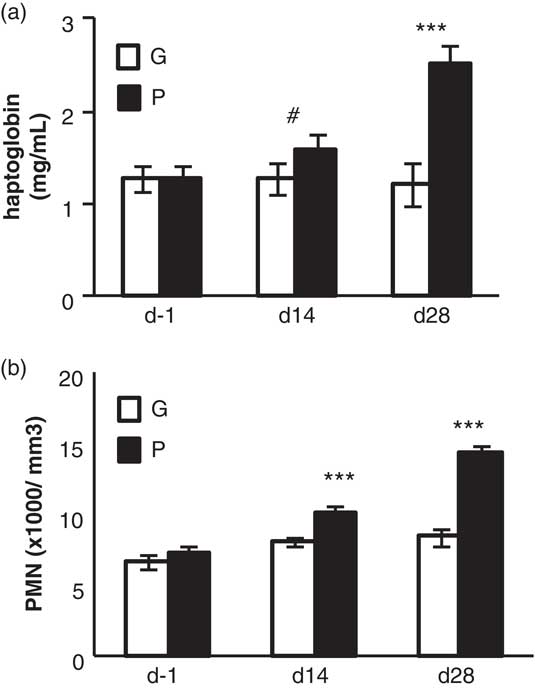
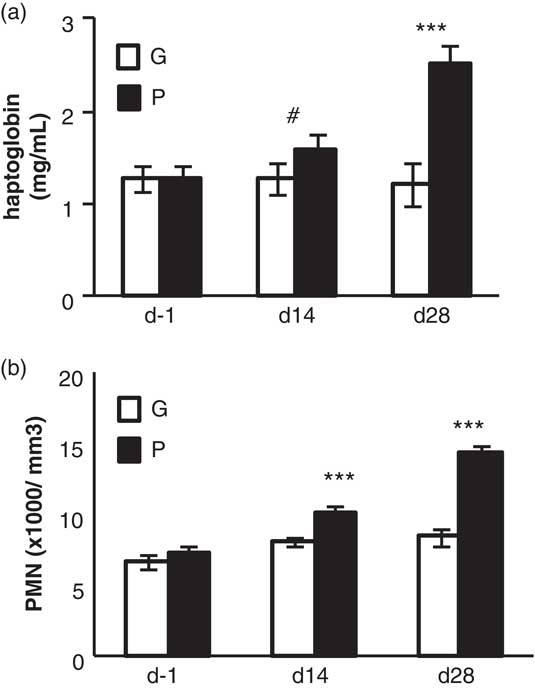
Concentrations of plasma haptoglobin (Figure 2a), blood numbers of lymphocytes and PMN (Figure 2b) were measured before the start of the experiment (day 1) and during Period 2 (days 14 and 28). The blood variables did not differ between the four experimental groups on day 1 and were affected neither by the feeding level, nor by the interaction between the feeding level and hygiene conditions. One week after the transfer into the growing unit (day 14), pigs housed in poor hygiene conditions had greater PMN numbers (P H<0.001), than those housed in good hygiene conditions, whereas the number of lymphocytes did not differ. Plasma haptoglobin tended to be higher in pigs housed in poor hygiene conditions (0.05<P H<0.1). At the end of Period 2 (day 28), pigs housed in poor hygiene conditions had greater plasma haptoglobin concentration (+105%, P H<0.001), blood PMN number (+69%, P H<0.001) and lymphocyte number (+10%, data not shown, P H<0.05) than pigs housed in good conditions.
Consequences of the deterioration of environmental hygiene conditions on (a) plasma haptoglobin concentrations and (b) blood polymorphonuclear (PMN) leukocyte numbers; # and *** for 0.05<P<0.10 and P<0.001, respectively. G, pigs housed in good environmental hygiene conditions; P, pigs housed in poor environmental hygiene conditions.
Salivary and plasma cortisol
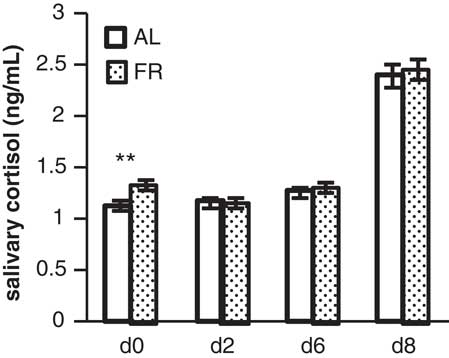
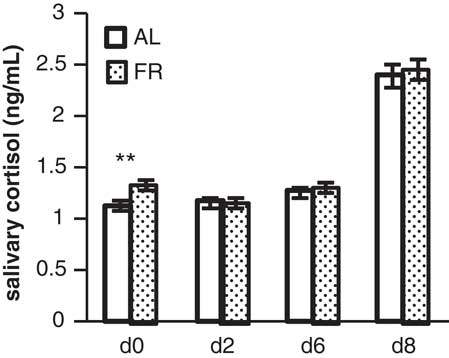
Plasma cortisol concentrations were not affected by feeding level and hygiene conditions at day 1 (42±2 ng/ml) and day 14 (34±2 ng/ml). On day 28, FR pigs tended to have lower cortisol concentrations than AL pigs (23 v. 27±3 ng/ml, 0.05<P F<0.1). Salivary cortisol was slightly increased in FR pigs in comparison with the AL pigs 3 h after the first meal on day 0 (PF<0.01), but no more on day 2 and day 6, and after the transfer to the growing unit on day 8 (Figure 3).
Consequences of feed restriction on salivary cortisol measured 3 h after the meal distribution. **P<0.01. AL=pigs fed ad libitum; FR=feed-restricted pigs.
Gut microbiota
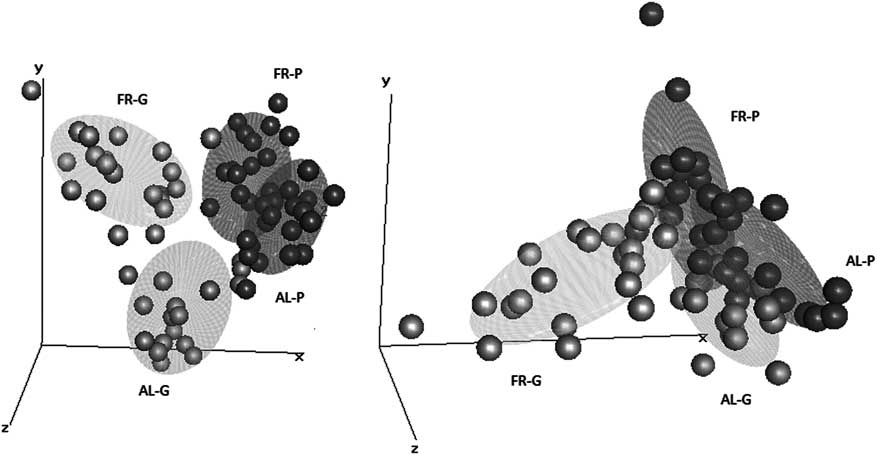
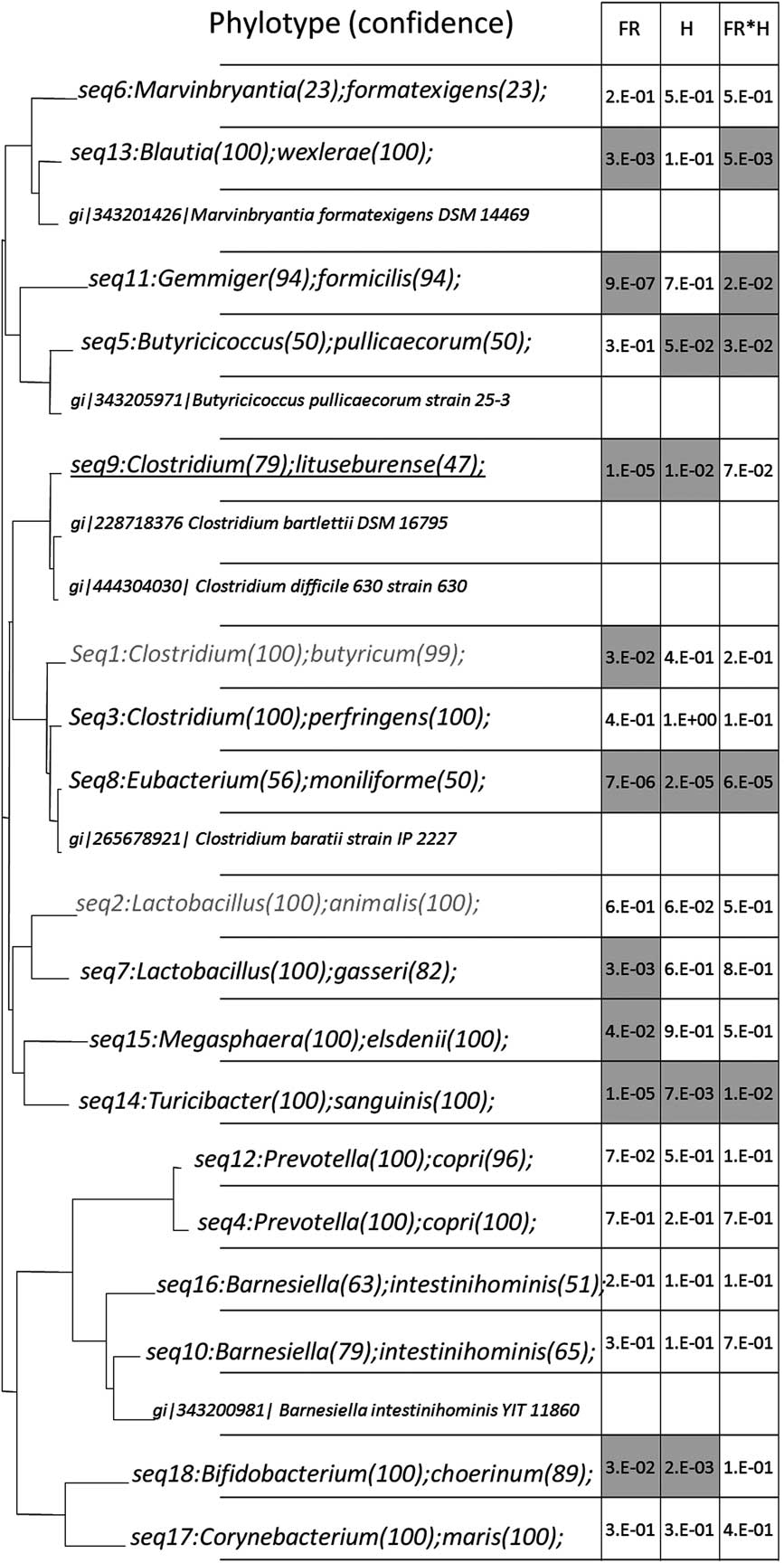
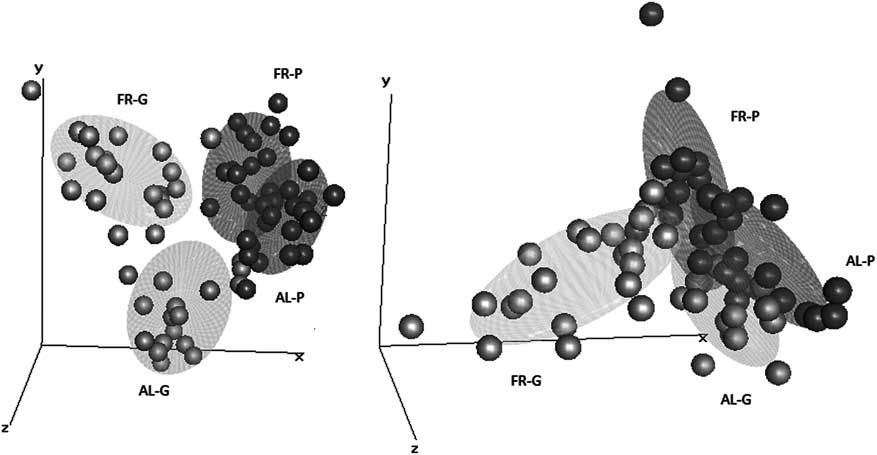
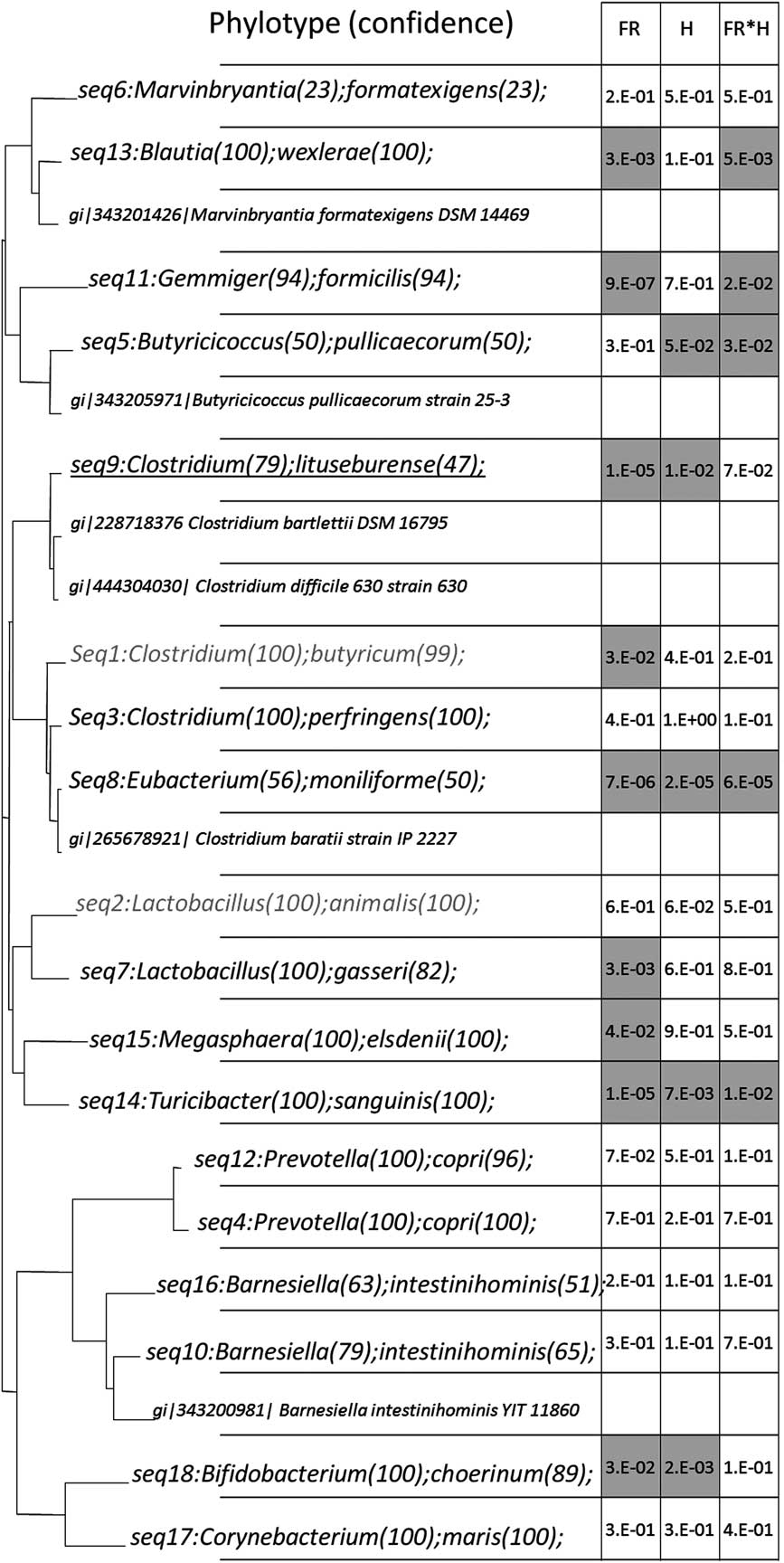
The analysis of the microbial DNA in the faeces collected at the end of Period 2 yielded 362 871 sequences that were clustered in 4106 OTUs. DAPC on the relative abundances of the 4106 OTUs separated all four biological treatments (i.e. FR-G, FR-P, AL-G and AL-P) better than any other 500 randomized groups (P=0.0075, Figure 4). In contrast randomized groups offered a discriminative power similar to the real groups at the beginning of the experiment (day 1), showing that the pig microbiota of the 8 weeks old animals are initially undistinguishable but then evolve differently depending on the hygiene and feed restriction. Furthermore it shows that both feed restriction and hygiene conditions can modulate the gut microbiota. Interestingly the 10 species with the highest DAPC loadings correspond to 18 non-redundant microbial species which are sufficient to distinguish the four groups by DAPC (P=0.032). These 18 species represent between 3% and 27% of the total number of sequences of the individual samples. Out of the 18 separating phylotypes, the phylotypes related to Clostridium butyricum, Clostridium bartletti, Lactobacillus animalis and Bifidobacterium choerinum are significantly favoured by feed restriction (Figure 5).
Separation of the 4 groups by DAPC based on the total 16S microbial communities of the feed restricted (FR) or ad libitum (AL) pigs housed in poor (P) or good (G) environmental hygiene housings (Left) and the 18 most discriminating phylotypes (Right). The 3D-ellipsoids are centered on the barycentre of each group.
Phylogenetic tree of the 18 most discriminating phylotypes and P-values per phylotype for the effects of the feed restriction (F), the hygiene (H) and their interaction; the names of the strains already tested as probiotics regulating inflammation by inducing cytokines are printed in grey; the confidence of the phylogenetic affiliation is reported in brackets; the strains without an acceptable phylogenetic affiliation are compared with the closest cultivable relatives.
Discussion
Consequences of poor environmental hygiene on pig performance and health
The present results are in accordance with previous data reporting a major effect of poor hygiene on growth performance of pigs from weaning to the first weeks of the growing period (Le Floc’h et al., Reference Le Floc’h, Jondreville, Matte and Sève2006). Reduced feed intake and digestibility as well as metabolic and behavioural changes caused by poor hygiene probably act together to impair growth rate (Pastorelli et al., Reference Pastorelli, Le Floc'h, Merlot, Meunier-Salaun, van Milgen and Montagne2012).
Poor hygiene conditions induced a stimulation of the immune system as indicated by greater haptoglobin concentrations, a major acute phase protein in pigs (Eckersall et al., Reference Eckersall, Saini and McComb1996), and changes in blood cell counts. The proportion of white blood cells, and mainly that of granulocytes, increased while that of lymphocytes remained almost constant. Those changes in blood formula have been described in pigs suffering from inflammation in response to a bacterial infection (Odink et al., Reference Odink, Smeets, Visser, Sandman and Snijders1990). Additionally, the synthesis of haptoglobin by the liver is also enhanced during the inflammatory response (Moshage, Reference Moshage1997) and greater plasma haptoglobin concentrations are correlated with poor health and sanitary status of the pig farm (Harding et al., Reference Harding, Baarsch and Murtaugh1997; Lipperheide et al., Reference Lipperheide, Rabe, Knura and Petersen2000). Accordingly, our results indicated that the poor hygiene conditions led to faecal ecosystem modifications. Pigs housed in good and poor hygiene conditions exhibit different microbial communities. Among the 18 species that suffice to distinguish the four groups by DAPC, poor hygiene significantly favours a phylotype related to B. choerinum (0.17% v. 0.05%), which is known to correlates with cytokine expression and profile in blood and intestine (Splichalova et al., Reference Splichalova, Trebichavsky, Rada, Vlkova, Sonnenborn and Splichal2011). Interestingly, good hygiene also significantly favours a Clostridium-related phylotype (0.8% v. 0.4%) but additional data would be required to determine if this phylotype is more closely related to Clostridium difficile strain 630 harbouring pathogenic pathways (Scaria et al., Reference Scaria, Janvilisri, Fubini, Gleed, McDonough and Chang2011) or to Clostridium bartlettii, which might be beneficial by limiting the adhesion of enterotoxigenic E. coli (Messori et al., Reference Messori, Trevisi, Simongiovanni, Priori and Bosi2013).
Pigs housed in poor hygiene conditions ate 10% less than pigs housed in good environmental hygiene. This is similar to what was reported for growing pigs after 2 weeks of hygiene challenge (Pastorelli et al., Reference Pastorelli, Le Floc'h, Merlot, Meunier-Salaun, van Milgen and Montagne2012). The lower feed intake probably results from the moderate systemic inflammation caused by the poor environmental hygiene since the release of inflammatory mediators, like cytokines, are known to be responsible for appetite reduction (Plata-Salaman, Reference Plata-Salaman1995). In a previous experiment, the impact of poor hygiene conditions on the growth rate was observed on pair fed pigs confirming that the depressed growth rate was not caused only by the lower feed intake (Le Floc'h et al., Reference Le Floc’h, Jondreville, Matte and Sève2006 and Reference Le Floc’h, Lebellego, Matte, Melchior and Sève2009). Indeed, inflammation is known to be associated with dramatic changes in metabolism leading to a repartitioning of nutrients away from growth towards functions associated with body defences (Klasing and Johnstone, Reference Klasing and Johnstone1991).
The depressed of the apparent total tract digestibility measured in pigs reared in poor hygiene could result in a real impairment of the digestion (including hydrolysis and absorption) and/or an increase in endogenous losses. This may be involved in the depressed growth rate through a reduction of the amount of nutrients delivered to the body by digestion. Faecal scores indicated that poor environmental hygiene did not increase diarrhoeas. Thus, malabsorption caused by digestive disorders may not explain the impact of poor hygiene on digestibility. For example, the fact that the digestibility of minerals was impaired in pigs housed in poor hygiene conditions compared with pigs in good hygiene conditions was quite unexpected since diarrhoeas limit mineral absorption (Scrimshaw and SanGiovanni, Reference Scrimshaw and SanGiovanni1997). This result contrasts with a previous experiment conducted with the same hygiene model applied after weaning and that clearly established that the proportion of diarrhoeas was greater in poor hygiene conditions (Montagne et al., Reference Montagne, Le Floc’h, Arturo-Schaan, Foret, Urdaci and Le Gall2012).
Consequences of feed restriction on pig performance and stress response
FR pigs grew less than pigs fed AL during the period where feed restriction was applied. Feed restriction also depressed feed efficiency and reduced backfat thickness, possibly because restricted pigs support their maintenance metabolism rather than growth. Moreover, the difference in backfat thickness indicates that FR pigs had a higher protein and less fat deposition than pigs fed AL. The fact that protein deposition is less energetically efficient than fat deposition probably contributed to reduce feed efficiency (Lovatto et al., Reference Lovatto, Sauvant, Noblet, Dubois and van Milgen2006). On the other hand, it is unlikely that variations in nutrient digestibility were involved. Indeed, the digestibility of nutrients was unaltered except for minerals, which digestibility slightly decreased, but only in poor hygiene conditions. In other species like the rabbit, total tract nitrogen digestibility improvement caused by the feed restriction was associated to prolonged transit time (Gidenne et al., Reference Gidenne, Combes and Fortun-Lamothe2012).
When all pigs returned to an AL feeding level (Period 3), feed efficiency was greater in the pigs previously FR than in the pigs fed AL as reported previously (Lovatto et al., Reference Lovatto, Sauvant, Noblet, Dubois and van Milgen2006). However, this was not sufficient to compensate entirely for their reduced growth by the end of Period 4. Our results suggest that the improvement of feed efficiency was not solely caused by an increase in nitrogen digestibility, but also by metabolic changes (Whang et al., Reference Whang, Kim, Donovan, McKeith and Easter2003). For example, at the end of the feed restriction period, blood cortisol tended to be lower in FR pigs compared with AL pigs. Likewise, Booth et al. (Reference Booth, Craigon and Foxcroft1994) reported lower cortisol levels in restricted growing pigs in the post-prandial state, which might reflect a better anabolic state.
Our study was designed to determine whether a substantial feed restriction could help the growing pigs to cope with moderate health deterioration. However, such a strategy would only be acceptable provided that it does not generate welfare problems. An elevation in salivary cortisol can be considered as a good stress marker in pigs (Merlot et al., Reference Merlot, Mounier and Prunier2011). The slight increase in salivary cortisol in the FR pigs compared with the pigs fed AL 3 h after the first application of restriction indicated that this restriction might generate a discomfort, probably due to food frustration. However, this increase was of small amplitude in comparison to the response obtained after another stressor such as the transfer to a new building on day 8. Furthermore, no increase was observed in FR pigs in comparison to AL pigs at the later time points (on days 2, 6 and 8). This might suggest that piglets easily adapted to their new feeding level. However, De Leeuw and Ekkel (Reference De Leeuw and Ekkel2004) showed that food frustration in pigs could lead to the expression of behaviours revealing a situation of stress, even when cortisol levels are unaffected.
Consequences of feed restriction on health parameters and microbiota
Limiting energy supply in pigs does not reduce the haptoglobin or leukocyte response (data not shown). Therefore feed restriction seems to be inefficient to reduce the inflammation generated by poor hygiene and the consequences of poor hygiene on growth performance. Contrary to what was reported in rodents injected with a bacterial endotoxin (Matsuzaki et al., Reference Matsuzaki, Kuwamura, Yamaji, Inui and Nakano2001; MacDonald et al., Reference MacDonald, Radler, Paolini and Kent2011), feed restriction had no effect on the inflammatory response caused by poor hygiene conditions. The intensity of feed restriction, 25% and 50% of the AL intake for MacDonald et al. (Reference MacDonald, Radler, Paolini and Kent2011), as well as the intensity of the inflammatory response and the species may explain this discrepancy. Yet, in growing and unchallenged pigs, caloric restriction applied for a few days modified the expression of genes involved in the immune response (Lkhagvadorj et al., Reference Lkhagvadorj, Qu, Cai, Couture, Barb, Hausman, Nettleton, Anderson, Dekkers and Tuggle2010) suggesting that short-term feed restriction may potentially modify the immune response. Moreover, feed restriction did not exert any positive effect on growth performance of pigs housed in poor hygiene conditions. This suggests that metabolic changes induced by feed restriction were not effective to overcome the metabolic consequences of poor hygiene conditions. In this experiment, pigs were fed standard diets formulated to cover their nutritional requirements. However, feed restriction may also induce deficiencies in some nutrients that are specifically involved in the regulation of the inflammatory response, thus preventing an efficient positive effect of feed restriction.
In accordance with data obtained in weaning pigs (Rantzer et al., Reference Rantzer, Svendsen and Westrom1996), feed restriction was effective to reduce the proportion of pigs with diarrhoeas and soft faeces, but this was observed irrespectively of hygiene conditions. Using feed restriction to favour bacteria that may reduce the local and systemic inflammation might contribute to the lower diarrhoea occurrence observed in the FR pigs. Interestingly most of the phylotypes distinguishing the four groups have been tested as probiotics to reduce inflammation: attempts using B. choerinum in pigs were unsuccessful (Splichalova et al., Reference Splichalova, Trebichavsky, Rada, Vlkova, Sonnenborn and Splichal2011) but secretion of cytokines in mice is modified by the ingestion of C. butyricum (Hayashi et al., Reference Hayashi, Sato, Kamada, Mikami, Matsuoka, Hisamatsu, Hibi, Roers, Yagita, Ohteki, Yoshimura and Kanai2013) or L. animalis (Karunasena et al., Reference Karunasena, Kurkure, Lackey, McMahon, Kiernan, Graham, Alabady, Campos, Tatum and Brashears2013). It should be noted that lactobacilli are naturally abundant in the pig gut (Leser et al., Reference Leser, Amenuvor, Jensen, Lindecrona, Boye and Moller2002) and that they correlate to an increased immune response when piglets are raised outdoors rather than indoors (Mulder et al., Reference Mulder, Schmidt, Stokes, Lewis, Bailey, Aminov, Prosser, Gill, Pluske, Mayer, Musk and Kelly2009). Thus feed restriction simultaneously favours several phylotypes that may reduce the inflammation with the exception of Megasphaera elsdenii, which is hindered in restricted pigs. Surprisingly hygiene and feeding levels interplay to yield the abundance of several of the 18 discriminating phylotypes. For example, Butyricicoccus is only favoured by good hygiene in pigs fed AL, which might strengthens the epithelial barrier function (Eeckhaut et al., Reference Eeckhaut, Machiels, Perrier, Romero, Maes, Flahou, Steppe, Haesebrouck, Sas, Ducatelle, Vermeire and Van Immerseel2013). Similarly Blautia wexlerae and Turicibacter sanguinis are favoured in the FR pigs, but only in good hygiene.
Conclusion
Our study showed no beneficial effect of a substantial feed restriction on the inflammatory response caused by poor hygiene conditions. However, feed restriction reduced the occurrence of diarrhoeas irrespective of hygiene conditions. Together these results suggest that microbiota communities are more sensitive to the interplay between hygiene and feed restriction than the general indicators of inflammation such as haptoglobin or leukocytes. The fact that the four groups can be distinguished by their faecal microbial communities challenges the relative stability observed in the pig microbial communities from 4 weeks onwards (Thompson and Holmes, Reference Thompson and Holmes2009), possibly because the window of dependence to environmental changes is larger than previously thought. Moderate feed restriction strategies should be explored to limit the performance deterioration while preserving a digestive health benefit.
Acknowledgements
This study received the financial support from the Animal Physiology and Livestock System division of INRA. The authors thank B. Carissant, R. Comte, S. Daré, J. Delamarre, H. Demay, F. Guérin, Y. Jaguelin, P. Roger, F. Thomas and P. Touanel from INRA UMR PEGASE for animal care and laboratory expertise and B. Gabinaud from INRA UMR TANDEM for the laboratory expertise in microbiology.