Introduction
Defining poverty proves to be a complicated task, given that this notion covers different realities. As Øyen (Reference Øyen, Spicker, Alvarez Leguizamón and Gordon2007, 1) writes, ‘the understanding of poverty is in the eye of the beholder’. Consequently, there are as many definitions of poverty as ways to study it—especially within the social sciences and humanities. One cannot, therefore, expect an absolute definition of poverty; only a relative one, varying according to time and place.
In our modern society, a generally accepted conception of poverty corresponds roughly with the definition given by Townsend (Reference Townsend1979, 915): ‘the absence or inadequacy of those diets, amenities, standards, services and activities which are common or customary in society’. Poverty can, therefore, be measured through the concept of relative deprivation (Townsend Reference Townsend1993, 36), based on the needs of an individual or a group of people, but also on what they lack, in comparison with the rest of the society. This definition, based on comparative methods between members of the same society or community, is not that different from the definition adopted by the European Commission in 1984, which states: ‘the poor shall be taken to mean persons, families and groups of persons whose resources (material, cultural and social) are so limited as to exclude them from the minimum acceptable way of life in the Member State in which they live’ (Council of the European Union 1985, 24). In this case, however, the definition does not solely describe a particular state or condition (poverty), but directly references the existence of a social category: ‘the poor’. As a result, the definition takes on a slightly different meaning, as it entails the establishment and use of some precise indicators—money being the most often used—allowing the measurement of standards of living. From there, one can determine a threshold—the poverty line—below which someone may be considered as being ‘poor’. Yet, as Serge Paugam (Reference Paugam2009, 15) noted, poverty is not only the condition of a person lacking in material goods; it also characterizes a specific social status, lower and disadvantaged, leaving its mark on the identity of the person who experiences it. Thus, this poverty threshold, as a quantitative measurement, is relative, as the basic needs (food, clothing, household furniture and equipment, etc.) vary considerably, depending on the geographic, historic, or cultural context. Furthermore, we must ponder the value of a poverty line. Does that threshold represent the basic level of subsistence, or a level where an individual does not even possess the basic needs and is considered to be in absolute poverty (Messu Reference Messu, Berthoud, Lengaigne and Mardellat2009, 84–90)? With this question, we are faced with the fact that different levels of poverty, and various types of poor, exist. As emphasized by Gueslin (Reference Gueslin2004, 11), the poor are not—and have never been—a homogenous and distinct social group. The term ‘the poor’, in fact, encompasses various individuals with different living conditions, including those who live with few goods, the unemployed person and the beggar or homeless person (Farge Reference Farge, Berthoud, Lengaigne and Mardellat2009, 69–71). Therefore, ‘poor’ is also a relative term, vague and ambiguous, whose definition depends on a larger context.
Poverty in Egyptology
Perhaps it is due to these difficulties in defining poverty, but in every period of history, it seems that historians are more inclined to study high society rather than lower social categories. Even so, some studies, such as Michel Mollat's (Reference Mollat1974; Reference Mollat1978) on medieval poverty, have helped to stimulate research on this vast and quite unexplored topic. In the last decades, the question has begun to attract more attention, especially from researchers of the Roman world, but also of ancient Greece (e.g. Atkins & Osborne Reference Atkins and Osborne2006; Ault Reference Ault, Ault and Nevett2005; Whittaker Reference Whittaker and Whittaker1993; and for pre- and protohistoric societies, see e.g. Meller et al. Reference Meller, Hahn, Jung and Risch2016). However, almost all these studies reveal that attempts to define poverty, or more generally what it meant to be poor in antiquity, cannot be easily achieved (Galbois & Rougier-Blanc Reference Galbois and Rougier-Blanc2014, 237).
In Egyptology, general studies have been published on social life (e.g. Trigger et al. Reference Trigger, Kemp, O'Connor and Lloyd1983), but as McNicoll (Reference McNicoll, Trigger, Kemp, O'Connor and Lloyd1984, 113) pointed out, how can scholars write a social history of ancient Egypt without taking into consideration the mass of Egyptian society? Thus far, the bulk of important works on society have focused mainly on the so-called ‘elite’ which ‘constitutes both the cultural and the administrative and executive core’ of the society (Baines & Yoffee Reference Baines, Yoffee, Richards and Van Buren2000, 16). The explanation for this omnipresence in the literature is due to the abundant and attractive data this ‘elite’ left behind: the nicely decorated tombs, the large houses, a rich corpus of inscribed material, etc. Paradoxically, the entire ‘elite’ represented only 3 to 5 per cent of the Egyptian population (Baines & Eyre Reference Baines and Eyre1983, 65–72). What do we do then with the almost 95 per cent of the population, composed of ordinary people living ‘in relative poverty and simplicity’ (Baines, Reference Baines and Shafer1991, 132)? Indeed, as Morley (Reference Morley, Atkins and Osborne2006, 28) noted, for most of history, ‘mass structural poverty’ has been the natural state of humanity. Until recently, this largest component of Egyptian society has been under-represented in Egyptological studies, with no specific studies of the poor in ancient Egypt. One can wonder, then, if this deficiency in Egyptology is the result of the difficulties in defining poverty in ancient Egypt, or if it is the consequence of a dearth of evidence about poor people.
To begin with, if we want to develop a definition of ‘poor’ or ‘poverty’ in ancient Egypt, it is clear that we cannot simply overlay our modern concepts of poverty. We must deconstruct these notions in order to build a new model, more suitable to the subject of study. Furthermore, since the ancient Egyptians did not widely use ‘money’, composed of coins, before the conquest of Alexander the Great,Footnote 1 poverty cannot be evaluated with some of the indicators ordinarily used to define it. How, then, can we measure the basic needs of an ancient Egyptian? Is it even possible to use a poverty threshold for ancient Egypt? The complicated nature of past civilizations is why researchers and historians usually favour the notion of ‘relative poverty’. This allows them to evaluate the place of an individual by means of comparison within a society, through a subjective approach integrating the disciplines of sociology and anthropology, as opposed to one based solely on economic principles (Destremau & Salama Reference Destremau and Salama2002, 47). This approach involves, in particular, comparisons between the different social groups highlighting the differences of living standards. We then come inevitably to the classic opposition ‘poor’ versus ‘rich’ so frequent in that kind of analysis. Indeed, in any society, everyone who is not rich might essentially be considered as poor.
This simple model of a society divided into two main levels has been observed by Michael A. Hoffman on the Early Dynastic site of Hierakonpolis. There is, on one side, the ‘small group of decision makers’ called the group of ‘haves’, and on the other side, the group of ‘have-nots’, i.e. ‘those who did not participate in the decision making processes and share the immense wealth which flowed into the royal coffers’ (Hoffman Reference Hoffman1974, 40). This recurrent opposition between ‘rich’ and ‘poor’, ‘haves’ and ‘have-nots’, or ‘elite’ versus ‘non-elite’ is very well illustrated in the written sources by the use of terms p ʿt and r ḫyt. P ʿt is usually translated as the ‘patricians’—in opposition to r ḫyt, which means the ‘plebs’ or the ‘plebeians’ (Gardiner Reference Gardiner1947, 98–110*). Nevertheless, poverty is not just the opposite of wealth. Such a division into two social groups is most likely an over-simplification.
This dichotomy, which appears through the available archaeological evidence and textual records, is thus not a helpful way to explore poverty in ancient Egypt. Texts were generally written by the elite and were intended for the elite (Parkinson Reference Parkinson and Loprieno1996, 140). If studies are only based on such sources, there is a risk that researchers will not grasp the complex whole of ancient Egyptian society and build what has been referred to as a ‘mystified reality’ (Levi Reference Levi and Fabre2006, 41). This ‘reality’ is a history of ancient Egypt focused mainly on the elite, as it is based primarily on documents which are clearly not fully representative of Egypt's entire population. As emphasized by Erman (Reference Erman1894, 101), high society ‘had no interest in immortalising in their tombs those citizens of inferior rank who had no connection with them’. These scenes represent solely what was important for them (Bussmann Reference Bussmann2015, 4–5). Besides the fact that the poor are barely visible in the available data, one must not forget that in the case of written sources, in particular, the poor are only perceived through the elite's eyes. This perception of the poor by privileged persons involves a subjectivity that pertains to a social phenomenon of legitimacy.
Poverty in iconographic sources
The Satire of the Trades illustrates quite well the social glorification of the elite, while expressing a negative judgement about ordinary people. In that text, Khety, who is bringing his son Pepy to a scribal school, uses the duration of the journey to praise the scribal profession (Helck Reference Helck1970; Parkinson Reference Parkinson1998, 273–83; Quirke Reference Quirke2004, 121–6). After explaining to his son all of the advantages of being a scribe and how he will never be lacking in anything, he presents the harsh realities of manual occupations. Using the example of a coppersmith, barber, potter, labourer, mat-weaver and washer-man, etc., he carefully describes the hardships of each of these occupations and the living conditions of these manual labourers. The text is called ‘satire’ because it has been considered as such since its first publication by Maspero (Reference Maspero1872, 48)—who characterized the text as a ‘pamphlet’. Richard Parkinson (Reference Parkinson2002, 273–7) has effectually suggested that the scornful commentaries made by Khety about the workers are intended to make the reader laugh. Helck (Reference Helck1970, 161–2), on the contrary, disapproves of the word ‘satire’ and does not see the text as ‘literary entertainment’. He reckons that the teaching of Khety exposes a certain reality which should not be taken with humour (see also Grajetzki Reference Grajetzki and Wendrich2010, 183–4). Whether one believes that this is a satire or not, these stanzas integrate information into the discourse (fatigue, dangerous environments, poor diet, dirtiness, etc.), real or not, that concern workmen. Nevertheless, although the text shows some condescension towards ordinary people, at no point is a term for ‘poor’ mentioned. That does not mean, however, that such workers were not considered part of the poor, since this text is dealing with the personal perceptions of a member of the dominant class, for whom undertaking manual labour alone is clearly a sufficient sign of a lower social condition. Khety also provides a detailed description of the external appearance and the physical condition of such labourers (the potter's clothes are stiff with mud, the arms of the wall-builder are covered with earth, the gardener has a festering, swollen neck, etc.) to his son in order to persuade him to become a scribe, giving insight into what Egyptians thought were signs of deprivation. By explaining the negative aspects of these trades, Khety is presumably presenting here an Egyptian opinion on what is ‘poor’.
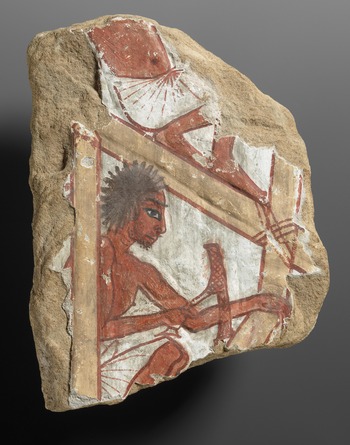
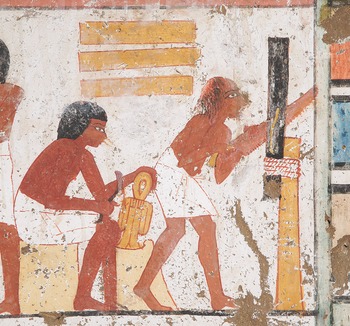
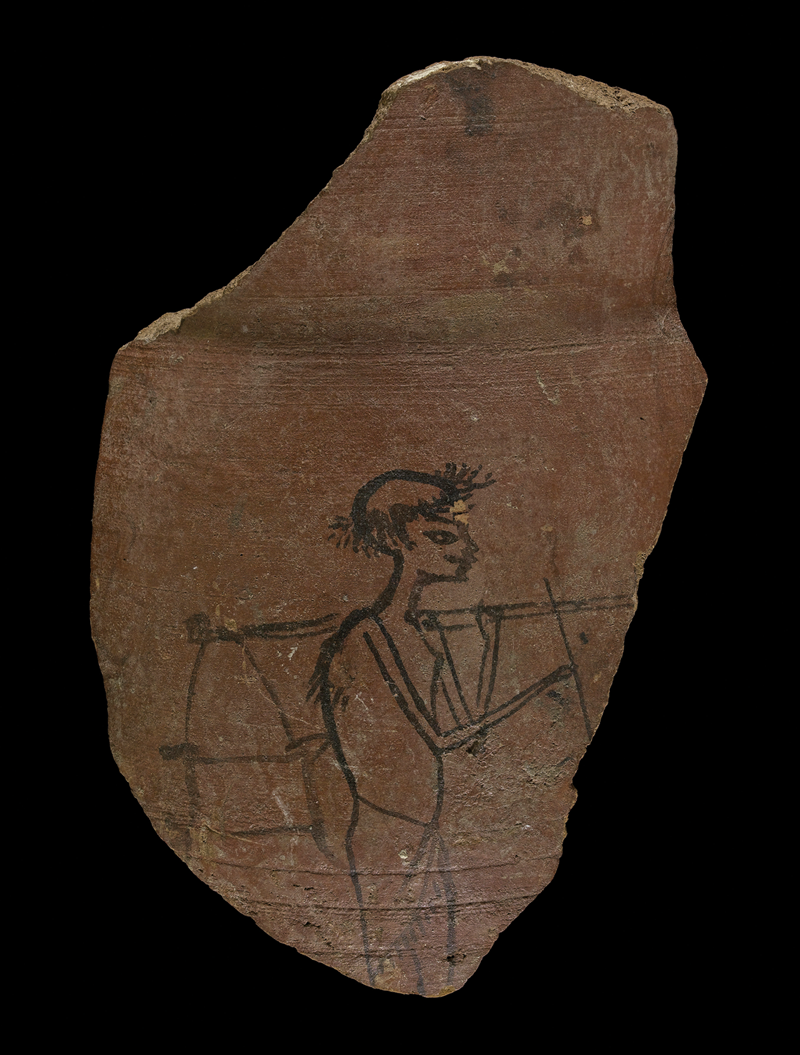
Interestingly, the way these people are described in the text can be related to the way they are depicted in iconography. Among the men described in The Satire of the Trades, the carpenter, who has to wait for work to be finished before receiving his insufficient income to support the needs of his family, is pictured on a fragment of painted relief now preserved in Berlin (ÄM 23731: Andreu-Lanoë Reference Andreu-Lanoë2013, 280, no. 120). Cramped in a nook of scaffolding (Fig. 1), he is shown unshaven, his thick eyebrows joined together and with shaggy hair. This slovenly appearance can be compared to another carpenter portrayed in Theban Tomb 181 (Fig. 2; Davies Reference Davies1925, pl. XI–XIII). Here, the man, busy sawing a wooden plank, has the same hirsute appearance but with incipient baldness and a pronounced belly. In this context, the beard and the baldness appear to be distinctive signs or attributes belonging to a lower social group in Egyptian society—as opposed to the wealthy, for whom a particular aesthetic was an essential part of maintaining their status (Weeks Reference Weeks1970, 130–39). These characteristics of the poor are observed in several other cases, such as on an ostracon on which is drawn an unkempt man (Fig. 3), carrying a yoke with a suspended basket on his left shoulder (Cambridge, Fitzwilliam Museum, E.GA. 106.1949: Andreu-Lanoë Reference Andreu-Lanoë2013, 314, no. 163). This individual, with skinny arms, is also hunchbacked, a deformity even more emphasized by the hair on his back, and which could possibly be a consequence of his work as a porter. If these specific features underline the toughness of these manual professions and the little care they can have for their appearance, then they also suggest the existence of a visual difference amongst individuals who composed Egyptian society.
Carpenter at work. SPK/SMB Ägyptisches Museum und Papyrussammlung, inv.-no. ÄM 23731. (Photograph: S. Steiß.)

Carpenter from the Theban tomb of Nebamun and Ipuki. (© Ifao.)

Man carrying a yoke. (© Fitzwilliam Museum, Cambridge.)

These differences have a sociological importance that implies a value judgement, which is rather negative. Perceived as being ‘different’ from the elites, these ordinary people are associated with negative or undesirable characteristics that can be turned easily into caricatures or stereotypes. This is quite well illustrated by the so-called ‘Turin satirical-erotic papyrus’ (Omlin Reference Omlin1973) where the men, pictured in suggestive poses with female sex workers, show unflattering physical characteristics that clearly associate them with manual workers and other ordinary people. The Ramesside papyrus, with its daring scenes, was not part of the popular culture of the masses; rather, the papyrus must have belonged to someone with a high social status. As Pascal Vernus (Reference Vernus and Kóthay2012, 116–17; Reference Vernus and Andreu-Lanoë2013, 114) explains, the individuals who are ridiculed, and sometimes caricatured to excess, are used to make moral commentaries. High society can therefore enjoy such depictions without feeling guilty, since the men represented do not belong to their world. Vernus (Reference Vernus and Moreno Garcia2009, 88–115; Reference Vernus and Andreu-Lanoë2013) calls this ‘stratégie d'appogiature’, a way of highlighting the defects and peculiarities of ordinary people—whom he names ‘the dominated’— in order to stigmatize them and demonstrate the detachment of the privileged persons—‘the dominants’. With their characteristics quite apart from the aesthetic model of the wealthy, these men can be identified as belonging to a lower social group. Thus a division within the society is established: on one side, a group of people that is, because of some unsuitable characteristics, considered to be different; and on the other side, another group which is responsible for this differentiation. Eventually, this leads to a social stigmatization of these ordinary people. This phenomenon of stigmatization is visible in every society (Crocker et al. Reference Crocker, Major, Steele, Gilbert, Fiske and Lindzey1998; Dericquebourg Reference Dericquebourg1989–90; Goffman Reference Goffman1963; Link & Phelan Reference Link and Phelan2001). It provides a way for a social group of high standing to justify their advantages over the individuals from a lower group, and also to legitimize social, economic and political power. Stigmatization appears, then, as a process of social construction of identity. In the case of ancient Egypt, through stereotypes, either positive or negative, but also visual attributes, the elites determined the norms that they considered suitable for ‘good’ society. Thus, in art, and particularly in the decorative programme of the funerary chapels of the tombs, the elite use stereotyped scenes (albeit in a positive way) to show ‘an ideal image of the world order’, but also how the deceased had contributed to ‘maintain the harmony of the universe’ (Moreno Garcia Reference Moreno Garcia, Fitzenreiter and Herb2006, 219). In this context, everyone is represented in a similar way, respecting strict artistic conventions. Only a few differences are introduced to mark the rigid social hierarchy that presides over the Egyptian society. The owner of the tomb is always represented larger than his direct subordinates (such as low-ranking officials, scribes, foremen or managers etc.), who remain clearly identified by their name and their clothing; while all the workers—peasants, servants, herdsmen or fishermen etc.—who work for the tomb owner and are dependent to him, are represented at a smaller scale, simply dressed and anonymous, in order clearly to identify their inferior position (Moreno Garcia Reference Moreno Garcia and Babej2017, 142). This funerary iconography communicates the ideological values of the so-called ‘elite’ and its vision of social organization governed by the principle of Maat (Assmann Reference Assmann1989). As a result, the stigmatized individuals who possess (or are believed to possess) some attribute or characteristic that runs counter to these norms convey a social identity that is necessarily devalued (Crocker et al. Reference Crocker, Major, Steele, Gilbert, Fiske and Lindzey1998, 505). The issue then remains for the existence of terms used to determine this specific socio-economic category.
Poverty and its terminology in texts
This paper does not aim to present a thorough study of all the terms in Egyptian texts related to poverty. Instead, it seeks to present a brief overview of the different words that describe and define the position of these people of lower condition in Egyptian society. In his autobiography, Userhat, a chief sculptor at the end of the 18th dynasty, explains how from nothing—a lowly man (ḥwrw), a little one (ktt)—he became someone important in the social hierarchy (Gardiner Reference Gardiner1947, 51–3). This phrasing, typical of personal piety texts, has for Userhat no other purpose than to glorify the king (but also the divinities) who has enabled to rise him socially (Vernus Reference Vernus1993, 188–9). In this passage, the humble social background of the sculptor is probably exaggerated (if not a complete falsehood), but it contributes to the enhancement of the elite as a social ideal for which one might strive. At the same time, it offers a glimpse of the specific vocabulary attached to the lexical field of poverty. The term ktt (Erman & Grapow Reference Erman and Grapow1926–63, V, 147)—which can be translated as ‘little one’ or ‘young’, but also ‘the inferior’—is associated with the word ḥwrw (Erman & Grapow Reference Erman and Grapow1926–63, III, 55), meaning ‘weakling’ or ‘destitute person’ and which refers more widely to people of lower social conditions, ‘amongst the least esteemed by the elite, and often characterized by poverty and vulgarity’ (Kóthay Reference Kóthay and Moreno Garcia2013, 485–6). Even if this definition of ḥwrw can vary slightly from one translation to another, it is strengthened by other texts like The Satire of the Trades where Khety mentions that the scribe who has a position in the Residence will never be wretched/poor (nn ḥwrw.f).
Ḥwrw is not the only word that refers to poverty. According to several scholars, the term nm ḥ(w) (Erman & Grapow Reference Erman and Grapow1926–63, II, 268) is used for ‘the poor’ in general or designates a man of a low social condition, while its adjectival form is used ‘to indicate poverty in general’ (see especially the references given by Redford Reference Redford1967, 30–31, n. 12). These words are two examples extracted from a whole vocabulary related to poverty or characterizing someone as poor, such as šw ȝ(w), m ȝr and also tw ȝ, etc. However, the translations and definitions given by the dictionaries for these terms are all more or less the same, and without an in-depth study of each of those words it is quite difficult to know if they represent different shades of meaning.
What is certain is that, much like the iconography, some texts reveal a social perception that establishes a distinction between two groups of people that form Egyptian society. This idea is expressed in the Ramesside text The Instructions of Any, where the condition of men is briefly mentioned: ‘one is rich, another is poor (nm ḥw)’ (Quack Reference Quack1994), suggesting that society offers only two possible alternatives: being rich or being poor. Although this dichotomy is present in many texts, the reality of ancient Egyptian society is probably more nuanced.
On the First Intermediate Period stela Cairo CG 20507 (Schenkel Reference Schenkel1965, 204, no. 313), a man named Ddj states that he made himself loved by the great ones (ʿ ȝ) and respected by the inferior ones (šrr). Even if the word šrr (Erman & Grapow Reference Erman and Grapow1926–63, IV, 526) does not refer directly to the poor—it is translated as ‘der Geringe’ [the inferior]—it nevertheless conveys again the idea of a category within society comprised of two groups: on one side, a ruling class to which this official is proud to be associated; on the other side, literally little people who treat him with respect because of his social position.Footnote 2 The idea of the elite's social legitimization still underlies this text, while notions of respect and obedience to the rules also establish a mode of relationship between a man belonging to a superior social group and a man from a lower one. But the question that is raised here is: where must we place Ddj in society? It seems that he does not belong to either of the two groups that he mentions. Does he belong, then, to a middle class that is never mentioned in the written sources, but which is composed of individuals who fell into a middle range in terms of wealth and status (Mazé Reference Mazé2016; Vermeulen Reference Vermeulen2016)? Seemingly, this would be the group who are figured and named alongside the tomb owner on the walls of the funerary chapels of the tombs.
If this text is one of many which hints implicitly that Egyptian society is not only composed of rich and poor, but is rather stratified with different groups of people, others texts suggest the existence of degrees of poverty. A passage of a personal piety text from Theban Tomb 409 belonging to Simut presents a distinction between the status of a ‘poor (šw ȝw) man’ and ‘a (mere) vagrant (ḳ rj)’ (Kitchen Reference Kitchen2000, 243). This recognizes a societal understanding which discerns different categories of ‘poor’. The vagrant could thus represent one of the lowest levels of poverty in Egyptian society, one of the poorest amongst the poor—the word ḳ rj (Erman & Grapow Reference Erman and Grapow1926–63, V, 7, 59) can moreover also be translated as ‘beggar’. In ancient societies (i.e. ancient Greece: see Galbois Reference Galbois, Galbois and Rougier-Blanc2014, 191 & n. 20), as in modern times, the beggar/vagrant has always had a negative image. Called ‘bad poor’, he is one who begs for a living, who refuses any work and who can disturb the public order. He is juxtaposed to the ‘real poor’, who do not have resources, but want to live from the fruits of their labour (Bloch & Tuetey Reference Bloch and Tuetey1911, 317). All degrees of poverty in Egyptian society are presented negatively in the texts and iconography. The poor themselves seem to share this negative sentiment. In The Tale of the Eloquent Peasant, the main protagonist, who seeks justice, justifies a theft when it is done by the deprived because of their poverty (Parkinson Reference Parkinson1998, 64). According to Bresson (Reference Bresson and Fabre2006, 16), this negative sentiment against poverty is typical for ancient times. However, the rich could not quite afford to reject the poor completely. Indeed, in The Instruction of Amenemope (Laisney Reference Laisney2007), the second chapter opens with respectful behaviour that should be observed towards ‘a miserable man (j ȝ d)’, ‘weak man (s ȝ w- ʿ)’. The recommendations given in these kinds of texts are not limited to the manners that should be adopted by the rich vis-à-vis the poor in the social sphere; some of them insist on the notion of assistance, as in Pap. Chester Beatty IV (Pap. BM 10684), where it suggests ‘to be a protector to the miserable (j ȝ d)’ (Vernus Reference Vernus2001, 267–84).
Assistance to the deprived is a theme which is relatively common in the autobiographies of the officials at the end of the Old Kingdom. It is mentioned through the use of the standardized sentence: ‘I gave bread to the hungry, clothes to the naked’ (Lichtheim Reference Lichtheim1973, 17). Franke (Reference Franke2006, 108–17) explains how these ‘care-formulae’ do not necessarily express charity, but appear to be one of the duties of the officials (Moreno Garcia Reference Moreno Garcia and Moreno Garcia1997, 6). Assistance is a part of the work that they must do in the name of the king, and their efficiency in reducing or even abolishing poverty is an argument that serves to promote them. For Franke, however, these texts do not mention a real state of poverty: the needy helped by an official does not belong socially to the poor and his condition is rather temporary, the result of a particular event such as a famine (Franke Reference Franke2006, 120). Whether temporary or not, poverty appears, in these autobiographies, to be a matter of responsibility for the elite (and behind it, the institutions that they serve), who praise interventions to end it. According to the German sociologist Simmel (Reference Simmel1998, 96–102), it is in precisely this kind of situation, when people are assisted by society (or are in a situation that requires assistance), that these people become members of a group characterized by poverty. Therefore, for him the poor as a social category are not people who are in need or deprived of goods. Being poor does not mean that an individual belongs to the social category of the poor. To evidence this, Simmel gives the example of a poor shopkeeper or a poor employee. In such cases, they are defined sociologically by their activity or their profession, and not because of their poverty. It is only when they need (and/or are in the position to receive) some help from society that they are considered as being part of the poor. Therefore, on one hand we have people who are, according to their social position, poor and exclusively poor—in ancient Egypt that would be vagrants, beggars, or even those qualified as miserable. On the other hand are the poor people for whom poverty is just a condition behind a specific societal position. These are the manual workers mentioned in The Satire of the Trades or the peasants who lived in the many villages of ancient Egypt and who formed the vast majority of society, but who remain archaeologically almost invisible—even if there is a vast amount of elite pictorial evidence for them (Moreno Garcia Reference Moreno Garcia, Meller, Hahn, Jung and Risch2016, 492; see also the studies carried out on rural society by Seidlmayer Reference Seidlmayer1990; Reference Seidlmayer, Hawass and Richards2007). These latter people can be associated with a form of poverty called ‘integrated poverty’ by Paugam (Reference Paugam1998, 145–8; Reference Paugam2013, esp. 87–92, 239–43). This integrated poverty is defined as a social condition of a large part of the population that has a low standard of living, but which nevertheless remains integrated with the rest of society without too much stigmatization. This form of poverty co-exists with another called ‘marginal poverty’, a small portion of the population, on the fringe of society; despite their efforts, these people create a disturbing situation, as it emphasizes the failures of the system. This is why this form of poverty focuses the attention of society as it tries to fight against it.
The Egyptian words used to describe and define the poor allow us to define poverty in a different way, without using statistical or quantitative measurements (such as a poverty line). In this case, the words can be used to assess the situation of individuals not in relation to the rest of society, but in relation to their own group affiliation. Naturally, we can criticize many of these texts, used as political documents and for propaganda, or the ego-serving texts like autobiographies. Nevertheless, some of them, like The Dialogue of Ipuur, which describes the social chaos that erupts when the rules governing society are reversed—i.e. when the poor (šw ȝ) have overthrown the rich and taken their place—enable us to glimpse what some in society have and others do not. If, as pointed out by Parkinson (Reference Parkinson1998, 167), this litany of laments is ‘in part, a rhetorical way of exposing the privileged audience to feel what wretches feel’, the text allows us also to establish a list of the goods that the rich usually possess (in a ‘normal’ world where Maat is respected) and which consequently the poor are lacking.
He would not make himself a sarcophagus is (now) possessor of a tomb.
Look, the possessors of tombs are driven away onto the rocky ground;
Someone who could not make himself a coffin is (now) <possessor > of a treasury.
…
He who did not even sleep on a wall is (now) the possessor of a bed.
…
Look, the possessors of robes are in rags;
He who could not weave for himself is (now) the possessor of fine linen.
…
[Look], the possessors of bedlinen are on the ground;
Someone who slept squalid (now) smoothes a leather cushion for himself.
(Gardiner Reference Gardiner1909; Parkinson Reference Parkinson1998, 166–99)
Unsurprisingly, the text shows a sharp contrast between the rich and poor. The possession of lands, servants, reserves of foodstuff, but also various material goods including a tomb and funerary equipment, are obvious indicators of the high social position of their owners. Conversely, possessing only a few basic things appears to be indicative of the lowest social categories of society. Of course, all of these texts remain subjective and do not reflect an entirely realistic image of the reality of that time—even if it cannot be completely wrong and must be based, up to a point, on truthful observations. Thus, the combination of both textual and archaeological evidence should be sufficient to avoid any misinterpretation. The main question, then, is how to determine the accuracy of these descriptions of the ‘poor’. The emic approach, through the texts, must therefore be used in conjunction with a more ‘scientific’ method, in this case archaeological. Since the poor did not leave any texts, the archaeological approach is all the more important. Archaeology is indeed one of the only ways to obtain information on the living conditions of the poor, as what evidence remains comes directly from the poor themselves. Nevertheless, one can wonder about the visibility of the poor in Egyptian archaeological research to date and even if an ‘archaeology of the poor’ can exist for ancient Egypt.
Poverty in archaeology
A large number of the belongings of the rich mentioned in The Dialogue of Ipuur are found quite easily in archaeological contexts, due to excellent preservation conditions. As Baines pointed out (Reference Baines, Cooper and Schwartz1996, 361–2), ‘in Egypt, the internal and external peripheries of society cannot easily be studied archaeologically. Few settlement sites of diverse character are accessible, and the mortuary sphere, which has produced the most evidence, was generally the preserve of the dominant group’. This analysis of the prominence of archaeological data coming from the monumental and decorated tombs of the royals and the elites is confirmed when we look at the number of publications related to funerary beliefs and practices. Interest in these undeniably attractive tombs, which are usually covered in inscriptions and images, and their funerary equipment, has absorbed the attention of most scholars, and still does (see e.g. Ikram Reference Ikram2003; Snape Reference Snape2011; Taylor Reference Taylor2001). Furthermore, many of the features of these tombs—such as their size, decoration, funerary equipment, position in the cemetery, etc.—are good indicators of the rank of their owners in the upper strata of society and are the subject matter of numerous works (e.g. Alexanian Reference Alexanian, Hawass and Pinch Brock2003; Reference Alexanian and Bárta2006; Poole Reference Poole and Pirelli1999; Roth Reference Roth1995, esp. 49–58; Vernus Reference Vernus and Moreno Garcia2009). Unfortunately, the question of death, funerary beliefs and burial practices related to the poor are more rarely tackled in these studies. In his book B urial Customs in Ancient Egypt: Life in death for rich and poor, Grajetzki (Reference Grajetzki2003) has tried to present the various funerary practices and beliefs through all of ancient Egyptian history and across all of society. Despite the best efforts of the author, priority is given to the rich and very quickly takes precedence over discussions of the poor in his analysis. Here we encounter the ‘tomb problem’, which, according to Richards (Reference Richards2005, 49–52), consists of an ignorance (or very limited knowledge) of the different funerary practices of an entire society, not only of the elite. Until recently, in fact, researchers have indeed shown little interest in the graves of the bulk of the population of ancient Egypt. This historical disinterest might be explained by a lack of archaeological evidence, but also because these graves are undoubtedly quite simple—i.e. without architectural superstructure of any kind and containing few or no burial goods.
In his article ‘Ceux qui n'avaient pas de tombeau dans l’Égypte ancienne’, Weill (Reference Weill1938) was one of the first to notice this lack of attention to the subject, and he tried to explain why we have so little evidence of basic burials. He was already surprised, at that time, to count so few preserved tombs—representing a small portion of a population—and wondered what had happened to ‘the others’. Without giving a reliable answer, Weill suggests that most of the graves belonging to the lower strata of society remain invisible to archaeology, or have gradually disappeared, leaving no trace. He also suggests that perhaps not everyone had access to a formal burial, even a simple one dug into the sand; the body would instead have been given to the desert, or cast into the river.Footnote 3 Baines and Lacovara (Reference Baines and Lacovara2002, 12–15) have taken up a part of this hypothesis, using new archaeological results and, in particular, a study carried out by Seidlmayer (Reference Seidlmayer and Willems2001) on a cemetery at Elephantine, dated from the end of the Old Kingdom to the Middle Kingdom. Only 10 per cent of the entire site has been exposed, revealing graves built of bricks and containing multiple individuals. If the goods found inside the tombs indicate that these people were subordinate officials, one may legitimately wonder—as Weill rightly did earlier—where the rest of the population of Elephantine was buried during this extended period of time? Given ancient Egyptian funerary beliefs, the idea that the less privileged would not have had a basic grave is difficult to accept. For Richards (Reference Richards2005, 66–7, 83), who shares Weill's first hypothesis, the absence of a large majority of the population in the dataset can be explained by the fact that the graves are very simple. Dug into the sand, these graves, which she calls ‘surface graves’, are less visible than a tomb with a superstructure.Footnote 4
The other difficulty is to define, from an archaeological point of view, the criteria which allow one to determine if a grave belongs to the poor. Obviously, the simplicity and the construction of the burial, but also the nature and the quality of the burial goods are important indicators. Hendrickx (Reference Hendrickx1994, 217–18) has established a method of evaluating the wealth of a grave by considering only the quantity and the quality of the objects present in the tomb for the graves from the Predynastic Period. This system, based on the assignment of points according to the number, the type of goods, and their relative value, results in a scale with six degrees of wealth—the lowest, equal to five points, can be regarded as the poorest. If this method allows for a classification of the graves through their goods, we have to keep in mind that this method of processing remains relative since the researcher gives a value to an object without really knowing its true social value during the Predynastic Period.Footnote 5 Consequently, one needs to be cautious with these tools of social differentiation, because the poverty of a tomb does not necessarily mean that it is a tomb for a poor person. For example, the cemetery located north of the pyramid of Teti at Saqqara (in use from the end of the 6th dynasty through the 19th dynasty and probably even later: Sowada et al. Reference Sowada, Callaghan and Bentley1999) has been described as ‘humble’ by the excavators because of the poor quality of the burials and the quality and quantity of objects and pottery. Of course, these graves differ completely from the large mastabas located nearby. Nevertheless, the presence of certain kinds of objects reveals that these tombs do not belong to the poor, as demonstrated by burial 94/2, for instance. This grave contains the remains of an adult wrapped in reed matting and appears to be very simple, except for two wooden statues that were place behind the head of the deceased. For Moreno Garcia (Reference Moreno Garcia2004, 105–6), these objects are clearly symbols of high status and are proof that their owner, even if he was not rich enough to possess a coffin, belonged to the elite, but likely at the bottom of the elite's social scale. This example illustrates not ‘the democratization of funerary customs’ (i.e. some practices originally reserved only for the king which were later used by commoners), but rather what Dunand and Zivie-Coche (Reference Dunand and Zivie-Coche1991, 181) have named an ‘aristocratization’, as only people having a certain status could pretend to have access to such funerary rituals. A rapid overview of the mapped area (Sowada et al. Reference Sowada, Callaghan and Bentley1999, pl. 2) shows, furthermore, that the other exposed graves usually preserved wooden coffins, often uninscribed and undecorated. If one refers to The Dialogue of Ipuur, such funerary equipment is not the preserve of the poor population. Instead, it is an indicator of a higher social group, in this context probably the families of Memphite officials of lower ranks. This hypothesis is reinforced by the fact that these graves, although ‘humble’, have their place in a prestigious site—the former royal necropolis—which emphasizes their attachment to elite values and gives further indication of their social position.
Before going further, we should then ask ourselves where the poor may have been placed in cemeteries. In The Dialogue of Ipuur, where the social order is toppled, ‘the possessors of tombs are driven away onto the rocky ground’. In this specific context, expulsion to a place that sounds inhospitable appears to be akin to social exclusion for the rich owners of tombs. Does this passage imply, then, that the poor were usually buried apart from the rich in some kind of unwelcoming area?
Cemeteries are generally located in the low desert. In this mortuary space, the cliffs bordering the desert seem restricted to high society where their funerary chapels and burial shafts were cut into the rock. The rest of the area is divided between the remainder of the population with, on one side, the officials of lower rank and, on the other, the socially lowest portion of society. This social partition of space is visible at Harageh, at the entrance to the Fayum. The excavations undertaken in 1913–14 show that, at least since the Old Kingdom, the different cemeteries were used by specific groups of the population. The structure of the graves and presence (or not) of funerary equipment, along with this equipment's quality, reveal that cemetery C, situated in the low desert, was kept for ‘the better class’ buried in ‘shaft tombs with coffins’; while cemetery D, located further into the desert, was occupied only by surface graves, i.e. very likely used by the poorest people (Engelbach Reference Engelbach1923; Grajetzki Reference Grajetzki2004, 12–20). During the Middle Kingdom, an increase in population resulted in the creation of new cemeteries which continued to follow this social partition of mortuary space. Cemetery F, situated on a high ridge, and cemetery S, somewhat isolated at the southwest end of the gebel, constitute the best places for elite tombs, as they offered the required conditions necessary to cut deep shafts into the rock. The tombs of the poor population are grouped in two areas: Wadi I and Wadi II (Engelbach Reference Engelbach1923, 2–3; Grajetzki Reference Grajetzki2004, 21–2ff; Richards Reference Richards2005, 92–7). These cemeteries are not very far into the desert, but have the disadvantage of being occasionally subjected to sudden, heavy rainfall. As a result, they experienced periodic flooding that washed out the surface graves and damaged them. The area is therefore not ideal to establish a cemetery due to its topography and the risk of destruction, but it seems that the poor had no choice other than to use the space that the elite did not want.
The Harageh cemeteries illustrate quite well how the social hierarchy of Egyptian society was still respected, even in death. The same pattern is visible at Amarna (c. 1349–1332 bc). Located on the east bank of the Nile, the cemetery is at the edge of the low desert, where the cliffs provide an ideal place for rock tombs. This cemetery is divided into two parts: the South Tombs, containing 19 tombs belonging to officials of the city, and the North Tombs, comprising six tombs. In between lies the Royal Tomb, slightly isolated from the others, in a narrow valley. As at Harageh, the less wealthy were buried in the surrounding wadis, as attested by the excavations led by Anna Stevens and Barry Kemp on the site called ‘South Tombs Cemetery’. While Engelbach (Reference Engelbach1923, 2–3) gives only a brief description of the graves found in the wadis at Harageh: ‘shallow graves packed tightly into soft sand’ and containing pottery and beads, the results of the excavations at the South Tombs Cemetery provide detailed information about the funerary practices of ordinary people and their state of health. Located along a large wadi that cuts through the South Tombs, the site partially resolves Griffith's enquiry about the burial place of the ‘less important people of the city of Akhenaten’ (Reference Griffith1924, 303–4). Extending to more than 500 m in length, the cemetery must have contained several thousand burials which are, with few exceptions,Footnote 6 very basic and match perfectly with the expression ‘surface graves’ given by Richards. These graves were dug simply into the sand in an oblong shape, as large as required to fit an extended body wrapped in cloth and rolled-up inside a layer of matting (Kemp et al. Reference Kemp, Stevens, Dabbs, Zabecki and Rose2013). The bodies do not show any signs of deliberate mummification and the presence of grave goods is rare (consisting most often of pottery vessels, some fruits, sometimes an amulet, etc). Although rare, these goods, as well as the minimum of care given to the body, demonstrate that, like the rich, the poor believed in an afterlife and despite their limited resources they did their best to bury their deceased according to standard funerary rituals (Dolling Reference Dolling2008, 23–4; Kemp & Stevens, Reference Kemp and Stevens2008, 32–4, 41, fig. 9). Access to a burial was therefore not the prerogative of the rich, even if a ‘wide gap’ existed between the majority of the population, with their very basic graves, and the rich with their rock tombs (Kemp Reference Kemp2012, 262). Thus, the archaeological evidence through the necropolis and its organization, and the recorded funerary practices, emphasize more markedly the social dichotomy between the rich and the poor mentioned in the texts.
The osteological analysis carried out on the human skeletal material (400 individuals) from the South Tombs Cemetery suggests that the poor population, in addition to having a high risk of early death, had, unsurprisingly, a poor diet and suffered multiple forms of injuries (Kemp Reference Kemp2012, 227–9; Kemp et al. Reference Kemp, Stevens, Dabbs, Zabecki and Rose2013, 68–74; Rose & Zabecki Reference Rose, Zabecki, Ikram and Dodson2009). Numerous individuals provide evidence of anaemia, most likely as a result of a diet based primarily on cereals and lacking in iron. This suggests that the poor of Amarna must have consumed meat quite rarely. Besides this manifestation of nutritional stress, evidence of injuries from healed broken bones and spinal trauma suggest severe accidents and difficult manual labour. Spinal injuries, such as collapsed vertebrae, might have been caused by the repeated carrying of heavy loads; such traumas might date to the construction of Amarna where manpower was required to move building materials (Kemp et al. Reference Kemp, Stevens, Dabbs, Zabecki and Rose2013, 72–4). Both archaeological and textual evidence suggest that this sort of hard manual labour took place at Amarna (and almost certainly elsewhere) by the poorest portion of the population. One must wonder then, if there was a link between the noted back injuries and the depictions of poor men with deformed backs or a hunch, as found on ostraca (Fig. 3) and mentioned in literature (Vernus Reference Vernus2001, 185, 198, n. 48).
The next question is where did these people live? If the poor did not share the same funerary space as the rich, how did the two groups inhabit urban space? The elite and their homes have long been the subject of a multitude of studies, mainly because their houses are more visible and easily identifiable, in particular by their dimensions. Some would argue that if a person possesses a house, this person should not be considered poor. Such an argument is not relevant here, as we are dealing with a non-industrialized society where the poor represent the larger portion of the population. In ancient Egyptian society, the model of social stratification seems to show that the poor belonged to an ‘integrated poverty’ (Paugam Reference Paugam1998, 145–8). As such, having a dwelling would not have been the prerogative only of the rich; as with the tombs, though, we have only limited knowledge of the houses of the poor. This can be explained by the fact that rudimentary forms of habitation leave less material evidence, and by the fact that they appear less attractive to researchers. It is thus quite usual to see the term ‘modest house’ used in archaeological literature. However, as with the ‘humble tombs’, one should be cautious with the terms employed in order to avoid hasty short-cuts. As Rougier-Blanc (Reference Rougier-Blanc, Galbois and Rougier-Blanc2014, 105, n. 1) emphasizes in her study of ancient Greek houses, the term ‘modest’ is ambiguous, as archaeologists use this term broadly to describe a habitation that does not have the characteristics of a luxury house. At first glance, this comparative approach seems to be logical. This is precisely the perspective presented by Crocker (Reference Crocker1985) in his study of Amarna houses, in which he establishes a list of items symbolizing the social status of the inhabitants. The absence of several of elements in a dwelling is then an indicator of the owner's lower status. This method of analysis works quite well for the city of Amarna. Nevertheless, for it to be relevant as a general analytical tool, it needs to be applicable across multiple archaeological contexts. The attributes chosen for the Amarna houses are specific to that site and are not necessarily found elsewhere in other settlements. For instance, the presence of columns is considered an attribute of high social status at Amarna. However, their absence in a dwelling does not mean that it is inherently a ‘modest’ habitation belonging to a poor person. This can be evidenced by the ‘elite quarter’ discovered at Tell el-Dab'a in the Delta. Dating from the 13th dynasty (c. 1760–1630 bc), these houses do not have columns, but are nonetheless considered houses of wealthy individuals, given the presence of other architectural features (Müller Reference Müller, Horn, Kramer, Soliman, Staring, van den Hoven and Weiss2011).
Similarly, and depending on the settlement, the size of habitations is not always a decisive criterion for classification, although it appears generally to be an important standard in identifying the status of the owner. In the case of Amarna's houses, Shaw (Reference Shaw1992, 156) established that below the size of 100 sq. m, the houses belonged to ‘illiterate artisans’, while above this benchmark, they belonged to ‘literate officials’. Here again, this threshold only has value when investigating Amarna and cannot be applied to all settlements. The houses of Deir el-Medina, a New Kingdom workmen's village on the western bank of Thebes, on average, have a surface area of about 70 sq. m (McDowell Reference McDowell1999, 12). Compared with the houses of Amarna (the largest measures between 150 and 330 sq. m), and those of Tell el-Dab'a (about 170 sq. m on average), the workmen's houses of Deir el-Medina are significantly smaller. The term ‘workmen’, usually employed by Egyptologists for the inhabitants of Deir el-Medina, does not properly express their social status. In fact, the men who lived here were artisans and not illiterate manual workers.Footnote 7 Their professional skills linked them to the king, for whom they worked on the construction and decoration of his tomb, but also to the elite, through the administration on which they depended and which employed them (Baines Reference Baines1994, 89). With this peculiar status, they were not part of the mass population and may be, consequently, a kind of lower elite. Their houses (built in brick but also in stone, with sophisticated decorative schemes, containing columns, etc.) reflect this social position, despite their reduced dimensions and the limited number of rooms. The number of rooms, in fact, does not exceed five or six (Bruyère Reference Bruyère1939, 3–36, 40–78), less than some of the small houses of Amarna, which may contain as many as 10 rooms.
Consequently, the ‘modest’ nature of a habitation belonging to a poor person is not necessarily deduced by the size of the house or the absence of indicators of wealth, but rather by the various means that allow for construction at a lower cost. Thus the first indication will be the form and quantity of the material employed. Even though mud brick was the basic construction material of all domestic architecture without social distinction, one can nevertheless observe a clear difference in the thickness of the walls, depending on the status of the owner. In a rich person's house, such as those in Amarna or Tell el-Dab'a, the walls are built with at least two or three courses of mud brick laid in different bonding patterns. In a poor person's house, the wall thickness is only one brick wide. As the excavations at Amarna reveal, rather than using a header bond to obtain a strong wall with one brick-length thickness, most of the small houses have walls with bricks laid as stretchers (Kemp & Stevens Reference Kemp and Stevens2010, 187–386). While this is the most economical bond pattern when using such construction material, it produces less solid walls, and sometimes requires the building of small buttresses. Wall thickness also affects the temperature inside a habitation; the thinner the walls, the less they protect against heat (Tietze Reference Tietze1985, 60, 76–82). The floors were organized in a similar manner. In the larger houses, the floors are usually paved in mud bricks and covered with a layer of mud plaster on the top of which a layer of whitewash could be added. In the case of the poorest houses, brick floors were rarer, although occasionally a room within a dwelling could be paved with bricks; most frequently the floor was constructed of only a thick layer of mud plaster (Kemp & Stevens Reference Kemp and Stevens2010, 353–4). Using the latter construction techniques these habitations were built in a relatively short period of time, using minimal materials. At Amarna, the poorest dwellings—sometimes described as ‘slums’ by the excavators (Frankfort & Pendlebury Reference Frankfort and Pendlebury1933, 14ff.)—consist of a main living room and two adjoining rooms. This plan was used for other houses, to which rooms could be added depending of the resources of the owner.
To minimize the cost of construction, it was also common to utilize the external walls of other houses. At Amarna, a new city where the available space was substantial, the fact that several small houses were grouped together in nuclei is, for Kemp (Reference Kemp1977, 133–4), an indication that the ‘occupants shared some common background and ties’. Based on social anthropological studies, Kemp suggests that such groups of dwellings may have accommodated ‘an extended family’. While this hypothesis is difficult to verify, the architecture of such houses leaves little doubt over the common social status of these inhabitants. In addition to saving on bricks, these clusters seem to reflect certain practices directly linked to social ranking. The sharing of certain domestic facilities (such as a courtyard, a well, etc.), for example, suggests a desire or need for mutual assistance that supports the notion of inhabitants being members of the same family. While these groups of houses may be organized on the scale of a small neighbourhood, and may seem independent, they were not isolated from the rest of city and did not form a stigmatized ghetto. On the contrary, there was ‘a very noticeable absence of zoning’ (Kemp Reference Kemp, Ucko, Tringham and Dimbleby1972, 670) at Amarna, and these habitations were, as a result, completely integrated into the city, mixing with the larger properties without any observable, pre-defined plan. Other small houses at Amarna show a slightly different pattern by clustering around the vast estates. The workshop-residence of the sculptor Thutmose is one such example. About 10 small dwellings are built against the southern enclosure wall of his property (Borchardt & Ricke Reference Borchardt and Ricke1980, 87–100, plan 27). These were most likely used to house the men working for Thutmose in his workshop. Such simple habitations were organized around a large open space, in which there was a well. According to Kemp and Stevens (Reference Kemp and Stevens2010, 493–5), the inhabitants of these structures were under the administrative responsibility of the ‘Chief of Works and Sculptor, Thutmose’ who had the obligation, in exchange for their work, to provide them with food from his granaries. This then presents, in practical terms, new evidence for the way Egyptian New Kingdom society was hierarchically organized. These houses attached to an estate reflect the state of poverty and dependency in which the workmen were confined. According to Franke (Reference Franke2006, 119), one can establish, mutatis mutandis, a comparison with the social situation in Europe at the beginning of the Middle Ages. He bases this idea on Karl Bosl's (Reference Bosl and der Universitat Hamburg1963, 65) observation that the poor were not the lowest of the social order because they were devoid of possession, nor because they were deprived of resources, but because they were within reach of a powerful figure. This seems to have been the case in ancient Egypt, as the Amarna workmen can be viewed as occupying a lower and de-valued social position (Baines Reference Baines and Moreno Garcia2009, 126). Poverty appears then as a social construction. It is indeed precisely by considering these individuals as inferior and different that the elites can categorize them as being poor and, as soon as this categorization is established, they can start to treat them as such. This is why, although the first clusters of small habitations described above seem to have been more autonomous and independent, there is no reason for us to believe that their inhabitants were not linked to some hierarchy as well; the houses most likely still had to function in a similar way to the smaller houses attached to the workshop of Thutmose (Kemp & Stevens Reference Kemp and Stevens2010, 499).
This kind of organization could have older origins if we compare these groups of houses to the ones exposed in the area known as the ‘Eastern Town’ at the Old Kingdom site of Heit el-Ghurab in Giza. These houses are relatively small and are attached to each other by thin, shared walls, without following any specific plan (Wetterstrom Reference Wetterstrom2002). One of them, which was fully excavated, is composed of a core domestic unit surrounded by four small courtyards used specifically for food production and to address the daily needs of the inhabitants (Lehner Reference Lehner2004). The population living here was undoubtedly different to that of the workmen's barracks located a few metres to the west. These larger dwellings might have housed the permanent workmen (and their families) working here on food production for the entire community, under the control of the institutions attached to the construction of the pyramids.Footnote 8
The details of these small houses seem to demonstrate that an ‘architecture of poverty’(according to the literal meaning) existed in ancient Egyptian cities. However, while such a model seems to function in the rather organic cities, like Amarna, one can wonder if it functioned the same way in other kinds of settlements known in Egypt, like the town of Lahun (c. 1850–1750 bc). Located in the vicinity of the pyramid of king Senusret II, the settlement is classified as a pyramid town. Lahun is indeed a state-planned town, specifically built to house the priests and the necessary personnel (officials, workmen, etc.) who worked to maintain the cult of the deceased Pharaoh (Petrie Reference Petrie1890, 21–6; Reference Petrie1891, 5–8; Quirke Reference Quirke2005). Enclosed in boundary walls, the town follows a strict orthogonal plan. The dwellings are grouped together depending on their different sizes and according a pre-established plan. While the 10 largest dwellings, most likely belonging to certain high officials, are located in the north and main part of the settlement, the smallest ones, housing the workmen, are grouped principally in two particular areas (the western sector and the centre of the town, south of the large houses). Integrated into the town, but remaining separate from the other dwellings, these houses show a relationship of dependency to the wealthier habitations which is different from that observed at Amarna. Most of the inhabitants of these smallest dwellings do not seem to not have been directly attached to the service of the owners of the larger properties, but rather were under the authority of the royal administration. Despite this distinction, these inhabitants remain people of lower social condition with an inferior status, and this social differentiation is clearly visible in the houses built for them by the administration. Arranged in rows, back to back, and roughly similar in size (about 50 sq. m), these small dwellings differ from those built in the more organic settlements and show an interior arrangement that reflects later modifications made by the inhabitants, in response to particular needs.
As Kemp points out (Reference Kemp1977, 128), architecture is an important indicator for determining degrees of wealth or poverty. Beyond technical aspects, the way dwellings are organized in an urban framework reveals elements about the spaces given to the poor in settlements and how they are integrated. The same observation can be made in funerary contexts. By combining both of these contexts, one achieves a clearer image of the poor in ancient Egyptian society. This visibility proves that there exists an archaeology of poverty, even though the available datasets remain limited. More studies of settlements and cemeteries are therefore needed, to push beyond the world of the elite and to gain a better understanding of the wider population—those ordinary people who were indiscriminately considered poor by high society.
These different examples reveal behaviours of the poor, but also practices that appear to be the direct result of poverty. Can we then identify specific practices of the poor? Although the poor subscribed to elite values—which constitute the foundation of Egyptian society—and ‘way of life’, their practices were more the result of deprivation (i.e. the consequences of a lack of resources). These practices were thus different from those which were customary, or at least widely approved of, by Egyptian society. As we have seen above, they relate to housing, funerary contexts and working conditions. With regard to this last category, we know that working conditions were often very difficult, as the textual and anthropological evidence demonstrates, particularly when contrasted with the scribal ideal which states they must remain clean and presentable in all circumstances. The attention given to the bodies of the rich was, moreover, inaccessible to the poorest, who did not have time to take care of themselves and thus could wear beards and shaggy hair, and whose clothing comprised simple garments made in the cheapest fabrics (Green Reference Green1995–96, esp. 32–3). Ultimately, the poor could be excluded from certain cultural practices, in particular education, but also art. Art was the privilege of the wealthier strata even if, according to Baines (Reference Baines1994, 70–72), ‘the non-élite could have possessed artistic forms in perishable materials’. The poor could, therefore, have practised a much more modest form of art. All of these practices contribute to the definition of the social group and constitute a series of irrefutable arguments for the elite to maintain the relationship between the ‘dominants’ and the ‘dominated’.
Conclusion
Defining poverty is far from straightforward, because poverty cannot be defined by itself. Poverty is not only a state that one can measure with a threshold, below which an individual is considered to be poor, whether they believe themselves to be poor or not. As Paugam pointed out (Reference Paugam1998, 143), what is sociologically relevant is not poverty as such, but the social forms that poverty takes in a defined society, at a specific point in time. The status of the poor depends, then, on the meaning accorded to it in each society and on certain criteria, such as participation in economic and social life. Poverty is, therefore, also a feeling (Destremau & Salama Reference Destremau and Salama2002, 6). It is the collective attitude of society towards a group of deprived people which characterizes them as poor. Consequently, poverty is more the result of social and political constructions within a society at any given time.
In ancient Egypt, in this highly hierarchical society, one can see a relationship of dependency between the so-called ‘elite’ and the rest of the population. This relationship puts the elite in a dominant position, which then reinforces their place at the head of society and gives them legitimacy to impose their values. The rest of the population was then in a social relationship of subordination; it was dominated and therefore socially poorer. These people, considered as inferior and socially depreciated, are the subject of a negative judgement that could lead, to some extent, to a kind of stigmatization which marks their social identity. Interestingly, the word r ḫyt (which is opposed to p ʿt), which referred to the population of low social condition, was originally used to describe certain ethnic and/or social categories considered to be dominated (Vernus & Yoyotte Reference Vernus and Yoyotte2005, 416). Perhaps, then, we should not use the word ‘poor’ according to its meaning in our modern conception, but rather return to its Latin origin: pauper—the one who produces little, the one who has little. Interestingly, as highlighted by Bosl (Reference Bosl and der Universitat Hamburg1963), the antonym of pauper is not ‘rich’ (dives) but ‘powerful’ (potens). Poverty should then be taken in opposition to the notion of power, whether political, economic, spiritual or cultural etc.
This pair—poor/powerful—is expressed in the written and iconographic sources, but none of these groups are homogeneous or uniform. There are degrees of power and of poverty. The poor seem to have been comprised of different groups defined under terms which sometimes seem to overlap and which, according to Kóthay, ‘may have described certain (negative) qualities or behavioral patterns of the lowest social classes’ (Reference Kóthay and Moreno Garcia2013, 502–3). An in-depth prosopographical approach would certainly help to determine the boundaries of these different groups. Nevertheless, it appears that some words (like ḳ rj) cover the idea of a ‘marginal poverty’ that takes in a very small portion of the population who probably lived on the fringes of the society. Another group or degree of poverty that one can describe as ‘integrated poverty’, more visible in the funerary iconography, consists of the vast majority of the ancient Egyptian society—the peasants, manual workers, etc. The many aspects of poverty of these individuals can be due to the precariousness of their social status, their lack of material resources, but also the privation of power or influence, professional skills, knowledge or even physical capacities. Amongst the mass of poor, one must therefore take a nuanced understanding, based not only on social status, but also on criteria which differentiate the groups of poor within society.
The selection of appropriate criteria for assessing poverty in any particular society is essential for establishing a relational and nuanced understanding of the various states of deprivation within the society. In ancient Egypt, where the poor were defined and classified as such by the elite, the lack of power, whether political, religious or economic, is likely one of the keys to understanding their position in society. By using a combination of text, iconographic and archaeological evidence, one can begin to extrapolate and interpret how the elite defined the different levels of poverty, and equally how poverty was experienced by the different groups of poor. To do so, the archaeological evidence from both urban and funerary contexts which provide various scales of assessment of richer to poorer individuals is key. This is based, in particular, on architectural elements alongside topographic distributions of various types of dwellings and graves. Adding to this, anthropological data can contribute a greater understanding of the lived experiences of the individual, by exploring the differences in biological groups or funerary treatments to create a relational health status of the different groups.
To ponder the phenomenon of poverty in ancient Egypt is not an easy task. This is made even more difficult by the fact that the poor were a population who left little direct evidence. However, despite the scarcity of sources, especially in archaeology, the study of poverty needs to be undertaken in a holistic way. It is hoped that the thoughts presented in this article will lead to a wider discussion and lay the foundation for a vast analysis of poverty, in all its various forms and representations, in the field of Egyptology.
Acknowledgements
I am grateful to Cécile Bernal, Juan Carlos Moreno Garcia and Anna Stevens for their valuable comments on this study. Thanks are also due to Michelle Gamble for providing helpful feedback. I am indebted to Andrew Bednarski for proofreading the English text of this article. I would also like to express sincere thanks to the anonymous peer reviewers for helping me to bring further clarity to the arguments presented.
Funding
The research leading to these results has received funding from the European Union's Seventh Framework Programme (FP7/2007-2013 - MSCA-COFUND) under grant agreement no. 245743 – Post-doctoral programme Braudel-IFER-FMSH, in collaboration with the McDonald Institute for Archaeological Research (University of Cambridge).