Introduction
The family Trypanosomatidae comprises a large group of parasitic protozoa that cause important diseases in humans: Chagas disease, Human African Trypanosomiasis and Leishmaniasis. Leishmaniases are endemic in 98 countries, representing a risk for 350 million people with an incidence of 1.3 million cases per year (WHO, 2015). Visceral leishmaniasis (VL) is the most severe clinical form, with 300 000 cases per year and 20 000–50 000 deaths per year. In the Old World, Leishmania donovani and L. infantum are the main aetiological agents of VL while L. aethiopica, L. infantum, L. major and L. tropica, are responsible for cutaneous leishmaniasis (CL). Clinical manifestations and course of infection depend on factors such as intrinsic parasites’ virulence, host genetic background and immune status.
Although trypanosomatids are considered to be mainly clonal, genetic hybridization has produced successful hybrid lineages, which have, for example, influenced Trypanosoma cruzi evolution and the epidemiology of Chagas disease (Miles et al., Reference Miles, Yeo and Mauricio2009).
In the last two decades natural inter and intraspecific Leishmania hybrids have been found in the New World between L. braziliensis and L. peruviana (Dujardin et al., Reference Dujardin, Bañuls, Llanos-Cuentas, Alvarez, De Doncker, Jacquet, Le Ray, Arevalo and Tibayrenc1995; Kato et al., Reference Kato, Cáceres and Hashiguchi2016), L. guyanensis and L. braziliensis (Delgado et al., Reference Delgado, Cupolillo, Bonfante-Garrido, Silva, Belfort, Grimaldi Júnior and Momen1997; Bañuls et al., Reference Bañuls, Jonquieres, Guerrini, Le Pont, Barrera, Espinel, Guderian, Echeverria and Tibayrenc1999; Nolder et al., Reference Nolder, Roncal, Davies, Llanos-Cuentas and Miles2007) and, L. braziliensis and L. panamensis (Belli et al., Reference Belli, Miles and Kelly1994). In the Old World hybrids between L. infantum and L. major (Ravel et al., Reference Ravel, Cortes, Pratlong, Morio, Dedet and Campino2006), L. donovani and L. aethiopica (Odiwuor et al., Reference Odiwuor, De Doncker, Maes, Dujardin and Van der Auwera2011) and within L. donovani complex (Chargui et al., Reference Chargui, Amro, Haouas, Schönian, Babba, Schmidt, Ravel, Lefebvre, Bastien, Chaker, Aoun, Zribi and Kuhls2009; Gelanew et al., Reference Gelanew, Hailu, Schönian, Lewis, Miles and Yeo2014; Rogers et al., Reference Rogers, Downing, Smith, Imamura, Sanders, Svobodova, Volf, Berriman, Cotton and Smith2014) have also been documented.
The existence of hybrids from two distant species, L. infantum and L. major, was firstly reported by Ravel et al. (Reference Ravel, Cortes, Pratlong, Morio, Dedet and Campino2006), who utilized multilocus enzyme electrophoresis and multilocus sequence typing to show that probably these hybrids encompassed the complete genomes of both parental species. Volf et al. (Reference Volf, Benkova, Myskova, Sadlova, Campino and Ravel2007) observed that these hybrids developed infections in Phlebotomus papatasi, which is a L. major-specific vector but refractory to L. infantum. Interestingly, several experimental studies have shown that genetic exchange in Leishmania occurs in the phlebotomine sand fly producing hybrid progenies, which inherited both parental alleles, and were capable of being transmitted to the mammalian vertebrate host (Akopyants et al., Reference Akopyants, Kimblin, Secundino, Patrick, Peters, Lawyer, Dobson, Beverley and Sacks2009; Sadlova et al., Reference Sadlova, Yeo, Seblova, Lewis, Maurício, Volf and Miles2011; Inbar et al., Reference Inbar, Akopyants, Charmoy, Romano, Lawyer, Elnaiem, Kauffmann, Barhoumi, Grigg, Owens, Fay, Dobson, Shaik, Beverley and Sacks2013; Romano et al., Reference Romano, Inbar, Debrabant, Charmoy, Lawyer, Ribeiro-Gomes, Barhoumi, Grigg, Shaik, Dobson, Beverley and Sacks2014).
The existence of sexual recombination in Leishmania is also supported by multiple different population genetic studies (Galanew et al., Reference Gelanew, Hailu, Schönian, Lewis, Miles and Yeo2014; Rougeron et al., Reference Rougeron, De Meeûs and Bañuls2015) although it may be of little consequence to a predominately clonal parasite with exponential growth in an ideal environment. However, once conditions become stressful, the genetic exchange may be crucial to survival and expansion (Miles et al., Reference Miles, Yeo and Mauricio2009). Indeed, L. braziliensis/L. peruviana hybrid clones showed a higher plasticity and phenotypic diversity upon stressful in vitro conditions (Cortes et al., Reference Cortes, Esteves, Maurício, Maia, Cristovão, Miles and Campino2012). In addition, a high pathogenicity in mice infection was observed (Cortes et al., Reference Cortes, Esteves, Maurício, Maia, Cristovão, Miles and Campino2012). In an experimental infection, the existence of hybrids with strong selective advantage and increased plasticity may have an impact on pathogenesis and eco-epidemiology of leishmaniasis (Miles et al., Reference Miles, Yeo and Mauricio2009). Leishmania genomic plasticity (e.g. gene conversion, aneuploidy tolerance, extra-chromosomal elements and gene repair) is probably a key factor in its adaptation to different environmental conditions associated with the different phases of the Leishmania life cycle (Rogers et al., Reference Rogers, Downing, Smith, Imamura, Sanders, Svobodova, Volf, Berriman, Cotton and Smith2014). In fact, Leishmania parasites encounter some hostile conditions both inside phlebotomine sand fly´s midgut and inside macrophages of the vertebrate host, namely reactive oxygen and nitrogen species (ROS and RNS) (Vanaerschot et al., Reference Vanaerschot, Maes, Ouakad, Adaui, Maes, De Doncker, Rijal, Chappuis, Dujardin and Decuypere2010). Therefore, characterization of phenotypic and genetic properties of Leishmania hybrids may bring additional relevant data relating to parasite infectivity, pathogenicity and the transmission dynamics of these atypical strains. In the present study, we focused on phenotypic features and compared the survival capacity of L. infantum/L. major hybrid isolates with representative strains of their two putative parental species, the viscerotropic L. infantum and dermotropic L. major. This analysis spanned the different stages of the Leishmania life cycle and encompassed multiple assays examining in vitro growth kinetics, susceptibility to different environmental stresses, parasite load and histopathological alterations upon in vivo infection.
Materials and methods
Parasites
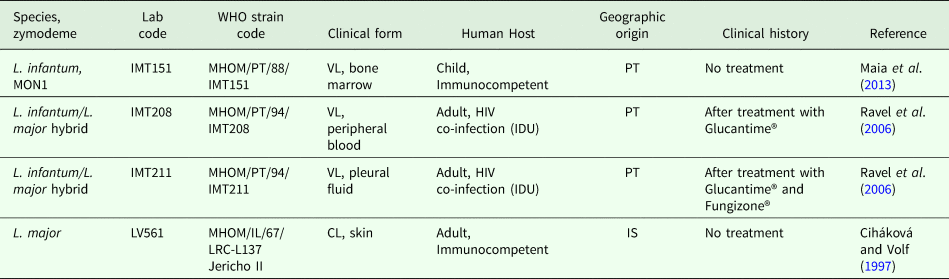
Four Leishmania strains, two L. infantum/L. major hybrids, one L. infantum (isolated by the leishmaniasis group at Instituto de Higiene e Medicina Tropical (IHMT), Lisbon) and one L. major strain were studied (Table 1). After thawing, all strains were maintained at 24 °C in Schneider's insect medium (Sigma) supplemented with 20% (v/v) heat-inactivated fetal bovine serum (FBS, BioWhittaker) and 25 µg mL−1 of gentamicin (Sigma) (henceforward named as complete Schneider). Leishmania parasites used for the in vitro experiments had <10 passages in culture to minimize the loss of virulence of the strains (Moreira et al., Reference Moreira, Santarem, Loureiro, Tavares, Silva, Amorim, Ouaissi, Cordeiro-da-Silva and Silvestre2012). Leishmania major LV561 strain was kindly provided by Prof Dr Petr Volf from the Department of Parasitology from Charles University (Prague, Czech Republic).
Characterization of the four Leishmania strains used in the study

HIV, human immunodeficiency virus; IDU, intravenous drug user; VL, Visceral leishmaniasis; CL, Cutaneous leishmaniasis; PT, Portugal; IS, Israel.
In vitro growth kinetics
At the 5th–6th day in culture (stationary phase), promastigotes were centrifuged and re-suspended in 10 mL of complete Schneider to a final density of 105 parasites mL−1 and incubated at 24 °C until the end of the experiment. The kinetics of the growth curve and parasite densities were obtained by daily counting of viable promastigotes, for 12 days, without adding new media, using a Neubauer haemocytometer (VWR). Four replicates and two independent assays were made.
In vitro stress assay
To analyse the inhibitory effect by ROS on parasite growth, parasites were exposed to hydrogen peroxide (H2O2) (Sigma). Leishmania parasites were used when the stationary phase of growth was reached (days 6–7) and adjusted to 107 promastigotes mL−1 in complete Schneider. Parasites were exposed to different concentrations of H2O2 (0–1 mm) in 96-well flat-bottomed microtiter plates and incubated at 24 °C for 2 h. Parasite viability was analysed by adding XTT solution 0.3 mg mL−1 [sodium 2,3, – bis (2-methoxy-4-nitro-5-sulfophenyl) – 5 – (phenylamino – carbonyl) – 2H – tetrazolium, Roche Diagnostics] to each well. After incubation for 18 h at 24 °C, protected from light, an orange formazan solution was formed and quantified spectrophotometrically on an enzyme-linked immunosorbent assay (ELISA) plate reader (Awareness, Stat fax® 3200, Awareness Technology Inc.) at 450 nm. Relative viability was calculated from the ratio of optical density (OD) readings in parasites exposed to compounds vs those not exposed. Two independent assays were performed with eight replicates each.
Drug susceptibility assay
To assess the susceptibility of the parasites to amphotericin B (AmB, Sigma), promastigotes were plated in 96-well flat-bottomed microtiter plates, at a final parasite density of 106 promastigotes mL−1 in RPMI 1640 medium (Sigma) supplemented with 10% FBS plus 100 U mL−1 penicillin and 100 µg mL−1 streptomycin (Sigma) (complete RPMI) in the presence of different drug concentrations (0–12 µg mL−1) for 48 h. MTT [3-(4,5-dimethyl-2-thiazolyl)-2,5-diphenyl-2H- tetrazolium bromide] colorimetric assay was used to access parasite viability. Briefly, MTT (5 mg mL−1) was added to each well, incubated for 4 h at 24 °C and centrifuged at 1800 g for 15 min. The supernatant was removed and the precipitated formazan was dissolved in dimethyl sulfoxide (DMSO). Optical density (OD) was measured spectrophotometrically at 595 nm. Relative viability was calculated from the ratio of the OD readings in parasites exposed to compounds vs those not exposed. The data were exported to GraphPad Prism 5 to calculate the average inhibitory concentrations that kill 50% of Leishmania promastigotes (IC50) using a sigmoidal dose-response model with variable slope. Three independent experiments were performed with six replicates each.
In vitro amastigote infection assay
In vitro intracellular amastigote infection rates were determined using monocytes derived from a Human histiocytic lymphoma U-937 cell line (ATCC® CRL-1593.2™) maintained in complete RPMI at 37 °C and 5% CO2. After 48 h differentiation of 5 × 10⁵ cells mL−1 into macrophages in sterile 16-chamber LabTek slides (Nunc) with 100 ng mL−1 phorbol myristic acid (PMA) (Sigma), the cells were washed once with PBS, to remove non-differentiated and non-adherent cells and further infected with 2.5 × 10⁶ promastigotes mL−1 in a 5:1 parasite-to-host cell ratio (Maia et al., Reference Maia, Rolão, Nunes, Gonçalves and Campino2007) for 48 h. Slides were gently washed once with PBS after this period, to remove non-internalized promastigotes, fixed with methanol (Sigma) and stained with Giemsa (Sigma). The Infection Index (II = % infected macrophages × no. of internalized amastigotes/infected macrophage) was estimated according to Vanaerschot et al. (Reference Vanaerschot, Maes, Ouakad, Adaui, Maes, De Doncker, Rijal, Chappuis, Dujardin and Decuypere2010). The results represent the average of two counts in two independent experiments.
In vivo infection
Female BALB/c mice, with 4–5 weeks’ age were purchased from Harlam Interfauna Ibérica SL (Barcelona, Spain) and housed at the animal facilities of IHMT under stable climatic and dietary conditions.
The virulence of Leishmania parasites was maintained by the animal passage. Promastigotes were used at days 6–7 in culture, corresponding to the highest parasite density and a high percentage of infective metacyclic promastigote forms (Almeida et al., Reference Almeida, Cuba, de Sa, Pharoah, Howard and Miles1993). Four groups (corresponding to the different Leishmania strains) of 20 randomly selected animals were inoculated both intraperitoneal and sub-cutaneous in the left footpad with 107 promastigotes mL−1 (100 and 25 µL, respectively). The control groups consisted of 20 animals inoculated with the same volume of 0.9% saline solution. Prior to infection, mice were anaesthetized with 100 µL solution of 150 mg mL−1 of ketamine (Imalgene® 1000, Rhône Mérieux) and 15 mg mL−1 of xylazin (Rompun®, Bayer). Within each treatment group (inoculated species and control), animals were randomly separated and caged together in groups of five. Animals were weighed weekly and examined for the presence of clinical signs.
At each time-point (days 14, 28, 42 and 56 post-infection) five collectively housed mice per treatment group were sacrificed. The spleen (SP), liver (LV), draining lymph nodes (LN) and skin from the inoculation site (SKI, left footpad) and from skin distant from the inoculation site (SKD, right footpad) were aseptically harvested for parasite detection and SP and SKI were also subjected to histopathological analysis. Each five mice tissue samples were treated as replicates.
Parasite detection (cultures and polymerase chain reaction)
Tissues of each animal were homogenized in complete Schneider and separated for culture in NNN (Novy, Mac Neal, Nicolle) medium (WHO, 2010) and for DNA extraction. Cultures were incubated at 24 °C and observed weekly for the presence of promastigotes up to 4 weeks, including those with samples from control mice. DNA extraction was performed from homogenates of tissues using a commercial kit according to manufacturers’ instructions (polymerase chain reaction, PCR-template Preparation kit, Roche Diagnostics). DNA was quantified (GeneQuant, Amersham Biosciences) and Internal Transcribed Spacer 1 (ITS-1) PCR was performed by using LITSR and L5.8S primers as previously described (El Tai et al., Reference El Tai, Osman, el Fari, Presber and Schönian2000; Schönian et al., Reference Schönian, Nasereddin, Dinse, Schweynoch, Schallig, Presber and Jaffe2003). DNA samples from control mice were used as negative controls, and genomic DNA samples (previously purified from the relevant Leishmania strains) were used as positive controls.
Histopathological analysis
Spleen and skin tissue slices with a thickness of 4 mm were collected from each animal, fixed in formalin and embedded in paraffin. Sections 3–5 µm thick were cut and stained with haematoxylin and eosin (H&E) and analysed by optical microscopy. Leucocytes were characterized morphologically according to previously described criteria (Silva-O'Hare et al., Reference Silva-O'Hare, de Oliveira, Klevorn, Almeida, Oliveira, Atta, de Freitas and Dos-Santos2016).
The densities of different leukocyte populations were scored as follows: 0 = no cells, 1 = the less frequent leukocyte population observed in most of the examined × 400-magnified microscopic fields, 2 = the second more frequent leukocyte population observed in most of the examined × 400-magnified microscopic fields, and 3 = the most frequent leukocyte populations observed in most of the examined × 400-magnified microscopic fields. Furthermore, the relative size of the white pulp lymphoid follicles and the number of lymphoid follicle per mm2 were estimated by morphometry using the Image ProPlus (Media Cibernetics).
Statistical analysis
‘Statistical Package for Social Sciences’ (SPSS®) software version 21.0 was used with Friedman non-parametric test to compare the viability percentages between parasite strains in the H2O2 concentration gradient. When the null hypothesis was rejected, multiple comparisons were implemented to determine which strains differ from each other, using a significance level of 5% (P < 0.05). Statistical significance (P < 0.05) of amphotericin B IC50, and infection index was assessed by one-way ANOVA followed by Bonferroni's t test using GraphPad Prism 5 (GraphPad Software, Inc.).
MedCalc® software version 18 was used with Friedman non-parametric test to compare the parasite presence/absence in different tissues infected with the studied strains. When the null hypothesis was rejected, multiple comparisons were implemented to determine which strains differ from each other, using a significance level of 5% (P < 0.05).
The histopathological data were presented as relative (percentage values) to the control group estimates. The differences of scores among the Leishmania-infected groups were assessed by Kruskall–Wallis test followed by Dunn's Multiple Comparison Test, with statistical significance defined by P < 0.05 using GraphPad Prism 5.
Results
In vitro assays: growth kinetics, oxidative stress, drug susceptibility and intracellular infection
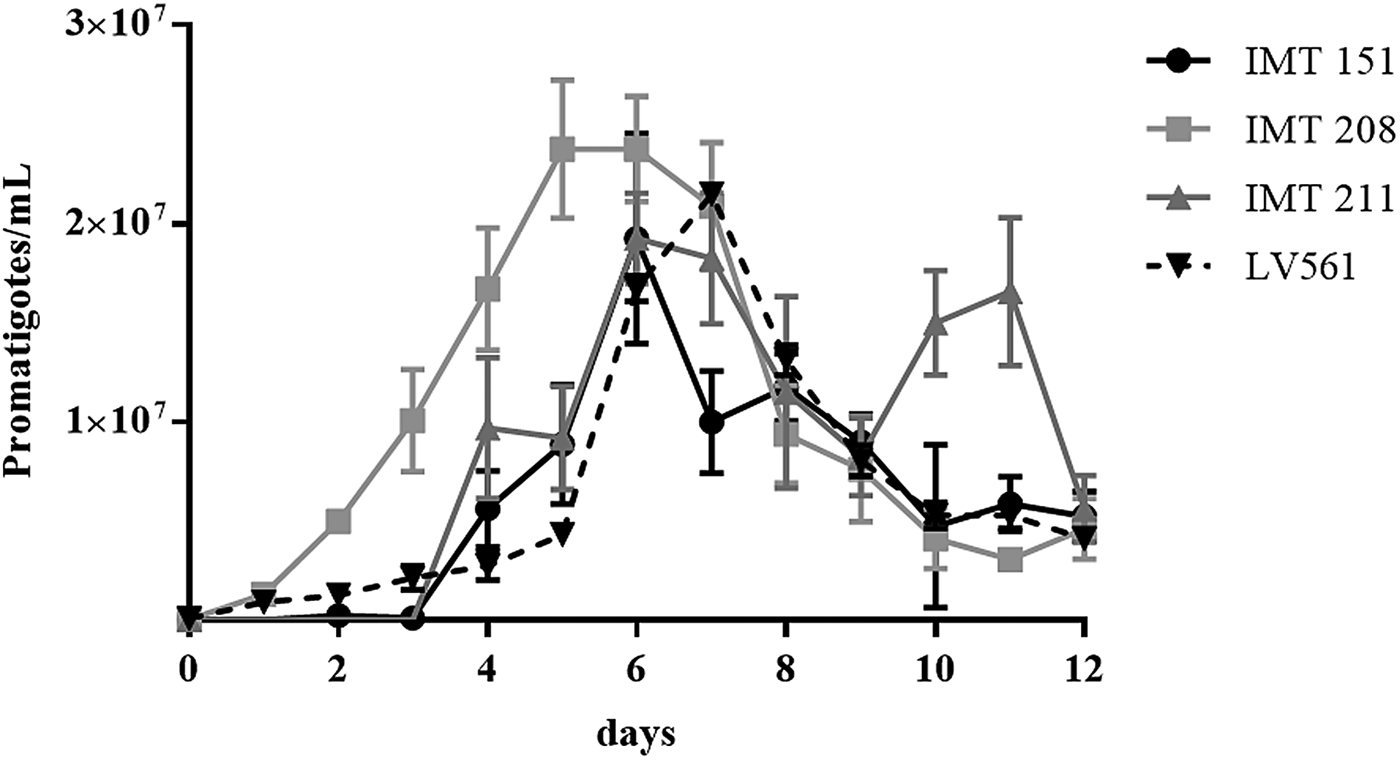
Growth kinetics and promastigote densities of L. infantum/L. major hybrids and of two putative parental L. major and L. infantum strains were compared during 12 days in the culture medium. Hybrid IMT 208 reached the highest parasite density between the 5th and 6th days (2.38 × 10⁷ parasites mL−1) (Fig. 1). Hybrid IMT 211 presented lower densities than hybrid IMT 208 until peak at days 5–6. Between days 10 and 11 it presented a second growth peak.
Growth kinetics of the studied Leishmania strains L. infantum (IMT 151), L. infantum/L. major hybrids (IMT 208, IMT 211) and L. major (LV561). Results are represented by mean values and standard error of the mean (s.e.m.) of four replicates and two independent assays.

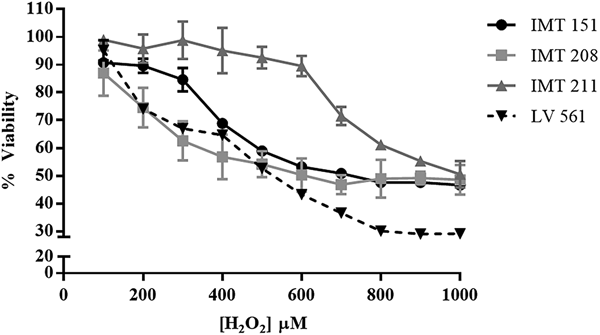
In general, all studied strains were susceptible to hydrogen peroxide exposure in a concentration-dependent manner (Fig. 2). The viability of hybrid IMT 208 was significantly lower than hybrid IMT 211 (P < 0.001). IMT 211 showed to be significantly less susceptible than the putative parental species. At the highest concentration of H2O2 (1 mm), all strains, with the exception of L. major LV561, showed a viability of approximately 50%.
Parasite viability (%) of the L. infantum (IMT 151), L. infantum/L. major hybrids (IMT 208, IMT 211) and L. major (LV561) strains exposed to hydrogen peroxide (H2O2). Results are represented by mean values and s.e.m. of eight replicates and two independent assays.

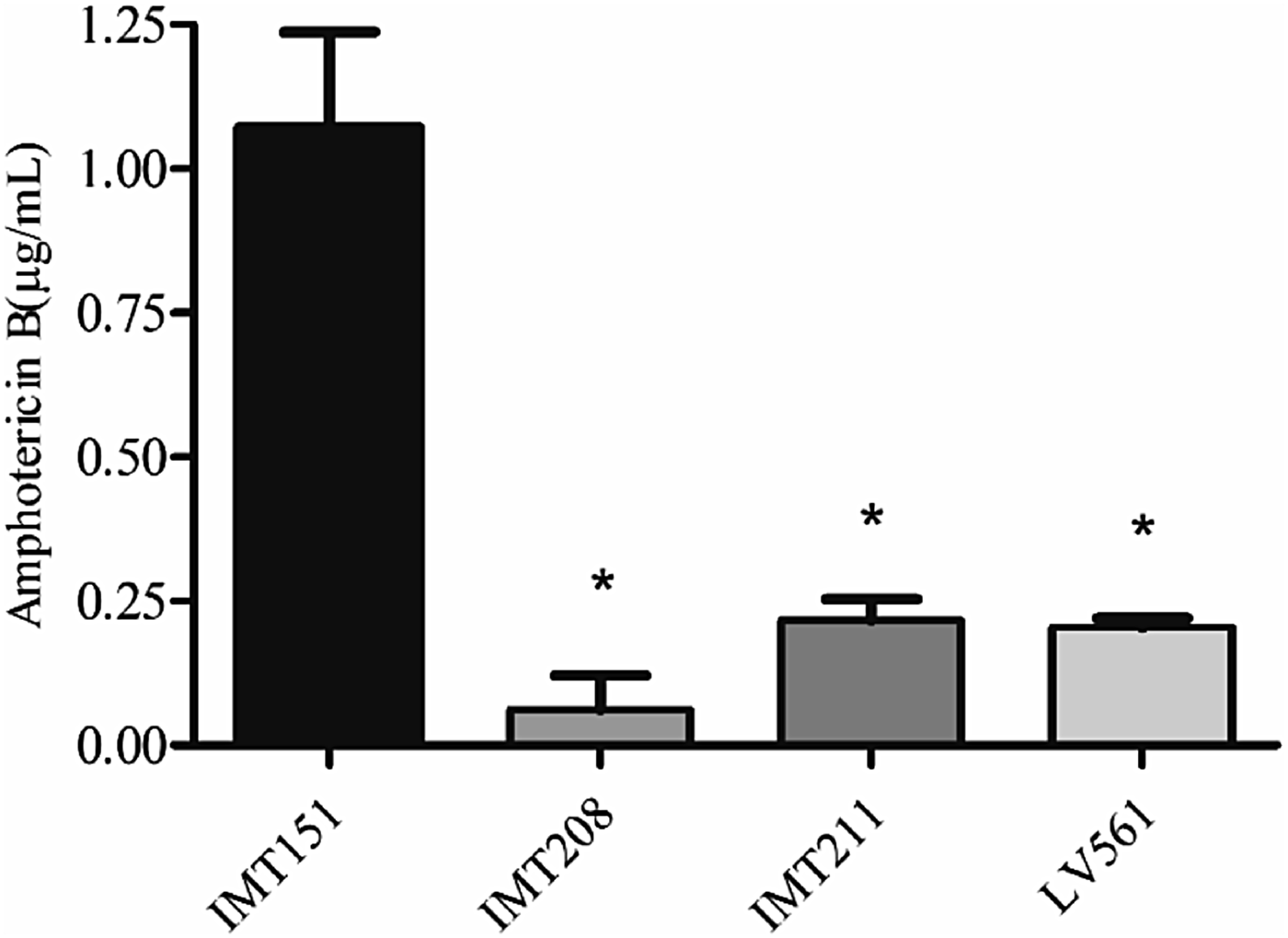
When exposed to AmB, hybrids IMT 208 and IMT 211, showed a significant higher susceptibility (IC50 = 0.06 and 0.22 µg mL−1, respectively) (P < 0.0001), in comparison with L. infantum parental strain (IMT 151, IC50 = 1.07 µg mL−1) (Fig. 3). No significant differences were observed between hybrids strains and L. major strain.
Amphotericin B IC50 for L. infantum (IMT 151), L. infantum/L. major hybrids (IMT 208, IMT 211) and L. major (LV561) strains. Results are represented by mean values and s.e.m. of six replicates and three independent assays. Significant differences between IMT151 and the other strains are indicated as *, P < 0.0001.

For the macrophage infection, no significant differences were observed between the four strains (Fig. S1).
In vivo infection
Small lesions and swelling were observed in the inoculation site of mice footpad's infected with the hybrid IMT 208 and L. major strains from day 28 onwards. Until day 42, all animals presented similar weight. At day 56 it was observed a general decrease in weight in all infected groups in comparison with control mice (Fig. S2).
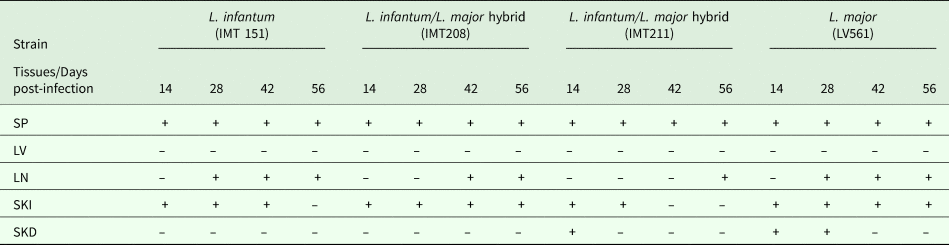
Independently of the strain, SP and SKI were the first organs where parasites were detected (day 14) and remained until the end of the experiment (day 56) with the exception of animals infected with L. infantum IMT 151 and hybrid IMT 211 on the SKI (Table 2). Concerning the number of positive animals, in the SP and SKI, statistical differences (P < 0.05) were found between the groups of animals infected with the parental strains (L. infantum IMT 151 and L. major LV561), mainly at days 14, 42 and 56. Moreover, hybrid IMT 211 infected group showed to be statistically different from the parental ones at days 42 and 56. At days 14 and 28 in the SKD, a significant higher number of positive animals was detected in the L. major infected group (LV561) (P < 0.05). At day 28 physical parasites or parasite DNA were detected in LN of animals from the L. infantum and L. major infected groups, persisting until the end of the experiment. However, in this organ (LN) mice infected with hybrid strains, parasites were only detected in LN at a later stage (days 42 and 56, respectively). Throughout the study, no Leishmania parasites were detected in the LV of all studies animals.
Detection of parasites through NNN (Novy, MacNeal and Nicolle medium) cultures and PCR from BALB/c mice inoculated with different Leishmania strains and necropsied at 14, 28, 42 and 56 days post-infection

SP, spleen; LV, liver; LN, lymph nodes; SKI, skin from the inoculation site; SKD, skin distant from the inoculation site; +, positive culture or DNA amplification in at least 1 out of 5 animals; –, negative cultures or no DNA amplification.
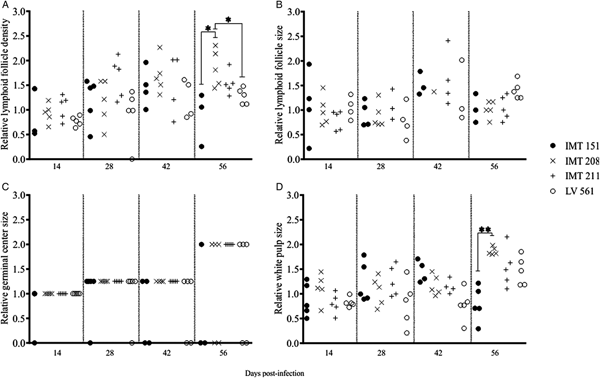
During the course of the infection, spleen tissues revealed a general increase in lymphoid follicle density (LFD) (Fig. 4A). After day 42, LFD decreased in spleens of animals infected with putative parental L. infantum IMT 151. In contrast, LFD of animals infected with hybrid IMT 208 significantly persisted at high levels in comparison with their putative parents (P < 0.05). The increased LFD was accompanied by an increase of relative lymphoid follicle size, reaching a maximum at day 42 and returning to a lower size at day 56, with exception of L. major LV561 (Fig. 4B). In addition, germinal centre size showed to be relatively constant throughout the course of infection (Fig. 4C). Infection with hybrids and L. infantum IMT 151 resulted in a general increase in white pulp size (Fig. 4D), with hybrid IMT 208 presenting 2-fold increase in comparison with its putative parent L. infantum.
Time-course progression of histological spleen changes during infection period. Values are relative to control group. Results for each time-point represent samples measurements from 3 to 5 animals. (A) Relative lymphoid follicle density. Significant differences between hybrid IMT 208 and L. infantum or L. major are indicated as *, P < 0.05; (B) Relative lymphoid follicle size; (C) Relative germinal centre size; (D) Relative white pulp size. Significant differences between hybrid IMT 208 and L. infantum are indicated as **, P < 0.01.

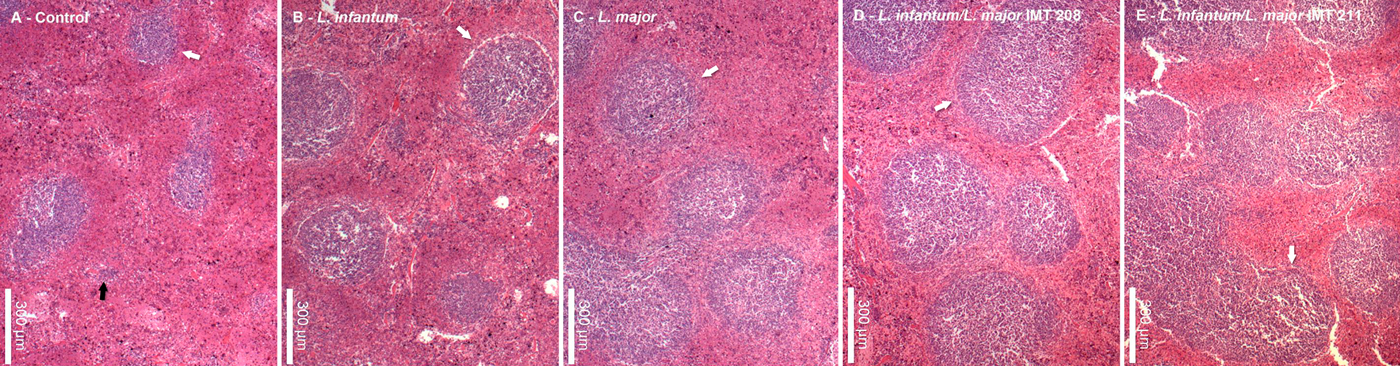
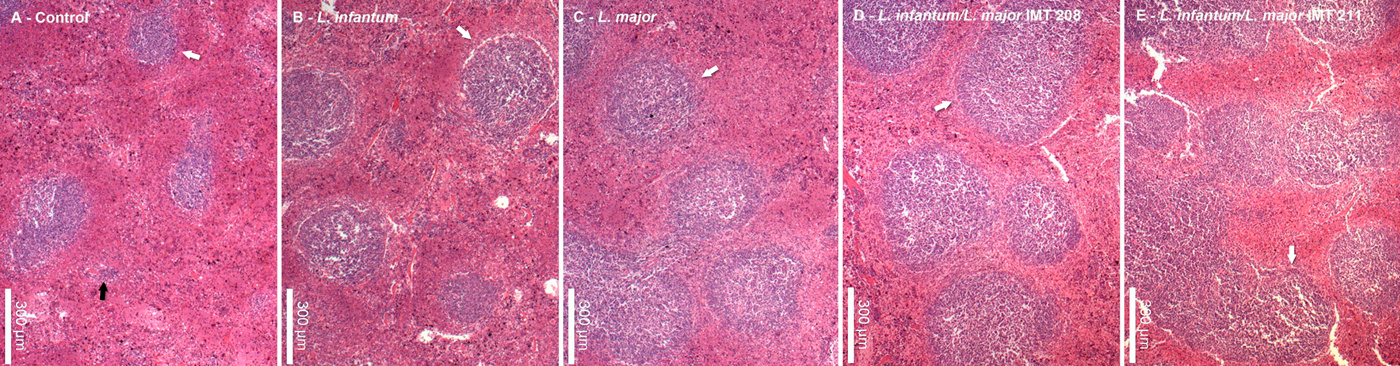
Furthermore, infection with hybrid strains was associated with lymphoid follicle hyperplasia and increased B cells (follicular compartment) of the spleen (Fig. 5).
Histopathological alterations of spleen in mice infected with studied Leishmania strains at 56 days post-infection (A) Control spleen with normal white pulp containing small lymphoid follicles (white arrow) and periarteriolar lymphoid sheath (black arrow) commonly distributed; (B) L. infantum IMT 151 and (C) L. major LV 561 infected spleen: minor/slight lymphoid follicles hyperplasia (white arrow); (D) L. infantum/L. major IMT 208 hybrid and (E) L. infantum/L. major IMT 211 hybrid infected spleen: prominent white pulp and lymphoid follicle hyperplasia (white arrow).
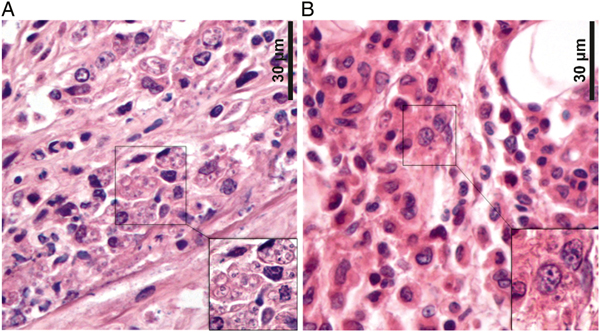
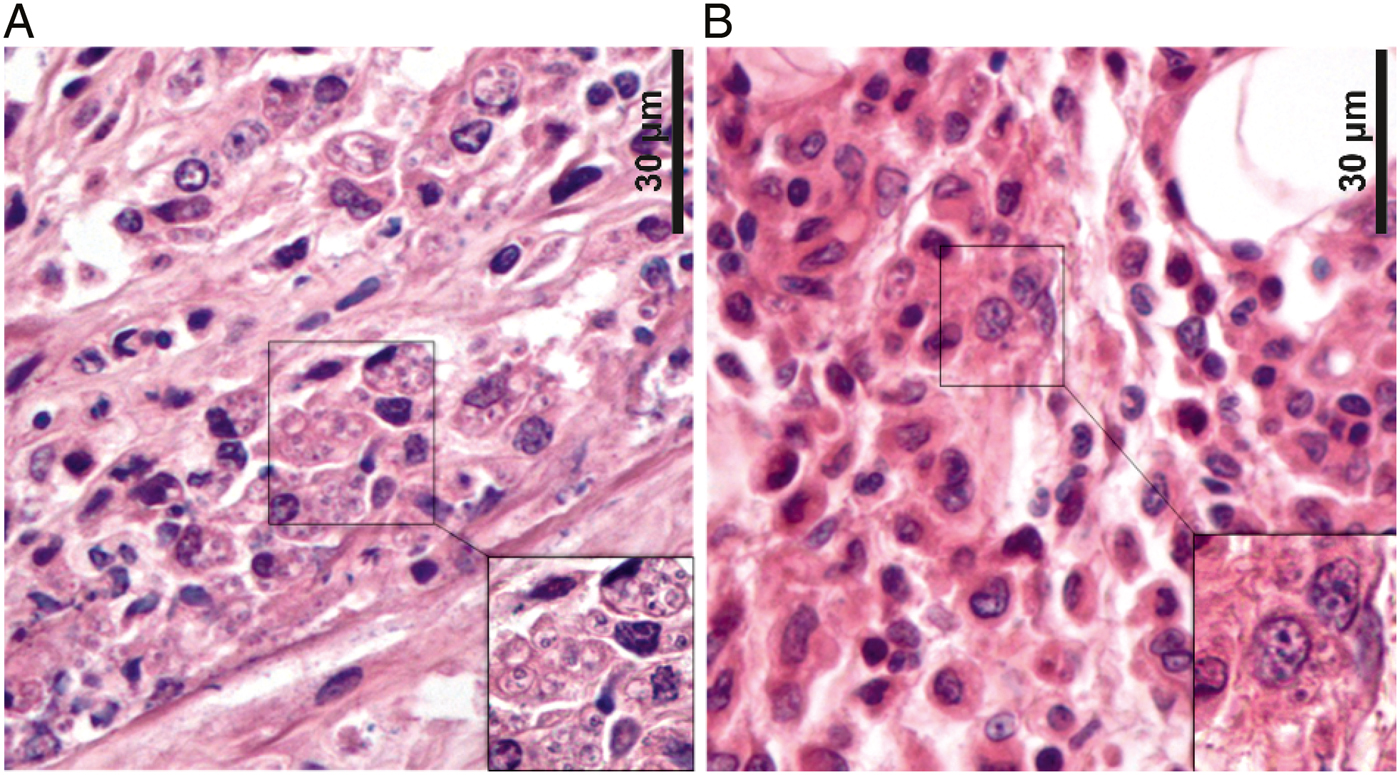
At day 56 monocytic and macrophage infiltrations containing amastigote forms were observed in the skin of mice infected with hybrid strains, as well as in L. major infected mice, with high inflammatory infiltrates with heavily amastigote-infected macrophages (Fig. 6). In contrast, no infiltrates were found in L. infantum infected mice (data not shown).
Representative image of histopathological alterations of skin of mice at 56 days post-infection with (A) L. major LV 561: a monomorphic infiltrate of macrophages containing many Leishmania amastigotes and (B) L. infantum/L. major hybrid IMT 208: a pleomorphic leukocyte inflammatory infiltrate containing some Leishmania amastigotes infected macrophages. The data is representative of three animals of each group.
Discussion
Genetic exchange between species and strains has been documented for the trypanosomatids that cause human disease. Namely, in T. cruzi two of the six major circulating genetic lineages are hybrids that are frequently isolated from humans in regions where chronic Chagas disease is particularly severe (Lewis et al., Reference Lewis, Llewellyn, Yeo, Acosta, Gaunt and Miles2011). Although genetic exchange in Leishmania is predicted to be a rare event, with an estimated frequency of ≈2.5 × 10⁻⁵ or less per cell (Akopyants et al., Reference Akopyants, Kimblin, Secundino, Patrick, Peters, Lawyer, Dobson, Beverley and Sacks2009), it is nowadays considered that Leishmania presents a mix - mating model of reproduction with clonality occurring in the vertebrate and invertebrate hosts, and genetic recombination within the insect vector (Rougeron et al., Reference Rougeron, De Meeûs and Bañuls2017). Many questions have been raised concerning hybrids, such as the occurrence and frequency of genetic exchanges as well as their plasticity and maintenance in adverse environments.
In the present work, we compared the phenotypic behaviour of two L. infantum/L. major hybrid strains, and the two putative parental species. Phenotypic characterization can be relevant for associating differences in parasites’ growth, virulence and plasticity. Promastigotes from hybrid strains presented higher capacity to grow in culture than the two putative parental species, with special emphasis to hybrid IMT 208 which presented the earliest and highest parasite density. In addition, the hybrid IMT 211 was able to survive in culture with high density and for a longer period, suggesting that these hybrids may present differences in nutrient requirements, and/or possibly altered tolerance to medium acidification, as observed in other Leishmania species such as L. donovani, L. major and L. mexicana (Zilberstein and Shapira, Reference Zilberstein and Shapira1994; Vanaerschot et al., Reference Vanaerschot, Maes, Ouakad, Adaui, Maes, De Doncker, Rijal, Chappuis, Dujardin and Decuypere2010). Concerning natural Leishmania hybrids, just a limited number of in vitro phenotypic studies have been reported (Torrico et al., Reference Torrico, De Doncker, Arevalo, Le Ray and Dujardin1999; Cortes et al., Reference Cortes, Esteves, Maurício, Maia, Cristovão, Miles and Campino2012). In a study performed by Cortes et al. (Reference Cortes, Esteves, Maurício, Maia, Cristovão, Miles and Campino2012), new World L. peruviana/L. braziliensis hybrids displayed higher plasticity and heterogeneous growth phenotypes, which spanned the growth rates of their putative parental species. Moreover, hamsters infected with these L. peruviana/L. braziliensis hybrids presented the highest parasite densities and aggressive relapses at a later stage of infection. In another study, experimental hybrid clones obtained by co-infection of L. infantum and L. major parasites within the sand fly species Lutzomyia longipalpis displayed increased in vivo fitness compared with putative parental strains, suggesting a potential higher transmission capacity (Romano et al., Reference Romano, Inbar, Debrabant, Charmoy, Lawyer, Ribeiro-Gomes, Barhoumi, Grigg, Shaik, Dobson, Beverley and Sacks2014).
ROS are a relevant host biochemical parameter for the elimination of a variety of intracellular pathogens, such as Leishmania, which faces different stresses after phagocytosis by macrophages. Thus, the viability of parasites in the presence of exogenous H2O2 was assessed here. In general, all studied strains were sensitive to H2O2 in a dose-dependent manner. Interestingly, hybrid IMT 211 displayed a higher resilience to different H2O2 concentrations, suggesting the potential for a specific selective advantage when faced with host-derived oxidative radicals. Contrastingly, hybrid IMT 208 presented a response to H2O2 similar to that of the parental species.
To evaluate the drug susceptibility of hybrid strains in comparison with their putative parents, AmB was tested on promastigotes. In our study, IC50 of hybrid strains was significantly lower to that observed for the L. infantum parental strain IMT 151, whereas Maia et al. (Reference Maia, Nunes, Marques, Henriques, Rolão and Campino2013) observed the opposite. It is likely that a combination of strains’ subculturing passages as well as AmB formulation, could explain these differences. Nevertheless, it is clear that hybrid IMT 208 and IMT 211 promastigotes present a susceptibility to AmB that is similar to L. major.
Footpad inoculation of stationary phase promastigotes of the L. major parental strain led to rapid lesion development, similar to that observed elsewhere (Romano et al., Reference Romano, Inbar, Debrabant, Charmoy, Lawyer, Ribeiro-Gomes, Barhoumi, Grigg, Shaik, Dobson, Beverley and Sacks2014). The dermotropism of L. major parental species is evidenced by the significant (P < 0.05) dissemination of parasites to the right footpad in early time-points (Table 2). Interestingly, although L. major parasites have been detected in mice’ spleens, they were not found in the livers. In other studies, L. major DNA has also been detected in internal organs of North African hedgehogs from Algeria and Tunisia (Tomás-Pérez et al., Reference Tomás-Pérez, Khaldi, Riera, Mozo-León, Ribas, Hide, Barech, Benyettou, Seghiri, Doudou and Fisa2014; Chemkhi et al., Reference Chemkhi, Souguir, Ali, Driss, Guizani and Guerbouj2015) and in the liver and spleen of Baluchistan gerbils and brown rats (Motazedian et al., Reference Motazedian, Parhizkari, Mehrabani, Hatam and Asgari2010). In contrast, even though parasites were detected and recovered from L. infantum and hybrids infected tissues, no skin lesions were detected up to 8 weeks’ post-infection (data not shown). Similar results were observed following experimental cross-species mating efforts used to generate L. infantum/L. major hybrids, where upon infection of BALB/c mice no lesions were observed for either L. infantum parental strain or hybrid infected tissues (Romano et al., Reference Romano, Inbar, Debrabant, Charmoy, Lawyer, Ribeiro-Gomes, Barhoumi, Grigg, Shaik, Dobson, Beverley and Sacks2014). No parasites were detected in the skin from the inoculated footpad of animals infected with L. infantum IMT 151 and hybrid IMT 211 after day 42, whereas parasites were detected throughout the whole course of infection in hybrid IMT 208 and L. major infected animals. Together, these data suggest that hybrids display differences in their ability to grow in the skin or viscera of mice, with hybrid IMT 208 being significantly (P < 0.05) more dermotropic than hybrid IMT 211. IMT 211 presented a viscerotropic behaviour, similar to that of the L. infantum IMT 151, whereas hybrid IMT 208 presented a dermotropic behaviour like that more closely mimics L. major LV561. The phenotypic diversity noted between the hybrids analysed here is consistent with previous observations made within the Viannia complex (Cortes et al., Reference Cortes, Esteves, Maurício, Maia, Cristovão, Miles and Campino2012).
Visceral leishmaniasis is associated with spleen white pulp hyperplasia in susceptible hosts (Veress et al., Reference Veress, Abdalla and El Hassan1983; Keenan et al., Reference Keenan, Hendricks, Lightner and Johnson1984). Surprisingly, livers of animals infected with L. infantum seem to lack established infections or have perhaps controlled the infections in an early phase, as we were not able to isolate parasites nor detect parasite DNA in this tissue. This observation could also be related to other factors such as inter-, intra-specific variations or even due to different strain tissue preferences (Garin et al., Reference Garin, Sulahian, Pratlong, Meneceur, Gangneux, Prina, Dedet and Derouin2001; Méndez et al., Reference Méndez, Fernández-Pérez, Santín, De La Fuente, Cuquerella, Gómez-Muñoz and Alunda2001). Overall, our data suggest that the hybrid strains induce a strong white pulp hyperplasia affecting predominantly B-lymphocyte compartments in splenic tissue. In a recent study, it was observed that livers of L. donovani infected BALB/c mice presented early granulomatous lesions with T- and B-cells being predominant in more advanced granuloma stages (Salguero et al., Reference Salguero, Garcia-Jimenez, Lima and Seifert2018). Moreover, evidence exists that lymphoid disorganization and atrophy may follow the hyperplasia in severe forms of visceral leishmaniasis (Veress et al., Reference Veress, Abdalla and El Hassan1983; Santana et al., Reference Santana, Vassallo, de Freitas, Oliveira, Pontes-de-Carvalho and dos-Santos2008). Apoptosis of T-lymphocytes and follicular dendritic cells may be involved in this process (Smelt et al., Reference Smelt, Engwerda, McCrossen and Kaye1997; De Lima et al., Reference De Lima, Fattori, de Souza, Eugenio, dos Santos, Rozza and Machado2012). Further studies are needed to investigate if the more intense hyperplasia induced by these hybrid strains contributes to a faster or deeper white pulp disruption.
Calvo-Álvarez et al. (Reference Calvo-Álvarez, Álvarez-Velilla, Jiménez, Molina, Pérez-Pertejo, Balaña-Fouce and Reguera2014) experimentally obtained a L. infantum hybrid lineage which presented a lower virulence and parasite load in the spleen and liver, in comparison with its parental strain. Moreover, Romano et al. (Reference Romano, Inbar, Debrabant, Charmoy, Lawyer, Ribeiro-Gomes, Barhoumi, Grigg, Shaik, Dobson, Beverley and Sacks2014) showed that L. major and L. infantum hybrid progeny seem to have differentially inherited genes controlling the respective tissue tropisms of their parents, indicating that at least one of the parental strains is heterozygous for these genes. Interestingly, Volf et al. (Reference Volf, Benkova, Myskova, Sadlova, Campino and Ravel2007) experimentally infected P. papatasi with one of the hybrid strains used in this study (IMT 208) and found out that hybrids express L. major lipophosphoglycan (LPG) which present a crucial role in the attachment to midgut and survival within the vector. LPG is a known virulence factor with a role in skin inflammation and pathology (Villaseñor-Cardoso et al., Reference Villaseñor-Cardoso, Salaiza, Delgado, Gutiérrez-Kobeh, Pérez-Torres and Becker2008; Zamora-Chimal et al., Reference Zamora-Chimal, Fernández-Figueroa, Ruiz-Remigio, Wilkins-Rodríguez, Delgado-Domínguez, Salaiza-Suazo, Gutiérrez-Kobeh and Becker2017). It should be emphasized that these hybrids have shown plasticity in terms of their general behaviour within the different phenotypic parameters, suggesting that they might have acquired additional genetic features conferring environmental adaptation mechanisms to evade/resist to the immune response of their host cells.
Our study has shown that the genetic differences are revealed by the diversity of the phenotypic characteristics, highlighting the relevance in characterizing the fitness and genetic background of natural hybrids. To a broader extent, it may impact on the prevention and case management in terms of treatment approaches and disease progression. Although one strain of each parental visceral and cutaneous species was evaluated, other strains from the same species might differ on their genetic identity and phenotypic diversity with implications beyond what was perceived in this study. Nevertheless, this exploratory study was done in order to find trends of phenotypes preferences and profiles, thus similar experiments using different strains as well as clonal lineages are advised. Moreover, we believe that other different characteristics are to be expected which may lead to adaptation to new ecological niches, vectors and even hosts, including humans and domestic animals. With further insight into the complexity, prevalence and significance of Leishmania hybridization, we might expect to observe novel epidemiological trends, clinical outcomes and therapeutical responses. To further investigate the full consequences of the genetic background of Leishmania natural hybrids, and their eco-epidemiological implications, more studies should be carried out which should shed some light on the traits of these strains.
Supplementary material
The supplementary material for this article can be found at https://doi.org/10.1017/S0031182018001993.
Author ORCIDs
S. Cortes 0000-0001-5850-6950 and A. Albuquerque-Wendt 0000-0001-5794-5417.
Acknowledgements
The authors would like to thank José Manuel Cristovão for excellent technical assistance, Prof. Philipp Sibbertsen (Leibniz Universität Hannover) for statistical advice and Dr Ciaran McCoy for the English review of this manuscript.
Financial support
This work was supported by funds from Fundação para a Ciência e a Tecnologia (FCT), Ministério da Ciência, Tecnologia e Ensino Superior to the project PTDC/CVT/112371/2009 and GHTM (UID/Multi/04413/2013) and Rede CYTED (RIMLEV Propuesta P210RT0656). S. Cortes and C. Maia have the support of FCT, through the Investigator Starting Grants IF/0773/2015 and IF/01302/2015, respectively.
Conflict of interest
None.
Ethical standards
All procedures with animals were carried out according to the Ethics Committee of the IHMT and Portuguese Veterinary Official Authorities (‘Direcção Geral de Veterinária’, approval ID 1443/DSSPA) and followed the guidelines of the Portuguese legislation (Lei no 113/2013, 7.8).