


I. Introduction
Gatekeepers have traditionally been understood as third parties who can prevent wrongdoing by withholding support, or as intermediaries who put their reputation on the line by vouching for their clients to the market. Consider, for example, lawyers refusing to sign a fraudulent opinion or “Magic Circle” law firms charging a premium to put their name on securities offering documents. While these traditional understandings are conceptually foundational, gatekeeping theory has not adequately accounted for how gatekeepers’ roles change in contexts involving delegation, specifically where a primary gatekeeper (the “principal”) certifies secondary gatekeepers (“agents”) to whom it delegates gatekeeping functions.Footnote 1 This results in a hierarchical structure whereby the agents’ regulatory authority is granted by the principal, and both principals and agents act together as traditional gatekeepers by providing or withholding support to would-be entrants in the market or regulatory regime.
The contribution of this article is, first, to develop the gatekeeper literature by illustrating and expounding the concept of “delegated gatekeeping”, primarily through a case study of the London Stock Exchange’s Alternative Investment Market (“AIM”), and, second, to explain regulatory systems that permit or require the delegation of roles between principal and agent gatekeepers in a hierarchical relationship.Footnote 2 This differs from other contexts involving gatekeepers and delegation, such as where a regulatory agency delegates third-party enforcement responsibilities to private actors, who exercise delegated regulatory authority but do not also act as “gatekeepers” in the traditional sense by controlling entry to the same market or regulatory regime.Footnote 3 In contrast, delegated gatekeeping describes regulatory systems where a principal gatekeeper exercises regulatory authority over agent gatekeepers, such as a stock exchange which licenses compliance advisory firms that are mandatory for listed companies to retain, and both principals and agents permit or refuse access to the market or regulatory regime to would-be entrants, exercising regulatory authority in parallel over the same participants. It has distinct properties because would-be participants require the support of principal and agent gatekeepers to access the market or regulatory regime.
Delegated gatekeeping of this sort occurs in multiple regulatory contexts, notably in financial markets self-regulation (e.g. stock exchanges requiring issuers to have listing sponsors); in regulated professions (e.g. licensing bodies such as the UK Solicitors Regulation Authority, UK Architects Registration Board or US State Boards of Accountancy delegate supervisory duties to fully qualified lawyers, architects and Certified Public Accountants (“CPAs”) to oversee the training and experiential requirements of would-be lawyers, architects and CPAs);Footnote 4 and in other areas relying on a mixture of public and private (or self-) regulation such as certain environmental certifications (e.g. the “Energy Star” certification administered by the US Environmental Protection Agency).Footnote 5
Why does delegated gatekeeping of this sort merit closer analysis? First, because the roles and incentive structures of agent gatekeepers are under-theorised. In the context of AIM, this article demonstrates that when principal gatekeepers delegate their core functions to agent gatekeepers, agents take on new roles such as reputational stewardship (safeguarding the principal’s reputation), monitoring participants and whistle-blowing (to minimise the risk of regulatory breach), and sharing regulatory authority with the principal (such as rule interpretation and enforcement).
The primary advantage of delegated gatekeeping should be a lower-cost regulatory system, as delegation to agent gatekeepers lowers the monitoring costs for principals, requiring fewer regulatory resources. However, decreased monitoring and less granular oversight by principals increases the risk of gatekeeping failure, when agents fail to prevent misconduct by market participants, or when either agents or participants fail to comply with regulatory standards. Any gatekeeping failure, even if due to a negligent agent, is ultimately a failure by both the principal (who certified the agent) and the agent. As the perceived fault for gatekeeping failure falls on both principal and agent, though to differing degrees, principal gatekeepers can impose additional roles on agents to lower the reputationally damaging risk of gatekeeping failure.
This article demonstrates that the ingenuity of delegated gatekeeping on AIM lies in the way it harnesses the commercial and reputational incentives of agent gatekeepers so that agent gatekeeping becomes a privilege. In the context of AIM, principals do not need to compensate agents in order for them to perform their roles because agents desire the follow-on benefits of being a gatekeeper, such as the ability to cross-sell more lucrative corporate advisory services or generate fundraising fees. This structure lowers the overall regulatory cost, as principals do not need to charge regulated participants for the gatekeeping roles they delegate, and makes entry more accessible. However, incentivising agent gatekeepers through follow-on benefits (commercial and reputational incentives) creates conflicts of interest when diligent gatekeeping by agents does not coincide with maximising these follow-on benefits. This creates a dilemma: without any potential conflict of interest, the agent has no incentive to serve as a gatekeeper because it has no follow-on benefits. But with too strong a conflict of interest, the agent gatekeeper could perform its roles negligently or dishonestly. How then should delegated gatekeeping get the balance right?
This brings us to the second reason why delegated gatekeeping merits closer analysis, which is its potential for a replicable, lower-cost regulatory alternative in markets where resource-constrained regulators seek to encourage more entry and are not averse to leveraging private actors who have the competence and appropriate incentives to co-certify and co-supervise participants. This requires, however, further examination in practice (not only theory) of the roles and incentive structures of agent gatekeepers, including elaboration of the conditions for successfully delegating gatekeeping. Therefore, the second and main contribution of this article is to develop the literature on AIM, a London-based stock exchange for small to medium sized enterprises (“SMEs”), primarily relying on interviews and other qualitative evidence. By conventional measures of listings and fundraising AIM is the most successful SME market in Europe.
The London Stock Exchange Plc. (the “Exchange”), the principal gatekeeper, requires AIM-listed companies to retain a regulatory advisory firm called a “nominated adviser” (“Nomad”) at all times, which acts as an agent gatekeeper. AIM has previously come under fire, in the height of its boom days surrounding 2007, for being “the limiting example of reliance on a gatekeeper”.Footnote 6 This article undertakes a fresh assessment in light of more recent evidence, and seeks to better understand what roles Nomads perform and how reputational incentives contribute to AIM’s governance structure.
This article suggests that the reputational incentives of Nomads as agent gatekeepers can partially alleviate their conflicts of interest by making the consequences of negligence or misconduct more financially costly and that such incentives therefore play an important role in the success or failure of delegated gatekeeping. It supports this argument with evidence demonstrating how the incentive structures underlying AIM’s delegated gatekeeping have developed significantly since 2007, which has improved Nomads’ quality as agent gatekeepers by ameliorating (not eliminating) their conflicts of interest and giving them more “skin in the game” to prevent wrongdoing. This does not imply that Nomads’ conflicts have been sufficiently alleviated in absolute terms – a number of legitimate concerns remain, with proposals suggested in the conclusion – but it is argued that reputational incentives have ameliorated Nomads’ conflicts relative to historical levels circa 2007.
What generalisable lessons can AIM teach us as a prominent example of delegated gatekeeping? First, it is argued that principal gatekeepers can influence (though not control) agent gatekeepers’ incentives to perform their roles diligently through regulatory mechanisms such as closer supervision (though this increases regulatory cost) and more robust reporting duties. The number of agent gatekeepers should be limited to strengthen their reputational incentives, resulting in each agent capturing more of the follow-on benefits from acting as a gatekeeper, but not having so few as to eliminate the positive effects of competition to licence entrants. Bonding mechanisms can strengthen agents’ incentives to perform their delegated roles diligently, such as by encouraging profitable interactions between agents and the principal in parallel contexts (such as other markets) in which agents seek to remain active. Employees can be more closely bonded to agent gatekeeper firms by designating responsible leads or certified employee statuses within these firms and limiting the transferability of their lead status or employment certification, in order to align the reputational incentives of gatekeeper firms and their employees more closely. It is further argued that principal gatekeepers should implement strict, well-publicised discipline when agents are negligent or dishonest in order to leverage reputational sanctions, coupled with full and transparent disclosure of agents’ conflicts of interest.
This article is structured as follows. Section II develops the concept of delegated gatekeeping, putting forth a theoretical explanation for the role of principal gatekeepers delegating responsibilities to agent gatekeepers over whom they exercise regulatory authority. Next, Section III contextualises AIM’s regulatory environment and sets out the new roles that Nomads assume as agent gatekeepers, such as reputational steward and rule interpreter. This is followed in Section IV by a discussion of conflicts of interest, which is a core challenge for all gatekeepers and particularly pronounced in delegated gatekeeping. In Section V, a brief theoretical account is then provided of how reputational incentives might be expected to alleviate agent gatekeepers’ conflicts of interest. Sections VI and VII present a wide range of empirical evidence on Nomads, including interview data and summary statistics from hand-collected data on Nomads and brokers. Finally, the article concludes in Section VIII with an extended analysis of the evidence and a list of generalisable conditions for successful delegated gatekeeping.
II. Delegated Gatekeeping
A. Background to Gatekeepers
Gatekeepers are traditionally understood as private, third-party actors that can prevent misconduct by withholding support (e.g. certification) or cooperation.Footnote 7 Gatekeepers may withhold their certification or support for misconduct because of potential exposure to criminal or civil sanctions, a concept known as “gatekeeper liability”.Footnote 8 More simply, gatekeepers may also prevent misconduct because of their own commercial incentives to do so.Footnote 9 Whistle-blowing has been distinguished from the strategy of gatekeeper liability because it goes beyond merely withholding the necessary support for misconduct.Footnote 10
Under this traditional conception, the term “gatekeepers” refer to third parties “who can shut the gate to a transaction”,Footnote 11 with the classic examples being an auditor or lawyer who can prevent a fraudulent sale of securities by withholding a certification or written opinion.Footnote 12 More recent literature has focused on the problems that can arise when multiple gatekeepers perform their functions in tandem – such as a confluence of lawyers, accountants, credit ratings agencies and securities analysts advising on only small aspects of the same transaction and creating “gaps in gatekeeper oversight”.Footnote 13
A second understanding of gatekeeping in the capital markets context, where publicly listed companies issue shares to investors, is that a gatekeeper is “an agent who acts as a reputational intermediary to assure investors as to the quality of the ‘signal’ sent by the corporate issuer”.Footnote 14 Consider for example a securities analyst who publishes a “buy” recommendation for a company’s shares. The insight is that gatekeepers are “repeat players” whose essential business is to “rent” out their reputation to clients in need of certification or support to transact in the market.Footnote 15 For this reason, a gatekeeper without high reputational capital (such as an analyst without a successful track record) cannot credibly offer certification or verification services to third parties such as investors.Footnote 16
B. Defining “Delegated Gatekeeping”
In systems of delegated gatekeeping, a principal gatekeeper controls access to the market or regulatory regime for agent gatekeepers and all regulated parties. This principal gatekeeper may also make and enforce the rules governing the market, and can be a public or a private actor.Footnote 17 Crucially, the principal gatekeeper delegates revocable regulatory authority to agent gatekeepers, creating a hierarchical relationship between principal and agent. Regulated parties require the continued support of both principal and agent gatekeepers in order to join and remain in the market (as illustrated in Figure 1).
Delegated gatekeeping.

Delegated gatekeeping is distinct from conventional gatekeeping because agent gatekeepers and the parties they regulate both depend on the same principal gatekeeper for support to access and remain in the market (e.g. entrants may require a licence from agent and principal gatekeepers, and agent gatekeepers may require a regulatory licence from the principal). It differs from other, non-hierarchical contexts where multiple gatekeepers work together horizontally rather than vertically, such as accountants and lawyers advising on a transaction, because accountants cannot revoke lawyers’ licences and prevent them from acting as gatekeepers. An underwriter may rely on a law firm for its due diligence defence under a Securities Act 1933 (US), s. 11 claim, effectively delegating some of its duties, but unlike systems of delegated gatekeeping this is not a true vertical relationship, as the underwriter holds no regulatory authority over the law firm. Therefore, what distinguishes the regulatory phenomenon of a principal gatekeeper delegating its responsibilities to an agent gatekeeper with the literature observing multiple gatekeepers that exercise overlapping functions in a “gatekeeping web”Footnote 18 is not the act of delegation but the hierarchical nature of delegation. The fundamental feature to re-emphasise is the vertical or hierarchical authority that principals exercise over agent gatekeepers. Oversight gaps by agent gatekeepers are minimised by the principal’s supervision. Rather than having a single “gate” that entrants must pass through in order to participate in the market or regulatory regime, delegated gatekeeping relies on sequential gates that entrants must pass through, and it endows a principal gatekeeper with authority over agents posted at further sequential gates.
Gatekeeping failures, even if due to a negligent or dishonest agent, jeopardise the principal’s own ability to act as a gatekeeper. First, this is because fault ultimately lies with both principal and agent, as the principal licenced the agent and may have failed to adequately monitor them. Second, gatekeeping failure can increase scrutiny of the principal’s competence and merit as a licence provider and support withholder and harm the principal’s reputational capital.
The hierarchical structure of delegated gatekeeping could be unnecessarily duplicative if principal gatekeepers delegated roles without any gains to costs or efficiency. However, it allows for the efficient division of certification and monitoring responsibilities, with gatekeeping roles (such as certifying entrants) being duplicated where the benefits of additional verification are high.
Delegated gatekeeping should lower the direct regulatory costs for entrants, depending on the degree of regulatory authority delegated to agents. Direct regulatory costs are lower as principals pass on monitoring costs to agents, and because agents receive private follow-on benefits, they are eager to act as gatekeepers and do not need to be compensated by the principal. These follow-on benefits (also characterised as market incentives in the literature), which are common to all gatekeepers, can be pecuniary (e.g. increased ability to cross-sell more lucrative services, or a quasi-monopoly on providing a service or certification) or non-pecuniary (e.g. associating oneself with a reputable institution, which for agent gatekeepers would be a reputable principal gatekeeper).Footnote 19
However, two distinct governance risks arise from this structure. First, delegating gatekeeping results in less direct monitoring by the principal, raising the risk of negligent gatekeeping by agents. Second, incentivising agent gatekeepers through commercial or reputational incentives raises the risk of conflicted or dishonest gatekeeping – agent gatekeepers face conflicts of interest in circumstances where diligent or honest gatekeeping will not maximise the agent gatekeeper’s private follow-on benefits. Delegated gatekeeping cannot therefore entirely eliminate conflicts of interest, because to do so would eliminate gatekeepers’ incentives to serve in the first place. Instead, it must ensure that agent gatekeepers are repeat players and the long-term benefits of diligent and honest gatekeeping far outweigh the short-term private benefits of acting negligently or dishonestly.
III. Nomads as Agent Gatekeepers
A. Background to AIM
AIM is a stock exchange targeted towards smaller firms seeking a public listing that do not meet the entry requirements of the London Stock Exchange (LSE)’s Main Market or cannot afford its steeper regulatory burden. AIM’s history thus far can be effectively divided into two periods: from 1995 to the end of 2007 and from 2008 to the present (2026). This division is meaningful from a regulatory perspective, as in 2007 a separate rulebook for nominated advisers (“Nomads”) was introduced,Footnote 20 the amendments to the listing rules for companies were among the most significant to date, and the ExchangeFootnote 21 began publishing disciplinary notices and publicly censuring Nomads and companies for breaches of the AIM Rules.Footnote 22 From a market perspective, the end of 2007 represents a heyday when AIM was at its largest in terms of listed companies and total market capitalisation.Footnote 23
The distinctive features of AIM’s regulatory context stem from its unique relationship with the Exchange and its delegation of vast regulatory responsibility to Nomads under a system of delegated gatekeeping. The Exchange operates the LSE Main Market and AIM, and the parallel relationship of the LSE Main Market and AIM is a distinguishing feature of the regulatory context. While the LSE is a publicly regulated stock exchange whose predominant rule-maker and enforcer is the Financial Conduct Authority (“FCA”), the UK’s independent financial markets regulator, AIM is a privately regulated listing venue whose predominant rule-maker and enforcer is the Exchange itself. The self-regulatory character of AIM stems from the fact that the Exchange writes and enforces the AIM Rules which govern the market.Footnote 24 AIM’s current regulatory status is that of a multilateral trading facility and “SME growth market” under the FCA Handbook.
B. Nomads’ Gatekeeping Roles
Delegated gatekeeping on AIM is characterised by a distinctive reliance on two levels of private regulatory authority. First, the Exchange has formal rule-making, monitoring and enforcement authority that stems from the listing rules – which can be thought of as a standard-form contract between the Exchange and its listed companies that governs the terms of their relationship and prescribes compliance obligations for companies – and from legislation.Footnote 25 Second, the Exchange delegates considerable regulatory and supervisory responsibility to Nomads, whom AIM companies must retain at all times to advise and guide on compliance with the principles-based AIM Rules.Footnote 26
The AIM Rules set out the obligations of Nomads and AIM companies primarily to the Exchange, but they also establish a framework for Nomads and AIM companies in relation to each other. When an AIM company retains a Nomad the two parties will enter into a nominated adviser agreement, which is a private contract prescribing in more granular detail the Nomad’s and AIM company’s responsibilities towards one another.
In addition to their regulatory roles, the vast majority of Nomads typically act as AIM companies’ brokers and underwriters. Not only do Nomads carry out the regulatory heavy lifting of managing companies’ compliance with the AIM Rules and facilitating their corporate finance needs, but crucially they act as agent gatekeepers vital to the integrity of AIM’s self-regulatory system.
The Exchange is the principal gatekeeper on AIM. It has complete discretion over the admission of companies to AIM and the granting of nominated adviser status, regardless of whether company or Nomad applicants meet the formal eligibility criteria.Footnote 27 Nomads are agent gatekeepers that play four distinct roles: (1) certification/support provider; (2) reputational intermediary and steward; (3) monitor and whistleblower; and (4) rule interpreter and enforcer. Each of these roles will be examined in turn.
1. Certification/support provider
The importance of Nomads as a certification and support provider is reflected in the order of the AIM listing rules: Rule 1 requires companies to appoint a Nomad to be eligible for admission to AIM, and to retain a Nomad at all times.Footnote 28 The Exchange relies on Nomads’ judgment to assess the appropriateness of companies applying to join AIM and to withhold support from inappropriate companies, preventing their admission to the market.Footnote 29 It is not unnecessarily duplicative to have both the Exchange and Nomads vet prospective applicants; Nomads help prepare companies’ admission documents and are intimately familiar with the applicants’ business from assisting with fundraising, and therefore face smaller information asymmetries about applicants’ appropriateness for AIM as compared to the Exchange.
Nomads must also notify the Exchange if they believe their advisee companies are no longer appropriate for AIM.Footnote 30 Requiring regulated participants to have the continual support of agent gatekeepers is fundamental to AIM – the Exchange relies on Nomads to withhold cooperation when misconduct could result or would continue.
2. Reputational intermediary and reputational steward
First, Nomads act as conventional reputational intermediaries by effectively renting their reputation to companies in (or seeking to join) the market. The reputational intermediary role is explored in further detail below. Second, Nomads act as reputational stewards for the Exchange. Reputational stewardship is a core feature because gatekeeping failures by agent gatekeepers can deplete the principal gatekeeper’s reputational capital. A core role of agent gatekeepers is to avoid generating negative reputational externalities that would compromise the ability of the principal gatekeeper to perform its own reputational intermediary gatekeeping role.Footnote 31
The importance of reputational stewardship by Nomads as agent gatekeepers has been emphasised by AIM leadership and is enshrined in the AIM Rules. According to Marcus Stuttard, the Head of AIM since 2009, “[a]bove all, [Nomads] have a duty to protect the reputation and integrity of the market”.Footnote 32 At least since 2005, the AIM Rules have placed front and centre the claim that “the Exchange’s overriding consideration will be the preservation of the reputation and integrity of AIM” when assessing the eligibility criteria of Nomad applicants.Footnote 33 It should not be surprising in a system of delegated gatekeeping that the principal’s gatekeeper’s “overriding consideration” when certifying agent gatekeepers is to preserve its own reputation, as reputational harm incurred by agent gatekeepers (e.g. failing to prevent corporate fraud at an advisee company) can spill over to harm the principal gatekeeper’s ability to rent its own reputation. Limiting reputational externalities explains why the Exchange requires Nomads to notify it of “any matters that may affect its operation, role or performance as a nominated adviser”, such as material adverse changes to its financial or operating position, important changes to its employees or organisational structure, or impending regulatory investigations.Footnote 34 Nomads are stewards of the Exchange’s reputational capital. The Exchange, concerned about losses to its own reputational capital, seeks to prevent agent gatekeeping failure by learning in advance when a Nomad is in financial distress, experiencing internal employee issues or has undergone any change that could compromise its role as steward of the principal gatekeeper’s reputational capital.
Since 2007, the AIM Rules require Nomads to have a certain number of “Qualified Executives” (“QEs”), who are individuals within the Nomad firm that take responsibility for leading regulatory and corporate finance advice for each AIM company advised.Footnote 35 QEs must meet criteria including transactional experience.Footnote 36 Individuals’ QE status is not automatically portable between Nomads but requires the Exchange’s approval, making it harder for QEs to change Nomads routinely and aligning the reputational incentives of Nomads with their key employees.Footnote 37
3. Monitor and whistleblower
Monitoring duties are necessary for Nomads to effectively act as certification/support providers, and whistle-blowing duties to the Exchange are necessary for Nomads to effectively act as stewards of the Exchange’s reputational capital, as well as for the principal to monitor agent gatekeepers. As monitors, Nomads must “maintain regular contact” with their advisee companies on an ongoing basis, which includes tasks such as reviewing public disclosures in advance, monitoring their advisee companies’ trading activity, and satisfying themselves that the companies they act for have sufficient procedures for rule compliance and that their directors understand their obligations under the AIM Rules.Footnote 38
As a whistleblower, a Nomad “should advise the Exchange as soon as practicable if it believes that it or an AIM company has breached the AIM Rules”, “must provide the Exchange with any information” reasonably required, and must seek the Exchange’s advice “at the earliest opportunity” when it is unsure how the AIM Rules apply in a particular situation or has concerns about “the reputation and/or integrity of AIM”.Footnote 39
Delegating monitoring can be efficient where agent gatekeepers have significant informational advantages over principal gatekeepers. The imposition of such expansive whistle-blowing duties from Nomads to the Exchange is necessary to avoid gatekeeping failures that would harm the Exchange as principal gatekeeper, and is the other side of the coin to Nomads’ role as reputational stewards (not only is reporting of rule breaches required, but reporting of any situation that could harm the reputation or integrity of the Exchange).
4. Rule interpreter and enforcer
The principles-based AIM Rules are designed to stimulate a high degree of gatekeeper reliance. The AIM Rules require companies to consult with their Nomad before undertaking certain actions (such as related party transactions)Footnote 40 and to seek Nomad advice on rule compliance “whenever appropriate” or when having “concerns about the interpretation of these rules”.Footnote 41 Nomads are responsible for “advising and guiding” companies on their responsibilities under the AIM Rules “on an ongoing basis”.Footnote 42
Principles-based regulation increases AIM companies’ reliance on their Nomad because permissible courses of action are less clear ex ante, requiring companies to consult their Nomads when uncertain over the interpretation of the AIM Rules, which are relatively broadly drafted and must be interpreted in a purposive-based as opposed to a narrow manner.Footnote 43 This in turn increases Nomads’ reliance on the Exchange, as Nomads must consult the Exchange when uncertain over the interpretation or application of the AIM Rules.Footnote 44 Nomads act as rule interpreters for grey zones of rule compliance, as well as rule enforcers who should prevent misconduct ex ante (by continually advising and guiding companies on the AIM Rules) and must report wrongdoing to the Exchange.
IV. Conflicts of Interest
A. Nomads’ Inherent Conflict of Interest
It can be plainly observed that an inherent tension arises between Nomads’ corporate finance and regulatory functions, as the vast majority of Nomads (roughly 90 per cent.) also act as investment banks, accounting firms or other corporate finance firms.Footnote 45 It is therefore more accurate to describe most Nomads as “Nomad-brokers” or “integrated houses”, as they provide corporate finance and brokerage services in addition to providing nominated adviser services.
Nomad-brokers have conflicting incentives to maximise fee earning (by advising more companies on more corporate finance activity) and to strictly police the companies they advise (potentially discouraging fee-earning activity). For example, companies must usually consult their Nomad before making ad-hoc disclosures to the market.Footnote 46 The Nomad should verify the disclosure and not let misleading information be published, nor should it allow information that is likely to significantly affect the share price to be withheld. The broker, on the other hand, could benefit if a negative news release were delayed in advance of issuing new securities, as negative news would reduce the sale price or undermine the offering. All Nomad-brokers face these inherent conflicts of interest, and segregate information between the regulatory and the broking sides of the business by erecting so-called ethical walls (information barriers). Nomad-brokers, such as Main Market brokers or listing sponsors, are required by the FCA Handbook (SYSC 10.1.3) to “take all appropriate steps to identify and to prevent or manage conflicts of interest”, and the AIM Rules (like the Main Market listing rules) assume the use of ethical walls as an appropriate means of managing conflicts.Footnote 47 In sum, Nomad-brokers experience conflicts with varying intensity, as preventing and reporting rule breaches may require Nomads to bite the hand that feeds them.
An inevitable regulatory conflict of interest also exists between Nomads’ responsibilities to the client and to the Exchange, although Nomads’ primary duty of care under the AIM Rules is owed to the Exchange and not to the companies they advise.Footnote 48 Nomads can face disciplinary consequences when the AIM companies they are responsible for breach the rules; Nomads are most commonly disciplined for failing to exercise due skill and care in their supervisory role, or for failing to properly liaise with the Exchange (e.g. failing to blow the whistle).Footnote 49 In systems of delegated gatekeeping, agent gatekeepers are typically put in the position of having to serve two masters: their primary duties of care and loyalty are to the principal gatekeeper, but they are paid for their services by the parties whom they are tasked by the principal to monitor and regulate.
Prominent legal commentators have criticised Nomads as gatekeepers, emphasising that Nomads are not themselves sufficiently monitored by the Exchange or public shareholders.Footnote 50 This criticism rang truer in 2006 when it was written, during AIM’s heyday in the years leading up to the financial crisis, although Nomads are more closely monitored now by the principal gatekeeper than before (later discussed in detail).Footnote 51 Yet, any critique of conflicted gatekeepers must be contextualised within the uncomfortable reality that agent gatekeepers must be incentivised through potentially conflicting follow-on benefits to perform their role. The AIM Rules do not attempt to meaningfully reign in conflicts of interest for the reason already mentioned: that eliminating follow-on benefits (in the form of brokers’ corporate finance fees) would eliminate most Nomads’ incentives to serve in the first place.
B. How Conflicts Are Regulated on AIM
The necessity of preserving some balance of conflicting interests is why the AIM Rules only cursorily address Nomad independence and conflicts in Rules 21 and 22 of the Nomad Rules. Rule 21 of the Nomad Rules requires that a Nomad “must be able to demonstrate to the Exchange that both it and its executives are independent from the AIM companies for which it acts”; Rule 22 requires that a Nomad “must not have, and must take care to avoid, the semblance of a conflict between the interests of the AIM companies for which it acts and those of any other party”.Footnote 52 These rules generally prevent Nomads from acting as accountants or auditors to the AIM companies that retain them as Nomads, but the rules do not prevent Nomads (or Nomad employees) from having a financial interest in the companies they regulate.Footnote 53 Nomad firms, including their employees, may own up to 10 per cent. of the companies they act for “provided adequate safeguards are in place to prevent any conflict of interest”.Footnote 54 However, the 10 per cent. ownership limitation only applies to the corporate finance side of the Nomad firm, so employees working for the regulatory side of the Nomad firm have no share ownership limits for the firms they regulate.
An obvious shortcoming of this rule is that a 10 per cent. threshold does not amount to a meaningful limit, except perhaps for small and micro-cap issuers, as owning 10 per cent. of the shares in the median AIM company (£29 million in 2026) would provide a Nomad or its employees with a material, multi-million-pound interest. Even a 1 per cent. shareholding limit would still provide a Nomad or its executives with a sizeable, seven-figure financial interest in an advisee company with an average market capitalisation (£108 million in 2026). Two options for regulatory improvement would consist in either (1) lowering the shareholding limit to an absolute value in £ of the shares (or options/warrants/similar instruments) in order to reign in countervailing short-term incentives, rather than relying on a one-size-fits-all shareholding percentage; or (2) preventing Nomads and their executives altogether from owning any shares in client firms, as the integrated Nomad-broker already has sufficient market incentives from fundraising and corporate finance advisory fees. An alternative regulatory proposal, which would not diminish Nomads’ market incentives, would be to require also full disclosure of actual or perceived conflicts of interest, including all services provided to the advisee company (differentiating between regulatory advisory and corporate finance fees) and all beneficial shareholdings by a Nomad or its partners/directors/employees in the companies it advises.
While AIM’s cursory conflicts rules should be improved, this should not cast the regime as particularly egregious; gatekeepers in most contexts typically possess strong conflicts of interest because the parties who pay them are the same parties whose potential misconduct they are supposed to deter (e.g. lawyers, accountants, etc.).Footnote 55 In this sense, the conflicts faced by agent gatekeepers in systems of delegated gatekeeping do not differ from those facing other conventional gatekeepers such as underwriters who “have inevitably conflicting interests”.Footnote 56
The success or failure of delegated gatekeeping depends on the quality of its gatekeepers. In the case of AIM, this requires empirical examination of whether Nomad-brokers have incentives to perform their roles with honesty and diligence, and whether they possess sufficiently strong countervailing incentives (e.g. reputation) to prevent their succumbing to conflicted interests.
V. How Reputation Can Alleviate Conflicts of Interest
A. Reputational Capital, Sanctions and Incentives
Prior legal scholarship has described AIM as a “reputational market”.Footnote 57 Reputation fundamentally concerns the reliability of one party’s promise-making and promise-keeping. Reputation is perceived, which does not imply that it cannot strongly influence parties’ behaviour, but does mean that beliefs about the reliability of a party to make and keep promises are subjectively determined.Footnote 58 Reputations are acquired through a history of transactions between parties, and reputational capital can refer to whether parties have “good” or “bad” reputations.Footnote 59 In financial markets, more reputational capital allows parties to make promises at lower cost than would otherwise be the case, which endows reputation with significant economic value.Footnote 60 Reputation allows parties to commit more credibly to honest future conduct, and it works because parties know that the long-term payoffs for honest conduct are higher than the short-term payoffs for dishonest conduct, if cheaters (once exposed) will be excluded from future business with the group.Footnote 61
The exposure of disreputable conduct leads to reputational sanctions, which can be understood as the adverse consequences resulting from a loss of reputational capital. Reputational sanctions could include declines in share price,Footnote 62 less consumer demand for productsFootnote 63 or the unwillingness of counterparties to continue transacting, to name a few. In all instances, reputational sanctions raise the costs of future transactions (because less credible commitments can be made) and reduce the number of future transactions (because of full or partial exclusion from the group). Finally, reputational incentives refer to a company or firm’s desire to preserve reputational capital and avoid the adverse consequences brought by reputational sanctions.
B. The Expected Role of Reputation for AIM Gatekeepers
Reputational capital should be valuable on AIM to reduce the cost of capital for issuers (companies that issue securities) and influence demand for Nomad-brokers’ services. The information asymmetry between issuers and investors, and the consequent adverse selection problem, is more significant on AIM than the LSE Main Market, as Main Market issuers have longer track records of financial performance and more analyst coverage following the initial public offering (“IPO”). One would expect Nomad-brokers with good reputations to lower companies’ costs of fundraising.Footnote 64
In any market, repeat players behave differently from one-shot players because of their long-run incentives. The more a gatekeeper is a repeat player in the market, the more reputational capital the gatekeeper can accumulate through a higher number of trust-building interactions. The greater the gatekeeper’s reputational capital, the more revenue a gatekeeper can expect to generate, as higher reputational capital should allow issuers to fundraise more cheaply and generate higher demand for the gatekeeper’s services.Footnote 65 This is the key intuition that permits understanding of how reputational incentives can alleviate conflicts of interest: the exposure of negligent or dishonest gatekeeping should deplete a gatekeeper’s reputational capital and therefore harm its long-term commercial interests, providing incentives not to succumb to conflicts of interest in the short-term.
Crucially, this suggests that agent gatekeepers with more “skin in the game” (i.e. more future business at stake) should perform their gatekeeping role more diligently and honestly, as the greater the follow-on benefits from reputation, the more the gatekeeper has to lose via reputational sanctions. Demand for vigilant and rule-abiding gatekeepers (“strict Nomads”) should increase as the number of repeated interactions between companies and investors increases and strict Nomads accumulate more reputational capital, and demand for less vigilant gatekeepers who make untrue promises or turn a blind eye to misconduct (“lax Nomads”) should increase when there are more one-off rather than repeated interactions.Footnote 66 This is because the one-off benefits of a lax Nomad-broker (e.g. selling overvalued securities or failing to report misconduct) should diminish when companies are repeat players in the fundraising market, as any lax practice detected by the market will be penalised through higher costs of capital in the company’s next round of fundraising, as well as lower secondary market trading prices.
It is significant that Nomad-brokers should have stronger reputational incentives to be vigilant gatekeepers when markets comprise repeat rather than one-round interactions between companies and investors, because the proportion of secondary fundraising in total funds raised on AIM (primary and secondary) has increased over time, averaging 80 per cent. from 2014 to 2024.Footnote 67
Figure 2 illustrates AIM’s significant transformation towards more secondary fundraising since 2008, which is important because it should increase the level of institutional investor monitoring, decrease the number of one-off transactions and therefore reduce demand for lax gatekeepers. In a market characterised by companies’ reliance on repeat interactions with institutional and other sophisticated investors via private placings, Nomad-brokers’ reputational capital should drive demand for their fee-earning services and increase the cost of reputational sanctions, as more future business is at stake to be forfeited in a market of repeated interactions with the same issuers and investors.Footnote 68 This is because roughly 90 per cent. of the secondary fundraising on AIM occurs via prospectus-exempt sales of securities to “qualified investors” (e.g. institutional investors).Footnote 69
Percentage of funds raised on AIM via secondary offerings: 1995–2024.

Institutional investors monitor companies and, by participating in secondary offerings, act as additional horizontal gatekeepers, providing support and reputational intermediation through vouching for the quality of the securities issued. Although AIM “is an institution-dominated market”,Footnote 70 the potentially significant role of retail shareholders in secondary trading should not be overlooked.Footnote 71
While incentives are important, they are not determinative, as demonstrated by ample evidence of behaviour in financial markets which baldly defies rational choice theory. Though this article primarily seeks to shed light on agent gatekeepers’ incentives, their conduct is also influenced by behavioural psychology (e.g. cognitive biases),Footnote 72 culture,Footnote 73 ethicsFootnote 74 and emotion,Footnote 75 to name a few. One may further discern the limits of reputational capital from prominent gatekeeping failures such as Arthur Andersen’s role in the Enron scandal, when long-term reputational capital weakened.Footnote 76
VI. The Market for Nomads
A. Methodology
The following sections rely on both qualitative and quantitative data and methods.Footnote 77 They draw upon a wide range of evidence such as interview data, financial market and trading data, hand-collected data on Nomads and brokers, and historic news reports and company financial accounts.Footnote 78 The study employs a multi-method study design relying on “triangulation”, whereby multiple sources of data, forms of analysis, and findings are used to corroborate each other and reduce bias, increasing the certainty of the findings.Footnote 79 The interview data include 15 semi-structured interviews and informal discussions conducted in 2019 and 2020 with 13 individuals. The interview data reflect the perspective of a wide range of AIM stakeholders: company directors and managers, Nomad employees, institutional investors, retail investors, brokers and service professionals such as lawyers are all represented. Quotations are attributed anonymously because interviewees who agreed to be quoted were assured that no individually identifying information would be published, save for their background where relevant (e.g. Nomad, institutional investor, etc.). Notes were taken by hand in 10 interviews, and transcripts were recorded and transcribed in five interviews. Interview notes and transcripts were coded in Atlas.ti, a software program commonly used for qualitative data analysis. Coding was conducted iteratively, employing a combination of thematic coding informed by existing theory and inductive coding driven by the data.
B. Nomads’ Fee Earning and the Role of Reputation
In most Nomad-broker business models, it is not worthwhile to take on companies that will pay only retainers and generate no transaction fees. This is because annual retainers pale in comparison to the deal fees that Nomad-brokers generate from fundraising. Nomads charge an annual retainer for their services, most often in the range of £35,000–£75,000 per year (in 2020), depending on the size and needs of the company (Interviewees 5, 6, 7, 9, Nomads and company directors).Footnote 80 Nomads also charge additional fees for extra projects, and companies might receive a bill of £10,000 or £20,000 for Nomad services when conducting an acquisition or other one-off transactions (Interviewee 7). Brokers also charge a retainer, whether independent or part of integrated Nomad-brokers. However, Nomads also acting as brokers to the company tend to charge only a slightly higher retainer for additional broking services (e.g. a combined retainer of £100,000 rather than £75,000 for Nomad services only). Nomad-brokers could earn somewhere in the range of 3.5–5 per cent. of funds raised in an IPO and 2.5–3 per cent. of funds raised in a secondary offering. The traditional business model is that Nomad-brokers seek to cover expenses and “keep the lights on” with retainer fees, and then generate profits through deal fees (Interviewee 5, Nomad). However, there are a small number of independent Nomads that provide only regulatory advisory services. Independent Nomads often generate additional revenue by cross-selling other services such as “reporting accounting services” (Interviewee 13, Nomad). Those who provide only regulatory advisory services tend to be lean operations, deploying a small staff. In addition to providing corporate broking services, a Nomad-broker is often responsible for publishing research on the company to attract investment.
Market participants perceive reputational differences between Nomad-brokers, which plays an important role in generating demand, as theorised, but the relevant reputational aspects depend on the AIM company’s market-specific needs. The stronger the Nomad-broker’s reputation in the aspects relevant to the client, the higher the number of clients the Nomad-broker can attract, and the more profitable the type of client (i.e. larger firms with more fundraisings). Nomad-brokers do not always have universally perceived “better” or “worse” reputations, although multiple interviewees identified a common subset of high and low reputation firms. Instead, Nomad-brokers have distinct reputations for providing underwriting and broking services, producing quality research in a sector and providing Nomad services.
For example, some interviewees indicated that demand for Nomad-brokers depends on the firm’s broking success and its research capacity (Interviewee 6, director). Companies are attracted to advisers “usually because of a broker’s track record in fundraising, and that broker’s track record in fundraising for a particular sector, and the quality of research that broker can prepare and disseminate to the market” (Interviewee 13, Nomad). Brokers’ reputations can vary between industries. A well-reputed broker in oil and gas may not have a strong fundraising record in the healthcare sector (Interviewee 6). Furthermore, a company’s choice of Nomad-broker is often effectively limited by the number of brokers active in the industry. For example, one company director with experience in the resource sector complained that, “in mining the number of brokers that would do money for us was really small” (Interviewee 3).
When asked why the combined retainers that companies pay for both Nomad and broking services were not significantly higher than Nomad-only retainers, one interviewee indicated that “the reputational hit is the same” whether you are advising on a deal as a Nomad or broker (Interviewee 5, Nomad). This suggests that reputational sanctions that do not differ fundamentally between integrated houses in their roles qua Nomad and qua broker. This thickens Nomad-brokers’ skin in the game, because reputational sanctions for non-diligent conduct on either the regulatory advisory or corporate finance side will affect the Nomad-broker as a whole.
An additional factor limiting the supply of Nomads is that no Nomad-broker wants to “back a loser” and become associated with a company that performs poorly or experiences corporate governance issues (Interviewee 13, Nomad). Being associated with companies that perform poorly in the market harms a Nomad-broker’s reputation. For these reasons, a company in poor financial health that operates in a sector with few active brokers may have a very limited selection of Nomad-brokers to choose from. Many companies retain a second corporate broker in a joint appointment to assist with fundraising.
The market for Nomad-brokers is also characterised by high switching costs. In a market with fewer issuers than in the past but more repeated capital raising, Nomad-brokers are incentivised to prioritise business for existing issuers because of the diminished pool of potential new clients (the number of AIM companies has decreased from nearly 1,700 in 2007 to below 600 issuers in December 2024) and switching costs (e.g. loss of relationship-specific knowledge).
In summary, a Nomad-broker’s reputation is composed of different elements, including its fundraising track record for clients, the quality of its equity research analysts and its particular style of rule compliance and monitoring as a Nomad. Demand for Nomad-brokers is driven by the reputational considerations that are most relevant to a company’s idiosyncratic fundraising or regulatory needs, as well as directors’ and managers’ personal relationships. Multiple interviewees indicated that although managers ultimately choose Nomad-brokers based on confidence in a particular person or team, reputation opens the door to the initial meeting (Interviewees 3, 8, 13, company directors and Nomad).
VII. Evidence of Stronger Reputational Incentives
The rigour with which Nomads perform their role as agent gatekeepers depends on the strength of their conflicts of interest and whether reputational or other incentives can sufficiently alleviate these conflicts. This section presents evidence that Nomads’ reputational incentives have strengthened considerably since 2007, which helps alleviate conflicts of interests and should lead to more diligent and honest gatekeeping. The evidence should not be taken to imply that Nomads’ conflicts of interest have been sufficiently alleviated in absolute terms, but rather that reputational incentives have ameliorated the conflicts that agent gatekeepers face relative to historical levels. The evidence for these reputational incentives, presented in the empirical analysis below, is summarised as follows.Footnote 81
First, the number of Nomads has decreased by more than three-quarters between 2007–08 and 2025.Footnote 82 Consequently, Nomads earn fees advising more companies on average than before, and less scrupulous Nomads have exited the market. The smaller number of Nomads allows the Exchange to monitor them more effectively than before. It is argued that increased reputational capital and supervision by the Exchange outweighs any effects of lessened competition, because there are still sufficient Nomads to ensure a competitive market, and the competitive benefits of more gatekeepers do not increase indefinitely.
Second, more than three-quarters of Nomads also act as corporate brokers for their advisee companies. This increases the penalty of wrongdoing through the loss of corporate fundraising fees, which are much more lucrative than regulatory advisory fees.
Third, the majority of Nomads are locally based firms that derive most of their business in the City (London’s financial district), making them highly dependent on maintaining good standing with the Exchange.
Fourth, Nomads are bonded to the Exchange by interactions in parallel contexts outside of AIM, such as acting as listing sponsors on the LSE Main Market. The vast majority of Nomads (90 per cent. in 2025, up from 60 per cent. in 2021) are affiliates of firms that act as listing sponsors for premium listed firms on the LSE Main Market,Footnote 83 which should strengthen the incentives for these Nomads to remain in good standing with the Exchange. Historically, more than 30 per cent. of AIM companies have also been advised by Nomads who themselves belonged to AIM-quoted companies, increasing these Nomads’ dependence on maintaining good standing with the Exchange, though, since 2023, there are no longer any AIM-listed Nomads. These features suggest additional bonding mechanisms between principal and agent gatekeepers.
Fifth, AIM has evolved towards a market that is much more reliant on secondary fundraising (i.e. when existing AIM-quoted companies issue additional shares) than primary fundraising via IPOs. The majority of funds raised on AIM from 1995 to 2007 occurred through IPOs, whereas from 2008 to 2024 on average 80 per cent. of AIM fundraising occurred through secondary offerings to institutional and other sophisticated investors. The increase in repeated interactions between investors and the same AIM companies reduces the demand for dishonest or lax Nomads.
Sixth, the Exchange began publicly censuring Nomads for wrongdoing in 2007, and publicly disciplined Nomads have soon gone out of business. This evidence is consistent with an explanation of strong reputational sanctions for Nomad misconduct, which increases Nomads’ incentives to preserve their reputational capital and avoid dishonest or negligent conduct.
A. Fewer Nomads Means Stronger Reputational Incentives
Fewer licenced Nomads means each Nomad has more skin in the game (i.e. future business at stake), providing stronger reputational incentives to perform their gatekeeping role more diligently. One way for the Exchange to incentivise strong monitoring by Nomads is to maximise their reputational capital. The Exchange can increase Nomads’ reputational capital by licensing fewer Nomads, resulting in each Nomad or Nomad-broker supervising more companies. Nomads’ reputational incentives have increased over time because the number of Nomads has declined by more than two-thirds in the second half of AIM’s history, from a peak of 80–90 Nomads in 2006–07 to only 27 Nomads in April 2021 (roughly a reduction of two-thirds) and 21 Nomads in September 2025 (a reduction of least three-quarters).Footnote 84
A view articulated by several interviewees was that many unscrupulous Nomads operated in the early years of AIM, but, since the peak of AIM companies in 2007, the Exchange has actively reduced the number of low-quality Nomads. In the view of one Nomad interviewee, there is no longer a problem of lax Nomads or less-than-diligent gatekeepers: “Remember most firms are reputable, because if they were not reputable, the Exchange would get to know about it and they would lose their licence” (Interviewee 13, Nomad). This interviewee continued: “There’s a view held in the market that QEs [Qualified Executives] and Nomads tend to know their business, because if they didn’t the stock exchange would throw them out” (Interviewee 13). Nevertheless, there is also evidence of demand for Nomads that are not overly zealous in their interpretation of the AIM Rules. In one director’s view, Nomads enforcing more stringent interpretations of the rules are “complete pains”, such as “when you’re doing, say, an IPO and you submit the 15th draft, all they do is you can’t say this or you do that […]” (Interviewee 3).
Not all Nomads carry out their regulatory adviser role in the same way and other interviewees indicated that the individuals in the market knew of differences between Nomads in terms of their style of regulatory compliance. One company director expressed a preference for retaining an independent Nomad (who does not act as a corporate broker) because even though it is cheaper to have the broker and the Nomad combined, “you lose that kind of independence [because] they’re more biased towards their broking side” and “Nomads that are not also brokers are more focused on compliance” (Interviewee 7).
One director of a large AIM company suggested that no one was worried about which Nomads were more or less strict because “the rules are the rules” and you would only care if you were going to break them (Interviewee 8). Other interviewees expressed contrary views, implying some companies were routinely breaking the rules and that companies in the market knew which Nomads were strict and lax (Interviewees 4 and 7).
It is remarkable that in April 2021 there were only 25 active Nomads who were cumulatively responsible for roughly 820 issuers,Footnote 85 given that AIM launched in 1995 with nearly the same number of Nomads and yet only 10 issuers.Footnote 86 The decline in the number of Nomads is consistent with an interviewee’s remarks that the Exchange had reduced the number of Nomads in order to tighten Nomad quality. When the number of Nomads was very high during the boom years of 2005–07, financial journalists reported a “general feeling is that it is too easy to secure Nomad status”.Footnote 87 Following “a series of embarrassing scandals” during these boom years, including the highly publicised fraud of an AIM-quoted cash shell (Langar), journalists reported that “[t]he exchange is said to have launched a crackdown on nominated advisers”.Footnote 88 The decline in Nomads may also be the result of less transactional activity in the market, as the number of listed companies has more than halved from December 2007 to end 2024.
Fewer Nomads allows for better monitoring by the Exchange as principal gatekeeper. This is consistent with interviewees’ remarks that the Exchange has tightened up its review of Nomads (Interviewee 12) and that “there’s no question that the level of interaction has increased […] What I can say anecdotally is that there is greater, much greater liaison between nominated advisers and QEs on the one hand, and AIM Regulation [the Exchange] on the other” (Interviewee 13, Nomad).
Fewer agent gatekeepers raises the concern that weaker competition might lower the standards of gatekeeping. This concern is likely outweighed, for several reasons, by the positive effects of more reputational capital accumulation and stricter supervision by the Exchange. First, there are still enough Nomads to ensure reasonable levels of competition. Second, the Exchange reducing the number of less reputable Nomads predominantly affects competition at the bottom end of the market (for the business of financially tenuous micro-cap companies, many of whom have now left the market), thereby tightening Nomad quality without drastically reducing competition at the top end of the market. Third, historical experience has shown that a peak in the number of Nomads has resulted in more corporate scandals, not fewer, suggesting that the negative effects of weaker reputational incentives dominate the positive effects of competition. Fourth, fewer Nomads allows for closer monitoring by the Exchange as principal gatekeeper. Thus, more competition in the market for Nomads should not be unequivocally expected to produce more diligent gatekeeping – that is, the pro-competitive benefits of more gatekeepers do not increase indefinitely. This is consistent with research in financial economics on the market for credit rating agencies, which has found that “[t]he reputational mechanism appears to work best at modest levels of competition”.Footnote 89 However, if in the future the number of Nomads decreased such that an outsized proportion of AIM companies retained the same few Nomads, gatekeeping quality could be threatened, as it would be harder for the Exchange to discipline a Nomad upon whom it relies to monitor and advise a very substantial portion of the market (as removing a Nomad from the register would require all of its advisee companies to find and retain another Nomad).
Fewer Nomads allows those that do exist to acquire more reputational capital, and diligent Nomad-brokers require high reputational capital to attract business as “you’re only as good as your last deal” (Interviewee 9, Nomad) and having a reputable Nomad-broker is important to attract institutional investor participation (Interviewee 11, institutional investor). On the whole, the evidence suggests that a stock exchange with fewer but higher quality Nomad-brokers leads to fewer but more financially stable (i.e. better capitalised) issuers.
The drastic reduction in the number of Nomads is also consistent with the theory presented here, that there should be less demand for lax Nomads, and therefore fewer Nomads overall, following a significant rise in the proportion of secondary offerings and repeat issuer-investor interactions.
B. Additional Reasons Agent Gatekeeping Has Improved
The decline in Nomad-brokers is also significant because more AIM companies advised (or larger AIM companies advised) means higher expected follow-on benefits. Based on data regarding AIM brokers as of August 2019, roughly 90 per cent. of all active Nomads were also registered as brokers.Footnote 90 While this percentage is more difficult to confirm in 2024–25 because of limited availability of broker data, it appears that 76 per cent. of Nomads in September 2025 are also registered as brokers, with the majority of remaining Nomads either affiliates of accounting firms or banks.Footnote 91 However, it does not automatically follow that a Nomad provides corporate finance services to the issuer who retains it qua Nomad. Based on 2019 data showing the Nomad and broker(s) retained by each AIM company, on the author’s calculation 80 per cent. of issuers retained the same Nomad and broker.Footnote 92
Most Nomads are local firms specialising in corporate broking and advisory services, rather than international (bulge bracket) investment banks.Footnote 93 Of the 25 acting Nomads as of April 2021, 18 can be classified as “local” firms, whereas only seven can be classified as “global” firms or London branches of international investment banks.Footnote 94 The proportion of local Nomads in 2021 was relatively high (72 per cent.), and the percentage of AIM companies represented by local Nomads was even higher – local Nomads advise and monitor 84 per cent. of AIM companies.Footnote 95 Of the 21 Nomads as of September 2025, a slightly lower proportion can be categorised as local rather than international firms (12 or 57 per cent.). However, these local Nomads advise and monitor the same the percentage of AIM companies (84 per cent. in 2025) as in 2021. This is largely because many local Nomads have consolidated and merged in recent years, because (according to one Nomad president) “the economics of the sector means there’s too many players”, which means that despite fewer local Nomads the proportion of AIM companies supervised by local Nomads has not changed.Footnote 96 Furthermore, local Nomads each supervised on average 39 AIM companies in 2021 (increasing to 45 in 2025), whereas global Nomads each supervised on average only 19 companies in 2021 (decreasing to 12 in 2025).Footnote 97
This is significant because the more business a Nomad derives from AIM-related services relative to non-AIM-related corporate finance activity, the higher the Nomad’s reputational capital tied to AIM. Local Nomads have strong reputational incentives because they derive a greater proportion of their business from corporate finance transactions on AIM with repeat players in the London market. Having 84 per cent. of AIM companies monitored by local Nomads with reputational “skin in the game” contributes to better governance on AIM than in the pre-financial crisis boom years when there were more than triple the number of acting Nomads.
The following summary statistics paint a picture of how most Nomads have considerable skin in the game:
-
• the average number of companies monitored by a Nomad was 33 in 2021 and 31 in 2025;
-
• there were only five Nomads monitoring five or fewer AIM companies in 2021 and three Nomads monitoring five or fewer AIM companies in 2025;
-
• there were only three Nomads monitoring more than five and fewer than 20 AIM companies in 2021 and five Nomads advising more than five and fewer than 20 companies in 2025;
-
• there were 19 Nomads monitoring 20 or more AIM companies in 2021 and 13 Nomads monitoring 20 or more AIM companies in 2025.
The high number of AIM companies monitored on average (33 in 2021; 31 in 2025) and the high proportion of Nomads monitoring more than 20 issuers (70 per cent. in 2021; 62 per cent. in 2025) suggests that Nomads have strong incentives to perform their gatekeeping function well. Nomads can attract more broking clients through effective monitoring, increasing their future revenue streams and capitalising on economies of scale.
Additionally, there is stronger bonding of Nomads to the Exchange through interaction (outside of the principal-agent gatekeeping relationship) in parallel contexts. Until 2023, several Nomads belonged to investment firms which were also AIM-quoted companies, and the risk of being doubly disciplined (by the Exchange qua issuer and qua Nomad) may have strengthened these Nomads’ incentives to perform their regulatory responsibilities diligently. In April 2021, five Nomads belonged to companies that were quoted on AIM, and collectively these Nomads advised 31 per cent. of companies on the market (254 issuers).Footnote 98 Significantly, the largest three Nomads (by number of companies advised) in 2021 belonged to AIM-quoted companies.Footnote 99 The fact that, up until 2023, nearly one-third of all AIM companies were advised by Nomads belonging to AIM-quoted companies is important because these Nomads would have been particularly dependent on maintaining good standing with the Exchange, providing even stronger incentives to perform their advisory and monitoring duties well. In the years between 2023 and 2025, the five Nomads belonging to investment firms which were also AIM-quoted companies were all acquired or merged, resulting in zero Nomads (in 2025) that were subsidiaries or affiliates of AIM-listed companies.Footnote 100
However, in 2025, there was still evidence of strong bonding of Nomads to the Exchange through interactions in parallel contexts if one considers the high proportion of Nomads that also acted as listing sponsors on the LSE Main Market (e.g. were required to provide fairness opinions for large related party transactions). Sixty per cent. of Nomads in 2021 and a substantial 90 per cent. of Nomads in 2025 were affiliated with firms that acted as listing sponsors to premium listed companies on the LSE Main Market, which should increase these agent gatekeepers’ incentives to perform their roles diligently.Footnote 101
The evidence thus far suggests that Nomads’ reputational incentives have strengthened since 2007, and that these incentives provide a deterrent to misconduct: e.g. “If someone’s lost money for an institutional investor, the community says: ‘I’m not touching that guy again’” (Interviewee 13, Nomad). These incentives do not eliminate conflicts of interest (which are necessary to incentivise agent gatekeepers in a regulatory environment for SMEs that is cost-sensitive), but they do alleviate the incentives to act in a dishonest or conflicted manner.
Interviewees varied on whether they believed that AIM’s regulatory model sufficiently alleviated Nomad-brokers’ conflicts of interest. Some company directors indicated “a real problem” and “huge conflict of interest” with allowing Nomads to act as brokers, and expressed a lack of confidence in these firms’ ethical walls or information barriers (Interviewees 4, 6 and 7). Other company directors and Nomads, particularly those advising larger companies at the top of the end market, expressed complete confidence that “the Chinese [ethical] walls in all brokerages [integrated firms] are robust” (Interviewees 5, 8 and 13). These interviewees were less concerned about conflicts because “[c]ertainly based on my experience, no integrated house would ever wish to put its Nomad licence in jeopardy” (Interviewee 13). In other words, the more profitable a Nomad-broker’s corporate finance business, the more reluctant the firm would be to jeopardise this business by cutting corners as regulatory policeman. These dichotomous viewpoints may be explained by the observation that Nomad-brokers in a weaker financial position are exposed to greater conflicts of interest. As one interviewee explained, smaller and more financially precarious Nomad-brokers cannot afford to push back against their clients by imposing stricter discipline because they run tight profit margins and cannot afford to resign accounts (Interviewee 4). Taken collectively, the evidence suggests that the inherent conflicts of interest agent gatekeepers face can be sufficiently alleviated in many contexts (i.e. to an acceptable level of risk or cost-benefit trade-off), but that the risk of agent gatekeepers succumbing to conflicts of interest still remains and may be too high in some contexts.
C. Strength of Reputational Sanctions Following Public Censure
The Exchange began publishing disciplinary data and publicly censuring and fining companies and Nomads for wrongdoing after the introduction of the separate Nomad rulebook and Disciplinary Handbook in 2007. The Exchange may publicly or privately censure issuers and Nomads. Public censure involves publishing a description of the rule breach and disciplinary committee findings, coupled with the name of the offending party. Public censure plays a name and shame function intended to diminish the offending party’s reputational capital. Private censure involves publishing a description of the rule breach and any details of the disciplinary committee findings without revealing the name of the offender. When companies or Nomads are privately censured, data is anonymised in order to protect the identity of the disciplined party. The role of private censure is to inform the market on appropriate standards of conduct, not to have reputational consequences.Footnote 102
The experience of publicly censured Nomad-brokers suggests that reputational sanctions form an important component of AIM regulation. As of December 2024, only three Nomads have been publicly censured, all of which have been dissolved or liquidated within the following three years.Footnote 103 While it cannot be proven that these firm failures were caused by the loss of reputational capital – in some instances, for example, the size of the fines levied was large relative to the Nomad’s earnings – this evidence is consistent with an explanation of swift reputational sanctions for Nomad misconduct. As discussed above, “the reputational hit is the same” whether a Nomad-broker is advising on a deal in a Nomad or broker capacity (Interviewee 5, Nomad), meaning that public censure for wrongdoing by one side of the business (e.g. regulatory advisory) also harms the other side (e.g. corporate fundraising), because the reputational capital of the integrated firm is depleted. Even if one is not convinced that reputational sanctions played a material role in these three Nomads’ demises, the deterrent effect (and therefore importance) of reputational sanctions remains the same if the market perceives firm failure to be associated with reputational loss from Nomad misconduct.
The strength of reputational sanctions imposed by public censure is moderated by the observation that public censure and, indeed, all forms of formal enforcement, is still extremely low. From 2007 to September 2025, only 31 companies were both fined and censured for violating the AIM Rules, and only eight Nomads have been penalised over the same period. When expressed as a proportion, the percentage of Nomads disciplined during this period is in the low double digits, much higher than the three per cent. of AIM companies fined for breaching the AIM Rules from 2007 to 2025.Footnote 104 The more agent gatekeepers are disciplined for wrongdoing, the more they can be counted on to discipline the parties they are tasked with regulating.
The emphasis on stronger discipline for Nomads is also observed in the fines imposed. Nomads faced higher fines than issuers – the average fine levied was £176,000, compared with £129,000 for issuers.Footnote 105
There is an inherent tension between the Exchange’s regulatory objective of maintaining the “good reputation of its markets” and rigorous publicised enforcement. More public censure strengthens the incentives of Nomad-brokers to perform their roles diligently and avoid reputational sanctions, but more publicised wrongdoing may harm the reputation of AIM. For this reason, the Exchange may undertake substantial non-publicised enforcement against companies and Nomads who violate the AIM Rules.
There is a paucity of available data on informal disciplinary measures (i.e. non-publicised discipline) by the Exchange, for obvious reasons, but it appears that a high proportion of AIM companies (more than 10 per cent.) receive private (non-publicised) warnings from the Exchange.Footnote 106 The proportion of AIM companies informally disciplined between 2013 and 2016 appears to be 12.8 per cent., as there was an average of 850 AIM companies and an annual average of 109 private warnings.
Given the low overall levels of enforcement for both AIM companies and Nomads, much more publicised disciplinary measures appear to be needed, though non-publicised enforcement for non-compliance (in the lightest form of warning notices) may be occurring within a comparable range to the New York Stock Exchange and NASDAQ. Regardless, the Exchange should increase the number of public censures and publicised disciplinary actions in order to leverage the power of reputational sanctions in preventing misconduct.
VIII. Conclusion
Traditional conceptions of gatekeeping do not adequately explain how gatekeepers’ roles change in contexts involving hierarchical delegation, where a gatekeeper delegates its support provider or withholder role to further gatekeepers over whom it exercises regulatory authority. The first contribution of this article has therefore been to illustrate and expound through a case study of AIM the concept of delegated gatekeeping, which has a distinct regulatory structure from conventional gatekeeping because would-be participants require the support of both principal and agent gatekeepers to enter the market or regulatory regime, and agents continually require the support of the principal. Principal gatekeepers delegate traditional roles to agent gatekeepers, such as support withholder or provider, and this delegation is supported by the imposition of additional new roles on agents in order to lower the risk of regulatory misconduct. This article has shown that, in the context of AIM, these new roles include reputational stewardship, where the agent is tasked with duties aimed at safeguarding the principal’s reputation; monitoring and whistle-blowing from agent gatekeepers to the principal; and sharing regulatory authority such as rule interpretation and enforcement.
Delegated gatekeeping occurs in multiple regulatory contexts, from the professional licensing of lawyers, CPAs, and architects to other domains such as aircraft inspection, environmental certification and capital markets. As exemplified in the case study of AIM, agent gatekeepers do not need to be compensated by the principal because they desire the commercial or reputational benefits that follow from acting as a gatekeeper. Delegated gatekeeping should lower the direct costs of regulation, as principals delegate portions of their regulatory burden effectively for free, allowing cost savings to be passed on and making entry to the market or regime more accessible. This is particularly desirable in cost-sensitive regulatory contexts, such as providing public listing venues for growth companies, or in other contexts where resource-limited regulators seek to encourage more entrants by lowering the cost of entry and ongoing compliance. However, a serious concern arising from delegated gatekeeping is the need to tame conflicts of interest, which are commonplace to gatekeepers and private or self-regulation more generally. This article has provided a starting point by describing certain conditions for successful delegated gatekeeping and for the fostering strong reputational incentives, and further work will be needed to define exhaustively these conditions and apply them to other contexts.
What generalisable conditions for successful delegated gatekeeping can be gleaned from the theory and evidence presented? To arrive at an answer, this article’s second and main contribution has been to conduct a detailed case study of delegated gatekeeping on London’s Alternative Investment Market and inductively develop generalisable conditions for how a gatekeeper can successfully delegate some of its responsibilities.
First, agent gatekeepers must be stringently licenced and monitored by the principal. This requires effective coordination and communication between the principal and agent gatekeepers. An appropriate balance avoids too many agent gatekeepers, which dilutes their reputational capital and complicates monitoring, and also avoids too few, which decreases market access and may weaken competition. The Exchange has improved its monitoring as compared with historic levels, aided by stronger Nomad reporting rules and fewer Nomads to surveil. Most importantly, the Exchange has tightened the quality of its agent gatekeepers relative to 2007.
Next, the incentive structure of agent gatekeepers and their employees must reward accumulating and retaining high reputational capital, which is fluid and context-specific. Nomads’ incentives have improved since 2007 because there are now far fewer Nomads on AIM, most of whom are predominantly motivated by the corporate fundraising rather than regulatory side of the business, which makes reputational capital more commercially valuable and increases the penalty for succumbing to conflicts.Footnote 107 Rules that prevent “Qualified Executives” from moving from one Nomad to another without the Exchange’s approval act as a bonding mechanism and align reputational incentives between Nomads and their key employees. However, reputational incentives will not sufficiently alleviate conflicts where the short-term gains of cheating are high or appear artificially high (e.g. due to cognitive biases such as long-term discounting bias), which can raise the risk of dishonesty for agent gatekeepers in short-term financial peril. Therefore, stringent monitoring and complementary regulation are still necessary. Reputational incentives are important but are not the whole story, particularly as individuals and firms do not always act rationally.
Another condition is that well-calibrated reputational incentives require repeat interactions with the same agent gatekeepers and market participants. This has improved over time as AIM has evolved towards locally based agent gatekeepers, mostly based within the same City of London financial community, and an extremely high reliance on prospectus-exempt offerings of securities to sophisticated and institutional investors. Agent gatekeepers’ reputational incentives should be strengthened by bonding to the principal. Agents’ bonding can increase through profitable interactions with the principal in separate contexts, such as other markets, which means that agents’ follow-on benefits spill over from one market into another, as do their costs of wrongdoing. The vast majority of Nomads act in parallel as listing sponsors on the Main Market, and historically several large Nomads were themselves AIM-listed companies, pointing to additional bonding mechanisms between principal and agent gatekeepers (as Nomads must remain in good stead with the Exchange in a context outside of AIM).
An additional important condition is that delegated gatekeeping should be coupled with rigorous publicised enforcement against negligent or dishonest agents in order to leverage the power of reputational sanctions. This poses a significant challenge, as censuring agents may impose reputational externalities on the principal gatekeeper who licenced them. The Exchange has relied heavily on private discipline of Nomads and issuers and rarely resorted to public discipline of Nomad-brokers, which weakens deterrence of wrongdoing but preserves its own reputational capital. More publicised enforcement is arguably necessary to reduce the risk of negligent or dishonest agent gatekeeping.
Finally, as agent gatekeepers’ conflicts of interest can only be alleviated rather than completely eliminated, rules in any system of delegated gatekeeping must clearly acknowledge inevitable conflicts and require maximal transparency. The AIM Rules falter in this respect, and the Exchange should introduce disclosure of all services provided (differentiating between regulatory advisory and corporate finance fees)Footnote 108 and disclosure of all beneficial shareholdings by a Nomad or its employees in the companies it advises (rather than the current 10 per cent. threshold); indeed, it should seek to lower or eliminate altogether the possibility that a Nomad or its employees be substantial (10 per cent. plus) shareholders in the companies it advises.

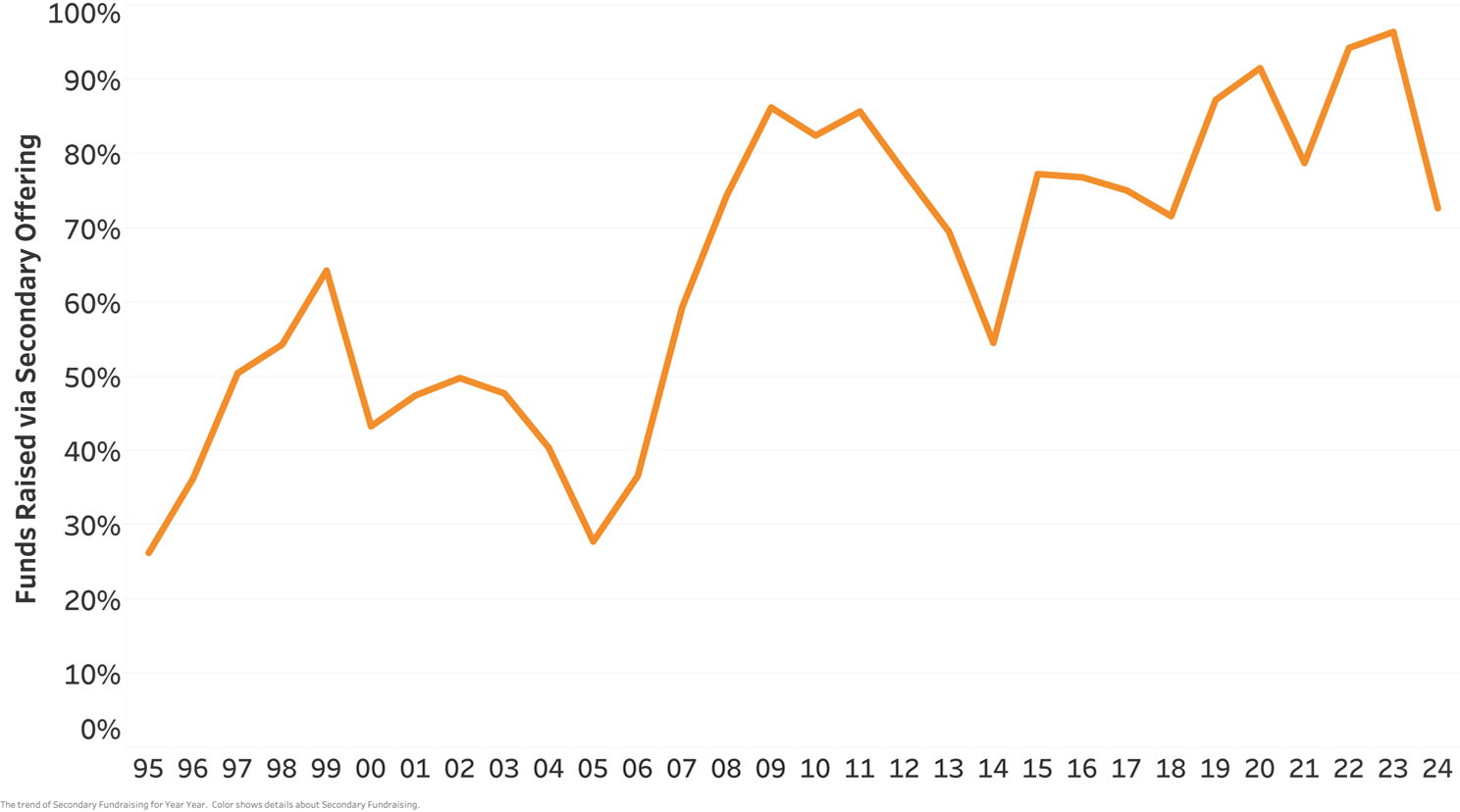

 Open access

