

1 Introduction
What you’ll explore in this section:
Rise of GenAI in education
Why EME requires specific attention
Framing AI as both a tool and a platform
Key questions for pedagogy and policy
Introduction
This Element is centered around the effects of generative AI (GenAI) on English-medium education (EME). Although English medium of instruction (EMI), is the most commonly used term to refer to “the use of the English language to teach academic subjects (other than English) in countries or jurisdictions where the first language of the majority of the population is not English” (Macaro et al.’s, Reference Macaro, Curle, Pun, An and Dearden2018, p. 1), in this Element, we adopt the label “English-Medium Education in Multilingual University Settings” (EMEMUS or EME for short). EMEMUS refers to “post-secondary internationalised education in multilingual settings that uses English as a medium of teaching and learning of academic subjects other than the English language itself” (Dafouz & Smit, Reference Smit2023, p. 2). We have selected this term for this Element, as unlike EMI, EME emphasizes the educational nature of the setting beyond “instruction” and the explicit focus on the tertiary level. The British Council has also adopted this term as it reflects more accurately “the need for a more holistic approach at macro (or systems), meso (or institutional) and micro (or classroom) level” (Veitch, Reference Veitch2021, p. 7). While the ideas in the Element may have relevance to contexts that fit into the wider EMI label, our thinking in composing it, as well as the examples embedded in it, will come from the tertiary level. In this Element, the term EMI is used when referring explicitly to prior literature, policy documents, or studies that adopt this terminology. Importantly, even though the definition is narrower, there is still a huge variety of contextual differences across EME.
Smit (Reference Smit2023) notes that the complex history and global spread of English have led to an explosion of diverse EMI and EME institutions and programs worldwide. EME can include complete programs or parts of programs (e.g., year levels or specific subject areas). Geographically, it can occur across a wide range of contexts with different relationships with English. There are significant differences in the spread and scope of English used in society, especially between postcolonial contexts (e.g., Hong Kong) and contexts where English has never had an official role (e.g., Japan) – which can influence students’ readiness for EME and its outcomes. In some contexts, EME is the only option (e.g., Ghana), in others, it is a choice, with other institutions or programs offering education in other local languages (e.g., China).
EME has been driven by globalization and internationalization with the belief that EME can mutually benefit the learners and institutions (Dafouz & Smit, Reference Dafouz and Smit2020). Learners are seen to benefit from a curriculum that enhances their content and language knowledge and skills simultaneously, increases international mobility, and a more globalized teaching environment. Institutions benefit from an increased global visibility, greater inter-institutions collaborations, and potential improvements in prestige and ranking (Richards & Pun, Reference Richards and Pun2022).
Despite promises of multiple benefits, many learners in EME contexts face dual demands in learning. They are expected to simultaneously acquire complex disciplinary knowledge and develop their English language proficiency (see Lasagabaster & Fernández-Costales, Reference Lasagabaster, Fernández-Costales, Tajeddin and Farrell2025; Lasagabaster, Reference Lasagabaster2022). This dual task often creates language challenges for students in comprehension, expression, and participation, especially in subjects such as science, engineering, or medicine, where discipline-specific terminology and discourse conventions are highly specialized (Pun et al., Reference Pun, Moorhouse, Tan, Qiu and Yuan2025). At the same time, teachers can face challenges adapting their pedagogy to EME and may encounter language proficiency issues themselves (Curle et al., Reference Curle, Alqarni, Mahdi, Al-Nofaie and Ali2025).
Because of these challenges, EME has become a critical testing ground for innovations in language and learning technologies. The integration of GenAI tools could be particularly significant in EME classrooms for addressing the language challenges mentioned and assisting teachers with scaffolding students’ learning pathways (see Section 2) and accurately assessing outcomes (see Section 5). These tools promise to ease linguistic burdens by providing scaffolding for reading, writing, speaking, and listening, thereby potentially lowering barriers to accessing disciplinary knowledge (Li & Wilson, Reference Li and Wilson2025; see Section 4). At the same time, they raise questions about overreliance, de-skilling, authenticity, and the development of higher-order cognitive and communicative skills (Derakhshan & Taghizadeh, Reference Derakhshan and Taghizadeh2025, see Section 3).
Studying GenAI in EME is therefore crucial for several reasons. First, EME classrooms represent linguistically complex environments where students’ uneven English proficiency interacts with demanding curricular content. This makes them an ideal context for observing both the affordances and limitations of GenAI scaffolding (Lin & Tsou, Reference Lin and Tsou2025). Second, because EME often aims to prepare students for participation in global academic and professional communities, the way GenAI mediates language use here has long-term implications for equity, access, and disciplinary literacy (Jia & Pun, Reference Pun2025). Finally, EME highlights broader debates about the role of technology in education. For example, whether GenAI can act as a supportive co-learner that fosters agency and critical awareness, or whether it risks entrenching passivity by outsourcing key cognitive processes to machines (Tai, Reference Tai2025).
To provide context for the Element, this section first defines “GenAI tools” before discussing the implications of GenAI’s emergence for EME. We will then briefly consider the impact of GenAI on the Sciences, Arts, and Social Sciences. We then propose exploration key questions GenAI developments raise for EME pedagogy and policy, and how this Element begins to address them.
What Are GenAI Tools?
The authors and others have wrestled with the definition of GenAI since the release of ChatGPT in November 2022 (Chiu, Reference Chiu2023; Moorhouse & Wong, Reference Moorhouse and Wong2025). The growing consensus is that GenAI is an umbrella term for a wide range of digital tools and features with generative capabilities (Moorhouse, Reference Moorhouse2024). GenAI is a subset of an even broader term – artificial intelligence (AI). Generally, AI refers to computer systems that utilize algorithms to mimic human cognitive abilities and perform tasks traditionally requiring human intelligence, such as speech recognition, decision-making, and pattern identification (Ali et al., Reference Ali, Murray, Momin, Dwivedi and Malik2024; Sheikh et al., Reference Sheikh, Prins and Schrijvers2023). AI is a broad concept encompassing diverse technological capabilities, including robotics, recommendation systems, voice recognition, and chatbots.
Before the release of ChatGPT, the majority of AI tools available to the public were rule-based programs that relied on predefined guidelines derived from external knowledge, sometimes called predictive AI. These were usually designed for specific tasks and could not deviate from their preprogrammed instructions. For example, customer service chatbots or writing assistant tools. GenAI is different. Among the most widely used GenAI tools in education are large language models (LLMs), including Generative Pretrained Transformers (GPTs) like OpenAI’s ChatGPT and Anthropic’s Claude. These systems draw on deep learning and vast datasets, from the open web and curated knowledge sources, to generate original, often unexpected outputs in response to a range of prompts, such as scenarios, images, instructions, or questions (Lim et al., Reference Lim, Gunasekara, Pallant, Pallant and Pechenkina2023). Rather than following fixed rules, LLMs infer patterns and relationships in data to produce statistically likely continuations, for instance, by predicting the next word or token to form fluent text. Their flexibility enables them to handle many natural language processing tasks across contexts with minimal task-specific guidance (Ali et al., Reference Ali, Murray, Momin, Dwivedi and Malik2024). Extensive training improves their consistency and reliability, and they deliver results very quickly, typically within seconds (Moorhouse, Reference Moorhouse2024). In addition to LLMs, other models have been developed to analyze and create visual and audio data (e.g., Generative Adversarial Networks [GAN]). Some GenAI tools combine LLMs and GANs to provide an easy-to-use natural-language interface that generates multimodal output.
GenAI tools and features are being embedded into an every-increasing number of digital tools and online spaces, including those used in educational contexts. There are now educational chatbots designed to scaffold students’ learning experiences with personalized learning pathways (e.g., Massive AI-empowered courses [MAIC]), classroom management tools with chatbot assistants, and response systems that have automated functions to assist teachers (e.g., Kahoot offers auto-generated quizzes, Mentimeter has auto-categorizing of open-ended responses), notetaking tools can simultaneously transcribe and summarize lessons. Recently, wearable AI, for example, Meta Glasses, and Apple AirPods, offer simultaneous live translation. There are an increasing number of academic databases that offer natural language searching and automated report generation (e.g., Elicit, Consensus, and Scopus AI). These GenAI tools’ features are providing new possibilities for pedagogy and assessments, but are also shaping the way we learn, interact, create, find knowledge, and comprehend the world – therefore, requiring new competencies and critical literacies (Darvin, Reference Darvin2025; Moorhouse et al., Reference Moorhouse, Nejadghanbar and Yeo2025).
The wide range of GenAI capabilities means it can be seen as a tool, used selectively for specific tasks or as a platform embedded into workflows and systems to automate parts of tasks, or, in some cases, as a whole-task process. For example, users of the research tool, Elicit, can prompt it with a natural language question, and it will search literature, analyze the literature, and generate a report. Similarly, “auto-translation” features can be switched on in some tools (e.g., Google), with the platform automatically translating any content into the desired language of the user. Similarly, we might see GenAI features integrated into Learning Management Systems (LMS), where they are organizing content, analyzing engagement, and suggesting resources to students in spaces without users necessarily being aware that they are engaging with GenAI. In this way, the GenAI could be framed as a platform as it is automating several processes to achieve particular outcomes. However, GenAI tools and platforms still have distinct limitations that should be considered before they are used for any task (see Section 3 for a discussion of these in relation to EME).
Some Important Information about GenAI Tools
As the previously mentioned description of GenAI tools explained, GenAI tools like LLMs do not work like search engines or traditional academic databases, which retrieve information based on the search terms or keywords. Instead, they use deep-learning techniques to generate new responses each time. The generative capability also means that the content they generate is not entirely predictable or replicable (Moorhouse et al., Reference Moorhouse, Nejadghanbar and Yeo2025). This has implications for the use of GenAI in educational contexts, such as EME universities. See the list in the following, adapted from Moorhouse and colleagues (Reference Moorhouse, Wan, Wu, Wu and Ho2025):
First, GenAI systems do not truly comprehend the data they access or the human-like text they generate (Chan & Colloton, Reference Chan and Colloton2024). They also cannot assess the reliability or accuracy of their inputs, which can result in hallucinations, inaccuracies, and misleading outputs (Dumit & Roepstorff, Reference Dumit and Roepstorff2025), as well as generalization bias (Uwe & Chi-Yee, Reference Uwe and Benjamin2025). Various solutions attempt to mitigate this by constraining models to vetted sources. For instance, Scopus AI limits retrieval to Scopus-indexed content and supplies citations, yet its LLM-generated summaries can still contain errors.
Second, the composition of LLM training data is largely opaque and may embed biases. Beyond mirroring existing biases, the probabilistic nature of LLMs can magnify them. For example, models often favor linguistic norms associated with privileged groups (e.g., American and British Standard English, Kuteeva & Andersson, Reference Kuteeva and Andersson2024).
Third, because responses are generated probabilistically, outputs can vary across interactions with the tools. As a result, even with identical tools, settings, and prompts, users may be unable to reproduce the same results.
Fourth, LLMs differ substantially. Variations in training corpora, model architectures, and context window sizes lead to differing capabilities (Moorhouse, Reference Moorhouse2024; Pack & Maloney, Reference Pack and Maloney2023). These differences also affect accessibility, since some models are costlier than others.
Fifth, the tools have been developed by large tech companies that have their own agendas and commercial objectives. This means these companies have a large amount of power in the way the tools work with specific ideologies and world views embedded in the selection of training data, and prompt development (Discussed further in Section 7).
Sixth, the tools have large environmental footprints requiring huge datacenters that consume energy and water, potentially adding to climate change (Crawford, Reference Crawford2024).
Seventh, privacy and data security remain concerns when sharing information with GenAI tools (Pack & Maloney, Reference Pack and Maloney2023, 2024). Each platform has its own data policies, which teachers should review to ensure alignment with their ethical obligations (Gomstyn & Jonker, Reference Gomstyn and Jonker2025).
What Does the Emergence of GenAI Mean for EME?
As the introduction illustrates, EME contexts are incredibly diverse, and therefore, we can speculate that there are likely to be universal effects of GenAI, as well as effects specific to particular contexts. Universally, they are providing tools and platforms that can mediate various kinds of learning environments and tasks. Learners can turn to GenAI tools to fast-track tasks, such as translation, summarization, and brainstorming, that traditionally would have taken more sustained and deep cognitive effort. Similarly, there are more opportunities for learners to distribute their agency between themselves and machines as they engage in text composition processes (Godwin-Jones, Reference Godwin-Jones2024). While for many, this has allowed them to augment their ability and go beyond their individual capacity to complete tasks, it has also challenged our current understandings of ethics and human accountability (Moorhouse et al., Reference Moorhouse, Nejadghanbar and Yeo2025).
In EME, the research on the impacts of GenAI has only just begun. In the emerging research, what we are currently seeing is two opposing outcomes. One is that these tools can assist learners and teachers in EME by scaffolding content and language demands, the other, that these tools are leading to an overreliance, with students outsourcing cognitively demanding tasks to GenAI tools, and therefore missing opportunities for learning and de-skilling themselves. We believe both are true with contextual and learner variables playing a key role in whether these tools are adding or detracting from learning. For example, if the EME program, instruction and assessments align well with students’ needs and proficiency levels, with teachers guiding learners how to use GenAI to facilitate learning, then the use of GenAI could lead to gains (see Section 2 for ways teachers can do this). However, if there is misalignment with inconsistent guidance about GenAI, then it is more than likely that learners will turn to the tools to help them navigate uncertainty and challenges they experience (see Section 3 for possible threats of GenAI).
At the same time, different academic disciplines (Sciences, Arts, Social Sciences, and Languages) have different epistemologies, pedagogical traditions, and practices of researching phenomena and disseminating knowledge. Discipline-specific academics teaching on discipline-specific programs that prepare students with skills and knowledge to join the professional and academic communities of their discipline. Each discipline has communities of scholars who are trained and become members of a discipline-specific culture (Davies & Devlin, 2010). The disciplinary differences have been shown to impact the use of technology in teaching (Starkey et al., Reference Starkey, Yates, de Roiste, Lundqvist, Ormond, Randal and Sylvester2023). Starkey et al. (Reference Starkey, Yates, de Roiste, Lundqvist, Ormond, Randal and Sylvester2023) explored discipline-specific technology uses for teaching higher education (HE) teachers from various disciplines such as Applied Statistics, Computer Science, Geography, and Information Systems. They found that each discipline had uniqueness, with what is taught in a discipline influencing how teaching occurs. For example, the sciences, with a long tradition of field work, capitalized on VR technologies that could replicate field work, whereas literature scholars rely more on debates and literary critiques.
It is understandable, then, that different disciplines will have different utilities of GenAI, as well as different concerns. We can speculate that in the sciences, there will be more concerns about accuracy in the responses of LLMs. While the tools offer opportunities for developing simulations, engaging in problem-solution tasks, and explaining complex concepts. In the arts and humanities, there may be concerns about intellectual property rights infringement, plagiarism, ethics, creativity, and originality. While pedagogically, the utility may be on helping learners make connections between concepts and sources. In the social sciences, the interest and concerns will be about the impact on the way GenAI is changing human behavior, for better or worse. The tools may act as interlocutors for practicing various data collection tasks or aiding with finding and organizing information from existing literature. Given these differences, in the subsequent sections, we will provide discipline-specific examples to help different content teachers get practical ideas.
Overview of the Element
GenAI is a development that those studying, teaching, and working in EME cannot ignore. It has the potential to assist with some of the challenges evident in EME (see Sections 2, 4, and 5), but at the same time, bring in new challenges and threats (see Section 3). It leads us to pose several key questions for EME pedagogy and policy that frame the Element’s critical-practical approach to GenAI. We understand the genie cannot be put back in the bottle, but we also believe we need to be critical agents in our use of GenAI and how others (institutions, governments, and companies) are using GenAI on us. The following are the key questions:
1. What opportunities does the development of GenAI afford EME content and language teachers in terms of scaffolding students’ content and language learning and academic outcomes?
2. What threats do GenAI tools and systems introduce to EME, and what knowledge and skills do teachers and learners need to mitigate these threats?
3. How might GenAI tools assist L2 learners as they engage in various communication tasks in EME contexts (e.g., reading, writing, listening, and speaking)?
4. How can EME teachers and learners utilize GenAI within EME assessment tasks?
5. How should policy-makers (e.g., university management teams, program development committees) respond to the disruptions and opportunities of GenAI?
6. How do we create a holistic ecosystem that considers learning with, for, of and despite GenAI?
The sections in this Element address the above questions. Section 2 explores four opportunities GenAI affords EME: (1) GenAI as a knowledge builder and resource; (2) GenAI as a lesson planning assistant for content and language integration; (3) GenAI as a classroom support; and (4) GenAI as a language tutor. Section 3 details five threats of GenAI to EME (1) Over-scaffolding and over-reliance; (2) Homogenization and Standardization; (3) Accuracy, Bias, and Cultural Nudging; (4) Motivation to learn Content and Language; and (5) Academic integrity. Section 4 explores how GenAI can scaffold language skills development. Section 5 considers the role GenAI can play in EME assessment practices. Section 6 engages with the debates around institutional policies and realities of GenAI in EME. Finally, Section 7 takes a more critical turn and directly addresses the ecology and ecosystem around GenAI and how we consider learning from four lenses: (1) Learning despite AI; (2) Learning with AI; (3) Learning about AI; and (4) Learning for AI.
Throughout the section, we have integrated prompting frames to try out, and reflective questions. These provide you an opportunity to try out GenAI tools, and to help you connect with the ideas in the Element. We hope through your active engagement, you can draw out helpful suggestions that can aid your teaching and learning.
Positioning Statement
Importantly, our aim for this Element is not to provide definitive solutions or universal prescriptions, but to offer a critical–practical framework for understanding how GenAI reshapes teaching, learning, assessment, and institutional practice in multilingual HE. Throughout the volume, we argue for a learning-first, tool-second orientation, in which pedagogical goals and epistemic responsibility guide decisions about technology use.
Our analysis is informed primarily by research and professional experience in multilingual university contexts, especially in East Asia and the Global North. While many of the challenges discussed, such as linguistic scaffolding, disciplinary literacy, assessment integrity, and student agency, are widely relevant across EME settings, we recognize that institutional conditions, policy environments, and access to GenAI tools vary considerably. Readers are therefore encouraged to interpret the ideas presented here as context-sensitive and adaptable, rather than universally applicable.
We are also mindful that research on GenAI in EME remains emergent. Much of the existing evidence is exploratory or small-scale, and in several places we draw on theoretically informed interpretations alongside empirical findings. Where this is the case, claims should be read as provisional and open to revision as longer-term and larger-scale studies become available. This Element therefore seeks to model the epistemic caution and evaluative stance it advocates.
A recurring theme in the volume is agency of teachers, learners, and institutions. While we emphasize the importance of deliberate pedagogical design and critical engagement with GenAI, we also acknowledge the structural constraints that shape what is possible in practice, including workload, assessment regimes, platform design, and institutional policy. Responsibility for ethical and sustainable GenAI integration cannot rest with individual educators alone.
Finally, we recognize that GenAI does not merely introduce new challenges to EME but may also amplify existing ones, including linguistic standardization, epistemic hierarchy, and inequities embedded in English-medium HE itself. By foregrounding both opportunities and tensions, this Element aims to support ongoing reflection, dialogue, and informed experimentation rather than closure or consensus.
Use of GenAI in the Element
In this Element, we demonstrate and reference various GenAI tools to provide illustrative examples of their utility and limitations for EME (see Appendix 1 for a list of relevant tools for EME). We want to make it clear that we do not endorse or recommend any specific platforms or models and believe it is up to the readers to explore different tools that are available and take into consideration the points made in this Element in their tool selection. It is also important to mention that these tools are continually updating and advancing. Yet, we hope the ideas presented in the Element will still provide useful insights for readers who are studying, working, and researching EME around the world.
We did use Grammarly as a writing assistive tool as we composed the Element, and GPT5 (via poe.com) to create some of the examples. These are indicated in the Element. Some AI examples have been edited for length. We take full accountability for the content of this Element.
2 Teaching in the Age of AI – Opportunities
What you’ll explore in this section:
GenAI as a knowledge builder
GenAI as a scaffold: lesson planning, classroom support
GenAI as a language tutor
Introduction
Students can face a multiplicity of challenges in EME as they face the “double barrier” of content and language impacts on their academic performance (Yao et al., Reference Yao, Collins, Bush, Briscoe and Dang2022). Central to these challenges are language issues, with students facing challenges with writing, listening, reading, and speaking (Rose et al., Reference Rose, Sahan and Wei2026). These challenges seem salient globally and reflect the complexity of learning content in a second/foreign language.
At the same time, teachers in EME contexts will often express their challenges in bridging content and language. Research widely reports that content teachers can struggle to support students’ language needs, while language teachers may lack the content knowledge needed to scaffold students’ language development within their specific disciplines appropriately (Rose et al., Reference Rose, Sahan and Wei2026). Different disciplines can have their own epistemologies (theories of knowledge), research traditions (e.g., methodologies), professional genres (e.g., lab reports and policy briefs), communication approaches (e.g., videos, presentations), specialist vocabulary, and language conventions. Even referencing styles (e.g., APA, Harvard, and Chicago) can differ. As content teachers are trained and initiated into their discipline-specific norms, practices, and conventions, they may not be conscious of these differences. Similarly, language teachers will likely have come through language education professional preparation pathways (e.g., MATESOL/CELTA), meaning they may not have specialist knowledge of language practices in specific disciplines. In some contexts, content teachers may lack proficiency and/or confidence in English to teach effectively in the language. This can negatively affect students’ learning opportunities and outcomes (Rose et al., Reference Rose, Sahan and Wei2026).
Researchers have suggested that, to bridge this gap and address these issues, content and language specialists should collaborate to plan and implement educational programs in EME contexts (Rose et al., Reference Rose, Sahan and Wei2026). In this way, content teachers can provide input on the discipline knowledge and skills that should be achieved, while language specialists can evaluate the language demands of the task and suggest appropriate scaffolding to support learners’ literacy and language needs (Zhou et al., Reference Zhou, Curle and Zou2025). However, this kind of partnership is hard to initiate and sustain with most universities offering pre-sessional support, or limited support. There is also a growing consensus that teaching students’ ways to self-regulate their own learning, can, in part, help them overcome their language challenges (Zhou & Rose, Reference Zhou and Rose2021).
Given the challenges students, as well as content and language teachers, face in the EME context, GenAI’s capabilities to perform a wide range of language-related tasks offer several opportunities for them to support learning. In this section, four opportunities are introduced: (1) GenAI as a knowledge builder and resource; (2) GenAI as a lesson planning assistant for content and language integration; (3) GenAI as a classroom support; and (4) GenAI as a language tutor.
Obviously, the utility of GenAI tools depends on the choice of AI model (e.g., general or specialist) and the types of databases and information (e.g., internet and curated databases) it draws on (Moorhouse, Reference Moorhouse2024). There are differences in the accuracy of various tools, and teachers must explore those that seem to perform more efficiently within their domain (see Section 3 for more details of the threats of GenAI in EME, including accuracy and bias issues in their responses).
Opportunity 1: GenAI as a Knowledge Builder and Resource
Despite well-known limitations in the ways GenAI tools work, they can be relatively accurate in the information they produce (Moorhouse & Wong, Reference Moorhouse and Wong2025), especially, when used for low-stakes activities, such as an initial source that teachers can use to get some information before consulting other sources (e.g., academic books). This means they can help both content teachers build knowledge of language, and language teachers build knowledge of content and discipline-specific literacy practices. It is important for instructors to assess the purpose and significance of the task before relying on GenAI to gather information. For example, obtaining activity suggestions for teaching a specific topic would be low-stakes, whereas using information from GenAI to design an assessment would be considered high-stakes (see Section 3 for a discussion of GenAI threats).
For content teachers, low-stakes uses of GenAI could involve using an LLM to analyze a textbook, a discipline-specific genre, or other material, and to provide suggestions on salient language aspects. For example, a biology teacher may be teaching the concepts of “diffusion and osmosis across a semipermeable membrane” and be unsure how to scaffold students with the key vocabulary they need to understand the concepts, and aspects of the vocabulary that will help them acquire it (e.g., meaning, form, and use). They could prompt an LLM to give them a list of key vocabulary and information related to the meaning, form, and use of that vocabulary (see Example 1 for an example). Once the list is created, they can select which items may be difficult.
Example 1 Example of a prompt and LLM response to gather information
Prompt: I’m a biology teacher in an English-Medium Education context and I am teaching my students diffusion and osmosis across a semipermeable membrane. Can you give a list of the ten most essential vocabulary items needed and an analysis of the meaning, form and use of these vocabulary items.
Tool: GPT-5
Response:
Here are ten essential vocabulary items for teaching diffusion and osmosis across a semipermeable membrane, each with meaning, form, and use.
1. Diffusion
● Meaning: The passive movement of particles (usually solute molecules) from an area of higher concentration to an area of lower concentration until equilibrium is reached.
● Form: Noun; verb: diffuse; adjective: diffusive; noun (process): diffusion.
● Use: General particle movement in gases and liquids; does not require energy or a membrane. E.g., “Oxygen diffuses into cells.”
2. Osmosis
● …
The same teacher could then explore the different aspects of the words, focusing on potential learner challenges or their own challenges related to the word’s language demands (see Example 2). This can help the teacher build their knowledge of the word and confidence to use it appropriately. Let’s take the example of “diffusion.” An LLM could be prompted to analyze the word and provide information that could build teachers’ content-language knowledge, including associated words, collocations, spelling irregularities, pronunciation challenges, and common L1-interference errors.
Prompt: Can you provide associated words, collocations, spelling irregularities, pronunciation challenges, and common L1-interference errors for the word ‘diffusion’.
Tool: GPT-5
…
Spelling notes and irregularities
● Common misspellings: difusion (one f), diffucion/diffuson (missing i), diffusian/diffusionn
● Double f + s: difFUSion → “diffu-” + “-sion”
● Derivatives: diffuse (verb/adjective); diffusely; diffuseness; diffusivity; diffusional
● British vs American: no difference for “diffusion”; derivatives align (e.g., “diffusivity” in both)
Pronunciation
● IPA: /dɪˈfjuːʒən/
● Syllables: di-FYU-zhən (3 syllables)
● Stress: second syllable
● Sounds to watch:
◦ /fj/ cluster: “fyu” as in “few” (/fjuː/), not “fee-” or “foo-”
◦ /ʒ/ sound: the “zh” in the third syllable, like the s in “measure”
◦ Final schwa /ən/: very reduced; not “-shon” with a strong o
● Common mispronunciations: “dee-FOO-zhun,” “di-FYOO-shun,” “di-FU-zee-on,” “dif-FOO-sion”
Grammar and usage patterns
● Prepositions: diffusion of X (thing that spreads), diffusion through/across/in (medium/space), diffusion between A and B, diffusion into/out of
● Countability: usually uncountable in scientific contexts (“Diffusion is faster at higher temperatures”), but countable in theory contexts (“Rogers identified several types of diffusion” is less common; “diffusion processes/models” is more natural)
…
Other tools can also help the content teacher become more familiar with these words. For example, the teacher could practice pronouncing the word using GenAI-powered speaking practice tools such as Elsaspeak. Elsaspeak, and similar tools, provide examples of word pronunciations as well as allow users to get feedback on their pronunciations (https://elsaspeak.com/en/learn-english/how-to-pronounce/.
GenAI tools can help both content and language teachers develop learner-facing knowledge scaffolds, including (1) plain-language explainers, (2) glossaries, (3) visual organizers, and (4) genre models. While all these were possible before the development of GenAI, they were often time-consuming to create or not suited to a specific group of learners (e.g., students in a particular country or context) (see Example 3 for an example). GenAI can make tailoring these easier, so the scaffolds align with the intended learning outcomes and the learners’ needs. For example, a business content teacher at a Hong Kong university might introduce the key concept of “value proposition” and want a plain-language explainer and glossary to support their learners. They could prompt an LLM to make these materials with local examples to help connect the learner to the content.
Prompt: Can you create the following materials that could help learners in the Hong Kong context understand this concept: (1) plain-language explainer, (2) glossaries
Tool: GPT-5
1. Plain-language explainer (Hong Kong context)
● What is a value proposition?
◦ It’s a simple promise to customers: what benefit you deliver, for whom, and why you’re better than other options.
● Why it matters in Hong Kong
◦ Crowded markets: From Sheung Wan coffee shops to Sham Shui Po phone accessories, customers have many choices. A clear value proposition helps you stand out.
◦ …
…
● The 3-sentence formula
0. For [who]: name your target customer in Hong Kong.
1. We solve [problem/job]: what pain or need do they have?
2. Unlike [alternatives], we [differentiator + proof].Example: For busy Central office workers, we serve nutritious lunch boxes delivered in under 20 minutes. We solve the “long queues and unhealthy options” problem. Unlike typical takeaways, we guarantee delivery within 20 minutes or it’s free, with menus designed by a registered dietitian.
● Common HK examples
0. Convenience store: “Open late near your MTR exit; quick grab-and-go.”
1.
2. …
2. Glossaries
● Value proposition: A short statement of the key benefits you offer to a specific customer, and why you’re better than alternatives.
● …
For language instructors, GenAI tools provide the opportunity to develop their genre awareness. They can query LLMs to provide summaries of different discipline communication/ genre conventions (e.g., lab reports vs. policy briefs), and citation styles. For example, creating genre-comparison cards that provide two short model texts and have GenAI highlight moves, stance, hedging, and typical verbs, or creating a table comparing the citation conventions typically used across different disciplines. This could help them tailor their instruction to learners from specific disciplines more effectively. For example, a language instructor teaching students from different disciplines could use the following prompt to gather information on the typical citation styles in different disciplines: “What are the typical citation styles in political science and education. Create a short table showing the conventions.”
The ability of some GenAI tools to process multimodal inputs and create multimodal outputs means they can help scaffold both content and language teachers’ knowledge development by converting concepts and processes into visual representations and diagrams, for example, turning textbook excerpts, lecture slides, or datasets into step-by-step explanations, examples, and practice questions.
Finally, given that EME education usually occurs in EFL/ESL contexts where different varieties of English may be used, GenAI tools could be used to increase teachers’ exposure to different varieties of English and increase their ability to comprehend different varieties, as well as be intelligible to diverse English language users. Box 1 provides prompting frames for readers to try out.
“Explain [concept] for [discipline level], then provide 3 analogies and 5 discipline-specific example sentences.”
“Create a concise glossary (10 terms) for [topic], with student-friendly definitions, IPA pronunciation, and collocations.”
“Compare the rhetorical moves and language features of a [genre A] vs. [genre B] in [discipline]. Include sample sentence frames.”
Opportunity 2: GenAI as a Lesson Planning Assistant for Content and Language Integration
Researchers suggest that to effectively support student learning and benefit most from EME, content and language should be integrated through careful planning and preparation (Richards & Pun, 2023). In this way, the content and language demands can be thought through and adequate scaffolding provided. At the same time, individual differences in terms of learner profile (e.g., linguistic backgrounds and lived experiences), readiness (e.g., English proficiency), and motivations can be considered.
GenAI tools can assist both content and language teachers with lesson planning by assisting with content and language integration. For example, a content teacher could prompt a GenAI tool to analyze the language demands of their teaching and learning materials and extract possible target language (e.g., hedging phrases, reporting verbs, and quantifiers). The GenAI tools could then be prompted to produce teaching materials (e.g., presentation slides) and practice exercises to help the learners notice the specific meaning and uses of these words in their disciplinary contexts (e.g., academic reports).
At an initial stage, content and language teachers can co-design a learning sequence with a GenAI that aligns content learning outcomes with the language objectives of their courses (functions, forms, and vocabulary). They could suggest a structured lesson sequence that breaks down the outcomes into manageable sessions with lesson objectives, input texts, guided practice, output tasks, assessment, and reflection prompts. As content teachers may not be familiar with language-teaching pedagogies, these tools could be particularly useful for suggesting appropriate guided-practice activities to scaffold students’ discipline-specific linguistic development. For example, a marketing teacher might want to raise learners’ awareness of the use of “reporting verbs” in persuasive texts, but is unsure how to do it, they could consult an LLM and get some suggestions, and then develop their ideas, for example (Prompt: “I’m a marketing teaching an introduction course at an EMI university. Give me some ideas of how to raise my students’ awareness of the use of ‘reporting verbs’ in persuasive texts”). Eventually, they might settle on a noticing activity where students compare and analyze two texts, one with reporting verbs and one without, and then prompt an LLM to create the activity (see Example 4). In this way, content teachers can integrate language-focused activities.
Prompt: Create a noticing activity where students have two texts that help learners notice the function and use of reporting verbs in persuasive texts. The texts should be 100 words long with one text using reporting verbs and the other not, showing how the verbs strengthen the persuasion in the text.
Tool: GPT-5
Here’s a concise noticing activity to help learners see how reporting verbs strengthen persuasion in persuasive texts.
Objective
● Notice how reporting verbs (e.g., claim, argue, suggest, warn, emphasize) add authority, stance, and credibility.
● Compare two short persuasive texts: one without reporting verbs, one with them.
Instructions
1. Read Text A and Text B.
2. Underline phrases that present reasons, evidence, or opinions.
3. Identify and list the reporting verbs in Text B.
4. Discuss: How does Text B feel more persuasive? What changes in tone, authority, and credibility?
5. Rewrite two sentences from Text A by adding appropriate reporting verbs, then share your versions.
Text A (no reporting verbs, ~100 words)
Buying from local farmers’ markets helps our community. Prices are fair, and produce is fresher than items shipped long distances. The money stays nearby, which supports small businesses and protects jobs. Seasonal food reduces packaging and transportation, which cuts waste and pollution. Markets also build relationships between growers and shoppers, creating trust and transparency. Children learn where food comes from, and families discover new fruits and vegetables. Local farms protect green spaces and improve soil health. Choosing local food makes meals taste better and keeps neighbourhoods vibrant. Visiting the market this weekend is a simple choice that benefits everyone.
Text B (with reporting verbs, ~100 words)
Experts argue that buying from local farmers’ markets strengthens communities. Nutritionists report that local produce is fresher than items shipped long distances. Economists note that spending stays nearby, which supports small businesses and protects jobs. Environmental researchers observe that seasonal food reduces packaging and transport, cutting waste and pollution. Market advocates emphasize that grower–shopper contact builds trust and transparency. Educators point out that children learn where food comes from, and families discover new produce. Conservationists contend that local farms preserve green spaces and improve soil health. For these reasons, community leaders urge residents to visit the market this weekend.
Guided noticing questions
● Which words in Text B attribute information to sources? What effect do they create?
● How does certainty shift with verbs like argue, report, note, observe, emphasize, point out, contend, urge?
● Where does Text B show evidence, authority, or recommendations more clearly than Text A?
…
A key feature of LLMs is their ability to modify and adapt texts rapidly. This means teachers can use them to create tiered tasks at different proficiency levels using the same content but modifying the language demands or integrating varying levels of support, including multilingual or multimodal supports (e.g., sentence frames, visuals, model answers, and extension questions). Box 2 provides prompting frames for readers to try out.
“Design a 60-minute lesson on [content topic] for [student profile]. Include: content objectives, language objectives (functions/forms), materials, scaffolded activities, and a short formative assessment.”
“From this text [paste], extract: key ideas, academic word list items, common lexical bundles, and 6 discussion questions at B1/B2 levels.”
“Create three tiers of a problem-solving task on [topic]: A2 with sentence starters, B1 with guided questions, B2 with open-ended prompts.”
Opportunity 3: GenAI as a Classroom Support
Another opportunity GenAI could bring to EME is the capability of some tools to provide real-time synchronous language support. For example, GenAI-powered notetaking tools, such as Otter.ai, can produce live transcriptions, generate automated summaries, and highlight key points of a lesson. There is now a range of AI-powered text summarizers that can help learners paraphrase and simplify course readings. Many AI writing assistants have built-in text summarizers, including Scribbr (www.scribbr.com/text-summarizer/), Adobe Acrobat (www.adobe.com/hk_en/acrobat/online/ai-summary-generator.html), and Google Workspace (NotebookLM). Tools such as Google’s NotebookLM, as well as, summarizing a text, can also convert the text into different multimodal genres, such as podcasts and mind maps (Yeo et al., Reference Yeo, Moorhouse and Wan2025) or create study guides and guiding questions, providing different kinds of support to learners. It is important to note that some of these tools require subscription while free tools are available, for example, Google Scholar Labs, they have different features and draw on different databases. AI summaries can present inaccurate content due to the way they work (see Sections 1 and 3 for more details).
Teachers can also integrate a GenAI chatbot into their classroom practice, positioning it as a classroom assistant. These tools can be used to support live examples, such as generating examples, creating Socratic questions, conducting live data analysis, providing linguistic support (e.g., L1 summaries/explanations), and providing formative feedback. Some LMSs have chatbots built in, making it easy to engage them during classes. For example, an engineering teacher may want to explain “Ohm’s law”; they could ask a chatbot in class to generate two explanations, a technical one and an everyday layman’s explanation. Students could then compare which one is clearer and the accuracy of the chatbot’s explanations.
A possible approach is to have students work with a GenAI chatbot as a group member, with the GenAI chatbot assigned a role within the group (e.g., notetaker, questioner, facilitator, research assistant, clarifier, and language expert). A chatbot can be customized to take on the role (through system prompting) or prompted to do so. Students can engage with the chatbot verbally or in written form, with the chatbot interacting in character. Teachers may need to spend a bit of time fine-tuning the prompts to achieve the desired role; they may also add a curated knowledge base to increase the chatbot’s specialization. Box 3 provides prompting frames for readers to try out.
“Rewrite this paragraph at B1 level without changing meaning; highlight key terms: [paste].”
“Generate 8 discussion prompts on [topic], escalating from comprehension to critique; include sentence starters.”
“Give feedback on hedging and stance only; identify 3 fixes and provide a model revision: [student text].”
Opportunity 4: GenAI as a Language Tutor
Another possible opportunity GenAI affords is personalized, individualized support and feedback, similar to a one-on-one language tutor. Given that many students, as well as, teachers, in EME contexts globally report language-related challenges (Rose et al., Reference Rose, Sahan and Wei2026), having flexible access to a tool that can act as a language partner and tutor is appealing. Studies have shown that technology can help students overcome language-related challenges (Fung, Reference Fung, Pun, Curle and Yuksel2022), and L2 students have reported finding GenAI tools to be particularly useful as self-directed learning aids (Moorhouse et al., Reference Moorhouse, Nejadghanbar and Yeo2025).
Learners can be guided to work with GenAI tools for micro-tutoring, supporting specific language aspects, such as pronunciation tips (IPA, stress), collocations, and error patterns tied to the discipline. Students could paste a short writing sample of their work, ask an LLM to identify two to three recurring errors, and then generate details of the language rules, examples of phonological or grammatical minimal pairs, and practice exercises to help the learner address the errors. Students can ask for feedback on different genres they are composing and task the AI as the piece’s audience, for example, receiving an e-mail, reading an article, or a client for a product pitch.
Any use of GenAI as a language tutor should be in conjunction with building learners’ meta-awareness of their language proficiency and learning approaches through the development of self-directed learning strategies. This could include (1) weekly micro-goals (e.g., reduce run-ons; master reporting verbs); (2) self-assessment checklists and short reflective prompts (“What did AI help you notice?”); and (3) portfolio evidence: before/after drafts, annotated with AI interactions. Importantly, for many students, the objective of language practice with GenAI tools should be intelligibility and the expression of meaning, not conformity to native-speaker norms. Therefore, the selection of tools is essential, as is the provision of prompts to the tools. Box 4 provides prompting frames for readers to try out.
“Act as a language tutor. Diagnose top 3 error patterns in this text and create a 10-minute practice plan with examples: [text].”
“Provide 12 collocations with ‘[term]’ common in [discipline], sorted by function (describe, evaluate, qualify), with sample sentences.”
“Simulate an office-hours dialogue where I request deadline flexibility. Give feedback on politeness strategies and hedging.”
Conclusion
Content and language teachers are known to face challenges integrating content and language together in EME contexts. They can lack the required content and language knowledge, awareness of appropriate pedagogies, and the time needed to scaffold both students’ language skills and content knowledge (Rose et al., Reference Rose, Sahan and Wei2026). This section has proposed four opportunities afforded by GenAI tools that can assist EME teachers. It is essential that teachers maintain agency and accountability for their instructional practices and only use GenAI tools to assist them and always evaluate for accuracy, alignment, and appropriateness of AI content. In the next section, the threats that GenAI poses to EME are discussed. We strongly encourage readers to read Sections 2 and 3 together to gain a more balanced understanding of the opportunities and threats before integrating GenAI into their practices.
Reflective Questions
1. In your current EME context, which of the four opportunities (knowledge builder, lesson planning assistant, classroom support, and language tutor) would most immediately improve learning, and why?
2. What suggestions in the section will you pilot in the next month, and how will you evaluate their impact on both content mastery and language development?
3. Which aspects of your current teaching practice could be meaningfully augmented by GenAI, rather than simply substituted, and what pedagogical value would this add?
4. How might you design tasks that encourage students to actively interact with, critique, or adapt GenAI outputs rather than passively consume them?
5. What safeguards or design principles will you put in place to ensure that GenAI use supports, rather than diminishes, opportunities for student interaction, reflection, and disciplinary thinking in EME classrooms?
3 Teaching in the Age of AI – Threats
Risks of “over-scaffolding” and learning automation Homogenization and standardization of language Accuracy, bias and cultural nudging Reduced motivation to learn content and language Threats to academic integrity What you’ll explore in this section:
Introduction
Section 2 provided an overview of the potential opportunities GenAI affords EME in scaffolding teachers and students as they engage in content learning through English; however, if you ask ChatGPT to provide an idiom to describe the impact these tools are having on EME/EMI, it responds with the idiom: GenAI tools are a “double-edged sword”:
Prompt: Use an idiom to describe the effects of GenAI on English-medium instruction
GPT-5: GenAI is a double-edged sword for English-medium instruction
On the one hand, it can be a force multiplier – boosting access to explanations, feedback and materials.
On the other hand, it can be a crutch that lets students cut corners instead of building genuine language proficiency.
In short: it cuts both ways.
Indeed, at present, the threats posed by GenAI tools seem greater than the opportunities they offer. Some of these threats are inherent to how the tools were designed, while others result from their use. Table 1 provides an overview of these threats (see Wan & Moorhouse, Reference Wan, Moorhouse, Wang, Alm and Dizon2025, for more details of these threats within language teaching and learning).
| Threats caused by GenAI design | Threats caused by GenAI use |
|---|---|
| Biased content | Improper use |
| Privacy issues | Destabilize the job market |
| Copyright and Intellectual property | Personal / Academic / professional integrity |
| Accuracy and reliability | AI flooding / AI slop |
| Equity of access | Reduction of trust |
| Authenticity and ownership Sustainability | Language standardization |
The design of these tools leads to several issues and threats. The datasets used to train GenAI tools can reflect systematic historical and current inequalities and cultural stereotypes. These biases mean the tools can generate responses that include racial, gendered, or cultural prejudices. At the same time, the training data may have been sourced from copyrighted materials, violating current conventions on ownership and intellectual property rights. The reliance on statistical probability can lead to tools generating inaccuracies (e.g., fictitious references) and being unreliable (providing different responses even to the same prompts). Furthermore, the variety of models (see Section 1) means there is an inequality of access based on cost and geographical accessibility. Finally, the tools require large data centers that consume significant energy and water – potentially contributing to global climate change and threatening our environment.
In addition, the way GenAI tools are used poses several threats, and the pace of their development has outstripped our ability to consider how to use them ethically and responsibly (Moorhouse et al., Reference Moorhouse, Nejadghanbar and Yeo2025). Firstly, there has been increasing evidence that people are using them to engage in fraud, cheat, and to mislead others. This can lead to an erosion in trust and challenge personal, academic, and professional integrity. There has also been an explosion of GenAI-generated content flooding various digital spaces and contaminating our sources of knowledge and online social spaces with “AI Slop” – low-quality, often weird, and sometimes misleading content that is mass-produced using AI tools and spreads rapidly across the internet (Malik, Reference Malik2025). The tools could also potentially lead to standardization in language, reducing diversity and harming language variety. Finally, the tools are destabilizing the job market by increasing automatization and shifting the skills and knowledge needed in different domains.
From a theoretical perspective, the motivational dynamics of GenAI can be interpreted through the lens of L2 Self-Determination Theory (L2SDT, Noels et al., Reference Noels, Pelletier, Clément and Vallerand2000), which emphasizes learners’ needs for autonomy, competence, and relatedness. When GenAI is used in ways that over-automate cognitive or linguistic work, it may undermine autonomy and perceived competence, thereby weakening sustained engagement in English-medium learning. Similarly, within Dörnyei’s L2 Motivational Self System (Dörnyei, Reference Dörnyei2009), excessive reliance on GenAI risks reducing learners’ personal investment in developing an Ideal L2 Self, as language-mediated disciplinary engagement becomes externally delegated rather than internally driven. Framing GenAI use within these motivational models highlights the importance of pedagogical designs that preserve agency, challenge, and ownership in EME contexts.
We know that all of these threats are not just evident in EME but in the education sector and society more widely. We now have a substantial and growing body of research examining the challenges and threats posed by GenAI in education mentioned earlier. Therefore, while acknowledging the vast threats posed by GenAI, this section focuses specifically on several interrelated salient threats to EME and on ways teachers can mitigate them in their professional practices. We discuss five threats: (1) Over-scaffolding and over-reliance; (2) Homogenization and Standardization; (3) Accuracy, Bias and Cultural Nudging; (4) Motivation to learn Content and Language; and (5) Academic integrity.
Threat 1: Over-Scaffolding and Over-Reliance
Humans seem hardwired to seek shortcuts when tasks are challenging, dull, or meaningless. This means GenAI tools can be a considerable temptation to many teachers and students as they engage in various tasks. A teacher might have a short deadline to submit grades and turn to a GenAI tool to generate feedback or auto-grade the submissions (Barnes & Tour, Reference Barnes and Tour2025), or a student might find a task assigned to them too challenging and ask a GenAI tool to do it (Chan, Reference Chan2025). In both cases, the tasks might be achieved; however, the teacher may have neglected their professional responsibility, while the learner may have missed opportunities for learning by outsourcing the task to a GenAI tool. In isolated incidents, the impact may be minimal; however, if the behaviors become habitual, then the teacher may become less aware of their students’ needs, while the student may fail to develop their content and language knowledge.
Over-scaffolding and over-reliance may be particular threats in EME (Al-khresheh, Reference Al-khresheh2024; Bai et al., Reference Bai, Liu and Su2023; Kasneci et al., Reference Kasneci, Seßler and Küchemann2023; Ulla et al., Reference Ulla, Perales and Busbus2023). Providing appropriate scaffolding can be a useful strategy. It allows learners to outperform their current abilities and reduces cognitive overload. However, if too much support is provided, this can inhibit opportunities to learn – reducing cognitive engagement. An example of appropriate scaffolding might be providing a list of key definitions with examples to help build discipline-specific terminology. The list would provide students with a useful reference of the terms they need to know within the context of the course.
However, the ability of GenAI tools to accurately summarize, translate, and conduct simultaneous interpretation means that students may lean on them to mediate the English environment. They might use the tools to translate course readings, task instructions, presentation slides, and learning materials, and even translate assignments they composed in their “mother-tongues” into English for submission. Even in class, some students might turn to emerging GenAI tools and wearables (e.g., AI glasses and Apple’s EarPods) that promise instant, simultaneous translation.
Similarly, considering the document upload and summary feature of many tools (e.g., Google), Dwivedi et al. (Reference Dwivedi, Kshetri and Hughes2023) cautioned against students’ “superficial learning” by using tools to facilitate the reading and comprehension process. The lack of thoughtful engagement can impact the development of students’ language skills and limit their higher-order thinking skills, such as creativity, problem-solving, and critical thinking. While the tools may assist students in adjusting to EME contexts (see Section 2), they may also limit learning opportunities if used uncritically as part of the learning process. It could also reduce opportunities for human interaction, as learners instead interact with the tools (Bai et al., Reference Bai, Liu and Su2023).
Teachers can help mitigate this threat by raising learners’ awareness of the deliberate and purposeful uses of GenAI and highlighting the risks posed by relying too heavily on these tools when engaging with and composing in English. Given that studies show students can struggle, at least initially, when they are transitioning into EME contexts (Moorhouse & Wan, Reference Moorhouse and Wan2023; Tsang & Dang, 2022), teachers can aim to make tasks meaningful and appropriately challenging to assist with their transition. When students see the value of a task and feel they can complete it successfully, it can reduce the incentive to outsource tasks to GenAI or to seek excessive assistance from GenAI tools. Similarly, if they are confident in their English ability and see their English variety as legitimate, they will be less likely to rely on AI tools as part of their writing process (discussed next).
Threat 2: Homogenization and Standardization
GenAI tools have been found to produce and recommend similar syntactic structures and words when creating or providing feedback on texts. Often, these structures and words are features of Standard American English or Standard British English (Dai et al., Reference Dai, Lai, Lim and Liu2024; Smith et al., Reference Dai and Liu2024). By tracking papers published after the release of ChatGPT, some words that were not widely used before–like “delve,” “intricate,” “meticulous,” and “commendable” – are increasingly being used (Strokel-Walker, Reference Strokel-Walker2024).
Therefore, when teachers or students use LLMs or GenAI-powered writing assistive tools during their text drafting processes, they may end up creating texts that conform to “standard” English dialects but do not represent their own Englishes or provide them the opportunity to develop their own “voice” and sense of ownership of English. The work they produce is accurate, yet this standardization can have negative effects. It can reinforce hierarchies between English language varieties, privileging “standard” forms and marginalizing other forms (Kuteeva & Andersson, Reference Kuteeva and Andersson2024). As Wan and Moorhouse (Reference Wan, Moorhouse, Wang, Alm and Dizon2025) argue,
by providing a narrow view of language, English language learners might mistakenly believe that these are the only ‘correct’ ways to speak. They might miss out on the richness and diversity of different dialects and cultural expressions. This can limit their understanding of how English is used in various contexts and may lead to difficulties in communicating with speakers of non-standard varieties.
Teachers themselves need to be aware of this risk and offer guidance on how learners can engage with these tools. For example, the teacher can guide students to use the tools in ways that help them maintain agency and voice. For example, when working with GenAI tools, students can seek the tool’s suggestions for improvement to the text, rather than asking these tools to paraphrase or rewrite (see Section 4 for more recommendations). They can also provide more contextual information to the tool (e.g., the type of English variety they prefer), so the tool can respond accordingly. Although some tools may exhibit stereotypical behavior if they lack sufficient training data for the specified variety (Dai et al., Reference Dai, Suzuki and Chen2025; Lee et al., Reference Lee, Jeon, McKinley and Rose2025).
Teachers can also adopt a more Global Englishes’ perspective, focusing on intelligibility and suitability rather than conformity to specific privileged Standard English varieties. Global Englishes is defined as “an inclusive paradigm looking at the linguistic, sociolinguistic and sociocultural diversity and fluidity of English use and users in a globalized world” (Rose & Galloway, Reference Rose and Galloway2019, p. 4). From a Global Englishes perspective, territorial native-speaker norms, for example, Standard British English, cannot claim exclusive authority over English, since most English users use it as an additional language and their use actively influence how English develops in their communities (Mauranen, Reference Mauranen2012; Pennycook, Reference Pennycook2007). Taking this perspective can provide greater comfort to learners as they develop their language proficiency, increase their sense of ownership of English and address linguistic injustices in the EME context while simultaneously de-emphasizing the value that GenAI may have in helping them conform to specific norms (Lee et al., Reference Lee, Jeon, McKinley and Rose2025). At the same time, if students turn to GenAI less frequently or more critically, this could also address issues of accuracy, bias and cultural nudging.
Threat 3: Accuracy, Bias, and Cultural Nudging
Given that EME students are managing the dual demands of content and English, they may find GenAI tools a good resource for knowledge and information. Asking a natural language question to an LLM is considerably easier than seeking information from traditional authoritative sources such as textbooks or academic journals. The sense of authority in the responses generated can mislead users into thinking they are 100 percent accurate (Kohnke et al., Reference Kohnke, Moorhouse and Zou2023), yet many factors can affect a response’s reliability, including the data, the algorithm, and the user’s prompt (Walters & Wilder, Reference Walters and Wilder2023). They can fabricate names, numbers, locations, cases, fake quotations, and academic references (Babl & Babl, Reference Babl and Babl2023). At the same time, as mentioned earlier, the way the tools are constructed can introduce bias into the responses generated. While many tools include filters to address bias, these very filters can lead LLMs to present output that reinforces specific worldviews.
To “please” users, LLMs have been known to present information that the user wants, rather than, what is accurate. At the same time, these tools are embedded with specific ideologies that can influence the outputs they generate and risk subtly nudging the learner to specific views, ideas, or opinions, a term referred to as “cultural nudging” (Hetzscholdt, Reference Hetzscholdt2024). Given the additional processing demands of engaging with content in English, learners in EME contexts may be less critical of GenAI responses, potentially making them more susceptible to falsehoods, biases, and subtle manipulation. If teachers use LLMs to design instructional materials, inaccuracies and bias content could be fed into the course. However, despite these risks, studies have shown that L2 students do not blindly accept LLM outputs but evaluate them for accuracy and relevance (Moorhouse et al., Reference Moorhouse, Nejadghanbar and Yeo2025; Weninger & Xu, Reference Weninger and Xu2025; Xiao & Zhi, Reference Xiao and Zhi2023).
Although it seems inaccuracies are inherent to the design of LLMs (Dumit & Roepstorff, Reference Dumit and Roepstorff2025), in addition to raising their students’ awareness of these issues, teachers can also guide students toward specialist GenAI-powered research tools (e.g., SCOPUS AI, Research Rabbit, and Consensus), that while including similar issues of accuracy and bias in the natural language responses, also have traceable databases, that users can use to check the reliability and validity of the responses the tools’ generate.
Threat 4: Motivation to Learn Content and Language
A growing issue and one that has not been fully addressed in our responses to GenAI, is the impact these tools may have on students’ motivation to learn content and language (Zhou & Curle, Reference Zhou and Curle2024). Some studies have indicated a positive correlation between AI-assisted language instruction and L2 motivation (e.g., Dai & Liu, Reference Dai and Liu2024; Wei, Reference Wei2023), however, from a broader perspective, the wide use of GenAI in various aspects of academic and daily life may harm some students’ motivation for language learning (Stockwell & Wang, Reference Stockwell and Wang2024) as well as content. They may see what they are learning as irrelevant to their future careers, given the tools’ ability to perform many human tasks. This may be exacerbated by outdated curricula, instruction, and assessments that do not address the skills and knowledge learners perceive as necessary for their future. Learners may ask, “Why learn a language if all our interactions can be mediated through a tool?”, “How can I ever be as good as an AI at English?”, and “What jobs will there be in the future, and is my programme preparing me for that future?” These concerns and questions are legitimate and will likely need to be addressed by EME institutions.
Recent EME/EMI research has focused on learner motivation (Rose et al., Reference Rose, Sahan and Wei2026) and the impact of the medium on students’ motivation to learn. Students primarily value EME education and are motivated to attend EME institutions. This is often due to the prestige and opportunities that an EME affords; however, the emergence of GenAI may challenge the current status quo. It is therefore crucial for teachers to keep their programs, curriculum, instruction, and assessments relevant to learners’ needs in the GenAI age and to help them connect the curriculum to transferable skills, such as flexibility, adaptability, and critical thinking. If students see what they are learning as relevant, as well as maximizing their motivation, it will also increase their investment in the course reducing other threats of GenAI, such as overreliance and integrity – discussed next.
Threat 5: Academic Integrity
The final threat is one common to all educational contexts, yet we feel requires particular attention in EME contexts – academic integrity. Universities specifically can be highly stressful places, with students facing many deadlines in a short period of time. English-medium education students can lack the academic literacy they may need to perform well in the various assessment tasks they are assigned (Pun, Reference Pun2025). So along with an overreliance and over-scaffolding, students may also be tempted to use GenAI tools in ways that may violate academic integrity conventions and policies. Indeed, the situation is quite unclear with the development of these tools outpacing our understanding of the ethical appropriateness of their use – this has led learners and students to be unsure of what is acceptable (Tsao, Reference Tsao2025). While universities have issued guidance, the implementation can be inconsistent, and L2 students have been found to see these guidelines as ambiguous and unfair. There is a clear preference for policies that allow students to use GenAI, but with the expectations that students should declare their use of GenAI (Moorhouse et al., Reference Moorhouse, Nejadghanbar and Yeo2025). Detection tools have been found to be unreliable and do not fully address the reasons why students may turn to GenAI (Liang et al., Reference Liang, Izzo and Zhang2024; Perkins et al., Reference Perkins, Roe and Vu2024).
It is likely that EME teachers need to be mindful of the ways GenAI could be used to “do” or “support” the assignment tasks they design and develop policies and guidelines that reflect this reality. They can also ensure students have the time and appropriate scaffolding to complete tasks. It can happen that content teachers are unaware of the literacy demands of a specific assignment and their students’ knowledge of the genre and its features – becoming more conscious of this can help them better prepare students for assignments, reducing the risks students will outsource, and violate academic integrity. This can go hand-in-hand with ethics training for the use of GenAI (see Section 5 for more ideas regarding GenAI and assessment in EME).
Conclusion
While Section 2 showed some of the ways GenAI can help content and language teachers in EME contexts, this section has highlighted the threats GenAI poses. We believe we cannot think about GenAI tools without acknowledging the threats and considering how we can mitigate these in our educational contexts. While some of the issues are inherent in the tools, as users of GenAI, we can become metacognitively aware of our use of the tools, as well as the way they are shaping our behaviors, relationships, and thoughts. It is clear that the tools are changing how we write, communicate, interact, create, and get information. Importantly, the threats of GenAI are not limited to students’ use alone, but GenAI-related risks extend beyond student issues to encompass teacher design decisions, institutional policy gaps, and pedagogical models. At the same time, access to advanced GenAI tech is unequal, and that threats and opportunities may vary significantly across regions and institutions. In the next section, specific uses of GenAI related to the four language skills will be introduced.
Reflective Questions
1. Where might my current tasks or supports risk “over-scaffolding,” and how can I redesign them to preserve productive struggle, interaction, and language development?
2. How can I leverage GenAI without reinforcing homogenized “Standard English” norms, what concrete prompts, guidance, or assessment criteria could help students retain agency, voice, and local varieties?
3. What routines will I build to help students interrogate GenAI outputs (for accuracy, bias, and cultural nudging), and which traceable research tools or verification steps will I require?
4. In what ways should my curriculum, assessment, and policy evolve, both to sustain motivation for learning content and language and to promote transparent, ethical GenAI use and academic integrity?
5. How can I make the limits, uncertainties, and potential errors of GenAI visible to students in ways that strengthen, rather than undermine, their confidence as emerging disciplinary learners?
4 GenAI and Language Skills Development in EME
GenAI for enhancing reading and writing skills GenAI for supporting speaking and listening practice Designing AI-integrated classroom tasks Re-centering human dialogue and reflection What you’ll explore in this section:
Introduction
In EME, learners face multifaceted challenges when using English to access and express disciplinary knowledge. As highlighted in Rose and colleagues’ systematic review (Rose et al., Reference Rose, Sahan and Wei2026), students often struggle simultaneously with linguistic accuracy, disciplinary literacy, and metacognitive regulation across the four key skills, reading, writing, listening, and speaking. Reading complex academic texts requires not only vocabulary knowledge but also an understanding of discipline-specific discourse structures. Writing, meanwhile, demands the ability to synthesize ideas and reproduce disciplinary genres in a second or additional language. Listening and speaking in EME classrooms present further difficulties, from processing rapid, content-heavy lectures to participating in spontaneous discussions that demand both fluency and confidence (Curle et al., Reference Curle, Jablonkai, Mittelmeier, Sahan and Veitch2021). These linguistic and cognitive challenges are compounded by affective factors such as anxiety, low self-efficacy, and limited opportunities for authentic communication.
Against this backdrop, GenAI tools offer new affordances that can both support and complicate EME language learning. On the one hand, they provide immediate feedback, exemplars, and conversational simulations that may reduce cognitive load and scaffold language development. On the other hand, overreliance on AI-generated output risks limiting learners’ metacognitive engagement and critical awareness of language use. Thus, the pedagogical challenge lies in designing tasks that leverage GenAI to enhance, not replace, students’ active participation in meaning-making.
This section therefore, explores how GenAI can mediate the development of receptive (reading and listening) and productive (writing and speaking) skills in EME, while fostering metacognitive strategies such as self-monitoring, reflection, and evaluation. Drawing on current evidence, it discusses ways teachers can integrate GenAI into language-rich, disciplinary tasks that encourage critical awareness, dialogic interaction, and learner agency. Through these strategies, GenAI becomes not a shortcut to language mastery but a catalyst for deeper engagement with disciplinary discourse in EME contexts.
Opportunity 1: Enhancing Writing and Reading through GenAI
Enhancing Writing
GenAI tools offer the potential to support writing development in EME. Their ability to generate coherent and contextualized texts, means they offer several affordances for the development of writing skills and knowledge: Key affordances include:
Modeling disciplinary discourse by generating examples that illustrate genre structures, rhetorical moves, and field-specific lexis. For instance, GenAI can provide model abstracts or introductions in line with disciplinary expectations, enabling students to notice recurring patterns in argumentation and terminology that are otherwise difficult to grasp without extensive exposure.
Real-time feedback on grammar, vocabulary, and textual organization. Unlike traditional feedback, which is often delayed, AI tools can immediately flag grammatical errors, suggest lexical alternatives, and point out issues with coherence and cohesion. This immediacy allows students to iteratively refine their writing during the drafting process, reinforcing self-regulated learning practices.
Drafting and revision support through alternative formulations that enhance clarity, concision, and accuracy. By offering multiple ways to phrase a sentence or structure a paragraph, GenAI could encourage students to reflect on stylistic choices and rhetorical effects, moving beyond surface-level correction to consider nuance, register, and audience expectations. In this way, students not only correct mistakes but also develop a more sophisticated awareness of disciplinary writing conventions.
For instance, a chemistry student struggling to articulate experimental findings can prompt an LLM to rephrase their sentences in discipline-appropriate registers. This not only improves immediate expression but also exposes the learner to rhetorical strategies valued in the field. To illustrate how GenAI can mediate linguistic development in discipline-specific contexts, consider the following examples drawn from chemistry writing tasks.
Example 1: A student might input the sentence “The solution changed colour when mixed with acid” and ask ChatGPT to rephrase it in a more formal scientific register. The model might generate “The solution exhibited a colorimetric change upon acidification,” thereby demonstrating technical phrasing and lexical precision characteristic of scientific discourse.
Example 2: Similarly, a student who writes “We heated the liquid and saw bubbles forming” could prompt ChatGPT to revise the description for a lab report. The model might suggest “The solution was heated until effervescence was observed,” allowing the learner to notice how disciplinary conventions favor the passive voice and concise reporting – an opportunity for reflection on scientific style and language form.
Example 3: A more extended case could involve a student asking, “How can I write this in a more scientific way: ‘When we added sodium hydroxide, it made the liquid cloudy’?” The model could respond with “The addition of sodium hydroxide resulted in the formation of a precipitate, indicating a neutralization reaction.” In this instance, the learner not only acquires discipline-appropriate phrasing but also deepens conceptual understanding of how linguistic choices encode scientific reasoning.
Together, these examples illustrate how GenAI can serve as a scaffold for linguistic development, offering contextualized, discipline-sensitive feedback that helps learners internalize the rhetorical and stylistic norms of academic communication in EME contexts. To operationalize this in practice, teachers can position GenAI as a “rehearsal space” rather than a replacement for interaction. For instance, students may first use an LLM to rehearse explanations, arguments, or disciplinary talk, and then transfer this practice into structured peer role-plays or discussions, followed by guided reflection on differences between AI-mediated and human interaction. This sequencing helps ensure that AI supports linguistic preparedness while preserving the unpredictability, negotiation of meaning, and interactional competence that are central to learning in EME contexts.
Similar practices were observed in multiple case studies (i.e., Jia & Pun, Reference Pun2025; Lin & Tsou, Reference Lin and Tsou2025), where EMI teachers in physics and economics classes encouraged students to use AI for rephrasing explanations. Teachers reported that such scaffolding clarified both conceptual understanding and linguistic expression. However, the teachers cautioned that without explicit pedagogical framing, students tended to over-rely on AI-generated text, thereby bypassing opportunities for authentic writing practice such as idea development, argument construction, and linguistic accuracy (see Section 3 for a discussion on the risks of over-relying in GenAI tools).
Scaffolding Epistemic Evaluation When Using GenAI
While GenAI can support language rehearsal and idea development, students in EME contexts also need explicit support in evaluating the epistemic quality of AI-generated output. Teachers can scaffold epistemic evaluation by making evaluation criteria visible and routinized, rather than assuming students will question AI outputs independently. One practical approach is to integrate structured evaluation prompts immediately after AI use, positioning GenAI as a provisional source that must be interrogated, compared, and justified before incorporation into academic work. Teachers may ask students to apply the following checklist before using GenAI output in tasks or assessments:
Epistemic Evaluation Checklist
1. Accuracy – Can I verify this information using course materials or trusted sources?
2. Evidence – Does the response rely on evidence, examples, or disciplinary reasoning?
3. Specificity – Is the explanation appropriately detailed for this discipline, or overly generic?
4. Alignment – Does this response align with what has been taught in this course or discipline?
5. Limitations – What might be missing, oversimplified, or uncertain in this output?
6. Voice & stance – Does this reflect my intended meaning and stance, or the AI’s default phrasing?
To reduce over-reliance, teachers can embed epistemic evaluation into a short, repeatable classroom routine:
1. AI-supported rehearsal – Students use GenAI to draft, rehearse, or clarify ideas.
2. Epistemic check – Students apply the checklist and sentence starters individually or in pairs.
3. Human validation – Students discuss, revise, or defend their decisions with peers or the teacher.
4. Reflection – Students briefly reflect on what AI supported and what required human judgment.
This sequence helps maintain learner agency while ensuring that epistemic responsibility remains with students.
Supporting Reading
As previously stated, students can struggle with the demands of reading academic texts in English – requiring high levels of cognitive engagement and focused attention. GenAI tools may potential help students to reduce the cognitive demands of reading in English, and help them comprehend texts GenAI can facilitate reading comprehension by:
Summarizing dense texts into accessible digests
Academic readings in science, medicine, or social sciences often contain long, information-heavy paragraphs that can overwhelm learners working in their second or additional language. GenAI tools such as ChatGPT or Gemini can produce concise, section-by-section summaries or abstracts that capture key ideas while maintaining disciplinary accuracy. For example, a biology student might paste a passage about cellular respiration and prompt, “Summarize this paragraph in 100 words suitable for a first-year student.” The generated summary helps the learner grasp the central process before rereading the original text, thus reducing cognitive load and supporting strategic reading.
Highlighting key terminology and disciplinary definitions
EME learners frequently encounter discipline-specific vocabulary that is crucial to comprehension but not easily inferred from context (Curle et al., Reference Curle, Ali, Alhassan and Scatolini2022). GenAI can act as an intelligent glossary tool, identifying key terms and offering succinct definitions or usage examples. For instance, a student reading a chemistry article on acid-base titration could ask the model to “List and define all technical terms in this section.” The AI might return explanations for titrant, endpoint, and indicator, along with sample sentences showing typical collocations. This enables learners to notice lexical patterns and reinforce discipline-specific lexis, enhancing both comprehension and vocabulary acquisition.
Providing bilingual glosses or simplified explanations to aid comprehension
In multilingual EME settings, students often benefit from comparing concepts across languages. GenAI can generate bilingual glosses – brief translations or paraphrases – that connect new disciplinary terms to learners’ first-language conceptual frameworks. For example, a Hong Kong student reading an engineering article could prompt: “Explain this paragraph in simpler English and provide key terms in both English and Chinese.” The AI might output “The stress–strain curve (應力–應變曲線) shows how materials deform under pressure,” helping learners access meaning through cross-linguistic scaffolding while retaining exposure to English academic discourse.
Together, these strategies demonstrate how GenAI can potentially serve as a flexible reading companion that reduces cognitive barriers while promoting metacognitive awareness – encouraging learners to monitor understanding, identify gaps, and engage more deeply with disciplinary texts in English. For instance, Cheung, Pun, and Li’s (Reference Cheung, Pun and Li2024) study on climate change reading tasks illustrates both the promise and the risks of such affordances. Students could readily interpret content when supported by AI-generated summaries, but struggled with epistemic-evaluation – assessing the reliability of AI-generated claims. The study identified three domains of reading in GenAI contexts: (1) content-interpretation, (2) genre-reasoning, and (3) epistemic-evaluation.
Content-interpretation refers to students’ ability to extract factual information and grasp the propositional meaning of AI-generated texts. Genre-reasoning involves recognizing the rhetorical purpose, structure, and style of the text – such as distinguishing whether a LLM’s response aligns more with an explanatory summary, an argumentative essay, or a scientific report. Epistemic-evaluation, the most demanding domain, requires students to assess the credibility, accuracy, and epistemological basis of AI-generated claims. While many learners managed the first two domains with relative ease, they frequently struggled with epistemic evaluation, highlighting the need for explicit instruction in critical reading and source validation.
Cheung et al. (Reference Cheung, Pun and Li2024) extended this work using multimodal methods, asking students to represent their reading processes visually (drawings) and textually. These representations revealed persistent misconceptions, including the assumption that AI “thinks” like humans, rather than generating probabilistic text predictions. Such findings underscore the importance of designing classroom tasks that move beyond content comprehension to cultivate critical evaluation skills and genre awareness. Box 5 provides prompting frames for readers to try out.
Goal: Support disciplinary reading and writing development through genre noticing and paraphrasing.
Prompt Type: Analytical.
Example Prompt: “Generate a 200-word summary of this research abstract. Identify where the AI introduces evaluative language and where it reports facts. How does this differ from your version?”
Reflection: Students compare the AI’s lexical and rhetorical choices, noticing patterns of stance and cohesion typical of their discipline.
Opportunity 2: Supporting Speaking and Listening through AI Interaction
GenAI tools can act as conversational partners, providing learners with opportunities to rehearse disciplinary discussions, debates, and role-plays in low-stakes environments (Kohnke et al., Reference Kohnke, Moorhouse and Zou2023). For instance, students might debate climate policy with an LLM that has been given a specific role (e.g., Climate change advocate/skeptic) or simulate medical consultations as part of professional communication training. When combined with speech recognition, some tools can also provide instant feedback on pronunciation, lexical choice, and turn-taking, which is particularly useful for students who may feel inhibited when speaking in front of peers. These affordances create a safe space for oral rehearsal and help learners gain confidence in producing extended spoken discourse in the EME context. Yet, learners should be made aware that the tools may represent native-speaker norms, and not, global English dialects (see Section 3).
Recent EME case studies demonstrate how teachers have integrated GenAI into speaking practice by asking students to rehearse oral explanations and disciplinary discussions with AI tools (Bannister, Reference Bannister2024; Jia & Pun, Reference Pun2025). Teachers reported that such rehearsals enhanced students’ confidence, fluency, and disciplinary articulation, enabling them to experiment with specialized terminology, rhetorical structuring, and turn-taking conventions in a low-stakes environment. However, the studies also cautioned that AI-mediated dialogues alone were insufficient for developing authentic communicative competence. To address this, teachers strategically combined AI rehearsals with peer interaction and follow-up discussions, ensuring that the linguistic routines and disciplinary expressions practiced with GenAI were transferred into spontaneous, unpredictable classroom communication. This blended approach highlights the importance of teacher scaffolding and social interaction in transforming AI-assisted rehearsal into genuine communicative performance.
Despite these affordances, several limitations constrain the effectiveness of GenAI for oral practice. One key issue is the lack of authentic unpredictability: AI-generated conversations tend to be formulaic and polished, missing the hesitations, interruptions, and negotiation of meaning that characterizes genuine human interaction. Listening practice also suffers from simplified input, as AI speech often lacks accent variation, discourse markers, and natural pacing, which makes the experience artificially smooth and less representative of real-world communication, particularly in diverse international EMI classrooms. Although through careful tool choice and prompting, some of these limitations can be addressed. Finally, there is the risk of shallow fluency, where students gain confidence rehearsing with GenAI but fail to transfer these routines into dynamic, spontaneous exchanges with human interlocutors. Box 6 provides prompting frames for readers to try out.
Goal: Strengthen spoken production and listening comprehension using simulated dialogues.
Prompt Type: Rehearsal.
Example Prompt: “Simulate a 3-minute discussion between a student and professor about a new experiment. Afterward, provide feedback on pronunciation, fillers, and transitions.”
Reflection: Students record and replay their own responses, comparing fluency, tone, and interactional repair strategies with the AI model.
Promoting Generative Tasks while Avoiding Passivity
A core pedagogical challenge reported in many EME contexts is ensuring active, generative engagement rather than passive consumption. GenAI may help. Teachers can design tasks where GenAI is:
A springboard rather than a replacement (e.g., students critique AI-generated summaries rather than accepting them wholesale);
A co-creator rather than an author (e.g., students feed prompts, evaluate outputs, and refine drafts collaboratively); and
A comparator for human work (e.g., students compare their essays with AI-generated ones, identifying strengths and weaknesses).
By embedding metacognitive reflection, asking students to justify, critique, and adapt GenAI outputs, educators can encourage critical language awareness and higher-order thinking. The central pedagogical challenge is preventing students from becoming passive consumers of AI text. Instead, GenAI should be used to stimulate generative engagement. After targeted classroom interventions, students began to demonstrate greater tentativeness and critical judgment when evaluating GenAI’s claims, indicating emerging gains in epistemic awareness. However, this progress proved fragile and depended heavily on sustained scaffolding and explicit guidance from teachers.
Similarly, many EME teachers emphasized the importance of exercising professional and pedagogical agency, making informed decisions about when to accept, adapt, or reject AI-generated outputs. By framing AI as a collaborative co-creator rather than an authoritative source, teachers encouraged students to critique, refine, and contextualize AI suggestions within their disciplinary contexts. Such agency-driven task designs foster active engagement and critical judgment, ensuring that learners remain meaning-makers rather than passive recipients of AI-produced text.
Opportunity 3: Designing AI-Integrated Classroom Tasks
A central pedagogical imperative in EME contexts is to ensure that students engage actively and generatively with GenAI rather than consuming its outputs passively. To achieve this, teachers can frame GenAI as a springboard for inquiry, a co-creator of meaning, and a comparator for reflection. Each framing encourages different dimensions of learner agency and metacognitive engagement.
AI as a springboard for inquiry. In this approach, GenAI serves as a starting point rather than a final product. Students might use AI-generated summaries, outlines, or arguments as material for critique and revision. For example, in a history seminar, learners could prompt ChatGPT to generate a short overview of colonial trade networks, then annotate areas where the account oversimplifies causation or omits key historiographical debates. This trains students to read AI outputs critically and to situate them within disciplinary reasoning rather than accepting them as authoritative.
AI as a co-creator of meaning. Here, students collaborate with AI to iterate, test, and refine ideas. In a linguistics class, a group might feed several prompts to GenAI to generate alternative definitions of “code-switching,” evaluate the accuracy of each, and then craft a refined, evidence-based version supported by references. The teacher’s role is to guide students toward reflective dialogue, asking why particular phrasings are more precise or inclusive, so that the process itself becomes a form of language learning and disciplinary inquiry.
AI as a comparator for reflection. Students contrast their own outputs with those generated by GenAI to deepen awareness of genre, voice, and argumentation. For instance, an engineering student might write a short lab-report conclusion, then request ChatGPT to produce one on the same data. Comparing the two versions, the learner identifies where the AI’s version employs more formal cohesion devices or where human interpretation introduces nuance absent from the AI text. Such comparative exercises reveal the rhetorical choices that shape disciplinary writing and support the development of evaluative literacy.
Across these framings, the goal is to embed metacognitive reflection, prompting students to justify, critique, and adapt AI outputs. When students articulate why they modify particular phrases, how they interpret AI reasoning, or when they reject its suggestions, they strengthen critical language awareness and higher-order thinking. Teachers can further scaffold this process through reflection journals or post-task discussions in which learners analyze both the affordances and the limitations of GenAI. Several task types illustrate how GenAI can be productively integrated into EME classrooms while maintaining critical awareness:
AI-augmented reading circles. Students use GenAI to summarize climate change texts, then evaluate where the AI misses nuance or blends explanatory and argumentative genres. This activity uses a framework of content-interpretation, genre-reasoning, and epistemic-evaluation.
Multimodal reflection tasks. Students create diagrams, drawings, or annotations to represent how they assess AI outputs. Such multimodal artifacts surface epistemic misunderstandings and can serve as diagnostic tools for teachers.
Dialogue simulation and reflection. Learners rehearse oral explanations with GenAI (e.g., interpreting lab results), then compare these rehearsals with peer discussions. Teachers should scaffold such comparisons to highlight both the affordances and the limits of AI practice.
Comparative essay writing. Students first produce independent drafts, then generate an AI version of the same essay and critically compare them in terms of structure, genre features, and argumentative quality.
Critical prompt engineering workshops. Students collaboratively design prompts to elicit more precise, discipline-specific outputs, fostering not only technical prompting skills but also greater genre and discourse awareness.
Together, these activities demonstrate how GenAI can be harnessed as a tool for inquiry and reflection rather than a shortcut to production, positioning it as a catalyst for critical engagement within EME contexts. Box 7 provides prompting frames for readers to try out.
Goal: Prevent passive use by framing AI as springboard, co-creator, and comparator.
Prompt Type: Metacognitive.
Example Prompt: “Create an AI-generated essay introduction, then annotate how you would modify it for your specific course context. Explain each change.”
Reflection: Students articulate why certain AI-generated structures are effective or inappropriate, reinforcing disciplinary judgment and agency.
Opportunity 4: Re-Centering Human Dialogue and Critical Reflection
While GenAI offers powerful scaffolding for language learning, the irreplaceable value of authentic human interaction should remain central. Peer and teacher exchanges provide affective support, cultural context, and pragmatic cues that AI cannot replicate. For this reason, effective classroom design should weave together complementary elements: authentic texts enriched by AI scaffolds, human dialogue reinforced by AI rehearsal, and teacher feedback supplemented with AI-supported practice. In this model, AI serves as an auxiliary resource rather than a substitute for genuine communicative encounters.
Across the domains of writing, reading, speaking, and listening, the message is consistent: GenAI can enhance practice opportunities, but it cannot replace the richness of human interaction. Recent research on student reading and AI literacy (Fuchs, Reference Fuchs2023) underscores the need for critical awareness of the epistemic limits of AI-generated knowledge, while classroom studies in English Language Teaching (Kohnke et al., Reference Kohnke, Zou and Su2025) highlight the pivotal role of teacher agency in mediating how GenAI tools are adopted and pedagogically framed. Ultimately, it is through thoughtful integration, combining authentic texts, dialogic engagement, and expert feedback with AI-assisted rehearsal, that EME classrooms can harness GenAI’s affordances without undermining core principles of communicative learning. Box 8 provides prompting frames for readers to try out.
Goal: Develop students’ ability to balance automated and human input.
Prompt Type: Comparative.
Example Prompt: “Ask AI and a peer to comment on the same piece of writing. Identify one insight each provided that the other missed.”
Reflection: Students discuss complementarities between human empathy and AI precision, reinforcing the central value of authentic dialogue.
Conclusion
Generative AI holds significant potential to transform language learning in EME by scaffolding comprehension, supporting writing development, and creating low-stakes opportunities for speaking and listening practice. Across the four skills, however, its effectiveness depends not on the technology itself but on how it is embedded in pedagogy. If used uncritically, GenAI risks encouraging superficial fluency, overreliance on automated summaries, and a weakening of epistemic and critical literacy. The studies discussed in this section illustrate both the affordances and the limits. Recent classroom research demonstrates that GenAI can effectively support students’ content-interpretation while simultaneously revealing gaps in their ability to evaluate knowledge critically. Multimodal reflection tasks further uncover learners’ misconceptions about the nature of GenAI-generated information, particularly their assumptions about accuracy and authorship. At the same time, teachers play a decisive role in determining whether GenAI serves as a scaffold for disciplinary expression or becomes a shortcut that undermines authentic learning and communicative practice.
Reflective Questions
1. How can GenAI tools be integrated to enhance rather than replace authentic reading, writing, and speaking practices in your classroom?
2. When you use AI-generated summaries or examples, what steps can you take to verify their accuracy, credibility, and disciplinary appropriateness?
3. How might AI-assisted dialogue or rehearsal tasks help you build confidence and fluency for real-life academic or professional discussions?
4. In what ways can teacher and peer feedback complement AI suggestions to help students reflect more deeply on their language use, decision-making, and learning process?
5. How can GenAI-supported language activities be designed to foreground multilingual resources and translanguaging practices, rather than defaulting to monolingual or “Standard English” norms?
5 GenAI and Assessment in EME Contexts
Balancing automation and human judgment in assessment Designing AI-integrated tasks that promote integrity and learning Using AI for formative feedback and adaptive testing Building institutional fairness and AI literacy What you’ll explore in this section:
Introduction
Assessment remains a crucial dimension of EME, serving as a gatekeeper for both disciplinary learning and language development (Dafouz, Reference Dafouz2021; Lo, Reference Lo, Pun and Curle2021). It is a cornerstone of EME, where students are expected to simultaneously demonstrate mastery of disciplinary knowledge and competence in English (Lasagabaster, Reference Lasagabaster2022). The rise of GenAI tools has transformed this landscape, offering automated scoring, adaptive testing, and AI-generated feedback (Moorhouse et al., Reference Moorhouse, Yeo and Wan2023). Yet, in multilingual classrooms where English is not the first language, these affordances are intertwined with challenges of authenticity, equity, and academic integrity (Sah & Fang, Reference Sah and Fang2023).
While preceding sections have explored the pedagogical implications of GenAI in the context of EME, this section foregrounds the evaluative domain, how teachers and institutions evaluate, measure and support learning in AI-mediated environments. Drawing on empirical studies from Hong Kong and mainland China (Cheung et al., Reference Cheung, Pun and Li2024; Cheung et al., Reference Jia and Pun2025; Jia & Pun, Reference Pun2025), this section illustrates how GenAI has the potential to reconfigure assessment design, teacher agency, and students’ epistemic engagement with knowledge in the EME classrooms. We believe that the discussion situates assessment as both a site of opportunity, through automation and adaptability, and of tension, where authenticity, equity, and authorship remain contested (Hultgren et al., Reference Hultgren, Owen, Shrestha, Kuteeva and Mežek2022).
Theoretical Perspectives on AI-Mediated Assessment
Before we explore the dimensions of possible AI-mediated assessment in the EME context, it is important to understand how GenAI influences on assessment from a theoretical lens that transcends purely technological determinism (Ahmed, Reference Ahmed2022). Two perspectives are particularly relevant for the discussion: the sociocultural theory of mediation (Donato & MacCormick, Reference Donato and MacCormick1994; Vygotsky, Reference Vygotsky1978) and the ecological perspective on teacher agency (Liu & Chao, Reference Liu and Chao2018). From a sociocultural perspective, learning and assessment are mediated through tools, artifacts, and interactions (Gipps, Reference Gipps, Wells and Claxton2002). GenAI can operate as a new mediational tool that extends the semiotic and evaluative resources available to both teachers and students (Smith et al., Reference Smith, Shimizu, Burriss, Hundley and Pendergrass2025). Automated scoring engines, for example, provide scaffolds that externalize evaluative criteria, while feedback chatbots mediate dialogue about disciplinary writing (Krumsvik, Reference Krumsvik2025).
In EME contexts, for instance, a chemistry lecturer might use ChatGPT to generate model lab-report feedback that highlights the linguistic features of effective explanations, such as cohesive devices, modality, and evidence integration, before students refine their own drafts. Yet, these tools do not function autonomously: their pedagogical value depends on how human actors appropriate, interpret, and regulate their use within situated contexts (Järvelä et al., Reference Järvelä, Nguyen and Hadwin2023).
The ecological perspective on agency further illuminates how teachers and learners navigate the affordances and constraints of AI in assessment (Barrot, Reference Barrot2025). Agency is not an individual trait but emerges from the interplay between personal histories, contextual conditions, and future aspirations (Liu & Chao, Reference Liu and Chao2018). In EME contexts, teachers’ adoption of AI-assisted grading or feedback tools can be shaped by their prior technological experiences, institutional policy, workload pressures, and their visions of equitable assessment (see more from Jia & Pun, Reference Pun2025). Within EME, this agency is doubly complex, as educators must balance linguistic and disciplinary goals while ensuring fairness for multilingual learners (Field, Reference Field2011). As a result, assessment with AI becomes an ongoing process of negotiation – where human judgment and technological assistance co-evolve through reflective practice (Brödner, Reference Brödner2013). This theoretical framing underscores a key argument: GenAI’s integration into assessment cannot be evaluated merely in terms of accuracy or efficiency, but in terms of how it reshapes social relations, evaluative practices, and epistemic values in multilingual classrooms (Zhao et al., Reference Zhao, Chapman and Sabet2024).
Bridging the ecological and sociocultural perspectives, teacher agency and mediation can be viewed as complementary dimensions of AI-assisted assessment. While the ecological lens explains why and under what conditions teachers act, the sociocultural view clarifies how these actions are mediated through tools, signs, and artifacts. In the context of EME education, GenAI perhaps functions as a new mediational tool that extends the semiotic and evaluative resources available to both teachers and students. In the next section, we will explore more about the human aspect of AI-assisted assessment and compare it with human-led assessment.
AI-Assisted vs. Human-Led Assessment
AI-assisted assessment tools – ranging from automated essay scoring systems to chatbot-based feedback – promise efficiency and scalability. They promise to evaluate large numbers of texts rapidly, highlight linguistic errors, and provide scaffolded feedback for improvement (Rong et al., Reference Rong, Yao, Li and Chen2025). For instance, automated scoring tools can identify surface-level features such as grammar, coherence, and vocabulary range, while chatbots can simulate formative dialogues around disciplinary content.
However, EME assessment requires more than surface correction. Teachers’ judgments encompass disciplinary appropriateness, pragmatic intent, and epistemic positioning – dimensions that GenAI struggles to capture. Findings from recent studies on students’ reading of AI-generated socio-scientific texts show that while AI outputs help students interpret content, they fall short in supporting epistemic evaluation, where human expertise is indispensable (Cheung et al., Reference Cheung, Pun and Li2024; Pun et al. Reference Pun, Moorhouse, Tan, Qiu and Yuan2025). Similarly, in classroom practice, EMI teachers exercise agency by adapting AI outputs, ensuring they align with disciplinary norms and local pedagogical goals (Jia & Pun, Reference Pun2025).
AI-assisted and human-led assessments perform complementary but distinct roles in the context of EME. First, AI-assisted assessment primarily focuses on improving efficiency and scalability in evaluation and feedback processes. It typically involves tools such as automated essay scoring systems, grammar and coherence analysis programs, adaptive testing platforms, and AI-driven feedback chatbots (Rong et al., Reference Rong, Yao, Li and Chen2025). These tools are particularly effective in supporting linguistic accuracy, fluency, and structural coherence in student writing. Second, AI-generated feedback is often immediate, consistent, and data-driven, which can support self-regulated learning when students engage with feedback critically. However, AI-based assessment may have limitations in interpreting disciplinary nuance, pragmatic meaning, and socio-cultural context. Concerns have also been raised regarding fairness, algorithmic bias, and potential student over-reliance on automated feedback.
In contrast, human-led assessment emphasises teachers’ interpretive and disciplinary expertise. Teachers evaluate not only language accuracy but also discourse-level meaning making, quality of reasoning, alignment with disciplinary norms, and audience awareness. Similarly, human feedback tends to be more reflective, dialogic, and sensitive to individual learner contexts. Teachers also play a crucial role in scaffolding students’ epistemic development and critical thinking. Despite these pedagogical strengths, human-led assessment is often time-intensive, may vary across raters, and can be difficult to scale in large classes.
Rather than positioning AI and human assessment as competing approaches, recent studies highlight the potential of hybrid assessment models. In such models, AI supports formative feedback, diagnostic assessment, and technical writing correction, while teachers maintain responsibility for summative evaluation, complex disciplinary reasoning tasks, and multimodal or oral assessments. Within AI-integrated educational environments, teacher agency remains central in mediating AI outputs, ensuring ethical use, and maintaining disciplinary and epistemic standards (Cheung et al., Reference Cheung, Pun and Li2024; Jia & Pun, Reference Pun2025). Box 9 provides prompting frames for readers to try out.
Goal: Help students distinguish between AI-generated and teacher-generated feedback.
Prompt Type: Comparative
Example Prompt: “Ask ChatGPT to evaluate your paragraph using the provided rubric. Compare its comments with your teacher’s feedback. Which are more specific or context-sensitive?”
Reflection: Students identify where AI adds efficiency and where teacher feedback ensures nuance and ethical understanding.
Teacher Agency and Assessment Adaptation
Empirical evidence from recent classroom research illustrates how EME teachers actively reinterpret AI tools for assessment rather than adopting them wholesale (Lin & Tsou, Reference Lin and Tsou2025; Mohammadi, Reference Mohammadi2024; Owan, Reference Owan, Abang, Idika, Etta and Bassey2023). In a multi-case study of three secondary EMI teachers in China (Jia & Pun, Reference Pun2025), participants engaged with ChatGPT to support assessment design in business and economics courses. Their use of AI was motivated by practical challenges – limited English proficiency among students, lack of localized exemplars, and ambiguous rubrics for written tasks (Song & Song, Reference Song and Song2023). For instance, Yang, an IGCSE business teacher, used ChatGPT to generate formative quiz questions and sample writing responses. However, she adapted the AI-generated items to simplify lexical density and embed culturally relevant examples. Qing, an A-level economics teacher, employed ChatGPT to draft model essays for evaluating argumentative writing. She revised the AI outputs to align with local marking schemes and the pragmatic expectations of examiners. Chen, by contrast, discontinued using AI when its glossaries produced factual inaccuracies, revealing how agency also entails the capacity to reject technological suggestions when they undermine disciplinary integrity. Figure 1, based on Jia and Pun (Reference Pun2025) and Oates and Johnson (Reference Oates and Johnson2025), summarizes the four interrelated dimensions of teacher agency, highlighting how ecological and reflective processes enabled teachers to critically adapt GenAI tools for assessment purposes.
Dimensions and enactments of teacher agency in AI-mediated assessment
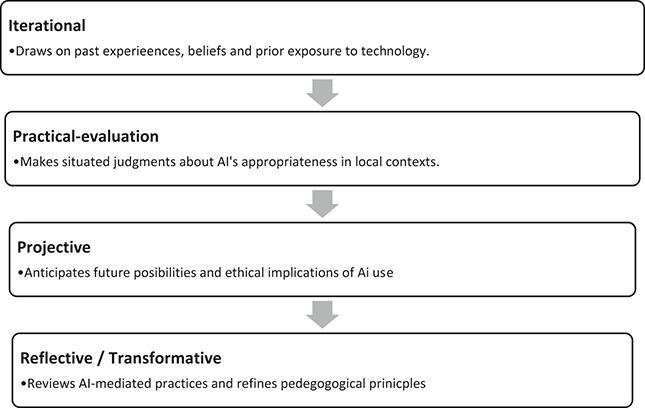
Across cases, teachers’ actions demonstrate practical-evaluative agency, the ability to make situated judgments in response to contextual constraints. They used AI to expedite technical work (drafting rubrics or generating examples) while maintaining full control over evaluative interpretation (Awidi, Reference Awidi2024). This hybrid approach exemplifies how AI-mediated assessment can enhance efficiency without eroding teacher autonomy (Nazim & Alzubi, Reference Nazim and Alzubi2025). Crucially, the process of adaptation itself became a reflective act: by critiquing AI outputs, teachers articulated clearer assessment criteria and strengthened their own evaluative literacy (Oates & Johnson, Reference Oates and Johnson2025). These findings reinforce that GenAI can serve as a catalyst for professional learning when situated within a framework of critical, context-sensitive use (Messina & Panciroli, Reference Messina and Panciroli2025). Figure 2 provides a flowchart showing how teacher agency is enacted through engagement, evaluation, adaptation, and reflection in AI-mediated assessment (adapted from Jia & Pun, Reference Pun2025).
Ecological process of teacher agency in AI-mediated assessment
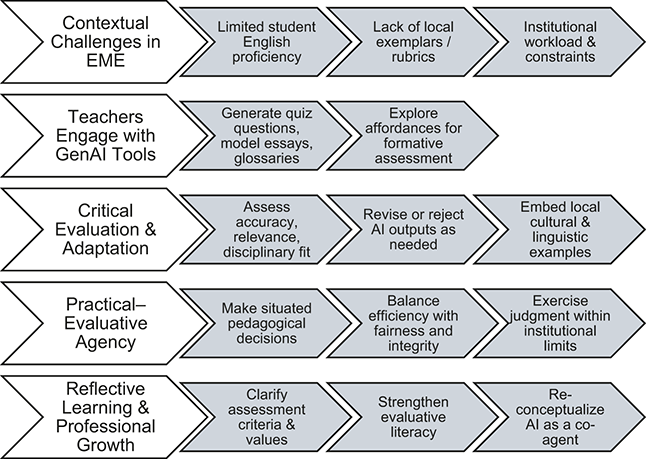
While teacher agency highlights how educators actively adapt, critique, or resist GenAI in assessment practices, these decisions also foreground a related challenge: how student learning and authorship can be reliably evidenced in AI-mediated environments. As teachers exercise professional judgment over when and how GenAI is used, questions of verification, authenticity, and epistemic trust become increasingly salient, particularly in EME contexts where language proficiency and disciplinary learning develop simultaneously.
Beyond questions of agency and practice, the use of GenAI also has important implications for teachers’ professional identity in EME contexts. As AI systems increasingly perform functions traditionally associated with teacher expertise, such as feedback provision, exemplification, and evaluative judgment, teachers may experience shifts in how their authority, role boundaries, and professional value are perceived. In this sense, professional identity is not eroded by GenAI per se but is renegotiated through teachers’ positioning of AI as a mediated tool rather than an epistemic authority. Teachers who actively critique, adapt, or reject AI outputs reaffirm their professional identity as disciplinary experts and ethical decision-makers, rather than passive implementers of automated systems. This highlights the importance of institutional and pedagogical cultures that support teachers’ autonomy, judgment, and reflective practice in AI-mediated EME environments.
Challenges in Verifying Student Output in the EME Classrooms
The proliferation of GenAI raises acute concerns about verifying authorship and originality (Luo, Reference Luo2024). Students can now generate essays, summaries, or even multimodal presentations with minimal personal input. In EME contexts, where students are still developing both disciplinary knowledge and academic English, distinguishing genuine learning from AI-generated text becomes particularly challenging (Amirjalili et al., Reference Amirjalili, Neysani and Nikbakht2024). Research on students’ multimodal representations shows that learners often conflate GenAI with human scientific authority, attributing unwarranted epistemic trust to machine outputs (Cooper et al., Reference Cooper, Tang, Rappa, Crompton and Burke2024). This complicates assessment: if students submit AI-authored work, teachers may mistakenly interpret it as evidence of disciplinary and linguistic mastery. Moreover, traditional plagiarism detection tools often fail to identify AI-generated text (Santra & Majhi, Reference Santra and Majhi2023). To counter this, verification must extend beyond textual analysis. Oral defenses, reflective commentaries, process portfolios, and in-class generative tasks can require students to demonstrate authorship through explanation and adaptation (Ryan et al., Reference Ryan, Abramov, Acker and Elkins2025). In this way, assessment becomes not only about the final product but also about evidencing the learning journey. Box 10 provides prompting frames for readers to try out.
Goal: Encourage educators to reflect on how they adapt or resist AI tools in their own evaluative practices.
Prompt Type: Reflective.
Example Prompt: “Generate sample feedback for a student’s report using an AI tool. Then write a 100-word reflection on what you would modify or reject in that feedback – and why.”
Reflection: Teachers articulate their evaluative reasoning, reinforcing professional autonomy and critical mediation in AI-enhanced environments.
Student-Side Illustration: Epistemic Reading and Evaluation of AI
While teacher-led adaptation safeguards assessment quality, students’ engagement with GenAI poses parallel challenges for evaluation (Wang et al., Reference Wang, Chen, Hu, Li and Gu2025). In EME classrooms, where disciplinary texts are often linguistically and conceptually demanding, learners increasingly rely on ChatGPT or similar tools to summarize or explain content. The question for assessment, therefore, is not only whether students can reproduce correct answers but whether they can critically evaluate AI-mediated knowledge (Liu et al., Reference Liu, Lee and Zhao2025).
Findings from recent research on Hong Kong secondary students’ reading of AI-generated socio-scientific texts (Cheung et al., Reference Cheung, Pun and Li2024) reveal important insights. Students were asked to interpret ChatGPT-produced texts about climate change using multimodal representations, drawings, and written reflections. Analysis through Lemke’s framework of presentational, orientational, and organizational meaning showed that while students easily extracted factual information (content-interpretation), they struggled to assess the epistemic legitimacy of AI-generated claims. Many assumed that ChatGPT “conducts experiments” like scientists, conflating algorithmic text generation with empirical inquiry. Only a small fraction (0.9–3.4%) demonstrated higher-level epistemic evaluation skills, such as questioning data sources or recognizing the tentative nature of scientific knowledge. These findings carry major implications for assessment in EME. They highlight the need for instruments that go beyond language accuracy to measure students’ epistemic awareness, the ability to understand how knowledge is produced, justified, and verified in both science and AI. Incorporating reflective commentaries, oral explanations, and multimodal artifacts into assessment tasks can help educators trace students’ reasoning processes. Moreover, teaching interventions that explicitly contrast the epistemologies of AI and science, how each “knows,” can be embedded into assessment criteria. Evaluating epistemic reading thus becomes an avenue for cultivating not only disciplinary literacy but also critical AI literacy (Lin & Dai, Reference Lin and Dai2025).
Designing Assessments that Promote Integrity and Learning
The challenge is not simply to detect misconduct but to design assessment tasks that make academic dishonesty less attractive and less feasible (Ellis et al., Reference Ellis, Han and Cook2025). In EME, this means fostering tasks that balance content mastery, language development, and epistemic engagement. Principles include:
Process-oriented assessment: Collecting drafts, revision logs, and prompt histories to highlight the evolution of student work. For example, in an EMI academic writing course, students may be asked to submit multiple drafts of their scientific reports alongside screenshots of ChatGPT prompts and subsequent edits. This allows teachers to trace how students refine their arguments, improve lexical precision, and develop disciplinary reasoning through iterative feedback cycles.
Epistemic engagement: Asking students to critique or evaluate AI-generated texts, as demonstrated in your climate change reading study, cultivates both disciplinary literacy and critical AI awareness. For instance, students in an EME environmental science class can compare an AI-generated summary of a journal article on climate change with the original text, identify misinterpretations or biases, and discuss how linguistic choices affect the accuracy and credibility of scientific knowledge.
Authentic contexts: Designing assessments tied to local or personal experiences makes outsourcing to AI less effective. For example, in a Hong Kong EMI business communication course, students might be required to design a proposal addressing a real local issue, such as promoting sustainable tourism in Sai Kung, based on field observations and stakeholder interviews. This context-specific data collection ensures that genuine engagement and contextual knowledge, not generic AI output, drive student performance.
Hybrid modalities: Integrating oral, written, and multimodal components ensures that assessment captures diverse evidence of learning. For instance, in an EMI STEM module, students could present their laboratory findings through a short oral presentation supported by an infographic and a written reflection explaining how English facilitated their articulation of scientific reasoning. Such hybrid assessments encourage students to express understanding across multiple communicative modes and contexts.
Such designs not only safeguard integrity but also align with the broader EME agenda of cultivating critical, multilingual learners who can navigate both disciplinary and technological landscapes (Davoodi, Reference Davoodi2024). Box 11 provides prompting frames for readers to try out.
Goal: Embed transparency into assessment design to discourage academic misconduct.
Prompt Type: Process-tracing.
Example Prompt: “Ask students to submit a screenshot of an AI-generated draft and annotate how they revised or restructured it. What changes show critical engagement?”
Reflection: Students learn that documenting the writing process – rather than concealing AI use – builds academic integrity and metacognitive awareness.
Formative Feedback and Adaptive Testing with AI
One of GenAI’s most promising contributions lies in formative feedback and adaptive assessment (Mills et al., Reference Mills, Mizouri and Peach2025). AI-powered platforms can provide immediate, individualized responses to student writing or problem-solving attempts, offering opportunities for self-regulated learning (Chang et al., Reference Chang, Lin, Hajian and Wang2023). For example, adaptive testing systems can adjust question difficulty in real time, supporting learners with varied English proficiency levels in EME classrooms.
Yet the quality of such feedback is uneven (Khodi & Curle, Reference Khodi and Curle2025). Teachers in EMI settings report that AI-generated comments often require adaptation, as they overlook discipline-specific conventions or cultural appropriateness (Fan et al., Reference Fan, Tan and Lim2024). Moreover, there is a risk of “over-scaffolding” where students rely on AI feedback passively without developing independent evaluative capacity, a concern echoed in both reading and multimodality studies (Yavich, Reference Yavich2025). The way forward is teacher-mediated integration: using AI to generate first-round feedback that teachers and students then critique, adapt, and expand. This transforms AI into a tool for dialogic learning rather than a substitute for human judgment. Box 12 provides prompting frames for readers to try out.
Goal: Develop students’ evaluative literacy by analyzing automated feedback.
Prompt Type: Analytical.
Example Prompt: “Paste a paragraph into an AI feedback tool. Highlight three useful comments and two misleading ones. Explain why you would trust or disregard them.”
Reflection: Learners practice discernment and gain insight into how feedback shapes disciplinary expectations.
Institutional Policies, Fairness, and AI Literacy in Assessment
Beyond classroom practice, the governance of AI in assessment raises institutional and ethical questions. Universities and schools across Asia are beginning to develop guidelines for the responsible use of GenAI in teaching and evaluation. However, policy responses remain uneven, oscillating between prohibition and permissive experimentation. A central concern is fairness (Moorhouse et al., Reference Moorhouse, Yeo and Wan2023). Automated scoring systems trained predominantly on native-speaker corpora can misinterpret multilingual writers’ syntactic patterns as errors, perpetuating linguistic bias (Borrego, Reference Borrego and Khouy2025). Conversely, AI-detection tools frequently produce false positives for second-language writing, unfairly penalizing students who rely on legitimate language support. In multilingual EME environments, these tensions can amplify inequities rather than resolve them.
To mitigate such risks, institutions should adopt transparency and disclosure frameworks (Lund et al., Reference Lund, Orhan and Mannuru2025). Requiring students to declare AI involvement in assignments promotes accountability without stifling innovation. Similarly, instructors need clear rubrics specifying what constitutes acceptable AI assistance (e.g., language editing vs. content generation). Importantly, assessment policies should recognize the pedagogical potential of AI while delineating ethical boundaries. Embedding AI literacy within assessment policy is also vital. For EME teachers, this entails developing the competence to evaluate AI-generated feedback, understand model limitations, and integrate them ethically into grading. For students, AI literacy involves critically using tools to support comprehension, self-assessment, and revision rather than as a shortcut to performance. Institutional professional development initiatives can support both groups by offering workshops on AI ethics, bias awareness, and prompt design. Ultimately, the goal is to foster an ecosystem of responsible AI use, where assessment practices are transparent, equitable, and educationally generative (Dignum, Reference Dignum2019). Box 13 provides prompting frames for readers to try out.
Goal: Build awareness of fairness, bias, and transparency in AI-assisted assessment.
Prompt Type: Policy simulation.
Example Prompt: “Draft a short ‘AI-use declaration’ for your assignment. What kinds of AI support would you disclose? Why is transparency important in EME assessment?”
Reflection: Students internalize ethical dimensions of AI use and understand institutional expectations for responsible disclosure.
Conclusion
As GenAI continues to permeate education, the central question for EME is not whether to use GenAI in assessment but how to use it responsibly. The evidence from Hong Kong and mainland China suggests that human judgment, teacher agency, and epistemic awareness remain indispensable. When combined thoughtfully, AI can amplify feedback precision, reduce administrative load, and personalize learning. Yet, it is human educators who ensure that assessment remains authentic, equitable, and intellectually meaningful. The future of EME assessment therefore lies in hybrid, ethically grounded systems where technology enhances, rather than replaces, the interpretive and relational dimensions of evaluation. GenAI is reshaping assessment in EME by offering unprecedented efficiency, adaptability, and accessibility. Yet, its integration exposes critical tensions: between automation and authenticity, between efficiency and equity, and between surface accuracy and deep learning. Studies in Hong Kong classrooms show that students must be guided to evaluate, not just consume, AI outputs, while teachers’ agency is indispensable in contextualizing and validating AI-generated feedback. Assessment design in EME must therefore strike a balance. AI should be harnessed for formative feedback, adaptive testing, and technical accuracy, while human educators safeguard epistemic integrity, cultural nuance, and the broader goals of disciplinary literacy. Ultimately, the future of assessment in EME is not about replacing human judgment with AI, but about crafting hybrid models where technology amplifies, rather than undermines, the authenticity and depth of student learning.
Reflective Questions
1. How can teachers maintain fairness and context sensitivity when using AI for grading or feedback?
2. What assessment formats (e.g., portfolios and oral defenses) help verify authorship and learning in AI-rich environments?
3. How can AI feedback support, not replace, teachers’ formative guidance?
4. What might an “AI literacy framework” for assessment include for both teachers and students?
5. How can assessment design make students’ learning processes, reasoning, and language development visible, rather than focusing solely on AI-assisted final products?
6 Institutional Realities and Policies
Teacher workload and digital literacy challenges Institutional AI policies and ethical frameworks Balancing innovation with professional judgment Building capacity for sustainable AI integration What you’ll explore in this section:
Introduction
While GenAI tools promise to alleviate some burdens in EME, teachers report heightened pressures around workload, digital literacy, and pedagogical alignment (Darvishi et al., 2023; Feng & Liu, Reference Feng and Liu2024). EME teachers already navigate dual responsibilities, delivering subject knowledge in English and simultaneously supporting students’ language development (Chen et al., Reference Chen, Han and Wright2020; Lasagabaster, Reference Lasagabaster2022). The introduction of GenAI tools has added another dimension: teachers must not only adapt their own pedagogy but also manage student use of GenAI outputs that vary in accuracy, genre, and epistemic reliability (Karataş et al., Reference Karataş, Eriçok and Tanrikulu2025).
Before discussing specific policy examples, it is important to clarify what is meant by institutional in this context. In this section, the term institutional is used in a broad but specific sense. It refers not only to formal university-level policies on GenAI, but also to the leadership, infrastructure, and support structures that shape how such policies are interpreted and enacted in practice. This includes (a) policy leadership and governance (e.g., guidance issued by senior management or teaching and learning committees), (b) infrastructural provision (e.g., access to approved GenAI tools, data protection systems, and learning platforms), and (c) pedagogical and professional support structures (e.g., staff development, assessment guidance, and ongoing consultation). Together, these dimensions influence whether institutional responses to GenAI function as enabling frameworks for teaching and learning or as restrictive compliance mechanisms.
For many teachers, learning to operate GenAI tools requires additional training time, often without institutional support (Kohnke et al., Reference Kohnke, Moorhouse and Zou2023; Moorhouse et al., Reference Moorhouse, Wan and Wu2024). Those with limited prior experience in technology integration express concerns about increased workload: preparing prompts, filtering AI-generated content, and aligning outputs with curriculum objectives. Moreover, digital literacy gaps are not evenly distributed. Younger teachers or those with strong technology backgrounds may experiment confidently, while others experience stress and skepticism (Oprea et al., Reference Oprea, Nica, Bâra and Georgescu2024). This unevenness shapes classroom practices and can widen disparities in student learning experiences. The integration of GenAI has the potential to transform the traditional teacher–student dyad into a triadic relationship. Teachers must now interpret, adapt, and critique AI outputs before they reach students, positioning themselves as epistemic gatekeepers who mediate between human learning and machine-generated knowledge.
Besides, institutional responses to GenAI also vary considerably across regions, reflecting different regulatory environments, educational traditions, and policy priorities. For example, institutions in parts of Europe often situate GenAI within existing data protection and academic integrity frameworks, emphasizing regulation, transparency, and risk management. In contrast, institutions in North America and Australia have tended to adopt more principle-based or adaptive policy approaches, focusing on academic judgment, permissible use, and assessment redesign rather than strict prohibition. Meanwhile, institutions in many Asian contexts, including EME-dominant systems, frequently balance innovation agendas with concerns about fairness, linguistic equity, and examination-driven assessment cultures, resulting in more cautious or hybrid policy positions. Making these contrasts explicit highlights that there is no single “best” institutional response to GenAI. Rather, institutional policies emerge from local histories, constraints, and educational priorities, underscoring the need for context-sensitive and pedagogically informed approaches rather than policy borrowing without adaptation.
To illustrate how these challenges manifest in real classrooms, the following section presents a series of case vignettes that capture the lived experiences of EMI teachers experimenting with AI integration. These cases move beyond abstract discussion to show how individual educators negotiate tensions between innovation and practicality, enthusiasm and skepticism, and institutional guidance and personal judgment. Each vignette demonstrates a distinct configuration of digital literacy, pedagogical alignment, and workload management, offering concrete insights into how teacher agency unfolds amid the shifting landscape of AI-mediated instruction.
Case Vignettes: Balancing Workload, Digital Literacy, and Pedagogical Alignment
Building on the discussion of teachers’ evolving roles and workload in the AI era, this section examines how these challenges play out in practice through real classroom cases. It focuses on how EMI teachers negotiate the interrelated demands of workload management, digital literacy, and pedagogical alignment when integrating AI tools into their teaching.
Pedagogical alignment also poses challenges. In the context of EME, pedagogical alignment refers to how teaching strategies, learning materials, and assessment practices coherently support both content learning and language development. The introduction of generative AI complicates this alignment: while AI can assist in lesson planning and text generation, it may not always reflect the linguistic or disciplinary demands of specific curricula. Teachers in Jia and Pun’s (Reference Pun2025) case study exercised agency in creative ways, such as tailoring AI prompts to scaffold disciplinary vocabulary or modifying AI texts for student comprehension, but they simultaneously confronted constraints at both the school and platform levels. These included prescriptive curricula, limited training opportunities, and opaque AI affordances. Such tensions reveal that while AI may “save time” in some tasks, it also risks intensifying hidden labor. The complexities of teacher workload and pedagogical alignment can be further illustrated through three cases from a recent study of EMI teachers in China (Jia & Pun, Reference Pun2025). Each teacher’s engagement with ChatGPT reflected distinct forms of agency shaped by their digital literacy, institutional support, and subject-specific constraints. Next, we share examples of three teachers and how they negotiated their agency:
Yang, an IGCSE business teacher, initially approached ChatGPT with skepticism due to limited prior experience with technology-assisted instruction. Facing the persistent challenge of balancing content delivery with students’ limited English proficiency, she began experimenting with prompts such as “How can I support my students with limited English language proficiency in business learning?” Through iterative refinement, Yang used ChatGPT to generate ideas for group collaboration activities and contextualized examples. This process shifted her teaching from a teacher-centered to a more student-centered approach, but also demanded additional time to verify linguistic and conceptual accuracy, illustrating how AI use can simultaneously empower and burden educators.
Qing, an A-level economics teacher, adopted ChatGPT to address another gap in EMI teaching: the shortage of localized writing exemplars. She used the tool to generate sample argumentative essays and then manually adapted the vocabulary and sentence structures to suit her students’ intermediate English levels. While GPT outputs enhanced efficiency in material preparation, Qing spent significant time reviewing and rewriting passages to align with curricular expectations and marking rubrics. Her experience underscores how teachers remain responsible for ensuring disciplinary accuracy and linguistic appropriateness, even when supported by AI.
In contrast, Chen, who taught IGCSE economics, quickly abandoned ChatGPT after finding factual errors in AI-generated glossaries of economic terminology. Although optimistic at first, she deemed the revision process inefficient and questioned the tool’s reliability. Her decision to discontinue use demonstrates a critical form of agency: the capacity to reject technology when it undermines pedagogical integrity.
Taken together, these three vignettes reveal a spectrum of teacher engagement with AI, from cautious experimentation to selective adaptation and eventual rejection, highlighting how personal beliefs, disciplinary expectations, and institutional constraints shape educators’ responses to technological innovation. This diversity of experiences underscores that there is no single or linear pathway toward AI integration in EMI classrooms. Together, these cases reveal that integrating AI into EMI practice is neither linear nor universally beneficial. Teachers continuously negotiate their digital competence, professional judgment, and institutional expectations, reaffirming that pedagogical discernment, rather than technological novelty, determines meaningful classroom use.
As one participant in Jia and Pun (Reference Pun2025) remarked, “I thought ChatGPT would save me time, but I spend even longer checking whether its examples make sense for my students.” Another teacher described the paradox succinctly: “AI helps with ideas, not with context.” These comments illustrate how professional discernment, rather than technological availability, ultimately governs classroom practice. While teachers negotiate the micro-level challenges of classroom integration, these experiences are embedded within broader institutional and policy frameworks. Rather than passively adopting technology, teachers continually interpret, adapt, or even reject AI tools based on professional judgment. Their agency unfolds through the interplay of past experience, real-time decision-making, ethical foresight, and reflective transformation, underscoring that AI integration is ultimately a pedagogical, not a technological, process. Box 14 provides prompting frames for readers to try out.
Goal: Encourage educators to articulate their decision-making process with AI.
Prompt Type: Reflective scenario.
Example Prompt: “Describe a moment you accepted or rejected AI assistance in teaching. What principles guided that choice?”
Reflection: Promotes awareness of interrational, practical-evaluative, and projective dimensions of agency.
Institutional Policies, Ethics, and Data Concerns
Institutions are beginning to draft policies on GenAI use, but these are often reactive, fragmented, or inconsistent across faculties. Some universities issue blanket statements discouraging student reliance on AI, while others encourage experimentation with clear attribution (Moorhouse et al., Reference Moorhouse, Yeo and Wan2023; Wu & Wu, Reference Wu and Wu2024; Wang et al., Reference Wang, Dang, Wu and Mac2024). Yet teachers frequently operate with unclear policies, unsure of how much AI use is permissible in lesson planning, assessment, or feedback (Elsayed, Reference Elsayed2024). The absence of robust ethical and data protection frameworks exacerbates this uncertainty (Kashefi et al., Reference Kashefi, Kashefi and Ghafouri Mirsaraei2024). Studies of students reading ChatGPT-generated socio-scientific texts highlight the epistemic risks of uncritically adopting AI claims, particularly in domains such as climate change, where misinformation is rife (Cheung et al., Reference Cheung, Pun and Li2024; Fulsher et al., Reference Fulsher, Pagkratidou and Kendeou2025; Siani et al., Reference Siani, Joseph and Dacin2024). If students are to become critical consumers of GenAI outputs, institutions must articulate guidelines around reliability, citation, and accountability. Data security is another pressing issue. Teachers express unease about uploading student essays, classroom recordings, or exam scripts into commercial GenAI platforms whose data storage and usage policies remain opaque. Concerns over surveillance, intellectual property, and the exploitation of student work are particularly salient in contexts with strong public sensitivity to privacy (Huang, Reference Huang2023). Without institutional safeguards, teachers are left to make ad hoc decisions, balancing potential benefits with possible ethical breaches. Box 15 provides prompting frames for readers to try out.
Goal: Help teachers and administrators identify policy gaps.
Prompt Type: Analytical.
Example Prompt: “Review your institution’s AI policy. Does it address student use, teacher use, and data privacy explicitly? What is missing?”
Reflection: Raises awareness of uneven policy coverage and ethical ambiguities.
Institutional Capacity Building and Collaboration
Beyond individual classrooms, institutional readiness determines how effectively GenAI tools are integrated into EME programs. Successful adoption often hinges on inter-departmental collaboration between IT units, teaching-and-learning centers, and academic departments. Some universities have begun forming AI teaching taskforces that co-develop ethical guidelines, model policies, and repositories of AI-enhanced teaching exemplars. However, in many EME institutions, such coordination remains sporadic. Investing in centralized support structures, for example, faculty-wide AI literacy workshops, peer-mentoring schemes, and consultation hotlines, can relieve teachers of the burden of self-training and reduce disparities in access to digital resources. These initiatives also foster a shared institutional culture that views AI not merely as a technological add-on but as part of ongoing pedagogical innovation. Box 16 provides prompting frames for readers to try out.
Goal: Generate ideas for practical support mechanisms.
Prompt Type: Design thinking.
Example Prompt: “Sketch a support system your department could implement (e.g., peer mentoring, AI clinic, and training series). Who should lead it?”
Reflection: Encourages bottom-up capacity building and cross-faculty collaboration.
Balancing Innovation and Professional Judgment
Despite institutional constraints, teachers demonstrate resilience and creativity in integrating GenAI tools. Case studies show that teacher agency remains the decisive factor in whether GenAI enriches or undermines EME classrooms. Teachers who critically evaluate GenAI outputs, contextualize them within disciplinary norms, and adapt them for student needs model professional judgment that no algorithm can replace. Yet sustaining such professional judgment requires systemic support. Institutions need to:
Provide targeted professional development in both AI literacy and EME pedagogy, recognizing that the two are now inseparable.
Develop transparent AI policies that balance academic integrity with innovation, clarifying boundaries for acceptable use in teaching, learning, and assessment.
Ensure ethical and secure infrastructures so that teachers and students can experiment with AI tools without fear of data misuse.
Value teacher expertise by embedding their voices in AI policy-making, rather than imposing top-down directives.
A growing body of research on students’ epistemic engagement with AI underscores that critical literacy cannot be outsourced to technology. Teachers must remain the mediators who help students interrogate the origins, reliability, and authority of AI-generated texts. Institutions, in turn, must recognize this professional role as central, not peripheral, in the era of GenAI. Box 17 provides prompting frames for readers to try out.
Goal: Support teachers in weighing innovation against risk.
Prompt Type: Decision analysis.
Example Prompt: “Before using AI in assessment or lesson planning, ask: Is it (1) Ethical? (2) Equitable? (3) Educationally beneficial? (4) Transparent to students?”
Reflection: Reinforces a culture of informed, responsible innovation.
Conclusion
Institutional realities shape, constrain, and sometimes enable how GenAI tools are integrated into EME classrooms. Teachers face heavy workloads, uneven digital literacies, and ambiguous policy environments. They also confront ethical dilemmas around student trust, data security, and the epistemic quality of AI outputs. Yet teacher agency persists, offering a vital counterbalance to both technological determinism and institutional inertia.
For GenAI to be meaningfully and ethically integrated, institutions must move beyond ad hoc reactions. They must invest in supportive policies, professional development, and robust ethical guidelines that respect teacher expertise. Only by centering professional judgment and agency can innovation in GenAI be harnessed without compromising the authenticity, intentionality, and integrity of EME.
Looking forward, institutions will need to move from reactive governance to proactive capacity-building. Policy development should be iterative and evidence-based, drawing on ongoing classroom research and teacher consultation. Establishing AI ethics committees within faculties, funding pilot projects that explore discipline-specific AI use, and integrating AI literacy outcomes into teacher-education curricula can ensure sustainable innovation. Future research might also examine cross-institutional collaborations and longitudinal impacts of AI policy implementation on teacher workload, student outcomes, and academic integrity across EME contexts.
Reflective Questions
1. What are the essential elements of a fair and transparent AI policy for EME institutions?
2. How can teachers balance data protection concerns with the practical use of AI tools?
3. How might cross-faculty collaboration enhance AI literacy and reduce digital inequality?
4. When does AI enhance professional judgment, and when does it risk replacing it?
5. How can institutions ensure that AI-related policies are responsive to disciplinary, linguistic, and cultural diversity across EME contexts rather than applied as one-size-fits-all solutions?
7 Professional Learning and Future Directions
Four lenses of critical-practice GenAI in EME: (1) Learning despite AI; (2) Learning with AI; (3) Learning about AI; and (4) Learning for AI. Future directions What you’ll explore in this section:
Introduction
This Element has aimed to assist content and language teachers in EME contexts to capitalize on the opportunities GenAI affords and find ways to counter any threats it poses. What we have not really covered yet is the philosophical debates around GenAI and how we may need to frame EME learning differently as these tools, and specifically GenAI agents and platforms, get embedded into various processes. At the same time, we have yet to touch upon the need for teachers and learners in HE institutions to have a voice regarding the ways GenAI is integrated into learning, teaching and assessment practices.
Currently, there is a sense of inevitability that GenAI will be everywhere all the time and will be universally beneficial to mankind. However, as we mentioned in Section 1, these tools are primarily commercial tools developed for commercial interests for the benefit, primarily of company shareholders. And as we discussed in Sections 2 and 3, the disruptions caused by GenAI in HE have likely detracted from any benefits. Any studies that have found learning gains from the use of GenAI, have generally relied on a small sample using cross-sectional data or short quasi-experimental studies that have been limited in scope, sample and length.
In this section, we want to remind colleagues that pedagogy should always lead our decision-making processes – learning first → tool second. We want to say that it is okay if colleagues do not want to use GenAI tools as part of their professional practices → there are strong ethical and environmental reasons why you would not want to use them. We want to remind teachers and learners that learning content and language is cognitively demanding and we learn through struggling with comprehending ideas, concepts, and new language → GenAI tools promote efficiency, yet, we need to consider if we can truly understand something if we have not taken the time to dig deep, ask questions, challenge our current assumptions and mis-conceptions, share our emerging understandings and come to new realizations?
Studies about LLMs (specifically ChatGPT) consistently show that students like to use GenAI tools as part of their academic study but are aware they create inaccuracies, yet, they rarely express an awareness that these are ideological tools that are embedded with content and algorithms that represent particular world views and opinions that overtime could shape their behavior, relationships, and beliefs (Darvin, Reference Darvin2025; Moorhouse et al., Reference Moorhouse, Nejadghanbar and Yeo2025).
Therefore, in this section, we adopt four interrelated lenses to explore learning and AI that can complement our critical-practical view of GenAI in EME: (1) Learning despite AI; (2) Learning with AI; (3) Learning about AI; and (4) Learning for AI. Finally, we discuss possible future directions for scholarship.
Learning Despite AI
It seems that since ChatGPT was released to the general public in November 2022 that the world of education has been consumed by “GenAI fever.” A colleague recently shared that he was suffering “AI-fatigue” due to an overload of AI workshops, AI literature, and AI discussions, and we think this is probably a common feeling of educators worldwide. Therefore, our first lens focuses on “learning despite AI.” In this framing, the goal of the instructor is to help build learners’ capacity and desire for self-directed learning and resilience to cognitive struggle as GenAI tools are tempting us to automate tasks we find difficult or time-consuming (see Section 3).
Throughout history, the evolution of technologies has often removed the need to learn specific knowledge and skills our ancestors needed to “survive” and “thrive” within society. Our great ancestors would have needed to be able to read the stars to navigate, our parents, read maps and plan an appropriate route, while we need to be able to interpret the directions suggested by real-time digital navigation tools, such as Google Maps.
In the world, where GenAI is everywhere, we need to place value on effort to learn and recognize that learning cannot be a shortcut. We need to distinguish between the performance of learning and authentic learning. At the same time, we need to provide students with the knowledge and skills needed for self-directed learning, so they have the ability to engage in learning independent of us.
Pedagogical, a teacher could implement a “slow thinking” approach to their course where they explicitly prohibit GenAI in certain tasks or activities with the aim of cultivating deep reading, cognitive struggle, and self-directed reflection. For example, in an undergraduate chemistry EME course, students could be tasked with completing a “slow reading” activity on a complex technical article, first producing their own annotated summary and list of uncertainties without any AI tools. They then compare interpretations in small groups and only afterwards consult a GenAI summary, critically evaluating where their human reading captured nuance (e.g., context, implications, and limitations of the study) that the GenAI missed or oversimplified. This sequence foregrounds effortful comprehension, metacognitive awareness, and disciplinary reading strategies, with GenAI framed as an object of critique rather than a shortcut.
Finally, along with the neo-liberal tropes regarding EME university education as merely preparation and a gatekeeper to employment, we need to highlight the role multilingual education has in contributing to the person we are becoming. We can cultivate a desire for self-improvement, a belief that the knowledge and skills we are learning add to who we are, the enrichment learning content and language brings to our lives. EME, in this framing, is not just about the benefits EME brings to the students’ employment and career opportunities, but also about becoming a multilingual member of the global community. To do this, we need to take a more long-term approach to learning, see it as the gradual development of knowledge and skills over time, recognizing diversity in learning pathways, and promoting the enjoyment of learning.
Learning With AI
Most of this Element has been dedicated to the “Learning with AI” lens of AI in EME. Sections 2 and 4 explicitly explore the ways GenAI can assist with scaffolding learners’ content and language learning in EME. In this part, we want to re-emphasis here that the goal of GenAI use should be about enhancing the quality of the learning rather than for expedience. We need to avoid the argument that these tools can save time, but rather, they can allow us to improve our pedagogy for the benefit of our students’ content and language learning. If we feel they cannot do this, just like in our research endeavors (see Moorhouse et al., Reference Moorhouse, Nejadghanbar and Yeo2025), we probably should not use them.
The SAMR model (SAMR stands for: Substitution, Augmentation, Modification, and Redefinition; see Puentedura, Reference Puentedura2013) provides a useful framework for thinking about GenAI integration into EME pedagogy:
At the substitution level, GenAI acts as a direct, but nonfunctional, substitute for a traditional teaching approach.
At the augmentation level, GenAI act is used to substitute a traditional teaching approach but also adds functional improvements.
At the modification level, GenAI is used to significantly redesign the task or activity, allowing for more complex interactions.
At the redefinition level, it enables the creation of new tasks that were not previously possible.
Under this model, we should be thinking about using GenAI that at least augments our current practices, rather than substitutes, with the aim of redefying our practices (most of the ideas in Sections 2 and 4 are related to augmenting, or at most, modifying our practices).
Using GenAI tools could substantially reduce project costs, thereby enabling the redefinition of pedagogical practices. For example, in a capstone EME engineering course, student teams could design a low-cost renewable energy solution for a specific community and use GenAI to simulate multiple stakeholders (local residents, engineers, regulators, and investors). Students would need to iteratively negotiate with these AI-simulated stakeholders, adapting both their technical design and the way they communicate it for different audiences. They then compare the GenAI-generated perspectives with real case materials and reflect on mismatches, biases, and omissions in the GenAI’s representations. This task, which would be logistically impossible at scale without GenAI, redefines what is feasible in the classroom by integrating complex socio-technical decision-making, multilingual communication, and critical AI literacy in a single learning experience.
At present, we have limited real-world case examples of how AI might redefine our practices. However, when we have evidence-informed examples or have engaged in practitioner research to explore the utility of these approaches, then hopefully, we will be able to conceive new ways of thinking about learning in EME.
Learning About AI
The “Learning about AI” lens is concerned about the attributes, knowledge and skills, or the AI literacies/competencies learners and teachers need to effectively and strategically use AI and navigate a world embedded with AI. There has been a lot of interest in conceptualizing the literacies and competencies needed for AI. There are several AI literacy/competence frameworks. An early framework developed pre-ChatGPT, based on a literature review, by Ng et al., (Reference Ng, Leung, Chu and Qiao2021), proposed four aspects of AI literacy: (1) know and understand, (2) use and apply, (3) evaluate and create, and (4) ethical issues. Warschauer and colleagues (Reference Warschauer, Tseng and Yim2023) propose a five-aspect framework:
1. Understanding: Students must develop a foundational understanding of the purpose, capabilities, limitations, and ethical considerations of different GenAI tools
2. Accessing: Students must acquire the skills to identify and select GenAI tools that best align with their specific learning objectives.
3. Prompting: Interacting effectively with GenAI tools requires learners to craft precise and purposeful prompts that elicit meaningful and relevant outputs.
4. Corroborating: This process involves cross-referencing AI outputs with trusted sources, identifying inconsistencies, and verifying information
5. Incorporating: Students should thoughtfully and ethically integrate GenAI outputs into their work, ensuring a balance between GenAI assistance and their own contributions.
Below are some helpful questions we can use to consider what knowledge is needed for each aspect of Warschauer and colleagues (Reference Warschauer, Tseng and Yim2023) framework.
1. Understanding:
How do GenAI tools work?
What is a context window?
What is training data?
What is an algorithm?
What is a token?
Why do they create the responses I get?
2. Accessing:
What do I want to do with AI?
What is the right tool for me?
What do I do if the tool doesn’t work the way I want it to?
3. Prompting:
What do I need to include in a prompt to get what I want?
How do I communicate with an AI tool?
What do I do if it doesn’t understand me?
4. Corroborating:
Does it make sense?
Do different AI tools give similar answers?
Are the sources cited real? Do they say what the AI says they say?
What do other ‘traditional’ sources say? Is it the same / different?
5. Incorporating:
What are the ethical and safe ways to use these tools?
What should I think about before using a tool? Copyright? Bias? Accuracy? Privacy? Environment?
Should I and how should I report my use of AI?
Common to most frameworks is the need for learners to understand how GenAI tools work (including their limitations), be able to select tools that align with their needs, be able to interact effectively with the tool through iterative prompting, be able to critique the outputs of AI and seek ways to verify and corroborate them, and maintain accountability and agency over their use of the tools.
However, we would also like to add a critical component to these aspects that draws on critical digital literacies. Darvin (Reference Darvin2025) defines critical digital literacies as “the practices of interrogating and resisting how power operates in the reproduction of ideologies, inequalities and modes of exclusion in digitally mediated spaces” (p.3). Given that GenAI tools and functionalities are being embedded in almost all digital spaces, it seems necessary for learners to be able to recognize the power behind these tools and their positioning as consumers when they interact and engage with these tools – in any domain of their life. While they may value the tools and feel they increase their agency by augmenting their current abilities, they also need to recognize these tools may be shaping their realities (Moorhouse et al., Reference Moorhouse, Nejadghanbar and Yeo2025). At the same time, they need to be able to recognize and navigate the hype associated with the tools’ developments and judge the utility of the tools themselves. Of course, for EME teachers to be able to assist learners to learn about AI, they themselves need relevant literacies and competencies as well (Moorhouse & Wong, Reference Moorhouse and Wong2025).
Learning For AI
Learning for AI is the aspect that is forward-looking. Here is where we need to speculate about the future needs of society and consider how to assist learners to acquire the knowledge and skills that might be relevant and useful in the future. This requires cutting through the hype and considering what the world may look like in five to ten years. For us, a holistic curriculum in EME that integrates learning outcomes, teaching activities and assessment tasks that focus on the first three lens, (1) learning despite AI, (2) learning with AI, and (3) learning about AI, are highly relevant to a future where AI is everywhere. Along with this is the ability to learn how to learn, or the metacognition of learning. While some professions will maintain a specific knowledge and skills base, others will likely evolve as technology further develops. We know from history that the people and places that master and command the most advanced technologies of the day tend to thrive and prosper.
In EME, this means we need to prepare our students with deep content knowledge (so they can interact with GenAI tools but recognize when they get things wrong), interdisciplinary awareness (so they can understand other perspectives and the limits of their knowledge), and language and literacy competence (so they can be effective communicators with or without GenAI tools, rather than rely on them).
The four lenses are summarised inTable 2 with pedagogical goals and guiding questions provided to help instructors consider ways to integrate them into their practices.
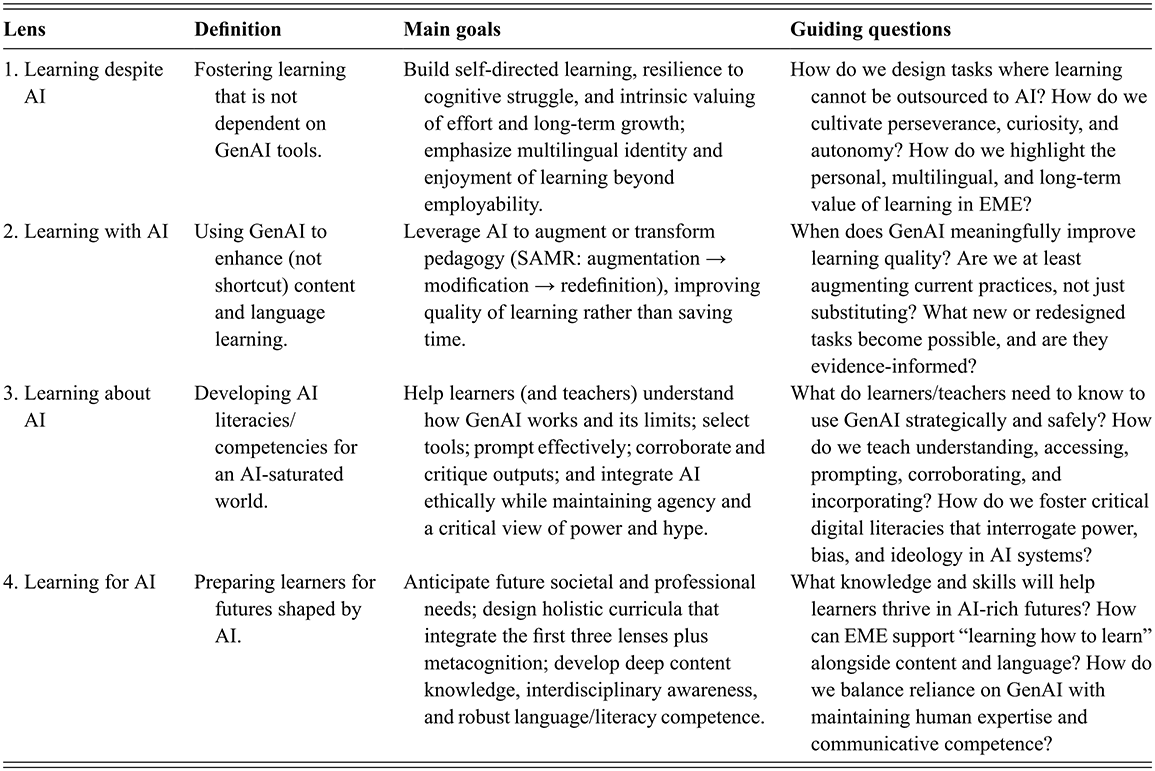
Table 2 Long description
The table consists of four columns: lens, definition, main goals, and guiding questions. It reads as follows. Row 1. Lens: Learning despite A I. Definition: Fostering learning that is not dependent on Gen A I tools. Main goals: Build self-directed learning, resilience to cognitive struggle, and intrinsic valuing of effort and long-term growth; emphasize multilingual identity and enjoyment of learning beyond employability. Guiding questions: How do we design tasks where learning cannot be outsourced to A I? How do we cultivate perseverance, curiosity, and autonomy? How do we highlight the personal, multilingual, and long-term value of learning in E M E? Row 2. Lens: Learning with A I. Definition: Using Gen A I to enhance (not shortcut) content and language learning. Main goals: Leverage A I to augment or transform pedagogy (S A M R: augmentation right arrow modification right arrow redefinition), improving quality of learning rather than saving time. Guiding questions: When does Gen A I meaningfully improve learning quality? Are we at least augmenting current practices, not just substituting? What new or redesigned tasks become possible, and are they evidence-informed? Row 3. Lens: Learning about A I. Definition: Developing A I literacies/ competencies for an A I-saturated world. Main goals: Help learners (and teachers) understand how Gen A I works and its limits; select tools; prompt effectively; corroborate and critique outputs; and integrate A I ethically while maintaining agency and a critical view of power and hype. Guiding questions: What do learners/teachers need to know to use Gen A I strategically and safely? How do we teach understanding, accessing, prompting, corroborating, and incorporating? How do we foster critical digital literacies that interrogate power, bias, and ideology in A I systems? Row 4. Lens: Learning for A I. Definition: Preparing learners for futures shaped by A I. Main goals: Anticipate future societal and professional needs; design holistic curricula that integrate the first three lenses plus metacognition; develop deep content knowledge, interdisciplinary awareness, and robust language/literacy competence. Guiding questions: What knowledge and skills will help learners thrive in A I-rich futures? How can E M E support learning how to learn alongside content and language? How do we balance reliance on Gen A I with maintaining human expertise and communicative competence?
Conclusion and Future Directions
GenAI is here to stay and will continue to develop and be further integrated into different tools, platforms and processes. Even more aspects of our digital experiences will be mediated through GenAI. It will become increasingly hard to find spaces that GenAI has not infiltrated. Because of this, it has the potential to do irreparable harm to our knowledge bases and trusted sources of information.
However, we are hopeful that after this period of uncertainty and rapid expansion of the tools, we will find a new paradigm where we recognize the tasks and processes we want automated and those that we want to remain human. We will move away from seeing these tools as solely those of efficiency, and instead, find a more pragmatic path where we consider the value the tools bring to the task we are engaged in, and bring back the inherent sense of enjoyment and value we get from learning content and language.
With this framing in mind, we believe more research needs to explore the ways GenAI can be integrated into EME, not as a crutch for students to lean on or for survival, but as a scaffold and facilitator of learning opportunities. We also need studies providing a more holistic understanding of the literacies and competencies learners need to be able to use these tools strategically. At the same time, we need to revisit the goals and objectives of EME and how we create an ecosystem that nurtures learners who recognize the mental effort that goes into learning, and at the same time, provides space for failing, false-starts, and struggles. This may mean a more flexible HE context where it is more about mastery than about grades or GPAs. Such an environment would offer multiple pathways to success and create space for learners to explore areas outside of their comfort zone without fear. So GenAI is one part of the future, but it may also provide us an opportunity to reconceptualise EME to better meet the needs of learners.
As GenAI becomes increasingly embedded in EME, future research must move beyond documenting opportunities and threats to understanding how GenAI reshapes the very ecology of English, disciplinary learning, and teaching. Across this Element, it is clear that AI operates simultaneously as a scaffold, mediator, accelerator, and disruptor, altering learners’ linguistic work, teachers’ pedagogical agency, institutional policy landscapes, and the socio-technical conditions under which academic knowledge circulates (Moorhouse & Wong, Reference Moorhouse and Wong2025). To build a coherent research agenda that reflects these complexities, EME teachers need to investigate not only micro-level classroom practices but also the broader ethical, cultural, epistemological, and infrastructural forces that shape and are shaped by GenAI’s role in multilingual universities. The following five research directions could form possible research agendas for rethinking the role of AI in EME classrooms:
AI-Mediated Disciplinary Literacy: It is important to explore how EME teachers’ use of GenAI may support or hinder students’ mastery of discipline-specific genres, rhetorical moves, multimodal practices, and epistemologies. This includes studying how GenAI alters reading-to-learn and writing-to-learn processes, noticing behaviors, and disciplinary voice formation.
EME Teacher Identity, Agency, and Pedagogical Impacts: Universities or governments should investigate how GenAI reshapes EME teachers’ professional roles, lesson design, feedback practices, classroom decision-making, and perceived expertise. A key area is understanding when AI enhances EME teacher agency and when it “destroys” pedagogical judgment or leads to over-automation (Tsao, Reference Tsao2025).
Ethical, Cultural, and Ideological Implications of AI Use: Researchers may explore how GenAI-embedded biases, cultural nudging, standardization pressures, and privacy or data-governance issues influence learners in multilingual EME settings. Research should map how AI subtly shapes attitudes toward English varieties, academic norms, and knowledge authority under the concept of Global Englishes.
Assessment, Integrity, and Learning Motivation: Researchers and educators should study how AI-enabled writing, translation, summarization, and multimodal production reshape assessment validity, integrity expectations, and student motivation to learn both content and language. This includes designing “AI-inclusive” assessment models that reward critical engagement rather than outsourcing.
EME Ecosystems and Policy Frameworks: Universities or governments should examine the design holistic ecosystems that align curriculum, assessment, technological infrastructure, and staff development across macro–meso–micro levels. Research should propose governance models that balance innovation, equity, environmental concerns, and academic freedom.
Overall, addressing these research directions will enable EME practitioners and institutions to navigate the disruptions brought by GenAI.
Reflective Questions
1. How has GenAI already influenced your own learning or teaching practices, either positively or negatively?
2. In what ways can you ensure that “learning first, tool second” guides your approach to AI integration?
3. What new skills or mindsets might you and your students need to thrive in a world increasingly shaped by AI?
4. How will you continue to evaluate and adapt your use of GenAI as tools, institutional expectations, and ethical norms evolve over time?
5. What forms of collaboration, professional development, or community building will be necessary to support sustainable and reflective GenAI use in EME contexts?
Acknowledgements
Declaration of GenAI use in the preparation of this Element
During the preparation of this Element, we used Grammarly and ChatGPT-4 as writing assistive tools (e.g., language editing and feedback provision). In addition, we used GPT-5 (via poe.com) to create some of the examples. These are indicated in the Element. Some AI examples have been edited for length. We take full scholarly accountability for the content of this Element.
Mark Warschauer
University of California, Irvine
Mark Warschauer is a Professor of Education at the University of California, with affiliated faculty appointments in the Departments of Informatics, Language Science, and Psychological Science. He is a member of the National Academy of Education and the director of the UCI Digital Learning Lab. Professor Warschauer is one of the most influential scholars in the world on digital learning, digital literacy, and the use of AI in Education. He has published 12 books on these topics, including with MIT Press, Cambridge University Press, Teachers College Press, and Yale University Press, and some 300 scientific articles and papers. His work has been cited more than 48,000 times, making him one of the most cited researchers in the world on educational technology. He previously served as founding editor of Language Learning & Technology and inaugural editor of AERA Open.
Tamara Tate
University of California, Irvine
Tamara Tate is a Project Scientist at the University of California, Irvine, and Associate Director of the Digital Learning Lab. She leads the Lab’s work on digital and online tools to support teaching and learning including generative AI, partnering with school districts, universities, nonprofit organizations, media and tech developers, and others in iterative development and evaluation. As the PI of an NSF-funded grant, she is studying the use of generative AI in undergraduate writing courses. She also studies secondary student writing as a member of the IES-funded national WRITE Center. She received her B.A. in English and her Ph.D. in Education at U.C. Irvine and her J.D. at U.C. Berkeley.
Editorial Board
Stephen Aguilar, University of Southern California, US
Maha Bali, American University in Cairo, Egypt
Irene-Angelica Chounta, University of Duisburg-Essen, Germany
Shayan Doroudi, University of California, Irvine, US
María Florencia Ripani, Ceibal Foundation, Uruguay
Bart Rientes, The Open University, UK
Neil Selwyn, Monash University, Australia
Jiahong Su, The University of Hong Kong
Ulrich Trautwein, University of Tübingen, Germany
Ying Xu, Harvard University
About the Series
Generative AI is one of the most disruptive technologies in modern history, with the potential to dramatically transform education for better or worse. This series will address cutting-edge topics on the intersection of generative AI with educational research and practice for diverse learners from early childhood to adult.
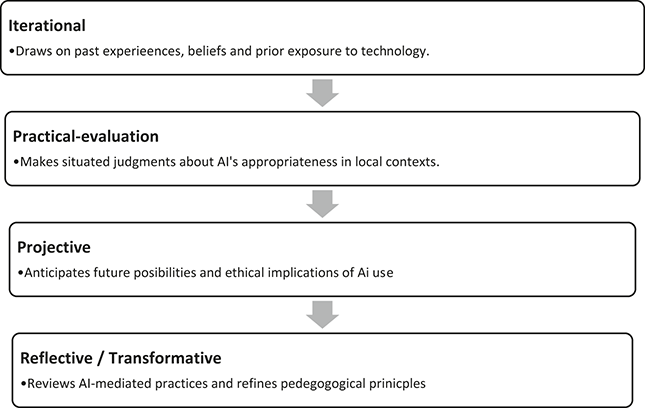
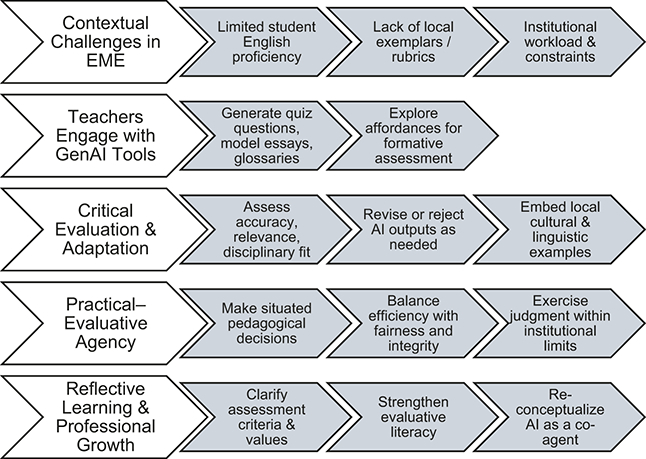
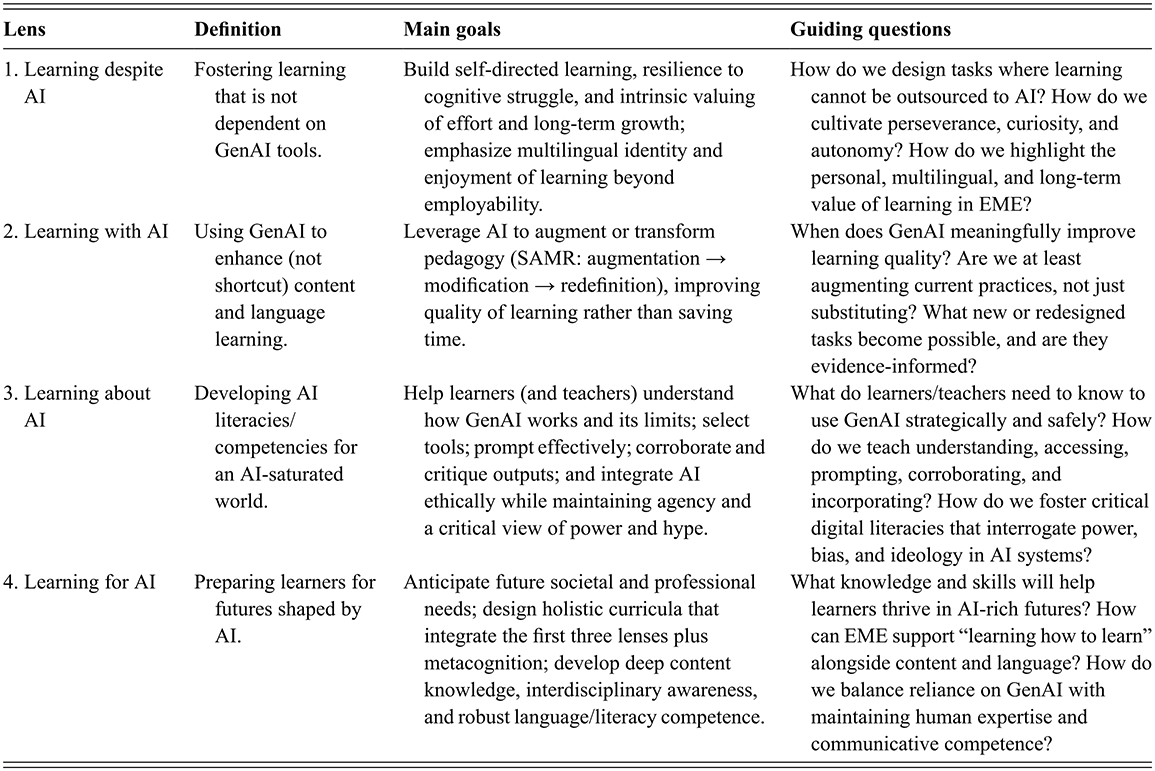

 Open access