


Interest and competition in the ‘deaf world’ is running very high now as everybody is anxious to ascertain how much it will be possible to improve the speech of the deaf with this scientific help … It would be premature to attempt to assess the progress that will be made in curing speech defects with the help of sound magnifying apparatus, but the present outlook is very promising.
Phyllis M. Tookey Kerridge, 1935Footnote 1The most important single test is to find out how well the spoken voice can be heard. After all, what is wanted is to hear speech, not the pure tone audiometer or the tuning fork.
William Mackenzie, 1947Footnote 2In 1943, at the request of the Ministry of Health, the Electro-Acoustics Committee of the Medical Research Council began designing a portable lightweight electrical hearing aid. To facilitate their free provision to servicemen whose hearing was damaged in war service, the government desired a national standardized hearing aid that would provide increased amplification and speech intelligibility to users while also being economically feasible to produce.Footnote 3 Five years later, when the instigation of the National Health Service (NHS) introduced universal provision to health care, the first state-sponsored hearing aid became freely available to citizens. The Medresco device – its name a contraction of ‘Medical Research Council’ – became a symbol of the new egalitarian post-war Britain, the result of collaborations between several institutions, including the Medical Research Council (MRC), the National Institute for the Deaf (NID), the General Post Office (GPO) and the University of Manchester.Footnote 4 Nearly three thousand devices were issued by the NHS in 1948, and 120,000 had been issued by 1951. The NHS continued supplying upgraded models until 1982, when it discontinued the Medresco in favour of commercial versions.Footnote 5
Though the product of multi-institutional collaboration, the research data on hearing thresholds – necessary for the development of the Medresco – was principally derived from the work of Dr Phyllis Margaret Tookey Kerridge (1901–1940). Kerridge worked on hearing loss for a variety of seemingly disparate institutions: the NID, the MRC and the GPO. Beginning with her 1936 MRC-funded project surveying hearing loss in deaf schoolchildren, Kerridge relied on the audiometer to conduct careful statistical studies, quantifying data on hearing thresholds. Her studies were amongst the first of their kind and played a crucial role in promoting mechanical objectivity concerning embodied knowledge in hearing tests and the prescription of hearing aids.Footnote 6 Throughout this paper, we refer to ‘objectivity’ not as synonymous with realism, but rather as an ideal of scientific representation, facilitated by precise measurements and standardized instrumentation.Footnote 7 For Kerridge, bringing mechanical rigour to the question of hearing acuity was especially important as otologists and educators of the deaf frequently conflicted on testing methods. Since no standardized guidelines for hearing measurements were available, she approached her research not for ‘the discovery of new facts, but for measurements, as precise as human material and physical instruments would allow’, in order to empirically answer the question, ‘how deaf are the deaf?’Footnote 8
By surveying hearing acuity, Kerridge developed parameters for configuring accurate levels for measuring hearing loss, which would later contribute to changes in the design and manufacture of hearing aids. Much of her data emerged from experiments in the ‘silence room’, a soundproof room of some 3,500 cubic feet in the basement of University College Hospital on Huntley Street in London. This was the first site in Great Britain to have a permanent Western Electric Audiometer that used pure-tone testing rather than speech recording. The engineering and manufacturing arm of the American telecommunications company AT&T, Western Electric supplied their early models mainly to otologists, though later commercial models were purchased by schools for the deaf and by hospitals.Footnote 9 As a clinic, the silence room can usefully be considered in the manner of Latour and Woolgar's framework of laboratory space, where scientific facts such as normal hearing were constructed using the audiometer as an inscription device.Footnote 10 In addition to collecting data on hearing acuity, Kerridge developed approaches for determining levels of speech comprehension and conversational hearing, to examine how the intensity and distortion of different frequencies affected understanding. The result of a collaboration with experimental phonetician Dennis Butler Fry (1907–1993), this study on speech audiometry provided detailed measurements for configuring tone controls on a valve amplifier hearing aid. It was, moreover, pertinent to the Post Office telephone department's concern for ensuring clear transmission of speech over their telephone lines. In 1937 the GPO instigated collaboration with Kerridge to assist its investigation into the needs of their ‘deaf subscribers’, an investigation prompted by complaints from hearing-impaired customers.Footnote 11
Kerridge's pursuit of audiometric standardization reflects the nineteenth-century shift that no longer considered individual perception to be a sufficiently accurate medium for measurement. That the body could not be trusted as an objective source of measurement meant that instruments were often required for accomplishing accuracy, and that trust played an important role in defining degrees of accuracy. Trust, however, was not automatically assumed. As Graeme Gooday has written, since instrument users had to trust the maker, materials and theory embodied in the device, they often artificially privileged preferred values by using easily measurable or surrogate parameters to achieve practical ends.Footnote 12 Kerridge's prioritization of pure-tone audiometry was not a realistic instrumental surrogate for hearing acuity (since pure tones are not always accurate perceptions of speech); but at the very least the audiometer allowed her to define an easily quantified ‘measurement’ – or at least the illusion of one, as in her attempts to define the ‘normal’ threshold of hearing. Similarly, Lennard Davis has shown that as the rise of eugenic-based statistics worked to create a standard of ‘normalcy’, increased measurement and statistical analysis created a symbiotic relationship between what could be defined as the ‘normal’ body and the ‘disabled’ body.Footnote 13 The case studies from Kerridge's clinic demonstrate the extent of this relationship, as new forms of instrument-based measurements were used to construct a standardized level of normal hearing.
Through Kerridge's work, the deaf in interwar Britain were progressively rationalized and made more quantifiable through the pursuit of scientifically objective data, a process that was particularly facilitated through the audiometer. While the audiometer lent prestige and status to Kerridge's studies and augmented her career, her desire to bring science to bear on the field of audiometry means that her legacy is complex.Footnote 14 Although she raised the profile of hearing loss within the scientific community, her emphasis on standardization conflicted with the diversity and individuality of hearing, hearing loss and hearing aid prescription.Footnote 15 Similar to Woods and Watson's discussion of the Model 8F wheelchair, this account presents the standardization of hearing – and hearing loss – as a socio-historical product, with the hearing aid and hearing aid user constructed simultaneously in a clinical space.Footnote 16 Kerridge's pursuit of standardization through the quantification of hearing loss constructed it as a legitimate scientific problem worthy of technocratic intervention.
Levels of intensity: the audiometer and audiometric surveys
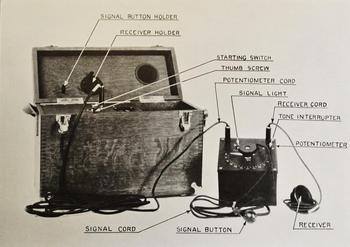
As historian Mara Mills notes, as early as 1878, psycho-acoustic researchers were repurposing the telephone to manipulate the intensity of electric currents and provide a precise measure of loudness of sound necessary for diagnosing hearing difficulties. Named the ‘audiometer’, these early instruments were attached to a battery and movable induction coil, and could ‘produce up 200 different grades of intensity for a given frequency’, to measure the points at which a subject could hear the difference between clicking sounds (Figure 1).Footnote 17 Otologists, however, did not consider the instrument a viable diagnostic tool. Even though later models of the audiometer emitted pure tones for identifying hearing threshold levels, most otologists insisted that pure tones could not adequately measure the human auditory mechanism.Footnote 18 Indeed, despite technical improvements in audiometer design, scepticism over the instrument prevailed well into the end of the nineteenth century. The Royal Society of Medicine's Section of Otology, for instance, issued guidelines for hearing tests that favoured only conversational voice, whispered speech, ticking watches, tuning forks and the Politzer acoumeter, a tool for testing conductive hearing loss due to damage in the middle ear (the eardrum or ossicles).Footnote 19
Western Electric 3-A audiometer, 1924. Information for the Care and Operation of the 3-A Audiometer, Western Electric trade pamphlet, p. 2, National Museum of American History Trade Pamphlets. Courtesy of the Smithsonian Libraries, Washington, DC.

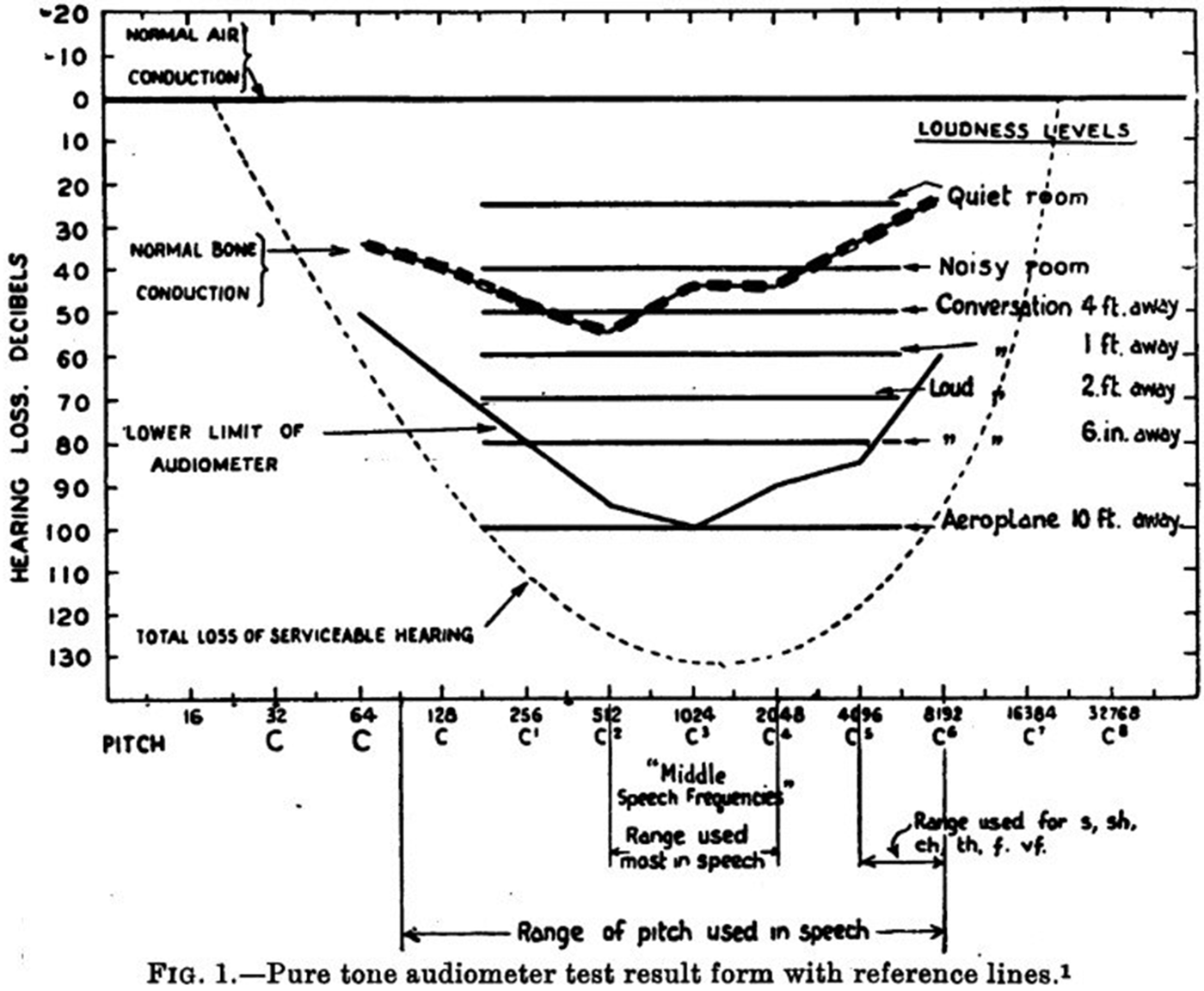
The onset of commercial vacuum tube audiometers in 1922 brought the device into general use and introduced a new threshold for measuring hearing capacity, one that could be plotted on a graph. Referred to as an ‘audiogram’, the graph indicates the sound intensity (loudness) and frequencies (pitches) a person is able to hear (Figure 2). Intensity is measured in decibels (dB) and marked on the vertical axis from a threshold of 0, which indicates ‘normal hearing’, or the softest sound heard by the human ear; normal conversation speech is approximately 45 dB. Hearing loss is measured in negatives (e.g. –30 dB), and thus represented as a deviation from this norm.Footnote 20 The horizonal axis marks the range of frequencies measured in Hertz (Hz), with pitch increasing from low (64 to 125 Hz) on the left of the graph to high (8,192 Hz) on the right.
An audiogram showing pure-tone audiometer test results with reference lines, used by Kerridge to compare ‘normal’ hearing with hearing impairment. Please note that Kerridge did not plot the dB in negative numbers. Phyllis M. Tookey Kerridge, ‘Hearing and speech in deaf children’, Proceedings of the Royal Society of Medicine (1937) 30, pp. 1494–1511.

The audiometer thus represented a new mechanistic understanding of auditory perception, one that merged a physical instrument with a more precise and measurable way of tracking perceptions of sound.Footnote 21 The instrument could also be used to configure hearing necessary for speech acquisition: since ordinary speech comprehension falls between the range of 125 and 6,000 Hz, targeting this range would enable researchers to focus rehabilitation specifically on ameliorating deaf speech. As Jennifer Esmail explains, such technological incursions were part of a larger shift coinciding with an oralist ideology, the belief that speech restoration was necessary for integrating deaf and deafened persons into hearing society.Footnote 22 By concentrating on speaking ability, rather than hearing ability, audiometers became crucial tools for the deaf to be, in the words of educator Irene Ewing (1883–1959), ‘hearing-minded’. For instance, as early as 1885, Alexander Graham Bell (1847–1922) reported that the audiometer could be used to determine the hearing capacity of schoolchildren in order to assess their educational capacities and speech. Bell discovered that out of seven hundred pupils tested, more than ten per cent had some form of hearing impairment. Likewise, Glasgow aurist James Kerr Love (1858–1942) reported that only ten per cent of pupils at the Glasgow Institute for the Deaf were totally deaf.Footnote 23 The majority had residual hearing, a finding that Love argued could be exploited for therapeutic purposes with medical care or aids; he further claimed that activating this residual capacity could readily improve the speech of pupils at the institution.
By the mid-1920s, researchers were using the audiometer to conduct wide-scale surveys of hearing in schoolchildren, with the aim of assessing hearing thresholds to ascertain how residual hearing could be exploited to improve speech acquisition. For instance, between 1924 and 1925, Herbert E. Day and Irving S. Fusfield (1883–1977) of Gallaudet College, together with Rudolf Pinter of Columbia University, conducted a National Research Council survey on hearing loss in American schools for the deaf. Their 1928 report revealed that the mean residual hearing of deaf children was about 21 to 25 per cent (i.e. a loss of 75–80 per cent of normal hearing), with only three per cent of children discovered to be totally deaf.Footnote 24 Another survey conducted by Ruth C. Partridge and Donald L. McLean at the School of Hygiene at the University of Toronto discovered significant hearing loss in twenty-two of 399 children; of those twenty-two, three had conditions easily correctable by removing their tonsils and adenoids.Footnote 25 A more unusual study took place at Manchester University during the early 1930s, where Irene and Alexander Ewing (1896–1980) demonstrated that children with residual hearing who were taught with group hearing aids (individual receiver units all connected to an amplifier worn by a teacher) made rapid progression in their acquisition of speech and language. The Ewings argued that hearing aids made children more familiar with varying modalities of speech, significantly reducing the monotonous and unpleasant ‘deaf voice’.Footnote 26
These studies suggested that with residual hearing (or ‘serviceable hearing’, as in some reports), the connection between hearing and speech was both physiological and psychological. Such claims were particularly crucial for the MRC's interwar agenda in addressing the ‘deafening’ of returning ex-servicemen. Conditions such as shell shock and the new medical category of ‘deafened’ were amongst the recognized medical consequences of warfare and impacted the broader cultural visibility of hearing impairment. Julie Anderson has shown how the First World War was a catalyst in increasing the British public's awareness of disabled people, translating into better public services and charities, and the emergence of a new class of biomedical research that sought to ‘normalize’ the disabled body for social integration.Footnote 27 Seeking to merge clinical research with scientific efficiency, the MRC financed a number of research programmes that explored wartime and post-war medical problems, including hearing impairment. Under the leadership of David Munro, the MRC Hearing Committee oversaw projects investigating diseases of the ear and the prevention of certain kinds of deafness, such as chronic otitis media; statistical projects investigating amplification, however, were given special consideration, particularly for the purpose of rehabilitating deafened ears. As a means for promoting the normalization of auditory perception – an issue the MRC framed as a national concern – the audiometer became central to these studies.Footnote 28
Since early audiometers, however, did not allow differentiation between conductive and sensorineural hearing loss, calibration varied between models. Audiometric tests thus required intensive comparative studies before they could eliminate the unreliable and subjective medium of the voice, the most common method for testing hearing. It was precisely this lack of methodological standardization that prompted the NID Medical Sub-committee and MRC to call for more regulated empirical testing. Regulation would not only provide more rigid measurements for hearing acuity, but also better assist the otologist in making a prognosis of deafness and determining the long-term benefit of hearing aids.Footnote 29
Help to hear: Kerridge as an expert
In 1934, the MRC funded a new study aiming to assess the aural conditions of deaf children at London County Council (LCC) schools. Firmly rooted within the MRC's agenda of ‘pure science’, the project aimed to fulfil several purposes: to assess whether residual hearing was present, to express the relationship between deafness and speech and to test different mechanical apparatus for hearing amplification. The MRC hoped that studying the ‘measure of deafness’ would determine whether hearing loss in schoolchildren could be prevented through earlier diagnosis, or improved with prescribed hearing aids. Moreover, the results could have broader applications, particularly for the MRC's promotion of rehabilitation and normalization of wartime and post-war bodily injuries. Phyllis Kerridge joined the study upon recommendation from Guy P. Crowden (1894–1966), whom she worked with at the London School of Hygiene and Tropical Medicine. The MRC study was Kerridge's first foray into audiometry and would propel her career as a renowned expert on deafness.
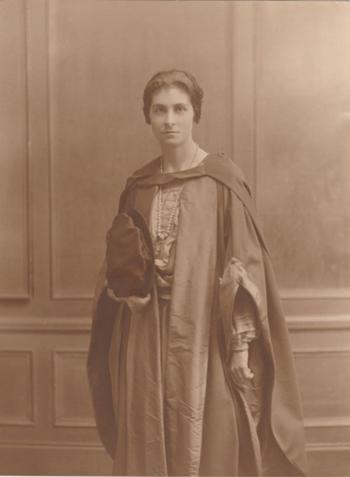
Born in Bromley, Kent, in 1901 to William and Edith Tookey, Kerridge was educated at the City of London School for Girls and later at University College London (UCL), where in 1922 she received her bachelor of science in chemistry (Figure 3). With an impressive list of postgraduate credentials – an MS from UCL in 1924, a PhD in 1927, an MD in 1932, membership of the Royal College of Surgeons and licentiate of the Royal College of Physicians in 1933 – Kerridge distinguished herself as a prominent scientist, renowned collaborator and dedicated educator: all this at a time when women were struggling to secure university positions in the male-dominated fields of chemistry and physiology. It is especially notable that she received all of her degrees from UCL, for although London medical schools opened their doors to women matriculates during the First World War, fears of overcrowding in the profession led several institutions to cease admitting women in the 1920s. Even UCL considered banning women, but ended up strictly limiting the number of female admissions instead.Footnote 30
Phyllis M. Tookey Kerridge, c.1920s. Tookey Family Archive.

Kerridge asserted her aptitudes, capability and scientific authority by holding prestigious appointments at numerous institutions, including UCL, the London School of Hygiene and Tropical Medicine, the Marine Biological Association Laboratory at Plymouth, the Carlsberg Laboratories in Copenhagen, the Medical Research Council, the National Institute for the Deaf, and the Medical Unit of the London Hospital. She was especially commended for her development of the first miniature pH glass electrode that could be used for blood sample analysis, and her textbook Principles of Chemistry for Medical Students (1927) was well received.Footnote 31
These early achievements depended substantially on collaboration with male scientists. Collaboration enabled Kerridge strategically to advance her interest in scientific analysis and experimentation by building a network of allies that later enabled her to secure several publications as a single author. In her audiometric work, however, Kerridge had considerable autonomy, though she continued forging collaboration with international scientists on a breadth of physiological projects, including nutrition, artificial respiration and colour blindness.Footnote 32 Her focus on standardization, however, fit within the general drive for increased standardization of sound in this period. Not only was the decibel introduced as the standard unit for measuring sounds, but the construct of the standard concert pitch was further developed.
Kerridge's emphasis on collecting data on how sounds were registered by the deafened ear would later be crucial for her facilitation of the audiometer as an inscription device, an apparatus whose end product constructed the concept of ‘normal hearing’.Footnote 33 The MRC study, for instance, concentrated on two aims. The first was to collect quantitative data on LCC schoolchildren who were hearing-impaired and receiving special education facilities, approximately five hundred pupils from a total school population of 500,000. The pupils had their hearing loss measured with different apparatus to assess which method provided the most accurate data: a pure-tone audiometer, a gramophone tone audiometer (for testing up to forty pupils at a time), and calibrated tuning forks with voice tests. The voice test was designed to be like the more familiar ‘Snellen test’ that examines eyesight by assessing how far down a wall chart the subject can read decreasingly sized text. Similarly, for hearing tests, the tester would stand at a prescribed distance from the patient and move closer until he or she could hear what the tester said. This took no account of the size or acoustics of the room, or the clarity, volume and content of the tester's speech, but was still widely used during the early 1930s.
The second aspect of the MRC study was to determine whether hearing could lead to the ‘improvement of the children's own speech, not necessarily their understanding of the speech of others’.Footnote 34 This concern for correcting ‘deaf speech’, which Kerridge notes ‘defies description’, though the ‘abnormalities are of tone, accent, and rhythm, rather than of articulation’, clearly reflects the prevalence of how oralism aimed to normalize deafness through speech. More importantly, Kerridge's study emphasized how the audiometer could be used to aid deaf speech, rather than simply measure hearing acuity. As she outlined in her 1937 MRC report, ‘Speech is an urgent necessity for the normal and psychological development of these children, as well as for their educational and social needs’.Footnote 35 Working with Arthur C. Wells, the appointed otologist for LCC schools, the study revealed that a pupil's proficiency of speech was correlated to their use of hearing-augmentation technology. An ‘experimental’ group was given a group hearing aid by the Multitone Electric Company for classroom instruction, while a ‘control’ group was not. The report revealed a 25 per cent improvement of speech acquisition and comprehension in children within the experimental group. Kerridge and Wells concluded that if hearing-impaired children were properly aided with acoustic devices and sound amplifiers, they would eventually demonstrate substantial improvement in speech. Their findings not only drew attention to the importance of regular surveillance of hearing acuity, but also helped garner the MRC Hearing Committee's approval for additional large-scale projects investigating hearing impairment.Footnote 36
Comparing these results to other similar cohort groups, however, was problematic. Since the numbers generated by these instruments needed to be interpreted in relation to standard values (e.g. obtained from ‘normal’ populations) to be clinically useful, the lack of standard values for measurement meant that it was often difficult to secure accurate references in order to mechanically define ‘deafness’.Footnote 37 Kerridge demonstrated that by testing different audiometric methods and groups, the ‘normal’ level of hearing set by the audiogram presented a complication with regard to the ‘zero line’ of the pure-tone audiometer which was supposed to represent ‘normal’ hearing. There was no indication in the literature supplied with the instrument whether variations among the normal existed; furthermore, Kerridge disputed the audiogram's assumption that normal limits were the same for children as for adults. The zero line to which Kerridge refers here was the standard of normal hearing, or the average threshold level of listeners. As she was using a Western Electric audiometer, the average threshold level was set according to the hearing of listeners working at the Bell Telephone Laboratory. This threshold of perceived normalcy proved contentious, however, as the American zero level did not match the British zero level. There was a difference of around 10 dB, and it was not until 1964 that a single international standard zero (R389) was agreed upon by both the US and Europe.Footnote 38 As the zero line was used as a clinical standard for assessing hearing, it was considered to be the definite level upon which to base assessment of normalcy, yet Kerridge's assessments demonstrated the arbitrariness of its construction. Moreover, measurement parameters often hinged on political considerations.
Experiments in the silence room
After her LCC project, Kerridge expanded the scope of her research. In so doing, she became aware of territorial conflicts over research domains, especially from Irene and Alexander Ewing, then the leading experts on speech education for deaf children. Based in Manchester University, much of the Ewings’ research focused on educational, rather than clinical, applications. During the 1930s, for instance, the Ewings collaborated with acoustic physicist Tom S. Littler (1901–1969) at the Royal Deaf School in Manchester in a project to outline the efficacy of group hearing aids in improving speech in children and adults. Initially Kerridge was anxious to avoid impinging on the Ewings’ field of work, as she had, in her own words, ‘a very high opinion of their pioneer endeavour’.Footnote 39 While the Ewings focused on the perfection of large schoolroom amplifiers for deaf children, Kerridge designed her research to focus on small individual portable sets. The Ewings, however, apparently found even this reduced scope problematic. David Munro had written to them on behalf of the Medical Research Council explaining that since Kerridge had been to Manchester on several occasions to demonstrate the benefits of hearing aids for teaching, it was unnecessary for her to consult with them. He also emphasized that the MRC had already funded Kerridge's project separately.Footnote 40 Unhappy with what they perceived to be a significant amount of analytical overlap, the Ewings insisted that Kerridge's unfamiliarity with deaf education threatened the validity of their own work; ‘could it not be proposed to her by someone else’, they asked, ‘that the objects of her investigation might be more strictly defined?’Footnote 41 While it is unclear how these disputes played out, a letter from Munro indicates that Kerridge refused to co-publish her 1937 MRC report in the same volume as the Ewings.Footnote 42
Distancing herself from the Ewings, Kerridge concentrated her work on the scientific basis of audiometry, leaving group testing and education to the Manchester scholars. Extending her LCC survey findings, she focused on designating parameters for audiometric surveys in the prescription and fitting of hearing aids. The problem of adequately measuring hearing acuity, however, posed a challenge as disputes between organizations providing hearing tests meant that the UK still lacked a standardized approach to audiometric tests. For instance, as early as 1931 the NID Medical Committee was looking at developments in telephony for constructing superior gramophone tests on behalf of their members. Their inquiry centred on the standardization of gramophone records and speech intensity in order to develop a standard of hearing for speech using the ‘decibel index’.Footnote 43 To verify a connection between telephony and the classification of hearing acuity, the committee intended to purchase an audiometer to test their clients’ hearing at the NID headquarters. They were intermittently delayed, however, due to lack of funds.
Even Kerridge encountered problems with acquiring an audiometer. She had been borrowing the Western 2B audiometer from Crowden but it was inconvenient to transport the heavy apparatus back and forth from the London School of Hygiene and Tropical Medicine to her new position at UCL.Footnote 44 After her application for a Royal Society government grant was rejected, she appealed to Munro for assistance in purchasing a pure-tone audiometer with a bone conduction receiver so that she could carry on her work for the Board of Education. As the audiometer belonged to the MRC, and Crowden was assigned the device with the disclaimer that it could be transferred to other work that the Hearing Committee deemed necessary, Crowden wrote to the MRC agreeing to give the audiometer to Kerridge. It is unclear whether he volunteered to do so or was instructed by the MRC, as private correspondence suggests that Kerridge ‘foresaw some personal difficulty with Crowden’ over control of the audiometer.Footnote 45 What is clear, however, is that researchers and stakeholders almost universally perceived the audiometer as a central and crucial tool for hearing studies. Kerridge's ability to secure an audiometer also suggests the value of her work for the MRC and the importance of the tool in securing her own professional prestige.
The issue of the NID's access to an audiometer was further complicated by Kerridge's research proposal for University College Hospital. In January 1937, Kerridge and Myles L. Formby (1901–1994), ear surgeon at UCH, convinced the NID Medical Committee to refer all individuals requesting hearing tests or fittings to UCH, where Kerridge was working to establish a hearing clinic. They argued that the clinic had better facilities and superior audiometers, and would thus provide more accurate hearing tests.Footnote 46 The NID chairman was initially unhappy with the suggestion, for the proposal limited the jurisdiction of the NID and reduced its activities to merely sending cases to UCH. Such territorial attitudes may have resulted from the NID's founding goal of unifying all deaf services under one umbrella organization. The NID Medical Committee regretted that the scheme would dissociate the institute from UCH's hearing clinic, but agreed to allow Kerridge and Formby to proceed as long as they were apprised of the activities there.Footnote 47
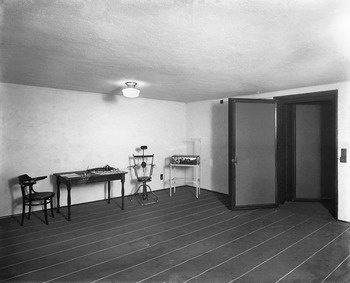
Kerridge deflected criticism by pointing out there were greater amenities at UCH than at the NID headquarters, ‘including a silence room, an audiometer, a wide assortment of hearing aids, and the specialist personnel so that the work could be carried out with efficiency and without difficulty’.Footnote 48 Her push for integration between the NID and UCH's clinic encompassed another agenda: to provide herself and Formby with a supply of patients that would enable them to conduct further research into audiometric standardization. In April 1937, Kerridge and Formby proposed a six-month research project to UCH's Board of Governors to conduct surveys of hearing acuity in the hospital's unique silence room.Footnote 49 By eliminating external sound interference and providing the necessary features for conducting tests in a controlled setting, the silence room enabled Kerridge and Formby to investigate how different external variables could interfere with the accuracy of audiometric readings – a crucial aspect in framing better prescriptions of hearing aids (Figure 4).
Inside the ‘silence room’ at University College Hospital (formerly the Royal Ear Hospital) on Huntley Street, London, 1927. Photograph by Bedford Lemere & Company, photograph BL29146. Reproduction courtesy of Historic England Archive, Permission no 5999-108447.

Designed to be a ‘world-focusing point for the most advanced knowledge’ as a research centre, the silence room was made possible by a generous donation from barrister Geoffrey Edgar Duveen (1883–1975) for the new Royal Ear Hospital building in 1920.Footnote 50 Nearly 3,500 cubic feet in volume, with ‘walls impenetrable to extraneous noises and which will never reflect, deflect nor refract sounds’, it was ‘a chamber of the stillness of death, where absolute accuracy and complete consistency in results will be obtained’.Footnote 51 As one observer commented, the room was so impenetrable to external sounds that the beat of the heart could be heard, and even ‘the flick of quickly closed eyelids’.Footnote 52 With thick walls, massive doors and no windows, the silence room clearly possessed the features of an early anechoic chamber.Footnote 53 Furthermore, its simple decor – two chairs, a table, and an English Mains audiometer type 2BE – was designed to limit any unnecessary environmental interference with hearing tests. Distance points for measuring comparative tests with ticking watches and tuning forks were marked on the floor.
Kerridge and Formby initially tested and fitted twenty-nine patients for hearing aids, patients likely sent to the clinic from the NID. Their work, however, impressed the UCH Board of Governors, who then extended the contract, expanding the research scope to include hospital patients. By 1939, Kerridge and Formby had examined 170 cases, helping many to obtain properly fitted hearing aids ‘to enable them to carry on with their works’.Footnote 54 Two additional basement rooms were provided for use as an office and waiting room, as well as the services of Miss W.J. Wadge as an assistant.Footnote 55 Together, these rooms formed the newly inaugurated Hearing Aid Clinic, the first of its kind in the United Kingdom, under Kerridge's directorship.Footnote 56 It served a charitable purpose – though it was far from being a charity – in allowing patients to be properly tested and fitted for a hearing aid that best suited their life circumstances, occupation and psychological attitude, a necessity in an age of rapid development and modification of electric aids.
‘Deaf persons’, Kerridge wrote in 1935, ‘want help to hear’.Footnote 57 The choices available for them, however, were often muddled by ‘unscrupulous’ salesmen profiteering out of the chaos with their exaggerated advertisements. Without clear guidelines in the prescription of hearing aids or regulation of quality, it was difficult for hospital clinics and specialized practitioners to provide proper hearing aids for clients.Footnote 58 If any improvement in this scheme was to be made, Kerridge insisted it would depend on medical advice, rather than on commercial firms and their advertisements. Reliability and certainty in hearing aid fittings, she explained, would only be possible once the instruments become more standardized.Footnote 59 While some otologists recommended specific hearing aid manufacturers, others sent patients to agents, believing them to be more capable of providing unbiased advice. Kerridge disagreed with this practice, arguing that the decision to select a hearing aid was a complex one, requiring a ‘combination of medical science and an appreciation of human requirements and weakness, which is extremely difficult to obtain, even in the best commercial atmosphere’.Footnote 60 Additionally, she emphasized that it was crucial to disabuse patients of ideas they received from advertisements, vendors boasting miraculous new ‘cures for deafness’ or cheap, ‘more powerful’ hearing aids that were unregulated.Footnote 61 The NID also maintained a register of recommended hearing aid manufacturers that followed certain regulatory standards (e.g. allowing home trials) and frequently advised their clients to seek out medical advice and avoid the solicitations of nefarious firms.
As James Sumner and Graeme Gooday point out, standardization is a negotiated process, made more efficient with the convergence of machines and testers, of the expert and the patient.Footnote 62 At the Hearing Aid Clinic, Kerridge perfected the fitting and prescription of hearing aids by investigating how audiometric data could provide objective standards to be applied to a broader spectrum of hearing loss. Her experiments in the silence room with music and the wireless to test hearing in lieu of, or in combination with, the audiometer also testify to a diagnostic emphasis on hearing ability rather than speech adaptation. The wireless was as important as conversation as a measure of the ‘success’ of amplification with hearing aids, as outlined in Kerridge's fascinating case studies on the lives of hearing-impaired persons. One man who relied on a carbon microphone valve amplifier reported that he ‘could hear the wireless and the band in the park’ while another emphasized that he had ‘heard the news bulletin and most of the talks on the wireless’.Footnote 63 The wireless may simply have been used to provide an indicator of ‘normal’ hearing, but its application also reveals the cultural importance accorded to music and the wireless during this time. Kerridge's use of the wireless likewise suggests that she perceived music to be as important to hear as speech, and was aware of the importance of adapting the hearing aid to lifestyle.Footnote 64 For instance, a fifty-year-old male garage worker refused his recommended valve amplifier with a crystal microphone, preferring a less suitable bone conduction instrument so that ‘he could answer the telephone at work without stopping to take an instrument off, and his hands had to be free’.Footnote 65 Cases such as this indicated to Kerridge the value of merging audiogram readings with a consideration of the patient's occupation to prescribe a more suitable hearing aid. It also reveals her interest in examining the way people heard through different media, a notion that explains why she would later expand her audiometric research to include Post Office amplified telephone sets.
Even as audiometric testing attempted to perfect hearing acuity for hearing aids, Kerridge faced a broader problem with the prescription of hearing aids. Patients resisted the devices not only due to their cumbersome nature, but also, and indeed mostly, because of their enormous expense. Relief charities were available to help defray these costs, but most of these insisted that patients supply a medical certificate specifying precisely the name and maker of the prescribed aid – a drawback if patients were unsure which model to select.Footnote 66 Since improper hearing aids risked further damage to already impaired hearing, Kerridge coordinated with several charitable and relief agencies to supplement the costs of hearing aids in conjunction with the clinic. For instance, ex-servicemen's hearing aids were variously paid for by the British Legion, the Deafened Ex-Servicemen's Fund, and the Soldiers’ and Sailors’ Help Society. Other organizations included churches, the Helper's League, the Metropolitan Society for the Blind and even patients’ own employers, such as the Friendly Benefit Society of Managers of Printing Machines Approved Society. Under Kerridge's leadership, the clinic became a place for people on lower incomes to get free and impartial advice about the suitability of hearing aids as well as assistance in recovering the cost of the instrument. These principles would later define how the Medresco was distributed.
Assessing speech: a telephonic point of view
In 1935, Kerridge remarked,
Although the telephone has been developed and exploited almost entirely for the use of those who hear normally, it was originally invented for the benefit of the deaf by Alexander Graham Bell, who was a professional teacher of the deaf, and had a deaf mother and a deaf wife.Footnote 67
The telephone, however, had become a purely aural device that further isolated hard-of-hearing people from everyday life – an isolation which intensified when the telephone was taken up more broadly during the interwar years, especially as an essential business tool. The clinic bore out Kerridge's claim that research into the limits of hearing thresholds had significant practical applications, particularly as a cross-fertilization between telephony and hearing aids. By expanding the scope of her audiometric research, Kerridge thus played a crucial role in creating and defining audiometric standards that would be integrated in the development of hearing-assistive devices created by the British Post Office. The collaboration would prove influential not only for telephony but also for the post-war design of the Medresco hearing aid.
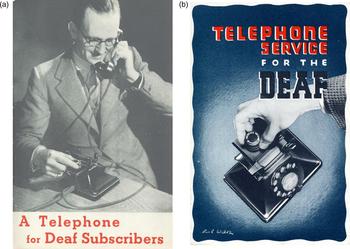
Since the Telegraph Act of 1869, the Post Office had retained legal control over the nationalized telephone system, which meant that anyone struggling to hear over the phone could not use hearing aids or private telephones on their lines without contravening its monopoly. As a result, and in response to intense aspirational activism, in 1922 the Post Office offered a ‘telephone service for the deaf’. By 1936, however, newly integrated telephone headsets had led to an unexpected surge of complaints from hard-of-hearing users who had been using the older candlestick models to listen through bone conduction. One deaf subscriber, for instance, had ‘encountered difficulties since the introduction of [the] hand micro-telephone’, as he had been ‘accustomed to holding the bell receiver to the bone at the back of the ear to obtain best reception for his particular deafness’.Footnote 68 The unanticipated level of complaints eventually led the Post Office to consider redesigning their amplified telephone to assist their deaf subscribers (Figure 5).Footnote 69
Kerridge's research was instrumental in defining hearing thresholds for sound and speech, which had practical applications for the Post Office's development of telephony for their ‘deaf subscribers’, as shown in various Post Office booklets. Left: 1936 Post Office advertisement booklet A Telephone for Deaf Subscribers; right, 1938 Post Office advertisement booklet Telephone Service for the Deaf, BT Archives File No TCB 318/PH 632.

Kerridge's collaboration with the Post Office helped move the responsibility for hearing loss from the province of engineers into the province of medicine. However, this shift was marked by the elevation of mechanistic standards over user's needs and opinions. As the S1 branch of the Post Office launched their investigation into amplified telephony, they repeatedly referred to Kerridge's audiometric studies, particularly a 1935 article in the British Medical Journal in which she discussed ‘what practical advice a general practitioner can give to help those deaf patients who are left with a permanent disability after the best has been done for them on medical and surgical lines’.Footnote 70 Kerridge's statement is indicative of the disputes during the 1930s as to whether medics or manufacturers were responsible for aiding the deaf.Footnote 71 For their part, the Post Office engineers were chiefly concerned with Kerridge's study of bone conduction and quoted her extensively in their investigative reports and internal memos, referring to her as a ‘medical authority’ on the subject of hearing aids for the deaf.Footnote 72
Between 1922 and 1938, the Post Office developed an amplified telephone service by responding to complaints and even the personal designs for amplification of their users. Kerridge's studies and assistance were implemented to create a new telephone that amplified the higher frequencies; yet this model could not be offered as a standard, because it was only compatible with the newest telephone exchanges. When the engineering department decided to create a new device, the public relations department designed a questionnaire through which they could canvass the specific needs of their individual deaf subscribers. The project was abandoned, however, after Kerridge agreed to make amplified telephones part of her clinical investigations in the silence room.Footnote 73 In this way, Kerridge's provision of mechanical objectivity was given a higher authority over the opinions of the users.
Kerridge had already done work for the Post Office telecommunications department by testing the hearing of telephonists using a Western Electric audiometer. When the Board of Governors at UCH extended her research project, Kerridge installed Post Office repeater telephones 17a and 17b in order to test them during routine examinations with patients. She also notified the Post Office that she had ‘about twenty deaf persons’, whom she had ‘trained as observers in connexion with her research work’. She offered ‘to take early steps to test them all’.Footnote 74 Her description of these observers as ‘trained’, crucially, indicates that they had already been taught what they were supposed to be listening for during the telephone tests. They were, in other words, ‘intelligent deaf subjects’, as an internal telecommunications memo stressed.Footnote 75 ‘[I]t has been found’, Kerridge observed, ‘that trained observers are necessary to assess the usefulness of a deaf aid, or at least the test should be made under the guidance of a trained observer’.Footnote 76 Her emphasis on the need for objectivity further persuaded the Post Office to refrain from seeking out the views of individual subscribers, and instead favour an institutionally led investigation that prioritized standardized measurements of hearing over individual experience.
Kerridge was instrumental in the design of the new amplifier. As the engineering department stipulated, her experiments ‘will probably give material help in evolving the final design and in this respect perhaps she will be asked to keep in direct touch with the Research Branch’.Footnote 77 Kerridge's clinical data and scientific measurements were far more useful for the engineering department's design process than the public relations questionnaire would have been, since she provided instrument-derived quantifiable data rather than anecdotal user experience and evidence. By collaborating with the Post Office to investigate the needs of hard-of-hearing telephone users, Kerridge was broadening her research scope on electric hearing aids, particularly focusing upon the micro-telephone and valve amplifier aids that incorporated the same technologies as the repeater telephones. After, all, she stressed, ‘the underlying telephonic principle is the same in all’; even GPO engineers utilized the principle to improve speech clarity over telephone lines.Footnote 78 Though she offered hope that standardization of hearing tests would increase their accuracy and efficacy, Kerridge still complained that ‘it must be obvious to workers in the scientific fields where exact measurement is the rule how much is lacking in this sphere [audiometry]’.Footnote 79
Much of Kerridge's investigation for the Post Office on speech transmission over the telephone sprang from her collaboration with Dennis Butler Fry. Their joint examination of how the intensity and distortion of different frequencies affected understanding was directed towards application to the standardization of hearing aid prescription. It was also of key concern to the Post Office telephone department in ensuring the clear transmission of speech over their telephone lines. In a similar manner, the GPO paid attention to Kerridge's research on the pitch necessary to ensure vowel quality. Such an approach to hearing loss, which prioritized a technological ‘fix’ over individual perception, would have long-lasting effects in the creation of the first Medresco hearing aid, which was unpopular because it did not consider the needs of users in the design process. Rather, the MRC Electro-Acoustics Committee in charge of designing the Medresco used Kerridge and Fry's phonetic tests to assess different hearing aids, instead of incorporating individual perceptions during the testing process. Following this procedure, further tests were carried out with sentences spoken across a table using one or more aids found to give the best articulation test results.Footnote 80
The technocratic approach to hearing aid assistance prioritized by the Post Office and in collaboration with Kerridge led to a lasting loss of user input and decreased awareness on the part of manufacturers of the social circumstances in which their devices would be used. This drive for standardization was in stark contrast to Kerridge's attempts to include the lived circumstances of her patients in the prescription of their hearing aids. Even as early as 1935, she was investigating the design of new apparatus that would give deafened patients greater autonomy over hearing tests.Footnote 81 Such a patient-centred approach would seem to be incompatible with the technocratic objectivity that her work promoted. Yet an illuminative comparison may be made here to Timmermans and Berg's analysis of the way that medical insurers used standards and guidelines to professionalize, while also maintaining discretion in dealing with individual patients on a case-by-case basis. They explain that the social basis of authority was at least as important as the authority and power associated with quantitative objectivity; mechanical objectivity lent authority to expert communities trying to professionalize.Footnote 82 Like medical insurers who were perceived as less authoritative than doctors in other fields, otologists used mechanical procedures and numbers to demonstrate their expertise. Moreover, as a woman in a male-dominated industry, Kerridge's ownership of the audiometer endowed her with an external means of legitimizing her work.
However, the priority given to quantitative values profoundly affected the construction of the Medresco hearing aid and its relationship with telephony. As access to telephony was not considered by the MRC to be a medical issue, improvements to telephone services for the deaf were not funded alongside the Medresco. Similarly, Daniel Wilson has shown that our conception of Alzheimer's disease has been created through the Medical Research Council's preoccupation with standardized test measures. Just as with the development of standard assessment of hearing, ‘The rationale behind the development of standard assessment guidelines was less about arriving at a firm diagnosis and more about facilitating research by generating data that could be easily compared across the disciplines and sites that constitute modern biomedicine.’Footnote 83
This not only led to stagnation of the GPO telephony service (with the 1922 model still on offer in the late 1950s), but also meant that people with hearing loss continued to pay a surcharge to access telephony. However, Kerridge's influence on the Post Office's research into hearing-assistive devices went beyond her influence on the physical construction of the Medresco hearing aid. She ensured a situation in which the principles of free access to hearing aids were enshrined into the NHS as basic medical care.
Conclusion
When the Second World War broke out, Kerridge resigned from the Hearing Aid Clinic, joining the Emergency Medical Services as an assistant pathologist at St Margaret's Emergency Hospital. After her resignation, the clinic was abandoned; however, in cooperation with the hospital surgeons, otologist Henrich G. Kobrak continued testing hospital patients during the war. Shortly after, the silence room experienced a resurgence in testing the hearing of patients suffering from ‘bomb blasts’ and damage from air raids.Footnote 84 Though Kerridge may have felt she was fulfilling her patriotic duty, not all agreed with her decision to resign. David Munro, for instance, expressed his feelings to her: ‘I think that you are rather wasted as a pathologist in a small hospital’.Footnote 85 At the hospital, Kerridge not only set up an improvised laboratory for pathological and blood transfusion work, but also coordinated the formation of a small orchestra for entertaining injured patients – another indication of how she viewed the therapeutic value of music. It was at St Margaret's that Kerridge eventually contracted the illness that led to her untimely death on 22 June 1940.Footnote 86
Kerridge's desire to allow deafened persons to socialize, communicate and even hear music demonstrates that she was not approaching the problem of deafness from a purely medical perspective. Her work was so valuable that after her death her brother and a group of friends attempted to create a commemorative hearing aid named after her.Footnote 87 She held the needs of her patients to be paramount and worked with them to negate the influence of unconscious bias in testing, in order to lobby for better care for hearing loss through scientific attention. Moreover, as devices were trusted to give greater accuracy than people – perhaps deaf people especially – the deaf individual's needs were made less visible as they were replaced with measurable data. This is especially apparent in the case of the Post Office's investigation into the needs of their ‘deaf subscribers’. By designating their hard-of-hearing customers as patients in the context of clinical research, the Post Office accorded less agency to this group. The GPO reduced clinical reliance on individuals’ bodily perception, which was no long considered sufficiently accurate for collecting measurable data.
The connections between Kerridge's clinic and the Post Office telecommunications in developing services for the deaf were also expedited by the intervention of the medical profession into the regulation of hearing aids. Such disciplinary integration resulted in user input being considered relevant only when collected by, and filtered through, specialist organizations. Additionally, increased trust in instrumentation and distrust in individual sense perception meant that the technical was prioritized over the social, particularly in the variety of hearing assistance required by ‘deaf subscribers’. Such variety called for a single standardized model for measuring hearing acuity. Kerridge's work also amalgamated the authority of medical experts over the expertise of hearing aid manufacturers and even ear specialists, who struggled with accusations of ‘quackery’ that had been levelled at them indiscriminately since the nineteenth century.Footnote 88
By bringing increased scientific accuracy to the study of audiometry, Kerridge was able to cement her professional authority to exert precision measurement through the audiometer. Yet her lifelong work was nearly lost. In 1962, geneticist Julia Bell (1879–1979), a colleague and friend, described her attempts to secure Kerridge's papers:
On the way to her funeral I looked in at the M.R.C. and said that if I could help in any way to utilise her materials I would be very glad to do so – the idea in my mind being to erect some sort of tribute to all the devotion and care she had given to the problem [of measuring hearing acuity]. Hearing nothing I assumed the M.R.C. had other plans and that perhaps somebody was carrying on the work.Footnote 89
After a fire in the basement of UCL in the 1960s, a large chest full of Kerridge's materials was discovered. In the chaos of war, the box may well have been dumped there by a porter during the evacuation of the college. As Bell put it, Kerridge's work ‘was in fact a war casualty’.Footnote 90 Though the materials were saved, wartime research had drastically changed the face of audiometry, and the MRC no longer considered Kerridge's once ground-breaking studies relevant for establishing a standard UK method for measuring hearing acuity – an ironic move given Kerridge's career devotion to standardization.