In 1898, Dr. Edouard Jeanselme, a professor of medicine in Paris and expert in tropical diseases, took an extensive research trip to the Far East, traveling to Indochina, Yunnan, Thailand, Java, Burma, and Singapore. Appointed by the French Ministers of Education and the Colonies to study the means of reducing the incidence of leprosy in the French colonies, Jeanselme soon broadened his mission to include investigations of other diseases including beriberi, syphilis, and mental illness. During his travels he took special note of Java's mental asylum at Buitenzorg (today's Bogor), which the Dutch administration had established, surrounded by a large agricultural colony, in 1882. Writing of Buitenzorg in the Presse Médicale on his return, Jeanselme marveled that despite the absence of any restraint or coercion, there had been “no suicide, murder, or even escape, meanwhile the asylum is not enclosed by walls.”Footnote 1 This asylum represented the first systematic application in Southeast Asia of care for the insane that stressed principles of moral treatment and, especially, the use of labor as therapy. For Jeanselme, this research trip highlighted the rudimentary state of mental health care in the French Empire compared to other colonial powers, whose programs, he warned, were “growing more and more refined every day.”Footnote 2 For French physicians in charge of psychiatric institutions in Indochina who saw in neighboring Java fundamental ethnological and geographical similarities, Dutch successes signified the prospect of incorporating many of the same practices within their own colony's first asylum, Bien Hoa, which opened outside Saigon in 1919.Footnote 3
Jeanselme's voyage to the East Indies was one of no less than twenty-five study missions French experts undertook to Indonesia between 1891 and 1904.Footnote 4 These fact-finding journeys surveyed everything from the management of the métis population to the linguistic and legal training of Dutch bureaucrats, from techniques of grafting rubber trees to the creation of botanical gardens.Footnote 5 The French restoration of Angkor Wat, for example, relied on techniques the Dutch had developed to preserve their own colonial ruins in Central Java, in particular the Borobudur and Prambanan temples.Footnote 6 French officials clearly felt they had much to learn, and although French accounts criticized the Dutch for failing to espouse any sort of colonial ideology tantamount to a civilizing mission, they nevertheless generally presented a rose-colored picture of the Dutch as benign and effective bureaucrats.
When French physicians sought to expand institutional care for the insane in Indochina, they did not look to other parts of their own empire for guidance, but rather traveled to the Dutch East Indies to study what they saw as an effective model of modern psychiatric care.Footnote 7 What most attracted Jeanselme and others was the Dutch use of labor as the primary form of treatment for indigenous patients. This approach seemed to reduce agitation, restlessness, and outbursts of violence among patients and to promote beneficial agricultural productivity among them. Additionally, and importantly in the eyes of thrifty colonial administrators, it reduced expenses and generated income for the mental institutions. With the expansion of plantation economies in the region, both Dutch and French officials saw great promise in an institution that could transform troublesome “natives” into productive colonial subjects.
While historians of colonial science and medicine have tended to emphasize the relationship of metropolis to colony as the most important axis of inquiry, in this paper we highlight the regional development of psychiatry by focusing on forms of inter-imperial scientific exchange that have until recently received little attention in the historiography.Footnote 8
In what follows, we seek to bring the French and Dutch empires together as elements within Southeast Asia, not to simply highlight their differences but rather to analyze their co-evolution. By focusing on the many research trips between the French and Dutch empires, we explore how colonial medical experts engaged in their own project of comparison. In detailing the connections between French Indochina and the Dutch East Indies, these experts played a vital role in the articulation of Southeast Asia as a coherent entity, a shared object of knowledge that could be investigated, managed, and exploited using similar methods. Early study trips went far toward establishing Southeast Asia in the minds of indigenous and colonial experts alike as a place with more or less uniform climatic and geographical features and populations that were culturally and biologically similar. For French and Dutch physicians caring for the insane, these insights informed critical assumptions about the possibility of transferring therapeutic regimes between empires to meet the challenges of patient management and developing viable and effective policies. Studying the history of psychiatry as a history of regional exchanges reveals the development of Western understandings of Southeast Asia as a distinctive region that required a distinctive type of expertise.
What exactly sets Southeast Asia apart from South Asia or East Asia continues to engage scholars and policymakers. The question of regional definition is rooted in longstanding historiographical debates over whether “Southeast Asia” is marked by a fundamental unity or disunity of cultural, linguistic, and environmental features across a wide geographic area, and consequently whether or not it is a useful category of analysis.Footnote 9 Our intervention here is different. We are interested in what colonial physicians considered relevant bases for expert practice, and how their views resulted in a regionally specific form of psychiatric care that privileged the use of patient labor. We also emphasize the role played by international organizations, particularly those focused on health, which established new and important networks connecting the region's empires and provided the framework within which study trips and site visits by colonial physicians increasingly took place.Footnote 10 To the extent this is a story about the deepening of connections within Southeast Asia, the absence of British psychiatrists is striking. British investment in facilities for the mentally ill in Burma and the Straits Settlements (including Malaysia) was only ever partial and ad hoc.Footnote 11 Instead, it was French and Dutch experts who took the lead in implementing innovative models of asylum care in the region and who engaged most directly in dialogue with each other.
The first part of the paper describes the history of asylum care in the Dutch East Indies, which preceded other colonial psychiatric projects in the region. We discuss adaptations of Western forms of “open door” psychiatric care, and especially adaptations of the use of labor as therapy to a colonial setting. The second part tracks the development of French interest in Dutch practices, from early concerns with asylum design and patient management to anxieties during the 1930s regarding how to cope with overcrowding and financial cutbacks. In particular, French experts closely followed the work of Dutch psychiatrist P. M. van Wulfften Palthe who, in 1933, created an agricultural colony near Lenteng Agung (south of Batavia) designed for chronic and quiet patients who would no longer benefit from medical treatment but also could not be discharged. At a time when experiments with agricultural colonies and other forms of “open door” care were being conducted throughout Europe and North America, it was the Dutch who convinced French physicians that such a system could function in a colonial setting and that it would be preferable from both therapeutic and financial perspectives. With the partial exception of Madagascar, Indochina was the only French colony, and the only other colonial territory in Asia, to follow Dutch leads by adopting patient labor as the central organizing principle of care for the insane.Footnote 12
Our analysis of one particular study trip, conducted in 1937, reveals concerns shared by psychiatrists across both colonies in Southeast Asia and therefore across empires. At issue was how the French could adapt and perhaps even improve on Dutch practices in managing large patient populations in asylums, whether in plantation-style agricultural colonies, or later, as stand-alone colonies modeled after rural villages. We do not merely analyze knowledge transfer, or even pursue histoire croisée, which tends to emphasize entanglements of objects and their ensuing transformation as the result of a mainly passive process.Footnote 13 Instead we examine how, over time, French physicians in colonial Vietnam attempted to mine Dutch practices for models that could be adapted for use in Indochina, as a strategic adaptation to the exigencies of shared colonial economic realities. In comparing these two colonial settings, French psychiatrists contributed to a specifically regional knowledge of psychiatry and entered into a long-standing, expert engagement with Southeast Asia as a distinct space that transcended the boundaries of empires.
ASYLUM CARE IN THE DUTCH EAST INDIES
The establishment of modern, well-equipped mental hospitals in the Dutch East Indies followed on the heels of major reforms in asylum care in the Netherlands dating from the 1840s. Inspired by the introduction of moral treatment in France and the United Kingdom, Dutch asylum reformers argued that the insane were not violent and dangerous individuals to be locked away in cells, but rather confused individuals who needed to be reeducated with a firm but fatherly guiding hand.Footnote 14 Philippe Pinel and William Tuke, the leading alienists of the era and early pioneers of moral treatment, asserted that the best way to care for disordered and alienated minds was through segregation, the strict organization of daily life, comprehensive regulations, the absence of physical restraint, and work, preferably outdoor work. Fresh air, sunlight, and exercise gave work its restorative potential and also distracted patients from brooding or entertaining more deleterious thoughts. By approximating the habits of daily life and inculcating values of hard work and self-discipline, modern asylums aimed to transform insane individuals into ideal subjects and exemplary citizens. While physicians addressed patients' physical afflictions and often hypothesized that mental derangements originated in diseased and malfunctioning brains, they undertook no medical treatment of mental illness during this period. Managing and mending minds were considered one and the same thing.Footnote 15
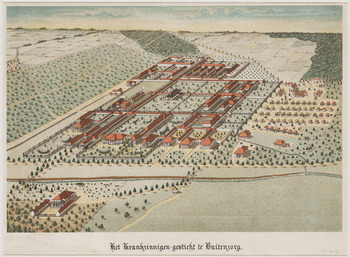
Overview of the insane asylum near Buitenzorg. Lithograph from around 1890. KITLV/Royal Netherlands Institute of Southeast Asian and Caribbean Studies, Leiden. Image 50N8. Source: Leiden University Library.

Moral treatment was perceived to be highly successful, and its introduction galvanized a new optimism about the treatment of insanity and inspired the building of new asylums in Western Europe, including the Netherlands. In 1841, the Dutch parliament ratified a new law regulating the commitment of insane individuals to asylums. The main protagonist for reform was Prof. J.L.C. Schroeder van der Kolk, who formulated standards to overhaul existing institutions, which were in a deplorable condition.Footnote 16 Several institutions implemented piecemeal improvements in the following decades. In 1849, Meerenberg, a newly built institution near Haarlem, started to receive patients. It was built in the countryside to provide labor therapy through agricultural pursuits, and probably was the first institution in continental Europe to fully abolish physical restraint. Meerenberg gained renown as the best mental asylum in the Netherlands and one of the best in Europe. The two physicians in charge had visited several European institutions before they drew up their plans. One of these was John Conolly's asylum at Hanwell, where they observed the system of non-restraint in operation.Footnote 17 For several decades, Meerenberg remained the Netherlands' model institution for the care of the insane. The establishment of the Dutch Psychiatric Association (Nederlandsche Vereeniging voor Psychiatrie) in 1871 reinforced the reformist tendencies of the previous decades and placed physicians firmly in control of institutions for the confinement of the mentally ill.Footnote 18
In 1862, the Governor-General of the Dutch East Indies requested a survey of facilities for the insane in the colonies, including recommendations for improvement. The first report, authored by the head of the colonial health service, was received with great derision when it fell into the hands of Schroeder van der Kolk, who convinced the Minister of Colonies to request a more adequate one based on modern insights. The reformist zeal among physicians involved in the care of the insane in the Netherlands was abundantly clear in the second, 1868 report.Footnote 19 Its authors, F. H. Bauer and W. M. Smit, had visited institutions in the United Kingdom, Germany, Belgium, and France, and they also provided an overview of institutions in a number of tropical locations. Among many others, they visited Connolly's asylum at Hanwell, the villages around Gheel where individual patients were placed with families, and the agricultural colonies of Fitz-James and Villers that were associated with the Clermont asylum run by the Labitte brothers in France.Footnote 20 By financing these study trips and site visits throughout Europe, the Dutch government wanted to assure that the asylum to be built in the Indies incorporated the best features of institutions for the care of the insane throughout Europe. Smit had worked as a physician in the Dutch East Indies for a considerable period, while Bauer had previously been employed by Meerenberg, where both authors spent two months to study its practices.Footnote 21 Their report condemned existing institutions in the Dutch East Indies as entirely inadequate and stated that many insane people spent long periods in prisons awaiting transfer, which exacerbated their conditions.
The shifting dynamics of psychiatric care in Europe importantly shaped the vision that observers like Bauer and Smit put forth for reorganizing asylums in the colonies. They recommended that the situation in the East Indies be improved by the establishment of two pavilion-style institutions with a combined capacity of eight hundred beds, to be surrounded by large agricultural colonies. They also advised that quiet patients be placed with families near the asylum. The principle of non-restraint was retained and labor therapy came to occupy center stage. The types of work provided to indigenous patients—working in rice fields, tending gardens, and craft-making—corresponded to the stereotypical European image of life in the tropics before the advent of colonialism as consisting of quiet and content communities living in small hamlets in the countryside. In a way, Dutch colonialists hoped to recreate an idealized and imagined past through psychiatric management.Footnote 22
The move toward institutions that emphasized moral treatment also resonated with broader social and economic changes taking place in the colony, most notably the expansion of plantation labor and the intensification of forms of bureaucracy and surveillance associated with the modern state.Footnote 23 After all, individuals indigenous to the Indies met the social expectations of both physicians and colonial administrators when they were quiet, pliable, obedient, and hard-working villagers. In this way, Bauer and Smit easily incorporated broader colonial views on racial difference into the management of the insane by promising to transform violent and disruptive natives into ideal and productive colonial subjects.
It took a number of years for Bauer and Smit's recommendations to be implemented. The first modern mental hospital in the Dutch East Indies, located near Buitenzorg, began receiving patients in 1882. At that time, only half of the institution had been finished, and due to the expense of construction future expansion was halted.Footnote 24 Yet over the next sixty years expenditures on mental hospitals remained high, at about 10 percent of the colonial health budget. This provoked considerable resentment among colonial physicians not involved in the care of the insane. The Buitenzorg asylum was a pavilion-style institution and closely followed the recommendations of Bauer and Smit's report. Its pavilions housed European patients (divided into three separate classes), and Indonesian patients divided into quiet and restless groups. When they were no longer considered a risk to themselves or the people around them, indigenous patients were placed in simple housing in the adjacent agricultural colony, where they worked in the fields. Physical restraint and isolation were rarely used.Footnote 25 The expensive building, maintenance, and running of Buitenzorg were often criticized because conditions in military and civil hospitals were uniformly abysmal.Footnote 26 One critic argued that the mental hospital should be transformed into a military one since soldiers were much more valuable to the Dutch Empire than were the insane.Footnote 27
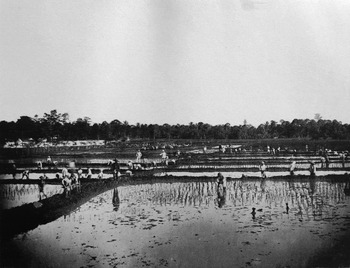
The Buitenzorg asylum was seen as an excellent place to treat European patients because it was on par with the best institutions in Europe and North America. However, it was considered far too expensive to accommodate indigenous patients there. Some physicians argued that the latter would not feel at home in large brick buildings and preferred simpler constructions using wood and bamboo resembling housing in their villages of origin.Footnote 28 When a second institution was established south of Surabaya near Lawang in 1902, its buildings were made out of wood and bamboo, which grew abundantly nearby. In 1916, when the institution housed around a thousand indigenous patients, an agricultural colony named Suko, with two large halls, was built some distance from the asylum. Although the main buildings were erected by the Department of Public Works (Dienst Burgelijke Openbare Werken), patients performed all the labor including building the roads and preparing the area for agriculture. A few years later a second colony, Sempoh, was built up in the hills in the forest.Footnote 29 The clearing of the forest and the building of the roads, buildings, and the water supply were all done by patients with minimal supervision. The expenses were therefore modest, and patients subsisted on the produce these agricultural colonies generated, greatly reducing the asylum's costs. The psychiatric literature at the time praised patient labor as one of the most effective and cost-efficient forms of treatment, which would become an important argument in its favor during the economic depression of the 1930s. The confluence of the promise of therapeutic efficacy and economic sensibility made work therapy one of the most important and lasting elements of asylum care in the Indies.
In 1923, two other psychiatric institutions were established, the first near Magelang (Central Java) and the second near Sabang on the island of Weh, the northernmost point of Sumatra and an important coal station. Five psychiatric clinics operated in urban centers, where patients could receive care for up to three months. Institutions for the insane in the Dutch East Indies encountered the same problems as those elsewhere, including overcrowding (since patient intake always exceeded discharges and deaths) and difficulties managing patient populations suffering from severe and persistent forms of mental illness. During the 1930s funding cuts from the colonial administration exacerbated these conditions, which brought neglect and a decline in the standard of care, and a failure to relieve prisons of insane inmates.Footnote 30
Although the network of mental hospitals expanded continuously, the demand for placement always exceeded supply. In the 1930s, the colony's four large mental hospitals housed more than two thousand indigenous patients each. The ensuing economic depression forced superintendents to reduce expenses dramatically. They expanded labor therapy by planting a greater variety of crops, employing female patients in hospital laundries and clothing workshops, and having male patients repair buildings and make furniture. Superintendents accelerated earlier efforts to build even cheaper housing and establish larger agricultural colonies. They introduced new forms of labor therapy to meet the asylum's needs and harness proceeds from it, and placed patients with families near the hospital.Footnote 31
During the first part of the century the Dutch East Indies Public Health Service built the most extensive system of care for the mentally ill in Southeast Asia. In 1924 it included four large mental hospitals and five acute care clinics; by 1936 it housed some eight thousand patients out of a population of around sixty million. In the Netherlands there was enthusiasm about the possibilities of moral treatment and extensive investments to that end, including generous funding for psychiatric institutions in the colonies. This system was responsible for a significant part of the Public Health Service's budget, reaching 12 percent by 1936 (and around 2.5 percent of all colonial expenditures).Footnote 32 The colonial Dutch administration was proud of the system of hospitals for the insane it had established in the East Indies, which regularly attracted international attention as well, especially from their French neighbors in Indochina.
ASYLUM CARE IN FRENCH INDOCHINA
At the turn of the twentieth century the French Empire had no comprehensive mental health care system. Even as psychiatrists emphasized the importance of psychiatry to France's civilizing mission, they nevertheless saw themselves slipping ever further behind other European powers, especially the Dutch, who boasted the highest number of available places in psychiatric institutions per capita in all of South and Southeast Asia.Footnote 33 The 1912 meeting of the Congress of French and Francophone Alienists and Neurologists, held in Tunis, was a signal moment in the history of French colonial psychiatry. An entire section of its report was dedicated to the asylum at Buitenzorg, which the authors noted had been perfected over a nearly fifty-year period.
In progress updates from different regions of the empire, the report highlighted the work of French physician Dr. Vital Robert, who for years had served as the director of Madagascar's psychiatric assistance program and would in 1921 take the helm of Bien Hoa, Indochina's first psychiatric hospital. Robert completed his psychiatric training at France's main naval teaching hospital in Bordeaux and had successfully introduced the concept of therapeutic labor to Madagascar. Quoting Roberts, the report noted that the asylum should be envisioned as more than just a “simple garderie” or nursery for chronically disabled patients.Footnote 34 In its final recommendations it urged colonial asylum directors to occupy their patients either in agricultural work or other labor deemed most appropriate within the local context. Not only would labor serve as a source of “precious treatment,” if not distraction, for asylum patients, but it would also result in a considerable “lightening of expenses” for the establishment's budget.Footnote 35
Drawing on lessons learned from a series of research trips to Java, first in 1904–1905 and again in 1916–1917, French experts in Indochina designed the colony's two asylums as large colonies agricoles where patients would work the land on the path to healing and eventual recovery.Footnote 36 As part of a major expansion of Indochina's health service, Bien Hoa opened outside Saigon in 1919, and a second asylum was established outside Hanoi in 1934.Footnote 37 In 1930, the French law regulating asylum care was officially extended and adapted to Indochina. In what proved to be a series of innovations that exceeded what was possible in France at the time, the law routinized the procedures for patient confinement and release, regulated family care at home, and included provisions for the creation of open psychiatric services in major hospitals.Footnote 38 Most patients arrived at the behest of police after they had displayed eccentric behavior in public spaces, or on the impetus of families who found themselves no longer able to provide adequate care and surveillance. The power to intern patients often depended on the assistance of families and communities who would provide physicians with important information about long-term behavioral patterns and the specific circumstances surrounding a recent crisis. Medical diagnoses critically depended upon what sorts of information Vietnamese were willing, or thought relevant, to tell French physicians.Footnote 39
As in the Dutch colony, but unlike British asylums in India, Indochina's mental hospitals treated European and indigenous patients in the same facility.Footnote 40 Patients were segregated into different pavilions according to their race, sex, and severity of symptoms. That the majority were already farmers lent optimism to those colonial psychiatrists who insisted on the exceptional therapeutic value of agricultural labor.Footnote 41 The act of gardening, in particular, was thought to yield valuable results on account of its physical and outdoor qualities, as well as for the benign impact of repeated movements on the motor skills of the brain. French asylum directors were assisted by a corps of indigenous medical doctors trained at the Hanoi Medical University (where psychiatry was introduced into the curriculum in 1934) and large staffs of indigenous nurses, wardens, and auxiliary crews of chefs and gardeners. Maintenance workers supervised patients while they worked.Footnote 42
Directors repeatedly evoked the Dutch experience in the East Indies as evidence that this model of patient care could work in Indochina, but they also drew extensively from international studies, conferences, and publications that heralded labor therapy as the universal standard of psychiatric treatment. Dr. André Augagneur, director of the Bien Hoa asylum from 1925 to 1933, remarked that, when it came to patient labor, there was a “unanimity that is rare among doctors especially concerning therapeutic methods.” In his annual asylum reports he quoted widely from the latest studies from Switzerland, Belgium, Germany, Italy, the United States, and Canada.
Patients at work on the sawah. Image from: L.B.E. Ledeboer, Verslag omtrent het Krankzinnigengesticht te Buitenzorg over het Jaar 1893 (Report on the insane asylum at Buitenzorg for the year 1893). Batavia: Landsdrukkerij, 1894.

Before the 1930s, patient labor was one of the only treatment methods available, apart from prolonged bath therapies which were widely practiced and praised. In tracing the genealogy of the international consensus with respect to work therapy, and especially with respect to the colonies agricoles, Indochina's psychiatrists worked hard to present themselves as modernizers who not only inherited the expertise of their French forebears but stood at the vanguard of progressive psychiatric care. Citing a 1926 international conference in Geneva where patient labor received top billing, Augagneur concluded in his annual report to the colonial administration: “Today it is recognized by all psychiatrists that work is the best therapeutic agent for psychosis, some even going so far to say that it is the only therapy that the director of an asylum should use.”Footnote 43 The ease with which labor therapy was adopted and transferred across the globe, despite important differences in medical contexts and cultural expressions of mental distress, demonstrates the extent to which psychiatric experts saw labor as a kind of panacea for an ever-widening spectrum of mental disorders.Footnote 44 Although labor was the most widely and intensively prescribed “treatment” for asylum patients, French and Dutch psychiatrists in Southeast Asia relied also on a range of other therapies including hydrotherapy and sedatives, and experimental pharmaceuticals.Footnote 45 During the 1930s, new treatment strategies became available, among them insulin therapy, metrazol shock therapy, and electroconvulsive therapy, but psychiatrists used them sparingly, if at all, on indigenous patients.
That the colonie agricole achieved pride of place in Indochina's psychiatric assistance program, to an extent not witnessed elsewhere in the French Empire, points to the distinctiveness of the Southeast Asian context. In part it can be attributed to the Dutch example that shaped French expectations regarding the potential success of this treatment for their own colony. But as a model of capitalist production, the agricultural colony also responded to the dynamics of the colonial economy that promoted an intensification of labor.Footnote 46 The agricultural colonies established in association with mental hospitals can be viewed as part of a continuum of colonial labor practices aimed at transforming the indigenous population into a disciplined and loyal workforce responsive to the demands of a largely agrarian, plantation economy. The intensification of agriculture as an essential element of the colonial economy is crucially important to understanding the embrace of this particular model of care in Southeast Asia during the interwar years. In both the Dutch East Indies and French Indochina, economic productivity and therapeutic value played a central role in the constant promotion of therapeutic labor.
Concerned over how best to finance the asylum's expansion as patient numbers grew at an alarming rate, French officials suggested that it could generate its own revenue given the “abundant labor force put at its disposition.”Footnote 47 Nearly a third of asylum patients in Indochina were kept busy performing tasks associated with every aspect of the daily running of the institution, from harvesting rice and vegetables for meals, to constructing and painting pavilions, sewing and laundering patients' clothing, making baskets, husking rice, manufacturing bricks, and producing latex.Footnote 48 Nonetheless, throughout the 1920s the actual costs of the daily management of the Bien Hoa asylum consistently outpaced its projected expenses.Footnote 49
With the arrival of the Great Depression, the amount of Indochina's budget dedicated to health and sanitation dipped precipitously after 1931, a drop further amplified by the devaluation of Indochina's currency, the piaster.Footnote 50 To offset the mounting costs of confinement asylum directors decided to transform the scale of agricultural labor from simple self-sufficiency into a genuinely expansive revenue-generating operation targeting urban markets.Footnote 51 To give a sense of the massive scale of this work, at Bien Hoa the annual rice harvest grew from 1,800 kilograms in 1924 to almost 7,000 a decade later. Crops were expanded to include twelve thousand tobacco plants, nearly a thousand rubber trees, fifty lemon trees, evergreens, and 2 acres of coffee plants. As one French psychiatrist remarked, “Happily the labor force of the asylum works well. Without it, the upkeep and repairs would represent an important loss.”Footnote 52 The question of asylum upkeep was paramount; the colonial government was often more eager to dedicate funds to the construction of new projects than to ensure their continued maintenance, which resulted in massive problems in the turnover of personnel, shortages of materials and medications, and the deterioration of buildings.
The embrace of labor as therapy thus reveals the alignment between the institutional discourse of rehabilitation, the need to cut costs by increasing production, and the general economic imperative of the 1920s to increase the mise en valeur of the colonies by expanding the number and profitability of plantations, which relied on cheap and plentiful indigenous labor. Yet it also exposed uneasy tensions between coercion and therapy, which was a constant preoccupation of asylum directors, who routinely insisted that patient labor was first and foremost prescribed for its therapeutic value and that under no circumstances were patients ever forced to work.Footnote 53 Asylum directors were painfully aware that they could not run their institutions without patient labor. By 1929, asylum directors in Indochina described their institutions as “flourishing” in their annual reports, although they were privately scrambling to make ends meet.
Sending patients to the fields to work had another distinct advantage: it relieved the severe overcrowding that had become a serious problem by the late 1920s. The local director of health in southern Cochin China, for instance, complained about the lack of space at Bien Hoa, where patients were “literally crammed together and sleep on mats on the floor in an unhealthy promiscuity” which defied the system of psychiatric classification upon which doctors based their “rational treatment” of mental illness.Footnote 54 By 1933, things had taken a turn for the worse. One report drafted by Bien Hoa's oversight body found that patients were “literally piled up…. The presence of too many patients in the common room makes their surveillance uneasy and sometimes creates bloody confrontations; in trying to separate these ‘brother enemies,’ the personnel, to whom falls the responsibility of reestablishing good order, are exposed to the danger of being struck and hurt.”Footnote 55
The overcrowding of mental asylums was a result from the financial fallout of the Depression that hit the region in the early 1930s, which limited the much-needed expansion of psychiatric services. The overload also accentuated the very real problem of what exactly to do with cured or improved patients who continued to occupy places in the asylum even though other patients had more immediate need of institutionalization. Families often refused to take patients back and, in fact, no legal text obligated them to do so. At the same time, it was unlawful to prevent patients from leaving the asylum once they had been certified as “cured.”Footnote 56 In many cases, more or less cured patients whose families had abandoned them were simply hired as coolies to work at the asylum.Footnote 57 Writing from Hanoi in 1937, Yves Châtel, governor of the northern protectorate of Tonkin, observed the “serious inconveniences” posed by recalcitrant families that refused to take in their recovered kin. He cited the situation at the Voi asylum outside of Hanoi, which was built in 1934 to accommodate three hundred patients, but by 1937 housed 424. In Indochina, as in the Dutch East Indies, the limits of the asylum system were being tested by the need to care for chronic patients who no longer required close surveillance or medical treatment but continued to take up precious space and resources. New approaches had to be found.
THE 1937 BANDUNG CONFERENCE AND A NEW RURAL MODEL OF PSYCHIATRY
Faced with dire overcrowding, psychiatrists in Indochina once again looked to the Dutch East Indies for solutions, signaling a second wave of French interest in Dutch practices. In August of 1937, Pierre Dorolle, psychiatrist and former director of the Bien Hoa asylum, and future Deputy General of the World Health Organization, took a study trip to Java. He traveled as the secretary of the Indochina delegation to the Intergovernmental Conference of Far-Eastern Countries on Rural Hygiene held in Bandung, a meeting that historians now view as a milestone in the development of international initiatives for rural public health.Footnote 58 Organized by the League of Nations Health Organization, this regional conference capped what historians Theodore Brown and Elizabeth Fee describe as a “surge of interwar interest in rural hygiene and in several ways foreshadowed the WHO's famous Alma Ata Conference.”Footnote 59 In particular, the 1937 conference addressed concerns over what to do about the vast majority of Asia's population that lived in poverty in the countryside, far from modern hospitals and with limited access to modern medicine. The conference stressed the importance of prevention—including public health education and the establishment of small clinics focused on maternal and child health—instead of expensive, technology-intensive curative approaches that remained outside the reach of most indigenous peoples. Attendees also emphasized the importance of paying attention to the languages, cultures, and traditions of local populations, as well as broader questions related to economic development and land reform.
During the first half of the twentieth century, international concerns about health in Southeast Asia intensified, creating many opportunities for travel and the exchange of ideas and practices. The Far Eastern Association of Tropical Medicine (FEATM) provided an important early organizational framework for medical experts in Southeast Asia to meet and exchange ideas, and for medical knowledge to travel in the region. Interest in tropical diseases followed a number of breakthroughs in tropical medicine around the turn of the century, including the discovery of the role of insect vectors in the transmission of malaria and yellow fever and the isolation of the cholera bacillus.Footnote 60 From its first meeting in Manila in 1908, FEATM regularly brought scientists and physicians together to discuss progress in the understanding and control of regional diseases like beriberi, malaria, smallpox, and yellow fever.Footnote 61 At the same time, the International Health Board of the Rockefeller Foundation organized a number of demonstration projects focused on public health education in several parts of Southeast Asia.Footnote 62 The International Health Board also supported the International League of Nations Health Organization. As Sunil Amrith has argued, it was through the variety of these international health initiatives in Southeast Asia, culminating with the Bandung conference, that local practices and expertise were transformed into a new international discourse on health.Footnote 63
Before the start of the conference, Dorolle made a satellite visit to Lenteng Agung, halfway between Batavia and Buitenzorg, to visit a new kind of stand-alone agricultural colony, which had been established in 1933 on 325 acres of land, under the direction of the aforementioned P. M. van Wulfften Palthe, professor of neurology and psychiatry at the Batavia Medical School. Two hundred calm, chronic psychiatric patients had been successfully transferred from the asylum at Buitenzorg to Lenteng Agung, where they worked in the fields under minimal supervision. According to van Wulfften Palthe, this establishment for long-term chronic patients who could no longer benefit from medical treatment and posed no danger to the community was essential to solving the problem of overcrowding in mental hospitals. Three years earlier, in his typical bombastic fashion, he had argued that the care of the insane in the Dutch East Indies was grossly inadequate and that establishing agricultural colonies separate from mental hospitals could provide an affordable solution.Footnote 64 Many of his colleagues took offense at his scathing critique of the system, and especially his advocacy of agricultural colonies, which he presented as entirely novel when in fact such colonies had been part and parcel of the colonial asylum system from the very beginning.Footnote 65 Nonetheless, the colonial administration established a commission to investigate the renowned psychiatrist's critique and suggestions for improvement. It concluded that van Wulfften Palthe had “kicked in open doors” and that improvements, although desirable, were difficult to achieve in economically challenging times.Footnote 66
Van Wulfften Palthe was clearly not bothered by the economic challenges of the Depression and played an active role in setting up the agricultural colony near Lenteng Agung. The colony received its first patients near the end of 1934 and celebrated its opening the following January, just before the commission's report critiquing van Wulfften Palthe's views was tabled.Footnote 67 Following the famous Belgian model at Gheel, seventy patients were later placed in the homes of villagers who housed and fed patients in exchange for their labor.Footnote 68 Not only did this hybrid model of care encourage patients to re-adapt to normal Javanese village life, but it also helped to relieve the financial burden of caring for the insane. Moreover, in what was a real innovation, the project was entirely organized as a private, philanthropic initiative rather than by the colonial administration or the Dutch East Indies Public Health Service. (It was partly financed out of lottery profits.)
On the occasion of the Bandung meeting, the Dutch colonial administration published an illustrated book that touted its accomplishments in the realm of medical care.Footnote 69 W. F. Theunissen, previously Superintendent of the Lawang mental hospital and now Vice-Director of the Dutch East Indies Public Health Service, was a member of the preparatory committee.Footnote 70 The institutions for the insane in the Dutch East Indies, including their associated agricultural colonies, were favorably covered. Lenteng Agung was presented as a recent, successful attempt to place patients with families. The initiative harmonized with the overall mood of the conference; it emphasized the treatment of patients in familiar (i.e., rural) settings, signaling a shift away from the deployment of technical expertise in institutions and toward a more social, integrated perspective on health and hygiene. Lenteng Agung was also explicitly intended to serve as a model for others to follow. In the country report written for the 1937 conference, the authors proudly stated, “Countries with a population structure similar to that of the Netherlands Indies, but where the care of the insane has not advanced so far, may derive much profit from the experience gained and the mistakes that must necessarily have been made here in the early days of the development of the care of the insane.”Footnote 71
After visiting Lenteng Agung and attending the Bandung conference, Dorolle became convinced that van Wulfften Palthe's “colony asylum” model (or “asile colonie”) could work in Indochina, for several reasons that he recorded in his report to the French colonial administration upon his return home. He noted fundamental similarities, particularly with the countryside of Tonkin, citing the dispersed population, bare hills mixed with those covered with grass, and the dedication of low-lying lands to the cultivation of rice. Beyond topography, the striking ethnological similarities between the Tonkinois and local Indonesian populations, and their local economies (which shared comparable salaries for indigenous medical staff) gave Dorolle hope. In one particularly ardent passage he wrote, “Nothing resembles more, in effect, a southern Indochinese village than a Sudanese village. Nothing resembles more the countryside of Lenteng Agung than the hills of Phu-Tho, of Vinh-Yên, of Bac-Giang, and certain regions of Bien-Hoà and Thu-dâu-Môt. The diet of patients is, with only minimal difference, the same in Java as here…. That which has succeeded perfectly in Java, with remarkable results from an economic point of view, will succeed equally in Indochina.”Footnote 72 Prior study trips had gone far toward establishing similarities across populations and geographies of both colonies, and Dorolle's exercise in comparison can be interpreted as being part of a long intellectual tradition that connected the two colonial territories as parts of a single region.Footnote 73
Some of the challenges the Dutch had faced in implementing this model of care, specifically how best to expropriate land from village ownership and irrigate land of poor quality, could serve as important lessons for the French. For Dorolle, the Dutch experience underscored the importance of selecting land in collaboration and agreement with both agricultural experts and indigenous authorities; earning community trust would be key. He observed that the local Sundanese population, “afraid like any other people in a similar situation around the world,” at first protested against the establishment of this “colony of lunatics” without the protection of a wall or any kind of fence. The villagers barricaded their houses at night, fearing some “horrible strike from their neighbors.” Yet, Dorolle recounted, “Very rapidly, however, in part due to the entanglement of the land belonging to the colonie and that belonging to the villagers, the peasants recognized that the colons were not dangerous and worked peacefully in the fields. They began to converse and got to know each other, and in a matter of months the villagers perfectly accepted the idea of welcoming one of these patients into their homes.”Footnote 74
Dorolle cautioned that sites should be selected in areas of low population density and close enough to the asylum to facilitate urgent care but far enough away so that transferred patients would “have the impression that they had truly left the asylum for a new existence.”Footnote 75 Yet for Dorolle, having the villages nearby was indispensable to pursuing family placements, which he viewed as the “second step” of the program after the initial transfer to the colonie. On his return home, he summarized his findings in a report that included a series of photographs of mental patients from the colony working in the fields and eating meals at communal tables. Based on the Dutch experience, Dorolle argued that in Indochina the removal of the chronically ill from asylums and the creation of these separate colonies would reduce by six to eight times the cost of patient oversight, and up to ten to fifteen times the overall cost of care.Footnote 76 The report said little about charting patients' therapeutic progress or comparative rates of different psychiatric disorders; instead it was the potential for cost-savings and the practicalities of daily management of the asile colonie that attracted Dorolle's attention.
The reception of Dorolle's enthusiastic report was decidedly mixed. Many French officials balked at the idea of boarding out patients, given the prejudices of the local population and the difficulties of medical surveillance and control. Yet the Dutch experience demonstrated that half-way measures in a semi-detached colony were practicable in a colonial context, even if they dispensed with certain elements and replaced them with others. Rather than placing former patients in the homes of peasant families, the commission in charge of reforming Indochina's asylum system approved the creation in 1938 of a village of recovering patients designed to simulate family country life, under an active and continuous medical surveillance.Footnote 77 In a letter to Indochina's Governor General Edouard-André Delsalle, the Resident Superior of Tonkin, wrote: “There is room to conceive of the envisioned agricultural colony, not as an actual village that is more or less autonomous but rather as a special kind of agglomeration organized according to rural and familial ideas, but where the action of the family would be replaced by that of the doctor and asylum personnel.”Footnote 78 With the Director of the Asylum serving as a benevolent benefactor, three or four patients would live together in individual homes, simulating a Western European nuclear family structure. With seeds and tools furnished by the local agricultural cooperative, they would work during the day under appropriate supervision and sell their harvests to help ease the asylum's operational costs. The experiment was envisaged as a kind of “center of re-education through work” where the therapeutic logic of labor would extend beyond the asylum's walls and into the community. Villagers would have the chance to exercise the skills they had learned while working at the asylum, all while under supervision as if they were still hospitalized.Footnote 79
Yet this paternalist vision had its critics, who believed that it sanctioned a fatal kind of dependence upon the state. They were especially critical of the monthly allowance that was to be distributed to all patients to supplement their incomes. According to one of the plan's many skeptics, this would not only waste resources but would also “put into their heads” that the administration had decided to pay them a salary until the end of their days and thereby “liberate” them from a future of having to perform any type of difficult work.Footnote 80 The issue of surveillance also became an object of grave concern. Two guardians would be required for every fifty settlers. Furthermore, those patients described as “most neighboring normal” would serve as a kind of “reinforcement system for surveillance” and be held responsible for maintaining village cleanliness and discipline. To mark their authority vis-à-vis the other inhabitants they would receive honorary titles (such as “ly-truong”) matching those in ordinary Vietnamese villages, and live in small, independent lodgings. They would receive a higher allowance and, with prior authorization, would be allowed to live with a partner and start a family. Yet such visions of family life had their limits, and regulating the sexual lives of the villagers was the single biggest concern voiced by critics of the plan. The director of the health service in Tonkin, for instance, warned that inhabitants “either through ‘la vie en ménage’ or through accidental sexual relationships with the habitants of neighboring villages” must be prevented from “breeding descendants who are more or less defected and crazy. The villages must thus be the object of a particularly severe surveillance by the personnel of the asylum.”Footnote 81
For its chief supporters, the village concept, in proposing a domestic family model of care to promote cure and reintegration, formed the next logical step in patient recovery. For Dr. Grinsard, the director of the Voi asylum outside Hanoi, the project represented a “social work of re-education allowing the recuperation of a social life by individuals currently confined. This creation, new in the Far East, has a humanitarian goal on which it is pointless to insist.”Footnote 82 Still, some critics rejected the idea outright as a complete waste of resources. Crucially, the Dutch model relied on the generosity of private benefactors, of a sort that never gained traction in Indochina. Given the project's costs, with no foreseeable financial benefit to the colonial administration, many urged that the burden should instead be placed on families by urging them to take back patients as soon as possible.Footnote 83 And while the Governor General approved the creation of the villages in 1939, only a year later the commission in charge evidently had a change of heart and was arguing that it was “inappropriate, from a social point of view.”Footnote 84
While the asile colonie ultimately failed to take hold in French Indochina, the debates among physicians and psychiatrists over five decades reveal what they thought to be commonalities across imperial spaces, particularly in terms of shared challenges as well as the kinds of adaptations Indochinese society would require. In particular, the decision to model the village and its organization on a Western family model underscores a key difference between French and Dutch styles of colonial administration. Whereas the Dutch adopted a pragmatic solution to the problem of asylum overcrowding as part of broader efforts to “indigenize” the health service, French officials in Indochina pursued a modified version that corresponded to a different kind of colonial vision in which they aimed to remake native subjects in their own image. Their attempt to reproduce the social relations within the asylum outside the formal space of the institution offers an intriguing account of what they thought normal social life should look like in the French colony. That this family model of care was eventually found to be unworkable—given concerns over surveillance, cultural prejudice, cost, and sexual promiscuity—marked the limits of this scientific exchange across empires.
CONCLUSION
In his 1900 work entitled Java et ses habitants (Java and its inhabitants), then-director of the French Colonial Union J. Chailley-Bert emphasized the utility of looking to France's rivals for guidance and models that could be adapted to French needs. He wrote in his preface, “Why pretend to invent when the invention already exists? Much better to look around us; I add: even to look behind us.”Footnote 85 Both France's own colonial past and the accomplishments of rival empires could prove useful. Chailley-Bert's project of what he termed a “comparative colonialism” underscores the importance of the development of new forms of transnational and trans-colonial expertise that were seen as vital to administering the empire. Only recently has this transnational perspective been adopted by colonial historians who have begun to look more closely at how, in the words of Ann Stoler and Frederick Cooper, “whole bodies of administrative strategy, ethnographic classification, and scientific knowledge were shared and compared in a consolidating imperial world.”Footnote 86
The history of study trips and site visits between French Indochina and the Dutch East Indies draws new and much-needed attention to the intersection of science, travel, and policymaking in colonial Southeast Asia. In this article we have focused our attentions on colonial experts aiming to articulate commensurable forms of psychiatric knowledge and practice that could be implemented in their own colony. For French psychiatrists in Indochina, the experiences of their Dutch colleagues in the neighboring East Indies seemed to hold the keys to success to a much greater extent than did their French counterparts in other parts of their own empire. Most notably, the use of labor as a form of therapy for indigenous psychiatric patients was seen as a medically effective and financially sensible solution to the shared problem of institutional overcrowding due to steady increases in permanently disabled but generally inoffensive patient populations. For the Dutch, even after their colonies had been irretrievably lost, the agricultural colonies associated with mental hospitals were remembered as one of the colonial administrations’ major medical achievements. As one author put it in 1949, “In a rather simple agricultural society such as Indonesia, the founding, maintenance and extension of costly asylums are financially impossible. Cheap, self-supporting, or nearly self-supporting agricultural colonies have an important task to fulfil. Lenteng Agung was a promising beginning.”Footnote 87
It is important to highlight the emerging international context within which different colonial states came into contact with each other, exemplified by the conferences of the Far Eastern Tropical Medicine Association, the efforts of the International Health Board of the Rockefeller Foundation, and the increasing interest of the League of Nations Health Organization in Southeast Asia. These organizations provided new forums for site visits, scientific journeys, and medical exchanges in the region that commenced at the end of the nineteenth century and intensified during the interwar years. The 1937 Bandung Conference, especially, signaled the ways in which concerns of the international health community, like rural hygiene and primary care, came to influence regional-level health agendas and priorities. The embrace of the agricultural colony as a solution to the problem of asylum overcrowding, for example, occurred at the same moment that public health experts and officials were moving away from expensive, technocratic fixes to address indigenous health needs. By a similar token, attention to the Bandung Conference also shows how regional knowledge about psychiatry, produced in scientific exchanges in Southeast Asia over four decades, became part of new international approaches to health care in rural areas, and later, in developing nations. International conferences and the transfer of medical expertise played a central role in integrating Southeast Asia as well as other regions in the world, a harbinger of the formation of the global world that was in the making.
Finally, the movement of psychiatric knowledge and practice across the Dutch and French empires not only yielded practical, concrete effects in terms of the management of asylum patients, in ways that ultimately set Indochina apart from the rest of the French empire, but also helped to inform and shore up Western understandings of what we understand today to be “Southeast Asia.” Indeed, this story is part of a much older tradition of French interest in the Malayan world that predates official French colonization in the region. With the consolidation of colonial rule in Indochina in the late nineteenth century, French bureaucrats and experts began to look to the Dutch more seriously for practical guidance on how best to administer their own colony. The ways in which certain elements of Dutch colonial psychiatry were picked up and brought back to Indochina (while other elements were not) reveals how the rehabilitation of asylum patients—in its moral, economic, and therapeutic aspects—corresponded with a complex set of imperatives understood by experts at the time to be unique to the region but whose practice, in some ways, continued to be bounded by the formal limits of empire.