Introduction
Recently, we have shown that the phenome of schizophrenia comprises three major components, namely a) the symptomatome comprising psychosis, hostility, excitation, mannerism, and negative (PHEMN) symptoms, psychomotor retardation (PMR), and formal thought disorders (FTDs); b) the cognitome, namely the aggregate of cognitive dysfunctionsReference Maes, Vojdani, Galecki and Kanchanatawan1; and c) the phenomenome or the self-experiences of the illness as experienced by the patient.Reference Maes, Vojdani, Galecki and Kanchanatawan1 Furthermore, we showed that a common general factor, which is essentially unidimensional, underlies PHEMN, PMR, and FTD, and, therefore, that this common core shared by those symptoms reflects overall severity of schizophrenia (OSOS).Reference Maes, Vojdani, Galecki and Kanchanatawan1–Reference Almulla, Al-Hakeim and Maes3
Aberrations in the phenomenome consist of lowered self-rated, health-related quality of life (HR-QoL) with lowered scores on the physical health, psychological, social, and environmental health subdomains.Reference Maes, Vojdani, Galecki and Kanchanatawan1, Reference Kanchanatawan, Sriswasdi and Maes4 Aberrations in the cognitome comprise deficits in semantic and episodic memory, True Recall, paired-association learning (PAL), working memory, executive functions, set-shifting, and attention.Reference Maes, Vojdani, Galecki and Kanchanatawan1, Reference Kanchanatawan, Thika, Anderson, Galecki and Maes5–Reference Maes, Sirivichayakul and Matsumoto7 Furthermore, these cognitome dysfunctions are strongly correlated with the symptomatome of schizophrenia and, therefore, may play a role in the onset and maintenance of the symptomatome and together may cause the lowered HR-QoL in that illness.Reference Maes, Vojdani, Galecki and Kanchanatawan1
The aberrations in the cognitome, symptomatome, and phenomenome are more pronounced in deficit schizophrenia than in nondeficit schizophrenia.Reference Maes, Vojdani, Galecki and Kanchanatawan1, Reference Maes, Vojdani and Geffard2, Reference Kanchanatawan, Sriswasdi and Thika8 The deficit syndrome or major neurocognitive psychosis is classically conceptualized as a subtype of schizophrenia which is characterized by the presence of negative symptoms with a significant functional impact on HR-QoL.Reference Kanchanatawan, Sriswasdi and Maes4, Reference Maes, Sirivichayakul and Matsumoto7, Reference Kanchanatawan, Sriswasdi and Thika9 Nevertheless, we found that deficit schizophrenia is not only characterized by increased severity of negative, but also by increased severity of PHEM symptoms, PMR, and FTD.Reference Almulla, Al-Hakeim and Maes3, Reference Kanchanatawan, Sriswasdi and Thika8, Reference Kanchanatawan, Sriswasdi and Thika9
The neurocognitive dysfunctions in (deficit) schizophrenia can adequately be assessed using cognitive tests, such as the Consortium to Establish a Registry for Alzheimer’s disease (CERAD) including the mini mental state examination (MMSE),Reference Kanchanatawan, Sriswasdi and Thika9, 10 the Brief Assessment of Cognition in Schizophrenia,Reference Al-Dujaili, Mousa and Al-Hakeim11 and the computerized Cambridge Neuropsychological Test Automated Battery (CANTAB).Reference Kanchanatawan, Thika, Anderson, Galecki and Maes5, Reference Kanchanatawan, Sriswasdi and Thika9, 12 Nevertheless, it remains unknown whether the impairments in attention, semantic and episodic memory, working memory, executive functions, planning, and emotional recognition are distinct features of schizophrenia or whether they are intertwined manifestations of a general factor (or a single latent trait) reflecting a “general cognitive decline” (G-CoDe).
We also reported that a large part of the variance (47.6%) in a general factor extracted from PHEMN symptoms, PMR, FTD, and CERAD tests (semantic and episodic memory and recall) could mechanistically be explained by the effects of multiple neurotoxic pathways.Reference Maes, Sirivichayakul and Matsumoto7, Reference Maes, Sirivichayakul, Kanchanatawan and Carvalho13, Reference Maes, Sirivichayakul and Matsumoto14 Thus, the latter authors reported that the cognitome and symptomatome of schizophrenia are strongly associated with a) increased oxidative stress toxicity (OSTOX) as indicated by a composite score comprising lipid hydroperoxides, malondialdehyde, and advanced oxidation protein products; b) lowered antioxidant defenses as indicated by a composite score comprising paraoxonase 1 activity, sulfhydryl (-SH) groups, and total radical trapping parameterReference Maes, Sirivichayakul and Matsumoto7; c) increased levels of the neurotoxic and antineurogenesis chemokine C-C motif ligand 11 (CCL11) or eotaxinReference Sirivichayakul, Kanchanatawan, Thika, Carvalho and Maes15, Reference Sirivichayakul, Kanchanatawan, Thika, Carvalho and Maes16; and d) increased levels of IgA levels directed to neurotoxic tryptophan catabolites (TRYCATs) including xanthurenic acid, picolinic acid, and 3-OH-kynurenine.Reference Kanchanatawan and Maes6, Reference Kanchanatawan, Hemrungrojn and Thika17 Activation of the TRYCAT pathway is not only significantly associated with deficits in world list memory (WLM), verbal fluency test (VFT), and True Recall as measured with the CERAD, but also with executive functions test scores as measured with CANTAB tests.Reference Kanchanatawan and Maes6, Reference Sirivichayakul, Kanchanatawan, Thika, Carvalho and Maes15, Reference Sirivichayakul, Kanchanatawan, Thika, Carvalho and Maes16
The mechanistic theory is that these different pathways have neurotoxic activities causing aberrations in gray and white matter functional plasticity including in neuronal circuits underpinning the cognitome and symptomatome of schizophrenia, such as “prefronto-temporal, prefronto-parietal, prefronto-striato-thalamic, and hippocampal and amygdalal neural circuits.”Reference Maes, Sirivichayakul, Kanchanatawan and Carvalho13, Reference Orellana and Slachevsky18–Reference Maes, Sirivichayakul, Kanchanatawan and Vodjani20 Nevertheless, there are no data whether these biomarkers are associated with specific CANTAB test results or rather with G-CoDe as indicated by a general factor extracted from all CANTAB and CERAD tests.
Hence, the current study was conducted to examine a) whether in schizophrenia a general factor underpins different neurocognitive impairments as measured with CANTAB (PAL, rapid visual information processing [RVP], spatial working memory [SWM], intra/extradimensional set-shifting [IED], emotional recognition, and executive functions) and CERAD (episodic and semantic memory, recall, and MMSE) scores; and b) whether neurotoxic pathways (OSTOX, antioxidant defenses, CCL11, and IgA to TRYCATs) are associated with this general G-CoDe factor. Such results would indicate that a deficit in a common core shared by different neurocognitive impairments, which reflect dysfunctions in prefronto-temporal, prefronto-parietal, hippocampal, and fronto-striatal neural circuits, mediates the effects of neurotoxic immune and oxidative outcome pathways on the symptomatome and phenomenome of schizophrenia.
Subjects and Methods
Participants
This is a case–control study in Thai adults aged 18 to 65 years examining clinical and neuropsychological outcomes. We recruited schizophrenic outpatients who met the diagnostic criteria for schizophrenia of the DSM-IV-TR (and who were in a clinically stable state for at least 1 year) at the Department of Psychiatry, Faculty of Medicine, Chulalongkorn University, Bangkok, Thailand. The controls are healthy individuals recruited by word of mouth from the same catchment area. We excluded: 1) patients with a lifetime diagnosis of other axis-I DSM-IV/DSM-V mental disorders, including bipolar disorder, major depressive disorder, substance use disorders, and psycho-organic disorders; 2) healthy individuals with a lifetime diagnosis of any axis-I DSM-IV/DSM-V mental disorder and a family history of psychosis; and 3) healthy volunteers and schizophrenic patients with major medical illnesses, including rheumatoid arthritis, inflammatory bowel disease, multiple sclerosis, neurodegenerative disorders, chronic obstructive pulmonary disease, diabetes types 1 and 2, and alcohol use; patients who were treated with immunomodulatory drugs and antioxidant supplements; and pregnant and lactating women.
Primary deficit schizophrenia is defined according to criteria of the Schedule for the Deficit Syndrome (SDS)Reference Kirkpatrick, Buchanan, McKenney, Alphs and Carpenter21: at least two of the following six features must be present with a clinically significant severity: restricted affect, diminished emotional range, poverty of speech, curbing of interest, a diminished sense of purpose, and diminished social drive, for the preceding 12 months. In addition, these symptoms should not be secondary to, for example, depression or extrapyramidal side effects induced by antipsychotic medication. All participants and their guardians (parents or other close family members) gave written informed consent prior to participation in this study. The study was conducted according to Thai and international ethics and privacy laws. Approval for the study was obtained from the Institutional Review Board of the Faculty of Medicine, Chulalongkorn University, Bangkok, Thailand (No 298/57), which is in compliance with the International Guideline for Human Research protection as required by the Declaration of Helsinki, The Belmont Report, CIOMS Guideline and International Conference on Harmonization in Good Clinical Practice.
Methods
Both healthy individuals and schizophrenia patients underwent a comprehensive clinical interview performed by a senior research psychiatrist and a trained clinical research assistant with a master’s degree in mental health. We used a semi-structured interview, including the Mini-International Neuropsychiatric Interview (M.I.N.I.) in a validated Thai translationReference Kittirathanapaiboon and Khamwongpin22 and clinical assessments both made by the senior psychiatrist: 1) the SDSReference Kirkpatrick, Buchanan, McKenney, Alphs and Carpenter21; 2) the Scale for the Assessment of Negative SymptomsReference Andreasen23; 3) the Positive and Negative Syndrome ScaleReference Kay, Fiszbein, Lindenmayer and Opler24; 4) the Brief Psychiatric Rating Scale (BPRS)Reference Overall and Gorham25; and 5) the Hamilton Depression Rating Scale (HDRS).Reference Hamilton26 We calculated z unit-weighted composite scores reflecting PHEMN, PMR, and FTD using different items of the BPRS, HDRS, and PANNS.Reference Maes, Sirivichayakul, Kanchanatawan and Carvalho13, Reference Maes, Sirivichayakul and Matsumoto14 Electronic Supplementary File 1 (ESF 1), Table 1 shows the items that were employed to compute these symptom subdomain scores. HR-QoL was assessed with the World Health Organization Quality-of-Life Instrument-Abbreviated version (WHO-QoL-BREF),27 which measures four domains: 1) Domain 1 or physical health; 2) Domain 2 or psychological health; 3) Domain 3 or social relationships; and 4) Domain 4 or environment. The raw scores were computed according to the WHO-QoL-BREF criteria.27 We also assessed tobacco use disorder (TUD) according to DSM-IV-TR criteria.
Cognitive assessments
Nine key Outcome Measures for CANTAB Research Suite Tests were used as advocated by CANTAB12 to evaluate PAL, RVP test, SWM, IED, emotional recognition test (ERT), and one touch stockings of Cambridge (OTS). These CANTAB tests and the CERAD tests used in our study are described in ESF 1, CANTAB/CERAD tests.
Assays
Blood was sampled at 8.00 a.m. after an overnight fast and thawed for assay. All assays were conducted in one and the same run by the same operator who was blinded to the clinical results. The assays are described in ESF 1, Assays.Reference Roomruangwong, Matsumoto and Michelin28
Statistics
We employed analysis of contingency tables (Χ 2-test) to check associations between categorical variables and analysis of variance or the Mann–Whitey U test to assess differences in scale or ordinal variables between diagnostic classes (controls and schizophrenia with and without the deficit syndrome). We employed multivariate general linear model (GLM) analysis to assess the association between diagnostic groups and a set of CANTAB variables while adjusting for age, sex, education, and other background variables. When significant, we used tests for between-subject effects to check the associations between diagnosis and each of the CANTAB data. Results of multiple comparisons were always corrected for false discovery rate (FDR).Reference Benjamini and Hochberg29 Subsequently, we computed model-generated estimated marginal mean (SE) values and employed protected, pairwise least signifiant difference (LSD) tests to assess differences between the three diagnostic groups. Automatic (step-up) binary logistic regression analysis was employed to delineate the most important predictors of schizophrenia (vs controls) or deficit schizophrenia (vs nondeficit schizophrenia) using cognitive test results as discriminating variables. Power analysis showed that for an analysis of covariance (ANCOVA) with three categories and five covariates, an effect size f = 0.30, power = 0.8, and α = 0.05, the required sample size should be around n = 111. Given a possible dropout rate of 8%, we recruited 120 participants. Statistical analyses were performed using IBM SPSS Windows version 25. Tests were two-tailed, and an alpha level of 0.05 indicated a statistically significant effect. All pattern recognition methods are described in ESF 1, Pattern Recognition Methods.Reference Ferrando and Lorenzo-Seva30–Reference Ringle, da Silva and Bido32
Results
Socio-demographic and clinical data
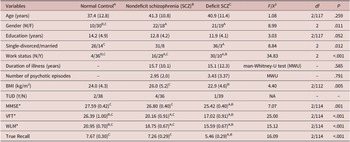
Table 1 shows the demographic and clinical data for the three study groups. There were no significant differences in age and education between the three groups. In the schizophrenic study groups, there were significantly more men and single individuals without work than in the control group. There was no significant difference in duration of illness or number of psychotic episodes between deficit and nondeficit schizophrenia. BMI was significantly lower in patients with deficit schizophrenia than in those with nondeficit schizophrenia. Only seven people showed TUD. This table also shows the measurements of the three CERAD tests including MMSE and shows the estimated marginal means after adjusting for age, sex, and education years. The MMSE and True Recall scores were significantly lower in deficit schizophrenia than in the two other groups. VFT and WLM were significantly different between the three study groups.
Demographic and Clinical Data in Normal Controls and Schizophrenia Patient with and Without Deficit Syndrome

Notes: F/X 2: Results of analyses of variance (F) or analyses of contingency analyses (X 2). Results are shown as mean (SD), except *: estimated marginal means (SE) obtained by general linear model analysis after covarying for sex, age, and education. A,B,C: Pairwise comparisons among treatment means. A: Significantly different from controls, B: from nondeficit schizophrenia, C: from deficit schizophrenia (protected post hoc tests).
Abbreviations: BMI: body mass index; MMSE: mini mental state examination; TUD: tobacco use disorder; VFT: verbal fluency test; WLM: world list memory.
ESF 2, Figures 1 shows that all symptom domain scores (except hostility) were significantly different between the three study groups and increased from controls to nondeficit and deficit schizophrenia. ESF 2, Figures 2 shows that the WHO-QoL domain scores were significantly different between the study groups and decreased from controls to nondeficit and deficit schizophrenia (except domain 3).
CANTAB measurements in schizophrenia
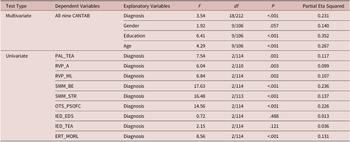
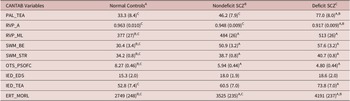
Table 2 shows the outcome of a multivariate GLM analysis which examined the associations between the diagnosis and the nine CANTAB test results, while adjusting for age, education, and gender. We found a highly significant association between the diagnosis and the nine CANTAB test results and significant effects of age and education, but not gender. Diagnosis shared around 23.1% of the variance with the CANTAB data. Univariate GLM analyses showed that there were significant associations between diagnosis and all CANTAB variables except IED_EDS and IED_TEA. FDR correction did not change these results. Table 3 shows the estimated marginal mean values of the nine CANTAB measures in the three study groups. We found that participants with deficit schizophrenia showed worse outcomes on all measurements than controls (except IED_EDS). Moreover, PAL_TEA, RVP_A, and ERT_MORL were significantly different between participants with deficit and nondeficit schizophrenia.
Results of Multivariate GLM Analyses with the 10 CANTAB Data as Dependent Variables and Diagnosis as Primary Explanatory Variable

Note: Diagnosis: three groups, namely healthy controls, and patients with and without deficit schizophrenia.
Abbreviations: CANTAB, Cambridge Neuropsychological Test Automated Battery; ERT_MORL, emotional recognition test, median overall response latency; IED_EDS, intra/extradimensional set-shifting, shift errors; IED_TEA, intra/extradimensional set-shifting, total errors adjusted; OTS_PSOFC, one touch stockings of Cambridge, problems solved on first choice; PAL_TEA, paired-association learning, total errors adjusted; RVP_A, rapid visual information processing test, A’ prime; RVP_ML, rapid visual information processing test, median latency; SWM_BE, spatial working memory, between errors; SWM_STR, spatial working memory, strategy.
Model-Generated Estimated Marginal Means (SE) Obtained by Univariate General Linear Model Analysis (Age, Sex, and Education Adjusted)

Notes: A,B,C: Pairwise comparisons among treatment means. A: Significantly different from controls, B: from nondeficit schizophrenia, C: from deficit schizophrenia (protected post hoc tests).
Abbreviations: CANTAB, Cambridge Neuropsychological Test Automated Battery; ERT_MORL, emotional recognition test, median overall response latency; IED_EDS, intra/extradimensional set-shifting, shift errors; IED_TEA, intra/extradimensional set-shifting, total errors adjusted; OTS_PSOFC, one touch stockings of Cambridge, problems solved on first choice; PAL_TEA, paired-association learning, total errors adjusted; RVP_A, rapid visual information processing test, A’ prime; RVP_ML, rapid visual information processing test, median latency; SWM_BE, spatial working memory, between errors; SWM_STR, spatial working memory, strategy.
ESF 2, confounding variables describe the effects of age, sex, and education on the CANTAB measurements. This section also describes that TUD, BMI, employment, and the drug status did not have any significant effects on the CANTAB test results.
Results of exploratory factor analysis
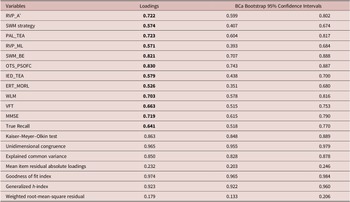
Table 4 shows the results of an exploratory factor analysis with the CANTAB tests combined with the three CERAD tests and MMSE scores as variables. ESF 2, Exploratory factor analysis describes that one factor can be extracted from the listed CANTAB and CERAD tests and the MMSE.
Results of Exploratory Factor Analysis Performed on Key CANTAB and CERAD Tests

Significant loadings are shown in bold. Abbreviations: CANTAB, Cambridge Neuropsychological Test Automated Battery; CERAD, Consortium to establish a registry for Alzheimer’s disease; ERT_MORL, emotional recognition test, median overall response latency; IED_EDS, intra/extradimensional set-shifting, shift errors; IED_TEA, intra/extradimensional set-shifting, total errors adjusted; MMSE, mini mental state examination; OTS_PSOFC, one touch stockings of Cambridge, problems solved on first choice; PAL_TEA, paired-association learning, total errors adjusted; RVP_A, rapid visual information processing test, A’ prime; RVP_ML, rapid visual information processing test, median latency; SWM_BE, spatial working memory, between errors; SWM_STR, spatial working memory, strategy; VFT, verbal fluency test; WLM, world list memory.
Results of PLS analysis
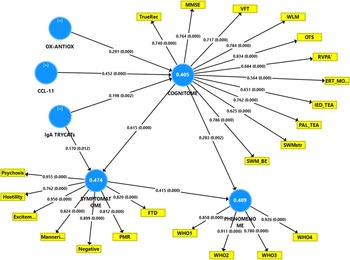
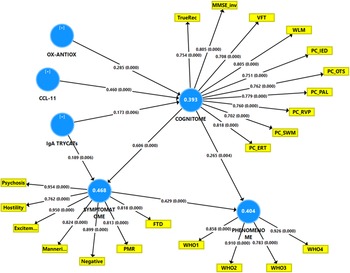
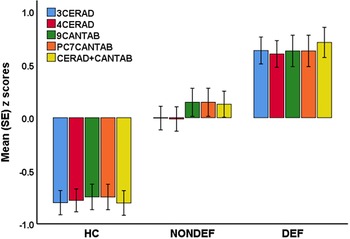
ESF 2, PLS analysis shows the results of two PLS analyses and Figures 1 and 2 show the outcome of those analyses. Consequently, we have computed the latent variable scores for the three CERAD scores (3CERAD), the three CERAD scores and the MMSE score (4CERAD), the nine key CANTAB scores (9CANTAB), the four CERAD + nine key CANTAB scores (CERAD + CANTAB), and the seven principal components (PCs) of the seven CANTAB subdomains (PC7CANTAB). Figure 3 shows a clustered bar graph of these five values in controls and schizophrenia patients with and without deficit syndrome. Univariate GLM analysis with age, sex, and education as covariates showed significant intergroup differences in the 3CERAD (F = 29.54, df = 2/110, P < .001, partial eta squared = 0.349), 4CERAD (F = 29.05, df = 2/110, P < .001, partial eta squared = 0.346), 9CANTAB (F = 28.05, df = 2/110, P < .001, partial eta squared = 0.285), CERAD + CANTAB (F = 31.42, df = 2/110, P < .001, partial eta squared = 0.364), and PC7CANTAB (F = 16.39, df = 2/110, P < .001, partial eta squared = 0.230). All scores were significantly different between the three groups and increased from controls ➔ nondeficit ➔ deficit schizophrenia. There was a strong association between CERAD + CANTAB and 3CERAD scores (r = 0.834, P < .001, n = 116).
Results of partial least squares analysis.
Abbreviations: ERT_MORL, emotional recognition test, median overall response latency; Excitem, excitement; FTD, formal thought disorder; IED_TEA, intra/extradimensional set-shifting, total errors adjusted; IgA TRYCATs, IgA directed against tryptophan catabolites; Manneri, mannerism; MMSE, mini mental state examination; Negative, negative symptoms; OTS, one touch stockings of Cambridge, problems solved on first choice; OX-ANTIOX, ratio between oxidative stress toxicity/antioxidant defenses; PAL_TEA, paired-association learning, total errors adjusted; PMR, psychomotor retardation; RVPA’, rapid visual information processing test, A’ prime; SWM_BE, spatial working memory, between errors; SWM_STR, spatial working memory, strategy; TrueRec, True Recall; VFT, verbal fluency test; WHO1–4, World Health Organization Quality-of-Life Instrument-Abbreviated version domains: 1) physical health; 2) psychological health; 3) social relationships; and 4) environment; WLM, world list memory.

Results of partial least squares analysis.
Abbreviations: ERT, emotional recognition test; Excitem, Excitement; FTD, formal thought disorder; IED, intra/extradimensional set-shifting tests; IgA TRYCATs, IgA directed against tryptophan catabolites; Manneri, mannerism; MMSE, mini mental state examination; Negative, negative symptoms; OTS, one touch stockings of Cambridge tests; OX-ANTIOX, ratio between oxidative stress toxicity/antioxidant defenses; PAL, paired-association learning; PC_, first principal component extracted from various test scores; PMR, psychomotor retardation; RVP, rapid visual information processing; SWM, spatial working memory; TrueRec, True Recall; VFT, verbal fluency test; WHO1–4, World Health Organization Quality-of-Life Instrument-Abbreviated version domains: 1) physical health; 2) psychological health; 3) social relationships; and 4) environment; WLM, world list memory.

Clustered bar graph with neurocognitive scores in healthy controls, and schizophrenia patients with deficit (DEF) and without nondeficit (NONDEF) deficit.
3CERAD: z unit-weighted composite score of word list memory + verbal fluency + True Recall scores; 4CERAD: composite score of 3CERAD + mini mental state examination; 9CANTAB: composite score of nine key CANTAB tests; CERAD + CANTAB: computed as z unit-weighted composite score of 3CERAD + 9CANTAB; PC7CANTAB: principal component extracted from various test of seven different domains.

Examination of all CANTAB tests
ESF 3, all CANTAB show all CANTAB subtests that were measured in this study. ESF 3, Statistics describes how we extracted PCs from all CANTAB tests in the seven CANTAB subdomains. ESF, Tables 1 and 2 show that there are important differences in these PCs extracted from all subdomain tests among the three study samples. ESF 3, Tables 3–5 show all the differences in all CANTAB subtests among the three study groups. ESF 3, Table 6 shows the results of binary logistic regression analyses discriminating schizophrenia from controls and deficit from nondeficit schizophrenia.
Discussion
The general cognitive decline in schizophrenia
The first major finding of this study is that, in schizophrenia, a general factor, which is essentially unidimensional, underpins the nine key CANTAB, three CERAD (VFT, WLM, and True Recall), and MMSE scores. Moreover, this general factor fitted a reflective model and showed adequate psychometric properties indicating good convergent validity, excellent composite reliability, and adequate construct replicability. These findings indicate that, in schizophrenia, the aberrations in visual sustained attention, working memory and strategy use, rule acquisition and attentional set-shifting, emotional recognition, semantic memory, episodic memory, and episodic memory recall are strongly interrelated and belong to one general factor, named G-CoDe. The G-CoDe factor accounts for 50.5% of the variance in the 12 cognitive scores and, therefore, summarizes the positive correlations among the impairments in all cognitive test scores in patients with schizophrenia. As such, the G-CoDe reflects aberrations in neuronal circuits, which underpin the deficits in CANTAB/CERAD tests and include prefronto-temporal, prefronto-parietal, hippocampal, and fronto-striatal neural circuits.Reference Maes, Vojdani and Geffard2, Reference Maes, Sirivichayakul, Kanchanatawan and Carvalho13, Reference Orellana and Slachevsky18, Reference Orellana, Alvarado, Muñoz-Neira, Ávila, Méndez and Slachevsky19
The G-CoDe in nondeficit schizophrenia
The second major finding of this study is that nondeficit schizophrenia is characterized by significant impairments in visual memory, semantic memory, episodic memory recall, episodic memory and learning, SWM and strategy use, spatial planning, rule acquisition and attentional set-shifting, and interpretation of facial expression of emotion. As such, nondeficit schizophrenia is characterized by a G-CoDe. Previously, Levaux et alReference Levaux, Potvin, Sepehry, Sablier, Mendrek and Stip33 reviewed CANTAB findings in schizophrenia and showed widespread cognitive impairments in working memory, decision-making, attention, visual memory, and especially in attentional set-shifting. Deficits in episodic memory, long-term memory, and conditional associative learning tasks are now well documented in schizophrenia.Reference Rushe, Morris, Miotto, Feigenbaum, Woodruff and Murray34, Reference Leavitt and Goldberg35 Our findings on impaired visual memory in schizophrenia agree with those of Seidman et alReference Seidman, Lanca, Kremen, Faraone and Tsuang36 and Kim et alReference Kim, An, Kwon and Shin37 who observed visual memory disorders in schizophrenia.
Moreover, our study also showed an overall decline in executive functions in schizophrenia, which agrees with the findings of Levaux et alReference Levaux, Potvin, Sepehry, Sablier, Mendrek and Stip33 and Pantelis et al.Reference Pantelis, Barnes and Nelson38 The impaired SWM performance in schizophrenia suggests impaired working memory and strategy use, which extends previous findings.Reference Zilles, Gruber, Falkai and Gruber39–Reference Badcock, Michiel and Rock42 Importantly, Bonner-Jackson et alReference Bonner-Jackson, Yodkovik, Csernansky and Barch43 reported that a deficit in the use of effective strategies in schizophrenia may modulate episodic memory performance. The current study showed significantly poorer IED scores in schizophrenia patients, suggesting impairments in rule acquisition and attentional set-shifting, whereas no such results were described by Hilti et alReference Hilti, Delko and Orosz44 Our OTS findings in schizophrenia patients indicate impairments in spatial planning, which agrees with previous reports.Reference Badcock, Michiel and Rock42, Reference Hilti, Delko and Orosz44, Reference Fraser, Park, Clark, Yohanna and Houk45 Nevertheless, our factor analysis shows that the results on cognitive functioning in schizophrenia should not be discussed on a test-by-test basis, but rather by our new findings that all these test scores are features (reflective manifestations) of the G-CoDe.
The G-CoDe in deficit schizophrenia
The third major finding of this study is that the severity of the G-CoDe, different key CANTAB tests, most PCs extracted from the subdomain tests scores, and many tests from the different CANTAB domains, and VFT, WLM, True Recall, and MMSE scores were significantly more pronounced in deficit than in nondeficit schizophrenia. Previous studies in deficit schizophrenia showed somewhat inconsistent results with significant or no significant changes in deficit vs nondeficit schizophrenia.Reference Yu, Tang and Wang46 The latter review detected more impairments in general cognitive capacities and executive functions, sustained attention, and visuospatial memory in deficit than in nondeficit schizophrenia. Yu et alReference Yu, Tang and Wang46 concluded that impairments in cognitive flexibility and sustained attention are the most important dysfunctions in deficit schizophrenia. But again, such deductions are less than optimal as deficit schizophrenia is characterized by increased severity of the general factor “G-CoDe”, which underpins the many cognitive features as assessed with CANTAB/CERAD.
G-CoDe vs specificity of the cognitive CANTAB tests
Based on our findings that a general factor underpins all CANTAB/CERAD tests, we may conclude that it is not adequate to claim that the key CANTAB tests are specific tests, which reflect aberrations in distinct functions in schizophrenia.12 If we would have employed only the key CANTAB tests, we would have concluded that deficit schizophrenia is characterized by highly specific dysfunctions in PAL, rapid visual processing, and interpretation of facial expression of emotion, whereas in fact schizophrenia is characterized by a G-CoDe in all CANTAB test scores. ESF 3, Discussion summarizes that many tests, which are not considered to be key tests by CANTAB,12 are more relevant for (deficit) schizophrenia than the key tests of the same domain.
Finally, the three CERAD tests, VFT, WLM, and True Recall, are more adequate to measure cognitive deficits in schizophrenia than the nine key CANTAB tests, while a deficit in True Recall is the single best predictor of deficit from nondeficit schizophrenia. Moreover, the use of the CANTAB is hampered by the strong effects of education and age which explain a large part of the variability in the nine key CANTAB tests, namely 35.2% and 26.7%, respectively. The WLM and True Recall tests’ results are much less prone to the effects of education and are not affected by age.Reference Kanchanatawan, Hemrungrojn and Thika17 Consequently, we would propose that a composite score based on three CERAD tests, namely VFT, WLM, and True Recall, may be used as a convenient proxy for the G-CoDe in schizophrenia.
The G-CoDe mediates the effects of neurotoxic pathways on the phenome of schizophrenia
The fourth major finding of this study is that the severity of the G-CoDe in schizophrenia is strongly predicted by neurotoxic pathways and partly mediates the effects of those pathways on the symptomatome (PHEMN, PMR, and FTD) and phenomenome (lowered HR-QoL scores). The severity of G-CoDe was to a large extent (40.2%) explained by increased oxidative stress toxicity and lowered antioxidant defenses (the OSTOX/ANTIOX ratio), CCL11, a neurotoxic chemokine that impacts neurogenesis, and increased activity of the TRYCAT pathway with increased IgA levels to the NOX/PRO ratio.Reference Maes, Sirivichayakul and Matsumoto14–Reference Kanchanatawan, Hemrungrojn and Thika17 These results indicate that the neuro-immune and neuro-oxidative pathways impact G-CoDe through a multitude of neurotoxic effects including on neuroplasticity, synapse functions, protein regulation processes, cell signaling, apoptosis, and transcription.Reference Maes, Sirivichayakul and Matsumoto7, Reference Maes, Sirivichayakul and Matsumoto14 As explained previously, these neurocognitive impairments may be causally associated with the PHEMN symptoms, FTD, and PMR of schizophrenia, and consequently with lowered HR-QoL.Reference Maes, Sirivichayakul and Matsumoto7, Reference Maes, Sirivichayakul, Kanchanatawan and Carvalho13–Reference Kanchanatawan, Hemrungrojn and Thika17 Cognitive deficits are viewed as a direct result of “compromised cerebral function”Reference Tamminga, Buchanan and Gold47 preceding psychotic symptoms.Reference Tamminga, Buchanan and Gold47, Reference Harvey, Koren, Reihenberg and Bowie48
It is heavily debated whether impairments in specific cognitive tests are associated with positive or negative symptoms.Reference Bombin, Mayoral and Castro-Fornieles49–Reference O’Leary, Flaum, Kesler, Flashman, Arndt and Andreasen54 For example, Lin et alReference Lin, Fan, Huang, Wu and Li55 found that negative symptoms may mediate the effects of cognition on functional outcomes. Yu et alReference Yu, Tang and Wang46 reported significant correlations between negative symptoms and sustained attention, ideation fluency, cognitive flexibility, and visuospatial memory. HarveyReference Harvey, Koren, Reihenberg and Bowie48 stated that the true nature of the associations between negative symptoms and cognitive impairments are still elusive. However, these discussions are not relevant, because PHEMN symptoms, FTD, and PMR are reflective manifestations of a general factor, namely OSOS.Reference Almulla, Al-Hakeim and Maes3, Reference Sirivichayakul, Kanchanatawan, Thika, Carvalho and Maes15 Furthermore, the current study reported that the G-CoDe explained a large part (44.8%) of the variance in OSOS.
Limitations
The results of the current study should be interpreted regarding its limitations. First, this is a case–control study, which does not allow to draw solid conclusions on causal models. Second, it would have been more interesting if we had performed functional neuroimaging techniques including multimodal imaging and imaging immunologyReference Stoyanov, Kandilarova and Borgwardt56 to detect which neuronal circuits are associated with the G-CoDe. Third, it could be argued why it was necessary to derive a general latent variable instead of using an existing observable variable such as the Global Assessment of Functioning score. Nevertheless, until now, all studies in schizophrenia examined separate cognitive tests or a set of tests, and no research has examined whether a general factor underpins all those neurocognitive deficits. Our results are important, because they indicate that there are no specific disorders confined to one or more cognitive domains in schizophrenia, but rather a deficit in a common core shared by all neurocognitive scores reflecting the influence of dysfunctions in prefronto-temporal, prefronto-parietal, hippocampal, and fronto-striatal neural circuits. In fact, the construction of our G-CoDe is comparable to the construction of the general factor g (general intelligence), which was conceptualized as a single general cognitive ability factor.Reference Warne and Burningham57 Moreover, we also showed that a combination of three CERAD tests (WLM, VFT, and True Recall) may be used as a proxy for the G-CoDe, and that these CERAD tests perform better than the CANTAB tests. Importantly, our results show that rating scales, which measure the G-CoDe and OSOS in schizophrenia, should be based on reflective latent variable models and not on formative sum-scores.Reference Fried, van Borkulo, Epskamp, Schoevers, Tuerlinckx and Borsboom58 Another strength of our research is that the current study employed the bottom-up, data-derived nomothetic network approach to delineate the associations among the building blocks of an illness, namely the adverse outcome pathways (neuro-immune and neuro-oxidative pathways), cognitome (the G-CoDe), symptomatome (the common core shared by PHEMN, PMR, and FTD, namely OSOS), and phenomenome (the common core shared by all domains of the HR-QoL).Reference Maes, Vojdani, Galecki and Kanchanatawan1, Reference Stoyanov and Maes59, Reference Maes, Moraes and Bonifacio60 This method allows to construct reliable and replicable nomothetic networks (our PLS models), which are generalizable disease models disclosing the causal links and mediating effects among the building blocks of the disorder.Reference Maes, Vojdani, Galecki and Kanchanatawan1, Reference Stoyanov and Maes59
Conclusions
In schizophrenia, a general G-CoDe factor underlies impairments in semantic and episodic memory, recall, executive functions, strategy use, rule acquisition, visual sustained attention, attentional set-shifting, and emotional recognition. Patients with deficit schizophrenia show a more profound deficit in this G-CoDe compared to those with nondeficit schizophrenia. The G-CoDe mediates the neurotoxic effects of immune and oxidative pathways on the symptomatome and phenomenome of schizophrenia.
Funding
This research has been supported by the Asahi Glass Foundation, Chulalongkorn University Centenary Academic Development Project.
Disclosure
The authors report no conflict of interest with any commercial or other association in connection with the submitted article.
Authorship Contributions
All the contributing authors have participated in the manuscript. MM and BK designed the study. BK recruited patients and completed diagnostic interviews and rating scales’ measurements. MM carried out the statistical analyses. All authors contributed to interpretation of the data and writing of the manuscript.
Data Availability Statement
The dataset generated during and/or analyzed during the current study will be available from the corresponding author upon reasonable request and once the dataset has been fully exploited by the authors.
Research Involving Human Participants
Approval for the study was obtained from the Institutional Review Board of Chulalongkorn University, Bangkok, Thailand.
Informed Consent
All controls and patients and the guardians of patients gave written informed consent before participation in our study.
Supplementary Materials
To view supplementary material for this article, please visit http://doi.org/10.1017/S1092852921000419.