Clinical Implications
-
• There is an overt behavioral difference between comorbid schizophrenia and OCD (schizo-OCD) compared with OCD.
-
• OCD patients are mostly stationary, whereas schizo-OCD patients wander over a large space.
-
• However, as in OCD, schizo-OCD patients have excessive repetition and addition of acts.
-
• These features may serve as bedside sign and facilitate the nosology of OC spectrum disorders and OCD.
-
• These overt differences may also reflect the differences between OCD and schizophrenia in cognition, attention, and brain malfunctioning.
Introduction
Obsessive-compulsive disorder (OCD) and schizophrenia are distinct diagnostic entities.Reference Poyurovsky and Koran 1 , Reference Poyurovsky, Zohar and Glick 2 The main features of OCD are as follows: (i) obsessions, which are recurring, persistent thoughts, impulses, or images that are experienced as intrusive and unwanted and causing marked distress or anxiety, and (ii) compulsions, which are repetitive motor behaviors such as checking or mental behaviors such as counting that occur in response to an obsession and are performed according to strictly applied rules. 3 However, observations have revealed that disparate mental disorders may also possess obsessive-compulsive (OC) features, leading to the concept of the OC spectrum disorder (OCSD).Reference Jenike, Baer and Minichiello 4 – Reference McElroy, Phillips and Keck 9 Schizophrenia, on the other hand, consists of both positive symptoms, such as delusions (fixed false beliefs), hallucinations, disorganized speech, and abnormal psychomotor behavior, and negative symptoms, such as diminished emotional expression. 3 Two nosological notions have been suggested to explain the association and relationship between OCD and other Axis-I mental diagnoses, including schizophrenia disorder: comorbidity and spectrum. According to the comorbidity notion, there is an endophenotype that is a combination of OCD and schizophrenia (“schizo-OCD”), whereas according to the spectrum notion, schizo-OCD is a subtype of schizophrenia.Reference Bottas, Cooke and Richter 10 – Reference Pallanti, Grassi, Sarrecchia, Cantisani and Pellegrini 12 While comorbidity implies that each disorder maintains its own features, the spectrum notion suggests that schizo-OCD patients have a unique pattern of neuropsychological deficits.Reference Bottas, Cooke and Richter 10 , Reference Poyurovsky, Weizman and Weizman 13 Furthermore, schizo-OCD patients are considered more impairedReference Kitis, Akdede and Alptekin 14 and have greater neurocognitive deficits compared with either patients with OCD or schizophrenia alone.Reference Bottas, Cooke and Richter 10 A synthesis of both comorbidity and spectrum notions has also been suggested, presenting a continuum of comorbidity between OCD and schizophrenia.Reference Poyurovsky and Koran 1 This spectrum comprises four subgroups: (i) schizophrenia in OCD patients, (ii) schizotypal personality disorder (SPD) in OCD patients, (iii) OCD with poor insight, and (iv) schizophrenia with OC features. The prevalence of schizophrenia in OCD patients has been reported to be as high as 4%; nonetheless, OCD patients have no greater chance of developing schizophrenia later in life.Reference Poyurovsky and Koran 1 , Reference Tynes, White and Steketee 15 Schizophrenia patients with OC symptoms are a well-described group, comprising 7.8–55% of schizophrenics.Reference Poyurovsky and Koran 1 , Reference Tumkaya, Karadag and Oguzhanoglu 16 – Reference Tibbo, Kroetsch, Chue and Warneke 18 Traditionally, it was suggested that, for the most part, schizo-OCD patients are primarily schizophrenic patients that additionally suffer from comorbid OC symptoms.Reference Poyurovsky and Koran 1 A comparison of schizophrenic symptoms and signs between patients with schizophrenia with or without OCD revealed no difference,Reference Tumkaya, Karadag and Oguzhanoglu 16 , Reference Nechmad, Ratzoni and Poyurovsky 19 – Reference Poyurovsky, Kriss and Weisman 21 though increased levels of cognitive inflexibility have been detected in neurocognitive tests in schizo-OCD.Reference Patel, Laws and Padhi 22 Thus, the target of this study was to answer the outstanding question regarding schizo-OCD: Is it a comorbidity that integrates symptoms of its parent disorders, or is it a subtype of one of the parent disorders?
OCD, schizo-OCD, and schizophrenia may represent different states along the continuum of thought disorder. One end of this continuum is that of the obsessive thought process that characterizes OCD, consisting of repetitive thoughts that the patients perceive as senseless and unwanted.Reference Kitis, Akdede and Alptekin 14 , Reference Phillips, Pinto and Hart 23 The other end of the continuum is that of the delusive process of fixed false beliefs that characterizes schizophrenia. 3 , Reference Kitis, Akdede and Alptekin 14 In between these ends, there are the overvalued ideas and OCD with poor insight that appears in schizo-OCD. In this state, patients no longer address their obsessions as senseless and unwanted, but view them as realistic.Reference Kitis, Akdede and Alptekin 14 – Reference Tumkaya, Karadag and Oguzhanoglu 16 Despite the above differences between the three states, several studies have suggested that schizo-OCD patients do not differ significantly from patients with schizophrenia (without OCD) in terms of the global assessments of functioning.Reference Nechmad, Ratzoni and Poyurovsky 19 Schizophrenic, schizo-OCD, and OCD patients may also differ in the motor manifestation of the respective disorders. Schizophrenic patients mainly suffer from several motor dysfunctions, including hypokinesia, catatonia, catalepsy, and Parkinsonism without overt motor tasks.Reference Peralta, Campos, De Jalón and Cuesta 24 In contrast, schizo-OCD patients display compulsive motor tasks that are reminiscent of those displayed by nonpsychotic OCD patients.Reference Pulford, Johnson and Awaida 25 Accordingly, in the present study, we set out to compare the motor behavior of OCD and schizo-OCD patients in order to uncover the differences and similarities between these two psychiatric categories.
Spatial motor behavior in schizophrenic patients spreads over a wide area, involving a greater locomoted distance,Reference Perry, Minassian and Henry 26 whereas OCD motor behavior (compulsions) is repetitive, comprising numerous nonfunctional acts that seem irrelevant for the current task, and are performed with high concentration.Reference Boyer and Lienard 27 – Reference Zor, Hermesh, Szechtman and Eilam 29 In light of these differences, we assumed that the dissimilar cognitive impairments in both illnesses would manifest differently in the spatial organization of their motor behaviors. Specifically, OCD patients were expected to pay more attention and have more confined and focused motor behavior, whereas schizo-OCD patients were expected to be more disoriented, paying less attention to details, and featuring dispersed motor behavior. A comparison of OCD and schizo-OCD behavior may facilitate the nosology of OC spectrum disorders and OCD, and may facilitate the separation of these disorders with overt motor signs, adding a different and new perspective to the effort to resolve the nosological dilemma of whether schizo-OCD is an independent entity or merely a combination of its basic parent disorders.
Methods
Participants
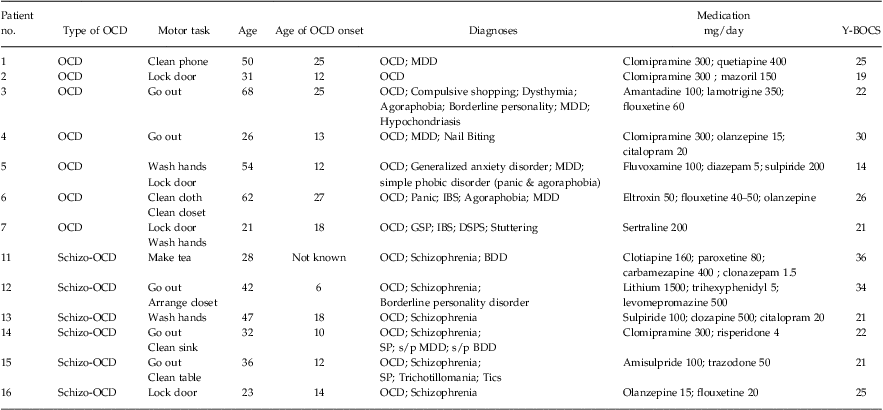
Ten motor tasks of OCD patients, 10 tasks of patients suffering from schizo-OCD, and 20 tasks of normal controls were extracted from video files. Patients met Diagnostic and Statistical Manual of Mental Disorders, 4th ed. (DSM-IV) and SCID (structural clinical interview for DSM-IV) criteria for OCD, both without or with schizophrenia disorder. All patients have demonstrated compulsions with obvious motor rituals. In the frequent case of comorbidity, OCD was the primary disorder among all anxiety and/or mood disorders. None of the participants had either Tourette disorder or multiple tic disorders. The 10 OCD tasks were contributed by 7 patients, with 3 of them performing 2 tasks each and 4 performing 1 task each. The 10 schizo-OCD tasks were contributed by 6 patients, 3 of them performing 2 tasks each, and the other 3 patients performing 1 task each. The themes of the tasks were determined by the patients, with each performing a behavior that was prevalent in her/his recent behavior. Each of the above OCD and schizo-OCD patients was matched with a healthy control individual of the same gender and age, who was requested to perform the same motor task that the patient performed. The patients’ background and task characteristics are depicted in Table 1. Tics not meeting criteria for Tourette disorder were observed in patient #15. Patients from both groups did not differ in age (F1,11 = 1.42; P = 0.26), number of mental diagnoses (F1,11 = 0.38; P = 0.55), and Y-BOCS score (F1,11 = 1.5; P = 0.24). Patients were recruited from an Israeli regional psychiatric outpatient clinic and an anxiety disorder and cognitive behavioral therapy (CBT) unit at the Geha Mental Health Center, Israel. The study was approved by the Helsinki Committee of Geha Mental Health Center. Participants signed an informed consent.
Characteristics and motor tasks in obsessive-compulsive disorder (OCD) patients with and without schizophrenia.
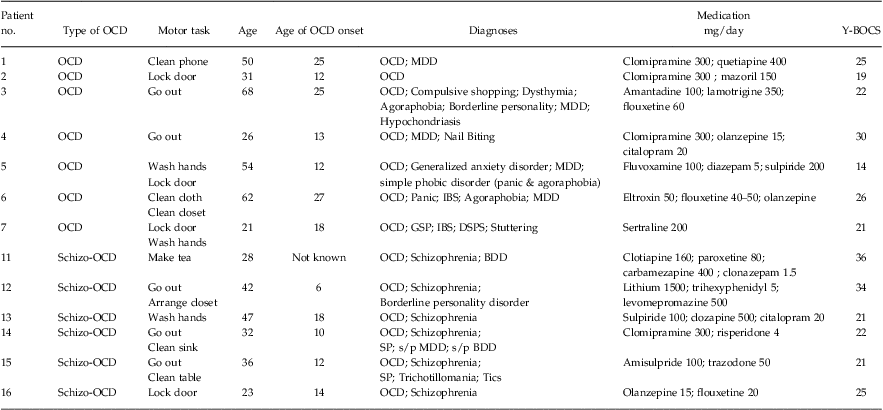
Other disorders noted in the table are as follows: MDD–major depressive disorder; IBS–irritable bowel syndrome; GSP–generalized social phobia; DSPS–delayed sleep phase syndrome; BDD–body dysmorphic disorder; SP–social phobia; Y-BOCS–Yale–Brown obsessive compulsive scale.Reference Goodman, Price and Rasmussen 41
Procedure
Patients and their respective controls were each videotaped by the psychiatrist and experimenter at their homes, where they routinely perform their motor behavior. Assessment of each patient was made by a senior clinical psychiatrist using the Y-BOCS (Yale–Brown Obsessive Compulsive Scale) questionnaire. Afterward, a short conversation about the patient's current mental state and the compulsive behaviors commonly performed in the recent period led to a decision about the specific tasks, which would be video-recorded for analysis. The patients were then asked to perform the task on camera in the same manner as they do in their everyday life. Each control individual was requested to perform the same task as her/his respective patient.
Data acquisition and analysis
A task was defined as the set of acts executed by the patients or control individuals. Each of them set the beginning and end of their task. For example, the start was set when a patient said he was showing how he “washes hands,” and ended when he said that he was done. Similarly, the matched control was requested to show how he washed his hands, until he said that he was done. All the acts performed between the beginning and end of each task were listed and scored. Acts were scored according to the location or object on which they were performed. For example, in the task of “washing hands,” the act “turn on” was performed on the object “tap” and the act “take” was performed on the object “soap”; in the task “going out from home,” the act “turning lights on and off” was performed at two locations: “the bedroom” and “the living room.” According to this procedure, the patients, by setting the beginning and end of the task, also set the task domain to include all the objects/locations on which they performed acts during the task. The acts and the locations/objects at which they were performed were scored using the Observer XT 10.1 (Noldus Information Technology, the Netherlands), a software program for ethological description. The Observer output contained a sequential list of the acts and objects/locations. Acts underwent further classification in accordance with the proximity to the performer, as follows:
-
1. Self—acts that were performed on the patient's body while the patient was stationary. An example of an act with self proximity is “rubbing hands” or checking a trouser's pocket.
-
2. Stationary—acts performed on objects other than the patient's body, while she/he did not move from their place. An example of an act with stationary proximity is “touching the doorknob.”
-
3. Travel—acts performed on an object/location requiring the patient to walk to that location/object. This category was further divided into two subcategories:
-
i. Nearby travel—a travel trajectory of up to 2 steps (up to 75cm).
-
ii. Far travel—a travel trajectory of more than 2 steps (further than 75 cm). This definition was based on a step-length of ca. 32 cm (http://www.footlab.co.il/03_walk/19_measures.asp).
-
Statistics
A two-way analysis of variance (ANOVA) with repeated measure (ANOVA-RM) was used to analyze the differences among OCD, schizo-OCD, and normal control groups (between-group factor) and the spatial categories of acts (proximity—self, stationary, and travel; within-group factor). Post-hoc Tukey HSD (honestly significant difference) tests were used as needed to further analyze the ANOVAs results. A comparison of the number of locations/objects in a task and the number of visits in each location/object was carried out by means of a one-way ANOVA. A comparison of the number of steps each individual executed in the ritual was carried out by means of a one-way ANOVA. Significance was determined at p < 0.05. Continuous data are presented as mean and standard error (±SEM).
Findings
OCD and schizo-OCD patients differed in their spatial behavior but not in the OC rituals
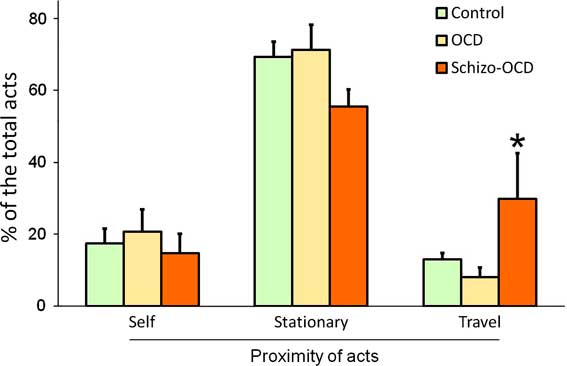
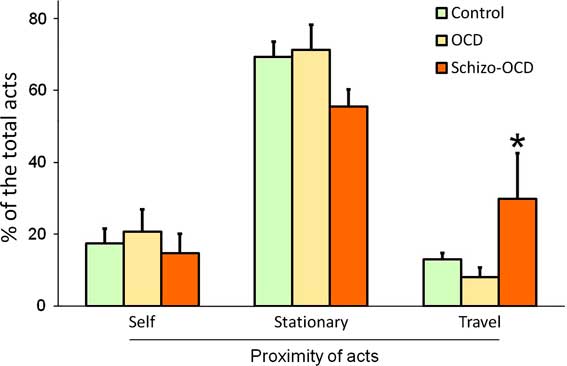
Figure 1 depicts the distribution of the proximity of acts in OCD, schizo-OCD, and control individuals. ANOVA-RM revealed that there was a significant difference between the three diagnostic groups (F2,37 = 4.78, p = 0.014), a significant difference between proximities (F2,74 = 52.58, p < 0.0001), and a significant interaction (disorder × proximity; F4,74 = 2.94, p = 0.025). The interaction implies a difference in proximity among the three groups (schizo-OCD, OCD, and control individuals). A Tukey HSD test revealed that the share of stationary acts in OCD behavior was significantly higher than that of both self and travel acts (71%, 20%, and 8%, respectively; Figure 1). In schizo-OCD behavior, the share of stationary acts was smaller, along with an increase in “travel” (55%, 15%, and 30%, respectively; Figure 1). Control behavior matched that of OCD rituals (70%, 17%, and 13%, respectively; Figure 1). Tukey HSD tests revealed that the percentage of “travel” acts in schizo-OCD patients was significantly greater than in OCD patients and control individuals.
Proportion of acts according to their proximity in OCD, schizo-OCD, and control individuals. All the acts that comprised each motor task were divided into self, stationary, and travel acts. The proportion of act proximity is depicted as the average (± SEM) percentage of all acts in each motor task. The asterisk indicates a significant difference in travel acts between the schizo-OCD and OCD groups.
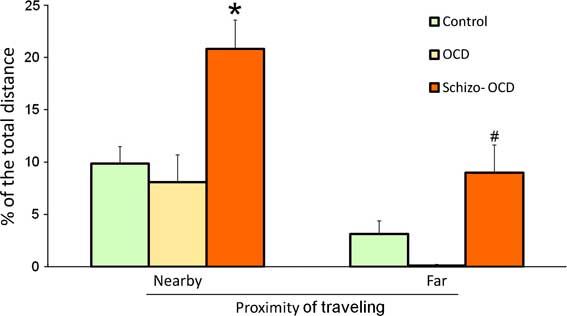
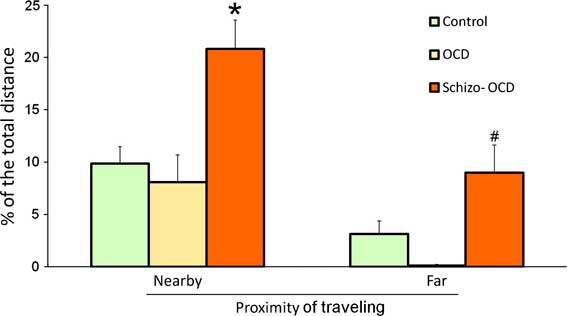
“Travel” acts underwent further classification into “nearby” and “far” acts (see Methods section). The relative number of these subtypes was compared by means of ANOVA-RM, which revealed a significant difference between OCD, schizo-OCD, and control individuals (between-group effect; F2,37 = 17.25, p < 0.0001), a significant difference between nearby and far acts (within-group effect; F1,37 = 26.32, p < 0.0001), but no significant interaction (F2,37 = 0.28, p = 0.69). Notably, there were no “far” acts in any of the 10 OCD motor tasks (Figure 2). Thus, while OCD patients were more stationary than control individuals, schizo-OCD patients traveled further compared to control individuals when performing the same activity.
“Nearby” and “far” traveling in each motor task. These are depicted as the percent average (± SEM) of each travel category (nearby/far) out of the total travel acts. The asterisk indicates a difference between nearby acts in schizo-OCD compared with all other act types and groups in this figure; # indicates a significant difference between far acts in schizo-OCD and OCD patients.
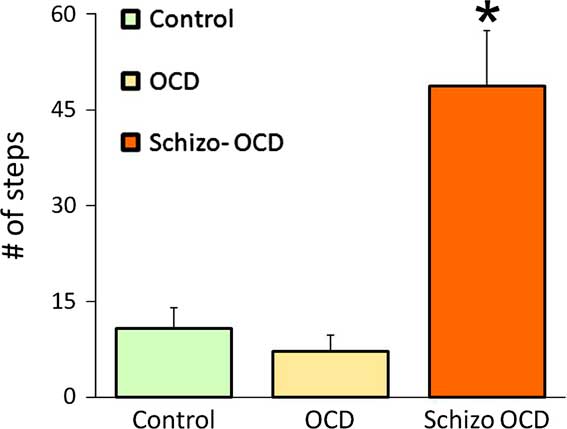
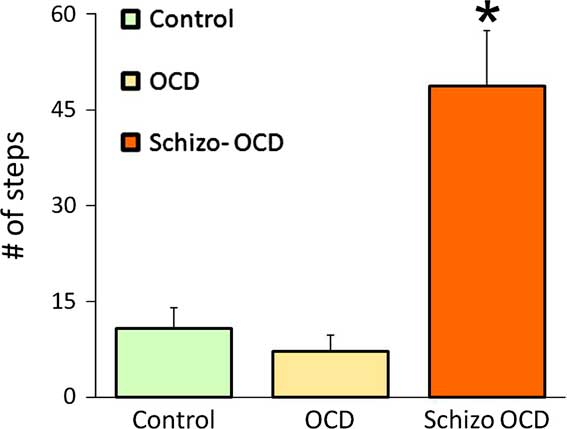
The number of steps taken by the participating individuals during the task differed significantly between OCD, schizo-OCD, and control groups (one-way ANOVA, F2,37 = 20.3, p < 0.0001). The Tukey HSD test revealed a significant difference between OCD and schizo-OCD patients and between the schizo-OCD and the control groups, but no significant difference between OCD patients and control individuals. These results highlighted the contribution of schizophrenia to the spreading out of the motor activity in schizo-OCD patients, as manifested in the increased number of steps. Indeed, OCD patients and control individuals performed fewer steps compared with schizo-OCD patients, with the latter taking significantly more steps and covering a greater area (Figure 3).
The number of steps taken by OCD, schizo-OCD, and control individuals. The asterisk indicates significant difference between schizo-OCD compared with OCD and control individuals.
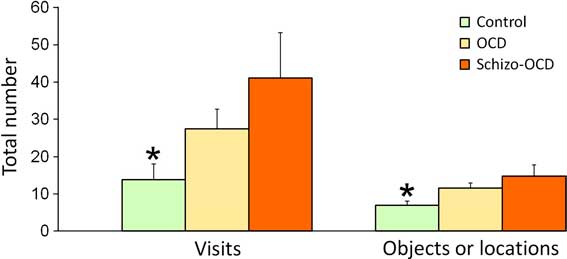
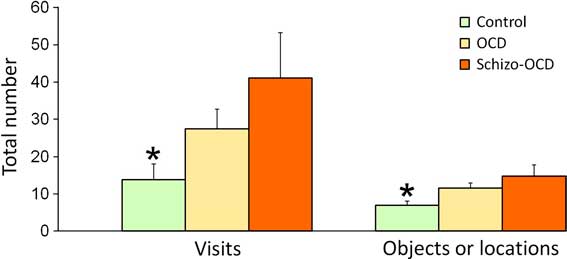
In the present analysis, spatial behavior is considered as a set of locations or objects that the tested individuals visited during the activity, and the set of acts performed at each such object/location. A one-way ANOVA revealed a significant difference in both the number of objects/locations and in the total number of visits to these objects/locations (F2,37 = 5.55, p = 0.007 and F2,37 = 4.59, p = 0.016 for locations and for visits, respectively; Figure 4). A Tukey HSD revealed that the control and schizo-OCD groups differed significantly, whereas the OCD group featured an intermediate rank. These results illustrate a trend of increased spatial activity that reached significance in only the schizo-OCD group. It should be noted that the index for the wider task domain in schizo-OCD behavior is the proximity among objects or locations (Figures 1–3), whereas the number of objects/locations and the visits to these objects/locations (Figure 4) is an index of activity rather than for the spatial distribution of this activity.
The number of objects/locations and the number of visits to each object/location. Asterisks indicate a significant difference between the number of visits and objects/locations in control individuals compared with schizo-OCD patients.
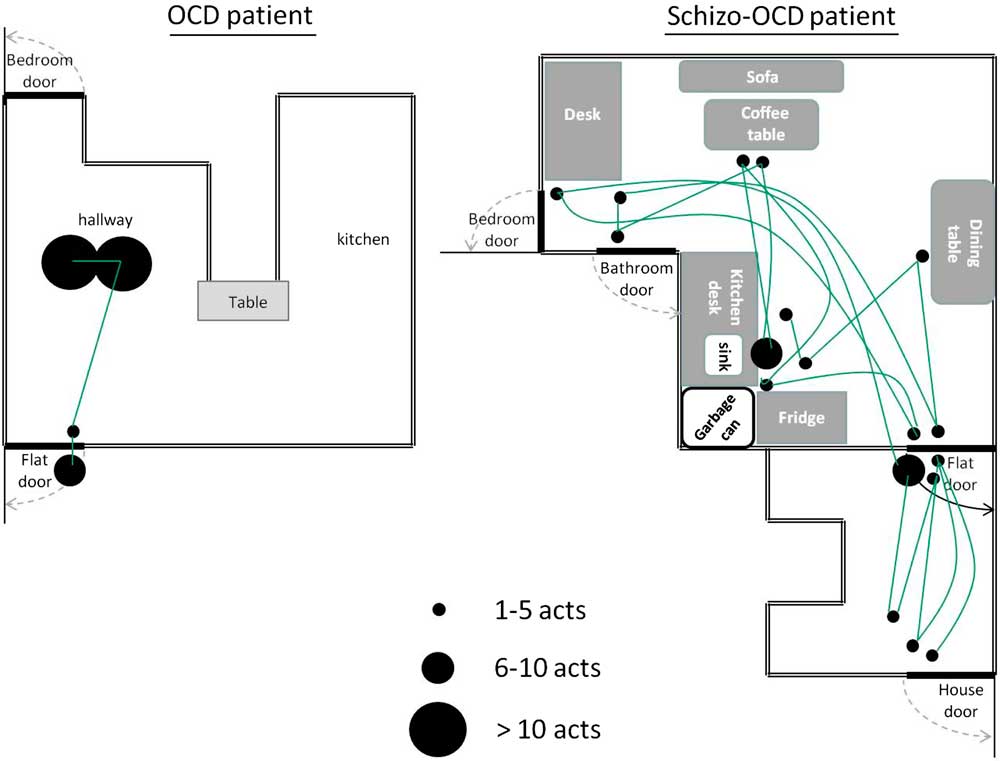
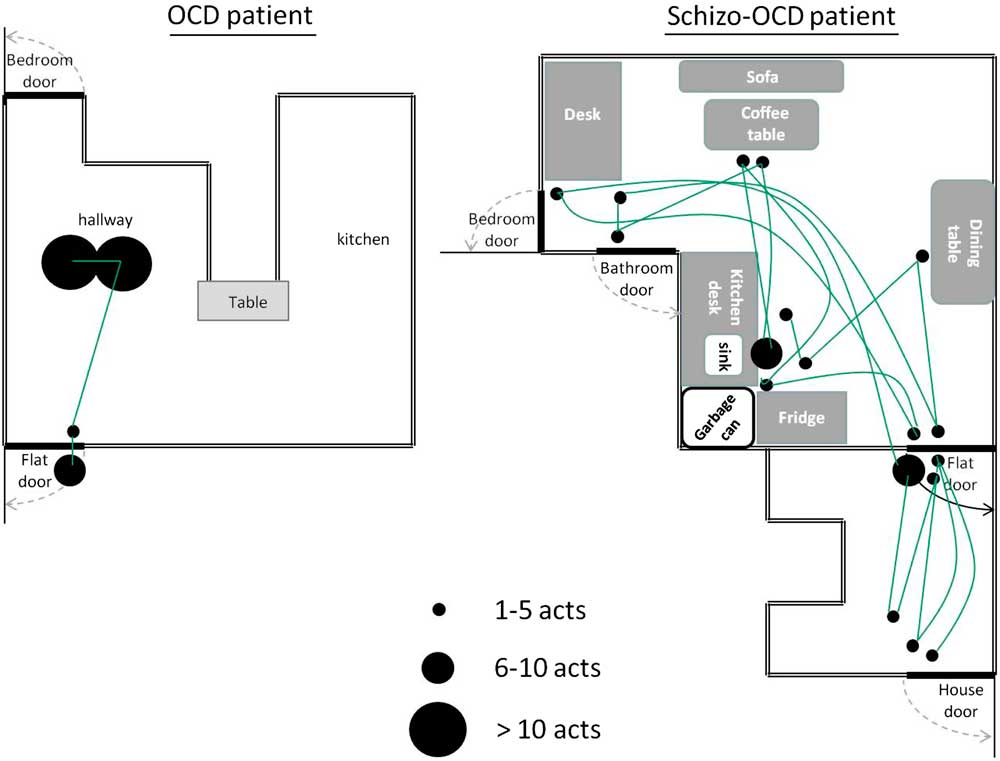
The above results demonstrate that OCD activity was focused and confined in space, with the patients being mostly stationary; in contrast, activity in schizo-OCD was dispersed over a greater area. This is illustrated in Figure 5 (and the supplementary file), which displays an animation of one OCD and one schizo-OCD patient showing the same motor activity that they had both described as “going out from the apartment.” As shown, the OCD patient was mostly stationary, standing in one place and checking the contents of his pockets and then taking the keys and mobile phone and going to the door. In contrast, the schizo-OCD patient traveled around in the apartment, first going to switching on and off lights in the toilets, taking the keys and phone and going to the door, but then returning to scan the bedroom, then taking again the keys and phone and going to the door, but returning again to empty the ashtray, taking again the keys and phone and going to the door, and so on. Altogether, the differences between the stationary nature of OCD behavior compared with the dispersed activity in schizo-OCD are apparent in this exemplary animation.
The trajectories and acts in exemplary OCD and schizo-OCD patients, each performing the motor tasks of “going out from the home.” The location of each circle represents an object/location, while circle size represents the number of acts that took place at that location/object. The green line represents the trajectories of each individual between the locations.
OCD did not differ from schizo-OCD patients in the structural components of their rituals
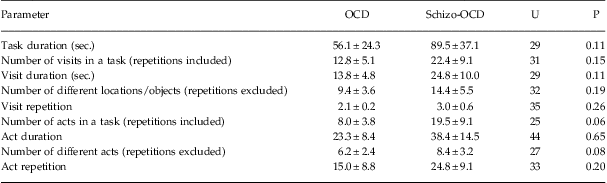
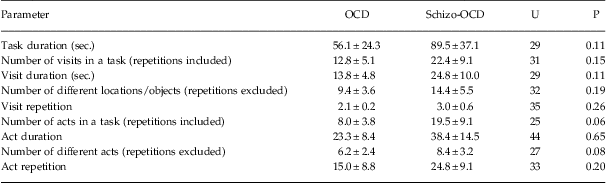
In contrast with the discernible above differences between OCD and schizo-OCD patients in terms of their spatial behavior, these patients did not differ significantly in any of the 24 parameters that characterize obsessive-compulsive motor behaviorReference Zor, Hermesh, Szechtman and Eilam 29 – Reference Eilam, Zor, Fineberg and Hermesh 31 ; however, each group of patients significantly differed in these parameters from their respective control groups. This is illustrated in Table 2, which lists the 9 most important obsessive-compulsive behavioral parameters (according to Eilam etal.Reference Eilam, Zor, Fineberg and Hermesh 31 ). The finding implies that both schizo-OCD and OCD patients share similar obsessive-compulsive characteristics that differ from normal behavior; but also differ from one another in the spatial distribution of this obsessive-compulsive behavior.
Structural components of motor activity in OCD compared with Schizo-OCD patients (values are mean ± SEM). Results of Man-Whitney test are depicted for each parameter (U and P values).
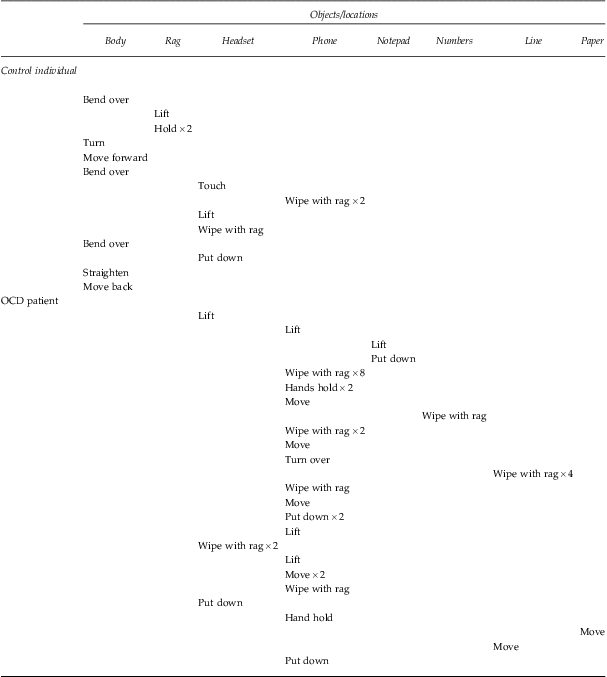
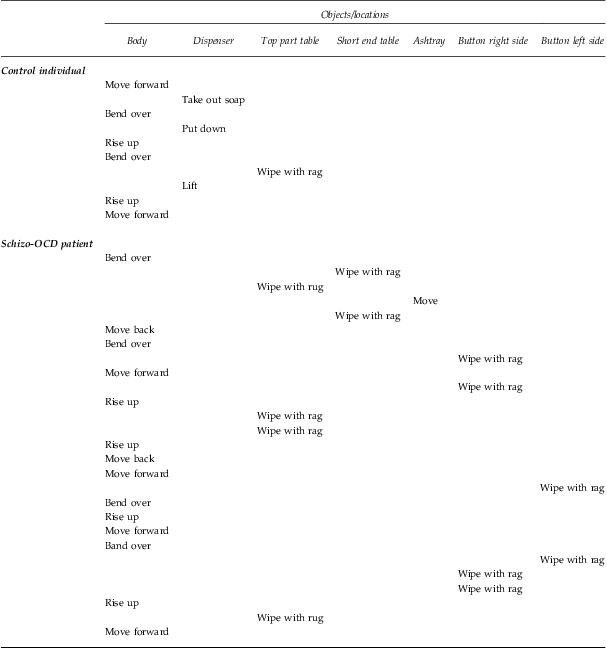
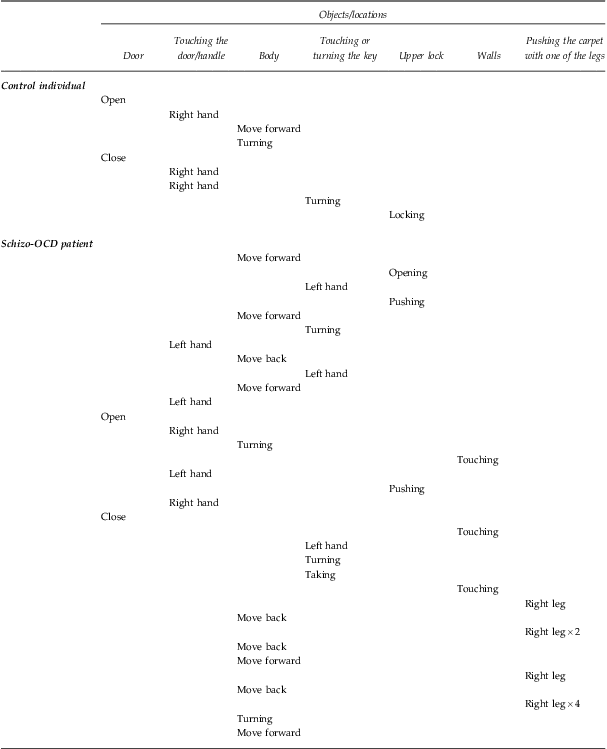
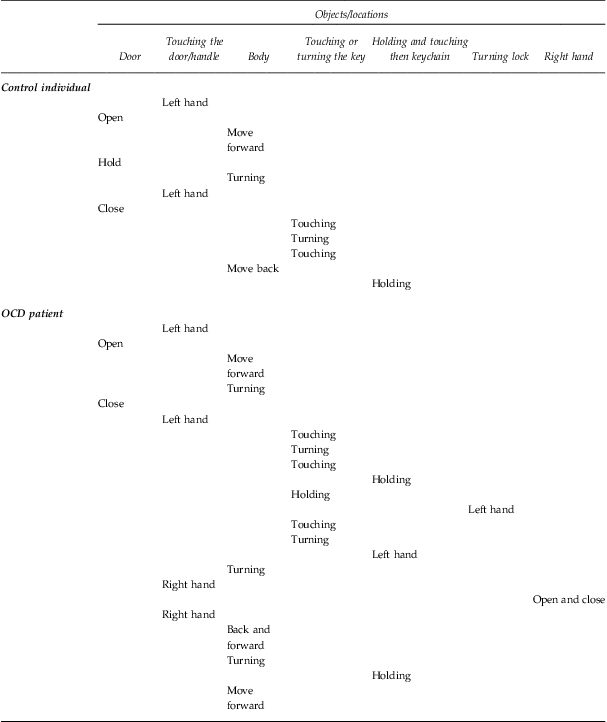
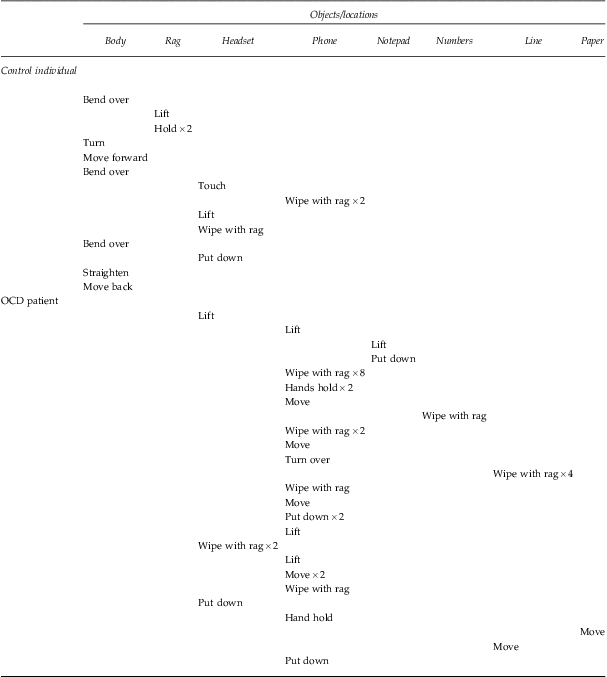
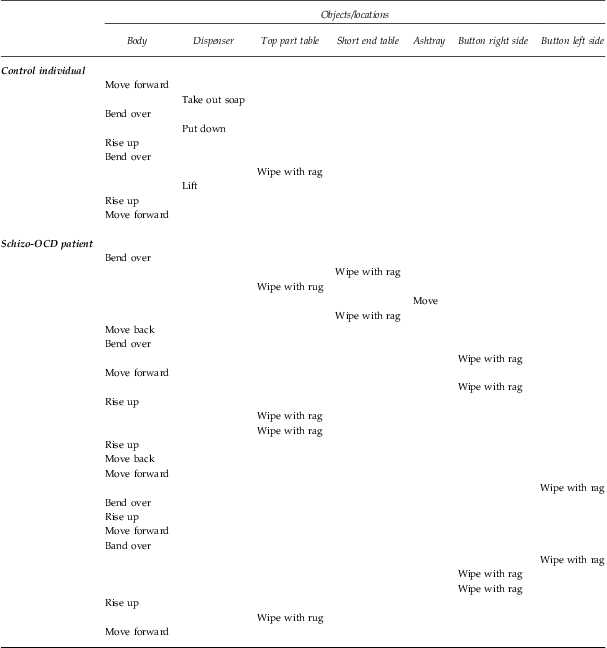
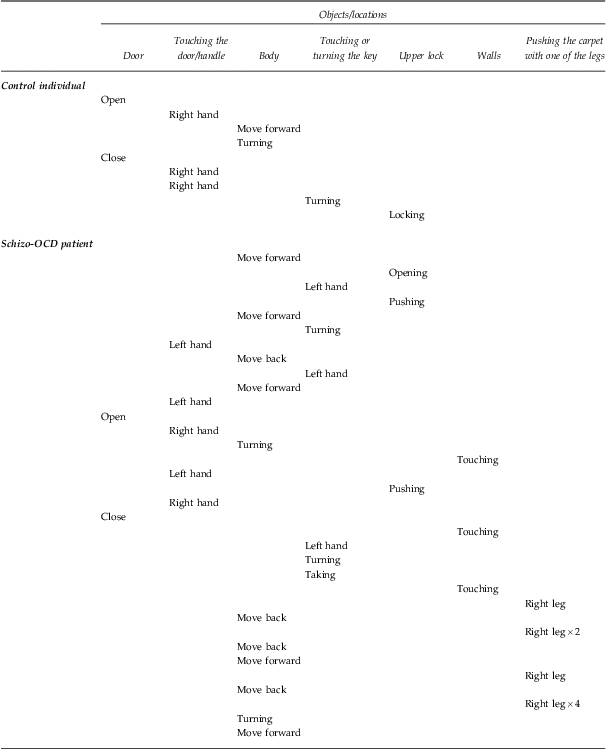
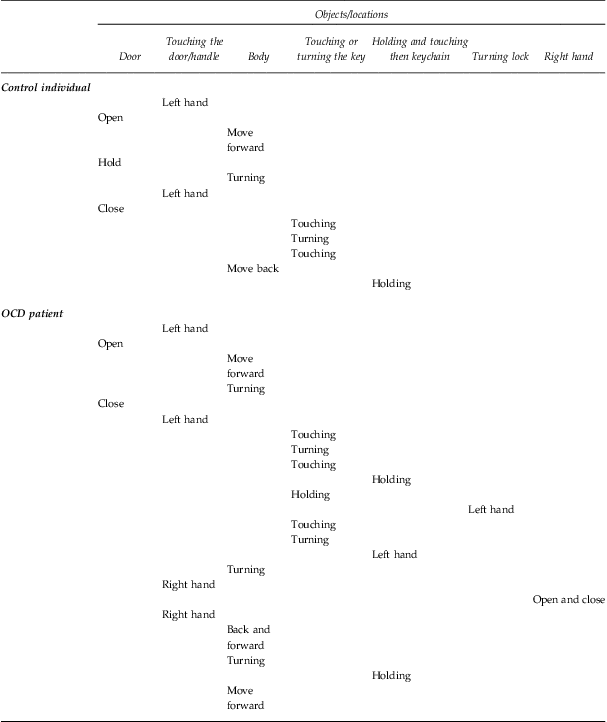
OCD patients are known to have numerous repetitions and additions of unnecessary acts in their motor activity, which makes their behavior nonfunctional.Reference Zor, Keren and Hermesh 30 Here we found that compared with their respective controls, OCD and schizo-OCD patients seemed equally nonfunctional when performing similar motor tasks. Tables 3 and 4 depict a “clean object” motor task, and Tables 5 and 6 depict a “going out” task. Each of these motor tasks is described for both the OCD and schizo-OCD patients, compared with their respective control individuals. Each column in these tables stands for the object/location at which each of the specified acts took place. The order of act performance is given left-to-right and top-to-bottom. Altogether, these tables illustrate the similarity between OCD and schizo-OCD behavior.
Exemplary set of acts of an OCD patient and the respective control, both performing a cleaning task. Objects/locations are listed in the top row and the sequence of acts performed at each object/location is given by reading left to right and top to bottom.
Exemplary Schizo-OCD (bottom) and control (top) individuals performing a cleaning task. Objects/locations are listed in the top row. The structure of the table is similar to that in Table 3.
Exemplary OCD (bottom) and control (top) of individuals going out from home. Objects/locations are listed in the top row. The structure of the table is similar to that in Table 3.
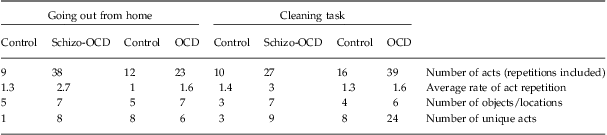
The activity displayed in Tables 3–6 is summarized in Table 7, which demonstrates the cumulative differences between OCD and schizo-OCD motor behavior. Clearly, compared with the control individuals, both OCD and schizo-OCD patients displayed more elaborate activity that included more repetitions and the addition of unnecessary acts, as well as more objects/locations. However, these OC properties did not greatly differ between OCD and schizo-OCD, suggesting that the difference between these disorders is in the spatial organization of behavior.
Comparison between the OCD, schizo-OCD, and control individuals who displayed the activities show in Tables 3–6
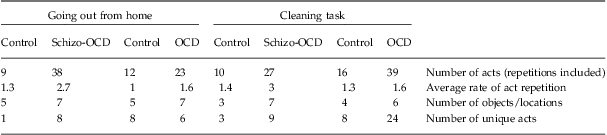
Data for each individual are depicted along the columns. The data column of each patient is followed by the data of his or her respective control.
Discussion
In our study, schizo-OCD patients traveled more across the room compared with the OCD or normal controls who performed similar motor tasks. Schizo-OCD patients also displayed a ritualistic behavior reminiscent of that of OCD patients without schizophrenia. We suggest that these features indicate that traits of both OCD and schizophrenia occur in schizo-OCD patients, supporting the notion of comorbidity. More specifically, we found that the overall level of OC activity did not differ between schizo-OCD and OCD patients, but that the spatial distribution of their activity greatly differed. Indeed, OCD patients were mostly stationary when performing motor tasks, whereas schizo-OCD patients were much more mobile, wandering over a large area. Control individuals had a mixture of both stationary and nonstationary behavior. In the following discussion, we suggest that the difference in spatial behavior between OCD and schizo-OCD patients offers a reliable reflection of the mental differences between OCD and schizophrenia, and that such a difference may facilitate the nosology of OC spectrum disorders and OCD.Reference Hollander 5 , Reference Hollander, Friedberg, Wasserman, Yeh and Iyengar 8 , Reference McElroy, Phillips and Keck 9 , Reference Jenike 32
Obsessions, disturbed thought processes, and their manifestation in OCD and schizophrenia
OCD and schizophrenia seem to represent two extremes on a continuum of disrupted thought processes.Reference Kitis, Akdede and Alptekin 14 In OCD, the patients suffer from obsessions that refer to recurring, persistent thoughts, impulses, or images that inappropriately intrude into awareness and cause marked distress or anxiety. In response to obsessions, OCD patients may display compulsions, which are over-repetition of physical behaviors such as checking, or mental behaviors such as counting things. 3 Schizophrenia includes delusions and disorganized behavior, trouble with thinking and concentration, and difficulty in paying attention and making decisions.Reference Graybiel and Rauch 33 Here we suggest that the distinctive cognitive properties of each disorder are also manifested in the overt motor behavior, as revealed in the present and previous studies. Specifically, a high or exaggerated attentional focus and over-concentration is a salient feature of OCD patients when they display their motor tasks.Reference Boyer and Lienard 27 – Reference Zor, Keren and Hermesh 30 , Reference Keren, Boyer, Mort and Eilam 34 In other words, we suggest that OCD patients demonstrated restricted spatial motor behavior as a reflection of their high concentration in performing their highly organized motor routines.Reference Boyer and Lienard 27 The present results contribute to this by revealing that the high concentration and focusing on performance by OCD patients are accompanied by their being stationary and relatively immobile. In contrast, schizophrenia patients demonstrated extensive exploratory behavior, traveling back and forth across the room.Reference Perry, Minassian and Henry 26 Furthermore, compared with normal controls, these latter patients are more active in the center of the room and spend more time walking during their exploration.Reference Perry, Minassian and Henry 26 Accordingly, schizo-OCD patients seem to combine motor features from both OCD and schizophrenia. Our study thus suggests that schizo-OCD patients combine on the one hand the addition and repetition of acts that are reminiscent of OCD, and on the other hand, they travel back and forth during their ritual in a manner that is reminiscent of schizophrenia, thus supporting the notion of comorbidity.
Attention deficits in OCD and schizo-OCD
OCD and schizophrenia patients experience opposite impairments in their attention abilities. While OCD patients are obsessed with recurring thoughts or rituals, schizo-OCD patients are disorganized in their thoughts and behavior.Reference Eilam 28 , Reference Bowie and Harvey 35 In other words, OCD is a disorder of incessant repetition of thoughts and activities, whereas schizophrenia is a disorder of continuous shifting from one thought/activity to the next. Indeed, early studies in schizophrenia patients showed a remarkable characteristic of attention deficitReference Bowie and Harvey 35 that correlates with the severity of the disorder and remains constant in time.Reference Menzies, Chamberlain and Laird 36 In contrast, a salient feature of OCD patients is their high attention when displaying their motor tasks.Reference Boyer and Lienard 27 – Reference Zor, Keren and Hermesh 30 , Reference Keren, Boyer, Mort and Eilam 34 , Reference Kuelz, Hohagen and Voderholzer 37 In other words, OCD patients have difficulty in shifting their attention from one part of the motor task to another, resulting in a delay in task performance.Reference Patel, Laws and Padhi 22 Furthermore, OCD patients perform significantly better than schizophrenia patients in a simple attention task.Reference Martin, Huber, Rief and Exner 38 Compared with schizophrenic patients, schizo-OCD patients had a lower score in tests for attention abilities.Reference Patel, Laws and Padhi 22 Nonetheless, both schizo-OCD and schizophrenia patients demonstrate the same category of impaired attention in contrast with OCD patients, indicating a similar origin of cognitive deficits. Considering that behavior is a direct manifestation of brain activity, we suggest that the focused and confined activity in OCD compared with the divergent activity over a large area in schizo-OCD is a reflection of the focused attention in the former and the continuously shifting attention in the latter. In other words, the attentional deficit in the schizo-OCD patients is an overt schizophrenia feature.
Cognitive deficits in the executive function in OCD and schizo-OCD
Attention is the foundation of other high cognitive abilities, such as executive functions and memory performance.Reference Bowie and Harvey 35 Executive functioning is an umbrella term for cognitive processes, such as attention, working memory, and planning.Reference Hutton, Puri and Duncan 39 Therefore, cognitive dysfunction can be manifested in the impairment of executive functions.Reference Bowie and Harvey 35 Such an impairment could be differentially manifested in OCD and schizophrenia.Reference Tumkaya, Karadag and Oguzhanoglu 16 , Reference Spitznagel and Suhr 40 Schizophrenia patients experience deficits in the integration of cognitive activity and the inability to pay attention to details. In contrast, OCD patients demonstrate a different type of deficit in executive functions, as manifested in dysfunction of impulse control and regulation of behavior.Reference Spitznagel and Suhr 40 In light of this difference, it was suggested that schizo-OCD patients would represent a more severe executive function impairment that combines both types of deficits, due to the comorbid nature of their disorder.Reference Spitznagel and Suhr 40 For example, in a task of “going out from home,” the schizo-OCD patient took his key, walked to the door, then went back inside to check the lights in the bedroom, went back to the door, returned back to check the bathroom light, then went back to the door, and so on. The OCD patient did not go back and forth, but stood at the light switch and checked it repeatedly. In all, schizo-OCD patient cognitive impairments in both the fields of attention and of regulation additionally support the notion of comorbidity.
Conclusion
The present findings demonstrate that the spatial distribution of motor activity varies between OCD and schizo-OCD patients, with the former being mostly stationary and the latter wandering over a large space. We suggest that these overt differences reflect the differences between OCD and schizophrenia in cognition, attention, and brain malfunctioning. These behavioral differences may serve as bedside signs and facilitate the nosology of OC spectrum disorders and OCD.
Disclosures
Naomi Fineberg has the following disclosures: Servier advisor, support fees, research, research support; Lundbeck advisor, consulting fees; Transept consultant, consulting fees. The other authors have nothing to disclose.