Introduction
Because of their excellent thermal stability, solvent resistance, remarkable mechanical properties and outstanding electrical properties, polyimides (PIs) offers important applications in the aerospace and electrical industries [Reference Spechler, Koh, Herb, Rand and Arnold1, Reference Kim, Kwon, Kim, Do, Lee and Han2, Reference Zha, Fan, Dang and Li3, Reference Lin, Kuo, Sie, Cheng and Liou4, Reference Li, Xu, Che, Su, Song and Ma5]. However, their further applications were limited by their low optical transparency and deep color intensity due to the formation of intra- and inter-molecular charge transfer complexation (CTC) between electron-withdrawing dianhydride residues and electron-donating diamine residues, leading to the strong absorption between ultraviolet and visible areas [Reference Ni, Liu, Wang and Yang6, Reference Ando, Matsuura and Sasaki7, Reference Hasegawa, Hirano, Fujii, Haga, Takezawa, Yamaguchi, Ishikawa and Kagayama8, Reference Ke, Song, Liang and Xu9, Reference Liu, Zhang, Lan, Liu, Qin, Chen, Zhao, Chi, Xu and Economy10]. Hence, much efforts and attempts have been made to prepare optically transparent and colorless PIs to extend their applications on the flexible solar battery plate, nonlinear optical (NLO) waveguide materials, flexible active matrix organic light emitting display devices (AMOLEDs) and other fields of optoelectronics and photonics without sacrificing their outstanding properties [Reference Mathews, Kim and Ha11, Reference Hou, Chen, Pei and Fang12, Reference Liu and Jeng13, Reference Bong, Yeo, Goh, Ku, Kim, Bong, Park and You14, Reference Yi, Li, Huang and Yan15].
The introduction of aliphatic dianhydride or aliphatic diamine monomers is an effective method to minimize or eliminate the formation of CTC to prepare transparent and colorless PIs [Reference Chen, Zhou, Ma, Wang and Fang16, Reference Jarzabek, Schab-Balcerzak, Chamenko, Sek, Cisowski and Volozhin17, Reference Mathews, Kim and Ha18]. However, the aliphatic PIs generally exhibited poor thermal stability and bad mechanical performance due to the incorporation of less stable aliphatic segments [Reference Guo, Shen, Ni, Liu and Yang19]. Meanwhile, considerable attention has been paid to synthesize fluorinated PIs based on fluorine-containing dianhydride and fluorinated diamine monomers which can reduce the formation of CTC, especially the trifluoromethyl-substituted monomers [Reference Kim, Kim and Chung20, Reference Choi, Sohn and Chang21, Reference Damaceanu, Constantin, Nicolescu, Bruma, Belomonia and Begunov22]. It has been observed that the incorporation of fluorinated substituents into the structures of PI can impart PI with enhanced solubility and higher optical transparency owing to the bulky and strong electron-accepting –CF3 groups, together with lower water absorptions and lower dielectric constants because of the lower polarizability and the increased free volume [Reference Chen and Hsiao23, Reference Tapaswi, Choi, Nagappan and Ha24, Reference Ghaemy, Berenjestanaki and Bazzar25]. Although the introduction of fluorine-containing substituents endows PI with the above desirable properties, they also have some drawbacks and limitations. Their mechanical and thermal stabilities are compromised due to both the steric hindrance effect of the bulky fluorine-containing substituents, which reduces the interactions of PI chains, and the inductive effect of the strong electron-withdrawing fluorinated substituents, which resulted in fluorinated PIs with low molecular weights. Meanwhile, the synthesis of novel fluorinated dianhydride and fluorine-containing diamine monomers still has been a scientific and technological challenge.
Poly(ether imide)s (PEIs) have received remarkable attention because of their good processability due to the flexible ether group in their structures [Reference Chung, Yang and Hsiao26, Reference Jang, Shin, Choi, Park and Han27]. Recently, numerous semi-fluorinated PEIs based on non-fluorinated dianhydride monomers with trifluoromethyl-substituted diamines or fluorinated dianhydride monomers with CF3-free diamine monomers have been reported and discussed [Reference Chen, Hsiao and Su28]. Yang et al. [Reference Yang, Su and Chen29] reported a series of transparent and colorless semi-fluorinated PEIs prepared from non-fluorinated 2,2-bis[4-(3,4-dicarboxyphenoxy)phenyl]propane dianhydride (BPADA) with aromatic bis(ether amine)s bearing pendent trifluoromethyl groups. These PEIs were transparent and almost colorless with λ0 below 390 nm and had a tensile strength of up to 100 MPa and decomposition temperature above 493 °C, together with dielectric constants below 3.39 and water absorptions in the range of 0.11–0.40%. Therefore, the semi-fluorinated PEIs should be optically transparent and colorless coupled with excellent mechanical property and thermal stability. Meanwhile, with the rapid development of the high-end display areas that have strong demands and strict requirements for polymer materials with better optical transparency and surface properties, it is significantly meaningful to further improve the optical transparency and to lower the color intensity of PIs without sacrificing their mechanical and thermal properties. Hence, the preparation of novel transparent and colorless semi-fluorinated PEIs has potential academic and technological values.
In this paper, the synthesis and properties of semi-fluorinated poly(ether imide)s (PEIs) (III) derived from non-fluorinated HQDPA with various trifluoromethyl-substituted diamines were reported and discussed. To the best of our knowledge, the semi-fluorinated IIIb based on HQDPA and bis(4-amino-2-trifluoromethylphenyl)ether (TFODA) was first presented and confirmed by 1H NMR. Although the PEI based on HQDPA and TFMB has already been reported [Reference Zhou, Chen, Wang, Song and Fang30], the IIIa derived from HQDPA and TFMB in this paper exhibited higher optical transparency and better mechanical properties. Furthermore, compared with the fluorinated PEIs based on HQDPA reported by Yang et al. [Reference Yang, Su, Wen and Hsiao31], IIIa and IIIb exhibited higher optical transparency with λ0 below 368 nm and showed better mechanical and thermal properties with tensile strength beyond 90 MPa and T 5% exceeding 540 °C.
Results and discussion
Polymer synthesis
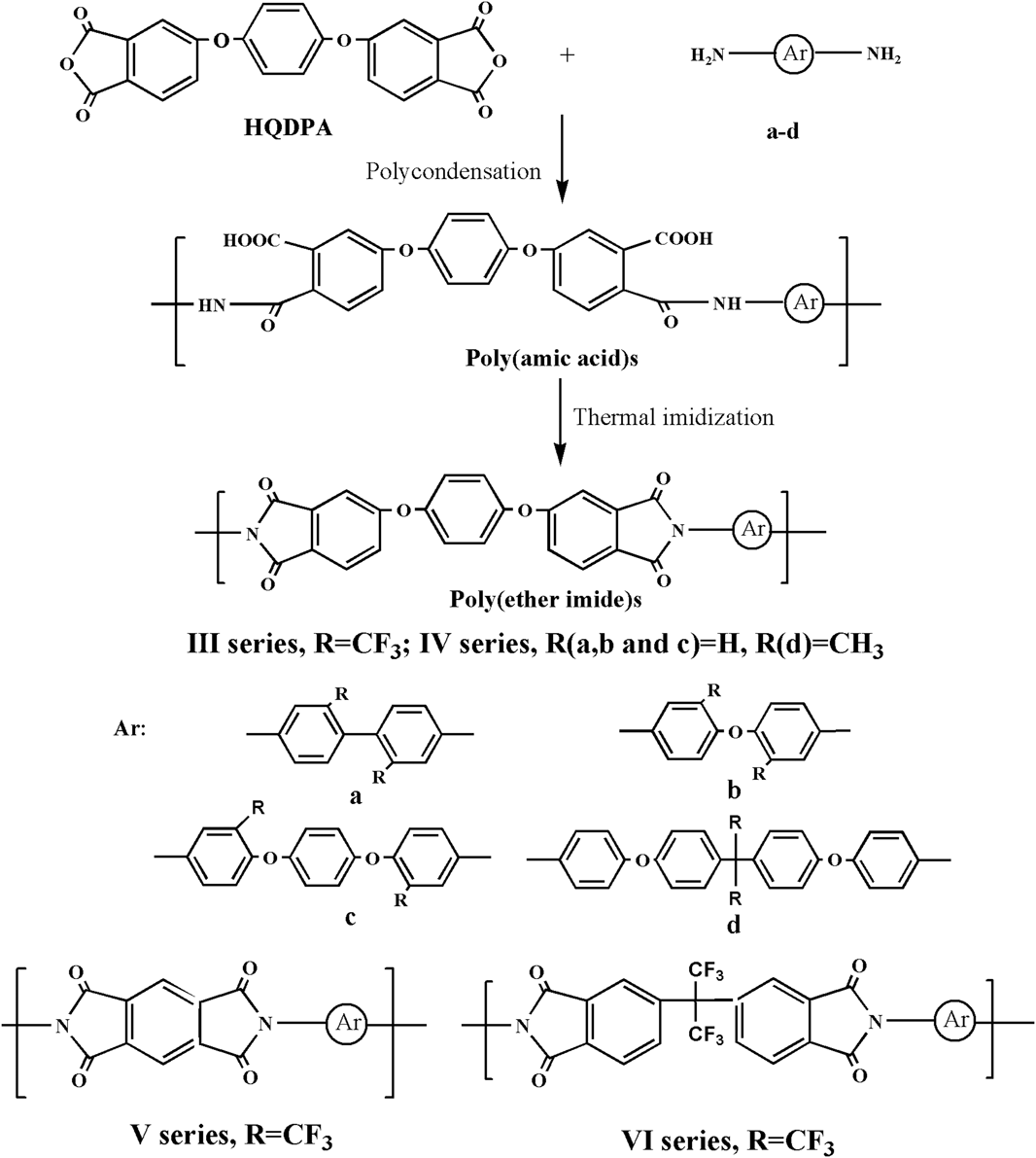
Two series of PEIs (III and IV series) derived from non-fluorinated HQDPA with various trifluoromethyl-substituted diamines and the corresponding CF3-free analogues, respectively, were prepared by a traditional two-step procedure in which PAA precursors were firstly obtained by the polycondensation of dianhydride and diamine monomers followed by thermal imidization (Scheme 1).
Synthesis of the III, IV, V, and VI series.

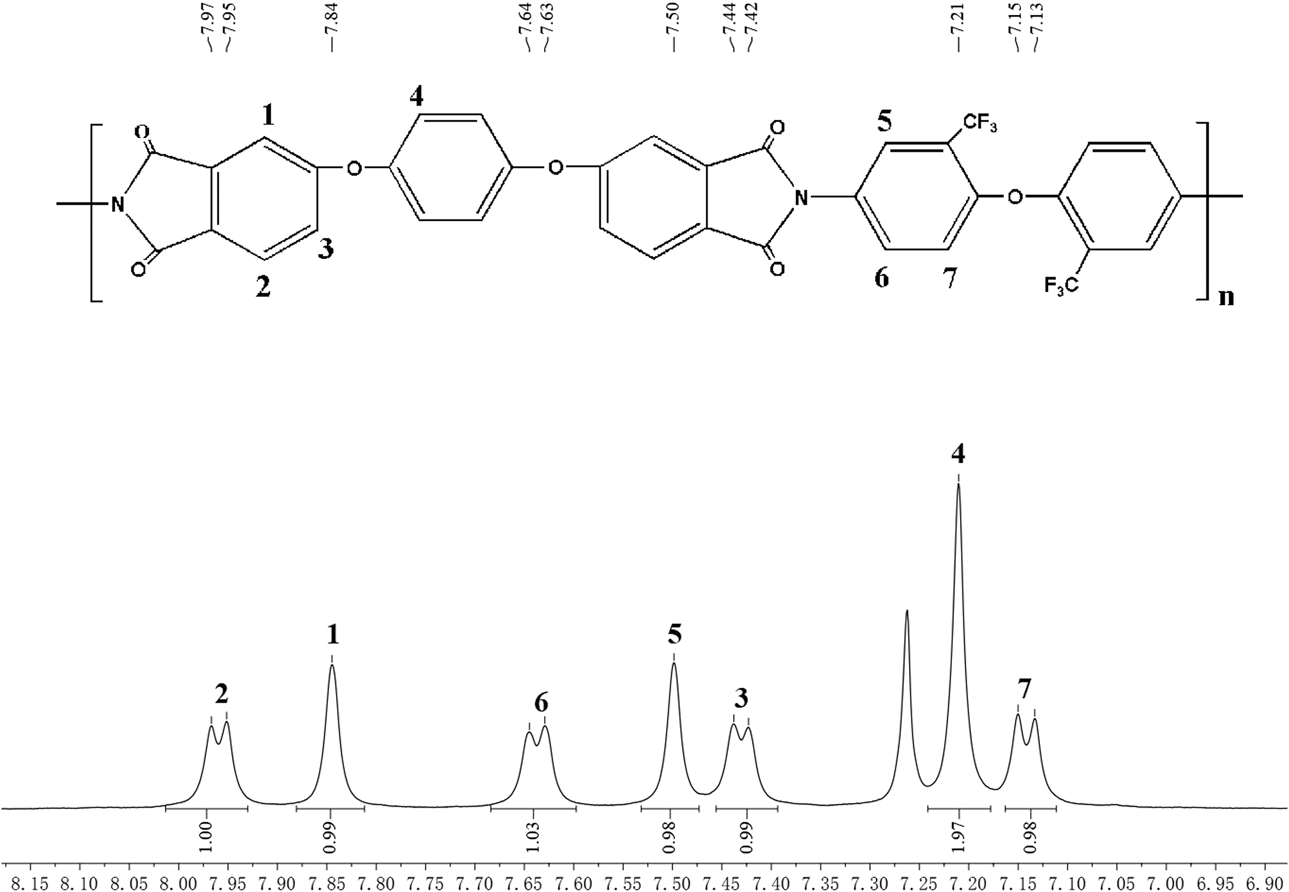
It is worth pointing out that in this study, the polycondensation of diamine Ia with HQDPA did not give PAA with a high inherent viscosity at room temperature due to the electron-donating bis-ether group in HQDPA and the steric hindrance effect and inductive effect of bulky and strong electron-withdrawing –CF3 groups in TFMB, which both reduce the reactivity of monomers. (The composition of materials are listed in Table I.) Therefore, the synthesis of IIIa was conducted under the lower temperature of 3 °C for a longer time beyond 40 h to accelerate the reaction rate as it belongs to the exothermic reaction. For a comparative study, the V and VI series derived from various fluorinated diamines with PMDA and 6FDA, respectively, were also synthesized. Although the amino groups in these diamines were less basic than a normal dramatic amine because of the inductive deactivation of –CF3 group, the inherent viscosities of the PAAs (III′) based on HQDPA and fluorinated diamines presented in Table I were in the range of 1.05–1.53 dL/g, which indicated that these CF3-substituted diamines were still sufficiently reactive to give high-molecular-weight PAAs for an extended period of time at low temperature to obtain flexible and tough films. Compared with the PAAs of III′ series, the PAAs based on PMDA (V′) and 6FDA (VI′) exhibited higher inherent viscosities beyond 1.72 dL/g and lower values below 1.13 dL/g, respectively.
The composition of monomers, the inherent viscosities of the PAAs and optical properties data for the III, IV, V, and VI series.

a The inherent viscosities of PAAs.
b The cutoff absorption wavelength.
c The transmittance at 400 nm.
d The wavelength of transmittance of 80%.
e The maximal transmittance.
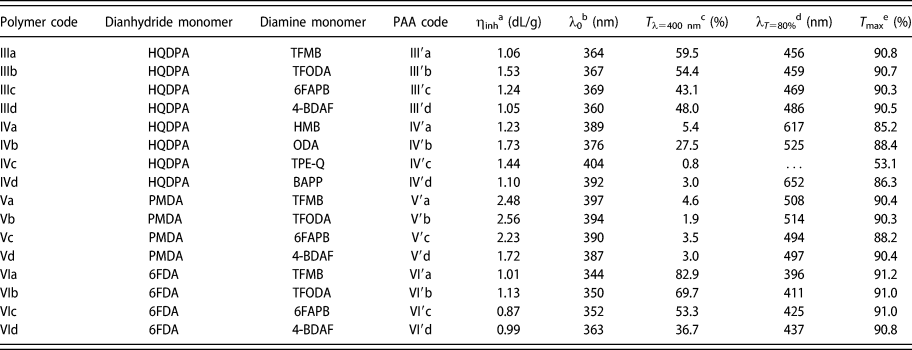
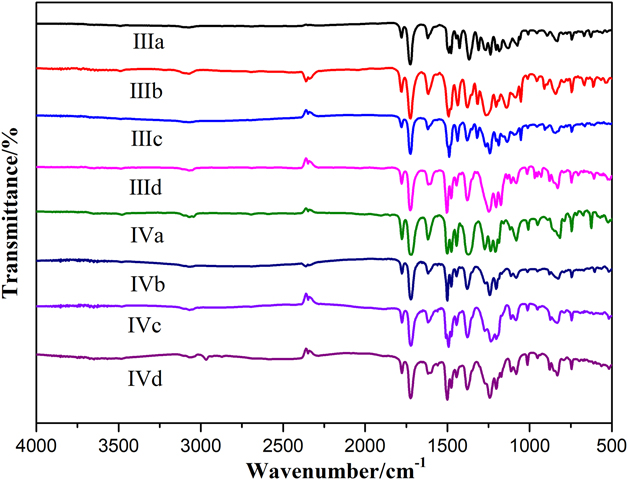
The complete conversion of PAAs into PIs was confirmed by FT-IR spectra. Figure 1 presents the typical FT-IR spectra of the PEIs based on HQDPA (III and IV series). All the PEIs exhibited characteristic absorptions around at 1780 and 1720 cm−1 due to the asymmetrical and symmetrical carbonyl stretching vibrations (C=O). Meanwhile, the absorption peaks appeared around at 720 cm−1 for the imide ring deformation. Besides, the absorption peaks at 1230–1280 cm−1 were detected only in the III series due to the –CF3 groups in their structures. Moreover, there were no absorption peaks around 1650 cm−1 (C=O of CO–NH) and 1560 cm−1 (C–NH), indicating that the PAA precursors were converted into PIs completely.
FT-IR spectra of the III and IV series based on HQDPA.
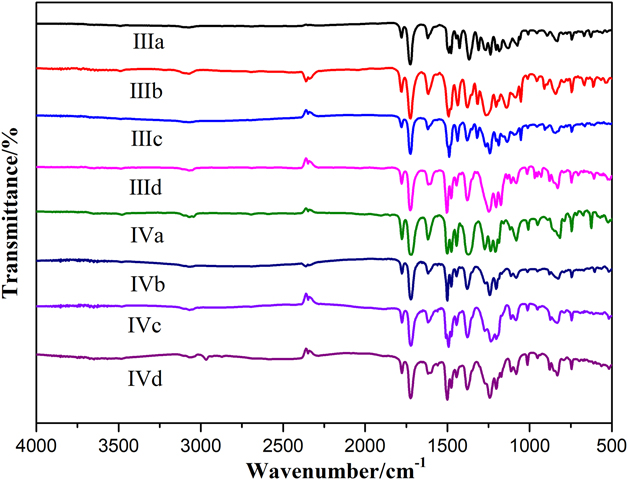
Additionally, the representative 1H NMR spectrum of the novel semi-fluorinated IIIb prepared from HQDPA and TFODA is illustrated in Fig. 2. All the aromatic protons resonated in the region of 7.10–8.05 ppm, which is in good agreement with the proposed structure.
1H NMR spectrum of the novel semi-fluorinated PEI IIIb derived from non-fluorinated HQDPA and fluorinated TFODA.

Optical properties
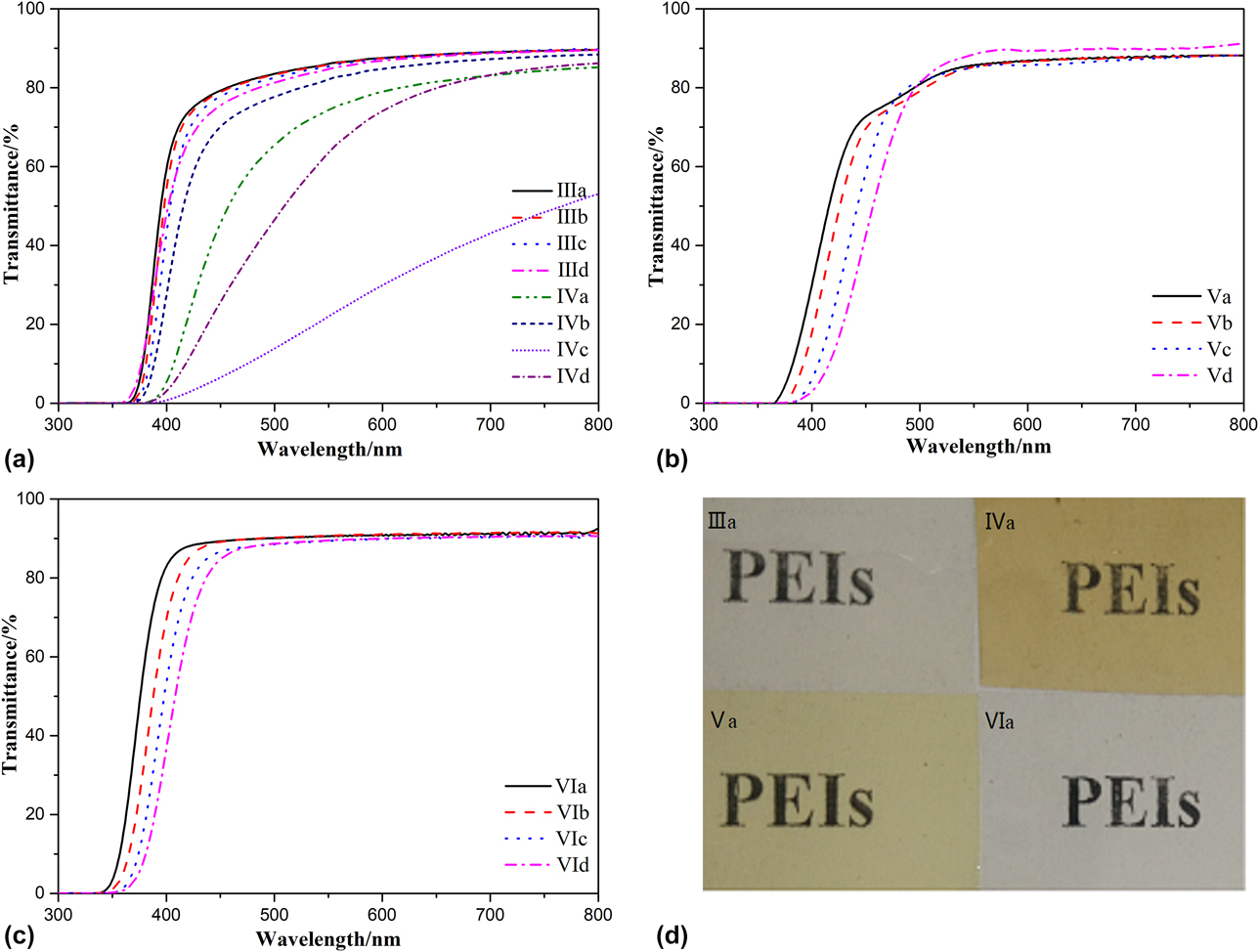
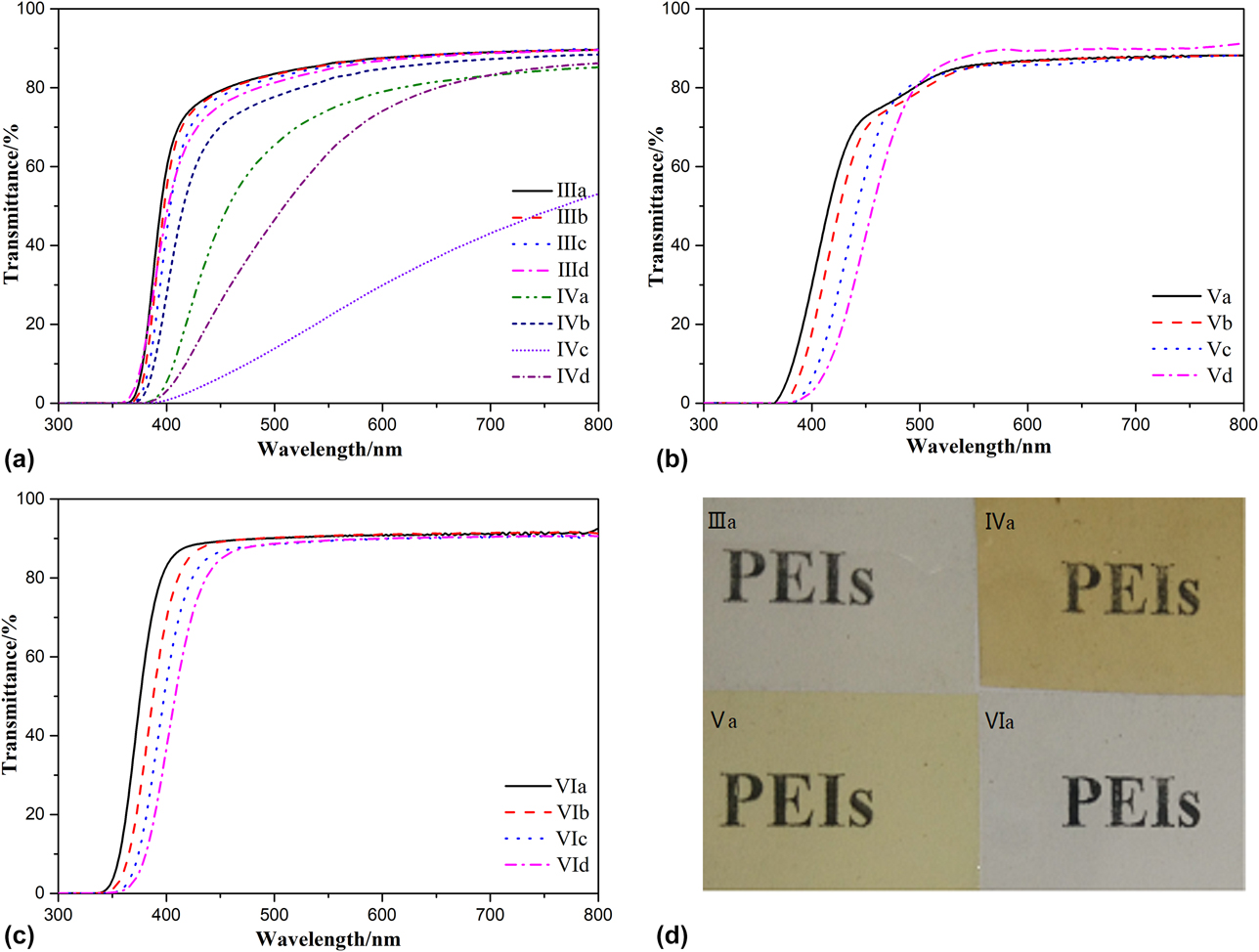
The color intensities of the III and IV series based on HQDPA were illustrated from the cutoff absorption wavelength (λ0) recorded in Table I measured in the UV-vis transparency spectra [Reference Choi and Chang32]. The cutoff absorption wavelength (λ0) is determined by the wavelength corresponding to the intersection points of the line tangent to the UV-vis curves. The values of λ0 of the semi-fluorinated III series based on fluorinated diamines were below 370 nm, which were much lower than those of the corresponding non-fluorinated IV series, especially those of IVc with λ0 beyond 400 nm due to the existence of bulky and strong electron-withdrawing –CF3 groups on the trifluoromethyl-substituted diamines, which reduces the inter- and intra-molecular interactions leading to the less formation of CTC [Reference Liu, Xing, Zhang, Guan, Zhang, Wang, Wang and Jiang33]. For example, the CF3-free IVa prepared from non-fluorinated HMB exhibited λ0 of 389 nm, which was much higher than that of the corresponding semi-fluorinated IIIa counterpart based on trifluoromethyl-substituted TFMB with λ0 of 364 nm.
Meanwhile, to investigate the difference between the bis-ether group and hexafluoroisopropylidene (–C(CF3)2–) group on the dianhydride affecting the optical properties, the λ0 of V and VI series based on PMDA and 6FDA, respectively, were also measured. Compared with the semi-fluorinated III series based on HQDPA, the corresponding V series based on PMDA showed higher color intensity with λ0 up to 397 nm because of the strong formation of CTC in the V series, but the flexible and electron-donating bis-ether group can reduce the electron-accepting properties of dianhydride, which consequently leads to the decrease of CTC formation in the III series. The fluorinated VI series in this study derived from 6FDA and fluorinated diamines exhibited lighter color intensity and better optical performance than other reported polyimides [Reference Xiao, Fang and Fan34]. Meanwhile, the resulting semi-fluorinated III series based on non-fluorinated HQDPA and fluorinated diamines are almost colorless as the fluorinated VI series.
Figures. 3(a)–3(c) represents the UV-vis transparency spectra of the III, IV, V, and VI series. Compared with the non-fluorinated IV series and semi-fluorinated V series, the semi-fluorinated III series and fluorinated VI series exhibited higher optical transparency with the transmittance at 400 nm (T λ=400 nm) beyond 40% and the wavelength of transmittance of 80% (λT=80%) below 500 nm. Meanwhile, the III and VI series showed a higher maximal transmittance (T max) that exceeded 90%. As illustrated in Fig. 3(d), the non-fluorinated IVa and Va exhibited deeper color intensity and lower optical transparency, but the corresponding semi-fluorinated IIIa and fluorinated VIa were almost colorless and exhibited higher optical transparency.
UV-vis transparency spectra of the III and IV series based on HQDPA (a), V series (b) and VI series (c). The physical appearance (d) of IIIa, IVa, Va and VIa.
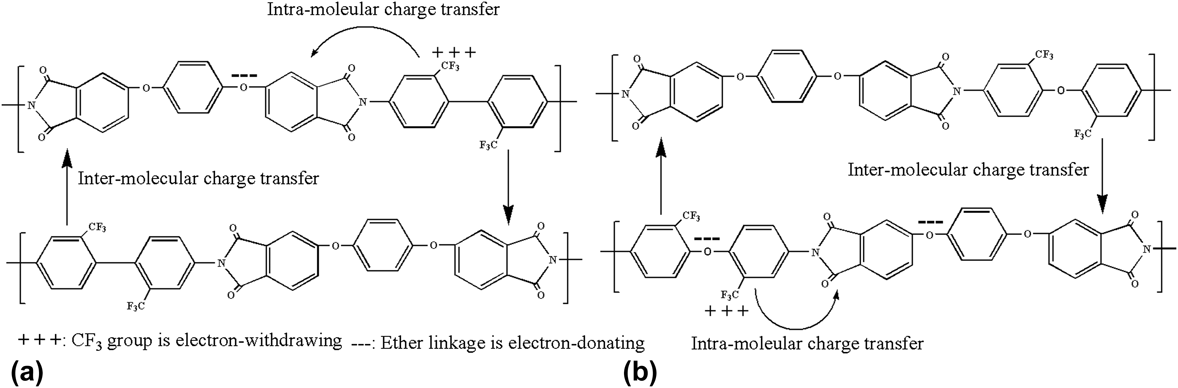
It is widely acknowledged that most conventional PI films are colored due to the formation of CTC between electron-withdrawing dianhydride residues and electron-donating diamine residues. The novel semi-fluorinated IIIa is more transparent and colorless than IIIb (illustrated in Fig. 4). It was easily understandable that not only the incorporation of electron-donating ether linkages in HQDPA can reduce the electron-accepting property of dianhydride, but the substitution of electron-withdrawing –CF3 groups in TFMB leads to a reduction in the electron-donating property of diamine, which both reduced the formation of CTC. However, the incorporation of electron-donating ether linkage in TFODA can increase the electron-donating property of diamine. Therefore, IIIa exhibited higher optical transparency and lighter color intensity.
The intra- and inter-molecular charge transfer of IIIa (a) and IIIb (b). Arrows indicate the directions of electron transfer.

Mechanical properties
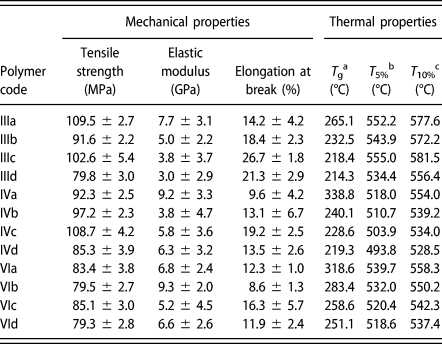
The mechanical properties of the III, IV, and VI series are summarized in Table II. Although there is substitution of bulky –CF3 groups on the diamines, the III series still had excellent mechanical properties with a tensile strength of up to 109.5 MPa, modulus of elasticity of 3.0–7.7 GPa and elongation at break exceeding 14.0%. Meanwhile, it was observed that the III series exhibited better tensile properties in contrast to the fluorinated VI series with a tensile strength below 86 MPa due to the bulky hexafluoroisopropylidene (–C(CF3)2–) groups from 6FDA on the PI backbones, leading to the reduction of inter- and intra-molecular interactions. Moreover, the novel transparent semi-fluorinated IIIa not only exhibited higher optical transparency, but also showed better mechanical properties with a tensile strength of 109.5 MPa when compared to those of VI series and fluorinated PIs derived from 6FDA reported by Ge et al. [Reference Ge, Fan and Yang35]. These results indicate that the incorporation of the bis-ether group into dianhydride not only improved the optical properties, but also obtained better mechanical properties.
Mechanical and thermal properties of the III, IV, and VI series.

a Glass-transition temperature.
b The temperature of 5% weight loss.
c The temperature of 10% weight loss.
Thermal properties
The thermal behavior of the resulting III, IV, and VI series, collected from DSC and TGA curves, is summarized in Table II. The T g values of the PEIs based on HQDPA and PIs derived from 6FDA ranged from 214.3 to 338.4 °C and 251.1 to 318.6 °C, respectively. In comparison with the analogous IV series, III series showed lower T g values because of the pendent –CF3 substituents, leading to the reduction of inter-chain CT interaction and chain packing density [Reference Yang, Su, Wen and Hsiao31]. Meanwhile, VI series exhibited higher T g values than did III series analogs, which was attributed to the increased flexibility in polymer chains produced by the bis-ether linkages in the III series. In the above three series, the PEI IIId showed the lowest T g due to both the bis-ether linkages and hexafluoroisopropylidene (–C(CF3)2–) bridges increasing the flexibility of the polymer chain.
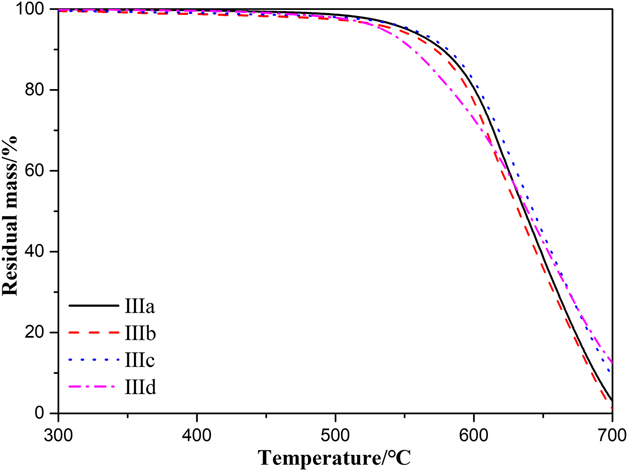
The thermal stability of the resulting PEIs was investigated by TGA, and the representative TGA thermograms of the semi-fluorinated III series are presented in Fig. 5. The T 5% and T 10% values of the III and IV series based on HQDPA stayed within 493.8–555.0 °C and 528.5–581.5 °C, respectively. It was also found that the IVd derived from HQDPA and BAPP exhibited the worst thermal properties due to the poor thermal stability of methyl substituents on BAPP.
TGA curves of the typical semi-fluorinated III series based on fluorinated diamines.
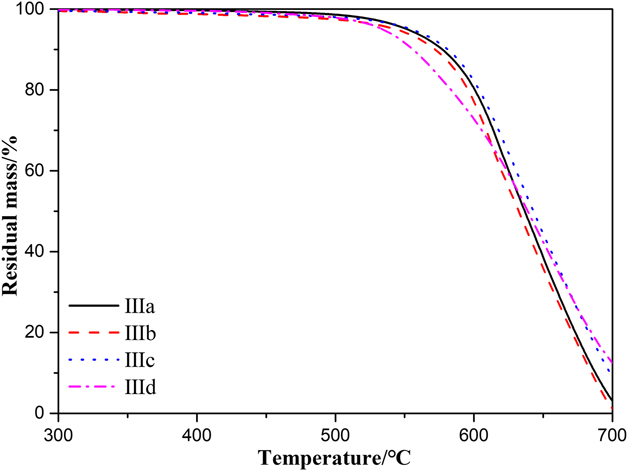
Although the polyimides based on 6FDA exhibited excellent solubility and outstanding optical properties [Reference Behniafar and Sefid-girandehi36], the semi-fluorinated III series based on HQDPA exhibited better thermal stability with T 5% beyond 534.4 °C in contrast to the fluorinated VI series deriving from 6FDA and various trifluoromethyl-substituted diamines with T 5% in the range of 518.6–539.7 °C. Meanwhile, compared with the PEIs based on HQDPA reported by Yang et al. [Reference Yang, Su, Wen and Hsiao31], the semi-fluorinated III series based on HQDPA not only exhibited higher optical properties, but also had better thermal properties, especially the novel transparent and colorless IIIa and IIIb with λ0 below 370 nm and T 5% exceeding 540 °C. Therefore, compared with the fluorinated VI series, the semi-fluorinated IIIa and IIIb not only were transparent and almost colorless, but also showed better mechanical properties and thermal stability. And this might be due to the reason that the bulky (–C(CF3)2–) groups of 6FDA hinder free rotation even on the main chain axis, which gives rise to high torsional strain and steric hindrance and results in easy dissociation of the CF3 radicals [Reference Li, Wu and Lin37, Reference Seyed, Soheila, Mehdi and Zahed38].
Water absorptions and contact angles
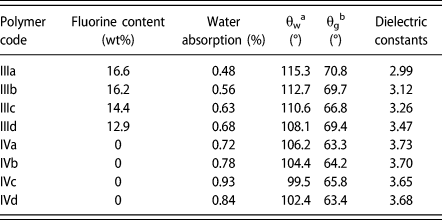
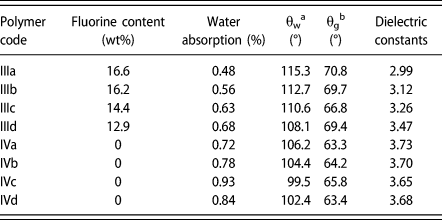
The values of the water absorptions of the III and IV series were tested to investigate the effect of the –CF3 groups on the hydrophobicity of PEIs, and the results are presented in Table III. Compared with the non-fluorinated IV series, the corresponding III series analogues exhibited lower water absorptions in the range of 0.48–0.63% due to the strong hydrophobicity of the –CF3 groups on the side chains of the III series [Reference Wang, Cao, Chen, Xu, Zhao, Li and Ren39] and the values decreased with the increasing of fluorine content. As expected, the PEI IIIa with the highest fluorine content of 16.6 wt% exhibited the lowest water absorption, whereas the IVc showed the highest water absorption due to the incorporation of the hydrophilic ether group from TPE-Q on its structure.
Water absorptions, contact angles against water and ethylene glycol, dielectric constants (at 1 MHz) and insulating properties of the III and IV series.
a The contact angles against water.
b The contact angles against ethylene glycol.
Meanwhile, the contact angles against water and ethylene glycol of the III and IV series presented in Table III were also measured to discuss the surface properties of PEI films. The III and IV series had contact angles against water in the range of 108.1–115.3° and 99.5–106.2°, respectively, demonstrating that the PEIs based on HQDPA had good surface hydrophobicity, especially the semi-fluorinated IIIa with water contact angles exceeding 115°. Besides, all the PEIs exhibited good lipophilicity with the values of contact angle against ethylene glycol below 71°.
Dielectric constants and morphological structure
As shown in Table III, the III series exhibited dielectric constants (at 1 MHz) ranging from 2.99 to 3.47, which was much lower than the corresponding non-fluorinated IV series and the traditional Kapton film (3.8 at 1 MHz) owing to the presence of bulky and strong electron-withdrawing trifluoromethyl groups with lower polarizability and higher free volume [Reference Meador, McMillon, Sandberg, Barrios, Wilmoth, Mueller and Miranda40, Reference Wu, Dong, Gan, Fang, Zhao and Zhang41, Reference Wozniak, Yegorov, Ivanov, Igumnov and Tcarkova42].
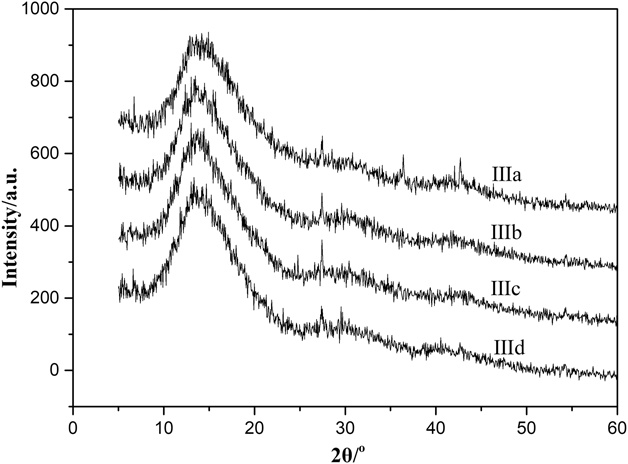
The morphological structure of the III series films was analyzed by wide-angle X-ray diffraction (WAXD). The curves of all the films in Fig. 6 were broad and without obvious peak features, which indicates that all these PEI films exhibited amorphous structures due to both the flexible bis-ether group and the presence of bulky –CF3 groups on the structures of III series, leading to the decreased chain packing and the reduction of chain–chain interactions.
The WXRD diagram of the semi-fluorinated III series.

Conclusions
A series of optically transparent and colorless semi-fluorinated PEIs (III) were synthesized from non-fluorinated HQDPA with various CF3-containing diamines. Compared with the fluorinated VI series based on 6FDA, the IIIa and IIIb were not only transparent and colorless, but also exhibited better mechanical properties and thermal stability with tensile strength beyond 90 MPa and T 5% exceeding 540 °C, especially the semi-fluorinated IIIa derived from non-fluorinated HQDPA and trifluoromethyl-substituted TFMB, which exhibited the best tensile strength of 109.5 MPa when compared to the already-reported transparent and colorless analogues. Meanwhile, the III series showed lower dielectric constants and water absorptions. Therefore, the obtained semi-fluorinated PEIs IIIa and IIIb had further applications in the fields of optoelectronics and photonics, such as NLO waveguide materials and flexible AMOLEDs where high optical transparency and excellent mechanical and thermal properties were highly demanded.
Experimental
Materials
1,4-Bis(3,4-dicarboxyphenoxy)benzene dianhydride (HQDPA) was purchased from Shanghai Macklin Biochemical Co., Ltd., (Shanghai, China) and recrystallized from acetic anhydride before use. 4,4′-Hexafluoroisopropylidenediphthalic anhydride (6FDA) was obtained from Tianjin Zhongtai Chemical Technology Co., Ltd., (Tianjin, China) and purified by sublimation. Pyromellitic dianhydride (PMDA; Purity: 99%) was obtained Beijing J&K Technology Co., Ltd., (Beijing, China) and dried at 160 °C about 5 h before use. Fluorinated diamines, 2,2′-bis(trifluoromethyl)-[1,1′-biphenyl]-4,4′-diamine (TFMB; Purity: 99.85%), bis(4-amino-2-trifluoromethylphenyl)ether (TFODA; Purity: 99%), 1,4-bis(4-amino-2-trifluoromethylphenoxy)benzene (6FAPB, Purity: 99%) and 2,2-bis[4-(4-aminophenoxy)phenyl]hexafluoropropane (4-BDAF; Purity: 99%), were purchased from Shanghai Aladdin Co., Ltd., (Shanghai, China) and non-fluorinated diamines, 4,4′-diaminobiphenyl (HMB; Purity: 99%), 4,4′-diaminodiphenyl ether (ODA; Purity: 99%), 1,4-bis(4-aminophenoxy)benzene (TPE-Q; Purity: 99%) and 1,3-bis(4-aminophenoxy) propane (BAPP; Purity: 99%), were purchased from Lingfeng Chemical Reagent Co., Ltd., (Shanghai, China) and dried at 90 °C about 8 h prior to use. N,N-dimethylacetamide (DMAc) was purchased from Beijing Sinopharm Chemical Reagent Co., Ltd., (Beijing, China) and purified by distillation under reduced pressure over calcium hydride.
Synthesis of poly(ether imide)s
The synthesis of semi-fluorinated IIIa derived from HQDPA and TFMB was used as an example to illustrate the general polymerization procedure to prepare poly(ether imide)s. Fluorinated diamine Ia (3.6760 g, 11.4791 mmol) was dissolved in 50 mL of DMAC at room temperature in a 100 mL flask under a nitrogen atmosphere. After the complete dissolution of Ia, an equimolar amount of HQDPA (4.6182 g, 11.4791 mmol) was also added to the solution in three portions. Firstly, 2.3091 g HQDPA was added to the solution, and the mixture was stirred at 25 °C for 1 h. Secondly, 1.1546 g HQDPA was added to the solution and stirred at 15 °C for 1 h. Finally, the residual 1.1245 g HQDPA was added to the solution and stirred at 3 °C for 40 h to form a pale viscous poly(amic acid) (PAA) solution with a solid content of 15 wt%. Then, the obtained PAA solution was spread on clean and dry glass plate, which was then placed into an oven heated to 120 °C for 3 h under vacuum condition to release the solvent. The obtained semi-dried PAA film was then dried and imidized at 210 °C/0.5 h, 250 °C/0.5 h, 280 °C/0.5 h, 320 °C/0.5 h, sequentially. Finally, a flexible and tough film was self-stripped from the glass plate after soaking into the 80 °C water. The thickness of the resultant polymer films is 25 ± 2 μm.
Measurements
The inherent viscosities of the PAA precursors were determined by a Ubbelohde viscometer at 30 °C. Fourier transform infrared (FT-IR) spectra of the poly(ether imide)s were recorded on a Shimadzu FTIR-8400s Fourier transform spectrophotometer (Shimadzu, Kyoto, Japan). 1H NMR spectrum was measured using a Bruker Ultrashield 300 MHz NMR spectrometer (Bruker, Hamburg, Germany) at the ambient temperature. Ultraviolet–visible (UV-vis) transparency spectra of the PI films with thickness of 25 ± 2 μm were recorded on a Lambda 35 Perkin Elmer UV–vis spectrometer (Perkin Elmer, Waltham, MA). The mechanical properties of the PI films were tested by a SANS-CMT 5105 Electronic Universal Testing Machine (Shenzhen New Sans Corp., Shenzhen, China) at the rate of 20 mm/min. Glass transition temperatures (T g) of polymers were determined on a TA Instruments DSC25 (Waters Corporation, Milford, MA) at the heating rate of 20 °C/min under an air atmosphere. Thermogravimetric analysis (TGA) was conducted with a Shimadzu DTG-60 thermal analysis system at a heating rate of 20 °C/min under an air atmosphere with 3–5 mg samples dried at 80 °C for 24 h. The contact angles against water and ethylene glycol of PI films were recorded by a SL2008B contact angle tester (Shanghai Solon, Shanghai, China). Water absorptions were determined by the weighing of the changes in vacuum-dried film specimens before and after immersion in deionized water at 25 °C for 72 h. Water absorption (%) = (M s − M d)/M d × 100%, where M s and M d are the weights of the swollen and dry films, respectively. The dielectric constants of the films were monitored at room temperature with an Agilent 4294A impedance analyzer (Agilent, Hachioji, Japan) at 1 MHz. The morphological structure of the PI films was determined by a D8-Advance X-ray diffractometer (Bruker, Hamburg, Germany).
Acknowledgments
The authors are grateful to the project funded by the Priority Academic Program Development of Jiangsu Higher Education Institutions (PAPD).