Knowledge about the remote human past underwent dramatic change during the middle of the nineteenth century. Antiquaries excavating ancient tombs and examining megalithic monuments were beginning to learn a great deal about Europe's primeval past. One influential consequence of this research was that the term ‘prehistoric’ (préhistorique, förhistorisk, vorgeschichtlich) began to be used in various European languages during the 1840s and 1850s to refer to the earliest periods of human history for which there were few or no written records.Footnote 1 Archaeologists further refined their conception of the prehistoric period as they gradually came to adopt the three-age system, the chronological sequence of Stone, Bronze, and Iron Ages that was proposed by the Danish archaeologist Christian Jürgensen Thomsen in the 1830s.Footnote 2 For those archaeologists who accepted the three-age system it offered a way of arranging artefacts and sites chronologically, but for historians and ethnologists an important question arose regarding who these prehistoric people were. There were traditional sources that scholars could draw upon to answer this question, though. Historians possessed valuable knowledge about the ancient inhabitants of Europe thanks to the accounts of Roman writers. Julius Caesar described the Celtic tribes of Gaul in The Gallic War, Tacitus wrote about the Germanic tribes in his Germania, and information for various parts of Europe could be gleaned from a variety of classical sources. So, despite the fact that little was known about the peoples and culture of ancient Europe, the prehistoric past was not simply a dark abyss.
While archaeology was beginning to supply some information about Europe's prehistory, another emerging discipline was offering perhaps even more reason for optimism. Early in the century, philologists comparing the grammar and vocabulary of ancient Greek and Latin with the more recently encountered Persian and Sanskrit languages recognized underlying similarities indicating that these languages were related to one another. Philologists such as Friedrich Schlegel, Thomas Young, Franz Bopp and many others began to include Germanic, Slavonic, and Celtic languages in what they began refer to as an Indo-Germanic or Indo-European family of languages that were similar because they were all related genealogically.Footnote 3 Many philologists interpreted this as evidence for the migration of successive waves of Indo-European-speaking peoples into Europe from some original homeland in Asia. Jacob Grimm argued in his influential Geschichte der deutschen Sprache (1848) that the prehistoric migrations of distinct peoples speaking distinct languages could be traced by linking knowledge obtained through philological research with the current ethnology of Europe. Soon a host of scholars, such as Adolph Pictet in Switzerland and Max Müller in England, were attempting to reconstruct the racial composition of prehistoric Europe and link it to a series of migrations of Indo-European peoples originating from Asia.Footnote 4 Some ethnologists criticized the notion that ethnic identity correlated with language, but many scholars looked upon philology as a way of revealing who the early inhabitants of Europe were, when various ethnic groups arrived, and the routes they took. Migration and the displacement of one tribe by invading newcomers became a standard model for explaining European prehistory throughout much of the nineteenth century.
This is the context within which the anthropological and ethnological investigation of the prehistoric peoples of Europe emerged during the middle of the nineteenth century. Archaeologists were remarkably successful at discovering artefacts and monuments and arranging them within the three-age system. Philologists and historians were constructing elaborate systems of successive migrations of Indo-European peoples. But it was far from clear how the sequence of Stone, Bronze, and Iron Ages correlated with these proposed migrations. On rare occasions, however, archaeologists excavating prehistoric tombs unearthed human bones and these became an increasingly important source of information about the prehistoric peoples of Europe. Techniques were soon developed to examine prehistoric human skeletons and to identify the ‘race’ they belonged to. As more human remains were found, anthropologists used archaeological evidence to ascribe specific human skeletons to the Stone, Bronze, or Iron Ages. Thus anthropologists working within a framework of ideas proposed by archaeologists, historians and philologists embraced the task of identifying the prehistoric ‘races’ of Europe. It was in the midst of these developments that a monumental event intervened – the emerging acceptance of the geological antiquity of humans. The science of human palaeontology arose as geologists and archaeologists demonstrated that humans existed during the Pleistocene alongside extinct Ice Age animals such as the mammoth.
This paper explores the initial studies of fossilized human remains in the context of the anthropological investigation of prehistoric human races outlined above. Attention is focused on important continuities in the methods employed by anthropologists in their analysis of prehistoric human skeletons and later of human fossils. Furthermore, the paper traces the historical and ethnological schemes in which prehistoric peoples were located chronologically and understood ethnologically in order to demonstrate how these schemes were adapted and applied in order to incorporate the new evidence regarding Ice Age humans. Histories of hominid palaeontology, palaeoanthropology, and human evolution have examined the events that led to the discovery of important hominid fossils and traced the ideas that have influenced their interpretation.Footnote 5 Evolutionary theory and hominid phylogeny figure very prominently in these histories. Yet there was an important early phase of hominid palaeontology that had far greater relationships with ethnology and the anatomical and anthropological investigations of Stone Age and Bronze Age human skeletons.
Archaeology, craniometry and the prehistoric races of Europe
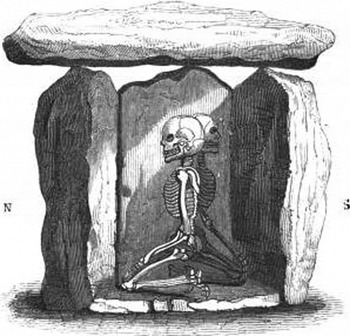
Jens Worsaae, professor of archaeology at the University of Copenhagen, expressed in an incisive fashion the ethnological questions confronting prehistorians of his generation. Worsaae began his career as Christian Thomsen's assistant, and after succeeding him as curator of the Museum of National Antiquities Worsaae helped to extend the three-age system to other parts of northern Europe through his excavations and visits to foreign museums. In Danmarks oldtid (1843) Worsaae tackled the problem of linking what was known about Denmark's history and people with the new facts disclosed by archaeology. From historical records it was known that Finns and Celts had inhabited Denmark in ancient times, but the excavation of Stone Age tombs led him to doubt that either of these peoples were the original inhabitants of Denmark. Instead, Worsaae believed that these Stone Age peoples represented a hitherto unknown race that had since disappeared, leaving behind only their crude stone monuments and artefacts.Footnote 6 Worsaae did not think it was strange that history had preserved no memory of these people, but he did think it was possible to draw inferences about their manner of living and their place in Danish history. He suggested that the Stone Age inhabitants of northern Europe were nomadic and lived by hunting and fishing. They were followed by newcomers who knew metallurgy, used bronze implements and practised agriculture. This fitted the picture presented by historians and philologists that Europe had been populated by several successive migrations of peoples from Asia. In order to discover the identity of this Stone Age race Worsaae suggested that researchers should examine the morphological features of skeletons, especially the skulls, of individuals found in Stone Age tombs (Figure 1) and compare them with the skulls and skeletons of other known human races.Footnote 7
Example of a Stone Age tomb containing a skeleton. From J.J.A. Worsaae, The Primeval Antiquities of Denmark, London, 1849, 90.

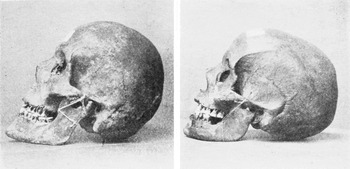
A technique for achieving this goal was already being developed in Sweden by Anders Retzius. Retzius studied medicine at the University of Lund and after completing his degree was appointed professor of anatomy at the Karolinska Institute in Stockholm. Among the subjects that interested Retzius was the relationship between race, brain anatomy and the level of cultural development and intellectual ability of different ethnic groups. This prompted him to investigate the possible correlation between race and the shape of the skull in humans. The Dutch anatomist Petrus Camper had already proposed the facial angle, which measured the degree of prognathism among humans, and the technique became widely used among anatomists as a way of scientifically defining racial morphological features.Footnote 8 In addition to the facial angle, Retzius now added a new type of measurement called the cephalic index. This was obtained by dividing the width of the skull by its length and multiplying the resulting number by one hundred. After examining many skulls Retzius argued that skulls from a single race tended to have similar shapes and a similar cephalic index, while skulls from different races tended to have different shapes and a markedly different cephalic index. Furthermore, Retzius identified two distinct morphological types as defined by his cephalic index. Skulls that were short and round, with a cephalic index greater than 75, he called brachycephalic; skulls that were long and oval, with a cephalic index less than 75, he called dolichocephalic (Figure 2).Footnote 9 This system was later expanded to include an intermediate, mesocephalic, type.
The facial angle and the cephalic index became two of the most commonly used techniques among European anthropologists throughout the second half of the nineteenth century, although both techniques were refined over time and numerous other types of measurement of the human skull were introduced. As a result, craniometry – the study and measurement of the morphological features of human skulls across human races – became a critical feature of the emerging science of anthropology, which was largely devoted to identifying and classifying human racial variation.Footnote 10 While Retzius had begun by studying modern populations he was drawn into the study of prehistoric humans when Sven Nilsson, the professor of natural history at the University of Lund who had recently become interested in Scandinavian prehistory, asked him to investigate an Iron Age human skull. Retzius examined the skull and compared it with over two hundred modern Swedish skulls, concluding that the Iron Age skull was essentially identical to those of modern Swedes.Footnote 11 Retzius soon expanded his research to include human skulls from the the Bronze and Stone Ages. Combining the results of his craniological investigations with current archaeological and philological ideas about successive migrations of Indo-European races into Europe, Retzius argued that the autochthonous population living in Europe during the Stone Age was a brachycephalic race he called the Turanians. This original Turanian race was eventually displaced by invading dolichocephalic Indo-European races, the only Turanian populations remaining in Europe being the Finns and the Basques.Footnote 12
Example of skull types according to cephalic index. On the left a brachycephalic (short, round) skull, on the right a dolichocephalic (long, oval) skull. From William Ripley, ‘The racial geography of Europe: a sociological study’, Popular Science Monthly (1898) 52, pp. 304–322, 317.

Retzius's technique of examining prehistoric skulls and comparing them with skulls from various contemporary races, and his views about the prehistoric races of Europe, were widely employed and discussed among European anthropologists, although some expressed quite independent views. In Britain, for instance, James Cowles Prichard argued that an ‘Allophylian’ race had inhabited Europe before the arrival of the Indo-European Celts. He argued that these ‘Allophylian nations appear to have been spread in the earliest times through all the most remote regions of the old continent, – to the northward, eastward, and westward of the Indo-European tribes, whom they seem every where to have preceded’.Footnote 13 Regardless of the ethnological system of classification used, and there were many, researchers interested in empirically investigating the prehistoric populations of Europe increasingly relied upon craniometric methods to examine human skulls found in tombs. To see how these methods were deployed and what the results could be, let us consider the work of John Thurnam.
Thurnam obtained his medical degree from the University of Aberdeen in 1846 and after holding several positions he became the medical superintendent of the Wiltshire county asylum when it opened in 1851. It was only after he moved to Wiltshire, a region renowned for its many prehistoric monuments and tombs, that Thurnam began to study the human skeletons occasionally found during excavations. This research gained him access to a number of scientific institutions. He was a fellow of the Society of Antiquaries and a member both of the Ethnological Society of London and of the Anthropological Society of London. Using the methods of craniometry, Thurnam examined skulls found in ‘chambered long barrows’ in Wiltshire and Gloucestershire and in ‘circular barrows’. Chambered long barrows were prehistoric tombs that only contained flint arrowheads and axes and were attributed to the Stone Age, whereas the circular barrows contained a mixture of stone and bronze artefacts and were attributed to the Bronze Age. Thurnam found that human skulls recovered from Stone Age chambered long barrows were dolichocephalic while skulls from the later Bronze Age circular barrows were brachycephalic.Footnote 14 While the anatomical evidence indicated that an earlier dolichocephalic race had been displaced by a later brachycephalic race, Thurnam was still faced with reconciling this archaeological evidence with the historical accounts of Roman writers about the various tribes inhabiting ancient Britain, which proved to be challenging.Footnote 15 But the important point was that craniometry and prehistoric archaeology offered an empirical means to study the peoples that inhabited Britain in pre-Roman times.
The value of these methods was reinforced in 1863 when Thurnam excavated a barrow near Stonehenge. He first encountered a secondary burial of six skeletons dating from long after the barrow was first erected (which was not an uncommon occurrence). The skulls were all brachycephalic, but when Thurnam reached the primary burial deep in the barrow he found a male skeleton and a flint knife. The latter's skull was dolichocephalic, which was consistent with his finding that an early dolichocephalic race was supplanted by a brachycephalic one.Footnote 16 The relative value of anthropological evidence obtained from the study of prehistoric human skeletons and artefacts, in contrast with the somewhat more speculative philological evidence of Indo-European migrations, was an important issue for many researchers at this time. In Thurnam's opinion, the question whether
proof is to be obtained of the immigration into Europe, from high Asia, of Indo-European peoples having a dolichocephalic type of skull, can only be satisfactorily determined by long-continued researches on the form of the skulls found in the earliest, or at least in pre-Roman, graves.Footnote 17
For Thurnam, further advances in prehistoric ethnology depended upon the anatomical analysis of ancient human remains utilizing the methods and discoveries of craniometry. Science now had the means of answering the questions posed by the recent discoveries of archaeologists and philologists about the prehistoric races that had once inhabited Europe. In light of his successful investigations Thurnam offered this advice to his colleagues:
I submit the opinion that the accurate observation, description, and measurement of skulls, ancient and modern, is everywhere to be desired, before the solution of the complex problem of the origins of the different European peoples can be satisfactorily attempted. Premature attempts to reconcile the results deduced from scientific craniology, with those arrived at by philological methods, can only result in disappointment.Footnote 18
Elsewhere in Europe other researchers were conducting very similar investigations with equally interesting results. In Switzerland, for example, Ludwig Rütimeyer, professor of zoology at the University of Basel, and Wilhelm His, who was professor of anatomy and physiology at the university, examined seventy-six skulls excavated from prehistoric sites throughout the country. They identified four different types (based upon cranial capacity and cephalic index), which they believed represented distinct ethnic groups. These types were named for the localities where they were found. The Disentis type found in prehistoric graves in eastern Switzerland was brachycephalic and represented the population that inhabited Switzerland in the most remote past. The Sion type was mesocephalic and represented the pre-Roman Helvetians, who were Celts. The Hohberg type was very dolichocephalic and were probably Roman colonists dating from the Roman occupation. Finally, the Bel-Air type was also mesocephalic and belonged to the Burgundian period of Swiss history.Footnote 19
As archaeologists, and eventually geologists, found more prehistoric human remains it increasingly became common practice to use the methods of craniometry (determining the cranial capacity, facial angle, cephalic index and other measurements of skulls) and to compare them with other modern and ancient human skulls from different parts of the world to identify distinct prehistoric populations. All of this occurred within the context of continuing developments in archaeology, philology and anthropology that formed the context within which the results of these studies were interpreted. While these investigations offered important information about the prehistoric peoples of Europe they took an unexpected turn when apparently fossilized human bones sparked new debate.
Human fossils and the ‘geological antiquity of man’
As geologists and palaeontologists gradually came to accept a vast history for the Earth and for life on Earth, historical and archaeological evidence still supported the idea that human history extended back less than ten thousand years. Geologists pointed to the last great extinction, marked by the fossilized remains of animals such as the mammoth, woolly rhinoceros and cave bear found in the geologically recent layer of gravel called the diluvium, as the event that marked the boundary between a former world, before the appearance of humans, and the current world that had been the stage for human history. While a handful of people had speculated about the existence of pre-Adamites and a human presence in the world that greatly exceeded the biblical chronology, it was generally believed that human history was relatively short.Footnote 20 However, periodically throughout the first half of the nineteenth century palaeontologists excavating caves encountered artefacts and even occasionally human bones in deposits containing extinct animals. William Buckland unearthed a human skeleton in a cave in Wales in 1822, along with flint artefacts and extinct animal bones.Footnote 21 Similarly, in France Paul Tournal and Jules de Cristol independently also unearthed artefacts and human bones mixed with extinct animal bones, and in Belgium Philippe-Charles Schmerling recovered fossilized human bones, including several partial crania, from caves on the outskirts of Liège.Footnote 22
While these discoveries generated some discussion and controversy regarding the possible existence of humans during the Ice Age they were largely dismissed for a variety of reasons. The sheer inconceivability of humans existing at such a geologically remote period and in an environment so different from the present Earth was a major obstacle, but the evidence was also deemed inadequate.Footnote 23 However, similar discoveries continued over the next two decades and two in particular are instructive regarding the beginnings of human palaeontology. In 1842 Antoine Spring decided to excavate a cave along the Meuse river near the Belgian town of Chauvaux. The site came to his attention when a friend, Adolphe Borgnet, brought him a human cranial bone that had been fractured apparently by a stone axe that lay nearby in the cave floor. Spring, who had been professor of medicine at the University of Liège since 1839, was intrigued enough to excavate the cave. He found the cave floor sealed by a stalagmite layer and below this a layer of broken bones. The animal bones belonged to both domesticated animals (dog, cow, sheep) and wild animals that included deer, elk and aurochs. He also found large numbers of human bones, including the lateral half of a human cranium.Footnote 24
Spring noted that the cranium was small, with a facial angle of 70 degrees, but significantly he determined that it belonged to a race quite different from the modern populations of Europe. In order to reach a more certain conclusion about the cranium he showed it and the other bones to several palaeontologists and anatomists. He also travelled to several museums where he could examine ancient skulls and prehistoric artefacts. He found that the Chauvaux cranium also differed from the skulls found in ancient Celtic and Germanic tombs. Instead, the cranium bore a greater resemblance to modern ‘Negro’ or to American Indian skulls.Footnote 25 Spring was aware of Schmerling's discoveries and the ongoing debate over the existence of l'homme fossile (fossil man) and he was initially uncertain whether these bones were prehistoric or perhaps dated from a great geological antiquity. But he expressed his openness to the controversial idea that humans had lived at a time when the cave bear and mammoth still roamed Europe. After conducting a second set of excavations at Chauvaux he became convinced that these remains dated from after the ‘great inundation’ that some geologists believed had caused the extinction of the mammoth, but from before the arrival of the Celts into Europe. In Spring's judgment, the human bones he recovered from the cave represented the ‘aboriginal races’ (‘races aborigines’) that inhabited Europe during the Stone Age. These were ‘savage tribes’ (‘tribus sauvages’) that lived by hunting and fishing and dressed in animal skins. He cites Worsaae and other Scandinavian archaeologists and historians with regard to the three-age system, hypothesizing that this aboriginal Stone Age race was subsequently driven into the remote hinterlands of Europe when the Celts migrated into Europe introducing the Bronze Age.Footnote 26
When confronted by the unusual fact of human bones found in a cave deposit Spring not only examined the fossil fauna for possible evidence of the antiquity of these bones, he also subjected them to craniological examination in order to ascertain the ‘race’ of these ancient people. Furthermore, like Worsaae and Retzius before him and Thurnam and others after him, Spring situated this particular race in a chronological sequence of Stone, Bronze, and Iron Age races that successively occupied Europe during prehistory. Spring's discoveries at Chauvaux are relatively unknown today, although they were frequently discussed in the 1860s after the recognition of the existence of fossil humans. But only a few years after Spring published his paper a far more consequential find was made in Germany. Quarry workers removing debris from the Feldhofer grotto in the Neander valley near Düsseldorf in 1856 encountered human bones. They cast them aside but the discovery came to the attention of a local schoolteacher and amateur geologist, Johann Carl Fuhlrott, who returned to the site and retrieved as many of the bones as he could find and questioned the workmen regarding where precisely the bones were found. There were no artefacts or animal fossils at the site that could offer clues to the antiquity of the human remains, and the skeleton's exact position in the cave's deposits was not recorded, but Fuhlrott noted that the bones were completely fossilized and appeared to be geologically old. Given the ongoing debate over the existence of humans during the Ice Age and the potential significance of the Feldhofer bones, Fuhlrott brought them to Hermann Schaaffhausen, professor of anatomy at the University of Bonn.
A great deal has been written about the early debates over the meaning and significance of these original Neanderthal fossils and their place in the history of palaeoanthropology.Footnote 27 In light of modern interpretations of the Neanderthals and their place in human evolution, Schaaffhausen's views on the specimen may appear peculiar, but when viewed in the context of other contemporary studies of prehistoric human skeletons it conforms to a familiar pattern. Schaaffhausen was confronted with arm bones, two thigh bones, several other parts of the skeleton, and most significantly the upper part of the cranium of what was clearly a human. Since the scientific importance of these bones depended heavily upon the question of their potential geological antiquity, Schaaffhausen discussed their stratigraphic position in the cave and experiments conducted to confirm that the bones were truly fossilized.Footnote 28 Most of his first major paper on the specimen, however, was devoted to a careful examination and description of the bones. He was particularly struck by the morphology of the cranium. The shape of the cranium was unusual; it was very long with a low forehead but very prominent eyebrow ridges. Following the methodology of contemporary anthropologists and anatomists, Schaaffhausen compared the Neanderthal skull with modern human skulls as well as prehistoric German and Celtic skulls. He noted that while the cranium shared some features with prehistoric skulls, it also displayed features seen in the skulls of the larger species of apes.Footnote 29
After completing his investigations of the Neanderthal bones Schaaffhausen was convinced that the extraordinary morphological features of the cranium were due to a ‘natural formation’ (‘natürliche Bildung’) that is not observed even in the ‘barbarous races’ (‘rohesten Rassen’) of humans. However, he also acknowledged that the form of the Neanderthal cranium did not necessarily represent the ‘most barbarous primitive type of the human race’ (‘rohesten Urtypus des Menschengeschlechtes’) since there were skulls among existing so-called ‘savage races’ that exhibited an equally low stage of development. In the end Schaaffhausen concluded that the Neanderthal bones dated to a period before the arrival of the Celts and Germans in Europe, and so probably belonged to one of the ‘wild tribes of northwestern Europe’ (‘wilden Stämme des nordwestlichen Europa’) described by Roman writers. This would make them representatives of the autochthonous population encountered by the Indo-European peoples who migrated to the region.Footnote 30 More radically, he suggested that this race had inhabited Europe just at the end of the diluvial period (Ice Age) when the last of the animals to become extinct still existed in Europe, but he admitted that the geological evidence for this was not adequate to prove such a momentous conclusion. However, he did believe that there was growing evidence that humans had coexisted with mammoths and other extinct animals. And equally significantly, he believed that prior to the historical period many barbarous races of humans might have lived only to disappear, along with many species of animals.Footnote 31
Schaaffhausen approached the examination and interpretation of the Neanderthal specimen from within much the same framework that Retzius and Spring used to study prehistoric human bones in order to determine their racial features and then situate these races in a chronological succession of different human races that inhabited Europe from the Stone Age to the modern era. The major distinction of Spring and Schaaffhausen's specimens was their apparent greater antiquity than other prehistoric specimens and their possible relevance to the question of the geological antiquity of humans. While Schaaffhausen believed that the Neanderthal skeleton belonged to a prehistoric barbarous race that represented the autochthonous population of north-western Europe, like Retzius's brachycephalic Turanian Stone Age race, he appeared to recognize that the Neanderthals represented something distinct. In fact, there were many features where the Neanderthal cranium differed greatly from other Stone Age skulls. Thus Schaaffhausen noted that while other ancient skeletons found in Europe might belong to the autochthonous population living there before the arrival of the Indo-European tribes, the Neanderthal skeleton could be regarded as the ‘most ancient memorial of the early inhabitants of Europe’ (‘für das älteste Denkmal der früheren Bewohner Europa's gehalten werden’).Footnote 32 This is significant because, although he does not argue that the Neanderthals represented a distinct extinct species of human, as the Irish anatomist William King would suggest in 1864 when he proposed the name Homo neanderthalensis for this species, Schaaffhausen is arguing that the Neanderthal race was the earliest in a long line of human races that inhabited Europe from the end of the Ice Age through the Stone Age and the later arrival of the Indo-European races during the Bronze and Iron Ages.Footnote 33
This idea, that anthropologists could use craniometry to examine prehistoric human skulls in order to identify the succession of human races that had inhabited Europe at different periods, formed the model for the study of prehistoric human skeletons from the 1840s to the 1860s. It is particularly interesting that this same focus on determining the race of prehistoric skeletons and situating them in a chronological sequence of successive races was equally applied to the few examples of fossilized human remains in the 1850s. Spring and Schaaffhausen conducted their research at a time when the existence of humans during the Ice Age was generally rejected but when evidence for it was growing. In France Jacques Boucher de Perthes, a customs official and amateur geologist and archaeologist, assembled a large collection of crude flint artefacts along with Ice Age animal fossils while digging along the Somme river in Abbeville. Although he presented this as convincing evidence that humans must have lived when the mammoth still roamed Europe, most professional geologists were sceptical of his artefacts and ridiculed his outdated geological notions.Footnote 34 However, prompted by Boucher de Perthes's claims, Marcel Jérôme Rigollot also conducted excavations along the Somme, at St Acheul and Amiens, and produced flint artefacts and extinct animal bones that appeared to verify Boucher de Perthes's claims. The careful excavation of Brixham cave in southern England that began in 1858 and involved professional geologists led by Joseph Prestwich, along with new excavations conducted in France, finally produced sufficient and convincing evidence that humans had in fact coexisted with the extinct animals of the Ice Age.Footnote 35 Among the many new questions these discussions created were who these humans were, since so far only stone artefacts had been discovered but no skeletons. As the search for the fossilized remains of these Ice Age humans got under way, human palaeontology followed the pattern set by prehistoric anthropology.
From human fossils to fossil human races
The idea that humans existed during the Pleistocene and lived among mammoths and other extinct animals gained wide acceptance during the 1860s, although there continued to be critics of the idea among scientists and especially the clergy for quite some time. Throughout the 1860s geologists and archaeologists across Europe energetically excavated caves and rock shelters seeking further evidence about Ice Age people, their artefacts, and their manner of living. Numerous sites produced artefacts made of stone and antler, but human fossils were much rarer. Geologists and archaeologists conducted the vast majority of the early excavations, since they possessed the skills and training necessary for this work. An important consequence of this was that considerable attention was devoted to demonstrating conclusively that each new discovery of artefacts or human bones found with extinct animals in Pleistocene deposits was authentic and not simply an intrusive burial of more recent humans in older geological deposits or accidental mixing due to the action of water or other natural agents. Thus, even when researchers did discover human bones, much of their attention was devoted to establishing their geological antiquity. Yet the significance of the discovery of human fossils lay not least in the evidence they offered regarding the identity and nature of these people, evidence that went beyond what artefacts could disclose. The skills needed to interpret human bones, however, was very different from the skills needed to excavate and interpret the related geological and archaeological evidence.Footnote 36
One of the researchers who was motivated to search for additional evidence of Ice Age human fossils was Edouard-François Dupont. Dupont was a respected Belgian geologist and director of the Musée royal d'histoire naturelle in Brussels. During the winter of 1865–1866 he began to excavate caves located in the cliffs along the Lesse river and he immediately began to find Pleistocene animal fossils, flint knives and even fossilized human bones. Given the potential significance of these discoveries, Dupont devoted much effort to determining the stratigraphy of each cave and showing that the animal bones and the human bones and artefacts were all deposited during the Pleistocene. During new excavations in the spring of 1866, in a cavern called Trou de la Naulette, Dupont found a human mandible along with Ice Age animal bones.Footnote 37 This jawbone attracted considerable attention over the next several decades due to its peculiar morphology, which contributed to the debate over human evolution, but at the time Dupont was primarily concerned with demonstrating the geological age of the fossil since few human bones from the Pleistocene existed.
By 1867 Dupont had excavated twenty-one caves and had recovered many artefacts plus a substantial number of fossil human bones. From the animal fossils found at these sites he believed that these people lived in Europe during the Reindeer Age, a term used by archaeologists that referred to a period toward the end of the Pleistocene. Dupont hoped that by examining the animal bones, the human remains and the artefacts from these caves he might be able to reconstruct the character of these people, their race, their industry, their manners and their customs. These Ice Age humans were apparently troglodytes who lived in caves and hunted animals, including reindeer and horses. They used tools made of stone, bone and reindeer antler and built fires in hearths. Dupont even found ornaments made from shells and mammoth ivory.Footnote 38 As a geologist Dupont possessed the skills to determine the geological age of these objects, but he recognized that only a specialist trained in anatomy would be able to adequately study the human remains. As a consequence, he sought the assistance of two prominent anthropologists, Armand de Quatrefages and Franz Ignaz Pruner, in the analysis of the human bones (more will be said about them later). Dupont devoted a substantial section of this paper to a detailed description of all the skeletal remains, including measurements and details of their morphology. A great deal of attention was given to the crania. Using craniometry and by comparing the fossil crania from the Belgian caves with skulls from various European and Asian races, Dupont hoped (through the analysis of Quatrefages and Pruner) to identify the race of these Pleistocene troglodytes. Dupont observed that all the crania were slightly brachycephalic and he noted distinctive traits that set them apart from most modern European skulls. The morphology of these fossil crania suggested a link between these ancient people of the Reindeer Age and the modern Uralo-Altaic peoples who were considered to be part of the Turanian race.Footnote 39 Dupont cites the work of Pruner-Bey, who was a strong proponent of the idea that the original inhabitants of Europe belonged to a brachycephalic Mongoloid race. Furthermore, he emphasized that in no way were these ancient crania similar to the skulls of Indo-European peoples.
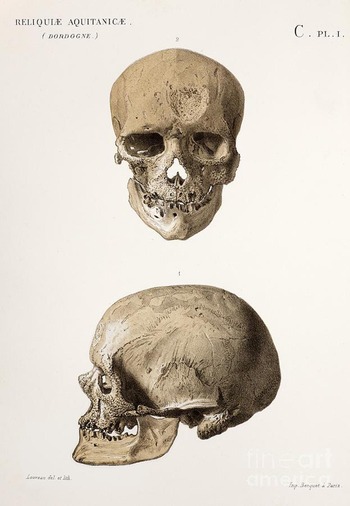
While Dupont's discoveries were significant and generated much interest they were soon overshadowed by dramatic finds near the French village of Les Eyzies in 1868. Workmen constructing a railway blasted open an ancient rock shelter and in it found human bones. Local officials were notified and the minister of public instruction, who recognized the potential scientific importance of the site, asked Louis Lartet to conduct careful excavations. Lartet was a young geologist and son of the prominent palaeontologist and prehistoric archaeologist Edouard Lartet. Louis had previously assisted his father in excavating Pleistocene archaeological sites in France and so was a good choice for the work at Les Eyzies. In the Cro-Magnon rock shelter Lartet recovered flint artefacts, perforated shells, tools made from reindeer antler and an object made from ivory. Most significantly he retrieved partial human skeletons from four adults and one infant.Footnote 40 Like Dupont, Lartet devoted great attention to determining the stratigraphy and geological age of the site, identifying the animal fossils found there, and carefully describing the position of the human bones and artefacts in the Pleistocene strata.Footnote 41 The geological age of the Cro-Magnon fossils made them a remarkable find, but Lartet was particularly interested in the question of who these people were, what race they belonged to, and where they came from (Figure 3). The geologist could only remain silent about this, Lartet admitted, since these questions properly fell to the anthropologist.Footnote 42
One of the skulls from Cro-Magnon. From Edouard Lartet and Henry Christy, Reliquæ Aquitanicæ, London: William and Morgate, 1875, Appendix, ‘Description of the Plates’, ‘C’, Skulls and Bones, Plate 1.

As a consequence, soon after the Cro-Magnon bones were found they were brought to Paris, where Paul Broca and Franz Ignaz Pruner examined them. Broca was one of the leading anthropologists in France and was involved in the effort to professionalize the discipline. He founded the Société d'anthropologie de Paris (Anthropology Society of Paris) in 1859 and it soon became an important centre for promoting anthropological research.Footnote 43 Most of the members of the society had studied medicine and a major focus of their discussions was the subject of human races. One of those early members was Franz Ignaz Pruner. Pruner studied medicine at the University of Munich and in 1831 he arrived in Paris to continue his studies. He soon joined the expedition of Karl von Hügels, however, which took him to the Levant and Egypt. Pruner served as a physician in Egypt, where he received the honorary title of bey, and it was during his travels that he became interested in anthropology. Pruner returned to Paris in 1860 and became a member of the Société d'anthropologie de Paris. His early anthropological researches dealt with the question of the geographical origins of the Indo-Europeans and the racial composition of Europe.Footnote 44 By the late 1860s Pruner was known for the theory that a Mongoloid race had inhabited Europe prior to the arrival of the Indo-Europeans, which he based upon evidence found in skulls from prehistoric sites.
Broca and Pruner relied upon craniometry in their anthropological investigations. Broca invented a range of new instruments for measuring skulls and refined the techniques for examining them. Thus, when confronted with the Cro-Magnon fossils, Broca and Pruner subjected the bones to the kind of craniological analysis that had become standard in European anthropology. Pruner published detailed descriptions of all the bones and their state of preservation soon after their discovery. Judging from the animal bones found at the site he suggested that these people must have lived by hunting, fishing and foraging, which meant that they lived in a state of nature. While the study of the artefacts might tell us about ‘the social state’ (‘l’état social’) of these people, only an examination of the bones, especially the skulls, could determine their race.Footnote 45 He measured the cephalic index and the volume of the crania and carefully described their morphological features. He also compared the Cro-Magnon crania with skulls from modern human races. Pruner's assessment was that the skulls possessed Mongoloid features, but they were notably dolichocephalic, unlike most Mongoloid skulls. They most resembled modern Estonian skulls, but he also noted that there were some Siberian peoples that belonged to the Mongoloid race but possessed dolichocephalic skulls. Furthermore, he noted that the Cro-Magnon crania differed significantly from the crania discovered by Dupont in Belgium, which were among the few authentic Pleistocene human fossils known at the time. Pruner concluded that the Cro-Magnon humans belonged to the Estonian branch of the Turanian race.Footnote 46 Pruner's conclusions about the racial features of the Cro-Magnon fossils were soon contested, but what stands out is the overriding focus on determining the racial identity of these Ice Age humans.
This is even more evident in Broca's analysis of them. The importance of the fossils lay in their geological age and Broca was confident that the Cro-Magnon specimens proved that humans had lived during the Pleistocene. Like Dupont's discoveries in Belgium, the artefacts and bones from Les Eyzies were important because they could reveal important information about the culture of these people and their manner of living, while their anatomy could indicate their race.Footnote 47 Broca's primary interest was anthropological, and as a consequence his analysis of the bones focused on measuring them and describing their morphology. He compared the Cro-Magnon bones with those of modern humans and with human remains from Neolithic tombs, looking for similarities and differences. He also compared them with the human fossils recovered by Dupont in Belgium. It is worth noting that Broca also compared the Cro-Magnon fossils with chimpanzee and gorilla bones. From his measurements of the crania Broca determined that the Cro-Magnon people were dolichocephalic, but they possessed features very different from other dolichocephalic races.Footnote 48
Broca noted that the Cro-Magnon people possessed some traits that are found in civilized races, which indicated superiority, but they also bore other traits that indicated a violent and brutal race. Broca even identified traits that he considered to be simian. Generally speaking, then, one could ‘thus complete the picture of a race which in some of its features attained the highest and noblest stages in human morphology, and in other traits descended below even the lowest of the anthropologic types at present existing’.Footnote 49 Significantly, Broca also argued that the Cro-Magnon fossils belonged to a distinct human race entirely different from any other known race, since they possessed a unique collection of features. Broca considered it particularly important that the Cro-Magnon humans represented a race that was different from the human fossils described by Dupont. In fact, Broca argued that the Cro-Magnon race differed from Dupont's Belgian fossils as much as modern human races differed from one another.Footnote 50 This observation had broader anthropological implications since it offered a new perspective on the ongoing debate over the unity or plurality of the human species.
Broca, like many of the members of the Société d'anthropologie de Paris, was a polygenist. Polygenists argued that the human races were so morphologically different that they should be treated as distinct species having completely separate origins. In contrast, monogenists believed that all human races belonged to a single species and shared a common genealogical origin in the past. Many polygenists pointed to prehistoric skeletons as well as depictions of clearly distinct human races on ancient Egyptian monuments as evidence that human racial diversity existed even in ancient times. Since monogenists argued that human racial differences emerged gradually over time, typically in response to differing climatic and environmental conditions around the world, the existence of multiple human races in ancient times meant either that the original single human racial form had to be sought in a very remote antiquity, or that there had always been a plurality of races. The fact that as far back as the Pleistocene there were apparently two distinct human races, represented by Dupont's Belgian fossils and Lartet's Cro-Magnon fossils, was powerful evidence, in Broca's opinion, supporting the polygenist theory. Moreover, Broca thought his craniometric analysis of the Cro-Magnon crania finally disproved the long-held notion that a brachycephalic Mongoloid or Negroid race had populated Europe during the Stone Age.Footnote 51
The discovery of human fossils and artefacts in Pleistocene deposits and associated with extinct animals was tremendously valuable from a scientific perspective for the evidence they provided regarding exactly when, geologically, humans had appeared in the world, what the cultural and intellectual attainments of these people were, and who they were racially. This is why geologists, palaeontologists, archaeologists and anthropologists often needed to cooperate in investigating and interpreting the material found in Ice Age archaeological sites. Historians have written extensively about the geological and archaeological research in the nineteenth century pertaining to Ice Age humans. When they have written about the beginnings of human and hominid palaeontology they have tended to do so from the perspective of human evolution. What emerges from an analysis of the earliest publications by those who discovered and described human fossils or by anthropologists who examined them is that the same craniometric techniques used to examine and understand Stone Age and other prehistoric human skeletons were applied to the examination of Pleistocene human fossils. Furthermore, the central questions remained the same in both instances, namely identifying the race that Stone Age or Ice Age skeletons belonged to and then situating them chronologically in a historical sequence of a succession of human races that occupied Europe. This becomes particularly evident in the studies of human fossils conducted by Ernest-Théodore Hamy and Armand de Quatrefages.
Ernest-Théodore Hamy studied medicine in Paris and in 1864, while serving as an intern, he met Paul Broca. This meeting changed the course of his career. Hamy was more interested in anthropology than in a career as a physician so Broca invited him to be an assistant at the Société d'anthropologie de Paris. Hamy became a member of the society in 1867 and, that same year, as part of the preparation for the Exposition universelle, he participated in the study of Egyptian mummies and skulls collected by French archaeologist Auguste Mariette. The following year Broca appointed Hamy to a position in the newly established Laboratoire d'anthropologie, housed at the Ecole pratique des hautes études. Hamy also participated in several excavations of prehistoric sites between 1864 and 1870. All of this experience placed Hamy in an excellent position to examine the recently discovered human fossils.
The discovery of the Cro-Magnon fossils generated a great deal of discussion and Hamy acknowledged the valuable studies of these remains published by Pruner and Broca. He believed, however, that considerable gaps existed in our knowledge of what he referred to as ‘palaeontological human races’ (‘races humaines paléontologiques’). This was due, he thought, to the inadequate analysis of some of the previously discovered human fossils. Hamy therefore wanted to conduct a thorough examination that would compare Lartet's Cro-Magnon specimens with the various human fossils found in Belgium by Schmerling, Dupont and Constantin Malaise.Footnote 52 No detailed anatomical investigations had been conducted on the crania excavated by Philippe-Charles Schmerling in the 1830s and only a general description existed for Dupont's fossils. The third set of fossils were unearthed in 1860 when Constantin Malaise, professor of natural sciences at the Institut agricole located in Gembloux, Belgium, decided to conduct new excavations in Engihoul cave. The cave was first excavated in the 1830s by Schmerling, but the English geologist Charles Lyell instigated the new excavations when he visited Malaise in the hopes of inspecting Schmerling's excavation sites. In addition to extinct cave bear, hyena and rhinoceros fossils, Malaise found three fragments of a human cranium and two partial human mandibles in the cave.Footnote 53 At the time, Malaise was more concerned with demonstrating that the human remains truly dated from the Pleistocene, but now Hamy wanted to subject them to an anthropological analysis.
Hamy admitted that the fragmentary nature of many of the existing human fossils limited the conclusions that one could draw from them. Yet he also noted that over the previous decade the foundation of the anatomical study of early humans (l'homme primitif) had grown much more solid and anthropologists could more easily make an ‘ethnic determination’ (détermination ethnique) of human bones. With these goals in mind Hamy carefully measured and described the fossils from Belgium and France. He concluded that during the Pleistocene several different dolichocephalic races existed, since there were notable differences between the dolichocephalic Neanderthal cranium and the dolichocephalic Cro-Magnon crania. Furthermore, Hamy argued that the Engihoul cranium discovered by Malaise resembled the Cro-Magnon crania, which meant that the latter were not unique and that the Cro-Magnon race had extended from France to Belgium during the Ice Age.Footnote 54
In 1872 Hamy accepted an offer to become Armand de Quatrefages's assistant (aide-naturaliste) at the Muséum national d'histoire naturelle. Quatrefages was chair of anthropology at the museum and a prominent monogenist and critic of evolutionary theories. This move paved the way for a long and fruitful collaboration between the two men. As part of a general survey of the human races Hamy and Quatrefages published a series of papers in 1873 and 1874 on what they referred to as ‘fossil human races’ (‘races humaines fossiles’). Their plan was to examine as many human fossils as possible, to compare these with one another and with the skeletons of modern humans, in order to identify the races that existed in Europe during the Pleistocene.Footnote 55 Hamy and Quatrefages concluded that there were enough similarities among some of these fossils to identify a Canstadt race, named for a human skull discovered in Germany in 1700, which represented in their opinion a distinct ‘palaeontological human race’ (‘race humaine paléontologique’) that occupied Europe during the Pleistocene. The Neanderthal cranium, the La Naulette mandible, and several lesser-known specimens were attributed to this ancient race. The skulls belonging to this race were all extremely dolichocephalic and displayed distinct morphological traits, such as prominent bony ridges over the eyes and a low forehead. It is important to note that Hamy and Quatrefages, like most other European anthropologists, considered the Neanderthals to be fully human. They were a distinct race but they were not seen as an extinct species of pre-human apeman, such as Ernst Haeckel's hypothetical Pithecanthropus or Gabriel de Mortillet's hypothetical Anthropopithecus, which were presented as models of an evolutionary ancestor of modern humans.
In addition to the Canstadt race, Hamy and Quatrefages identified a distinct Cro-Magnon race. These fossils consisted of the original Cro-Magnon specimens found at Les Eyzies in 1868, the Engihoul cranium discovered by Malaise, and a skeleton discovered at Laugerie-Basse, in France, in 1872.Footnote 56 These specimens all shared specific characteristics: they possessed dolichocephalic crania, although they were not as strongly dolichocephalic as the Canstadt race, and in other ways the morphology of the Cro-Magnon skulls differed noticeably from the Neanderthal-type skull.Footnote 57 Besides these two dolichocephalic races Hamy and Quatrefages also identified several different brachycephalic races living in Europe during the Pleistocene. These were represented by specimens, especially the so-called Furfooz crania that Edouard Dupont had recently discovered in a cave called Trou du Frontal in Belgium, and by crania unearthed at Grenelle and other sites in France.Footnote 58 In each case, Hamy and Quatrefages relied heavily on craniometric measurements and techniques in their analysis of fossil human skulls. Like their colleagues who were examining prehistoric human skeletons from more recent Stone Age (Neolithic) and Bronze Age tombs, the objective was to identify and describe specific human races existing during the Pleistocene and describe their distinct set of traits. The way that Pruner, Broca, Hamy and Quatrefages imagined this remote human past reflected the way Worsaae, Retzius, Thurnam and others understood the past: as a succession of different human races inhabiting Europe that either coexisted or displaced one another.
From the geological and palaeontological evidence found at many Ice Age sites where human fossils were recovered, and particularly at Grenelle where there was direct stratigraphic evidence, Hamy and Quatrefages argued that one could reconstruct the order in which these fossil human races occupied Europe. They suggested that the Canstadt race (Neanderthals) were the oldest occupants of Europe early in the glacial period, followed later by the Cro-Magnon race, who were succeeded by the brachycephalic ‘race de Grenelle’.Footnote 59 One indication of the extent to which prehistoric anthropology was understood in the same terms as the contemporary racial anthropology of modern humans was that Hamy and Quatrefages felt it necessary to address the question whether these fossil races had become extinct or still existed today. They noted that the racial morphological features of the Canstadt race (Neanderthals) could be found in skeletons from Stone Age tombs and even skulls from medieval cemeteries.Footnote 60 Likewise, they argued that Cro-Magnon traits were observable in Neolithic skeletons as well as in Iron Age bodies unearthed at Chassemy.Footnote 61 They admitted that it was difficult to trace the presence of fossil human races among modern European peoples, but they were convinced (at least at this time) that these Ice Age races had not become extinct, but had mixed with other arriving races over time or in some cases lived beside more recent types.Footnote 62
Conclusion
Human fossils trace a remarkable trajectory over the course of the nineteenth century. Their very existence was hotly contested and largely dismissed over the first half of the century, but they had attained great scientific significance by the end of the century. Human palaeontology, along with Palaeolithic archaeology, provided critical information about the Ice Age inhabitants of Europe. By the end of the century hominid palaeontology was also beginning to offer important evidence regarding human evolution. Many palaeoanthropologists and historians who have written about the history of hominid palaeontology have focused on the role of hominid fossils in elucidating and supporting the idea of human evolution, but this was not the only tradition that existed. When human fossils were first discovered there were certainly some anatomists and anthropologists who investigated them from the perspective of their potential contribution to an understanding of human evolution. But as Richard Delisle has noted, early advocates of human evolution primarily relied on evidence from the comparative anatomy of primates and from embryology to support their claims that humans had evolved, precisely because the existing fossil record did not offer the kind of ‘missing link’ that theorists expected would one day be found.Footnote 63
When human fossils were studied in the 1850s and 1860s they were investigated either from the perspective of geologists and palaeontologists seeking to support and extend the new idea that humans had existed during the Ice Age, or from the perspective of anthropologists who were interested in human racial variation. As a consequence, anthropologists who examined human fossils carried this interest in identifying and characterizing human races into their analysis of fossilized human remains. They employed the same ideas and techniques of contemporary anthropology, especially craniometry, in their examination and interpretation of fossil bones that they used in the study of modern human races. This first generation of anthropologists confronted with human fossils already had a valuable model upon which to base their research. For several decades anatomists and anthropologists had already utilized craniometry in their investigations of prehistoric human skeletons from Stone Age and Bronze Age tombs. The first generation of anthropologists to engage in substantial research into human palaeontology inherited and made effective use of a set of practices that had proven successful in dealing with another set of mysterious remains, prehistoric human skeletons. In both cases the objective was the same, to describe the set of morphological characteristics present in skeletons that distinguished one prehistoric race from another.
The result was that just as John Thurnam, Ludwig Rütimeyer and Wilhelm His, and other anthropologists who examined prehistoric skeletons, identified different races that inhabited ancient Europe, so too the anthropologists who studied human fossils identified and described the features of fossil human races. Moreover, the widespread idea that prehistory was marked by a succession of human races migrating into Europe that either displaced or intermixed with former populations was entirely compatible with the picture emerging about fossil human races. Thus, just as the succession of Stone Age, Bronze Age, and Iron Age peoples and artefacts was often explained through this model of the migration of new races into Europe throughout prehistory, anthropologists and geologists also imagined Ice Age Europe being home to a succession of ‘races’ beginning with the Neanderthals and followed by the Cro-Magnons. Many anthropologists and anatomists at the end of the century treated Neanderthals, Cro-Magnons and other Pleistocene human fossils as unique, and fully human, races. It was only after Max Lohest discovered two Neanderthal skeletons at Spy in Belgium in 1886 and Dragutin Gorjanović-Kramberger unearthed a large collection of Neanderthal remains at Krapina in Croatia between 1899 and 1905 that anthropologists began to entertain the idea that the Neanderthals were an extinct species and not simply a prehistoric human race.Footnote 64 Lohest and his colleague Julien Fraipont still referred to the Neanderthals as a ‘human race’ in the title of their paper and it was not until 1901 that the German anatomist and anthropologist Gustav Schwalbe proposed that the Neanderthals should be recognized as an extinct species of human, which he designated Homo primigenius.Footnote 65 Bert Theunissen has argued that it was Eugène Dubois's discovery of the Pithecanthropus erectus fossils on the island of Java in the 1890s that contributed to the change in thinking regarding the Neanderthals, which not only made both the Neanderthals and Pithecanthropus extinct hominid species and not human races, but also encouraged some anthropologists to discuss the Neanderthals within the context of human evolution and hominid phylogeny to a greater extent than previously.Footnote 66 During the initial years of human palaeontology, from the 1860s to the 1880s, there existed an important and influential approach to the analysis and interpretation of human fossils that was more closely connected to the study of prehistoric skeletons by anthropologists and archaeologists than to the investigations and speculations of evolutionists. A major event in the history of hominid palaeontology, therefore, was the gradual rejection and transformation of much of the conceptual framework of this initial generation of researchers, shifting instead to the adoption of an evolutionary and phylogenetic approach to hominid fossils that characterizes modern palaeoanthropology.