Introduction
Moths and butterflies (Lepidoptera) are major herbivores in terrestrial ecosystems because their larvae consume most plant orders of gymnosperms and angiosperms, as well as ferns and mosses. In addition, Lepidoptera play a part in decomposition either by breaking down live plant (or occasionally animal) tissue or by continuing the process of decay by detritivory (Scoble Reference Scoble1992). It is hypothesised that herbivores affect the rate of plant production through nutrient cycling by deposition of excrement, by changing the quality and quantity of plant litter, and by sequestering nutrients in their bodies (Belovsky and Slade Reference Belovsky and Slade2000; de Deyn and van der Putten Reference de Deyn and van der Putten2005).
Nutrient cycling changes are one of several factors that affect plant species composition, and plant composition changes may further accentuate changes in nutrient cycling, creating positive feedback (Belovsky and Slade Reference Belovsky and Slade2000). Dynamic interaction between soil and plants is referred to as “plant-soil feedback”; this theory hypothesises that changes to soil properties are caused by plants, which in turn influences the performance of plants (Reynolds et al. Reference Reynolds, Packer, Bever and Clay2003; Kardol et al. Reference Kardol, Bezemer and van der Putten2006; van der Putten et al. Reference van der Putten, Bardgett, Bever, Bezemer, Casper and Fukami2013). Soils play a key role in determining the growth, productivity, and reproductive performance of individual plants as well as plant community composition and productivity. Plants can influence soil properties through input of chemical compounds and organic matter (OM), by affecting hydrological processes and surface soil temperatures, as well as by providing habitats and/or resources for microscopic and macroscopic organisms (van de Voorde et al. Reference van de Voorde, van der Putten and Bezemer2012; van der Putten et al. Reference van der Putten, Bardgett, Bever, Bezemer, Casper and Fukami2013).
Main mediators of below-ground and above-ground ecosystems are plants (de Deyn and van der Putten Reference de Deyn and van der Putten2005). Below-ground biotic interactions between root herbivores and detritivores (e.g., earthworms, Collembola, mites, and other soil invertebrates) and plants can alter plant biomass production and the composition of secondary plant compounds, thereby affecting herbivore and parasitoid densities above ground, in addition to flower visitation and seed production (de Deyn and van der Putten Reference de Deyn and van der Putten2005; Poveda et al. Reference Poveda, Steffan-Dewenter, Scheu and Tscharntke2005; Eisenhauer et al. Reference Eisenhauer, Milcu, Nitschke, Sabais and Scheu2008). Above-ground biotic interactions of insects may stabilise or destabilise plant communities by changing the competitiveness of plant species (Keeler et al. Reference Keeler, Louda and Holt1990; Brose Reference Brose2003; Hambäck and Beckerman Reference Hambäck and Beckerman2003; Schädler et al. Reference Schädler, Brandl and Haase2007; Eisenhauer et al. Reference Eisenhauer, Milcu., Allan, Nitschke, Scherber and Temperton2011).
In this study, we examined the influence of soil physical and chemical properties on the diversity of plants and moths, a major herbivore group, in temperate forests of southern South Korea. Because plant diversity is closely related to below-ground properties, and moth diversity and abundance are closely related to plant diversity (Keeler et al. Reference Keeler, Louda and Holt1990; Belovsky and Slade Reference Belovsky and Slade2000; Hambäck and Beckerman Reference Hambäck and Beckerman2003; Schädler et al. Reference Schädler, Brandl and Haase2007; Eisenhauer et al. Reference Eisenhauer, Milcu., Allan, Nitschke, Scherber and Temperton2011; van de Voorde et al. Reference van de Voorde, van der Putten and Bezemer2012; van der Putten et al. Reference van der Putten, Bardgett, Bever, Bezemer, Casper and Fukami2013), we hypothesised that a correlation between soil physical and chemistry parameters and forest composition would be reflected in the diversity of moths. We investigated soil physical and chemical properties and evaluated correlations among these properties, plant diversity, and moth diversity in three regions of southern South Korea.
Materials and methods
Study site
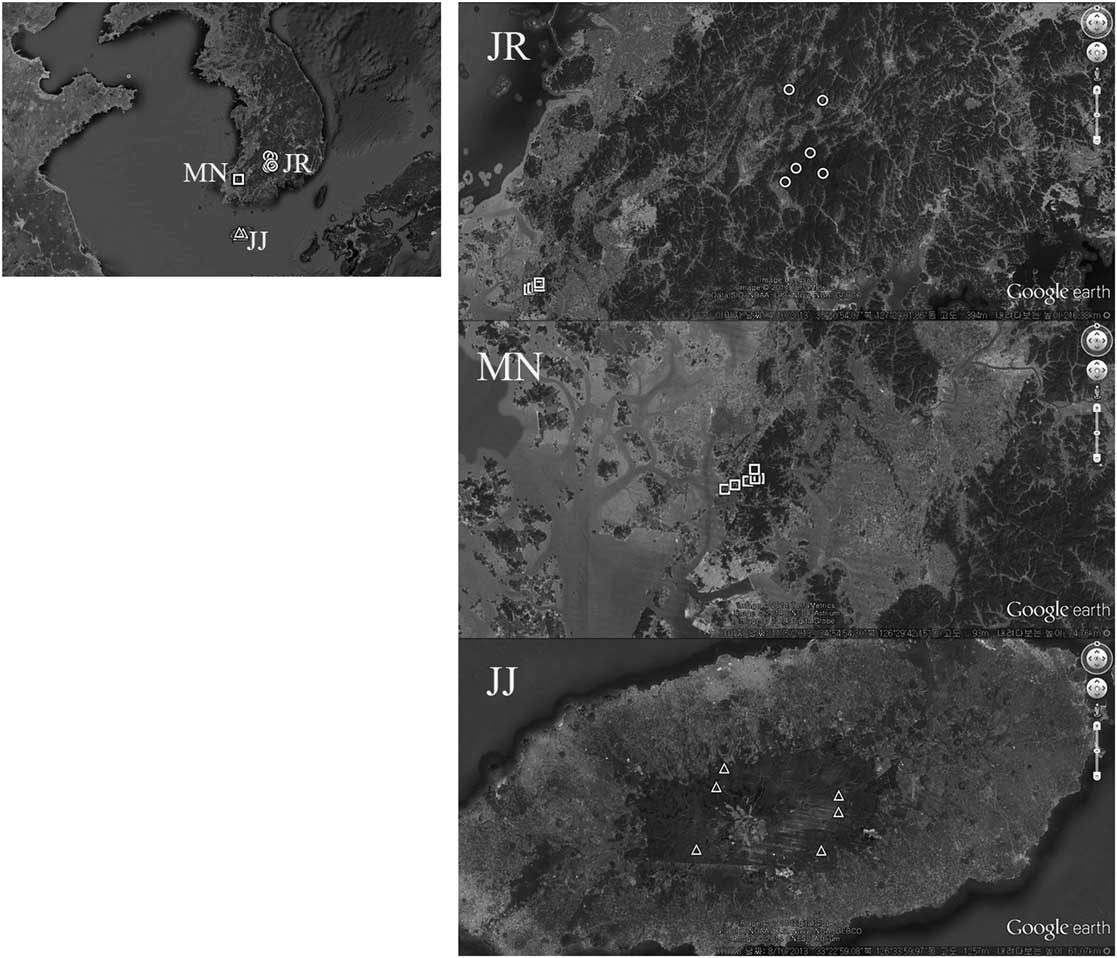
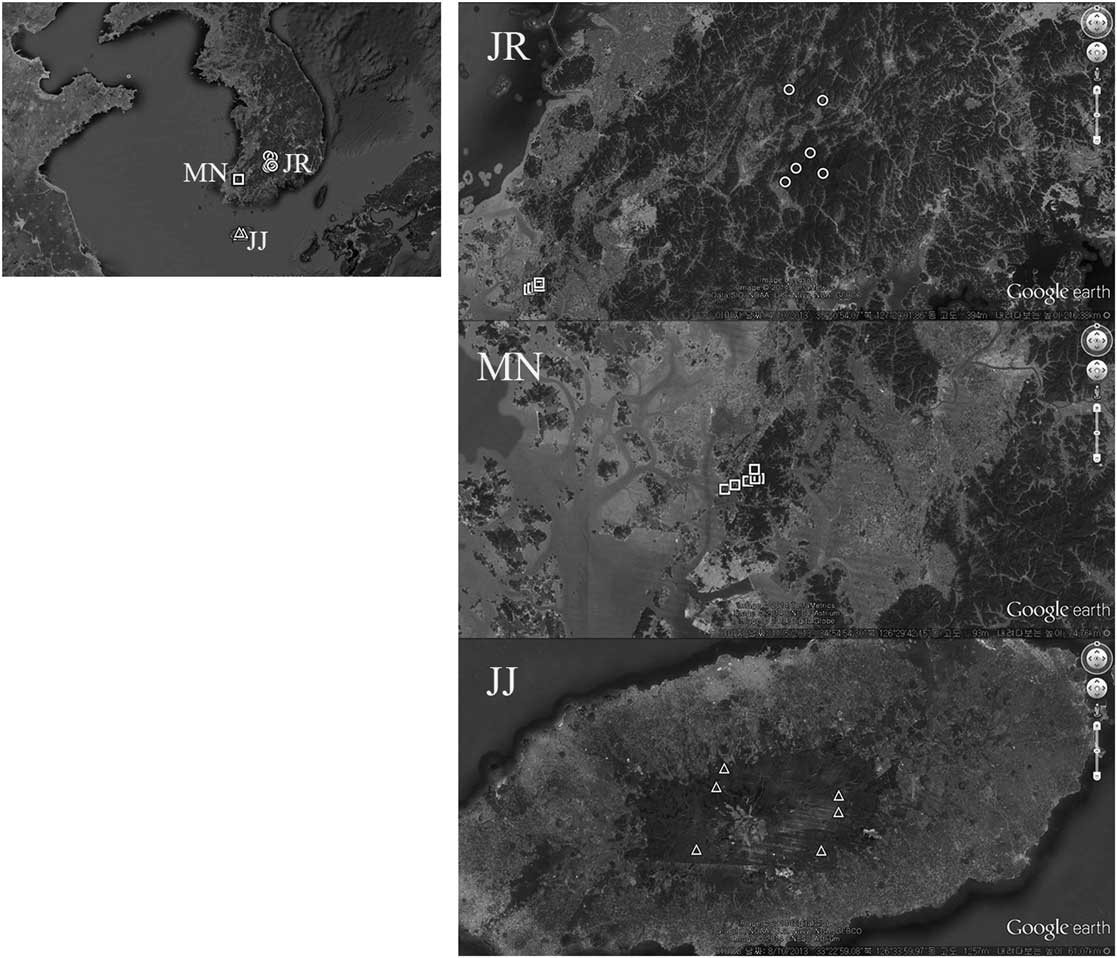
This study was conducted in temperate forests in three different localities in southern South Korea: an inland mountain locality (Mount Jirisan=JR), an island mountain locality (Mount Hallasan=JJ), and a seashore low hill and mountain locality (Mount Seungdalsan=MN) (Fig. 1). Mount Jirisan National Park (highest peak 1915 m) is located at the southern tip of the Baekdu Mountain Range, contains the longest north-to-south orientation mountain system, and consists of 44 000 ha of land. Average monthly temperatures range from −1 oC to 26 oC and annual average precipitation is 1600 mm. Hardwoods are the dominant type of flora on Mount Jirisan. Plant communities at lower elevations (below 600 m) are dominated by Quercus variabilis Blume (Fagaceae) and Pinus densiflora Siebold and Zuccarini (Pinaceae). Plant communities at mid elevations (600–1000 m) are dominated by Carpinus laxiflora (Siebold and Zuccarini) Blume (Betulaceae), Quercus serrata Thunberg (Fagaceae), Acer mono Maximowicz (Sapindaceae), Larix leptolepis (Siebold and Zuccarini) Gordon (Pinaceae), and Pinus koraiensis Siebold and Zuccarini (Pinaceae). Plant communities at higher elevations (above 1000 m) are dominated by Quercus mongolica Fischer ex Ledebour (Fagaceae), Agrostis clavata Trinius (Poaceae), Rhododendron mucronulatum Turczaninow (Ericaceae), and Abies koreana Wilson (Pinaceae). Floral inventory of Mount Jirisan comprises ∼1500 species of vascular plants (Yim and Kim Reference Yim and Kim1992). The six sites included in the present study ranged from 295 to 923 m in elevation and were comprised mainly of mixed deciduous trees.
Site location in southern South Korea. JJ, Mount Hallasan, Jeju; JR, Mount Jirisan, Jeonnam; MN, Mount Seungdalsan, Muan.
Mount Hallasan is located in the centre of Jeju Island, the largest volcanic island of the Korean Peninsula. Mount Hallasan is an aspite-type shield volcano and the summit (1950 m) has a prominent trachyte dome, formed 25 000–30 000 years ago. Jeju Island has a temperate/mesothermal zone climate and is geographically located on the eastern seaboard where the Pacific Ocean meets the Asian continent. Warm temperate, temperate, and frigid arctic climatic zones are vertically distributed by altitude on Jeju Island due to its geographical location, mountainous landscape, and the warm sea current of the East China sea. Average monthly temperatures range from −3 oC to 22 oC and annual average precipitation is 2968–4749 mm. Plant communities are distributed along an altitudinal gradient. At high elevation (1400–1950 m), evergreen forest comprising A. koreana is found. At mid elevations (600–1000 m), the vegetation changes from subalpine evergreen coniferous forest to warm-temperate deciduous hardwood forest such as Q. mongolica, Q. serrata, C. laxiflora, and C. tschonoskii. The floral inventory of Jeju Island comprises ∼1990 species of vascular plants, and the Mount Hallasan area contains ∼550 species (Koh and Koh Reference Koh and Koh2006). The six sites included in the present study ranged from 264–953 m in elevation and comprised mixed deciduous and evergreen forest.
Mount Seungdalsan and the neighbouring area are located along the coast in the southwestern part of South Korea. The landscape here is a mosaic of agricultural lands for rice, onions, and other crops, with low hills covered with secondary pine, deciduous, and evergreen trees (Camellia Linnaeus (Theaceae) species and bamboo), and a mountainous area. The area is warm in summer and cold and dry in winter and average monthly temperatures range from 2 oC to 27 oC with an annual average precipitation of 1166 mm. The floral inventory of Mount Seungdalsan comprises ∼287 species (Yang Reference Yang2000), and the floral diversity of the low hills is quite low. The six sites included in the present study ranged from 20–123 m in elevation and comprised mainly mixed pine, deciduous, and evergreen trees.
Methods
We sampled soils, plants, and moths from three localities: Mount Jirisan (JR), Mount Seungdalsan (MN), and Mount Hallasan (JJ). Six permanent sampling plots along elevation and forest type were assessed at each locality, and a 20×20 m quadrat was erected within each permanent sampling plot. Two soil cores were sampled at each site and sent to the Korean National Forestry Institute, Seoul, South Korea (Korea Forestry Promotion Institute) for analysis. Physical (percentage of clay, silt, and sand) and chemical properties (pH, OM, total nitrogen [TN], P2O5, cation exchange capacity [CEC], K+, Na+, Ca2+, Mg2+, electrical conductivity [EC], NaCl) were analysed using standard methods.
Plant data were obtained by the following method: trees more than 2-cm diameter at breast height (dbh) were all counted and shrubs were counted in four 5×5 m subplots within each quadrat. Moths were sampled once per month from May to October 2009 using an ultraviolet-light trap (BioQuip, Rancho Dominguez, California, United States of America). Moths were captured for six hours after dusk. Most moths were identified to the species level and six species-rich families (Drepanidae, Erebidae, Geometridae, Noctuidae, Notodontidae, and Sphingidae) were included in the analyses because these families accounted for more than 95% of the total species richness across all survey sites.
Data analysis
Soil, plant, and moth data in each locality were analysed to investigate data variance and relationships among variables. Numbers of plant and moth species and individuals were counted and pooled according to locality. In addition, the Shannon–Wiener diversity index (H′) and evenness index were calculated for each locality. One-way analysis of variance (ANOVA) with Tukey’s pairwise post-hoc tests was applied to the analysis of each variable in three localities. Moth species diversity was compared between three localities, using rarefaction curves and diversity estimate (Chao1) by the software EstimateS (version 9.1.0, Colwell Reference Colwell2013). The Chao1 index is the sum of the observed number of species and the quotient a 2 /2b, where a and b equal the number of singletons (one individual in a sample) and doubletons (two individuals in a sample), respectively (Colwell Reference Colwell2013). The Chao1 estimator is widely accepted as reliable in biodiversity studies since this estimator uses information on the number of rare or infrequent species in the collection to estimate the number of undetected species (Chao et al. Reference Chao, Colwell, Lin and Gotelli2009; Colwell et al. Reference Colwell, Chao, Gotelli, Lin, Mao and Chazdon2012).
A total of 86 plant species across 18 sites were identified. Cluster analysis of the 86 plant species was performed using the Sørensen distance measure and flexible beta (−0.25) as a group linkage method. Groups that showed 65% similarity based on the cladogram were coded. Stepwise regression analysis was applied to plant and soil variables to determine significant determinants of moth species richness and abundance using SPSS-PC (SPSS Inc. 2011).
Nonmetric multidimensional scaling (NMDS) was used to compare dissimilarities in composition and abundance among sampled areas and to find variables that had a significant effect on grouping of sampled sites through joint plots. The original matrices consisted of a total of 744 moth species and 86 plant species across 18 sites, respectively. The NMDS procedure was undertaken after the following data transformation: (1) rare species (species occurring in less than three localities) were deleted and (2) for each species, values were relativised by the maximum value for that species. Transformed data matrices comprised 320 moth species and 38 plant species across 18 sites, respectively. The significance of clusters in NMDS space was calculated using the multi-response permutation procedure (999 runs) (MRPP) in PC-ORD (version 5.12; McCune and Mefford Reference McCune and Mefford2006).
Results
Soil
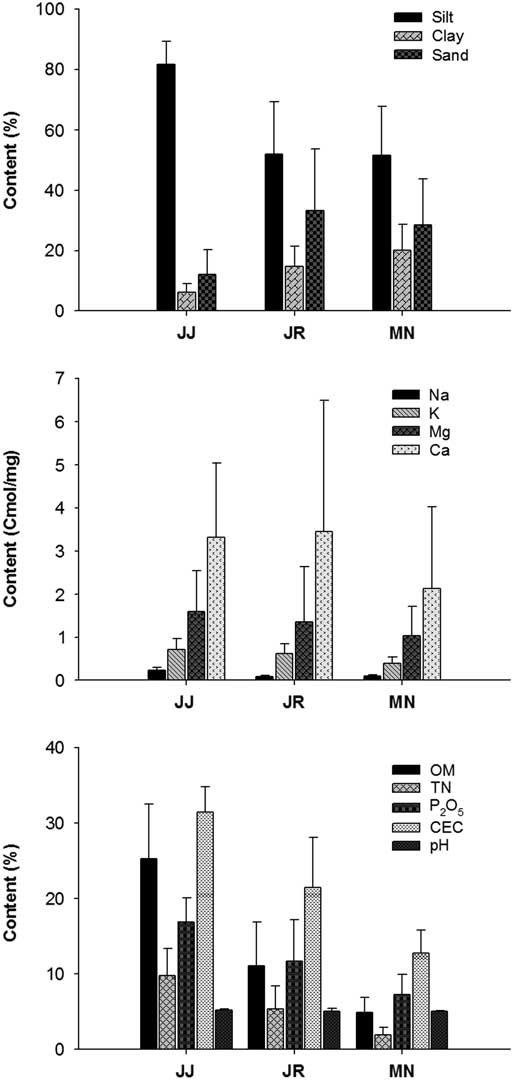
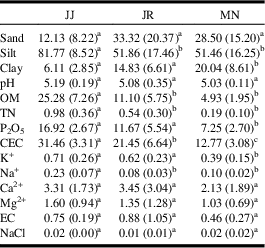
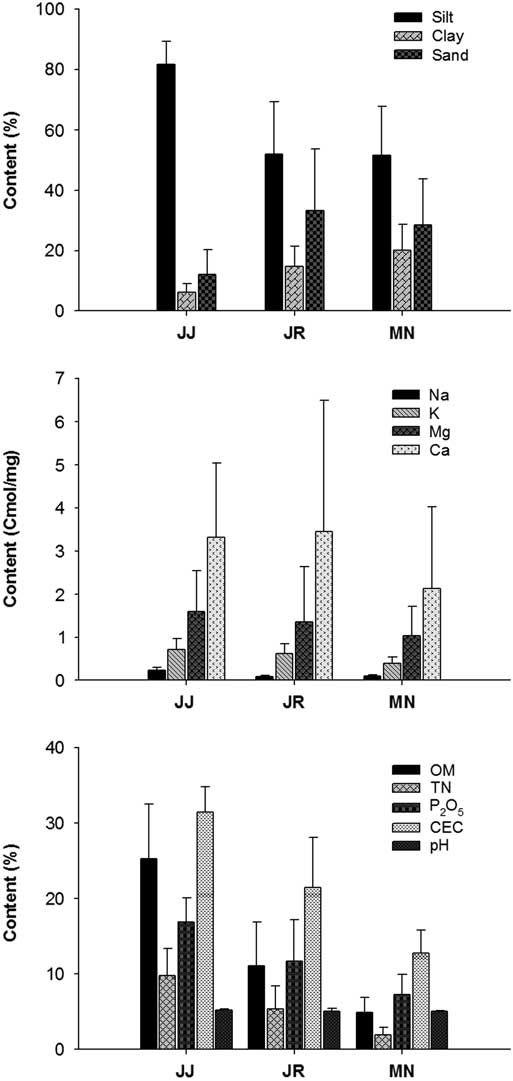
Soil physical and chemical properties differed among the three localities (Table 1; Fig. 2). Mount Hallasan (JJ) had the highest proportion of silt compared with the other localities, while Mount Seungdalsan (MN) had the highest proportion of clay. Organic matter (%), TN, and CEC were very high in JJ compared with the two mainland sites. P2O5 in MN was much lower than at the two high mountain localities. pH showed no difference among sites. Concentrations of two cations (Na+ and K+) were much lower at the two mainland sites (Mount Jirisan [JR] and MN) than the island site (JJ). Other cations (Mg2+ and Ca2+) showed no difference in levels among sites. EC and NaCl showed no differences among sites (Table 2).
Soil physical and chemical properties in three localities of southern South Korea. JJ, Mount Hallasan, Jeju; JR, Mount Jirisan, Jeonnam; MN, Mount Seungdalsan, Muan.
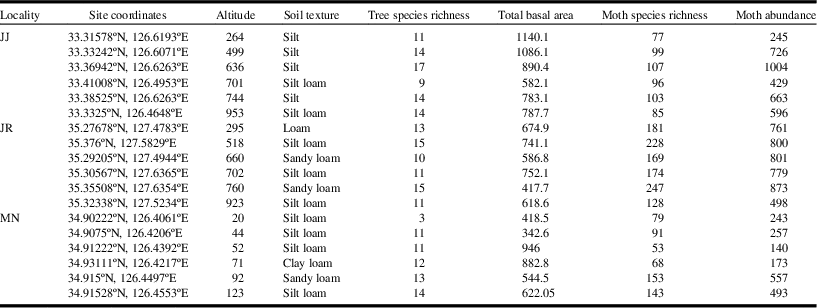
General information of the study sites in three localities of the southern South Korea.
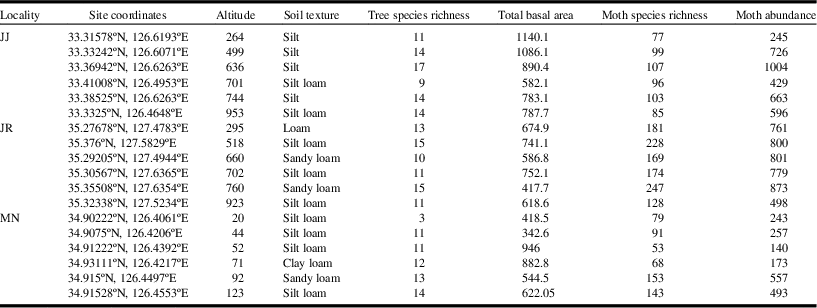
JJ, Mount Hallasan, Jeju; JR, Mount Jirisan, Jeonnam; MN, Mount Seungdalsan, Muan.
Average (and standard deviation) value of soil physical and chemical properties in three localities of southern South Korea.
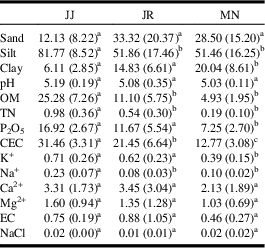
Different letters indicate statistical differences at the P=0.05 level (one-way ANOVA with Tukey’s post-hoc tests).
JJ, Mount Hallasan, Jeju; JR, Mount Jirisan, Jeonnam; MN, Mount Seungdalsan, Muan; OM, organic matter; TN, total nitrogen; CEC, cation exchange capacity; EC, electrical conductivity.
Plants
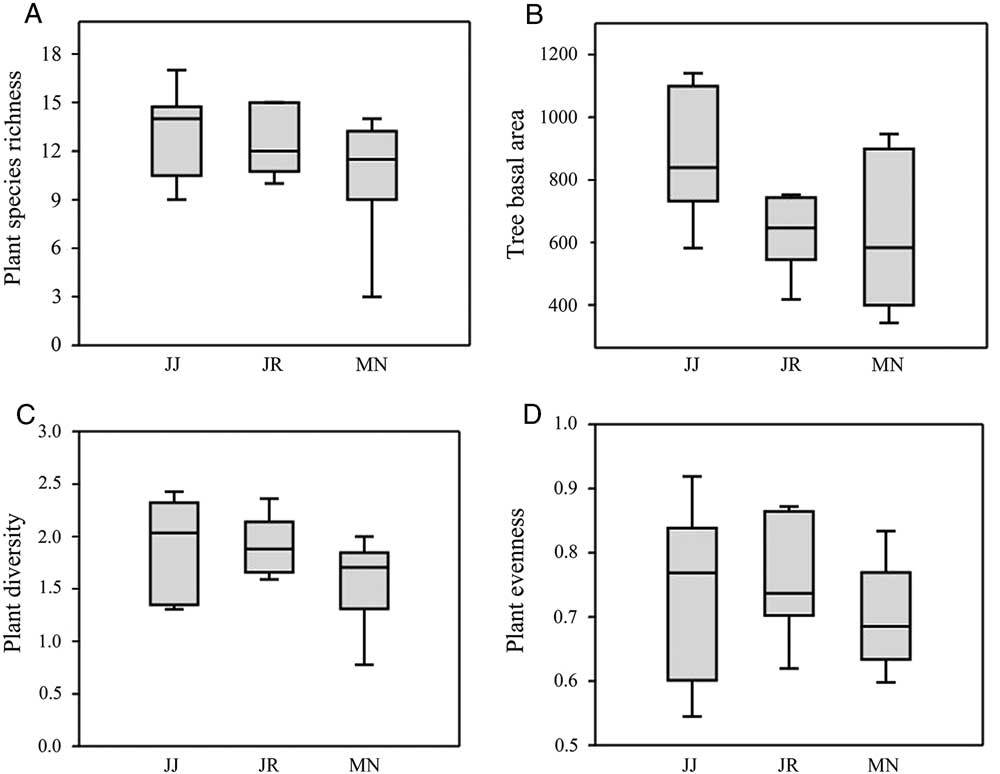
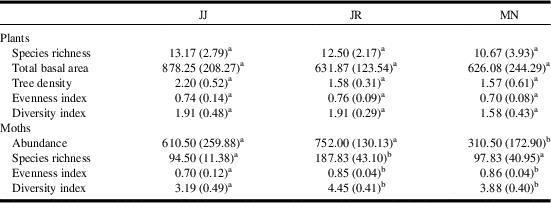
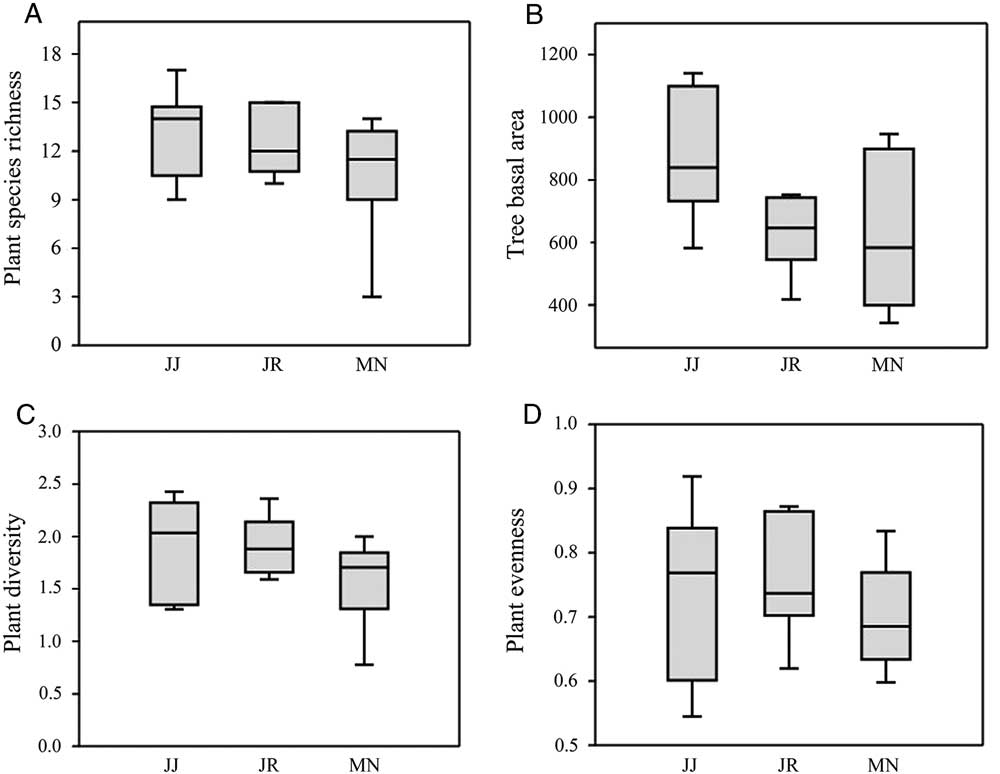
Total plant species richness per sampling quadrat was highest in JJ at 79 species, followed by JR at 75 species and MN at 64 species (Tables 1, 3). Average plant species richness among the three localities was not statistically different (ANOVA, df=2, F=1.08, P=0.36). Total tree basal area was much higher in JJ (5269.5) than JR (3791.2) and MN (3756.5), and plant density per m2 was higher in JJ (2.20) than JR (1.58) and MN (1.57). However, tree basal area and density among the three localities were only marginally statistically different (ANOVA, df=2, F=3.15, P=0.07). Shannon–Wiener diversity index was higher in the two high mountain localities (1.91 in JR and JJ) than the coastal mountain locality MN (1.58), but without statistical significance (ANOVA, df=2, F=1.34, P=0.29). Evenness index was also higher in the two high mountain localities (0.74 in JJ and 0.76 in JR) than the coastal locality, MN (0.70), but this difference was not statistically significant (ANOVA, df=2, F=0.48, P=0.63; Fig. 3).
Results of plant diversity in three localities of southern South Korea. (A) plant species richness, (B) tree basal area, (C) Shannon–Wiener diversity index H′, (D) Simpson evenness index. JJ, Mount Hallasan; JR, Mount Jirisan; and MN, Mount Seungdalsan.
Average (and standard deviation) value of plant and moth data in three localities of southern South Korea.
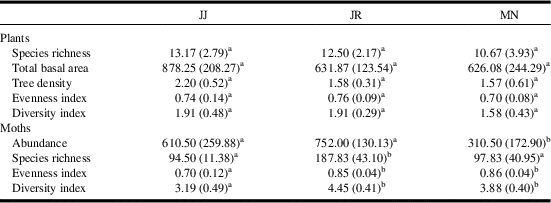
Different letters indicate statistical differences at the P=0.05 level (one-way ANOVA with Tukey’s post-hoc tests).
JJ, Mount Hallasan, Jeju; JR, Mount Jirisan, Jeonnam; MN, Mount Seungdalsan, Muan.
Moths
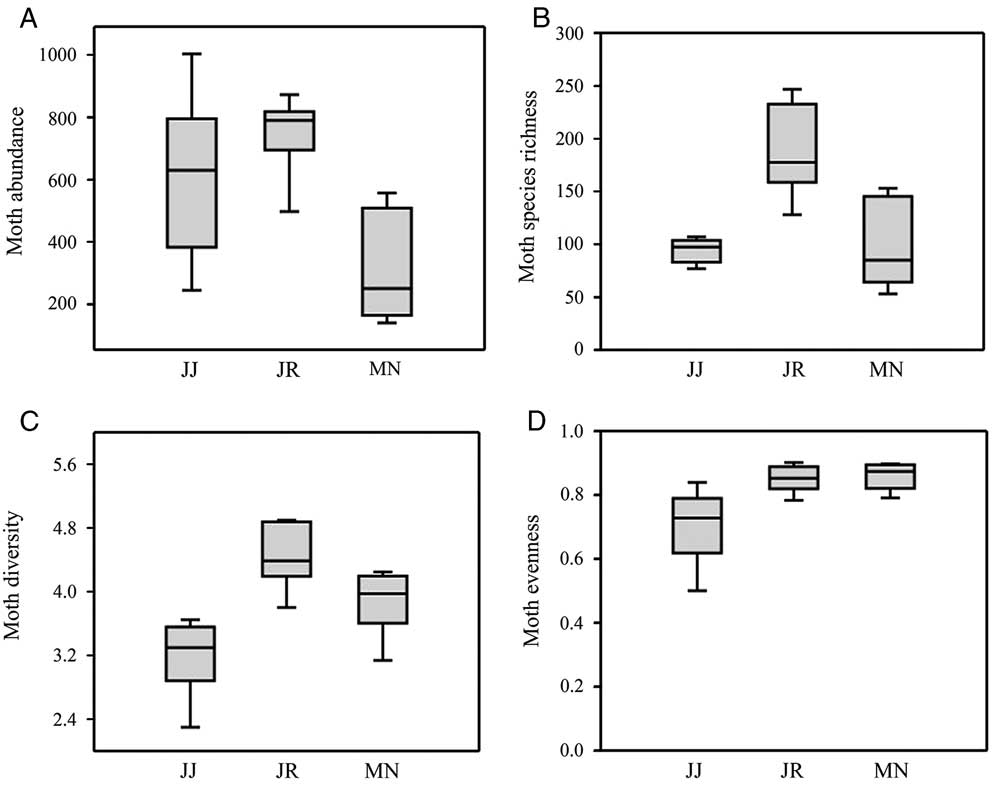
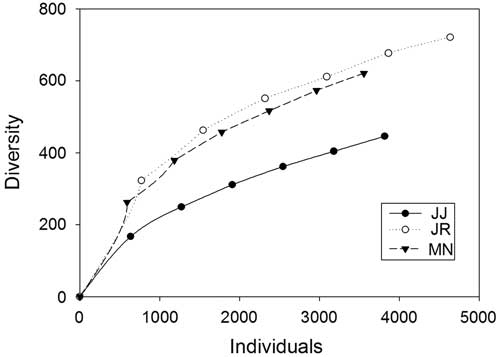
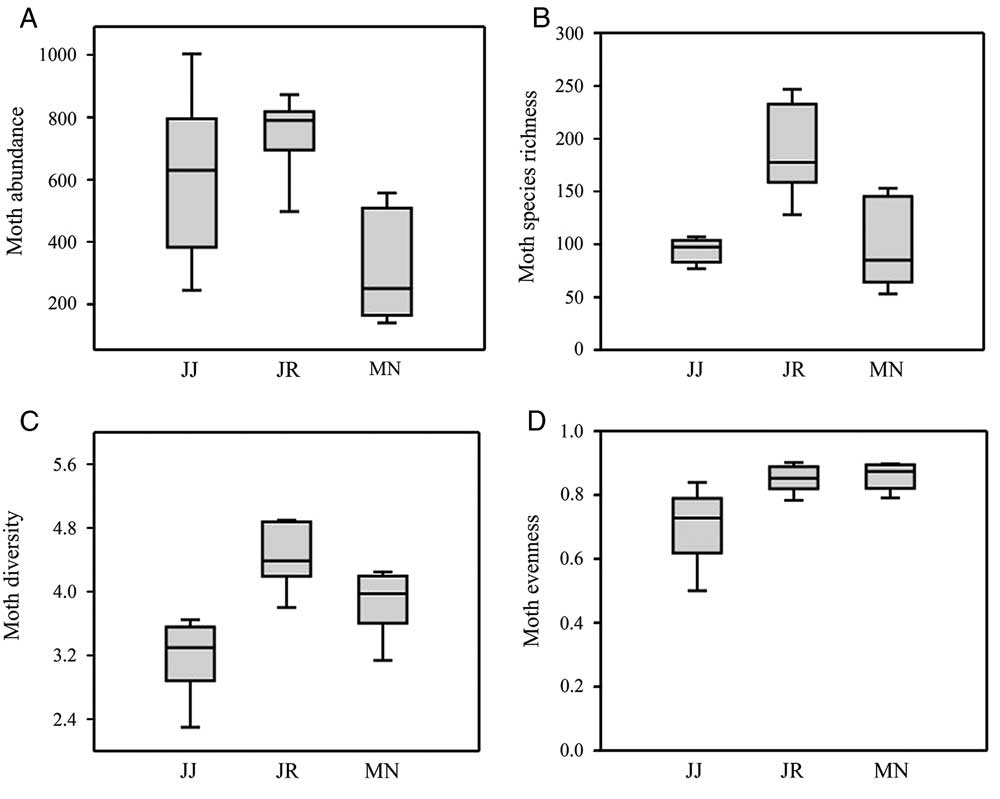
Average moth species richness was highest at JR (187.83) followed by MN (97.83) and JJ (94.50), and the mean difference among the three localities was significant (ANOVA df=2, F=5.43, P<0.01) (Tables 1, 3). Total moth abundance was the highest in JR (4497), followed by JJ (3663) and MN (3093). However, the maximum number of moth catches per study area was different: JJ (1004), JR (873), and MN (557). Average moth abundance was highest at JR (187.83), followed by MN (97.83) and JJ (94.50), and this difference was statistically significant (ANOVA df=2, F=13.77, P<0.001). Shannon–Wiener diversity index was highest in JR (4.45), followed by MN (3.88) and JJ (3.19), and significantly different among localities (ANOVA df=2, F=12.58, P<0.001). Evenness index was higher for the two mainland localities (0.85 in JR and 0.86 in MN) than the island locality (0.70 in JJ) and significantly different among localities (ANOVA df=2, F=7.71, P<0.01). The estimated number of species with Chao1 was the highest at JR (mean value 720.96, 95% confidence interval between 661.29 and 809.74), followed by MN (mean value 620.93, 95% confidence interval between 565.64 and 705.42) and JJ (mean value 446.12, 95% confidence interval between 387.24 and 543.84) (Figs. 4, 5).
Results of moth diversity in three localities of southern South Korea. (A) moth abundance, (B) moth species richness, (C) Shannon–Wiener diversity index H′, (D) Simpson evenness index. JJ, Mount Hallasan; JR, Mount Jirisan; and MN, Mount Seungdalsan.
Mean value of Chao1 estimator for three localities. JJ, Mount Hallasan; JR, Mount Jirisan; and MN, Mount Seungdalsan.
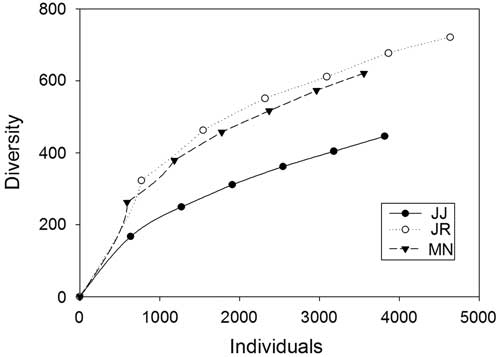
Relationship between moths and other factors
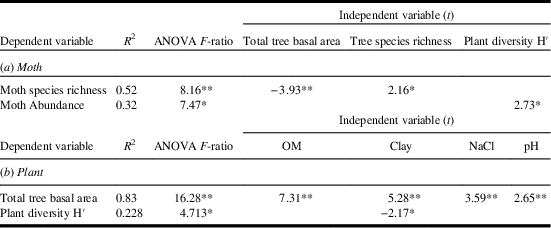
Stepwise regression analysis of moth species richness identified total tree basal area and tree species richness as significant factors. Regression analysis of moth abundance identified plant diversity index (H′) as a significant factor (Table 4). Stepwise regression analysis of plant data showed that total tree basal area was closely related to OM, clay content (%), NaCl, and pH, while plant diversity H′ was negatively related to clay content (%) (Table 4).
Model summary of stepwise regression analysis for moths (a) and plants (b) in three localities of southern Korea.
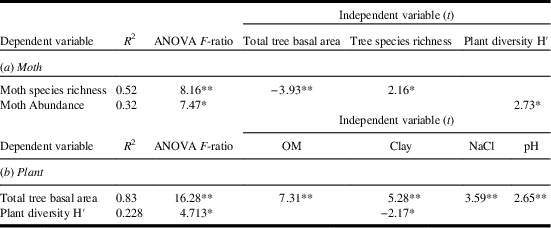
*P<0.05, **P<0.01.
OM, organic matter.
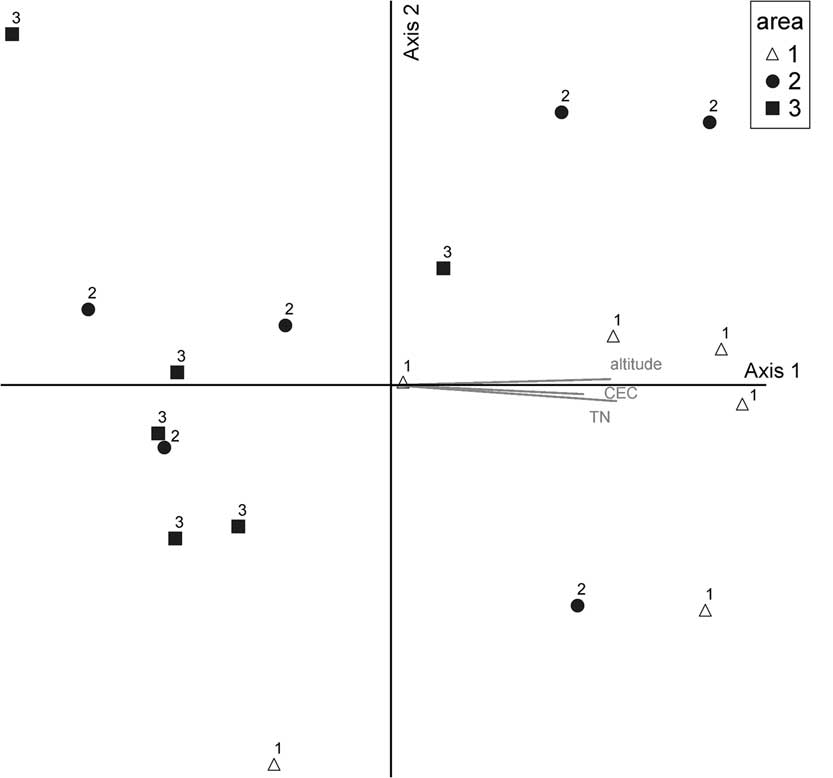
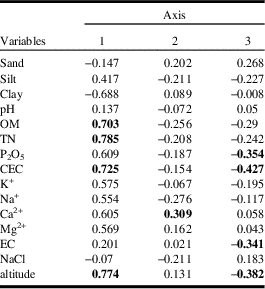
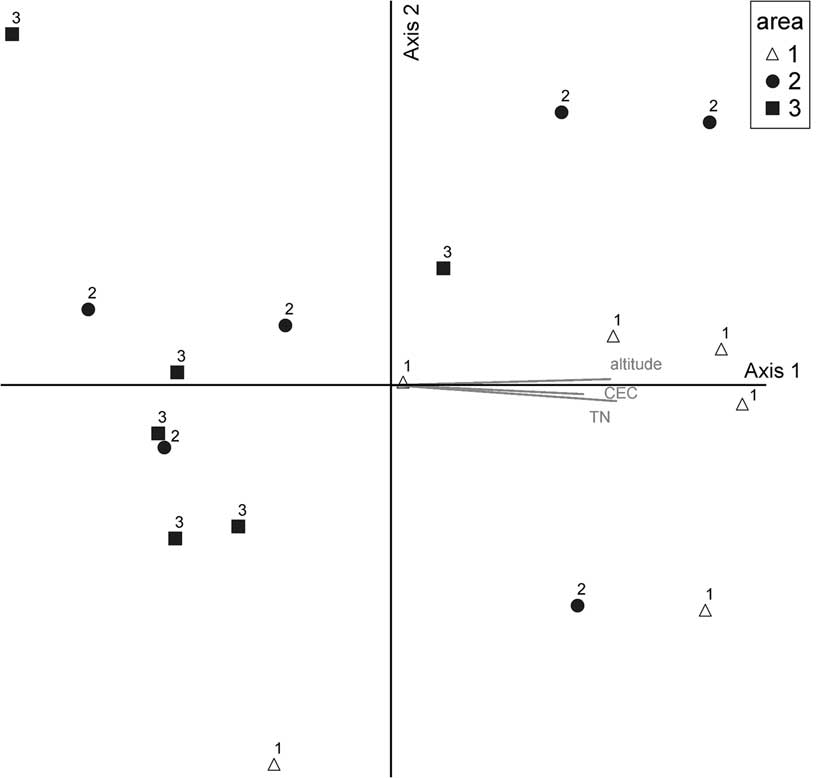
Nonmetric multidimensional scaling ordination between 38 plant species across 18 sites and 17 soil variables identified three axes (final stress 13.68) and explained a total of 63% of the total variance: the first axis explained 28% of the total variance, the second axis explained 18% of the total variance, and the third axis explained 16% of the total variance (Table 5, Fig. 6). Major variables correlated with the first axis (Pearson r>0.7) were soil fertility (OM, TN content, and CEC) and altitude. Major variable correlated with the second axis (Pearson r>0.3) was calcium ion content. Major variables correlated with the third axis (Pearson r>0.3) were phosphate concentration, CEC, EC, and altitude. Correlation analysis of species composition with soil and plant variables showed that area was a significant determinant of the clustering of the three different localities (MRPP A=0.06, P<0.001).
Nonmetric multidimensional scaling ordination joint plot for 38 tree species across 18 sites and 17 soil and environmental variables of southern South Korea. Cutoff r 2=0.500. Locality 1. JJ, Mount Hallasan; 2. JR, Mount Jirisan; 3. MN, Mount Seungdalsan.
Pearson correlation with ordination axes for 38 tree species and 17 soil variables for three localities of southern South Korea.
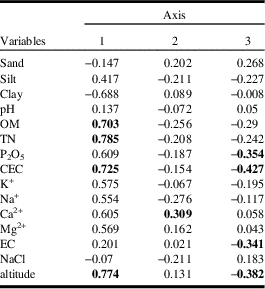
Bold text indicates the variables of high correlation value with each axis.
OM, organic matter; TN, total nitrogen; CEC, Cation exchnage capacity; EC, electrical conductivity.
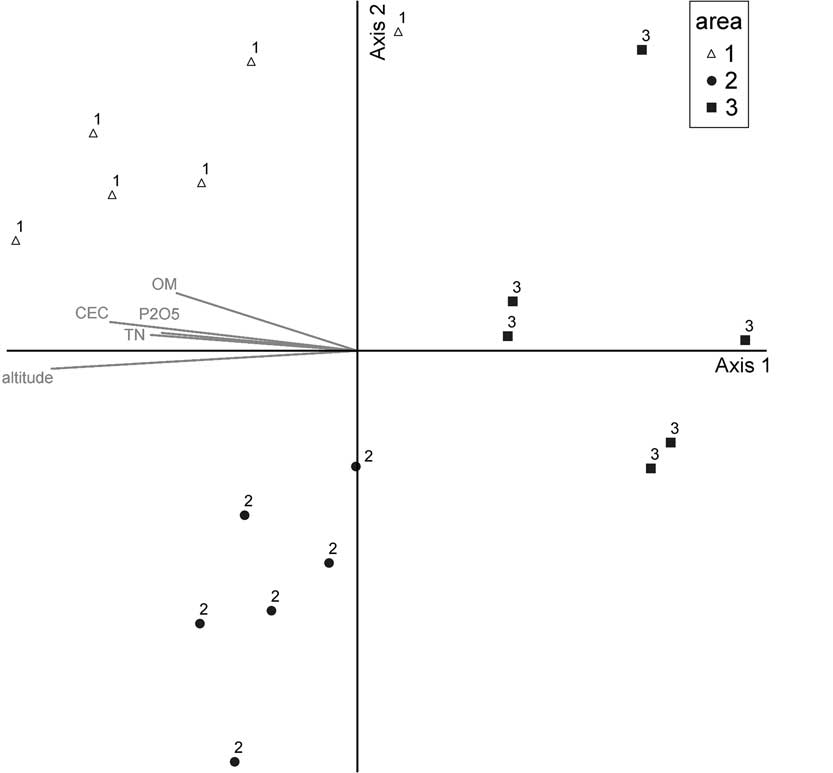
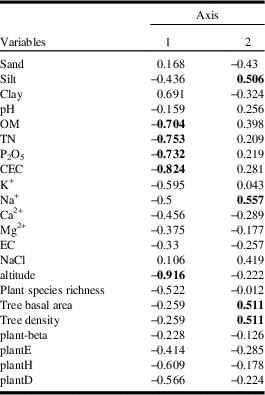
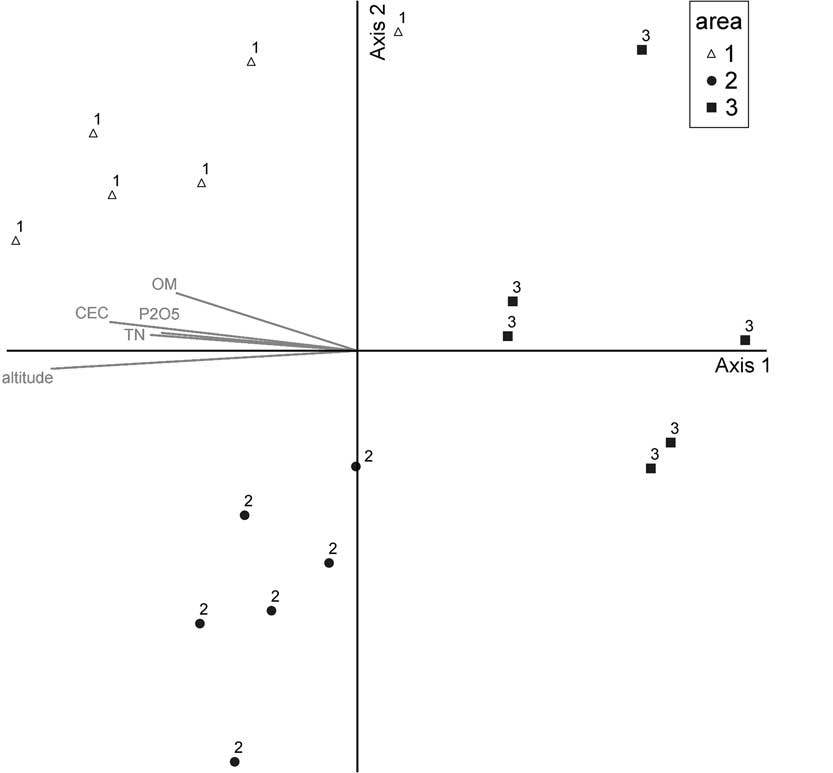
Nonmetric multidimensional scaling ordination between 320 moth species across 18 sites and 24 soil and plant variables identified two axes (final stress 21.16) and explained a total of 84% of the total variance (Table 6, Fig. 7): the first axis explained 48% of the total variance and the second axis explained 40% of the total variance. Major variables correlated with the first axis (Pearson r>0.7) were soil fertility (OM, TN content, phosphate concentration, and CEC), and altitude. Major variables correlated with the second axis (Pearson r>0.5) were soil properties (silt content, sodium ion) and plant biomass (total tree basal area and tree density). Correlation analysis of moth species composition with soil and plant variables showed that area was a significant determinant of clustering of the three different localities (MRPP A=0.14, P<0.001).
Nonmetric multidimensional scaling ordination joint plot for 320 moth species across 18 sites and 24 variables of southern South Korea. Cutoff r 2 =0.500. 1. JJ, Mount Hallasan; 2. JR, Mount Jirisan; 3. MN, Mount Seungdalsan.
Pearson correlation with ordination axes for 320 moth species and 24 soil and plant variables for three localities of southern South Korea.
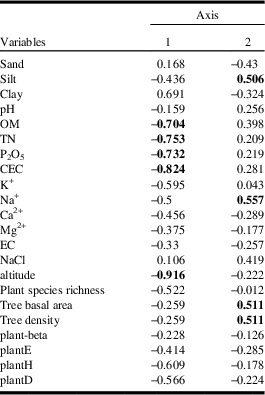
Bold text indicates the variables of high correlation value with each axis.
OM, organic matter; TN, total nitrogen; CEC, cation exchange capacity; EC, electrical conductivity.
Discussion
Nutrient cycling changes are one of several factors that affect plant species composition (Olff and Ritchie Reference Olff and Ritchie1998; Belovsky and Slade Reference Belovsky and Slade2000; de Deyn and van der Putten Reference de Deyn and van der Putten2005). The nutrients for plant uptake are released through fast and slow cycling: fast cycling involves rapid decomposition of detritus from excrement and dead herbivores, while slow cycling involves slow decomposition of detritus from plant litter (Belovsky and Slade Reference Belovsky and Slade2000). If slow decomposing plants are better competitors when nutrients are less available and fast decomposing plants are better competitors when nutrients are more available, herbivore-induced changes in nutrient cycling may affect plant competition and vegetation communities. Thus, the effects of herbivores and plants on nutrient cycling can be significant depending on preferential feeding on plants by herbivores (Olff and Ritchie Reference Olff and Ritchie1998; Belovsky and Slade Reference Belovsky and Slade2000; Metcalfe et al. Reference Metcalfe, Gregory, Martin, Espejo, Huasco and Amezquita2014).
We found that moth species richness (number of species) across 18 sites in southern South Korea was largely affected by tree biomass (tree basal area) and plant species richness, while moth abundance (number of individuals) was affected by plant diversity index (Table 4). Total tree basal area was affected by the content of OM, clay, NaCl, and pH of soils, while plant diversity index was negatively affected by clay content (Table 4). These findings indicate that the diversity of moths, one of the major herbivores in temperate forests, is largely influenced by plant biomass and diversity and that plant biomass and diversity are in turn influenced by soil characteristics. Additional NMDS ordinations between soil variables and moth and plant communities revealed that soil fertility factors are closely related with moth and plant communities (Figs. 6, 7). Four variables of soil fertility (OM, nitrogen content, phosphate content, and CEC) were closely related with the moth community, while two variables (nitrogen content and CEC) were closely related to the plant community. This suggests that the soil, plant, and moth communities form a close interacting network that is primarily affected by soil fertility factors such as OM, nitrogen and phosphorous content, and CEC.
Plant species diversity can be promoted by above-ground herbivores that have impacts on dominant plant species, plant regeneration opportunities, and propagule transport (Olff and Ritchie Reference Olff and Ritchie1998; Siemann et al. Reference Siemann, Tilman, Haarstad and Rotchie1998). This was observed in the present study. Across the three localities, moth abundance was closely related to plant species richness (r=0.53, P<0.001) and tree basal area (r=0.32, P<0.05), but moth species richness was closely negatively related to tree basal area (r=−0.63, P<0.01). Local diversity of organisms reflects only a subset of the regional species pool (de Deyn and van der Putten Reference de Deyn and van der Putten2005). However, at a local level, this relationship was not observed. Although there was not a statistically significant difference among localities in terms of their plant diversity characteristics (plant species richness and tree basal area), moth richness and moth diversity were higher in the mainland localities (Table 3, Fig. 4). This higher diversity could result from ecological processes other than those that generate plant–herbivore diversity.
The soil of Mount Hallasan is classified as volcanic ash soil and weathered basalt rock, and contains a high proportion of silt, OM, TN, CEC, and the two cations Na+ and K+ (Table 1). This high proportion of fertility factors was associated with relatively high plant productivity as expressed by total tree basal area and tree density (Table 2). Dolezal et al. (Reference Dolezal, Altman, Kopecky, Cerny, Janecek and Bartos2012) showed that the high nutrient concentrations found in the uppermost soil of the deciduous litter of Mount Hallasan resulted from the transition from late-glacial coniferous forests to early Holocene broad-leaved deciduous forest such as oak, maple, hornbeam, and cherry trees, and these authors proposed that forest change enhanced nutrient cycling in the Holocene. In addition, these authors suggested that early Holocene changes in ecosystem nutrient status associated with the replacement of conifers by mixed oak forests had a significant effect on plant diversity (Dolezal et al. Reference Dolezal, Altman, Kopecky, Cerny, Janecek and Bartos2012). It could be concluded that historical changes in the vegetation on Mount Hallasan resulted in similar plant species diversity compared with the two mainland localities despite its geographic location on an island.
Despite of high soil fertility, wide elevational breadth (∼700 m) and plant diversity, the moth diversity on Mount Hallasan was poor relative to that of Mount Jirisan (Tables 1–3, Fig. 4). The increase in plant and animal diversity according to area as a power function is known as the equilibrium theory of island biogeography, and is one of the best-known theories in ecology (MacArthur and Wilson Reference MacArthur and Wilson1967). To explain why larger areas have more species, the equilibrium theory proposes three basic concepts: (1) there should be a positive relationship between area and the number of individuals and between the number of individuals and the number of species, (2) larger areas are likely to have more habitats with a corresponding increase in species richness, and (3) colonisation-extinction dynamic models predict that there will be more species in larger areas than in smaller ones (MacArthur and Wilson Reference MacArthur and Wilson1967; Kotze et al. Reference Kotze, Niemelä and Nieminen2000; Choi and An Reference Choi and An2011). In addition to area, diverse factors such as habitat diversity, climatic condition, island age, degree of isolation, status of knowledge, and nonequilibrium singly or together affect the species richness of any island (Kotze et al. Reference Kotze, Niemelä and Nieminen2000; Gillespie and Roderick Reference Gillespie and Roderick2002; Whittaker et al. Reference Whittaker, Triantis and Ladle2008, Reference Whittaker, Triantis and Ladle2010). Thus, faunal assemblages on islands are the combined products of geography (area, latitude, altitude, isolation), ecology (geology, biotope availability, history, land use, and management), natural history (mobility, colonisation capability, presence of organisms at island sources), and time (Dapporto and Dennis Reference Dapporto and Dennis2008; Lomolino et al. Reference Lomolino, Brown and Sax2010). Because Mount Hallasan is located on an island, the diversity of moth fauna is likely to be different from that of mainland localities (Mount Jirisan and Mount Seungdalsan). The smaller area and limited population dynamics of immigration and extinction on Mount Hallasan might decrease the number of moth species present compared with Mount Jirisan. However, the high elevational breadth of Mount Hallasan offers diverse habitats and resulted in a greater abundance of moth individuals than the seashore locality, Mount Seungdalsan that have the narrow elevational breadth (∼100 m).
We observed that the soils at a seashore locality (Mount Seungdalsan) are characterised by low content of fertility variables (low OM, TN, phosphate, potassium, and calcium ions). This low fertility at the seashore locality could be resulted from washing away of minerals to sea. Thus, we concluded that low nutrient cycling could be coupled with low plant productivity. In addition, low spatial heterogeneity (low elevational breadth) and high disturbances from agriculture did discourage the high diversity of plants in this locality. It should be noted that the low plant diversity did not always guarantee the low diversity of herbivores (e.g., moths). The answering for this could be investigated elsewhere.
In the present study, we aimed to test the influence of soil physical and chemical properties on the diversity of plants and moths in the temperate forest. We found that soil, plant, and moth communities form a close interacting network that is primarily affected by soil fertility factors such as OM, nitrogen and phosphorous content, and CEC in the temperate forests. This result confirmed that the bottom-up effect of soil characteristics on aboveground diversity such as plants and herbivores.
Acknowledgements
The authors would like to thank Hui Kim, Jeong-Seop An, Sang-Hyun Na, Chul-Gi Lee, and In-Hwan Lee for their help with field work. We would like to thank the subject editor and two anonymous reviewers for their helpful comments and suggestions. This study was supported by the National Research Foundation grant (NRF-2012R1A2A2A01003910).