Introduction
Honeybees (Apis mellifera L.) are a key element in maintaining biodiversity and, moreover, provide ecosystem services (Fünfhaus et al., Reference Fünfhaus, Göbel, Ebeling, Knispel, Garcia-Gonzalez and Genersch2018). Through pollination, insects are responsible for a global service worth $215 billion to food production (Goulson et al., Reference Goulson, Nicholls, Botías and Rotheray2015). This insect brings huge economic benefits for beekeepers by providing bee products which are not only used as edible products but also as components of medicines in clinical treatments (Al-Lawati et al., Reference Al-Lawati, Al-Ajmi, Waly, Waly and Rahman2018). For these reasons, bees are extremely important for humans and the environment and should be preserved.
Constant decline in the number of pollinators, especially honey bees, is being observed due to climatic and environmental changes, Colony Collapse Disorder, the use of pesticides in agriculture, pathogen infestations, parasite infections, spreading of invasive species, over-intensive industrial harvesting of bee products and other threats (Kevan and Viana, Reference Kevan and Viana2003; Johnson et al., Reference Johnson, Ellis, Mullin and Frazier2010; vanEngelsdorp et al., Reference vanEngelsdorp, Traynor, Andree, Lichtenberg, Chen, Saegerman and Cox-Foster2017; O'Neal et al., Reference O'Neal, Anderson and Wu-Smart2018; Ptaszyńska et al., Reference Ptaszyńska, Gancarz, Hurd, Borsuk, Wiącek, Nawrocka, Strachecka, Załuski and Paleolog2018a, Reference Ptaszyńska, Trytek, Borsuk, Buczek, Rybicka-Jasińska and Gryko2018b). Other risks include the increasing resistance of various parasites and diseases to drugs, e.g. the Varroa destructor mite, the Nosema spp. microsporidium and Paenibacillus larvae (Pawlowski et al., Reference Pawlowski, Westman, Koteva, Waglechner and Wright2018; Suwannapong et al., Reference Suwannapong, Maksong, Phainchajoen, Benbow and Mayack2018). Moreover, bees metabolize antibiotics poorly, which makes their treatment difficult (Raymann et al., Reference Raymann, Motta, Girard, Riddington, Dinser and Moran2018). Additionally, some medicines are prohibited by the European Union due to the potential for harmful substances to be incorporated into bee products (Rada et al., Reference Rada, Machova, Huk, Marounek and Duskova1997). For these reasons, other substances that support the bee immune system without causing side effects, weakening bee colonies and accumulating harmful deposits in honey bees and their products – for instance, dietary supplements – are desired. Moreover, in many regions, a shortage of natural bee forage (pollen and nectar) triggers the need for adequate supplemental diets that may reduce colony losses by alleviating stress (Vannette et al., Reference Vannette, Mohamed and Johnon2015; Glavinic et al., Reference Glavinic, Stankovic, Draskovic, Stevanovic, Petrovic, Lakic and Stanimirovic2017). Pollen nutrients and extracts from different plant fragments affect gene longevity and the production of some antimicrobial peptides in bees (Alaux et al., Reference Alaux, Dantec, Parrinello and Le Conte2011; Li et al., Reference Li, Xu, Wang, Yang and Yang2014; Glavinic et al., Reference Glavinic, Stankovic, Draskovic, Stevanovic, Petrovic, Lakic and Stanimirovic2017). It has also been confirmed that the use of safe, natural bioactive substances such as caffeine, curcumin and coenzyme Q₁₀ (also known as ubiquinone, ubidecarenone, coenzyme Q and often abbreviated to CoQ10) may contribute to increased health of bees and protection against parasites (Strachecka et al., Reference Strachecka, Krauze, Olszewski, Borsuk, Paleolog, Merska, Chobotow, Bajda and Grzywnowicz2014a, Reference Strachecka, Olszewski and Paleolog2015); piperine may be one substance with similar benefits. Moreover, substances such as porphyrins (Ptaszyńska et al., Reference Ptaszyńska, Trytek, Borsuk, Buczek, Rybicka-Jasińska and Gryko2018b) and extracts of polypore mushrooms (Stamets et al., Reference Stamets, Naeger, Evans, Han, Hopkins, Lopez, Moershel, Nally, Sumerlin, Taylor, Carris and Sheppard2018), help to destroy pathogens, preventing their development and diminishing the mortality of infected honeybees. Workers treated with bioactive substances (defined as foodstuffs meant to supplement the normal diet and which are concentrated sources of nutrients or other substances with a nutritional value; e.g. caffeine, curcumin and CoQ10) have higher protein concentrations and increased activities of antioxidant enzymes, biochemical markers, neutral proteases and protease inhibitors. The activities of acidic and alkaline proteases are lower in bees that are administrated these substances (Strachecka et al., Reference Strachecka, Krauze, Olszewski, Borsuk, Paleolog, Merska, Chobotow, Bajda and Grzywnowicz2014a, Reference Strachecka, Olszewski and Paleolog2015). The antioxidative system and proteolytic pathway compounds (proteases and their inhibitors) are key substances responsible for individual bee resistance and longevity, particularly in conditions of high stress and senescence (Williams et al., Reference Williams, Roberts and Elekonich2008; Aurori et al., Reference Aurori, Buttstedt, Dezmirean, Mărghitaş, Moritz and Erler2014). These compounds interact by mutually activating specific metabolic pathways (Münch et al., Reference Münch, Amdam and Wolschin2008; Tolfsen et al., Reference Tolfsen, Baker, Kreibich and Amdam2011). The presence of free radicals (which appear in pathological conditions) stimulates the activation of catalase (CAT) and superoxide dismutase (SOD) in the haemolymph (Münch et al., Reference Münch, Amdam and Wolschin2008). Proteolytic enzymes detect and degrade damaged proteins, thus preventing the formation and accumulation of protein aggregates and mitigating the results of oxidative stress (Cabiscol et al., Reference Cabiscol, Tamarit and Ros2000; Zou et al., Reference Zou, Lopez, Kanost, Evans and Jiang2006; Münch et al., Reference Münch, Amdam and Wolschin2008; Bull et al., Reference Bull, Ryabov, Prince, Mead, Zhang, Baxter, Pell, Osborne and Chandler2012; Parker et al., Reference Parker, Guarna, Melathopoulos, Moon, White, Huxter, Pernal and Foster2012). Moreover, these bioactive substances decrease DNA methylation levels in apian brains. This is the principal gene-silencing mechanism depending on environmental changes (Foret et al., Reference Foret, Kucharski, Pittelkow, Lockett and Maleszka2009).
Piperine [(E,E)-5-(3,4-Methylenedioxyphenyl)-2,4-pentadienoylpiperidide, 1-Piperoylpiperidine] is an alkaloid in the nonvanilloid family, which occurs in berries and roots of the Piperaceae family (Badmaev et al., Reference Badmaev, Majeed and Prakash2000; Vasavirama and Upender, Reference Vasavirama and Upender2014). Depending on the source, piperine content in berries varies from about 60 to 100 g/kg. The highest concentrations of piperine are observed in the grain. Pepper grains owe their spicy taste to piperine as well as other compounds, such as chavicine. Previous studies have found that there is no piperine in pollen or nectar, therefore it can be concluded that bees are not exposed to this substance naturally (Srinivasan, Reference Srinivasan, Aggarwal and Kunnumakkara2009; Deng et al., Reference Deng, Sriwiriyajan, Tedasen, Hiransai and Graidist2016).
Analyses on vertebrates have confirmed the positive effect of piperine (Ouyang et al., Reference Ouyang, Zeng, Pan, Xu, Wang, Liu and He2013; Lee et al., Reference Lee, Kim, Back and Han2018). Studies on mice and rats have shown that piperine possesses analgesic, anticonvulsant and anti-inflammatory properties, which classifies it as one of the agents that counteract epilepsy. The anti-inflammatory character of piperine also protects against oxidative damage by inhibiting or quenching free radicals, reactive oxygen species and hydroxyl radicals, which increases the life-span of cells and organisms (Mittal and Gupta, Reference Mittal and Gupta2000; Kumar et al., Reference Kumar, Khan, Koul, Koul, Taneja, Ali, Ali, Sharma, Mirza, Kumar, Sangwan, Gupta, Thota and Qazi2008; Sharma et al., Reference Sharma, Kumar, Sharma, Nargotra, Koul and Khan2010; Bukhari et al., Reference Bukhari, Pivac, Alhumayyd, Mahesar and Gilani2013; Tasleem et al., Reference Tasleem, Azhar, Ali, Perveen and Mahmood2014). Piperine has been found to exert anti-cancer effects and general physiological benefits on organisms (Do et al., Reference Do, Kim, Choi, Khanal, Park, Tran, Jeong and Jeong2013; Ouyang et al., Reference Ouyang, Zeng, Pan, Xu, Wang, Liu and He2013; Reddy et al., Reference Reddy, Somepalli, Golakoti, Kanugula, Karnewar, Rajendiran, Vasagiri, Prabhakar, Kuppusamy, Kotamraju and Kutala2014). However, there appears to be no information in the literature about the application of piperine in insects. However, the existence of beneficial effects on the vertebrates led to the hypothesis that piperine may be a valuable and beneficial honey bee supplement. It was hypothesized that piperine may increase such resistance-related biochemical parameters as activities of antioxidants, proteases, protease inhibitors and also some crucial enzymatic biomarkers in apian haemolymph, extending the apian life-span.
The aim of the current work was to investigate the influence of adding piperine to honey bees' diets on their longevity, selected biochemical parameters and the level of global DNA methylation, to discover whether it should be recommended for apiary testing and in the long-term to be used as a method of disease prevention.
Materials and methods
The experiment was carried out on 8000 1-day-old worker bees (Apis mellifera carnica, Pollmann; collected from an apiary belonging to the University of Life Sciences in Lublin – 51°13′31″N, 22°38′07″E), prepared according to the method of Strachecka et al. (Reference Strachecka, Olszewski and Paleolog2016) in June and July 2017. Bees were settled into 200 wooden cages (40 bees/cage) with a volume of 576 cm3 each (12 × 12 × 4 cm3, length/height/width), with a sliding front window, air vents located on the side and a feeder (a syringe with a modified adaptor) on the top. Optimal conditions were guaranteed in an air-conditioned chamber – constant temperature at 35 °C and 65% relative humidity. Prior to the experiment, bee colonies were inspected for the absence of Nosema spp., Varroa destructor signs and evaluated for general colony condition in order to ensure that the bees were in excellent condition. The bees were divided into two equal groups: the control group and the piperine-supplemented experimental group, 100 cages in each group. Thirty cages in each group were designated for longevity tests (Procedure 1) and 70 for laboratory analyses (Procedure 2 and 3). The bees in the control group were fed with sugar (Diamant, Toruń, Poland) dissolved in water at ratio 1:1 ad libitum with no additives, while the other group was fed sugar syrup (1 : 1) supplemented with piperine (Sigma Aldrich, Saint Louis, Missouri, USA) at a concentration of 3 µg/ml ad libitum. The most effective dose of piperine was selected on the basis of previous pilot studies. Piperine was added directly into sugar syrup with no buffers.
Procedure 1 – determining bee life-span
Longevity tests were performed according to the method of Fries et al. (Reference Fries, Chauzat, Chen, Doublet, Genersch, Gisder, Higes, McMahon, Martín-Hernández, Natsopoulou, Paxton, Tanner, Webster and Williams2013). The front window of each cage was taken out every second day: dead bees were removed using tweezers and counted to determine their life-span.
Procedure 2 – collecting haemolymph and biochemical analyses
Haemolymph was collected from randomly chosen bees from 70 cages destined for biochemistry from each group on the 1st, 4th, 10th, 18th, 25th and 32nd day of the experiment. Since the bees fed with piperine lived longer, haemolymph samples were additionally collected on the 37th and 41st day in the piperine-fed group. Haemolymph was drawn from the dorsal sinus of each bee using the capillary puncturing method between the 3rd and 4th tergite (Strachecka et al., Reference Strachecka, Krauze, Olszewski, Borsuk, Paleolog, Merska, Chobotow, Bajda and Grzywnowicz2014a, Reference Strachecka, Olszewski, Paleolog, Borsuk, Bajda, Krauze, Merska and Chobotow2014b). Glass capillaries (20 µl; the ‘end to end’ type; without anticoagulant; Medlab Products, Raszyn, Poland) filled with the haemolymph were placed immediately in sterile Eppendorf tubes (2 ml) containing 150 µl of ice-cooled 0.6% sodium chloride (NaCl; Braun, Melsungen, Germany). Five to ten pooled samples of approximately 100 µl haemolymph (five capillaries × 20 µl haemolymph; one capillary contain haemolymph collected from one to two bees) were obtained for each age/sampling. The samples were refrigerated immediately at −40 °C for subsequent biochemical analysis.
Global protein concentrations in the pooled samples were determined using the Lowry method modified by Schacterle and Pollack (Reference Schacterle and Pollack1973). Total antioxidant capacities were determined according to the Benzie and Strain (Reference Benzie and Strain1996) method.
The following antioxidant enzymes were analysed in haemolymph from the pooled samples:
• superoxide dismutase (SOD) according to the Podczasy and Wei (Reference Podczasy and Wei1988) method;
• catalase (CAT) according to the Aebi (Reference Aebi1984) method;
• glutathione peroxidase (GPx) according to the Chance and Maehly (Reference Chance and Maehly1955) method;
• glutathione S-transferase (GST) according to the method of Warholm et al. (Reference Warholm, Guthenberg, von Bahr and Mannervik1985) method.
Descriptions of these methods have been presented by Strachecka et al. (Reference Strachecka, Krauze, Olszewski, Borsuk, Paleolog, Merska, Chobotow, Bajda and Grzywnowicz2014a, Reference Strachecka, Olszewski, Paleolog, Borsuk, Bajda, Krauze, Merska and Chobotow2014b, Reference Strachecka, Olszewski and Paleolog2016). All the activities were calculated per 1 mg of protein.
Alkaline, neutral and acidic proteases were determined with the Anson (Reference Anson1938) method modified by Strachecka et al. (Reference Strachecka, Gryzinska and Krauze2010). The activities of natural inhibitors of acidic, neutral and alkaline proteases were determined according to the method of Lee and Lin (Reference Lee and Lin1995).
The activities of aspartate aminotransferase (AST), alanine aminotransferase (ALT) and alkaline phosphatase (ALP) were measured with the kinetic method using monotests from Cormay (Lublin, Poland) according to the manufacturer's procedure.
Procedure 3 – DNA methylation investigation
To investigate global DNA methylation, ten randomly chosen live bees were caught from different cages from each group dedicated for laboratory analysis on the 1st, 4th, 10th, 18th, 25th, 32nd, 37th and 41st day and refrigerated in sterile 2 ml Eppendorf tubes at −25 °C. Next, the brain of each bee was isolated and brain DNA was extracted with a DNeasy Blood & Tissue Kit (Qiagen, Hilden, Germany) following the manufacturer's instructions. An MDQ1-96RXN Imprint Methylated DNA Quantification Kit (Sigma Aldrich, Saint Louis, Missouri, USA) was used to determine global DNA methylation.
Statistical analysis
The effects of piperine treatment and significance of differences between the group averages were determined using one-way ANOVA and the least significant analysis procedures (LSD) with P ⩽ 0.01 taken as indicating significance, using SAS statistical software (SAS Institute Version 9.13). Cage was a random effect and group (the control and piperine-treated group) was a fixed effect. The Bliss transformation (y = arc sin [x/100]0.5) was used to process the percentages of DNA 5-methylocytosine.
Results
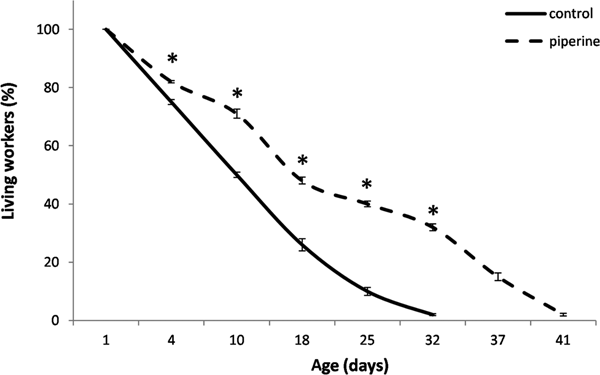
The addition of piperine to sugar syrup consumed by the bees increased the honeybee life-span by 9 days (approximately 22%) compared to the control group (Fig. 1; P ⩽ 0.01).
Longevity of the workers in the control and piperine-treated group (means ± s.e.; N = 1200 workers in each group). The asterisks indicate significant differences (P ⩽ 0.01;) between the group averages for longevity within a given apian age (except for 1-day-old workers).

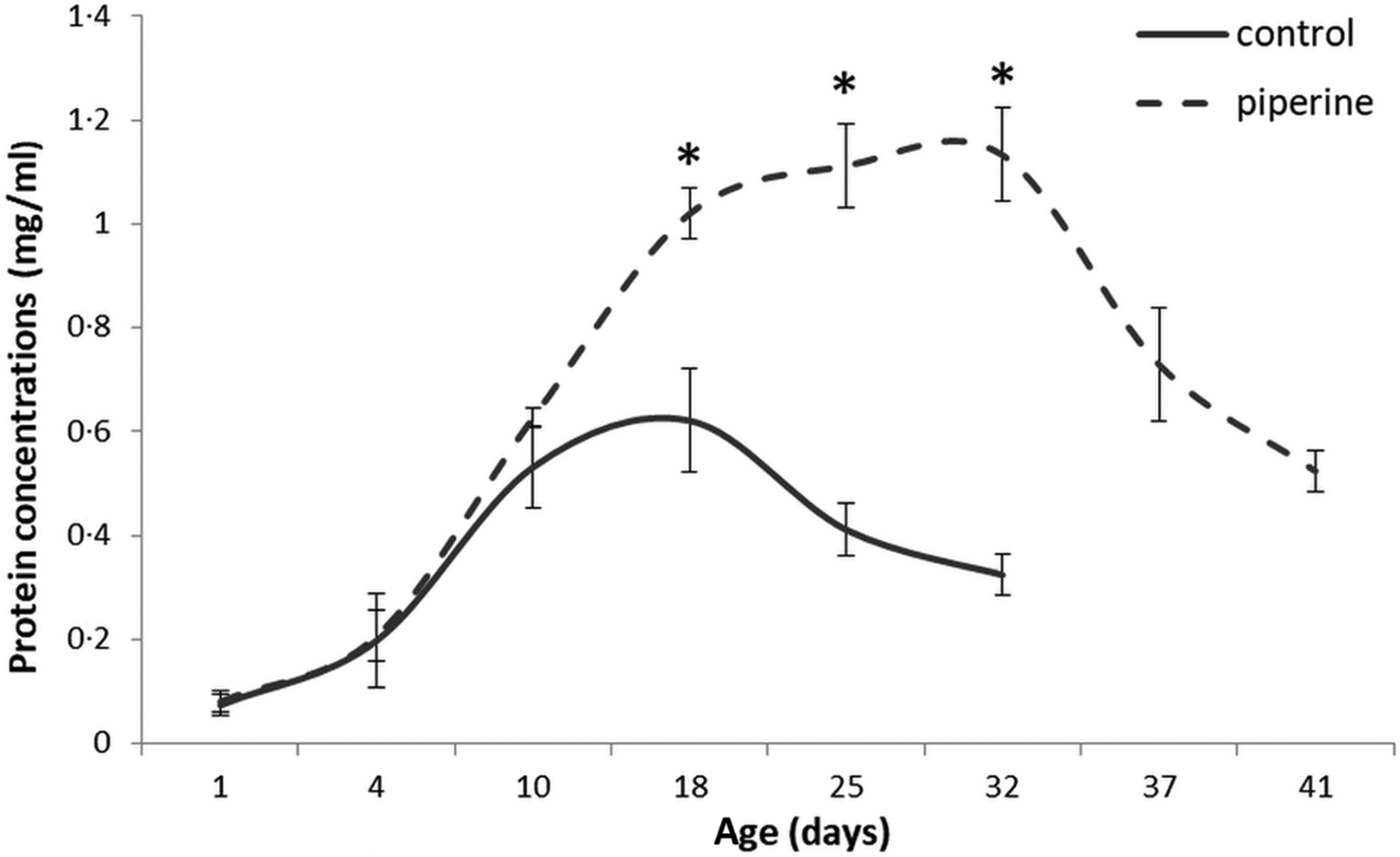
Protein concentration was significantly higher in the piperine-supplemented group than in the control group (Fig. 2; F = 19.601, P < 0.001). Protein concentration rapidly dropped in the haemolymph after the 32nd day of age in the piperine-treated workers. This result cannot be compared with the haemolymph of the control group workers due to the fact that almost none of them reached this age.
Protein concentrations in worker haemolymph in the control and piperine-treated group (means ± s.e.; N = 5–10 pooled samples [9–15 workers in each pooled sample] in each sampling, in each group;). The asterisks indicate significant differences (P ⩽ 0.01) between the group averages within a given apian age.

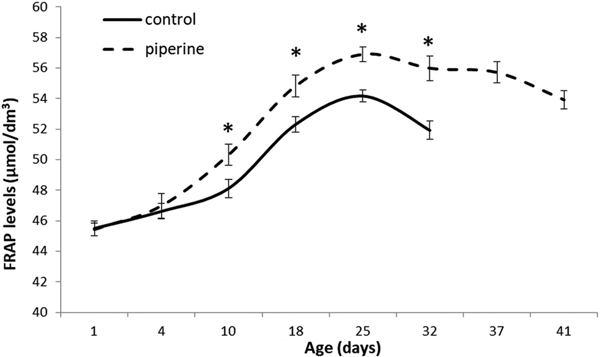
Total antioxidant capacity levels were significantly higher (F = 5.509, P < 0.001) in the haemolymph of the piperine-treated workers from the 10th day of age (Fig. 3). High levels of the total antioxidant potential were maintained in the haemolymph of the piperine-supplemented workers until the death of all the bees.
Levels of the total antioxidant potential in worker haemolymph in the control and piperine-treated groups (means ± s.e.; N = 5–10 pooled samples [9–15 workers in each pooled sample] in each sampling, in each group). The asterisks indicate significant differences (P ⩽ 0.01) for comparisons between the group averages within a given apian age.

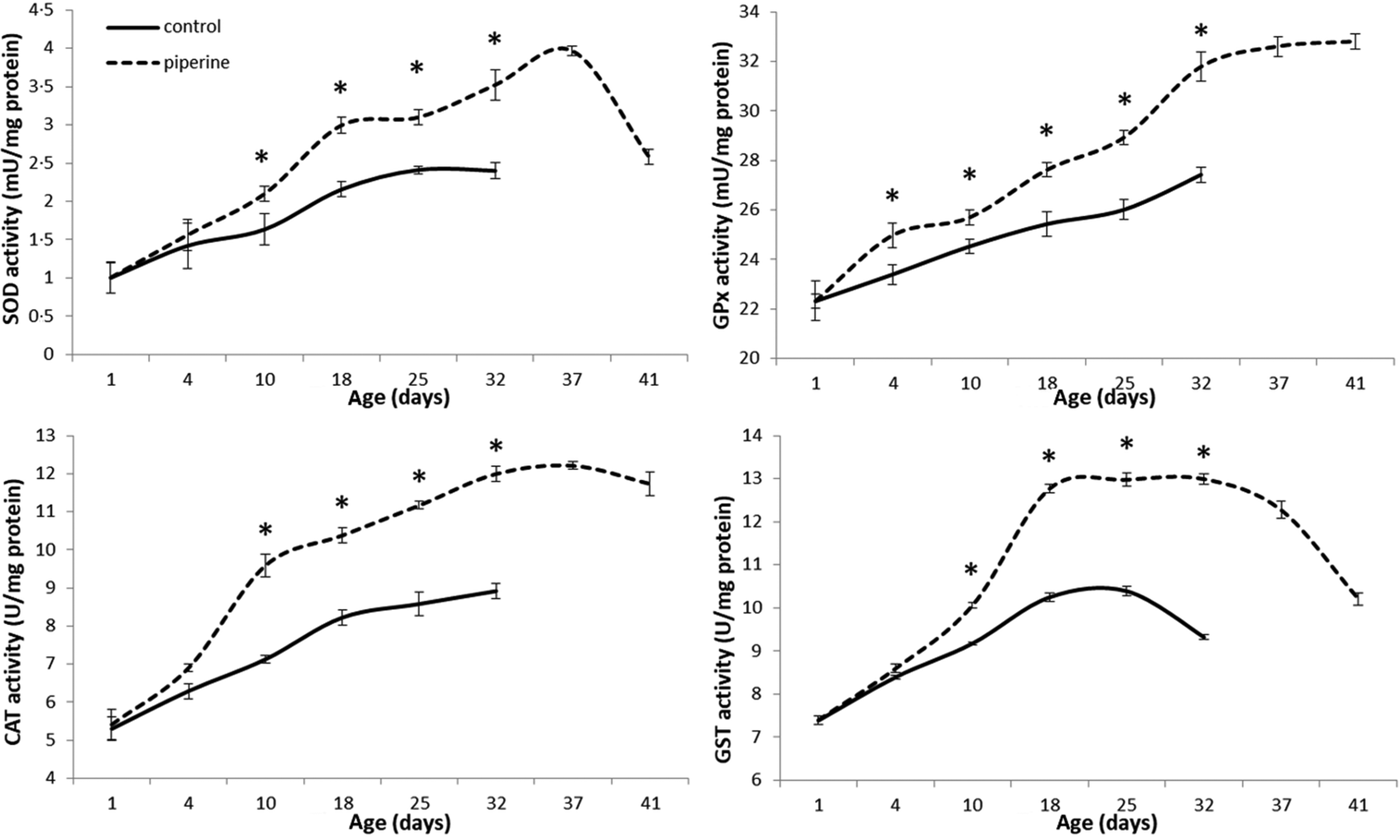
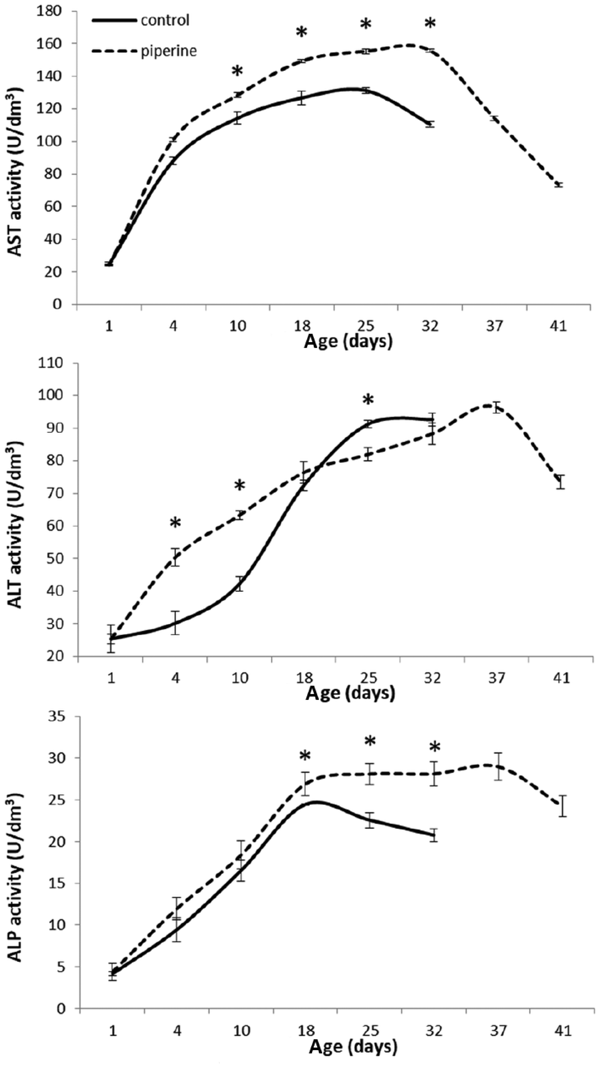
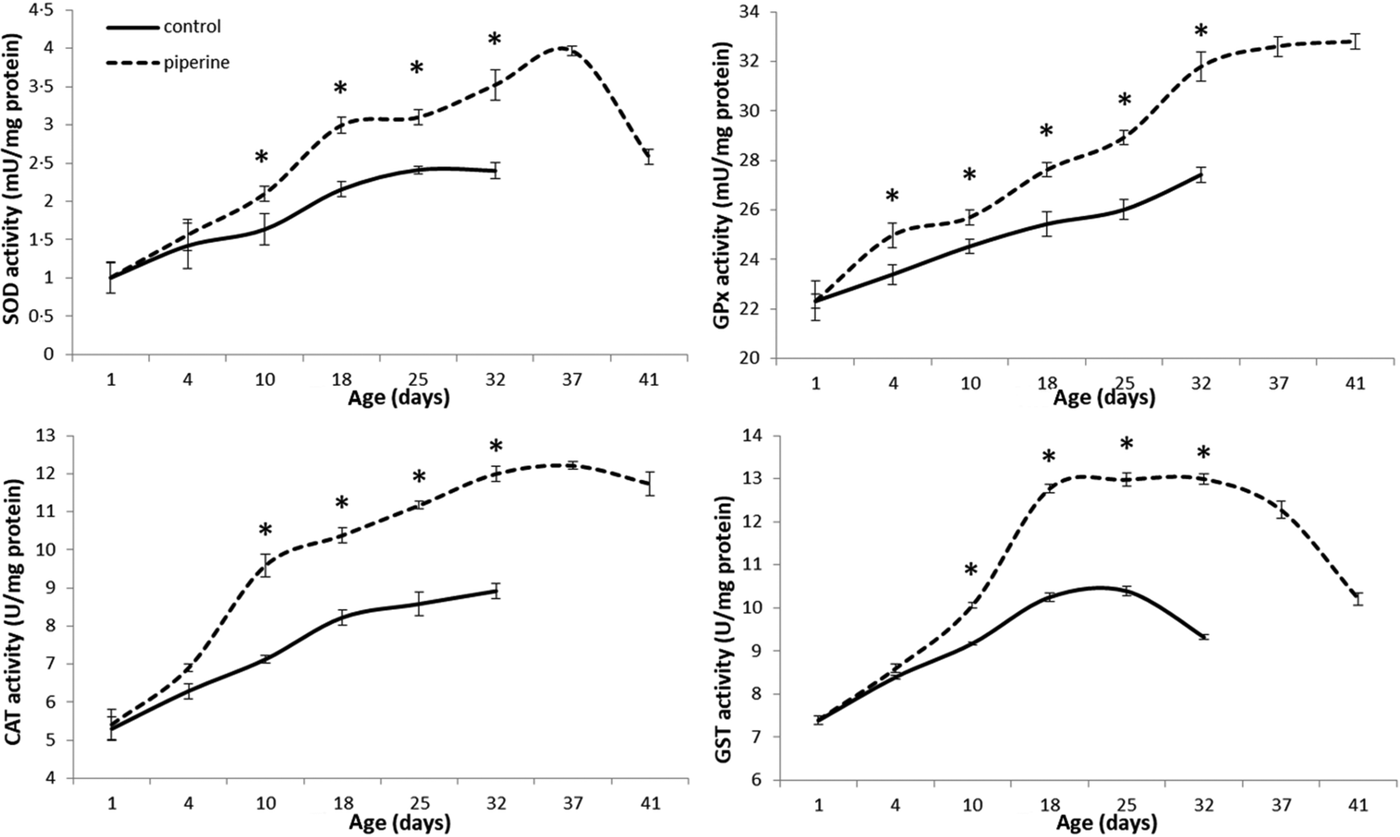
Supplementation with piperine caused a significant increase in the activities of antioxidant enzymes, such as superoxide dismutase (SOD; between the 10th and 32nd day, F = 7.698, P = 0.001), glutathione peroxidase (GPx; between the 4th and 32nd day, F = 9.882, P < 0.001), catalase (CAT; between the 10th and 32nd day, F = 3.949, P < 0.001) and glutathione S-transferase (GST; between the 10th and 32nd day, F = 5.509, P < 0.001) (Fig. 4), as well as the activities of aspartate aminotransferase (AST; between the 10th and 32nd day, F = 51.492, P < 0.001), alanine aminotransferase (ALT; in the 4th, 10th and 25th day, F = 27.218, P < 0.001) and alkaline phosphatase (ALP; in the 18th, 25th and 32nd day, F = 23.252; P < 0.001) (Fig. 5) in honeybee haemolymph.
Activities of enzymatic antioxidants in worker haemolymph in the control and piperine-treated group (means ± s.e.; N = 5–10 pooled samples [9–15 workers in each pooled sample] in each sampling, in each group). The asterisks indicate significant differences (P ⩽ 0.01) between the group averages within a given apian age and for each of the individual enzymes. SOD, superoxide dismutase; GPx, glutathione peroxidase; CAT, catalase; GST, glutathione S-transferase.
Mean activities of aspartate aminotransferase (AST), alanine aminotransferase (ALT) and alkaline phosphatase (ALP) in the haemolymph of the workers in the control and piperine-treated groups (means ± s.e.; N = 5–10 pooled samples [9–15 workers in each pooled sample] in each sampling, in each group). The asterisks indicate significant differences (P ⩽ 0.01) between the group averages within a given apian age and for each of the individual enzymes.

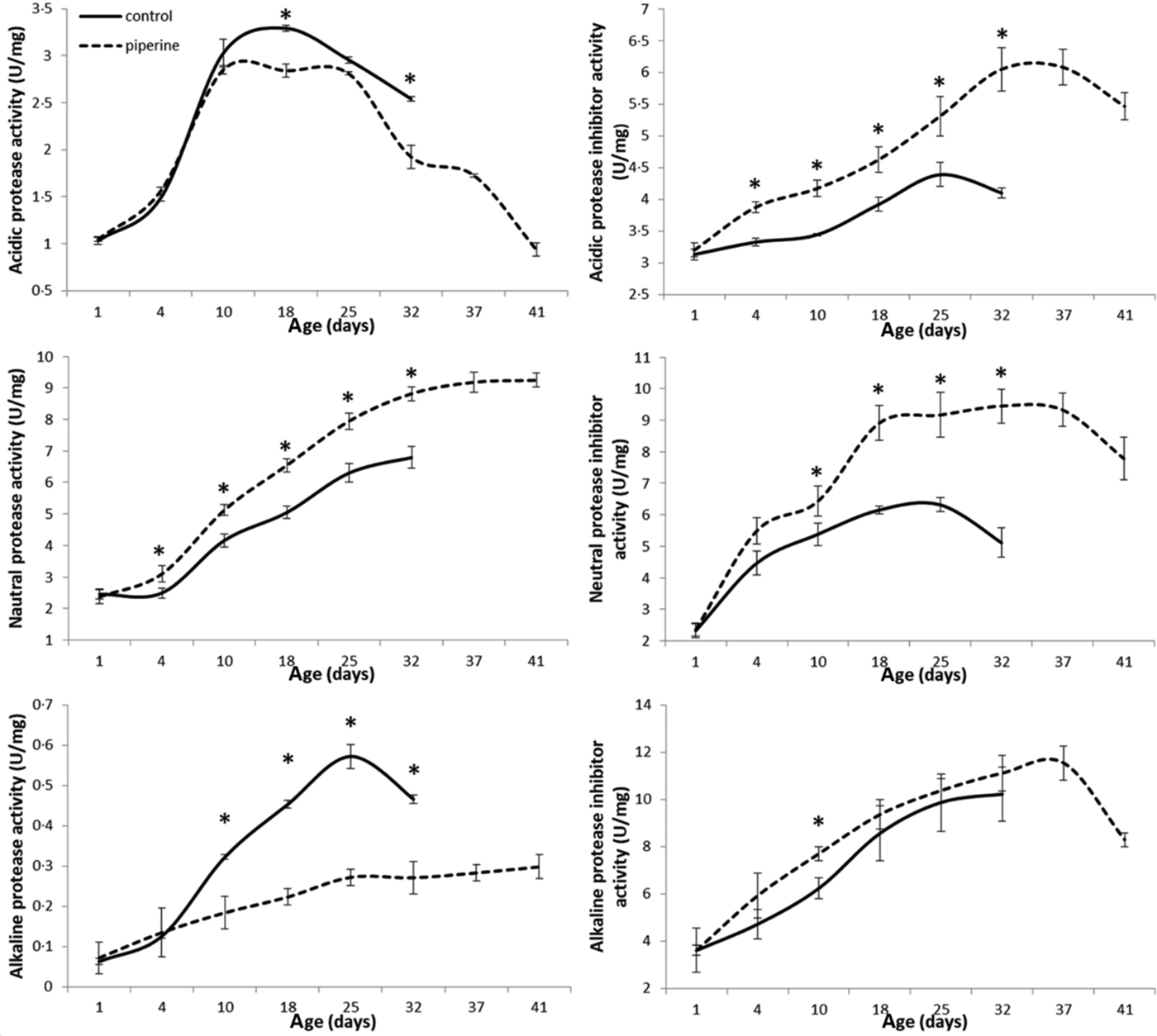
The activities of neutral and acidic protease inhibitors, as well as the activities of neutral proteases, were higher in the haemolymph of piperine-treated workers than in untreated bees. There were no significant differences between the groups (piperine-treated or control) for alkaline protease inhibitor activities in the haemolymph. The acidic protease activities in the haemolymph were higher in workers from the control group only on the 18th and 32nd day. On the other hand, starting from the 10th day, the alkaline protease activities in haemolymph of the control bees were higher than in haemolymph obtained from the bees in the experimental group (Fig. 6).
Mean activities of proteases and protease inhibitors (U/mg) in the haemolymph of the workers in the control and piperine-treated groups (means ± s.e.; N = 5–10 pooled samples [9–15 workers in each pooled sample] in each sampling, in each group). The asterisks indicate significant differences (P ⩽ 0.01) between the group averages within a given apian age and for each of the individual enzymes.

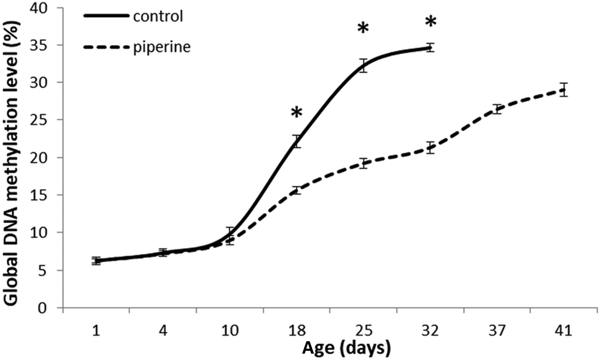
The mean level of global DNA methylation in the control group was significantly higher (6.5–13.4%) in the brains of workers from the age of 18 days than the corresponding level in the brains of the bees in the piperine-treated group (Fig. 7; between the 18th and 32nd day, F = 13.309, P < 0.001).
Mean global DNA methylation levels (%) in the workers from the control and piperine-treated groups (average ± s.e.; N = 10 workers in each sampling, in each group). The asterisks indicate significant differences (P ⩽ 0.01) for comparisons between the group averages within a given apian age.

Discussion
Metabolic effects of piperine, an antioxidant, anti-inflammatory and protective compound, in honeybees, were confirmed in the present study. Of all its properties (Chopra et al., Reference Chopra, Dhingra, Kapoor and Prasad2016), strengthening immunity may be particularly important for bees. Moreover, piperine and its derivatives enhance the bioavailability of various nutrients including vitamins and minerals (Bhardwaj et al., Reference Bhardwaj, Glaeser, Becquemont, Klotz, Gupta and Fromm2002; Chopra et al., Reference Chopra, Dhingra, Kapoor and Prasad2016). This property is especially necessary for bees whose diet is, increasingly, stoichiometrically unbalanced (Filipiak et al., Reference Filipiak, Kuszewska, Asselman, Denisow, Stawiarz, Woyciechowski and Weiner2017). In the present study, piperine changed the longevity of workers and their metabolism through modifications in the concentrations and activities of many biochemical parameters. Piperine has a protective influence not only on vertebrates (Kapoor et al., Reference Kapoor, Singh, Singh, De Heluani CS, Lampasona and Catalan2009) but also on bees by increasing the activity of the antioxidant system. The higher activities of antioxidant enzymes, such as superoxide dismutase, peroxidase, catalase and glutathione S-transferase triggered by piperine treatment suggest that this bio-stimulant may promote detoxification (Nahak and Sahu, Reference Nahak and Sahu2011; Bukhari et al., Reference Bukhari, Pivac, Alhumayyd, Mahesar and Gilani2013; Tasleem et al., Reference Tasleem, Azhar, Ali, Perveen and Mahmood2014). Piperine protects against oxidative damage by inhibiting or suppressing free radicals, reactive oxygen species and hydroxyl radicals, which cause destructive and lethal cellular effects by oxidizing membrane lipids, cellular proteins, DNA and enzymes, thus shutting down cellular respiration (Srinivasan, Reference Srinivasan2007; Umar et al., Reference Umar, Sarwar, Umar, Ahmad, Sajad, Ahmad, Katiyar and Khan2013). Piperine acts as a hydroxyl radical scavenger at low concentrations, but at higher concentrations it activates the Fenton reaction, resulting in increased generation of hydroxyl radicals (Mittal and Gupta, Reference Mittal and Gupta2000). Amino acids in cells, especially L-amino acids, enhance the properties and effects of piperine not only in mammals but also in honeybees (Matysiak et al., Reference Matysiak, Dereziński, Klupczyńska, Matysiak, Kaczmarek and Kokot2014; Paarakh et al., Reference Paarakh, Sreeram, Shruthi and Ganapathy2015; Donkersley et al., Reference Donkersley, Rhodes, Pickup, Jones, Power, Wright and Wilson2017). Piperine treatment may protect from cancer growth, bacterial and fungal infections. In future studies, the influence of piperine on Nosema spp. and bacterial infections in honeybees should be tested. Oxidative imbalance and decreased endogenous antioxidants lead to the release of alanine aminotransferase (ALT), aspartate aminotransferase (AST) and alkaline phosphatase enzymes (ALP) (Mehta et al., Reference Mehta, Kaur and Chintamaneni2012). However, the mechanism of AST, ALP and ALT activation in bees is opposite to that in mammals (Bajda et al., Reference Bajda, Łoś and Merska2014; Strachecka et al., Reference Strachecka, Krauze, Olszewski, Borsuk, Paleolog, Merska, Chobotow, Bajda and Grzywnowicz2014a, Reference Strachecka, Olszewski, Paleolog, Borsuk, Bajda, Krauze, Merska and Chobotow2014b, Reference Strachecka, Olszewski and Paleolog2016), as increased activities seem to be indicators of improved health and resistance (Łoś and Strachecka, Reference Łoś and Strachecka2018). In the current study, higher activities of these enzymatic biomarkers in the haemolymph of piperine-treated workers compared with untreated bees indicates a reduction of oxidative stress and support of the defence systems, similar to curcumin, caffeine, CoQ10 and vitamin C (Farjan et al., Reference Farjan, Dmitryjuk, Lipiński, Łopieńska-Biernat and Żółtowska2012; Strachecka et al., Reference Strachecka, Krauze, Olszewski, Borsuk, Paleolog, Merska, Chobotow, Bajda and Grzywnowicz2014a, Reference Strachecka, Olszewski, Paleolog, Borsuk, Bajda, Krauze, Merska and Chobotow2014b, Reference Strachecka, Olszewski and Paleolog2015). The antioxidant system and biomarkers interact with the proteolytic system. Proteolytic enzymes contribute to the amelioration of the consequences of oxidative damage. Piperine induced increased activity of acidic, neutral and alkaline protease inhibitors as well as that of neutral proteases in the haemolymph of the workers. These enzymes are involved in the mechanism of apoptosis and are essential components of insect resistance barriers (Grzywnowicz et al., Reference Grzywnowicz, Ciołek, Tabor and Jaszek2009; Dhule et al., Reference Dhule, Penfornis, Frazier, Walker, Feldman, Tan, He, Alb, John and Pochampally2012; Strachecka et al., Reference Strachecka, Krauze, Olszewski, Borsuk, Paleolog, Merska, Chobotow, Bajda and Grzywnowicz2014a, Reference Strachecka, Olszewski, Paleolog, Borsuk, Bajda, Krauze, Merska and Chobotow2014b). They also participate in other processes such as phagocytosis, melanization, cellular adhesion, synthesis of cytokines and antimicrobial peptides, enzyme activation and hormonal signalling (Griesch and Vilcinskas, Reference Griesch and Vilcinskas1998). Antioxidant, proteolytic and biomarker systems are involved in the proper functioning of the resistance systems, as well as in the improvement of vitality and stabilization of metabolic functions in honeybees and consequently in life-span extension. Moreover, the current study confirmed the findings of Lyko and Maleszka (Reference Lyko and Maleszka2011) that global DNA methylation levels increase as workers advance in age, but also found that piperine slowed this process markedly. The reason for this may be the effect of piperine on DNA methylation, with changes in other components of the epigenome possibly induced due to the trilateral relationship that exists between DNA methylation, histone covalent modifications and non-coding RNAs. Moreover, piperine, just as curcumin, regulates the expression of genes that are critically involved in the regulation of cellular signalling pathways (including NF-κB, AP-2, Akt, MAPK and other pathways) (Reddy et al., Reference Reddy, Somepalli, Golakoti, Kanugula, Karnewar, Rajendiran, Vasagiri, Prabhakar, Kuppusamy, Kotamraju and Kutala2014). Additionally, protein status is a key factor influencing the life-span of honey bees. Life-span is one of the key elements to determine the dynamics and health of bee colonies. Bees with higher protein concentrations were found to be less susceptible to infections than bees with lower protein concentrations in the haemolymph. This implies that piperine may be used to improve the health of bee colonies.
Piperine is used as a supplement in the formation of a self-microemulsifying drug delivery system (SMEDDS). This alkaloid increases the bioavailability of other natural compounds, such as curcumin. The combination of piperine with curcumin makes drugs more stable and shows anti-colitis activity (Li et al., Reference Li, Zhai, Jiang, Huang, Liu, Dai, Gong, Du and Wu2015). The synergistic effect of combined piperine and curcumin treatment has been shown to attenuate the morphological, histopathological, biochemical, apoptotic and proliferative changes in rat liver and serum in contrast to treatment with curcumin only (Patial et al., Reference Patial, Sukapaka, Sharma, Pratap, Singh and Padwad2015). Since curcumin combined with piperine produces much higher positive results, the accuracy of this assumption for honeybees should be checked. Piperine can also operate as a factor increasing the bioavailability of CoQ10 in human plasma in oral administration (Badmaev et al., Reference Badmaev, Majeed and Prakash2000). In another publication, Strachecka et al. (Reference Strachecka, Olszewski, Paleolog, Borsuk, Bajda, Krauze, Merska and Chobotow2014b) also indicated that CoQ10 has an unexpectedly strong positive impact on honey bee health. Considering these findings, the combination of piperine with curcumin and CoQ10 in honey bees can contribute to achieving good results in terms of their health and longevity.
The positive effects of piperine on the organism probably stems from the fact that piperine activates a family of vanilloid receptor – related transient receptor potential (TRPV) receptors, which are ion channels located on the cell plasma membrane (McNamara et al., Reference McNamara, Randall and Gunthorpe2005). Only two kinds of TRPV receptors have been discovered in insects (Drosophila melanogaster Meigen). The current results indicate the positive effects of piperine on apians, which means that this insect could also have TRPV receptors on cell membranes. Looking for TRPV receptors and substances that interact with them in honey bees should be included in setting out future research directions.
The data obtained in the current work can contribute to and encourage further studies of the usage of natural agents to improve the health and condition of honeybees in efficient and safe ways, as well as contributing to combining the bio-stimulators in experimental animal diet and testing their joint effects. Moreover, their influence on Nosema spp. and bacterial infections in honeybees should be tested.
Author ORCIDs
A. Strachecka, 0000-0003-1313-9880.
Author contributions
The research was designed by AS (70%) (Team leader). The technical part of the experiment was conducted by AS. All the chapters were written by MS (10%), AŁ (10%) and AS. The abstract was written by AS. The statistical analyses and figures were made by AS in consultation with MG (5%) and RŚ (5%). The editing of the manuscript was done by AŁ and MS under the supervision of AS. All the authors accepted the final version of the manuscript.
Financial support
This work was carried out as part of the research project ZKB/MN/5 2012–2017, financed by the Ministry of Science and Higher Education in Poland. AS was supported by National Centre for Science, Poland OPUS Grant no. UMO-2014/15/B/NZ9/00425.
Conflicts of interest
No competing interests were declared.
Ethical standards
No specific permits were required to conduct this investigation.