1. Introduction
Many advanced economies have been undergoing a process of population ageing. A combination of a falling fertility, increased life expectancy, and the consequent increase in the prevalence of chronic illness all pose challenges to macroeconomic growth and fiscal sustainability. To cope with the economic implications of population ageing, prolonging employment among older workers is often considered a viable strategy. However, not everybody has the same opportunity or capacity to work longer at older ages. Persons with disabilities, for instance, face an increased risk of early labour market withdrawal than people without disabilities (Currie, Reference Currie2009). One-size-fits-all policies to extend working life, such as raising pension eligible age, could lead to unequal support for older people as the population ages.
While research concerning social inequalities in old age emphasises the need to understand the differential employment impacts of ill health (OECD, 2003), little attention has been paid to the economic consequences for older people who are unable to work due to illness and disability. Without employment, their living standards depend largely on social safety nets and on private/family-based income support. However, the extent to which income sources are available to them and whether the level of government benefits is adequate to prevent the risk of poverty remains under-researched. This paper contributes to our understanding of this issue by comparing the level of poverty (household income below 50% of the median) and income sources, of older people (aged 50-64) out of work with disabilities in two countries that have contrasting income support systems for working-age people with disabilities–Canada and the United Kingdom. This provides important insights into the role played by these income support policies in mitigating poverty risk.
Consequences of poverty among older adults
There is no doubt that economic hardship affects people’s consumption patterns, leisure activities and social participation, which directly or indirectly influence the individual’s relations with other people. Literature has shown that poverty is closely connected to social disintegration (Böhnke, Reference Böhnke2008), low participation in civic organisations (Dahl et al., Reference Dahl, Fløtten and Lorentzen2008; Mood & Jonsson, Reference Mood and Jonsson2015), and strained relationships (Hjalmarsson & Mood, Reference Hjalmarsson and Mood2015). The link between income and social isolation also appears to be stronger among older working-age adults. In the UK, for example, a recent survey shows that nearly 20% of pensioners in the poorest income quintile have no or only one close friend, compared with 7% of those in the top quintile (Joseph Rowntree Foundation, 2019a). Moreover, poverty has negative effects on health (Chetty et al., Reference Chetty, Stepner and Abraham2016). While poverty may be both a cause and a consequence of poor health, a lack of economic resources is likely to worsen the health conditions of disabled people by limiting their access to health care goods and services. The consequences of poverty thus not only could shrink older people’s social network, leading to health-damaging isolation, but also aggravate a pre-existing health problem, leading to further social exclusion and the risk of serious medical complications.
As the existing evidence points to higher risks of poverty among the older population, unemployed people, and persons with disabilities (OECD Poverty rate, 2019; OECD, 2010a), our target populations – older people out of work with disabilities – are undoubtedly facing a much higher risk of poverty, though empirical estimates of this are virtually absent in the literature. The number of such vulnerable populations will only grow as populations age, accelerated by the consequent increase in the prevalence of disability and a ubiquitous use of automation and labour-saving technologies in the workplaces, which can lead to reduced employment opportunities.
Empirically, data from rich countries show that disabled people are twice as likely to be in poverty as their non-disabled counterparts (OECD, 2010a). In part, this may reflect the extent of the disability employment gap (Jones, Reference Jones2016), but it will also depend on the adequacy of income support policies for people out of work with a disability. While a thorough evaluation of disability policies is beyond the scope of the paper, a useful starting point is to compare the poverty rates and income sources of people out of work with a disability in countries with broad similarities in economic conditions, universal healthcare systems, and other social policies, yet with contrasting income support policies for people with disabilities. Such a comparative analysis is relatively scarce in the literature since it requires information on detailed income sources for narrowly defined population groups. In this paper we take advantage of available microdata in both Canada and the United Kingdom to offer a first attempt at such a comparative study.
A comparison of Canada and the United Kingdom on income support programmes is of interest. Both Canada and the UK are considered in Esping-Andersen’s seminal typology as examples of the ‘liberal welfare regime’ type where state provision of welfare is minimal, with a preference for market solutions (Esping-Andersen, Reference Esping-Andersen1990). At a broader level, both countries maintain a national universal healthcare system (Waddan & Béland, Reference Waddan, Béland, Béland, Marchildon and Prince2019), yet a closer look at these two countries points to marked differences in income support systems for people with disabilities. While there are also some differences in old-age pension (Béland & Waddan, Reference Béland and Waddan2014) and family/child benefit systems (Béland et al., Reference Béland, Blomqvist, Andersen, Palme and Waddan2014), in this paper we add to the literature by focusing on differences in the area of disability-related benefits.
Public income support for people with disabilities in Canada and the United Kingdom: Two contrasting policy contexts
Government transfers play an important role in supporting the living standards of disabled people who are unable to work. While Canada and the UK are associated with the liberal regime, social spending is generally lower in Canada than in the UK. In 2018, for example, the overall public spending (as % of GDP) was 20.6% in the UK and 17.3% in Canada compared to the OECD average of 20.1%. Similarly, in terms of spending on incapacity, Canada (0.75%) lags behind the UK (1.85%) and the OECD average (1.93%) (OECD Social spending, 2019).
In addition to differences in expenditure, there are major country differences in the structure of social programmes for disability. The UK schemes are characterised by high levels of coverage, benefits are paid at a low level by international standards, but all recipients receive a similar amount. In Canada there are multiple fragmented schemes, with lower coverage, with greater variation in the benefit paid – depending on the programme (Stapleton & Procyk, Reference Stapleton and Procyk2010).
In the UK there are two main income support programmes for disabled people (1) incapacity-related benefits, such as Employment Support Allowance (ESA), which are designed to provide financial support for those who cannot work due to disability; and (2) disability allowances, such as Personal Independence Payment (PIP), that aim to cover extra living costs as a result of having a disability. All recipients receive a similar flat rate that is not dependant on prior earnings. Eligibility is determined by an assessment of disability, and – for those who have not paid sufficient National Insurance contributions or are on ESA for more than a year – the benefit is means-tested. A single person receiving ESA, who is assessed as capable of preparing for some work in the future, is currently paid £73 per week. In 2016-17, about 3.5 million (or 8.5% of the population aged 16 to 64) in the UK received at least one of these disability-related benefits (Emmerson et al., Reference Emmerson, Joyce and Sturrock2017). Since 2013 the UK government has launched a new scheme – Universal Credit (UC), that will gradually replace “income-based” Employment Support Allowance, along with the main income support, unemployment benefits, and tax credits. Recently due to the Covid-19 pandemic, claimants of UC now receive up to £20 more a week for 12 months up until April 2021. Besides, people who became disabled because of an injury at work may be eligible for Industrial Injuries Disablement Benefit.
In Canada, there are three broad systems of disability-related income support for people out of work and each of these has variable coverage and income replacement rates (Stapleton & Procyk, Reference Stapleton and Procyk2010; Prince & Peters, Reference Prince and Peters2015). First, the Canada or Quebec Disability Pension Plan (CPPD/QPPD), provides benefits to contributors who are disabled and cannot work. The amount paid depends on the amount a claimant has contributed. Eligibility is based on a stringent definition of disability as “severe and prolonged disability such as the person is incapable of gainful employment” (Stapleton et al., Reference Stapleton, Tweddle and Gibson2013). One consequence of this stringent definition is that the proportion of the population in receipt of the benefit is very low compared to disability receipts in other countries. In 2016–17, there were only 335,000 CPP disability beneficiaries in Canada (ESDC, 2017) or 1.4% of the 16-64-year-old population, compared to 8.5% in the UK. Second, in addition to this federal programme, all Canadian provinces have social assistance disability benefits. These are means-tested and are often paid at a low level to cover essential living expenses. Provincial social assistance expenditure for people with disabilities was estimated to be around $8 billion (Stapleton et al., Reference Stapleton, Tweddle and Gibson2013). Third, provincial workers’ compensation agencies administer benefits for wage losses arising from disabling disease or injuries caused by work. This is another major difference from many European systems, including the UK, where benefits relate to disability that makes a person unfit for work, regardless of whether that disability was caused by work or not. The replacement rates for workers’ compensation benefits vary but are generally designed to replace around 80-90% of post-tax pre-injuries earnings. These benefits are estimated to cost approximately $5.4 billion per year for the whole of Canada (Stapleton & Procyk, Reference Stapleton and Procyk2010).
Over the last 20 years, the context of income security for persons with disabilities has evolved particularly in the UK. Since 1995, the UK government has sought to reduce expenditure on disability benefits and this has meant numerous restrictions to the system of support offered to disabled people (Barr & McHale, Reference Barr, McHale and MacEachen2018). This has resulted in more stringent health assessments for those claiming disability support, and more recently a programme of re-assessment for those already in receipt of the benefit. This has been coupled with a reduction in the amount of money claimants will receive. Proponents of the changes argue that they will encourage people to return to work more quickly, which will have concomitant benefits for health and the economy more generally. However, there is evidence that these changes have adversely affected the mental health of disabled people (Barr, et al., Reference Barr, Taylor-Robinson, Stuckler, Loopstra, Reeves and Whitehead2016a), have not improved their employment (Barr, et al., Reference Barr, Taylor-Robinson, Stuckler, Loopstra, Reeves, Wickham and Whitehead2016b), and may be increasing the risk of poverty (Barr & McHale, Reference Barr, McHale and MacEachen2018). By contrast, in Canada there has been little change in the income support schemes for people with a disability over the past decades.
This study contributes to the limited literature on income support and poverty risk among disabled older people. In both Canada and the UK, only a few studies have investigated the relationship between disability and poverty (Crawford, Reference Crawford2013a, Reference Crawford2013b; Wall, Reference Wall2017; MacInnes et al., Reference MacInnes, Tinson, Gaffney, Horgan and Baumberg2014; Tinson et al., Reference Tinson, Aldridge, Born and Hughes2016). These studies focused on describing the higher levels of poverty experienced by people with disabilities and ascribing this to their lower participation in employment. Few studies have investigated the role of social policies, particularly income support benefits, in mitigating disability poverty. In Canada, one study estimated that two-thirds of the total income of working-age poor people with disabilities came from government transfers (Crawford, Reference Crawford2013b), while another estimated that at the household level just over a third of the income of this group came from government transfers (Crawford, Reference Crawford2013a). Others have reported that a relatively large proportion of the out-of-work disabled population in Canada did not receive any income replacement benefit at all (Mustard et al., Reference Mustard, Dickie and Chan2007).
There are a number of factors that could influence the poverty risk among people out of work with a disability. First, the effects of early economic, educational or health (dis)advantages can cumulate over the life course, leading to later life inequality (Crystal et al., Reference Crystal, Shea and Reyes2016). For example, people with disabilities are more likely to have incomplete work history over their prime career years, which may result in lower contributory welfare benefit payments, pension contributions, and investments at older ages (Clarke & Latham, Reference Clarke and Latham2014). Second, and in contrast, people out of work with a disability may be able to access income support schemes that are generally provided at a higher income replacement rate than schemes for other out-of-work groups (e.g. unemployed people or lone parents) (OECD, 2018). This could lead to a lower risk of poverty, among jobless older persons with disabilities compared to their healthy counterparts. Third, there is the literature on education as the great equalizer (Mann, Reference Mann and Cremin1957; Downey et al., Reference Downey, von Hippel and Broh2004; UNICEF Canada, 2018). It is expected that higher educational status will reduce differences in poverty risk between jobless disabled and non-disabled older persons since cumulative disadvantages over the life course tend to be smaller for the high-educated. However, this modification effect of education on poverty risk may be smaller in countries with stronger social safety nets. The different patterns of poverty risk and differences in income sources between the UK and Canada may therefore reflect differences in the income support systems.
To our knowledge there has been no previous study comparing disability poverty between the UK and Canada that has investigated the role played by specific income sources. This study fills a much-needed gap in the literature, addressing the following research questions: (1) what are the risks of poverty and income sources of older people out of work with a disability and how do these findings compare between the UK and Canada? and (2) to what extent do the country differences relate to differences in income support policies?
We limited our analysis to individuals aged 50 to 64 for two reasons. First, people with a disability out of work at this life stage often lack income support since many of them have yet to become eligible for old-age pensions. Second, chances of returning to work tend to be low for this group, as inequality in the employment opportunities of disabled people increases noticeably, particularly at older ages (OECD, 2017). Understanding the poverty risks faced by this age group and the income sources available to them thus has strong implications for government policies that aimed at extending working lives.
2. Methods
Estimating poverty risks
For each country we first calculated the proportion of older people (50 to 64) in poverty each year, disaggregated by their disability, educational and employment status. In both countries an individual was defined as being in poverty if their household income was less than 50% of the median household income for that year. We used this poverty threshold as this is the most common low-income measure used by the OECD (OECD Poverty rate, 2019) and Statistics Canada (Statistics Canada, 2015) to make international comparisons.
The UK data are from the Family Resources Survey (FRS), which contains detailed information on individual and household income. It is the source of official poverty statistics used by the Office for National Statistics on the UK (HBAI, 2019). The survey is cross-sectional and conducted annually, with an average sample size of 43,000 respondents (or 20,000 households). Our analysis covers the period from 1998 to 2015.
The Canadian data are from a survey-administrative linked dataset where the survey components came from the 2001 to 2010 waves of the Canadian Community Health Survey (CCHS). The CCHS is a cross-sectional survey collecting detailed health and socioeconomic information. The survey began in 2001 and was repeated every two years until 2005, and every year thereafter. The sample is nationally representative with approximately 130,000 respondents during the periods of 2001, 2003 and 2005, and about 65,000 respondents each year starting in 2007. Each CCHS respondent was then linked to a set of taxation records to obtain detailed histories of individual and family incomes over the period from 1997 to 2015. This creates a person-year dataset with multiple records per CCHS respondent. See Chen (Reference Chen2019) for a detailed description of the linked dataset.
Respondents were defined as disabled in both datasets if they reported a longstanding illness (LLI) that limited their daily activities. Respondents were defined as employed if they reported paid (either full or part time) employment or self-employed during the survey period. Three levels of education were defined – low, intermediate, and high. In the UK FRS data, respondents were coded as low education if they reported no qualifications, high if they reported a university degree or higher, or intermediate if they reported any other kind of qualification. In the Canadian CCHS data, low education was defined as high school or less, intermediate as post-secondary education, and high as university degree or higher.
In the UK FRS data, income was self-reported for different time periods depending on the income source (e.g. over a number of weeks or months or annually), and all incomes are then converted to weekly amounts. In the Canadian data, total annual income was derived from linked tax records. Consistent with poverty literature, poverty rates after taxes and transfers are measured. The income concept used for the analysis refers to total household disposable income, which is defined as gross income (including all government transfers) minus income tax from all family members. All income sources were equivalised by the square root of household size and were inflation-adjusted to the 2015 prices using the Consumer Price Index (CPI).
Estimating poverty dynamics
The cross-sectional poverty analyses may obscure large differences across individuals in their paths into and out of poverty. We therefore also use longitudinal data to follow up people over 4 years (t, t+1, t+2, t+3) with and without a disability at baseline who were aged 50-61 and out of work. For Canada we use the CCHS linked data as outlined above pooling data from all baseline years (2001-2010). As the UK FRS data are cross-sectional, we use an alternative longitudinal data source for these calculations – the British Household Panel Survey (BHPS) which began in 1991 and was then incorporated into the UK Household Longitudinal Study (UKHLS) in 2009 (Fumagalli et al., Reference Fumagalli, Knies and Buck2017). We first pool data for all people who were age 50-61 and out of work in any survey year from 1998-2009. We then follow these people up for four years from these baseline years. For both of these datasets we calculate the annual percentage of people who enter poverty (having been out of poverty in the previous year) and the annual percentage who leave poverty (having been in poverty in the previous year) for each country. We also estimate the percentage who were in poverty for four continuous years (persistent poverty) and the percentage who were in poverty for at least 1 out of four years.
Identifying income sources
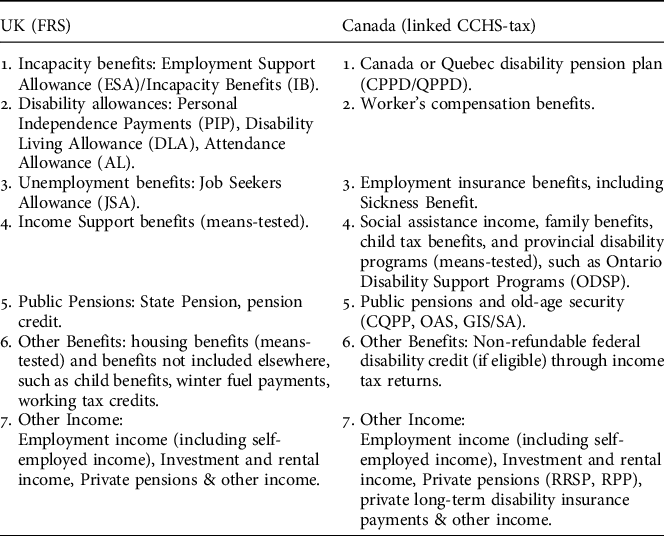
The sources of income were classified for each country into mutually exclusive categories as outlined in Table 1. Since the benefit systems are very different between the UK and Canada, it is important to note that we do not assume the groupings of sources in these two columns are equivalent in each country. We calculated the equivalised household income from each source and calculated the share of total household income in each year from each source, disaggregated by the respondent’s level of education as defined above.
List of income sources in FRS and linked CCHS-Tax datasets

Sources: Canadian CCHS-Tax linked database; UK Family Resources Survey (FRS).
3. Results
Poverty risks
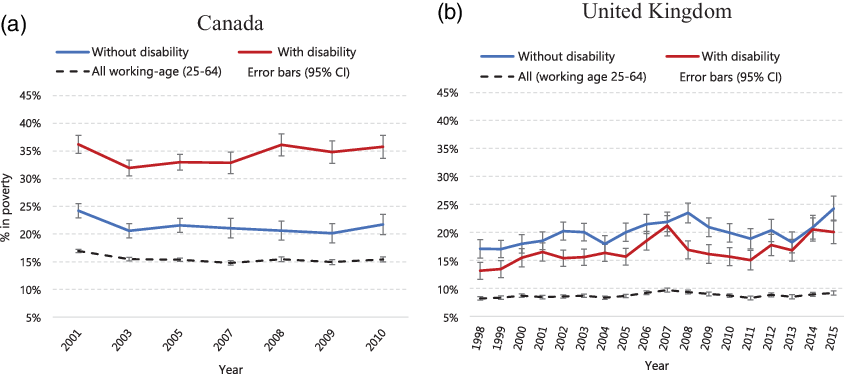
Figure 1 shows the trends in poverty rates for people aged 50 to 64 out of work with and without a disability for both countries. In Canada, about one in three jobless older people with a disability were in poverty over the study period. Their poverty risk was on average three times higher than the national average, and about 1.5 times higher than their non-disabled counterparts. In Canada, the poverty rate of jobless older people has increased slightly, while it has decreased for those without a disability (Figure 1 A). In the UK, by complete contrast, jobless disabled people were slightly less likely to be in poverty than the non-disabled out of work (Figure 1 B). Both groups in the UK have seen an increase in poverty between 1998 and 2015, particularly from 2011 onwards, although this has been slightly greater for disabled people. Figure 1 also reveals that gaps in poverty risk between disabled and non-disabled persons were much larger in Canada than in the UK.
Trends in poverty rates for population aged 50-64 out of work, by disability status.
Sources: Canadian CCHS-Tax linked database; UK Family Resources Survey (FRS).

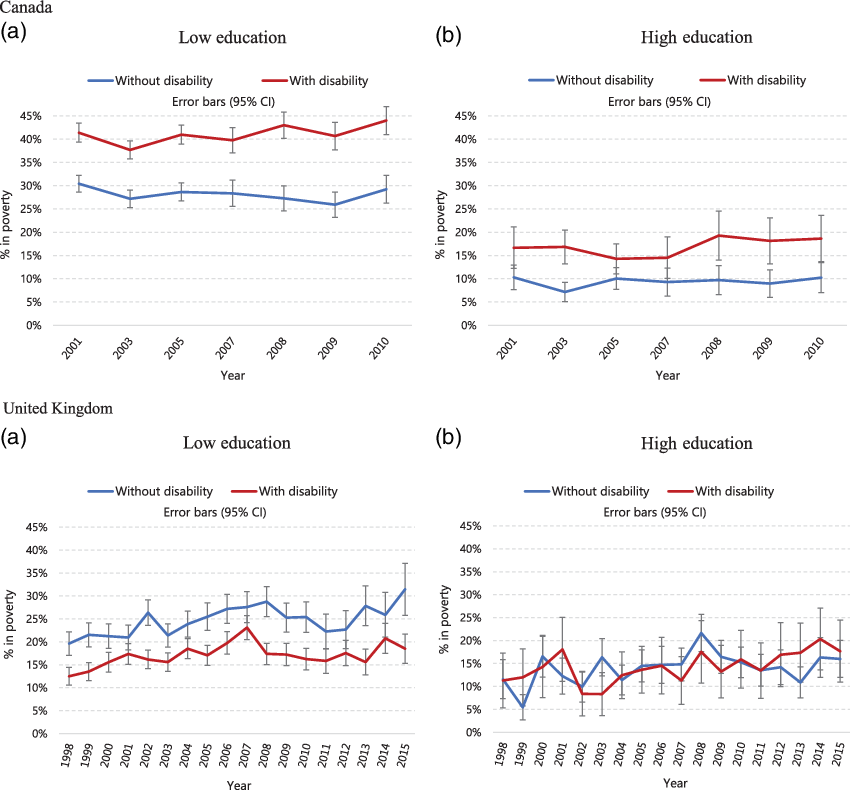
Figure 2 shows how educational level modifies poverty risk. In both countries, the poverty rates among out-of-work people with disabilities were lower among those with high education, compared to those with low education. The risk of poverty is particularly stark in Canada for those with both a disability and low education: about 40% of them fell below the poverty line, compared to less than 18% of their disabled counterparts with high education. The educational status also modifies the poverty risk between disabled and non-disabled persons in Canada. The gap in poverty rate by disability status on average was 13 percentage points for low-educated people over the period, while it was about 8 points for those with high education. These differences are statistically significant at the 1% level.
Poverty rates for people aged 50-64 out of work by disability and education.
Note: A respondent is defined as low (high) education if left (stayed on) school before (after) 17 years old.
Sources: Canadian CCHS-Tax linked database; UK Family Resources Survey (FRS).

The UK data reveal somewhat different patterns. For low-educated groups, poverty rates were markedly lower for persons with a disability than those without. i.e. the opposite pattern to that found in Canada. For high-educated groups, there were no differences in poverty between disabled and non-disabled persons who are out of work. Comparing Panels A and B in the UK, poverty rates were higher for low-educated older people without a job, whether they had a disability or not, than their high-educated counterparts. The effect of low education for those who also had a disability, however, was less marked in the UK than in Canada.
Poverty dynamics
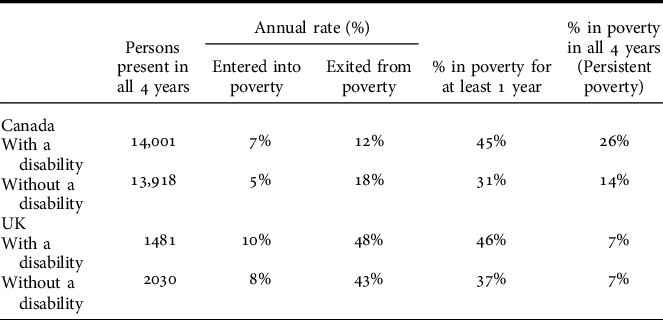
Table 2 highlights the differences in poverty dynamics for older people out of work with a disability. In the UK we see a slightly higher proportion of people moving into poverty each year, than in Canada. In both countries this is higher for people with a disability. However, the rate with which people move out of poverty is much higher in the UK. The exit rate is higher in the UK for people with disabilities compared to the non-disabled, while in Canada we see the opposite pattern, with poverty exit rates lower for people with a disability. The result of these transition rates is that there are fairly similar proportions of this population in each country experiencing poverty for at least 1 year in 4. In both countries these rates are higher among disabled people out of work. It is in the prevalence of persistent poverty (4 out of 4 years in poverty) that the large differences between the two countries emerge. There is a much greater risk of persistent poverty in those out of work in this age group in Canada, and the rate is nearly twice as great among Canadians with a disability, compared to those without, while in the UK having a disability does not modify the risk of persistent poverty in this group.
Annual rates of entry into and exit from low income over 4 years, aged 50-61 not in employment at baseline year, by disability status, Canada (2001-2010) and the UK (1998-2009)

Sources: Canadian CCHS-Tax linked database; UK British Household Panel Survey (BHPS) and UK Household Longitudinal Survey (UKHLS).
Trends in Income sources
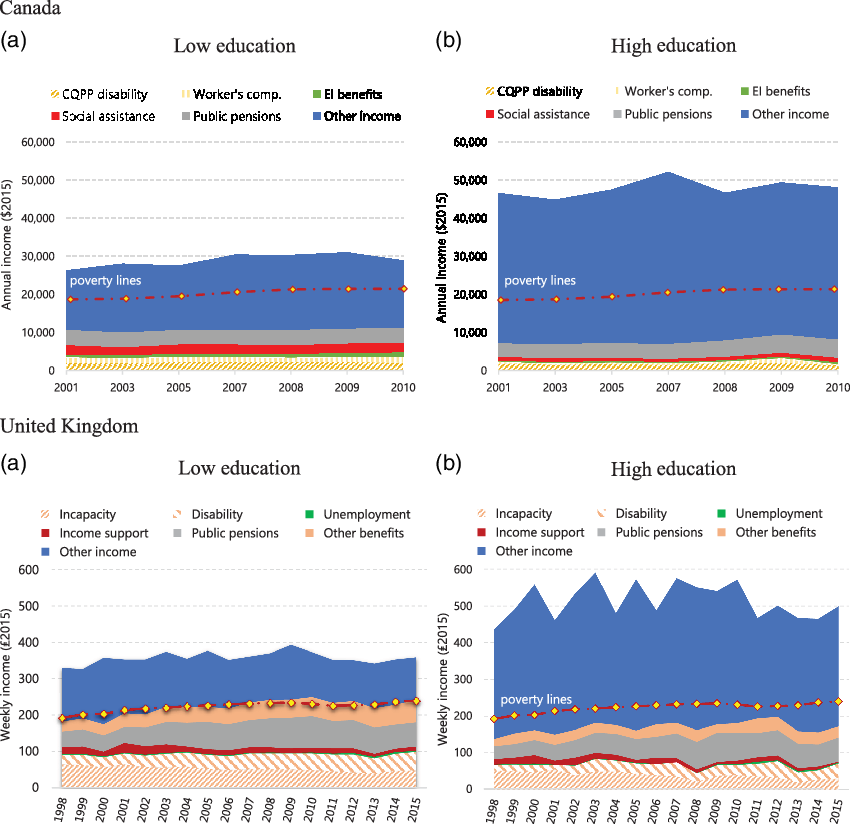
Figure 3 shows trends in the average equivalised household income for disabled jobless older people, broken down by income source and educational status. In Canada, government transfers as a whole played a much smaller role in household income compared with the UK, contributing to about 38% and 18% of the household income of low and high educated groups respectively. Means-tested social assistance (including provincial disability programmes, family and child benefits) and unemployment benefits together accounted for 12% of household income for the low-educated, while such benefits are negligible for higher educated groups. Public pensions made up another 14% (among the low-educated group) and 9% (among the high-educated group). As for disability-related transfers (including C/QPPD and workers’ compensation), they were rather modest (around 10% or less). The income from these public benefits remained relatively stable over time.
Sources of average equivalised household income for jobless people aged 50-64 with a disability by education.
Note: All sources of income are CPI adjusted to 2015 constant currencies.
Sources: UK Family Resources Survey (FRS), Canada: CCHS-tax linked data.

In the UK government transfers are a more important source of income for these groups compared to Canada. Among older jobless people with disabilities who had low levels of education in the UK, two-thirds of household income came from public transfers in 2015 and this had increased from just over a half in 1998. Among the high-educated the proportion of income from public benefits in the UK increased from 32% in 1998 to 42% in 2011, then declined to 34% in 2015. The increasing overall share of income from benefits for the lower educated in the UK is largely explained by increased income from public pensions and “other benefits” (which includes housing benefits), as well as a decline in income from other sources (e.g. labour market earnings of other household members).
In the UK disability-related benefits played a moderate role, contributing to around 26% and 13% of household income for the low-educated and high-educated, respectively. It is evident that income from the main income replacement disability benefits (marked “incapacity” in Figure 3) has declined over time. This is offset somewhat by an increase in disability-specific allowances – the programmes designed to cover extra costs of disability. Housing benefits (which made up about 50% in “other benefits” category in Figure 3) play an important role in the UK particularly for those from a lower educational background. These are means-tested and can be used in helping to pay for rent and also include mortgage assistance for homeowners and council tax rebate.
In both countries, “other income sources” (i.e. not government transfers) play an important role. This includes labour earnings from other household members, investments, private employer pension plans which can be claimed prior to state pension age, and private long-term disability insurance payments. The latter, in particular, seems to play an important role in income support for persons with disabilities in Canada (OECD, 2010b). This “other” category of income is the primary source for older jobless Canadians with a disability, contributing to two-thirds or more of their total household income on average. The relatively high shares of labour income in both countries indicate that many disabled people out of work still live in a household with at least one working family member. This, along with the share of income coming from public pensions claimed by other household members, highlights the importance of incomes from other family members.
There are marked differences between educational groups in the level of income from “other” sources. In both countries, income from other sources is around double to 2.5 times greater in the high versus the low educated group. In the UK, this ratio increased over time.
Cash value and levels of benefit receipt
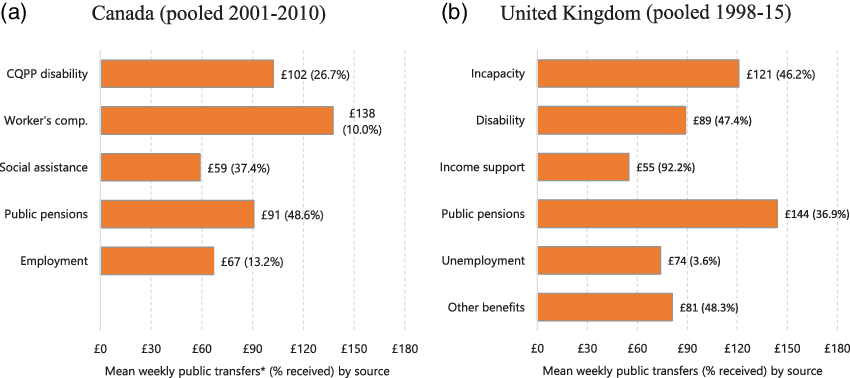
The relatively low contribution of government transfers to household income in Canada may reflect low levels of receipt among this group, and/or a low cash value of benefits among recipients. Figure 4 reveals that the average cash level of benefits among recipients was fairly similar in Canada compared to the UK. For example, the average annual amount from the Canada/Quebec disability pension (C/QPPD) among recipients was about $9,000 (or equivalent to £102 per week), while in the UK recipients of Incapacity benefits (IB/ESA) received £121 per week. The marked contrast is in the proportion of this population that was in receipt of these benefits: only 27% of older Canadians (50-64) out of work with a disability received these benefits compared to 46% in the UK. In addition, a lower proportion of older Canadians received some other kind of social assistance or housing benefits (37%), compared with their British counterparts (income support and housing benefits combined = 60%). Moreover, about 15% of older jobless Canadians with disabilities received no public transfers at all, 48% received only one benefit, while 37% reported two or more public transfers. The comparable figures for the UK were 6%, 6%, and 88% respectively.
Average cash value of public benefits per recipient and the percentage of recipients by source, jobless people aged 50-64 with a disability, Canada and the UK (values given in GBP per week for ease of comparison)
Note: See text for definitions of income variables. *Mean weekly Canadian public benefits are expressed in GBP using the exchange rate for 0.59 Canadian Dollar to British Pound Sterling.
Sources: Linked CCHS-Tax database for Canada; FRS for the UK.

4. Discussion and policy implications
In this study we found much higher poverty rates among older people out of work with a disability and a greater disability poverty gap (the difference in poverty rates between people with and without disabilities) in Canada compared to the UK. These country differences were even greater when focusing on low-educated groups, with low-educated older Canadians with disabilities being at particularly high risk of poverty when out of work. The risk of poverty among this group in the UK was actually lower than among their non-disabled counterparts. The differences between Canada and the UK were largely due to higher levels of persistent poverty in Canada. We found that the proportion in poverty continuously over a four-year period was nearly 4 times higher in Canada than in the UK. The most likely explanation of these differences was a much lower receipt of public transfers in Canada compared to the UK. We found that among low-educated older disabled people out of work in the UK, two-thirds of household income came from public transfers – as compared to just over one-third in Canada.
Our study highlights several important implications for policy. First, in both countries a high proportion of older people who are out of work with disabilities are living in poverty (35% in Canada, 20% in the UK). But we know that an adequate income level for people with disabilities fosters independence and participation in society. Both the UK and Canada are signatories of the UN Convention on the Rights of People with Disabilities. The convention includes duties to guarantee an adequate standard of living for all people with disabilities, partly through ensuring that governments provide income supports (United Nations, 2016). Our results demonstrate that older people out of work with disabilities rely heavily on the income of others e.g. the public pensions and employment earnings of other household members. Such reliance could limit the independence of people with disabilities but also makes persons with disabilities vulnerable to changes in living arrangements (e.g. divorce or separation or death of family members), such changes could increase the risk of poverty for this group.
Historically, governments employ two strategies to reduce poverty among people with disabilities – increasing employment participation and providing cash benefits for those who are unable to work (OECD, 2003). However, due to the concern that provision of cash benefits may act as a disincentive for employment (Maki, Reference Maki1993; Campolieti, Reference Campolieti2001; McVicar, Reference McVicar2008) the UK and Canadian governments disproportionately focused on promoting employment as a route out of poverty (DWP-DH, 2017; ESDC, 2018). Without adequate income support for disabled people, however, we show that people with disabilities remain at high risk of poverty when out of work. Current strategies are unlikely to effectively reduce disability poverty, particularly as there is little evidence that they are even being successful at increasing the employment prospects of people with disabilities (OECD, 2010b). Our comparative study indicates the crucial role that income support schemes can play in reducing poverty and how they need to take particular account of the needs of older people with disabilities who are out of work.
A successful income support programme needs to have high coverage of the target group (Saunders et al., Reference Saunders, Barr, McHale and Hamelmann2017). Our analysis highlights how this is not currently happening in Canada. We find that the “patchwork quilt of income security programmes for Canadians with disabilities” (Stapleton & Procyk, Reference Stapleton and Procyk2010) leads to low levels of benefit receipt and a higher risk of poverty among older disabled Canadians when they are out of work. This is particularly stark for more disadvantaged groups. By comparing with the UK finding, we show that it is the lower coverage of income support for older disabled people who are out of work in Canada (rather than the cash values of the benefits which are similar in both countries) that appear to be leading to the higher poverty risk of being out of work with a disability in Canada. Others have similarly noted that a high proportion of people out of work with a disability in Canada are not receiving any income replacement benefit at all (Mustard et al., Reference Mustard, Dickie and Chan2007). This appears to be due to the more restrictive eligibility criteria for some schemes, such as the stringent definition of disability used by the CPP/QPP and the limitation of workers compensation benefits to disabilities caused by work. It also may result from the variation in adequacy and coverage of social assistance programmes between Canadian provinces.
A number of organisations in Canada have been calling for a reform of the disability-related income support system. For example, the Caledon Institute of Social Policy has proposed replacing provincial social assistance for people with disabilities with a federal basic income programme for everyone who “by reason of their disability cannot reasonably be expected to obtain an adequate income solely from employment” (Mendelson et al., Reference Mendelson, Battle, Torjman and Lightman2010). Alongside this, they propose converting the current non-refundable disability tax credit, into a refundable tax credit. This would essentially be a benefit paid to all Canadians with a significant disability to cover the additional costs of having a disability–similar to the Personal Independence Payments scheme in the UK. Our study highlights how proposals such as these could help reduce the risk of poverty among disabled Canadians by increasing the coverage of, and eligibility for, income support benefits.
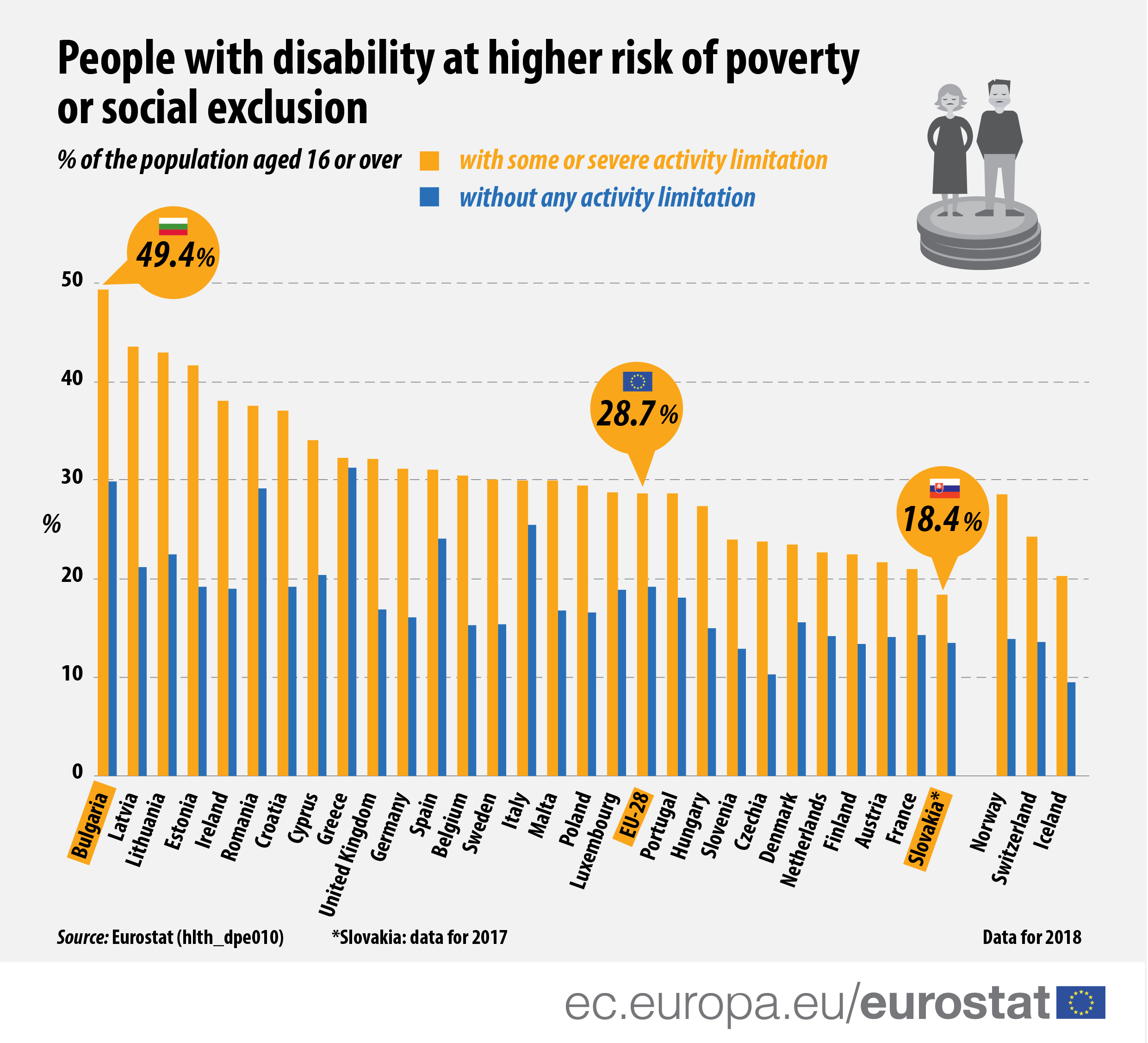
Our analysis indicates that the higher coverage of income support benefits in the UK leads to a lower poverty level among older people out of work with disabilities compared to Canada. In the UK people with a disability do not appear to be more at risk of poverty when out of work than people without a disability. Indeed, it is notable from our findings that older unemployed people with a disability in the UK who also have low education appear to be protected from poverty to a greater extent than unemployed people without a disability. This may be a reflection, however, of the inadequacy of the standard unemployment benefits for people out of work, which has been subject to sustained restrictions over many years, on the assumption that higher benefits would discourage people from seeking work. It should also be noted that although our analysis suggests a lower risk of poverty in the UK compared to Canada, poverty levels among people with disabilities in the UK are still higher than in many other European countries (Eurostat, 2018). Recent reforms of the UK system to restrict access to, and reduce the value of, disability benefits could also potentially undermine any beneficial effect of higher coverage in the UK (Gaffney, Reference Gaffney2015). These policy changes may explain the increasing trend in poverty we observed in the UK data. The introduction of Universal Credit in 2013 in the UK will also potentially reduce the uptake and cash value of benefits paid to people with disabilities that could further increase poverty risk (Joseph Rowntree Foundation, 2019b). There is a growing concern that the current dominant focus in the UK on restricting access to disability benefits is too narrow, and even counter-productive, to deal with the real challenges of enhancing employability and health among older people with disabilities who suffer long-term unemployment. There are calls for a more coherent strategy that encompasses lessons on activation policy from other countries such as Denmark (Lindsay et al., Reference Lindsay, Greve, Cabras, Ellison and Kellett2015).
5. Limitations
This study has its limitations. First, the UK data relied on self-reported income from a national survey, while the Canadian income data were based on tax records. There is evidence that income, particularly from social transfers, tends to be under-reported in surveys relative to administrative sources (Moore et al., Reference Moore, Stinson and Welniak2000). If this were the case with our data, this would have tended to increase the observed differences between the UK and Canada, i.e. income from social transfers could have potentially been even greater in the UK. Also, the income data in the UK were converted to weekly amounts, while in Canada income was accounted for across the whole year. Overall, more people experience short periods of temporary poverty than are consistently poor over longer periods of time (Sawhill, Reference Sawhill1988). Therefore, poverty rates using income over a week will tend to be higher than rates over a year. This may have led to higher poverty levels in the UK data than would have been the case if annual income data are available. This would have increased the difference observed between the two countries – with poverty rates being even lower in the UK compared to Canada.
Second, the measures of poverty used do not consider the inescapable costs such as those related to childcare, housing and disability. This is particularly problematic since people with disabilities face additional costs related to their disability. Failure to take these into account will lead to an underestimation of the true levels of poverty among people with disabilities. In the UK, many disabled people receive specific disability-related benefits to cover these extra costs, in Canada, some of these costs may be covered through provincial social assistance programmes and municipal governments. Following the practice of the UK Office for National Statistics, we include these benefits in our measure of income. This will mean that some disabled people will incorrectly appear to have resources sufficient to lift them above the poverty line. As it was not possible to consider these extra costs or identify all the benefits aiming to cover these costs in both countries, we were not able to adjust for this in our analysis.
Third, we were not able to consider differences in the in-kind benefits available to people with disabilities in both countries. In-kind benefits, like free or reduced charges for a prescription drug, dental/vision care, and medical supplies could result in higher disposable income among disabled people, and if the availability of these differences markedly between the UK and Canada this could mitigate some of the differences observed in poverty levels based on net income. Additionally, in Canada people with a disability are eligible to claim for non-refundable disability credits in their tax returns, which could reduce their tax burden increasing their disposable income. This would only affect the incomes of Canadians with disabilities whose earnings are sufficiently high to pay taxes (Simpson & Stevens, Reference Simpson and Stevens2016).
Fourth, our analysis doesn’t distinguish between different types of disability due to limited information. Different types of disability – for example, mental and physical disabilities – can have distinct impacts on labour market participation, poverty and benefit receipt. Different distributions of types of disability – and their interaction with eligibility criteria for welfare benefits, for example – could also contribute to country differences in poverty risk (Curnock et al., Reference Curnock, Leyland and Popham2016).
Finally, our analysis is limited to an in-depth comparison of two countries. This limits our ability to reach firm conclusions about the causes of higher poverty levels in older people out of work with disabilities in Canada. However, the fact that these two countries are similar in many ways, while having such contrasting income support systems for people with disabilities, does allow for a rich exploration of the potential consequences of these differences.
6. Conclusion
Not everyone is able to work as they get older, especially people with a long-term illness and disability. Without work, living standards can rapidly decline. As the population ages and as retirement ages are increased, there will likely be an increase in the numbers of older people out of work with disabilities, who have not yet reached state retirement age. We show that where there is good coverage, public benefits can play a vital role in reducing poverty in this group and where coverage is less good disabled people experience very high levels of poverty. Effective social protection systems for older people with disabilities are needed to ensure that policies to extend working lives do not increase the risk of poverty at older ages.
Acknowledgements
The research was initiated while Wen-Hao Chen was a senior economist at Statistics Canada, Ottawa, Canada. The authors acknowledge and thank Statistics Canada for their research support. This study was undertaken as part of the Tackling Health Inequalities and Extending Working Lives (THRIVE) Project. THRIVE is one of the projects of the Joint Programme Initiative More Years, Better Lives. The funders were The Innovation Fund Denmark (5194-00004B), the Swedish Research for Health, Working Life and Welfare (2015-01531), the UK Economic and Social Research Council (ES/N019261/1) and the Canadian Institutes of Health Research (EWL-14428). The funders had no role in study design, data collection and analysis, decision to publish, or preparation of the manuscript. The authors also thank helpful comments from the editors of Journal of Social Policy and two anonymous referees.