In April 2016, a 7.6 magnitude earthquake on the Richter scale occurred in the province of Manabí, Ecuador, killing 663 people and injuring 6274 (Glide number: EQ-2016-000035-ECU). 1,2 The earthquake affected the operation of several medical centers as well as the Ministry of Public Health (MPH). In Manabí, 12 of the 15 hospitals in the province were affected, 3 including the hospital in Chone where this study was carried out. This deterioration of health centers (HCs) due to the earthquake, which were previously deficient, created a situation especially dangerous for the health of the population. Similar events in other Central and South American countries have shown that in the short and medium terms, not only are the HCs affected but also the entire health care system, including the different health plans and actions that are implemented by ministries of health. Reference Bayer, Danysh and Garvich4-Reference Salazar-Arbelaez7
Article 360 of the Constitution of Ecuador states that “the health care system shall guarantee, through its constituent institutions, the promotion of health, prevention and integral, family and community care, based on primary health care.” 8 Thus, since 1998, a series of health policies and plans have been implemented to ensure that citizens have universal access to health care. 9,10 But, even so, there are still problems related to lack of personnel in HCs and insufficient infrastructure.
To adequately address a health crisis emergency, such as an earthquake, having a consolidated health care system and well-trained and equipped health care personnel is necessary to quickly adapt in order to provide the health care to those affected. Reference López Tagle and Santana Nazarit6,11,12 So, managing these crises is difficult if there are pre-existing problems which, in addition, are aggravated in these situations.
The Pedernales earthquake has clearly exposed all the deficiencies in the Ecuadorian health system and its ability to respond to a natural crisis. Thus, the objective of this work has been, not only to describe and analyze the main effects that this earthquake had on the public health care system, but also to observe the rooted weaknesses of this system and its level of preparation for catastrophic moments. Thanks to this study, it will be possible to identify the processes in need of improvement in the future.
METHODS
Data Collection
In order to present a holistic vision, documentary, qualitative, and quantitative methodologies were employed. Information was collected through 3 procedures, namely a documentary review, in-depth interviews, and user surveys.
Documentary Component
Databases from the MPH and the National Institute of Statistics and Censuses (INEC) were consulted, 13-15 as well as the Epidemiological Gazette of the MPH at the time of the study (May 2019). 16 Data from the Ecuadorian Social Security Institute (IESS) are also analyzed since it is the second national provider of benefits.
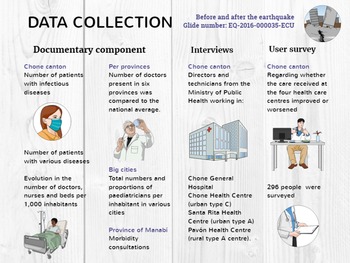
The objective has been to study the care model and the public network during the 2010 to 2016 period. Figure 1 shows the illustration of the concept of the study.
Diagram showing the documentary component on the effect of the 2016 earthquake in Ecuador (Glide number EQ-2016-000035-ECU) on Ecuador’s health care system. The years 2010 to 2018 have been selected to know the state of the health system before and after the earthquake.

Interview
Eleven in-depth interviews were conducted with directors and technicians from the public HCs in the Chone Health District, in order to understand how the health care system works from the perspective of those responsible for its management. The discourse and opinions of the health care system’s direct actors on how the earthquake affected morbidity care and other programs implemented by the MPH were also analyzed. Those interviewed worked during both the earthquake and at the time of the interview in 4 selected health units that represent the different levels of complexity of care in Chone Canton: Chone General Hospital, Chone HC (an urban type C HC that carries out actions of promotion, prevention, recovery, rehabilitation, and palliative care through the services of general medicine and basic specialties), Santa Rita HC (urban type A HC that provides prevention, promotion, recovery, palliative care, medical care, dental care, nursing, and community participation activities), and Pavón HC (rural type A HC) (see Figure 1).
User Survey
To complement the analysis of how the health care system works, the users’ opinions were studied regarding whether the care received at the public HC in Chone improved or worsened after the Pedernales earthquake. In total, 296 people from across the 4 health care centers mentioned previously were surveyed in 2018. Of these, 138 were users of the public HC since before the earthquake.
Data Analysis
A statistical evaluation of the data from the documentary component and the user survey was performed by a Student’s t-test and a chi-square test, using a significance level of 0.05. The interview with directors and technicians from the public HC in the Chone Health District was conducted using a pretested interviewer-administered questionnaire, with the informed consent of the interviewed. In order to maintain confidentiality, participants were not identified personally and instead were assigned a code from 001 to 011. The cross-sectional survey was conducted among patients from across the 4 health care centers. A prior written informed consent was obtained from all the participants, and all information is anonymized in this paper.
RESULTS
Diseases
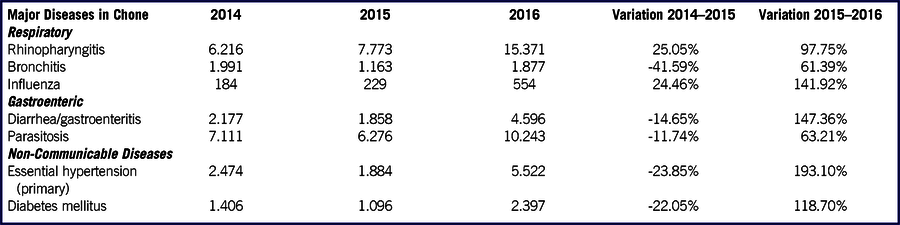
There was a significant increase of patients with infectious diseases (P < 0.05). Respiratory and gastroenteric diseases increased in Chone Canton after the earthquake by between 60 and 141% compared with the previous year, whereas non-communicable diseases, such as hypertension and diabetes, increased by more than 100% (Table 1).
Diseases Prevalent in the Canton of Chone During the Periods 2014–2016, and Annual Variation in the Index of These Diseases Before (2014–2015) and After the Earthquake (2015–2016)

Source: MPH. National Directorate of Epidemiological Surveillance / Epidemiological Gazette. 16
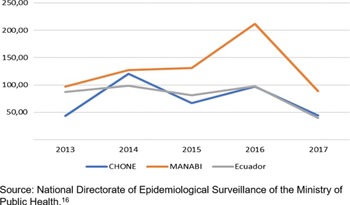
In the province of Manabí, acute respiratory infections, especially pneumonia, increased after the earthquake from 11.09 to 25.41 cases per 100 000 inhabitants. In the year that the earthquake occurred, cases of dengue without warning signs increased at a rate of 368.12 per 100 000 inhabitants, which is up to 3 times higher than the rates in previous years, such as 2014, when a rate of 128.1 cases per 100 000 inhabitants was recorded (Figure 2).
Number of patients with infectious diseases in the canton of Chone, the province of Manabí and Ecuador during period 2013–2017.

In the year that the earthquake occurred, epidemic outbreaks of the following diseases (classified according to International Statistical Classification of Diseases and Related Health Problems) increased in the province of Manabí, as well as Chone Canton (albeit smaller in Chone): thyroid and parathyroid fever (A01.0-A01.4), certain bacterial zoonoses (A02.0-A02.9), shigellosis (A030-A039), food poisoning (A04.0-A04.9), leptospirosis (A27.0-A27.9), dengue fever (A90), dengue hemorrhagic fever (A91), varicela (B01.0-B01.9), enteroviral vesicular stomatitis with exanthema (B08.4), hepatitis A (B15.0-B15.9), mumps orchitis (B26.0-B26.9), Plasmodium falciparum malaria with cerebral complications (B50.0), Plasmodium vivax malaria without complication (B519), cutaneous leishmaniasis (B55.1), nonspecific acute conjunctivitis (H103), influenza B (J09-J11), toxic effect of herbicides, and fungicides (T692).
Providing Health Care Services
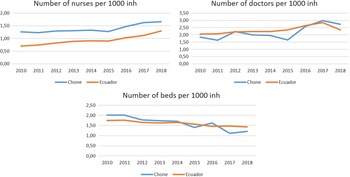
In Chone Canton, the number of doctors was very low before the earthquake, and MPH supported the increase of doctor 2.5 per 1000 inhabitants, but it was not sufficient. Nursing staff numbers remained low at levels both before and after the earthquake, but increased a little in 2018 (there were 1.48 nurses per 1000 inhabitants before the earthquake). In addition, the number of patient beds between 2010 and 2018 had progressively decreased, and, at the time of the earthquake, only a small number was available (1.63 beds per 1000 inhabitants) (Figure 3).
Number of doctors, nurses and beds in the health centers in the canton of Chone per 1,000 inh during period 2010–2018.

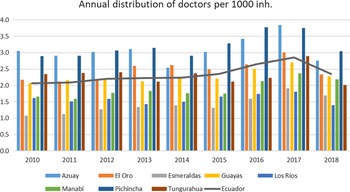
When comparing the number of doctors in Ecuadorian provinces that have over 500 000 inhabitants (Azuay, El Oro, Esmeraldas, Los Ríos, Manabí, and Tungurahua) with the national average (years 2010 to 2018), it was found that the rate of doctors, in general, as well as doctors with basic specialities, such as pediatricians, obstetrics gynecologists, surgeons, and clinicians, was much lower than the national rate in Manabí (1.6 to 2.2 doctors per 1000 inhabitants compared with 2.0 to 2.6 doctors per 1000 inhabitants nationally in the year of the earthquake) (Figure 4).
Distribution of doctors by selected provinces of Ecuador. Rate per 1000 inhabitants.

In medium-size cities such as Chone, Quevedo, and Milagro, a lack of specialists was found in 2016, especially internists and pediatricians. However, in large cities such as Guayaquil or provincial capitals like Portoviejo, the capital of Manabí, the number of specialists was found to increase. Strikingly, the number of pediatricians in Chone decreased in the year of the earthquake and, 2 years later, it recovered only a little (less than years 2010 and 2013). This means that the national health care system not only distributes doctors unequally, but also shows the low priority of Chone’s needs after the earthquake (Table 2).
Total Number of Pediatricians and Proportions of Pediatricians of the Ministry of Public Health Per Inhabitant in Different Cities of Ecuador During the Years 2010, 2013, 2016, and 2018

Source: INEC resources and health activities 2010, 2013, 2016 and 2018. 13
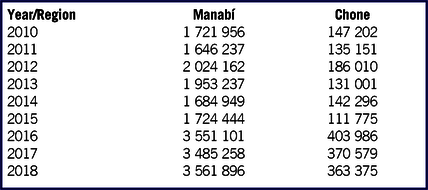
Regarding morbidity consultations, in the year the earthquake took place, morbidity consultations doubled in Manabí, and they increased fourfold in Chone (P < 0.05). This could be related to the morbidity overload as a consequence of the earthquake (Table 3), but we do not know why they remained just as high during the 2 years after the earthquake.
Morbidity Consultations Attended by All Health Centers in the Province of Manabí and the Canton of Chone During the Years Before and After the Earthquake

Source: INEC resources and health activities 2010, 2011, 2012, 2013, 2014, 2015, 2016, 2017, 2018. 13
Effects of the Earthquake on Health Care Delivery
The following information was obtained from interviews with 11 directors and technicians from the public HC in the Chone Health District.
According to one of the interviewees: “The health district was not prepared for an emergency like the earthquake but for floods” (005); this may be due to the fact that Chone often floods during the rainy season.
In addition, most interviewees claimed that the earthquake affected not only hospital care, but also the implementation of various public health programs aimed at preventing or controlling prevalent problems in Chone’s population. An interviewee reported: “I believe that all the programs fell apart because priority was given to emergencies and the provision of water, leaving monitoring programs by the wayside as provision of services” (005).
A lack of monitoring and prevention was reflected in increased respiratory and diarrheal diseases: “There was a significant increase in diarrheal diseases for three to six months after the earthquake” (003, 006). Interviewees also indicated that they were under pressure to continue implementing the health programs, but they were not given the necessary resources, although epidemiological surveillance actions were intensified, and resources were allocated for preventive actions.
Providing Health Care Services
In the Chone Hospital and in the Chone Health District, there was a shortage of health personnel, which was verified by the interviewees: “Before the earthquake, we always thought that we lacked personnel, in fact, we are a general hospital that lacks specialists and nurses. All ministry units and hospitals have professional gaps” (001). There was also a shortage of personnel in the Chone District Directorate, a fact which became especially evident after the earthquake: “The extra aid we received after the earthquake is as a consequence of the earthquake because they saw the need for the operative people who were in charge of administrative posts to come out to give attention. In a disaster the operative is the most important thing” (005).
Hospital Beds
In Chone, there was a lack of hospital beds, which worsened after the earthquake, decreasing from 136 beds, in 2016, to 79 in 2018. Interviewee 001 said: “Our hospitals had 136 beds available for patients in total, and, on a monthly basis they generally had a 70% rate of occupations. On the day of the earthquake, there were approximate 79 patients admitted” (001). At the time of this study, in January 2018, there were still only 79 beds in the hospital of Chone. Hence, a decreased number of beds has been maintained even after the earthquake and remains a long term, which has forced health care professionals to refer patients to other health care units. One interviewee said: “Since we do not have adequate infrastructure, we have to send patients to where they do” (002).
Hospitalization
Chone Canton has 130 000 inhabitants of the 260 000 in the district. It has a basic hospital, a type C HC, an urban center and 2 rural centers, and the IESS also runs a basic hospital that receives a large influx of patients.
The earthquake severely affected the health units’ infrastructures. Specifically, some buildings fell and Chone Hospital was disabled. This was replaced by makeshift tents that were used for several months. Then, an infrastructure was created as a temporary care center, pending the inauguration of the new hospital in 2020. 2 The services most affected were those of Chone Hospital, as the officials interviewed pointed out: “The earthquake affected all services, but especially being able to hospitalize people” (001). The 136 beds the hospital had before the earthquake dropped to 10 just after the earthquake: “Two years later there are 79 beds out of 136” (001).
As previously mentioned, the hospital was unable to meet the demand before the earthquake: “Two years later (2018) they are in 70% of the services, but even when they were at 100% capacity, they were not able to solve everything and they resorted to other providers in the public network” (001).
Medicine
Regarding medicine, interviewees stated that there was no shortage during the earthquake, especially in the hospital: “We had enough medicine before the earthquake and that allowed us to cover all hospital care. We even lent medicine to another hospital” (005).
Although Chone Hospital did not have supply problems, that was not the case at the rest of the centers and hospitals in the Manabí network: “At Chone Hospital, we buy medicine and we help other hospitals. In our budget, we also ask for other medicine and devices that other hospitals do not have. We donated them not because we have so much but because they need them” (008). Thus, the provincial hospitals did not have sufficient supplies of medicines, and they had to share necessary supplies among themselves.
The distribution of medicine in the province is done through a district directorate and “it is done according to the average monthly consumption of each establishment, the epidemiological profile, and according to the needs presented according to the assigned budget” (002). Health workers who were interviewed did not feel there had been a shortage of medicine, but this contrasts with what the users of the centers reported about medicine insufficiencies.
Model of Care
The primary care-based care model in the Chone Health District remains damaged because of insufficient financial and personnel resource allocation. In addition, there has been no continuity in its implementation over the last decade as each new management team that leads the MPH restarts the implementation process, something which seems to occur without any evaluation of what was implemented by the previous administration: “I started on a BHT (basic health team). In 2007, the BHT groups are implemented, it had its boom until 2014, and there was a span of time in which we worked with a MCHC (model of comprehensive health care). I work now on an IHCT (integrated health care team). Time was wasted that we now want to recover through the neighbourhood doctor program (a program that began in 2016)” (005).
The number of IHCT increased after the earthquake, but then it returned to the initial situation: “Before the earthquake, we had 32 IHCT teams, and after that, we had 74 IHCT teams, which is an appropriate number. In 2017 the number of teams decreased considerably” (008). The lack of doctors does not meet the goals of the communities. One interviewee tells the following story: “A doctor was assigned the ‘Paraiso’ community with 50 families, but she has only met 20% of the population that lives there. It is assumed that half of the care she provides should be in the HC and the other half in the community, but due to lack of staff, the requisite number out of clinic visits cannot be made” (009).
The main problem detected in the HC studied was the lack of health personnel. These centers lack stable personnel, and they rely on personnel on short contracts only. The centers lack inputs and medicine, have a low budget, and are working with a poor infrastructure and equipment in poor condition (010, 011).
The lack of human resources at the first level of care has repercussions on the rest of the system as patients with uncomplicated problems continuously arrive at the hospital: “Instead of children with diarrhoea arriving at the hospital, children with trauma should arrive or children who need specialised care” (001). The problem of high demand and low personnel levels persists throughout the system: “At the national level, all type C centres should have one obstetrician in external consultation and one obstetrician in to handle emergencies, but this does not happen. More personnel are needed because the centres are overwhelmed by patients they cannot assist…the number of doctors is not enough because of the high demand” (009).
The Public Health Network
In relation to how well the public health network in Chone works: “The network did not work well before the earthquake and began to work better after, not as a result of the earthquake, but as part of a process that had to occur as a result of previous work in the area” (001).
Other state agencies, especially the IESS, which runs a hospital and Peasant Social Security centers, contribute to overloading the health care system. The IESS does not supply its own demand and therefore overloads the public health. “There is no complementarity of services between the two institutions and the hospitals of the two institutions are congested by demand” (008).
The data discussed previously highlight the weaknesses of the comprehensive public health network, which already existed before the earthquake and continue to constitute a patient care barrier for accessing health care.
User Survey
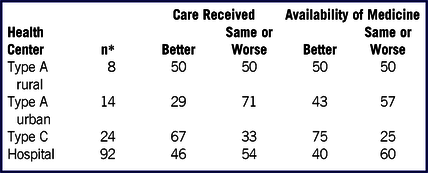
Of the 296 users of the HCs who were interviewed, we use the data from the 138 who are users before and after the earthquake. Of these, 92 are users of the General Hospital, 24 from type C HC, 14 from urban type A HC, and 8 from rural type A HC.
According to the results of the survey, users of type C HC were most satisfied with their care, whereas users of type A urban HC were the least satisfied (P < 0.05). The type C was inaugurated 10 months after the earthquake, that is, it is a new unit and has specialists. There were no significant differences in the degree of satisfaction, after and before the earthquake, in the type A rural HC and the General Hospital (Table 4).
Regarding the availability of medicine at the HC, only the users of the type C HC believed the availability of medicine was better than before; the patients of the type A urban HC and the General Hospital consider it to be worse. All of these differences were statistically significant (P < 0.05). There were no differences in this perception in users of the type A rural HC (see Table 4).
Comparison on the Perception of the Care Received at the Health Center (HC) and the Availability of Medicines After the Earthquake by Users According to the Type of HC. (Questionnaire Was Taken on 2018. Data Reflects the Percentage of Satisfaction in a Total of 138 Who Were Users Before and After the Earthquake)

n*: number of people surveyed.
DISCUSSION
The combination of research methods applied in this study enabled a more objective and holistic understanding of the situation in Chone before and after the earthquake since the information provided by the 3 methods used converges on the same results.
At the provincial level, during the year that the earthquake occurred, there were 21.31 doctors per 100 000 inhabitants in Manabí, which is below the Pan American Health Organization (PAHO) and World Health Organization (WHO) recommendations. 17 This situation has probably led to the significant increase in the number of morbidity and epidemic outbreaks, as discussed later. In fact, in a study performed after the Great East Japan earthquake and tsunami, it has been seen that the number of medical centers and public health nurses was negatively associated with a mortality rate per person. Reference Tashiro, Sakisaka, Okamoto and Yoshida18
In Manabí Province and in Chone Canton, the main causes of ambulatory morbidity immediately after the earthquake were the same as those that existed endemically prior to the earthquake. Therefore, what the earthquake produced was, especially, a significant increase in the number of the problems that were already prevalent in the area. Reference Maguiña Vargas and Astuvilca Cupe19,Reference Mora-González and Madrid-González20 This increase was due, not only to the effect of the earthquake on the population, but also to the destruction of the infrastructure of the health units, as we have pointed to previously. More specifically, it was found that respiratory, gastrointestinal, and vector-borne diseases increased, a situation also reported by other studies on disasters. Reference Maguiña Vargas and Astuvilca Cupe19-Reference Londe, Coutinho and Di Gregório21 In Nepal, the fragile public health infrastructure accelerated the transmission of infections, mostly zoonoses, in the post impact phase of the earthquake. Reference Asokan and Vanitha22
At the same time, we saw a significant increase in respiratory (rhinopharyngitis, bronchitis, influenza) and gastroenteric outbreaks (diarrhea/gastroenteritis, parasitosis), a situation that has also been reported in other studies. Reference Maguiña Vargas and Astuvilca Cupe19,Reference González and Rubalcaba23-Reference Moran and Ochoa25 For example, in Pakistan, an earthquake in Kashmir (2005) increased the number of tetanus outbreaks. Reference Khurram and Mahmood26 After the 2003 earthquake in Zarindasht, Iran, there was an increase in epidemic outbreaks of cutaneous leishmaniasis. Reference Fakoorziba, Baseri and Eghbal27 In California, after the earthquake in Northridge, arthrospores of Coccidioides immitis were spread in dust clouds generated by the earthquake leading to the appearance of outbreaks of coccidioidomycosis. Reference Schneider, Hajjeh and Spiegel28 Finally, an earthquake in Costa Rica in 1991 was associated with changes in habitat that were beneficial for breeding and preceded an extreme rise in malaria cases. Reference Sáenz, Bissell and Paniagua29
The increase of non-communicable diseases, such as hypertension and diabetes, in Manabí and Chone is striking. Similar studies carried out in Brazil and Mexico Reference Salazar-Arbelaez7,Reference Londe, Marchezini and Conceição30 point out that this increase could be linked to stress, loss of family routines, and deficits in the primary health care system that prevent a rapid and close interaction of health personnel with the community. Adequate primary care services would facilitate the care of patients with chronic problems even in the immediate aftermath of disasters, as demonstrated by experience in other countries. Reference López Tagle and Santana Nazarit6
Health care interviewees claimed that there was a significant increase in diarrheal diseases immediately after the earthquake. Although the population most affected by the earthquake was placed in shelters and preventive health campaigns were successfully implemented, preventive measures were neglected in much of the rest of the population, which was also in vulnerable conditions due to environmental deterioration.
This occurred, despite the fact that the officials interviewed indicated that epidemiological surveillance actions were intensified and that resources were allocated for preventive actions. However, the data indicate an increase in epidemic outbreaks after the earthquake, which suggests that the resources offered were insufficient, something health care providers confirmed. In other words, prevention activities were not perceived to be an institutional responsibility, leaving the officials with the responsibility of obtaining collaboration from other institutions.
The shortcomings of the health care system with respect to the model of care were especially apparent in the insufficient number of health care personnel, especially at the primary health care level. Thus, in Chone, the proportion of first-level care physicians is between 24% and 30%, which does not meet the PAHO recommended goal that at least 40% of physicians should be in primary care. Reference Salazar-Arbelaez7
However, human resource gaps persist at all levels of the health care system. In Manabí and Chone, there are fewer than 2 doctors per 1000 inhabitants, which is less than in other South American countries. 17,Reference Bank31 In Chone Canton, personnel resources increased to a total of only 2.5 doctors per 1000 inhabitants after the earthquake because doctors who worked in other provinces, especially those doing their year of social service, were displaced to work in Chone, organized by the MPH. But, after the emergency, they returned to their original workplaces outside of Chone.
When comparing the number of doctors in Ecuadorian provinces that have over 500 000 inhabitants, surprisingly, a growth in the number of doctors after the earthquake was observed in provinces far from the epicenter, whereas in Chone there was a decrease. This means that the central government did not prioritize attention in Chone, despite the effects of the earthquake.
According to Achour et al., Reference Achour, Munokaran, Barker and Soetanto32 the health care staff remain at high risk of stress and thus represent a major weakness of health care service resilience. Taking into account the lack of personnel that we have detected in the HC, probably undergoing stress due to having an excess of patients to attend, the stress that they must have suffered immediately after the earthquake must have reduced the quality of service offered to patients and increased the number of problems we have talked about earlier. This, possibly, will have contributed to increasing the number of new outbreaks and diseases already prevalent in this region.
In addition, there should be a clear and defined strategy for a fast and efficient reconstruction of health services, which frequently have similar problems with aging and poor resource allocation. For this reason, it is important to enhance international cooperation to developed countries, which is 1 of the 7 global targets of the Sendai Framework for Disaster Risk Reduction. 33 Besides, this country urgently needs to increase the availability of and access to multi-hazard early warning systems and disaster risk information and assessments to the people.
Another interesting solution would be that, in the event of an earthquake, the hospitals that remained open would prioritize primary care temporarily and the most complicated cases would be transported to facilities located in areas far from the disaster. This could make up for the lack of primary care due to the increased demand and the lack of doctors. On the other hand, even if the resource shortage and malfunctioning are improved, it is possible that, if another disaster of such magnitude occurs, all demand may not be satisfied. For this reason, it is important to have well-trained national emergency medical teams (N-EMTs) to be dispatched and support medical and public health services until the recovery of local health care providers. If this is not possible, help should be sought from the support of international teams (I-EMTs). The EMTs are part of the WHO Global Health Emergency Workforce program, and its objectives are to address these shortcomings by improved EMT coordination and mechanisms to ensure quality and accountability of national and international EMTs. Reference Amat Camacho, Hughes and Burkle34
Our surveys showed us that, although the earthquake highlighted deficiencies in the country’s health model that led to poor care and a deficient availability of medicines after the earthquake, most users did not notice action plans to improve this situation. These parameters improved significantly in only the type C HC. This shows that the errors and deficiencies shown after this catastrophe have not been learned.
Last but not least, although these HC are located in seismic areas, there has never been a special preparation for these situations. On the one hand, 1 study concludes that earthquake engineers should be well-placed to facilitate the risk management process from which the appropriateness of preparedness elements for individual infrastructure operators can be assessed. Reference Brunsdon35 But another study states that, in order to improve the infrastructures against earthquakes, an awareness through risk education and communication, in addition to strong and innovative leadership, effective planning, and long-term commitment of resources to implement complex systems, is more important than engineering and technology. Reference O’Rourke and Briggs36 On the other hand, it is important to consider the construction in these places of the Safe Hospitals. These are, according to the PAHO, facilities whose services remain accessible and functioning at maximum capacity and within the same infrastructure immediately following a natural disaster. 37
For this reason, this study demonstrates with figures the importance of strengthening the health system, especially in areas of catastrophic risk, and preparing health personnel to deal with these catastrophes.
Limitation
One important limitation of the study was the limited availability of information, making it difficult to access comprehensive data on health indicators and the health care services provided. There is a need to consolidate information systems and to perform observations of how the national health care system works, in order to facilitate access to complete, continuous, and timely information.
CONCLUSIONS
The health care system in Manabí and Chone before the April 2016 earthquake already experienced access problems as reflected in the low numbers of health personnel, insufficient number of hospital beds, as well as weaknesses in primary health care. Therefore, Ecuador’s health care system partially responded to the disaster as it prioritized emergency medical care but neglected prevention. In addition to worsening sanitary conditions (limited safe drinking water), there was a general environment deterioration, which, together with the limitations described previously, created the conditions for increased morbidity. Besides damage to health care centers from the earthquake, pre-existing weaknesses in the model of care made the system unable to adequately resolve the province’s health problems both before and after the earthquake.
This limited response capacity of the health care system was evident in the increase in epidemic outbreaks in the province, which was one of the most visible effects of the earthquake on the health care system.
In this work, we have provided solutions to deal with these natural disasters: (1) increase the availability of and access to multi-hazard early warning systems and disaster risk information and assessments to the people; (2) prioritize primary care temporarily in the hospitals that remained open, to have N-EMTs, or sought from support of I-EMTs; and (3) place earthquake engineers to facilitate the risk management process, awareness through risk education and communication, a strong and innovative leadership, effective planning and long-term commitment of resources to implement complex systems, and the construction in these places of the Safe Hospitals.
In summary, it is very important that our policy-makers understand that the Sendai Framework prioritizes the investment in disaster risk reduction. Investment to a health care system will decrease the human and economic damage by the disaster and is much more cost-effective than the cost for responding.
Acknowledgments
We would like to thank the Subsistema de Investigación y Desarrollo (SINDE) of the Universidad Católica de Santiago de Guayaquil for financing this project.