

Introduction
Over the past two centuries, the average life expectancy has increased globally, predominantly in response to improved health conditions and medical innovations (Riley, Reference Riley2001). While at the beginning of the twentieth century people in India died at the age of 23, their life expectancy has tripled 100 years later (Roser, Reference Roser, Ortiz-Ospina and Ritchie2013). Moreover, an unprecedented decrease in fertility rates has been observed since the 1950s (United Nations, 2017). Along with the growing urbanization, these demographic changes have contributed substantially to the erosion of family ties, which in many countries served as social safety nets (Johnson & Williamson, Reference Johnson and Williamson2006; Kerr et al., Reference Kerr, Dunlop, Harbinson and Myers1960; Overbye, Reference Overbye2005; Wilensky, Reference Wilensky1974). But even where family ties persisted, the declining work capacity and increased health care requirements of the elderly often rendered aging a costly matter, especially in low- and middle-income countries (Barrientos et al., Reference Barrientos, Gorman and Heslop2003). Thus, the provision of public old-age protection became all the more necessary, both as a means to counter the risk of old-age poverty and to sustain entire households (de Carvalho Filho, Reference De Carvalho Filho2008; Duflo, Reference Duflo2003).
The growing importance of old-age pensions, which today constitute the most widespread social security programmes around the world (Schmitt et al., Reference Schmitt, Lierse, Obinger and Seelkopf2015, p. 506), is accompanied by rising demands for global and comparative data. While existing projects provide data on recent pension trajectories (Mahon et al., Reference Mahon, McNeill and Heymann2015) or on social pensions (Böger Reference Böger2013; Dodlova et al., Reference Dodlova, Giolbas and Lay2016; Pension Watch, 2018), datasets with a historical focus are largely missing, with the exception of the longitudinal “Social Policy around the World (SPaW) database” (Rasmussen, Reference Rasmussen2016).
Given this shortcoming, the following article is dedicated to the introduction of a novel dataset entitled “PENLEG – Pension Legislation around the World (1880–2010)” (PENLEG, 2020). In contrast to the longitudinal SPaW project (Rasmussen, Reference Rasmussen2016), the PENLEG dataset focuses explicitly on the historical origins of the first old-age pension programmes in all independent countries around the world and provides data on the following pension dimensions: (1) the timing of old-age pension introductions; (2) the pension design; (3) the mode of financing; (4) eligibility criteria; (5) benefit generosity and (6) coverage rates.
The PENLEG dataset makes three major empirical contributions. First, it engages with the methodological debate on how to define a first pension system and how to estimate coverage rates. While existing pension coverage indicators only account for horizontal coverage (Mares, Reference Mares2005; Rasmussen, Reference Rasmussen2016), the PENLEG dataset also estimates vertical coverage rates and offers a coverage indicator that can be disaggregated to identify the covered groups. Additionally, a restriction indicator is constructed that focuses on six criteria that were commonly applied to limit coverage rates. Second, the PENLEG dataset introduces the first historical pension replacement rate indicator for global studies. Finally, and compared to the SPaW project (Rasmussen, Reference Rasmussen2016), more detailed data on the different dimensions of old-age pensions are provided.
In addition to these empirical contributions, the article maps global pension patterns and highlights case-based evidence. While the determinants of pension implementations are largely understood (see eg. Collier & Messick, Reference Collier and Messick1975; Kangas, Reference Kangas2012; Schmitt et al., Reference Schmitt, Lierse, Obinger and Seelkopf2015; Usui, Reference Usui, Janoski and Hicks1994), we still do not know how these factors have also shaped other dimensions of old-age pension programmes, such as their modes of financing, retirement ages, coverage rates or benefit generosity. While this article does not substitute for encompassing empirical studies, its descriptive analysis highlights areas for further research.
The PENLEG dataset
The PENLEG dataset uses original pension laws for coding the different pension dimensions. For this purpose, especially the ILO Legislative Series have been consulted, which offer legislation on all major social security laws that have been promulgated in its member states during the period from 1919 to 1988 (ILO, 2018a). For countries that were not covered, websites of national social ministries and legislative bulletins were used. Even though some countries offer English translations of their pension laws, French and Spanish skills were most essential for creating the PENLEG dataset. The following sections explain the coding decisions.
Timing of old-age pension introductions
As early as the seventeenth century, many European countries started to protect their civil servants against the risk of old age (Rothenbacher, Reference Rothenbacher2004, p. 74). Moreover, voluntary and private workplace pensions existed long before public pensions for a wider population were introduced (Sibalis, Reference Sibalis1989, p. 1).
However, the methodological debate on what constitutes a first old-age pension programme is still not settled. Many studies code pension introduction years alongside the “Social Security throughout the World” reports of the United States Social Security Administration (USSSA), even though this source suffers from two major shortcomings (USSSA, 2018a). First, the reports do not apply precise criteria to define a first old-age pension programme (Sakmann et al., Reference Sakmann, Otey, Huber and Needleman1940, p. 2) and thus mix introduction years for major pension laws with laws for small occupational groups. Second, the reports are quite inconsistent, as the introduction dates often vary depending on the consulted report (Grünewald & Seelkopf, Reference Grünewald and Seelkopf2016; Knutsen & Rasmussen, Reference Knutsen and Rasmussen2018). To address these shortcomings, the PENLEG dataset specifies two criteria to define a first old-age pension programme.
First, access to old-age protection must either be defined as a right of citizenship or as a mandatory insurance duty. Even though many countries experimented with voluntary pension schemes, these programmes proved to be less attractive and were only capable of protecting small segments of the population (Baldwin, Reference Baldwin1910, p. 733). In line with previous research (see eg. Sakmann et al., Reference Sakmann, Otey, Huber and Needleman1940, p. 1; Usui, Reference Usui, Janoski and Hicks1994), this dataset only focuses on compulsory old-age protection. Second, as the shifting focus on workers in the private sector was an essential characteristic of the modern welfare state (Rothenbacher, Reference Rothenbacher2004, pp. 7–8), a first pension programme must at least cover one major occupational group beyond the public sector.
To define major occupational groups in the private sector, the existing literature was consulted and the categories used most commonly were adopted (Mares, Reference Mares2005; Rasmussen, Reference Rasmussen2016). The pre-existing categories were further complemented with commercial workers, home workers and foreign workers, as these groups were frequently mentioned in many pension laws. In sum, the PENLEG dataset distinguishes between the following private occupational groups: (1) agriculture, (2) extractive and manufacturing industry, (3) commerce and finance, (4) students and apprentices, (5) domestic and family workers, (6) home workers, (7) self-employed, (8) employers, (9) temporary and seasonal workers as well as (10) foreign workers.Footnote 1 As many countries also define benefit access as a right of citizenship, an additional category was added, defined as (11) all citizens. However, two problems exist. First, the introduction date of pension laws and their final implementation can differ. As the promulgation of a pension law is an important political signal that goes along with restructuring administrative and financial resources (Hicks et al., Reference Hicks, Misra and Ng1995, p. 331), it was decided to log pension introduction dates instead of implementation dates. Moreover, as the later information is not always available, focusing on introduction dates is a more reliable approach to define a first old-age pension programme. In so doing, the PENLEG dataset follows existing research conventions (see eg. Mares, Reference Mares2005; Orenstein, Reference Orenstein, Holzmann, Orenstein and Rutkowski2003; Rasmussen, Reference Rasmussen2016; Schmitt et al., Reference Schmitt, Lierse, Obinger and Seelkopf2015; USSSA, 2018a). A second problem concerns so-called paper tigers. In a few countries, such as South Korea (1973), the pension programmes were not implemented after the first laws were passed. However, the PENLEG dataset captures paper tigers too, as their exclusion would contradict the previously discussed research logic that focuses on the promulgation of pension laws. Moreover, laws that follow up paper tigers are not always quite distinct from the first laws as the case of South Korea reveals (Kim, Reference Kim2006, p. 79). The existing literature has not accounted for the problem of paper tigers, too. Instead, most studies simply focus on introduction dates, disregarding whether these pension programmes have been actually implemented (see eg. Orenstein, Reference Orenstein, Holzmann, Orenstein and Rutkowski2003; Rasmussen, Reference Rasmussen2016; Schmitt et al., Reference Schmitt, Lierse, Obinger and Seelkopf2015).
Finally, the PENLEG dataset is restricted to countries that were independent, as defined by Gleditsch and Ward (Reference Gleditsch and Ward1999), when introducing their first old-age pensions. Even though colonies or members of the Soviet Union were also active in passing social security laws, these welfare programmes were largely dominated by colonial (Midgley & Piachaud, Reference Midgley and Piachaud2011; Schmitt, Reference Schmitt2015; Williamson & Pampel, Reference Williamson and Pampel1993) or Soviet preferences (USSSA, 1959). Thus, focusing on independent countries only can foster a better understanding of the explanatory power of domestic factors in relation to external pressures and historical legacies.
Pension designs
The PENLEG dataset distinguishes between seven old-age pension designs, which have been inspired by the USSSA (2018a). They are defined as (1) social insurance; (2) provident funds; (3) mandatory individual account systems; (4) employer liability systems; (5) non-contributory, universal; (6) non-contributory, means-tested and (7) non-contributory, pension-tested schemes. The first three pension designs are contributory financed. Whereas social insurance contributions are used to finance current beneficiaries, the latter two programmes invest contributions in an individual fund that is either publicly (provident fund) or privately/publicy (mandatory individual account systems) managed. In employer liability systems, employers directly offer pension services or payments to their employees. By contrast, non-contributory pensions are financed by indirect taxes and are either universally accessible or restrict pensions to the poor (means-tested) or to people that do not simultaneously receive another kind of pension (pension-tested) (USSSA, 2018b, pp. 2–3).
As six countries have opted for a second pension pillar, the PENLEG dataset also captures data on these supplementary programmes, which extends the dataset to 124, as opposed to 118, observations.
Mode of financing
The PENLEG dataset provides four different indicators on the mode of financing. The first group of indicators is binary and simply codes whether the state, employers or employees make contributions to the pension system. The second group of indicators focuses on the exact amount of contributions as a percentage share of wages. As many countries mention the exact amount of benefits, this information was transformed into contribution rates under reference to the average wages of industrial workers in the given country at that time. For wage information, the ILO Yearbooks of Labour Statistics were primarily consulted (ILO, 2018b). However, some countries do not report contribution rates for individual social security segments but only provide an aggregate indicator for several welfare programmes. Pension contributions in Venezuela, eg. were also used to finance sickness, maternity and work injury programmes (PENLEG, 2020). Hence, the amount of data that explicitly focuses on pension contributions is slightly reduced.Footnote 2 Moreover, the PENLEG dataset does not provide data on the exact amount of state contributions. To ensure that governments can flexibly adapt to the requirements of their pension systems, countries often do not define exact state contributions. As many countries also report state contributions as a share of oil taxes or other revenues, a comparable indicator can hardly be established (PENLEG, 2020).
The third group of indicators finally report the proportions to which contributions are subdivided between the state, employers and employees, whereas the fourth group of indicators only takes the distribution of contributions between employers and employees into account.
Eligibility criteria
Next to the mode of financing, the PENLEG dataset provides data on eligibility criteria, including retirement ages and the number of paid contribution months of average workers disaggregated by gender. For countries that only report contribution days, it was decided to refer to a working week of 6 days. As working hours have strongly declined over the past 100 years but are still higher in poorer countries (Roser, Reference Roser2019), the historical and in many developing countries on-going trend of higher working hours can thus be captured.
Benefit generosity
As pension laws either mention a concrete amount of money or define a specific pension formula, a pension replacement indicator was calculated. In so doing, the PENLEG dataset refers to the wages of an average industrial worker in the given country and year. As wage information was not always available for the year a pension was introduced, the wage reference point can sometimes oscillate 1 or 2 years around this date. Moreover, for a few countries, wage information was only available for a specific group of industrial workers. Thus, the pension replacement indicator may be slightly biased and therefore should only be regarded as a first attempt to measure benefit generosity around the world. Finally, the PENLEG dataset does not offer pension replacement indicators for provident funds or mandatory individual account systems. As pension benefits are paid as lump sums in these systems and strongly depend on the individual’s working career, a comparable indicator cannot be established.
Legal coverage rates
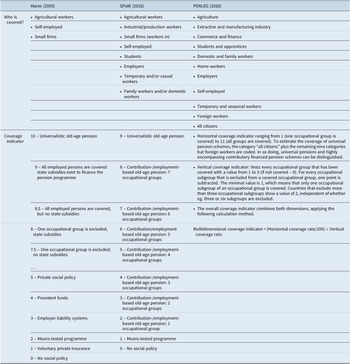
Existing coverage indicators have combined a summary indicator with a ranking scale (Mares, Reference Mares2005; Rasmussen, Reference Rasmussen2016). The summary indicator counts how many occupational groups of a predefined list are covered to estimate the coverage rates of contributory financed pension schemes in general (Rasmussen, Reference Rasmussen2016) or social insurance designs in particular (Mares, Reference Mares2005). Moreover, Mares (Reference Mares2005) takes into account whether pension systems benefit from state subsidies. She expects pension programmes with state subsidies to cover more people (Mares, Reference Mares2005, p. 649).
Additionally, Mares (Reference Mares2005) and Rasmussen (Reference Rasmussen2016) provide a ranking scale for all pension systems whose coverage rates cannot be estimated with the aforementioned approach. The ranking scale assigns predefined values to different pension designs depending on their expected redistributive capacity. Whereas means-tested programmes rank low, universal pensions rank highest. In sum, the existing approaches have merged a summary indicator and a ranking scale to estimate coverage rates for the whole variety of old-age pension designs (see Table 1).Footnote 3
Estimating legal pension coverage rates – Different approaches (Mares, Reference Mares2005; Rasmussen, Reference Rasmussen2016; PENLEG, 2020).

A major shortcoming of this approach is that variance in pension coverage rates of eg. means-tested programmes cannot be identified. This is a substantial problem, as the existing literature does not agree whether means-tested programmes can cover broader or narrower segments of the population (Esping-Andersen, Reference Esping-Andersen1990; Korpi & Palme, Reference Korpi and Palme2007; Scruggs et al., Reference Scruggs, Jahn and Kuitto2017). To estimate variance in coverage rates of means-tested programmes, indicators that account for different income tests would be required. But assessing the effect of these criteria on coverage rates is still an important challenge that must be addressed in future research. Hence, it was decided to exclude coverage rates for means-tested pension programmes from the PENLEG dataset, as they cannot yet be properly estimated.
Additionally, the existing summary indicators do not account for the depth of coverage. The Polish pension of 1927, eg. covered nearly every occupational group (ILO, 1927). However, old-age protection was confined to intellectual workers within the given occupations. Simply counting the number of covered occupational groups would fundamentally overestimate legal coverage rates. To address this shortcoming, the PENLEG dataset provides both a horizontal and a vertical coverage indicator. The horizontal coverage indicator counts how many of the 11 occupational groups were covered and then calculates the percentage share in relation to the total number of predefined occupational groups. The vertical coverage indicator estimates the extent to which each occupational group was covered and assigns values from 0 (not covered at all) to 5 (covered completely). For each segment of an occupational group that was excluded, one point was subtracted. A value of 2 was assigned if three or more occupational segments of an occupational group were excluded, whereas a value of 1 means that only a single segment of an occupational group was covered. Finally, the vertical scores of each occupational group were summed up and the percentage share covered in relation to the maximum value that the covered occupational groups could achieve on the vertical dimension was estimated.Footnote 4 In a last step, both indicators were merged. By accounting for vertical coverage, the PENLEG dataset provides a more nuanced indicator on the legal representation of different occupational groups in the pension systems.
However, estimating legal pension coverage rates poses problems. First, old-age pension laws are not always explicit about whom they actually cover but instead employ terms like “all employees” or simply “employees”. Sometimes, pension laws entail preambles or refer to additional laws in which these terms are further specified. If such information was missing, the PENLEG dataset refers to the following coding rule, leaning on the thumb rule that has been proposed by Rasmussen (Reference Rasmussen2016). If a pension law refers to “employees”, it is expected that the main occupational groups, such as (1) agriculture, (2) extractive and manufacturing industry and (3) commerce and finance are covered. If a pension law refers to “all employees”, all occupational groups but “all citizens”, “employers”, “self-employed” and “foreign workers” are coded.
A second problem concerns the choice of occupational groups, which are not mutually exclusive, as they entail categories on occupational groups (eg. agricultural workers) and on occupational status (eg. temporary or seasonal workers). If a pension law protects agricultural seasonal workers, the status variable was coded (temporary and seasonal workers) instead of the occupational group (agriculture). However, with the vertical coverage indicator it can be shown that the status variable was not entirely covered but only protected agricultural seasonal workers. Hence, a value of 1 was assigned to the vertical dimension.
Furthermore, pension laws also mention occupational groups that can join the pension system voluntarily. Unlike Rasmussen (Reference Rasmussen2016), it was decided to exclude these groups from the coverage indicator, as many pension laws are not very explicit about when and under what conditions further occupational groups can join the pension system voluntarily and often leave the final decision to future policy-makers by default.
In addition to legal coverage rates, the PENLEG dataset provides data on six factors that can further limit pension coverage rates, such as restrictions related to (1) age and (2) wage levels or (3) firm size and (4) geography. Moreover, the PENLEG dataset considers exclusions of (5) relatives or (6) people that already receive another kind of pension.
In sum, the legal pension coverage indicator of the PENLEG dataset differs in four fundamental ways from previous approaches: First, the PENLEG dataset does not combine a summary indicator and a ranking scale to estimate legal pension coverage rates. Instead, it relies on a list of predefined occupational groups that are suited to estimate legal pension coverage rates for the whole variety of pension designs but means-tested programmes. Second, the indicator does account for horizontal coverage and vertical coverage. Third, as pension laws are not always explicit about when and under what conditions further occupational groups can join the pension system voluntarily, the PENLEG dataset only focuses on those groups that are mandatorily insured. Last but not least, the PENLEG dataset focuses on six more factors that are known to reduce pension coverage rates.
The global expansion of old-age pension schemes – a literature review
The welfare state literature has highlighted several political and socio-economic factors to explain the historical emergence or specific design of old-age pensions. At the end of the nineteenth century, the process of industrialization and urbanization eroded family networks, which originally served as social safety nets for the elderly (Flora & Alber, Reference Flora, Alber, Flora and Heidenheimer1981; Kerr et al., Reference Kerr, Dunlop, Harbinson and Myers1960; Wilensky, Reference Wilensky1974). Additionally, growing cities proved to be a breeding ground for workers movements. In Bismarck’s Germany, the social democratic threat was a decisive factor for welfare state development. With the introduction of old-age pensions, Bismarck tried to gather workers behind the monarchic state and to cushion demands for political rights (Schmidt, Reference Schmidt2005). Political factors were also decisive to explain the design of old-age pension programmes. As Cutler and Johnson show, non-democratic regimes in Western Europe were more likely to implement old-age pensions based on a social insurance principle (Cutler & Johnson, Reference Cutler and Johnson2004, p. 88). Universal pensions, by contrast, emerged in countries where workers built cross-class alliances with farmers (Esping-Andersen, Reference Esping-Andersen1990, p. 30). Furthermore, state-building processes have largely affected pension design preferences as the case of Egypt shows (Johnson, Reference Johnson2004, pp. 131–132).
The existing literature has also highlighted the positive effects of economic growth for welfare state development (Cutright, Reference Cutright1965, p. 547; Schmitt et al., Reference Schmitt, Lierse, Obinger and Seelkopf2015, p. 515). Moreover, different economic development strategies had a huge impact on the choice of pension designs. Developing countries with import substitution industrialization, eg. preferred social insurance designs, as they were best suited to target benefits to workers in core industries (Wibbels & Ahlquist, Reference Wibbels and Ahlquist2011, p. 127).
A second strand of literature has argued that the global spread of (specific) old-age pensions was the result of diffusion processes and international developments. As Schmitt shows, colonialism left a strong imprint on pension systems. Whereas (former) French and Spanish colonies preferred social insurance schemes, pension designs in (former) British colonies were much more diverse (Schmitt, Reference Schmitt2015, p. 337). Moreover, old-age pensions were first implemented after independence in former French colonies (Schmitt, Reference Schmitt2015, p. 338). The global spread of social insurance designs has also been interpreted in the light of the Soviet model of social security. An edict directly promulgated after the October revolution in 1917 already defined the principle of social insurance, which later served as a blueprint for the Soviet model of social security (Duncan, Reference Duncan1935, p. 181). As Hu and Manning show, many communist and socialist countries started to emulate the Soviet model of social security and thus contributed to the global spread of social insurance designs (Hu & Manning, Reference Hu and Manning2010, p. 130). Last but not least, the ILO fostered the spread of pensions with a social insurance design to protect formal workers. Only in later years, the ILO promoted the expansion of non-contributory financed pension schemes, too (Deacon, Reference Deacon and Yeates2008, p. 31). Furthermore, many studies find evidence for spatial diffusion processes (see eg. Collier & Messick, Reference Collier and Messick1975; Schmitt et al., Reference Schmitt, Lierse, Obinger and Seelkopf2015; Usui, Reference Usui, Janoski and Hicks1994).
While both quantitative and qualitative studies have contributed to our understanding of the historical emergence and design of old-age pensions, we are still missing global and historical studies that take a closer look at other dimensions of old-age pensions, comprising their mode of financing, eligibility criteria, coverage rates and benefit generosity. Even though many studies provide anecdotal evidence (Haggard & Kaufman, Reference Haggard and Kaufman2008; Mesa-Lago, Reference Mesa-Lago1978; Rimlinger, Reference Rimlinger1971; Williamson & Pampel, Reference Williamson and Pampel1993), the aforementioned dimensions have not been studied in a global and comparative perspective so far. The following subsections map global pension patterns and interpret the findings in light of the existing literature. For this purpose, exemplary cases are highlighted that are representative for a broader range of countries.
Old-age pensions and modes of financing
In 1910, only five countries offered old-age protection. A global spread, however, started in the aftermath of the First and Second World War and peaked during the process of decolonization (PENLEG, 2020).
As Figure 1 shows, more than 70 per cent of all countries have opted for a social insurance design when introducing their first old-age pensions followed by provident funds. Non-contributory financed pensions, however, were least common.
Old-age pension designs (N = 118 countries).

While non-contributory pensions are financed by indirect taxes, the mode of financing of contributory pensions can differ tremendously. In most countries, like San Marino, the state pays for deficits of the pension system. However, states were only coded as contributors if they make regularly defined contributions (PENLEG, 2020).
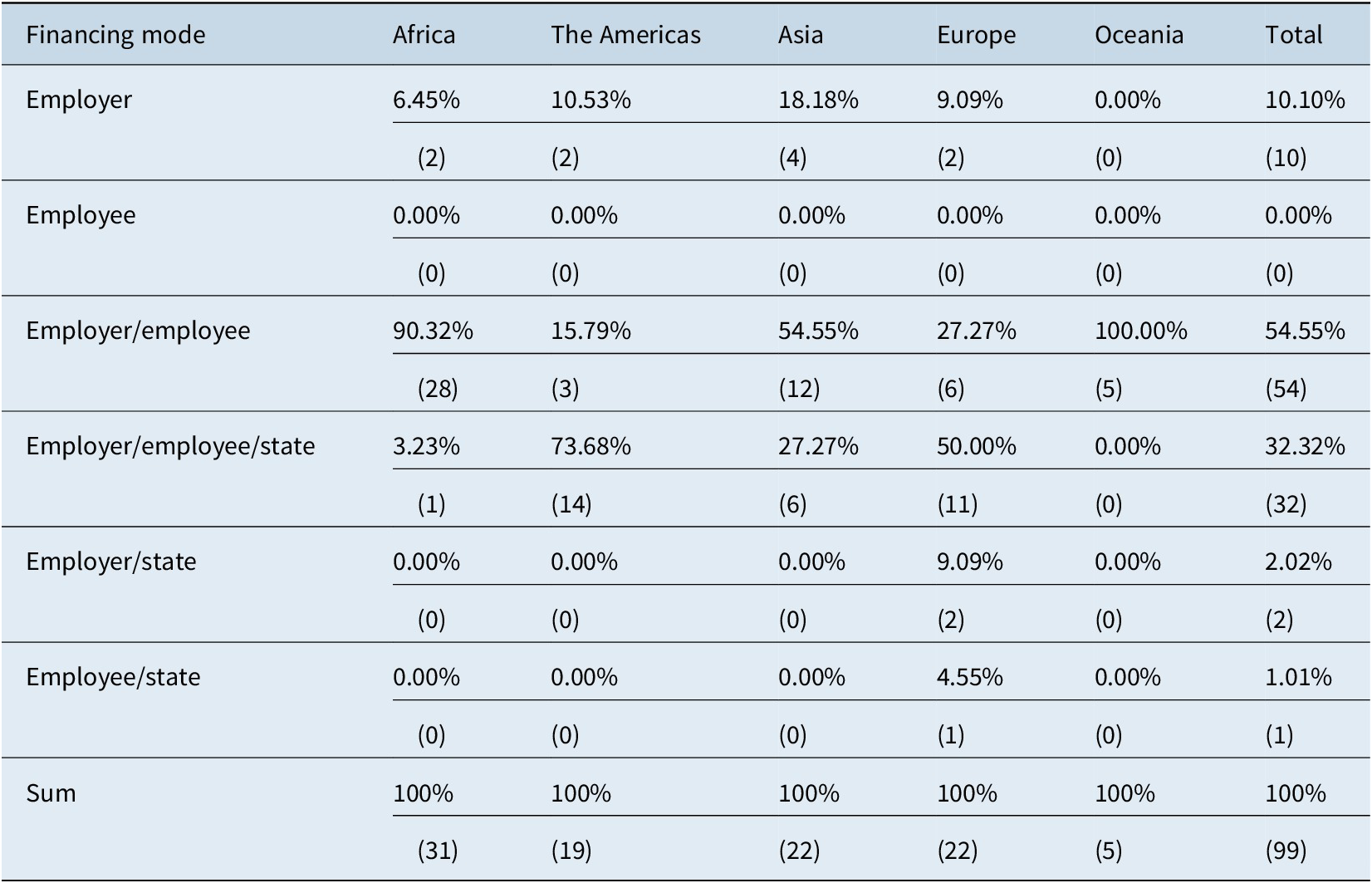
As Table 2 shows, the majority of all contributory pensions were financed by employer and employee contributions (54.55 per cent). Only 32.32 per cent of all countries have opted for a tripartite mode of financing when introducing their first pension programme. Whereas in Africa, Asia and Oceania, employer/employee contributions were dominant, in Europe and the Americas, tripartite modes of financing were most common.Footnote 5 The prevalence of employer/employee contributions in Africa is a direct consequence of colonialism. While British colonizers preferred cheap welfare solutions for their colonies, provident funds were best suited (Kaseke et al., Reference Kaseke, Midgley, Piachaud, Midgley and Piachaud2011, p. 145). As in Zambia the ties with the United Kingdom were still strong after independence, opting for a provident fund was a logical consequence (Kaseke et al., Reference Kaseke, Midgley, Piachaud, Midgley and Piachaud2011, p. 154). As provident funds do not require state contributions, the dominance of the dual mode of financing in Africa can partly be explained with the British colonial legacy. All former British colonies in this sample have opted for provident funds, which corresponds to 20.59 per cent of all African countries that have introduced pensions. Moreover, the French colonial legacy has affected this mode of financing, too. Former French colonies in Africa did not only copy the French social insurance design, but opted for employer/employee contributions in line with the French mode of financing, except Guinea (PENLEG, 2020).
Mode of financing of contributory pension schemes, 1880–2010 (number of countries in parentheses).

In Asian countries, economic considerations have shaped the decision for employer/employee contributions. With the turn from import substitution industrialization to heavy industry at the beginning of the 1970s, new capital was urgently required in South Korea (Kwon, Reference Kwon1995, p. 56). Hence, a social insurance design with employer/employee contributions was regarded as an ideal tool to collect money that could temporarily be used to invest in emerging industries (Kwon, Reference Kwon1995, p. 81). As President Park’s policy advisor Kim Manje admitted, this financing mode was superior to general tax increases, as it increases “the rate of savings out of current income” (Kwon, Reference Kwon1995, p. 90). Many Arab countries such as Bahrain opted for a dual mode of financing too, as they expected pension schemes to be self-sustaining (Price et al., Reference Price, Pallares-Miralles, Demarco and Attia2017, p. 17).
Tripartite modes of financing were most dominant in Europe and the Americas. Since the 1940s, many Latin American countries have tried to limit the political power of agro-oligarchs (Brearley, Reference Brearley2016, p. 3), while strengthening new industries and co-opting the emerging working class. In Mexico, social insurance schemes were basically the result of “shifting class coalitions and the need for the regime to incorporate the support of the organized working class into an institutionalized relationship with the regime” (Dion, Reference Dion2005, p. 88). Hence, tripartite modes of financing were best suited to empower and control the rising labour movement (Huber, Reference Huber1995, p. 11).
In contrast, employers were the only contributors to the pension system in just a few countries, such as Albania or the USSR (PENLEG, 2020). The idea for employer contributions in the USSR dates back to the October Revolution in 1917. In direct response to this event, the goals for future social security legislation were defined, comprising the idea of employer contributions (Duncan, Reference Duncan1935, p. 181). This financing principle was again codified in the labour code of 1922 (Abramson, Reference Abramson1929, p. 382) and served as a blueprint for the Albanian pension system (Farman, Reference Farman1950, p. 10). Many other socialist and communist countries outside Europe, such as China (1951), Guinea (1958) or Cuba (1963), have opted for employer contributions, too (PENLEG, 2020). In China, the government directly involved experts from the Soviet Union in creating its first pension system. Even though China decided against a state pension budget, which the Soviet Constitution has stipulated in 1936, it copied the principle of employer contributions (Hu, Reference Hu2012, p. 616).
In sum, colonial legacies and the Soviet model of social security have largely affected modes of pension financing. Moreover, economic and political motivations were decisive as the cases of South Korea or Mexico show.
Eligibility criteria – retirement age
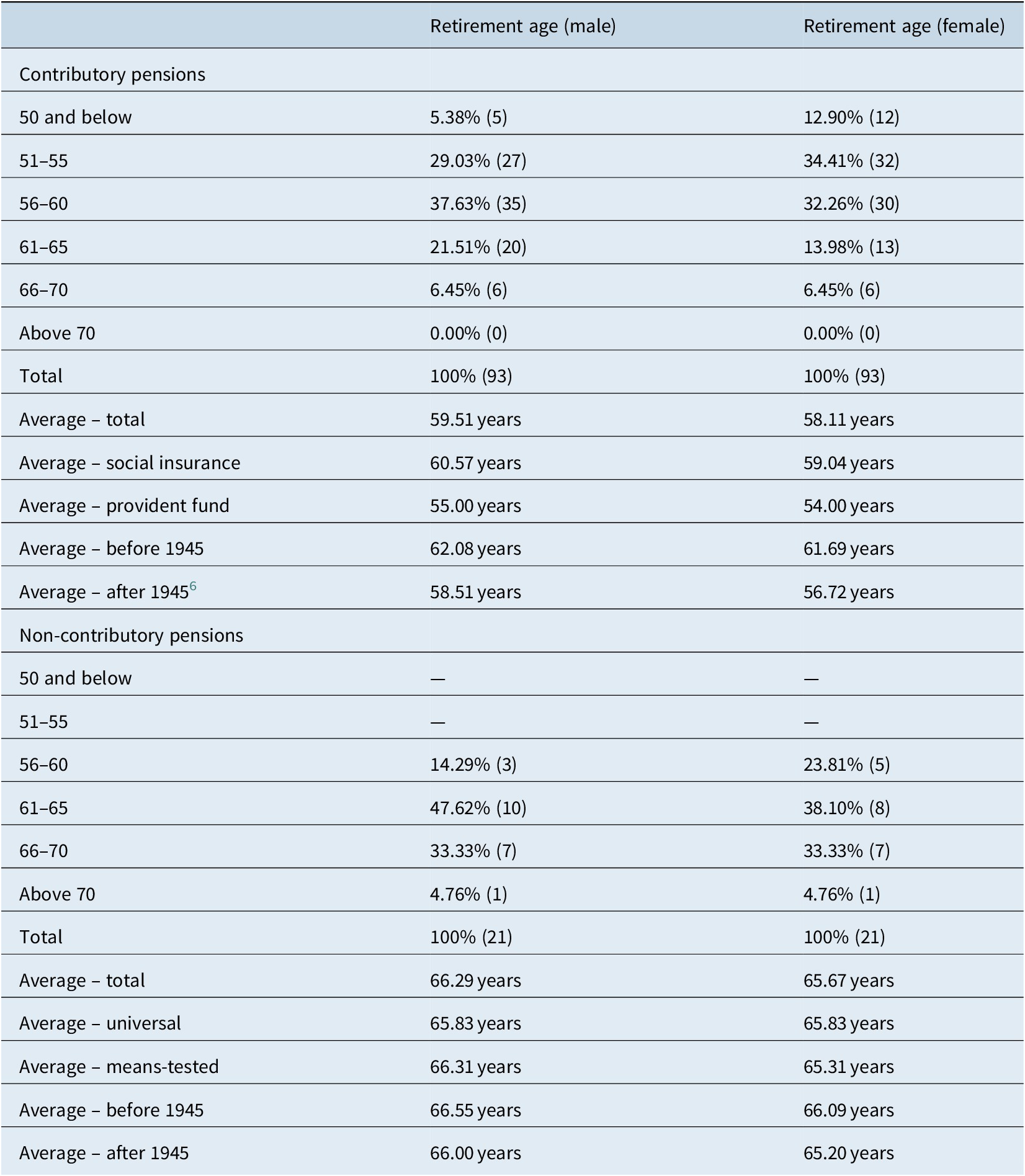
While eligibility criteria differ strongly depending on the pension design, the majority of pension programmes define a retirement age. The following table depicts the retirement ages of the first old-age pension programmes separated by gender and contributory/non-contributory pension design. Retirement ages are divided in 5-year steps.
On average, people retired earlier in contributory than in non-contributory financed pension schemes. These historical findings also correspond with current trends in pension developments (Mahon et al., Reference Mahon, McNeill and Heymann2015, p. 200). Preferences for high retirement ages were often related to cost containment. In Lesotho (2005), the introduction of a non-contributory financed pension was a direct response to the HIV/AIDS crisis and rising unemployment rates that shifted caregiving and breadwinning duties to the elderly and thus fostered old-age poverty (Tanga, Reference Tanga2010, p. 186). Instead of implementing contributions for civil service pensions to finance this new pension programme, the government opted for a retirement age of 70 years (Pelham, Reference Pelham2007, p. 28). Even though the problem of old-age poverty could not be countered effectively with such a policy, choosing a high retirement age was the easiest way to contain costs. Retirement ages of 70 years, however, were also prominent in contributory financed old-age pension schemes as the case of Bismarck’s Germany reveals.
Table 3 additionally shows temporal effects. Retirement ages of pensions that were introduced before 1945 were on average higher than those of late adopters, independent of the pension design. The decline in retirement ages, thereby, reflects a global trend that has been observed since the 1950s (Gendell, Reference Gendell2001, p. 15). Especially international organizations like the ILO were powerful actors in shaping the dialogue on retirement ages. In convention C102, the ILO stated that retirement “age shall be not more than 65 years or such higher age as may be fixed by the competent authority with due regard to the working ability of elderly persons in the country” (C102, 1952, article 26). Despite a small number of ratifications, the convention had a strong impact on countries, given the technical cooperation of the ILO worldwide (ILO, 2009).
Legal retirement age by gender (number of countries in parentheses).

With the exception of universal pensions, women retired 1 year earlier on average than men.Additionally, the average retirement ages of the first pension programmes exceeded life expectancies by 9.12 years (PENLEG, 2020). Thus, pensions were only capable of covering small segments of the elderly.
In sum, economic considerations strongly affected preferences for retirement ages. As the introduction of a new welfare programme demands for cautious policy-making within the scope of financial means, this is not surprising.
Pension coverage rates
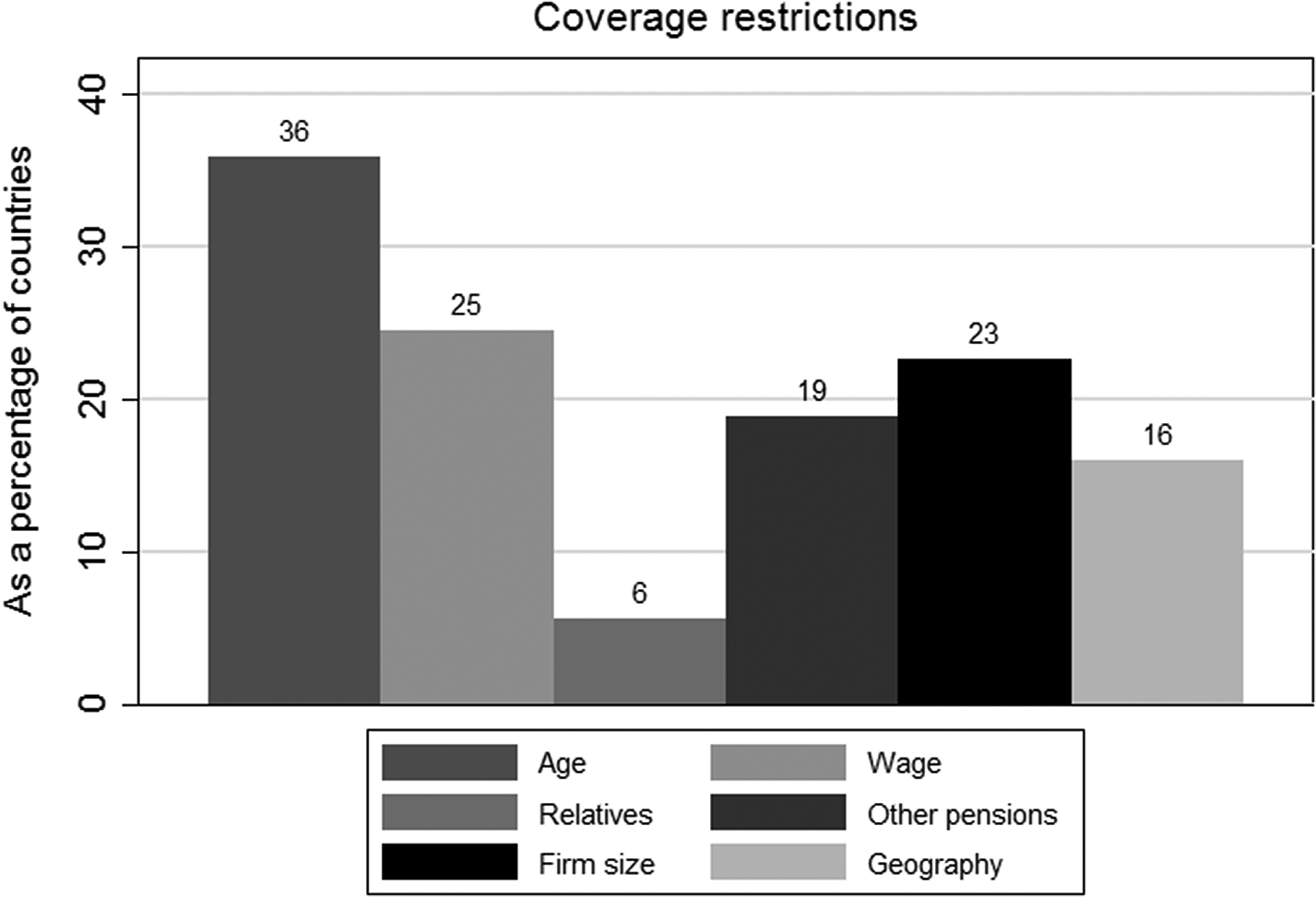
While the “massification of social security privileges” (Mesa-Lago, Reference Mesa-Lago1978, pp. 15–16) often proceeded gradually, the first pension programmes were mostly confined to important segments of the society. Even though targeting pension benefits on specific subgroups was a prominent way to hold coverage rates at bay, Figure 2 depicts six more restriction criteria that were commonly applied. As the PENLEG dataset does not offer pension coverage rates for means-tested programmes, this pension design was excluded from the following figures.
Coverage restrictions around the world (N = 106 countries).

Restrictions related to age were most common followed by wage requirements.Footnote 7 In Spain, only workers below an annual wage of 4,000 pesetas, corresponding to approximately twice the wages of a Spanish industrial worker (PENLEG, 2020), had to insure against the risk of old age (Doak & Stewart, Reference Doak and Stewart1932, p. 332). The Haitian pension law, by contrast, excluded all people without any lucrative employment (Office National d’Assurance – Republique d’Haiti, 1965, Chapter IIa). Age and wage requirements are crucial mechanisms to steer the composition of the risk pool and to enhance the financial sustainability of pensions. Moreover, excluding richer people from old-age protection can avert the danger of public opposition that might occur in response to mandatory insurance duties. While the exclusion of people that already receive another kind of pension was also quite prominent to limit coverage rates, the exclusion of relatives was least common. Generally, family members of employers were excluded as the case of Syria exemplifies. Third most common were restrictions related to firm size. In Taiwan (1950), firms with less than 10 employees were excluded from old-age protection (PENLEG, 2020). Even though nascent firms can be promoted with such a policy, it also leaves a large number of people unprotected.
Finally, 16 per cent of all countries limited pension access geographically. Such restrictions were often included to relieve financial, social or administrative capacities. When Guatemala founded its Social Security Administration in 1946, the inaugural law states that the implementation of social security schemes “must always take into account the social and economic circumstances of the country” (own translation, Decreto 295, 1946). Moreover, it demands that the first social security schemes should only cover the economically more favourable parts of the working class “because of their greater concentration in determined territory; because of their urban character, preferred to rural; for their greater degree of literacy [and] for their greater contributory capacity” (own translation, Decreto 295, 1946).
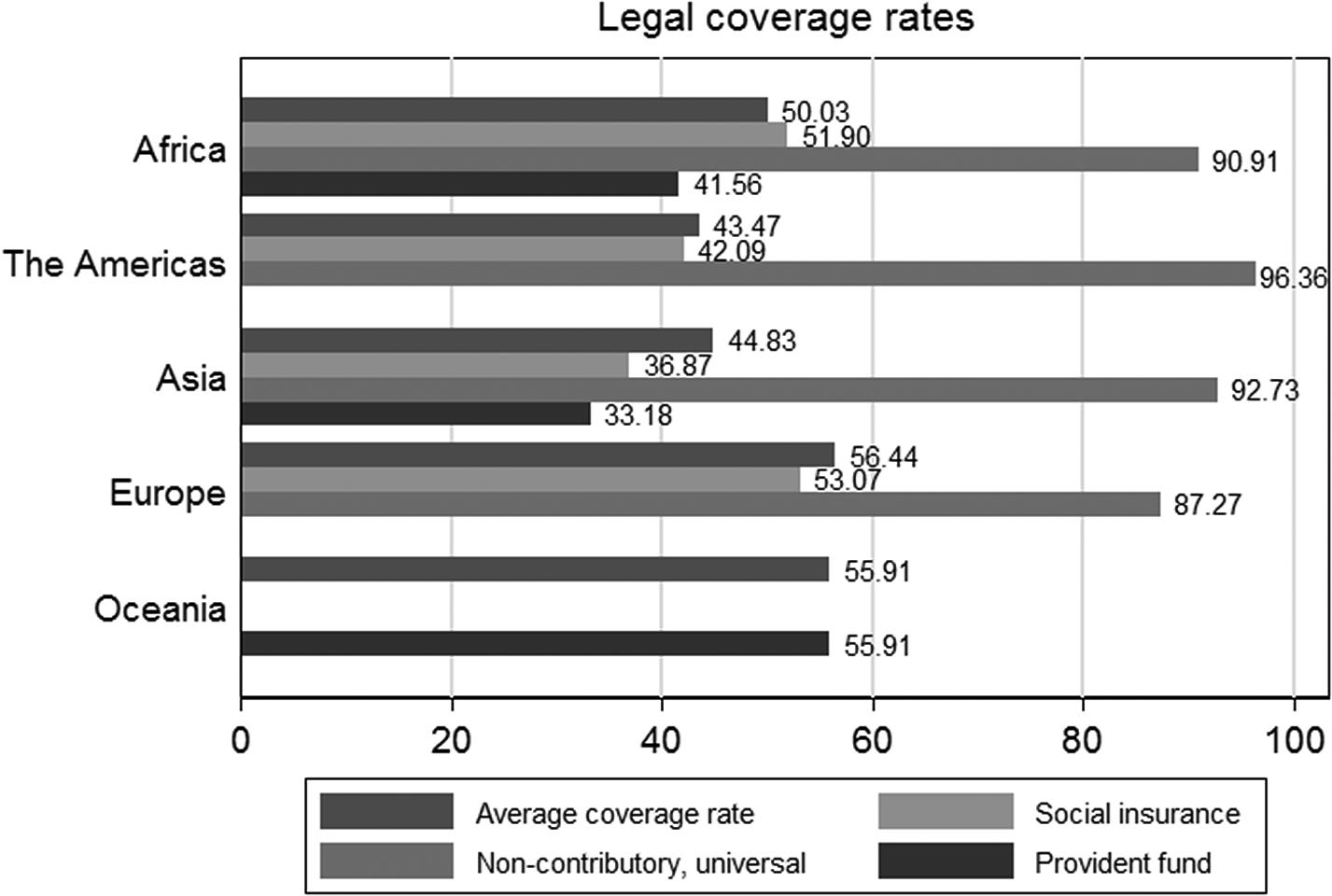
Figure 3 finally depicts the multidimensional coverage indicator. In addition to the average coverage rates in the different regions, the figure highlights coverage rates for social insurance schemes, provident funds and universal pension schemes separately.
Legal coverage rates (N = 106 countries).

The initial coverage rates of the first old-age pension schemes were quite low and on average covered 49.01 per cent of the previously enlisted occupational groups (PENLEG, 2020). When focusing on the vertical dimension of the coverage indicator separately, more than 5 per cent of the occupational subgroups were excluded from the pension systems in total (PENLEG, 2020).
While coverage rates were highest in Europe, they were lowest in Asian and Latin American countries. But even universal pension schemes were not all-encompassing. In Norway, eg. benefit receipt was connected to a residence condition (ILO, 1936). Compared to other world regions, especially, the high coverage rates of African social insurance schemes stand out. The reason for this phenomenon is mainly the result of the French colonial legacy. To define pension beneficiaries, the majority of former French colonies, such as Mali or the Senegal, used either the same or a similar definition of a worker that has been stipulated in the French Labour Code for Overseas Territories in 1952 (PENLEG, 2020). The Labour Code, which defined the social rights and duties of workers in the French colonies, defined a worker as …
any person, irrespective of sex or nationality, who has undertaken to place his gainful activity, in return for remuneration, under the direction and control of another person (including a public or private corporation) called the “employer”. For the purpose of determining whether or not a person is to be regarded as a worker, no account shall be taken of the legal position of the employer or of the employee. (Act No. 52-1322, article 1, 1952)
This broad definition of a worker, thereby, inflates legal pension coverage rates tremendously.
On average, the coverage rates of provident funds were lower compared to social insurance schemes, with the exception of Oceania. Especially, small islands such as Tuvalu have triggered high legal pension coverage rates in this region (PENLEG, 2020).
In sum, the choice of different coverage restriction criteria was largely driven by economic considerations to foster the sustainability of pension systems. Moreover, pension coverage rates in Africa strongly reflected French colonial legacies.
Pension benefit generosity
Pension replacement rates were often associated with different distributional effects. Whereas in Benin replacement rates increased progressively with rising income and higher contributions, in Argentina, the distributive mechanism worked in the opposite direction. Hence, the poorest segments of the Argentinian workforce received up to 90 per cent of their former wages after retirement, whereas the most affluent workers were confined to a replacement rate of 65 per cent (PENLEG, 2020). For those cases in which information about different distributional mechanisms was available, the PENLEG dataset additionally provides a minimal and a maximal replacement rate indicator. However, pension benefits did also vary for economic or social reasons. In Norway, pensions in urban areas were a quarter higher than in rural areas to compensate for higher living expenses (ILO, 1936). In Saudi Arabia, the amount of pension benefits was contingent upon the number of wives and dependent family members a pensioner had to care for (PENLEG, 2020). However, when leaving these factors aside, pensioners received 35.68 per cent (79 observations) of their former wages on average. Pension benefits were highest in social insurance schemes (39.11 per cent) followed by employer liability systems (31.50 per cent), non-contributory means-tested (23.64 per cent), non-contributory pension-tested (23.62 per cent) and universal pension schemes (17.40 per cent) (PENLEG, 2020).Footnote 8 But also regional effects were pronounced as Table 4 depicts.
Regional pension replacement rates (Oceania = Australia).

Pension benefits were most generous in Europe and the Americas. In Europe, countries like the Soviet Union, Albania or Bulgaria contributed to this finding, with pension replacement rates of more than 70 per cent (PENLEG, 2020). In line with its Marxist promoters, social insurance in the Soviet Union was dedicated to “increase the share of the working class in the national revenue” (Abramson, Reference Abramson1929, p. 382) and in so doing to uphold the living standard in case of old age. Hence, high pension replacement rates in the Soviet Union and Albania were not surprising.
In Latin America, generous pension benefits were mainly the result of import substitution industrialization. To sustain this economic development model, states had to foster ties with industrial and commercial workers and therefore made huge investments in generous welfare systems (Barrientos, Reference Barrientos2018; Haggard & Kaufman, Reference Haggard and Kaufman2008; Ward, Reference Ward2004). In Africa, many neighbouring countries used similar wording to define benefit generosity levels and thus ended up in nearly identical pension replacement rates (ILO, 1968; USSSA, 1985).
Independent from the pension design, replacement rates were lowest in Asian countries (23.47 per cent). With a replacement rate of 10.76 per cent, pensioners in Israel could hardly live off their pension benefits (PENLEG, 2020). Given this problem, the Knesset amended its original pension law in 1957, allowing pensioners to continue work as long as they reduce their working hours substantially (Pollak, Reference Pollak1967, p. 101).
In sum, pension generosity levels varied strongly depending on the pension design. Moreover, economic development strategies as well as political considerations had a profound effect on pension replacement rates.
Conclusion
While many case studies have focused on the historical origins of old-age pensions, global and comparative studies are largely missing mainly due to data limitations. By introducing the novel PENLEG dataset, this article has mapped historical pension patterns on different pension dimensions. Moreover, case study evidence was used to highlight important factors that have shaped specific pension developments. The study shows that colonial legacies, the Soviet model of social security as well as political and economic considerations were decisive for the specific design of old-age pensions.
While case study evidence is a useful way to showcase specific pension trajectories, it has limitations. For example, we still do not know why former French colonies used the legal expressions of the French Labour Code for Overseas Territories to define pension beneficiaries. Thus, in-depth studies with a closer look at the policy-making process become all the more necessary. Moreover, quantitative research is required to test for the significance of specific confounding factors in relation to competing explanations.
As the study was based on pension legislation, we still do not know how effectively pension rights have been implemented. Especially with regard to pension coverage rates, missing state capacity and huge informal labour market sectors can inhibit an efficient collection of payroll taxes and the distribution of benefits. Today, only about 11.6 per cent of the African population above the age of 60 years actually benefits from old-age pensions (Guven, Reference Guven2019, p. 8). This stands in strong contrast to the broad pension rights that many African countries defined after independence. Moreover, many actions that were originally intended to relieve administrative capacities or nascent firms when introducing pension programmes for the first time are still common today. As the ILO has noted, exempting small firms from their insurance liability is a main cause that triggers poor pension coverage rates around the world (ILO, 2000).
In sum, this article serves as a starting point for future studies, as it has taken a closer look at different pension dimensions and in so doing uncovered new pension patterns that demand for further elaboration, both qualitatively and quantitatively. Moreover, the article can contribute to the awareness of global social policy-makers with regard to the historical peculiarities and requirements of different world regions.
Acknowledgement
I want to thank Herbert Obinger, Amanda Shriwise as well as two anonymous reviewers for excellent comments and suggestions.
Disclosure statement
I have no conflict of interest to disclose.
Data availability statement
Data available upon request.
Notes on contributors
Aline Grünewald is a PhD student and lecturer at the University of Bremen. She holds a BA degree in political science and history from the University of Mannheim and a MA degree in political science from the University of Bremen. Her main research interest focuses on social policy in the Global South, authoritarian regimes and party politics. In her PhD project she analyzes the historical emergence of old-age pension schemes around the world, with a specific focus on nondemocratic regimes.