Significant outcomes
• CYP1A2 gene SNP (*1C, *1D, *1E and *1F) were not associated with treatment response and adverse effects of clozapine in patients with TRS.
• CYP1A2 gene SNP (*1C, *1D, *1E and *1F) were not associated with serum clozapine levels in patients with TRS.
• Routine screening for CYP1A2 gene SNP prior to start clozapine is currently unwarranted.
Limitations
• Cross-sectional study design.
• Dichotomous categorisation of clinical response to clozapine is debatable.
• Outcome measures to assess the treatment responses in schizophrenia are diverse.
Introduction
Clozapine is the drug of choice for the management of treatment-resistant schizophrenia (TRS) Reference Kane, Honigfeld, Singer and Meltzer1. It is a serotonin-(5-HT1A, 5-HT2A, 5-HT2C, 5-HT3A, 5-HT3B, 5-HT6 and 5-HT7) dopamine (D1–D4) antagonist (SDA), which also acts on histaminergic, adrenergic and cholinergic receptors Reference Horacek, Bubenikova-Valesova and Kopecek2. The advantages of clozapine include its superior clinical efficacy, its ability to reduce negative symptoms as well as the risk for suicide Reference Meltzer, Alphs and Green3 and its low propensity to produce movement disorders Reference Tandon and Fleischhacker4. Its disadvantages are sub-optimal response in 40–70% patients with TRS Reference Remington, Saha, Chong and Shammi5, adverse events such as seizures, agranulocytosis, weight gain and dyslipidaemia Reference Henderson, Cagliero and Gray6, high cost and the need for periodic leucocyte monitoring. There is a clinical need to determine factors associated with good response to clozapine in order to predict its clinical outcomes and to prevent unnecessary use in patients who are unlikely to improve with clozapine Reference Chung and Remington7.
Cytochrome P-450 1A2 (CYP1A2), a member of the cytochrome P-450 mixed-function oxidase system, is the principal determinant of clozapine metabolism by N-demethylation and N-oxidation Reference Pirmohamed, Williams, Madden, Templeton and Park8. CYP1A2 enzyme activity influences the serum clozapine levels Reference Ozdemir, Kalow and Okey9, Reference Eap, Bender and Jaquenoud Sirot10, Reference Djordjevic, Ghotbi, Jankovic and Aklillu11. Inadequate serum clozapine levels are associated with sub-optimal clinical response to clozapine in many patients Reference Potkin, Bera and Gulasekaram12, Reference Kronig, Munne and Szymanski13, Reference Miller, Fleming, Holman and Perry14. Hence, we get the impetus to evaluate the association between CYP1A2 gene polymorphisms and clinical response to clozapine. The CYP1A2 gene (gene ID: 1544) is located in 15q24.1 and spans 7.8 kilo bases, comprising seven exons, six introns and an enhancer region Reference Corchero, Pimprale, Kimura and Gonzalez15, Reference Zhou, Wang, Yang and Liu16. CYP1A2 enzyme activity has been reported to show marked inter-individual variations (up to 60-fold), because of various genetic and environmental factors Reference Murayama, Soyama and Saito17. Genetic factors alone may explain 35–75% of the variations seen in CYP1A2 enzyme activity Reference Zhou, Wang, Yang and Liu16. In addition, marked inter-individual variations (15- to 40-fold) have been also documented in the expression levels of CYP1A2 mRNA and protein Reference Zhou, Wang, Yang and Liu16. At least 33 single nucleotide polymorphisms (SNP) and 17 haplotypes in the CYP1A2 gene have been identified so far Reference Soyama, Saito and Hanioka18. Among these SNP, CYP1A2*1C causes decreased enzyme activity in vivo and CYP1A2*1F leads to higher inducibility of the enzyme Reference Soyama, Saito and Hanioka18. CYP1A2*1D and CYP1A2*1E are relatively more frequent in Asian populations and have been previously investigated for their influence of CYP1A2 enzyme activity Reference Zhou, Wang, Yang and Liu16, Reference Soyama, Saito and Hanioka18, Reference Sachse, Bhambra and Smith19. However, the association between these four SNP and clinical responses to clozapine in TRS remains uncertain.
Although evidence for association between response to clozapine and 5HT2A Reference Arranz, Munro and Sham20 as well as 5HT3A Reference Souza, de Luca, Meltzer, Lieberman and Kennedy21 gene SNP exists, results of other studies investigating the clinical Reference Honigfeld and Patin22, Reference Honer, Macewan and Kopala23, Reference Umbricht, Wirshing and Wirshing24, Reference Lieberman, Safferman and Pollack25, genetic Reference Mancama, Arranz and Kerwin26, Reference Arranz, Munro and Birkett27, Reference Hwang, Shinkai and De Luca28 and other biological predictors Reference Lieberman, Kane and Safferman29, Reference Gross, Joutsiniemi, Rimon and Appelber30 are mostly inconclusive, with many of them being contradictory or pending replication. The Royal Dutch Association for the advancement of pharmacy has recently evaluated therapeutic dose recommendations for clozapine based on CYP2D6 genotypes and concluded against any specific recommendations Reference Swen, Nijenhuis and de Boer31. Although non-synonymous coding SNP have not been found to be associated with clozapine treatment response Reference Zhou, Wang, Yang and Liu16, Reference Murayama, Soyama and Saito17, case studies have claimed an association between CYP1A2*1F SNP and treatment resistance to clozapine Reference Ozdemir, Kalow and Okey9. Ultra-rapid CYP1A2 activity, because of CYP1A2*1F polymorphism, has been hypothesised to yield low serum clozapine levels and poor treatment response Reference Eap, Bender and Jaquenoud Sirot10. CYP1A2*1F has also been associated with higher induction of the enzyme by smoking Reference Eap, Bender and Jaquenoud Sirot10 and heavy caffeine consumption Reference Djordjevic, Ghotbi, Jankovic and Aklillu11. However, subsequent studies were negative for the association between CYP1A2 SNP and serum clozapine levels, as well as clozapine treatment response Reference Kootstra-Ros, Smallegoor and Van der Weide32, Reference Jaquenoud Sirot, Knezevic and Morena33, Reference Van der Weide, Steijns and Van Weelden34. These reports did not exclusively study patients with established TRS and investigated only less than 80 participants Reference Ozdemir, Kalow and Okey9, Reference Kootstra-Ros, Smallegoor and Van der Weide32, Reference Jaquenoud Sirot, Knezevic and Morena33, Reference Van der Weide, Steijns and Van Weelden34. They did not use structured assessment of clinical variables such as premorbid adjustment, traumatic life events, cognition and disability nor did they adjust for these variables. Hence, investigating the association between the CYP1A2 gene and clinical response to clozapine in a relatively larger sample of patients with TRS, accompanied by structured assessment of clinical variables, is desired.
Aims of the study
Our principal aim is to evaluate the association between four SNP in the CYP1A2 gene (CYP1A2*1C, CYP1A2*1D, CYP1A2*1E and CYP1A2*1F) and the clinical responses as well as adverse effects to clozapine in patients with TRS, while adjusting for the effects of confounding clinical variables. Our secondary aims include investigating the association between these four SNP and the serum clozapine levels, disability and cognition of patients with TRS.
Materials and methods
Study design
We used a pharmacogenetic association study to investigate the association between these functionally relevant four SNP in the CYP1A2 gene and clinical responses to clozapine.
Setting
We conducted this study in the Department of Psychiatry, Christian Medical College (CMC), Vellore, India, a tertiary referral centre for the management of psychiatric disorders. The hospital has short-term inpatient services, daily outpatient and regular follow-up clinics. Patients with schizophrenia are initially treated with either dopamine antagonists or serotonin dopamine antagonists (SDA). Clozapine is never used as the first line antipsychotic medication and is reserved for patients with TRS. Standard international guidelines Reference Schulte35, 36 are followed to monitor total and differential leukocyte counts of all patients receiving clozapine. Their metabolic parameters are also periodically monitored. Detailed medical records of treatment are maintained for all patients. Most of our outpatients with schizophrenia live in the community with their families. Their medications are directly provided by their first-degree relatives or spouses, who report any degree of non-adherence to the treating psychiatrists during periodically scheduled follow-up visits.
Recruitment of participants
We invited all consecutive patients, who satisfied the following eligibility criteria, into the study: (a) Diagnostic and Statistical Manual of Mental Disorders-IV TR diagnosis of schizophrenia 37, (b) established treatment resistance in the past after failure to respond at least two adequate antipsychotic trials, as documented by treating psychiatrists. An adequate antipsychotic trial was defined by 600 mg chlorpromazine equivalents for a duration of at least 6 weeks with good drug compliance. The two adequate antipsychotic trials included at least one adequate trial with a SDA, (c) on stable dose regimens of clozapine for at least 12 weeks with good drug compliance during that period, (d) origin of South Indian ethnicity. Written informed consent was obtained from the patients and from their first-degree relatives. Patients with severe neurological illnesses, intellectual disability and sensory impairment, precluding the assessment, were excluded.
Clinical assessment
We used the following instruments: (a) Brief Psychiatric Rating Scale (BPRS) to assess treatment response to clozapine Reference Overall and Gorham38, (b) Abnormal Involuntary Movements Scale (AIMS) to measure neuroleptic-induced dyskinesia Reference Guy39, if present, (c) Addenbrooke's Cognitive Examination (ACE-R), a brief cognitive test battery to evaluate cognitive status Reference Mioshi, Dawson, Mitchell, Arnold and Hodges40, (d) World Health Organisation Disability Assessment Scale II to quantify the disability 41, (e) Childhood Traumatic Events Scale (CTES) to assess early traumatic experiences before the age of 17 Reference Pennebaker and Susman42, (f) Recent Traumatic Event Scale (RTES) to assess traumatic experiences within the past 3 years Reference Pennebaker and Susman42, (g) Premorbid Adjustment Scale (PAS) to assess premorbid functioning retrospectively Reference Rabinowitz, Levine, Brill and Bromet43 and (h) a structured questionnaire to collect socio-demographic, clinical and treatment data. We also recorded data about developmental delays, obstetric complications, urbanisation, recent migrations, smoking, caffeine as well as grape juice consumption and anthropometric measures. ACE-R, CTES, RTES and PAS were translated into the local language, Tamil, and then back translated to English by bilingual health professionals. The final versions were obtained by consensus among the translators who emphasised on content and on conceptual, semantic and technical equivalence.
Serum clozapine assay
Peripheral venous blood samples were collected from all participants by venipuncture, 12 h after their last clozapine dose. Serum clozapine levels were measured by deproteinisation with diethyl ether and subsequent high-performance liquid chromatography with ultra-violet detection Reference Wongsinsup, Taesotikul, Kaewvichit, Sangsrijan and Sangsrija44. The serum clozapine levels were expressed as ng/ml.
CYP1A2 genotyping
Genomic DNA was isolated from whole blood using QIAamp DNA mini Kit (Qiagen GmBH, Hilden, Germany). CYP1A2*1C, CYP1A2*1D, CYP1A2*1E and CYP1A2*1F were genotyped using previously published PCR-restriction fragment length polymorphisms method Reference Sachse, Bhambra and Smith19. Briefly, 200 ng of genomic DNA was subjected to PCR amplification using appropriate primers Reference Sachse, Bhambra and Smith19 and Genei™ Red Dye PCR master mix (Genei, Bangalore, India). Amplified PCR products were subjected to restriction digestion with appropriate enzymes, BseL I, Nde I, BsuR I and Bsp 120I (Fermentas-Genetix biotech Asia, New Delhi, India) respectively for CYP1A2*1C, CYP1A2*1D, CYP1A2*1E and CYP1A2*1F. The digested products were separated by gel electrophoresis in a 3% agarose gel. Then, they were identified by the unique patterns, characteristic to their specific genotypes.
Data collection
The protocol of the study was approved by the Institutional Review Board of CMC, Vellore, India. We provided a fact sheet about the details of this study to all participants. We discussed those details and obtained written informed consent from the participants and from their first-degree relatives or spouses. Every participant was individually assessed for psychopathology using BPRS. The participants were examined for tardive dyskinesia, when present, its severity was recorded using the AIMS. Another independent investigator, who was blind to the clozapine response status, used other instruments and assessed various clinical variables by detailed personal interviews with the participants and their primary care givers. She accessed the medical records of all participants with their consent. The principal investigator (A. P. Rajkumar), who was blind to clozapine response status and to the clinical data, carried out CYP1A2 genotyping of all samples. Hence, separate investigators collected data on outcome variable of clozapine treatment response (S. Bhuvaneshwari), exposure variables of CYP1A2 genotype (A. P. Rajkumar) and clinical variables (C. Chitra). They ensured that they were blind to each others' findings till the completion of the study. We followed standard quality control procedures to ensure the accuracy of our data collection, data entry and of the CYP1A2 genotyping.
Statistical analyses
We initially analysed the study variables using descriptive statistics. Many researchers prefer to define the response to clozapine by greater than 20% reduction in the total score of BPRS Reference Conley, Carpenter and Tamminga45. However, most clinical psychiatrists do not refer to non-response based on a change on any rating scale, but rather on the presence of persistent positive or negative symptoms Reference Buckley, Miller, Olsen, Garver, Miller and Csernansky46. Moreover, due to our cross-sectional study design, we defined the response to clozapine, with the widely used cross-sectional threshold of having BPRS total score of 35 or less Reference Conley, Carpenter and Tamminga45, Reference Buckley, Miller, Olsen, Garver, Miller and Csernansky46. We dichotomously categorised the participants, who had BPRS total scores equal to or less than 35, as clozapine responders. We calculated the CYP1A2 allele frequencies in our sample and checked whether they were in Hardy-Weinberg Equilibrium (HWE). We calculated the allelic odds ratios (ORs) with 95% confidence intervals (CIs). We used the Cochran-Armitage Test for Trend (CATT) to assess statistical significance of the association between CYP1A2 genotypes and clinical response to clozapine. We used one sample Kolmogorov-Smirnov test to check for the normal distribution of all continuous variables. We compared the means of psychopathology and disability scores and serum clozapine levels between CYP1A2 genotypes, using the Kruskal-Wallis test. We used appropriate multivariate statistics to adjust for the effects of clinical variables. We estimated the prerequisite sample size and post hoc power using Quanto 1.2.4 software Reference Gauderman47. We performed other analyses using the statistical software packages, STATA 12.0 and PLINK v1.07 Reference Purcell, Neale and Todd-Brown48.
Sample size estimation
A previous study using BPRS for the assessment of clinical outcome has reported that 44.3% patients with TRS were clozapine non-responders Reference Semiz, Cetin and Basoglu49. The minor allele (C) frequency of CYP1A2*1F (rs762551) in the Asian population is 0.386 50. We estimated that the prerequisite sample size to be 34 cases of clozapine non-responders for an unmatched case control study two-sided test, with 5% alpha error, 80% power and with odds ratio (OR) of 2.5. The variant allele (del-T) frequency of CYP1A2*1D (rs35694136) is 0.414 51. We estimated the prerequisite sample size to be 33 cases of clozapine non-responders for an unmatched case control study two-sided test with 5% alpha error, 80% power and with OR of 2.5.
Results
Sample characteristics
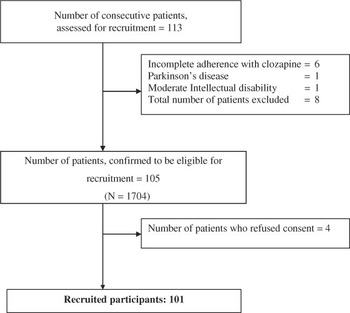
We assessed 113 consecutive patients. We excluded six patients, who were not completely compliant with clozapine, within the past 12 weeks. One patient with severe Parkinson's disease and another with moderate intellectual disability were also excluded. Among the 105 patients, confirmed to be eligible, 101 consented to participate, making the response rate as 96.2%. Common reasons for refusing consent were lack of interest in study objectives and reluctance to provide blood samples. We present the flowchart for recruitment of the patients as Fig. 1. Participants (N = 101) and those who were excluded (n = 12) did not differ significantly on gender (χ 2 = 0.04; d.f. = 1; p = 0.84), age (t = −1.41;d.f. = 111;p = 0.16) and on their duration of illness (t = −1.27; d.f. = 111; p = 0.21). There were 65 (64.4%) clozapine responders and 36 (35.6%) non-responders, who had BPRS total scores, 36 or more.
Flowchart for the recruitment of participants.

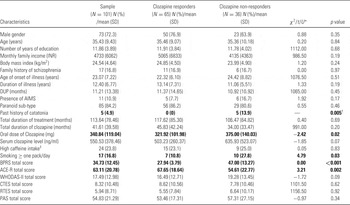
Table 1 presents the socio-demographic, clinical and treatment profiles of all participants and of the clozapine responders as well as non-responders. The majority of the participants were single or separated men (n = 66;65.3%) who were unemployed (n = 60; 59.4%) and living in urban areas (n = 58; 57.4%). The duration of clozapine treatment ranged between 4 and 174 months, with a median value of 28 months. More than half of the participants (53.5%) had received clozapine for longer than 2 years. Thirty seven participants (36.6%) had received electroconvulsive therapy in the past. We did not have any participants who were concurrently on carbamazepine or on oral contraceptive pills. The oral doses of clozapine ranged from 100 to 650 mg/day, with a median value of 350 mg/day. Serum clozapine levels of the participants ranged from 104 to 2547 ng/ml, with a median value of 428 ng/ml.
Socio-demographic, clinical and treatment profiles of the clozapine responders (n = 65) and non-responders (n = 36)

DUP, duration of untreated psychosis; AIMS, abnormal involuntary movements; BPRS, Brief Psychiatric Rating Scale; ACE-R, Addenbrooke's cognitive examination-revised; WHODAS-II, World Health Organisation Disability Assessment Scale; CTES, Childhood Traumatic Event Scale; RTES, Recent Traumatic Event Scale; PAS, Premorbid Adjustment Scale; INR, Indian rupees. Clozapine non-responders: participants with BPRS total scores 36 and above.
Statistically significant associations with p values < 0.05 are presented in bold.
* Chi square or independent samples t-test or Mann-Whitney U test between responders and non-responders.
† Fisher exact test p value (two tailed).
‡ Three or more cups of coffee or tea intake/day.
CYP1A2 allele frequencies
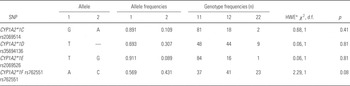
Table 2 shows the CYP1A2 allele frequencies of the four SNP. The allele frequencies of CYP1A2*1C (rs2069514), CYP1A2*1D (rs35694136), CYP1A2* 1E (rs2069526) and CYP1A2*1F (rs762551) were consistent with the HWE.
CYP1A2 allele frequencies among the participants (N = 101)

Goodness of fit with HWE.
Association between CYP1A2 SNP and clinical responses to clozapine
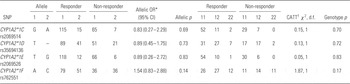
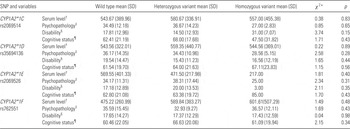
Table 3 shows the association between the four SNP in the CYP1A2 gene and response to treatment with clozapine in patients with TRS. None of the CYP1A2 alleles and genotypes was significantly associated with clozapine treatment response. The CYP1A2*1F CC genotype did not significantly increase the risk of clozapine non-response (OR 2.17; 95% CI 0.74–6.38; p = 0.16), when compared to the AA genotype. Multiple logistic regression analyses, adjusting for the effects of various clinical variables, including the serum clozapine levels, confirmed these findings. Table 4 presents the association between these four SNP in the CYP1A2 gene and psychopathology, serum clozapine levels, cognition and disability. The differences among the median values of these variables between the CYP1A2 genotypes were not statistically significant. Appropriate multiple quantile regression analyses, adjusting for the effects of other clinical variables, including the serum clozapine levels, also confirmed these findings.
Association between CYP1A2 gene SNP and treatment response to clozapine among the clozapine responders (n = 65) and non-responders (n = 36)

Calculated with variant allele Reference Horacek, Bubenikova-Valesova and Kopecek2 as the exposure variable and clozapine non-response as the outcome variable.
† CATT.
Association between CYP1A2 gene SNP and serum clozapine levels, psychopathology, disability as well as cognitive status among the participants with TRS (N = 101)

Kruskal-Wallis test with two degrees of freedom.
† Serum clozapine level in ng/ml.
‡ BPRS total score.
§ World Health Organisation Disability Assessment-II Scale total score.
¶ Addenbrooke's cognitive examination-revised total score.
Association between CYP1A2 SNP and adverse effects to clozapine
Our participants had the following adverse effects, related to clozapine: hypersomnolence (n = 77; 76.2%), sialorrhoea (n = 47; 46.5%), nausea or vomiting (n = 21; 20.8%), constipation (n = 21; 20.8%), erectile dysfunction (13 men; 27.7%), dyslipidaemia (n = 12; 11.9%), clozapine-related seizures (n = 9; 8.9%), nocturnal enuresis (n = 6; 5.9%) and obesity (n = 15; 14.9%). As we never re-challenge patients, who have developed neutropenia with clozapine, none of our participants had past history of neutropenia or agranulocytosis. Association between the four CYP1A2 SNP and all adverse effects were not statistically significant (p values > 0.10). Multiple logistic regression analyses, adjusting for the effects of other clinical variables, including the serum clozapine levels, confirmed these findings.
Secondary analyses
We repeated similar analyses using the following three more definitions for non-response to treatment with clozapine: (a) Total score of BPRS 38 and above (worst quartile); (b) At least one the five selected BPRS items for suspiciousness, hallucinatory behaviours, grandiosity, conceptual disorganisation and unusual thought content was scored moderate and above; (c) At least two of these five selected BPRS items was scored moderate and above. Absence of statistically significant associations between CYP1A2 SNP and clozapine treatment response were replicated using these differing outcome definitions for non-response to clozapine. Participants who smoked more than 20 cigarettes a day (n = 17) did not differ in their serum clozapine levels (Kruskal-Wallisχ 2 = 0.39; d.f. = 2;p = 0.82) and on their clinical responses to clozapine (CATTχ 2 = 2.00;d.f. = 1;p = 0.16) depending on their CYP1A2*1F genotypes. Multivariate analyses adjusting for the effects of age, oral dose and of body mass index confirmed these findings.
Discussion
This study examined the association between four SNP in the CYP1A2 gene and clinical responses to clozapine among patients with TRS, accompanied by structured assessment of clinical variables. Our sample size is relatively larger than most of the available studies on this topic Reference Ozdemir, Kalow and Okey9, Reference Eap, Bender and Jaquenoud Sirot10, Reference Djordjevic, Ghotbi, Jankovic and Aklillu11, Reference Kootstra-Ros, Smallegoor and Van der Weide32, Reference Jaquenoud Sirot, Knezevic and Morena33 and we have exclusively recruited only patients with established treatment resistance. The strengths of this study include minimal refusal rate, access to well-documented medical records, estimations of serum clozapine levels, testing multiple outcome definitions and structured assessments of clinical variables such as premorbid adjustment, traumatic life events, cognition as well as disability. Consecutive sampling strategy reduced the possibility of selection bias. The independent assessments of CYP1A2 genotypes, clozapine treatment response and clinical variables minimised the possibility of observer bias. We attempted to minimise the recall bias on the reported clinical variables by interviewing one or more first-degree relatives of the participants and by verifying their follow-up medical records.
The potential limitations of this study include the cross-sectional clinical assessment of response to clozapine and its dichotomous categorisation. We recruited only the participants, who were maintained on stable dosage of clozapine for a minimum duration 12 weeks, when their treating psychiatrists did not need to change their prescription. Hence, their cross-sectional BPRS scores were more indicative of their persistent psychopathology than of any acute fluctuations in their illnesses. Although many researchers define the response to clozapine by the reduction in the total scores of BPRS, most clinical psychiatrists prefer to use the discrete clinical category of non-response based on the presence of persistent positive or negative symptoms Reference Buckley, Miller, Olsen, Garver, Miller and Csernansky46. Clinical significance of many statistically significant reductions in the total scores of psychiatric rating scales remains uncertain Reference Estellat, Torgerson and Ravaud52. Hence, we analysed multiple BPRS-derived categorical outcome definitions, as dependent variables, by appropriate multivariate models to confirm our findings. Despite the extensive use of BPRS, we should acknowledge that there are more diverse outcome measures to assess the treatment responses in schizophrenia Reference Burns53.
Our findings suggest that the presence of two SNP (CYP1A2*1C and CYP1A2*1D) in the 5′ flanking region and two others (CYP1A2*1E and CYP1A2*1F) in intron 1 of the CYP1A2 gene are not associated with clinical response to clozapine and with serum clozapine levels. CYP1A2*1F has been associated with higher induction of CYP1A2 activity by smoking Reference Eap, Bender and Jaquenoud Sirot10 and by heavy caffeine consumption Reference Djordjevic, Ghotbi, Jankovic and Aklillu11. Earlier case studies have reported possible association between CYP1A2*1F and clozapine non-response, especially in smokers Reference Ozdemir, Kalow and Okey9, Reference Eap, Bender and Jaquenoud Sirot10. Small uncontrolled samples and lack of multivariate analyses may explain these reports, because subsequent larger studies did not find any significant association between CYP1A2 SNP and serum clozapine levels or with clinical response to clozapine Reference Kootstra-Ros, Smallegoor and Van der Weide32, Reference Jaquenoud Sirot, Knezevic and Morena33, Reference Van der Weide, Steijns and Van Weelden34. Associations between CYP1A2 gene and schizophrenia as well as tardive dyskinesia were also not significant, after corrections for multiple comparisons Reference Tiwari, Deshpande, Lerer, Nimgaonkar and Thelma54. Our results corroborate the available literature and confirm the lack of association between these four SNP in the CYP1A2 gene and clinical response to clozapine. Our results do not support the association of CYP1A2*1F with low serum clozapine levels in smokers Reference Eap, Bender and Jaquenoud Sirot10. Smoking has been reported to have a major influence over serum clozapine levels Reference Perry, Bever, Arndt and Combs55. Its relationship with clozapine treatment response is, however, controversial Reference Dratcu, Grandison, Mckay, Bamidele and Vasudevan56, Reference Mcevoy, Freudenreich and Wilson57. We may consider that poor clozapine response in smokers may be secondary to smoking rather than to CYP1A2*1F Reference Dratcu, Grandison, Mckay, Bamidele and Vasudevan56.
Although early studies have claimed that CYP1A2 genotyping could have high clinical utility for the patients on clozapine Reference Eap, Bender and Jaquenoud Sirot10 and CYP450 pharmacogenetic test chips are being currently marketed Reference de Leon, Arranz and Ruano58, our results have proved the contrary. On the basis of our study findings, we conclude that these four CYP1A2 gene SNP do not help to predict the clinical responses to clozapine. Hence, routine screening for them prior to start clozapine is unwarranted at present. Our study also provides new data on the CYP1A2 allele frequencies in a population of south Indian ethnicity. These allele frequencies are similar to other Asian and sub-Saharan African populations 50, 51, 59, 60.
Schizophrenia is not a single disease, but a heterogeneous polygenic multi-factorial disorder, caused by multiple common genetic variants Reference Stefansson, Ophoff and Steinberg61 as well as environmental factors Reference Sullivan, Kendler and Neale62. Searches for rare genetic variants, which exert significant effects on the pathogenesis and on clinical responses of schizophrenia, have not been fruitful Reference Prasad, Semwal, Deshpande, Bhatia, Nimgaonkar and Thelma63. The pharmacokinetics and pharmacodynamics of clozapine are also complex Reference Jerling, Merle, Mentre and Mallet64. Hence, searching for a single gene to explain major variances of the clinical response to clozapine in TRS usually yields negative results. We suggest that future studies to predict treatment responses to clozapine in TRS should spread their nets wide to study multiple candidate genes that may be involved in major pharmacodynamic and pharmacokinetic processes of clozapine. Studies which have moved beyond the traditional focus on neurotransmitters and polymorphisms in genes for associated receptors and transporters have, so far, been more successful in elucidating common genetic variants associated with schizophrenia Reference Stefansson, Ophoff and Steinberg61. Hence, we may need genome-wide association studies that use longitudinal assessments of clinical outcomes to better understand the intricacies of clozapine pharmacogenetics. Pharmacogenetic association studies should not underestimate the importance of environmental factors, gene-environment interactions and the utility of clinical variables to predict clinical responses to clozapine Reference Chung and Remington7, Reference Honigfeld and Patin22, Reference Honer, Macewan and Kopala23, Reference Umbricht, Wirshing and Wirshing24. Such studies, investigating both clinical and pharmacogenetic factors together, are called for to make progress towards the goal of identifying patients who are most likely to benefit from clozapine and to prevent unnecessary exposure of non-responders to serious adverse effects of the drug.
Acknowledgements
This study was funded by a fluid research grant (22 × 356) by the Christian Medical College, Vellore, India. APR, BP and KSJ conceived this study and wrote the study protocol. APR, Ms. C. Chitra and Dr S. Bhuvaneshwari carried out the data collection. APR and KSJ analysed the data and wrote the manuscript. All authors were involved in revising the manuscript. We are grateful to Dr P. Thangadurai, Dr Joe Varghese, Ms. S.D. Manoranjitham and Mrs. S. Velvizhi, Christian Medical College, Vellore, for their help and support. We thank all participants and their families. All authors declare that they have no competing interests.