


History is at the heart of two important recent debates in political science. Institutional scholars are turning to history to clarify the causal direction between institutions and their effects, or what also is known as the “institutional endogeneity problem.” They are studying the historical origins of institutions to clarify whether these origins might be the cause of economic phenomena that they currently attribute to institutions alone.Footnote 1 Qualitative methodologists, in turn, are using history to respond to Gary King, Robert Keohane, and Sidney Verba's (Reference King, Keohane and Verba1994, 208–29) influential observation that social inquiry becomes more scientific to the extent that scholars increase the number of observations. The hidden danger in this prescription, as critics of King, Keohane, and Verba point out, is that every increase in the number of observations invariably results in a loss of contextual, historical knowledge (Alexander and Bennett Reference Alexander and Bennett2004; Brady and Collier Reference Brady and Collier2004; Ragin Reference Ragin1994; Tarrow Reference Tarrow1995). They also argue that without such qualitative, historical knowledge, quantitative analysis is prone to make mistakes when it turns proper names into variables and words into numbersFootnote 2 (Thomas Reference Thomas2005).
This article engages the issue of institutional endogeneity and the qualitative foundation of much quantitative analysis. It does so by using historical knowledge to test more fully Carles Boix's (Reference Boix1999) and Thomas Cusack, Torben Iversen, and David Soskice's (CIS’; 2007) arguments about the origins of electoral systems in the late nineteenth and early twentieth centuries. Boix argues that the adoption of proportional representation (PR) was an attempt by divided conservative elites to contain the dual threat of democracy and socialism. CIS, in turn, contend that the choice of electoral systems was determined by the need of labor and capital to cooperate over certain social policies that assured the proper formation of employees’ skills.
Boix's and CIS’ arguments are not the only ones dealing with the historical origins of electoral systems, but they are worth singling out for two reasons (Andrews and Jackman Reference Andrews and Jackman2004; Blais, Dobrzynska, and Indridason Reference Blais, Dobrzynska and Indridason2005; Calvo Reference Calvo2009; Colomer Reference Colomer2005; Rogowski Reference Rogowski1987). First, both arguments ground their hypotheses in historical narratives and then employ quantitative methodologies to test them, but reach different conclusions. This makes them excellent vehicles for showing how greater attention to historical evidence can contribute to more robust political science. Second, the historical scrutiny of CIS’ novel claim about the economic origins of electoral systems provides valuable insights into whether the economic effects of electoral institutions, which political economists have recently discovered, are endogeneous.Footnote 3
This article replicates three elements of Boix's and CIS' analysis. First, it revisits their data collection to evaluate how accurately these scholars translated historical evidence into numbers. Replication here involves mundane things such as double-checking whether their evidence is properly referenced and hence reliable, accurately interpreted and hence valid, and sufficiently representative and hence properly sampled. Second, the article replicates Boix's and CIS' statistical analysis using the recoded versions of their original data sets.Footnote 4 The aim is to determine whether conclusions depend on particular and, in some cases, disputable features of the supporting data. Third, it scrutinizes Boix's and CIS' causal mechanisms, using historical evidence to confirm or disconfirm the hypothesized causal arguments, identify potentially omitted variables, and discover overlooked interaction effects. Given Boix's and CIS' small sample size, I am able to evaluate the plausibility of their causal mechanisms at the level of each individual case.Footnote 5
Common ground in this threefold analysis is the conviction that political scientists, especially those of a quantitative persuasion, should not only take history seriously, which in many instances they already do, but also the work of historians. Historians have three comparative advantages over quantitative scholars. First, they have a particularly intimate understanding of evidence. They look at evidence and are deeply concerned about “documentary accuracy”; they expend enormous energy looking for evidentiary cross-confirmation, deciphering handwriting, double-checking translations, or even uncovering forgeries (Arnold Reference Arnold2000, 34, 57–66). Second, historians have to be “good listeners” to notice leads in the evidence and fill the gaps that this evidence frequently leaves (Franzosi Reference Franzosi, Goodin and Tilly2006, 440). In learning to listen closely, historians make their evidence come alive in the causal complexity that is frequently missing in quantitative studies but is indispensable in checking the plausibility of the hypotheses that such studies testFootnote 6 (Knapp Reference Knapp1984, 36). Third, historians study qualitative changes through time. Historiographic debates commonly center on the continuities and discontinuities of historical factors through time (Arnold Reference Arnold2000, 86; Kreuzer Reference Kreuzer2001, 8–12; Sewell Reference Sewell and McDonald1996, 264). Understanding such qualitative changes is helpful in determining the equivalence of cases across time and the resulting historical boundary conditions that apply to statistical findings (Falleti and Lynch Reference Falleti and Lynch2009).
Yet, for all its fondness for history, this article avoids the claim made by some historians and qualitative scholars that historical phenomena are of such complexity that they cannot fulfill the ontological requirements stipulated by various forms of statistical analysis (Alexander and Bennett Reference Alexander and Bennett2004; Bennett and Elman Reference Bennett and Elman2006; Hall Reference Hall, Mahoney and Rueschmeyer2003). This issued is as important as it is fascinating, but this article sets its sights lower. It aims to gain a more specific understanding of how and to what extent historical knowledge can improve quantitative analysis in order to ultimately make a small contribution to the broader and far more “theological” debate about history's epistemological (in)compatibility with quantitative analysis.
ENDOGENEITY DEBATE: ECONOMIC VERSUS POLITICAL ORIGINS OF ELECTORAL SYSTEMS
CIS draw a clear-cut contrast between their economic and Boix's political explanation and thereby implicitly address the question of whether the economic effects of electoral systems are endogenous. I therefore begin by briefly outlining these two arguments.
CIS' central assertion is that “electoral systems [are] endogeneous to the structure of economic interests” (Cusack, Iversen, and Soskice Reference Cusack, Iversen and Soskice2007, 388). They locate the economic interests in the incentives that employers and employees have to coordinate labor markets through the design of social insurance, vocational training, and industrial policies (379–82). They argue that, in certain economies such coordination efforts are necessary for workers to invest in the formation of firm- or sector-specific skills. Because such skills are nontradable, acquiring them is risky because, in contrast to general skills, they diminish a worker's employability. The narrowness of workers’ skill sets will make it less likely for them to find new employment during economic restructuring, lay-offs, or illness (Estevez-Abe, Iversen, and Soskice Reference Estevez-Abe, Iversen, Soskice, Hall and Soskice2001). CIS argue that labor markets with high demand for nontradable skills, or “co-specific assets,” as they term them, create strong incentives for adopting PR.
CIS attribute the causal link between coordinated labor markets and PR to two specific factors. First, they argue that PR produces multiparty systems whose politics are consensual and, thus, more likely to produce the social insurance policies that encourage investment in firm- or sector-specific skills. Second, they argue that PR locks in, at the level of national politics, forms of business–labor cooperation that had developed in the economic system, at the local level, prior to the industrialization (Cusack, Iversen, and Soskice Reference Cusack, Iversen and Soskice2007, 385–87). CIS point out that, prior to the major expansion of industry (i.e., the period from 1870–1890, which they term “SMD consensus” for “single member district”), countries that ultimately adopted PR already had locally coordinated labor markets and proportional electoral outcomes despite having “first past the post” (FPTP) electoral systems. Prior to 1890, they argue, labor markets of subsequent PR adopters “may have been able to sustain more parties because of the geographical concentration of interests” (386). Here, they allude to the fact that FPTP electoral systems can produce proportional, multiparty systems if distinct voting groups are geographically concentrated. Such concentration allows groups to win votes at the district level even though they might be minorities at the national level. CIS then argue that industrialization, by nationalizing labor markets, diluted the local vote concentration that had led to proportional outcomes in FPTP systems. As a result, the political viability of early cooperative labor market arrangements of subsequent PR adopters was threatened by the increasingly disproportional and winner-take-all election outcomes under FPTP systems. The adoption of PR was an attempt to maintain the earlier, pre-PR congruence between coordinated labor markets and proportional election outcomes (386–87).
CIS' claim about the economic origins of electoral systems stands in stark contrast to the literature that stresses their political origins. CIS are correct in selecting Boix's argument as their principal competing explanation. Boix covers virtually the same cases and focuses on the same time period, but puts forth a political explanation. He presents the adoption of PR as a political containment strategy that Conservatives and Liberals, unable to unite, used to protect themselves against the rising electoral threat posed by the widening franchise and the growing left.
CIS claim that Boix's argument is just as economic as theirs, because the preferences he attributes to actors are shaped by zero-sum distributional conflicts that are no less economic than the effects of labor markets (Cusack, Iversen, and Soskice Reference Cusack, Iversen and Soskice2007, 377–78). Boix principally asserts that PR is a hedging strategy that actors employ under carefully specified conditions. These conditions include uncertainty about future electoral support, difficulties coordinating vote-getting efforts, or susceptibility to strategic voting. One important factor giving rise to these conditions is indeed economic, for Boix argues that Conservatives and Liberals selected PR out of fear about the left's rising strength and, by implication, attribute PR adoption to class struggle. CIS seize on this point to declare that, in Boix's argument, institutional preferences are ultimately shaped by material, and hence economic, conflicts (377–78).
Yet, on closer analysis, Boix's argument stresses many more proximate, noneconomic factors that ultimately make his argument far more political than CIS acknowledge. For example, he recognizes that most Socialists were not doctrinaire Marxists who believed that their vote share would be exclusively determined by economic structures; he instead presents them as strategic politicians engaged in electioneering, coalition building, and the reform of political institutions.Footnote 7 More generally, he also emphasizes that the electoral fortunes of parties were influenced by coordination failures or imperfect information (Boix Reference Boix1999, 611–13, 621–22). To the extent that Boix discusses structural factors, he focuses on noneconomic ones like center periphery, religion, or ethnicity, which he uses to explain the right's level of fragmentation.Footnote 8 Overall then, Boix's account is sufficiently indeterminate to qualify as political and, to the extent that these choices are structurally constrained, the structures are sufficiently societal to invalidate its characterization as economic.
EVALUATING THE ECONOMIC ORIGINS OF ELECTORAL SYSTEMS
CIS' analysis follows three steps, which this article replicates. First, they turn information about countries’ 19th-century economic structures into a quantitative index of labor market coordination. Second, they use regression analysis to test how systematically market coordination covaries with PR adoption. Third, they offer a lengthy historical account to illustrate the plausibility of their causal mechanisms.
Replication of CIS' Data Collection
Before replicating their data collection, it is important to acknowledge that historical knowledge is not an unproblematic, objective yardstick for assessing the quality of social science data but has its own possible sources of bias. Historians create historical knowledge from the semi-random accumulation of historical evidence. The historian's very act of working with historical facts invariably introduces biases in the same historical knowledge that this article claims can reduce biases in quantitative analysis. Historians specialize in political, economic, cultural, or gender history, and these specializations affect the evidence they select. Historians also operate on scales that range from day-long events in a single village to broad century-long national or cross-national processes. Such scales again affect what sort of historical facts historians select. Historical knowledge, in other words, is highly differentiated, and this needs to be taken into consideration when using it to evaluate quantitative research. Ian Lustick points to this problem when he observes “that our loadings of variables do not spring from a transparent historical record but from a collection of accounts of sets of events constructedly narrated as episodes” (Reference Lustick1996, 605). Because the facts used to construct historical narratives are preselected by historians, the unreflective use of historical sources, Lustick further argues, can introduce an important selection bias.
There are no easy fixes for this problem. The best one can do is to acknowledge the nature of historical sources (i.e., primary or not), the analytical lenses through which they have been analyzed (i.e. cultural, social, economic, political), and the historiographic debates that they have engendered. This article primarily draws on political histories that either exclusively focus on the choice of electoral systems or, if these are unavailable, on histories of individual parties or more general constitutional or political histories. It also looks at a limited amount of labor, social policy, and economic history given CIS' broad economic argument. I was unable to find any historiographic discussions about whether the origins of electoral systems were economic or political. Especially for the smaller countries, the primary challenge is to find any information rather than to adjudicate among competing historical interpretations.
With these historiographic caveats in mind, let me now replicate the data that CIS collected for their Labor Market Index—their principal explanatory variable.
Validity. The CIS measure of labor market coordination index is rough. It reflects, first of all, the general challenge of turning proper names into quantitative variables. As a separate matter, its five dimensions measure general characteristics of economic cooperation and coordination, rather than the concept of skill formation on which the CIS argument rests. CIS readily admit this shortcoming and, given the limitations of historical data, it is understandable that they devise a proxy indicator (Cusack, Iversen, and Soskice Reference Cusack, Iversen and Soskice2007, 377–78). However, validity concerns remain. Given this, it is pertinent to return to the historical sources they used, as well as the new ones, to evaluate the validity of the CIS measures, as I do in this section.
CIS draw on limited historical evidence for their coding. They use the sociologist Colin Crouch (Reference Crouch1993) as their principal source for the strength of guilds, employer associations, and union centralization. Crouch presents much of his evidence as simple table entries that are not qualitatively elaborated in the text or footnotes. This makes it difficult to evaluate why borderline cases were coded one way rather than another. Furthermore, to my knowledge, CIS are the first ones to quantify the other two dimensions—rural cooperatives and large skill-based export sectors. The historical narrative on which these measures are based offers little in terms of conceptual clarification, no specific coding criteria, and no attempt to relate the measures back to their theory.
In my examination of the qualitative basis of the CIS quantitative measure, I found a number of validity issues. As Table 1 shows, I found grounds to recode 13 of their original 90 codings. Such recodings are indicated by “→” and identify inadequacies in their measure's ability to capture what it claims to capture. For example, CIS code Austria as having a large skill-based export sector (see Cusack, Iversen, and Soskice Reference Cusack, Iversen and Soskice2007, 385, Table 4). The entry in my Table 1 “Yes → No” indicates that I found historical evidence suggesting that Austria did not have a large skill-based export sector in the late 19th century. Appendix A briefly elaborates on this evidence and gives the source as well as the relevant page number.
Coding Validity of CIS' Labor Market Index

Notes:
(1) [Yes], [No] = Unable to find any evidence in sources cited by CIS. See Appendix B.
(2) Yes→No, No→Yes = Contradictory evidence justifying recoding. See Appendix A.
(3) Roman superscript letter indicate weak evidence in sources used by CIS. iInformation in Crouch (Reference Crouch1993) so limited as to be inconclusive. iiEvidence unrepresentative due to being based on a few western Norwegian islands (Symes Reference Symes1963). iiiInformation in Thelen (Reference Thelen2004) so limited as to be inconclusive.
Finally, two of CIS' five measures seem to contradict one another. They use craft unions as an indicator of uncoordinated labor markets. This makes sense if the goal is to measure the organizational capacity of unions. Craft unions tended to be local and firm specific and, thus, incapable of cooperating with business at the sectoral or national level. Yet, their operationalization makes less sense if the goal is to measure co-specific labor assets. The members of craft unions tended to have nontradable, firm-specific, formation-intensive skills that are characteristic of coordinated labor markets. After all, craft unions evolved historically from guilds, suggesting continuities in co-specific skill assets. Given this historical continuity, it makes little sense to use craft unions to measure absence of coordination/skill formation while using strength of guilds to do the opposite. In light of this concern, I later test a variant of the CIS Labor Market Index that omits the two measures of guild strength. Appendix B provides more details about the validity issues raised here.
Sampling. CIS use a very small sample of 12 to 18 pre-1920 electoral system choices. This historically restricted sample makes sense because it increases the equivalence of cases and indirectly controls for possible period effects. This benefit, however, is offset by a sampling bias, evident in their selection of 18 of the 32 available cases of electoral systems chosen in Europe prior to 1920, and the lack of any explanation for the exclusion of the other 14. CIS clearly oversample West European cases, leaving out the ten East European democracies that emerged after 1918. They also undersample failed democracies, including only Germany, Italy, and Austria, but excluding Portugal, Spain, Greece, and all East European democracies except Czechoslovakia.
CIS could have also offered a more upfront defense of the equivalence of their cases. Their cases significantly differed with respect to whether the electoral system choices were discrete institutional reforms in otherwise stable regimes (13 cases) or whether they were part of a larger transition to democracy (Germany, Austria, Italy, Ireland, and Finland).
Coding Reliability. To assess the reliability of the Labor Market Index, I read CIS' sources to see whether they supported the values assigned on the index. The superscript footnotes in Table 1 indicate instances in which the evidence in CIS' sources for the assigned code was weak. The brackets “[. . .]” indicate that the sources cited by CIS did not contain relevant evidence. The absence of citations for 31 of the 90 cells (34.4%) in Table 1 makes it extremely difficult to replicate CIS' codings. Appendix B reports the instances in which I was unable to find evidence in CIS' sources to support their codings. This difficulty is magnified by the missing page numbers in many of CIS' text citations and especially in Table 1. On one occasion, CIS explain why they coded Danish unions as industrial despite some debate in the historical literature. They do so without citing a single work (Cusack, Iversen, and Soskice Reference Cusack, Iversen and Soskice2007, 282). Such imprecise citation practices make it difficult to replicate research—a goal to which qualitative researchers aspire no less than quantitative ones. It is just as important to have access to qualitative as to quantitative data. Just as the publicly available data set is the standard for the former, so should the precise footnote be for the latter.
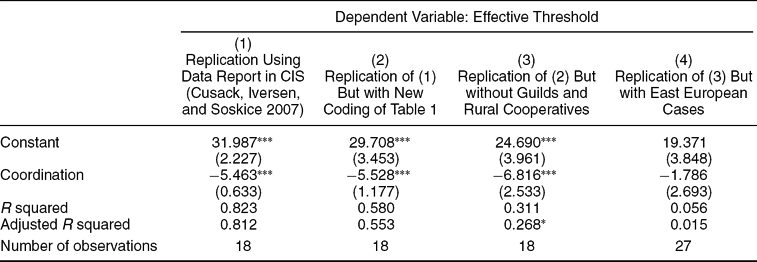
Replication of CIS' Statistical Analysis. Table 2 first replicates CIS' main results and then reports the new results after adjusting for the aforementioned sources of possible error.
Replication and Retest of CIS' Model of Electoral System Choice
Notes: Standard error in parenthesis.
***Significant at .01 level.
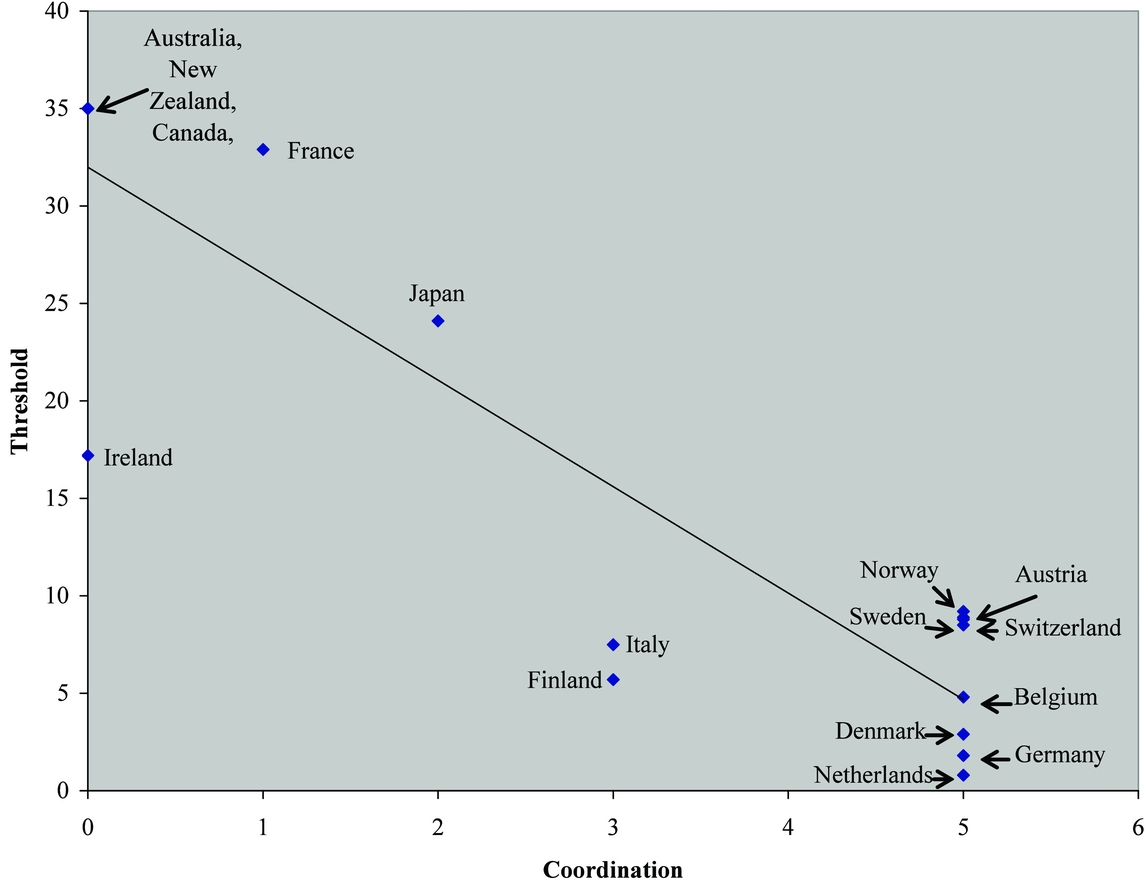
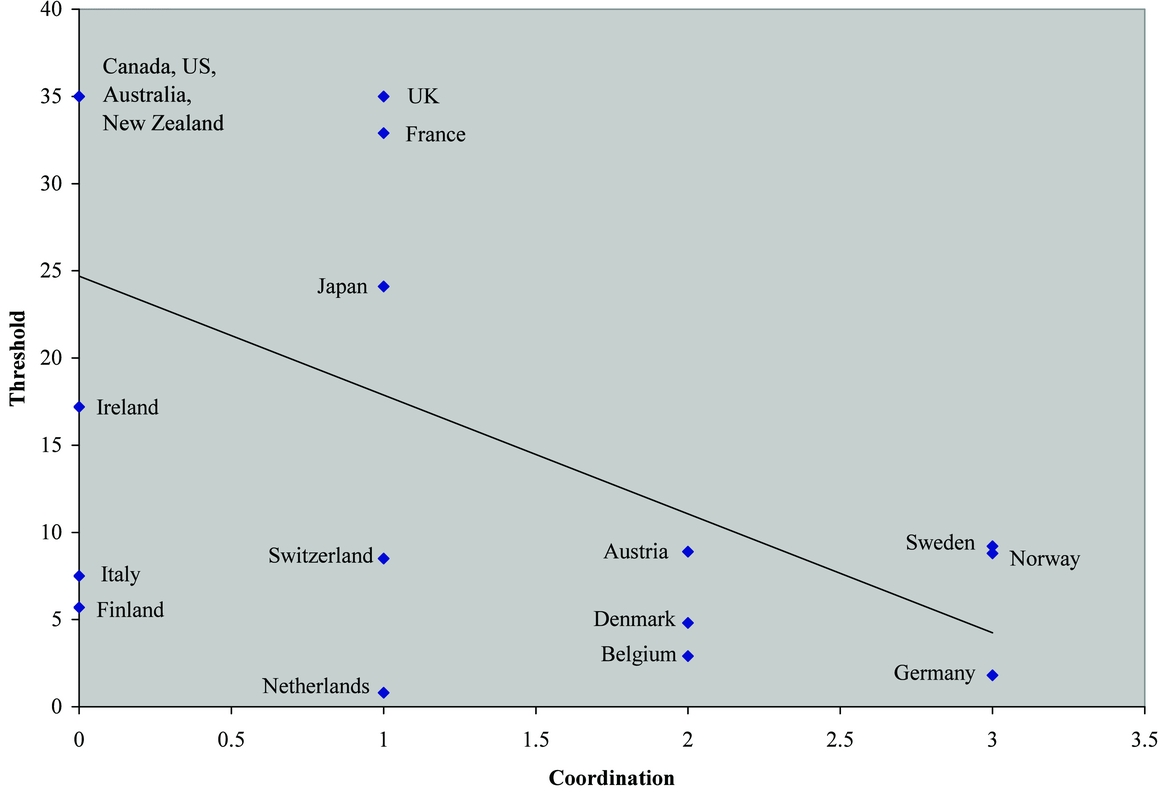
In the first three models in Table 2, the effect of labor market coordination is strong and fairly stable; it shows that a 1-unit increase in coordination produces a 5- to 6-unit decrease in disproportionality.Footnote 9 In other words, the more coordinated the labor market, the more proportional the electoral systems become, just as CIS' theory predicts. However, Table 2 also hints at a number of problems. The adjusted R 2 drops over the first three models, suggesting that the variance explained by labor market coordination declines as it is more validly and reliably measured. This drop in R 2 suggests that labor market coordination is a less complete explanation for disproportionality than the original CIS analysis indicates. Figure 1 reinforces this point. The scatterplot of Model 1 (Figure 1a) shows small residuals for all cases but Finland, Italy, and Ireland. Finland's and Italy's limited industrialization contributed to the absence of high employer and union coordination. Ireland adopted a single transferable vote (STV) electoral system that is a hybrid between PR and FPTP. The scatterplot of Model 3 (Figure 1b), which omits guilds and rural cooperatives and uses the recoded Labor Market Index, shows a much weaker fit and much larger residuals.
CIS Model 1
CIS Model 3
Model 4 however poses the most significant challenge to CIS' original finding. When I include the fuller set of democracies for the period, coordination no longer possesses a significant coefficient (although it still exhibits the expected directionality), and its standard error is large. This suggests that the mechanism that CIS posit did not operate in Czechoslovakia, Estonia, Hungary, Latvia, Lithuania, Poland, and Romania. This might be due to the limited industrialization of all these economies but Czechoslovakia. Overall, therefore, Table 2 suggests that CIS' mechanism has some importance, especially in the West European cases, but it probably accounts for a smaller part of the variation in the adoption of PR than CIS' original analysis suggests and is likely limited to countries that were already substantially industrialized.
Replication of Causal Mechanisms
Table 2 tests a version of CIS' argument that is far more limited than the broader causal argument they articulate in their historical narrative. In this section, I use historical knowledge to test the plausibility of the broader argument. I undertake this plausibility check across all eighteen of their cases. Evaluating so many cases invariably imposes limits on the amount of historical knowledge that could be consulted and, thus, opens again the possibility of selection bias. This analysis disproportionately draws from political historians and hence is biased against finding evidence confirming CIS' economic hypothesis. Political historians generally use public archives, newspapers, and diaries—sources that disproportionally focus on short-term, day-to-day politics and hence are prone to overlook longer-term, slowly unfolding, and, hence, less visible background structural factors. I tried to correct for this potential bias by consulting economic and labor history. These consultations, however, were limited and thus unable to eliminate entirely concerns about possible bias.Footnote 10
From CIS' historical narrative, I extrapolate three causal assertions that their larger argument implies but that their statistical model does not test. First, they claim that labor markets shape the institutional preferences of business and labor, and political parties. We therefore would expect to find public expressions of institutional preferences (i.e., evidence that actors actually cared about electoral systems). We would also expect these preferences to be consistent with the labor markets in which actors operate. Second, CIS claim that, in PR adopting countries, electoral system preferences are consistent across all major political parties. They argue that coordinated labor markets contribute to a positive-sum “politics of regulation,” where socialist and bourgeois parties are motivated by nonpartisan goals about long-term national economic interest. This shared interest leads them to support PR. In contrast, parties in uncoordinated labor markets follow a politics of zero-sum redistribution in which all parties support the status quo electoral system (Cusack, Iversen, and Soskice Reference Cusack, Iversen and Soskice2007, 378).
Third, CIS' economic argument is highly structural and thus implies that institutional preferences should be relatively stable in the lead-up to PR adoption or nonadoption (Cusack, Iversen, and Soskice Reference Cusack, Iversen and Soskice2007, 388). CIS touch on the stability of preferences by including in their sample only cases that adopted and retained PR, thus implying that institutional preferences can only change as slowly as labor markets do. France is the one country in their sample that vacillated between electoral systems, and CIS seem to treat it as an unexplained outlier (382).
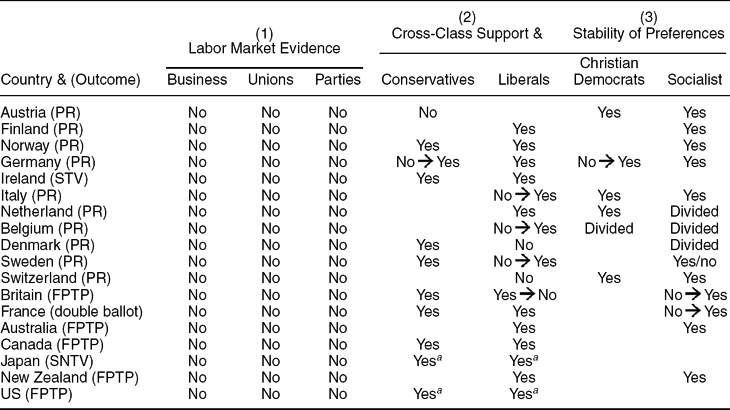
Overall, each implicit causal claim captures a discrete link in CIS' overall causal chain, which, if historically scrutinized, will provide insights into the soundness of the causal argument CIS advance. Table 3 summarizes to what extent the historical evidence does or does not support CIS' causal claims. The “No” or “Yes” entries in the “Business,” “Unions,” and “Parties” columns indicate whether I found any supporting evidence. The columns in the section on cross-class support indicate whether parties’ preferences were consistent with the ones that CIS predicted for a particular country.Footnote 11 A “Yes” for U.S. parties, for example, means that those parties championed FPTP, just as CIS predicted, whereas a “Yes” for German parties means that they supported PR, again confirming CIS' prediction. “Divided” entries point to party internal differences over electoral systems. The number of “Yes” entries across parties of a single country indicates the degree of cross-class support. The stability of this support is indicated by the number of cells without an arrow (“→”). Cells with an arrow indicate that a party changed its preference. I assessed stability of all actors’ preferences for roughly the period from 1890 to 1920.
Historical Evidence and CIS' Causal Claims
Notes:
(1) Covers periods from c. 1890 to 1920.
(2) Sources for economic and political actors are cited in text.
a U.S. and Japanese parties do not fit this typology because neither had a Christian Democratic or Socialist party. I listed their parties in the other two categories.
Labor Market–Induced Preferences. As Table 3 indicates, I was unable to find any evidence linking the institutional preferences of business organizations, union, parties, or their respective leaders to labor markets. As a matter of fact, I was unable to find any evidence that business or unions explicitly preferred one electoral system over another. There is plenty of discussion of parties’ institutional preferences, but none of it points to economic factors.Footnote 12 Lack of direct evidence, of course, does not disprove a particular claim because, as I indicated, it might be a by-product of my overreliance on political history. However, it certainly raises questions for the plausibility of CIS' economic argument.
Evidence for Lack of Cross-Class Support. The various “No” entries, arrows indicating changing preferences, and “Divided” codings in the last three columns of Table 3 indicate that cross-class support was less common and consistent over time than CIS' argument implies. This lack of cross-class support is particularly evident in Belgium, Switzerland, Sweden, Denmark, Austria, Germany, Italy, the Netherlands, Ireland, France, and the UK. For the Netherlands, Sweden, and Ireland, there is insufficient information to specify more closely why parties diverged in their preferencesFootnote 13 (Daalder Reference Daalder and Finer1975, 223–27). For the other cases, parties diverged in their institutional preferences because they were motivated by three noneconomic concerns: the left threat, the geographic distribution of voters, and the potential loss of votes unrelated to the left.Footnote 14
Containing the left threat explains why the Belgian Liberals shifted their support from the double ballot to PR after 1893 (Carstairs Reference Carstairs1980, 52–54; Stengers Reference Stengers2004, 258–60). In France, the left threat came in the form of Socialists being threatened by Communists. French Socialists first supported PR but switched to the double ballot system in 1928. This switch was primarily motivated by the growing strength of the Communists and the belief that the double ballot system would weaken the Communists’ parliamentary representation (Cole and Campbell Reference Cole and Campbell1989, 67; Sharp Reference Sharp1928, 685–86).
The geographic distribution of votes was another factor shaping parties’ electoral system preferences.Footnote 15 Belgian Catholics and Socialists were internally divided; members of the two parties who lived in areas with high concentration of supporters favored FPTP systems, whereas members living in regions with diffuse support championed PR (Carstairs Reference Carstairs1980, 52–54; Stengers Reference Stengers2004, 258–60). Denmark's Liberals opposed PR because the old FPTP allowed them to capitalize both on the rural concentration of their voters and on the malapportionement between rural and urban districts. Socialists, in turn, were happy at first to keep the FPTP electoral system as long as more urban districts would be added. The difficulties of redrawing these districts eventually led them to support PR (Elklit Reference Elklit1992, 190–92, Reference Elklit, Grofman and Lijphart2002, 33–36; Kraft and Nohlen Reference Kraft, Nohlen, Sternberger, Vogel and Nohlen1969, 163–65).
In Austria, German, Italy, the Netherlands, and Ireland, as well as in France and the UK, parties’ preferences were either divided or changed over time. In Austria, the smaller of the two conservative parties, the German Nationals, opposed PR. The German Nationals won, on average, 15% of the votes, which were concentrated in rural areas. Up to World War I, they consequently favored the old “politics of notables” that was more effective under FPTP electoral systems (see Anderson Reference Anderson2000; Ziblatt Reference Ziblatt2009). Austria's Christian Democrats, though, who were closely tied to business, supported PR (Pelinka Reference Pelinka and Stiefbold1966, 267–68; Seliger and Ucakar Reference Seliger and Ucakar1984, 57).
General concerns over losing seats, not further specified in the literature, were a final factor shaping parties’ preferences. In Switzerland, the dominant Liberal party, the principal vehicle of business, strongly opposed the adoption of PR, fearing a loss of parliamentary seats (Lutz Reference Lutz and Colomer2004, 284–86; Natsch Reference Natsch, Walder, Gilg and Mesmer1967). In Germany, both Conservatives and the Catholic Center party supported the double ballot system before 1914 and came to endorse PR only during World War I (Schanbacher Reference Schanbacher1982, 32–37, 40). Italian Liberals defeated a PR bill in 1912, but changed their position after many of their Catholic voters threatened to switch to the newly founded Parti populari in 1919 (Braunias Reference Braunias1932, 296; Nohlen Reference Nohlen, Sternberger, Vogel and Nohlen1969b, 721).
Evidence for Cross-Class Support. Seven cases in Table 3, where all cells are coded “Yes,” suggest cross-class support. In Norway and Finland, both nonsocialist parties and the Social Democrats supported PR and kept their preferences unchanged over time (Aardal Reference Aardal, Grofman and Lijphart2002, 181–86; Nohlen Reference Nohlen, Sternberger, Vogel and Nohlen1969a, 416–18; Törnudd Reference Törnudd1968, 23–33; Valen and Rokkan Reference Valen, Rokkan and Rose1974, 325). The US, Canada, Japan, New Zealand, and Australia also support CIS' argument because none of their parties championed PR and did not deviate from this position over timeFootnote 16 (Farrell and McAllister Reference Farrell and McAllister2005, 167; Ramseyer and Rosenbluth Reference Ramseyer and Rosenbluth1998, 46–55; Ward Reference Ward1950, 210–39).
These seven cases indeed suggest cross-class support. However, it remains doubtful that the motivations for this cross-class support were economic. We already discussed the absence of economic evidence, and, in addition to that, the literature suggests strong noneconomic sources of cross-class support.
The literature on consociationalism and corporatism emphasizes that elites in culturally and economically highly divided countries cooperate to avert civil strife (Lehmbruch Reference Lehmbruch1967; Lijphart [Reference Lijphart1975] 1968). Alberto Penadés and Adam Przeworski, in turn, attribute cross-class collaboration between Socialists and Liberals primarily to the need for electoral coordination under the then prevailing FPTP electoral systems. The resulting lib–lab alliances around the turn of the nineteenth century were part of the Socialists’ larger supraclass strategy through which they sought to expand their electoral base. By this time, Socialists realized that pure working class support would never translate into a parliamentary majorityFootnote 17 (Penadés Reference Penadés, Maravall and Sanchéz-Cuenca2008, 229–32; Przeworski and Sprague Reference Przeworski and Sprague1986, 29–55). Other labor historians point to the rise of Christian labor unions in the 1890s, with their emphasis on class cooperation, or the rise of national unity governments during World War I as other possible causes for cross-class cooperation (Hepple Reference Hepple1986, 220, 225).
Furthermore, there are grounds to question the extent of cross-class collaboration. Austrian, German, Belgian, and Finnish unions, for example, were only able to organize fully and freely after 1918, roughly twenty years later than most other countries. This time lag raises doubts about CIS' claim that granting such rights had been part of the cross-class cooperation (Armingeon Reference Armingeon1994, 75; Cusack, Iversen, and Soskice Reference Cusack, Iversen and Soskice2007, 377). Class cooperation was also absent in interwar Finland and Greece, which endured largely class-based civil wars, as well as in Germany, Italy, Ireland, and Austria, which experienced elevated levels of political violence. Drawing from these historical experiences, Ferdinand Hermens (Reference Hermens1941) built an entire career pointing out the conflict-enhancing potential of PRFootnote 18 (see also Kreuzer Reference Kreuzer2001).
POLITICAL ORIGINS OF ELECTORAL SYSTEMS
Just like CIS, Boix's starting point is historical. He draws on arguments first articulated in the 1930s by the German constitutional historian Karl Braunias and refined in the 1960s by the historical sociologist Stein Rokkan. Both scholars argued that PR served conservative elites as a mechanism to contain their seat losses against the rapidly rising left (Braunias Reference Braunias1932, 201–4; Rokkan et al. Reference Rokkan, Flora, Kuhnle and Urwin1999, 298–302). Boix further points out that these seat losses would be particularly severe in instances where the right was politically divided and thus risked splitting its votes in FPTP systems. In reducing vote splitting, PR promised to help Conservatives preserve their parliamentary strength and thereby contain the left's threat. I evaluate Boix's argument, just as I did for that of CIS, by replicating his data collection, statistical analysis, and causal mechanisms.
Replicating Boix's Data Collection: Reliability
Boix's data are largely reliable because they rest on historical knowledge that is far more readily quantifiable than CIS' labor market characteristics. Boix develops a measure called left threat that combines the electoral strength of the left with the fragmentation of the right. Both dimensions can be readily computed from electoral statistics. Similarly, the electoral threshold can be easily calculated from the number of parliamentary seats and electoral districts. Just as Boix does, I use Thomas Mackie and Richard Rose's (Reference Mackie and Rose1991) election almanac to recompute his left threat. In the process, I identified a few minor errors that are reported in Appendix E under “Election Data.”
Validity. Drawing on historical knowledge, CIS raise three important validity issues. First, they look closely at Boix's selection of election years to measure the left threat. They exclude three cases because they consider the available data inadequate. They exclude Luxemburg and Finland because no election under universal male suffrage was held prior to the adoption of PR, making it impossible to gauge the prior strength of the left. They also dismiss Greece because no official election statistics are available for the relevant election. CIS are correct that Boix's inclusion of these cases raises validity issues. The question becomes whether these issue are serious enough to justify further reducing the already small sample.Footnote 19
The Greek case offers a simple solution. George Mavorgordatos (Reference Mavrogordatos1982, 31) reports parties’ seat distribution for the last election before the adoption of PR and provides a sufficiently close substitute for vote shares unavailable in Mackie and Rose (Reference Mackie and Rose1991). Luxemburg and Finland offer no such simple solution. I would argue that the data Boix uses are sufficient because they revealed ex post information about the left's strength that was more or less available ex ante to nonsocialist parties, even in the absence of pre-PR election results. The source of such nonelectoral information would have been the size of labor unions and membership in socialist parties. It provided nonsocialist parties in Finland and Luxemburg with information about the left's strength, even in the absence of elections held under universal male suffrage. These elections can thus be included and prevent a further loss of cases from an already small sample. This rationale for including Finland and Luxemburg certainly does not entirely refute CIS concern, and so the subsequent statistical analysis specifies models that include and exclude these two cases to assess their potential bias.
Second, CIS question the timing of additional elections. The issue for these elections is not insufficient data but choice of an appropriate election year for measuring the left threat. I reviewed both CIS’, and Boix's election year choices and found grounds to change Boix's timing for five elections: Netherlands (1919 to 1913), Iceland (1934 to 1922), Sweden (1921 to 1911), Canada (1921 to 1902), and New Zealand (1919 to 1902) Appendix E explains these recodings and compares them to the ones suggested by CIS.
Third, and arguably most consequentially, CIS question Boix's use of Laakso and Taagepera's (Reference Laakso and Taagepera1979) fragmentation index to measure internal weakness of the right and, thus, its sense of being threatened by the left. Using electoral evidence, CIS correctly point out that this measure can underestimate the dominance of the largest over the second largest nonsocialist party. They consequently use a new measure of nonsocialist party dominance that vitiates Boix's statistical findings (Cusack, Iversen, and Soskice Reference Cusack, Iversen and Soskice2007, 384 Table 3). However, this new measure inadequately captures fragmentation differences in instances when the right consists of more than two parties. It also exaggerates dominance and nondominance. I discuss the shortcomings of CIS' and Boix's measures more fully in Appendix D. In the end, neither measure is clearly superior, so I replicated Boix's analysis with his original fragmentation measure.
Sampling. Boix's sampling raises two issues. First, one of his models (reported in Boix Reference Boix1999, 623, Appendix B) includes postwar cases. I think this expansion of cases is inappropriate because the post-1945 left had changed significantly from the pre- and post-1918 left. It was no longer a newly enfranchised, unknown newcomer but had by now participated in coalition and in national unity governments, come to share the Cold War–era anticommunism, and adopted Keynesianism. (For the transformation of the left, see Eley Reference Eley2002.) Second, Boix's sample only includes a single institutional choice per country even though three countries’ electoral systems were changed more than once. Iceland changed its electoral system four times (in 1922, 1934, 1942, and 1959), each time making it a bit more proportional; France adopted PR in 1918 and reverted back to the double ballot in 1928; and Greece adopted PR in 1926 and 1932 and shifted back to FPTP in 1928 and 1933.
Replicating Boix's Statistical Analysis
Table 4 specifies different models to evaluate the extent to which changes in Boix's election years and sampling bias his results. Model 1 replicates his original result using ethnic fragmentation index as a control variable. Model 2 replicates CIS' respecification of Boix and shows a noticeable drop in the R 2 when Finland, Luxemburg, and Greece are excluded and the timings for Sweden (1921 to 1908), Netherlands (1919 to 1913), and Iceland (1934 to 1922) are changed. Much of this drop is due to the changed timing for Sweden. If Boix's original timing for Sweden is retained, then the adjusted R 2 goes back up to 0.293 (results not reported).Footnote 20 Appendix E discusses the merits of Sweden's various timings in more detail. Model 3 uses the sample proposed by CIS and keeps their timing for Iceland and the Netherlands, but changes it for Sweden (1908 to 1911), Canada (1921 to 1902), and New Zealand (1919 to 1902). Interestingly, these corrections in the timing produces virtually the same result as Boix's original analysis. In Model 3, the R 2 drops slightly to 0.307 if, following CIS suggestion, Sweden 1908 is used (results not reported). Furthermore, the results remain virtually unchanged when we add Finland and Luxemburg (Model 4). The consistent results of Models 1, 3, and 4 suggest that Boix's model is quite robust.
Replication and Rerest of Boix's Model of Electoral System Choice
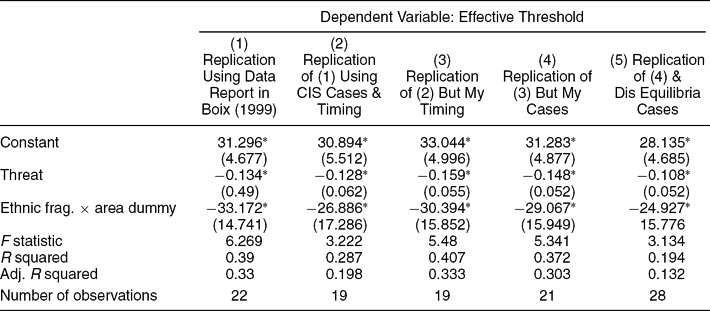
*Significant at 0.05 level. Standard error in parentheses.
The inclusion of disequilibria cases (i.e., France, Iceland, Greece) in Model 5 weakens the explanatory power of Boix's model the most. Greece disconfirms Boix's argument most directly because its left never gained more than 5% of the vote and the electoral changes involved crass electoral engineering between the highly polarized republican and antirepublican forces (Mavrogordatos Reference Mavrogordatos1982, 25–40, Appendix I). France's reversion to double ballot in 1928 occurred despite a growing left and a fragmented right. The Socialists and center-right supported this change to contain the newly formed and electorally successful Communists. Their containment strategy consisted of drawing district boundaries such that the rural districts, in which not just the right but also some Socialists had strong electoral support, would be overrepresented. Moreover, the Socialists anticipated to contain the Communists by refusing to coordinate 2nd round candidate withdrawals (Sharp Reference Sharp1928, 685–86, 694). Iceland poses the least problem because the electoral system threshold comes down roughly in proportion to the increase in the left threat.
Replication of Boix's Causal Mechanisms
Boix's statistical results withstood replication quite well. How plausible then are his causal mechanisms? Columns a and b in Table 5 list the two causal variables tested in his regression model. The remaining columns list three further links in his causal chain. First, incumbents will change the electoral rules in response to significant suffrage expansions (column c). Second, incumbents, rather than the opposition, take the legislative initiative to introduce PR (column d). Divided incumbents prefer PR because it will reduce the coordination problem that they face under FTPT systems. In contrast, dominant single incumbents face no such coordination problems and thus have no incentive to adopt PR. Third, divided incumbents face a coordination problem and thus should champion PR (column e) (Boix Reference Boix1999, 610–13).
Historical Evidence and Boix's Causal Mechanisms
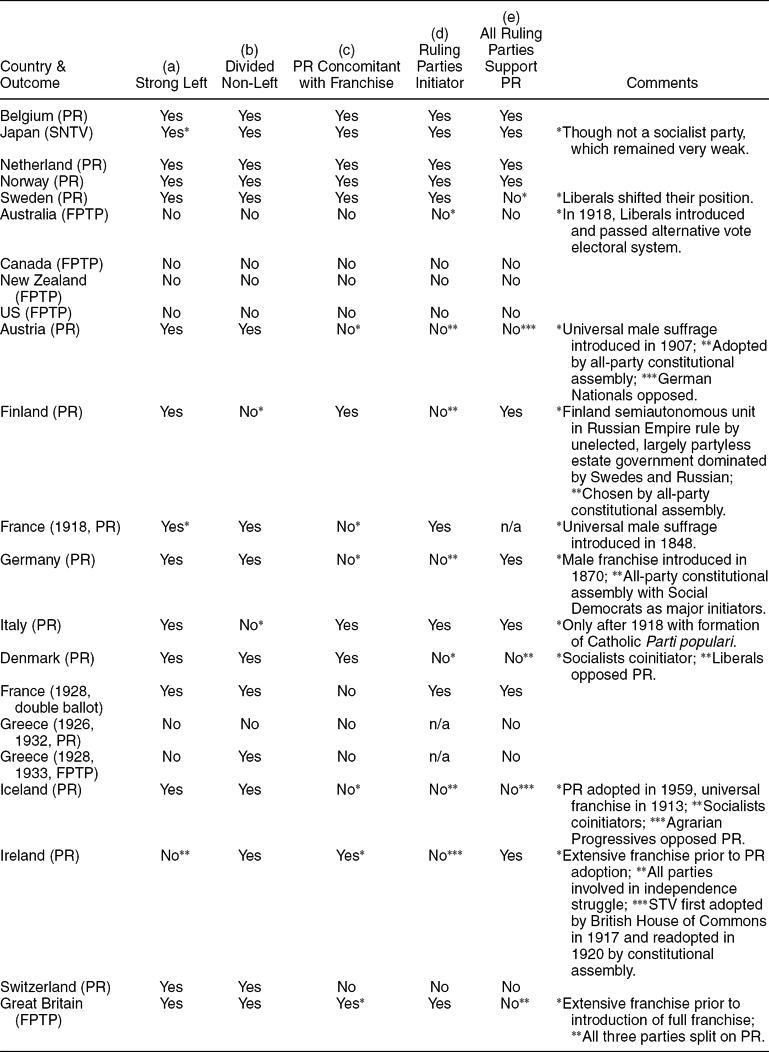
Confirming Cases. In Table 5, nine of the 24 cases (36%) match all five of the causal links in Boix's overall argument. The conditions for PR adoption were present (i.e., “Yes” cells) in Belgium, Japan, the Netherlands, Norway, and Sweden and absent (i.e., “No” cells for PR nonadoption) in Australia, Canada, New Zealand, and the United States. This confirmation might be surprising given the relatively low R 2, but it is less surprising given the historical experience. Boix's containment argument is a de facto generalization of the Belgian experience.
Belgium became the first country to adopt national PR in 1899, and Conservatives throughout Europe used it as the point of reference for how to contain the double threat of democracy and the left. In 1893, Belgium introduced universal male suffrage, which contributed to the Socialists’ rapid electoral rise and led the ruling Liberal and Catholic parties to explore PR as a way to preserve their future parliamentary strength. In 1899, these two parties, with the support of the Socialists, passed a bill to adopt PR.Footnote 21 Liberals supported PR most eagerly because their seat share dropped dramatically after the 1893 franchise expansion. Catholics were less concerned about their seat share, which remained stable. They were more worried about facing the Socialists alone and about having to coordinate their candidate withdrawals with Liberals under the existing double ballot system (Carstairs Reference Carstairs1980, 52–54; Glissen Reference Glissen and Büsch1980, 357–59; Stengers Reference Stengers2004, 258–60). The Catholics' and Liberals’ containment strategy proved so effective that it became known throughout Europe as the “Belgian solution.” I do not have space to discuss the other five PR cases, but their historical experiences closely mirrored that of Belgium.Footnote 22
The evidence for countries staying with either FPTP or double ballot electoral systems is a bit more indirect, as it generally is for explanations of nonoccurrences. The adoption of PR systems never really received sufficient political support in Australia, New Zealand, Canada and the United States (Barber Reference Barber1995, 26–34; Department of Justice 1986, 43–69; Ward Reference Ward1950, 163–64, 216n, 39). The political nonviability of PR coincided in these countries with a left that was either moderate (Australia, New Zealand) or weak (the US, Canada).Footnote 23
Partially Supporting Cases. Five more cases—France (1918), Italy, Austria, Germany, Finland—partially support Boix's argument. In these cases, the left threat was key for the right's PR support, but some secondary requirements of Boix's argument are not fully met. In Italy, the division of the right was obscured; in France, and universal suffrage predates PR adoption by more than sixty years; and in Austria, Germany, and Finland, the left cosponsored PR with the right. The following briefly elaborates on these unmet, secondary requirements.
Italy had a de facto single dominant right party when it adopted PR. However, before the first PR election in 1919, Catholics split away from the Liberals and formed their own party after the Pope approved. Catholics had long been such a distinct faction in the Liberal party that, for all intents and purposes, the Italian right was divided (Braunias Reference Braunias1932, 296; Carstairs Reference Carstairs1980, 154–55; Nohlen Reference Nohlen, Sternberger, Vogel and Nohlen1969b, 721).
France's peculiar 1918 majoritarian-like PR system arguably contained the left more effectively than any other electoral system and underscores France's long-standing mastery of electoral engineering (Kreuzer Reference Kreuzer, Little and Posada-Carbo1996). The adoption of the 1918 PR system was first discussed in 1907 on the grounds of making representation less particularistic and local. However, it was only the growing strength of the left that finally led the divided center-right parties to pass the PR bill in 1918. Under the new system, voters cast multiple votes for individual candidates who had the opportunity to join together in loose electoral coalitions that won seats in proportion of their votes. The unique containment effect of this electoral system rested on the fact that voters still cast ballots for individual candidates (thus favoring conservative notables), enabling coordination among nonsocialist parties without requiring actual party mergers and giving the largest coalitions a significant seat bonus (Stuart Reference Stuart1920, 118–22). France introduced universal manhood suffrage in 1848 and thus fails to meet Boix's criteria that PR adoption coincide with franchise expansion.
In Austria, Finland, and Germany, electoral systems were adopted by all-party constitutional assemblies, thus making it difficult to sustain Boix's claim that incumbents initiated PR adoption. Although Conservatives and Liberals did not single-handedly initiate the adoption of PR, they still supported it to contain the left. In Germany and Austria, the threat from the left was less tied to the widened franchise than to the widening of parliamentary sovereignty. Universal male suffrage was introduced in Germany in 1870 and in Austria in 1907, whereas full parliamentary sovereignty was established in 1918, the same year PR was adopted. Thus, the immediate impetus for PR adoption was less the left's electoral and more its parliamentary threat (Braunias Reference Braunias1932, 413–14; Grass Reference Grass, Sternberger, Vogel and Nohlen1969, 936–37; Nohlen Reference Nohlen, Sternberger, Vogel and Nohlen1969a, 416–18; Pelinka Reference Pelinka and Stiefbold1966, 267–68; Schanbacher Reference Schanbacher1982, 32–37, 40–45; Seliger and Ucakar Reference Seliger and Ucakar1984, 57; Törnudd Reference Törnudd1968, 28–33).
Disconfirming Cases. The left threat played no role in ten of the twenty four cases. The historical analysis of these cases suggests political engineering and minority representation as alternative factors determining electoral system choice.
I already discussed the role political engineering played in the electoral system choices of Greece (1926, 1928, 1932, 1933) and France (1928). Denmark, Iceland, Ireland, Switzerland, and the United Kingdom, in turn, are tied together by what could be called a political emancipation argument. In all five cases, PR was adopted by a coalition that included incumbent and opposition parties for the purpose of electorally emancipating formerly underrepresented groups. In Switzerland, Catholic Conservatives and Socialists championed PR in opposition to the incumbent Liberals. Having failed in parliament, they finally succeeded in adopting PR in their third popular initiative in 1919. Their principal motivation was to assure a more equitable allocation of seats (Lutz Reference Lutz and Colomer2004, 284–87; Natsch Reference Natsch, Walder, Gilg and Mesmer1967). Irish politics was essentially classless and had no significant working class party. The adoption of the STV system was motivated by protecting the seats of the small but economically and politically powerful Protestant minority in the Irish Republic and the Catholic minority in Northern Ireland (O'Leary Reference O'Leary1979, 9–15). In Iceland and Denmark, PR was championed to eliminate the malapportionment and disproportionality that resulted from the old FPTP systems. Iceland did so through three minor electoral reforms in 1922, 1934, and 1942, before switching from a mixed to a full PR system in 1959 (Elklit Reference Elklit1992, 190–92; Reference Elklit, Grofman and Lijphart2002, 33–36; Kraft and Nohlen Reference Kraft, Nohlen, Sternberger, Vogel and Nohlen1969, 163–65). Finally, the UK fits the emancipation argument less clearly. Generally, the FPTP electoral system was contested in the UK. STV was narrowly defeated in 1916, and the alternative vote passed the House of Commons in 1928, only to be vetoed by the House of Lords (Steed Reference Steed, Finer and London1975, 43–49). Most important, all three parties were internally split over STV, thus contradicting Boix's argument that parties’ preferences are uniformly shaped by their electoral prospects (Andrews and Jackman Reference Andrews and Jackman2004, 75).
These last ten cases therefore raise questions about Boix's containment argument because they suggest alternative causal mechanisms for the adoption of PR. It is impossible at this stage to say whether these alternative mechanisms interact with Boix's argument, and thus could be incorporated, or whether they constitute entirely separate causal mechanisms producing the same outcome.
IMPLICATIONS
Historical knowledge is often microscopic, and its presentation involves lengthy and thick narratives that can obscure its benefits for political science. I therefore conclude by extrapolating how the historical replication of CIS and Boix contribute to our understanding of institutional endogeneity and qualitative basis of quantitative research.
Endogeneity (Non)-Problem
The inability to eliminate CIS' sources of bias, replicate their results or find qualitative evidence supporting their causal claims allows us to reject the concern that the economic effects of electoral institutions are endogenous to antecedent economic structures. This conclusion is further strengthened by the confirmation of Boix's and other political explanations. Such confirmations make it less likely that some still undiscovered economic factor might be the cause of electoral systems.
The historical evidence is also sufficient to reject the political endogeneity argument put forth by Alberto Alesina and Edward Glaeser (Reference Alesina and Glaeser2004). They report the greater redistributive effects of PR, but then qualify their finding by pointing out that these effects, as well as the origins of PR, are significantly influenced by the strength of socialist partiesFootnote 24 (95–132). With the left accounting both for the adoption of PR and redistributive social policies, Alesina and Glaeser strongly hint, without directly saying so, that economic effects of electoral institutions are endogeneous to antecedent political causes.
This suggestion can also be rejected. The preceding analysis showed that PR adoption cannot be reduced to the strength of socialist parties. For example, Boix pointed to the importance of nonsocialist fragmentation, and we identified cases such as Greece or Japan, where PR was adopted in the absence of a strong socialist party. Alberto Penadés showed that various socialist parties did not even support PR. He explains this variation in preferences in terms of the strength of labor unions and the type of union–party relations that resulted from it.Footnote 25 He claims that only socialist parties with weak ties to small unions ended up supporting PR, whereas socialist parties with strong ties to sizeable unions did not support the adoption of PR or were at least internally divided.Footnote 26 He argues that the strong union ties of socialist parties in the UK, Belgium, Denmark, Sweden, Spain, New Zealand, and Australia led these parties to oppose PR because the strong unions helped them reduce the costs of their centrist, supraclass strategies. Specifically, strong unions helped Socialists prevent party schisms, voter defections and noncooperation in local candidate selection. Unions provided the very same benefits PR offered and thus obviated the need for those parties to support itFootnote 27 (Penadés Reference Penadés, Maravall and Sanchéz-Cuenca2008, 225–26). The fact that the strength of unions and electoral considerations, rather than the strength of socialist parties, determined Socialists’ institutional preferences allows us to set aside Alesina and Glaeser's endogeneity claim.Footnote 28
The Historical Basis of Quantitative Analysis
The article's central plea to take not only history, but also historians seriously reflects the belief that the quality of quantitative research directly depends on the closeness of its dialogue with historical knowledge. Boix's and CIS' arguments are both historically grounded, but Boix's closer dialogue with historical knowledge is vindicated by the greater robustness of his findings. The need for such a close dialogue may be less evident in well-studied phenomena such as the effects of electoral systems, voting behavior, or legislative studies. Such fields of study have already internalized historical knowledge in the form of well-differentiated theories, quality data sets, and reliable measurement instruments. Yet, it usually suffices to extend such literatures to a different context to discover new limitations, which usually require retrofitting with the help of historical knowledge.Footnote 29 Thus, the need for a dialogue with history is constant, all the more so when examining such less well-studied phenomena as the origins of institutions.
In the dialogue between qualitative and quantitative research, historical knowledge makes five specific contributions and points to one lingering concern. First, historical knowledge is crucial for ascertaining the plausibility of causal mechanisms being tested quantitatively. In principle, many qualitative and quantitative scholars agree on this pointFootnote 30; yet, in practice, quantitative scholars all too frequently move from mere historical intuition to hypothesis testing. CIS offer a prime example of how inattention to historical knowledge leads to premature operationalization. The contrast with Boix's approach is instructive. Boix refines Braunias' and Rokkan's original theoretical hypothesis and subjects it to its first quantitative test. CIS, in contrast, come in with a bold, new, but historically unvetted hypothesis that seems to have been deduced from their prior work on varieties of capitalism. They seek to advance theory through first quantitatively testing hypotheses and only later establishing causal plausibility. They attempt to absolve themselves from having to consult historians carefully by claiming “the causal mechanisms we proposed will have to be corroborated through detailed case studies” (Cusack, Iversen, and Soskice Reference Cusack, Iversen and Soskice2007, 373).
Second, historical knowledge is crucial for ensuring the quality of data used in statistical analysis. CIS' inattention to historical knowledge compromised the validity of their Labor Market Index and contributed to various coding mistakes. Historical knowledge was also crucial for identifying the proper timing of election years in CIS' and Boix's analysis. It is worth reiterating that historical evidence will be more credible and often more valid if scholars hold themselves to a standard of presenting it with references containing page numbers and if they reflect more on the type of history (i.e., political, social, economic) they draw on and the potential bias it might introduce.
Third, historical knowledge is helpful for assessing the equivalence of cases across time. Compared to other political phenomena, institutional choices are rare events. This leads some quantitative scholars to pool observations that often span more than a century (Colomer Reference Colomer2005). In such instances, historical knowledge would be helpful in determining the equivalence of cases occurring at such different points in time. It would be instructive because historians are principally concerned with historical continuities and discontinuities. They focus on qualitative changes through time, or lack thereof, and consequently provide crucial insights to what extent time matters and, by implication, to what extent cases are equivalent. Historical knowledge, for example, would raise serious questions about the equivalence of early twentieth-century and postcommunist choices of electoral systems because the former occurred in a well-developed party system, whereas the latter did not.
Fourth, historical knowledge is particularly important for the sort of structural arguments put forth by CIS. Structural factors, such as labor markets, are multidimensional and difficult to delineate temporally. Rational choice theorists criticize structural arguments for overlooking important microprocesses, such as actors and their preferences. Such microprocesses might exert either independent or intervening effects on a particular outcome. Historical knowledge is useful for either eliminating such microprocesses as causally irrelevant variables or demonstrating that structural factors are causally linked via microprocesses to the hypothesized outcome. Historical knowledge would also be crucial for addressing sequencing problems that are frequently associated with long-term structural factors. CIS' Labor Market Index, for example, contains preindustrial factors, such as guild tradition and rural cooperatives, that predated the adoption of electoral systems by at least half a century, as well as more chronologically proximate factors shaped by industrialization. Historical knowledge could clarify whether these factors ought to be weighted equally, even though they took place at very different points in time.
Fifth, historical knowledge is crucial for untangling the vexing issue of multiple causality. Evaluation of Boix's causal mechanisms indicated that PR was adopted for at least three different reasons: to contain the left, to emancipate underrepresented groups, and for short-term political engineering. Historical analysis, together with further statistical analysis, should help clarify the precise nature of such multiple causality. On the one hand, it could demonstrate that the existing causal models are overly reductionist and need to incorporate additional intervening variables. It could also clarify the possible interaction among these multiple causal factors and the causal direction among them. Such research could, for example, show that adding a variable that measures the degree of ethnic underpresentation could improve the robustness of Boix's model.
On the other hand, historical analysis could demonstrate that there is no interaction effect among these three possible causes of PR and that each of them alone explains the adoption of PR in different cases. The Swiss case suggests such a scenario. The left was strong and the right divided; yet, there is no evidence that anybody on the right supported PR to contain the left. Instead, Switzerland had both an underrepresented left and Catholics pushing for PR to obtain a more equitable seat share. Such multiple causality points in the direction of equifinality—different causes producing the same outcomes—rather than greater causal complexity (Alexander and Bennett Reference Alexander and Bennett2004, 22, 160–61; Ragin Reference Ragin, Brady and Collier2004, 134–35).
Clarifying the precise nature of these multiple causes is important because electoral systems in many early democracies were chosen during the closing days of World War I and, in many countries, were accompanied by tremendous political instability. Moments of such instability raise the possibility, partly confirmed in the findings of postcommunist electoral system choices, that contingent factors might have played a disproportionate role in the choice of electoral systems (Kaminski Reference Kaminski2002; Shvetsova Reference Shvetsova and Reynolds2002; Taagepera Reference Taagepera1998, Reference Taagepera and Reynold2002). It therefore becomes important to more fully understand the role contingent factors play. If it turns out that contingent and, by implication, unique factors explain a large number of electoral system choices, then this multiplicity of causes corresponds to causal complexity or equifinality that cannot be captured by regression analysis.
The degree to which scholars take historical knowledge seriously translates into two styles of quantitative analysis. Those who forgo the time-consuming dialogue with historians are likely to perpetuate the sort of theory swapping that contributes only marginally to genuine theory development. One hallmark of theory swapping is the rapid proliferation of explanations and the limited dialogue between them. Historical evidence is the perfect ground for conducting such dialogue because it provides a useful reality check for often highly constrained statistical models. It provides material to check the plausibility of competing causal mechanisms, the quality of data or the equivalence of the sampled cases. The ability of historical knowledge to both expand and enrich a dialogue between empirically and often anemic hypotheses would over the medium run improve quantitative analysis and make theory development less volatile.
In the long run, a better understanding of what quantitative analysis can, and possibly also cannot, explain would provide a starting point for the larger debate about a possible misalignment between the inherent characteristics of institutional origins and the ontological assumptions on which statistical inference rests. A number of prominent scholars have engaged in this important debate that, in my estimation, has been too abstract. It would be beneficial to first do the more nuts-and-bolts work of using historical knowledge to improve the quantitative study of institutional origins; doing so would inevitably give us a better understanding of qualitative history's potential ontological incompatibilities with statistical methodologies.
APPENDIX A: VALIDITY OF LABOR MARKET INDEX
Validity of Coding
(1) Rural Cooperatives: France experienced a rapid growth of agricultural associations from the 1890s onward. Their orientations varied, with some being syndicalist, others imbued with Catholic social thought about cross-class collaboration, and still others served to provide self-help. Their growth continued throughout the interwar period (Cleary Reference Cleary1989, 40−50; Mares Reference Mares2003, 133–35).
(2) Employer Coordination: Belgium and Netherlands: Crouch (Reference Crouch1993, 112–13, 143) lists Dutch and Belgium employer associations as weak and Italian ones as having a limited presence only in the north. Martin and Swank (Reference Martin and Swank2008) also code the three cases as weak. They employ a detailed coordination index of employer organizations that relies on Crouch, sources cited in Crouch, and other sources. It thus uses a wider evidentiary basis and a more careful operationalization than CIS (Crouch Reference Crouch1993, 96–97, 182; Martin and Swank Reference Martin and Swank2008). Switzerland: Before 1918, the principle trade and industrial organization (Schweizerischer Handels- und Industrie-Verein) had a federal governance structure, remained organized according to different sectors (Fachverbände), and was deeply divided over foreign trade (Gruner Reference Gruner1956, 35–36). Erich Gruner (42) points out that export sectors engaged in particularly cutthroat competition and cooperated very little with one another. After 1918, Schweizerischer Handels- und Industrie-Verein became more coordinated in order to implement a large number of cartel arrangements (38–42). Small business (Schweizerischer Gewerbeverband) was somewhat more cohesive because its members opposed free trade (36–37). Interestingly enough, Gruner (26–28), just like CIS, reports close employer and employee coordination at the firm level in high-skilled sectors before the Industrial Revolution. However, he points out that the nationalization of such coordination and its expansion beyond the firm level only occurred after 1918, rather than during the 1880s and 1890s, as CIS report. Gruner (44–45) attributes this change to the cooperation of business and labor during the war, as well as to government granting business special corporatist-like legal status to deal with the interwar economic crisis. Italy: This country had very limited growth that was confined to the north (Crouch Reference Crouch1993, 113).
(3) Union Centralization: The coding that CIS use raises a number of problems. Colin Crouch (Reference Crouch1993), their principle source, summarizes the organizational characteristics in tabular form, with many entries far too cryptic to justify any reliable coding. UK unions, for example, are classified as “craft, new general,” whereas German ones are described as “craft, but gradually amalgamating.” CIS classify the former as a craft union and the latter as an industrial union. The entry for the Netherlands is craft union, yet it shows up in their table as an industrial union (86–89). They also change the coding for Denmark but, in that case, at least provide an explanation (Cusack, Iversen, and Soskice Reference Cusack, Iversen and Soskice2007, 382). The Netherlands’ unions were divided into protestant, Catholic, and socialist unions. Socialist unions were, especially before 1905, divided into moderate and syndicalist factions. Each of the three labor movements had national, moderately centralized organizations. However, according to Windmuller (Reference Windmuller1969, 11–38), they accounted for only one third of the 180,000 (in 1910) union members. The other two were organized “in local and national unions not affiliated with any of the [three] central [labor] organizations” (39). He notes that “the division or fractionalization of the Dutch labor movement, which sets it off from the labor movements in most countries, began early and remained one of its key features” (40). Switzerland: Just like most everything else in Switzerland, unions were not centralized; instead, they were divided across language and religious divides. The non-Catholic, non-French, national peak organizations—Schweizerischer Gewerkschaftsbund and Arbeiterbund—were very loose, highly federal organizations (Jost Reference Jost, Van der Linden and Rojahn1990, 284–86). It is difficult to ascertain to what extent Swiss unions were craft or industrial based. However, there is some evidence that craft-based labor organization played some role (Ebbinghaus Reference Ebbinghaus1995, 73). Skilled tradesmen were organized in the Gruetli Verein. Unique in Europe, it promoted social reform, self-help in the form of insurance and educational programs, and national civic pride. The Gruetli Verein peaked in 1890s with 16,500 members and eventually merged with the Socialist party in 1905 (see Historisches Lexikon der Schweiz, n.d.).
(4) Skilled Export Markets: Other than Katzenstein, CIS provide no evidence for their coding. They also provide no criteria for their coding, which creates difficulties for borderline cases. Generally, I believe that CIS coding of Australia, Canada, Ireland, and New Zealand as having a small skill-based export sector is correct given the countries’ low levels of industrialization and the importance of commodity exports, which do not require a skilled workforce. Similarly, their coding of Belgium, Germany, the Netherlands, Switzerland, Norway, and Sweden as having large skill-based exports is also consistent with historical evidence. However, their coding of the United States, the UK, Denmark, France, Japan, Italy, Finland, and Austria is ambiguous. Of these eight cases, I recoded France, Denmark, the UK, Finland, and Austria. As the basis for my recoding, I used a combination of historical statistics and qualitative evidence. The historical statistics are reported in Table A1. Austria: Austria had a relatively low level of per capita gross national product (GNP) (ranked 12 out of 17) and a low percentage of population employed in manufacturing (14 out of 17). Also, in 1900, its exports constituted only 7% of GNP, well below the European average of 12.3% (Eddie Reference Eddie, Mathias and Pollard1989, 829). Furthermore, Peter Katzenstein (Reference Katzenstein1985, 138) notes that in the late nineteenth century, “tempted by the fruits of [Austro-Hungarian] empire, Austrian producers by and large eschewed the specialization for exports typical of the other small European countries” (see also Hanisch Reference Hanisch1994, 195–96, 199). Denmark: Around 1900, Denmark's economy was still very agricultural, and its exports mostly comprised agricultural products (Drachmann Reference Drachmann1914, 24; Hornby Reference Hornby, Fischer and Aremnagud1985, 251−52). In 1906, for example, the metals industry employed only 15% of employees and accounted for only 14.8% of industrial outcome. Food products, in contrast, accounted for 44.8% of employees (Drachmann Reference Drachmann1914, 25−27). Hydropower facilitated the growth of more skill-intensive manufacturing in neighboring Sweden and Norway (33–115). Finland: Finland was barely industrialized in 1913, with 71% of the population working in agriculture and only 9.8% in manufacturing (18th out of 18). It also had the second lowest per capita gross domestic product (GDP). United Kingdom: Britain was the most industrialized country with the lowest trade barriers in 1913, where 77% of its export was manufactured based. France: Fifty-seven percent of its exports were manufacturing based, and 25% of its population worked in manufacturing. It is difficult to see why these two countries (UK and France) would be ranked as having a less skill-intensive or export-oriented economy than those of coordinated economies.
Skilled Labor and Export Indicators

Notes: Netherland figures in column (a) are for 1929. Figures for Australia and New Zealand 1891, Canada 1901, Ireland 1926, and France 1906.
a Includes people employed in construction.
b GDP, gross domestic product.
Sources: Column (a) (Maizels Reference Maizels1963, 58–59); column (b) (Flora Reference Flora1983; Mitchell Reference Mitchell1982, Reference Mitchell1983, Reference Mitchell1992); column (c) (Maddison Reference Maddison2001, 185, 206).
Note on the Use of Historical Statistics. The quantitative numerical statistics do not provide ready, valid measures of the size of skill-based export sectors. It is difficult to directly measure the size of a skill-based export sector because it involves two separate elements: an economy's skill profile (i.e., percentage of labor employed in firms with firm- or sector-specific skills) and the share that sector has of overall exports. I could neither find nor construct a meaningful measure that would capture these two dimensions and cover all cases. The best measure available was Alfred Maizel's (Reference Maizels1963) calculation of share of manufacturing as percentage of total exports. However, it is not available for 9 of the 20 cases. I therefore looked at three further measures that cover more cases, but they are far more indirect.
1. Percentage of population employed in manufacturing. Of the different sectors listed, manufacturing most directly measures firm- or sector-specific skills; however, the measurement still remains rough because manufacturing could be highly mass produced and thus not require advanced skills. Other sectors, such as services, are not relevant even though they might require advanced skills because they were not traded in the late nineteenth century. A further problem is that for some countries, manufacturing was lumped together with construction, which is a lower-skill sector.
2. Per capita exports. Unfortunately, exports are not broken down by sectors. Still, per capita exports give a rough sense of the importance of exports. We then have to use qualitative evidence to discount countries such as New Zealand or Australia, where most exports were in the form of natural resources.
3. Per capita GNP. This is meant to give us a rough sense of a country's overall level of industrialization. It assumes that higher levels of industrialization will increase the number of high-skill jobs required.
Validity of Measurements
Union Organization. CIS focus on two closely interrelated factors: the degree to which bargaining is centralized and whether unions have a craft-based or industrial orientation. They disregard the actual membership base of unions that presumably played an important role. The fact that Finnish and Italian unions only organized 2% of labor force in 1913–14, whereas Australian and British unions organized 25% and 22%, respectively, must have affected the labor markets just as much as the difference in their respective bargaining structures (Stephens Reference Stephens1979, 115).
Guilds. CIS combine guild traditions and strong local economies without explaining them. As a result, it is unclear whether a strong local economy is agricultural or nonagricultural. It also would have been useful to provide more information about why these two measures were combined and how, if at all, they are interrelated.
Rural Cooperatives. Rural cooperatives imply cooperation of some sort, but it is not sufficiently clear whether they are a meaningful measure of cooperation among different economic sectors (which CIS try to measure). Peter Katzenstein (Reference Katzenstein1985, 165, 169) who is their source on this, argues that rural cooperatives extended earlier close links between small-scale rural industry and agriculture and, thus, supports their claim. Yet, these rural cooperatives were often intricately interwoven with agricultural associations, nobility, and conservative parties to form a rural, reactionary block that did everything but cooperate with industry, let alone, labor (Gollwitzer Reference Gollwitzer1977; Paxton Reference Paxton1997; Puhle Reference Puhle and Stürmer1970, Reference Puhle1975).
Skill-Based Export Sector. The measure of a large skill-based export sector again compounds two attributes that complicate operationalization. Finland and Austria, for example, are both coded as having large skill-based export sectors, even though they belonged to two empires with restrictive trade barriers prior to adopting PR. Was this coding then based on the large skill-based sectors that produced for domestic, imperial, tariff-protected markets as opposed to world markets? Conversely, one can also envision ambiguity in cases where a country has a large export sector, reflecting export in natural sources rather than skill-intensive, value-added manufacturing goods. So, given that the two attributes of this measure do not automatically co-vary, it would have been helpful if CIS clarified it more.
APPENDIX B: RELIABILITY OF LABOR MARKET INDEX
By re-reading the sources that CIS used for coding the Labor Market Index, I was able to find the information shown in Table B1.
Sources for Table 1
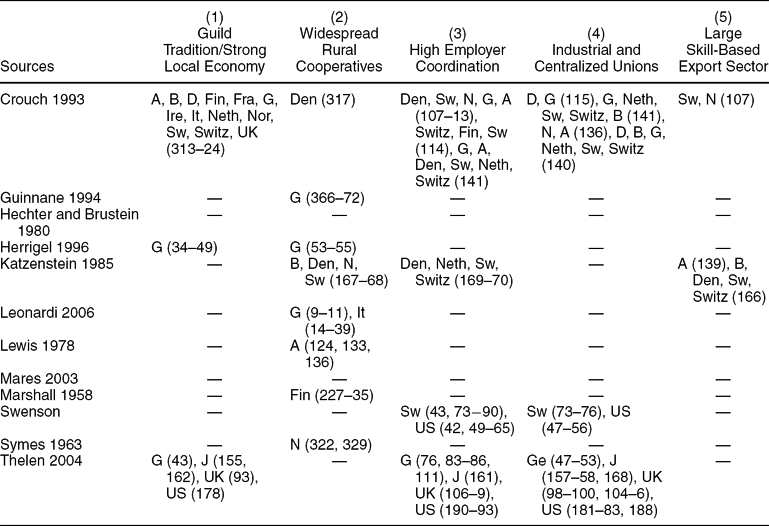
Em dashes (—) indicate my inability to find any references for CIS’ coding.
Notes: Each row lists the evidence the authors provided for each country and for each indicator of market coordination. For example, Crouch provided evidence of a rural cooperative in Denmark on page 317 of his book.
APPENDIX C: EAST EUROPEAN SAMPLE
Sample of East European Countries

Notes: (1) Excluded Serbia (too much political turmoil, no free and fair elections) and Bulgaria (unable to compute effective threshold). (2) Based CIS’ Labor Market Index only on employer coordination, union centralization, and skilled exports. Excluded guild tradition and rural cooperatives due to their poor conceptualization and weak validity. (See Appendix A for more details.) (3) Computation of threshold based on Boix (Reference Boix1999, 614). Relevant information was taken from Braunias (Reference Braunias1932).
Labor Market Coding. Skilled Export Sector: Both tsarist Russia and the Austro-Hungarian Empire had high tariffs to protect their nascent industries and thus did not export much. Only Czechoslovakia and, to a lesser extent, Hungary had any sizeable industry requiring skilled workers. However, most of their exports were to other parts of the Austro-Hungarian Empire (Drabek Reference Drabek, Kaser and Radice1985, 380; Eddie Reference Eddie, Mathias and Pollard1989, 827–29; Good Reference Good1984, 227). Romania also had a small industrial sector but faced particularly punitive tariff obstacles in its most important export sectors (Berend and Ránki Reference Berend and Ránki1974, 88–89; Drabek Reference Drabek, Kaser and Radice1985, 380). Unions: Unions in Baltic nations and the former Russian section of Poland were weak. In tsarist Russia, the right to strike was introduced only in 1905, and the right to unionize in 1906. Government had to approve unions and kept them under close police surveillance. Whatever unions existed were concentrated in Moscow and St. Petersburg. So, without significant unions, they could not have been centralized or industrial (Bonnell Reference Bonnell and Rojahn1990, 462–64, 496; Rimlinger Reference Rimlinger, Mathias and Pollard1989, 596). In Hungary, unions and parties faced serious restrictions on their activities through association law. To circumvent it, parties and unions had to work closely together. Thus, unions were quite centralized. However, I found no direct information about the extent to which they were craft or industrial based (Hitchins Reference Hitchins, Van der Linden and Rojahn1990, 356–61). In Czechoslovakia, unions were divided along religious, ethnic lines, and crafts unions still played an important role (Koralka Reference van der Linden and Rojahn1990, 339–42). Polish unions were weak and divided (Rojahn Reference Rojahn, Van der Linden and Rojahn1990). Business Centralization: There is little to no business history for East Central Europe, which made it impossible to find direct evidence for the formal organization of business associations. I therefore had to draw on more general economic histories (Bonnell Reference Bonnell and Rojahn1990, 454, 458, 464; Eddie Reference Eddie, Mathias and Pollard1989; Good Reference Good1984; Teichova Reference Teichova, Kaser and Radice1985). I used the following three criteria to infer the degree of business centralization.
Examples

1. Industrial concentration. It contributes to centralization if you have extensive cartels, so-called universal banks that finance economic development and function as large investors, and government that plays an extensive role in economic development.
2. Level of industrialization. It gives an indication of the importance of industry in the first place. If industry is small and insignificant but centralized, then presumably it will not have had an important role in institutional choice.
3. Territorial continuity before and after 1918. Territorial discontinuity meant that business organizations existing before 1918 were disrupted and thus lacked organizational centralization and cohesion in the post-1918 electoral system choices. Poland experienced the least continuity, being cobbled together from German, Russian, and Austro-Hungarian territories. The Baltics also enjoyed little continuity because they had little local autonomy in tsarist Russia and emerged as brand new countries in 1918. Romania and Yugoslavia had partial continuity because they were already independent before 1918 but gained considerable new territories after 1918. Czechoslovakia, Hungary, and Austria experienced considerable continuity because they enjoyed regional autonomy before 1918 and did not gain any new territories after 1918; however, Hungary lost considerable territory. Bulgaria remained largely unchanged before and after 1918.
APPENDIX D: MEASURES OF LEFT PARTY DOMINANCE
It is difficult to argue that either of these two measures is clearly superior to the other because each has its respective weaknesses. Dominance and fragmentation are equally important characteristics in Boix's (Reference Boix1999) argument. The more dominant the largest nonsocialist party is, the less likely PR will be introduced. And, the more fragmented nonsocialist parties are, the more likely PR will be adopted. So, ideally, any measure should reflect both dominance and fragmentation. CIS use Example 1 in Table D1 to show how Boix's index fails to reflect significant differences in dominance in Belgium and Australia. In Example 2, we see that CIS’ index fails to capture significance differences in fragmentation between Canada and the Netherlands. The Netherlands, with its higher level of fragmentation, was far more likely than Canada to introduce PR (which it actually did in 1918). Fragmentation also mattered in cases such as Switzerland, with a dominant nonsocialist party (i.e., Radicals with 40.8% of votes and a 24.3% lead over the runner-up nonsocialist party) and four small to medium-size nonsocialist parties. Fragmentation mattered in the Swiss case because the nondominant, nonsocialist parties teamed up with the Socialists to introduce PR. This scenario involves a different causal mechanism than the one discussed by Boix. Finally, CIS’ measure is asymptotic and, as such, exaggerates high and low levels of dominance. In Example 3, a modest 0.7% in dominance difference between Japan and French nonsocialist parties translates into a staggering 0.41 difference under CIS’ dominance score. Overall, I believe that CIS are correct in pointing out a shortcoming in Boix's measure; however, in my opinion, they fail to discuss the shortcomings of their measure and fully demonstrate its superiority. Consequently, their retest of Boix does not conclusively disconfirm it.
APPENDIX E: RECLASSIFICATION OF CASES
Election Data. (1) Abbreviations: NLF, nonleft fragmentation; LES, left electoral strength; 1.2 → 3.4 [first figure is from Boix (Reference Boix1999), second based on calculation by Kreuzer]; T, threshold; *, computational error. (2) Countries: United Kingdom: NLF*: 2.46 → 3.07; Italy: NLF*: 2.3 → 1.8, LES: 17.6 → 22.8 [counted vote shares of Independent Socialists and Reformist Socialist Party in addition to the Socialist Party, which Boix (Reference Boix1999) used]; Belgium: NLF*: 2.75 → 2.2, LES: 14.9 → 13.2 [Mackie and Rose (Reference Mackie and Rose1991) report two leftist parties: the Workers’ Party (13.2%) and Liberal Workers/Socialists (5.2%). I used only the former. It is unclear where Boix (Reference Boix1999) got his figure of 14.9%.]; Greece 1926: NLF: 4.42 → 2.1; LES: 10.6 → 0.25, T: 25.8 → 8.12 [Use 1923 seats shares reported in Mavrogordatos (Reference Mavrogordatos1982, 31). Also used him to recalculate the threshold.]; Iceland: T: 11.3 → 35 (used Hardarson Reference Hardarson, Grofman and Lijphart2002 to recalculate the threshold).
Sampling. Models 2 and 3 in Table 5 exclude Luxemburg, Finland, and Greece for the reasons given by CIS (Cusack, Iversen, and Soskice Reference Cusack, Iversen and Soskice2007, 389). Model 4 still includes Finland and Luxemburg even though no data are available for the election prior to the introduction of PR for the reasons given in the text.
Timing. Netherlands and Iceland: See CIS (Cusack, Iversen, and Soskice Reference Cusack, Iversen and Soskice2007, 389). Sweden: CIS are correct that 1921 is the wrong year. They select 1908 because it is the last election before the introduction of PR in 1909; however, 1908 underestimates the left's threat because it was held under a restrictive suffrage regime. I therefore choose 1911 because it was the first election held under universal male suffrage even though it also was the first election held under PR (Caramani Reference Caramani2000, 617). New Zealand: I changed the timing from 1919 to 1902. New Zealand adopted full male suffrage in 1879 white male suffrage and, in 1893, female suffrage. According to Boix's (Reference Boix1999) criteria, therefore, the first election in the twentieth century should be selected for non-PR adopters (Mackie and Rose Reference Mackie and Rose1991, 340). Canada: Canada already had extensive suffrage well before 1921. Before 1921, suffrage was a provincial responsibility and thus varied a bit, but overall the franchise was already wide before 1921. In 1904, it had 1.3 million voters and, by 1917, 1.8 million. In 1921, it further increased to 4.4 million as women received the vote and a few minor restrictions in some provinces were removed. I therefore chose 1904 because it was the first election held in the twentieth century (66–67).
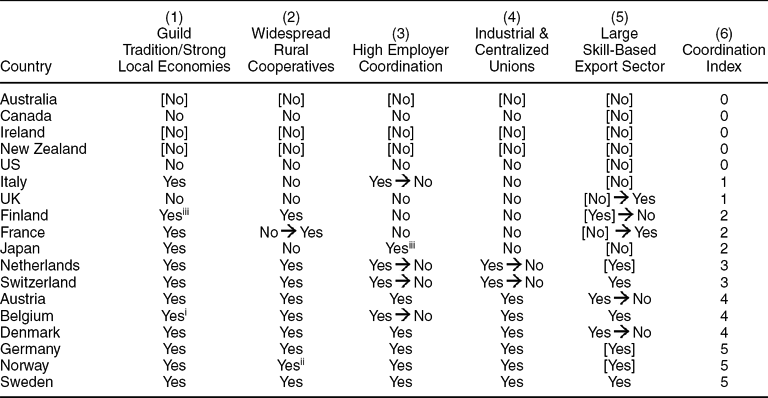
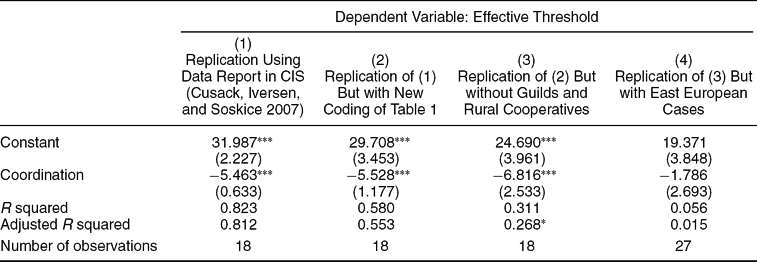
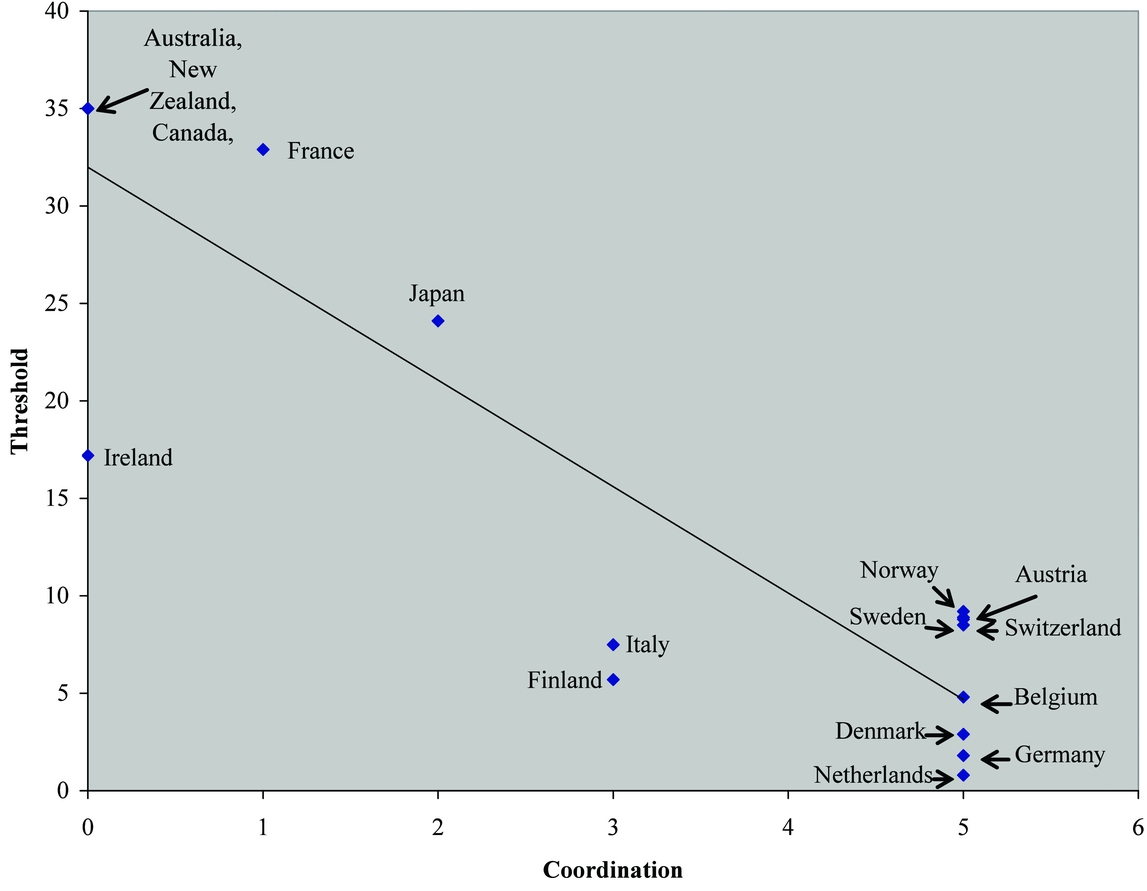
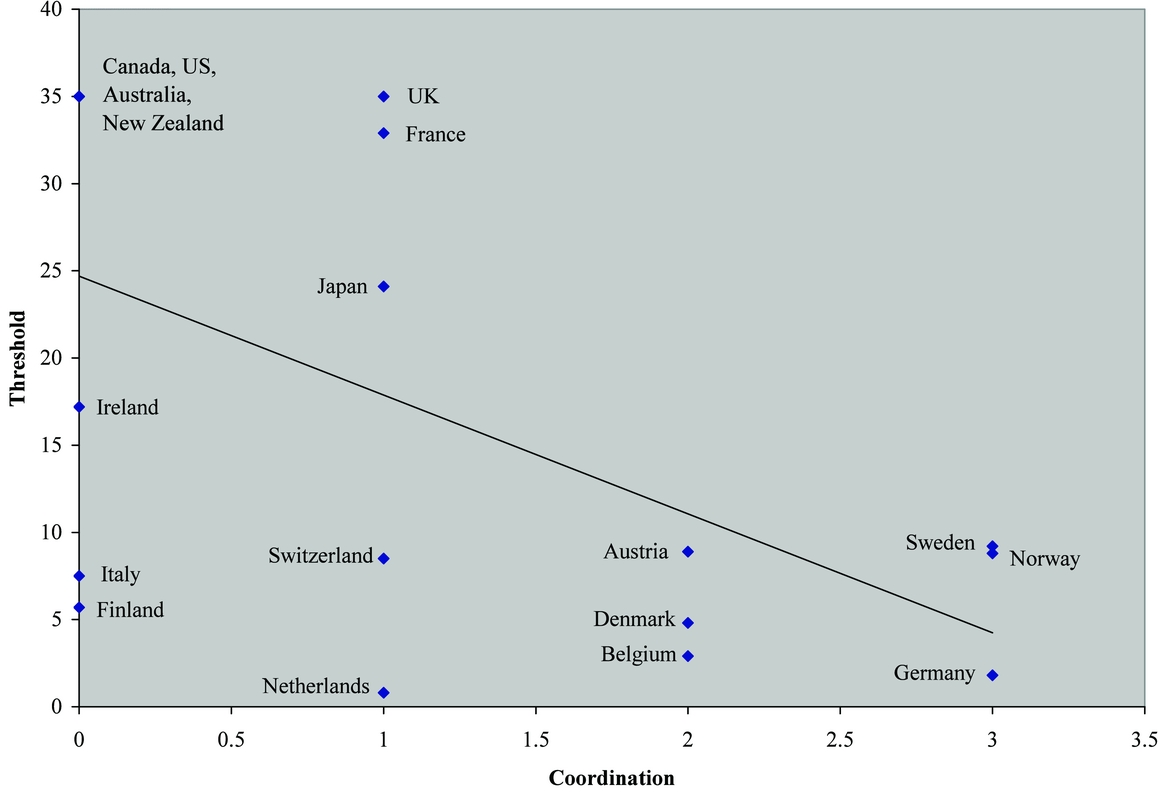
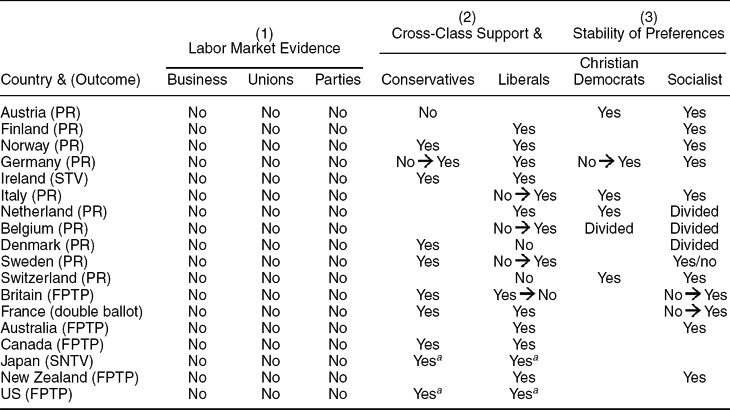
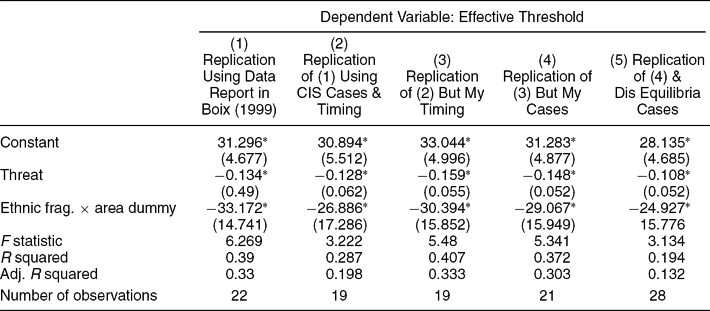
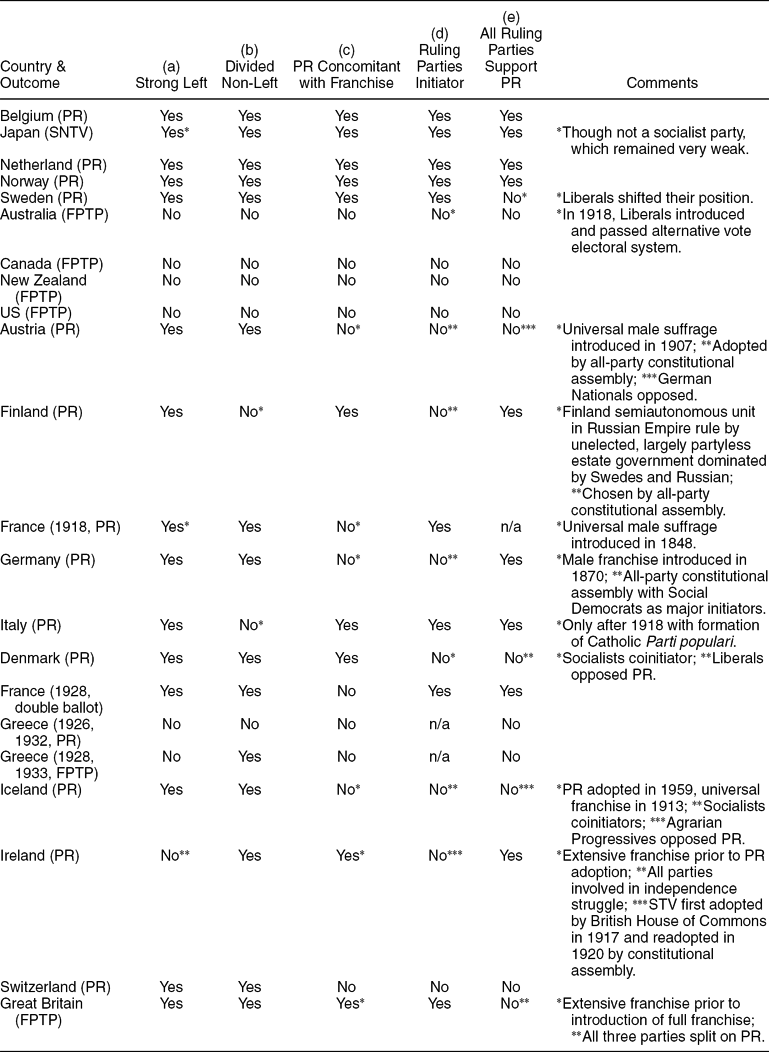
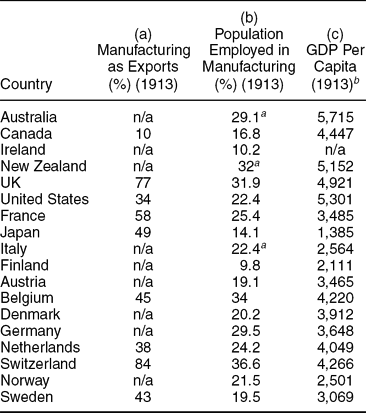
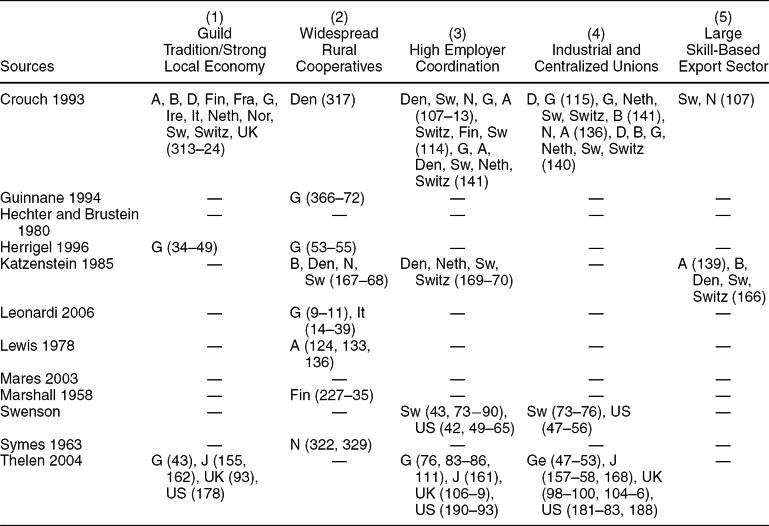
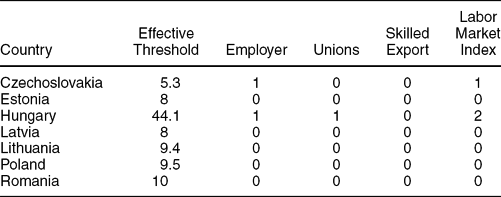
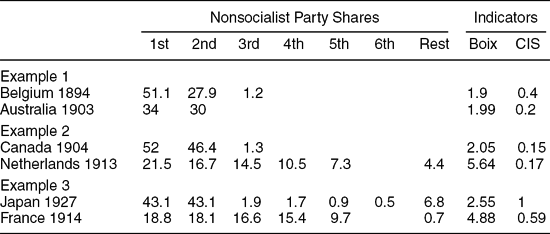



Comments
No Comments have been published for this article.