Introduction
In Western European countries, meat-type birds are mostly kept in confined systems in temperate zones. These chickens have been selected for a high growth rate for decades (Havenstein et al., Reference HAVENSTEIN, FERKET and QURESHI2003), and have high feed intakes and thus high metabolic rates. In addition, they are able to regulate their heat balance relatively well and do not spend much energy on activity. In many other parts of the world, however, particularly in warm tropical and subtropical regions as well as in the southern part of Europe, poultry are more likely to be kept in semi-intensive outdoor systems. In these systems, high ambient temperatures can have detrimental effects on production efficiency. A high ambient temperature (HT) is known to depress growth rate and reduce meat yield of commercial broilers (Cahaner and Leenstra, Reference CAHANER and LEENSTRA1992; Yalcin et al., Reference YALCIN, SETTAR, OZKAN and CAHANER1997). Apart from inducing a high mortality rate, decreased feed intake and decreased body weight gain, HT seems to negatively affect intestinal development (Mitchell and Carlisle, Reference MITCHELL and CARLISLE1992; Garriga et al., Reference GARRIGA, HUNTER, AMAT, PLANAS, MITCHELL and MORETO2006). At HT, broilers showed disturbance in the acid-base balance and increasing respiratory rate can lead to a respiratory alkalosis (Borges et al., Reference BORGES, FISCHER DA SILVA and MAIORKA2007).
In nature, when chickens are exposed to HT, they may use water to splash their combs and wattles in order to increase evaporative cooling from these surfaces (Dawson and Whittow, Reference DAWSON and WHITTOW2000). Birds may use sand baths to dissipate the heat from the body, move to a shaded area or seek a micro-environment that avoids extremely highly environmental temperatures. They can also express their normal behaviour such as foraging, thereby ingesting those ingredients that avoid excessive heat loads while being ingested and metabolised. On the other hand, heat-stressed chickens tend to distance themselves from each other, pant, and often stand with their wings drooped and lifted slightly from the body to maximize heat loss (Etches et al., Reference ETCHES, JOHN and VERRINDER2008).
Birds can increase the flux of heat from the tissues to the environment by behavioural changes. Under HT conditions, the animal will apply physiological, anatomical and behavioural mechanisms aimed at facilitating heat loss to, or minimising heat gain from the environment (Etches et al., Reference ETCHES, JOHN and VERRINDER2008). Therefore, poultry farmers in regions with high temperatures must find ways to apply management and feeding strategies to facilitate these coping mechanisms. Unfortunately, there are only few scientific studies that report on birds under heat stress in extensively managed systems, such as in tropical countries.
A solution for the prevention of heat stress requires a multifactorial approach and may include genetics (Gowe and Fairfull, Reference GOWE and FAIRFULL2008), housing (Yahav et al., Reference YAHAV, STRASCHNOW, LUGER, SHINDER, TANNY and COHEN2004), thermal conditioning (Yahav and McMurtry, Reference YAHAV and MCMURTRY2001), and feeding and nutrition (Balnave and Mutisari Abdoellah, Reference BALNAVE and MUTISARI ABDOELLAH1990; Moritz et al., Reference MORITZ, BEYER, WILSON and CRAMER2001; Uni et al., Reference UNI, GAL-GARBER, GEYRA, SKLAN and YAHAV2001; De Basilio et al., Reference DE BASILIO, REQUENA, LEON, VILARINO and PICARD2003; Zarate et al., Reference ZARATE, MORAN and BURNHAM2003a; Reference ZARATE, MORAN and BURNHAM2003b; Balnave and Brake, Reference BALNAVE and BRAKE2005; Ahmad and Sarwar, Reference AHMAD and SARWAR2006; Daghir, Reference DAGHIR2008a). Recently, Lin et al. (Reference LIN, JIAO, BUYSE and DECUYPERE2006) reviewed potential strategies to combat heat stress, including the use of Naked neck genes, thermal conditioning and the provision of certain micronutrients (vitamins and minerals).
This review will focus on the daily heat production patterns, as a result of changes in feeding management (diurnal feeding patterns, self-selection, coarse particle and wet feeding) in meat-type chickens to alleviate heat stress.
Effect of HT on heat production and heat loss
Developments in the genetic selection of meat-type birds has led to rapid growth and a high metabolic rate, which is accompanied by a higher heat production level due to increased feed intake (Havenstein et al., Reference HAVENSTEIN, FERKET and QURESHI2003). Birds are homeothermic and able to maintain body temperature within a narrow range (Yahav et al., Reference YAHAV, SHINDER, TANNY and COHEN2005). When the ambient temperature is high (Yahav, Reference YAHAV2009), the bird has less ability to dissipate heat.
The body temperature of domestic chickens is within a narrow range that is reflected by an upper and lower limit of a circadian rhythm in deep body temperature (Etches et al., Reference ETCHES, JOHN and VERRINDER2008). When exposed to a hot environment or by performing vigorous physical activity or both, body temperature can rise. This occurs when heat cannot be dissipated within a short time. Conversely, when birds are exposed to a cold environment, heat is lost from the body and, unless the heat is compensated by extra metabolism, body temperature will decline until the bird is unable to survive and dies. These effects comprise the concept of the thermo-neutral zone (TNZ), with lower and upper critical temperatures (Mount, Reference MOUNT1979).
There is a large variation in the ideal temperature range for different classes and age-groups of poultry. This is due to variation in type of birds and in aspects of the environment. As for the optimum temperature range, what is ideal for heat exchange may not be optimal for production such as for growth, egg mass or for feed efficiency. The overall optimum range is mainly dependent on the relative market value of the product produced, in proportion to feed costs. As the ratio of price of feed to gain increases, the best temperature is the one which provides the lowest ratio (Daghir, Reference DAGHIR2008b).
heat production as a result of feed intake
Thermo-neutral heat production (HP) at a given intake and ambient temperature determines the range of the comfort zone for an animal. In growing birds, maintenance metabolism is a large part of HP. HP from maintenance will be higher if an animal exerts physical activity in order to gather food and water (Gous and Morris, Reference GOUS and MORRIS2005). Foraging related activities need more energy (Andersson et al., Reference ANDERSSON, NORDIN and JENSEN2001) and increase total heat production. The form of feed which is offered can influence the energy expenditure related to feed consumption activity. The time spent for eating a meal in pelleted form was reduced to one third compared to mash diets. Eating a pellet diet instead of a mash diet saves about 6% energy (Gous and Morris, Reference GOUS and MORRIS2005), which could be beneficial at HT.
HP is the result of the heat produced due to energy use associated with digestion processes and the absorption and utilization of nutrients. Together these processes are part of the heat increment caused by feed consumption. It has been shown that heat stress may decrease digestibility of dry matter, protein, and carbohydrates, whereas fat digestibility was relatively unaffected (Puvadolpirod and Thaxton, Reference PUVADOLPIROD and THAXTON2000b).
Broiler HP is particularly high because of high growth rate, mediated by high feed consumption. The inefficiency of conversion of feed above maintenance into protein and lipid is about 20 to 25%. Wiernusz (Reference WIERNUSZ1998) estimated that about 60% of total ME intake is lost as heat (maintenance plus 25 to 30% of the ME above maintenance). If feed intake diminishes at HT this means that HP from feed above maintenance decreases, as does total HP. In addition, HP normally increases with an increase in total protein accretion (MacLeod, Reference MACLEOD1997).
HP in broilers is dependent on genetics (Buys et al., Reference BUYS, SCHEELE, KWAKERNAAK, VAN DER KLIS and DECUYPERE1999). Lines selected for fast growth accompanied with a low FCR have lower HP compared to those selected either for slow growth with a low FCR or slow growth with a high FCR. Fast growing birds may have problems with its respiratory and/or cardio-vascular system due to increased metabolic demands. This is shown by a higher pCO2 and lower pO2 in their venous blood as compared to slow growing lines, indicating a lower O2 and CO2 carrying capacity, leading to a lower HP.
HP over a 24 h period is not constant and depends on the activity pattern of the animal over the day. Extra HP due to feed intake should preferably not be generated during the hottest period of the day. Broiler chickens kept in intensive, temperature controlled, dark houses experience no particular hot period. However, with a natural day light scheme (such as in extensive tropical poultry systems), this may not be achievable as it is dark during the coolest period of the day when feed intake will not occur.
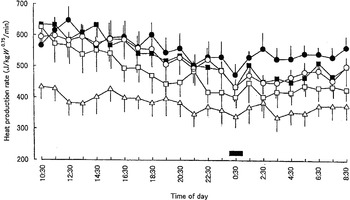
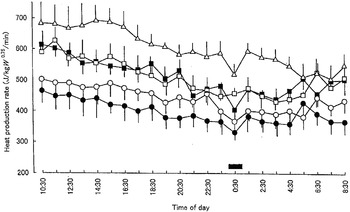
A circadian variation in HP of growing broilers, maintained at different feed intake levels and ambient temperatures with a 23L:1D lighting pattern, is shown in Figures 1 and 2. Figure 1 shows that HP tends to decrease until the 1-h dark period (00.30 h). HP rates in the fed groups were similar at 10.30 h and then decreased linearly until 00.30 h. HP decreased significantly with decreasing feed intake. This shows that regulated feeding may change the pattern of circadian variation in HP rate. In Figure 2, a clear negative relationship between ambient temperature and HP rate is demonstrated.
The primary consequence of heat stress is that animals will reduce feed intake progressively while ambient temperature increases (May and Lott, Reference MAY and LOTT1992). This lower feed intake (energy intake) will reduce HP of the chicken.
Pattern of circadian variation in HP rates of growing broilers given free access to feed (●), 75% of ad lib intake (○), 50% of ad lib intake (■), 25% of ad lib intake (□) and no feed at all 0% (∆). The black horizontal bar represents the dark period and vertical bars are SEM of 5 birds (Koh and MacLeod, Reference KOH and MACLEOD1999a).

Pattern of circadian variation in HP rates of growing broilers maintained at 14°C (∆), 17°C (□), 22° (■), 27°C (○) and 32°C (●). The black horizontal bar represent the dark period and vertical bars are SEM of 5 birds (Koh and MacLeod, Reference KOH and MACLEOD1999a).

heat loss by sensible and evaporative heat dissipation
At relatively low temperatures, heat is dissipated through sensible heat loss (SHL) and is emitted by radiation, conduction and convection (Yahav et al., Reference YAHAV, SHINDER, TANNY and COHEN2005). SHL can be dissipated when ambient and/or wall and floor temperatures are below the fowl's surface temperature (Hilman et al., Reference HILMAN, SCOTT and VAN TIENHOVE1985; Etches et al., Reference ETCHES, JOHN and VERRINDER2008). Radiative heat transfer can occur between the bird and its environment if the surface temperature of the bird is different from that of the surrounding surface or in open air. Convection occurs by giving off heat to the surrounding air from comb, wattles, face, legs, toes, neck, body and wings (Yahav et al., Reference YAHAV, SHINDER, TANNY and COHEN2005). SHL from the comb and wattles represents 34% of the total SHL at 35°C (Hilman et al., Reference HILMAN, SCOTT and VAN TIENHOVE1985). In addition, heat loss by convection plus radiation (Qt) can increase considerably with increasing air velocity. Air velocity also exposes the skin more and thus may increase radiant losses. The SHL by Qt, expressed as a percentage of energy expended for maintenance, reaches a level of about 45% in broilers subjected to 3.0 m/s air velocity (Yahav et al., Reference YAHAV, STRASCHNOW, LUGER, SHINDER, TANNY and COHEN2004). Therefore, SHL can play a major role in heat loss to the environment. Exposure to high ambient temperatures enhances blood flow in the chicken foot due to the opening of arteriovenous anastomoses (Hilman et al., Reference HILMAN, SCOTT and VAN TIENHOVE1985), which can facilitate conductive heat loss.
An increase in body temperature above the regulated range may lead to a cascade of thermoregulatory events that may be lethal if body temperature cannot be maintained within certain limits (Yahav et al., Reference YAHAV, SHINDER, TANNY and COHEN2005). If ambient temperature rises, heat dissipation is shifted from non-evaporation towards more evaporation (of moisture) at higher temperatures (Etches et al., Reference ETCHES, JOHN and VERRINDER2008). In the bird, heat is mainly dissipated through an increased respiration (called ‘panting’) (Marder and Arad, Reference MARDER and ARAD1989) but also via cutaneous evaporative mechanisms (Ophir et al., Reference OPHIR, ARIELI, MARDER and HOROWITZ2002).
At the high end of the TNZ, heat loss through panting can account for 60% of the total heat loss (Etches et al., Reference ETCHES, JOHN and VERRINDER2008) and even up to 80% at very high temperatures (32°C) (Ahmad and Sarwar, Reference AHMAD and SARWAR2006). Evaporative heat loss is associated with loss of water and dehydration can occur. Sufficient water intake will facilitate this type of heat loss and contribute to thermo-tolerance at higher ambient temperatures (Yahav et al., Reference YAHAV, SHINDER, TANNY and COHEN2005).
Effect of HT on feed intake, water intake, body weight, physiology and GIT development
A high ambient temperature is a relative term especially since each animal has its own upper threshold of what is experienced as the comfort zone. When the ambient temperature exceeds the animal's thermo-neutral zone, the animal experiences heat stress. The ambient temperature at which this happens also depends upon the RH and air velocity (Veldkamp et al., Reference VELDKAMP, KWAKKEL, FERKET and VERSTEGEN2002). A high ambient temperature affects feed and water intake, respiration rate, body temperature, heterophil/lymphocyte (H/L) ratio and GIT development.
feed intake
Poultry production efficiency is affected by ambient temperatures and humidity (Wiernusz, Reference WIERNUSZ1998). Feed intake by broilers is reduced at high temperature HT (NRC, Reference NRC1994; Cheng et al., Reference CHENG, HAMRE and COON1997). An increase in the ambient housing temperature from 21.1 to 32.2°C caused a drop in feed intake of about 9.5% per bird/day from the first week to the sixth week of age. When ambient temperature rose from 32.2 to 37.8°C, it caused a further drop in feed intake of 9.9% per bird/day, as compared to 21.1°C (North and Bell, Reference NORTH and BELL1990).
water intake
High ambient temperatures will increase water intake. Chickens drink four times more at 38°C (North and Bell, Reference NORTH and BELL1990), as compared to 21°C. The latest data showed that water consumption increases about 7% for each 1°C above 21°C (NRC, Reference NRC1994). Stimulation of water intake may benefit the bird by facilitating the evaporation mechanism (Belay and Teeter, Reference BELAY and TEETER1993) which helps cooling (Ahmad et al., Reference AHMAD, SARWAR. M. and AHSAN-UL-HAQ2005). Thus water is involved in many aspects of poultry metabolism including body temperature control, digestion processes, absorption of feed and transport of nutrients. Water consumption during heat stress depends on the amount of feed consumed. Birds that received feed 1 h before heat exposure had a larger increase in water consumption during the heat exposure period compared to birds that did not receive feed prior to heat exposure (Lott, Reference LOTT1991).
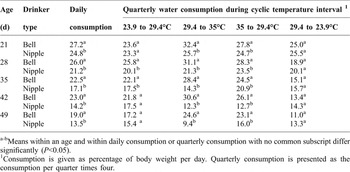
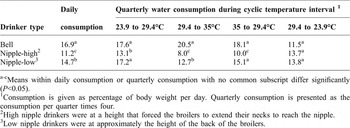
Furthermore, water consumption in low-high and high-low temperature cycles was affected by drinker types (bell versus nipple; Table 1) and the height of the nipple above the bird (Table 2). Data were summarised for 24 h periods that began and ended at a low temperature. At each age, daily water consumption was significantly lower for birds with nipple drinkers than for birds with bell drinkers. In particular, this difference was most pronounced during the quarters of the day that temperature was highest (29.4-35-29.4°C) (Table 1). Daily water consumption was largest for birds with bell drinkers, intermediate for birds with low nipple drinkers and lowest for birds with high nipple drinkers (Table 2). Average water consumption over 3 d (54 to 56 d of age) in birds with a bell drinker increased with increasing temperature, but consumption from a nipple drinker decreased surprisingly with increasing temperature (May et al., Reference MAY, LOTT and SIMMONS1997).
In the study of May and Lott (Reference MAY and LOTT1992), they reported that an increased water consumption at 24-35-24°C cyclic temperature was accompanied by a decreased feed consumption. It is clear that a depressed feed consumption results in lower body weight gain.
Effect of drinker type and high cyclic temperature on water consumption by broilers (May et al., Reference MAY, LOTT and SIMMONS1997).

a-bMeans within an age and within daily consumption or quarterly consumption with no common subscript differ significantly (P<0.05).
1Consumption is given as percentage of body weight per day. Quarterly consumption is presented as the consumption per quarter times four.
Effect of nipple height and high cyclic temperature on water consumption by broilers (May et al., Reference MAY, LOTT and SIMMONS1997).

a-cMeans within daily consumption or quarterly consumption with no common subscript differ significantly (P<0.05).
1Consumption is given as percentage of body weight per day. Quarterly consumption is presented as the consumption per quarter times four.
2High nipple drinkers were at a height that forced the broilers to extend their necks to reach the nipple.
3Low nipple drinkers were at approximately the height of the back of the broilers.
body weight
Broilers that were subjected to high temperature (HT) gained less than those subjected to normal temperature (NT). Body weight of broilers at six weeks of age was decreased by about 14.3% and 21.2% at 32.2°C and 37.8°C, respectively (North and Bell, Reference NORTH and BELL1990) and even up to 34% at 32.2°C as compared to 21.1°C (Cheng et al., Reference CHENG, HAMRE and COON1997). There have been few studies on the combined effects of temperature and RH in relation to BW. It is generally accepted that high humidity aggravates the detrimental effects of a high temperature. A bell-shaped response function of BW gain to RH was observed in five to eight-week-old broiler chickens in response to various RH levels with a maximum BW at 60 to 65% RH, both at 30 and 28°C (Yahav, Reference YAHAV2000).
body temperature and respiration rate
Male turkeys (Waibel and MacLeod, Reference WAIBEL and MACLEOD1995) and broilers (Yahav, Reference YAHAV2000; De Basilio et al., Reference DE BASILIO, REQUENA, LEON, VILARINO and PICARD2003) raised under high ambient temperatures show an increased body temperature and respiration rate. Broilers maintained at 10°C above TNZ had the highest core body temperature (CBT) compared to the other temperature treatments (40.1 vs. an average of 39.9°C, respectively; P<0.001). CBT was influenced by gender and crude protein level in the diet. Protein level did not affect CBT of males but CBT was significantly elevated (0.07°C) in females on the higher protein level (Zuidhof et al., Reference ZUIDHOF, PISHNAMAZI, OUELLETTE, KORVER and RENEMA2010). The higher CBT can be derived from three reasons. Firstly is the lower surface per BW. The male has a lower surface area per BW because they are normally bigger than female. So, heavy birds may suffer more at HT if they have the same HP per BW. Secondly is the efficiency in protein deposition. Males deposit protein more efficient than females. This means that males use less CP for lipid deposition than females, therefore males produce less heat. Thirdly if FCR is higher, CBT is higher because more HP is produced.
Respiration rate is dependent on the age of the bird, ambient temperature and RH. At 20 weeks of age, respiration rate in turkeys was increased from 195 breaths per minute at 25°C to 230 breaths per minute at 32°C. The increase in respiration rate was more pronounced when RH is high (Brown-Brandl et al., Reference BROWN-BRANDL, BECK, SCHULTE, PARKHURST and DESHAZER1997). This finding is in line with reports by Yahav (Reference YAHAV2000) who found that the rate of panting estimated from blood pH and pCO2 was higher in chickens exposed to 30°C than to 28°C.
heterophil/lymphocyte ratio
This ratio is affected by a number of stressors such as high ambient temperature and can be used as an indicator of heat stress (Gross and Siegel, Reference GROSS and SIEGEL1983; Puvadolpirod and Thaxton, Reference PUVADOLPIROD and THAXTON2000a). A high ratio is negatively correlated with BW and positively correlated with mortality (Puvadolpirod and Thaxton, Reference PUVADOLPIROD and THAXTON2000a; Al-Murrani et al., Reference AL-MURRANI, AL-RAWI, AL-HADITHI and AL-TIKRITI2006).
gastrointestinal tract development
Gastrointestinal tract (GIT) development can be influenced by heat stress also. GIT development, as indicated by total wet and dry weights of the whole small intestine, were reduced by about 22 and 23%, respectively, in birds kept at 35°C compared to those kept at 22°C. Moreover, the size of the absorptive surface was reduced as indicated by villus height by about 19% (P<0.001) in birds maintained at 35°C (762 μm) compared to those kept at 22°C (938 μm) per unit length of jejunum for 14 d (Mitchell and Carlisle, Reference MITCHELL and CARLISLE1992). In terms of intestinal development, birds exposed to HT and RH (30°C and 70%) showed a 27.2% reduction in fresh weight of jejunum and a 3.8% reduction in jejunum length compared to birds exposed to a low temperature and RH (20°C and 50%) (Garriga et al., Reference GARRIGA, HUNTER, AMAT, PLANAS, MITCHELL and MORETO2006). The decrease in jejunum weight was mainly attributed to the effect of the reduced intake with high ambient temperature because restrictedly pair-fed birds showed similar values to the control birds. This indicates that high temperature reduces intestinal weight concurrent to lower feed intake. Furthermore, the decrease in intestinal weight and villus height may be influenced by the reduction in T3 production (Mitchell and Carlisle, Reference MITCHELL and CARLISLE1992; Garriga et al., Reference GARRIGA, HUNTER, AMAT, PLANAS, MITCHELL and MORETO2006) under heat stress, because thyroid hormones stimulate the growth of the intestines (Levin, Reference LEVIN1994; McNabb, Reference MCNABB2007). Therefore, functional hypothyroidism mediates the reduction in jejunal mass and villus height in heat stressed birds (Garriga et al., Reference GARRIGA, HUNTER, AMAT, PLANAS, MITCHELL and MORETO2006).
Effect of HT on energy and protein requirements
It appears that birds under HT conditions have a preference for nutrients that will result in less HP at a given physiological status of the birds. Accordingly, they will adjust their production level.
energy requirements
The advantages of using a high-energy diet for broilers by adding fat in feeding programs for high ambient temperatures are well documented (Daghir, Reference DAGHIR2008b). Adding fat (5%) at 31°C improved feed intake in laying hens by about 17%, whereas at 10-18°C it improved feed intake by only 4.5% (Daghir, Reference DAGHIR2008a). Compared to either protein or carbohydrates, fat gives less heat production because dietary fat used for deposition has a lower heat increment than protein or carbohydrates (Musharaf and Latshaw, Reference MUSHARAF and LATSHAW1999). However, a significant additional weight response to additional energy (like extra fat) occurred only with an adequate amino acid (lysine) level in the diet (McNaughton and Reece, Reference MCNAUGHTON and REECE1984). On the other hand, digestibility of energy, protein and fat in diets with a high energy to protein ratio was reduced during a two week exposure to 32°C in six week old male broilers. So, high quality oil and protein sources with a high digestibility should be used (Bonnet et al., Reference BONNET, GERAERT, LESSIRE, CARRE and GUILLAUMIN1997).
Male broilers housed at ambient temperatures ranging from 21.1°C to 35°C and fed grower diets containing either 12.7 or 13.4 MJ ME/kg with five different levels of CP and amino acids showed that feeding high energy diets across all temperatures significantly improved feed conversions and a better protein utilisation (Cheng et al., Reference CHENG, HAMRE and COON1997). This means that high level energy densities may be required under hot conditions to reduce the heat load (Balnave and Brake, Reference BALNAVE and BRAKE2005), and less heat will need to be lost via panting.
The energy requirement for maintenance (MEm) at different temperatures can be derived from linear regression of energy retention on ME intake at each temperature. When MEm was estimated, the requirements were 157.8, 112.1, and 127.2 kcal of ME/kg of W0.75/d for chickens reared at 13, 23, and 32°C, respectively. Temperature had a quadratic effect on MEm with a minimum MEm near 26°C: MEm= W0.75 (307.87 + 15.63 T + 0.31 T2) (Sakomura et al., Reference SAKOMURA, LONGO, OVIEDO-RONDON, BOA-VIAGEM and FERRAUDO2005). The quadratic effect of temperature on MEm implies that the MEm requirement is increased at HT. This estimation suggests that metabolism of the birds changes when they are reared above or below their TNZ in order to dissipate heat or increase heat production.
Adaptive changes in feed intake and energy expenditure over the long-term contribute to homeostatic control of body energy stores and maintaining a constant BW. In addition to meeting immediate energy demands, feed intake can be adjusted to ensure that energy and nutrients are stored in anticipation of periods of high demand or feed shortage (Richards and Proszkowiec-Weglarz, Reference RICHARDS and PROSZKOWIEC-WEGLARZ2007). Therefore, it is a challenge to estimate the energy requirement at HT.
The estimate of average efficiency of total energy use of different nutrients for various body functions is given in Table 3. Each nutrient has its own ATP potential. So when starch and lipids are used for maintenance about the same amount of ME can be used as ATP and this means the same amount of heat is produced per calorific value of the nutrient when used for maintenance. If fatty acids are used as an energy supply for activity, than about 66% of the calorific value of fatty acids can be converted into ATP and the rest (34%) is lost as waste heat. If the body produces fat, it does not need to make many changes to fatty acids and it will deposit about 90% of the calorific value of these into fat and with 10% resulting in ‘waste’ heat. When protein is used for ATP more heat is produced per calorific value (42%). It is clear that lipid is deposited with a high efficiency. So in that case only a small part of the calorific value of lipid is lost as heat. Therefore, a high energy diet with relatively high fat content gives less heat load per energy unit after digestion. Animals will deposit a part of the dietary fat directly as body fat. In this case, not many changes are needed to convert fatty acids into body lipids. Dietary protein has to be hydrolysed first to amino acids (AAs) and peptides. From these AAs, body protein can be made if the intake pattern is balanced. So if the dietary amino acid pattern matches the protein needed for accretion, not many changes are needed and this will cost energy. Synthesis of body fat from fatty acids does not require additional changes or energy compared to synthesising body fat from e.g. carbohydrates. In addition, the body does not store much carbohydrate. So carbohydrate molecules have to be transformed before they can be used for fat synthesis or for ATP, and several metabolic changes occur when they are used for lipid synthesis.
Biochemical efficiency of absorbed nutrients for ATP and for lipid synthesis (Black, Reference BLACK1995).

protein and amino acid requirements
Dietary protein has received considerable attention in relation to heat stress, because its catabolism is associated with higher heat production when compared to that of fats and carbohydrates in birds under TNZ conditions (see also Table 3).
Raising the protein level of a diet above NRC (Reference NRC1994) recommendations did not improve performance at 33°C (Cheng et al., Reference CHENG, HAMRE and COON1997). Low protein diets had negative effects on broiler performance when ambient temperature was high. This is clear because lower feed intake results in reducing intake of amino acids and further results in a poor feed efficiency and poor BW gain (Alleman and Leclercq, Reference ALLEMAN and LECLERCQ1997). Broiler chickens exposed to acute heat stress (36.4 and 40.0°C) had reduced plasma amino acid concentrations. The most significant change was seen at 40°C compared to lower temperatures (Tabiri et al., Reference TABIRI, SATO, TAKAHASHI, TOYOMIZU and AKIBA2000). These authors speculated that changes in plasma Trp/LNAA (large neutral amino acid, sum of isoleucine, leucine, valine, tyrosine and phenylalanine) ratio and in Tyr may be related to a reduced feed intake and to altered thyroid function. Both phenomena are usually measured in heat stressed birds.
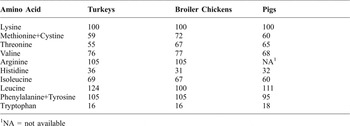
Under heat stress conditions, broilers aged 21 to 49 days should be fed diets that contain between 90 to 100% of the NRC (Reference NRC1994) recommended levels of amino acids and protein in diets containing 13.4 MJ ME/kg (Cheng et al., Reference CHENG, HAMRE and COON1999). According to Cheng et al. (Reference CHENG, HAMRE and COON1999), nutritionists should not compensate for a decreased intake in hot temperatures by increasing the concentration of protein and amino acids. So the final effect on performance then depends on the amounts of ‘ideal protein’. The ideal amino acids pattern is not similar among species as shown in Table 4. Relative to lysine, the chicken requires more methionine+cystine, threonine and less leucine than the turkey and the pig. The ideal amino acid balance for broilers may vary somewhat with ambient temperature. This is logical, as the amino acid part of the diet that is used for maintenance or growth changes due to metabolic stress (Moughan, Reference MOUGHAN1999; Moughan and Fuller, Reference MOUGHAN and FULLER2003). They concluded that if intake is reduced the overall pattern needed will more closely resemble the maintenance pattern.
Estimated ideal protein ratio for a starting hen turkey, broiler chicken and pig, expressed as a percentage of the lysine requirement (Firman and Boling, Reference FIRMAN and BOLING1998).

1NA = not available
At 31°C, broilers on low sodium chloride diets had an improved FCR at similar feed intakes and numerically higher BW on a 1.36 Arg:Lys ratio diet compared to a 1.10 Arg:Lys ratio (Brake et al., Reference BRAKE, BALNAVE and DIBNER1998). These authors showed a beneficial effect of an increased Arg:Lys ratio at HT. However, others reported that an increased level of lysine in broilers (Mendes et al., Reference MENDES, WATKINS, ENGLAND, SALEH, WALDROUP and WALDROUP1997) or Arg:Lys ratio in turkeys (Veldkamp et al., Reference VELDKAMP, KWAKKEL, FERKET, NIXEY and NOORDHUIZEN2000) was unable to improve weight gain and breast meat yield, or attenuate the adverse effects of heat stress.
Raising the protein level at HT without raising the level of essential amino acids such as lysine, will not help very much in overcoming the reduction in BW gain and feed conversion efficiency (Ait-Tahar and Picard, Reference AIT-TAHAR and PICARD1987). However, an increased dietary lysine concentration appears necessary to compensate partly for the reduced feed intake (Corzo et al., Reference CORZO, MORAN and HOEHLER2003). Improvements were found in intake and growth by feeding broilers with 2-hydroxy-4-(methylthio) butanoic acid (HMB), but not with DL-methionine (Chen et al., Reference CHEN, HAYAT, HUANG, BALNAVE and BRAKE2003). Amino acid supplementation had a minimum effect on heat production (Zarate et al., Reference ZARATE, MORAN and BURNHAM2003a). Moughan (Reference MOUGHAN1999) stated that the ideal amino acid pattern for maintenance is not the same as the ideal amino acid pattern for growth.
Feeding strategies to combat heat stress
Heat stress can only be reduced by feeding strategies if the animal produces less heat and/or loses more heat. A lower HP can be realised by e.g. a reduced heat increment, catabolism of fewer nutrients above requirements or more efficient nutrient digestion. More heat loss can be realised through water evaporation from the body. The possible ways to combat heat stress by feeding strategies are applying diurnal feeding patterns, self-selection strategies, feeding coarser diets and wet feeding.
diurnal feeding patterns
As the production cycle shortens due to improvements in genetic selection and nutrition, the implementation of restricted feed at HT may not produce a better performance, but could reduce the adverse effect of HT.
Early growth restriction induced by feed restriction cannot completely compensate for the adverse effect of high ambient temperature on performance, nor can high ambient temperatures recover the beneficial effect of an early growth restriction in improving feed efficiency and reducing fattening (Plavnik and Yahav, Reference PLAVNIK and YAHAV1998). Others have reported that feed withdrawal two hours before the hottest period of the day improved feed conversion and lowered mortality without affecting BW (Yalcin et al., Reference YALCIN, OZKAN, TURKMUT and SIEGEL2001). Furthermore, chickens fed less for 2 h prior to a hot period of the day gained 2.8% more and showed a lower H/L ratio than heat stressed bird fed ad libitum (Yalcin et al., Reference YALCIN, OZKAN, CABUK and SIEGEL2003). This means that feed restriction during the heat stress period can reduce the harmful effects of HT.
Feed withdrawal during the warmest part of the day (09:00 to 16:00 h) was compared with the distribution of ground corn during 09:00 to 16:00 h and commercial feed consumed ad libitum. The broilers were exposed to tropical conditions from 28 to 42 d (averaged Ta = 25°C; RH = 72%). From 16:00 to 09:00 h, continuous light was provided in the poultry house and all chickens received a commercial diet. Results showed that both feed withdrawal and corn distribution during the day period reduced growth and deteriorated feed conversion. However, the body temperature (Tb) in birds on the control diet was higher than of those fed both limited feed and corn (Lozano et al., Reference LOZANO, DE BASILIO, OLIVEROS, ALVAREZ, COLINA, BASTIANELLI, YAHAV and PICARD2006). Separate feeding of a high protein fraction (16:00 to 09:00 h) and an energy-rich fraction (09:00 to 16:00 h) at diurnally cyclic temperatures of 26°C (16:00 to 09:00 h) and 30°C (09:00 to 16:00 h) compared with a control diet show that growth and feed efficiency were slightly reduced (-4%) by separate feeding. However, during the thermal challenge period at the age of 34 d of 36 ± 2°C and 40 to 58% RH for 7 h, Tb was reduced by separate feeding (De Basilio et al., Reference DE BASILIO, VILARINO, YAHAV and PICARD2001). Certainly the gap between two feeds is important with regard to its influence on performance at HT. It can certainly help to reduce heat stress as shown by the lower Tb.
Feed withdrawal between 10:00 to 16:00 h during the day from weeks five to six or in week six was compared with control feeding with the same feed on broilers reared under natural summer conditions. BW and daily weight gain were higher in the feed withdrawal groups during week six. Feed withdrawal during weeks five to six produced the lowest body weight and daily weight gain. However, Tb was lower in the feed withdrawal treatment (Özkan et al., Reference ÖZKAN, AKBAŞ, ALTAN, Ö., ALTAN, AYHAN and ÖZKAN2003). Because total feed intake and feed conversion ratio by 6 h feed withdrawal during the seven days before market age did not affect slaughter weight, it can be suggested that feed withdrawal during the hot period of the day can be used to alleviate heat stress.
Broiler breeders responded to a restricted feed intake by a reduction in HP resulting in a reduced BW gain. The reduced metabolic rate per unit of weight was associated with a thermoregulatory advantage at high ambient temperature (MacLeod et al., Reference MACLEOD, SAVORY, MCCORQUODALE and BOYD1993). Reducing weight gain by restricted feeding resulted in a longer growing period and delay in marketing age. Therefore, during a heat stress period, the producer has to balance the benefits of a faster growth rate and a greater risk of mortality.
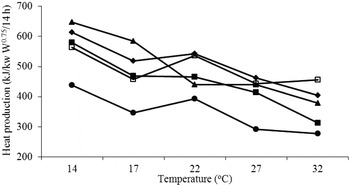
Feed intake at different levels of feed restriction under various environmental temperatures is shown in Figure 3 (Koh and MacLeod, Reference KOH and MACLEOD1999b). The HP in relation to feed intake and ambient temperature is shown in Figure 4 (Koh and MacLeod, Reference KOH and MACLEOD1999a). HP data were calculated for each combination of temperature and feed intake. When HP (kJ/kg W0.75/14 h) was calculated at each combinations, HP significantly decreased with a decreasing feed intake and increasing ambient temperature.
Feed intake at different ambient temperatures of growing broilers provided feed ad lib (♦), 75% of ad lib (□), 50% of ad lib (▲), 25% of ad lib (■) and no feed 0% (●) (Koh and MacLeod, Reference KOH and MACLEOD1999b).

Heat production in relation to ambient temperature and feed intake level of growing broilers provided feed ad lib (♦), 75% of ad lib (□), 50% of ad lib (▲), 25% of ad lib (■) and no feed 0% (●) (Koh and MacLeod, Reference KOH and MACLEOD1999a).

self-selection
A direct measure of separate regulation of protein and energy intake can be made with self-selection feeding. There is evidence that both wild and domesticated fowl are able to adjust their nutrient intake by selecting from various feed ingredients that match their physiological requirements (Hughes, Reference HUGHES1984; Yo et al., Reference YO, SIEGEL, FAURE and PICARD1998). Self-selection could allow the bird to meet their daily cyclic requirements for nutrients more effectively compared to offering a complete diet. For example, during hot cyclic periods, the birds may prefer to change energy intake from the hot (afternoon) to the cooler periods (morning) in order to reduce heat production during the hottest part of the day. In this way they can fulfil their energy demands throughout the entire 24h-period of the day. Information concerning the ability of chickens to separately regulate their consumption protein and energy under heat stress is still limited, certainly for village chickens kept under tropical climate condition. Factors that influence dietary choice by chickens include genotype, chronological age, physiological state, ambient temperature, health status, stress and prior experiences (Forbes and Shariatmadari, Reference FORBES and SHARIATMADARI1994).
Some researchers have reported an improved (Gabriel et al., Reference GABRIEL, MALLET, LECONTE, FORT and NACIRI2003), similar (Rose et al., Reference ROSE, FIELDEN, FOOTE and GARDIN1995) or decreased (Amerah and Ravindran, Reference AMERAH and RAVINDRAN2008) growth performance of chickens under HT conditions after subjecting them to choice feeding (with wheat). Feeding additional pea meal did not give differences in performance with control feed, so the response depends on feed ingredients (McNeill et al., Reference MCNEILL, BERNARD and MACLEOD2004).
From choice feeding studies, a broiler at HT (cycling diurnally between 25 and 35°C) prefers to consume less protein and more energy compared to a complete diet (Sinurat and Balnave, Reference SINURAT and BALNAVE1986). Japanese quail preferred to eat more energy and less protein if they were offered a choice as compared to a single complete diet when housed between 20°C and 35°C (MacLeod and Dabutha, Reference MACLEOD and DABUTHA1997). This response of birds at HT is probably caused by them trying to avoid the increased risk of heat increment from protein conversion associated with HT. Indeed, high fat diets (5%) reduced the detrimental effect of heat stress in broilers raised at 29 to 36°C (Ghazalah et al., Reference GHAZALAH, ABD-ELSAMEE and ALI2008). These results agree with Veldkamp et al. (Reference VELDKAMP, KWAKKEL, FERKET and VERSTEGEN2002), who concluded that turkeys modulate their feed intake when exposed to HT in relation to caloric diet density.
In a hot environment, self-selection means that animals can select a diet and optimise the heat load associated with metabolism. It may enable the bird to more precisely balance nutrient intake against its requirements. This has been particularly evident in laying hens with increased egg mass output when a high energy, complete diet was fed with an additional protein concentrate in a hot climate (Balnave and Mutisari Abdoellah, Reference BALNAVE and MUTISARI ABDOELLAH1990).
The effect of choice feeding on performance seems to be determined by the age of birds when the choice is offered for the first time. BW of choice-fed chickens under tropical conditions from 1 to 42 d of age and from 8 to 42 d of age was lower at 35 and 42 d. When chickens changed from a complete diet to choice feeding from 22 to 42 d and from 36 to 42 d, their BW at 42 d did not differ from those that had received the control diet (Yo et al., Reference YO, SIEGEL, FAURE and PICARD1998). The lower BW of choice-fed birds was presumably due to a dramatic decline in the level of protein concentrate consumed during 1 to 42 d period (control fed birds: 16.3 g/kg, choice fed birds: 13.8 g/kg).
The length of exposure to heat stress can affect the response of birds to diets varying in dietary protein. Gonzalez-Esquerra and Leeson (Reference GONZALEZ-ESQUERRA and LEESON2005) fed broilers two levels of dietary protein (CP 10% and 30%) in a choice feeding experiment and compared them with a single diet with 26% CP with the same ME at 1. NT (23°C at 21 d), 2. acute heat stress (AHS; sudden temperature increase to 29.4°C at 21 d) and 3. chronic heat stress (CHS; gradually temperature increase to 29.4°C at 7 d). Result from 28 to 42 d of age showed that feed intake was 25% and 27% lower and BW gain was 19% and 23% lower at AHS and CHS respectively as compared to NT. Within temperature, the choice fed birds consumed 25.4, 24.9 and 26.6% at NT, AHS and CHS, respectively. However, BW gain of choice fed birds was 14%, 2% and 7% lower than single diet fed birds at NT, AHS and CHS, respectively. The small differences in BW gain between choice and control fed birds under heat stress reflects adaptation mechanisms to balance energy to CP intake ratios, as a means to avoid excessive heat load. The effect of choice feeding may depend on ingredient quality, since some contribute less to a balanced intake of nutrients, due to differences in palatability or particle sizes (Cruz et al., Reference CRUZ, PEZZATO, PINHEIRO, GONCALVES and SARTORI2005).
Yo et al. (Reference YO, SIEGEL, GUERIN and PICARD1997) concluded that physical form of feed offered is an important factor to be considered in a choice feeding system. They fed whole, cracked or ground corn associated with a protein concentrate (pellet or mash) to broilers at tropical climate conditions with temperatures varying between 23.6±1.3 and 29.2±1.8°C. Results showed that birds fed on whole corn had a lower intake (73.3 g/d) than those fed cracked (87.1 g/d) or ground corn (84.1 g/d). Presenting the protein concentrate as a pellet resulted in a higher intake (40.1 g/d) and a higher proportion of concentrate in the selected diet (33.0%) than feeding it as a mash (33.4 g/d and 29.6%), respectively. When corn was fed as whole grain, the intake of the protein concentrate in the self-selected diet was higher (35.1%) than if corn was fed cracked (29.3%) or ground (29.1%). Although none of the diets affected BW, FCR was lower for the diets with the large particle sizes.
In a choice feeding situation, physical appearance can have an effect on development of GIT. The birds that chose whole wheat had increased development of the upper part of the GIT (Gabriel et al., Reference GABRIEL, MALLET, LECONTE, FORT and NACIRI2003). Research shows that the inclusion of whole wheat or the use of a coarse mash (larger particle sizes) is associated with heavier gizzards. This resulted in an increase in total transit time in the GIT due to a longer retention time in the gizzard (Banfield et al., Reference BANFIELD, KWAKKEL and FORBES2002; Plavnik et al., Reference PLAVNIK, MACOVSKY and SKLAN2002; Hetland et al., Reference HETLAND, CHOCT and SVIHUS2004; Amerah et al., Reference AMERAH, LENTLE and RAVINDRAN2007). There is no relationship between the volume of ingesta in the gizzard and the mass of the empty gizzard nor between maximal gizzard length and width with dietary treatment (Amerah et al., Reference AMERAH, LENTLE and RAVINDRAN2007). A large muscular gizzard will maximize the grinding capacities of the gastrointestinal tract (Kwakkel et al., Reference KWAKKEL, VAN DER POEL and WILLIAM1997) which may increase the digestive capacity and in this way contribute to better performance. The coarse diet increases the chemical (pepsin in the proventriculus) and physical (gizzard muscle) functionality of the upper part of the digestive tract and, consequently, feed intake and BW gain will increase (Khoa, Reference KHOA2007).
The advantage of choice feeding is that birds are able to adjust their nutrient intake over the day by selecting from various feed ingredients to match their physiological requirements. This may be of particular interest for birds kept under tropical conditions. However, the results of a choice feeding strategy could be potentially affected by properties such as particle size, the initial age from when the choice was offered, the quality of protein and energy sources and the level of CP. The economic advantages of choice feeding could include a reduction of feed costs because mixing ingredients would be no longer necessary and formulations less crucial. To summarise, a self-selection feeding strategy appears relevant for poultry farmers, perhaps even large producers, in high temperature zones in both developing and developed countries.
coarse particle
It is unknown whether a change from a fine to a coarsely ground diet for broilers under HT may assist digestive function and therefore reduce heat generated by such processes. However, water excretion in droppings is negatively related to the proportion of coarse particles as shown by the regression relating water excretion to food intake by coarse particles. This relationship is due to increased retention time of coarse particles in the GIT (Carré et al., Reference CARRÉ, IDI, MAISONNIER, MELCION, OURY, GOMEZ and PLUCHARD2002). Therefore, coarse diets may allow more water to be reabsorbed from the GIT compared to fine diets. If more water is available from metabolism, heat loss through evaporation of moisture during panting may be facilitated. On the other hand, more heat loss via evaporative cooling emphasises the importance of increasing water consumption in heat stressed broilers. Coarsely ground diet may help to dissipate the heat load under HT conditions.
wet feeding
Changes in feed management such as adding water to the feed are well known for their positive effects on performance of birds. This strategy has been particularly evident in broilers at NT because it improves feed intake, weight gain and/or feed conversion ratio and weight of the GIT compared to birds on dry feed (Yasar and Forbes, Reference YASAR and FORBES2000; Moritz et al., Reference MORITZ, BEYER, WILSON and CRAMER2001; Shariatmadari and Forbes, Reference SHARIATMADARI and FORBES2005; Khoa, Reference KHOA2007). In addition, a higher rate of passage through the GIT with wet feeding has been suggested because the weight of digesta in the whole digestive tract of birds was less while feed intake was higher (Yasar and Forbes, Reference YASAR and FORBES2000).
The improvements in digestive efficiency with wet feeding are thought to come from a heavier empty weight, a longer full gut length and increased gut wall thickness in some parts of the digestive tract (Yasar and Forbes, Reference YASAR and FORBES2000). Viscosity of digesta was significantly reduced by wet feeding and this may indicate a faster passage rate of digesta. Moreover, a thicker gut wall may improve digestive function (Yasar and Forbes, Reference YASAR and FORBES2000). Adding water to the feed reduces digesta viscosity to a similar extent and stimulates pre-digestion and absorption possibly due to a faster penetration of digestive enzymes into feed particles than with the ingestion of dry food. As a result, nutrient digestibility may increase.
In addition to the dilution of dry feed by water, the inclusion of exogenous enzymes to the wet feed may have an extra potential effect for absorption. It may increase substrate accessibility by enzymes thereby also enhancing the absorption of nutrients. Acidified feed with Calprona AL® (Khoa, Reference KHOA2007) or fungal origin (Yasar and Forbes, Reference YASAR and FORBES2000) had some additional effect to watering the diet in terms of feed intake, BW gain and FCR. However, using yeast (Saccaharomyces cerevisiae) to a wet diet resulted in a heavier BW and similar FCR than those fed on a dry diet with yeast or feed without yeast in dry and wet form (Afsharmanesh et al., Reference AFSHARMANESH, BARANI and SILVERSIDES2010). The different results of these studies are probably due to the differences in enzyme activity. Yeast has been traditionally used as a growth promoter in poultry and other animal diets and to stimulate micro-organisms capable of modifying the gastrointestinal environment to improve health status and performance. The improvement of performance is thought to be mediated by alterations of the intestinal flora e.g. the increase of the growth of non-pathogenic facultative anaerobic and gram positive bacteria. These can forming lactic acid and hydrogen peroxide and may suppress the growth of intestinal pathogens. It may well that the enhancement of digestion and the utilization of nutrients works in this way (Afsharmanesh et al., Reference AFSHARMANESH, BARANI and SILVERSIDES2010).
Three studies into wet feeding and its effect on laying performance at HT have been reviewed by Lin et al. (Reference LIN, JIAO, BUYSE and DECUYPERE2006). They reported that the increased performance by wet feeding may be the result of an elevated dry matter (DM) intake at HT. In this way, egg production and egg weight can be improved under HT conditions (Lin et al., Reference LIN, JIAO, BUYSE and DECUYPERE2006). In broilers, only a few studies are available. Water addition to diets fed to broilers housed at HT contributed to an increase in feed intake, live weight, better feed efficiency, higher weights of heart, crop, and abdominal fat (Awojobi and Meshioye, Reference AWOJOBI and MESHIOYE2001; Kutlu, Reference KUTLU2001; Awojobi et al., Reference AWOJOBI, OLUWOLE, ADEKUNMISI and BURAIMO2009). Empty gizzard weights were higher in broilers fed a wet diet (two parts of water to one part of feed) without drinking water (Awojobi et al., Reference AWOJOBI, OLUWOLE, ADEKUNMISI and BURAIMO2009). This study gave the opposite results to the higher gizzard weights in broilers fed dry diet seen in the first reported study by Awajobi and Meshioye (2001). The most optimal water to feed ratio was 1:1 for feed conversion efficiency and carcass weight in finishing broilers (Awojobi et al., Reference AWOJOBI, OLUWOLE, ADEKUNMISI and BURAIMO2009). Wet feeding is desirable not only during hot weather conditions, but also during the rainy season in a tropical climate (Awojobi and Meshioye, Reference AWOJOBI and MESHIOYE2001). It can be speculated that high feed intake of birds housed in HT conditions with wet feeding is enabled by the cooling effects of fresh water or wetted feed. In addition, extra water in the body in association with a high DM intake can help to reduce Tb. Extra water for metabolism will facilitate heat loss by evaporation. With wet feeding, the feed is already soaked to stimulate pre-digestion and absorption, ready for gastric and intestinal digestion (Khoa, Reference KHOA2007). The contribution to the digestive process before the feed arrives in the crop could be more important than any digestion occurring in the crop its self.
Conclusions
Heat stress induces hyperthermia and reducing heat load can be achieved by increasing heat dissipation and/or decreasing heat production. In a hot environment, the bird reduces feed intake and increases water intake, which can result in a shortage of nutrients such as protein, amino acids and energy. Overall, heat stress will affect the performance of the chicken.
The use of a high fat diet for optimal broiler performance is suggested for warm regions because high fat generate less heat increment per unit of energy than high carbohydrate diets. This only applies if an adequate level of essential amino acids (lysine) is provided. However, increased lysine or Arg:Lys ratio at HT was not able to improve growth rates and reduce the adverse effects of heat stress.
Predicting the optimal energy and protein content in a diet for meat-type chickens (both native and exotic birds) under hot conditions has not been studied in great detail. Therefore there is a challenge of accurately defining the optimal nutrient contents in the diet of birds kept in hot ambient temperatures. This may be done by self-selection feeding practises.
Another promising strategy to increase performance in heat stress conditions is water addition to the feed in combination with adjusting the particle size to promote GIT development. A well-developed gizzard and longer small intestine will enhance the grinding capacity, potentially improve digestion and provide a larger area for absorption. Larger particle sizes allow more water for metabolism and dissipate more heat through panting activity. Wet feeding increases voluntary feed intake, increases development of some parts of the GIT, and reduces digesta viscosity. Therefore, together with wet feeding, large particle diets should maintain litter quality and may cool the chickens, improving welfare. Further research should include the native chicken kept by many farmers in rural areas under hot tropical temperatures and RH cycling.