Significant outcomes
-
Yoga is acceptable to individuals with schizophrenia (SZ), even among younger individuals.
-
Yoga training is efficacious among individuals with SZ.
-
Following corrections for multiple comparisons, individual differences in psychosocial characteristics, including age, gender, educational level, and clinical severity, are not associated with improvement cognitive functions.
Limitations
-
The use of a short-term, intensive yoga intervention (21 days) does not enable generalisation about longer term benefits.
-
Both trials were conducted in New Delhi, India, where yoga is a culturally acceptable practice. Clinical and demographic predictors of yoga training (YT) engagement and efficacy may differ in communities in which YT is less culturally normative.
-
Our ability to identify demographic and clinical predictors of YT engagement and efficacy was limited by the demographic and clinical data available from the trials on which this study was based.
Introduction
Schizophrenia (SZ) is a potentially disabling psychiatric illness presenting with a range of cognitive dysfunctions (i.e. attention, executive function, learning, and memory) (Green, Reference Green1996; Elvevag & Goldberg, Reference Elvevag and Goldberg2000; Green et al., Reference Green, Kern, Braff and Mintz2000; Gur et al., Reference Gur, Ragland, Moberg, Bilker, Kohler, Siegel and Gur2001b; Bora & Pantelis, Reference Bora and Pantelis2015). Cognitive impairment in SZ is associated with structural and functional brain abnormalities (Schobel et al., Reference Schobel, Kelly, Corcoran, Van Heertum, Seckinger, Goetz, Harkavy-Friedman and Malaspina2009; Tan et al., Reference Tan, Callicott and Weinberger2009; Gothe et al., Reference Gothe, Khan, Hayes, Erlenbach and Damoiseaux2019) and profoundly affects long-term functional outcomes (i.e. response to rehabilitation, employability, daily functioning) (Green, Reference Green1996; Velligan et al., Reference Velligan, Bow-Thomas, Mahurin, Miller and Halgunseth2000; Bhatia et al., Reference Bhatia, Chakraborty, Thomas, Naik, Mazumdar, Nimgaonkar and Deshpande2008; Bowie et al., Reference Bowie, Depp, Mcgrath, Wolyniec, Mausbach, Thornquist, Luke, Patterson, Harvey and Pulver2010).
The treatment for SZ is varied and provides incomplete benefits. Pharmacotherapy primarily targets positive symptoms in SZ but fails to improve all clinical features (Millan et al., Reference Millan, Fone, Steckler and Horan2014; Remington et al., Reference Remington, Foussias, Fervaha, Agid, Takeuchi, Lee and Hahn2016). Moreover, pharmacotherapy results in only modest benefits for core cognitive deficits in SZ (Thaker & Carpenter, Reference Thaker and Carpenter2001; Keefe et al., Reference Keefe, Bilder, Harvey, Davis, Palmer, Gold, Meltzer, Green, Miller, Canive, Adler, Manschreck, Swartz, Rosenheck, Perkins, Walker, Stroup, Mcevoy and Lieberman2006; Keefe et al., Reference Keefe, Bilder, Davis, Harvey, Palmer, Gold, Meltzer, Green, Capuano, Stroup, Mcevoy, Swartz, Rosenheck, Perkins, Davis, Hsiao and Lieberman2007; Hasan et al., Reference Hasan, Van Der Veen, Winsky-Sommerer, Hogben, Laing, Koentgen, Dijk and Archer2014; Tripathi et al., Reference Tripathi, Kar and Shukla2018). In view of the limited benefits of pharmacotherapy, nonpharmacological cognitive enhancement (CE) techniques have been increasingly used to address cognitive dysfunction in SZ. Meta analytic evidence suggests moderate effects of CEs on cognitive performance (mean ES = 0.45, p = 0.05, 95% CI: 0.30–0.59) (Hogarty et al., Reference Hogarty, Flesher, Ulrich, Carter, Greenwald, Pogue-Geile, Kechavan, Cooley, Dibarry, Garrett, Parepally and Zoretich2004; McGurk et al., Reference Mcgurk, Mueser and Pascaris2005; Wykes & Huddy, Reference Wykes and Huddy2009; Wykes et al., Reference Wykes, Huddy, Cellard, Mcgurk and Czobor2011).
Yoga is an alternative cost-effective CE technique that can be learned easily and implemented for a prolonged period even after completion of supervised training (Deshpande et al. Reference Deshpande, Bhatia, Mohandas and Nimgaonkar2016). Yoga practice aims to improve physical and mental health, and it offers a lifestyle modification approach. It has beneficial effects on clinical symptom severity (i.e. psychotic symptoms, anxiety, stress) (Duraiswamy et al., Reference Duraiswamy, Thirthalli, Nagendra and Gangadhar2007; Behere et al., Reference Behere, Arasappa, Jagannathan, Varambally, Venkatasubramanian, Thirthalli, Subbakrishna, Nagendra and Gangadhar2011; Tsui, Reference Tsui2012), cognitive functions (Bhatia et al., Reference Bhatia, Agarwal, Shah, Wood, Richard, Gur, Gur, Nimgaonkar, Mazumdar and Deshpande2012, Reference Bhatia, Mazumdar, Wood, He, Gur, Gur, Nimgaonkar and Deshpande2017; Broderick & Vancampfort, Reference Broderick and Vancampfort2017), and functional outcomes (Bhatia et al., Reference Bhatia, Chakraborty, Thomas, Naik, Mazumdar, Nimgaonkar and Deshpande2008; Tsui, Reference Tsui2012) (Aranya, Reference Aranya1983; Cramer et al., Reference Cramer, Lauche, Klose, Langhorst and Dobos2013). Some investigators have also reported yoga improved negative symptoms and emotion recognition deficits in patients with SZ (Jayaram et al., Reference Jayaram, Varambally, Behere, Venkatasubramanian, Arasappa, Christopher and Gangadhar2013).
A growing body of research supports the cognitive benefits of yoga in patients with SZ. During an RCT in India, compared with usual care, the yoga training (YT) group showed significant (10%) improvement in mean facial emotion recognition deficits and symptoms, with improvements sustained for 4 months (Behere et al., Reference Behere, Arasappa, Jagannathan, Varambally, Venkatasubramanian, Thirthalli, Subbakrishna, Nagendra and Gangadhar2011). Another study showed six sessions of YT are sufficient to observe improvements in working memory in those with SZ (Brunner et al., Reference Brunner, Abramovitch and Etherton2017). Others have shown yoga-related improvements in executive control (Subramaniam & Bhatt, Reference Subramaniam and Bhatt2017) and processing speed (Verma & Wollina, Reference Verma and Wollina2008; Purohit & Pradhan, Reference Purohit and Pradhan2017). A meta-analysis to study effects of YT on cognition in SZ reported both short- (after 21 days yoga) and long-term (2 months after YT) benefits of yoga practice on attention, processing speed, and executive functioning (Cramer et al., Reference Cramer, Lauche, Klose, Langhorst and Dobos2013). Our prior yoga studies have evidenced substantial improvement in cognitive functioning across several domains among outpatients with SZ, following manualised 21-day YT (Bhatia et al., Reference Bhatia, Agarwal, Shah, Wood, Richard, Gur, Gur, Nimgaonkar, Mazumdar and Deshpande2012; Bhatia et al., Reference Bhatia, Mazumdar, Mishra, Gur, Gur, Nimgaonkar and Deshpande2014; Bhatia et al., Reference Bhatia, Mazumdar, Wood, He, Gur, Gur, Nimgaonkar and Deshpande2017). In an open trial of YT in SZ, using a computerised cognitive battery, our group demonstrated small to medium effect-size improvements in several cognitive domains (attention, spatial memory, face memory, working memory) (Bhatia et al., Reference Bhatia, Agarwal, Shah, Wood, Richard, Gur, Gur, Nimgaonkar, Mazumdar and Deshpande2012). Our group also conducted a single-blind RCT (n = 286) to study the cognitive benefits of three weeks of YT relative to light-intensity physical exercise in adults with SZ. We found YT-related improvements in attention, spatial memory, face memory, particularly with regard to speed parameters (i.e. reaction time for tasks across multiple cognitive domains) (Bhatia et al., Reference Bhatia, Mazumdar, Mishra, Gur, Gur, Nimgaonkar and Deshpande2014, Reference Bhatia, Mazumdar, Wood, He, Gur, Gur, Nimgaonkar and Deshpande2017). In a Cochrane review, Broderick et al. reported evidence in favour of yoga over standard care in improving cognition among patients with SZ; however, they noted significant heterogeneity among the three studies that were analysed (Broderick & Vancampfort, Reference Broderick and Vancampfort2017). A review of brain studies suggested that yoga can reduce age-related and neurodegenerative declines (Gothe et al., Reference Gothe, Khan, Hayes, Erlenbach and Damoiseaux2019).
Individual variation in factors like symptom severity could affect response to yoga; it could also reflect individual differences in acceptability of and benefit from yoga interventions among patients with SZ. To adapt YT for clinical and community settings, it is critical to identify demographic and clinical characteristics linked with YT acceptability and efficacy. To this end, we examined the extent to which demographic (age, gender, education, occupation of head of the household) and clinical characteristics (symptom severity, duration of illness) were linked to the acceptability and efficacy of YT in individuals with SZ using data from our published trials: 1) an RCT (N = 104) of YT versus light-intensity aerobic exercise (Bhatia et al., Reference Bhatia, Mazumdar, Wood, He, Gur, Gur, Nimgaonkar and Deshpande2017) and 2) an open-trial (n = 62) of adjunctive YT versus treatment as usual (n = 62) (Bhatia et al., Reference Bhatia, Agarwal, Shah, Wood, Richard, Gur, Gur, Nimgaonkar, Mazumdar and Deshpande2012). We predicted that acceptance of YT would be higher among older persons, and its efficacy would be inversely related to severity of cognitive dysfunction.
Methods
Site
The RCT study was conducted between 2010 and 2015 in the Department of Psychiatry, Post Graduate Institute of Medical Education and Research, Dr. Ram Manohar Lohia Hospital (RMLH), Delhi, India (now the Atal Bihari Vajpayee Institute of Medical Sciences – ABVIMS). All clinicians in the Department of Psychiatry at the Atal Bihari Vajpayee Institute of Medical Sciences, Dr. Ram Manohar Lohia Hospital (ABVIMS-Dr. RML Hospital) were requested to refer patients to participate in our Yoga RCT after oral informed consent (Bhatia et al., Reference Bhatia, Mazumdar, Mishra, Gur, Gur, Nimgaonkar and Deshpande2014, Reference Bhatia, Mazumdar, Wood, He, Gur, Gur, Nimgaonkar and Deshpande2017). Written informed consent was taken after screening and consent. RCT was single blind, block randomised intervention study. The comparator was physical exercise and treatment as usual. The assessment was carried out at baseline, after 21 days intervention, 3 months after intervention/no intervention. It was registered at ClinicalTrials.gov and the number is NCT01879709. The detailed methods (Bhatia et al., Reference Bhatia, Mazumdar, Mishra, Gur, Gur, Nimgaonkar and Deshpande2014) and results of the RCT have been published (Bhatia et al., Reference Bhatia, Mazumdar, Mishra, Gur, Gur, Nimgaonkar and Deshpande2014, Reference Bhatia, Mazumdar, Wood, He, Gur, Gur, Nimgaonkar and Deshpande2017).
The open trial was also conducted at the same site between 2006 and 2009 (Bhatia et al., Reference Bhatia, Agarwal, Shah, Wood, Richard, Gur, Gur, Nimgaonkar, Mazumdar and Deshpande2012). The two trials used similar inclusion and exclusion criteria for SZ participants. It was a nonblind trial. The comparator was the SZ sample who did not agree to yoga but assessed after one month of baseline. The participants were outpatients, older than 18 years and residents of Delhi. Persons with alcohol/illicit substance dependence or those with neurological disorders were excluded from each of the two trials.
Measures
Diagnosis
We administered the Hindi version of the Diagnostic Interview for Genetic Studies (DIGS) in both the trials (Nurnberger et al., Reference Nurnberger, Blehar, Kaufmann, York-Cooler, Simpson, Harkavy-Friedman, Severe, Malaspina and Reich1994; Deshpande et al., Reference Deshpande, Mathur, Das, Bhatia, Sharma and Nimgaonkar1998). DIGS and medical record information were integrated and discussed with board-certified psychiatrists and psychologists to establish consensus diagnoses. Data regarding demographic variables (gender, age, socio-economic status (in terms of occupation of head of the household and school years) were collected as part of the DIGS in both the RCT and the open study (Bhatia et al., Reference Bhatia, Agarwal, Shah, Wood, Richard, Gur, Gur, Nimgaonkar, Mazumdar and Deshpande2012, Reference Bhatia, Mazumdar, Mishra, Gur, Gur, Nimgaonkar and Deshpande2014).
Cognitive function
Cognitive function was assessed using the University of Pennsylvania Computerized Neurocognitive Battery (Penn CNB) (Gur et al., Reference Gur, Ragland, Moberg, Bilker, Kohler, Siegel and Gur2001a, Reference Gur, Ragland, Moberg, Turner, Bilker, Kohler, Siegel and Gur2001c), a validated assessment tool that quantitatively estimates accuracy and speed of performance in cognitive domains known to be impaired in SZ. The Penn CNB incorporates computer-based assessment to enhance reliability of measurement and minimise observer bias. All cognitive evaluations were repeated at 21 days (end of training) and at 3- and 6-months post-training.
Intervention
The manualised group YT intervention was provided by a qualified instructor to the YT group in 1-h sessions every day for twenty-one consecutive days, with the exception of Sundays and public holidays, as previously detailed (Bhatia et al., Reference Bhatia, Mazumdar, Mishra, Gur, Gur, Nimgaonkar and Deshpande2014). The YT constitute amalgamation of ‘asanas’ (postures) and ‘pranayam’ (breathing exercises). Each session started with ‘Om’ chanting (prayer with deep breathing), then warm-up exercises and breathing exercises were commenced. The pranayama was performed to regulate movements and synchronise exercise with breathing. The asanas composed of different poses, including standing (Tadasan, Kati chakrasan, Trikonasan); supine lying postures (Savasana, Naukasan, Uttanpadasan, Pawanmuktasan – poorna and ardha); prone position postures (Bhujangasan, Makarasan, Dhanurasan Shalabhasan); sitting postures (Pashimottanasan, Vajrasana, Ushtrasan, Ardha Matsyendrasan, Gomukhasan). Patients exercised a light practice known as Kriya or Jalneti (a sanitising practice of the sinus passages with warm salty water, which is considered to provide physical and psychological gains) on Saturdays. Clinical treatment (i.e. pharmacotherapy) – especially the type of antipsychotic medication – generally remained unchanged for all study participants for the duration of the intervention and follow-up periods, though medication doses were only occasionally changed for a few (Bhatia et al., Reference Bhatia, Mazumdar, Wood, He, Gur, Gur, Nimgaonkar and Deshpande2017).
Data analysis
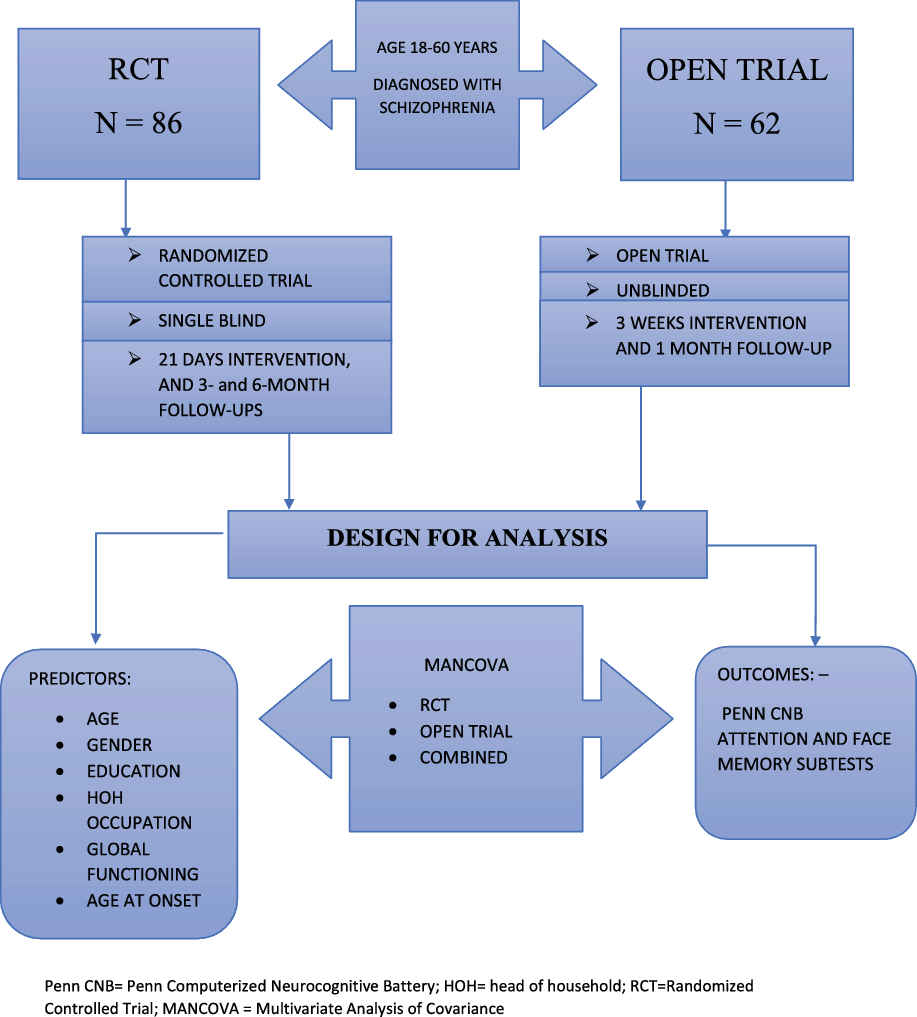
Chi-square and independent samples t-tests were used to test for group differences in socio-demographic factors between those individuals who enrolled in the RCT and those who were screened but did not enroll in the study. Multivariate analysis of covariance (MANCOVA) was used to examine associations of baseline socio-demographic (i.e. age, sex, marital status, occupation, head of household occupation) and clinical factors (i.e. global assessment of functioning, age at onset) with change in cognitive performance on tests (Cohen’s d). The cognitive domains selected were those in which the YT group in the RCT showed improvement over the course of the 21-day intervention, 3-month, and 6-month follow-up period, that is, attention and face memory (Bhatia et al., Reference Bhatia, Mazumdar, Wood, He, Gur, Gur, Nimgaonkar and Deshpande2017). We next conducted MANCOVA analyses to assess predictors of cognitive improvement in the above mentioned tasks within our earlier open trial (N = 62) and further, using a combined sample of individuals with SZ from both trials (N = 148). We focused our data analyses on the attention and face memory tests for the following reasons: (1) The YT group showed improvement in performance for face memory from baseline to post-intervention (β = 1.90, p = 0.016), and this improvement was sustained at the 3-month (β = 1.97, p = 0.006) and 6-month (β = 1.58, p = 0.008) follow-up visits in our published RCT (Bhatia et al., Reference Bhatia, Mazumdar, Wood, He, Gur, Gur, Nimgaonkar and Deshpande2017), (2) The YT group showed significant improvement in attention from baseline to post-intervention in our open trial (Cohen’s D = 0.0892, p = 0.0201), after two months (Cohen’s D = 0.619, p = 0.0116) (Bhatia et al., Reference Bhatia, Agarwal, Shah, Wood, Richard, Gur, Gur, Nimgaonkar, Mazumdar and Deshpande2012), and (3) they showed greater improvement in attention relative to the PE control group in our RCT (β = 0.51, p = 0.036) (Bhatia et al., Reference Bhatia, Mazumdar, Wood, He, Gur, Gur, Nimgaonkar and Deshpande2017). SPSS version 21 was used for analysis (IBM Corp, Released 2012). Fig. 1 illustrates the design of the old and present studies.
Design of the study.

Results
Participants
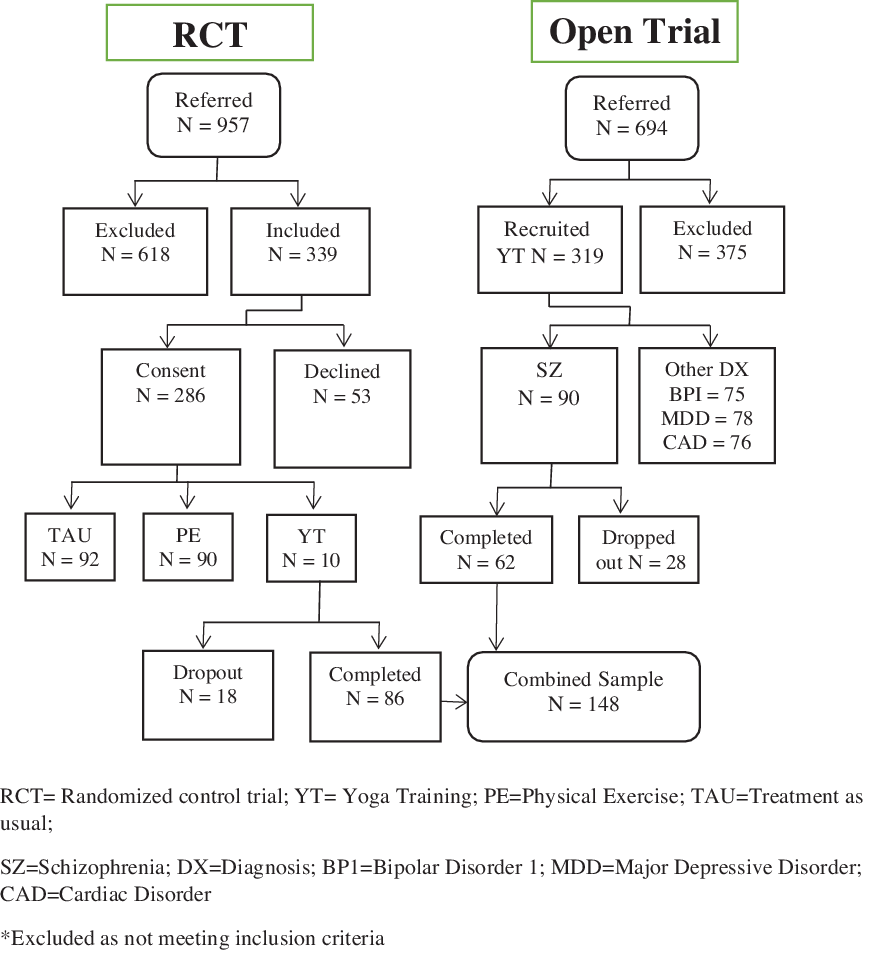
For the RCT, a total of 957 patients were referred by clinicians and screened; out of these, 339 individuals fulfilled inclusion criteria and were invited to participate in the study. Of these, 53 individuals did not sign informed consent and were therefore excluded from study. The remaining 286 patients completed all baseline assessments and constituted our intent-to-treat (ITT) sample including yoga training (YT): N = 104, physical exercise (PE): N = 90, and treatment as usual (TAU): N = 92.
In the open trial, a total of 694 participants were referred; this included SZ, bipolar disorder, major depressive disorder, and cardiac disorder. Out of these, 375 were excluded as they did not meet inclusion criteria or did not consent. The 319 participants included SZ (n = 90), bipolar disorder (n = 75), major depressive disorder (n = 78), and cardiac disorder (n = 76). There were 90 participants with SZ enrolled in YT but 28 dropped out and 62 completed the yoga intervention. The flowchart is illustrating the sample flow of both the studies (Fig. 2). The reasons for dropout were economic difficulty in commuting, nonavailability of relatives to accompany the patients, staying far away, aggravation of symptoms among others. Some patients who were working could not get time off from their office.
Consort diagram showing enrollment of subjects, allocation to treatment, and disposition status for two clinical trials (RCT and open trial of yoga).

Demographic characteristics of those who enrolled vs. those who did not enroll in the RCT
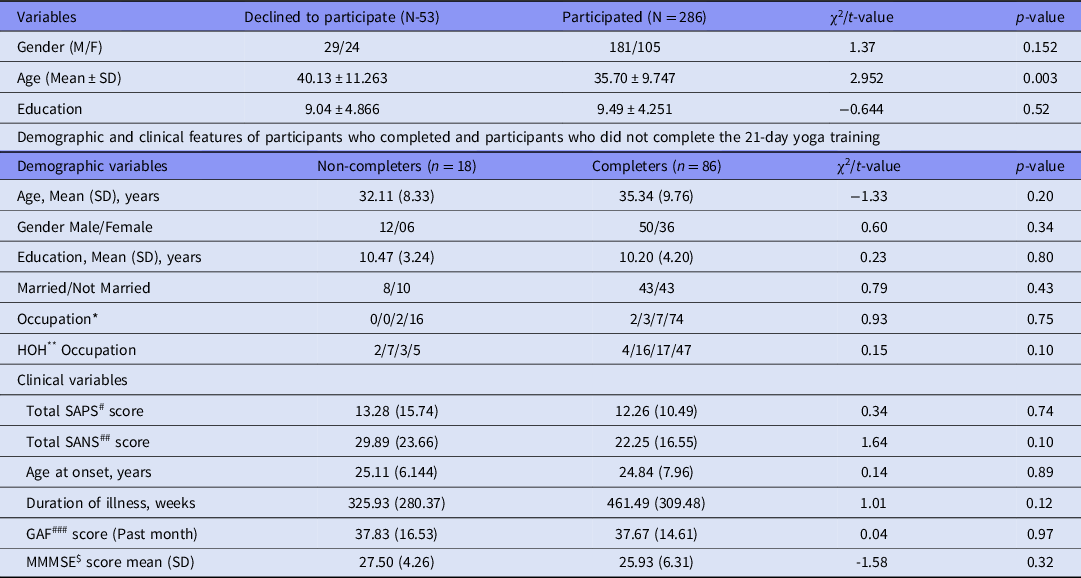
To study acceptability of YT, we compared the demographic characteristics of patients who consented to participate in our RCT (N = 286) with those who were referred and screened but declined to be enrolled in the RCT (N = 53). There were no significant differences between the two groups on gender and education, but those who enrolled in the study were significantly younger than others (t = −2.952, p = 0.003) (see Table 1).
Comparison between persons who participated and those who did not participate in the RCT

* Participant’s occupation.
** Head of household occupation.
# Scale for the Assessment of Negative Symptoms.
## Scale for the Assessment of Positive Symptoms.
### Global Assessment of Functioning.
$ Modified Mini-Mental Status Examination.
Baseline characteristics of YT completers and noncompleters in RCT
Among those randomised to the YT group (N = 104), 86 participants completed the intervention. Of the18 participants who did not complete the intervention, 12 dropped out after baseline assessment and randomisation; the remaining 6 patients participated in YT for 2–14 days before dropping out of the trial. To study acceptability of YT further, we compared participants who completed the entire YT program and those who dropped out. Demographic, clinical, and cognitive characteristics did not differ between those who completed the 21-day yoga intervention (N = 86) and those who failed to complete the intervention and post-intervention assessment (N = 18).
Clinical and demographic predictors of change in cognitive performance in YT group in RCT
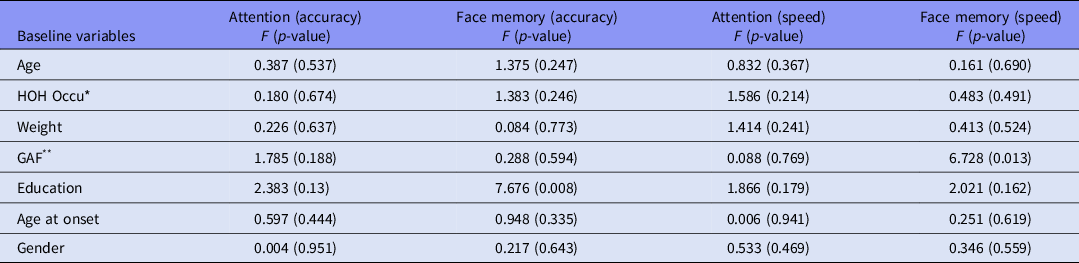
To study factors related to efficacy of YT, socio-demographic variables (age, gender, education, occupation of head of the household), and clinical factors (i.e. status as reflected on the Global Assessment of Functioning (GAF) scale and age at onset) that were associated with cognition were selected. Education and occupation of head of household were considered indices of socio-economic status, which was not specifically measured in these studies. Severity of illness (here measured by the GAF) and duration of illness (age at onset) were chosen because these have been shown to be associated with cognition in other studies of SZ (Immonen et al., Reference Immonen, Jääskeläinen, Korpela and Miettunen2017; Harvey & Bowie, Reference Harvey and Bowie2020). We tested these potential socio-demographic and clinical predictors of yoga-related cognitive improvement from (1) baseline to post-intervention (i.e. 21-days), (2) baseline to 3-month follow-up, and (3) baseline to 6-month follow-up using MANCOVA models (see Table 2 and Supplementary Table 1). Global assessment of functioning (GAF) at baseline was positively associated with an increase in speed of response for the Penn CNB face memory task from baseline to post-intervention (MANCOVA F (1,45) = 6.728, p = 0.01). Education (number of years of schooling) was positively associated with improvement in face memory accuracy from pre-to post-intervention (MANCOVA F (1,45) =7.68, p = 0.008) (Table 2) and from baseline to the 6-month follow-up (MANCOVA F (1,41) =5.54, p = 0.02) (Supplementary Table 1). Education was also associated with improvement in speed on the face memory domain from baseline to 3-month follow-up (MANCOVA F (1,41) = 9.32, p = 0.004). No other clinical or demographic factors tested were significantly associated with YT-related change in cognition. We also used Pearson correlations to examine the association between baseline socio-demographic and clinical features and the effect size of change (i.e. Cohen’s d) for cognitive domains in which yoga-related improvement was observed. There was a small negative association between years of education and improvement in performance for face memory accuracy domains (r = −0.211, p = 0.04) and no significant correlation with face memory speed.
Associations between baseline demographic and clinical factors and improvement in cognition after yoga in a randomised controlled trial MANCOVA (N = 86) (baseline vs post-intervention)

* Head of household occupation.
** Global Assessment of Functioning.
None of the associations remained significant following corrections for multiple comparisons.
Clinical and demographic predictors of change in cognitive performance in YT group in open trial
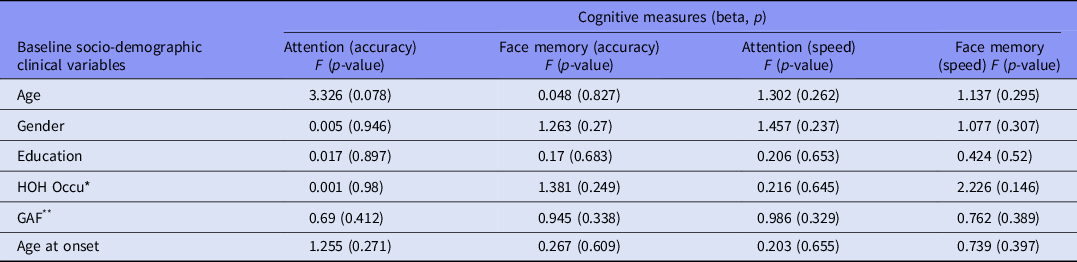
We examined whether the same psychosocial variables analysed in the RCT were related to YT-related improvement from baseline to post-intervention in performance for attention and face memory in our open trial (N = 62) (Bhatia et al., Reference Bhatia, Agarwal, Shah, Wood, Richard, Gur, Gur, Nimgaonkar, Mazumdar and Deshpande2012). Using MANCOVA, there was no significant association between any of the socio-demographic and clinical variables and improvement in performance for attention (Table 3). In a sensitivity analysis, we examined clinical and demographic of YT-related improvement from baseline to post-intervention in performance for attention and face memory using data from the combined sample (N = 148) of individuals with SZ completing YT from our open trial (N = 62) (Bhatia et al., Reference Bhatia, Agarwal, Shah, Wood, Richard, Gur, Gur, Nimgaonkar, Mazumdar and Deshpande2012) and our RCT (N = 86). No significant association was found between any of the socio-demographic and clinical variables with improvement in cognitive performance.
Associations between baseline demographic and clinical factors and improvement in cognition after yoga in the open trial (baseline vs. 21 days yoga) (N = 62)

* Head of household occupation.
** Global Assessment of Functioning.
Discussion
We examined whether demographic and clinical characteristics are associated with the acceptability and efficacy of YT for ameorilating cognitive dysfunction among individuals with SZ, using data from two treatment trials of YT in SZ (Bhatia et al., Reference Bhatia, Agarwal, Shah, Wood, Richard, Gur, Gur, Nimgaonkar, Mazumdar and Deshpande2012, Reference Bhatia, Mazumdar, Wood, He, Gur, Gur, Nimgaonkar and Deshpande2017). We found that individuals who enrolled in our RCT study were younger, relative to those who were screened but did not consent to be enrolled in the study; this result contradicts our first hypothesis. Selected clinical and demographic characteristics were not associated with intervention attrition in our RCT. The results from our RCT, which were validated by results from our earlier open-trial, suggested that, contrary to our hypothesis, selected baseline clinical and demographic characteristics were not predictive of YT-related cognitive improvement (i.e. attention and facial memory). These results are in contrast to a systematic review where the authors concluded that yoga practitioners were more likely to be from a high socio-economic background, middle aged, and white; however, the review encompassed predominantly studies in the USA and Europe, regardless of mental health status (Park et al., Reference Park, Braun and Siegel2015).
There are a plethora of mental health interventions available for persons with SZ, including lifestyle interventions (e.g. aerobic exercise, resistance training, YT) (Keller-Varady et al., Reference Keller-Varady, Varady, Röh, Schmitt, Falkai, Hasan and Malchow2018; Maurus et al., Reference Maurus, Röh, Falkai, Malchow, Schmitt and Hasan2019), so it is important to understand for whom among those with SZ YT is most beneficial (Velten et al., Reference Velten, Bieda, Scholten, Wannemüller and Margraf2018). Ours is the first study to our knowledge that focused on identifying characteristics of individuals with SZ for whom yoga may be most acceptable and beneficial. A key benefit of this study was the ability to validate results from our RCT with data from our earlier open trial, and the ability to combine data from both trials to examine psychosocial predictors of YT-related cognitive improvement. Further, the availability of long-term follow-up data from 3- and 6-month follow-up visits from our RCT was a novel aspect of this study. Our results suggest that regardless of individual differences in clinical and demographic characteristics, yoga is an acceptable adjunctive clinical intervention among individuals with SZ. Further, our results suggest that persons with SZ are likely to be adherent to short-term YT interventions (i.e. 83% of participants completed 21-day intervention in RCT). Our findings further suggest that cognitive reserve (i.e. assessed by school years and functional status) may be nominally associated with cognitive benefit from YT, but these results need to be further validated. Still, it is notable that age per se was not associated with response to YT, suggesting that in persons with SZ, cognitive plasticity is retained even among older individuals.
Some limitations of our study should be noted. The study was restricted to Indians; thus, the results may not be generalisable to other ethnic groups. The analyses were retrospective in nature; thus, we are planning a prospective study. We utilised as outcome variables only those cognitive variables noted to improve with YT in prior studies; further, indices for community and social function were not analysed. Such studies are important as they address an important handicap for persons with SZ.
Conclusions
This study confirms the widespread acceptability of YT, even among younger Indian individuals with SZ. YT enhances specific cognitive functions, regardless of individual differences in selected demographic and clinical characteristics. Thus, yoga can serve as an adjunctive therapy for patients with SZ in clinical practice. On a broader scale, our results suggest cognitive dysfunction is remediable in persons with SZ across the age spectrum.
Supplementary material
To view supplementary material for this article, please visit https://doi.org/10.1017/neu.2020.44
Acknowledgements
We thank our participants without whom this manuscript was not possible. We are also thankful to Dr. Rajesh Nagpal for reviewing all case histories for consensus diagnosis. We thank Dr. R.P. Beniwal, Dr. Shipra Somvanshi, Dr. Rahul Saha, Dr. Mina Chandra, Dr. R.K. Srivastavaand, all other psychiatrists Dr. R.M.L. Hospital for referring patients; our research staff; our yoga instructor Dr. Hemant Pande.
Authors contributions
TB: Design, drafting the article, analysis and interpretation of data. SG: Concept, design, drafting the article. VS: acquisition of data, analysis and interpretation of data. NK: acquisition of data, review of literature. JW: Design, analysis and interpretation of data. MAW, JJ, LWD, and GLH: Reviewing and revising the manuscript. SI: Consultation and reviewing statistical analysis and interpretation of data. VLN: Concept, design, reviewing and final approval of the manuscript. SND: Concept, design, reviewing and revising the manuscript.
Financial support
The work was partially supported by the grants ‘Cross Fertilized Research Training for new investigators in India and Egypt (D43 TW009114)’, ‘Psychiatric research infrastructure for intervention and implementation in India (PRIIIA) (2D43TW009114-06) to V.L.N. and S.N.D. funded by Fogarty International Center, NIH and ‘Testing Biomarkers for Schizophrenia Based on Infectious Exposure & Host Genetic Variation’ (07 R-1712) to V.L.N. funded by Stanley Medical Research Institute. Salaries of two of the authors were supported by ‘Yoga and meditation as CE therapy for persons with schizophrenia: a randomized controlled trial’ SR/SATYAM/312/2015(G) dated 12/09/2016 and ‘National Coordination Unit’ 5/4/-4/151/M/2017/NCD-1 dated 31/07/2018 to SND funded by Department of Science and Technology and the Indian Council of Medical Research, New Delhi, respectively. The content is solely the responsibility of the authors and does not necessarily represent the official views of any funding agency. All funding agencies had no role in the design and writing of this manuscript; or approval of the manuscript; and decision to submit the manuscript for publication.
Conflict of interest
There is no conflict of interest to be declared by any of the authors.
Ethical standards
The authors assert that all procedures contributing to this work comply with the ethical standards of Dr. R.M.L.; Institutional Committees and Indian Council of Medical Research and with the Helsinki Declaration of 1975, as revised in 2008.