Introduction
The ecological and identity crises experienced by citizens of modern cities have pushed garden designers to seek inspiration in indigenous landscapes. The native component of biodiversity was appreciated as one of the most important ‘tools’ for urban ecological and cultural identity (Mumaw et al., Reference Mumaw, Gaskell and Leskovec2018). Moreover, climate change will certainly affect hydrological regimes (Gautam and Singh, Reference Gautam, Singh, Singh, Dagar, Arunachalam, Gopichandran and Shelat2015) and contributes to the surface warning with extreme temperatures at extended urbanizations (Gallo and Owen, Reference Gallo and Owen1999; Kalnay and Cai, Reference Kalnay and Cai2003). Gardening with native plants is becoming more popular in terms of sustainable landscaping providing some ecosystem services (Phondani et al., Reference Phondani, Bhatt, Elsarrag and Alhorr2016), brings in consequence new challenges and increasingly demand native plants to complement their urban landscapes.
Hundreds of species of many botanical families used intensively in commercial floriculture and garden plants and traded commercially as ornamentals (Heywood, Reference Heywood, Duzyaman and Tuzel2001). The success of the new floricultural products in the market can be increased if the ornamental desirable traits were determined by specific criteria (Stumpf et al., Reference Stumpf, Heiden, Barbieri, Fisher, Neitzke, Zanchet and Grolli2007), such as the morphological characteristics of the plant, as regard to its novelty or aesthetic value (Tognon and Cuquel, Reference Tognon and Cuquel2016). A better understanding of consumers’ preferences for native plants, their attitudes toward bringing a more naturalistic landscape design and the assessment of their purchase behaviour may allow a better characterization of the market for producers of native plants (Nils Peterson et al., Reference Nils Peterson, Thurmond, Mchale, Rodriguez, Bondell and Cook2012; Alam et al., Reference Alam, Zhattak, Ppoyil, Kurup and Ksiksi2017). Successful breeding of potential ornamental hybrids; it also includes commercial production and marketing (Kleynhans and Hancke, Reference Kleynhans and Hancke2002), thus, the aim of breeders is to produce improved plants (Rees, Reference Rees1992) and obtain better materials for the producers and the consumers (Barbosa Silva Botelho et al., Reference Barbosa Silva Botelho, Souza Rodrigues and Bruzi2015). For that, the measurement and analysis of public preferences (PP) of native floricultural cultivars (Villanova et al., Reference Villanova, Soto, Pannunzio, Coviella, Hagiwara, Bologna and Borja2007), may express an agreement of potential consumers to accept native plants (Nils Peterson et al., Reference Nils Peterson, Thurmond, Mchale, Rodriguez, Bondell and Cook2012).
Glandularia (Verbenaceae) with 33 native species from Argentina (Peralta and Múlgura, Reference Peralta and Múlgura2011), comprises erect, semi-erect and decumbent plants with flowers of varied colours, gathered in contracted clusters striking for their size, colour and fragrance, with prolonged periods of flowering (Botta, Reference Botta1993). This genus presents species with aesthetic and ornamental characters of interest (Stancanelli et al., Reference Stancanelli, Imhof and Facciuto2010), which can survive under unfavourable climatic conditions. Henson et al. (Reference Henson, Newman and Hartley2006), working with a hybrid between Glandularia tenuisecta and G. tenera (‘Imagination’), evaluated their ornamental performance and concluded that this genus is drought resistant as Petunia. McKenney et al. (Reference McKenney, Balch and Auld2007) recommended ‘Raider Amethyst’ Prairie Verbena [Glandularia bipinnatifida (Nutt.) Nutt.] to use in water-conserving landscapes with low maintenance plantings, in addition to its characteristics of compactness, great branching and the bright colours of the flowers. From 2006, we have developed ornamental hybrids from native populations of Glandularia glandulifera, G. peruviana and G. platensis through a breeding program (Imhof, Reference Imhof2013). For that, the objectives of this study were: (1) to characterize the ornamental bedding performance of selected Glandularia hybrids; (2) to evaluate the PP of Glandularia hybrids through a specialized audience and (3) to obtain a ranking of selected Glandularia materials using an index that integrates the perception of the breeder and the preferences of the potential consumers.
Material and methods
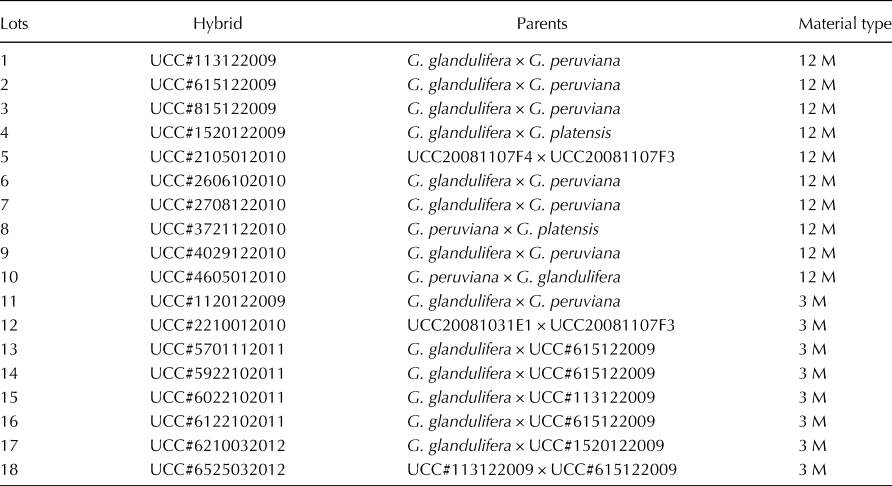
Populations of G. glandulifera, G. peruviana and G. platensis from our breeding programme were used. The collection was cultivated under greenhouse conditions at the Catholic University of Córdoba, Argentina (31.66°S, 64.43°W). Hybrids from partial diallel crosses were obtained for the assessment (Imhof et al., Reference Imhof, Suárez, Paganelli and Facciuto2013). Measurements were obtained from plants transplanted 3 months before data were collected (called ‘three-month plants’ materials, hereafter 3 M) and on plants that have 12 months in bedding conditions before data were collected (called ‘twelve-month plants’ materials, hereafter 12 M), as it can be seen in Table 1.
Hybrids coding, parents and material type of Glandularia (12 M: twelve months plants; 3 M: three-month plants)

Breeder characterization
Ornamental bedding hybrids were characterized in plots simulating real landscape situations. Aesthetic characters appreciated by specialized public or selected by breeders were measured. Hybrids were propagated asexually by 3 cm stem cuttings and cultivated in a mixture of peat and perlite (3:1). Rooted cuttings of each hybrid were cultivated to full bloom in plastic pots (12.5 cm in diameter) on a substrate consisting of soil, compost and perlite (1:1:1). Afterwards, these plant materials were transplanted to outdoor growing conditions, during spring (southern hemisphere) September and October for new materials (3 M) and persistent materials (12 M), respectively. Nine plants were planted in each plot spaced 30 cm apart and cultivated to full bloom. The following aesthetic characters were measured: coverage area (Ca; %) (percentage of surface covered by the plant in a bedding), number of branches (Nb) (Nb and sub-branches per plant) and number of inflorescences (Ni) per plant. Variables comparing hybrids performance were analysed separately through the analysis of multivariate profiles (Di Rienzo et al., Reference Di Rienzo, Casanoves, Balzarini, Gonzalez, Tablada and Robledo2011). Using these variables an index was constructed, the ornamental fitness of bedding index (OBFI) with the same relative weight for each of them: OBFI = (0.33 × Ca + 0.33 × Nb + 0.33 × Ni).
Data of the measurements for each trait and the OBFI index for 3 and 12 M materials are the following:
For 3 M type, the periods for measurements were: D1, 3 months after planting; D2, 15 d after first measurement and D3, 60 d after the first measurement. The measured characters are,
– Ca, %: with the obtained valued of 30–50% (0 in the weight per category); between 50 and 70% (0.5 in the weight per category) and more than 70% (1 in the weight per category).
– Nb: with the obtained valued of less than 30 (0 in the weight per category); between 30 and 60 (0.4 in the weight per category); 60–90 (0.8 in the weight per category) and more than 90 (1 in the weight per category).
– Number of inflorescence (Ni): with the obtained valued less than 30 (0 in the weight per category); between 30 and 50 (0.5 in the weight per category); more than 50 (1 in the weight per category).
For 12 M type,, the periods for measurements were: D1, 360 d after planting; D2, 15 d after the first measurement and D3, 60 d after the first measurement. The measured characters are,
– Ca, %: with the obtained valued of 60–70% (0 in the weight per category); 71–80% (0.5 in the weight per category) and more than 80% (1 in the weight per category).
– Nb: with the obtained valued of less than 50 (0 in the weight per category); between 50 and 90 (0.5 in the weight per category) and more than 90 (1 in the weight per category).
– Number of inflorescence (Ni): with the obtained valued less than 50 (0 in the weight per category); between 50 and 90 (0.4 in the weight per category); between 90 and 130 (0.8 in the weight per category) and more than 130 (1 in the weight per category).
Measurements were taken during the spring for 3 and 12 M materials. First data set for 3 M plants was taken 3 months after the planting day (d 0), and the other measurements were obtained at 15 and 60 d after the first one; for 12 M materials, the first data set was taken 360 days after the planting day (d 0), and the other measurements were obtained at 15 and 60 d after the first one. The average value of these three measurements for each material was used to calculate the index for 3 and 12 M types.
PP: The field trial survey
Since 2006, every year the Catholic University of Córdoba opens its field trials to the specialized public. Attendees were members of the floriculture sector of the province of Córdoba, agronomic engineers, landscapers, architects, biologists, nurserymen and wholesalers, among others. On the eighth exhibition (11 December 2013), 27 individuals were asked to participate in a survey to evaluate the materials. Hybrid materials of different planting date (3 and 12 M) were evaluated. Hybrids were presented to the specialized public into numbered plots (Fig. S1). Participants were asked to indicate individually the top five materials with ornamental aesthetic value through a six-point scale (0 = no vote and 1–5 for 1 = lowest and 5 = highest score for each feature) taking into account the following plant traits of each hybrid plot: number of flowers, plant architecture and flower colour. The specialized observer had to select five (5) materials weighting each of them by the number of flowers and colour of the inflorescences, and determine if the plant architecture seemed appropriate for bedding purposes. Then, hybrids were classified into four categories according to the number of votes that they received: between 10 and 14 (high acceptance), 4–9 (medium acceptance), 1–3 (low acceptance) or 0 (any attention). The weights in the index for the different characters and hybrids were obtained considering data from PP as follows: 0 (no votes), 0.4 (low acceptance), 0.6 (medium) and 1 (high). The values of the PP for the different hybrids and traits were included for the calculation of the integrated index (IOBFI) to compare hybrids.
IOBFI: breeder characterization and PP vision together
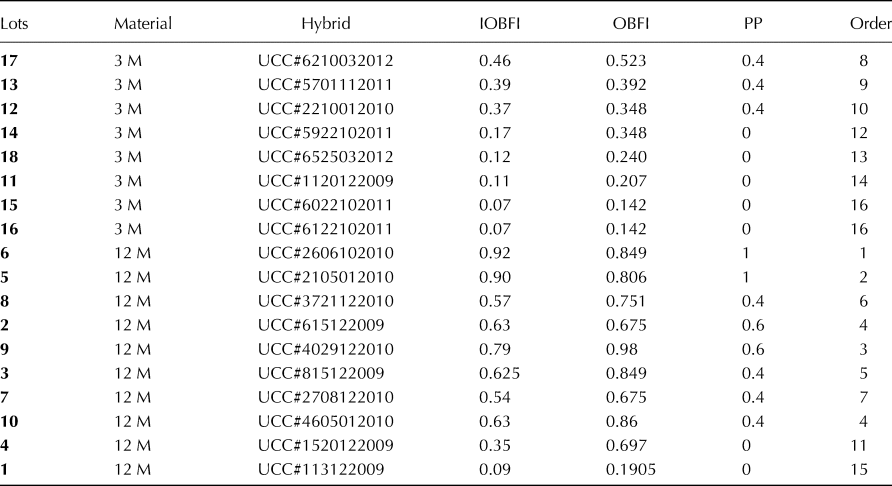
The IOBFI was built using the variables characterized by the breeder and the value obtained from the general and qualitative evaluation of the public (PP through voting different hybrids as was explained above for new and persistent materials (3 and 12 M respectively): IOBFI = [0.5 × OBFI] + [(0.5 × PP)]. Table 2 shows the value of the index (OBFI), the value given by the public (PP) and the resulting value of the integrated index for each hybrid. New and persistent materials were ordered according to the IOBFI value.
Integrated ornamental bedding fitness index (IOBFI), public preference (PP) and ornamental bedding fitness index (OBFI) for three months (3 M) and twelve months (12 M) hybrids of Glandularia

Results
Breeder characterization
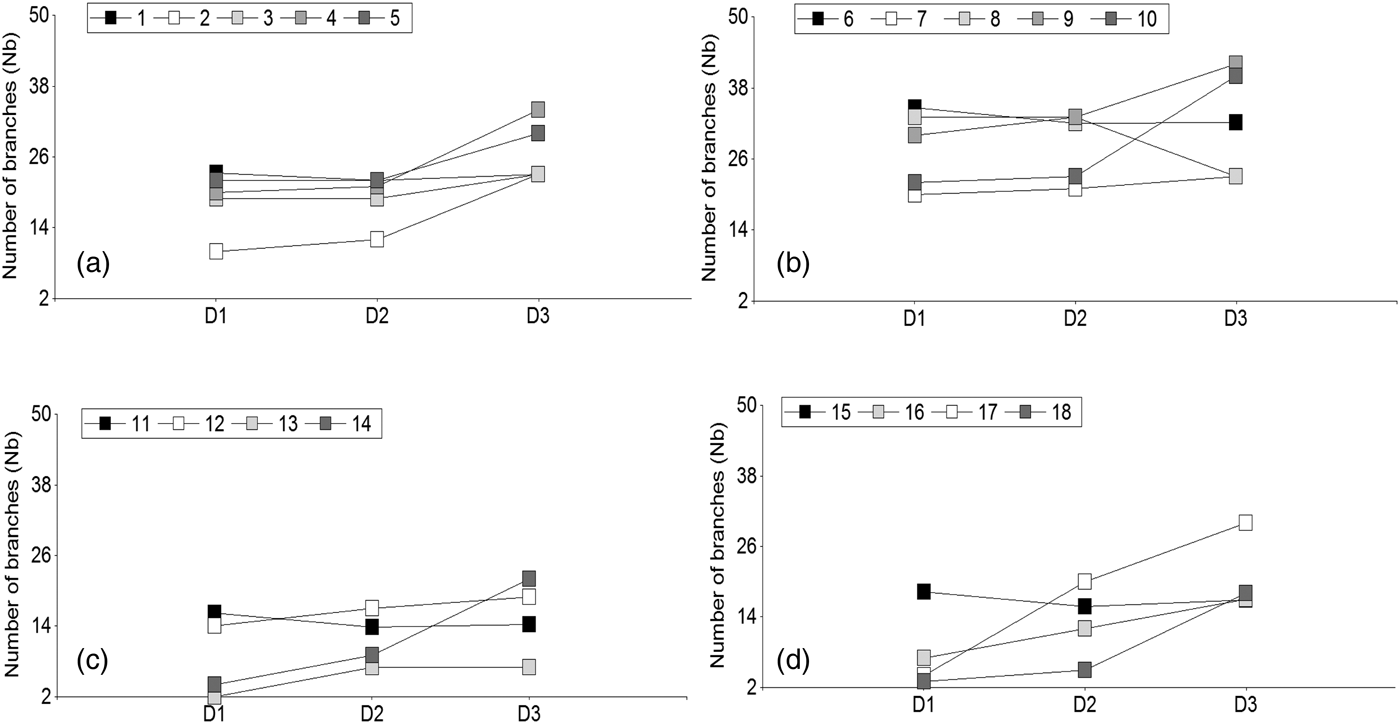
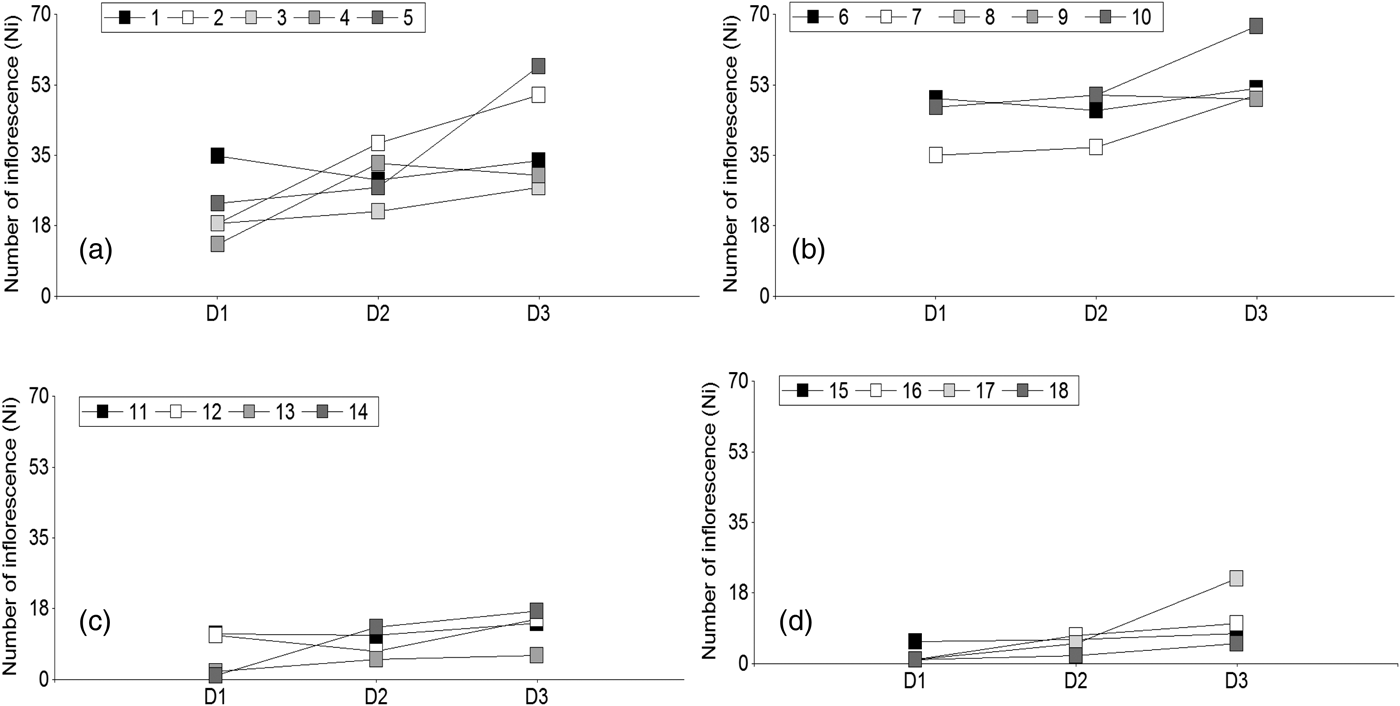
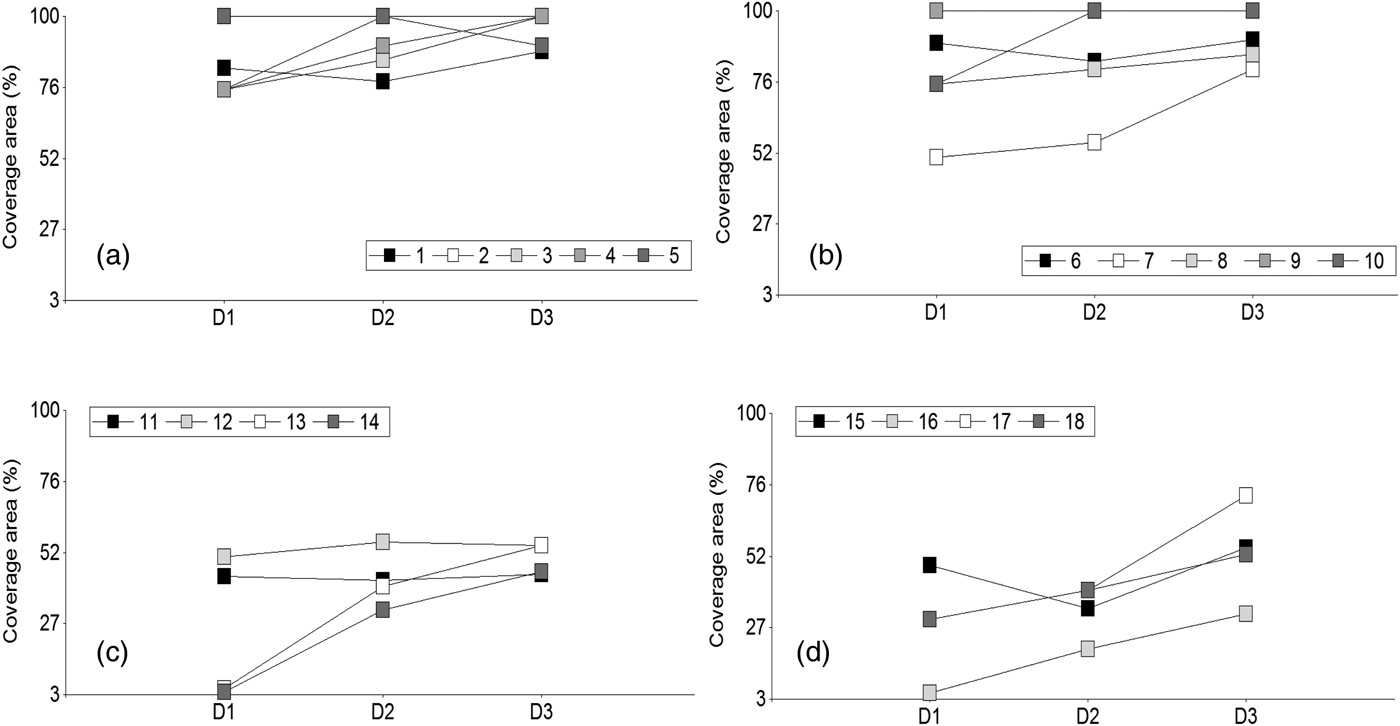
The ornamental breeder perception of the hybrids was analysed quantitatively through three variables (Figs. 1–3). The materials were divided and were presented into four groups, two for 12 M materials (1–5 and 6–10; see Table 1 for hybrid coding) and two for 3 M materials (11–14 and 15–18; see Table 1 for hybrid coding) for a better visualization of the results. The best performance for 12 M materials according to the Nb was registered for lots 4, 5, 9 and 10 from Fig. 1(a) and (b), respectively (Fig. 1(a) and (b)) and for lots 14, 12, 17 and 18, in that order, that correspond to 3 M materials (Fig. 1(c) and (d)). The better performance for 12 M materials according to the Ni was registered for all lots, (Fig. 2(a) and (b); except for lots 1 and 10 which presented values >50 inflorescences), and for lots 11, 12, 14 and 17 that correspond to 3 M materials (Fig. 2(c) and (d)). The better performance for 12 M materials according to plant coverage (Ca) was registered for lots 4, 2, 3, 9 and 10 (Fig. 3(a) and (b)) and for lots 12, 13 to 17 that correspond to 3 M materials (Fig. 3(c) and (d)).
Changes in number of branches throughout the growing season for the different Glandularia hybrid materials in process of improvement tested in landscape conditions: Materials were divided into four figures to better visualize their differences: (a) Five lots of the 12 M materials (Lots 1–5); (b) Five lots of the 12 M materials (Lots 6–10); (c) Four lots of the 3 M materials (Lots 11–14); (d) Four lots of the 3 M materials (Lots 15–18).

Changes in number of inflorescences throughout the growing season for the different Glandularia hybrid materials in process of improvement tested in landscape conditions: Materials were divided into four figures to better visualize their differences: (a) Five lots of the 12 M materials (Lots 1–5); (b) Five lots of the 12 M materials (Lots 6–10); (c) Four lots of the 3 M materials (Lots 11–14); (d) Four lots of the 3 M materials (Lots 15–18).

Changes in coverage area (%) throughout the growing season for the different Glandularia hybrid materials in process of improvement tested in landscape conditions: Materials were divided into four figures to better visualize their differences: (a) Five lots of the 12 M materials (Lots 1 to 5); (b) Five lots of the 12 M materials (Lots 6–10); (c) Four lots of the 3 M materials (Lots 11–14); (d) Four lots of the 3 M materials (Lots 15–18).

PP: the field trial survey
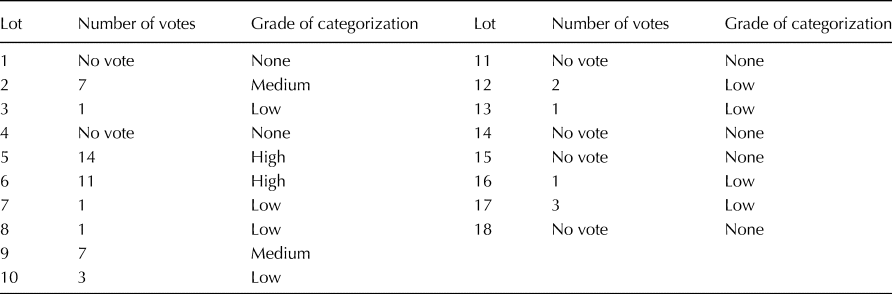
The categorization of public votes from the field trial survey (high, medium and low acceptance) can be seen in Table 3. Only two lots showed high acceptance from the public (lots 5 and 6) or medium acceptance (2 and 9). Lots 3, 7, 8, 10, 12, 13, 16 and 17 presented a low degree of acceptance from the public and the rest of the lots were not voted (Lots 4, 11, 14, 15 and 18).
Categorization of public votes by lots of all Glandularia materials (12 and 3 M)

IOBFI: breeder and public characterization together
Table 3 shows the values obtained for the OBFI, PP and IOBFI for new and persistent materials (3 M and 12 M plants), respectively. Hybrids were ordered based on the value of the IOBFI, namely, according to their performance in bedding and the degree of both the public and breeder acceptance. This arrangement allowed us to find the hybrids located in the highest performance for 12 M materials, lots 6 (first place), 5 (second), 9 (third), 2 and 10 (shared the fourth place), and 3 (fifth place). For 3 M materials, the best placed were lots 17, 13 and 12 with the eighth, ninth and tenth place. For 12 M materials, only the first two places (lots 6 and 5) coincided with the valuation given by the breeder (0.849 and 0.806) and the public (1 and 1), respectively. For the rest of 12 M materials, the breeder had a better appreciation than the public, showing differences in this sense. In the case of 3 M materials, the valuation of the materials was similar.
Figure S1 shows the plots of the three best 12 M materials (with the best value of IOFBI, Lot 6, 5 and 9) and the best 3 M material (lot 17).
On the other hand, the differences in the scoring for 12 M plants may be due because potential consumers generally base their decisions on a global perception of the product (i.e., it is not possible to distinguish individual 12 M plants), rather just one or few characteristics of the whole group of 12 M plants (Behe et al., Reference Behe, Nelson, Barton, Hall, Safley and Turner1999). Asking potential consumers how much they like only one aspect of each material (e.g., flower colour), it may not be the best indicator of their overall preference for the product, or of the importance of a single trait in the purchase decision (Behe et al., Reference Behe, Nelson, Barton, Hall, Safley and Turner1999). Thus, the results of this study could be an initial approximation to know people preferences of potential ornamental Glandularia hybrids. Moreover, preferences on some selected materials could be appreciated differentially according to their developmental stage.
Discussion
Breeder characterization
Gardening is considered a positive activity with psychological and social benefits (Mumaw et al., Reference Mumaw, Gaskell and Leskovec2018). Breeders, wholesalers, retailers and consumers of ornamental plants traditionally looked for products that represent new trends (Stumpf et al., Reference Stumpf, Heiden, Barbieri, Fisher and Neitzke2008). Frequently, these new products are initially evaluated for landscaping through different traits like plant architecture, colour, texture, size or flowering phenology (Stumpf et al., Reference Stumpf, Heiden, Iganci, Barbieri, Correa, Perleberg, Romano, Fisher and Neitzke2012). Stumpf et al. (Reference Stumpf, Heiden, Barbieri, Fisher, Neitzke, Zanchet and Grolli2007) informed about the complexity of identifying new ornamental plants, as the perception of aesthetic attributes, which are dictated by subjective and personal feelings. Furthermore, the beauty of a plant is not the only criterion necessary to make it commercially successful. At the selection stage of the better Glandularia hybrids for ornamental purposes, some aesthetic traits, as Ca, Nb and Ni, were chosen to evaluate their performance in landscaping. As McKenney et al. (Reference McKenney, Balch and Auld2007) observed, prairie Glandularia as day-light length increases, internode length increases and the plants attain a more upright habit. In our Glandularia hybrids, the Nb and Ca were increased over the developing period as day-light length increases. Lots 4, 9, 14 and 17 were the most promising ones to meet demands of the market in situations in which plants require adaptations that allow them to occupy microclimates within different landscapes in addition to the aesthetic qualities required in landscape design. Lots 5, 10 and 17 harmonized in environments and gardens where the colours and showiness of the flowers need to be highlighted.
PP: the field trial survey
Plants are a highly visual form of merchandise and should attract more visual activity from individuals who are interested or involved at the time of purchase (Behe et al., Reference Behe, Zhao, Sage, Huddleston and Minahan2013). Plant height, number and diameter of flowers and thickness of a plant are also important properties to select bedding plants (Vabrit, Reference Vabrit2002). In the composition of their garden, people prefer aesthetic traits such as flower size, leaf width and foliage colour (Kendal et al., Reference Kendal, Williams and Williams2012). Different plant traits are related with people preferences and they constitute the primary factor to purchase, but the promotion of low water conserving landscape plants may also imply marketable benefits (Knuth et al., Reference Knuth, Behe, Hall, Huddleston and Fernandez2018). In the surveys conducted during this project, preferences for some remarkable hybrid materials were related to these plant traits. This public scored some Glandularia hybrid according to some aesthetic traits (number of flowers, plant architecture and flower colour) that are usually present in different materials of the ornamental market (Vabrit, Reference Vabrit2002; Kendal et al., Reference Kendal, Williams and Williams2012).
IOBFI: breeder and public characterization together
On the other hand, the differences in the scoring for 12 M plants may be due because potential consumers generally base their decisions on a global perception of the product (i.e., it is not possible to distinguish individual 12 M plants), rather just one or few characteristics of the whole group of 12 M plants (Behe et al., Reference Behe, Nelson, Barton, Hall, Safley and Turner1999). Asking potential consumers how much they like only one aspect of each material (e.g., flower colour), it may not be the best indicator of their overall preference for the product, or of the importance of a single trait in the purchase decision (Behe et al., Reference Behe, Nelson, Barton, Hall, Safley and Turner1999). Thus, the results of this study could be an initial approximation to know people preferences of potential ornamental Glandularia hybrids. Moreover, preferences on some selected materials could be appreciated differentially according to their developmental stage.
Conclusions
Glandularia hybrids were characterized in the process of improving its bedding performance; they were evaluated by using some aesthetic traits as Ca, Nb, and Ni. Specialized PP combined with breeders analysis, allowed obtaining a ranking of selected materials. In particular, different aesthetic perceptions between the breeder and the public determining their preferences of ornamental plants were integrated through a combined index. Glandularia hybrids showed that certain traits selected by breeders, which are part of the ornamental bedding fitness index, seem to be good estimators of potential consumer preferences in the ornamental regional market, particularly at early developmental stages.
Supplementary material
The supplementary material for this article can be found at https://doi.org/10.1017/S1479262118000321.
Acknowledgements
The authors thank two anonymous reviewers for useful suggestions on early versions of this paper and IRNASUS (UCC-CONICET), They also thank Mincyt Córdoba, INTA, SECyT (UNC), CONICET and FONCyT for the financial support.