Introduction
The first American newborn intensive care unit (NICU) was opened at Yale Hospital in New Haven, Connecticut in 1960.Reference Gluck 1 The advent of specialized care units and associated support personnel as well as medical advances in neonatal care have greatly reduced infant mortality rate; for example, 95% of infants with birth weights of 1000 g now survive compared with 5% one hundred years ago.Reference Jorgensen 2 Increased neonatal exposure to plasticizers by means of medical devices, tubing and the hospital environment has accompanied the medical and technological advances in care. Many studies have examined exposures to plasticizers in this and other patient populations in attempts to determine whether they are safe or not.Reference Mallow and Fox 3 – Reference Shen, Shi, Zhang and Cao 5
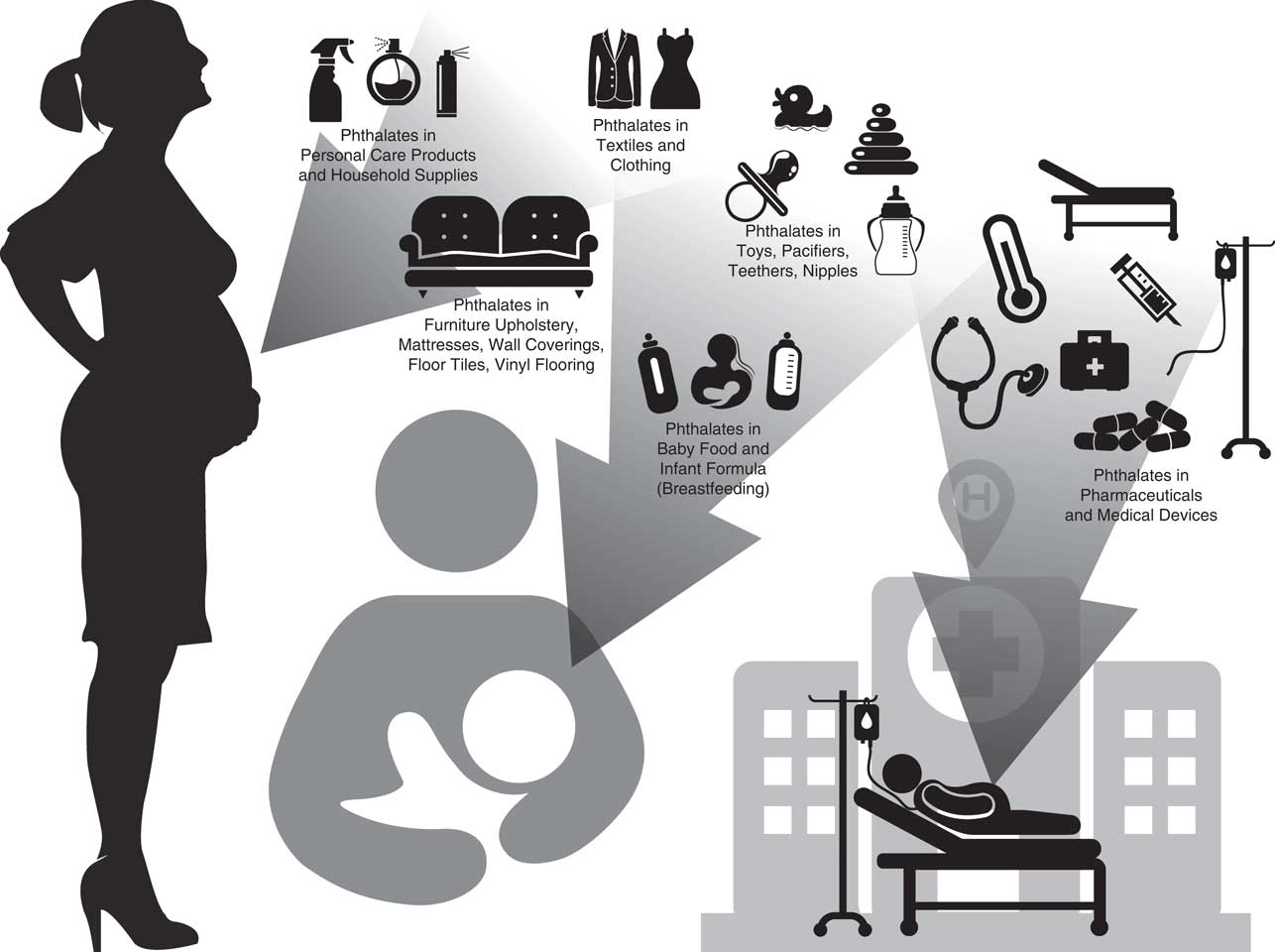
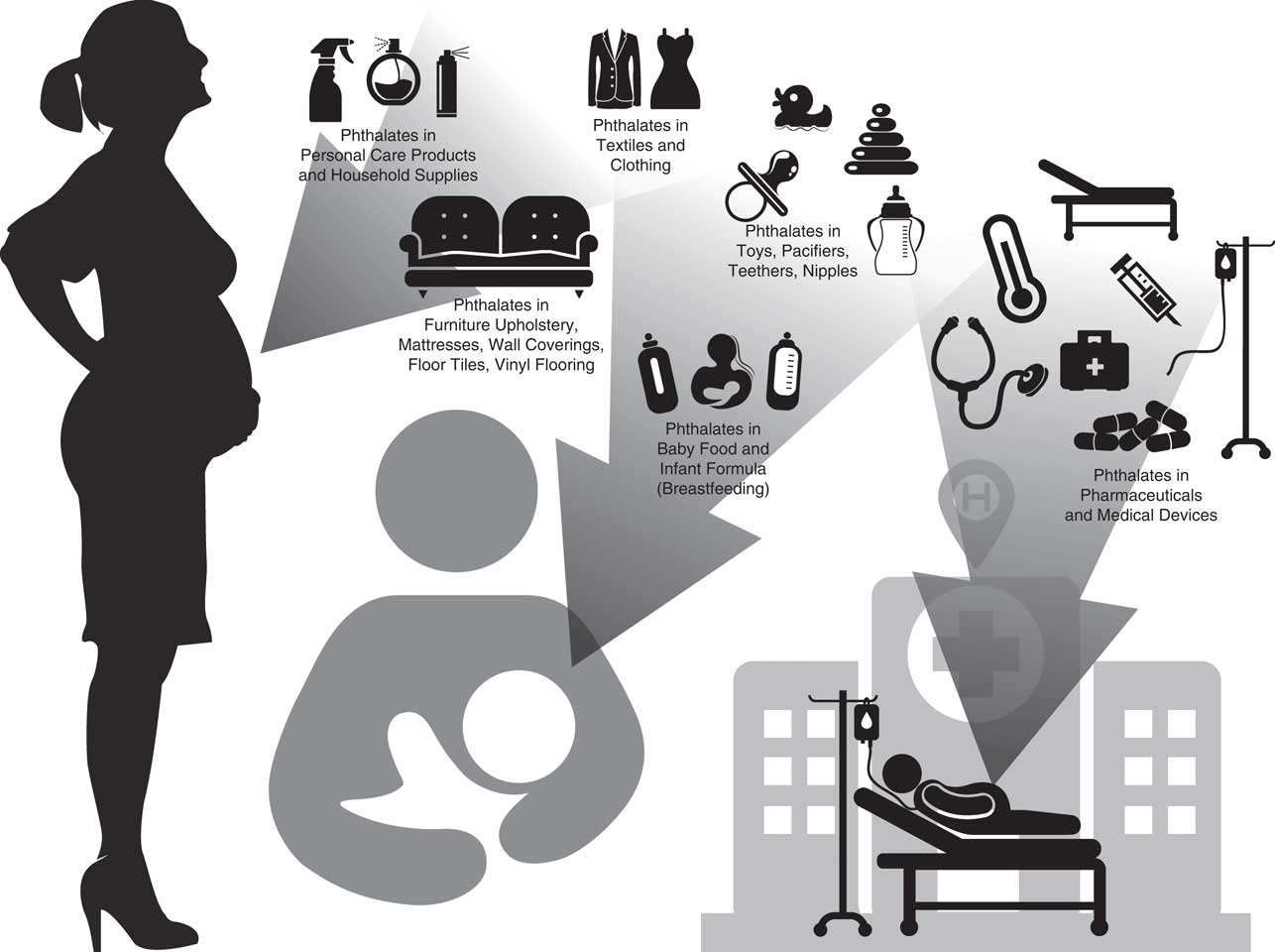
While plasticizers have enabled advances in medical products, exposure to plasticizers may play an important role in the etiology of several diseases.Reference Anway, Rekow and Skinner 6 , Reference Perera and Herbstman 7 Plasticizers are classified as endocrine-disrupting compounds (EDCs) by the National Institutes of Health, the World Health Organization and other agencies. EDCs also include pesticides and other chemicals that may enter the environment and result in cancers, birth defects or other developmental disorders.Reference Waring, Harris and Mitchell 8 , Reference Woodruff 9 EDCs were initially investigated for estrogenic properties, but later it became apparent that androgenic and anti-androgenic properties were also significant.Reference Albert and Jégou 10 Neonatal exposures to plasticizers may occur in utero, in a neonatal care unit, from breast milk and from household products. This review is focused on the common plasticizer di-(2-ethylhexyl) phthalate (DEHP) in relation to each of these pathways for neonatal exposures and subsequent effects (Fig. 1).
Neonate’s exposure to commonly used products containing phthalates especially di(2-ethylhexyl) phthalate: neonates are exposed to phthalates via breast feeding, pharmaceuticals, medical devices or cribs in the health-care unit as well as dietary or day to day household supplies.
Polyvinyl chloride (PVC) or plastic may contain 30–50% of DEHP.Reference Berge, Cladiere and Gasperi 11 In addition to DEHP, low molecular weight phthalates such as dimethyl phthalate (DMP), dibutyl phthalate (DBP) and diethyl phthalate (DEP) have been incorporated into cosmetics, fragrance, adhesives, inks, pharmaceuticals and other personal care products. Di-n-butyl phthalate (DnBP) is used in certain adhesives. High molecular weight and branching alkyl chain phthalates, primarily butyl-benzyl phthalate (BBP), di-n-octyl phthalate and DEHP are added to food packaging, building materials, paints, toys, building materials, medical devices, textiles and clothing, automobiles and many other articles.Reference Schettler 12 Thus, phthalates are ubiquitous in our environment such that humans, livestock and wild animals are exposed continuously.Reference Schettler 12 Human exposure occurs via ingestion, inhalation, intravenous (IV) delivery during medical procedures and dermal absorption.Reference Meeker, Sathyanarayana and Swan 13 Yet, published data concerning sources of phthalates are incomplete, in part because their inclusion in products does not have to be disclosed.Reference Schettler 12
DEHP has historically been the preferred plasticizer for PVC products, particularly those used for medical applications, because it imparts flexibility, transparency, strength and weldability, and also is compatible with various sterilization processes.Reference Latini, Ferri and Chiellini 14 Plasticizers alter the rigid mechanical properties of PVC by embedding themselves between polymeric chains, spacing them apart to make the plastic soft and flexible.Reference Trasande and Attina 15 Leaching into liquids and migration to the environment occurs throughout the period of use because DEHP is not chemically bound to PVC; more precisely, it is not covalently bound.Reference Mankidy, Wiseman, Ma and Giesy 16 Chronic exposure to environmental DEHP has been a source of concern and research for over 40 years.Reference Jaeger and Rubin 17 , Reference Mayer, Stalling and Johnson 18
Furthermore, exposures to plasticizers may have effects beyond acute or chronic toxicity. Alterations in the phenotype due to environmental exposures during critical periods of development in utero and early life are regulated through epigenetic gene programming in various tissues, and may adversely affect later life. Epigenetics is an important mechanism in the ability of the human host to respond to environmental challenges with either disease or healthy outcomes.Reference Rozek, Dolinoy, Sartor and Omenn 19 The term ‘epigenetic’ is a broad descriptor of heritable processes independent of changes in the DNA sequence, including the necessary phenomena of genomic imprinting and X chromosome inactivation. In addition, modifications to histone or non-coding RNA [e.g. microRNA (mRNA)] can occur in response to environmental signals, such as diet and stress, and modulate gene expression and protein production. The more widely studied plastic component, bisphenol A, is another endocrine disruptor that has largely been abandoned by the food packaging industry.Reference Singh and Li 20 While endocrine disruptors have been widely studied, it is evident that epigenetic investigations are just now emerging to explain the effects of endocrine disruptors in humans at various stages of life.Reference Waring, Harris and Mitchell 8
Interestingly, epigenetic modifications may play a central role in gene reprogramming, and carry over to subsequent generations. Epigenetic transgenerational effects occur when the phenotype is altered due to an environmental exposure or stressor and passed along to subsequent generations.Reference Skinner, Manikkam and Guerrero-Bosagna 21 Although the fetal programming hypothesis proposes that environmental stimuli act during the critical periods of development and may permanently alter the structure and function of the fetus, the mechanism(s) underlying such observations are not well elucidated. By understanding the mechanism(s) underlying the fetal origin of adult disease due to endocrine disruptors, specifically plasticizers, policy makers as well as health-care professionals can make this issue a high health-care priority and provide appropriate treatment for people at high risk for these chronic diseases more effectively.
Methods
To review this topic, we undertook a comprehensive search of the PubMed (http://www.ncbi.nlm.nih.gov/pubmed) databases using ‘epigenetics,’ ‘DNA methylation,’ ‘histone modification,’ ‘neonate,’ ‘DOHAD’ and/or ‘DEHP’ or ‘phthalate’ as key terms. We also combined these search terms with others in which we added ‘in utero exposure’ and ‘endocrine disruptors.’ We also considered review articles as well as references within articles found in our literature search. We excluded articles which were not written in English. The PubMed search covered all articles up to 12 May 2015.
Toxicities of and guidelines for DEHP
Many animal studies have demonstrated the toxicity of DEHP in liver and testes as well as other tissues. 22 DEHP is carcinogenic, fetogenic and teratogenic in rats and mice.Reference Tomita, Nakamura, Yagi and Tutikawa 23 . DEHP exhibits very low acute oral toxicity, with LD50 values in rabbits and rats around 30–34 g/kg. However, when administered intravenously to rats, the acute LD50 is as low as 200 mg/kg.Reference Rubin and Ness 24
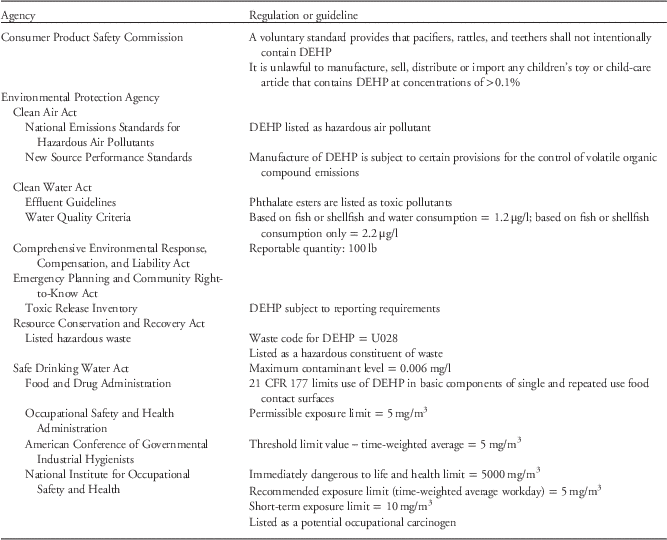
Because of health concerns, the U.S. Environmental Protection Agency and the European Food Safety Authority have established oral intake limit values for various phthalates: the Reference Dose (RfD) and the tolerable daily intake (TDI), respectively. The RfD’s for DEHP, BBP and DBP are 0.02, 0.2, and 0.1 mg/kg/day and the TDI’s for DEHP and DBP are 0.05, 0.5 and 0.01 mg/kg/day, espectively. 25 The Environmental Protection Agency has established a maximum contaminant level for DEHP of 0.006 mg/l (6 ppb) for drinking water. 26 Other government agencies and organizations have issued regulations or guidelines regarding DEHP, summarized by the National Toxicology Program Report on Carcinogens (Table 1). 27
U.S. government regulations regarding DEHP and other guidelines 27

CFR, code of federal regulations; DEHP, di(2-ethylhexyl) phthalate.
Pharmacokinetics of DEHP
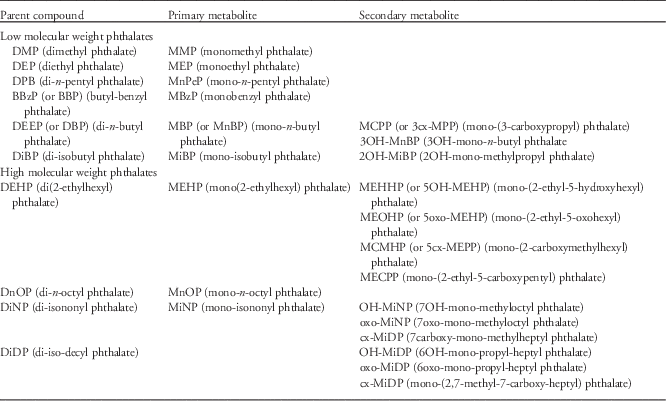
Because several routes of exposure are possible with different absorption, distribution, metabolism and elimination characteristics, many studies have focused on measuring urinary metabolites of phthalates as the final common means of clearance from the body (Table 2). Xenobiotics may be completely or partially rendered water soluble by first pass metabolism and glucuronidation, and eliminated in the urine.Reference Nachman, Hartle, Lees and Groopman 28 The parent phthalate may also undergo metabolic transformation via enzymatic processes in the liver. Because clearing enzyme activity is lower at birth than adulthood, health risks may be increased in neonates. Developmental changes in the liver and kidneys throughout pre- and postnatal growth modify the pharmacokinetic clearance of xenobiotics in ways that are not well described. In children, phthalate metabolite levels in urine have been characterized in various populations.Reference Beko, Weschler and Langer 29 The highest daily phthalate intake was found to be DEHP in a study of 431 Danish children between 3 and 6 years of age (median: 4.42 μg/day/kg body weight) and BBP the lowest (median: 0.49 μg/day/kg).Reference Beko, Weschler and Langer 29
Phthalates and their metabolites (Goodman et al. 2014)Reference Albert and Jégou 10 , Reference Enke, Schleussner, Palmke, Seyfarth and Koch 43 , Reference Kavlock, Barr and Boekelheide 107 ,114

DEHP is rapidly metabolized regardless of the route of exposure, although in a healthy adult, only 67% of the DEHP dose was excreted in the urine as five major metabolites in the first 24 h and 3.8% in the next 24 h.Reference Koch, Preuss and Angerer 30 Mono-2-ethylhexyl phthalate (MEHP) is only a minor metabolite due to further oxidative reactions and also has the shortest half-life, so that studies which only measure urinary MEHP levels do not reflect the extent of DEHP exposure. With their longer half-lives, oxidized DEHP/MEHP metabolites may accumulate in the body with continuous and prolonged daily exposure in the NICU. Koch et al. concluded that ‘almost all neonates in medical care exceed the TDI and the RfD. Maximum DEHP exposures of neonates exceed the TDI and RfD by a factor of 100.’Reference Koch, Preuss and Angerer 30 The metabolism of DEHP involves hydrolysis by lipase to MEHP and further oxidation by liver enzymes, which together are referred to as phase I reactions in detoxification that result in molecular modification.Reference Cuzzolin 31 MEHP has a half-life of 5 h in adults and is further metabolized by different oxidative reactions into products listed in Table 2 which have half-lives from 10 to 24 h in adults. Because the neonatal liver is not fully functional, much longer elimination half-lives might be expected. The P450 cytochrome families (CYP) are the enzymes responsible for biotransformation of most xenobiotics. However, some enzymes are normally expressed at high levels during fetal life but are silenced after birth; some are expressed at constant levels throughout gestation and the postnatal period; and some are not expressed at all or at low levels in the fetal liver with activity occurring late in pregnancy or after birth and increasing later in life.Reference Dotta and Chukhlantseva 32 As a result, neonatal metabolism and elimination of phthalates is poorly understood.
In addition, phase I biotransformation of DEHP and MEHP in different human organs was investigated using recombinant human CYP isoforms.Reference Choi, Joo and Campbell 33 The oxidative metabolism of MEHP, 5OH-MEHP, 5oxo-MEHP, 5cx-MEPP and phthalic acid was primarily catalyzed by CYP2C9*1. Dealkylation to phthalic acid was catalyzed by CYP3A4. In addition, the investigators found that CYP2C9 polymorphisms demonstrated changes in substrate specificity and catalytic activity to MEHP, suggesting potentially important variation in human adverse effects of DEHP. The finding of CYP2C9 polymorphisms is consistent with other studies.Reference Van Overmeire, Touw, Schepens, Kearns and van den Anker 34 , Reference Sharma, Garg and Narang 35 In order to assess interspecies and interindividual differences in DEHP metabolism, Ito et al. assessed the activities of four enzymes that metabolize DEHP in the livers of 38 human subjects and eight mice.Reference Ito, Kamijima and Hasegawa 36 Uridine 5'-diphospho-glucuronosyltransferase activity was widely variable among human subjects, but generally lower than mice. The Ito group concluded that interindividual differences of DEHP metabolism in humans may be greater than the difference between humans and mice.Reference Ito, Kamijima and Hasegawa 36
The CYP2C family comprises about 20% of the P450 enzymes in the adult liver, and CYP2C9 is the predominant enzyme.Reference Cuzzolin 31 Levels of CYP2C9 are very low in early fetal development, but between 25 and 40 weeks they achieve levels about 10% of adult values. CYP3A4 is the primary hepatic CYP in adulthood, accounting for 30% of the P450 system, and is involved in the biotransformation of over 75 medications. Its expression is very low at birth but increases to adult levels by 1 year of age. As neonates do not have fully active enzyme metabolism systems, it might be expected that DEHP would accumulate upon continued exposure, as in the NICU. Therefore, toxicity is possible even though the exposure level may be under regulatory limits.
Phase II biotransformations include conjugation with water-soluble moieties (glucuronidation) in order to facilitate rapid elimination from the body by the kidneys. Depending on the phthalate, metabolites may be partially glucuronidated and excreted through the urine and feces.Reference Koch, Rossbach, Drexler and Angerer 37 Glucuronidation enzymes are not fully active until after birth.Reference Ligi, Boubred, Grandvuillemin and Simeoni 38 Once solubilized by hepatic glucuronidation or other processes, xenobiotics are excreted proportionally to the glomerular filtration rate (GFR). In term neonates, the GFR is 2–4 ml/min/1.73 m2, which doubles by 1 week of age.Reference Chen, Aleksa, Woodland, Rieder and Koren 39 The GFR in healthy young adults is about 125 ml/min/1.73 m2.Reference Levey, Inker and Coresh 40 The neonate’s liver and kidneys function much less effectively than at older ages.
Because phthalates are ubiquitous in the environment including laboratory sampling and procedural plastics, and the fact that monoesters (primary metabolites of DEHP) are also observed, secondary DEHP metabolites in urine have been suggested to be more accurate and sensitive biomarkers of exposure than the monoester MEHP.Reference Koch, Rossbach, Drexler and Angerer 37 However, there are several limitations to this approach. DEHP-containing urine collection devices may contaminate urinary samples with MEHP, studies showing high values for this metabolite should be carefully interpreted. Mono-(2-ethyl-5-carboxypentyl) phthalate is by far the chief secondary DEHP metabolite in neonates.Reference Koch, Preuss and Angerer 30 DEHP metabolite concentrations may vary among infants. Fluctuations in fluid intake and losses may result in more or less dilute urine volumes among newborns. In addition, a point-in-time urine sample may not reflect the possible diurnal variations in intake and elimination, nor account for differing half-lives of metabolites.Reference Lorber, Koch and Angerer 41 Adjusting for urinary dilution by incorporating a creatinine correction is a subject of debate.Reference Lorber, Angerer and Koch 42
Recently, a two-phase study measured 21 urinary DEHP metabolites in mothers and newborns, using non-PVC urine collection bags in a hospital that took steps to minimize exposure of plasticizers to its patients.Reference Enke, Schleussner, Palmke, Seyfarth and Koch 43 Newborn metabolite levels were lower in first urine than later urine, and the metabolite pattern for newborns was markedly different than mothers. In newborn urine, the carboxylated metabolites of high molecular weight phthalates DEHP, DiNP and DiDP were found at much higher concentrations than the monoesters of the low molecular weight phthalates compared with pregnant women. The authors concluded that the presence of phthalate metabolites in the first urine of newborns implicated placental transfer.
In summary, evidence to date concerning the pharmacokinetics of phthalates from humans suggests that intersubjective variability among humans is greater than in rodents; hepatic and renal elimination of phthalates may be markedly different at birth and during infancy than during later life due to organ immaturity; accumulation of DEHP in neonates is not known because studies have focused on analyzing urinary metabolites. Insufficient pharmacokinetic data is available to describe the distribution, metabolism and excretion of phthalates in neonates and infants. Data that characterizes serum levels of phthalates and metabolites in conjunction with excretion should be developed, and steady state serum levels should be assessed for potential toxicity.
Iatrogenic exposure to phthalates in neonatal care units
The neonatal care unit environment provides many opportunities for phthalate exposure, for example, IV tubing, feeding and suctioning tubing, plastic containers of IV fluids and medications, ventilation tubing and supplies, surfaces of floors, walls, furniture, blood product containers and infusion systems. DEHP exposures are highest for medical procedures, and PVC medical tubing contains up to 80% DEHP. Leaching rates of DEHP have been studied for banked blood and plasma and are a function of length and temperature of storage.Reference Green, Hauser and Calafat 44 The highest estimated exposure for blood transfusion in neonates was 22.6 mg/kg. Concomitant use of medical products in the neonatal intensive care unit includes hemodialysis, pheresis, nasogastric or IV feeding, extracorporeal membrane oxygenation, IV medication and infusion supplies, and respirator use. On a mg/kg basis, neonates likely receive a much greater dose of DEHP than adults do, and exceed tolerable daily dose recommendations.Reference Latini, De Felice and Verrotti 45
Another possible phthalate exposure occurs via IV fat emulsion. IV fat emulsion is a caloric source often provided to neonates in intensive care, and studies have shown that leaching of DEHP from IV tubing into the IV fat emulsion is significant at room temperature and increases with ambient temperatures as might be observed in neonatal incubators.Reference Loff, Kabs and Subotic 46 , Reference Rose, Priston, Rigby-Jones and Sneyd 47 Leaching assays of DEHP from PVC IV infusion lines for six different fat emulsion products available in France suggested that the choice of fat emulsion product may be important in minimizing DEHP exposure in the NICU.Reference Bagel, Dessaigne and Bourdeaux 48 Some IV perfusion lines have been co-extruded with outer PVC layers and an inner polyurethane (PU) or polyethylene (PE) layer in order to prevent DEHP leaching.Reference Loff, Subotic, Reinicke, Wischmann and Brade 49 , Reference Bourdeaux, Sautou-Miranda, Bagel-Boithias, Boyer and Chopineau 50 There was no difference between PVC and PVC/PU lines, while PVC/PE lines leached about half the DEHP of PVC lines. Leaching was proportional to the length of the tubing. Calafat et al. studied multiple urine samples from six premature neonates for DEHP metabolites.Reference Calafat, Needham, Silva and Lambert 51 Even though the levels for the metabolites varied widely among the six newborns, the geometric mean MEHP concentration of 100 ng/ml was considerably higher than for children in the general U.S. population (3.43 ng/ml in 2000). 52 Green et al. measured MEHP urinary levels in 54 neonates admitted to an intensive care unit and classified them into three exposure levels based on the estimated amount of exposure to PVC materials: low, medium and high.Reference Green, Hauser and Calafat 44 Median MEHP levels were 4, 28 and 86 ng/ml for the low-, medium- and high-DEHP exposure groups, respectively. After adjustment for institution and sex, MEHP levels were five times greater in the high exposure group compared with the neonates in the low exposure group. In a follow-up report, the investigators measured two additional metabolites of DEHP: MEHHP and MEOHP.Reference Weuve, Sanchez and Calafat 53 Comparing the three exposure level groups using all three metabolites strengthened the association between amount of DEHP exposure with the result that the two additional metabolites in the high-DEHP group’s urine was 13–14 times that of infants in the low-DEHP group.
In another study where 58 full term and 67 preterm infants were followed from birth until 14 months, with nine sequential urinary samples obtained,Reference Frederiksen, Kuiri-Hanninen, Main, Dunkel and Sankilampi 54 metabolites of BBP, DiNP and DEHP were 5–50 times higher at 7 days and 1 month in preterm compared with full term infants. Median hazard quotients were estimated from TDI recommendations, and at 7 days over 80% of preterm infants exceeded the anti-androgenic threshold, while about 30% of full term and older preterm infants exceeded the threshold during the entire first year of life.
Another avenue of exposure is extracorporeal membrane oxygenation (ECMO) therapy. Karle et al. found that plasma DEHP concentrations were greater early in the course of ECMO therapy compared with control, and that most patients cleared DEHP from their plasma before ECMO was discontinued.Reference Karle, Short and Martin 55 The mean highest concentration observed at any time was 8.3±5.7 µg/ml or 2 mg/kg. (The RfD for DEHP is 0.02 mg/kg/day.) However, the weakness of the study was that metabolites were not assessed in plasma or urine. These results point to leaching of DEHP from ECMO apparatus but the undetectable levels in control patients suggest the assay was not sensitive.
Most in vivo studies addressing the effects of phthalates utilized exposure levels in the hundreds of mg/kg/day. However, human exposures to phthalates are estimated to be in the µg/kg/day range, and exposure to infants and children are estimated up to three to five-fold higher. In neonatal exchange transfusion, replacement transfusion, and ECMO, DEHP exposure was 1.8 mg/kg/exchange (0.8–3.3), 0.3 mg/kg/transfusion (0.14–0.72) and 2 mg/kg, respectively.Reference Karle, Short and Martin 55 – Reference Sjoberg, Bondesson, Sedin and Gustafsson 57 Levels in children with these exposures exceed the no observed effect level in animal studies. The effects of phthalate exposure in laboratory animals using comparable human exposure doses remain to be studied.
Exposure to phthalates via breastfeeding and medications
Breastfeeding is an additional means of phthalate exposure for neonates and infants. Breast milk from 62 healthy mothers living in Italy was tested for a number of phthalate metabolites, and mono-isobutyl phthalate and MEHP were found in all samples.Reference Latini, Wittassek and Del Vecchio 58 MEHP concentrations were two to three times that of urinary samples from the general U.S. population. 52 Mono-n-butyl phthalate (MBP) and monobenzyl phthalate (MBzP) were found in 64.5 and 43.5% of samples, respectively. These findings are comparable with that of other countries. Others have also demonstrated that neonates can be exposed to significant amounts of phthalates via breast milk.Reference Calafat, Slakman, Silva, Herbert and Needham 59 , Reference Mortensen, Main, Andersson, Leffers and Skakkebaek 60 These studies strongly suggest the presence of phthalates in breast milk and establish breast milk as an exposure route to neonates. A follow-up study on these neonates would be informative for possible effects in the neonates. Therefore, future studies should consider prospective outcome studies of newborns, in addition to measurement of presence of phthalate in breast milk. Mothers who are breastfeeding and given phthalate-containing medications may unknowingly pass the phthalates to neonates via breastfeeding. Kelley et al. studied the use of polymers in medications and supplements marketed in the United States and Canada based on labeling information.Reference Kelley, Hernandez-Diaz, Chaplin, Hauser and Mitchell 61 Six prescription drug products included DBP and 45 utilized DEP. Phthalates were found in 75 prescription drug products. Nonprescription and supplement products also included many polymers. Recently, the Food and Drug Administration issued a non-binding guidance document for the pharmaceutical industry urging removal of DBP or DEHP from excipient formulations in medications, but packaging material was exempted from the guidance. 62
Exposure to phthalates by direct contact with household products
Another potential source of exposure is by contact with household products. Infants and toddlers are vulnerable because they exhibit more hand-to-mouth activity and consume greater food as a percent of their body weight. A Canadian study evaluated 252 personal care products including 98 baby care products collected at retail stores in 2007.Reference Koniecki, Wang, Moody and Zhu 63 Of 18 phthalates assessed by GC-MS analysis, DEP, DMP, di-isobutyl phthalate, DnBP and DEHP were detected.
Self-reported use of personal care lotion, cosmetic and cologne/perfume were associated with the greatest increases in urinary phthalates, although the magnitude varied by product.Reference Braun, Just and Williams 64 Women using cologne/perfume had monoethyl phthalate (MEP) concentrations 167% higher than non-users. Sathyanarayana et al. measured nine phthalate metabolites in 163 infants born from 2000 to 2005.Reference Sathyanarayana, Karr and Lozano 65 All had been exposed to baby lotion, powder and/or shampoo in the previous 24 h. Metabolites were found in most (81%) infants and higher associations were found in those 8 months of age or less, suggesting sources of exposure may differ before infants begin to crawl and hand-to-mouth activities increase. A limitation of these studies includes a lack of prospective follow-up studies which could have demonstrated the effect of these phthalates. Therefore, future studies should be concentrated on more mechanistic as well as molecular level investigations to discover the strength of association, identify the target molecule or biomarkers for the exposures.
In utero exposure to phthalates
Phthalate exposure during pregnancy significantly increases the odds of delivering preterm, which is the leading cause of neonatal mortality.Reference Ferguson, McElrath and Meeker 4 A case–control study in Boston involved 130 mothers who delivered before 37 weeks of gestation and 352 randomly selected mothers who delivered at or after 37 weeks.Reference Ferguson, McElrath and Meeker 4 Maternal levels of DEHP metabolites were associated with increased odds of preterm birth: for summed DEHP metabolites, the odds ratio (OR) of preterm birth was 1.33 (95% CI, 1.04–1.70) and for spontaneous preterm birth the OR was 1.63 (CI, 1.15–2.13). The OR for women in the top quartile was four times greater than women in the bottom quartile, demonstrating a dose-response effect on preterm birth. Another study of 311 African-American and Dominican women from New York City assessed personal air and spot urine samples for DEHP, and also found that gestational age decreased with increasing DEHP exposure.Reference Whyatt, Adibi and Calafat 66 Amniotic fluid contains fetal urine which is swallowed by the fetus which in turn is reabsorbed; thus, amniotic fluid may be representative of phthalate exposure in utero. For this reason, Silva et al. identified three phthalate metabolites: MEP in 39% of samples, MBP in 93%, and MEHP in 24% in amniotic fluid samples from 54 donors.Reference Silva, Reidy and Herbert 67 In utero exposure to DEHP or its major metabolite, MEHP, was noted through umbilical cord blood samples in 88% of 84 consecutive newborns in Italy.Reference Latini, De Felice and Presta 68 MEHP-positive newborns showed a lower gestational age compared with MEHP-negative infants. Phthalates were also measured in the cord blood of 207 Chinese women, 33 of whom had preterm delivery before 37 weeks.Reference Huang, Li and Garcia 69 This study suggested that prenatal exposure to phthalates except dicyclohexyl phthalate (DCHP) is associated with younger gestational age and preterm delivery. Phthalates including dibutyl phthalate (DEEP), DEP, di-n-hexyl phthalate (DNHP), BBP, DNP, DBP, DCHP, DEHP, dipentyl phthalate (DPP) and bis(2-n-butoxyethyl)phthalate (DBEP) also adversely affected fetal growth parameters via gestational age reduction and preterm delivery with a significant gender effect among various phthalate metabolites.
Furthermore, combined multiple exposures to EDCs are also common during pregnancy.Reference Tefre de Renzy-Martin, Frederiksen and Christensen 70 Bisphenol A and other phenols, parabens and phthalates were detected in the urine of 174 of 200 healthy Danish women. Risk assessments that do not account for multiple simultaneous daily exposures may underestimate the total risk burden of EDCs even when individual exposure levels are low, as additive effects have not been studied.
Other investigators have reported no association or a decreased odd of preterm birth with DEHP metabolite exposure.Reference Adibi, Hauser and Williams 71 – Reference Suzuki, Niwa and Yoshinaga 73 These and other studies have notable limitations, such as collecting only single urine samples, self-reported recall of last menstrual period to calculate gestational age at birth and/or small sample sizes.
Several recent reports suggest studying epigenetic modifications associated with gestational age and preterm birth.Reference Parets, Bedient, Menon and Smith 74 , Reference Gao, Zhang and Jiang 75 To our knowledge there is no published mechanistic study correlating DEHP or any other phthalates with human epigenetics and pre-term birth or gestational age. We recently showed that MEHP induced epigenetic changes in a human first trimester placental cell line.Reference Meruvu, Zhang, Bedi and Choudhury 76
Effects on the reproduction system
Phthalate exposure may affect male offspring to a greater degree than female. A systematic review Reference Kay, Chambers and Foster 77 of epidemiological and experimental animal literature examined the relationship between phthalate exposure and adverse female reproductive health outcomes. The authors concluded that phthalates may not significantly affect the female reproductive system of women exposed to low levels. On the other hand, the safety of exposures to higher levels of phthalates or in conjunction with other endocrine disruptors is not known.
A recent review of molecular mechanisms of action of EDCs indicates the complexity of ligand-activated nuclear receptor transcription in the inappropriate modulation of hormone receptors.Reference Yoon, Kwack, Kim and Lee 78 There are numerous potential targets for EDC disruption of hormone signaling, and some EDCs may have binding affinities or interactions with hormone receptors besides estrogen receptors, leading to complexities in understanding the entirety of their effects. However, evidence of epigenetic regulation are mostly unrecognized.
Short- and long-term antiandrogenic effects of DEHP after in utero exposure have been demonstrated in several animal models as well as humans. Exposure to a wide range of DEHP doses in pregnant rats resulted in increased volumes of Leydig cells in adult testes, but dose-dependent reductions in testosterone production were observed.Reference Culty, Thuillier and Li 79 Increased rather than decreased expression of steroidogenesis-related genes was noted, so the cause of adult testosterone expression in rats exposed to higher doses of DEHP remains unknown. Bustamante-Montes et al. studied the association between maternal phthalate exposure and male offspring anthropometric and genital measurements in 74 male newborns from women who provided urine samples at their last prenatal visit.Reference Bustamante-Montes, Hernandez-Valero and Flores-Pimentel 80 Significant inverse associations were observed between prenatal total phthalate exposure and the distance from the anus to anterior base of the penis, penile width and stretched length. Specifically, prenatal exposure to MEHP was associated with a reduction in the stretched length of the penis. Albert et al. reported the number of studies of phthalate effects on the testis of animals and humans, noting 25 human studies compared with 265 studies in mice, rats and marmosets.Reference Albert and Jégou 10
It has been proposed that male reproductive disorders such as cryptorchidism, hypospadias, infertility and testicular cancer are linked to a condition known as testicular dysgenesis syndrome (TDS) resulting from EDC exposure in utero.Reference Meeker, Sathyanarayana and Swan 13 , Reference Fisher, Macpherson, Marchetti and Sharpe 81 Several epidemiological studies from different countries suggest a possible effect of environmental EDCs in TDS pathogenesis including phthalates.Reference Olesen, Sonne, Hoei-Hansen, Rajpert-De Meyts and Skakkebaek 82 In addition, TDS induced in mice with maternal exposure to DEHP demonstrated a relative increase in global DNA methylation and increased DNA methyltransferase expression, suggesting that epigenetic modifications may play a role in TDS.Reference Wu, Zhu and Li 83 DNA methyltransferase expression returned to normal levels in adulthood, although DEHP exposure was discontinued at birth.Reference Wu, Zhu and Li 84 However, testosterone suppression did not recover. Other reports have corroborated the antiandrogenic effects of fetal phthalate exposure.Reference Yoon, Kwack, Kim and Lee 78 Gonadal development was studied in four generations of rats whose mothers were gavaged during pregnancy with DEHP.Reference Chen, Wu and Wen 85 Cryptorchidism was noted in the F1 and F2 offspring but not F3 or F4, while conception rates were 50, 75 and 100%, respectively, for F1, F2, andF3 and F4 offspring. DNA methyltransferase expression was upregulated with each successive generation. Two studies of male infants in the United States and Japan observed decreased anogenital distance with maternal DEHP exposure.Reference Swan, Main and Liu 86 , Reference Suzuki, Yoshinaga, Mizumoto, Serizawa and Shiraishi 87 These findings were consistent with a study of male rat pups exposed to phthalates in utero.Reference Howdeshell, Furr and Lambright 88 In the latter study, DEHP and DBP maternal exposure decreased testosterone production and insulin-like peptide 3 (insl3) gene expression as well as cyp11a. The peptide insl3 facilitates the first phase of testicular descent, while cyp11a is a rate-limiting enzyme responsible for conversion of cholesterol to pregnenolone in steroidogenesis. In addition, the Howdeshell study noted that fetal/neonatal mortality was significantly increased particularly when DBP and DEHP were combined. In a case–control study in France, the OR of male genital malformation in infants with parental exposure to pesticides was 4.41 (95% CI, 1.21–16.00).Reference Gaspari, Paris and Jandel 89 Results of a recent large prospective cohort study of pregnant women and their adolescent daughters suggested that antenatal exposure to phthalates may be associated with long-term effects on reproductive development, including a significantly increased uterine volume and a potentially protective effect against polycystic ovarian syndrome in girls.Reference Hart, Doherty and Frederiksen 90 Recently, Mouritsen et al. carried out a longitudinal study where children were examined every 6 months for serum levels of dehydroepiandrostenedione (DHEA), Δ4-androstenedione, testosterone, and urinary morning excretion of 14 phthalate metabolites to determine whether urinary phthalate levels are associated with circulating androgen levels and age at puberty.Reference Mouritsen, Frederiksen and Sorensen 91 Girls in puberty exhibited lower serum levels of adrenal androgens in those who excreted the highest amount of MBP and DEHP metabolites; these girls were most exposed to DBP and DEHP. In contrast, boys in the high MBP excretion group developed pubic hair almost a year earlier than boys in the low group. Testosterone level at age 13 was higher in boys who excreted the highest amount of MBzP, while DHEA levels were lower.
Epigenetic studies of EDCs and phthalates
Epidemiological studies suggest that scientists should investigate the effects of phthalates at the molecular mechanistic level in in vitro or in vivo. To date, very few studies have examined epigenetic effects of phthalates in humans or even in experimental animals or cells. Besides previously described antiandrogenic effects of phthalates, anti-aldosterogenic effects of DEHP exposure have been observed in the decreased expression of mineralocorticoid receptor (MR) in adult Leydig cells of rats which may be epigenetically mediated.Reference Martinez-Arguelles, Culty, Zirkin and Papadopoulos 92 A follow-up study of in utero DEHP exposure in rats found significant sex-specific long-term effects in steroid levels in response to DEHP exposure at concentrations close to or higher than human exposures observed with hemodialysis or total parenteral nutrition in infants.Reference Martinez-Arguelles, Guichard, Culty, Zirkin and Papadopoulos 93 The results suggest that in utero DEHP exposure reduces both adrenal aldosterone synthesis and MR expression in Leydig cells. The authors note that ‘this is the first evidence showing that in utero exposure to DEHP has cardiovascular and behavioral effects in the adult male offspring.’ These investigators recently performed global gene expression analysis of pre-pubertal and adult rat adrenal glands following long-term in utero exposure to DEHP.Reference Martinez-Arguelles, Campioli and Lienhart 94 They also observed postnatal alteration in DNA methylation in nuclear receptor genes in Leydig cells, including estrogen receptor β, thyroid receptor β, peroxisome proliferator-activated receptor α and the mineralocorticoid receptor.Reference Martinez-Arguelles, Campioli, Culty, Zirkin and Papadopoulos 95 In utero exposure to DEHP resulted in long-term activation of the adrenal gland and reduced aldosterone synthesis. In addition to adverse reproductive effect, DEHP also increased lipid import, cholesterol biosynthesis and cholesterol storage. Treatment of human breast cancer cells (MCF7) with BBP resulted in demethylation of estrogen receptor-1 (ESR1) promoter-associated CpG islands, suggesting that altered ESR1 mRNA expression by BBP is related to DNA hypomethylation in the promoter region of the receptor gene.Reference Kang and Lee 96 Maternal exposure to DEHP increased DNA methylation in the mouse testis with increased expression of DNA methyltransferases leading to TDS.Reference Wu, Zhu and Li 84 . Another recent study was designed to assess the effects of DEHP on DNA methylation of imprinting genes in germ cells from fetal and adult mice.Reference Li, Zhang and Qin 97 DEHP exposure significantly reduced the percentage of methylated CpG sites in Igf2r and Peg3 differentially methylated regions in germ cells, particularly in postpartum day 21 oocytes. The modification was inherited in offspring.
As people are exposed to various phthalates other than DEHP, it is possible that some may antagonize or amplify the effect of DEHP in actual exposure situations. However, DEHP or MEHP may act in other ways as suggested by several studies.Reference Gupta, Singh and Leslie 98 – Reference Sjoberg, Bondesson, Gray and Ploen 103 A recent report suggested apparent biphasic effects of pollutants with high fat high sucrose diet in an obesity model.Reference Naville, Labaronne and Vega 104 Mannikam et al. studied a mixture of plastic constituents (bisphenol-A, DEHP and DBP) on pubertal and endocrine abnormalities in F1 and F3 generation male and female rats, and found results supporting transgenerational inheritance of adult onset disease.Reference Manikkam, Tracey, Guerrero-Bosagna and Skinner 105 Doses used were considered high in relation to human exposures.
One well-known early example of the developmental origins of health and disease (DOHaD) concept related to xenobiotic exposure is linked to epigenetic theory. In brief, the first synthetic estrogenic drug, diethylstilbestrol (DES) was given to an estimated 10 million mothers from 1940 to 1971, and increased the risk for breast cancer in both mothers and their daughters when they were older than 40 years.Reference Newbold 106 In this review, Newbold noted that DES also was linked to vaginal adenocarcinoma in a few adolescent daughters, as well as frequent reproductive problems in 90–95% of daughters. Male offspring also developed a range of male reproductive tract problems.Reference Newbold 106 Newbold argues that the transgenerational as well as delayed effect of diethylstilbestrol is explained by epigenetic programming, and that grandchildren of the original mothers should be studied today. This early tragedy suggests that the epigenome is extremely vulnerable to disruption by environmental factors including estrogenic chemicals such as phthalates during prenatal and perinatal life.
Even though EDC exposure during critical periods of early development and risk of chronic diseases later in life has been reported in a number of recent studies, the mechanistic knowledge is still in infancy. Studies of the epigenetic effects of DEHP are still warranted. Given the potential reversibility of environmentally induced epigenetic modifications, mechanisms underlying the lifelong as well as transgenerational consequences of perinatal endocrine disruption may ultimately lead to the development of efficient diagnostic tools and therapeutic approaches for the prevention and mitigation of adverse effects of EDCs, in particular DEHP.
Discussion
An expert panel critically reviewed available studies and issued their report in 2006 concerning the reproductive and developmental toxicity of DEHP.Reference Kavlock, Barr and Boekelheide 107 This report indicated minimal concern for the general population; some concern for male children older than 1 year; concern for infants <1 year; serious concerns for intensively medically treated infants; and some concern for effects of DEHP on male children exposed to general population levels during pregnancy. Finally, the panel identified a number of specific data needs for further investigation: sexual development in adolescents previously exposed to ECMO treatment; studies with larger numbers of neonates relating the nature of procedures to exposure levels using measures of internal dose with multiple metabolites; additional studies on prenatal, perinatal and postnatal exposure on developmental reproductive toxicity. In addition, the panel suggested that physiologically based pharmacokinetic studies remain one of the most important data needs.
In addition, clinicians should maintain awareness of phthalate-containing products used in the medical care of pregnant and lactating women, and in the environment of neonatal intensive care settings. We speculate that substituting non-DEHP medical products for PVC products wherever possible will reduce exposure levels. We recommend if IV fat emulsions are used, selection of a soybean-based product will reduce the exposure, also avoid excessive warming and agitation during their storage and use. Avoid using vinyl flooring and avoid foods packaged or stored in plastics if alternatives (DEHP-free PVC, non-PVC or bio-based plastics) are available.Reference Braun, Sathyanarayana and Hauser 108 However, these recommendations should be strengthened with more research evidence about these indoor environmental exposures. Some resources have been made available to help clinicians identify alternatives to PVC medical devices for the NICU and other patients. 109 – 111
In conclusion, several studies have demonstrated clear differences in the ways that mice, rats, primates, and humans respond to phthalate exposures. Most of the in vivo studies addressing the effects of phthalates utilized exposure levels in the hundreds of mg/kg/day. However, human exposures to phthalates are estimated to be in the µg/kg/day range and exposures to infants and children are estimated up to three to five-fold higher. Additional experiments with a more realistic human exposure dose in laboratory animals are warranted. In addition, humans are exposed to several mixtures of phthalates and other EDCs besides DEHP, and it is possible that other compounds may dampen or amplify the effect of DEHP in actual exposure situations. Such studies should be considered by investigators. A recent critical review of endocrine disruption on the human testis to phthalates from fetal life to adulthood provides several caveats.Reference Albert and Jégou 10 The authors state ‘it cannot be excluded that transgenerational effects of phthalates and/or epigenetic changes exist in humans.’ Yet it does appear that the effects persist in adulthood. Accumulating evidence indicates the involvement of epigenetic regulation which can be inherited. Thus, the evidence to date supports the DOHaD hypothesis. In 2002 the European Union Scientific Committee on Medicinal Products and Medical Devices published an opinion that the net advantages of using DEHP in medical devices outweighed the disadvantages. 112 However, continued concern by the European Union about DEHP safety resulted in the identification of potential alternative plasticizers to DEHP for use in PVC medical products. 113 More mechanistic studies are warranted to support the epigenetic hypothesis and increase awareness of potential transgenerational effects.
Acknowledgments
The authors acknowledge Mr Andrew Ramirez for schematic diagram.
Conflicts of Interest
None.