Neurodegenerative diseases represent a significant proportion of the noncommunicable disease burden in developed countries, for which few treatment options are available. A subset of these conditions, collectively known as polyglutamine (polyQ) diseases, have a well-defined genetic aetiology, making them attractive targets for gene-based therapies. There are currently nine known inherited polyQ diseases: Huntington's disease (HD), dentatorubral-pallidoluysian atrophy (DRPLA), spinal bulbar muscular atrophy (SBMA) and six spinocerebellar ataxias (SCA1, 2, 3, 6, 7 and 17). All these conditions arise from an expanded trinucleotide CAG repeat within the coding region of the disease-causing gene, which is translated into an abnormally long polyQ tract in the mutant protein (Ref. Reference Durr1). The length of the CAG repeat is prone to expansion from one generation to the next (Ref. Reference Stevanin2) and shows a strong correlation with both age of onset and disease severity (Refs Reference Garden and La Spada3, Reference Globas4, Reference Lebre and Brice5, Reference Pulst6).
Symptoms, including chorea, dystonia and dementia (HD), ataxia and dysarthria (SCAs and DRPLA), retinal degeneration (SCA7), seizures (SCA17) and motor weakness (SBMA), result from the selective degeneration of well-defined subpopulations of neurons (Refs Reference Li and Li7, Reference Saegusa8, Reference La Spada9, Reference Helmlinger10, Reference Yoo11, Reference Bichelmeier12, Reference Burright13, Reference Goti14, Reference Watase15, Reference Huynh16, Reference Cemal17, Reference Shirendeb18). Although the precise mechanisms underlying this selectivity remain incompletely understood, the identification of common hallmarks of pathology suggests that many, if not all, of the polyQ diseases may be amenable to similar therapeutic approaches.
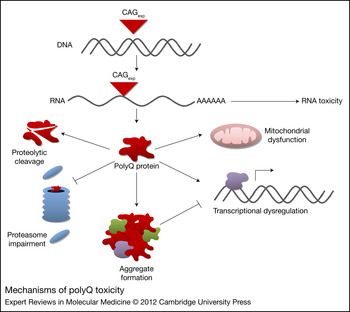
One such common feature is the formation of neuronal intranuclear inclusions (NIIs), which result from the increased aggregation propensity of expanded polyQ protein regions, and might involve the sequestration of additional components, such as transcription factors and heat shock proteins (Refs Reference Lebre and Brice5, Reference Yamanaka and Nukina19, Reference Sugars and Rubinsztein20). The role of these NIIs in pathogenesis remains controversial however, with some studies suggesting a protective role for the sequestration of mutant polyQ protein in inclusion bodies (Refs Reference Garden and La Spada3, Reference Einum21). Numerous additional mechanisms have therefore been suggested to explain polyQ-expansion-related pathogenesis (Fig. 1) (Refs Reference Garden and La Spada3, Reference Carlson, Andresen and Orr22, Reference Duenas, Goold and Giunti23, Reference Shao and Diamond24). These include altered transcriptional regulation by polyQ-expanded proteins (Refs Reference Sugars and Rubinsztein20, Reference Palhan25, Reference Zoghbi and Orr26, Reference Kim27, Reference Yvert28), abnormal processing of the mutant protein (Refs Reference Garden and La Spada3, Reference Young29, Reference Colomer Gould30, Reference Jung31, Reference Landles32), mitochondrial dysfunction (Refs Reference Shirendeb18, Reference Clemens33) and proteotoxic stress, caused by impairment of the ubiquitin–proteasome pathway (Refs Reference Bennett34, Reference Bence, Sampat and Kopito35, Reference Jana36).
Mechanisms of polyQ toxicity. The expansion of CAG trinucleotide repeats within the coding region of several genes results in the expression of proteins containing pathologically expanded polyglutamine (polyQ) tracts. Pathogenesis has largely been attributed to the effects of the mutant protein, although a role for RNA toxicity in the development of disease has also been proposed. The mechanism by which polyQ proteins exert their toxic effects varies according to protein context, and may include proteolytic cleavage (leading to the production of toxic fragments), impairment of the ubiquitin–proteasome pathway, formation of aggregates of mutant protein (involving the sequestration of wild-type polyQ protein and other important cellular components such as transcription factors), dysregulation of transcription, either directly or as a result of aggregate formation, and mitochondrial dysfunction, all of which result in deleterious downstream consequences.

All these mechanisms represent potential therapeutic targets; however, the most effective and widely applicable therapies are likely to be those designed to target and suppress production of the mutant protein upstream of these deleterious effects (Ref. Reference Drouet37). RNA-based approaches, such as RNA interference (RNAi) and antisense oligonucleotides (AONs), represent promising therapeutic strategies for polyQ diseases because they offer the potential to target genes in a sequence-specific manner, regardless of known protein function (Refs Reference Boudreau and Davidson38, Reference Hasholt39). However, novel technologies such as transcriptional gene silencing (TGS) are gaining credibility and might offer alternative mechanisms to specifically and sustainably silence the mutant gene. This review focuses on the most recent applications of these technologies and examines the crucial considerations that must be taken into account when assessing the applicability and clinical utility of such therapies.
RNA-based therapies for polyQ diseases
Because polyQ diseases are caused by a toxic gain of function of the mutant protein, it follows that suppression of expression of the mutant gene containing the pathological CAG expansion should halt progression of the disease (Ref. Reference Bauer and Nukina40). Indeed, several lines of evidence support the therapeutic benefit of silencing polyQ-encoding genes (Ref. Reference Xia41). In particular, studies of inducible models of disease have demonstrated that neuropathological features, which develop over time in response to the presence of expanded polyQ protein, are rapidly improved once expression of the mutant gene is attenuated. Such findings provide proof of principle that inhibition of disease-causing genes may represent an effective means of therapy in patients already exhibiting a disease phenotype (Refs Reference Yamamoto, Lucas and Hen42, Reference Zu43). Thus, attention has turned in recent years to the development of effective transcriptional and post-transcriptional gene silencing therapies, mediated for the most part by small noncoding RNA molecules (Fig. 2).
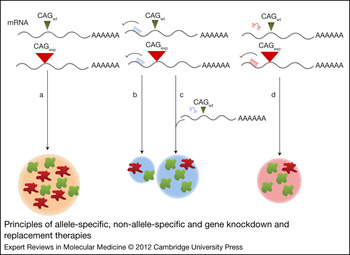
Principles of allele-specific, non-allele-specific, and gene knockdown and replacement therapies. (a) Translation of wild-type and pathologically expanded alleles of a CAG repeat results in the production of both mutant (red) and wild-type (green) protein. (b) Non-allele-specific post-transcriptional gene silencing (TGS) therapy (shown in blue) prevents translation of both transcripts, leading to a reduction in wild-type and mutant polyglutamine protein levels. (c) In the case of gene knockdown and replacement, the introduction of an exogenous wild-type transcript, which is resistant to silencing as a result of modifications to the nucleotide sequence, results in restoration of wild-type protein expression despite the suppression of both endogenous transcripts in a non-allele-specific manner. (d) Allele-specific gene silencing (shown in red), based on discrimination between single-nucleotide polymorphism genotypes or differences in CAG repeat lengths, results in selective suppression of mutant protein production, while wild-type protein levels remain relatively unchanged. Effectors may be either RNA interference-based or antisense oligonucleotides.

The most straightforward method of RNA-based gene silencing therapy involves indiscriminate suppression of both the normal and pathological alleles of the gene, termed ‘non-allele-specific silencing’ (Fig. 2b). Although technically less challenging, this approach assumes that the wild-type function of the gene is either nonessential or functionally redundant, because silencing of genes essential for central nervous system (CNS) development and maintenance could have deleterious consequences.
In cases where wild-type protein function is indispensable, an allele-specific approach might be required. Allele-specific silencing relies on the availability of targetable sequence differences that enable discrimination between the normal and pathologically expanded transcripts of a gene, such as single-nucleotide polymorphisms (SNPs) inherited in linkage disequilibrium with the expansion mutation, or differences in the CAG repeat length itself (Fig. 2d) (Ref. Reference Rodriguez-Lebron and Paulson44). In theory, an allele-specific strategy represents the preferred therapeutic mechanism for most polyQ diseases, because it allows selective silencing of the mutant copy of the gene while maintaining wild-type expression. However, in practice, it is not always feasible: polymorphisms linked to the disease allele in a small number of affected individuals may not justify the development of a therapy and may not be amenable to targeting because of their location within the gene (Ref. Reference Scholefield and Wood45). In such cases, a novel approach known as gene knockdown and replacement may be used. This method combines non-allele-specific silencing with gene replacement therapy, in which an RNAi or AON-resistant transgene is delivered to the targeted tissues together with the therapeutic effector (Fig. 2c) (Refs Reference Kubodera46, Reference Kubodera47).
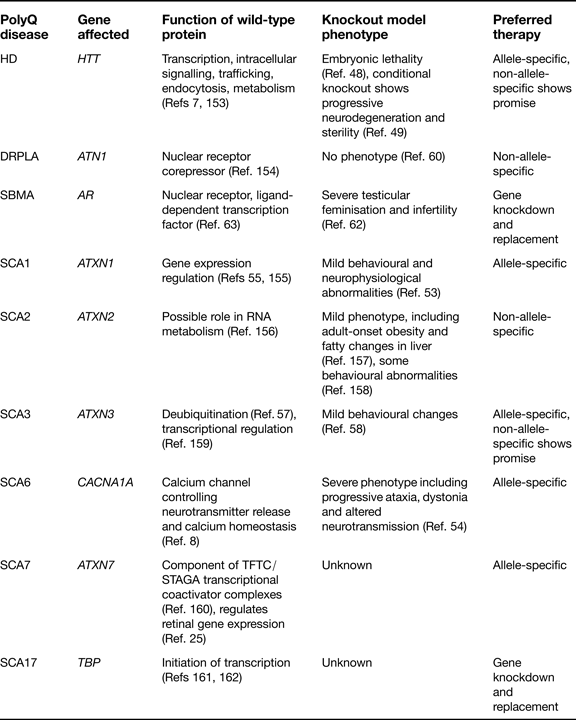
The decision as to which silencing method to apply to a given polyQ disease depends on both the degree to which loss of wild-type protein expression is tolerated and the feasibility of allele-specific silencing. To date, answers to these questions have largely been based on the phenotypes observed in knockout and transgenic animal models of disease (Table 1). In the case of HD, for instance, HTT knockout results in embryonic lethality (Ref. Reference Nasir48), whereas conditional knockout mice display a neurodegenerative phenotype and a significantly shorter lifespan (Ref. Reference Dragatsis, Levine and Zeitlin49). Ablation of wild-type function in transgenic HD mice results in an exacerbation of disease symptoms (Ref. Reference Van Raamsdonk50). Because HTT is known to have a role in several key pathways in brain development, retention of wild-type expression appears necessary, although the absence of a phenotype in heterozygous conditional knockout mice and in an individual expressing HTT at only 50% of normal levels suggests that a single functional copy may be sufficient (Refs Reference Persichetti51, Reference Ambrose52) – a strong argument in favour of the allele-specific silencing approach.
PolyQ gene function, phenotypic effect of loss of function, and implications for choice of gene silencing therapy
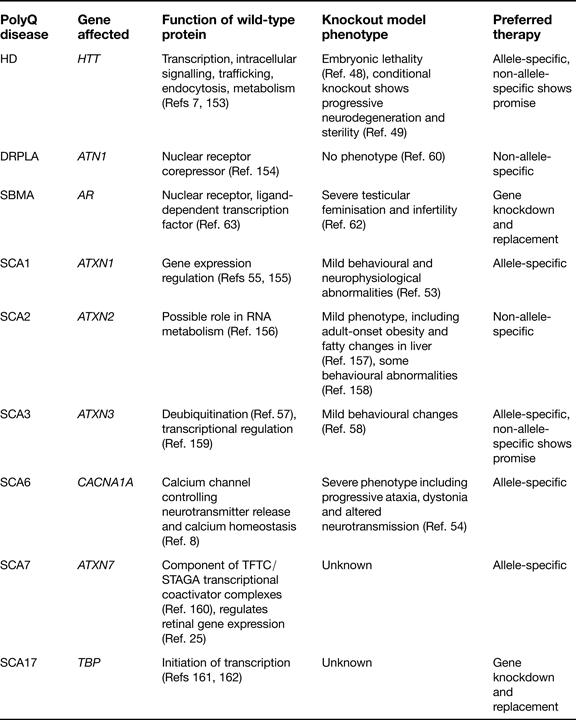
Similar observations have been made in SCA1 and SCA6, in which knockout mice display severe neurological and behavioural abnormalities (Refs Reference Matilla53, Reference Jun54). The proposed neuroprotective effect of wild-type ATXN1 (in SCA1) (Refs Reference Crespo-Barreto55, Reference Lim56) and the lack of a pathological phenotype in SCA6 heterozygous null mice (Ref. Reference Jun54) further motivate the use of allele-specific approaches for these diseases.
Wild-type ATXN3 has also been shown to have a neuroprotective function (Ref. Reference Warrick57), although the mild behavioural changes observed in ATXN3 knockout mice (Ref. Reference Schmitt58) suggest that allele-specific silencing, while preferable, might not be essential for SCA3. A non-allele-specific approach might also be feasible in SCA2 and DRPLA, in which a loss of wild-type protein expression appears to be ameliorated by the presence of redundant proteins: ATXN2-related protein 1 (Ref. Reference Figueroa and Pulst59) and the short form of atrophin 2 (Atr2S) (Ref. Reference Shen60), respectively.
The absence of a knockout model for SCA7 makes it difficult to determine the effect of a loss of wild-type function. However, the fact that ATXN7 has an important role in the regulation of retinal gene expression (Refs Reference La Spada9, Reference Helmlinger10, Reference Palhan25) has prompted the suggestion that an allele-specific approach be adopted until further information becomes available.
The problem of haploinsufficiency in SCA17, as illustrated by cognitive deficits in mice heterozygous null for the TATA-binding protein (TBP) (Ref. Reference Rooms61), suggests that a loss of wild-type function in this disease would not be well tolerated. Thus, gene knockdown and replacement might represent the best strategy for treatment.
Finally, mice with a knockout mutation in the androgen receptor gene (AR) on the X-chromosome, responsible for SBMA, show severe developmental delays, while both humans and mice lacking a functional copy of AR present with testicular feminisation (Refs Reference Yeh62, Reference Wang63). This indicates the need to retain wild-type function, preferably through the use of gene knockdown and replacement.
Principles and mechanisms of gene silencing
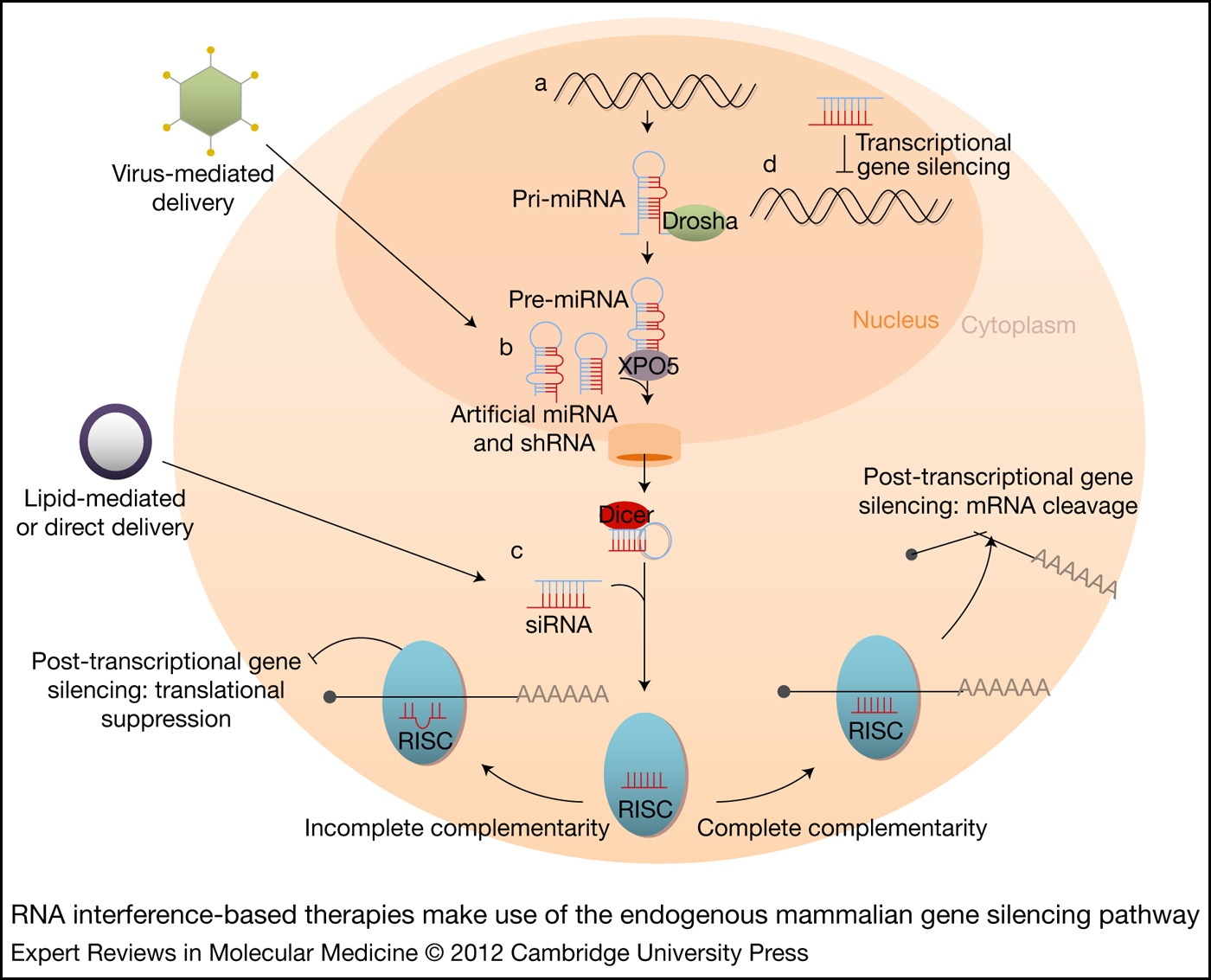
Therapeutic strategies based on the principle of RNAi make use of the endogenous mammalian gene silencing pathway, in which primary microRNA (miRNA) hairpins, transcribed from noncoding regions of the genome, are processed sequentially by a series of enzyme complexes to yield short double-stranded RNAs (Fig. 3a) (Ref. Reference Weinberg and Wood64). In the final step, the antisense or ‘guide’ strand of the duplex is loaded into the RNA-induced silencing complex (RISC), which, in the case of post-transcriptional silencing, directs either cleavage or translational suppression of the complementary target mRNA, depending on the accuracy of base pairing (Refs Reference Zamore65, Reference Castanotto and Rossi66).
RNA interference-based therapies make use of the endogenous mammalian gene silencing pathway. (a) Endogenous primary microRNAs (pri-miRNAs), transcribed from genomic DNA, are processed in the nucleus by Drosha (an RNase III enzyme) and its interaction partners to yield pre-miRNAs. These are exported to the cytoplasm by means of exportin-5 (XPO5), where they are recognised and cleaved by the Dicer enzyme complex, resulting in the production of ~22 bp staggered duplexes. The guide strand (depicted in red) is loaded into the RNA-induced silencing complex (RISC), which, in the case of post-transcriptional silencing, directs cleavage or translational suppression of the cognate mRNA, depending on the accuracy of base pairing between the guide strand and the target mRNA (Ref. Reference Castanotto and Rossi66). (b) The pathway may be manipulated for therapeutic gene silencing through the introduction of artificial miRNA or short hairpin RNA (shRNA) constructs complementary to the gene or allele targeted for repression. These effectors are expressed under the control of PolII and PolIII promoters, respectively, and enter the pathway upstream of Dicer processing. (c) Alternatively, short interfering RNAs (siRNAs) that target the gene of interest can be incorporated directly into RISC. (d) Long-term suppression of gene expression may be accomplished through TGS, in which siRNAs complementary to the promoter region of the target gene induce epigenetic changes. Delivery is usually mediated by integrating lenti- or episomally-expressing (rAAV) viruses (in the case of shRNAs and miRNAs) or by direct injection or lipid-mediated transfection (in the case of siRNAs).
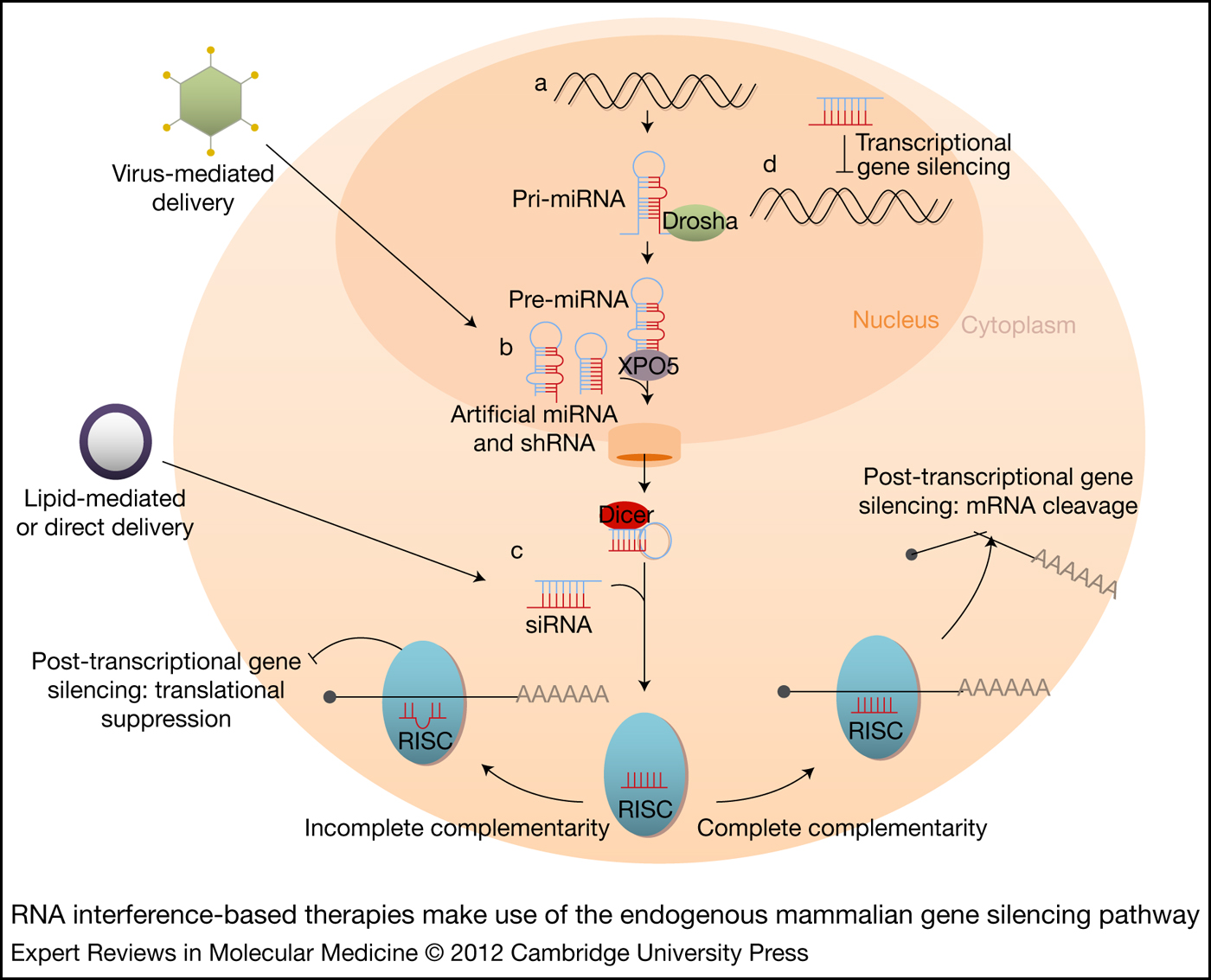
The pathway may be harnessed for therapeutic gene silencing through cytoplasmic delivery of synthetic short interfering RNAs (siRNAs), double-stranded molecules 21–22 nucleotides in length, which are designed to be perfectly complementary to the mRNA targeted for silencing (Fig. 3c) (Ref. Reference Rodriguez-Lebron and Paulson44). Short hairpin RNAs (shRNAs) represent a modification of this strategy in which the basic siRNA sequence is incorporated into a stem–loop construct, expressed at high levels from a PolIII promoter (Fig. 3b) (Ref. Reference Boudreau, Monteys and Davidson67). However, because both siRNAs and shRNAs bind obligatorily to components of the RNAi pathway, large doses may result in saturation of the cellular RNAi processing machinery, disrupting endogenous miRNA biogenesis and function (Ref. Reference Grimm68). Additionally, the risk of off-target effects as a result of partial complementarity to unintended transcripts represents an important caveat to the clinical utility of RNAi, which is discussed in more detail below (Refs Reference Boudreau, Martins and Davidson69, Reference Denovan-Wright70).
One way of avoiding saturation involves the incorporation of synthetic siRNA sequences into artificial miRNAs under the control of a PolII promoter, allowing for regulated, cell-specific expression of the gene silencing molecules (Fig. 3b) (Ref. Reference Boudreau, Martins and Davidson69). The result is a decrease in accumulation of unprocessed precursors, leading to a reduction in cellular immune response and hence to an improvement in nonspecific, toxic effects (Refs Reference Boudreau, Martins and Davidson69, Reference Bauer71, Reference McBride72).
Another method that has been proposed involves circumvention of the RNAi pathway altogether, through the use of AONs complementary to the mRNA targeted for silencing. AONs are short synthetic molecules, 15–25 nucleotides in length, which hybridise to their target mRNA by means of Watson and Crick base pairing (Ref. Reference Smith73). Post-transcriptional gene silencing is achieved through RNAse H-mediated intranuclear degradation of the target transcript (Ref. Reference Crooke74) or steric blocking of translation (Ref. Reference Gagnon75).
Non-allele-specific gene silencing
Numerous studies involving therapeutic gene silencing for polyQ diseases have been undertaken over the past decade (Ref. Reference Boudreau and Davidson38), many of which have adopted the less technically challenging non-allele-specific approach. A significant number of these use transgenic models, in which an exogenous mutant gene or gene fragment is introduced into a model system in which two normal endogenous copies of the gene of interest are already present (Ref. Reference Boudreau76). In these cases, silencing efficacy is evaluated based on the ability of the effector to selectively target the transgene sequence, rather than its ability to distinguish between endogenous pathogenic and normal alleles (Ref. Reference Harper77). Nevertheless, such studies have provided valuable evidence for the feasibility of gene silencing as a therapeutic approach.
In Drosophila and mammalian cell models of SBMA, for instance, sequence-specific inhibition of a truncated green fluorescent protein (GFP)-conjugated AR gene through the use of short double-stranded RNA resulted in decreased expression and aggregation of the mutant protein, ultimately rescuing toxicity and caspase-3 activation (Ref. Reference Caplen78). Similar results have been achieved in models of SCA1 and HD, using a variety of RNAi (Refs Reference Harper77, Reference Xia79) and AON (Refs Reference Hasholt39, Reference Boado80)-based approaches.
These investigations have also enabled the development of sophisticated and effective delivery systems, supporting the development of RNA-based silencing methods for HD therapy in particular. One such example is the use of recombinant adeno-associated viral vectors capable of sustained suppression of mutant HTT expression both in vitro and in vivo, which have been shown to partially ameliorate both cellular and behavioural manifestations of HD in R6/1 and HD-N171-82Q transgenic mice (Refs Reference Harper77, Reference Rodriguez-Lebron81). These findings emphasise the effectiveness of RNAi, as both neuroprotective (Ref. Reference Franich82) and capable of reversing neuropathology (Ref. Reference Machida83). Such viral delivery systems represent a significant improvement over delivered siRNAs and AONs in terms of duration of treatment, but present new challenges with regard to dosage regulation, which are discussed in more detail below.
It is important to note, however, that suppression of a transgene against the background of sustained endogenous gene expression provides little information about the effect of non-allele-specific silencing on the wild-type copy of the gene and hence, of the potential need for allele-specific approaches. This, together with the technical challenges associated with allele-specific silencing, has promoted renewed interest in non-allele-specific silencing of endogenous genes, to determine the in vivo effects of suppression of wild-type function (Ref. Reference Boudreau76).
Although a loss of function of wild-type HTT protein has previously been shown to be deleterious, two recent studies have succeeded in silencing both mutant and wild-type HTT in transgenic mouse models of HD with minimal phenotypic effects (Refs Reference Drouet37, Reference Boudreau76). Boudreau and colleagues demonstrated that a 75% reduction in both mutant and endogenous wild-type HTT, mediated by miRNA-based RNAi expression vectors, improved motor coordination and survival in HD-N171-82Q mice, although some weight loss was observed relative to the untreated group (Ref. Reference Boudreau76). HTT silencing did, however, result in transcriptional alterations of more than 400 genes, corresponding to previously established functions of HTT. Several of these transcripts have been shown to be similarly dysregulated in transgenic HD models, supporting the concept of a loss-of function component of HD (Ref. Reference Boudreau76). Using a lentiviral-vector-expressed shRNA, Drouet et al. (Ref. Reference Drouet37) showed that silencing of both mutant and endogenous wild-type HTT to 25–30% in vivo did not induce toxicity or striatal vulnerability in HD171-82Q rats, which overexpress a pathologically expanded N-terminal fragment of human huntingtin protein. Indeed, administration of the shRNA constructs resulted in marked improvement in a number of cellular markers of disease (including reduced aggregate formation and restoration of striatal gene expression), even in cases where treatment was initiated after the onset of disease symptoms, confirming earlier findings regarding the reversible nature of polyQ-induced striatal pathology. Despite the appearance of similar transcriptomic changes to those observed by Boudreau et al. (Ref. Reference Boudreau76), the fact that partial silencing of both transcripts appears to be well tolerated for up to 9 months post-treatment suggests that partial loss of wild-type function does not exacerbate HD pathology (Ref. Reference Drouet37).
Recent findings suggest that SCA3 may also be amenable to non-allele-specific silencing (Ref. Reference Alves84). A previous study in Drosophila, demonstrating that loss of wild-type ATXN3 function contributes to SCA3 pathology, led to a focus on allele-specific therapies in order to retain the reportedly neuroprotective wild-type protein (Ref. Reference Warrick57). However, a subsequent investigation into the effects of shRNA-mediated silencing of endogenous ATXN3 in wild-type and SCA3 rat models suggests strongly that global ATXN3 silencing does not aggravate disease symptoms, but in fact reduces neuropathology, resulting in an 80% decline in ATXN3-positive inclusions (Ref. Reference Alves84).
It is possible that a threshold level of wild-type expression is required to avoid deleterious effects in such cases, although determining this level for human disease may prove challenging. In addition, tolerance of wild-type gene silencing may differ between species, depending on the degree of redundancy of protein function. Such results are nevertheless significant because they demonstrate the feasibility of non-allele-specific silencing approaches, which are not only simpler to develop, but offer the possibility of treating vast numbers of patients rather than a select few who meet the criteria for allele-specific techniques. Allele specificity is, however, still vital in those cases where maintenance of wild-type protein expression is essential for cellular function.
Allele-specific gene silencing
Allele-specific silencing is accomplished through the exploitation of differences in nucleotide sequence between wild-type and mutant alleles, making it particularly applicable to dominantly inherited disorders such as polyQ diseases, in which only one copy of the mutant gene is required for the disease to manifest. The aim is thus to achieve maximum selectivity for the mutant transcript, while ensuring that the wild-type allele is spared the effects of gene silencing (Ref. Reference Rodriguez-Lebron and Paulson44). Because the sequence of the effector must match the target exactly to elicit RISC- or RNase H-mediated degradation, it is vital that the mutant and wild-type transcripts of the gene to be targeted differ by at least one nucleotide, in order to facilitate discrimination. In many diseases caused by point mutations, insertions or deletions, the targetable sequence difference is offered by the mutation itself (Refs Reference Abdelgany, Wood and Beeson85, Reference Gonzalez-Alegre86, Reference Xia87). However, in the case of polyQ neurodegenerative diseases, targeting the CAG expansion presents a challenge because the polymorphic nature and ubiquitous presence of the repeat tract throughout the genome make it difficult to target specifically, particularly because effectors <25 nucleotides in length are unlikely to be able to distinguish between wild-type and pathologically expanded CAG tracts (Ref. Reference Scholefield and Wood45).
Most efforts have therefore focused on targeting sequence differences created by the presence of SNPs linked to the CAG repeat expansion in a specific patient group (Ref. Reference Rodriguez-Lebron and Paulson44), using RNAi-based technologies. Once a suitable SNP has been identified, several additional mechanistic issues must be taken into account when designing siRNAs capable of optimal discrimination between transcripts that differ at a single nucleotide (Ref. Reference Schwarz88). Of critical importance, the allele of the SNP linked to the mutant copy of the gene should be determined in order to determine the correct siRNA sequence required. This may be accomplished through studies of conserved haplotypes within patient cohorts or through more direct methods such as allele-specific reverse trancriptase PCR (Ref. Reference Bilsen89). Where possible, purine:purine mismatches should be selected as targets, because these result in the greatest disruption of the siRNA–mRNA helix, and hence confer the greatest degree of discriminatory power (Ref. Reference Pfister90). In cases where purine:purine mismatches are unavailable, the introduction of additional mismatches, particularly in the seed region of the siRNA, which directs binding and recognition of the target mRNA, may improve the selectivity of SNP sites predicted to be poor candidates for the development of allele-specific siRNAs (Ref. Reference Ohnishi91). In general however, mismatches in the 5′ seed region offer only moderate discrimination, whereas mismatches 3′ to the seed region, in particular at positions 10 and 16 of the siRNA, promote robust allele selectivity (Ref. Reference Lombardi92). This is probably due to the functions of the different regions, as allele specificity is enhanced when the conformation of the siRNA-target complex blocks catalysis and RISC-mediated cleavage rather than siRNA binding (Ref. Reference Schwarz88). In addition to design, the concentration of effector administered is also important, because allele specificity has been shown to be concentration dependent (Ref. Reference Zhang, Engelman and Friedlander93). The most successful allele-specific treatment is therefore likely to be that for which adequate discrimination is achieved at a concentration sufficient to effect a clinically significant level of mutant protein inhibition (Refs Reference Schwarz88, Reference Lombardi92).
In the case of SCA3, a C to G SNP at position 987 in ATXN3, which cosegregates with the disease, has formed the basis of a successful allele-specific silencing approach (Ref. Reference Li94). Because ~70% of disease alleles carry a ‘C’ at this site (Ref. Reference Gaspar95), RNAi-based effectors have been developed to selectively silence the mutant copy of the gene in vitro, based on sequence complementarity to the region of the transcript including the C-allele of the SNP (Ref. Reference Miller96). Efficient and selective silencing of mutant ATXN3 has since been demonstrated in vivo, using lentiviral vectors encoding siRNAs targeting the same SNP to achieve significant reductions in mutant gene expression, aggregate formation and neurodegeneration in a rat model of SCA3 (Ref. Reference Alves97). A similar approach has been used to achieve allele-specific silencing of mutant ATXN7 in HEK293 cells, targeting the A-allele of a SNP in linkage disequilibrium with the pathogenic expansion, the result of a founder effect in South African SCA7 patients (Ref. Reference Scholefield98).
Although knockdown of wild-type HTT has recently been shown to be tolerated in vivo (Ref. Reference Alves84), the important role of HTT in the development and maintenance of the CNS suggests that allele-specific approaches might still be preferable for HD (Ref. Reference Cattaneo99). To this end, recent investigations have examined the feasibility of targeting disease-linked polymorphisms in patient fibroblasts. Following the success of allele-specific HTT silencing in a HeLa cell model (Ref. Reference Schwarz88), an siRNA was designed to specifically target the mutant HTT transcript in a patient heterozygous for the rs363125 SNP, in which the C-allele was found to be linked to the expansion (Ref. Reference Bilsen89). Transfection of cultured patient fibroblasts with the siRNA resulted in an ~80% reduction in mutant mRNA and protein expression, whereas wild-type levels were not significantly altered (Ref. Reference Bilsen89). A similar study (Ref. Reference Zhang, Engelman and Friedlander93) evaluated the efficacy of allele-specific siRNAs in patient fibroblasts carrying the three-base-pair Δ2642 deletion, present in 38% of mutant HD, but only 7% of wild-type HD alleles (Ref. Reference Ambrose52). SiRNAs designed to target the deletion reduced expression of mutant HTT by up to 50% in patient fibroblasts, and showed similar potent, dose-dependent effects in HeLa- and SH-SY5Y-based luciferase reporter systems, suggesting that RNAi-based therapy is likely to be effective in a range of different cell types. Allele-specific knockdown of the mutant allele also resulted in partial correction of HD-associated nuclear abnormalities in patient fibroblasts, while avoiding the activation of caspase-3 associated with silencing of both copies of the gene (Ref. Reference Zhang, Engelman and Friedlander93).
These results represent an important improvement on previous studies, because they demonstrate the potential of RNAi to successfully discriminate between endogenous single-nucleotide mismatches present in patient DNA rather than relying on sequence differences between species to selectively silence mutant HTT. However, it should be noted that the cost and effort required to develop large numbers of effectors for low-frequency disease-linked SNPs are likely to hinder the progress of allele-specific therapy towards clinical trials (Refs Reference Bilsen89, Reference Zhang, Engelman and Friedlander93).
To address this issue, large-scale studies of polymorphic sites within the HTT gene have been conducted in the European and North American HD patient populations (Refs Reference Pfister90, Reference Lombardi92). The finding that as few as five allele-specific siRNAs, targeting three SNP sites, could be used to treat 75% of these patients should greatly simplify the development of therapy (Ref. Reference Pfister90). Including a further four SNPs increases the proportion of eligible patients to 85.6%, although targeting these additional sites would require the design of a significantly greater number of siRNAs (Refs Reference Pfister90, Reference Lombardi92). It is difficult to extrapolate these results from the European Caucasian patient sample to other patient populations around the world. However, a similar investigation into targetable polymorphisms in Venezuelan HD patients has revealed six SNPs, which would provide options for allele-specific silencing for up to 63.5% of the patient population (Ref. Reference Lombardi92). Thus, it may be theoretically possible to develop a relatively small number of effectors to deliver effective allele-specific RNAi therapy to the majority of polyQ disease patients.
Recent developments in AON technology offer the opportunity to develop therapies applicable to all patients across the polyQ disease spectrum, through the discovery of molecules capable of allele-specific silencing based solely on differences in CAG repeat length (Refs Reference Gagnon75, Reference Hu, Matsui and Corey100). Discrimination is thought to be based on differences in secondary structure or number of binding sites, depending on the size of the CAG repeat tract, with larger repeats demonstrating increased susceptibility to AON binding (Refs Reference Gagnon75, Reference Hu, Matsui and Corey100). The result is steric blocking of translation, rather than RNase H-mediated cleavage of the target mRNA (Ref. Reference Gagnon75).
Among the single-stranded antisense molecules investigated as potential effectors, peptide nucleic acids (PNAs) and locked nucleic acids (LNAs) demonstrate particularly robust and allele-specific silencing of mutant HTT and ATXN3 alleles, exhibiting up to eightfold selectivity (Ref. Reference Gagnon75), with relatively low levels of toxicity (Ref. Reference Hu, Matsui and Corey100) in patient fibroblasts and cell models of disease. The use of AONs, as opposed to RNAi-based mechanisms, is particularly appealing for a number of reasons: single-stranded molecules are cheaper and simpler to synthesise and may be more efficiently distributed in vivo because of their smaller size (Ref. Reference Gagnon75). In addition, bypassing the cellular gene silencing complexes should result in more predictable off-target effects, while allowing for more extensive chemical modifications such as the introduction of pharmacologically favourable phosphorothioate linkages, which improve biodistribution and increase stability (Ref. Reference Crooke74). Of note, several AON-based therapeutic approaches are currently being explored in clinical trials, paving the way for use of these technologies in the treatment of polyQ diseases (Refs Reference Kastelein101, Reference Sah and Aronin102).
Allele-specific targeting of the CAG repeats is not limited to AONs, however. A recent report (Ref. Reference Hu, Liu and Corey103) suggests that artificial miRNAs (mismatch-containing duplexes complementary to the CAG expansion) might offer a potent and versatile silencing mechanism, capable of >31-fold selectivity in vitro despite the introduction of up to four mismatched bases into the guide strand.
There are still some concerns regarding the use of CAG-targeting AONs, which might limit their efficacy in vivo. In particular, the presence of CAG tracts throughout the genome suggests the potential for deleterious off-target effects, although no silencing of repeat-containing genes (including TBP, ATN1 and FOXP2) has yet been observed in vitro (Refs Reference Gagnon75, Reference Hu, Liu and Corey103). The fact that more common smaller CAG expansions appear to be less amenable to silencing using this approach, compared with rarer large expansions, also presents a challenge to the clinical utility of this method, which must be addressed before such approaches can progress to clinical trials (Ref. Reference Gagnon75).
Gene knockdown and replacement
One alternative to sequence-based allele-specific silencing, which still results in retention of wild-type protein function, is the gene knockdown and replacement method. Silencing of both mutant and wild-type alleles of the disease gene is accomplished through the use of non-allele-specific RNAi. This is accompanied by the introduction of a full-length, codon-optimised ‘replacement’ copy of the wild-type gene, whose nucleotide sequence is altered in such a way as to retain the amino acid sequence while abolishing the siRNA recognition site (Ref. Reference Kim and Rossi104).
In SCA6, the CAG repeat length of mutant alleles falls within the normal range of other polyQ diseases, making allele-specific approaches based on repeat-length targeting inappropriate. In a cell model of SCA6, transfection of an siRNA capable of silencing both the mutant and wild-type CACNA1A, together with an exogenous copy of the gene that is resistant to the gene silencing effector, resulted in restoration of wild-type protein function (Ref. Reference Kubodera47). A similar approach has subsequently been tested in vivo, to restore wild-type SOD1 function in a mouse model of amyotrophic lateral sclerosis (ALS) (Ref. Reference Kubodera46).
This method has the distinct advantage of being able to circumvent the laborious process of identification and validation of allele-specific siRNAs targeting disease-linked polymorphisms, particularly in diseases where no single sequence change can be targeted in a large number of patients (Ref. Reference Kubodera46). However, the expression of the restored wild-type protein would need to be tightly regulated, to prevent the development of side effects. In addition, delivery methods need to be optimised to ensure that every cell treated receives both the RNAi effector and the modified replacement gene, suggesting that this method may not be as straightforward as originally believed (Ref. Reference Kubodera47).
Novel gene silencing approaches
Transcriptional gene silencing
Although most work on gene silencing therapies for polyQ diseases has been directed at the post-transcriptional level, TGS has also been proposed as a method to specifically and permanently suppress disease gene expression, avoiding the need for continuous delivery of RNAi- or AON-based effectors (Fig. 3d). TGS is based on an endogenous miRNA-mediated silencing mechanism first observed in plants (Ref. Reference Kim105), and involves the design of artificial miRNAs to target promoter regions of the gene, resulting in transcriptional suppression associated with DNA methylation and histone deacetylation (Refs Reference Younger and Corey106, Reference Hawkins107, Reference Morris108). The precise pathways underlying mammalian TGS have yet to be fully elucidated (Refs Reference Weinberg and Wood64, Reference Hawkins107), although evidence suggests a requirement for endogenous promoter-associated RNA in order to direct chromatin modifications (Ref. Reference Han, Kim and Morris109). It is unclear whether such an approach could be adapted to achieve allele specificity, and at what stage of disease the therapy may need to be administered. Nonetheless, it is likely that such techniques may offer a means for long-term suppression of disease genes in time.
Targeting toxic RNA species
PolyQ diseases have traditionally been thought to result solely from toxic gain of function of the mutant protein. However, the identification of additional pathogenic mechanisms, such as RNA toxicity in SCA3 (Ref. Reference Li110), offers the opportunity to develop novel therapies capable of disrupting aberrant RNA secondary structure (Ref. Reference de Mezer111) or protein sequestration (Ref. Reference Wheeler112) that may result from the expansion of a CAG repeat (Refs Reference Todd and Paulson113, Reference Dickson and Wilusz114). A recent study demonstrating the ability of phosphorodiamidate morpholino AONs to block RNA–protein interactions responsible for the development of myotonic dystrophy, through direct binding to the expanded CUG repeat, suggests that similar methods may be adopted to modulate the effects of toxic RNA in CAG repeat diseases (Ref. Reference Wheeler112).
miRNAs as therapeutic targets
In addition to the use of miRNA mimics as therapeutic effectors, several lines of evidence support the role of endogenously expressed miRNAs themselves in the process of neurodegeneration and highlight their role as potential therapeutic targets (Ref. Reference Roshan115). Patterns of differential miRNA expression have been identified in several polyQ diseases, including HD (Ref. Reference Johnson116) and SCA1 (Ref. Reference Lee117), as well as in other neurodegenerative diseases (reviewed in Ref. Reference Lundstrom118). In addition, the identification of naturally occurring miRNAs that modulate the expression and toxicity of polyQ disease proteins in vivo (Refs Reference Roshan115, Reference Lee117) might guide the development of therapeutic effectors for future studies. In particular, the discovery that the miRNA bantam (ban) mitigates the pathogenicity of polyQ-expanded ATXN3 in Drosophila by targeting the apoptosis pathway suggests the possibility of common miRNA-based therapies for polyQ diseases, targeting cell survival pathways rather than specific disease-causing genes (Ref. Reference Bilen, Liu and Bonini119). The central role of miRNAs in neurodegeneration is further underscored by finding, in several model organisms, that Dicer deficiency, characterised by a loss of mature miRNAs, leads progressively to degeneration of Purkinje cells, cerebellar degeneration and ataxia (Refs Reference Schaefer120, Reference Giraldez121).
Among the novel miRNA-based therapeutics currently being developed are anti-miRNAs (molecules designed to downregulate endogenous miRNA expression), which may be used to suppress apoptotic pathways and augment natural cell survival mechanisms (Ref. Reference Lesnik and Antes122).
Numerous chemically modified ‘anti-miRs’ or ‘antago-miRs’ have been tested for efficacy and potency both in vitro and in vivo (Ref. Reference Lennox and Behlke123). These include LNA-modified oligonucleotides, which demonstrate enhanced specificity at low doses, are well tolerated in vivo (Ref. Reference Elmén124), and are capable of both hindering miRNA-target binding and decreasing miRNA levels (Refs Reference Obad125, Reference Worm126). LNA-modified anti-miRNAs may be further enhanced through the incorporation of an endonucleocytic DNAzyme motif, facilitating cleavage and hence more rapid clearance of the target miRNA (Ref. Reference Jadhav, Scaria and Maiti127). More extensive testing is necessary in order to assess the dosage, activity and clearance of such molecules in in vivo models of neurodegeneration. However, data from recent phase I and II trials using LNA-based anti-miRNAs to mitigate hepatitis C replication should provide valuable insights into the clinical application of these technologies (Ref. Reference Broderick and Zamore128).
Clinical considerations
The success of several preclinical and proof-of-principle studies has clearly demonstrated the potential of RNA-based therapeutics for the treatment of polyQ disease. However, numerous issues regarding safety, stability and specificity must be addressed before such approaches can be transitioned into the clinical setting.
Off-target effects
Of major concern is the ability of RNAi and AON effectors to result in nonspecific gene silencing. Three broad categories of off-target effects are commonly observed: unintended seed pairing to transcripts with similar sequences to the target mRNA (Ref. Reference Boudreau, Martins and Davidson69); immune stimulation, through activation of the interferon-mediated innate immune response (Refs Reference Cao129, Reference Sledz130); or saturation of the endogenous gene silencing machinery, with widespread cellular effects (Ref. Reference Jackson and Linsley131).
Off-target effects caused by nonspecific target binding arise from regions of partial sequence complementarity between siRNAs and mRNAs, as short as eight base pairs in length (Ref. Reference Jackson132). The result is a moderate (less than twofold) downregulation of the off-target transcripts, reminiscent of the effects of endogenous miRNAs on gene expression, giving rise to the term ‘miRNA-like off-target effects’ (Ref. Reference Jackson133). Although off-target activity has been shown to be elevated at high doses of siRNA (Ref. Reference Persengiev, Zhu and Green134), decreasing the dosage alone does not rescue cells from the phenotypic effects of erroneous gene silencing (Ref. Reference Jackson133). Numerous approaches have therefore been suggested to mitigate miRNA-like off-target effects, including the use of prediction algorithms (Ref. Reference Naito135), and siRNA pooling, in which competition between multiple siRNAs for the same target leads to a selective reduction of off-target effects, because of their unique off-target signatures (Refs Reference Jackson and Linsley131, Reference Kittler136). Of greater clinical relevance is the incorporation of chemical modifications, such as unlocked nucleic acids or 2′-O-methyl modifications, into the seed region of synthetic siRNAs during manufacture (Refs Reference Bramsen137, Reference Fedorov138, Reference Jackson139). The introduction of a 2′-O-methyl modification at position 2 of the siRNA guide strand has been demonstrated to reduce silencing of ~80% of off-target transcripts by an average of ~66% (Ref. Reference Jackson139). Although its effects have not yet been evaluated in vivo, these results suggest that introduction of a 2′-O-methyl modification at position 2 of the siRNA seed region is likely to enhance the specificity of therapeutic siRNAs (Ref. Reference Jackson139).
Stimulation of interferon responses, which result in global downregulation of gene expression (Ref. Reference Boudreau and Davidson38), may be caused by the siRNAs themselves (nucleotide sequence or structure) or by the vehicles used to deliver them in vivo (Ref. Reference Jackson and Linsley131). The expression of proinflammatory cytokines is triggered by sequence-specific recognition of siRNAs, mediated by Toll-like receptors (TLRs) 3, 7 and 8, and may thus be prevented by avoiding immunostimulatory sequences during effector design (Ref. Reference Hornung140) or by incorporating 2′ modifications to the ribose backbone, which block TLR recognition (Refs Reference Jackson and Linsley131, Reference Judge141). Switching from si- or shRNAs to lower-expressing artificial miRNAs has also been shown to improve the immunogenic profile of RNA-based therapies (Refs Reference Boudreau, Martins and Davidson69, Reference Bauer71). Because TLRs 3, 7 and 8 are present in endosomes, delivery vehicles such as cationic liposomes, which make use of the endosomal pathway, are more likely to activate an immune response (Ref. Reference Sioud142). The use of alternative delivery mechanisms such as electroporation should eliminate these effects, except in cases where TLR3 is expressed as a cell-surface marker, such as the retinal endothelium (Ref. Reference Kleinman143).
The global perturbation of gene expression caused by si- and shRNA-mediated saturation of the RNAi machinery is an important clinical consideration. Exogenous silencing effectors compete with cellular miRNAs for components of the RNAi pathway such as RISC or exportin 5, disrupting endogenous miRNA biogenesis and function (Refs Reference Boudreau, Martins and Davidson69, Reference Jackson and Linsley131, Reference Khan144). Artificial miRNAs, which closely mimic the structure and expression levels of their endogenous counterparts, have been shown to avoid this interference and are well tolerated both in vitro and in vivo (Ref. Reference Boudreau, Martins and Davidson69). Mitigation of RNAi toxicity through the use of such constructs in mouse models of both HD (Ref. Reference McBride72) and SCA1 (Ref. Reference Boudreau, Martins and Davidson69) suggests that artificial miRNAs may offer a more appropriate means of expressing inhibitory RNAs in the CNS.
Dosage and delivery
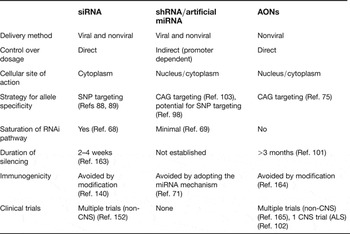
Saturation of the endogenous gene silencing complex occurs at high doses of RNAi (Ref. Reference Grimm68), whereas low doses reduce the efficiency of transduction, and might diminish the effectiveness of silencing throughout larger brain regions in vivo (Ref. Reference Boudreau and Davidson38); thus, dosage titration is another important consideration for therapy. Changes to the therapeutic dose can be accomplished by manipulating the amount and stability of vector delivered, the stability and efficiency of RNAi transport and processing, or the strength of the promoter (Ref. Reference Boudreau76). These are important considerations when choosing a silencing approach: integrated (lentiviral) or episomal (AAV) viral vectors are capable of sustained, long-term expression, whereas delivered siRNAs and AONs, although transient in their effects, have the advantage of allowing rapid discontinuation of expression in the event of toxicity. PolII-expressed artificial miRNAs represent an attractive compromise, offering the potential to lower the cellular expression of the effector without reducing the viral dose administered to cells (Ref. Reference Boudreau and Davidson38).
The duration of silencing varies from 2 to 4 weeks (siRNAs) to several months (AONs), and depends largely on the stability of the effector, as well as on the rate of cell division, the half-life of the protein and the extent of expression of the target gene (Ref. Reference Sah and Aronin102). Because AONs are not dependent on recognition by components of the endogenous gene silencing pathway to mediate their effects, they are more amenable to backbone modifications than siRNAs. Indeed, the incorporation of PNAs, LNAs and other modified nucleic acids has been shown to enhance AON silencing through improved stability and resistance to endonuclease degradation (Ref. Reference Gagnon75).
Perhaps the most important consideration, however, is the issue of optimised delivery. Although much success has been achieved in vitro using cationic lipid-mediated transfection (Ref. Reference Dessy and Gorman145), there is evidence to suggest that these reagents may be toxic in vivo, necessitating the development of more sophisticated methods for use in clinical trials. Therapies targeting components of the CNS face the added challenge of crossing the blood–brain barrier (Refs Reference Boudreau and Davidson38, Reference Dessy and Gorman145). This may be overcome through the use of viral vectors capable of transducing postmitotic neurons (Refs Reference Eberling146, Reference Naldini147), the efficacy of which has already been demonstrated in preclinical trials (Ref. Reference Dorn148). Strategies that make use of specific receptors [such as the use of rabies virus glycoprotein to target siRNA to neurons expressing nicotinic acetylcholine receptors (Ref. Reference Alvarez-Erviti149), or nanoparticles (Ref. Reference Agrawal150)] have also proved successful in preclinical studies and might hold promise for the delivery of gene silencing therapy to the CNS in humans. An additional consideration regarding delivery is the need to specifically and directly target affected areas of the brain, which could be accomplished through direct intrathecal or intraparenchymal administration of the therapeutics to affected regions (Refs Reference Sah and Aronin102, Reference Luo151). A promising development in this regard is the recent announcement by the CHDI Foundation of its collaboration with two companies – Medtronic and Alnylam – to develop an implantable infusion system capable of delivering anti-HTT siRNAs directly into the brains of HD patients (Ref. Reference Dessy and Gorman145).
Clinical applications
There are currently 14 active clinical trials involving RNAi for a range of conditions including age-related macular degeneration and cancers, although none involves the CNS (Ref. Reference Vaishnaw152). The studies make use of a wide variety of delivery approaches, from direct local injection of unmodified siRNAs to viral-mediated and systemic delivery. Preliminary data suggest mixed success, with a number of trials progressing through Phase I with minimal safety concerns and modest silencing efficacy, and some even showing potential for allele specificity. A small number of studies, aimed at developing treatment for wet age-related macular degeneration, have been discontinued, owing to concerns regarding the effectiveness of treatment (Ref. Reference Vaishnaw152).
AONs are currently being tested in a number of trials for conditions such as Duchenne muscular dystrophy and several cancers (www.clinicaltrials.gov). The results of an AON clinical study targeting apolipoprotein B have shown persistent gene silencing for up to 3 months after cessation of treatment: a reminder of the need to monitor the half life of silencing molecules, in order to be able to rapidly terminate drug exposure, should the need arise (Ref. Reference Kastelein101). The first clinical study of AONs in neurodegenerative disease (ALS) has recently been initiated (Ref. Reference Sah and Aronin102), and should provide valuable insights over the coming years into the optimum parameters required to safely and effectively silence disease-causing genes in the human CNS.
Research in progress and outstanding research questions
RNAi and AONs provide novel and promising approaches for the treatment of polyQ diseases, offering the potential to attenuate pathology through direct intervention at the mRNA level to suppress production of the disease-causing protein (Table 2). Preclinical studies have demonstrated the ability of both approaches to direct potent, sequence-specific silencing of a range of polyQ mutant proteins in vivo, resulting in amelioration of both neurotoxicity and behavioural abnormalities.
Comparison of RNAi- and AON-based gene silencing effectors

Allele-specific silencing is particularly relevant to diseases in which a loss of wild-type protein function is unlikely to be tolerated. Knockout data from SCA1 and SCA7 studies suggest the contribution of a loss of function to pathogenesis, which may necessitate the development of allele-specific approaches (Refs Reference Matilla53, Reference Jun54). Although gene knockdown and replacement therapy have been tested in SCA6 models in vitro, the necessity of retaining at least one functional CACNA1A suggests that SCA6, too, may be amenable to allele-specific silencing (Ref. Reference Jun54).
Practical considerations for allele-specific silencing targeting either SNPs linked to the mutant allele, or the CAG repeat itself, include selectivity for the target mRNA over other transcripts, degree of discrimination between wild-type and mutant alleles, dosage requirements for specific and selective silencing in vivo, and the number of target SNPs required to deliver allele-specific silencing to the majority of patients (Ref. Reference Sah and Aronin102). The recent discovery that a small number of polymorphisms may provide therapeutic targets for more than three quarters of the European HD patient population suggests that the design of SNP-based allele-specific RNAi may not be as laborious as was once thought (Ref. Reference Lombardi92). It remains to be seen, however, whether such results can be replicated for other polyQ diseases, although the availability of high-throughput sequencing technologies and vast amounts of SNP data through the HAPMAP project (http://hapmap.ncbi.nlm.nih.gov/) is likely to simplify the identification of discriminating SNPs in the future (Ref. Reference Scholefield and Wood45).
A key issue that remains to be addressed concerns the recent success of non-allele-specific silencing in HD and SCA3 – diseases in which knockout models have shown some evidence of a deleterious phenotype (Refs Reference Dragatsis, Levine and Zeitlin49, Reference Schmitt58). The results suggest that partial loss of wild-type polyQ proteins may be tolerated in vivo with minimal phenotypic consequences, raising the possibility of bypassing the technical challenges of allele-specific silencing in other diseases, in favour of the more straightforward total knockdown approach. To evaluate the prospect of non-allele-specific silencing in other polyQ diseases, a number of questions will need to be answered, pertaining to the threshold level of wild-type protein expression required to maintain cellular function, the presence of functionally redundant proteins, and the availability of human ‘models’ of loss of function of the disease gene. Improved animal models that more closely recapitulate the disease phenotype should aid in addressing at least some of these questions.
Optimising delivery methods and choice of effectors are likely to be the major considerations as gene silencing therapies for polyQ diseases progress towards clinical trials. However, thorough preclinical investigations that evaluate both specificity and selectivity in vivo, together with the results of upcoming RNAi- and AON-based clinical studies, should provide valuable data on the safest and most efficacious approaches to silencing.
Recent advances in the field of RNA-based therapeutics have led to the development of sophisticated mechanisms of silencing with vastly improved toxicity profiles. As RNAi- and AON-based gene silencing becomes increasingly feasible, it is likely that effective treatments for polyQ diseases will progress rapidly towards clinical application.
Acknowledgements and funding
The authors thank the reviewers for their valuable comments, and acknowledge Danielle Smith for a critical reading of the manuscript. L.W. is funded by the National Research Foundation (SA), the Harry Crossley Foundation, the University of Cape Town Research Council and the Commonwealth Scholarship Commission UK. Financial assistance from the National Research Foundation (NRF) of South Africa towards this research is hereby acknowledged. The opinions expressed and conclusions arrived at are those of the authors and are not necessarily to be attributed to the NRF.
Work in the M.J.A.W. laboratory is funded by the UK Medical Research Council, The Wellcome Trust, Parkinson's UK and Ataxia UK.