




No CrossRef data available.
Article contents
Phonological working memory and language development: What are the measures and what do they measure?
Published online by Cambridge University Press: 28 September 2017
Extract
In line with the recent trend in comparative analysis of different populations (see Friedmann & Rusou, 2015, as an example), Pierce, Genesee, Delcenserie, and Morgan (2017) present a comprehensive review of different language outcomes in populations that have received qualitatively and quantitatively different input during the first year of life, from enriched stimuli in bilingual situations to no stimuli at all in the case of children with profound hearing impairment. The claims derived from these data deserve some comment, however, and need some caveats about the measures used, which I will provide in the following with a brief discussion of complementing research and the presentation of some new data derived from the Bilingual Language Development (BiLaD) Project, a recent French/German collaboration studying bilingual populations with and without specific language impairment (SLI).
Information
- Type
- Commentaries
- Information
- Copyright
- Copyright © Cambridge University Press 2017
Footnotes
1. The BiLaD project grew out of COST IS0804 and is a collaboration of the University of Tours and three German institutions: University of Oldenburg, University of Bremen, and University of Education Heidelberg funded jointly by the German and the French research foundations (DFG and ANR).
2. Because the project was anchored in the COST Action IS0804, and the NWR and the SR task were constructed in accordance with the guidelines developed in this action, they are known as language impairment testing in multilingual settings (LITMUS) tasks; see Armon-Lotem, de Jong, and Meir (2015).
3. The results presented here are not quite “clean” as to enriched or delayed exposure. Simultaneous bilingual children in this group may have received enriched input whereas second language learning children in the group have experienced no second language input during their sensitive first year of life. In contrast, only very few children were of mixed marriages and a systematic exposure to the majority language usually occurred in kindergarten, not in the home, excluding the “enriching” language experience or true simultaneous bilingual children.
4. Similar observations were made by Délage, Monjauze, Hamann, and Tuller (Reference Délage, Monjauze, Hamann, Tuller, Gavarró and Freitas2008), who compared the spontaneous production of typically developing children of various ages to that of children with SLI, children with mild to moderate hearing impairment, and children with Rolandic epilepsy. Though the syntactic performance of children with SLI in many comparisons was similar to that of children with mild to moderate hearing impairment, the latter clearly outperformed the former in the production of genuine relative clauses as compared to the production of presentational relatives and clefts.
References
REFERENCES
Abed Ibrahim, L., & Hamann, C. (2017). Bilingual Arabic-German and Turkish-German children with and without language impairment: Comparing performance in sentence and nonword repetition tasks. In LaMendola, M. & Scott, J. (Eds.), Proceedings of the 41st annual Boston University Conference on Language Development (pp. 1–17). Somerville, MA: Cascadilla Press.Google Scholar
Armon-Lotem, S., de Jong, J., & Meir, N. (Eds.) (2016). Assessing multilingual children: Disentangling bilingualism form language impairment. Bristol: Multilingual Matters.Google Scholar
Chiat, S., & Polišenská, K. (2016). A framework for crosslinguistic nonword repetition tests: Effects of bilingualism and socioeconomic status on children's performance. Journal of Speech, Language and Hearing Research. Advance online publication.CrossRefGoogle Scholar
Délage, H., Monjauze, C., Hamann, C., & Tuller, L. (2008). Relative clauses in atypical acquisition of French. In Gavarró, A. & Freitas, M. J. (Eds.), Language acquisition and development: Proceedings of GALA 2007 (pp. 166–176). Newcastle: Cambridge Scholars.Google Scholar
dos Santos, C., & Ferré, S. (2016). A nonword repetition task to assess bilingual children's phonology. Language Acquisition. Advance online publication. doi:10.1080/10489223.2016.1243692
Google Scholar
Engel de Abreu, P., Baldassi, M., Puglisi, M., & Befi-Lopes, D. (2013). Cross-linguistic and cross-cultural effects on verbal working memory and vocabulary: Testing language minority children with an immigrant background. Journal of Speech, Language and Hearing Research, 56, 630–642.CrossRefGoogle Scholar
Fleckstein, A., Prévost, P., Tuller, L., Sizaret, E., & Zebib, R. (2016). How to identify SLI in bilingual children: A study on sentence repetition in French. Language Acquisition. Advance online publication. doi:10.1080/10489223.2016.1192635
Google Scholar
Friedmann, N., & Gvion, A. (2003). Sentence comprehension and working memory limitation in aphasia: A dissociation between semantic-syntactic and phonological reactivation. Brain and Language, 86, 23–39.CrossRefGoogle ScholarPubMed
Friedmann, N., & Rusou, D. (2015). Critical period for first language: The crucial role of input during the first year of life. Current Opinion in Neurobiology. Advance online publication. doi:10.1016/j.conb.2015.06.003
CrossRefGoogle ScholarPubMed
Grimm, A., Ferré, S., dos Santos, C., & Chiat, S. (2014). Can nonwords be language independent? Cross-linguistic evidence from monolingual and bilingual acquisition of French, German and Lebanese. Paper presented at the International Association for the Study of Child Language, Amsterdam.Google Scholar
Lein, T., Hamann, C., Rothweiler, M., Abed Ibrahim, L., Chilla, S., & San, H. (2016). SLI in bilinguals: Testing complex syntax and semantics in German. In Stringer, D., Garrett, J., Halloran, B., & Mossman, S. (Eds.), Proceedings of 13th Generative Approaches to Second Language Acquisition Conference (GASLA 2015) (pp. 124–135). Somerville, MA: Cascadilla Proceedings Project.Google Scholar
Pierce, L. J., Genesee, F., Delcenserie, A., & Morgan, G. (2017). Variations in phonological working memory: Linking early language experiences and language learning outcomes. Applied Psycholinguistics, 38, 1265–1302.CrossRefGoogle Scholar
Szterman, R., & Friedmann, N. (2015). Insights into the syntactic deficit of children with hearing impairment from a sentence repetition task. In Hamann, C. & Ruigendijk, E. (Eds.), Language acquisition and development: Proceedings of GALA 2013 (pp. 492–504). Newcastle: Cambridge Scholars.Google Scholar
Ullmann, M. T., & Pierpoint, E. I. (2005). Specific language impairment is not specific to language: The procedural deficit hypothesis. Cortex, 41, 399–433.CrossRefGoogle Scholar
Zebib, R., Hamann, C., Prévost, P., Abed Ibrahim, L., & Tuller, L. (2016). Syntactic complexity, verbal working memory, and executive function in bilingual children with and without SLI: A sentence repetition study in France and in Germany. Paper presented at the German Linguistics Society, Konstanz, Germany.Google Scholar
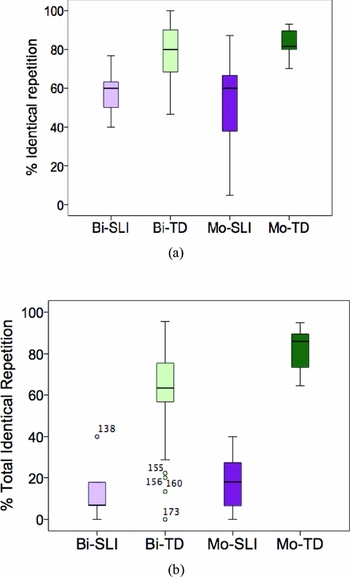
Figure 1. Performance in (a) German NWR and (b) German SR (Zebib et al., 2016).

Table 1. Participants
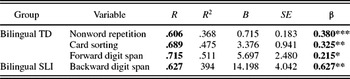
Table 2. Stepwise regression analysis of the factors explaining the variance in global sentence repetition performance
 You have
Access
- 4
- Cited by
In line with the recent trend in comparative analysis of different populations (see Friedmann & Rusou, Reference Friedmann and Rusou2015, as an example), Pierce, Genesee, Delcenserie, and Morgan (Reference Pierce, Genesee, Delcenserie and Morgan2017) present a comprehensive review of different language outcomes in populations that have received qualitatively and quantitatively different input during the first year of life, from enriched stimuli in bilingual situations to no stimuli at all in the case of children with profound hearing impairment. The claims derived from these data deserve some comment, however, and need some caveats about the measures used, which I will provide in the following with a brief discussion of complementing research and the presentation of some new data derived from the Bilingual Language Development (BiLaD) Project,Footnote 1 a recent French/German collaboration studying bilingual populations with and without specific language impairment (SLI).
The merit of the article is that bringing together results on diverse populations allows not only comparison of language outcome in case of delay, disruption, degradation and enrichment of the language experience but also speculation about the impact of early language stimuli of any kind and about compensatory cognitive mechanisms, that is, speculation about the nature of the sensitive period for language acquisition. Lags in development and deficits in language outcome are traced back to the quality/quantity of the input received in the first year of life, which, as Pierce et al. point out, usually is identified as the sensitive period for phonological development. Derived from this observation, quite an exciting hypothesis is put forward, namely, that it is phonological working memory (PWM) that develops during this period and supports subsequent language development. The formulation used by the authors is more careful and only postulates that “language exposure that happens during the sensitive period sets up a reciprocal relationship between the building blocks of language and PWM” (emphasis by CH).
In order to arrive at this conclusion, Pierce et al. crucially compare language measures and measures of PWM across populations and at different points of development and find that PWM abilities in most cases predict language abilities. This idea and this kind of evidence is exiting since the first year of life has been identified not only as the sensitive period for phonological development but also as the critical period for the development of syntax (see Friedmann & Rusou, Reference Friedmann and Rusou2015). The latter authors investigate performance in the production and comprehension of wh-questions, complements, and relative clauses and show important deficits in children with profound hearing impairment who have received hearing aids or cochlear implants after 8 months of life. If Friedmann and Rusou's claim is true and the critical period for syntax is the first year of life, the question remains what exactly it is that develops during the first year and can possibly subserve the acquisition of syntax? The answer suggested by Friedmann and Rusou (Reference Friedmann and Rusou2015, p. 5) briefly and rather vaguely points to phonological development. The answer given in the present article is more specific and closely links processing and computation: it is PWM helped along by the acquisition of phonological representations. This is an exciting research perspective. However, assembling so many comparisons on one large canvas often leads to a broad brushstroke, and this article is no exception. I therefore want to add some caveats for the interpretation of the results on such cross-population comparisons and for the measures used for language and PWM assessment.
As stated above, crucial arguments for this idea come from a close comparison of PWM and language abilities in different populations. It is here that the broad brush on the large canvas does not provide enough detail. First, comparisons often are only indirect and arrived at through triangulation, that is, comparison of group A with typically developing monolinguals (monolingual norms in standard language tests) and of group B with such monolingual norms. As the standard tests used in the different studies are not always the same, such a comparison can be indicative only. Second, the measures for PWM also differ across studies, usually including some digit span measure, crucially a nonword repetition (NWR), and often also a sentence repetition (SR) task, but the properties of these latter two tasks, which can widely differ, are not further specified. This constitutes a problem for interpretation of comparative results, which I will focus on in the following.
Chiat and Polišenská (Reference Chiat and Polišenská2016, p.1) argue in a review of differently constructed NWRs that children's abilities in the repetition of nonwords is dependent on “the phonological proximity of the non-words to real words in the language” so that a relation of performance in NWR and vocabulary development in monolingual children can be expected, especially if the tasks contain pseudowords and real morphemes of a language. This relation is supported by the findings of Engel de Abreu, Baldassi, Puglisi, and Befi-Lopes (Reference Engel de Abreu, Baldassi, Puglisi and Befi-Lopes2013), who report that bilinguals perform like monolinguals in such tasks once vocabulary is controlled for. This relation is even more important if socioeconomic status (SES) of the participants’ families is factored in: morphemes from sophisticated vocabulary, which are sometimes built into an NWR task as items containing low phonotactic probabilities, might be more familiar for children with a higher SES background. Not only will there be a confound with the language elements in the tests, but there could also be a confound of factors such as bilingualism with SES. Accordingly, Chiat and Polišenská (Reference Chiat and Polišenská2016) report on cross-linguistic (CL) NWR tasks that are designed to be compatible with different languages in incorporating one to five syllables of a consonant–vowel (CV) structure and using consonants that are the most frequent ones cross-linguistically. Comparison of monolingual and bilingual children with different SES showed that vocabulary knowledge correlated to lingual status as well as SES, whereas performance on the CL NWR task showed the same memory effects across lingual status and SES. Note that the CL-NWR is a memory task in the sense that PWM is measurable through the varying number of syllables (up to five) in the nonwords. Recently, Grimm, Ferré, dos Santos, and Chiat (Reference Grimm, Ferré, dos Santos and Chiat2014) in the BiLaD project constructed and applied an NWR taskFootnote 2 in which nonwords have maximally three syllables. Instead of increasing numbers of syllables, syllabic complexity was manipulated using quasi-universal onset and coda options. It turned out that in this task, bilinguals and monolinguals performed alike, whereas children with SLI (bilingual and monolingual) performed significantly below their peers (compare Figure 1a) and had significantly more difficulties with bisyllabic nonwords containing complex syllables with consonant clusters than with trisyllabic CVCVCV nonwords (see Abed-Ibrahim & Hamann, Reference Abed Ibrahim, Hamann, LaMendola and Scott2017, for the evaluation of the German task, and dos Santos & Ferré, Reference dos Santos and Ferré2016, for an evaluation of the French NWR). As Chiat and Polišenská (Reference Chiat and Polišenská2016) demonstrate, use of different tests can therefore lead to widely different outcomes; the BiLaD results show that manipulation of nonword properties can focus the task on the availability of phonological representations making it more of a linguistic than a PWM measure. Comparisons of populations therefore have to include more information about the properties of the tasks, and it has to be evaluated whether a specific task measures language knowledge or PWM or contains possible confounds with vocabulary knowledge or SES.
Performance in (a) German NWR and (b) German SR (Zebib et al., Reference Zebib, Hamann, Prévost, Abed Ibrahim and Tuller2016).
The same is true for SR tasks, which, depending on their construction and manner of application, can be used either as working memory and PWM measures or as measures for syntactic competence. Szterman and Friedmann (Reference Szterman, Friedmann, Hamann and Ruigendijk2015) use a carefully constructed SR task that measures knowledge of Wh-movement and other syntactically complex structures, not vocabulary or PWM, by using structurally minimal pairs with the same vocabulary and excluding the use of the phonological loop (count to three before starting the repetition). They describe the performance of hearing impaired children with hearing aids or cochlear implants and identify different profiles: the majority of the children has a syntactic deficit (wh-movement); two of the children clearly have a PWM deficit in that they cannot repeat any of the sentences, even syntactically simple ones, but comprehended even object relatives when presented in writing. It seems quite clear that any SR task requires PWM and working memory capacity but, crucially, also parsing abilities, that is, knowledge of morphosyntactic structures. Therefore, a correlation of performance in SR tasks and in standard language tests can only be expected. If, in contrast, SR tasks are constructed with syntactic complexity in mind and a simple repetition with the aid of PWM is no longer possible, strong correlations with PWM can no longer be found. This is the case for the French and German versions of the BiLaD-SR task (see Fleckstein, Prévost, Tuller, Sizaret, & Zebib, Reference Fleckstein, Prévost, Tuller, Sizaret and Zebib2016; Lein et al., Reference Lein, Hamann, Rothweiler, Abed Ibrahim, Chilla, San, Stringer, Garrett, Halloran and Mossman2016) constructed in parallel and used to compare the syntactic performance of bilingual typically developing and bilingual children with SLI. In this project, not only performance in SR and in NWR (see above) was investigated but also measures of short-term memory and complex working memory such as forward and backward digit span and of other executive functions such as shifting (card sorting) were included in the test battery. In a preliminary study on 105 bilingual children (24 in this group with a diagnosis of SLI; see Table 1 for participants), we found that SR, NWR but also STM, complex working memory, shifting, and a visual-spatial memory task could distinguish children with SLI from typically developing bilinguals, see Figure 1b for SR performance. We therefore wanted to know whether performance in SR is due to language deficits or deficits in executive function and working memory in the children with SLI and performed a stepwise regression analysis. As shown in Table 2, we found that in typical bilinguals, performance in NWR explains 37% of the variance in the SR task, an additional 11% is explained by performance in shifting (card sorting), and only 4% is explained by STM (forward digit span). None of these factors was relevant in the bilingual population with SLI: complex working memory (backward digit span) alone accounts for 40% of the variance (Zebib, Hamann, Prévost, Abed Ibrahim, & Tuller, Reference Zebib, Hamann, Prévost, Abed Ibrahim and Tuller2016).
Participants
Note: Based on Zebib et al. (Reference Zebib, Hamann, Prévost, Abed Ibrahim and Tuller2016). TD, typically developing; SLI, specific language impairment; L1, first language; L2, second language.
a Length of exposure was a minimum of 12 months and showed the same variation in France and in Germany; both populations included 2 L1 and early L2 children in comparable proportions; in Germany, the children with SLI were among the older children.
Stepwise regression analysis of the factors explaining the variance in global sentence repetition performance
Note: Based on Zebib et al. (Reference Zebib, Hamann, Prévost, Abed Ibrahim and Tuller2016). TD, typically developing; SLI, specific language impairment;
*p < .05. **p < .01. ***p < .001.
These results are relevant for an evaluation of the hypotheses put forward by Pierce et al. from several points of view. First, it suggests a close connection of phonological and syntactic competence in typical children that cannot fully be explained by PWM. Especially the “memory” component as measured by the forward digit span does not seem to play such a big role, whereas a store of phonological representations or fast processing of complex phonological possibilities might be decisive. Second, even if both, bilinguals and children with SLI, suffer from a deficit in PWM (second language children due to late exposure and children with SLI due to neurocognitive impairments, see Pierce et al., Reference Pierce, Genesee, Delcenserie and Morgan2017; Ullman & Pierpoint, Reference Ullmann and Pierpoint2005), there are clear differences in language development.Footnote 3 This is the more evident if the SR structures that are most difficult for (bilingual) children with SLI are examined: these are wh-questions, finite complement, and object relative clauses. In other words, like Szterman and Friedmann (Reference Szterman, Friedmann, Hamann and Ruigendijk2015) for children with hearing impairment, we identify a syntactic problem with complex constructions for children with SLI.Footnote 4 These results, like the results from Szterman and Friedmann (Reference Szterman, Friedmann, Hamann and Ruigendijk2015), show that compensatory mechanisms are, to say the least, slow to achieve the same proficiency as observed in typical children. However, it must be noted that complex working memory is the most important factor for bilinguals with SLI, not for typical bilinguals. This indicates that the nature of the impairment in SLI cannot fully be explained by a deficit in PWM (whatever its cause) and a processing component suggested by Friedmann and Gvion (Reference Friedmann and Gvion2003) comes to mind: syntactic working memory. Note also that there is no relation whatsoever with performance in the NWR in the children with SLI. Third, and the data show this very clearly, some NWRs and SRs measure language performance, not PWM.
With these caveats in mind, the comparative results presented by Pierce et al. lose some of their sharpness. The questions raised, however, and the hypotheses about the crucial contribution of PWM to language development and about a sensitive period for its development remain provoking and will stimulate fruitful further investigation into the nature of PWM, its neurological correlates, and its relation to higher language skills such as complex syntax.