Introduction
The availability of specific methods of suicide can affect secular trends in method-specific suicides as well as overall suicides (Yip et al., Reference Yip, Caine, Yousuf, Chang, Wu and Chen2012). This was of particular importance with respect to gassing in the 20th century in the UK (Kreitman, Reference Kreitman1976; Thomas and Gunnell, Reference Thomas and Gunnell2010; Yip et al., Reference Yip, Caine, Yousuf, Chang, Wu and Chen2012). After carbon monoxide gas became widely available for domestic use in the first half of the 20th century, there was a large increase in suicides by gassing in the UK (Kreitman, Reference Kreitman1976; Thomas and Gunnell, Reference Thomas and Gunnell2010; Thomas et al., Reference Thomas, Chang and Gunnell2011). The replacement of coal gas with natural gas between the late 1950s and early 1970s led to a gradual reduction in the carbon monoxide content of the domestic gas, which in turn was followed by a steady and prominent decrease in gassing suicide rates and a 30% drop in overall suicide (Kreitman, Reference Kreitman1976). The magnitude of the decline in overall suicide rates varied by gender and age, but was of sufficient size to reduce overall suicide rates in all gender- and age-subgroups (Kreitman, Reference Kreitman1976). After the reduction of domestic gas suicides, there was a gradual increase in deaths from car exhaust gas (Yip et al., Reference Yip, Caine, Yousuf, Chang, Wu and Chen2012). Car exhaust gas was a more common method for males, particularly those middle-aged (Routley, Reference Routley2007). Since 1993, environmentally motivated legislation has required the fitting of catalytic converters on new cars in the UK, reducing the level of carbon monoxide in car exhaust fumes. Since there was a reduction in gas poisoning suicides after this legislation, catalytic converters have been considered largely responsible for the recent fall in this method-related suicide rate (Routley, Reference Routley2007). There was also a reduction in overall suicides, though the extent of this varied across demographic groups (Amos et al., Reference Amos, Appleby and Kiernan2001). Similar findings on secular trends in suicides due to domestic gas or car exhaust gas have also been reported in Australia, Denmark, Switzerland and USA (Clarke and Lester, Reference Clarke and Lester1987; Burvill, Reference Burvill1990; Lester, Reference Lester1990b; Routley and Ozanne-Smith, Reference Routley and Ozanne-Smith1998; Mott et al., Reference Mott, Wolfe, Alverson, Macdonald, Bailey, Ball, Moorman, Somers, Mannino and Redd2002; Nordentoft et al., Reference Nordentoft, Qin, Helweg-Larsen and Juel2006; Thomsen and Gregersen, Reference Thomsen and Gregersen2006; Routley, Reference Routley2007; Hepp et al., Reference Hepp, Ring, Frei, Rössler, Schnyder and Ajdacic-Gross2010; Azrael and Miller, Reference Azrael, Miller, O'Connor and Pirkis2016).
In Japan, there are only two reports on secular trends in suicides due to domestic gas or car exhaust gas inhalation (Lester and Abe, Reference Lester and Abe1989a, Reference Lester and Abe1989b). Lester and Abe examined secular trends in domestic gas suicides from 1969 to 1982 (Lester and Abe, Reference Lester and Abe1989b). Their results showed that suicide rates for domestic gas increased until the early 1970s when domestic gas became less toxic in Japan, after which its use for suicide dropped dramatically (Lester and Abe, Reference Lester and Abe1989b). An investigation of secular trends in car exhaust suicide rates in Japan between 1965 and 1982 indicated that such suicides increased as car ownership became more common (Lester and Abe, Reference Lester and Abe1989a). However, after significant strengthening of standards for carbon monoxide content in car exhaust gas in Japan in the 1970s, car exhaust gas suicide rates leveled off (Lester and Abe, Reference Lester and Abe1989a).
To date, previous research in Japan has not assessed gender- and age-specific time trends in suicide mortalities due to domestic gas and car exhaust gas during the period of detoxification for these gases. Consequently, we examined the changing pattern of suicides due to domestic and car exhaust gas inhalation by gender and age in Japan between 1968 and 1994. In addition, we explored the possibility of method substitution by comparing time trends in gassing suicides with those of suicides by other methods, as well as investigating the effect of gassing suicides on overall suicides.
Methods
Data sources
Mortality data between 1968 and 1994 were obtained from the Vital Statistics of Japan and included information on the number of deaths from suicide by gender, age (5-year age bands) and the underlying cause of death (Ministry of Health Labour and Welfare, 1999). Mid-year population estimates by gender and in 5-year age bands for Japan were provided by the Statistics Bureau, Ministry of Internal Affairs and Communications in Japan (Statistics Japan, 2008). Past research from England, Finland and Taiwan has shown that suicide mortality is often under-estimated and that the most commonly assigned cause of death for ‘missed’ suicides is deaths of undetermined intent (‘undetermined death’) (Ohberg and Lonnqvist, Reference Ohberg and Lonnqvist1998; Chang et al., Reference Chang, Sterne, Lu and Gunnell2010; Gunnell et al., Reference Gunnell, Bennewith, Simkin, Cooper, Klineberg, Rodway, Sutton, Steeg, Wells and Hawton2013). Thus, we included these deaths in our analyses, despite no previous Japanese research to support the use of undetermined intent deaths. To identify the method of suicide, the underlying cause of death according to ICD-8 or 9 (international classification of diseases, 8/9th revision) was used. The ICD-8/9 categories ‘E950 to E959’ and ‘E980 to E989’ were classified as a suicide and undetermined death, respectively. Since E959 and E989 in ICD 8/9 were labelled as ‘late effects of self-inflicted injury’ and ‘late effects of injury, undetermined whether accidentally or purposely inflicted’ and the underlying suicide method was not assessed, these codes were excluded from the present analysis. ‘Domestic gas’ suicides were identified using the codes E951/E981 (Suicide or undetermined death by gases in domestic use). There is no specific code for ‘Car exhaust gas’ suicide in ICD-8/9 and cases were identified using the codes E952/E982 (suicide or undetermined death by other gases and vapors), in accordance with previous research in Japan and other countries (Lester and Abe, Reference Lester and Abe1989a; Burvill, Reference Burvill1990). Suicides and undetermined deaths coded other than E951, E952, E981 and E982 were analysed as ‘Non-gases’ cases. In addition, when proportion of suicide methods in overall suicides was calculated, ‘Non-gases’ suicides were divided into seven groups: ‘Poisoning’ (E950, E980), ‘Hanging’ (E953, E983), ‘Drowning’ (E954, E984), ‘Cutting’ (E956, E986), ‘Jumping’ (E957, E987) and ‘other means’ (E955, E958, E985, E988).
Data on suicide victims 14 years old or younger were not included in this study and thus age was divided into four groups: 15–24, 25–44, 45–64 and 65+ years. Age-standardised suicide rates by gender and method used within each of the four age groups were calculated using the world population structure as standard (Ahmad et al., Reference Ahmad, Boschi-Pinto, Lopez, Murray, Lozano and Inoue2001). Rates are per 100 000 individuals per year. In Japan, classification of cause-of-death changed from ICD-7 to ICD-8 in 1968 and from ICD-9 to ICD-10 in 1995. From ICD-8, deaths from injury undetermined whether accidental or purposely inflicted were included in the ICD. In order to use these deaths in this study, we chose 1968 as the first year for our time series analysis. Since the code for domestic gas suicides was deleted from ICD-10, we chose 1994 as the final year. In addition, to provide secular trends in unemployment rates for males aged 15 years or over in Japan during the research period, we obtained data on average annual unemployment rates from the Statistics Bureau, Ministry of Internal Affairs and Communications in Japan (Statistics Japan, 2017).
Statistical methods
To analyse secular trends in suicide rates according to gender, age and method of suicide, we performed a joinpoint regression analysis, which allows for the identification of the calendar year (the joinpoint) in which statistically significant abrupt changes in temporal trends occurred (Kim et al., Reference Kim, Fay, Feuer and Midthune2000). A maximum of five joinpoints is allowed in the default setting. An annual percentage change (APC) and the corresponding 95% confidence intervals were then computed for each detected trend. Since there were no suicides by car exhaust gas for males aged 65 years or above in 1971 and since joinpoint regression analyses cannot process data with a dependent variable of 0, we analysed car exhaust gas suicide rates for males aged 65 years or above between 1972 and 1994. We used the Joinpoint Regression Program, Version 4.3.1.0 (National Cancer Institute, Bethesda, Maryland, USA, http://surveillance.cancer.gov/joinpoint/). All other statistical analyses were performed using Stata statistical software, version 14.2, for Macintosh (StataCorp, College Station, TX, USA).
Results
Distribution of suicide methods
The numbers of suicides and undetermined deaths during the research period in Japan were 35 740 and 3354 for males aged 15–24 years, 116 440 and 10 806 for males aged 25–44 years, 117 661 and 12 037 for males aged 45–64 years, 65 080 and 6010 for males aged 65+ years, 20 028 and 1385 for females aged 15–24 years, 54 411 and 3675 for females aged 25–44 years, 61 105 and 4060 for females aged 45–64 years, and 65 080 and 6010 for females aged 65+ years, respectively.
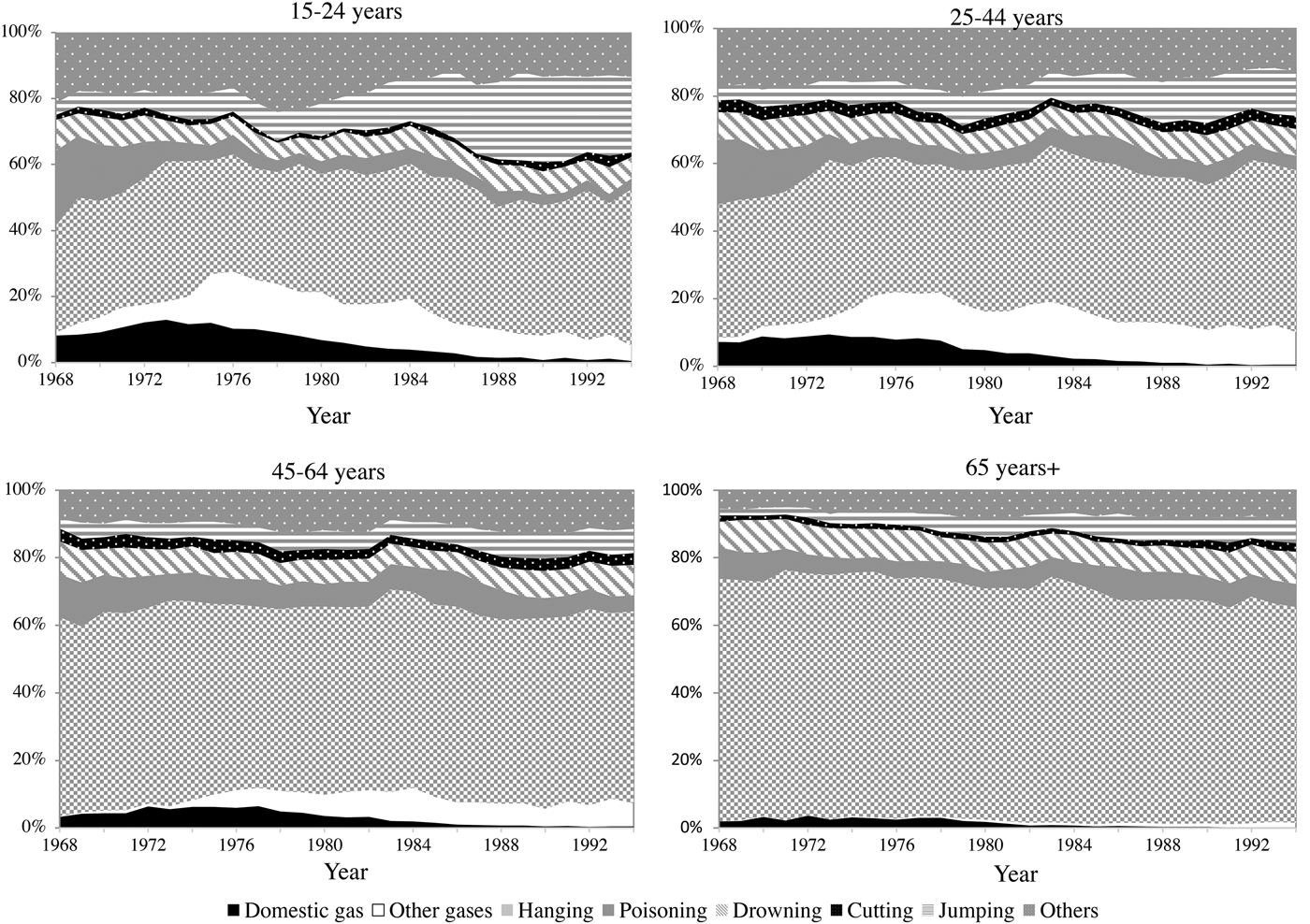
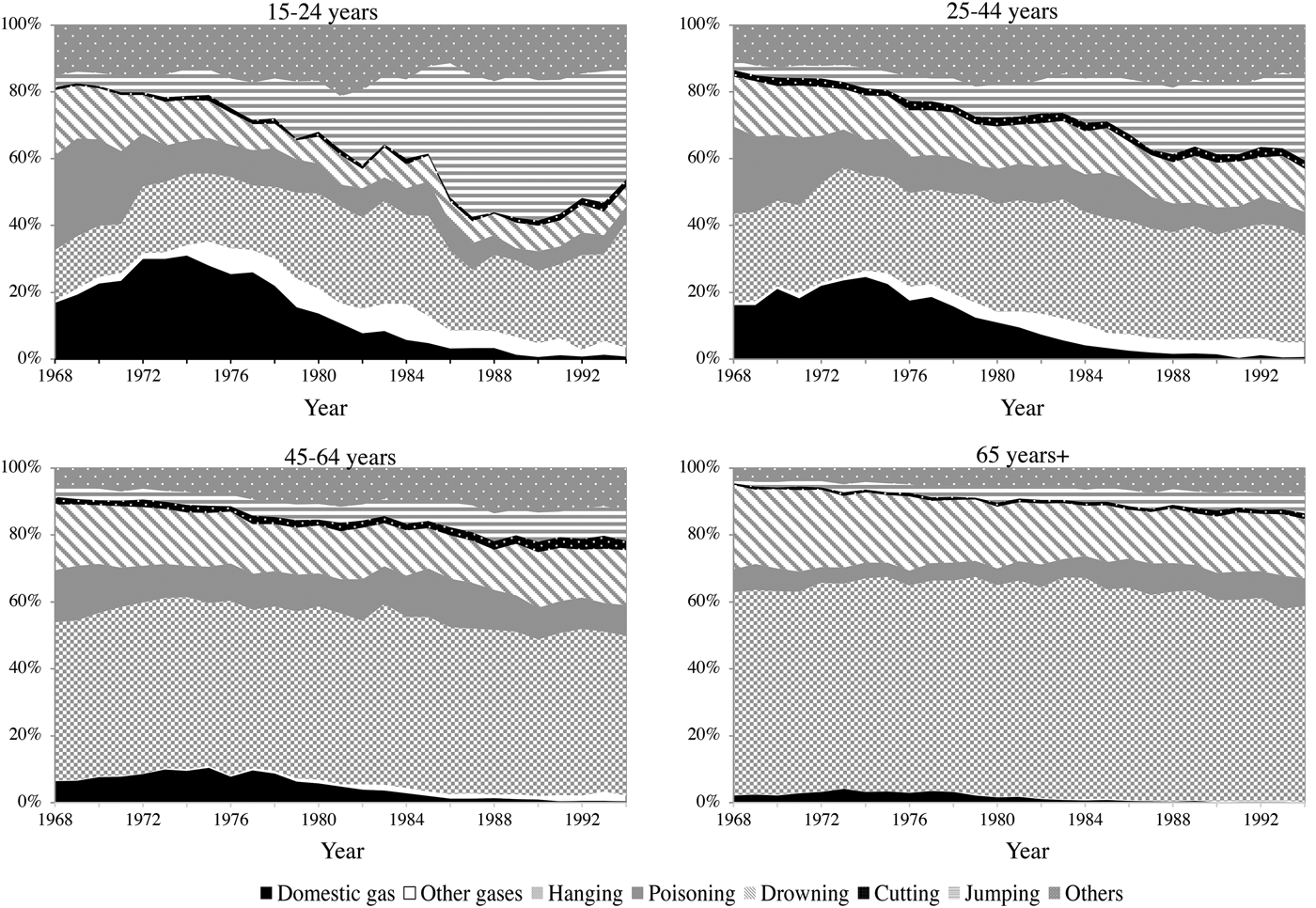
Distribution of suicide methods by age in Japan between 1968 and 1994 are shown in Figs 1, 2 for males and females, respectively. Regardless of gender and age, the proportion of domestic gas suicides increased from 1968 to the early 1970s, peaked in the mid-1970s and then decreased to a very low proportion (under 1.0%) in 1994. The proportion of domestic gas suicides in the mid-1970s was about 30% for females aged 15–24 years and about 20% for females aged 25–44 years. For males aged 15–24 and 25–44 years, and females aged 45–64 years, it was about 10%. Finally, for males aged 45–64 years and males and females aged 65+ years, it was about 6 and 4%, respectively. Concerning car exhaust gas suicides, the proportion was very low in 1968 (0.1–1.3%), regardless of gender and age. For males aged 15–24 years, the proportion of car exhaust gas suicides peaked at 17.3% in 1976, and then decreased to 4.6% in 1994. For males aged 25–44 years, the proportion peaked at 16.0% in 1983 and then decreased to 9.7% in 1994. For males aged 45–64 years, the proportion peaked at 10.0% in 1984 and then decreased to 6.9% in 1994. For females aged 15–24 years, it peaked at 10.8% in 1984 and then decreased to 2.7% in 1994. For females aged 25–44 years, it peaked at 6.6% in 1983 and then decreased to 4.4% in 1994. For males aged 65+ years and females aged 45–65 and 65+ years, the proportions of car exhaust gas suicides remained low throughout the research period.
Distribution of suicide methods by age for males in Japan, 1968–1994.

Distribution of suicide methods by age for females in Japan, 1968–1994.

Trends in domestic gas suicides and car exhaust gas suicides for males
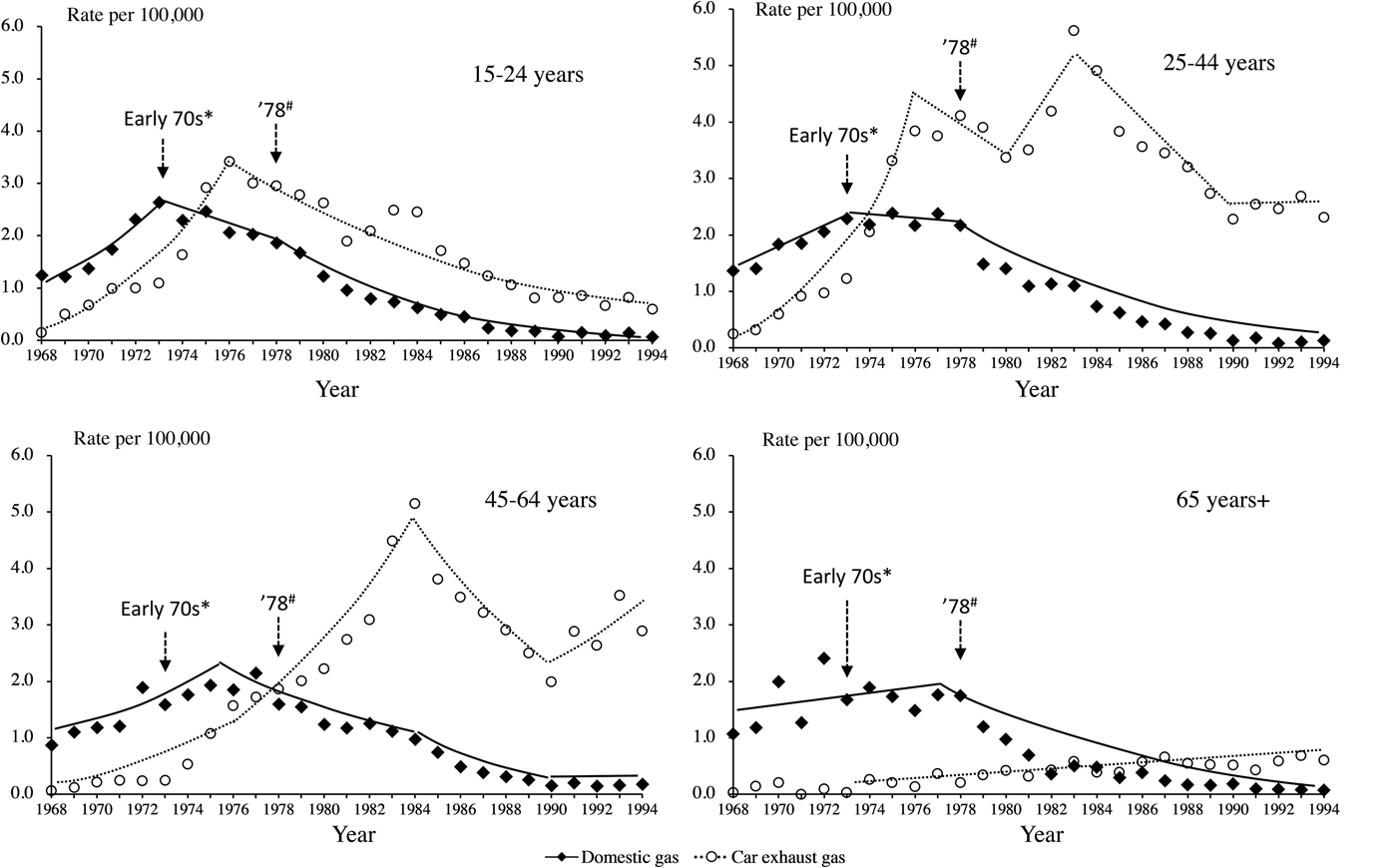
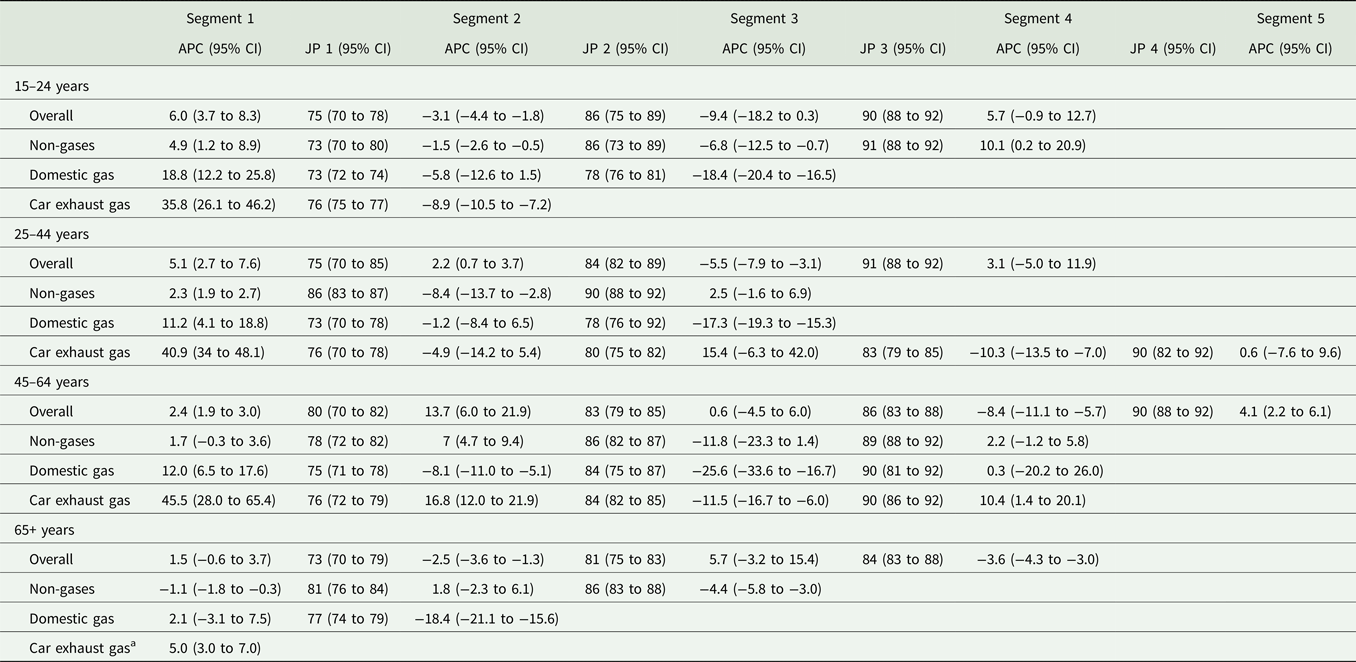
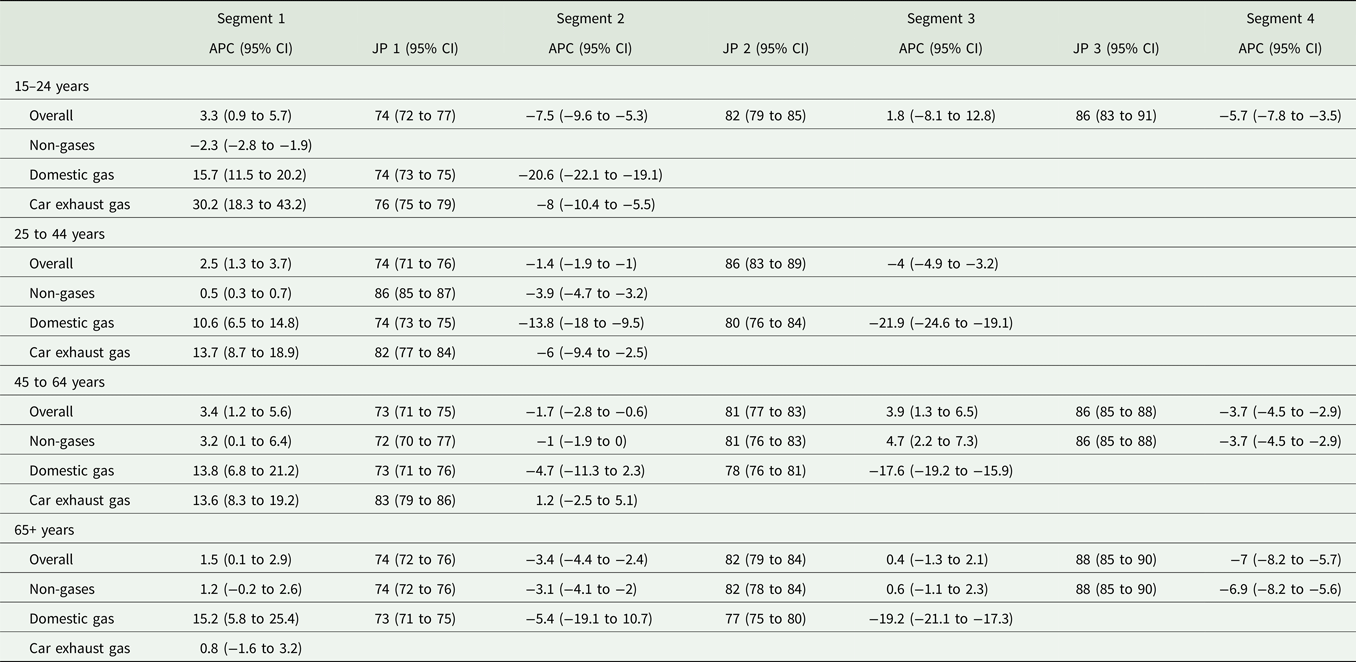
The results of the joinpoint regression analyses for trends in age-standardised suicide rates due to domestic gas and car exhaust gas by age for males are shown in Fig. 3 and Table 1. Regardless of age, suicide rates due to domestic gas for males increased between 1968 and the early/mid-1970s, after which they decreased to very low rates (under 0.2 per 100 000 in the 1990s). The peak values of domestic gas suicide rates for the four age groups ranged from 2.1 per 100 000 to 2.6. Concerning suicide rates due to car exhaust gas for males, secular trends varied according to age. For males aged 15–24 years, car exhaust gas suicide rates increased sharply between 1968 and 1976, and then decreased to about 1.0 per 100 000 in the 1990s. The peak rate was 3.4 per 100 000 in 1976. For males aged 25–44 years, the rate increased sharply between 1968 and 1976, decreased from 1976 to 1980, increased sharply again between 1980 and 1983, and then decreased again from 1983 to 1990, after which it plateaued between 1990 and 1994. The peak rate was 5.6 per 100 000 in 1983. For males aged 45–64 years, the rate increased sharply between 1968 and 1984 and then decreased from 1984 to 1990, following an increase between 1990 and 1994. The rate in the peak year, 1984, was 5.2 per 100 000. For males aged 65+ years, an increasing trend in suicide rates due to car exhaust gas was observed throughout the research period, although the value was low (under 0.7 per 100 000).
Age-standardised suicide rates due to domestic gas and car exhaust gas by age for males in Japan, 1968–1994, with line segments from joinpoint regression models.

Summary of the Joinpoint Analyses for trends in age-standardised suicide rates by age and methods used, for Japanese men aged 15 or above, 1968–1994

APC, Annual Percent Change; JP, Joinpoint.
a The mortality rates between 1972 and 1994 were analysed.
Trends in domestic gas suicides and car exhaust gas suicides for females
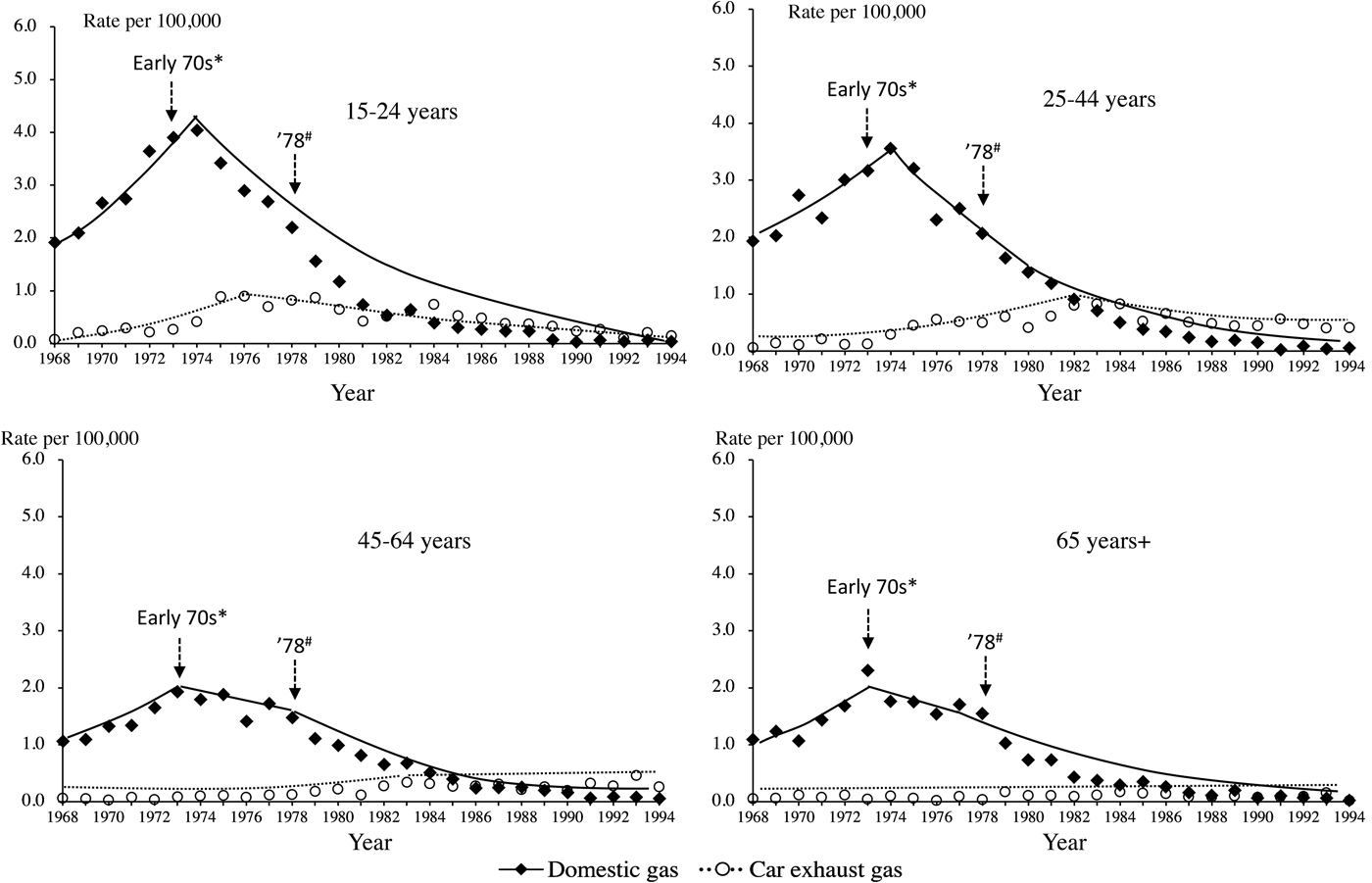
The results of the joinpoint regression analyses for trends in age-standardised suicide rates due to domestic gas and car exhaust gas by age for females are shown in Fig. 4 and Table 2. As was the case with males, regardless of age, suicide rates due to domestic gas for females increased between 1968 and the early/mid-1970s, after which they decreased to very low values (under 0.2 per 100 000 in the 1990s). In the peak years, the domestic gas suicide rate for females aged 15–24 years was the highest of the four age groups (4.0 per 100 000) and the rate for females aged 25–44 years was the second highest (3.6). The peak rates for females aged 45–64 and 65+ years were 1.9 and 2.3, respectively. Suicide rates due to car exhaust gas for females during the research period were much lower than those for domestic gas. The rate for females aged 15–24 years was 0.9 per 100 000 when it reached its peak in 1976. The rates for females aged 25–44 and 45–64 years were 0.8 and 0.3, respectively, when they reached their peaks in 1983. For females aged 65+ years, suicide rates due to car exhaust gas remained relatively flat throughout the research period (under 0.2 per 100 000).
Age-standardised suicide rates due to domestic gas and car exhaust gas by age for females in Japan, 1968–1994, with line segments from joinpoint regression models.

Summary of the Joinpoint Analyses for trends in age-standardised suicide rates by age and methods used, for Japanese women aged 15 or above, 1968–1994

APC, annual per cent change; JP, joinpoint.
Trends in overall suicides and non-gases suicides
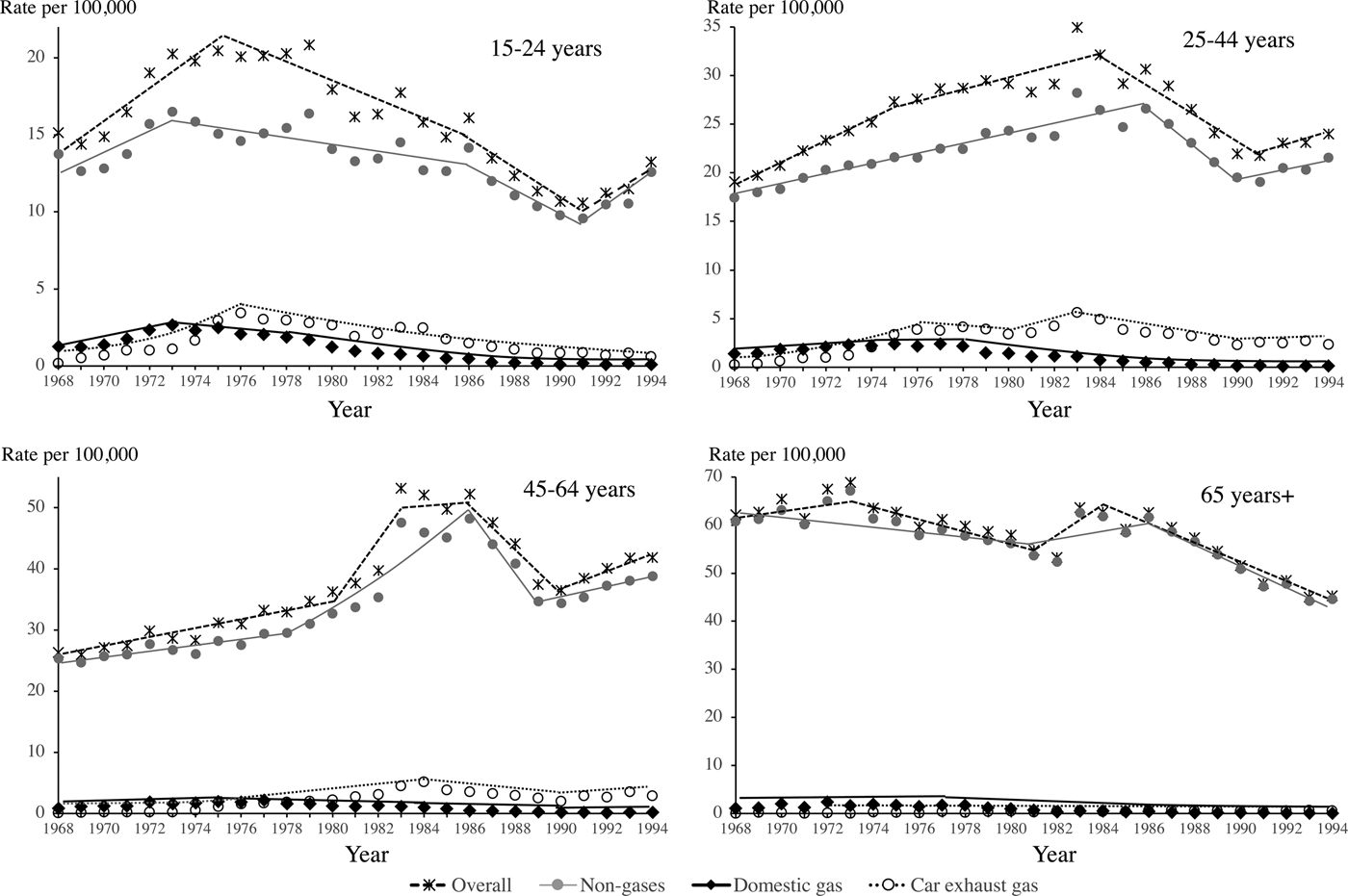
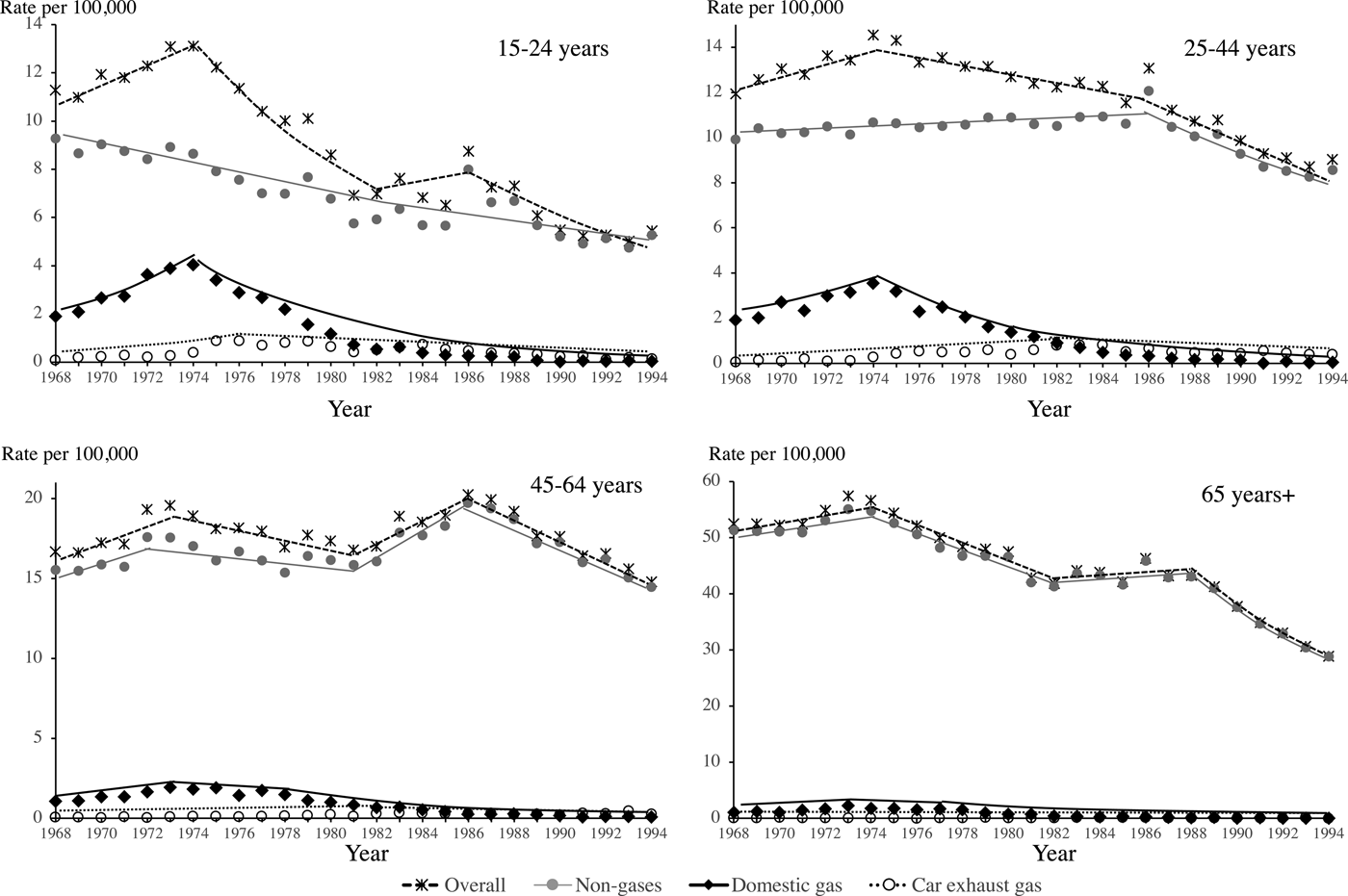
The results of the joinpoint regression analyses for trends in age-standardised suicide rates by age and method used are presented for males in Fig. 5 and Table 1 and for females in Fig. 6 and Table 2, respectively (Fig. 5, 6 shown in the Appendix). Secular trends in overall and non-gases suicide rates during the research period varied according to gender and age. For females aged 15–24 years, the suicide rate by non-gases continued to decrease throughout the research period, while the trend in overall suicide rates in this gender/age group changed from an increase to a decrease in the mid-1970s in the same way as the suicide rates by domestic gas and car exhaust gas. For females aged 25–44 years, non-gases suicide rates remained relatively flat or increased slightly in the 1970s, while the trend in overall suicide rates in this gender/age group changed from an increase to a decrease in 1974 when domestic gas suicide rates also began to decrease. Concerning males of all age groups and females aged 45–64 and 65+ years, overall suicide rates in these gender/age groups showed a relatively similar trend with non-gases suicide rates during the research period since the proportion of non-gases methods were much larger than domestic gas and car exhaust gas combined.
Analyses on data excluding undetermined deaths revealed similar patterns (data not shown).
Discussion
The present study analysed incidence and trends in suicide mortalities due to domestic gas and car exhaust gas by gender and age group in Japan during the period between 1968 and 1994, the period during which the carbon monoxide content in those gases was reduced. We applied joinpoint regression to the data and quantified the observed changes. As far as we are aware, this is the first study to present such a detailed gender- and age-specific analysis in gassing suicides during the 1970s and 1980s in Japan. Our results showed that suicide rates due to domestic gas for both genders of all the ages increased between 1968 and the early/mid-1970s and then decreased to a very low value. The proportion of domestic gas suicides among all suicides combined was comparatively high at the peak in females aged 15–44 years, while it remained small for other gender/age groups. Concerning females aged 15–44 years, a decrease in domestic gas suicides appeared to cause a substantial decrease in overall suicides among women in these ages groups. Unlike in the case of domestic gas, secular trends in suicide rates due to car exhaust gas varied according to gender and age. The rates for males aged 25–44 and 45–64 years peaked in the mid-1980s, while the rate for males aged 15–24 years peaked in the mid-1970s. Concerning males aged 65+ years and females of all the age groups, the suicide rates by car exhaust gas remained low during the research period.
Limitations
The study had several limitations that deserve discussion. Firstly, not all suicides with an ICD-8/9 code E952/E982 are car exhaust suicides. As with previous research in Japan and other countries, we assumed that the majority of suicides coded as E952/E982 would have been due to car exhaust gassing (Lester and Abe, Reference Lester and Abe1989a; Burvill, Reference Burvill1990). In Japan, no previous research has examined how many suicides with codes E952 or E982 used car exhaust gas as the suicide method. However, because an increase in car ownership in Japan appeared to accompany an increase in cases coded as E952 in the late-1960s and 1970s (Lester and Abe, Reference Lester and Abe1989a), we believe that a large proportion of E952/E982 deceases were indeed car exhaust gas suicides during the research period. Secondly, we analysed the data of combined suicides and ‘undetermined deaths’, but not all in the latter category will be suicides. Since our sensitivity analyses restricted to recorded suicides yielded similar results, we believe that the extent of misclassification would be small. Lastly, the study was descriptive in design, and as such, delineation of the complex relationships among risk factors for suicide was beyond the scope of this study.
Trends in domestic gas suicides
It has been reported that a reduction in the carbon monoxide content of domestic gas was followed by a steady and prominent decrease in gassing suicide rates in Australia, Denmark, UK and USA (Kreitman, Reference Kreitman1976; Burvill, Reference Burvill1990; Lester, Reference Lester1990b; Nordentoft et al., Reference Nordentoft, Qin, Helweg-Larsen and Juel2006). In Japan, before the 1970s, most of the domestic gas was produced from naphtha or coal and thus toxic (Lester and Abe, Reference Lester and Abe1989b). After liquefied natural gas began to replace the toxic gas in the early 1970s, the carbon monoxide content of domestic gas decreased sharply (Lester and Abe, Reference Lester and Abe1989b). Therefore, our results that domestic gas suicide rates decreased substantially after the mid-1970s indicate that the detoxification of domestic gas may have been responsible for the steady decrease in domestic gas suicides in males and females of all ages in Japan.
The mortality rate for domestic gas suicides for females aged 15–24 years was the highest of all gender-age-groups in the peak years of the domestic gas suicide rate in Japan. The rate for females aged 25–44 years was the second highest and those of other gender-age-groups were similar. This result was not consistent with those of other countries. In England and Wales, crude suicide rates due to domestic gas were higher for males than females in the early 1960s, which was the peak period (Kreitman, Reference Kreitman1976). In Australia, suicide rates due to domestic gas between males and females were similar in the early/mid-1960s (Burvill, Reference Burvill1990). In Denmark, suicide rates due to domestic gas were lower for females than males in 1970 (Nordentoft et al., Reference Nordentoft, Qin, Helweg-Larsen and Juel2006). In the USA and Switzerland, suicide rates due to domestic gas were slightly lower for females than males in the early 1950s (Lester, Reference Lester1990a, Reference Lester1990b). Choice of suicide method is not likely to be random but influenced by a complex constellation of psychosocial, environmental and biological factors which precede the decision to commit suicide (Cantor and Baume, Reference Cantor and Baume1998). In this research, we were unable to examine factors associated with young Japanese women's choosing domestic gas as a suicide method in the 1970s.
From a public health perspective, the question is whether there was substitution from domestic gas suicides toward other methods after a reduction of a carbon monoxide content in domestic gas in Japan. Partial substitution from domestic gas suicide to car exhaust gas suicide was reported in Australia, UK and USA, particularly among males during the period 1970–1990s (Burvill, Reference Burvill1990; Lester, Reference Lester1990a, Reference Lester1990b). In addition, it was reported that a reduction in suicide by gassing was, in part, offset by increases in overdose suicides in the UK in the late 1960s and 1970s (Gunnell et al., Reference Gunnell, Middleton and Frankel2000). Our analyses showed that it is conceivable that the domestic gas method may have been substituted in part by car exhaust gas in males aged 25–44 and 45–64 years in the late 1970s and the early 1980s in Japan because the increasing trend in car exhaust gas suicides is accompanied by a decreasing trend in domestic gas suicides. Concerning other gender-age groups, potential substitution from domestic gas to other methods was not evident in the present study.
For females aged 15–24 and 25–44 years, a sharp decrease in domestic gas suicides after the mid-1970s appeared to cause a substantial decrease in overall suicides in these gender/age groups. Means restriction proves most effective when the method is common and highly lethal (Yip et al., Reference Yip, Caine, Yousuf, Chang, Wu and Chen2012). When reduced access to a highly lethal method is possible, people who attempt suicide with less dangerous means have an increased chance of survival. Although the case fatality rate of carbon monoxide gas for domestic use has not been reported, the case fatality rate for other carbon monoxide gas methods, such as charcoal burning (40–50%) and car exhaust gas (40–60%), are estimated to be modest (Yip et al., Reference Yip, Caine, Yousuf, Chang, Wu and Chen2012). Since the proportion of all suicides accounted for by domestic gas among young Japanese women was comparatively large in the early and mid-1970s, detoxification of domestic gas would be very effective in reducing overall suicides among young Japanese women. On the other hand, for other gender-age-groups, since the proportion of domestic gas suicides was comparatively small even in the early and mid-1970s, the effect of the detoxification of domestic gas on overall suicides in these gender/age groups would be limited.
Trends in car exhaust gas suicides
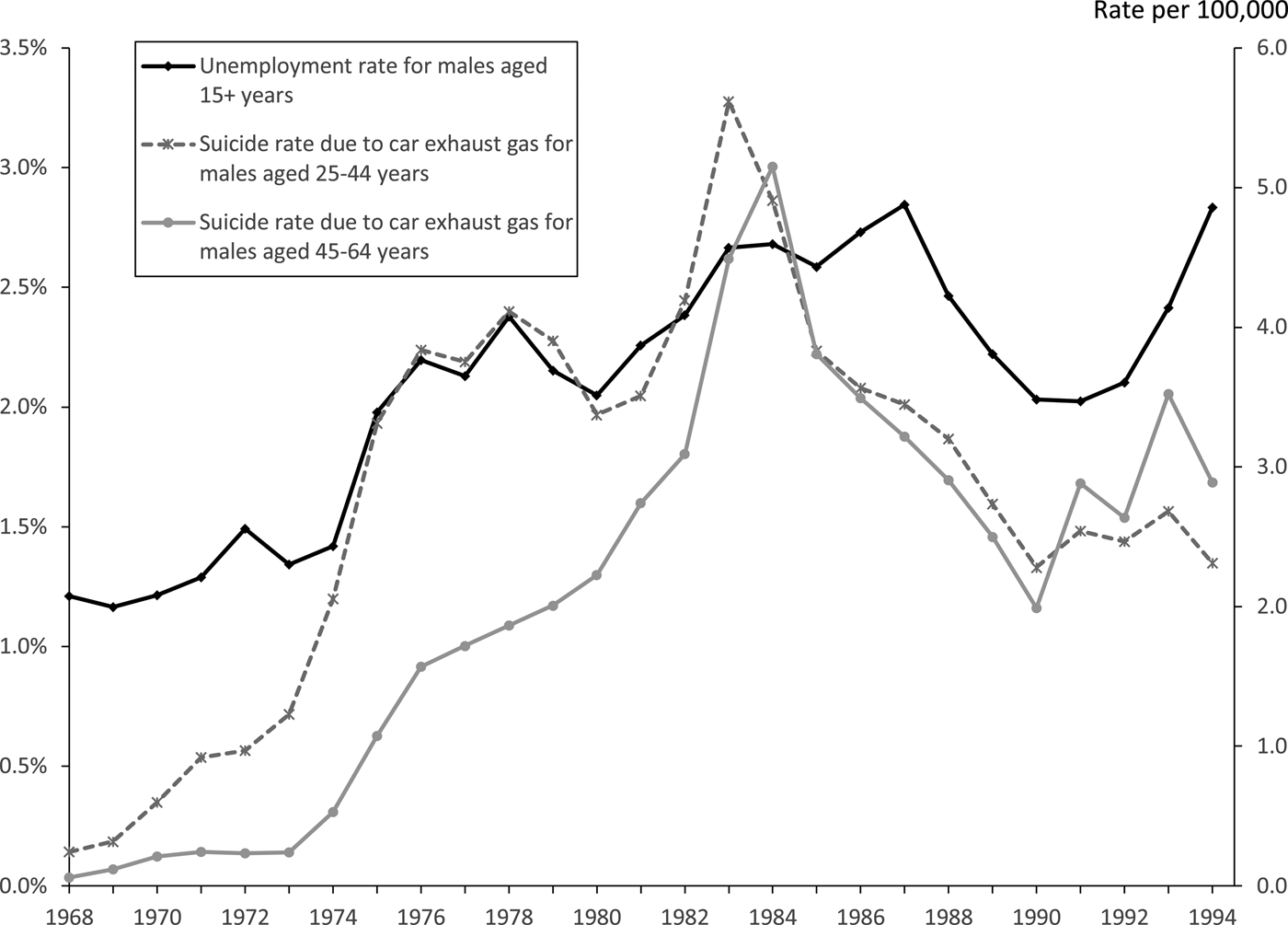
In many motorised countries inhalation of carbon monoxide from car exhaust gas has been one of the leading methods of suicide (Routley, Reference Routley2007). Time-series studies from the UK, the USA, Switzerland and Denmark have shown a substantial fall in car exhaust gas suicide rates following the introduction of catalytic converters (Clarke and Lester, Reference Clarke and Lester1987; Amos et al., Reference Amos, Appleby and Kiernan2001; Mott et al., Reference Mott, Wolfe, Alverson, Macdonald, Bailey, Ball, Moorman, Somers, Mannino and Redd2002; Thomsen and Gregersen, Reference Thomsen and Gregersen2006; Skilling et al., Reference Skilling, Sclare, Watt and Fielding2008; Hepp et al., Reference Hepp, Ring, Frei, Rössler, Schnyder and Ajdacic-Gross2010). In Australia, car exhaust gas suicides were not reduced by 1996, despite catalytic converters being introduced in 1986, coinciding with CO emission regulations of 9.3 g/km (Routley and Ozanne-Smith, Reference Routley and Ozanne-Smith1998; Routley, Reference Routley2007). And then, a decline in car exhaust gas suicides was finally observed after an introduction of lower CO emission levels of 2.1 g/km in 1997 (Routley, Reference Routley2007). In Japan, catalytic converters were introduced on new passenger cars in 1973 and carbon monoxide emissions standards were gradually strengthened to 2.3 g/km in 1978 (Hirota and Minato, Reference Hirota and Minato2001; Routley, Reference Routley2007). This standard in Japan in 1978 was one of the strictest in the world at that time. In the present research, car exhaust gas suicide rates for males aged 25–64 years in Japan peaked in 1983/1984 and then decreased sharply. This result might indicate that the introduction of catalytic converter in the 1970s finally had an impact on car exhaust gas suicides in the early/mid-1980s in Japan. However, it is also possible that this strict regulation in Japan in 1978 was not fully implemented until the early 1980s or older vehicles without catalytic converters continued to be widely used after 1978 so that a decline in car exhaust gas suicides was not observed in the late 1970s. In addition, the introduction of catalytic converters might have less of an impact on the change of car exhaust gas suicides than other factors, such as socio-economic background, because the suicide rates due to car exhaust gas for males aged 25–44 and 45–64 years showed a relatively similar trend with non-gases suicide rates after 1980. In the early 1980s, Japan experienced an economic downturn associated with the second oil crisis and economic prosperity in the late 1980s (Yamasaki et al., Reference Yamasaki, Araki, Sakai, Yokoyama and Voorhees2008). Secular trends in unemployment rates for males aged 15+ years and age-standardised suicide rates due to car exhaust gas for males aged 25–44 and 45–64 years in Japan between 1968 and 1994 are presented in Fig. 7 (shown in the Appendix). And thus, a negative transition in economic conditions in the 1980s in Japan could also be associated with the trends in non-gases suicide rates as well as car exhaust gas suicide rates. Therefore, further research is needed to clarify the impact of introducing catalytic converters on the transition of car exhaust gas suicides in Japan and to examine the association between time trends in method-specific suicides and socio-economic factors in the 1970s and 1980s. Potential substitution from car exhaust suicides toward other methods was not evident in this research.
Conclusion
Domestic gas suicide rates for both genders of all ages in Japan decreased substantially after the mid-1970s. A reduction in the carbon monoxide content of domestic gas supply, which began in the early 1970s in Japan, may be associated with this decrease in domestic gas suicides. Young women utilised domestic gas methods more frequently than the other gender-age groups in Japan. A decrease in domestic gas suicides appeared to cause a substantial decrease in overall suicides among young Japanese women. In Japan, car exhaust gas suicide was a more common method for males, particularly those aged 25–64 years. In this research, it is unclear whether the introduction of catalytic converters in the 1970s in Japan caused a reduction in car exhaust gas suicides or not, although car exhaust gas suicide rates for males aged 25–64 years in Japan did decrease after the mid-1980s. Potential substitution from domestic gas to car exhaust gas was found only among males aged 25–64 years.
The present study indicates that reduced availability of carbon monoxide gas for domestic use in Japan was associated with reduced method-specific suicide mortality as well as overall suicide mortality in some gender/age groups. This has important implications for suicide prevention even in countries other than Japan, as one possible feature of preventive strategies involves restricting the availability of commonly used methods of suicide. Since factors other than the availability of means for suicide are likely to play a role in the changing suicide rates, further research is needed to examine the association between time trends in method-specific suicides and socio-economic factors in Japan.
Acknowledgements
We thank the editor and reviewers for their comments.
Financial support
This work was supported by a Grant-in-Aid for scientific research from the Ministry of Education, Culture, Sports, Science and Technology of Japan (Award Number 15K08798).
Conflict of interest
The authors have no conflicts of interests to state for the present manuscript.
Availability of data and materials
All data used in this manuscript are publicly available. Suicide data are available from the Vital Statistics of Japan, which are published from Health, Labour and Welfare Statistics Association of Japan. Data about population estimate are available from the website of Statistics Japan (http://www.e-stat.go.jp/SG1/estat/List.do?bid=000000090004&cycode=0).
Appendix
Age-standardized suicide rates for overall, non gases, domestic gas, and car exhaust gas by age for males in Japan, 1968-1994, with line segments from joinpoint regression models.

Age-standardized suicide rates for overall, non gases, domestic gas, and car exhaust gas by age for females in Japan, 1968-1994, with line segments from joinpoint regression models

Secular trends in unemployment rate for males aged 15+ years and age-standardized suicide rates due to car exhaust gas for males aged 25-44 and 45-64 years in Japan, 1968-1994.