Introduction
After the initial onset of schizophrenia, individuals with the illness are focused on resuming a normal life and often specifically on returning to work or school (Roe, Reference Roe2001; Judge et al., Reference Judge, Estroff, Perkins and Penn2008; Lam et al., Reference Lam, Pearson, Ng, Chiu, Law and Chen2011). First-episode schizophrenia patients associate earning an income with better quality of life (Gioia and Brekke, Reference Gioia and Brekke2003). Individuals with a first hospitalization for non-affective psychosis spontaneously report as a life goal finding a job in 53% of cases and going back to school in 38% of cases (with unknown overlap), and endorse related services as desirable in 80% and 75% of cases (Ramsay et al., Reference Ramsay, Broussard, Goulding, Cristofaro, Hall, Kaslow, Killackey, Penn and Compton2011). Thus, while a subgroup does not spontaneously list work or schooling as a life goal, these are the most frequently listed. The goal of returning to work or school after onset of schizophrenia may unfortunately be the aspect of recovery that is least often achieved (Ventura et al., Reference Ventura, Subotnik, Guzik, Hellemann, Gitlin, Wood and Nuechterlein2011).
In long-term severe mental disorders, supported employment has been the most successful approach to facilitating return to competitive jobs (Bond, Reference Bond2004; Bond et al., Reference Bond, Drake and Becker2008; Modini et al., Reference Modini, Tan, Brinchmann, Wang, Killackey, Glozier, Mykletun and Harvey2016). The Individual Placement and Support (IPS) approach (Becker and Drake, Reference Becker and Drake2003) significantly increases the rate of competitive employment for individuals with long-term severe mental illness as compared with conventional vocational rehabilitation services (Drake et al., Reference Drake, McHugo, Bebout, Becker, Harris, Bond and Quimby1999; Becker and Drake, Reference Becker and Drake2003; Bond et al., Reference Bond, Drake and Becker2008; Drake et al., Reference Drake, Bond and Becker2012; Drake et al., Reference Drake, Frey, Bond, Goldman, Salkever, Miller, Moore, Riley, Karakus and Milfort2013). IPS emphasizes rapid search for a competitive job, integration of vocational services into mental health teams, attending to client job preferences, community outreach, and ongoing employment support (Becker and Drake, Reference Becker and Drake2003; Bond, Reference Bond2004).
IPS has only begun to be examined in randomized controlled trials (RCTs) in the initial period of schizophrenia, despite the fact that high symptomatic remission rates, short interruptions of education or employment, and high motivation to return to school or work might lead to even greater success during this period (Nuechterlein et al., Reference Nuechterlein, Miklowitz, Ventura, Gitlin, Stoddard and Lukoff2006; Killackey et al., Reference Killackey, Jackson and McGorry2008; Nuechterlein et al., Reference Nuechterlein, Subotnik, Turner, Ventura, Becker and Drake2008; Rinaldi et al., Reference Rinaldi, Killackey, Smith, Shepherd, Singh and Craig2010). IPS was first introduced in first-episode psychosis by Rinaldi et al. in a naturalistic study in London with promising results (Rinaldi et al., Reference Rinaldi, McNeil, Firn, Koletsi, Perkins and Singh2004). However, results of only one RCT that isolates the impact of IPS in first-episode psychosis have been published (Killackey et al., Reference Killackey, Jackson and McGorry2008). That pioneering 6-month study by Killackey et al. with 41 first-episode psychosis patients found that IPS resulted in competitive work or school participation in 85% of participants, compared with 29% of participants in a treatment-as-usual comparison group. Return to school was not differentially affected, but competitive employment rates clearly were. Furthermore, the mean number of weeks worked was significantly greater for IPS participants (8.6 weeks) compared with the treatment-as-usual group (3.8 weeks).
The Killackey et al. RCT left several critical questions unanswered. First, it was unclear whether the advantage of IPS for first-episode patients lasted beyond the initial 6 months. The mean duration of employment/schooling created by IPS was quite brief (about 9 weeks). Second, given that first-episode schizophrenia patients often initially choose to return to school rather than employment (Nuechterlein et al., Reference Nuechterlein, Subotnik, Turner, Ventura, Becker and Drake2008), further adaptation of IPS was desirable to determine whether this approach could successfully enhance return to schooling as well as employment. Third, a related issue was whether the timing of return to school would be the same as return to employment for first-episode patients when both options were offered. Fourth, the study used a treatment-as-usual comparison group, not matched for treatment intensity, so a RCT with a more closely matched comparison group was desirable. Finally, it was unclear whether the results, completed in Australia where mental health services are characterized by universal treatment access, would generalize to our more fractionated psychiatric care system in the USA.
The RAISE Early Treatment Program (RAISE-ETP) study is another important step in demonstrating the promise of IPS in early psychosis (Kane et al., Reference Kane, Robinson, Schooler, Mueser, Penn, Rosenheck, Addington, Brunette, Correll, Estroff, Marcy, Robinson, Meyer-Kalos, Gottlieb, Glynn, Lynde, Pipes, Kurian, Miller, Azrin, Goldstein, Severe, Lin, Sint, John and Heinssen2016). Although this large RCT involved a comprehensive early intervention program in community clinics and did not randomly assign IPS, a mediation analysis suggested that the increase in work/school participation was associated with patients’ use of supported education/employment (Rosenheck et al., Reference Rosenheck, Mueser, Sint, Lin, Lynde, Glynn, Robinson, Schooler, Marcy, Mohamed and Kane2017). The RAISE Connection Program study also showed that supported education/employment could be successfully applied in first-episode schizophrenia, but did not include a comparison group (Dixon et al., Reference Dixon, Goldman, Bennett, Wang, McNamara, Mendon, Goldstein, Choi, Lee, Lieberman and Essock2015; Humensky et al., Reference Humensky, Essock and Dixon2017).
While IPS has a focus on return to work or school, we recognized that young people are prone to change career goals in school as well as jobs before they find their niches. Thus, we hypothesized that improving generic work/school skills would help young patients to maintain school/work attendance and also to change schools and jobs when appropriate. The Workplace Fundamentals Module (WFM) is a group skills training approach that is focused on general skills to support work/school performance over time (Wallace and Tauber, Reference Wallace and Tauber2004). Thus, we combined IPS and WFM to maximize the impact on work recovery after a first psychotic episode.
We describe here the results of an 18-month RCT of IPS–WFM in the initial course of schizophrenia. Participants were randomly assigned to an 18-month IPS–WFM intervention or to conventional vocational rehabilitation [Brokered Vocational Rehabilitation (BVR)] plus a social skills group not focused on the workplace. We adapted supported education (Egnew, Reference Egnew1993, Reference Egnew1997; Unger, Reference Unger1998) such that the program met the standards for IPS fidelity (Nuechterlein et al., Reference Nuechterlein, Subotnik, Turner, Ventura, Becker and Drake2008). We hypothesized that IPS–WFM would: (1) increase the likelihood that individuals with a recent first episode of schizophrenia would return to school or competitive jobs during the initial 6 months of treatment, (2) continue to show a higher level of participation in school and competitive employment in a following year of less intensive treatment, and (3) lead to greater cumulative duration of schooling or employment during the 18-month RCT.
Method
Participants
The 69 recent-onset schizophrenia patients were recruited from Los Angeles public and private psychiatric hospitals and clinics. Project staff visited over 25 hospitals and clinics to introduce the UCLA first-episode schizophrenia clinic and to encourage referral of all potentially eligible patients. All participants received their outpatient psychiatric treatment at the UCLA Aftercare Research Program to allow a common clinical treatment base.
Inclusion criteria were: (1) a recent first psychotic episode, beginning within the last 2 years (with psychotic symptoms lasting at least 2 weeks); (2) a diagnosis by Research Diagnostic Criteria (RDC) (Spitzer et al., Reference Spitzer, Endicott and Robins1978) of schizophrenia or schizoaffective disorder, mainly schizophrenic subtype; (3) 18–45 years old; (4) sufficient English fluency to avoid invalidating research measures; (5) residence within commuting distance of UCLA; and (6) possible interest in trying to resume work or school. Potential participants were excluded if they showed evidence of (1) a neurological disorder; (2) significant habitual substance use disorder in the 6 months prior to hospitalization or substance use that accounted for the psychotic symptoms; (3) mental retardation; or (4) contraindication for risperidone treatment (risperidone was the first-line antipsychotic medication). As approved by the UCLA IRB, all participants received oral and written information about research procedures and provided written informed consent. All procedures contributing to this work comply with the ethical standards of the relevant national and institutional committees on human experimentation and with the Helsinki Declaration of 1975, as revised in 2008. The sample included 58 individuals with RDC schizophrenia (84%), 10 with schizoaffective disorder, depressed type, mainly schizophrenic (14%), and one with schizoaffective disorder, manic type, mainly schizophrenic (2%), based on the Structured Clinical Interview for DSM-IV (SCID) (First et al., Reference First, Spitzer, Gibbon and Williams2001) and informant and medical record information. Mean age at randomization was 24.5 years (s.d. = 4.1, range 18–38), mean education was 13.2 years (s.d. = 1.9, range 10–17), 67% were male, and 93% were single. At entry, the sample had a mean of 1.2 psychiatric hospitalizations (s.d. = 0.9) and a mean lifetime duration of psychosis of 8.3 months (s.d. = 7.7). Racial distribution was 26% White, 22% African American, 12% Asian, 3% Pacific Islander, and 38% more than one race. Twenty-six percent were of Hispanic/Latino ethnicity. None were homeless.
Procedures
The UCLA Aftercare Research Program provided high diagnostic inter-rater reliability (Ventura et al., Reference Ventura, Liberman, Green, Shaner and Mintz1998) and a common therapeutic base (Nuechterlein et al., Reference Nuechterlein, Dawson, Gitlin, Ventura, Goldstein, Snyder, Yee and Mintz1992). All participants were provided with atypical antipsychotic medication, weekly psychiatrist visits and individual case management, and family psychoeducation, thereby equating these aspects of their psychiatric care. Oral risperidone was prescribed as the initial medication to standardize this treatment component, with switching to another atypical antipsychotic as needed due to lack of efficacy or intolerable side effects. Medication adherence was not required to continue in the study. Details of medication procedures and medication non-adherence effects in this sample were the focus of a prior publication (Subotnik et al., Reference Subotnik, Nuechterlein, Ventura, Gitlin, Marder, Mintz, Hellemann, Thornton and Singh2011). A medication stabilization period, typically about 3 months, was used to reduce acute psychotic symptoms, given that patients usually entered the study immediately following hospital discharge. No symptom remission requirement was used, and no patients were excluded due to continued symptoms. While most prior IPS studies have not used initial stabilization periods, those studies focused on long-term outpatients rather than patients entering in an acute psychotic state (Bond et al., Reference Bond, Drake and Becker2008). Participants were then randomly assigned to either the combination of IPS and WFM training or to an equally intensive BVR condition (vocational rehabilitation through conventional outside agencies plus social skills training). A 2/3 v. 1/3 ratio (Ns of 46 for IPS-WFM and 23 for BVR) was used to allow examination of outcome predictors within IPS–WFM. Data were collected from 2000 to 2006.
Individual Placement and Support
IPS followed the principles of this form of supported employment (Becker and Drake, Reference Becker and Drake2003; Drake et al., Reference Drake, Bond and Becker2012), but was adapted to a first-episode sample by providing supported education for participants whose preferences and situations made resuming education more appropriate than returning to employment (Nuechterlein et al., Reference Nuechterlein, Subotnik, Turner, Ventura, Becker and Drake2008). The common principles are: (1) the goal is competitive employment or schooling in typical community settings, (2) IPS services integrated into the mental health treatment team, (3) rapid search for schooling or employment, (4) eligibility based on participant choice, (5) attention to the individual's job/school preferences, (6) continuous individualized support, (7) community outreach, and (8) disability benefits counseling. The IPS specialist (L.R.T.) was a member of the clinical team of psychiatrists, psychologists, and social workers, coordinated treatments with them to optimize work recovery, and met with the participants at the clinic, their homes, and their school or work settings, as appropriate for each individual. IPS fidelity was good (score of 101 on IPS-25) (Becker et al., Reference Becker, Swanson, Bond and Merrens2008), with the major limitations being use of research-based exclusion criteria, an initial medication stabilization period, and only one IPS specialist. Participants varied widely in initial willingness to allow the IPS specialist to interact directly with potential employers or instructors, but they typically developed greater openness to this direct support over time. By study completion, 74% (34 of 46) approved and received direct IPS help with employers or instructors in the community (Nuechterlein et al., Reference Nuechterlein, Subotnik, Turner, Ventura, Becker and Drake2008). The remaining 26% received IPS help behind the scenes. Initially 54% (25 of 46) prohibited disclosure of their disability or psychiatric condition. However, disclosure of disability was found to be needed for only 26% (12 of 46) of patients, so this was not a major factor inhibiting IPS intervention (Nuechterlein et al., Reference Nuechterlein, Subotnik, Turner, Ventura, Becker and Drake2008).
Workplace Fundamentals Module
The WFM uses a group-based skills training approach emphasizing social and problem-solving skills necessary for keeping a job (Wallace and Tauber, Reference Wallace and Tauber2004). Skill areas included: (1) how work/school changes your life; (2) learning about your place of work or school; (3) identifying stressors; (4) solving problems; (5) managing symptoms and medications; (6) managing health; (7) improving job/school performance; (8) socializing with fellow workers/students; and (9) finding motivation. Each involved showing videotaped scenarios, role played practice, generation and evaluation of solutions to individually relevant school/work problems, and individualized homework assignments. For WFM materials, see https://www.psychrehab.com/modules/module_workplace.html. Participants used the WFM Job Organizing Book during the group sessions, led by the case managers. To adapt the WFM to school settings, additional scenarios involving school situations were generated. Participants had 75 min groups weekly for 6 months, followed by booster groups of fading frequency over 6 months. Booster sessions occurred every other week in weeks 27–42 and monthly in weeks 43–52. Because clinic attendance was only 1 day a week, it did not interfere with work/school attendance. Participants attended a mean of 19.4 sessions.
BVR plus social skills training
For participants randomly assigned to the BVR condition, case managers made referrals to vocational rehabilitation services at separate agencies, similar to the RCT of Drake et al. with chronic patients (Drake et al., Reference Drake, McHugo, Bebout, Becker, Harris, Bond and Quimby1999). The case manager discussed the Department of Vocational Rehabilitation and other options and actively assisted in connections to these agencies. The vocational rehabilitation at local state agencies emphasized initial assessment of vocational abilities and interests, referrals to job openings and school opportunities, and arrangements to pay for schooling or job training, but not in-person, active outreach in the community. All patients were eligible for BVR services and were scheduled with their local vocational rehabilitation center immediately upon randomization. These centers were generally closer to the patients’ homes than UCLA. The study case managers ensured that all BVR patients had an initial appointment and served as the communications link with the VR center. To further equate the intensity of treatment to the IPS–WFM group, these individuals also participated in clinic-based skills training groups, matched in time to WFM. Skills training included medication management and communication skills training (Kopelowicz et al., Reference Kopelowicz, Liberman and Zarate2006), but did not focus on workplace skills. The clinic-based treatments were delivered by the same staff members for both conditions, separated by day of the week to minimize contact between participants in the two conditions. The UCLA clinic team also had separate weekly case conferences for the two treatment conditions, with the IPS specialist attending only the IPS–WFM case conference. Manualized materials for WFM and for the comparison social skills training maximized the fidelity of these treatments.
Assessments
A modified interview-based version of the work section of the Social Adjustment Scale (Weissman and Bothwell, Reference Weissman and Bothwell1976) was used to assess school and employment activities (Subotnik et al., Reference Subotnik, Nuechterlein, Kelly, Kupic, Brosemer and Turner2008), completed by the case managers based on their ongoing interactions with the patients, family members, and employers or teachers. Mean inter-rater agreement for judging presence at competitive work or regular schooling was κ = 0.84. Completers of the Social Adjustment Scale were not blind to treatment condition, but presence/absence of work/school return is minimally subject to rater bias.
Antipsychotic medication adherence was rated on a 1 (complete adherence) to 5 (complete nonadherence) scale based on a combination of pill counts, plasma assays, psychiatrist ratings, and patient reports (Subotnik et al., Reference Subotnik, Nuechterlein, Ventura, Gitlin, Marder, Mintz, Hellemann, Thornton and Singh2011). Symptom severity was rated every 3 months on the Schedule for Assessment of Positive Symptoms (Andreasen, Reference Andreasen1984b) and the Schedule for Assessment of Negative Symptoms (Andreasen, Reference Andreasen1984a).
Analyses
Following the grant protocol, the primary analysis of treatment effects (IPS–WFM v. BVR) used data gathered at the end of the intensive treatment period (6-month point) and at the 18-month point. We hypothesized that differential participation in work or school would be apparent at the 6-month point, with months 7–18 being used primarily to examine duration of effects. Separate outcome analyses were completed for the 6- and 18-month points. The primary dichotomous outcome, participation in competitive work or school, was analyzed with χ2 and logistic regression. Group differences in duration of work/school were examined via t test.
Results
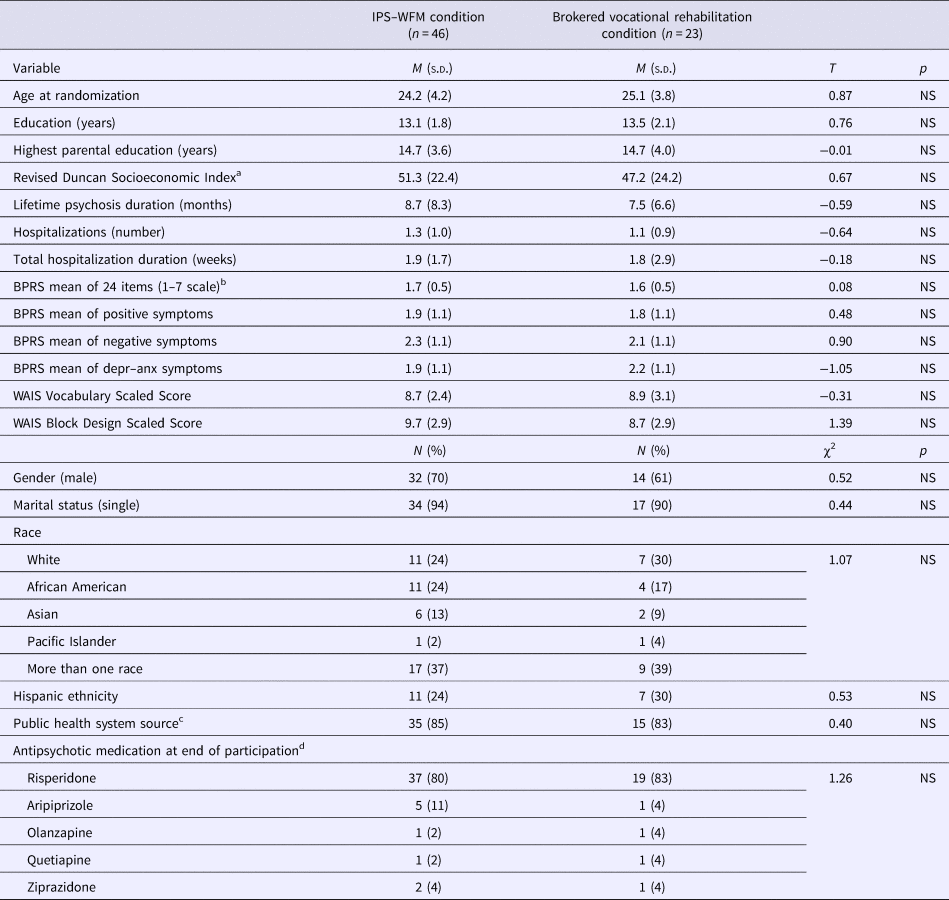
A CONSORT diagram is given in Fig. 1. Only one patient declined to participate due to disinterest in pursuing work or schooling, possibly due to the low threshold we used (possible interest in work or school) and because study entry in 75% of cases occurred before beginning federal Social Security disability benefits. The 69 randomized patients did not differ significantly in demographic, symptom severity, or illness history variables from 18 patients who met inclusion criteria but dropped out prior to randomization (Nuechterlein et al., Reference Nuechterlein, Subotnik, Turner, Ventura, Becker and Drake2008). As shown in Table 1, the groups randomized to IPS–WFM v. BVR did not differ significantly in demographic variables, illness history, symptom severity, intellectual functioning, or antipsychotic medication. The socioeconomic status of the two groups was comparable and ranged widely within groups [Revised Duncan Socioeconomic Index (Stevens and Featherman, Reference Stevens and Featherman1981): IPS–WFM: M = 51.3, s.d. = 22.4, range = 17.4–88.4; BVR: M = 47.2, s.d. = 24.2, range = 15.7–88.4]. The vast majority of patients were recruited from public hospitals and clinics (85% of IPS–WFM and 83% of BVR patients). Family psychoeducation was attended by 18 of 46 IPS–WFM families (39%) and nine of 23 BVR families (39%). Thus, randomization produced well-matched groups.
Participant flow in a randomized controlled trial of Individual Placement and Support (IPS) and the Workplace Fundamentals Module (WFM) in individuals with a recent first episode of schizophrenia.

Demographic and clinical data and antipsychotic medication for individuals with schizophrenia in Individual Placement and Support Plus Workplace Fundamentals Module Intervention (IPS–WFM) v. Conventional Brokered Vocational Rehabilitation plus social skills training intervention (BVR)

a Based on highest status parental occupation.
b Brief Psychiatric Rating Scale ratings at baseline.
c Hospital source unspecified for nine patients.
d All participants started on oral risperidone at baseline. They were switched to another antipsychotic medication if inadequate symptomatic response or intolerable side effects occurred.
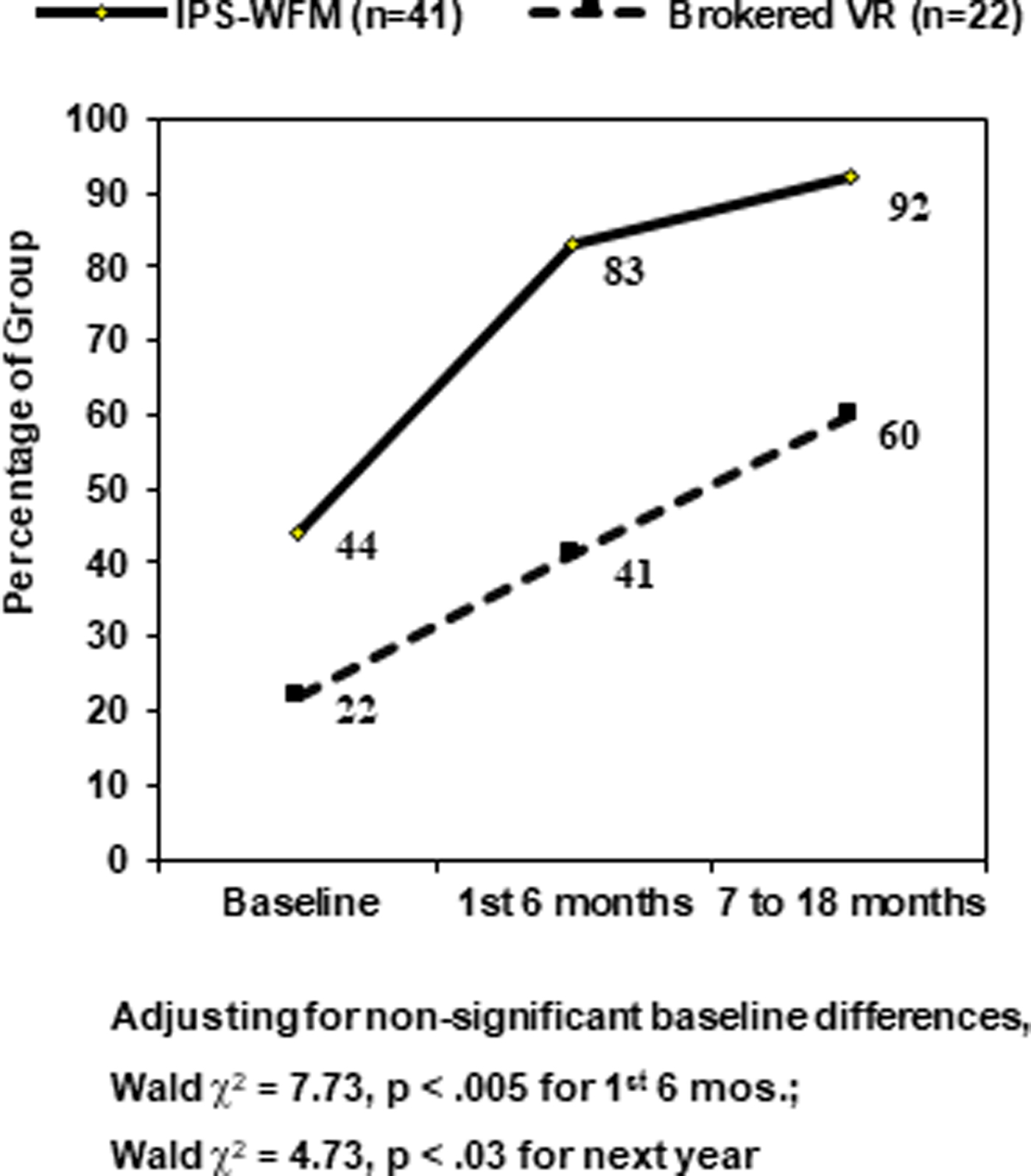
The first hypothesis concerned the likelihood of participating in school or a competitive job during the first 6 months of intensive treatment, defined as school courses relevant to a degree or vocational interest or paid jobs available to any applicant and at regular wages. By the end of the first 6 months, 83% (34 of 41) of IPS–WFM participants were in school or competitive employment, compared with 41% (nine of 22) of BVR participants, χ2 = 11.67, df = 1, p < 0.001. Although all participants had a period of no work or school during and immediately after hospitalization, some participants (44% of IPS–WFM, 22% of BVR) started school or competitive employment within the initial medication stabilization period before entry into the randomized interventions. Thus, although this early return to school or work did not differ significantly between groups, we used logistic regression that entered baseline status on the dependent variable and group assignment as predictor variables. The 6-month outcome difference attributable to IPS–WFM treatment remained highly significant (Wald χ2 = 7.73, df = 1, p < 0.005).
The second hypothesis involved whether a higher likelihood of participation in school or competitive employment continued in the following year, during which treatment intensity was decreased. School/employment outcome data were available for 36 (88%) of the 41 IPS–WFM patients and 15 (68%) of the 22 BVR patients during months 7–18 [dropouts involved refusing treatment (IPS–WFM = 3, BVR = 5), moving out of region (IPS–WFM = 1, BVR = 2), or developing a serious medical condition (IPS–WFM = 1)]. Dropout frequency did not differ significantly between groups (χ2 = 1.35, df = 1, p = 0.25). We found that 92% (33 of 36) of IPS–WFM patients with 7–18 month data were in school or competitive employment during at least part of this period, compared with 60% (nine of 15) of BVR patients, χ2 = 7.31, df = 1, p < 0.007. Logistic regression correcting for non-significant group differences in baseline school/job status revealed that this difference continued to be significant (Wald χ2 = 4.73, df = 1, p < 0.03). School/work participation rates are summarized for the key study points in Fig. 2. Considering the entire 18-month period, 90% of the IPS–WFM group, compared with 59% of the comparison group, participated in competitive work or school (correcting for baseline, Wald χ2 = 5.82, df = 1, p < 0.02).
Percentage of first-episode schizophrenia patients in school or competitive employment at study baseline, during initial 6 months, and during following 1-year period.

The third hypothesis concerned whether IPS–WFM could increase the total amount of time in schooling or employment during the study. The 41 IPS–WFM patients had significantly longer mean time in schooling/employment than the 22 BVR patients [45.1 weeks (s.d. = 34.0) v. 26.3 weeks (s.d. = 42.2), unequal variance t = 3.06, df = 32.9, p < 0.004], considering all periods of education and competitive employment during the 18-month period. Thus, the IPS–WFM patients were in work/school 58% of the 78-week RCT period, compared with 34% for the BVR patients.
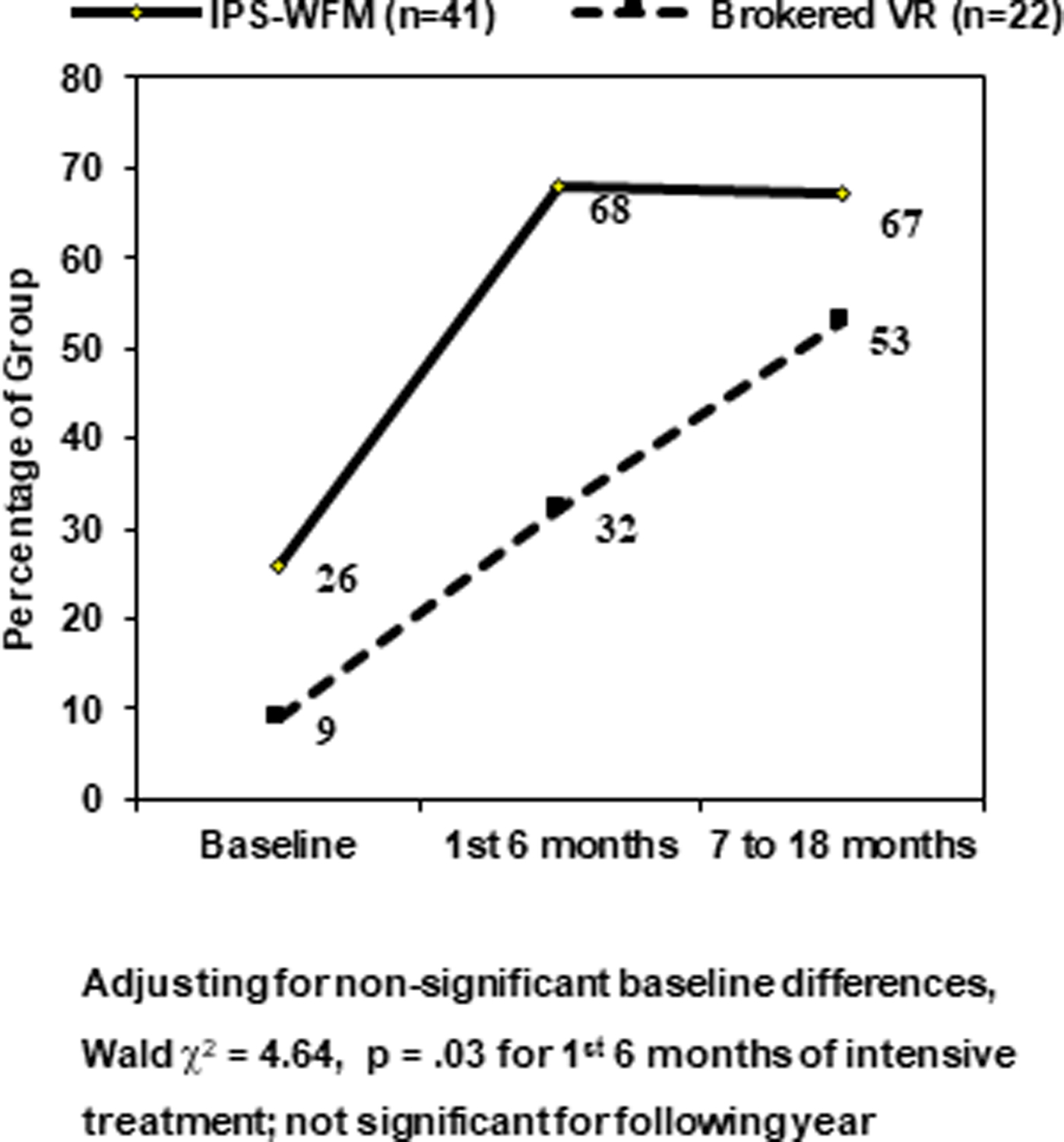
Supplemental analyses considered educational and job outcomes separately. As shown in Fig. 3, IPS–WFM patients had a substantially greater likelihood of returning to school during the initial 6 months than BVR patients [68% (28 of 41) v. 32% (seven of 22), logistic regression correcting for non-significant group differences in school status at baseline, Wald χ2 = 4.64, df = 1, p = 0.03]. The percentage of BVR patients returning to school continued to increase during the following year, resulting in absence of significant group differences during that period. Mean total number of weeks in schooling across the entire 18 months for all study participants was also significantly greater for IPS–WFM (25.7 weeks, s.d. = 22.9) compared with BVR (14.7 weeks, s.d. = 21.0), t = 2.09, df = 61, p = 0.04. For those who did attend school during the trial, the mean duration of individual periods of schooling was similar for IPS–WFM (17.8 weeks, s.d. = 17.6) and BVR groups (14.8 weeks, s.d. = 9.2), but the IPS–WFM group had more school periods than the BVR group (1.7 v. 1.0, s.d. = 1.7 and 1.2, t = 2.06, df = 57.1, p < 0.05). Thus, IPS–WFM may have aided patient persistence in pursuing further education as well as increasing the chances that they would attend at all.
Percentage of first-episode schizophrenia patients in school at study baseline, during initial six months, and during following 1-year period.

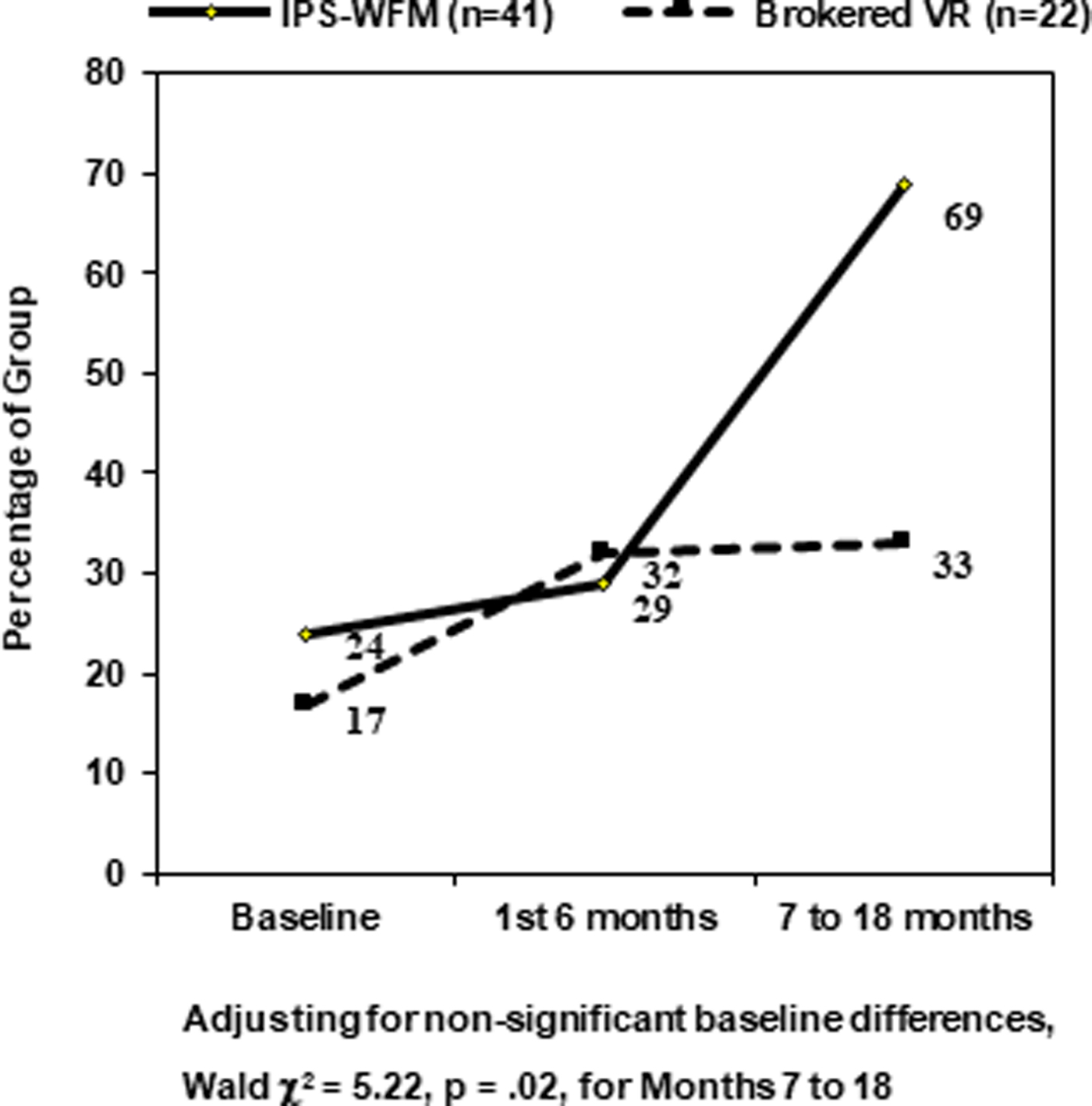
In contrast, return to competitive employment did not show group differences in the first 6 months (Fig. 4), but the IPS–WFM group showed notable advantages for the following 1-year period [69% (25 of 36) v. 33% (five of 15), logistic regression correcting for non-significant group differences in baseline work status, Wald χ2 = 5.22, df = 1, p = 0.02]. Mean weeks in competitive employment for all study participants was also significantly greater for IPS–WFM (19.4 weeks, s.d. = 25.4) than for BVR (11.7, s.d. = 25.6), t = 2.07, df = 61, p = 0.04. Individual periods of employment tended to be longer for IPS–WFM than BVR (means of 20.4 v. 14.9 weeks, s.d. = 20.3 and 13.0) and the number of jobs held was somewhat greater (1.4 v. 1.0, s.d. = 1.1 and 1.3), but these differences were not statistically significant.
Percentage of first-episode schizophrenia patients in competitive employment at study baseline, during initial 6 months, and during following 1-year period.

IPS–WFM patients also tended to participate in both school and work more frequently than those in BVR, but this only approached statistical significance [29 of 46 (63%) v. nine of 23 (39%), χ2 = 3.54, df = 1, p = 0.06]. Most of these individuals had overlapping periods of school and work (68%).
Exploratory analyses examined medication adherence, symptom severity, and WFM attendance effects. Treatment group assignment did not impact medication adherence during the study (means of 2.30 for IPS–WFM and 2.34 for BVR). Better medication adherence during the first 6 months of intensive vocational treatment was significantly associated with being at work or school during this period (p < 0.035). Logistic regression showed that this tendency continued when treatment group and medication adherence were jointly considered as predictors of return to work or school during this period, but IPS–WFM treatment assignment was a stronger predictor (Wald χ2 = 7.35, p < 0.007, for group assignment; Wald χ2 = 2.87, p < 0.09, for medication adherence).
Severity of positive symptoms (SAPS) and negative symptoms (SANS) decreased significantly across groups during the first 6 months (p < 0.03) but not during the next year. IPS–WFM v. BVR assignment did not differentially impact these changes. Baseline SAPS and SANS did not differ between groups, nor did they significantly predict return to work or school.
Number of WFM sessions attended was not significantly associated with the number of weeks worked or in school, although correlations were in the expected direction (r = 0.09–0.23). Furthermore, when number of attended skills training sessions was added to treatment group assignment as a predictor in logistic regression analyses, only IPS–WFM assignment significantly predicted return to work or school.
Discussion
This 18-month RCT demonstrates that the IPS–WFM enhanced vocational rehabilitation doubles the percentage of patients with a recent first episode of schizophrenia who are in competitive jobs or school within 6 months (83% v. 41%). Considered relative to non-significant baseline differences in work/school status, IPS–WFM led to a 39% increase while conventional vocational rehabilitation led to a 19% increase. Furthermore, this RCT demonstrates for the first time that the advantage of IPS–WFM continues during a subsequent year of less intensive treatment, with a very high proportion of the IPS–WFM patients (92%, 33 of 36 for whom outcome data were available during this period) engaged in competitive work or school during at least part of this year. The total number of weeks of employment or schooling across all participants was also significantly and meaningfully longer with IPS–WFM compared with BVR (45 v. 26 of the 78 weeks).
The percentage of patients participating in competitive work or school within 6 months is very comparable to that obtained in the only published RCT that isolates IPS effects after a first psychotic episode (83% v. 85% in Killackey et al., Reference Killackey, Jackson and McGorry2008). These results confirm the efficacy of IPS in this early phase of psychosis, its applicability across the Australian and US mental health systems, and its superiority even in relationship to a comparison treatment of similar intensity. High rates of participation in work or school were also observed with first-episode patients in the RAISE Connection Program, which included IPS (68% by 6 months and 82% by 2 years) (Humensky et al., Reference Humensky, Essock and Dixon2017).
Our evaluation of IPS–WFM over a period three times as long as the Killackey et al. (Reference Killackey, Jackson and McGorry2008) first-episode psychosis RCT allowed the impact on the ability to hold a job or stay in school to be more clearly demonstrated, with the proportion of the RCT period actively engaged in work or school being substantially higher in the current study (58%) than in the prior one (33%). The extent to which the addition of WFM to IPS contributed to the greater proportion of time at work/school cannot be directly determined but might have played a role (Wallace and Tauber, Reference Wallace and Tauber2004; Mueser et al., Reference Mueser, Aalto, Becker, Ogden, Wolfe, Schiavo, Wallace and Xie2005; Tsang et al., Reference Tsang, Chan, Wong and Liberman2009). Two RCTs with patients with long-established schizophrenia that added WFM to supported employment did not detect a significant impact on employment outcomes (Mueser et al., Reference Mueser, Aalto, Becker, Ogden, Wolfe, Schiavo, Wallace and Xie2005; Glynn et al., Reference Glynn, Marder, Noordsy, O'Keefe, Becker, Drake and Sugar2017), but one that added similar work-related social skills training to IPS did find significant employment advantages (Tsang et al., Reference Tsang, Fung, Leung, Li and Cheung2010).
In the current RCT, IPS–WFM led to significantly higher rates of participation in school as well as to employment, whereas in the Killackey et al. (Reference Killackey, Jackson and McGorry2008) RCT, the advantage was for employment alone. This difference in the two RCTs may be due to the greater proportion of first-episode psychosis patients who preferred return to school in the current study as compared with in Australia (Allott et al., Reference Allott, Turner, Chinnery, Killackey and Nuechterlein2013) and to the expanded supported education approach developed within the current study (Nuechterlein et al., Reference Nuechterlein, Subotnik, Turner, Ventura, Becker and Drake2008). It is noteworthy that the rate of return to school was immediately improved by IPS–WPM in the current study, while the advantages for employment were evident in the 7–18-month period. We observed school entry to be easier to arrange and less dependent on job availability, which may explain the faster school re-entry. The tendency for over half of our IPS–WFM patients to return to both school and work during the study may also contribute, as in these instances school return often preceded employment.
The type of education and employment pursued was quite variable. Education involved General Educational Development (GED) credentialing programs or vocational schools (20%), community colleges (60%), or 4-year colleges (20%). Employment examples include movie usher, janitor, restaurant cook, research assistant, laboratory technician, and engineer.
Comparison of the present study sample with that of Killackey et al. (Reference Killackey, Jackson and McGorry2008) would also initially suggest that the exclusion of individuals with prominent substance misuse and the use of a 3-month clinical stabilization period in the present study led to a more select sample than in the Killackey et al. study. However, the Killackey et al. study (personal communication, March 2017) drew its participants from the Early Psychosis Prevention and Intervention Centre, which also screened out individuals with possible substance-induced psychosis and which had clinically stabilized patients for about 9 months prior to IPS study entry.
Limitations of this study include sample size, use of a single IPS specialist, lack of separate evaluation of IPS and WFM effects, frequent psychiatrist and case manager contacts, use of an initial stabilization period, and restriction of sampling to patients with well-diagnosed schizophrenia or schizoaffective disorder who did not have extensive drug use comorbidity or neurological disorder. A larger sample size would allow multiple IPS specialists. Recruitment of large first-episode samples at a single site is difficult in the USA, as no centralized early psychosis intervention system exists. The combination of IPS and WFM was desirable for an initial RCT to determine their joint impact, but a research design allowing delineation of their separate effects would be a useful addition. Weekly clinic visits, while provided to both treatment groups, might have increased overall retention in this study. The frequent clinic visits may not be possible in a typical community clinic. However, the recent RAISE-ETP and RAISE Connection Program studies do demonstrate that IPS can be successfully implemented in early psychosis programs in US community clinics (Dixon et al., Reference Dixon, Goldman, Bennett, Wang, McNamara, Mendon, Goldstein, Choi, Lee, Lieberman and Essock2015; Kane et al., Reference Kane, Robinson, Schooler, Mueser, Penn, Rosenheck, Addington, Brunette, Correll, Estroff, Marcy, Robinson, Meyer-Kalos, Gottlieb, Glynn, Lynde, Pipes, Kurian, Miller, Azrin, Goldstein, Severe, Lin, Sint, John and Heinssen2016). The use of an initial stabilization period seemed wise because patients typically entered the program in an acute psychotic state, but this aspect is a departure from the ‘rapid job search’ approach used in IPS studies of more chronically ill patients. Similarly, while sampling of patients without substantial substance misuse or neurological disorder was appropriate for a tightly controlled efficacy study, RCTs with a broader range of first-episode psychosis patients should evaluate the boundaries of the advantages of enhanced work rehabilitation.
In summary, this study demonstrates the substantial benefits of the combined IPS–WFM treatment for helping first-episode psychosis patients return to competitive work or school and to extend work/school participation over time. Combined with other RCT studies of IPS applied with first-episode patients (Killackey et al., Reference Killackey, Jackson and McGorry2008; Kane et al., Reference Kane, Robinson, Schooler, Mueser, Penn, Rosenheck, Addington, Brunette, Correll, Estroff, Marcy, Robinson, Meyer-Kalos, Gottlieb, Glynn, Lynde, Pipes, Kurian, Miller, Azrin, Goldstein, Severe, Lin, Sint, John and Heinssen2016), these results support the broader application of supported education/employment approaches at the beginning of psychotic illnesses.
Supplementary material
The supplementary material for this article can be found at https://doi.org/10.1017/S0033291718003860.
Author ORCIDs
Keith H. Nuechterlein 0000-0002-8179-8952
Acknowledgements
We gratefully acknowledge the very able assistance of UCLA Aftercare Research Program treating psychiatrists Martha Love, M.D., and Benjamin Siegel, M.D., and therapists Kimberly Baldwin, M.F.T., Rosemary Collier, M.A., Sally Friedlob, M.S.W., Deborah Gioia, Ph.D., and Tasha Nienow, Ph.D. We thank the patients for their participation in this research. Dr Wallace passed away before this manuscript version was completed.
Financial support
This research was supported by the National Institute of Mental Health research grants MH37705 and MH066286 to K. Nuechterlein and by supplemental support from Janssen Scientific Affairs, LLC. The content is solely the responsibility of the authors and does not necessarily represent the official views of the National Institute of Mental Health, the National Institutes of Health, or Janssen Scientific Affairs, LLC.
Conflict of interest
Dr Nuechterlein has received research grants for other research from Janssen Scientific Affairs, LLC, Posit Science, Inc., and Genentech, Inc., and has been a consultant to Astellas, Genentech, Janssen, Medincell, Otsuka, Takeda, and Teva. Dr Subotnik has received income from research grants from Janssen Scientific Affairs, LLC, and Genentech, Inc., and has been a consultant to Genentech, Medincell, and Otsuka. Dr Ventura has received research grants from Pfizer, Inc., Genentech, Inc., and Posit Science, Inc., income from research grants from Janssen Scientific Affairs, LLC, and Genentech, Inc., and has been a consultant to Boehringer-Ingelheim Pharmaceuticals, Inc. Dr Michael Gitlin has received honoraria and has been on the Speaker's Bureau of Bristol Myers Squibb and Otsuka. Dr Drake and Ms Becker do not receive any funding directly from corporations, but The Geisel Medical School at Dartmouth received gifts from the Johnson & Johnson Office of Corporate Contributions to help states to implement supported employment. Dr Drake and Dr Becker are now affiliated with Westat. Dr Liberman received a research grant from the Nathan Cummings Foundation and has been a consultant to Janssen Pharmaceutica and F. Hoffmann-La Roche Pharmaceutical Corporation. Dr Turner, Dr Gretchen-Doorly, and Dr Wallace report no financial relationships with commercial interests.