Introduction
As a class of smart materials, shape memory polymers (SMPs) are able to adopt a temporary shape and recover their “remembered” permanent shape when exposed to an external stimulus [Reference Löwenberg, Balk, Wischke, Behl and Lendlein1, Reference Lu, Le, Zhang, Huang and Chen2]. Thermoresponsive SMPs have been extensively investigated over the last few decades [Reference Huang, Zhao, Wang, Ding, Purnawali, Tang and Zhang3]. In those materials, thermal transitions such as glass transition or melting of the polymer upon direct or indirect heating are generally responsible for their shape memory effect. Owing to their large deformability, excellent strain fixity and recovery, and versatile shape configuration, these materials have been applied or are finding applications in many fields, such as biomedicine, electronic devices, and robotics [Reference Saatchi, Behl, Nöchel and Lendlein4, Reference Nöchel, Behl, Balk and Lendlein5]. Chemoresponsive SMPs, in particular, water-responsive SMPs, have also been intensively studied in recent years [Reference Salvekar, Huang, Xiao, Wong, Venkatrarnan, Tay and Shen6]. This type of SMP is particularly valuable in biomedical applications.
In recent years, because of urgent requirements of many special applications under ambient conditions, a lot of attention has been paid to develop novel SMPs triggered by stimuli other than temperature [Reference Xu, Yu, Wang, Malyarchuk, Xie and Rogers7, Reference Hines, Petersen, Lum and Sitti8]. In various stimulus signals, light is particularly appealing because it allows remote and noncontact irradiation at ambient temperature, which can be delivered instantaneously to the stimulus-responsive system without any diffusion limitations. In addition, environmental safety and operational convenience enormously improves its potential in practical applications.
Lendlei and coworkers have prepared a variety of novel SMPs using cinnamic group as a photoresponsive switch to form reversible crosslinking points [Reference Lendlein, Jiang, Jünger and Langer9]. These materials can be deformed and fixed into predetermined shapes upon illumination with ultraviolet (UV) light. The temporary shapes are stable for long periods of time, even when heated to 50 °C. When exposed to UV light of a different wavelength, these SMPs can recover their original shape at ambient temperature. Yu et al. have reported a series of liquid crystalline elastomers with different structures taking advantage of the photoisomerism of an azobenzene moiety [Reference Yu, Nakano and Ikeda10, Reference Yu and Ikeda11, Reference Wu, Yao, Yang, Yin, Li and Yu12]. These materials exhibit shape memory performance when alternatively irradiated with light at different wavelengths. Rowan’s group prepared some novel shape memory films consisting of a soft poly(butadiene) phase and hard metal–ligand phase [Reference Kumpfer and Rowan13]. It was found that the disruption of the metal–ligand phase upon exposure to UV light can be used to induce a shape memory effect.
Benefitting from their unique structures and properties, SMPs have found widespread applications in smart actuators, biomedical, soft robotics, and artificial muscles. For instance, the spatially directed movements of SMPs on the macroscale or microscale may be utilized to seal containers after filling with sensitive compounds, that is, using the shape recovery ex vivo before implantation [Reference Kozlovskaya, Kharlampieva, Mansfield and Sukhishvili14]. In addition, the switchable network structures or morphologies of SMPs may allow rapid drug loading during the programming step, when the temporary crosslinks are transitorily removed. Accordingly, the release rate may also be enhanced along with the cleavage of the crosslinks for shape recovery, as well as subsequently in a stepwise fashion by repeated application of the stimulus until the reservoir is exhausted [Reference Xu, Li, Gao, Zhai, Sun, Lu, Cao and Liu15].
Results and discussion
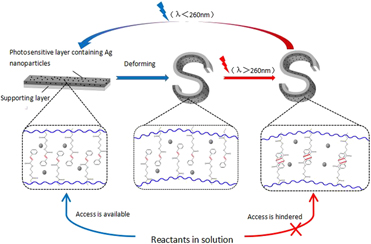
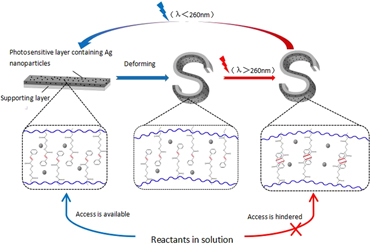
Inspired by the amazing thoughts published in the literature, a novel photoresponsive shape memory reactor with controllable catalytic performance has been designed in the present work. As illustrated in Fig. 1, a double-layer shape memory hydrogel was fabricated. A light-sensitive monomer, cinnamic acid hydroxyethyl methacrylate (CAM), was copolymerized with acrylamide to produce the photoresponsive layer and polyacrylamide formed the supporting layer without any light sensitivity. Ag nanoparticles, formed by the in situ reduction of AgNO3, were dispersed in the photoresponsive layer and act as the catalyst. It is known that cinnamic moieties are able to conduct efficient photoreversible cycloaddition reactions when exposed to light irradiation (λ > 260 nm or λ < 260 nm) by acting as molecular switches. Subsequently, if the double layer hydrogel is forced into a new shape and then irradiated with UV light at λ > 260 nm, the change in the morphology resulting from segmental movements under external stress can be fixed through the formation of new light-sensitive crosslinks in the photoresponsive layer. Although the supporting layer has no light sensitivity, it can strengthen the hydrogel and facilitate the formation of various temporary shapes. Under this condition, reactants in solution find it difficult to permeate into the photoresponsive layer to come in contact with the Ag nanoparticle catalyst because of the higher degree of crosslinking in the polymer network. Therefore, the catalytic reaction is greatly hindered. However, if irradiated with UV light at λ < 260 nm, the photoresponsive crosslinks were reversibly cleaved. As a result, the fixed temporary shape recovers to the original permanent shape. At the same time, an enhanced catalytic activity is also induced by the lowered crosslinking around the Ag nanoparticles. In principle, the catalytic performance of the smart hydrogel can be effectively regulated using an external light stimulus through shape change and recovery. This strategy may be valuable in applications under ambient conditions, especially when catalytic reactors with predetermined shapes are needed.
A schematic illustration of the double layer hydrogel with photoresponsive shape memory features used for controllable catalysis.

The photoresponsive double-layer hydrogel containing Ag nanoparticles was named Ag-PCAM/PAAM. For a comparative study, two controls named “Ag-PAAM/PAAM” and “PCAM/PAAM” were prepared under comparable conditions (see Experimental Procedure). Briefly, Ag-PAAM/PAAM is also a double-layer hydrogel; however, both layers in the sample are polymerized with acrylamide and the Ag nanoparticles included in either of the PAAM layers. PCAM/PAAM is almost the same as Ag-PCAM/PAAM with the exception that no Ag nanoparticles are contained in the photoresponsive layer.
Characterization of the photoresponsive monomer and double-layer hydrogels
To obtain the photoresponsive monomer, 2-hydroxyethyl methacrylate was reacted with cinnamoyl chloride. The 1H NMR spectrum of the product demonstrates its successful preparation (Supplementary material, Fig. S1). In addition, utilizing elemental analysis, the C, H, and O contents in this functional monomer were determined to be 68.75, 6.11, and 25.14%, respectively. This was essentially in agreement with those calculated from the molecular formula of the monomer (C: 69.22%, H: 6.19%, and O: 24.59%). The photoresponsive monomer was then to be used in the preparation of smart double-layer SMPs.
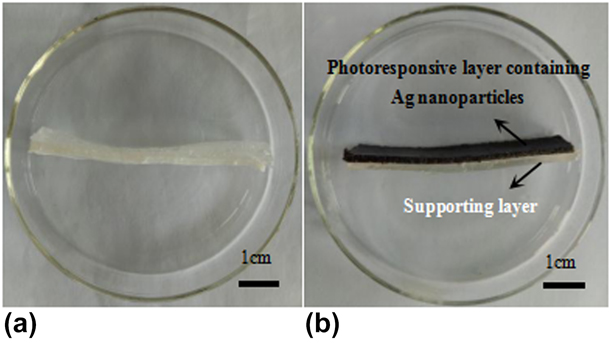
Digital photographs of the double-layer hydrogels prepared are shown in Fig. 2. Both layers in PCAM/PAAM are clear and colorless. In Ag-PCAM/PAAM, the supporting layer was also colorless, but the photoresponsive layer was black because of the presence of the dispersed Ag nanoparticles. Both layers were measured to be ∼2.4 mm.
Digital photographs of the as-prepared double-layer hydrogels: (a) PCAM/PAAM and (b) Ag-PCAM/PAAM.

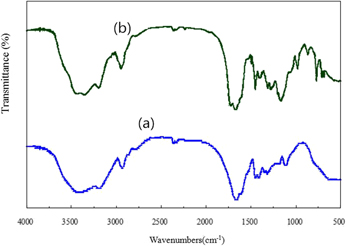
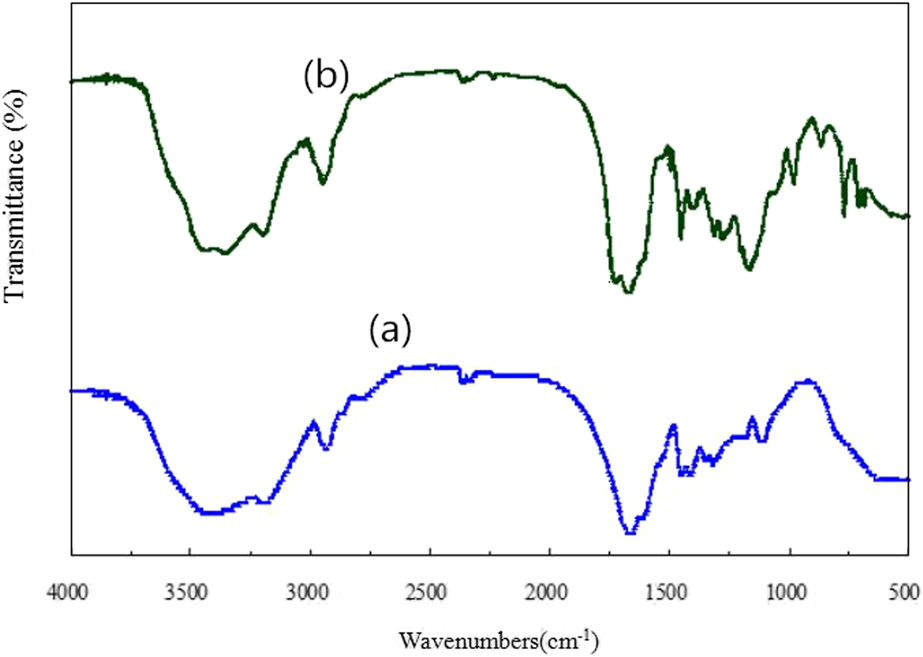
FT-IR spectroscopy was used to investigate the components in the individual layers in the double-layer hydrogels. Figure 3 shows the FT-IR spectrum of the supporting layer was relatively simple because only one monomer (i.e., acrylamide) is involved. The huge peak observed at ∼3400 cm−1 and the peak at 1667 cm−1 indicate the existence of an amide group. Produced from copolymerization of CAM and acrylamide, the spectrum of the photoresponsive layer was much more complicated. Three characteristic peaks corresponding to azobenzene were observed at 3052 cm−1 (stretching vibration of the C–H bonds in the benzene ring), 1496 cm−1 (stretching vibration of the C=C bonds in the benzene ring), and 1455 cm−1 (stretching vibration of the C=C bonds in the benzene ring), demonstrating the successful introduction of the cinnamic group into the photoresponsive layer.
FT-IR spectra of the individual layers in Ag-PCAM/PAAM: (a) Supporting layer and (b) photoresponsive layer.
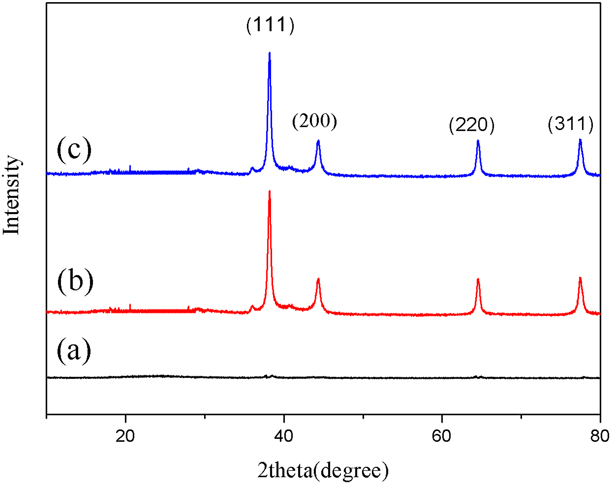
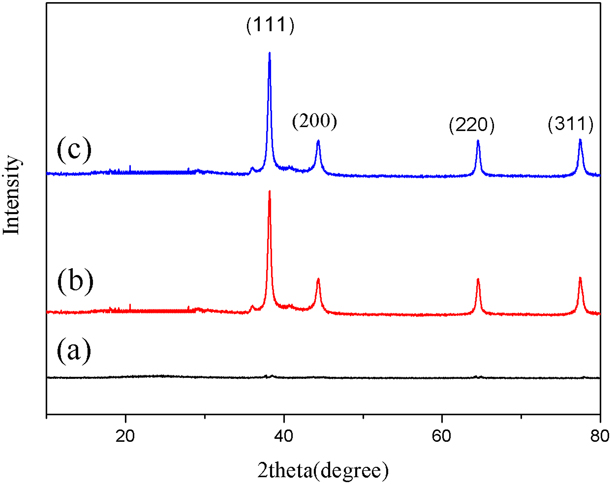
As mentioned above, the Ag nanoparticles were designed to be dispersed in the photoresponsive layer to act as the catalyst. To demonstrate the successful formation of the Ag nanoparticles, X-ray diffraction (XRD) was conducted. Figure 4 shows four characteristic peaks at about 38.3, 44.3, 64.2, and 77.3° were observed in the XRD pattern of Ag-PCAM/PAAM, which correspond to the (111), (200), (220), and (311) diffraction planes of face-centered cubic silver. This demonstrates the successful formation of the Ag nanoparticles in Ag-PCAM/PAAM. For comparison, the XRD patterns of the two contrast samples, Ag-PAAM/PAAM and PCAM/PAAM, were also recorded. As expected, the diffraction pattern of Ag-PAAM/PAAM showed peaks at the same 2θ values as Ag-PCAM/PAAM, indicating the existence of Ag nanoparticles. However, in the diffraction pattern of PCAM/PAAM, no peaks were observed because no silver nitrate was added during the preparation of this sample.
XRD patterns of the as-prepared hydrogels: (a) PCAM/PAAM, (b) Ag-PCAM/PAAM, and (c) Ag-PAAM/PAAM.
Furthermore, based on the XRD data, the average size of the Ag nanoparticles (D) in Ag-PCAM/PAAM and Ag-PAAM/PAAM was evaluated using the Debye–Scherrer equation [Reference Zhao, Hu, Niu, Li, Hu, Liu and Li16],
 $$D = {{k\lambda } / {\beta \;\cos \;\theta }}\quad ,$$
where k is the Scherrer constant, λ is the wavelength of the X-ray irradiation, β is the peak width at half height, and θ is the Prague diffraction angle. The average size of the Ag nanoparticles in Ag-PCAM/PAAM and Ag-PAAM/PAAM was evaluated to be 10.36 and 10.68 nm, respectively.
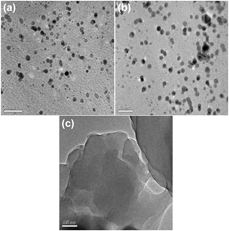
In addition, the morphology of the Ag nanoparticles in Ag-PCAM/PAAM and the two contrast samples were observed using TEM. From Fig. 5, Ag nanoparticles with spherical morphology were observed in Ag-PCAM/PAAM and Ag-PAAM/PAAM. Both average sizes of the Ag nanoparticles were determined to be ∼10 nm, which is consistent with the results calculated from the XRD data using the Debye–Scherrer equation. As expected, no Ag nanoparticles were observed in PCAM/PAAM.
TEM images of the as-prepared hydrogels: (a) Ag-PCAM/PAAM, (b) Ag-PAAM/PAAM, and (c) PCAM/PAAM.

Photoresponsive shape memory of the hydrogels
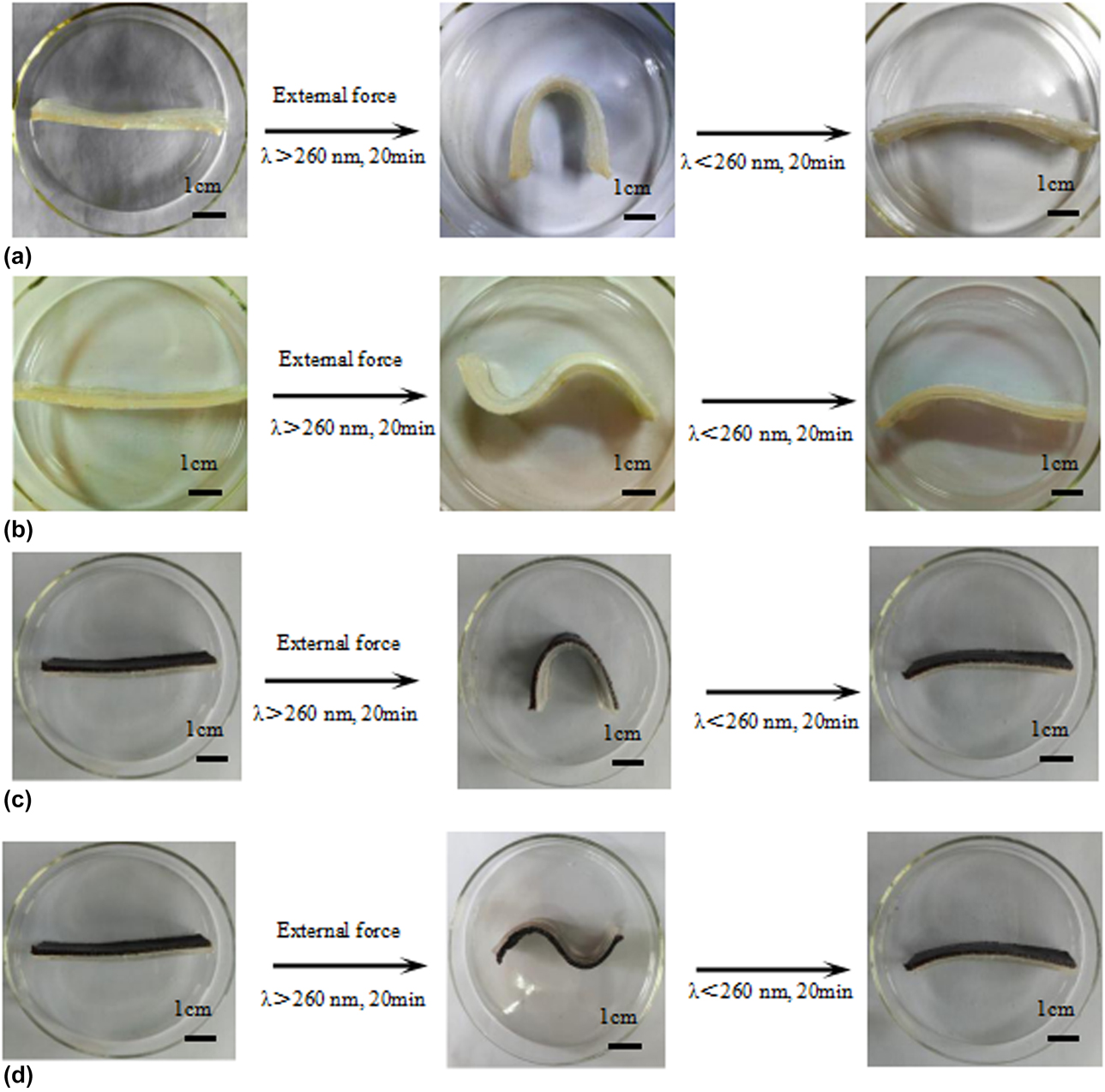
To investigate the shape memory functionality of the as-prepared hydrogels, digital photographs of the programming and recovery triggered by light were recorded and shown in Fig. 6. PCAM/PAAM was processed into its permanent shape, a straight strip. It was then forced into a “U” or “S” shape by external stress and irradiated with UV light at λ > 260 nm. When the external stress was removed, the hydrogel remains in its “U” or “S” shape because of the photosensitive cycloaddition between the cinnamic acid moieties in the photoresponsive layer. After being exposed to the UV light at λ < 260 nm, the hydrogel recovers back to its permanent shape, i.e., the original straight strip. This results from the cleavage of the newly formed photoreversible crosslinks. Very similar to PCAM/PAAM, Ag-PCAM/PAAM also exhibits an outstanding shape memory effect, as shown in Figs. 6(c) and 6(d). It is apparent that the Ag nanoparticles dispersed in Ag-PCAM/PAAM do not disturb the light sensitivity of the cinnamic moieties in the hydrogel. As an important quantitative measurement of the ability of a SMP to keep its shape change after programming [Reference Wu, Huang and Lu17], the shape fixity ratio of the hydrogels was evaluated. Unsurprisingly, the fixity ratio of Ag-PAAM/PAAM was zero (Supplementary material, Table SI) due to the absence of a photoresponsive layer. However, PCAM/PAAM and Ag-PCAM/PAAM show relatively high shape fixity ratios of 98.3% and 98.0%, respectively. After being irradiated with UV light at λ < 260 nm for 20 min, the shape recovery ratios were determined to be 89.6% and 90.2%, respectively (Supplementary material, Table SI). The results from the shape fixity and recovery ratios confirm the photoresponsive shape memory effect of PCAM/PAAM and Ag-PCAM/PAAM.
The shape memory effect of the photoresponsive double-layer hydrogels: (a, b) PCAM/PAAM and (c, d) Ag-PCAM/PAAM.
In addition, the influence of the light exposure time on the shape memory effect of Ag-PCAM/PAAM was investigated (Supplementary material, Fig. S2). The temporary shape can be fixed after 20 min of irradiation at λ > 260 nm and the hydrogel nearly recovers to its permanent shape when exposed to the UV light at λ < 260 nm for 20 min. Although the digital photographs are not shown here, Ag-PAAM/PAAM did not reveal any shape memory characteristics because of the absence of the photoresponsive layer. According to our experiments on the effect of the irradiation time on the shape fixity and recovery ratios of Ag-PCAM/PAAM (Supplementary material, Fig. S3), it was found that the shape fixity ratio was only 40.4% when exposed to UV light at λ > 260 nm for 5 min. However, if the irradiation time was extended to 20 min, the shape fixation ratio reached 98.0%. After being irradiated with UV light at λ < 260 nm for 5 min, the shape recovery ratio was determined to be only 38.9%. Upon increasing the exposure time to 20 min, the shape recovery ratio of the hydrogel was determined to be 90.2%. The photoirradiation time shows an important influence on the shape fixity and recovery ratio of the hydrogels.
It is believed that the photoreversible cycloaddition reaction of the cinnamic moieties grafted on the polymer network plays a key role in the shape memory effect of the hydrogels. Using ultraviolet-visible (UV-Vis) absorption spectroscopy, the photoresponsive behavior of CAM, the light-sensitive unit, was investigated by detecting its change in absorption under irradiation at different wavelengths of UV light. As shown in Fig. S4 (see Supplementary material), the maximum absorption at ∼277 nm corresponding to the alkene groups in the cinnamic moieties decreases from 1.75 to 1.16 after exposure to UV light at λ > 260 nm for 20 min. This indicates the disappearance of the double bond adjacent to the carbonyl groups in the cinnamic moieties and the formation of a cyclobutane ring bearing a styryl groups. The newly formed crosslinking points between the grafted cinnamic moieties fix the temporary shape, as illustrated in Fig. 1. After being exposed to UV light at λ < 260 nm for another 20 min, the previously formed cyclobutane rings are reversibly cleaved and the absorption peak at ∼277 nm increases again. The disappearance of the photosensitive crosslinking points result in the recovery of the permanent shape. Therefore, it is thought that the formation/cleavage of the light-sensitive crosslinking points in the polymer network, resulting from the photoreversible cycloaddition reaction between the cinnamic moieties in the photoresponsive layer, should be responsible for the shape memory effect of PCAM/PAAM and Ag-PCAM/PAAM when exposed to light irradiation.
Light-sensitive “on/off” analysis of the photoresponsive layer in the hydrogels
As described above, a significant change in the degree of crosslinking occurs in the photoresponsive layer in the PCAM/PAAM and Ag-PCAM/PAAM hydrogels when exposed to UV light at different wavelengths. Therefore, the cinnamic moieties grafted onto the polymer network have potential to act as a light-sensitive switch to effectively control the access and diffusion rate of external mass in the photoresponsive layer.
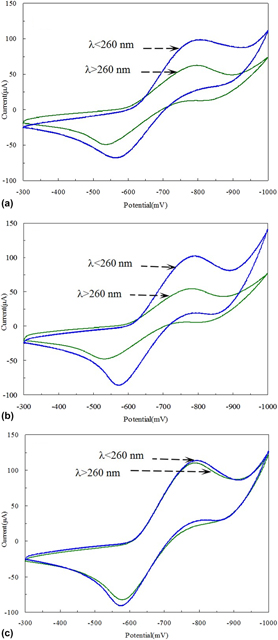
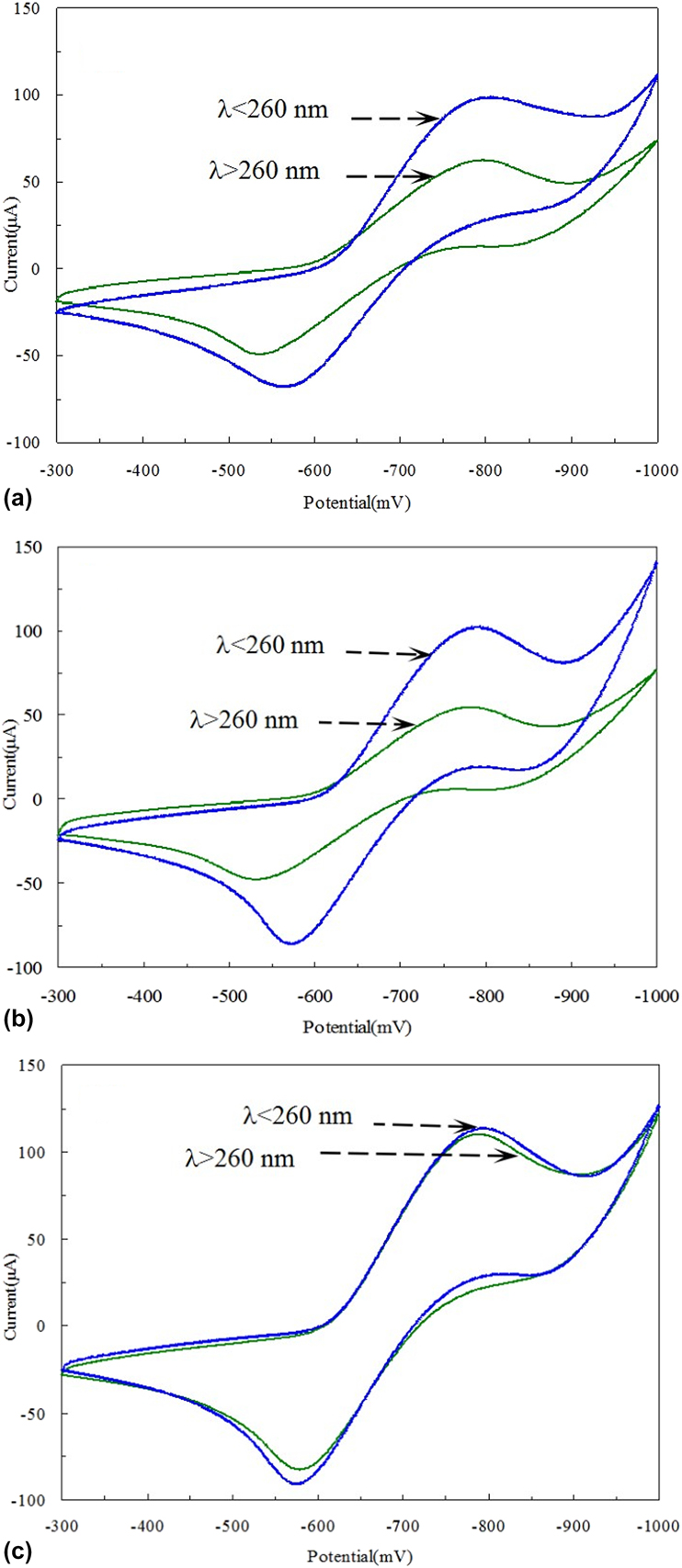
Electrochemical experiments were performed to estimate the photoswitchable “on/off” status of the photoresponsive layer in the hydrogels when irradiated with UV light at different wavelengths. In an electrochemical workstation, Pt wire inserted into the photoresponsive layer was used as the working electrode using a conventional three-electrode configuration. The redox reaction of HPO42−/H2PO4− was adopted as the probe to obtain information on the controllable access of external mass into the photoresponsive layer by detecting the current values when exposed to UV light at λ > 260 nm or <260 nm. Figure 7(a) shows a current peak as low as 62.07 μA is observed when Ag-PCAM/PAAM was irradiated with UV light at λ > 260 nm. This indicates that the external ions hardly access the photoresponsive layer to come in contact with the Pt wire due to the increased degree of crosslinking. When irradiated with UV light at λ < 260 nm, the current peak increases significantly to 98.57 μA, which reveals the easy access of the external ions into the photoresponsive layer. It is believed that the cleavage of the photoreversible bonds between the cinnamic moieties induce the sharp increase in the current peak. These phenomena indicate that like the shape memory effect, the switchable “on/off” status of the hydrogel can be controlled by light stimulus. Figure 7(b) shows PCAM/PAAM displays a similar controllable performance with Ag-PCAM/PAAM. For Ag-PAAM/PAAM [Fig. 7(c)], however, no significant current change was observed when exposed to UV light at different wavelengths, which is unsurprising because there are no light-sensitive units in both layers of Ag-PAAM/PAAM.
Cyclic voltammetry profiles of the hydrogels exposed to UV light at different wavelengths: (a) Ag-PCAM/PAAM, (b) PCAM/PAAM, and (c) Ag-PAAM/PAAM.
Controllable catalysis of the hydrogels
The catalytic properties of the as-prepared shape memory hydrogels were estimated through the reduction reaction of sodium fluorescein (SF) using NaBH4 catalyzed by the Ag nanoparticles. To determine the photoswitchable behavior, two kinds of light stimuli, λ > 260 nm and λ < 260 nm, were used for comparison, just like in the electrochemical experiments. It is not surprising to find that no obvious catalytic activity was observed for PCAM/PAAM (Supplementary material, Fig. S5) due to the absence of the Ag nanoparticles. In contrast, Ag-PAAM/PAAM showed significant catalytic activity. Not surprising, however, Ag-PAAM/PAAM did not reveal photoswitchable catalytic behavior when irradiated at different wavelengths. The conversion of SF was found to be >80% after 50 min of reaction whether exposed to light at λ > 260 nm or λ < 260 nm.
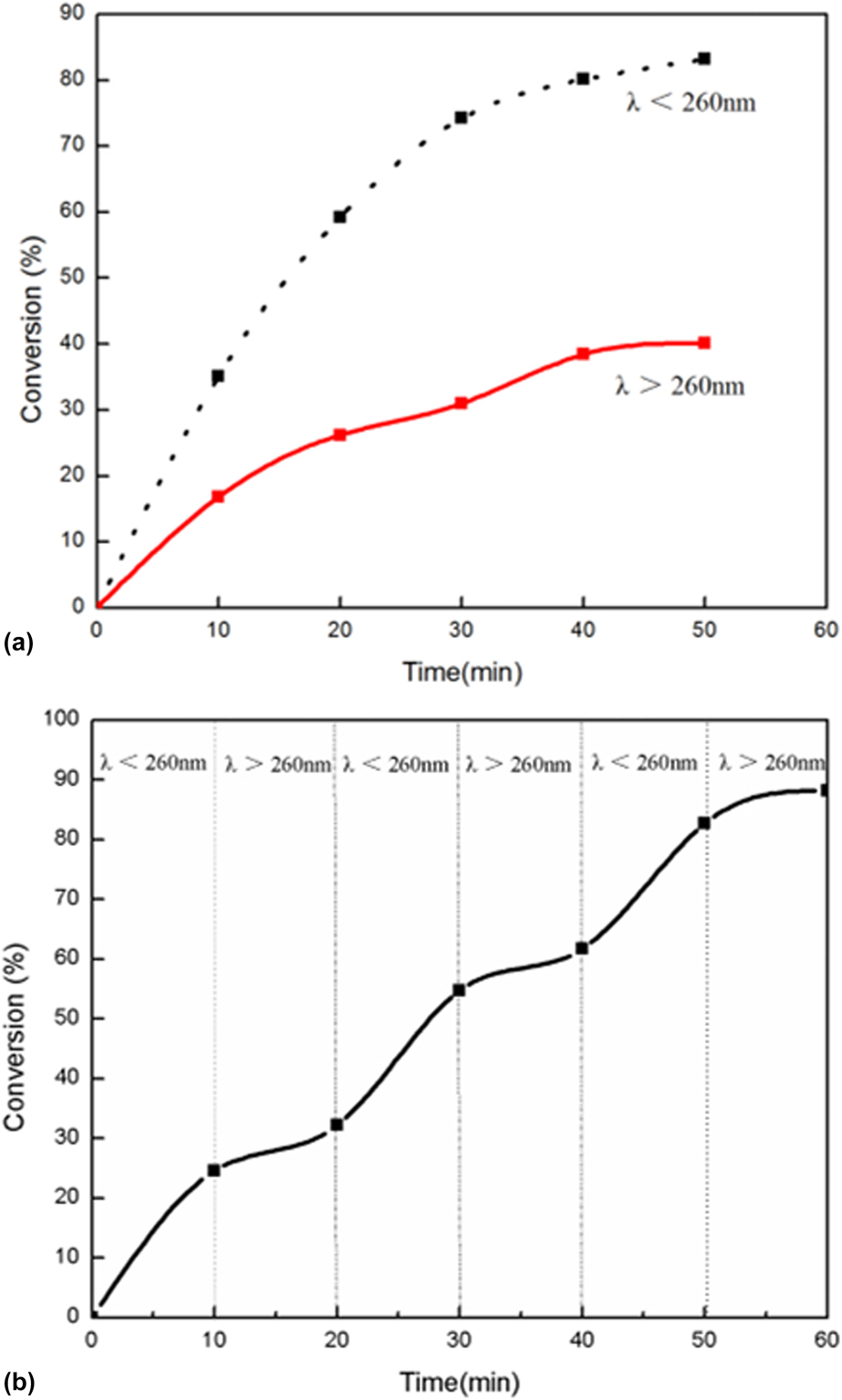
Interestingly, as shown in Fig. 8(a), Ag-PCAM/PAAM demonstrated tunable catalysis responding to an external light stimulus. After 50 min, the SF conversion under light irradiation at λ > 260 nm (40.15%) was much lower than that under light irradiation at λ < 260 nm (83.21%). It is believed that the photoreversible cycloaddition of the cinnamic moieties and the resulting variation in the macromolecular microstructure around the Ag nanoparticles are responsible for the sharp change in the reaction rate when exposed to UV light irradiation. When irradiated with UV light at λ > 260 nm, the increased degree of crosslinking induced by the cycloaddition of the cinnamic moieties hinders the access and diffusion of reactants in the system to become in contact with the Ag nanoparticle catalyst. This greatly slows down the catalytic reaction rate. After being irradiated with UV light at λ < 260 nm, the light-sensitive crosslinking points disappear and the reactants enter into the photoresponsive layer much more easily, which markedly enhances the catalytic reaction rate.
(a) The catalytic activity of Ag-PCAM/PAAM irradiated with UV light at different wavelengths. (b) The conversion profile catalyzed by Ag-PCAM/PAAM when irradiated alternatively with UV light at λ > 260 nm and λ < 260 nm.
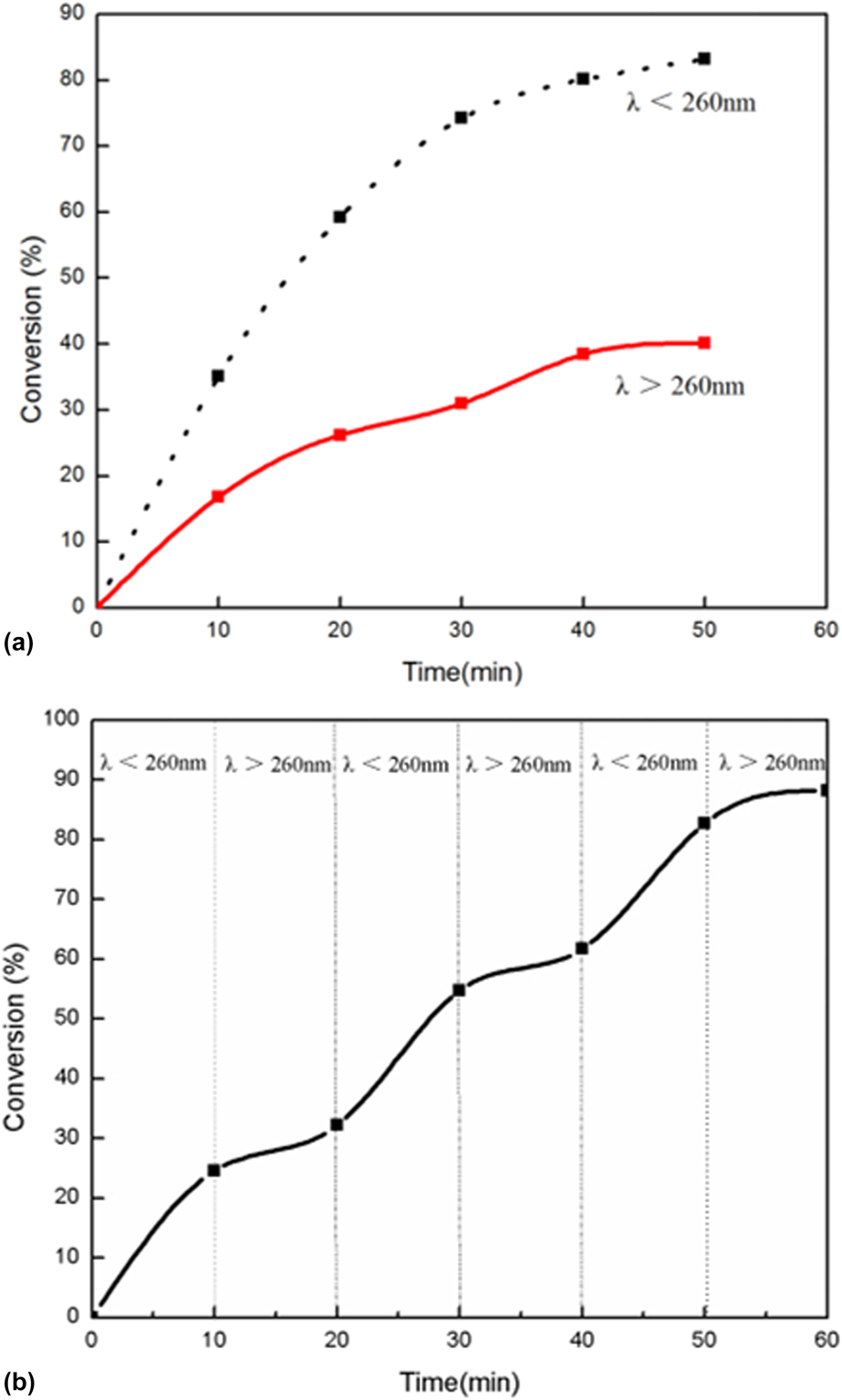
In addition, to understand its photoswitchable catalysis more clearly, the reaction system catalyzed by Ag-PCAM/PAAM was irradiated alternatively with UV light at λ > 260 nm and λ < 260 nm. Figure 8(b) shows that the catalytic reaction was significantly accelerated when exposed to photoirradiation at λ < 260 nm, but the reaction rate decreased dramatically when irradiated with light at λ > 260 nm. From the significant and repeatable change in the slope of the conversion–time curve, it has been demonstrated that the shape memory hydrogel, Ag-PCAM/PAAM, can regulate its catalytic activity effectively and reversibly responding to an external light stimulus.
Conclusions
A shape memory double-layer hydrogel reactor with photocontrolled catalytic performance has been reported. To fabricate the double-layer hydrogel, light-sensitive CAM was copolymerized with acrylamide to produce the photoresponsive layer, and pure polyacrylamide was used to form the supporting layer. FT-IR spectroscopy demonstrated the successful introduction of the cinnamic groups in the photoresponsive layer. Ag nanoparticles, formed by the in situ reduction of AgNO3, were dispersed in the photoresponsive layer and act as the catalyst. The successful formation of spherical Ag nanoparticles in Ag-PCAM/PAAM and Ag-PAAM/PAAM has been determined using XRD and TEM analyses. Their average sizes were further evaluated to be 10.36 and 10.68 nm, respectively, using the Debye–Scherrer equation. The TEM images also support these results. The as-fabricated hydrogel exhibits a shape memory effect and controllable catalysis behavior at the same time when exposed to an external light stimulus. It is believed that the photoreversible cycloaddition of the cinnamic moieties grafted onto the polymer network is responsible for the phenomena observed under light irradiation at different wavelengths. The newly formed crosslinking points resulting from the cycloaddition of the cinnamic moieties upon irradiation with UV light at λ > 260 nm not only fix the temporary shape, but also greatly slow down the catalytic reaction rate. However, after being irradiated with UV light at λ < 260 nm, the disappearance of the newly formed crosslinking points results in the shape recovery of the hydrogel to its permanent shape and the markedly increased catalytic reaction rate. It is thought that this strategy may be valuable in applications under ambient conditions, especially when catalytic reactors with predetermined shapes are needed.
Experimental procedures
Figure S6 (see Supplementary material) shows preparation of the shape memory hydrogel.
Synthesis of light-sensitive CAM
2-Hydroxyethyl methacrylate (HEMA) (1.3 g) and cinnamoyl chloride (1.66 g) were dissolved in 8 mL of dichloromethane (DCM). Triethylamine (TEA) (1.11 g) was then added dropwise to the resulting solution (TEA neutralizes the HCl produced in the reaction and promotes the production of CAM). The resulting mixture was stirred in a water bath at 25 °C for 3 h to complete the reaction. Subsequently, the product was washed with 1 wt% NaOH aqueous solution and deionized water several times to remove the salt impurities. Finally, CAM was obtained after centrifugation and drying.
Synthesis of the photosensitive layer containing Ag nanoparticles (Ag-PCAM)
CAM (0.82 g), acrylamide (0.16 g), silver nitrate (0.24 g), azobisisobutyronitrile (0.08 g), and N,N′-methylenebisacrylamide (BIS) (0.01 g) were dissolved in 2.5 mL of dimethyl sulfoxide and sonicated for 10 min. After being completely dissolved, the mixture was placed in a vacuum oven at 65 °C for 1 h. After the polymerization reaction, the silver ions in the gel were reduced to form Ag nanoparticles upon the addition of an excess of sodium borohydride solution at 0 °C. Finally, the photosensitive gel was soaked in methanol and deionized water to remove any unreacted mass.
For comparison, two different polymer layers, named Ag-PAAM and PCAM, were prepared under comparable conditions.
Synthesis of Ag-PAAM: acrylamide (0.98 g), silver nitrate (0.24 g), azobisisobutyronitrile (0.08 g), and BIS (0.01 g) were dissolved in 2.5 mL of dimethyl sulfoxide and sonicated for 10 min. After being completely dissolved, the mixture was placed in a vacuum oven at 65 °C for 1 h. After the polymerization reaction, the silver ions in the gel were reduced to form Ag nanoparticles upon the addition of an excess of sodium borohydride solution at 0 °C. Finally, the Ag-PAAM hydrogel was soaked in methanol and deionized water to remove any unreacted mass.
Synthesis of PCAM: CAM (0.82 g), acrylamide (0.16 g), azobisisobutyronitrile (0.08 g), and BIS (0.01 g) were dissolved in 2.5 mL of dimethyl sulfoxide and sonicated for 10 min. After being completely dissolved, the mixture was placed in a vacuum oven at 65 °C for 1 h. The hydrogel was soaked in methanol and deionized water to remove any unreacted mass.
Fabrication of the double-layer hydrogel with photoresponsive features (Ag-PCAM/PAAM)
To prepare the double-layer reactor, one side of the photosensitive gel, Ag-PCAM, was infiltrated into 2 mL of an aqueous solution of acrylamide (0.4 g), BIS (0.02 g), sodium hydrogen sulfite (0.01 g), and potassium persulfate at 25 °C. After polymerization, the as-obtained double-layer hydrogel was submerged in water to remove any unreacted monomers. The sample obtained was named Ag-PCAM/PAAM.
For comparison, two control samples, named Ag-PAAM/PAAM and PCAM/PAAM, were prepared under similar conditions. The only difference was that Ag-PCAM was replaced with Ag-PAAM and PCAM when fabricating Ag-PAAM/PAAM and PCAM/PAAM, respectively.
Characterization
FT-IR and 1H-NMR spectroscopy were used to investigate the structures of photoresponsive monomer and hydrogels prepared in this work. The FT-IR spectra were recorded on an FT-IR spectrometer (NICOLET IS10). 1H-NMR spectroscopy was performed on a Bruker AVANCE II 400 MHz nuclear magnetic resonance spectrometer. XRD data were obtained on a Philips 1730 powder X-ray diffractometer. TEM images were recorded using a JEM-2100 transmission electron microscope. Data obtained from XRD and TEM can help to investigate the Ag nanoparticles dispersed in the hydrogels. Electrochemical tests were employed on a CHI 760E electrochemical workstation using a three-electrode configuration.
To obtain the shape fixity and recovery ratios, rectangular samples (30.0 × 5.0 mm) were cut from the hydrogels and used for the mechanical tests. The shape fixity ratio (R f) and shape recovery ratio (R r) were obtained using Eqs. (2) and (3) [Reference Huang, Zhao, Wang, Ding, Purnawali, Tang and Zhang3],
 $${R_{\rm{f}}} = {{{\varepsilon _{\rm{u}}}} \over {{\varepsilon _{\rm{i}}}}} \times 100\% \quad ,$$
 $${R_{\rm{r}}} = {{{\varepsilon _{\rm{i}}} - {\varepsilon _{\rm{p}}}} \over {{\varepsilon _{\rm{i}}}}} \times 100\% \quad ,$$
where ɛi is the initial strain under an external force, ɛu is the strain after unloading, when the sample is exposed to UV light at λ > 260 nm for a given time under external force, and ɛp is the recovered strain when the sample is irradiated with UV light at λ < 260 nm for a given time.
The catalytic properties of the hydrogels were characterized by the reduction reaction of SF using NaBH4. SF (2 mg/L) was placed into an excess of NaBH4 solution (100 mg/L) to form a 40 mL solution. Subsequently, the double-layer hydrogel (1.0 g) was added into the solution. The concentration change of SF was detected using a UV-2550 spectrophotometer operated at λ = 490 nm.
Supplementary material
To view supplementary material for this article, please visit https://doi.org/10.1557/jmr.2019.138.
Acknowledgments
Financial support of this study by the Open Research Fund Program of Key Laboratory of Cosmetic (Beijing Technology and Business University), China National Light Industry (No. KLC-2018-YB1) is gratefully acknowledged. We thank International Science Editing (http://www.internationalscienceediting.com) for editing this manuscript.