


1. Introduction
English plays an important role in the lives of Ugandans. For example, official government records are written in English, Parliament conducts its business in English, national newspapers are written in English. English is the medium of instruction from elementary to tertiary level. English is a lingua franca among people of different ethnic groups whose mother tongues are mutually unintelligible, especially if they cannot use Luganda or, to some extent, Swahili.
Most Ugandans learn English at school. Whereas the principles of English language teaching and learning in the Ugandan school syllabuses are purportedly drawn from Standard English (henceforth StE), deviations in everyday usage are unquestionably visible. Hence, as Fisher (Reference Fisher2000: 61) puts it, the variety of English spoken in Uganda has been ‘indigenized’. Apart from featuring prominently in spoken discourse, Ugandan English (henceforth UgE) is also noticeable in Ugandan print media, official documents, and even in books written in Uganda. We should note that while there are significant pronunciation differences in UgE across the different regions in the country, Fisher (Reference Fisher2000: 59) rightly contends that there are generally uniform grammatical and lexical features of UgE throughout the country.
Interestingly, there is a dearth of descriptive research on UgE, with the first published account of this variety of English being that of Fisher (Reference Fisher2000), as far as I can tell. Whereas Fisher's (Reference Fisher2000) work is phenomenal in that it brings UgE into the limelight, it leaves out some of its very important properties and contains some inaccuracies (cf. section 2). There are also other works that purportedly describe UgE, namely Schmied (Reference Schmied, Kortmann, Burridge, Mesthrie, Schneider and Upton2004), Schmied (Reference Schmied, Kachru, Kachru and Nelson2006), and Wolf (Reference Wolf and Kirkpatrick2010). But clearly, Schmied's (Reference Schmied, Kortmann, Burridge, Mesthrie, Schneider and Upton2004, Reference Schmied, Kachru, Kachru and Nelson2006) accounts are peripheral, as he himself complains about insufficient data as ‘a European arm–chair researcher’ (Schmied, Reference Schmied, Kortmann, Burridge, Mesthrie, Schneider and Upton2004: 944). More importantly, both Schmied (Reference Schmied, Kortmann, Burridge, Mesthrie, Schneider and Upton2004, Reference Schmied, Kachru, Kachru and Nelson2006) and Wolf (Reference Wolf and Kirkpatrick2010) lump together the varieties of English in Uganda, Kenya and Tanzania under the label ‘East African English’. This approach makes it difficult for one to tell which features are purely UgE and which ones are not, and more generally, which part of East Africa a given feature is said to belong. Crucially, UgE should be treated as a distinct variety from Kenyan English or Tanzanian English (cf. Fisher, Reference Fisher2000: 61), although the three varieties are certainly coterminous in many respects.
2. Fisher's (Reference Fisher2000) account of UgE: a brief review
Fisher (Reference Fisher2000) lists a number of linguistic features of UgE in the domains of lexis, grammar and phonology. In the area of lexis, he mentions a number of peculiarities that occur in UgE, e.g. non-standard use of some words, e.g. avail means ‘provide (with)’, as in ‘I'll avail you the required information’; ‘Ugandanisms’, e.g. oversize is used instead of outsize; words transferred from local languages, e.g. to bounce, as in ‘I came to your office but I bounced’ for ‘I came to your office, but I didn't find you there’. In the area of grammar, Fisher (Reference Fisher2000) mentions, among others, direct object dropping, where it is obligatory to use an overt linguistic form in StE, e.g. ‘Those who cannot afford should find another school’; a generalized use of the question tag isn't it?, etc.
Fisher's (Reference Fisher2000) findings should be augmented and some of them need a re-analysis, since they depart from the truth found on the ground. For example, he claims (p. 59) that to bounce, as in ‘I came to your office but I bounced’, is a word translated directly from a Ugandan language, which he does not name. Given that Luganda (a Bantu language spoken in the capital of Uganda) is the main substrate language (Fisher, Reference Fisher2000: 59), one can conjecture that the Ugandan language Fisher (Reference Fisher2000: 59) refers to could indeed be Luganda. However, according to my Luganda consultants, there is no native Luganda word from which UgE derives to bounce. Similarly, a survey I conducted in other Ugandan languages yielded the same results; that is, the languages do not have a word that gave rise to the peculiar UgE use of the verb to bounce. Contrary to Fisher's (Reference Fisher2000: 59) claim, what takes place here is that the meaning of StE to bounce has been broadened in UgE, stemming from its standard metaphorical use, i.e. when a cheque is sent back by a bank, because there is no money in one's account. So, when one does not find a person they wanted to see, they go back or ‘they are sent back by the absence of that person’. In other words, it is an innovative metaphorical use of the StE verb to bounce. In contradistinction to Fisher's (Reference Fisher2000: 59) view, it is Ugandan languages that have been influenced by the UgE usage of the verb to bounce. In languages such as Luganda and Rutooro, etc., there is a verb kubausinga ‘to bounce’ borrowed from UgE to bounce, which is on a par with borrowings such as kudivelopinga, etc. from the StE verb to develop. Likewise, Fisher's (Reference Fisher2000) contention that oversize (p. 59) is a ‘Ugandanism’, which he defines as ‘a word found in Uganda or East Africa’, is misleading, because oversize is also found in StE, especially American English (as an alternative to oversized), as in ‘My daughter loves to wear oversize clothes’ (CALD, Reference Fisher2005). Fisher (Reference Fisher2000) seems to regard American English expressions used in Uganda as a feature of UgE (p. 60), but the fact that he claims that oversize is a ‘Ugandanism’, in the sense that it only occurs in Uganda or ‘East Africa’, makes his analysis problematic.
3. Features of Ugandan English
The features I present here are stable, ubiquitous, and arguably conventionalized properties of UgE. In fact, there are instances where UgE expressions are so categorical that StE expressions are regarded as ‘mistakes’ in Uganda (cf. section 4). Many other features of UgE are simply regarded as correct alternatives to StE expressions. For example, the use of UgE to avail reported by Fisher (Reference Fisher2000: 59) is used interchangeably with StE to provide (with)/make available.
Most examples are from online local newspapers, namely New Vision (NV) and Daily Monitor (DM), as well as The Observer and The Campus Journal. Further examples were gleaned from other written materials (e.g. novels), as well as field observations arising from day-to-day oral discourse. The study draws not only on the author's intuition (as a speaker of UgE), but also on the intuition of other speakers of UgE who were contacted in order to test the views of the author. Native speakers and repositories such as the OED (2009) and BNC were consulted in order to ascertain that the features described here as UgE do not occur in present-day StE, even though some of them may occur very marginally in native English, quintessentially as archaisms (cf. Fisher, Reference Fisher2000: 59), obsolescent or obsolete expressions, or simply as non-standard forms (see section 4).
3.1 Lexico-grammatical features
3.1.1 Derivation
(1) to ashame ‘to shame’, e.g. ‘“Jose has ashamed the whole family,” she told…’ (NV, 20 August 2011).
(2) to dirten ‘to dirty/make dirty’, e.g. ‘Would you let your children play in the mud and dirten themselves?’ (NV, 18 July 2008; see also Isingoma, Reference Isingoma2013: 21).
(3) to cowardise ‘to behave like a coward’, e.g. ‘“I'm not going to cowardise in implementing what council has approved…,” Prof. Baryamureeba said’ (DM, 20 May 2011; see also Isingoma, Reference Isingoma2013: 21).
(4) to louse ‘to idle, to laze’, e.g. ‘They could as well be just a bunch of five chaps lousing around’ (The Observer, 20 July 2012).
(5) to detooth (informal) ‘to fleece, to gold-dig’, e.g. ‘Out of 15 interviewees, only three people admitted to ever having actively detoothed a woman and one of them was female’ (NV, 30 April 2011; see also Isingoma, Reference Isingoma2013: 26).
(6) to wisache ‘to act like a wiseacre’, e.g. ‘He has started wisaching (Field Notes)’.Footnote 1
(7) vacist (pronounced /vakist/) ‘vacationer’, e.g. ‘The girls came from all walks of life – the short and tall, senior six vacists, campus students…’ (DM, 8 August 2011).
3.1.2 Singularization and pluralization
(8) trouser, pant, short, scissor, jean ‘(a pair of) trousers, pants, shorts, scissors, jeans’, e.g. ‘He's in shiny blue exotic-looking reptile skin shoes, a light blue trouser, a yellow shirt…’ (NV, 13 February 2010).
(9) summons is plural in UgE, e.g. ‘The summons dated February 17, 2011, were issued by the court's Civil Division registrar’ (DM, 23 February 2011).
(10) pluralization of the word name when referring to one person, e.g. ‘What are your full names?’ (DM, 30 June 2011).
(11) offal used as a count noun, e.g. ‘Mixing groundnuts with small fish (mukene), dried meat, offals and chicken enhances the protein…’ (NV, 28 December 2006).
3.1.3 Preposition omission and substitution
(12) under the shade/sun/rain ‘in the shade/sun/rain’, e.g. (i) ‘During those first days, he would stroll the streets aimlessly during daytime or get a cool shade under which to lie’ (Ocita, Reference Ocita2002: 49, in The Orphan Boy); (ii) ‘The traditional dancers sweating, drumming under the sun continued attracting more MPs…’ (NV, 14 March 2007). Note that in StE, under the sun means in the world (OED, 2009).
(13) from is also used as a locative (stative) in UgE, e.g. ‘The Kenyans studying from the two universities are seeking support from fellow students to rescue their relatives and friends at home’ (NV, 3 April 2006).
(14) to reply followed by a noun, instead of a preposition plus a noun, e.g. ‘However, sources with Finance told Daily Monitor that Muhakanizi on Tuesday afternoon replied Baku's letter’ (DM, 28 January 2006).
(15) at par ‘on a par’, e.g. ‘Are tax policies at par with IT growth?’ (NV, 7 January 2009).
3.1.4 Other
(16) basing ‘based/basing oneself’, e.g. ‘We closed the factory basing on a number of irregularities that our team found out during...’ (NV, 1 August 2011).
3.2 Lexical features
3.2.1 Semantic extension
(17) several ‘(very) many/numerous’, e.g. ‘It's so painful that not so long ago several people perished in the Kanungu incident, we can still take risks under the guise of faith (NV, 18 March 2006). Note that over 1,000 people died in the Kanungu incident’.
(18) stepbrother/stepsister ‘half-brother/half-sister’, e.g. ‘President Museveni himself relocated his operations to Gulu in order to command the war and appointed General Salim Saleh, his step-brother, as his special political and military advisor on affairs of the North with a brief to end the war’ (Latigo, Reference Latigo1997: 3). Note that General Salim Saleh and Museveni (the current president of Uganda) share the same biological father but have different mothers; hence in StE they are half-brothers.
(19) paper ‘course/course unit/subject unit’, e.g. ‘These are the most popular of the several alternative History papers taught at Advanced Level’ (Sseremba, Reference Sseremba2012, in The Campus Journal, 2 June).
(20) wholesome ‘total/entire/unmitigated’, e.g. ‘Otherwise, apart from government's failure to end the LRA mayhem, how does one explain the “wholesome” hatred of Museveni, even by the young successful middle class from the political north!’Footnote 2 (NV, 24 March 2006).
(21) to win ‘beat/defeat’, e.g. ‘Kamu told other fans that if Arsenal won Charlton, he would lie down and be given ten strokes’ (NV, 7 October 2006). Note that according to the OED, the use of win in the sense of ‘defeat’, ‘beat’, etc. is now obsolete in StE.
(22) ever ‘once/at one time/before’ (in StE ever is a negative polarity word meaning ‘at any time’ (cf. CALD, 2005)), e.g. ‘I agree with them because I have ever slept in camps and I know what it is’ (DM, 3 March 2006). Note that the UgE use of ever here is different from UgE ever meaning ‘always’, reported by Fisher (Reference Fisher2000: 59).
3.2.2 Particle addition, omission and substitution
(23) to air out ‘to air’, e.g. ‘The quality of debate in the House is wanting since NRM stopped its MPs from airing out their views without the party's clearance’ (NV, 7 January 2007).
(24) to pick ‘to pick up’ (The example I provide here is made up of four sentences, one of which contains UgE pick. The example is from an English language paper set by the Uganda National Examinations Board (UNEB, 1992). The sentences in the example were all presumed correct by the examination body; candidates were just supposed to join the four correct sentences into one sentence.) For example, ‘A school-boy was knocked down by a speeding car. My father picked him. He rushed him to hospital. My father did not know him’. (The instructions to candidates were: ‘Join into one sentence ending…him to hospital’.)
(25) to break off ‘to break up’, e.g. ‘Last Friday schools started breaking off for holidays’ (NV, 27 November 2006).
(26) to fill a form ‘to fill in/out a form’, e.g. ‘Okello says it is too late for your cousin to fill the forms’ (NV, 23 February 2010).
3.2.3 Idioms
(27) well be back ‘welcome back’, e.g. ‘Lukyamuzi, Ali well be back in the House’ (DM, 21 May 2011).
(28) to go berserk ‘to get out of hand’, e.g. ‘The academic affairs of the Ivory Tower have gone berserk’ (NV, 10 July 2005).
(29) to launch a manifesto (informal) ‘to propose to a girl’, e.g. ‘Come on, go ahead and launch your manifesto’ (Ocen, Reference Ocen2002: 29, in Ruins of a Star).
3.2.4 BorrowingsFootnote 3
(30) kyeyo ‘menial jobs in developed countries done by Ugandan (or African) migrants’, e.g. ‘The biggest amount of kyeyo cash comes from the UK, USA, Sweden, South Africa, Canada and Japan’ (NV, 5 July 2009).
(31) bodaboda ‘motorcycle taxi’, e.g. ‘When she disembarked from a bodaboda, Grace rushed to the latrine for…’ (NV, 17 June 2011).
(32) mbu ‘that/reportedly’ (mbu is a discourse marker used as an evidential to show that the speaker expresses indifference, doubt or antipathy in relation to what is being reported), e.g. ‘Now the minister is breathing fire mbu he is going to sue the university!’ (NV, 5 July 2011).
4. Accounting for the development of UgE and its ubiquitous use
The development of UgE is a result of important linguistic phenomena such as analogy and influence from local languages (see also Schmied, Reference Schmied, Kortmann, Burridge, Mesthrie, Schneider and Upton2004: 931 for similar observations in relation to what he calls East African English). The adoption of a given feature in UgE is sometimes attributable to the fact that there exists a similar feature in StE, such that either an interpretive resemblance or a formal resemblance is established between the two features, or both. For example, the UgE verb to dirten ‘dirty/make dirty’ seems to have been derived on the basis of a convergence of formal and interpretive resemblances with a number of other StE causative verbs like to strengthen, involving the notion of causing something to change from one state to a different state. To cowardise, which in UgE means ‘behave like a coward’, used to exist in StE (spelt cowardize), but not as an intransitive verb (WOD). It used to be a transitive verb meaning ‘render cowardly’, and it is seldom used nowadays (WOD). To ashame is also a rarely used verb in StE, where to shame is used instead (WOD). Since Ugandans entered into contact with English only relatively recently (approximately 12 decades ago), it may not be plausible to link the use of UgE to cowardise and to ashame with what seems to be obsolescent (or perhaps obsolete) StE words. There is even some evidence (cf. Maddox, Reference Maddox1902: 150) showing that the British, who introduced English to Uganda, used to shame. Note that my BNC search returned no hits involving the verbs ashame and cowardise, which suggests that they are either obsolescent or just obsolete. Thus, it seems more likely that the use of these words in UgE is rather a case of analogy. Other cases of analogy include using non-count nouns as count nouns (e.g. offals), singularization of words such as trousers (i.e. UgE trouser), etc. Influence from Ugandan languages can be observed in calques such as to detooth ‘fleece/gold-dig’. The fact that there is a lack of a more expedient way in StE to express certain concepts that occur in Ugandan languages gives rise to the emergence of words such as mbu (a discourse marker), etc., or even calques. Calques such as to eat money ‘embezzle’ (cf. Fisher, Reference Fisher2000: 59) and to detooth ‘fleece/gold-dig’ can be said to provide richer semantic and pragmatic content in the form of more colorful expressions than what is available in StE. Thus, some Ugandan speakers of English know, for example, that the idiom eat money and the verb detooth ‘fleece/gold-dig’ do not exist in StE. But they feel that such expressions are more appropriate in the Ugandan context than StE equivalents like to embezzle, to fleece/gold-dig, because their use yields additional cognitive effects compared to the StE expressions (cf. Isingoma, Reference Isingoma2013: 26). The calques are idioms from Luganda (kulya sente ‘eat money’, kukuula ammanyo ‘remove teeth’ = ‘detooth’) and many other Ugandan languagesFootnote 4. Idioms reward hearers with extra cognitive effects (Vega-Moreno, Reference Vega-Moreno2003: 319).
There seems to be a lack of awareness of the non-existence of some UgE expressions in StE. For example, to extend ‘move up’ (cf. Fisher, Reference Fisher2000: 59), to dirten ‘dirty/make dirty’ and others are used because many users of English in Uganda seem to be unaware of their non-existence in StE. Also, a person may use, for example, UgE to break off (for holidays), the summons are, etc. instead of StE break up, the summons is, because they feel that if they used the StE versions, they would be regarded as speaking or writing ‘broken English’ (cf. Isingoma, Reference Isingoma2013: 24). This shows how conventionalized and entrenched UgE is. Furthermore, sometimes, Ugandans who are conversant with given StE expressions and their usage may nevertheless find themselves using UgE expressions, because they are simply immersed in this variety of English and it might strike the addressee as odd, or maybe even arrogant or snobbish, for a Ugandan to adopt English usage that is not commonly heard in the country.
We should note that there is at least one UgE expression which is viewed as a high style lexical item, namely the verb to avail listed by Fisher (Reference Fisher2000: 59), as used in (33):
(33) ‘These markets are very important for the country. They create jobs, provide incomes, create wealth, avail products and develop areas’ (NV, 18 February 2007).
This expression belongs to intellectual vocabulary. It is hardly heard in ordinary parlance, for example, among primary or secondary school students. It is used by the so-called acrolects. In fact, the example I have provided in (33) was extracted from a scholarly article authored by a professor in the Ugandan media. Thus, the use of UgE transcends education level, i.e. UgE is not inferior and does not cause stigmatization. The mere fact that UgE to avail is mainly used by those who have a high command of English (because of their high level of education) is sufficient to corroborate this standpoint. Apart from the above verb, highly educated Ugandans use virtually all the other UgE expressions; for instance, the example of UgE to cowardise (see section 3.1.1), repeated here as (34), is a direct quotation from another professor:
(34) ‘“I'm not going to cowardise in implementing what council has approved…,”’ Prof. Baryamureeba said (DM, 20 May 2011; see also Isingoma, Reference Isingoma2013: 21).
Of course, these cases are just the tip of the iceberg. The data provided in this study clearly show that writers (e.g. novelists), academics, teachers, journalists, lawyers, and politicians, etc. all use UgE. None of these users of UgE is ready to face stigmatization. Note that sometimes playwrights may be positively interested in capturing the UgE tone in their dialogues, and even novelists and other writers can exploit features of UgE, especially in direct speech sequences. For example, let us consider (35), provided in section 3.2.1 in relation to the extended meaning of the word wholesome in UgE:
(35) ‘Otherwise, apart from government's failure to end the LRA mayhem, how does one explain the “wholesome” hatred of Museveni, even by the young successful middle class from the political north!’ (NV, 24 March 2006).
As it can be seen in (35), the author places the word wholesome in inverted commas. The author could be aware of the meaning of wholesome in StE, but he is also aware that the audience appreciates the UgE usage and no other term would be more appropriate here, whence the inverted commas. In addition, the author could just be reporting what other people say about Museveni (the current president of Uganda) being completely unpopular in the region. He might be aware of the StE usage of the word, or he might be oblivious to it as well. However, it is also possible that the author is only aware of the meaning of the word as it is used in UgE but reserved himself not to sound hyperbolic, since not everybody in the ‘political north’ hates Museveni.
5. Concluding remarks
I have listed a number of instantiations of the lexical and grammatical features of UgE that are basically not included in Fisher (Reference Fisher2000). The use of UgE is so ubiquitous that it generally permeates the English of virtually every educated Ugandan. Since UgE is, above all, English, it is natural for it to share some properties with other Englishes. Cases of calquing from indigenous languages, treating some non–count nouns as count nouns, etc. have been reported in other non-native Englishes (see, for example, Huber & Dako, Reference Huber, Dako, Kortmann, Burridge, Mesthrie, Schneider and Upton2004). But as we have seen, the actual calques, for example, may be different in given varieties. For instance, I have not yet come across any other variety of English where the UgE calque to detooth ‘fleece, gold-dig’ is used. Crucially, as a variety of English in East Africa, it is no surprise that UgE shares some of its properties more closely with other East African varieties of English (see also Arua, Reference Arua1998: 139 in relation to Swazi English and Black South African English). For example, Schmied (Reference Schmied, Kortmann, Burridge, Mesthrie, Schneider and Upton2004: 931, Reference Schmied, Kachru, Kachru and Nelson2006: 198) points out that UgE to pick, as opposed to StE to pick up, is used in the whole of East Africa. However, this does not mean that there are no differences between, for example, Kenyan English and UgE insofar as to treat them as one variety. For example, cases of to dirten ‘dirty/make dirty’, to detooth, etc. have not been reported in Kenyan English (or Tanzanian English). But it is instructive to note that some of the peculiarly UgE features may have a cognitive basis that would make them rather likely candidates that may undergo conventionalization, often through the cognitive mechanism of analogy, in other non-native Englishes as well.
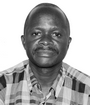 BEBWA ISINGOMA holds a PhD in English Linguistics from the University of Agder (Norway). He is also an alumnus of the Norwegian University of Science and Technology, where he obtained his MPhil in Linguistics. He holds a permanent position at Gulu University in Uganda, where he also acts as chair of the Department of Languages and Literature. His research interests include English linguistics, World Englishes, Bantu linguistics, contrastive linguistics, contact linguistics, syntax and pragmatics (Relevance Theory). Email: isibebwa@yahoo.co.uk


