Introduction
Since their domestication 15,000 and 30,000 years ago, dogs (Canis familiaris) have shared their environments with human beings (Larson and Bradley, Reference Larson and Bradley2014; Takashima and Day, Reference Takashima and Day2014). These shared environments have evolved (O'Haire, Reference O'Haire2010): dogs reside in homes, sometimes sleeping in the same beds as their human companions, may share confined spaces with human beings while traveling in cars, and/or participate in animal-assisted therapies for human beings (Braun et al., Reference Braun, Stangler, Narveson and Pettingell2009; Friedmann and Son, Reference Friedmann and Son2009; González Ramírez and Landero Hernández, Reference González Ramírez and Landero Hernández2014). The human–animal bond describes the shared physiological and psychological benefits that can exist, including improved health, welfare, and overall wellbeing (Takashima and Day, Reference Takashima and Day2014). Not only can dogs contribute to significant improvements in the health of their owners, but they can also improve the health of others with whom they come into contact (Macpherson, Reference Macpherson2012).
However, dogs may present risks to the health of human beings and other dogs (Macpherson, Reference Macpherson2012). Dogs can share significant diseases with human beings, including rabies, leptospirosis, leishmaniasis, and echinococcosis (Eckert and Deplazes, Reference Eckert and Deplazes2004; Hodgson and Darling, Reference Hodgson and Darling2011; WHO et al., 2015; Esteva et al., Reference Esteva, Vargas and Vargas de León2017). Furthermore, some vectorborne disease agents can affect both dogs and people (e.g. Borrelia burgdorferi), although, in the case of B. burgdorferi, dogs are not considered important in transmission to people (Ontario Agency for Health Protection and Promotion (Public Health Ontario), 2017). Canine zoonoses and vectorborne diseases exist in many countries but their endemicity varies depending on a variety of factors, including (1) genetic and biological factors, such as pathogen adaptation to macro- and microenvironmental changes along with changes in host susceptibility to infection; (2) environmental factors, including land use, climate change, changes in ecosystems, and changes in human and animal population densities affecting vector and reservoir distribution; and (3) socioeconomic and political factors, such as increasing international travel and commerce, social inequality, economic development, poverty, lack of political governance, and access to health services and resources (Rabozzi et al., Reference Rabozzi, Bonizzi, Crespi, Somaruga, Sokooti, Tabibi, Vellere, Brambilla and Colosio2012; Taylor, Reference Taylor2013; Gebreyes et al., Reference Gebreyes, Dupouy-Camet, Newport, Oliveira, Schlesinger, Saif, Kariuki, Saif, Saville, Wittum, Hoet, Quessy, Kazwala, Tekola, Shryock, Bisesi, Patchanee, Boonmar and King2014; Woldehanna and Zimicki, Reference Woldehanna and Zimicki2015). Dog-related zoonoses can represent a major public health concern irrespective of country-status; however, the scope of this concern may differ depending on local socio-economic influences (Otranto et al., Reference Otranto, Dantas-Torres and Breitschwerdt2009; Little et al., Reference Little, Heise, Blagburn, Callister and Mead2010; Chomel, Reference Chomel2011; Chikweto et al., Reference Chikweto, Tiwari, Kumthekar, Stone, Louison, Thomas, Sharma and Hariharan2013).
The sovereign states and dependent territories of North America comprise the world's third largest continent and encompass 16.5% of the earth's land mass (Hoffman et al., Reference Hoffman, Schaetzl, Wreford Watson and Zelinsky2016). The Inequality-adjusted Human Development Index (IHDI), developed by the United Nations Development Programme, is a standardized indicator of country-specific levels of human development, when accounting for inequality (United Nations Development Programme, 2016). Levels of human development are important considerations as they can help to inform and evaluate policies toward inequality reduction. Of note, available resources, including research funding, may vary within countries, but so may the specific pathogens of interest; what is of research interest in southern Ontario Canada, for instance, may not be of relevance or priority to Inuit in Arctic Canada. While the evaluation of within-country heterogeneity is beyond the scope of this review, we specifically chose to use IHDI country ranking which provides a direct relationship regarding inequalities in dimensions of the Human Development Index (HDI) to the resulting loss in human development (United Nations Development Programme, 2016).
Previous research has identified canine zoonoses and vectorborne diseases of significant public health concern in domestic dogs in many of the sovereign states and dependent territories of North America (Leal-Castellanos et al., Reference Leal-Castellanos, Garcia-Suarez, Gonzales-Figueroa, Fuentes-Allen and Escobedo-De La Pena2003; Lefebvre et al., Reference Lefebvre, Waltner-Toews, Peregrine, Reid-Smith, Hodge, Arroyo and Weese2006; Himsworth et al., Reference Himsworth, Jenkins, Hill, Nsungu, Ndao, Thompson, Covacin, Ash, Wagner, McConnell, Leighton and Skinner2010; Millien et al., Reference Millien, Pierre-Louis, Wallace, Caldas, Rwangabgoba, Poncelet, Cosivi and Del Rio Vilas2015). However, a synthesis of the research evidence to identify the nature, features, and extent of literature conducted in North American countries classified by IHDI has not been undertaken.
A recent systematic review of community-level research utilizing a One Health framework to investigate zoonoses, including canine zoonoses, was conducted in 54 countries across the world (Schurer et al., Reference Schurer, Mosites, Li, Meschke and Rabinowitz2016). The transmission of canine zoonoses is driven by biological, ecological, and political factors, and also significantly influenced by how, where, and when human beings and dogs come into contact (Taylor et al., Reference Taylor, Latham and Woolhouse2001; Woldehanna and Zimicki, Reference Woldehanna and Zimicki2015). With increased recognition that the health of animals, people, and the environment is inextricably linked, integrated collaborative approaches to health research (e.g. One Health, Ecosystem Health, and others) have been proposed as tools to address complex global health challenges, such as canine zoonoses, while providing opportunities to identify sustainable global health solutions (Conrad et al., Reference Conrad, Meek and Dumit2013; Gebreyes et al., Reference Gebreyes, Dupouy-Camet, Newport, Oliveira, Schlesinger, Saif, Kariuki, Saif, Saville, Wittum, Hoet, Quessy, Kazwala, Tekola, Shryock, Bisesi, Patchanee, Boonmar and King2014; Häsler et al., Reference Häsler, Cornelson, Bennani and Rushton2014a, Reference Häsler, Hiby, Gilbert, Obeyesekere, Bennani and Rushton2014b).
Currently, it is unclear what kinds of information are available in the literature that specifically relates to canine zoonoses and vectorborne diseases of significant public health concern in North America, whether this research varies by IHDI-ranking, and whether any integrated collaborative approaches have been included in canine zoonotic research objectives or methods. For these reasons, we conducted a scoping review to address the broad research question: What types of canine zoonoses and vectorborne research in domestic dogs have been conducted in North American countries since the start of the 21st century, and how does the literature vary across its sovereign states and dependent territories?
Our specific objectives were to identify and characterize the available literature by examining (1) the number and type of canine zoonoses and vectorborne disease studies in domestic dogs conducted in North America since the start of the 21st century; (2) the main research methods reported; (3) research from North American countries ranked on the IHDI; and (4) whether specific collaborative integrated approaches to research (e.g. One Health, Ecosystem Health, and others) were reported in the study objectives or methods sections.
Methods
Protocol and registration
This review followed the framework developed by Arksey and O'Malley (Reference Arksey and O'Malley2005) and was reported using the PRISMA Extension for Scoping Reviews (PRISMA-ScR) reporting guidelines (Tricco et al., Reference Tricco, Lillie, Zarin, O'Brien, Colquhoun, Levac, Moher, Peters, Horsley, Weeks, Hempel, Akl, Chang, McGowan, Stewart, Hartling, Aldcroft, Wilson, Garritty, Lewin, Godfrey, Macdonald, Langlois, Soares-Weiser, Moriarty, Clifford, Tunçalp and Straus2018). A protocol was developed a priori, and is archived in the University of Guelph's institutional repository (The Atrium) available at: http://hdl.handle.net/10214/13047 and published online with Systematic Reviews for Animals and Food (SYREAF) available at: http://www.syreaf.org/.
Eligibility criteria
Studies were eligible for inclusion if they: (1) were original scientific reports of research findings (i.e. primary research studies) of dog-level and/or pathogen-level outcomes; (2) were published in English, French, or Spanish; (3) investigated eligible canine zoonoses and vectorborne diseases or their disease-causing agent in the target population of interest; (4) were conducted in one or more North American countries; and (5) were published between 1 January 2000 and 14 May 2018. Conference proceedings less than 500 words, dissertations, and citations for which the full-text document in English, French, or Spanish was unavailable were excluded.
Eligible population
Studies where the population of interest included any breed of dog belonging to C. familiaris, including owned and unowned domestic dogs, or was a zoonotic agent affecting dogs, were eligible.
Eligible pathogens
Eligible canine zoonotic and vectorborne pathogens were defined as those with the potential to cause moderate to severe health outcomes (i.e. morbidities and/or mortalities) in human beings and in dogs. The list of eligible zoonoses was developed by the authors from a combination of published literature (Eckert and Deplazes, Reference Eckert and Deplazes2004; Lefebvre et al., Reference Lefebvre, Waltner-Toews, Peregrine, Reid-Smith, Hodge, Arroyo and Weese2006; Chikweto et al., Reference Chikweto, Bhaiyat, Tiwari, de Allie and Sharma2012, Reference Chikweto, Tiwari, Kumthekar, Stone, Louison, Thomas, Sharma and Hariharan2013; Krecek et al., Reference Krecek, Drebot, Wood, Morrison, Forde and Dewailly2012; Chomel, Reference Chomel2014; Stull et al., Reference Stull, Brophy and Weese2015; Springer et al., Reference Springer, Montenegro, Schicht, Pantchev and Strube2018), and publicly available online information from relevant region-specific organizations (Supplementary Appendix I).
Eligible countries (including within-country regions) of interest
Any country (or region within) in North America (Hoffman et al., Reference Hoffman, Schaetzl, Wreford Watson and Zelinsky2016) was eligible, including Anguilla, Antigua and Barbuda, Aruba, The Bahamas, Barbados, Belize, Bermuda, Bonaire, British Virgin Islands, Canada, Cayman Islands, Clipperton Island, Costa Rica, Cuba, Curacao, Dominica, Dominican Republic, El Salvador, Federal Dependencies of Venezuela, Greenland, Grenada, Guadeloupe, Guatemala, Haiti, Honduras, Jamaica, Martinique, Mexico, Montserrat, Navassa Island, Nicaragua, Nueva Esparta, Panama, Puerto Rico, Saba, San Andres and Providencia, Saint Barthelemy, Saint Kitts and Nevis, Saint Lucia, Saint-Martin, Saint Pierre and Miquelon, Saint Vincent and the Grenadines, Sint Eustatius, Sint Maarten, Trinidad and Tobago, Turks and Caicos Islands, United States, and the United States Virgin Islands. For this review, we used search terms that were included in the geographical region of North America but recognize we would not expect to find publications out of Clipperton Island nor Navassa Island as neither is currently inhabited by dogs or human beings.
Information sources
Literature searches were conducted through the McLaughlin Library, University of Guelph in the following electronic databases: AGRICOLA© via ProQuest®; CAB Direct© via CABI©; MEDLINE® via NCBI©; and the Science Citation Index Expanded (SCI-EXPANDED)™ and Emerging Sources Citation Index (ESCI)™ databases via the Web of Science platform™.
Search
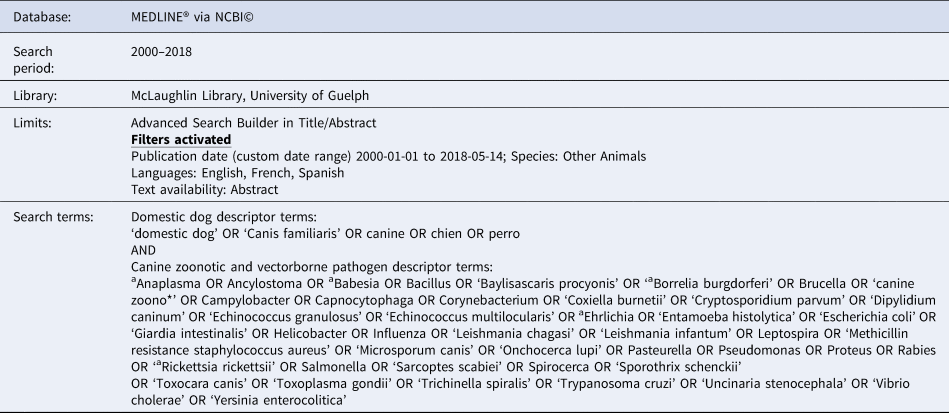
Keyword searches were developed from exploring the literature and through consultation with librarians and experts in academia and government familiar with canine zoonoses and vectorborne diseases. The keyword search included combinations of Spanish and French variations of the concept term ‘dog’, and applicable canine zoonoses and vectorborne diseases and/or pathogens with the controlled vocabulary option included where available. The search strategy was modified for each database, accounting for differences in syntax, indexing, and functionality when appropriate. The full literature search was conducted in five databases on 14 May 2018. Table 1 shows the complete search approach for one database (MEDLINE® via NCBI©), which included the following filters: language was limited to English, French, or Spanish studies; species selection (‘other animals’) restricted results to animal studies; and publication date between 2000 and 2018.
Final search strategy for the conduct of title/abstract screening in MEDLINE® via NCBI® to identify literature on canine zoonoses and vectorborne disease research in Canis familiaris in North America since the start of the 21st century

a Please note these tickborne pathogens affect both dogs and people, however dogs are not always considered important in the epidemiology of the human disease. However, we have included it in our search string as it is of public health concern in some sovereign states and dependent territories in North America and can affect the health of both humans and dogs.
Reference management
Citation results were uploaded into EndNote® X8 (Clarivate Analytics) reference management software and duplicates were identified and removed. Subsequently, citations were uploaded into the commercial review management program DistillerSR™ (Evidence Partners, Ottawa, Canada) and deduplication was conducted.
Selection of sources of evidence and data charting
Title/abstract (level 1) screening was completed by authors DAJ, JMS, and VW. The title/abstract screening form was pre-tested using 750 citations reviewed by DAJ, JMS, and VW. The three reviewers discussed the results, resolved disagreements, and amended the screening forms prior to beginning the title/abstract review.
Full-text screening (level 2) and data-charting (level 3) forms were developed in English, and pre-tested by DAJ and VW using ten full-text publications for each form. Full-text screening (level 2) for eligibility was completed by DAJ and VW for English language texts. French and Spanish full texts were screened by a single reviewer fluent in these languages (CF). Data-charting (level 3) was completed by DAJ and VW for English language publications and by CF for French and Spanish language publications. Disagreements were resolved by consensus.
Each reviewer worked independently to examine each eligible publication using structured online forms created in DistillerSR™. Screening forms were developed with minor adjustments to the wording presented in the protocol. The explanation and elaboration (‘guidance’) document for reviewers including questions specific to each of the title/abstract, full text, and data-charting forms can be found in Supplementary Appendices II, III, and IV, respectively.
Data items
We extracted data detailing the: (1) publication year; (2) North American country(ies) within which the study was conducted; (3) zoonotic and vectorborne pathogens studied; (4) focus of study (i.e. dog-level, pathogen-level, or both); (5) research approach at the dog-level including descriptive studies (outbreak investigations, case reports, case series, and studies estimating proportions, prevalence, incidence without comparisons); experiments (challenge trials of interventions to prevent or treat, natural disease trials of interventions to prevent or treat); and observational studies (interventions to prevent or treat, evaluations of risk factors for disease, evaluations of mechanisms of disease/virulence; and diagnostic test development/evaluation; approach not-defined or unclear); (6) research approach at the pathogen-level (i.e. development or validation of laboratory methods and diagnostics, identification of virulence factors, molecular biology, pathophysiology and immunology of pathogen–host interaction, phylogeny, whole genome sequencing, and approach not-defined or unclear); (7) domestic dog populations investigated (i.e. experimental, free-roaming, owned, stray, population not-defined); and (8) type of integrated collaborative research approach (collaborative approach, community-based approach, Ecosystem Approach to Health, One Health, participatory epidemiology, systems approach, approach not-defined or unclear, no approach listed) described as a component of the study objectives and/or methods (i.e. the authors explicitly reported that one or a combination of these approaches were considered as part of the conduct of the research study) (Pyett, Reference Pyett2002; Leung et al., Reference Leung, Yen and Minkler2004; Ahn et al., Reference Ahn, Tewari, Poon and Phillips2006; Taylor, Reference Taylor2013; Lavan et al., Reference Lavan, King, Sutton and Tunceli2017).
Following the data extraction process, a single reviewer (DAJ) categorized North American countries into IHDI rankings created by the United Nations Development Programme (United Nations Development Programme, 2016). For studies conducted in more than one North American country (e.g. Canada and Mexico), the study was categorized into each appropriate level. Therefore, the total number of publications by IHDI category was higher than the total number of studies.
A single reviewer (DAJ) categorized the pathogens as bacterial, fungal, parasitic, or viral. As many studies investigated multiple pathogens, the number of pathogens was higher than the number of studies. Using the extracted data, DAJ identified the five most frequently researched zoonotic and vectorborne pathogens with the potential to cause moderate to severe health outcomes (i.e. morbidities and/or mortalities) in human beings and in dogs. Finally, dog-level approaches were categorized into experimental, analytical observational, and descriptive study designs (Sargeant et al., Reference Sargeant, Kelton and O'Connor2014).
Synthesis of results
Data were cleaned and descriptive frequencies performed using statistical software, STATA Intercooled 15 (StataCorp., 2017. Stata Statistical Software: Release 15. College Station, TX, USA: StataCorp LLC). A combination of figures and tables was used to collate, summarize, and report study characteristics.
To meet objective one, we created a regional map identifying the number of eligible canine zoonoses and vectorborne studies in domestic dogs, tabulated a comprehensive list of canine zoonoses and vectorborne pathogen types, and created a line graph of the number of eligible studies conducted in North America since the beginning of the 21st century. For objectives two, three, and four, we categorized and tabulated the remaining study characteristics by North American countries ranked as ‘very high’, ‘high’, ‘medium’, and ‘low’ via the IHDI.
Results
Selection of sources of evidence
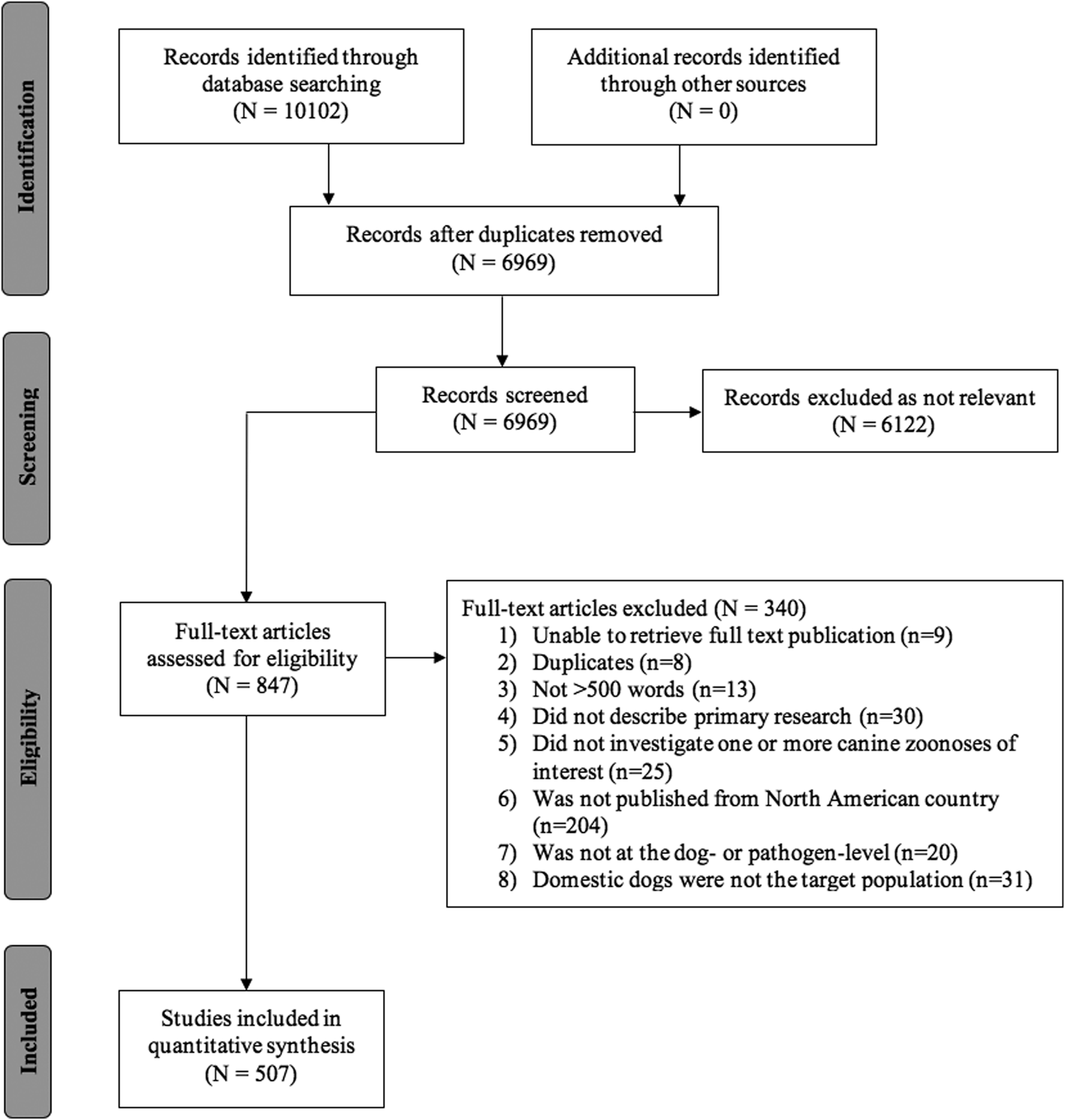
We adhered to the scoping review protocol with minor deviations from the protocol made to clarify the wording in the broad research question, review objectives statement and screening forms, and to avoid the perception that dogs were involved in the transmission of certain pathogens to human beings. Searches of the selected databases identified 6969 unique citations after duplicates were removed with 847 full-text articles accessed for eligibility screening. Of these, 507 studies (Supplementary Appendix V) were eligible for data characterization in this review (Fig. 1).
PRISMA© flow chart detailing the number of title/abstract citations identified, duplicates removed, full texts included and excluded, and the reasons for their exclusion. PRISMA, Preferred Reporting Items for Systematic reviews and Meta-Analyses

Results of individual sources of evidence
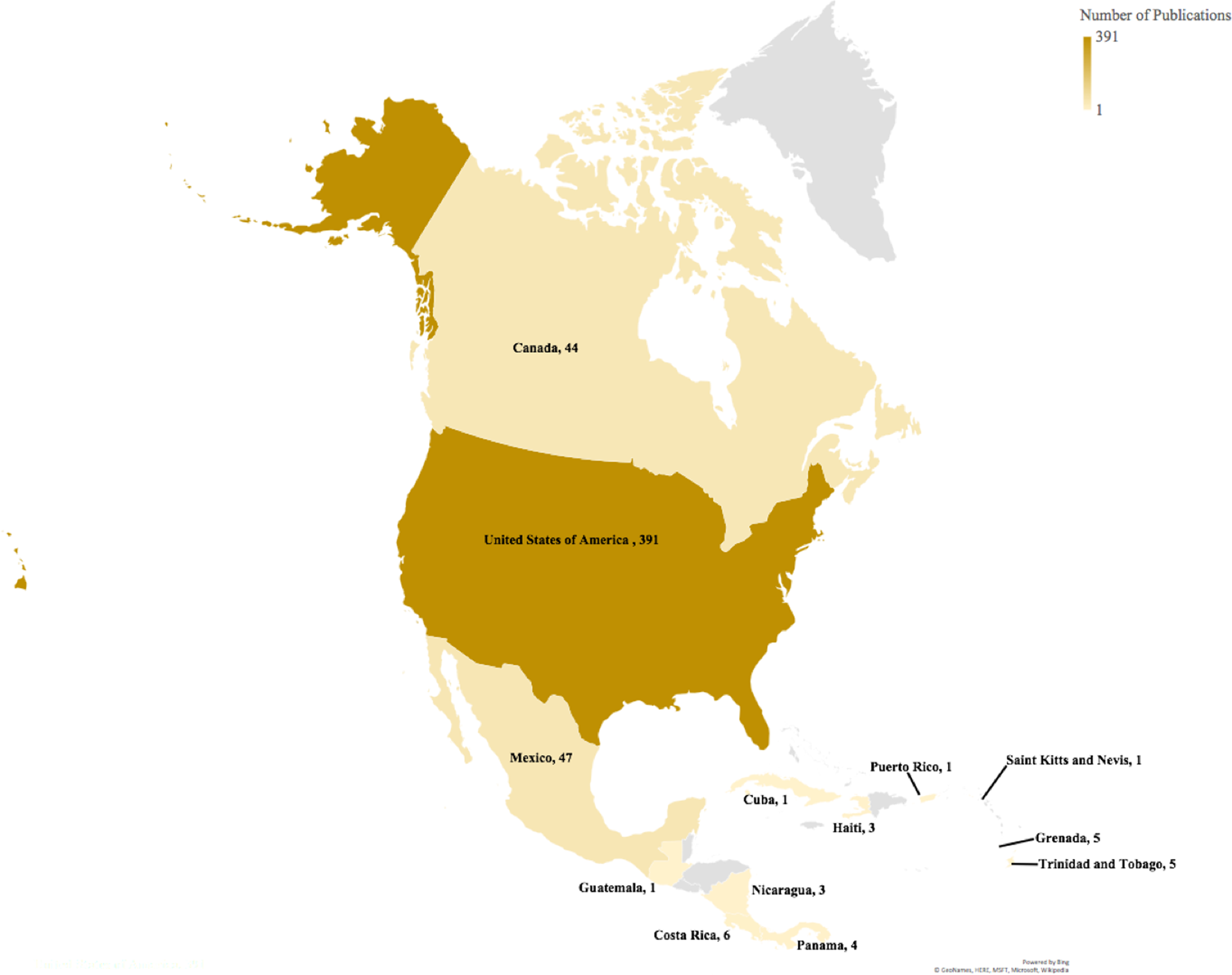
The most common type of primary research publications was journal articles (n = 506 of 507 (99.80%)) and the most research was conducted at the dog-level (n = 398 of 509 (78.19%)). The majority of studies was published in English (n = 502 of 507 (99.01%)), with five publications in Spanish. Our scoping review did not identify any French language studies meeting eligibility criteria. Overall, canine zoonoses and vectorborne disease research in domestic dogs was conducted in very few North American countries (13 of 48 (27.08%)) since the start of the 21st century (Fig. 2). Most publications were conducted in the northernmost countries in North America including the United States of America (USA) (n = 391 of 512 (76.37%)), Canada (n = 44 of 512 (8.59%)), and Mexico (n = 47 of 512 (9.18%)). In the south-central region of North America, the highest number of studies was conducted in Costa Rica (n = 6 of 512 (1.17%)), followed by that from Panama (n = 4 of 512 (0.78%)), Nicaragua (n = 3 of 512 (0.59%)), and Guatemala (n = 1 of 512 (0.20%)). In the Caribbean, the majority of studies were conducted in Grenada (n = 5 of 512 (0.98%)) and Trinidad and Tobago (n = 5 of 512 (0.98%)), followed by Haiti (n = 3 of 512 (0.59%)), and single publications (n = 1 of 512 (0.20%)) each conducted in Cuba, Puerto Rico, and Saint Kitts and Nevis.
Map showing the number of eligible canine zoonoses and vectorborne disease studies of domestic dogs conducted in the sovereign states and dependent territories of North America between 2000 and 2018.

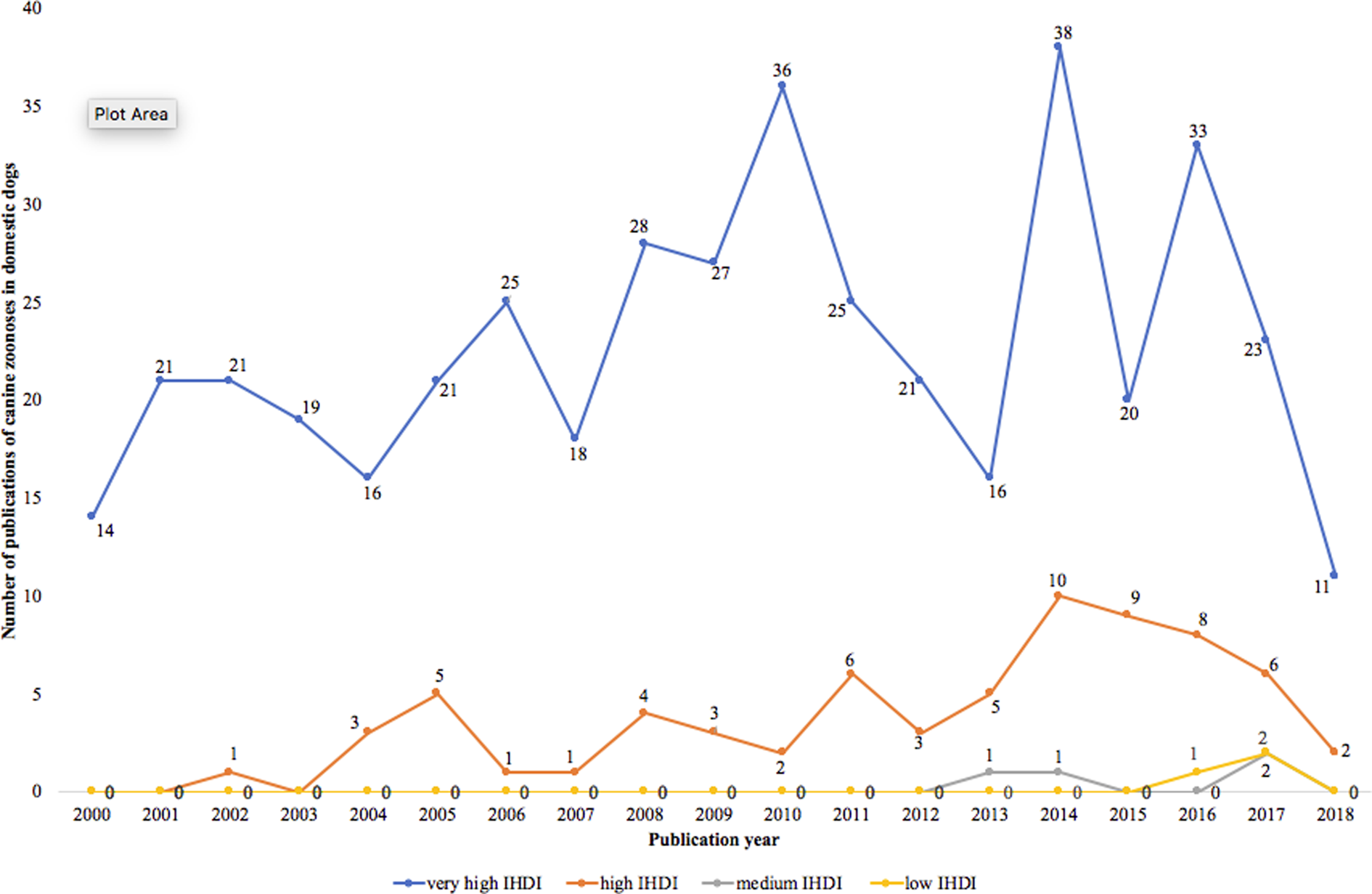
The numbers of eligible studies conducted in countries in North America since the start of the 21st century are shown in Fig. 3. In ‘very high’ and ‘high’ IHDI countries, the year in which the largest number of publications of canine zoonoses and vectorborne diseases in domestic dogs was 2014, and for ‘medium’ and ‘low’ IHDI countries, the year was 2017. Our data indicate that there were several years during which there were no publications conducted in ‘medium’ and ‘low’ IHDI countries, and generally, there was annual variability in the number of publications conducted in ‘very high’ and ‘high’ IHDI countries (Fig. 3). While there was a predominance of studies conducted in ‘very high’ IHDI countries, under which Canada is ranked, publications appear to be largely conducted in the USA for the last 17 years (Fig. 3).
The number of studies of canine zoonoses and vectorborne diseases in domestic dogs conducted in the sovereign states and dependent territories of North America, categorized as ‘very high’, ‘high’, ‘medium’, and ‘low’ on the Inequality-adjusted Human Development Index (IHDI), between 2000 and 2018

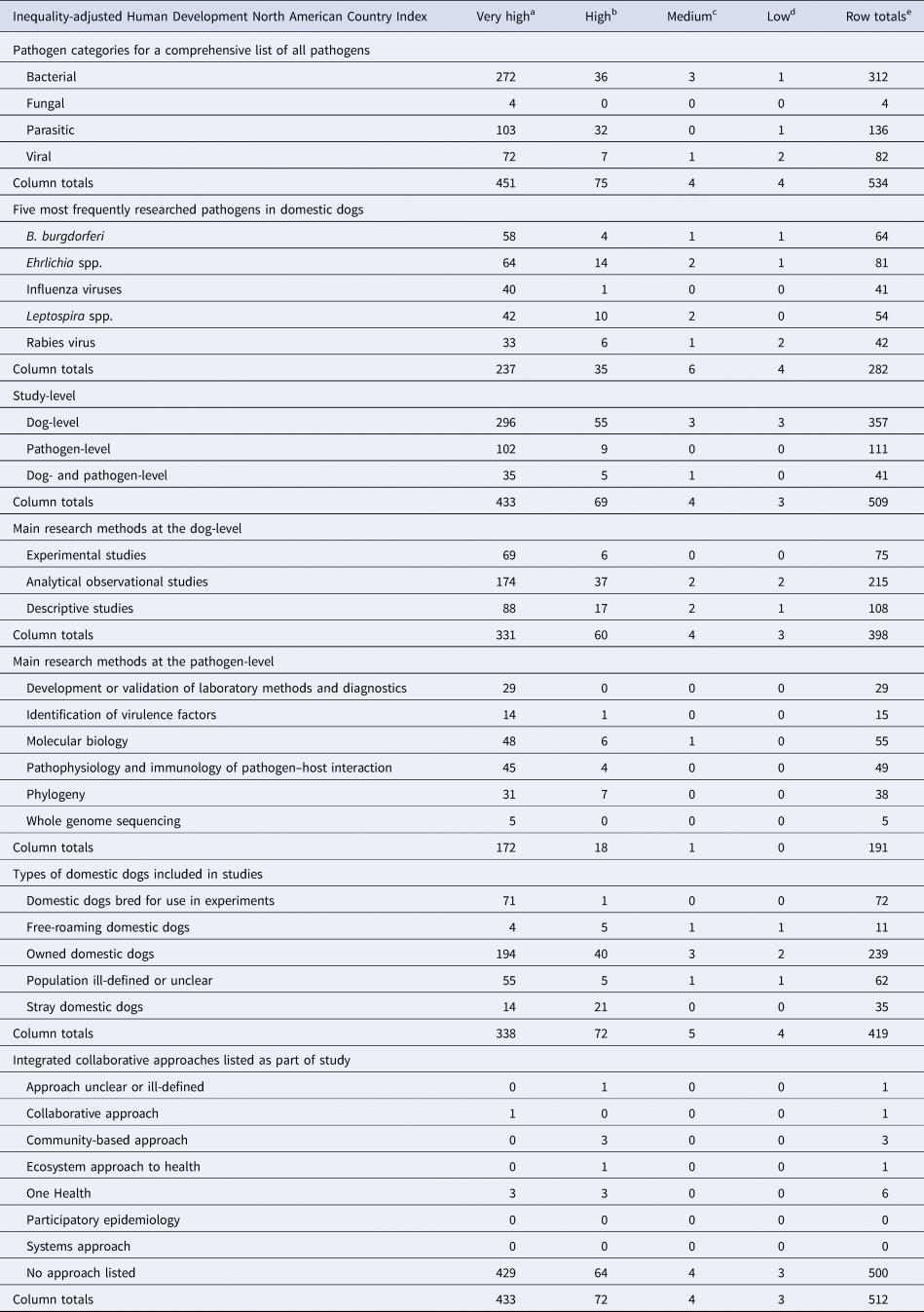
Of the 507 studies, 409 (80.67%) were specific to the investigation of one pathogen (i.e. single pathogen studies), and 98 (19.33%) included investigations of multiple pathogens (i.e. mixed pathogen studies). The majority of pathogen study types were bacterial (n = 312 of 534 (58.43%)), followed by parasitic (n = 136 of 534 (25.47%)), viral (n = 82 of 534 (15.36%)), and fungal (n = 4 of 534 (0.75%)) (Table 2). The five most frequently researched pathogens with the potential to cause moderate to severe health outcomes (i.e. morbidities and/or mortalities) in human beings and in dogs were Ehrlichia spp. (n = 81 of 507 (15.98%)), B. burgdorferi (n = 64 of 507 (12.62%)), Leptospira spp. (n = 54 of 507 (10.65%)), Rabies virus (n = 42 of 507 (8.28%)), and Influenza viruses (n = 41 of 507 (8.09%)). Publications of the five most frequently researched pathogens were predominantly from countries ranked as ‘very high’ on the IHDI (Table 2).
Characteristics relating to publication year, pathogens, study-level, research methods at the dog and pathogen-level, domestic dogs, and whether integrated approaches were described for studies conducted in North American countries categorized as ‘very high’, ‘high’, ‘medium’, and ‘low’ on the Inequality-adjusted Human Development Index

a United States of America (USA) and Canada.
b Costa Rica, Cuba, Grenada, Mexico, Panama, Saint Kitts and Nevis, Trinidad and Tobago.
c Guatemala and Nicaragua.
d Haiti †Puerto Rico is not listed on the IHDI rankings, however, as an unincorporated US territory data pertaining to this country were included with the USA.
e For studies conducted in more than one North American country (e.g. Canada and Mexico), the study was categorized twice. That is, for the above example, once under the ‘very high’ IHDI, and once under the ‘high’ IHDI. Therefore, the total number of studies categorized by IHDI was higher than the total number of studies considered eligible for data characterization.
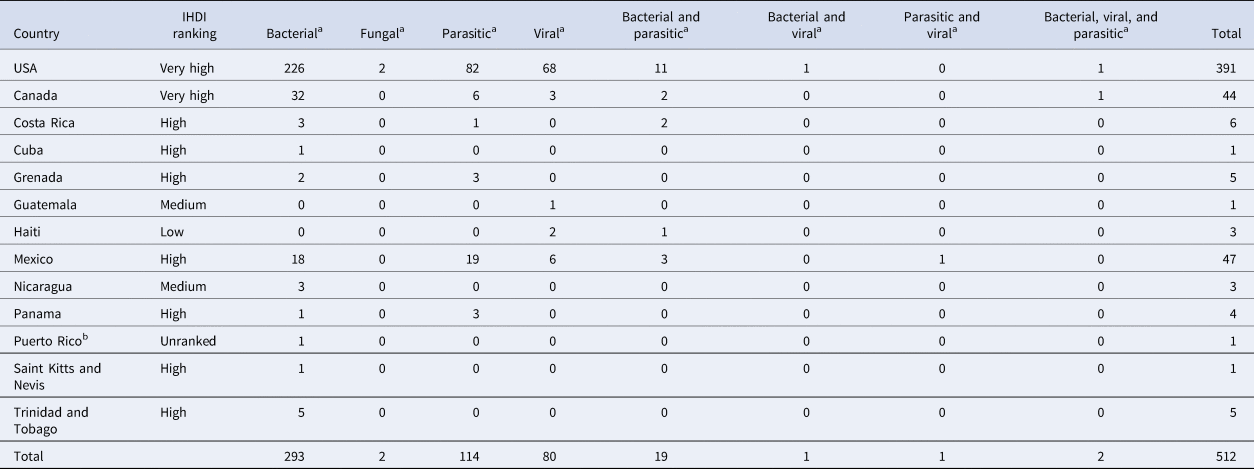
Nearly all (39 of 43 (90.70%)) of the pathogens included in the literature search string were identified in one or more research studies. Although included in our search terms, we found no research publications pertaining to Coxiella burnetii, Entamoeba histolytica, Vibrio cholerae, or Yersinia enterocolitica in domestic dogs. The majority of studies were conducted at the dog-level (398 of 509 (78.19%)). Of these, the most common study type was analytical observational studies (215 of 398 (54.02%)). The majority of the 191 pathogen-level studies were related to molecular biology (55 (28.80%)) (Table 2). Most studies investigated owned domestic dogs (239 of 419 (57.04%)), followed by domestic dogs bred for use in experiments (72 of 419 (17.18%)). A numerical description of the IHDI rankings and the pathogens researched for studies conducted in the sovereign states and dependent territories of North American since the start of the 21st century is shown in Table 3. Building on data shown in Tables 2 and 3 shows the number of studies that focused on one type of pathogen (e.g. bacterial) and those focusing on multiple pathogens (e.g. bacterial, viral, and parasitic) by country and IDHI ranking. Table 3 provides further evidence to suggest that regardless of IHDI ranking, the investigation of bacterial pathogens was most common. The comprehensive list of zoonotic and vectorborne pathogens included in eligible studies of domestic dogs in North America since the start of the 21st century can be found in Supplementary Appendix VI. Lastly, of the few studies that reported as integrated collaborative approaches (11 of 512 (2.15%)), the One Health approach was most frequently reported in the study objectives and/or methods sections (6 of 11 (54.55%)).
Numerical description of the Inequality-adjusted Human Development Index (IHDI) rankings and the pathogens researched for studies conducted in the sovereign states and dependent territories of North American since the start of the 21st century

a Refers to the pathogen-type investigated. More detailed information regarding pathogen types is presented in Supplementary Appendix V.
b Puerto Rico is not listed on the IHDI rankings, it is an unincorporated US territory.
Discussion
Summary of evidence
There is a spectrum of canine zoonoses and vectorborne diseases with the potential to cause health implications in human beings and dogs in North American countries (Eckert and Deplazes, Reference Eckert and Deplazes2004; Lefebvre et al., Reference Lefebvre, Waltner-Toews, Peregrine, Reid-Smith, Hodge, Arroyo and Weese2006; Chikweto et al., Reference Chikweto, Bhaiyat, Tiwari, de Allie and Sharma2012, Reference Chikweto, Tiwari, Kumthekar, Stone, Louison, Thomas, Sharma and Hariharan2013; Krecek et al., Reference Krecek, Drebot, Wood, Morrison, Forde and Dewailly2012; Chomel, Reference Chomel2014; Stull et al., Reference Stull, Brophy and Weese2015; Springer et al., Reference Springer, Montenegro, Schicht, Pantchev and Strube2018). Canine zoonoses may be classified as true zoonoses, spread by direct contact between dogs and human beings (e.g. rabies, leptospirosis), vector-transmitted zoonoses for which dogs may act as key sources or reservoirs (e.g. Dipylidium caninum, E. chaffeensis, R. rickettsii, and Leishmaniasis infantum), and zooanthroponoses, diseases transmitted from human beings to dogs (e.g. methicillin-resistant Staphylococcus aureus, Influenza A virus) (Messenger et al., Reference Messenger, Barnes and Gray2014). Within each category, there are pathogens with the potential to impact the morbidity and/or mortality of people and animals (Kahn, Reference Kahn2006). This scoping review presented a broad summary of canine zoonoses and vectorborne disease studies at the dog- and pathogen-levels in North America. Our findings show the historical and current distribution of research related to pathogens that have the potential to cause moderate to severe health outcomes (i.e. morbidities and/or mortalities) in human beings and in dogs, as well as specific characteristics pertaining to the nature of canine zoonoses research in this part of the world. It is important to note that while certain tickborne pathogens affect both dogs and people (e.g. Anaplasma spp., B. burgdorferi, Ehrlichia spp., and R. rickettsii), dogs are not always considered important in the epidemiology of the human disease. However, we included these pathogens in our search string as they are of public health concern in some sovereign states and dependent territories in North America and can affect the health of both humans and dogs.
The majority of observational studies pertained to the evaluation of risk factors for disease. In veterinary medicine, observational studies are frequently conducted to identify and investigate risk factors. Such studies are important in providing baseline disease and pathogen information but also provide foundations from which to conduct future studies including systematic reviews and risk analyses, as well as to inform public health decision-making and educational strategies (Sargeant and O'Connor, Reference Sargeant and O'Connor2014). Regardless of the type of observational study, it is important that observational research is conducted rigorously with efforts made to reduce systematic error which may lead to inauthentic conclusions about risk factor–disease relationships. While this latter aspect was not assessed within the current review, it would comprise an interesting evaluation within future research.
Our results indicate an inequitable publication distribution in southern dependent territories and sovereign states, reflected by the dominance in numbers of publications from the northernmost North American countries. Previous evidence indicates the transmission of zoonoses between human beings and animals occurs more frequently in low- and middle-income countries, as many of these countries are resource-constrained (Karesh et al., Reference Karesh, Dobson, Lloyd-smith, Lubroth, Dixon, Bennett, Aldrich, Harrington, Formenty, Loh, Machalaba, Thomas and Heymann2012; Vasco et al., Reference Vasco, Graham and Trueba2016; Delahoy et al., Reference Delahoy, Wodnik, McAliley, Penakalapati, Swarthout, Freeman and Levy2018). Historically, the epidemiology of zoonotic and vectorborne pathogens, including the status and extent of emerging infectious and parasitic disease in the central and southern countries of North America, including the Caribbean, has been both poorly researched and understood (Forde et al., Reference Forde, Morrison, Dewailly, Badrie and Robertson2011), which may explain our findings. It is plausible that in less populous and research-constrained settings there may be fewer researchers, particularly in countries without veterinary academic institutions, less research funding, and the available funding may be susceptible to social, economic, and political instabilities (Zicker, Reference Zicker2018). Notably, there was variation in the number of publications from all four IHDI countries. The reasons for country-specific variation in publication outputs are under-researched. Of the few studies regarding publication output from human medical journals, national spending on research and English language proficiencies are cited as possible influences on research publication output (Man et al., Reference Man, Weinkauf, Tsang and Sin2004). While there can be different levels of development and research conduct within countries, for the purposes of this review, only overall country-level IHDI classifications were considered. Therefore, the numbers and types of research conducted in rural, urban, and remote locations across countries in North America were not accounted for and may have resulted in an overrepresentation of publications from specific areas and institutions within a given country.
While a predominance in research conducted in northernmost countries in North America may be expected, there was disproportion in the frequency of publications among the top three countries. In particular, the frequency of research literature conducted in Canada was more similar to that conducted in ‘high’ IHDI country, Mexico, than would be expected considering Canada's ‘very high’ IHDI ranking. Many variables determine the research of zoonoses generally, and canine zoonoses in particular, including differences in country-specific pathogen endemicities, changing political climates and associated research prioritizations, as well as the availability of and access to research funding (National Research Council, 2009). Differences in country-specific human being and domestic dog populations as well as differences in human being–dog proximity and contact may also explain the disparities in publications generally, and between the USA, Canada, and Mexico specifically. A 2017–2018 National Pet Owners Survey found that within the USA, there were 84.6 million (68%) pet-owning households (Springer, Reference Springer2018). Of these, the most popular pets were dogs accounting for 48% of all animals in pet-owning households, and 40.6 million dogs nationally (Springer, Reference Springer2018). With a human population of close to 37 million (International Monetary Fund, 2018), there are 7.6 million dogs in Canada, and approximately 41% of households owning at least one dog (Canadian Animal Health Institute, 2017). While the proportion of household dog ownership in Canada is similar to that of the USA, the total number of dogs in Canada is considerably less than in the USA (Canadian Animal Health Institute, 2017), which may explain the disparities in numbers of publications out of these two ‘very high’ IHDI countries. In Mexico, a ‘high’ IHDI ranked country, there are approximately 23 million dogs (Cortez-Aguirre et al., Reference Cortez-Aguirre, Jiménez-Coello, Gutiérrez-Blanco and Ortega-Pacheco2018), which provides an important dog population consideration. However, despite a dog population size larger than Canada, there are certain impediments to the conduct of research in Mexico that differ from that of ‘very high’ IHDI countries and need to be considered. For instance, while there is limited data regarding domestic dog population demography (Kisiel et al., Reference Kisiel, Jones-Bitton, Sargeant, Coe, Flockhart, Reynoso Palomar, Canales Vargas and Greer2016), it is estimated that of 23 million dogs, 70% are categorized as either ‘street’ or ‘stray’ dogs (Cortez-Aguirre et al., Reference Cortez-Aguirre, Jiménez-Coello, Gutiérrez-Blanco and Ortega-Pacheco2018). The surplus of stray dogs in Mexico affords opportunities for dog-to-dog contact as well as shared human being–dog environments that may exist in Canada, where there is currently no evidence-based estimate of the proportion of stray dogs. Furthermore, high numbers of stray dogs may enhance the potential for public health challenges, including infectious and zoonotic disease agent transmission among dogs and people. This is likely a considerable driver for the conduct of high numbers for canine zoonoses research in Mexico (Han et al., Reference Han, Kramer and Drake2016). However, given disparities in numbers of academic institutions and in available research funding, while there are more dogs in Mexico than in Canada, the number of canine zoonoses publications from Mexico are not higher than but similar to that of Canada.
Another driver of published research is resources available to conduct it. At over US$4.64 billion in 2016 (2.74% of Gross Domestic Product (GDP)), the USA's Gross Domestic Research and Development (GDRD) expenditures for scientific research far exceed that of any other country globally, including Canada (US$2.43 billion, or 1.53% of GDP) and Mexico (US$1.01 billion, or 0.49% of GDP). Since 2000, GDRD has remained steady and, more recently, increased in the United States and Mexico, whereas Canada's GDRD has shown a decreasing trend from 1.87% GDP in 2000 to its current value (Organisation for Economic Cooperation and Development (OECD), 2018). The specific reasons for the disproportion in the conduct of research are unknown; however, our review provides evidence that indicates the majority of studies of canine zoonoses and vectorborne diseases in domestic dogs were conducted in the two most populous North American countries.
For this scoping review, we chose to include known canine zoonoses as well as common vectorborne pathogens and diseases as both can affect the health of human beings and dogs (Ontario Agency for Health Protection and Promotion (Public Health Ontario), 2017). Our findings illustrate the five most frequently researched pathogens with the potential to cause moderate to severe health outcomes in human beings and in dogs, which comprised exclusively viral and bacterial organisms (i.e. Ehrlichia spp., B. burgdorferi, Leptospira spp., Influenza viruses., and Rabies virus). Interestingly, regardless of IHDI ranking, the most commonly researched pathogen type was bacteria. Many canine zoonoses and vectorborne diseases are caused by bacterial pathogens (Chomel, Reference Chomel2014; Damborg et al., Reference Damborg, Broens, Chomel, Guenther and Pasmans2016). However, these findings may be important from another perspective; they highlight that despite variations in numbers of publications and IHDI categorization, bacterial pathogens comprise a substantial representation of the literature in this field across countries in this part of the world. The number of publications pertaining to infectious diseases generally and canine zoonoses specifically does not necessarily correlate with the burden of illness in the country/region. There are other drivers that influence number of publications including numbers of academic journals, funding agency priorities, country-specific disease profiles of importance, the financial strain exerted by zoonoses on a particular country, research infrastructure, and numbers of research scientists (Stephen et al., Reference Stephen, Artsob, Bowie, Drebot, Fraser, Leighton, Morshed, Ong and Patrick2004; Cascio et al., Reference Cascio, Bosilkovski, Rodriguez-Morales and Pappas2011; Evans et al., Reference Evans, Shim and Ioannidis2014). Certain pathogens may be overrepresented in the literature due to their importance regarding the burden of illness in dogs and their high profile in the public such as canine influenza virus, Ehrlichia spp., and B. burgdorferi. Indeed, there are some infectious diseases and disease-causing pathogens that attract high as well as low research attention regardless of disease burden (Furuse, Reference Furuse2019). The research emphasis also may differ based on geographic distributions of disease; for instance, Lyme disease prevalent in some parts of Canada and the United States is not currently widely found throughout the Caribbean (Gondard et al., Reference Gondard, Cabezas-Cruz, Charles, Vayssier-Taussat, Albina and Moutailler2017). Furthermore, dogs predominantly carry canine influenza virus subtypes H3N8 and H3N2 and should be carefully considered for the roles they play as hosts of this virus (Li et al., Reference Li, Wang, Zhang, Wang, He, Zhang, Liu, Cai, Zhou and Su2018). However, while dogs carrying H3N2 canine influenza virus may transmit the virus to other species with whom they come into close and frequent contact, including human beings, there is very limited evidence that canine influenza virus is zoonotic (Krueger et al., Reference Krueger, Heil, Yoon and Gray2014; Voorhees et al., Reference Voorhees, Glaser, Toohey-Kurth, Newbury, Dalziel, Dubovi, Poulsen, Leutenegger, Willgert, Brisbane-Cohen, Richardson-Lopez, Holmes and Parrish2017). Fundamentally, there is limited understanding of the global distribution of infectious diseases (Han et al., Reference Han, Kramer and Drake2016); yet, the frequencies with which emerging zoonoses are occurring emphasize the need for geographical distribution baseline data (Han et al., Reference Han, Kramer and Drake2016). The gap in Influenza viruses, and Leptospira spp. research conducted in ‘medium’ and ‘low’ IHDI countries in North America as identified within this review, may highlight differences in country-specific research priorities.
Four pathogens in our search string were unrepresented in the literature. While there is evidence to suggest dogs may play a role in the epidemiology of C. burnetii, E. histolytica, V. cholerae, and Y. enterocolitica, and that some of these pathogens may cause illness in human beings and dogs (Alam et al., Reference Alam, Maqbool, Nazir, Lateef, Khan and Lindsay2015; Knobel et al., Reference Knobel, Maina, Cutler, Ogola, Feikin, Junghae, Halliday, Richards, Breiman, Cleaveland and Njenga2013; Buhariwalla et al., Reference Buhariwalla, Cann and Marrie1996; Merck Veterinary Manual, 2019), evidence of their relationship to emerging and characterized zoonotic illnesses is not widely available in North America (Heddle and Rowley, Reference Heddle and Rowley1975; Alam et al., Reference Alam, Maqbool, Nazir, Lateef, Khan and Lindsay2015; Ghasemzadeh and Namazi, Reference Ghasemzadeh and Namazi2015; Mtshali et al., Reference Mtshali, Nakao, Sugimoto and Thekisoe2017). Commonly reported pathogens are not necessarily reflective of public health importance. The gap may highlight other zoonoses are of higher importance in North America than outside of this geographic region of the world. Furthermore, the climatic conditions to support C. burnetii, E. histolytica, V. cholerae, and Y. enterocolitica endemicities in North America may only occur in certain countries. For instance, leptospirosis is a widespread and prevalent zoonosis; however, many Leptospira serovars are regionally distinct, occurring mainly in countries with humid subtropical and tropical climates (Pratt et al., Reference Pratt, Conan and Rajeev2017).
Since the beginning of the 21st century, there has been increasing focus and advocation for enhanced collaboration among various disciplines to address many health challenges of global significance (Gebreyes et al., Reference Gebreyes, Dupouy-Camet, Newport, Oliveira, Schlesinger, Saif, Kariuki, Saif, Saville, Wittum, Hoet, Quessy, Kazwala, Tekola, Shryock, Bisesi, Patchanee, Boonmar and King2014; Schurer et al., Reference Schurer, Mosites, Li, Meschke and Rabinowitz2016). Collaborative approaches to research provide a holistic and integrated foundation from which to evaluate human, animal, and environmental health challenges (Anholt et al., Reference Anholt, Stephen and Copes2012; Lebov et al., Reference Lebov, Grieger, Womack, Zaccaro, Whitehead, Kowalcyk and MacDonald2017). Moreover, these approaches propose a more comprehensive understanding of health challenges and engender potential solutions that would not be possible with siloed approaches (Lebov et al., Reference Lebov, Grieger, Womack, Zaccaro, Whitehead, Kowalcyk and MacDonald2017). Our findings suggest very few researchers in North America included descriptions of specific collaborative integrated approaches to research (e.g. One Health, Ecosystem Health, and others) in study objectives and/or methods sections. However, as highlighted in our findings, there was a high frequency of canine zoonoses and vectorborne disease research studies which comprised experiments and investigations on pathophysiology and immunology of pathogen–host interaction and molecular biology, for which an integrated collaborative approach may not be warranted. While collaborative approaches are not necessary for every research question, they can add value in some types of observational studies. In this review, collaborative approaches were only included in the objectives and/or methods sections of descriptive and analytical observational studies only.
Notably, for applied research, including analytical observational studies, which can be supported by an integrated collaborative approach, there are potential barriers inherent to the success of such approaches. Although some guidance documents do exist (Anholt et al., Reference Anholt, Stephen and Copes2012; Häsler et al., Reference Häsler, Hiby, Gilbert, Obeyesekere, Bennani and Rushton2014b; Davis et al., Reference Davis, Rankin, Schurer, Cole, Conti, Rabinowitz, Gray, Kahn, Machalaba, Mazet, Pappaioanou, Sargeant, Thompson, Weese and Zinnstag2017; Lebov et al., Reference Lebov, Grieger, Womack, Zaccaro, Whitehead, Kowalcyk and MacDonald2017), there remains limited guidance available for investigators in the practical design and implementation of context-specific integrated collaborative approaches to research (Lebov et al., Reference Lebov, Grieger, Womack, Zaccaro, Whitehead, Kowalcyk and MacDonald2017). Indeed, there are difficulties with data sharing across nations and within institutions; communication within institutions and across languages may inhibit intersectoral collaborations; access to applicable grants and cross-disciplinary funding sources; and maintaining momentum across multidisciplinary teams (Schurer et al., Reference Schurer, Mosites, Li, Meschke and Rabinowitz2016). Regardless of the reason, our evidence indicates a distinct gap in the inclusion and application of collaborative approaches in canine health research in this part of the world.
Limitations
This scoping review contains a number of limitations. Firstly, we adhered to the scoping review protocol with minor deviations from the protocol made to clarify the wording in the broad research question, review objectives and screening forms, and avoid the perception that dogs were involved in the transmission of certain pathogens to human beings. Moreover, in our protocol, we did not explicitly mention that dissertations would not be included in our search; for this scoping review, we were interested in original scientific reports of research findings (i.e. primary research studies) of animal-level and/or pathogen-level (e.g. studies relating to molecular epidemiology of pathogens that have been sampled from dogs) outcomes. In using electronic databases, we may have missed relevant information in the grey literature, including conference proceedings and dissertations. Secondly, we collected primary research information published in English, Spanish, or French languages, which restricted our search to articles written in those specific languages. Thirdly, we developed our search string for this scoping review from a combination of published literature and publicly available information from region-specific organizations. Using this method, we could have inadvertently missed published literature related to pathogens with the potential to cause moderate to severe health outcomes in human beings and dogs. As part of our search string, and specific to our research question, we included the major dog bite pathogens (e.g. Capnocytophaga spp. and Pasteurella spp.) but not all potential pathogens that may be carried in the dog saliva and therefore be associated with dog bite morbidity as these have been documented more robustly in a previous scoping review (Dhillon et al., Reference Dhillon, Hoopes and Epp2019). Fourthly, we focused our review on domestic dogs (C. familiaris) and on relevant studies conducted within a specific time frame. Conference proceedings or journal articles less than 500 words and published and unpublished dissertations were excluded. Finally, applying the species filter in the MEDLINE® via NCBI© database may have excluded some citations that had not yet completed the MEDLINE® indexing process. As such, our findings provided information specific to the eligibility criteria that we used to conduct this review, and thus are only generalizable to English, French, or Spanish publications, of canine zoonoses and vectorborne diseases in domestic dogs, from North American countries since the start of the 21st century.
Conclusions and recommendations
This scoping review mapped the evidence of canine zoonoses and vectorborne diseases and characterized the available literature in relation to the current IHDI country rankings (United Nations Development Programme, 2016). From a regional perspective, the disparity in research conducted in ‘very high’ and ‘high’ IHDI countries as compared with ‘medium’ and ‘low’ IHDI countries is similar to that identified in previous studies regarding the conduct of research of other zoonoses (World Health Organization, 2012; Cleaveland et al., Reference Cleaveland, Sharp, Abela-Ridder, Allan, Buza, Crump, Davis, Del Rio Vilas, De Glanville, Kazwala, Kibona, Lankester, Lugelo, Mmbaga, Rubach, Swai, Waldman, Haydon, Hampson and Halliday2017; Delahoy et al., Reference Delahoy, Wodnik, McAliley, Penakalapati, Swarthout, Freeman and Levy2018). Particularly as there is some evidence within the literature to suggest misunderstanding regarding which tickborne pathogens are truly zoonotic versus those for which dogs are not always considered important in the epidemiology of the human disease (e.g. Anaplasma spp., B. burgdorferi, Ehrlichia spp., and R. rickettsii), there is a general and crucial need for improved funding and infrastructure development for the conduct of canine zoonotic and vectorborne disease research. Through our review of the literature, we identified five pathogens that have been commonly researched particularly within ‘very high’ IHDI North American countries since the start of the 21st century. As many of these pathogens can pose a direct threat to the health of human being and dog populations, irrespective of country IHDI ranking, it may be beneficial for future applied research, particularly within ‘medium’ and ‘low’ IHDI countries, to be supported by integrated collaborative approaches (Bowser and Anderson, Reference Bowser and Anderson2018), when appropriate to the research question. This support has the potential to encourage open lines of communication across disciplines and countries in an effort to effectively convey research findings; inform regional mechanisms to manage new and emerging canine zoonoses and vectorborne diseases; and identify sustainable regional and global health solutions (Bowser and Anderson, Reference Bowser and Anderson2018).
Supplementary material
The supplementary material for this article can be found at https://doi.org/10.1017/S1466252320000237
Financial support
Funding for this project included an Ontario Veterinary College PhD Fellowship awarded to Dr Danielle Julien. There was no external operating funding.
Conflict of interest
The authors declare that they have no conflicts of interest.