

Introduction
In recent decades, the planning and evaluation of public security policies have relied heavily on quantitative methods of criminal analysis, especially in counting criminal occurrences by location and type of crime. Models such as COMPSTAT (Computerized Comparison Crime Statistics), adopted in several jurisdictions, including Brazil, have driven the practice of mapping crime hot spots based on the absolute frequency of incidents (Braga, Papachristos, and Hureau Reference Braga, Papachristos and Hureau2012; Weisburd et al. Reference Weisburd, Greenspan, Mastrofski and Willis2001). Although effective in capturing spatial patterns of incidence, this approach implicitly assumes that all crimes have the same weight, disregarding the severity and differential social impact of each crime (Ratcliffe Reference Ratcliffe2021).
Researchers and public security managers have criticized this statistical homogenization for underestimating the real social cost of more serious crimes and overestimating less harmful offences. In response to this limitation, methodologies have emerged that seek to measure crime harm – that is, the social harm caused by crimes – based on objective parameters, such as the penalties provided for by law. Among these initiatives, the Cambridge Crime Harm Index (CCHI) stands out, developed by Sherman (Reference Sherman2007, Reference Sherman2011) and later operationalized by Sherman, Neyroud, and Neyroud (Reference Sherman, Neyroud and Neyroud2016). The CCHI proposes an index that weighs the number of crimes based on the applicable minimum penalty provided for in criminal law, providing greater accuracy in assessing criminal impact.
Despite the growing adoption of the CCHI in countries such as the United Kingdom (UK), the United States (US), Australia and Sweden (Curtis-Ham and Walton Reference Curtis-Ham and Walton2017a, Reference Curtis-Ham and Walton2017b; Kärrholm, Neyroud, and Smaaland Reference Kärrholm, Neyroud and Smaaland2020), there is a lack of systematic studies investigating its viability in the Brazilian context. Brazil, with high rates of violent crime and a complex criminal justice system, presents a fertile field for experimenting with more refined analytical methodologies. However, an empirical gap remains regarding the applicability of the CCHI in legal systems based on the Brazilian Penal CodeFootnote 1 and operational structures, such as those of state military police forces. Although recent studies have explored criminal concentration in urban micro-spaces (Faria Reference Faria2024), these have been limited to analyses based on raw counts of incidents.
This article aims to fill this gap by assessing the applicability of the CCHI to the Brazilian reality, based on empirical data from Belo Horizonte, Minas Gerais State. For this, the spatial distribution of crime hot spots is compared with harm spots, defined according to the severity of crimes measured by the minimum legal sentences. The underlying hypothesis is that including the “criminal damage” variable will substantially alter the spatial patterns detected, providing a fairer and more effective basis for operational planning by the Minas Gerais Military Police. The methodological innovation lies in adapting the CCHI to the Brazilian legal system without creating new subjective metrics but anchoring it in parameters already established by national legislation.
This study advances applied criminology in Brazil by providing analytical insights for more rational, legitimate and evidence-based public security management. Furthermore, it aligns with the international agenda of improving violence measurement metrics, as recommended by organizations such as the United Nations Office on Drugs and Crime (2010) and the Global Initiative Against Transnational Organized Crime (2022), which recommend the adoption of indicators that are sensitive to the social impact of crimes and not just their frequency.
Considering these objectives and methodological innovations, the present study holds significant academic and institutional importance, as it pioneers the empirical application of the CCHI within the Brazilian context, aligning criminological analysis with legal principles rooted in national legislation. By proposing a methodological shift from crime frequency to crime severity, the research addresses a critical gap in public security diagnostics. It provides a more equitable basis for allocating police resources. Academically, it contributes to the advancement of spatial criminology and evidence-based policing in Latin America, reinforcing theoretical discussions on the measurement of criminal harm. Institutionally, the study provides concrete analytical tools for the Military Police of Minas Gerais, supporting more strategic, data-informed decision-making processes that enhance the effectiveness and legitimacy of law enforcement practices in complex urban settings.
The CCHI
The traditional approach to crime accounting, which focuses exclusively on the frequency of occurrences, has severe limitations because it disregards the heterogeneity of the social impact generated by different criminal classifications. This method, grounded in quantitative premises, equates crimes of disproportionate severity, assigning the same weight to low- and high-harm infractions (Ratcliffe Reference Ratcliffe2021; Sherman Reference Sherman2007). This model, widely used in data-driven policing systems such as COMPSTAT, has been criticized for obscuring the community’s authentic sources of social harm (Weisburd and Braga Reference Weisburd and Braga2019).
In this context, there is a need for indicators capable of measuring crime harm – that is, the social harm effectively caused by criminal practices – as an alternative to the gross count of crimes. Several methodologies have been proposed, including measurement by perceived severity (Van Dijk, Kesteren, and Smit Reference Van Dijk, Kesteren and Smit2007), indices based on economic costs (Cohen and Piquero Reference Cohen and Piquero2009) and indices of normative severity (Paoli and Greenfield Reference Paoli and Greenfield2013), each with its methodological advantages and limitations. Among these approaches, the CCHI stands out, designed by Sherman (Reference Sherman2007) as a metric that weighs the number of crimes by the legally established time of deprivation of liberty, based on the minimum sentence imposed for each type of crime.
The CCHI was designed to meet the criteria of being democratic, reliable and cost-effective, and it has been subjected to empirical validation in multiple contexts (Sherman et al. Reference Sherman, Neyroud and Neyroud2016). Its main innovation consists of prioritizing the minimum sentence as a unit of measurement of harm, under the justification that maximum sentences rarely reflect the average of the sentences applied, which can distort the analysis (Curtis-Ham and Walton Reference Curtis-Ham and Walton2017a, Reference Curtis-Ham and Walton2017b). Furthermore, the index abstracts subjective variables related to the perpetrator’s profile, focusing exclusively on the offence’s normative impact, allowing comparability between different locations and periods.
The operationalization of the CCHI has proven feasible in different legal systems, with studies applied in countries such as the UK (Bangs Reference Bangs2016), New Zealand (Curtis-Ham and Walton Reference Curtis-Ham and Walton2017a, Reference Curtis-Ham and Walton2017b), Sweden (Kärrholm et al. Reference Kärrholm, Neyroud and Smaaland2020), Canada (Babyak et al. Reference Babyak, Alavi, Collins, Halladay and Tapper2009) and the US (Ratcliffe Reference Ratcliffe2014), although its initial adoption faced political and institutional resistance. Such objections were gradually overcome as it became clear that the metric is based on previously sanctioned legal parameters, giving it normative legitimacy and dispelling criticism of academic subjectivism (Andersen and Mueller-Johnson Reference Andersen and Mueller-Johnson2018). This link to the social values expressed in the legislation strengthens its democratic acceptance, promoting more transparent debates on the hierarchy of criminal severity.
Another notable aspect is the exclusive use of data already available in judicial and police systems, which ensures the technical and financial viability of its implementation. By excluding occurrences resulting from exclusively proactive actions by the police or organizational victims (such as thefts detected by private security), the index focuses on crimes that directly affect the civilian population, increasing its substantive validity (Sherman et al. Reference Sherman, Neyroud and Neyroud2016).
The empirical application of the CCHI in the UK between 2002 and 2012 yielded significant results: while the crime count decreased by 37%, criminal damage decreased by only 21%, suggesting that purely quantitative metrics may overestimate progress in crime control. Crimes such as homicide and grievous bodily harm, although representing less than 1% of occurrences, accounted for more than 20% of the total damage measured, highlighting the importance of harm-spot analysis, a concept that complements and deepens the traditional notion of hot spots (Sherman et al. Reference Sherman, Neyroud and Neyroud2016; Weisburd Reference Weisburd2015).
In short, the CCHI is an innovative, objective and normatively anchored alternative for measuring the impact of crime. By aligning operational indicators with the social disapproval scales established by law, the CCHI enhances the formulation of fairer, more efficient and evidence-driven public security policies.
Operationalization and applications of the CCHI
The systematic review conducted by Van Ruitenburg and Ruiter (Reference Van Ruitenburg and Ruiter2022) revealed the complexity and adaptability of the CCHI by identifying three main methodological paradigms employed in its operationalization since Sherman’s (Reference Sherman2007) inaugural proposal. These approaches reflect the diversity of criminal justice systems and the different levels of institutional maturity and data availability in the jurisdictions analysed. The first consists of sentences handed down to defendants, representing an effort to anchor the index in the concrete reality of judicial practices. This technique seeks to capture with greater precision the criminal severity attributed to crimes in specific empirical contexts, being applied in countries such as Canada (Babyak et al. Reference Babyak, Alavi, Collins, Halladay and Tapper2009), England and Wales (Bangs Reference Bangs2016), Ireland (Linehan Reference Linehan2016), New Zealand (Sullivan, Su-Wuen, and McRae Reference Sullivan, Su-Wuen and McRae2017), Australia (House and Neyroud Reference House and Neyroud2018), Italy (Capuano and Massimiliano Reference Capuano and Massimiliano2018), Hong Kong (Chong Reference Chong2019) and Sweden (Kärrholm et al. Reference Kärrholm, Neyroud and Smaaland2020).
The second approach is based on legal sentencing guidelines, often issued by national judicial councils. This strategy provides greater comparative uniformity, allowing the index to be applied even without individualized data on judicial decisions. Notable examples include the studies carried out in England and Wales by Sherman et al. (Reference Sherman, Neyroud and Neyroud2016), in the US by Ratcliffe (Reference Ratcliffe2014) and Fenimore (Reference Fenimore2019), and in Denmark by Andersen and Mueller-Johnson (Reference Andersen and Mueller-Johnson2018). Finally, the third methodological strategy is based on direct reference to current criminal codes, adopting the minimum sentences established by law as a measure of the severity of the crime. This alternative offers high replicability and autonomy in the face of jurisprudential variations and has been used in research conducted in Australia (MacKinnell, Poletti, and Holmes Reference MacKinnell, Poletti and Holmes2010), Japan (Taira Reference Taira2018), the US (Mitchell Reference Mitchell2019) and Nigeria (Ojo and Ojewale Reference Ojo, Ojewale, Ojo and Ojewale2019).
In addition to the methodological multiplicity, the study by Van Ruitenburg and Ruiter (Reference Van Ruitenburg and Ruiter2022) proposed a taxonomy of the units of analysis to which the CCHI has been applied, revealing its broad applicability in different domains of empirical criminology. Aggregate criminal trends were the subject of studies investigating the relationships between levels of harm and structural variables, such as age group, gender, budget distribution among police agencies and patrol strategies. These analyses revealed dysfunctions in the logic of resource allocation when based exclusively on event frequency, suggesting greater accuracy in prioritizing critical areas based on the logic of harm (Babyak et al. Reference Babyak, Alavi, Collins, Halladay and Tapper2009; Ojo and Ojewale Reference Ojo, Ojewale, Ojo and Ojewale2019; Ratcliffe Reference Ratcliffe2014; Sherman et al. Reference Sherman, Neyroud and Neyroud2016).
The application of the CCHI also facilitated progress in analysing the offender profile. When considering the severity of crimes committed by individuals, several studies have identified the concentration of social harm in a relatively small number of repeat offenders, corroborating the principle of the few in power (Richards and Harinam Reference Richards and Harinam2020; Sherman Reference Sherman2007). The logic of the index has also been incorporated into studies of criminal networks, contributing to the mapping of family structures and organized groups, in which criminal co-authorship translates into recurring patterns of high harm (Carrington et al. Reference Carrington, Brennan, Matarazzo and Radulesco2013; Frydensberg, Ariel, and Bland Reference Frydensberg, Ariel and Bland2019). In a complementary way, other research has shown that harm is also concentrated among victims, suggesting that severe victimization is equally unequal and requires a proportional allocation of protective resources (Dudfield et al. Reference Dudfield, Angel, Sherman and Torrence2017).
The versatility of the CCHI has also shown promise for analysing the relationship between victims and offenders, especially in contexts marked by relational recidivism, such as in cases of domestic violence. Empirical studies have tracked patterns of accumulated harm over time in victim–offender couples, evidencing dynamics of cyclical victimization and suggesting more targeted interventions based on the history of harmful interactions (Barnham, Barnes, and Sherman Reference Barnham, Barnes and Sherman2017; Hiltz, Bland, and Barnes Reference Hiltz, Bland and Barnes2020). Such findings reinforce the potential of the CCHI to support proactive, prevention-oriented policing strategies, allowing for the anticipation of risk contexts based on the accumulated impact of crime, not just its formal recidivism.
In summary, international literature demonstrates that the CCHI has established itself as a conceptually sound, methodologically flexible and empirically validated tool for measuring criminal impact. Its adoption in multiple countries, through different normative and analytical paths, legitimizes its application as a cross-cutting instrument for evaluating criminal policies and operational planning. Adapting it to the Brazilian context, therefore, is not only justified but also presents itself as a necessary step forward in the effort to improve police intelligence based on fairer, more objective criteria that are sensitive to the seriousness of criminal practices.
Limitations and Criticisms of the CCHI
Despite the advances provided by the adoption of the CCHI in more accurately measuring the impact of crime, specialized literature has highlighted methodological and conceptual limitations that warrant critical attention. One of the central objections concerns the standardization of criminal categories based exclusively on the penalties imposed, disregarding substantial contextual variations in the social and emotional effects of crimes on different groups and communities. Such normative standardization can obscure the diversity of victimization experiences, especially in contexts marked by social, ethnic or territorial vulnerabilities (Ashby Reference Ashby2018; Paoli and Greenfield Reference Paoli and Greenfield2013). By adopting a metric based exclusively on minimum legal penalties, the CCHI presupposes an abstract equivalence of harm, which is not always confirmed in the concrete reality of victims and territories.
Another relevant limitation concerns the index’s strong dependence on official crime records. This characteristic, although contributing to standardization and statistical reliability, restricts its applicability in contexts where there is endemic underreporting or where forms of disorder and antisocial behaviours not captured by formal criminal justice systems prevail. As Curtis-Ham and Walton (Reference Curtis-Ham and Walton2017a, Reference Curtis-Ham and Walton2017b) point out, the systematic exclusion of underreported phenomena, such as covert domestic violence, school bullying or structural discrimination, compromises the index’s analytical scope, generating measurement biases that directly affect its potential to inform equitable and responsive public policies.
The rationale for prioritizing resources based solely on the scores assigned to crimes in the CCHI has been scrutinized. While cybercrime, electronic fraud and digital privacy violations may carry moderate legal penalties, they often necessitate advanced investigative techniques, cutting-edge technological infrastructure and significant operational investments. The relatively low scores attached to these offences in the CCHI may obscure their inherent complexity and systemic threat, undermining effective strategic planning for public security. It is essential to consider the resolution costs and broader implications of these crimes when allocating resources (Laufs et al. Reference Laufs, Bowers, Birks and Johnson2021).
Finally, there are criticisms regarding the potential analytical redundancy of the CCHI regarding methodologies already established in police services, such as mapping hot spots through internal algorithms, artificial intelligence and georeferenced predictive analysis. Bell (Reference Bell2017) argues that many of these practices, although not widely disseminated in academic literature, already offer accurate diagnoses of critical areas and may overlap, in part, with the functionality proposed by the CCHI. This observation highlights the need for improved coordination between existing tools and the CCHI to prevent duplication of analytical efforts and facilitate assessment through complementary approaches.
Therefore, although the CCHI represents a significant advance in measuring crime based on social harm, its application must be constantly reassessed in light of the theoretical and operational criticisms that have been formulated. Overcoming these limitations depends, above all, on policymakers’ and researchers’ ability to adapt the index to local realities, incorporating contextual variables, alternative data and operational criteria that reflect the contemporary complexity of criminal phenomena.
Hot Spots Versus Harm Spots
Criminological literature has traditionally focused on identifying hot spots, or crime hot spots, as geographic areas of disproportionate concentration of crimes, often associated with the recurrence of offences in urban micro-territories (Sherman, Gartin, and Buerger Reference Sherman, Gartin and Buerger1989; Weisburd et al. Reference Weisburd, Bushway, Lum and Yang2004). Such locations have become a privileged focus of data-driven police interventions, given the empirical recognition that a small fraction of the territory concentrates a significant proportion of criminal events, as proposed by the law of crime concentration (Weisburd Reference Weisburd2015).
However, the emphasis on the absolute number of occurrences – a central criterion for the traditional definition of hot spots – has been the subject of increasing questioning in contemporary literature, especially because it neglects the intrinsic seriousness of crimes. This spatial analysis model is based on the assumption of equivalence between criminal events, ignoring the differentiated impact that more harmful crimes have on victims and the community. In this context, the proposal of harm spots emerges as a methodological refinement, incorporating the degree of social harm of crimes into the logic of territorial prioritization (Sherman et al. Reference Sherman, Neyroud and Neyroud2016).
Harm spots represent a conceptual evolution of hot spots, shifting the focus from simple frequency to the intensity of the measured criminal impact. The application of the CCHI enables the spatial reclassification of critical locations based on the weighting of crimes by their corresponding legal base sentence, resulting in a new cartography of crime that is more sensitive to the normative and social severity of crimes. As demonstrated by Dudfield et al. (Reference Dudfield, Angel, Sherman and Torrence2017), this approach reveals areas that, although not highlighted in the raw count of occurrences, concentrate great criminal damage – as in cases of homicide, rape and kidnapping – and, therefore, should be a priority target for public security actions.
This distinction has significant practical implications for policy management. While hot spots tend to direct resources to areas with a high number of minor crimes, harm spots allow for the concentration of efforts in regions that accumulate a greater burden of social suffering, even with fewer records. This represents a paradigmatic shift in the logic of allocating personnel and formulating preventive strategies, with the potential to enhance the efficiency and legitimacy of police actions, particularly in contexts of resource scarcity.
Furthermore, the adoption of harm spots is consistent with principles of distributive justice and equity-oriented policing, as it proposes that interventions be guided not only by quantitative but also by qualitative criteria. This perspective has been incorporated into international experiences, such as in studies carried out in London (Ashby Reference Ashby2018), Stockholm (Kärrholm et al. Reference Kärrholm, Neyroud and Smaaland2020) and New Zealand (Curtis-Ham and Walton Reference Curtis-Ham and Walton2017a, 2017b), which demonstrated relevant changes in priority patrol areas when replacing the frequency metric with the damage metric.
Therefore, the distinction between hot spots and harm spots goes beyond a terminological difference: it is a clash between analytical models of interpretation of criminal reality. By integrating the dimension of social impact, harm spots offer a more sophisticated epistemological and operational alternative, capable of informing public security policies guided not only by the incidence but also by the magnitude of social suffering caused by crime.
Materials and Methods
Data Source and Research Context
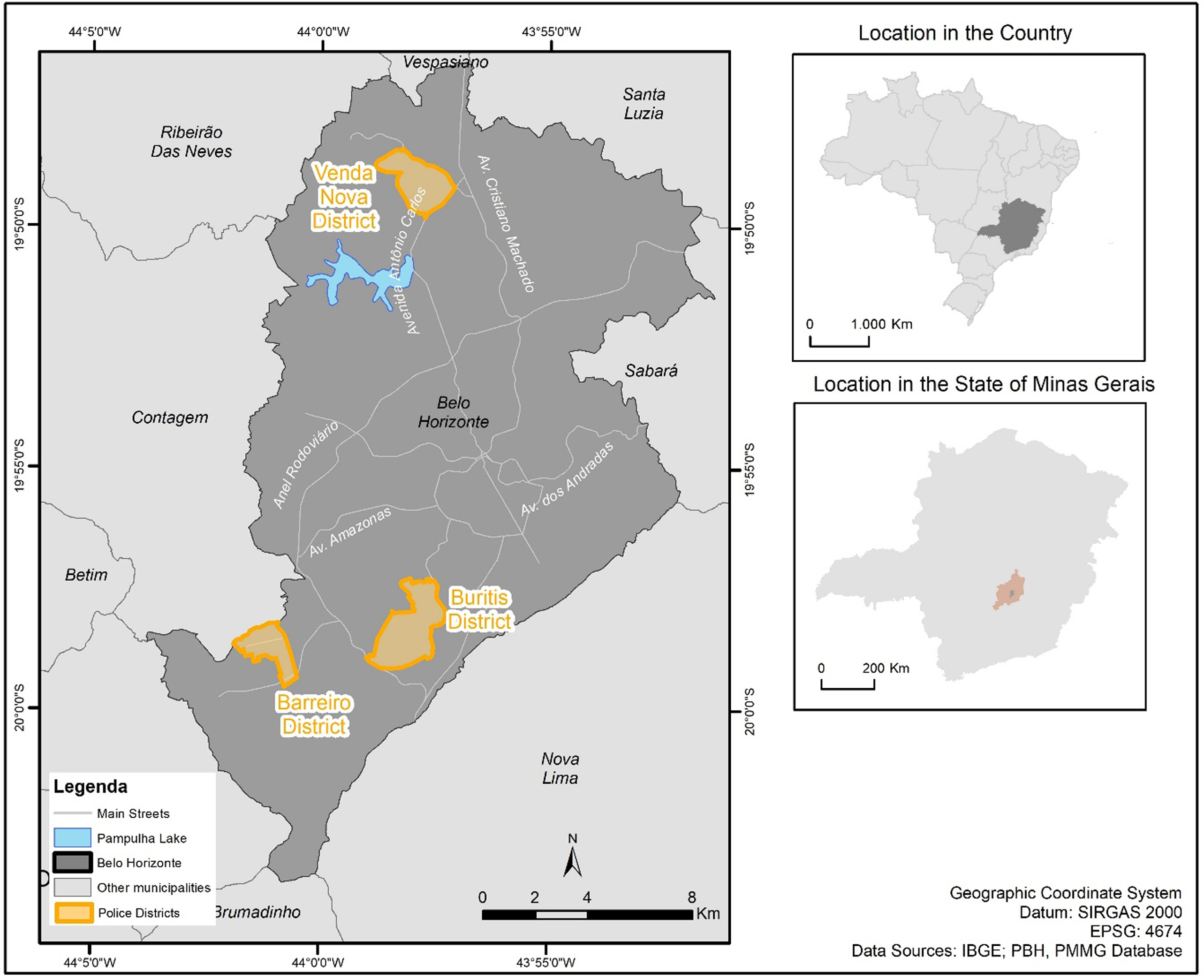
This research utilizes the same data source as Faria (Reference Faria2024), who analysed the spatial concentration of crime in the city of Belo Horizonte, Minas Gerais, Brazil (see Figure 1). This study aims to identify criminal hot spots based on street segmentation, incorporating the dimension of crime damage through the application of the CCHI.
Map location of Belo Horizonte city – Minas Gerais State, Brazil.

The research database considered the following inclusion criteria:
-
(a) Operational Management System (SIGOP) of the Military Police of Minas Gerais (PMMG), accessed via IntranetPM, with extraction performed on 12 August 2023 (Military Police of Minas Gerais State 2023);
-
(b) General Panel of Police Reports (BOs);
-
(c) Registration period: from 1 January to 31 December 2021;
-
(d) Spatial delimitation: municipality of Belo Horizonte.
The study area covers 331.354 km2 and has an estimated population of 2,315,560 inhabitants (Instituto Brasileiro de Geografia e Estatistica 2022), resulting in a population density of 6,988.18 inhabitants per km². For spatial analysis, three scheduled policing sectors – Buritis, Barreiro and Venda Nova – were randomly selected from the municipality’s 97 existing sectors (see Figure 1).
Data Selection and Processing Criteria
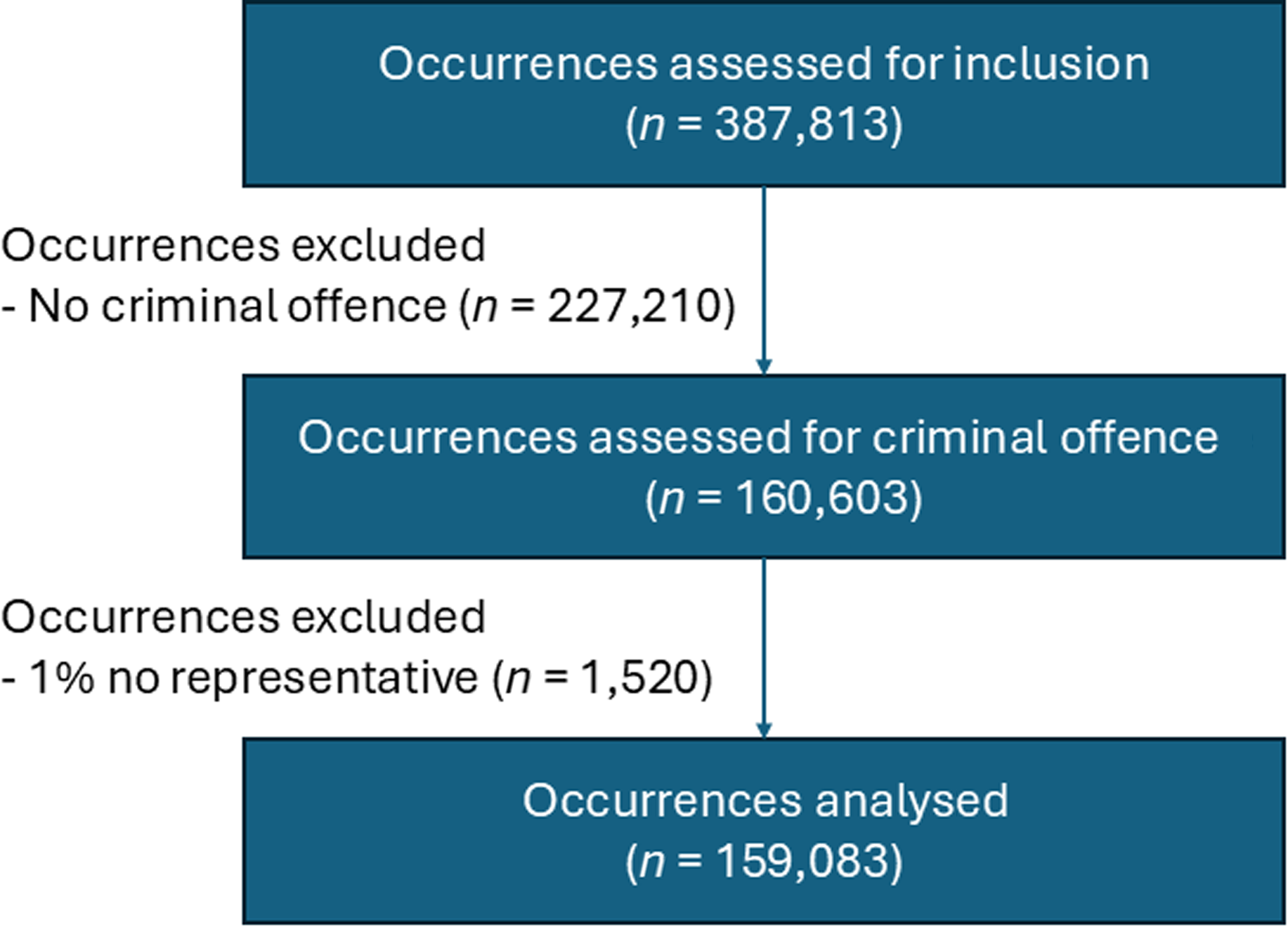
The occurrence selection procedure followed a systematic filtering logic, as demonstrated in Figure 2.
Flowchart of occurrence selection.

The initial database with the selection criteria (police incidents in Belo Horizonte from 1 January 2021 to 31 December 2021) totalled 387,813 incidents. When classified by the description of the main nature, 492 distinct descriptions were identified. Since the logic of the CCHI is to measure criminal damage based on typified crimes, all natures that were not linked to crimes, such as “lost documents” and “traffic accidents without victims”, among others, were excluded from the database.
The researchers processed the data according to the established criteria and obtained 160,603 occurrences linked to criminal offences, distributed across 365 data categories recorded in the “description of main nature” field. Based on this dataset, they conducted a frequency distribution analysis and ordered the number of occurrences from highest to lowest. Subsequently, they calculated the cumulative frequency. Through this procedure, they selected the fields that accounted for 99% of the relative frequency of occurrences and the previously stipulated violent crimes due to their consolidated institutional use. After this refinement, they distributed 159,083 occurrences across 78 data categories in the “description of main nature” field related to criminal offences.
Selected Crimes and Calculation of the Crime Harm Index
The Military Police of Minas Gerais State, Brazil, prioritizes the monitoring of the following violent crimes: homicide; extortion through kidnapping; rape; rape of a vulnerable person; extortion; robbery; kidnapping; and false imprisonment, considering both attempted and completed forms.
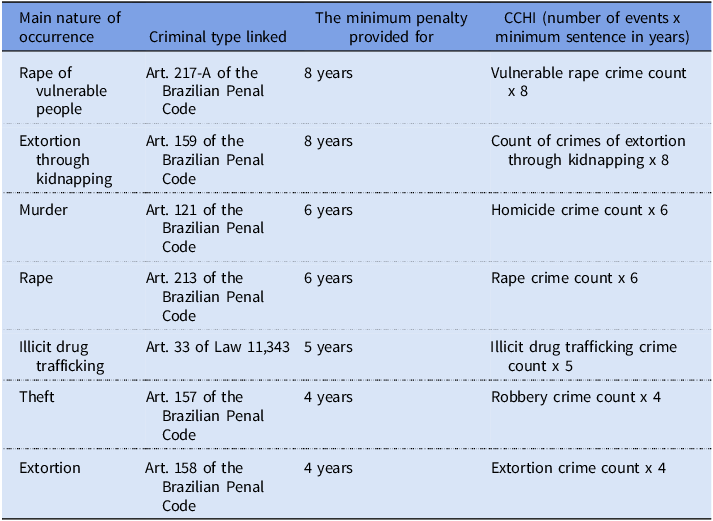
The calculation of the CCHI is obtained by multiplying the number of events recorded by the minimum penalty provided for each criminal type by the Brazilian Penal Code. Table 1 illustrates the procedure adopted.
Example of calculation for Cambridge Crime Harm Index (CCHI) for the most serious criminal types of the Brazilian Penal Code

Source: Prepared by authors based on research data.
Analytical Strategy
This study advances conventional analyses based only on crime frequency by incorporating the severity variable. The approach based on the CCHI enables us to assess the social impact of crime with greater precision, identifying not only locations with high concentrations of crime but also those of greater severity.
This methodology provides robust support for formulating evidence-based public policies, optimizing the management of police resources and prioritizing critical areas of action.
The adopted methodological structure is based on the premise that redistributing policing according to potential damage can increase the effectiveness of state intervention in controlling urban crime.
Results and Discussion
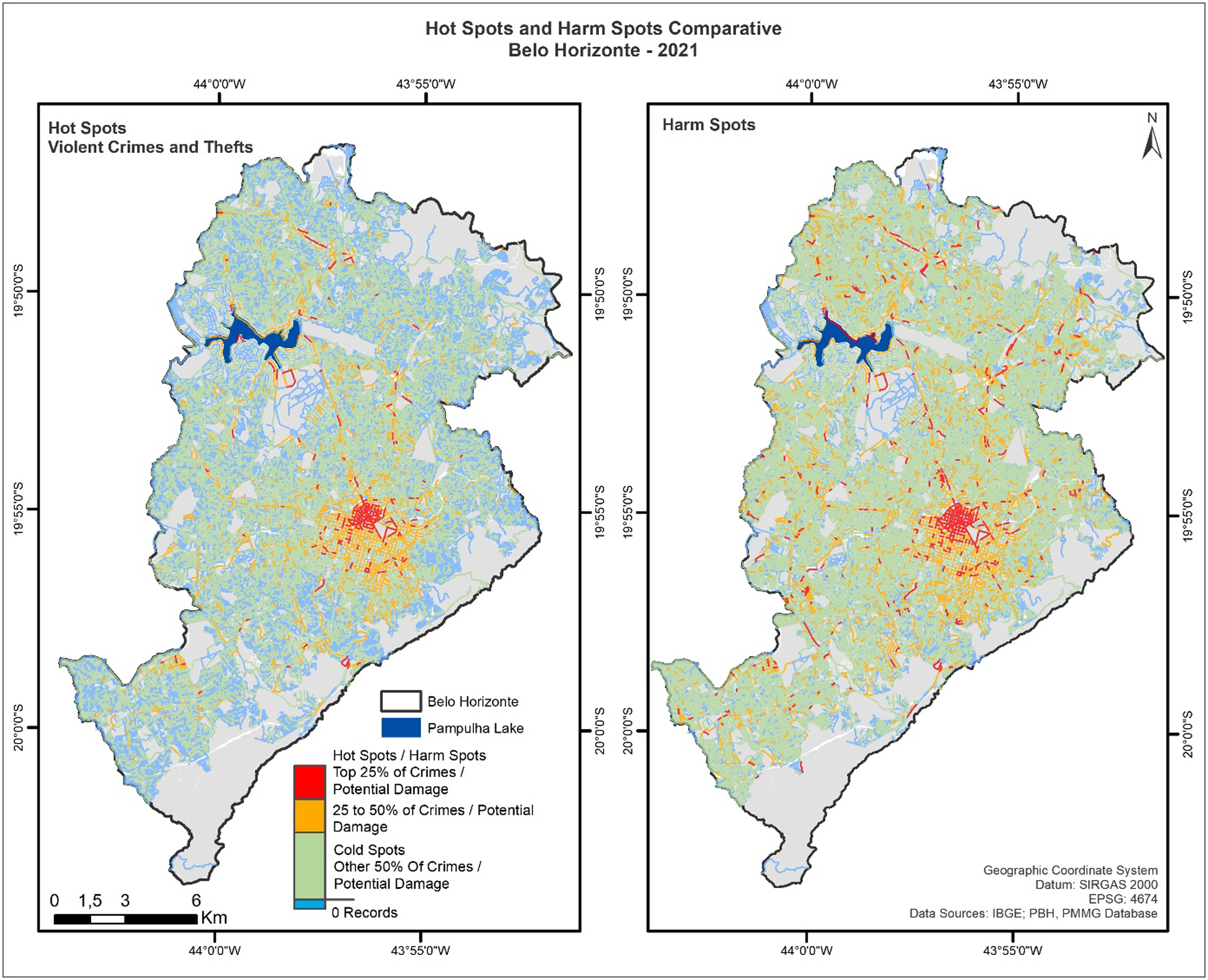
The researchers initially compared the hot spots of crimes already monitored by the police institution in the study area (violent crimes and thefts) based on the data provided by Faria (Reference Faria2024). They then verified the analysis for the other crimes recorded using the CCHI methodology, identifying the areas of harm. Figure 3 compares the street segments concentrated on violent crimes and thefts and the distribution of harm spots.
Hot spots versus harm spots – Belo Horizonte in 2023.
Source: Research data.

The street segments with hot-spot analysis have a higher concentration, with emphasis on the central area, unlike harm spots, which have a higher concentration in the same central area but bring many other points of concentration in different regions, such as the shore of Lagoa da Pampulha and the East Zone. Through visual analysis, it is possible to identify areas with a concentration of criminal damage that, in a crime prevention strategy based on counting crimes, would be overlooked.
Despite the change of locations considering the two alternatives for analysing criminal concentration, given that the appropriate scale for analysis is a fundamental issue in the analysis of many spatial processes, the use of micro-spaces considerably enhances crime prevention (Brantingham and Brantingham Reference Brantingham and Brantingham1975, Reference Brantingham and Brantingham1981; Curman, Andresen, and Brantingham Reference Curman, Andresen and Brantingham2015; Duffala Reference Duffala1976; Lebeau Reference LeBeau1987; Mayhew et al. Reference Mayhew, Clarke, Sturman and Hough1976; Rengert Reference Rengert1980; Sherman and Weisburd Reference Sherman and Weisburd1995; Weisburd and Green Reference Weisburd, Green, MacKenzie and Uchida1994). To this end, to change the scale of observation, the same analysis was carried out for three random sectors, each from a different region within the city’s territorial space, as an example.
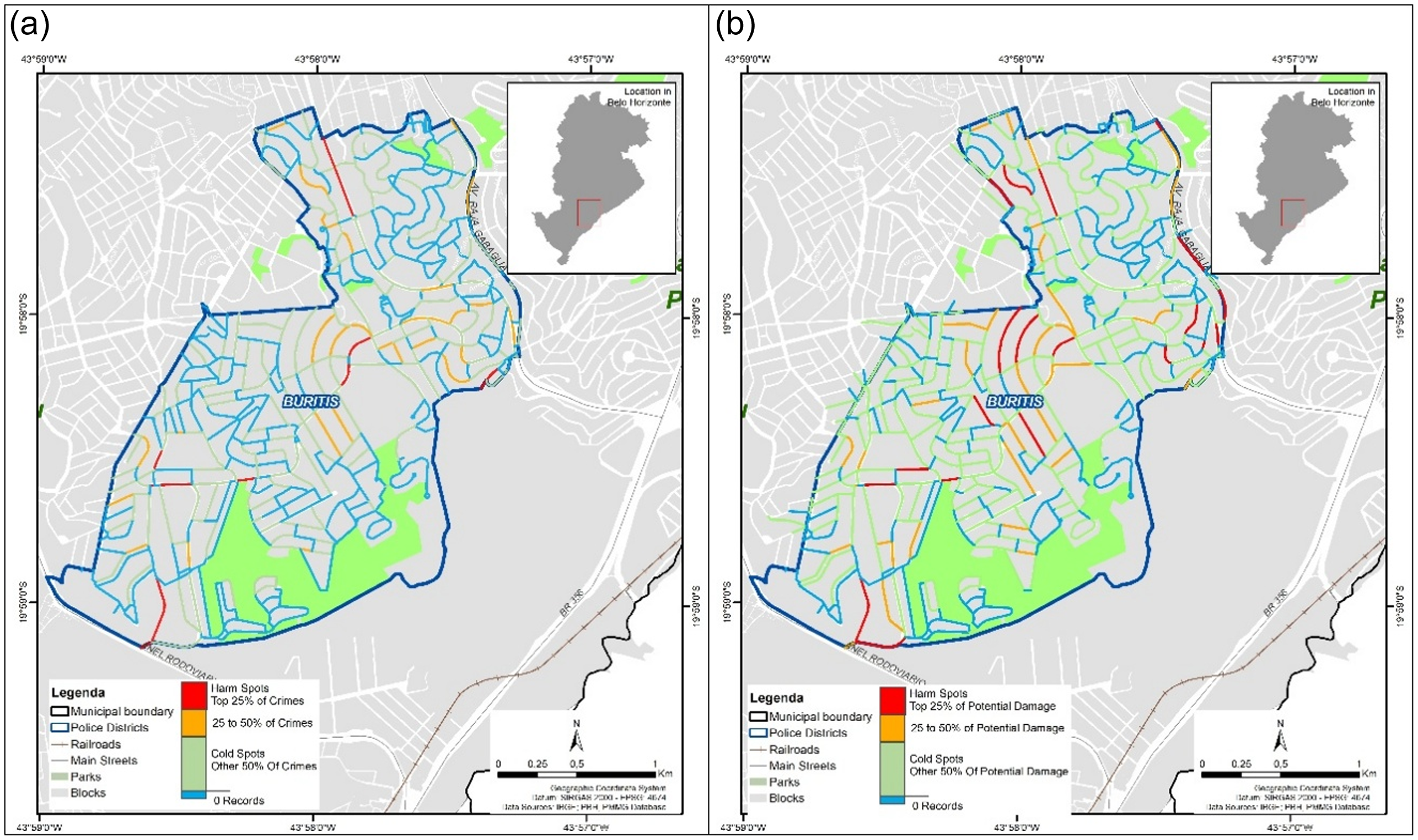
Figure 4 shows the comparison between hot spots and harm spots in the British Sector.
Hot spots versus harm spots – Buritis sector in 2021. (a) Hot spots in the sector (Faria Reference Faria2024). (b) Harm spots in the sector.
Source: Research data and Faria (Reference Faria2024).

Figure 4 illustrates that three of the 13 identified hot spots were disqualified and excluded from the set of 20 points with the highest harm concentration. Additionally, the researchers classified another 10 points, which fell within the accumulated frequency ranges of 25% to 50% and 50% to 100%, as harm spots. This analysis highlights the potential shifts in crime prevention planning that occur when adopting harm spot-based strategies.
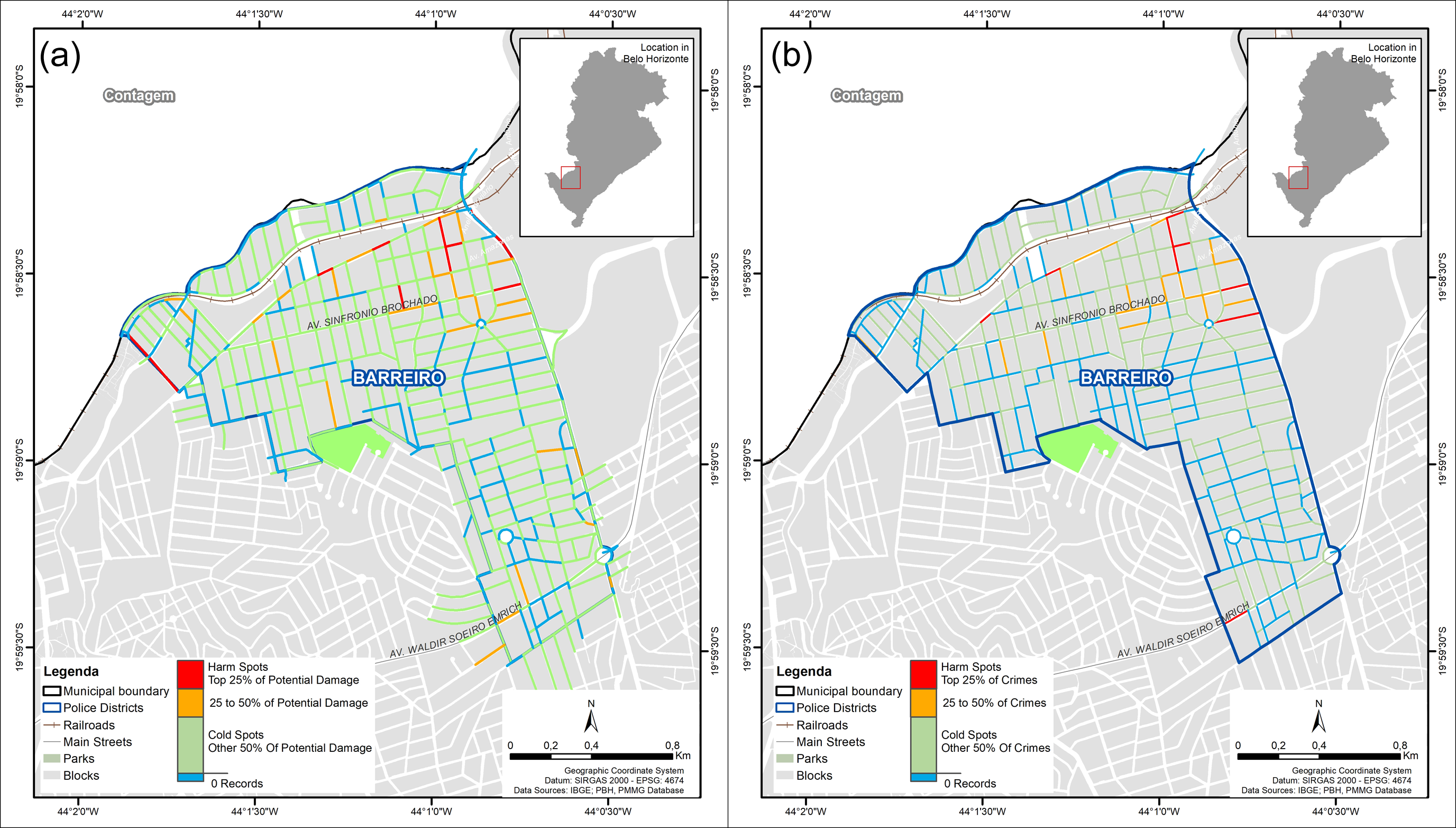
Figure 5 shows the comparison between hot spots and harm spots in the Barreiro sector.
Hot spots versus harm spots – Barreiro sector in 2021. (a) Hot spots in the sector (Faria Reference Faria2024). (b) Harm spots in the sector.
Source: Research data and Faria (Reference Faria2024).

The Barreiro sector presented 11 harm spots and nine hot spots. Of the nine hot spots in the Barreiro sector, when comparing the harm spots, it was identified that two would be disqualified. Additionally, four other street segments, which would not be the focus of attention in the initial analysis, would be considered based on the incidence of other crimes, weighted by their respective penalties.
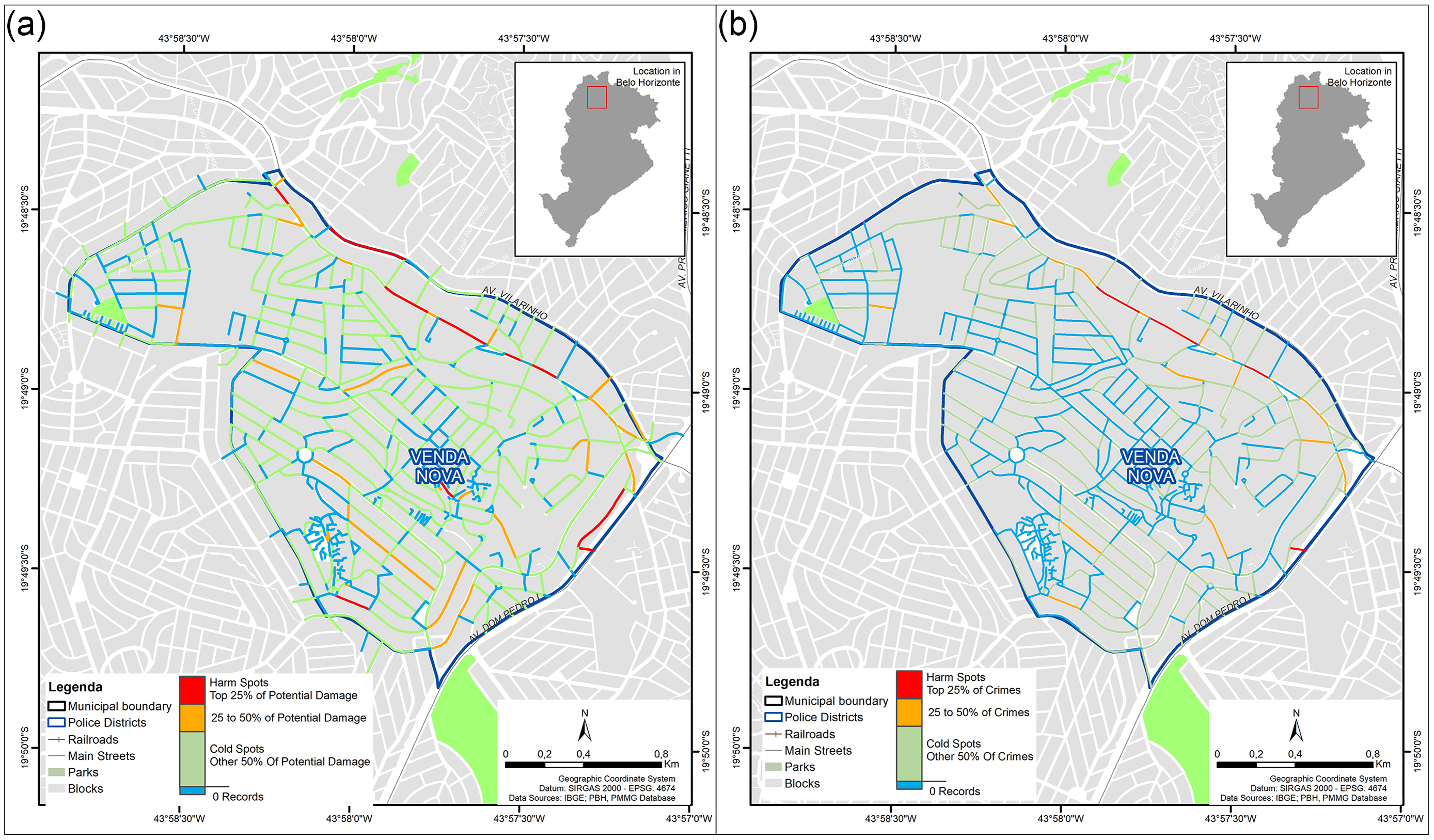
Figure 6 compares hot spots and harm spots in the Venda Nova Sector.
Hot spots versus harm spots – Venda Nova Sector in 2021. (a) Hot spots in the sector (Faria Reference Faria2024). (b) Harm spots in the sector.
Source: Research data and Faria (Reference Faria2024).

Considering hot spots, there would be only five points when using the count of monitored crimes (thefts and violent crimes). When harm spots are included, all of these remain concentration points, adding another six points that were not previously considered criminal concentration points.
Conclusions
The CCHI has demonstrated practical applicability in the Brazilian context, offering a more in-depth analytical lens than conventional crime-counting approaches. The study showed that incorporating the criminal harm metric – weighting each incident according to the severity defined by law – changes the interpretation of the spatial distribution of crime. In Belo Horizonte, the analysis guided by the CCHI revealed patterns of crime concentration (harm spots) that are distinct from traditional hot spots, indicating that areas of high social harm emerge as priorities even when they do not stand out in terms of gross crime frequency. This finding corroborates the premise that evaluating crimes based on the harm caused, rather than just the count, offers a more accurate portrayal of the impact of crime on society.
The tests conducted in the sample sectors demonstrated the benefits of the harm-based approach at a micro-scale. By adopting the harm index instead of the frequency of occurrences, the researchers identified additional critical points and reclassified spatial priorities. In the Barreiro sector, for example, of the nine hot spots initially mapped by crime count, two no longer appeared among the 11 harm spots identified. At the same time, four new street segments emerged as critical areas based on the harm caused by the occurrences. A similar pattern was observed in Venda Nova, where all five original hot spots remained relevant; however, the analysis based on the CCHI revealed six additional locations of priority concern that the traditional frequency-based methodology would have overlooked. These illustrative cases reinforce that weighting by severity alters the spatial distribution of crime, promoting a hierarchy of critical regions more closely aligned with the potential harm associated with each crime.
This shift in the analytical paradigm has significant implications both theoretically and practically. Conceptually, the use of the CCHI in Brazil fills a gap in criminology and spatial analysis by incorporating the severity of crimes according to the national legal system – that is, it aligns criminal indicators with the levels of social disapproval expressed in the penalties provided for by law. As a result, the measurement begins to reflect not only the incidence but also the magnitude of the social impact of each type of crime, providing greater rigor and fairness in the interpretation of criminal data. From the perspective of public security management, the findings suggest that the CCHI can guide the allocation of police resources more effectively, enabling policing and prevention strategies to focus on locations and occurrences with the most significant potential for harm. In other words, integrating the harm spots logic into operational planning promotes improved evidence-based decision-making, maximizing the efficiency of interventions and potentially reducing the social impact of crime.
Furthermore, the index’s base on existing data and legal parameters (base sentences of the Penal Code and related legislation) facilitates its operational viability and institutional acceptance since it confers normative legitimacy to the resulting prioritization – the severity criteria are intrinsic to the current justice system, making the CCHI a tool compatible with legal practices and expectations.
This work inaugurates a pioneering application of the CCHI in Brazil and opens several ways for future research. Initial recommendations are that the study be replicated in other geographic and institutional contexts to verify the generalizability of the results and adapt the methodology to different regional realities.
A longitudinal analysis, monitoring the evolution of criminal harm over time and assessing potential gains from adopting CCHI-informed policing strategies, can provide valuable insights as evidence of reduced violence and victimization.
Although the findings presented demonstrate the analytical potential to reconfigure the spatial understanding of crime in Belo Horizonte, some methodological limitations and contextual restrictions must be recognized to condition the generalization of the results.
First, there is a reliance on secondary data from official data recording systems. The quality and completeness of these data are subject to underreporting of certain types of crime and variations in the classification of the main nature of the occurrences. Such distortions can compromise the accuracy of criminal damage calculations, particularly in more sensitive or less reported categories.
Another limiting factor concerns the standardization of the minimum sentence as the sole measure of severity. Although this methodological choice aims to provide objectivity in measuring damage, it overlooks aggravating and mitigating factors stipulated by law and variations in the practical application of court sentences. Thus, normative standardization may result in approximations that do not fully reflect the complexity of specific cases, considering offences with reduced legal penalties but that afflict the population, or even the application of the same basic penalties for substantially different crimes, without considering factors such as mitigating or aggravating factors for the commission of each crime in the specific case; to measure the index, they are considered the same for the weighting of the damage. For example, criminal law in Brazil does not have distinct criminal types for theft of objects without the use of violence or threat; all cases of this conduct are considered theft. However, burglary (in terms of US law) is an entirely different crime from shoplifting (US law). In the case of Brazil, the weights attributed to occurrences of shoplifting, theft and burglary are the same.
Competing interests
The authors declare no competing interests.
Paulo Henrique João Silva is a Captain of the Military Police of Minas Gerais. He holds a master’s degree in Public Security and Citizenship from the State University of Minas Gerais. He works in operational and analytical areas of policing, with research interests in public safety metrics and the application of crime harm indices in police planning.
Antônio Hot Pereira de Faria is a Major of the Military Police of Minas Gerais. He holds a PhD in Geography, specifically in Spatial Information Processing, from the Pontifical Catholic University of Minas Gerais. He is a postdoctoral researcher at the Department of Computer Science, Federal University of Minas Gerais, and a Professor at the Professional Master’s Program in Police Sciences and Innovative Technologies (Universidade Estadual de Montes Claros). His academic work focuses on spatial criminology, predictive policing and evidence-based public security.
Diego Filipe Cordeiro Alves holds a master’s and PhD in Geography, specifically in Spatial Information Processing, from the Pontifical Catholic University of Minas Gerais. His academic work is focused on spatial analysis, geographic information systems, and the application of spatial technologies to urban and security challenges.