Implications
Iberian piglets fed soya protein concentrate (SPC) (65% CP) or high-protein soya bean meal (HP-SBM) (49% CP) showed improved total tract apparent and ileal apparent digestibility of nutrients and reduced incidence of post weaning diarrhoea as compared with pigs fed regular soya bean meal (R-SBM) (44% CP). However, the inclusion of SPC or micronized soya bean meal had little effect on growth performance of the pigs. Consequently, the decision to substitute R-SBM by added value soya products in the diet will depend on the production objectives as well as on the relative cost of available soya products.
Introduction
Iberian (IB) pig production has experienced continuous increase in economic relevance in Spain and Portugal in the last two decades. IB pigs have lower growth rates and less proportion of lean gain than conventional white pigs and therefore, amino acids (AA) requirements and the need of using high-quality ingredients in the diet might be lower for IB pigs than for conventional white pigs (Barea et al., Reference Barea, Nieto, Vitari, Domeneghini and Aguilera2011). Often, IB pigs are crossed with selected lines of Duroc sires, which results in increased nutrient requirements and probably, in higher need for additional added value ingredients in the diet. In all instances, the information available on the nutrient requirements of weanling IB pigs is very limited and frequently, commercial diets for these piglets are based on nutrient specifications recommended for conventional white piglets.
Because of cost, availability and nutritive value, soya bean meal (SBM) is the most important protein source used in pig diets. However, SBM contains several potential antinutritional factors (ANF) including trypsin inhibitors (TI), saponins, lectins and antigenic proteins that reduce nutrient digestibility and growth performance, limiting its use in diets for young pigs (Valencia et al., Reference Valencia, Serrano, Centeno, Lázaro and Mateos2008a). In particular, glycinin and β-conglycinin are potential antigenic and allergenic proteins that might cause villus atrophy and crypt hyperplasia and reduce the absorptive capacity of the small intestine of the pigs (Li et al., Reference Li, Nelssen, Reddy, Blecha, Hancock, Allee, Goodband and Klemm1990). Soya protein concentrates (SPC) had lower ANF and non-starch polysaccharides content than SBM and therefore, SPC contain more CP, which should be more digestible, than the corresponding meal (Sohn et al., Reference Sohn, Maxwell, Buchanan and Southern1994). Consequently, the inclusion of SPC in the diet in substitution of SBM should result in improved intestinal morphology, nutrient utilization and growth performance of weanling pigs.
The effect of particle size of the ingredients of the diet on nutrient digestibility and growth performance of pigs is a subject of debate (Goodband et al., Reference Goodband, Tokach and Nelssen1995; Lawrence et al., Reference Lawrence, Hastad, Goodband, Tokach, Dritz, Nelssen, DeRouchey and Webster2003). A reduction in geometric mean diameter facilitates the contact between digesta and endogenous enzymes that may improve nutrient digestibility and feed efficiency. However, fine particles increase the fluidity of the stomach contents (Wondra et al., Reference Wondra, Hancock, Behnke, Hines and Stark1995) and might increase the incidence of digestive disturbances.
Several studies (Frikha et al., Reference Frikha, Serrano, Valencia, Rebollar, Fickler and Mateos2012; Rebollar et al., Reference Rebollar, De Blas, Lázaro, Saldaña and Mateos2013) have shown that protein quality and AA digestibility of the SBM varied with the country of origin of the beans. A difference in protein quality might be more important and easy to detect in young pigs rather than in adult pigs because its gastrointestinal tract is less developed. The hypothesis of this research was that the inclusion in the diet of high-protein soya bean meal (HP-SBM; 49% CP) either micronized or ground or SPC, in substitution of regular soya bean meal (R-SBM; 44% CP), could improve nutrient digestibility and growth performance of IB weanling pigs. The aim of this experiment was to evaluate the effects of including in the diet different soya products, varying in CP content, particle size and origin of the beans on growth performance, nutrient digestibility and intestinal morphology of weanling IB pigs.
Material and methods
Husbandry, ingredients and diets
The experimental procedures described in this research were approved by the Animal Ethics Committee of Universidad Politécnica de Madrid and were in compliance with the Spanish guidelines for the care and use of animals in research (Boletín Oficial del Estado, 2007).
In total, 216 crossbreed piglets (IB dams and Duroc sires) with 30±3 days of age and 6.6±0.15 kg BW were used in this experiment. At arrival to the experimental station, pigs were weighed and allotted in groups of six, irrespective of litter, to 36 flat-deck pens (1.10×1.60 m), with all pens having similar average BW and equal number of barrows and gilts. Room temperature was maintained at 30±1°C for the first week of the experiment and then, it was reduced by ~2°C per week until reaching 22°C. The piglets were kept on a 20 h/day light programme and had free access to water and feed throughout the experiment. Piglets that showed signs of diarrhoea, as assessed by veterinarian inspection, were injected with 250 mg enrofloxacine (Alsir 5%, Esteve Veterinaria, Barcelona, Spain)/kg BW for 3 consecutive days, as recommended by the supplier.
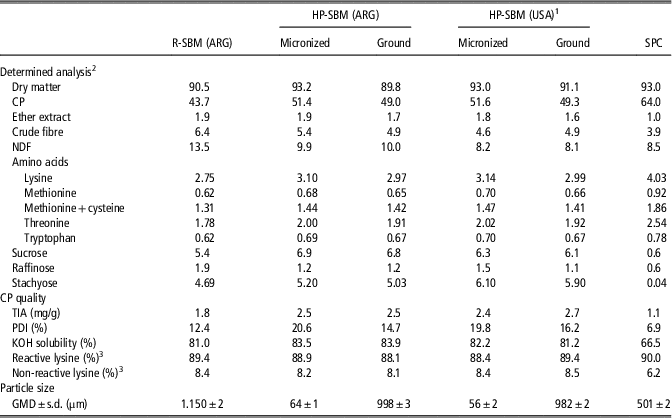
The soya products tested were from the same batches used in a previous research conducted with conventional white pigs (Berrocoso et al., Reference Berrocoso, Serrano, Cámara, López and Mateos2013a). The batch of R-SBM (Argentina (ARG) origin) was obtained from a local trader (Interpec, Cádiz, Spain) and had a geometric mean diameter of 1150 μm. Two extra batches of HP-SBM were obtained either from the USA (Carolina Soya, Warsaw, NC, USA) or ARG (Esasa, Valladolid, Spain) and divided into two portions; the first portion was ground with a hammer mill provided with a 2.5 mm screen (Buhler AG, Uzwil, Switzerland) to a geometric mean diameter of ~990 μm and the second portion was micronized to a geometric mean diameter of ~60 μm (Berrocoso et al., Reference Berrocoso, Serrano, Cámara, López and Mateos2013a). The SPC was obtained from a local trader and was manufactured by a proprietary process using aqueous alcohol extraction. The process is effective in reducing the ANF, soluble sugars, oligosaccharides and other minor constituents content of defatted and dehulled flakes of HP-SBM. Moreover, glycinin and β-conglycinin, the two most important antigenic storage proteins in raw soya beans, are denatured during the process and their antigenic properties are almost entirely eliminated. The chemical composition, geometric mean diameter and the protein quality of the soya products tested are shown in Table 1.
Chemical composition (% as-fed basis unless otherwise indicated), CP quality and particle size of the SBMs and the SPC

R-SBM=regular soya bean meal (44% CP) from ARG; ARG=Argentina; HP-SBM=high-protein SBM (49% CP) from ARG; SPC=soya protein concentrate (65% CP); TIA=trypsin inhibitor activity; PDI=protein dispersibility index; GMD±s.d.=Geometric mean diameter±log standard deviation.
1 High-protein SBM (49% CP) from the USA.
2 In duplicate.
3 As a percentage of total lysine.
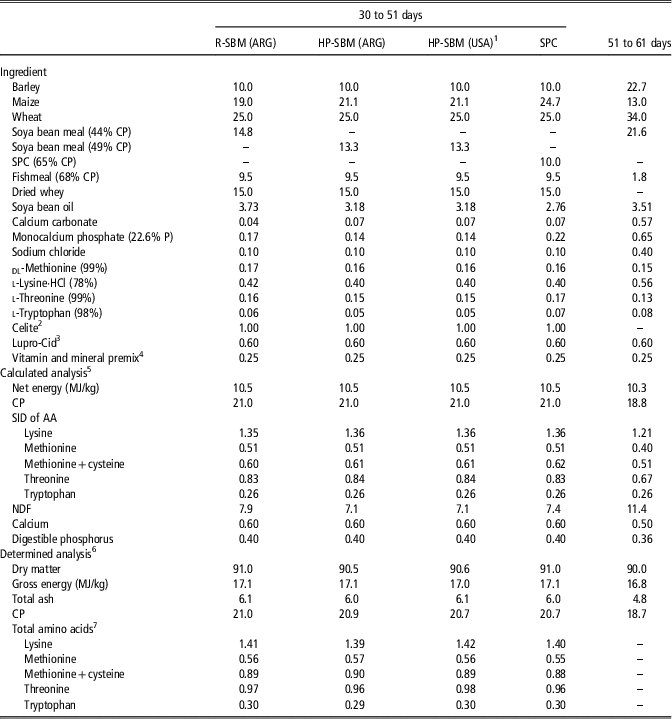
From day 30 to 51 (phase I) pigs were fed one of six diets that varied in the main source of dietary protein. There was a control diet in which 14.8% of the diet was provided by R-SBM, four diets that included 13.3% HP-SBM that resulted from the combination of two sources of SBM (ARG v. USA) and two grinding of the meals (ground, 990 μm v. micronized, 60 μm) and a diet with 10% SPC. The soya products tested provided the same amount of CP (6.5%) to all diets. Adjustments in ingredient composition were made to ensure that all diets had similar net energy (10.5 MJ/kg) and digestible lysine (1.35%) content according to Fundación Española Desarrollo Nutrición Animal (2010). Other limiting indispensable AA (methionine, tryptophan, threonine and isoleucine) and cysteine were formulated according to the ideal protein concept for piglets as indicated by Fundación Española Desarrollo Nutrición Animal (2006). Celite (acid-washed diatomaceous earth; Celite Hispánica S.A., Alicante, Spain) was added to all diets (1%) as an additional acid insoluble ash source. No antibiotics or growth promoter additives, other than copper sulphate (160 mg/kg), were included in these diets. All feeds were offered as 2.5 mm pellets.
The experimental diets had similar ingredient composition and nutrient content and used the same batches of SBM and other ingredients than those in the experiment of Berrocoso et al. (Reference Berrocoso, Serrano, Cámara, López and Mateos2013a) but they were manufactured at different days. Therefore, small differences in nutrient content of these diets as compared with those of Berrocoso et al. (Reference Berrocoso, Serrano, Cámara, López and Mateos2013a) were detected. The ingredient composition and the calculated (Fundación Española Desarrollo Nutrición Animal, 2010) and determined nutrient content of the experimental diets are shown in Table 2. From day 50 to 61 (phase II) all pigs were fed a common commercial diet based on cereals and R-SBM in mash form.
Ingredient composition and calculated and determined analysis (% as-fed basis unless otherwise indicated) of the experimental diets

R-SBM=regular soya bean meal (44% CP) from ARG; ARG=Argentina; HP-SBM=high-protein soya bean meal (49% CP) from ARG; SPC=soya protein concentrate (65% CP); SID=standardized ileal digestibility.
Data correspond to the ground diets.
1 High-protein soya bean meal (49% CP) from the USA.
2 Acid-washed diatomaceous earth (Celite Hispánica S.A.).
3 Mixture of propionic (25%) and formic acid (64%) (BASF Española, Tarragona, Spain).
4 Provided the following (per kilogram of diet): vitamin A (trans-retinyl acetate), 12 000 IU; vitamin D3 (cholecalciferol), 1900 IU; vitamin E (all-rac-tocopherol-acetate), 30 IU; vitamin B1 (thiamine-mononitrate), 1.8 mg; riboflavin, 5 mg; niacin, 25 g; pyridoxine (pyridoxine HCl), 2.4 mg; vitamin B12 (cyanocobalamin), 0.03 mg; vitamin K3 (bisulphate menadione complex), 1.8 mg; pantothenic acid (d-Capantothenate), 15 mg; folic acid, 0.6 mg; d-biotin, 0.1 mg; Se (Na2SeO3), 0.2 mg; I (KI), 1 mg; Cu (CuSO4·5H2O), 160 mg; Fe (FeSO4·7H2O), 225 mg; Mn (MnSO4·H2O), 100 mg; and Zn (ZnO), 120 mg.
5 According to Fundación Española Desarrollo Nutrición Animal (2010).
6 In duplicate.
7 The amino acid content of the diets presented corresponds to data obtained in previous research for diets with same ingredient composition (Berrocoso et al., Reference Berrocoso, Serrano, Cámara, López and Mateos2013a).
Experimental design and measurements
The experimental design was completely randomized with six phase I diets that differed in the main source of dietary CP. Each treatment was replicated six times and the experimental unit for all measurements was the pen (six pigs/pen). Pigs were weighed individually and feed intake was measured by pen at day 30, 37, 45, 51 and 61. Feed wastage was collected daily from pans placed beneath the feeders and used to correct average daily feed intake (ADFI) and feed to gain ratio (FGR). Mortality was recorded as produced. Average daily gain (ADG), actual ADFI (calculated by difference between feed offered and feed wastage by pen) and FGR were calculated from these data by phase and for the entire experimental period. Post weaning diarrhoea (PWD) was estimated by pen as the proportion of days in which pigs showed clinical signs of diarrhoea with respect to the total number of days on trial (Mateos et al., Reference Mateos, Martin, Latorre, Vicente and Lazaro2006).
At day 45, representative samples of faeces (300 g) were collected by rectal massage from at least three pigs from each pen. Samples were pooled by replicate, homogenized, frozen at −20°C and stored until chemical analysis. Total tract apparent digestibility (TTAD) of dry matter (DM), organic matter (OM), gross energy (GE) and CP were determined as indicated by Medel et al. (Reference Medel, Salado, De Blas and Mateos1999). After the growth performance control, pigs were maintained without feed for 12 h and then, re-fed under ad libitum condition for 6 h to achieve feed intake as high and homogeneous as possible. Then, a single intramuscular injection of Imalgene 500 (20 mg Ketamine clorhidrate/kg BW; Merial Laboratories S.A., Lyon, France) plus Xilalgesic (2.2 mg Xylazil-20/kg BW; Calier Laboratories S.A., Barcelona, Spain) was administered to one pig per pen chosen at random, to induce general anaesthesia. Pigs were weighed and slaughtered by exsanguination to reduce blood contamination during the sample collection procedure. Individual samples of digesta (20 g) were collected at the terminal ileum (last 2.0 m of the small intestine), freeze-dried, homogenized using a pestle and a mortar and stored in airtight containers at +4°C until chemical analyses. The apparent ileal digestibility (AID) of DM, OM, GE and CP were determined as described by Valencia et al. (Reference Valencia, Serrano, Lázaro, Latorre and Mateos2008b).
In addition, a 5 cm section of the middle part of the ileum was dissected in all these pigs and villus height, measured from the tip of the villus to the villus crypt junction, and crypt depth, defined as the depth of the invagination between adjacent villus, was determined.
Laboratory analysis
The geometric mean diameter of the coarsely ground SBM and SPC was determined in triplicate as indicated by American Society of Agricultural Engineers (1995). Because this method is not valid for very fine materials, the geometric mean diameter of the micronized SBM was measured using a Sympatec Helos compact KA laser diffraction equipment (Sympatec GmbH, Clausthal-Zellerfeld, Germany) as indicated by Valencia et al. (Reference Valencia, Serrano, Lázaro, Latorre and Mateos2008b). Laboratory analyses of the SBM, including moisture, CP, AA content, ether extract, crude fibre, NDF, sucrose, oligosaccharides (stachyose and raffinose), trypsin inhibitor activity (TIA), protein dispersibility index, solubility in KOH and reactive and non-reactive Lys were performed as indicated by Berrocoso et al. (Reference Berrocoso, Serrano, Cámara, López and Mateos2013a). Before analysis, faecal samples were thawed overnight, dried at 70°C for 48 h and ground using a Retsch (Model Z-I, Stuttgart, Germany) provided with a 1-mm screen. Diets, faeces and ileal contents were analysed for moisture, CP, GE and acid insoluble ash, as previously indicated for the soya products.
Tissue samples were placed into a 10% buffered neutral formaldehyde solution (pH 7.2 to 7.4) and kept on ice. After 24 h immersed in this solution, the samples were carefully cleaned using deionized water. The paraffin sections were stained with hematoxylin and eosin. Morphometric indices for each slide were determined using computer-aided light microscope image analysis as described by Bird et al. (Reference Bird, Croom, Fan, Daniel, Black, McBride, Eisen, Bull and Taylor1994). For each segment, the average measurements of 25 villus and crypts, taken from at least five different sections, were used for further analysis. Slides were viewed at 40X magnification using an Olympus BX-40 light microscope and the image projected by a camera lucida on a digitizer tablet equipped with a mouse-cursor (Soft Imagining System, Olympus GmbH, Hamburg, Germany).
Statistical analysis
Data on growth performance, TTAD, AID and ileum mucosal morphology were analysed using the General Linear Model Procedure of SAS (Statistical Analysis Systems Institute, 1990) as a completely randomized design with type of diet as main effect and with the individual pen representing the experimental unit for all measurements. Normal distribution of the residuals and variance homogeneity of the data were tested by the Univariate procedure and the Levene’s Test, respectively. Pre-planned comparisons among treatment means were made using the following orthogonal contrasts: (1) R-SBM v. all the other diets, (2) SPC v. all the HP-SBM diets, (3) micronized HP-SBM v. ground HP-SBM, (4) HP-SBM of ARG origin v. HP-SBM of US origin and (5) interaction between source and the degree of grinding of the HP-SBM. No interactions between source and degree of grinding of the HP-SBM were detected for any of the traits studied and therefore, only main effects are discussed. Because the data on PWD were not normally distributed, the CATMOD procedure of SAS was used for statistical analysis. All differences were considered significant at P<0.05 and P-values between 0.05 and 0.10 were considered a trend.
Results
Details on the composition of the soya products and diets used in this research have been reported elsewhere (Berrocoso et al., Reference Berrocoso, Serrano, Cámara, López and Mateos2013a) and therefore, only values for key chemical analyses are presented in this report (Tables 1 and 2, respectively).
Growth performance and incidence of PWD
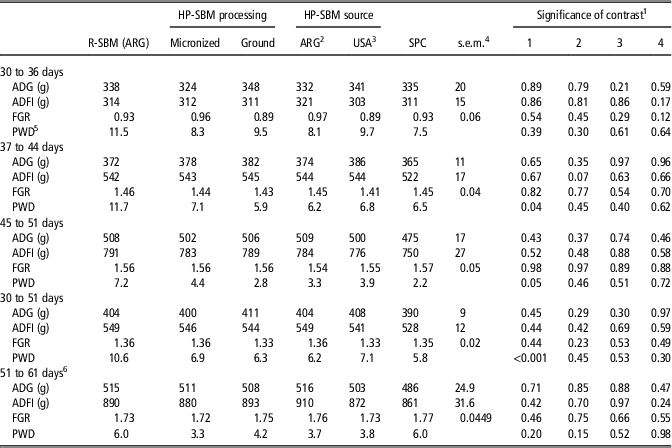
Mortality was 2.4% and was not related to treatment (data not shown). Similarly, average feed wastage (5.4 g/pig per day from 30 to 51 days of age and 1.7 g/pig per day from 51 to 61 days of age) was not affected by treatment (data not shown). In phase I (day 30 to 51), diet did not affect growth performance of the pigs but PWD was lower (6.4 v. 10.6%; P<0.001) in pigs fed the HP-SBM and SPC diets than in pigs fed the R-SBM diet (Table 3). No differences in PWD were detected between pigs fed HP-SBM and pigs fed SPC. From day 37 to 44, ADFI tended to be lower (522 v. 544 g; P=0.07) for pigs fed the SPC containing diet than the average of pigs fed the four HP-SBM containing diets, and PWD was lower for pigs fed the HP-SBM or the SPC diets than for pigs fed R-SBM diet (6.5% v. 11.7%; P<0.05). Also, from day 45 to 51, PWD tended to be lower for pigs fed the HP-SBM or the SPC diets than for pigs fed R-SBM diet (3.3% v. 7.2%; P=0.05). In phase II (day 51 to 61), when all the pigs were fed a common commercial diet, previous dietary treatment did not affect growth performance or PWD of the pigs.
Effect of inclusion of different sources of soya bean meal (SBM) and soya protein concentrate (SPC) in the diet on growth performance and post-weaning diarrhoea (PWD, %) of pigs from 30 to 61 days of age

R-SBM=regular SBM (44% CP) from ARG; ARG=Argentina; HP-SBM=high-protein SBM (49% CP); ADG=average daily gain; ADFI=average daily feed intake; FGR=feed to gain ratio.
Values correspond to actual feed intake (feed disappearance minus feed wastage).
1 1=R-SBM v. all the other diets; 2=SPC v. average of all the HP-SBM containing diets; 3=micronized HP-SBM v. ground HP-SBM and 4=HP-SBM of ARG origin v. HP-SBM of US origin. The interaction between SBM source and the degree of grinding of the HP-SBM was not significant (P>0.05).
2 High-protein SBM (49% CP) from ARG.
3 High-protein SBM (49% CP) from the USA.
4 Pooled s.e.m. (six pens per treatment of six pigs each).
5 Percentage of days in which piglets had symptoms of diarrhoea with respect to total number of days in experiment (Mateos et al., Reference Mateos, Martin, Latorre, Vicente and Lazaro2006).
6 All pigs received in this phase a common phase II diet in mash form.
TTAD and AID of nutrients
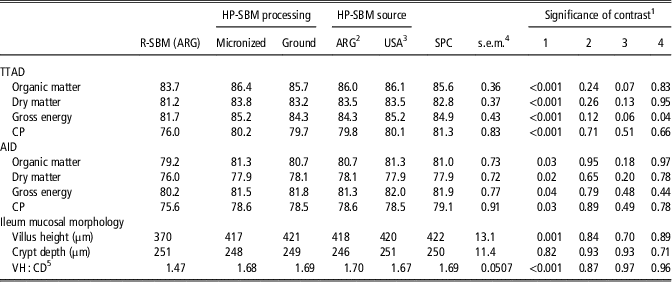
Source of SBM affected nutrient digestibility with the lowest values observed for the R-SBM containing diet (Table 4). The TTAD of OM (85.9% v. 83.7%; P<0.001), DM (83.3% v. 81.2%; P<0.001), GE (84.7% v. 81.7%; P<0.001) and CP (80.2% v. 76.0%; P<0.001) were higher for pigs fed the average of the four HP-SBM and SPC diets than for pigs fed the R-SBM diet. Also, the TTAD of OM (P=0.07) and GE (P=0.06) tended to be higher for pigs fed micronized HP-SBM than for pigs fed ground HP-SBM. Source of HP-SBM had no effects on the TTAD of nutrients except for GE that was higher (P<0.05) for US meal than for the ARG meal. No differences between HP-SBM and SPC containing diets were detected for any of traits studied.
Effect of inclusion of different sources of soya bean meal (SBM) and soya protein concentrate (SPC) on the total tract apparent (TTAD,%) and apparent ileal digestibility (AID, %) of nutrients and ileum mucosal morphology at 45 days of age

R-SBM=regular SBM (44% CP) from ARG; ARG=Argentina; HP-SBM=high-protein SBM (49% CP).
1 1=R-SBM v. all the other diets; 2=SPC v. average of all the HP-SBM containing diets; 3=micronized HP-SBM v. ground HP-SBM and 4=HP-SBM of ARG origin v. HP-SBM of US origin. The interaction between SBM source and the degree of grinding of the HP-SBM was not significant (P>0.05).
2 High-protein SBM (49% CP) from ARG.
3 High-protein SBM (49% CP) from the USA.
4 Pooled s.e.m. (six pens per treatment of six pigs each).
5 Villus height to crypt depth ratio.
The AID of OM (81.0% v. 79.2%; P<0.05), DM (78.0% v. 76.0%; P<0.05), GE (81.7% v. 80.2%; P<0.05) and CP (78.6% v. 75.6%; P<0.05) were higher for pigs fed the average of the four HP-SBM and SPC diets than for pigs fed the R-SBM diet (Table 4). However, as compared with the average of the four HP-SBM diets, SPC inclusion did not affect AID of any of the nutrients studied. Neither micronization nor source of HP-SBM affected the AID of any of the nutrients studied.
Ileum mucosal morphology
Villus height (419 v. 370 μm; P<0.01) and villus height to crypt depth ratio (1.68 v. 1.47 μm; P<0.001) were higher in pigs fed the HP-SBM and SPC diets than in pigs fed the R-SBM diet but no differences were detected between HP-SBM and SPC diets. Neither source nor micronization of the HP-SBM affected ileum mucosal morphology.
Discussion
Effect of CP content of the SBM (regular v. high protein)
Growth performance of the pigs was not affected by CP content of the SBM at any time. The authors have not found any report comparing SBM with different CP content on growth performance of IB pigs but similar data have been reported by Berrocoso et al. (Reference Berrocoso, Serrano, Cámara, López and Mateos2013a) in conventional white pigs. In contrast, De Coca-Sinova et al. (Reference De Coca-Sinova, Jiménez-Moreno, González-Alvarado, Frikha, Lázaro and Mateos2010) observed better growth performance in broilers fed HP-SBM than in broilers fed R-SBM. In the current experiment, diets were formulated based on determined rather than on calculated CP values of the soya products, which might have reduced the potential advantages of HP-SBM over R-SBM on piglet performance. Also, protein quality of the R-SBM and the HP-SBM, as assessed by KOH solubility, TIA activity and reactive Lys values, were optimal for all the meals, reducing the potential differences among the SBM tested.
The TTAD and AID of CP and all other nutrients were higher for the HP-SBM than for the R-SBM, consistent with the lower fibre content of the HP-SBM and in agreement with data reported by Baker and Stein (Reference Baker and Stein2009) and Berrocoso et al. (Reference Berrocoso, Serrano, Cámara, López and Mateos2013a) in conventional white pigs. Similarly, De Coca-Sinova et al. (Reference De Coca-Sinova, Valencia, Jiménez-Moreno, González-Alvarado, Lázaro and Mateos2008) reported in broilers a negative relation between crude fibre and AA digestibility for most indispensable AA, and a positive relation between CP content and CP digestibility in SBM. Moreover, Frikha et al. (Reference Frikha, Serrano, Valencia, Rebollar, Fickler and Mateos2012) reported a positive relation between CP digestibility and CP content of SBM in 21-day-old broilers fed 22 different batches of SBM. De Coca-Sinova et al. (Reference De Coca-Sinova, Jiménez-Moreno, González-Alvarado, Frikha, Lázaro and Mateos2010) observed higher DM digestibility of diets based on HP-SBM than in isonutritive diets based on R-SBM. The PWD was lower for pigs fed HP-SBM than for pigs fed R-SBM, and a reduction in the incidence of PWD may result in an increase in nutrient digestibility (Berrocoso et al., Reference Berrocoso, Saldaña, Serrano, Cámara, Ibáñez and Mateos2013b), consistent with the results reported herein.
As compared with R-SBM, the inclusion of HP-SBM in the diet increased villus height and villus height to crypt depth ratio. Zarkadas and Wiseman (Reference Zarkadas and Wiseman2005) reported a negative relation between TIA content of the diet and villus height in weaned pigs. In the current research, however, TIA contents of the HP-SBM and R-SBM were low, and therefore, no changes in mucosal morphology were expected because of TIA content of the meals. Consequently, it is likely that factors others than TIA, such as glycinin and β-conglycinin content of the SBM might be responsible for the differences in villus height observed, but glycinin-o-β-conglycinin contents of the soya products tested were not determined in this research. In this respect, the presence of antigenic protein in SBM had a negative impact on small intestinal morphology of weaned pigs (Li et al., Reference Li, Nelssen, Reddy, Blecha, Hancock, Allee, Goodband and Klemm1990). Lallés et al. (Reference Lallés, Tukur, Toullec and Miller1996) reported in calves that β-conglycinin was the best predictor of digestibility of the protein fraction of SBM. They also indicated that TI become the best predictor only when the level of β-conglycinin in the meals was not detectable. Therefore, differences in glycinin-o-β-conglycinin content between of the R-SBM and HP-SBM might explain, at least in part, the differences in villus height and villus height to crypt depth ratio observed. Also, Nabuurs et al. (Reference Nabuurs, Hoogendoorn, Van der Molen and Van Osta1993) reported that PWD caused a reduction in villus height and an increase in crypt depth, results that are consistent with the data of the current research showing higher incidence of PWD and lower villus height in pigs fed the R-SBM than in pigs fed the HP-SBM.
Effects of SPC
In the current experiment, pig performance was not improved by the inclusion of SPC in the diet in substitution of the SBM. The authors have not found any published report comparing the effects of diets based on SPC and SBM on growth performance and nutrient digestibility in IB pigs. In conventional white pigs, most available data favors the inclusion of SPC in the diet at the expense of SBM (Sohn et al., Reference Sohn, Maxwell, Buchanan and Southern1994), probably because of the lower ANF content of SPC. Also, Yang et al. (Reference Yang, Kim, Lohakare, Yun, Lee, Kwon, Park, Choi and Chae2007) reported that the inclusion of 8% SPC in the diet, in substitution of similar amounts of HP-SBM, improved growth performance of pigs from 23 to 58 days of age. In contrast, Berrocoso et al. (Reference Berrocoso, Serrano, Cámara, López and Mateos2013a) with diets similar to those used in the current research, did not detect any improvement in growth performance of conventional white pigs when SPC was included in the diet at the expense of HP-SBM. Similar results have been reported by Lenehan et al. (Reference Lenehan, De Rouchey, Goodband, Tokach, Dritz, Nelssen, Groesbeck and Lawrence2007) in pigs from 18 to 46 days of age. The reasons for the inconsistencies among researches with respect to the benefits of including SPC in the diet on growth performance of the piglets are not known. Differences in the manufacturing process as well as level of inclusion of SPC, could explain part of the differences observed.
Under practical feeding conditions, the recommended level of inclusion of SPC in piglet diets ranges from 3% to 6% (Berrocoso et al., Reference Berrocoso, Saldaña, Serrano, Cámara, Ibáñez and Mateos2013b), lower than the 10% used in the current research. Lenehan et al. (Reference Lenehan, De Rouchey, Goodband, Tokach, Dritz, Nelssen, Groesbeck and Lawrence2007) reported that pigs showed a preference for a diet containing 40% HP-SBM as compared with a diet containing 28% SPC. Also, Berrocoso et al. (Reference Berrocoso, Serrano, Cámara, López and Mateos2013a) reported an 8.6% reduction in ADFI from 27 to 35 days of age in pigs fed a diet with 10% SPC as compared with pigs fed a diet with 13.3% micronized HP-SBM. In the current research, pigs fed the SPC containing diet tended to eat 6.0% less feed from 37 to 44 days of age than pigs fed the average of the five SBM containing diets. These data suggest that high levels of dietary SPC might reduce palatability and feed intake in young pigs. Also, the SBM used in the current experiment contained 5.4% to 6.9% sucrose, whereas no sucrose was detected in the SPC, a finding that might help to explain the lower palatability and voluntary consumption of the SPC diet by young pigs.
In the current research, the TTAD and AID of CP were higher for pigs fed SPC than for pigs fed R-SBM, whereas no differences were detected between pigs fed HP-SBM and SPC. Yang et al. (Reference Yang, Kim, Lohakare, Yun, Lee, Kwon, Park, Choi and Chae2007) using semi-purified diets observed that the AID of most indispensable AA were higher in pigs fed diets based on SPC than in pigs fed diets based on HP-SBM. NDF was lower in pigs fed SPC than in pigs fed R-SBM and a reduction in dietary NDF might increase CP digestibility of SBM. Moreover, SPC contained less TIA than SBM and therefore, N digestibility should increase when SPC is included in the diet at the expense of SBM. In contrast, Dilger et al. (Reference Dilger, Sands, Ragland and Adeola2004) were unable to detect any difference in the AID of CP or indispensable AA of SPC and HP-SBM in growing pigs, consistent with the data reported herein. Therefore, the advantages of including SPC in piglet diets in substitution of SBM might depend on the quality of the soya products used.
In the current experiment, the TTAD and AID of OM, DM and GE were similar for the SPC and HP-SBM containing diets but higher for both than for the R-SBM containing diets, in agreement with data of Berrocoso et al. (Reference Berrocoso, Serrano, Cámara, López and Mateos2013a) for TTAD in conventional white piglets. Nutrient digestibility was expected to be higher in pigs fed SPC than in pigs fed SBM because of its lower content in indigestible complex carbohydrates, TI and allergenic proteins. In fact, Yang et al. (Reference Yang, Kim, Lohakare, Yun, Lee, Kwon, Park, Choi and Chae2007) reported improved TTAD of all nutrients when SPC was included in the diet at expense of SBM. However, in the current experiment ileal mucosal morphology was not affected by type of soya product used, a finding that was consistent with the absence of differences in GE and OM digestibilities among diets reported.
Miller et al. (Reference Miller, Bailey, Telemo and Stokes1994) suggested that the morphological changes observed in the small intestine of weaned pigs fed soya diets were due to transient hypersensitivity to its antigenic components. Moreover, Dunsford et al. (Reference Dunsford, Knabe and Haensly1989) indicated that the TI and antigenic proteins present in the SBM had an adverse effect on mucosa morphology, decreasing the capacity of the small intestine to absorb nutrients. In the current research, except for crypt depth that was not affected the morphological characteristics of the ileum mucosal were better for pigs fed SPC or HP-SBM, than for pigs fed R-SBM. Li et al. (Reference Li, Nelssen, Reddy, Blecha, Hancock, Allee, Goodband and Klemm1990) reported that inclusion in the diet of SPC at expense of SBM increased villus height, a finding that was consistent with the higher presence in SBM of the antigenic proteins glycinin and β-conglycinin. In contrast, Yang et al. (Reference Yang, Kim, Lohakare, Yun, Lee, Kwon, Park, Choi and Chae2007) did not detect any effect on villus height when SPC was included in the diet at the expense of HP-SBM. The reason of the discrepancy among authors in respect to the effects of different dietary soya products on ileal villus morphology is not known. Vente-Spreeuwenberg et al. (Reference Vente-Spreeuwenberg, Verdonk, Koninkx, Beynen and Verstegen2004) reported that villus height and crypt depth were positively related to feed intake of the pigs. In this respect, Pluske et al. (Reference Pluske, Williams and Aherne1996) observed that underfed pigs showed villus atrophy and increased crypt depth as compared with control pigs. In the current experiment, pigs fed SPC tended to eat less feed during the period before AID of nutrient determination than the average of pigs fed the HP-SBM containing diets, and a reduction in feed intake might have counteracted the beneficial effects of including SPC in the diet at the expense of SBM on ileum morphology.
Effect of particle size of SBM
The effect of the geometric mean diameter of the diet on growth performance of the pigs is a subject of debate. Most studies conducted with cereals have reported a positive relation between particle size and feed efficiency (Goodband et al., Reference Goodband, Tokach and Nelssen1995). In fact, a geometric mean diameter of <600 μm has been recommended for cereals to be included in piglet diets (Goodband et al., Reference Goodband, Tokach and Nelssen1995). However, in the current research growth performance was not affected by particle size of the HP-SBM, results that agree with data of Lawrence et al. (Reference Lawrence, Hastad, Goodband, Tokach, Dritz, Nelssen, DeRouchey and Webster2003) comparing SBM with geometric mean diameter of 965, 742 and 639 μm in pigs from 35 to 49 days of age. Moreover, Berrocoso et al. (Reference Berrocoso, Serrano, Cámara, López and Mateos2013a) did not detect any beneficial effect of reducing the geometric mean diameter of the SBM from 990 to 60 μm in conventional white pigs from 28 to 49 days of age.
The TTAD of OM and GE tended to be higher for the micronized HP-SBM than for the ground HP-SBM. Similarly, Wondra et al. (Reference Wondra, Hancock, Behnke, Hines and Stark1995) reported an increase in GE digestibility in finishing pigs when the geometric mean diameter of maize was reduced from 1200 to 400 μm. A reduction in feed particle size facilitates the contact between nutrients and endogenous enzymes and consequently, fine grinding should improve energy digestibility. However, the TTAD of CP was not affected by the geometric mean diameter of the SBM, a finding that was consistent with data of Valencia et al. (Reference Valencia, Serrano, Lázaro, Latorre and Mateos2008b) and Berrocoso et al. (Reference Berrocoso, Serrano, Cámara, López and Mateos2013a) comparing SBM with a geometric mean diameter of 880 and 40 μm and of 990 and 60 μm, respectively in conventional white piglets. In general, the benefits of fine grinding of dietary ingredients on nutrient digestibility are more relevant in studies conducted with cereals than in studies conducted with SBM. The available data suggest that fine grinding might be more beneficial for energy than for CP digestibility. In this respect, higher percentages of cereals than of SBM are generally included in pig diets and therefore, a higher impact of fine grinding should be expected for cereals (energy sources) than for SBM (protein source).
In the current research, the AID of nutrients was not affected by micronization of the HP-SBM. In contrast, Fastinger and Mahan (Reference Fastinger and Mahan2003) observed a lineal increase in the AID of most limiting indispensable AA as the geometric mean diameter of the SBM was reduced from 900 to 150 μm. A reduction in the particle size of the digesta might improve nutrient digestibility because of better mixing of dietary components and enzymes. On the other hand, a reduction in particle size, might also affect the motility and function of the mucosa of the gastrointestinal tract and the general health status of the pig (Mikkelsen et al., Reference Mikkelsen, Naughton, Hedemann and Jensen2004; Hedemann et al., Reference Hedemann, Mikkelsen, Naughton and Jensen2005). Consequently, both effects, better mixing of the digesta and enzymes and impaired function of the gastrointestinal tract, might counteract each other, and the magnitude of the observed response will vary among experiments (Mateos et al., Reference Mateos, Jiménez-Moreno, Serrano and Lázaro2012).
The morphology of the ileal mucosa was not modified by micronization of the HP-SBM, in agreement with data of Hedemann et al. (Reference Hedemann, Mikkelsen, Naughton and Jensen2005) who did not find any difference in villus height or crypt depth between diets with a geometric mean diameter of 3500 or 250 μm. In contrast, Brunsgaard (Reference Brunsgaard1998) reported an increase in the height and volume of the crypts when the geometric mean diameter of the wheat or barley used was reduced from 4500 to 3000 μm. The reasons for the discrepancies among authors in respect to the effects of particle size of the ingredients of the diet on the morphology of the ileum mucosa are not known but might be related to the age of the pigs, the range in size and the uniformity of feed particles, and the ingredient studied (protein sources v. energy sources) as well as on the region of the gastrointestinal tract considered. For example, in the current experiment and in that of Hedemann et al. (Reference Hedemann, Mikkelsen, Naughton and Jensen2005), villus morphology was measured in ileum, whereas in the research of Brunsgaard (Reference Brunsgaard1998) the villi were measured in caecum and colon. Also, the experimental pigs were younger (12 v. 33 kg BW) in the current research than in that of Brunsgaard (Reference Brunsgaard1998).
Effect of source of HP-SBM
Source of HP-SBM did not affect growth performance, nutrient digestibility or ileum mucosa morphology or of the pigs, except for GE digestibility that was higher for the USA than for the ARG SBM. Processing (De Coca-Sinova et al., Reference De Coca-Sinova, Valencia, Jiménez-Moreno, González-Alvarado, Lázaro and Mateos2008) and chemical composition of the original beans (Dilger et al., Reference Dilger, Sands, Ragland and Adeola2004) affect the response of pigs to the inclusion of SBM in the diet. Frikha et al. (Reference Frikha, Serrano, Valencia, Rebollar, Fickler and Mateos2012) and Rebollar et al. (Reference Rebollar, De Blas, Lázaro, Saldaña and Mateos2013) reported that SBM from US beans had more CP and sucrose, less NDF and higher KOH solubility and protein dispersibility index values than SBM from ARG. Consequently, country of origin of the original beans might affect the energy content and protein quality of the SBM. In the current study, the differences in chemical composition and CP quality traits between the two sources of HP-SBM used were small and therefore, little differences in digestibility among the meals were expected.
Conclusion
The substitution of R-SBM by HP-SBM or SPC improved nutrient digestibility and ileal morphology of the IB piglets but no differences on growth performance were detected. The PWD index was lower in pigs fed HP-SBM or SPC than in pigs fed R-SBM, a finding that might be more relevant in pigs reared under commercial conditions that in pigs reared under experimental conditions. The use of added value soya products such as micronized SBM or SPC in substitution of HP-SBM in diets for healthy IB pigs weaned at 30 days of age might not be justified under all circumstances. However, the utilization of HP-SBM or SPC, in the diet at the expense of R-SBM is recommended, because of the improvement of ileal mucosal morphology and nutrient digestibility and the reduction in PWD observed. The results of the current research add new information and will expand the database on the effects of the chemical characteristics and origin of the soya beans on the AID of CP and other dietary components of SPC and commercial SBM.
Acknowledgement
Financial support from the Spanish Ministry of Science and Innovation (AGL2011-27004) is acknowledged. Additional support for L. Cámara was provided by a PICATA fellowship (Moncloa Campus of International Excellence, UCM-UPM, 28040 Madrid, Spain).