



1 Introduction
Let G be a connected complex reductive group, let B be a Borel subgroup and let W be the Weyl group. The Schubert varieties
$X_w\subseteq G/B$
 are indexed by
$w\in W$
 . If I is contained in the left descent set of w, then the standard Levi subgroup
$L_I$
 acts on
$X_w$
 . The variety
$X_w$
 is called
$L_I$
 -spherical when a Borel subgroup of
$L_I$
 has an open dense orbit.
Hodges and Yong [Reference Hodges and Yong13] introduced a condition on reduced words, and conjectured that it characterises Levi sphericity. They proved the conjecture in rank two and for several special classes. Gao et al. [Reference Gao, Hodges and Yong8] subsequently established the conjecture in type A by showing that the reduced word condition is equivalent there to a standard Coxeter element condition. In other Lie types, they found that the two conditions differ in types
$D_4$
 and
$F_4$
 , but explicitly conjectured that they remain equivalent in types
$B_n$
 and
$C_n$
 [Reference Gao, Hodges and Yong7]. Their later all-type theorem proved that the standard Coxeter condition is the correct geometric criterion in every finite Lie type [Reference Gao, Hodges and Yong9]. Can and Saha [Reference Can and Saha4] obtained an independent geometric proof.
Related work includes Gaetz’s pattern avoidance description in type A [Reference Gaetz5], the proper permutation and proper Coxeter element frameworks for asymptotic rarity [Reference Balogh, Brewster and Hodges1, Reference Brewster, Hodges and Yong3], and recent results on Boolean elements and their Schubert structure coefficients [Reference Gao and Hänni6, Reference Gao and Zhu10]. The geometric background originates in the work of Hodges and Lakshmibai on Levi actions and the Grassmannian classification [Reference Hodges and Lakshmibai11, Reference Hodges and Lakshmibai12]; multiplicity-free key polynomials were classified in [Reference Hodges and Yong14].
Thus, before the present work, types B and C were the only unresolved infinite Weyl families in which the original reduced word criterion could still be valid. The remaining conjecture is the following.
Conjecture 1.1. Let W be of Coxeter type
$B_n$
 or
$C_n$
 , let
$w\in W$
 and let I be contained in the left descent set of w. Then, the original reduced word condition is equivalent to the standard Coxeter condition.
For I in the left descent set of w, write
$w_0(I)$
 for the longest element of the standard parabolic subgroup generated by I. Our main theorem closes the conjecture and, together with the known positive cases and counterexamples, completes the Weyl type classification.
Theorem 1.2. The following statements hold.
-
(i) Let W be of Coxeter type $B_n$
 or
$C_n$
, let
$w\in W$
and let I be contained in the left descent set of w. Then, w satisfies the reduced word condition with respect to I if and only if
$w_0(I)w$
is a standard Coxeter element of a standard parabolic subgroup.
-
(ii) Among irreducible finite Weyl types, the original reduced word criterion characterises Levi sphericity for every Weyl group element and every allowed Levi subgroup precisely in types $A_n$
,
$B_n$
,
$C_n$
and
$G_2$
.


Part (i) proves Conjecture 1.1 in full. These are not small-rank or restricted cases: the result holds for every rank, every Weyl group element and every allowed Levi subgroup. Part (ii) records the resulting complete classification. The positive cases in type A and rank two, and the counterexamples in types
$D_4$
 and
$F_4$
 were known; the theorem supplies exactly the missing infinite families.
The proof uses the folding of type
$C_n$
 into type
$A_{2n-1}$
 . A factorisation theorem of Gao et al. reduces a witness to a residual reduced word for
$w_0(I)w$
 . We prove that unfolding preserves reducedness and transfers the required occurrence bounds. The only nonformal case is the component incident with the edge labelled four, which is handled by a boundary crossing lemma for terminal intervals in symmetric groups. The transferred word is then a type A witness and the type A classification forces the residual element to be a standard Coxeter element.
2 The two conditions and the known input
Throughout this section,
$(W,S)$
 denotes the Coxeter system of a finite Weyl group. We use standard notation as in [Reference Björner and Brenti2] and write
$\ell $
 for the length function. For
$w\in W$
 , write

for the left descent set. If
$I\subseteq S$
 , let
$W_I$
 be the standard parabolic subgroup generated by I and let
$w_0(I)$
 be its longest element. We identify a subset of the nodes of the Coxeter diagram with the corresponding subset of simple reflections. For a word P in the alphabet S, let
$m_s(P)$
 be the number of occurrences of s in P and put

for
$A\subseteq S$
 . Let
$\mathrm {Red}(w)$
 denote the set of reduced words for w.
2.1 The reduced word condition
Fix
$w\in W$
 and
$I\subseteq \mathcal D_L(w)$
 . Write the induced Coxeter diagram on I as the disjoint union of connected components

The element w satisfies the reduced word condition with respect to I if there is a reduced word
$R\in \mathrm {Red}(w)$
 such that:
-
(W1) $m_s(R)\leq 1$
for every
$s\in S\setminus I$
; -
(W2) $\mathrm {occ}_{C_j}(R)\leq \ell (w_0(C_j))+|C_j|$
for every connected component
$C_j$
of I.


Such a reduced word is called an I-witness. This is the finite Coxeter group formulation introduced in [Reference Hodges and Yong13]; see also [Reference Gao, Hodges and Yong7, Definition 3.1] and [Reference Balogh, Brewster and Hodges1].
2.2 The standard Coxeter condition
A standard Coxeter element of
$W_J$
 is a product of the elements of J, each used exactly once, in an arbitrary order. The element w satisfies the standard Coxeter condition with respect to I if
$w_0(I)w$
 is a standard Coxeter element of
$W_J$
 for some
$J\subseteq S$
 .
We shall use the elementary fact that an element is a standard Coxeter element of a standard parabolic subgroup if and only if it has a reduced word with pairwise distinct letters. In that case, every reduced word has pairwise distinct letters. Indeed, the support of an element is independent of the chosen reduced word, and a standard Coxeter element of
$W_J$
 has length
$|J|$
 and support J.
The standard Coxeter condition always implies the reduced word condition. If
${u=w_0(I)w}$
 is a standard Coxeter element, then, by the left parabolic decomposition of w with respect to
$W_I$
 , the assumption
$I\subseteq \mathcal D_L(w)$
 implies that the factorisation
$w=w_0(I)u$
 is length additive. Concatenating a reduced word for
$w_0(I)$
 with a reduced word for u having pairwise distinct letters gives an I-witness.
2.3 Factorised witnesses
The converse direction begins with a factorisation due to Gao, Hodges and Yong. Suppose that w satisfies the reduced word condition with respect to I and put

By [Reference Gao, Hodges and Yong8, Proposition 2.6], equivalently [Reference Gao, Hodges and Yong7, Proposition 3.2], one may choose an I-witness of the form

The element u is the minimal representative of its left
$W_I$
 -coset, and hence,

Moreover, the witness bounds reduce to


We also use two established classification results. In type A, the reduced word condition and the standard Coxeter condition are equivalent [Reference Gao, Hodges and Yong8, Theorem 1.3]. In every finite Lie type, the Schubert variety
$X_w$
 is
$L_I$
 -spherical if and only if w satisfies the standard Coxeter condition [Reference Gao, Hodges and Yong9, Theorem 1.3].
3 The type C folding
Let W be the Weyl group of type
$C_n$
 with simple reflections
$ S=\{s_1,\ldots ,s_n\} $
 and Coxeter diagram

Let
$\widetilde W$
 be the Coxeter group of type
$A_{2n-1}$
 , identified with
$S_{2n}$
 , with simple reflections
$t_1,\ldots ,t_{2n-1}$
 . Define

The standard folding embedding
$ \iota :W\longrightarrow \widetilde W $
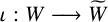 is determined by

For
$i<n$
 , the simple reflections
$t_i$
 and
$t_{\sigma (i)}$
 commute.
The image consists of the symmetric permutations

For such a permutation, set

If
$P=s_{i_1}\cdots s_{i_r}$
 is a word in S, its unfolding
$\widehat P$
 is obtained by applying (3.1) to every letter. For
$I\subseteq [n]$
 , define

We use two folding identities from [Reference Gao, Hodges and Yong7]. For
$x\in W$
 ,

and

The first is [Reference Gao, Hodges and Yong7, Proposition 4.3] and the second is [Reference Gao, Hodges and Yong7, Lemma 4.5].
The next proposition contains the first new ingredient and the parabolic compatibility needed later.
Proposition 3.1. The following statements hold.
-
(i) If $P\in \mathrm {Red}_W(x)$
, then
$\widehat P\in \mathrm {Red}_{\widetilde W}(\iota (x))$
. -
(ii) For every $I\subseteq [n]$
, $$ \begin{align*} \iota(w_0(I))=w_0(\widehat I). \end{align*} $$Consequently, the unfolding of every reduced word for $w_0(I)$
is a reduced word for
$w_0(\widehat I)$
.


Proof. Write
$ P=s_{i_1}\cdots s_{i_r} $
 and let
$x_k=s_{i_1}\cdots s_{i_k}$
 , with
$x_0=e$
 . Since P is reduced,

Suppose first that
$i_k<n$
 . Right multiplication by
$\iota (s_{i_k})=t_{i_k}t_{\sigma (i_k)}$
 exchanges two positions in the first half and two positions in the second half of a symmetric permutation. Hence,

By (3.2),

The two appended simple reflections commute and multiplication by either one changes length by
$1$
 or
$-1$
 . Thus, both letters in the block
$t_{i_k}t_{\sigma (i_k)}$
 increase length.
Now, suppose that
$i_k=n$
 . Then,

The entries in positions n and
$n+1$
 of a symmetric permutation sum to
$2n+1$
 , so exactly one of them is larger than n. Consequently,

Since
$t_n$
 is a simple reflection,

Taking the difference of (3.2) at
$x_k$
 and
$x_{k-1}$
 gives

Therefore,
$\Delta \ell =\Delta\ \mathrm {ex}=1$
 , and the appended letter
$t_n$
 increases length. Every letter of
$\widehat P$
 therefore increases the length of the preceding unfolded prefix, which proves statement (i).
For statement (ii), the element
$\iota (w_0(I))$
 belongs to
$\widetilde W_{\,\widehat I}$
 . Since

(3.3) gives

The unique element of the finite Coxeter group
$\widetilde W_{\,\widehat I}$
 having every simple reflection in
$\widehat I$
 as a left descent is its longest element. Hence,
$\iota (w_0(I))=w_0(\widehat I)$
 . The final assertion follows from statement (i).
4 Witness transfer
We first isolate the type A estimate needed for the component containing the central node of the folding. Let
$S_{m+1}$
 have simple reflections
$t_1,\ldots ,t_m$
 , where
$t_j$
 interchanges the values j and
$j+1$
 under left multiplication. For a permutation
$z\in S_{m+1}$
 and
$1\leq ~a\leq ~m$
 , define

Thus,
$\eta _a(z)$
 is the inversion number of the values in the terminal interval given by
$\{a,a+1,\ldots ,m+1\}$
 .
Lemma 4.1. Let
$v\in S_{m+1}$
 and let
$ J=\{t_a,t_{a+1},\ldots ,t_m\}. $
 Assume that
$\mathcal D_L(v)\cap J=\varnothing $
 . Let
$P\in \mathrm {Red}(v)$
 . If the boundary generator
$t_{a-1}$
 occurs at most once in P, with this condition omitted when
$a=1$
 , then

Proof. If
$a=1$
 , then
$J=\{t_1,\ldots ,t_m\}$
 is the full set of simple reflections. Consequently, the assumption
$\mathcal D_L(v)\cap J=\varnothing $
 forces
$v=e$
 , so P is empty and the conclusion is immediate. We may therefore assume that
$a>1$
 .
Write
$ P=t_{i_1}\cdots t_{i_\ell }=v. $
 Remove the letters from the left by setting

Each
$t_{i_r}$
 is a left descent of
$v^{(r-1)}$
 and
$v^{(\ell )}=e$
 .
The assumption
$\mathcal D_L(v)\cap J=\varnothing $
 is equivalent to

so
$\eta _a(v)=0$
 . Left multiplication by
$t_j$
 with
$j\leq a-2$
 only interchanges values outside the terminal interval and therefore leaves
$\eta _a$
 unchanged. As long as
$t_{a-1}$
 has not occurred, no letter
$t_j$
 with
$j\geq a$
 can be removed: such a letter would have to be a left descent, while
$\eta _a=0$
 means that the terminal values remain in increasing order.
If
$t_{a-1}$
 never occurs, then no letter from J occurs and the result follows. Suppose that
$t_{a-1}$
 occurs once. Immediately before that step, the values

are still in increasing order. The reflection
$t_{a-1}$
 interchanges the positions of the values
$a-1$
 and a. Among the terminal values, only a can thereby move out of its increasing position. Hence, at most, the pairs

can become inversions and after the boundary crossing, we have
$\eta _a\leq m-a+1$
 .
There is no second boundary crossing. Every later removed letter
$t_j$
 with
$j\leq a-2$
 leaves
$\eta _a$
 unchanged. Every later removed letter
$t_j$
 with
$j\geq a$
 is a left descent and interchanges the inverted consecutive values j and
$j+1$
 ; it decreases
$\eta _a$
 by exactly one. Since
$\eta _a$
 is nonnegative, the number of letters from J is at most its value immediately after the unique boundary crossing, which is at most
$m-a+1$
 .
We can now transfer an original reduced word witness through the type
$C_n$
 folding.
Proposition 4.2. Let
$w\in W(C_n)$
 and let
$I\subseteq \mathcal D_L(w)$
 . If w satisfies the reduced word condition with respect to I, then
$\iota (w)\in W(A_{2n-1})$
 satisfies the reduced word condition with respect to
$\widehat I$
 .
Proof. Put
$ u=w_0(I)w. $
 Choose the factorised I-witness from Subsection 2.3:

Let
$m_i=m_{s_i}(Q)$
 . By Proposition 3.1,

is a reduced word for
$\iota (w)$
 and
$\widehat R_I$
 is a reduced word for
$w_0(\widehat I)$
 . It remains to verify the witness bounds for the residual word
$\widehat Q$
 .
First, consider a node
$j\notin \widehat I$
 . It is either the image of a node
$i\notin I$
 or its mirror under
$\sigma $
 . In either case, its number of occurrences in
$\widehat Q$
 is
$m_i\leq 1$
 by (2.2).
Let
$C=[a,b]$
 be a connected component of I with
$b<n$
 . It unfolds into the two components
$ [a,b] $
 and
$[2n-b,2n-a] $
 of
$\widehat I$
 , each having
$|C|$
 nodes. By (2.3), the number of residual letters of
$\widehat Q$
 in either component is

It remains to consider a component containing the special node n. Write it as

It unfolds into the single type A component

Set

By (2.3),
$M\leq k$
 . The number of letters of
$\widehat Q$
 in
$\widehat C$
 is

If
$m_n\geq 1$
 , then

Suppose now that
$m_n=0$
 . Then, Q uses only
$s_1,\ldots ,s_{n-1}$
 , so u belongs to the standard parabolic subgroup
$ W_{\{s_1,\ldots ,s_{n-1}\}}\cong A_{n-1}. $
 The word Q is reduced in this parabolic subgroup. Equation (2.1) gives

If
$a>1$
 , then
$s_{a-1}\notin I$
 because
$[a,n]$
 is a connected component of I and, therefore,
$m_{a-1}\leq 1$
 by (2.2). If
$a=1$
 , there is no boundary generator. Applying Lemma 4.1 in the type
$A_{n-1}$
 parabolic subgroup yields

Together with (4.1), this gives

Thus, for every connected component D of
$\widehat I$
 , the total number of residual letters belonging to D is at most
$|D|$
 .
Finally, a reduced word for
$w_0(\widehat I)$
 contains exactly
$\ell (w_0(D))$
 letters from each connected component D of
$\widehat I$
 . Adding the residual bounds just proved shows that
$\widehat R$
 satisfies both witness conditions.
5 Proof of the main theorem
Proof of Theorem 1.2.
We first prove statement (i). Suppose that
$u=w_0(I)w$
 is a standard Coxeter element. By the left parabolic decomposition of w with respect to
$W_I$
 , the assumption
$I\subseteq \mathcal D_L(w)$
 implies that the factorisation
$w=w_0(I)u$
 is length additive. Choose
$R_I\in \mathrm {Red}(w_0(I))$
 and a reduced word Q for u with pairwise distinct letters. Then,
$R_IQ$
 is an I-witness, so the standard Coxeter condition implies the reduced word condition in every finite Weyl group.
For the converse, it is enough to work in type
$C_n$
 . Assume that w satisfies the reduced word condition with respect to I, put
$ u=w_0(I)w $
 and choose the factorised witness
$R=R_IQ$
 from Subsection 2.3. Proposition 4.2 shows that
$\iota (w)$
 satisfies the reduced word condition with respect to
$\widehat I$
 . By the type A equivalence [Reference Gao, Hodges and Yong8, Theorem 1.3],
$ w_0(\widehat I)\iota (w) $
 is a standard Coxeter element of a standard parabolic subgroup of
$A_{2n-1}$
 . Proposition 3.1 gives

Thus,
$\iota (u)$
 is a standard Coxeter element.
Again by Proposition 3.1,
$\widehat Q$
 is a reduced word for
$\iota (u)$
 . Every reduced word of a standard Coxeter element has pairwise distinct letters. If Q contained two occurrences of
$s_i$
 for some
$i<n$
 , then
$\widehat Q$
 would contain two occurrences of both
$t_i$
 and
$t_{2n-i}$
 . If Q contained two occurrences of
$s_n$
 , then
$\widehat Q$
 would contain two occurrences of
$t_n$
 . Both conclusions are impossible. Therefore, the letters of Q are pairwise distinct and
${u=w_0(I)w}$
 is a standard Coxeter element. The Coxeter systems of types
$B_n$
 and
$C_n$
 have the same Coxeter matrix, so statement (i) also holds in type
$B_n$
 .
We now prove statement (ii). Combining statement (i) with the all-type geometric classification [Reference Gao, Hodges and Yong9, Theorem 1.3] proves the original criterion in types
$B_n$
 and
$C_n$
 . Type
$A_n$
 follows from [Reference Gao, Hodges and Yong8, Theorem 1.3], and type
$G_2$
 follows from the rank two theorem of Hodges and Yong [Reference Hodges and Yong13, Theorem 2.10] together with the all-type classification.
The two conditions differ in type
$D_4$
 . With the numbering used in [Reference Gao, Hodges and Yong9, Example 2.3],

satisfies the original reduced word condition, whereas

is not a standard Coxeter element. This failure passes to every finite Coxeter group containing the example as a standard parabolic subgroup: lengths, reduced words, left descents and
$w_0(I)$
 are unchanged, and the support of
$w_0(I)w$
 remains inside the parabolic subgroup. Every type
$D_n$
 with
$n\geq 4$
 and each of
$E_6,E_7,E_8$
 contains a standard parabolic subgroup of type
$D_4$
 . Finally, the two conditions also differ in type
$F_4$
 [Reference Gao, Hodges and Yong8, Section 2]. These are all the remaining irreducible finite Weyl types.


