INTRODUCTION
Emerging contaminants such as manufactured nanomaterials are of growing concern in the marine environment, not only because they can directly impact resident organisms, but also because they can potentially be transferred to humans via the food chain. One group of nanomaterials that has received scrutiny is the particles composed of titania. At the nanoscale, titania possesses unique physicochemical and photocatalytic properties that have been implemented in a range of industrial and commercial applications. For example, titania nanoparticles (TiO2 NPs) are used in paint as pigments and opaquers (Carp et al., Reference Carp, Huisman and Reller2004), in cosmetics and sunscreens to absorb UV radiation (Jaroenworaluck et al., Reference Jaroenworaluck, Sunsaneeyametha, Kosachan and Stevens2006; Siddiquey et al., Reference Siddiquey, Ukaji, Furusawa, Sato and Suzuki2007; Labille et al., Reference Labille, Feng, Botta, Borschneck, Sammut, Cabie, Auffan, Rose and Bottero2010), as antimicrobials (Amézaga-Madrid et al., Reference Amézaga-Madrid, Silveyra-Morales, Córdoba-Fierro, Nevárez-Moorillón, Miki-Yoshida, Orrantia-Borunda and Solís2003; Kim et al., Reference Kim, Kim, Cho and Cho2003; Kühn et al., Reference Kühn, Chaberny, Massholder, Stickler, Benz, Sonntag and Erdinger2003; Robertson et al., Reference Robertson, Robertson and Lawton2005; Adams et al., Reference Adams, Lyon, McIntosh and Alvarez2006; Li et al., Reference Li, Leung, Yao, Song and Newton2006; Foster et al., Reference Foster, Ditta and Varghese2011) and in the degradation of organic pollutants (Chatterjee & Mahata, Reference Chatterjee and Mahata2002). TiO2 NPs can exist in either the rutile, anatase, or brookite crystalline phases (Markowska-Szczupak et al., Reference Markowska-Szczupak, Ulfig and Morawski2011), of which rutile and anatase are the most common (EPA, 2010). Both the rutile and anatase crystalline phases demonstrate a tetragonal structure, however, the anatase form tends to be less dense and more photocatalytically active than the rutile structure (Serpone et al., Reference Serpone, Dondi and Albini2007; Dankovic & Kuempel, Reference Dankovic and Kuempel2011).
Although the precise production rates of manufactured nanomaterials are not typically released, estimates of TiO2 NPs in the USA alone are projected to reach 2.5 million tonnes annually by the year 2025 (Robichaud et al., Reference Robichaud, Uyar, Darby, Zucker and Wiesner2009). Mueller & Nowack (Reference Mueller and Nowack2008) estimated that the concentration of TiO2 NPs in aquatic environments were between 0.7–16 µg L−1 for realistic and high exposure scenarios, respectively, however, the estimates were made in 2008, and represent end-use concentrations of TiO2 NPs in Switzerland only (Robichaud et al., Reference Robichaud, Uyar, Darby, Zucker and Wiesner2009). Naturally derived titanium weathered from the earth's crust (Schroeder et al., Reference Schroeder, Balassa and Tipton1963; Fishbein et al., Reference Fishbein and Nordman1982; Orians et al., Reference Orians, Boyle and Bruland1990) is estimated to be 4–8 picomolar (~0.3–0.6 ng L−1; Orians et al., Reference Orians, Boyle and Bruland1990) at the ocean's surface, with lower nanomolar concentrations present in estuarine environments (Yokoi & van den Berg, Reference Yokoi and van den Berg1991; Skrabal et al., Reference Skrabal, Ullman and Luther1992; Skrabal, Reference Skrabal1995). Thus, conservative estimates show that anthropogenic loads of TiO2 NPs in aquatic environments could be three orders of magnitude higher than the concentration of naturally derived titanium. As populations in coastal and estuarine regions continue to rise (National Research Council, 2007), the prevalence of novel contaminants such as NPs entering aquatic systems in sewage effluents, industrial waste, and surface runoff have also increased (Kolpin et al., Reference Kolpin, Furlong, Meyer, Thurman, Zaugg, Barber and Buxton2002; Farré et al., Reference Farré, Pérez, Kantiani and Barceló2008).
Nanomaterials entering the marine environment are exposed to dissolved, colloidal and particulate organic matter that will increase their potential for homo- and hetero-aggregation (Brant et al., Reference Brant, Lecoanet and Wiesner2005; Xie et al., Reference Xie, Xu, Guo and Li2008; Sharma, Reference Sharma2009; Doyle et al., Reference Doyle, Palumbo, Huey and Ward2014). Additionally, physical and biological processes aggregate particulate matter suspended in the water (including nanoparticles) into larger masses known as marine snow (Alldredge & Silver, Reference Alldredge and Silver1988; Jackson, Reference Jackson1990; Doyle et al., Reference Doyle, Palumbo, Huey and Ward2014). In fact at certain times of the year, large proportions (>70%) of natural particulates are incorporated in marine snow (Alldredge et al., Reference Alldredge, Passow and Logan1993; Crocker & Passow, Reference Crocker and Passow1995). Marine snow has a complex three-dimensional structure that is physically and chemically distinct from the surrounding water (Silver et al., Reference Silver, Shanks and Trent1978; Alldredge, Reference Alldredge2000; Ploug, Reference Ploug2001), is important for the vertical transport of material to the benthos (Kiørboe et al., Reference Kiørboe, Andersen and Dam1990; Passow & Wassmann, Reference Passow and Wassmann1994; Crocker & Passow, Reference Crocker and Passow1995; Waite et al., Reference Waite, Safi, Hall and Nodder2000), and can facilitate the trophic transfer of dissolved and particulate matter to benthic suspension-feeders (Alber & Valiela, Reference Alber and Valiela1994, Reference Alber and Valiela1996; Kach & Ward, Reference Kach and Ward2008). Certain types of metal-oxide NPs have a high agglomeration potential in seawater (Sillanpää et al., Reference Sillanpää, Paunu and Sainio2011; Shih et al., Reference Shih, Liu and Su2012; Doyle et al., Reference Doyle, Palumbo, Huey and Ward2014). Formation of larger-diameter NP agglomerates can cause an increased collision rate with other particles suspended in the water column (Jackson, Reference Jackson1990), and a higher incorporation rate in marine snow. Nanoparticles that are incorporated in marine snow will sink faster than the same particles that are freely suspended (Stokes Law; Hill, Reference Hill1998; Waite et al., Reference Waite, Safi, Hall and Nodder2000). Higher sinking rates would increase deposition rates to the bottom, exposing benthic organisms to a higher concentration of NPs over a shorter time period. Additionally, tides and storm events can resuspend settled marine snow (Newell et al., Reference Newell, Pilskaln, Robinson and MacDonald2005; Lyons, Reference Lyons2008), potentially re-exposing benthic organisms to previously deposited, recalcitrant nanomaterials (Scientific Committee on Emerging and Newly Identified Health Risks, 2006). Given the importance of marine snow to nutrient cycling in near-shore and open-ocean ecosystems (Fowler & Knauer, Reference Fowler and Knauer1986), understanding how NPs affect the organisms that consume marine snow is important for a full assessment of the environmental impacts of engineered nanomaterials.
Previous studies demonstrate that some aquatic organisms can be negatively impacted when exposed to certain types of manufactured nanomaterials. For example, exposure to TiO2 NPs has resulted in deleterious effects in vertebrates such as Oncorhynchus mykiss (rainbow trout; Federici et al., Reference Federici, Shaw and Handy2007; Vevers & Jha, Reference Vevers and Jha2008), Oryzias latipes (Japanese medaka; Ma et al., Reference Ma, Brennan and Diamond2012), and Danio rerio (zebrafish; Bar-Ilan et al., Reference Bar-Ilan, Chuang, Schwahn, Yang, Joshi, Pedersen, Hamers, Peterson and Heidman2013). In addition, the toxicity of TiO2 NPs has also been demonstrated in aquatic invertebrates such as Daphnia magna (water flea; Adams et al., Reference Adams, Lyon, McIntosh and Alvarez2006; Hund-Rinke & Simon, Reference Hund-Rinke and Simon2006; Lovern & Klaper, Reference Lovern and Klaper2006; Warheit et al., Reference Warheit, Hoke, Finlay, Donner, Reed and Sayes2007; Ma et al., Reference Ma, Brennan and Diamond2012), and Arenicola marina (lugworm; Galloway et al., Reference Galloway, Lewis, Dolciotti, Johnston, Moger and Regoli2010). With production of TiO2 NPs projected to escalate over the next decade (Robichaud et al., Reference Robichaud, Uyar, Darby, Zucker and Wiesner2009), organisms in coastal estuarine and marine environments will likely be exposed to increased concentrations of TiO2 NPs. A more detailed review of the effects of nanoparticles on species other than bivalves can be found in the publications of Baun et al. (Reference Baun, Hartmann, Grieger and Kusk2008), Handy et al. (Reference Handy, Von der Kammer, Lead, Hassellov, Owen and Crane2008) and Sharma (Reference Sharma2009).
A group of aquatic organisms that may be particularly vulnerable to NP toxicity is the suspension-feeding bivalve molluscs (Canesi et al., Reference Canesi, Ciacci, Fabbri, Marcomini, Pojana and Gallo2012). Bivalves often dominate the macrobenthos, playing significant roles in ecosystem processes, and filtering large volumes of water per unit time (e.g. 3–7 L water hour−1 per g dry weight; Newell, Reference Newell1988; Riisgård, Reference Riisgård1988; Newell et al., Reference Newell, Pilskaln, Robinson and MacDonald2005; Cranford et al., Reference Cranford, Ward, Shumway and Shumway2011). Dense populations interact strongly with near-shore water columns, removing phytoplankton, depositing faeces and pseudofaeces (material rejected prior to ingestion), cycling dissolved nutrients (Dame, Reference Dame and Dame1993, Reference Dame1996; Prins et al., Reference Prins, Smaal and Dame1998; Newell, Reference Newell2004), and contributing to the concentration of transparent exopolymer particles (TEP; McKee et al., Reference McKee, Ward, MacDonald and Holohan2005; Heinonen et al., Reference Heinonen, Ward and Holohan2007; Li et al., Reference Li, Ward and Holohan2008). Additionally, bivalves process large amounts of organic matter, converting some of it into body tissues that can be used by higher trophic levels including humans. Many bivalve species are commercially important, providing a source of jobs and food to people worldwide. For example, the global catch of bivalves as of 2010 was approximately 1.7 million tonnes, whereas worldwide aquaculture production of bivalves was about 13 million tonnes (FAO, 2012). These characteristics make suspension-feeding bivalves an important group of organisms to study. Defining how bivalves interact with, and are affected by, manufactured nanomaterials is critical to an understanding of the potential broad-scale impacts of these materials on water quality and productivity of coastal ecosystems. Such data are also important to define which types of nanomaterials are bioaccumulated and could be transferred up the food chain to higher-level consumers including humans.
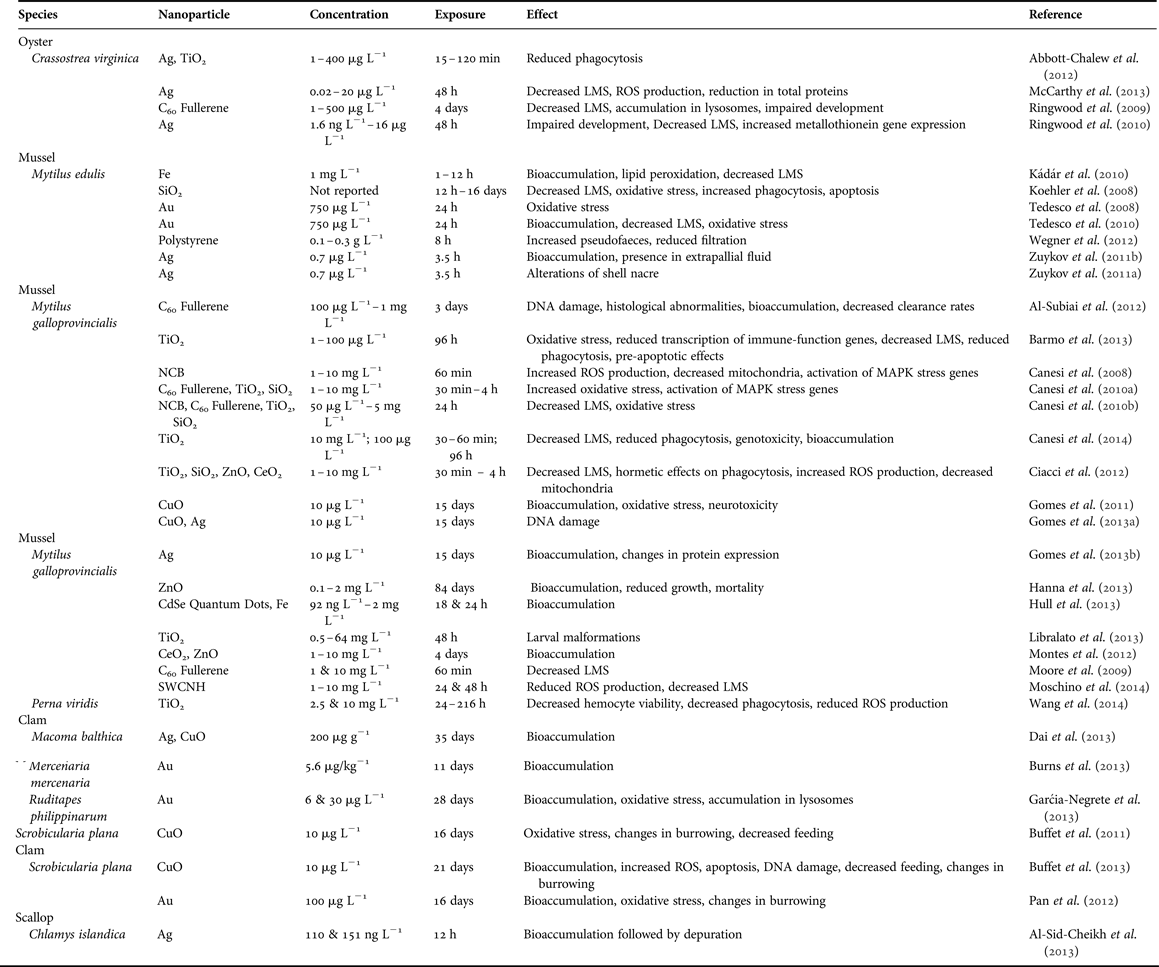
Several studies have demonstrated the cytotoxic and genotoxic effects of TiO2 NPs on suspension-feeding bivalves (see Table 1 for a more complete review). For example, the haemocytes of Crassostrea virginica (eastern oyster) were found to have reduced phagocytosis after exposure to TiO2 NPs (Abbott-Chalew et al., Reference Abbott-Chalew, Galloway and Graczyk2012). Mytilus galloprovincialis (Mediterranean mussel) demonstrated oxidative stress, reduced transcription of immune-function genes, decreased lysosomal membrane stability, reduced haemocyte phagocytosis, activation of MAPK stress genes, larval malformations, and decreased numbers of mitochondria following exposure to TiO2 NPs (Canesi et al., Reference Canesi, Ciacci, Vallotto, Gallo, Marcomini and Pojana2010a, Reference Canesi, Fabbri, Gallo, Vallotto, Marcomini and Pojanab, Reference Canesi, Frenzilli, Balbi, Bernardeschi, Ciacci, Corsolini, Della Torre, Fabbri, Faleri, Focardi, Guidi, Kočan, Marcomini, Mariottini, Nigro, Pozo-Gallardo, Rocco, Scarcelli, Smerilli and Corsi2014; Ciacci et al., Reference Ciacci, Canonico, Bilaniĉovă, Fabbri, Cortese, Gallo, Marcomini, Pojana and Canesi2012; Barmo et al., Reference Barmo, Ciacci, Canonico, Fabbri, Cortese, Balbi, Marcomini, Pojana, Gallo and Canesi2013; Libralato et al., Reference Libralato, Minetto, Totaro, Mičetić, Pigozzo, Sabbioni, Marcomini and Ghirardini2013). A reduction in haemocyte viability and phagocytosis as well as the production of reactive oxygen species (ROS) were observed in Perna viridis (Asian green mussel; Wang et al., Reference Wang, Hu, Li, Li, Lin and Lu2014). Dreissena polymorpha (zebra mussel) showed reduced haemocyte phagocytosis and activation of the MAPK stress genes after exposure to TiO2 NPs (Couleau et al., Reference Couleau, Techer, Pagnout, Jomini, Foucaud, Laval-Gilly, Falla and Bennasroune2012). Despite the observed cellular and genotoxic effects, no studies have addressed the ways in which suspension-feeding bivalves encounter TiO2 NPs in the environment. Furthermore, no data exist concerning the ingestion and depuration rates of TiO2 NPs in exposed bivalves.
A summary of the cytotoxic and genotoxic effects of nanoparticles on various marine species of bivalves.

The goal of the research presented here was to understand the ingestion and depuration rates of Mytilus edulis (blue mussel) and Crassostrea virginica (eastern oyster) exposed to a high concentration of TiO2 NPs over an acute time interval. Dosing the animals at a high concentration for a short period of time was used as a proxy for an environmental spill scenario. Under such conditions, animals would be subjected to a large amount of material, but natural processes such as tidal flushing, currents, and dilution would render the exposure time relatively short. This study is unique in that it also tests how several ecologically relevant modes of delivery (i.e. marine snow, aged suspended, un-aged suspended) affect encounter and ingestion of nano-titania by bivalves.
MATERIALS AND METHODS
Production of marine snow
A stock solution was prepared by suspending TiO2 NPs (Meliorum Technologies, 99.9% pure anatase) in MQ-water at a concentration of 250 mg L−1. X-ray diffraction (XRD) analysis of the TiO2 NPs showed the characteristic anatase crystalline phase and a mean particle size of 7.4 nm ± 2.53 (Doyle et al., Reference Doyle, Palumbo, Huey and Ward2014). The stock suspension was placed on a stir plate and subjected to ultrasonication (Fisher Scientific FB-505; calibrated according to Taurozzi et al., Reference Taurozzi, Hackley and Wiesner2012) at 13.8 Watts for 30 min (modified from Wang et al., Reference Wang, Wick and Xing2009). Following ultrasonication, TiO2 NPs from the stock suspension were added to filtered-seawater (210-μm mesh) to achieve a final concentration of ~4.5 mg L−1 (4.4–4.7 mg L−1). The working solution was mixed on a stir plate and then poured into 1-L Nalgene rolling bottles in quarter-litre aliquots. The solution was stirred and agitated after dispensing each aliquot to ensure that the NPs remained well mixed. This process was repeated until all the rolling bottles were full. Bottles designated as rolled samples (hereafter referred to as marine snow samples) were placed on a roller table for 72 h at 15 rpm (Shanks & Edmondson, Reference Shanks and Edmondson1989). Unrolled bottles consisted of the same solutions as described above, but instead of rolling, the bottles were placed next to the roller table for 72 h. A second treatment was prepared as described above to calculate the per cent incorporation, which was determined by the concentration of TiO2 NPs in the marine snow when compared with the initial concentration of TiO2 NPs (4.5 mg L−1) added to the water. The TiO2 NPs and marine snow were characterized using a suite of analytical techniques (dynamic light scattering, zeta potential, field-emission scanning electron microscopy and inductively coupled plasma-mass spectrometry) as previously described (Doyle et al., Reference Doyle, Palumbo, Huey and Ward2014).
Feeding experiments
Mussels (5.0–6.5 cm in shell length) were collected from a local population at Avery Point (Groton, CT, USA), and oysters (5.0–6.5 cm in shell height) were obtained from the Noank Shellfish Cooperative (Noank, CT, USA). Prior to the experiments, bivalves were cleaned of all fouling organisms. A Velcro® strip was attached to one of the animals’ shells using a two-part marine epoxy (Ward & Kach, Reference Ward and Kach2009). Animals were held in an environmental chamber and fed Tetraselmis sp. for several days in order to acclimate to a temperature between 18° to 20°C. Before the commencement of the feeding experiments, the bivalves were secured to craft sticks with Velcro® and transferred to a large holding tray filled with aerated seawater, fed Tetraselmis sp., and allowed to acclimate at least 1 h prior to the beginning of the experiments.
Each animal was exposed to one of four treatments. Two of the four treatments (marine snow and unrolled) were described above. The third treatment consisted of TiO2 NPs spiked directly into 1-L Nalgene bottles containing filtered seawater (210-μm mesh) just prior to the start of the feeding assay (hereafter referred to as freely suspended). The last treatment, which served as blanks, consisted of 1-L Nalgene bottles containing filtered-seawater devoid of NPs to account for background concentrations of titanium. Bottles containing these four treatments were arranged on multi-position stir plates. Each bottle was supplied with gentle aeration using glass Pasteur pipettes and a stir bar. The stir plates were programmed to agitate the water for 10 s every 15 min to prevent the marine snow from settling on the bottom for too long. The water was then spiked with 10-μm polystyrene beads at a concentration of 2000 beads L−1. The 10-μm polystyrene beads have a diameter large enough to ensure a capture efficiency of approximately 100% in both species, and were used as a means of determining feeding activity (Ward & Kach, Reference Ward and Kach2009).
Animals with their shells open and mantles extended were transferred from the holding tray into the bottles. One bivalve was placed into each bottle and its craft stick secured to the rim by means of a wooden clip so that the animal was in the centre of the bottle (Ward & Kach, Reference Ward and Kach2009). Animals were allowed to feed for 2 h with time commencing after they showed signs of suspension feeding (i.e. shells open, mantles extended). After 2 h, the animals were transferred from the bottles to clean 1-L beakers containing filtered seawater (0.22-μm membrane) at 18°–20°C. Faeces were collected immediately from the 1-L Nalgene bottles and labelled as the 0-h sample (time, post-exposure). Animals were fed a diet of Tetraselmis sp. at a concentration of 10 000 cells L−1, and faeces were collected at 6, 24, 72 and 120 h post-exposure to examine the depuration rates of the TiO2 NPs. In total, 102 animals of each species were used in the experiment described above; six animals at each time interval for each treatment. The experiment was repeated three times to ensure a large enough sample size for statistical analysis (total of 306 animals of each species).
Sample analysis
Animals were euthanized after feeding at 0, 6, 24, 72 and 120 h, post-exposure. The visceral mass, mantle and gills were removed by dissection and placed in 20-mL scintillation vials. Tissues were stored at −20°C overnight and then lyophilized for 48 h to remove any remaining moisture. A dry mass was obtained, and the organs were digested in 2 mL of 18 M H2SO4 and 16 M HNO3 in a 3:7 ratio (volume/volume) for 24 h (Lawrence et al., Reference Lawrence, McAloon, Mason and Mayer1999). Following digestion, the samples were agitated on a vortex, and the acid digest was diluted to a 1% solution using MQ-water. Faeces produced by each animal were also collected at each time interval and placed into individually labelled 15-mL Falcon tubes. The tubes were centrifuged at 3220 g for 5 min, and the supernatant was removed. The faeces were washed once with 5 mL of MQ-water, and centrifuged a second time at 3220 g for 5 min. The supernatant was again removed, and the faeces were lyophilized for 48 h to remove any remaining moisture. A dry mass was obtained, and the faeces were digested in 2 mL of 18 M H2SO4 and 16 M HNO3 in a 3:7 v/v ratio for 24 h. The acid digest was then diluted to a 1% solution using MQ-water. A subsample of the dilution was collected and the average number of 10-μm polystyrene beads in the faeces was determined using a haemocytometer. Animals that had an average of less than one bead in their faeces (equivalent to the ingestion of <1% of available beads), or no TiO2 present in the visceral mass or faeces at T = 0 (immediately following exposure to NPs) were considered not to have fed during the experimental period and were removed from the analyses (one mussel and eight oysters). Background concentrations of TiO2 detected in the faeces and tissues of blank animals (not exposed to NPs) were averaged and subtracted from the concentrations of TiO2 measured in exposed animals. This step was taken to ensure that only the titanium from the NPs was being measured in the exposed animals. Concentrations of TiO2 were then standardized to the dry mass of the tissue and faecal material to account for differences in the size of experimental animals (see Supplementary Table S1).
Tissue and faeces samples were analysed for titanium using an ELAN DRC II inductively coupled plasma-mass spectrometer (ICP-MS; Perkin Elmer) to examine the concentration of TiO2 present. The ICP-MS was tuned to detect the titanium-47 isotope in the tissue and faeces samples to avoid interference from the high levels of the titanium-48 isotope found in natural seawater. The analytical error of the ICP-MS was calculated as 0.91 ± 0.06 mg L−1 (mean ± standard deviation of six solutions containing TiO2 at a concentration of 1.0 mg L−1). The limits of detection of the ICP-MS were calculated as 3.75 × 10⁻² µg g−1 (three times the mean of the standard deviation of three replicate solutions containing TiO2 at a concentration of 1.0 mg L−1, and converted to μg g−1 assuming the density of MQ-water is 1000 g L−1).
Statistical analysis
Two-way analysis of variance (ANOVA) tests were used to compare the effects of treatment and time on the concentration of TiO2 NPs measured in the gills, mantles, visceral masses and faeces of the mussels and oysters. Effects of the two independent variables (time, treatment) within a given tissue/faecal sample and bivalve species were of primary interest, so two-way procedures were applied. If no differences were found between treatments at each time period, data were pooled and reanalysed to examine effects of time and species on TiO2 concentrations within tissue/faecal samples. Following ANOVA analyses, a Tukey's HSD post hoc test was applied to examine differences between levels of the independent variables. Prior to statistical analyses, data were assessed for homoscedasticity and normality using an Equality-of-Variance test and Kurtosis test, respectively. Data sets that did not meet the underlying assumptions were transformed by means of a square-root or natural-log transformation. In all tests, an alpha level of 0.05 was used.
RESULTS
Incorporation into marine snow
The marine snow produced in the laboratory ranged in size from approximately 1–10 mm. Incorporation efficiency of TiO2 NPs in laboratory-made marine snow was ~52% ± 5.7% (standard error; N = 9) after 72 h (~2.3 mg of the 4.5 mg in each 1-L bottle). This efficiency is similar to that obtained in previous studies examining the incorporation of nano-titania (anatase form) into marine snow (Doyle et al., Reference Doyle, Palumbo, Huey and Ward2014). Analysis using field emission scanning electron microscopy with energy dispersive X-ray spectroscopy (FESEM-EDX) revealed that agglomerates of TiO2 NPs were distributed throughout the organic matrix of the marine snow (Doyle et al., Reference Doyle, Palumbo, Huey and Ward2014).
Encounter, ingestion and egestion
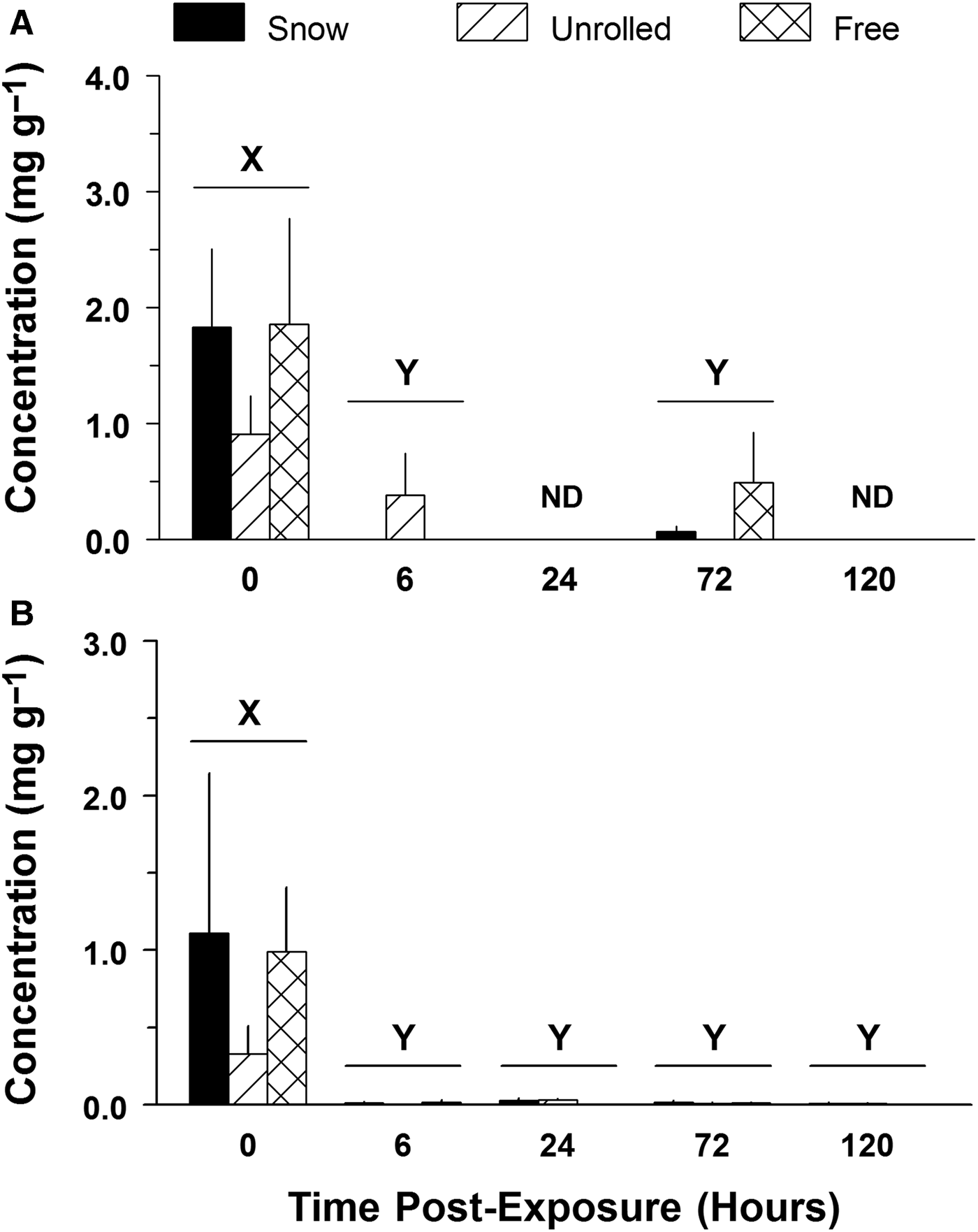
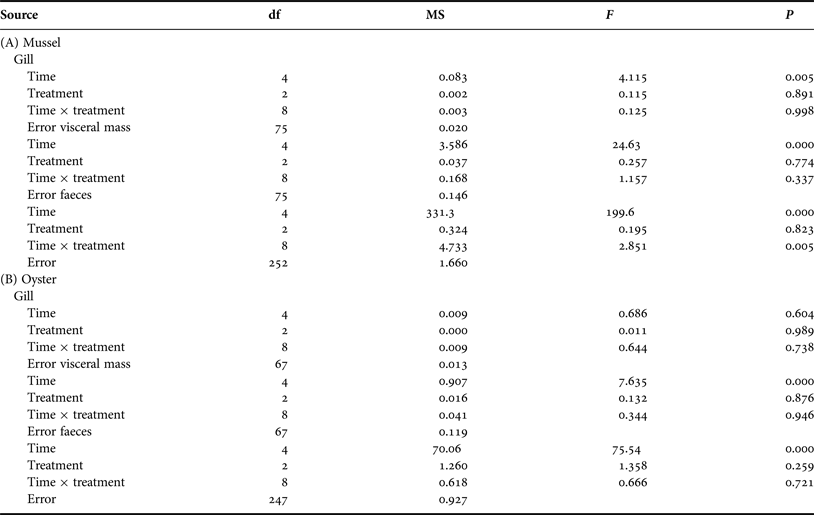
No significant difference was found in the number of 10-μm polystyrene beads removed from suspension by animals delivered TiO2 in the marine snow, unrolled or freely suspended treatments (ANOVA, data not presented). This finding indicates that the animals all fed at the same rate regardless of the treatment to which they were exposed. The mean concentration of background TiO2 in the tissues and faeces of the blank animals (not exposed to NPs) was 1.6% ± 0.7 (mean ± SE) of the mean concentration of TiO2 measured in the same samples from animals exposed to NPs. Overall, data analyses of the concentration of TiO2 NPs on the gills, in the visceral mass, and in the faeces of both mussels and oysters yielded similar results. These included significant time effects, no significant treatment effects (marine snow vs unrolled vs free), and no significant interaction effects between the two independent variables (two-way ANOVA; Table 2; Figure 1). The only exceptions to this general trend were for the gills of oysters, which demonstrated no significant effect of time on the concentration of TiO2, and the faeces of mussels, which demonstrated a significant interaction effect between time and treatment (Table 2). In general, pairwise comparisons indicated that the concentration of TiO2 in tissues and faeces immediately after the 2-h feeding exposure (0-h) was significantly greater than that after 6, 24, 72, and 120 h of exposure (Tukey's, P < 0.05; Figure 1, Supplementary Figures S1, and S2). Concentrations were typically lowest or not detectable after 72 h. As mentioned above, treatment had no significant effect on the concentration of TiO2 measured in the tissues or faeces. The only exception being a slight but significant difference in the egested concentrations of TiO2 in the marine snow and freely suspended treatments of mussels at 24 h (Supplementary Figure S2A). Therefore treatment data for each sampling period were pooled in order to more easily compare elimination of NPs over time between the two species (Figure 2, Supplementary Table S1).
Concentration of TiO2 NPs in the visceral masses of mussels (A) and oysters (B) in three different treatments over time (note difference in scale). Bars designated by different letters are significantly different at P < 0.05. ND indicates no titanium was detected. Data are means ± standard error (N = 4–6). Snow = NPs incorporated into marine snow; Unrolled = NPs aged in seawater for the same length of time as those in the marine snow treatment but not incorporated into marine aggregates; Free = NPs suspended in seawater just prior to the start of the experiment.
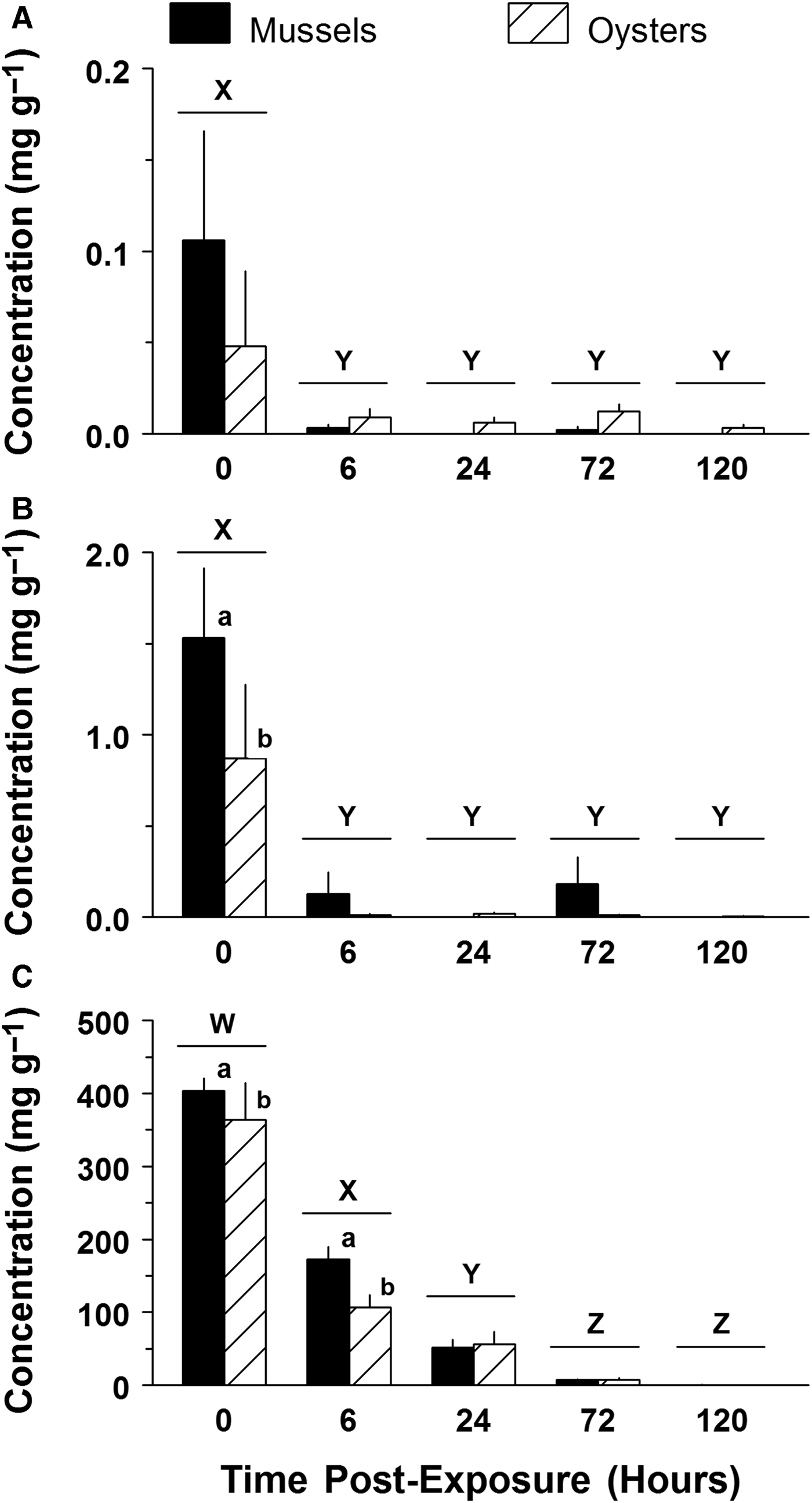
Concentration of TiO2 NPs in the gills (A), the visceral mass (B), and the faeces (C) of mussels and oysters over time (treatments pooled). Bars designated by different letters are significantly different at P < 0.05. Capital letters denote differences in time, whereas lower case letters show differences between species within a given time. Data are grand means ± standard error. For number of replicates see Figure 1, Supplementary Figures S1 and S2, and Supplementary Table S1.
Results of two-way analysis of variance tests for (A) mussel and (B) oyster data. The concentration of TiO2 nanoparticles in each tissue type (gill, visceral mass) and faeces was compared over five time periods (0, 6, 24, 72, 120 h) and between three treatments (marine snow, unrolled and freely suspended)
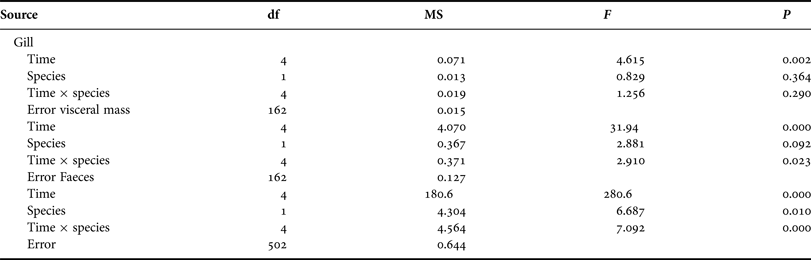
Analyses of the pooled TiO2-concentration data for the gills, the visceral mass, and the faeces also demonstrated common trends. In all cases, significant time effects were found (two-way ANOVA; Table 3, Figure 2), with significantly higher concentrations immediately after the 2-h feeding exposure (0-h; Tukey's, P < 0.05). A significant species effect was also found for the faecal samples, and significant interaction effects found for both visceral mass and faecal samples (Table 3). The concentration of TiO2 on the gills was more than an order of magnitude lower than in the visceral mass (Figure 2A). At 0-h post exposure, a significant difference in the concentration of TiO2 in the visceral mass was found between mussels and oysters (Tukey's, P < 0.01; Figure 2B). A similar difference was found in the faeces at both 0- and 6-h post exposure (Tukey's, P < 0.01; Figure 2C). These data suggest that mussels ingested more NPs than oysters over the 2-h exposure period. The concentration of TiO2 in the faeces of both mussels and oysters diminished more gradually over time compared with that on the gills and in the visceral mass (Figure 2). Visual observation showed a colour transition in the faeces, likely due to the presence of TiO2 NPs, over the course of the 120-h depuration period. For example, the faeces produced at both the 0- and 6-h time intervals were white in colour, while a mix of both white and greenish-brown faeces was observed at 24 h. These observations correspond to the significantly higher concentrations of TiO2 found at 6 h, post exposure, compared with >6 h, and at 24 h, post exposure, compared with >24 h. The faeces produced during the 72- and 120-h time intervals were the typical greenish-brown hue.
Results of two-way analysis of variance tests for mussel and oyster data (treatments pooled). In each tissue type (gill, visceral mass) and faeces, the concentration of TiO2 NPs was compared between the two species (mussels, oysters) over five time intervals (0, 6, 24, 72, 120 h).
Subsamples of mantle from the mussels and oysters (16 of each species) were examined at 0, 6, 24, 72 and 120 h, and measurable concentrations of TiO2 NPs were detected only in the 0-h samples. Data analyses of the concentration of TiO2 in the mantle of mussels and oysters at 0 h revealed no significant treatment effects (P > 0.1; one-way ANOVA).
DISCUSSION
The results of this study demonstrate that mussels and oysters are able to capture and ingest TiO2 NPs regardless of how they encounter the material (incorporated in marine snow or freely suspended). Mussels are able to ingest significantly more NPs than oysters over a 2-h exposure period. Once the TiO2 NPs are ingested, both species of bivalves are able to eliminate the majority of NPs within the first 6 h from their gills, mantles and visceral masses. Additionally, the majority of TiO2 NPs are depurated in the faeces over the course of 72 h, with only trace amounts remaining after this time. Data demonstrate that after an acute exposure to a high concentration of TiO2 NPs, accumulation in the tissues of mussels and oysters does not occur.
Counter to our main alternative hypothesis, we found no increase in ingestion when NPs were incorporated in marine snow. This finding was likely a result of the agglomeration potential of TiO2 NPs in seawater (Christian et al., Reference Christian, Von der Kammer, Baalousha and Hofmann2008; Handy et al., Reference Handy, Von der Kammer, Lead, Hassellov, Owen and Crane2008; Tiede et al., Reference Tiede, Hassellov, Breitbarth, Chaudhry and Boxall2009; Sillanpää et al., Reference Sillanpää, Paunu and Sainio2011). When TiO2 NPs are immersed in seawater, dissolved organic matter (DOM) begins to coat the particles, creating a uniform negative charge at the surface of the particle (Handy et al., Reference Handy, Von der Kammer, Lead, Hassellov, Owen and Crane2008). The negatively charged surface then begins to attract cations dissolved in solution promoting Columbic attraction and enhanced agglomeration (Handy et al., Reference Handy, Von der Kammer, Lead, Hassellov, Owen and Crane2008; Lead & Smith, Reference Lead and Smith2009). As agglomeration of the NPs increases so does the particle diameter making it more likely that the TiO2 NPs will be encountered by the gills of the bivalve and ingested. Our data examining the physiochemical behaviour of TiO2 NPs immersed in natural seawater show the formation of agglomerates ranging in size from ~0.5–3 µm (Doyle et al., Reference Doyle, Palumbo, Huey and Ward2014). Particles >1.5 µm can be captured by both mussels and oysters at an efficiency of between 50 and 75% (see Ward & Shumway, Reference Ward and Shumway2004 for review). Thus, the agglomeration of TiO2 NPs in natural seawater is as effective as marine snow at increasing the particle diameter, and enabling capture on the gills of mussels and oysters. Over the course of 2 h, mussels can filter a litre of water approximately 3 times, whereas oysters can filter a litre of water approximately 10 times (assuming a dry tissue mass of ~0.5 g for mussels and 1.0 g for oysters; see Newell, Reference Newell1988; Newell et al., Reference Newell, Pilskaln, Robinson and MacDonald2005). Considering these clearance rates and the intermittent stirring of water to counter the effects of particle settling, we conclude that bivalves were exposed to all of the NPs added to each bottle (~4.5 mg). They did not, however, ingest all of the material, likely because of the production of pseudofaeces and the lower capture efficiency of agglomerates <1.0 µm in size. Our results support the findings of other research which report that bivalves can effectively capture a variety of NP types including Au, ZnO, CeO2, TiO2, SiO2, carbon black and C60 fullerene (Koehler et al., Reference Koehler, Marx, Broeg, Bahns and Bressling2008; Canesi et al., Reference Canesi, Fabbri, Gallo, Vallotto, Marcomini and Pojana2010b; Tedesco et al., Reference Tedesco, Doyle, Blasco, Redmond and Sheehan2010; Montes et al., Reference Montes, Hanna, Lenihan and Keller2012). It is likely that these particles were captured and ingested by the bivalves because they were in an agglomerated form. In contrast, NPs that remain more monodispersed in seawater would be captured at very low efficiencies unless they were incorporated in marine snow (Ward & Kach, Reference Ward and Kach2009).
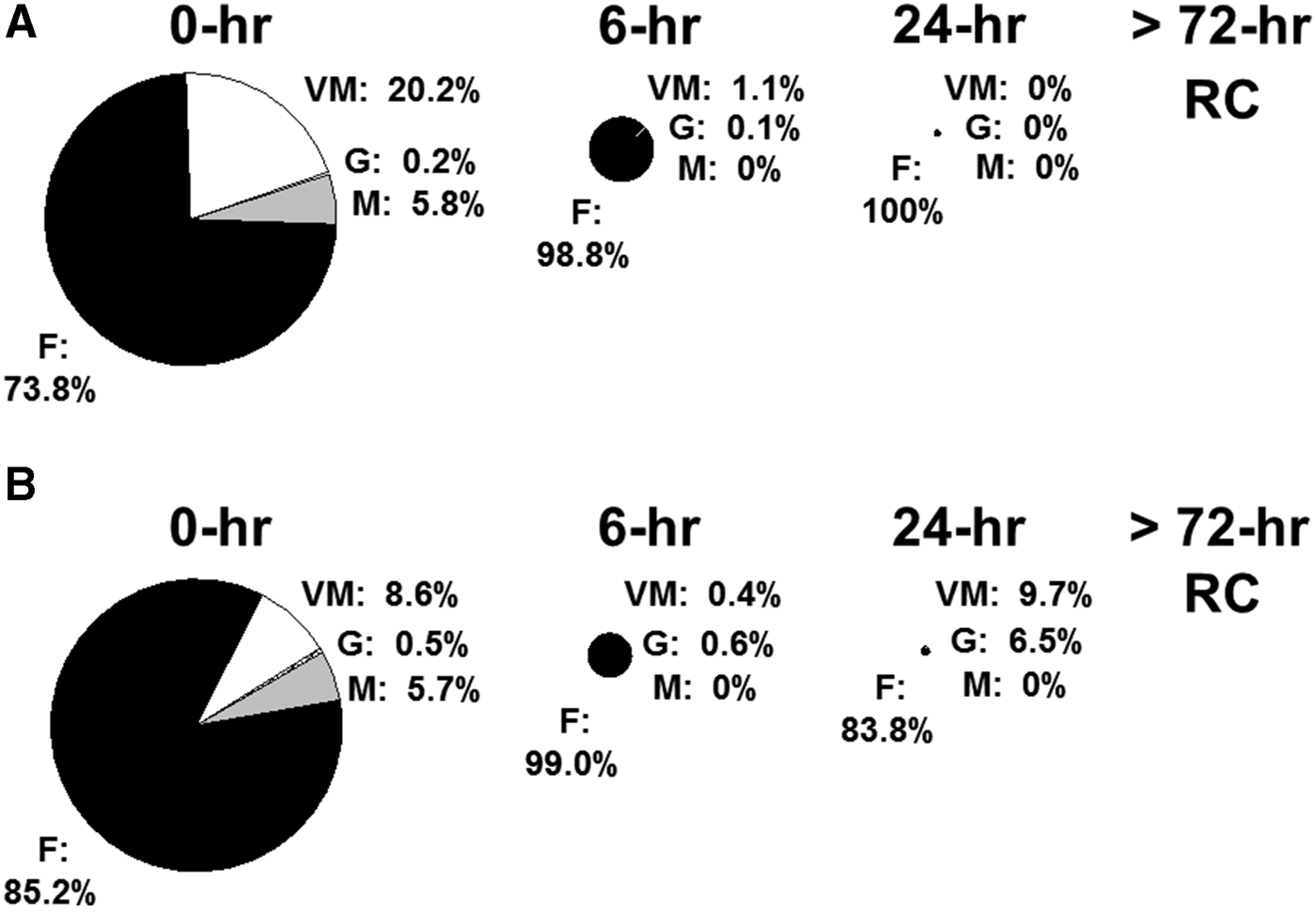
The bulk of the TiO2 NPs were removed from the gills and visceral masses of both mussels and oysters between 0 and 6 h, post-exposure. On the gills, the average residence time of particles is on the order of minutes, as material is rapidly transported to the labial palps or mantle (Milke & Ward, Reference Milke and Ward2003). In the gut, food particles with high nutritive value are retained for extracellular digestion in the stomach, followed by intracellular digestion in the cells of the digestive gland. Conversely, particles with little or no nutritive value are subjected to minimal extracellular digestion in the stomach and transported to the intestine for egestion (Bricelj et al., Reference Bricelj, Bass and Lopez1984; Brillant & MacDonald, Reference Brillant and MacDonald2002, Reference Brillant and MacDonald2003; Ward & Shumway, Reference Ward and Shumway2004). Furthermore, bivalves retain larger, less dense particles longer than smaller, denser particles because organic matter tends to be larger and lighter than inorganic particles that contain little nutritive value. Thus, larger, less dense material remains suspended in the stomach for more thorough processing, whereas smaller, denser particles settle into ciliary selection tracts where they are transported rapidly to the intestine for egestion (Reid, Reference Reid1965; Brillant & MacDonald, Reference Brillant and MacDonald2000). The separation of particles in the gut of bivalves based on size and density increases digestive efficiency and reduces digestive investment in material with little to no nutritive value (Brillant & MacDonald, Reference Brillant and MacDonald2000). Previous studies regarding gut-retention time (GRT) report that M. edulis retain natural food particles for a period of approximately 2.5 h (Bayne et al., Reference Bayne, Hawkins, Navarro and Iglesias1989), whereas C. virginica was found to retain natural food particles for approximately 9 h (Owen, Reference Owen, Wilbur and Yonge1966, Reference Owen and Lowenstein1974; Morton, Reference Morton1977) depending on feeding rate and tidal cycle. Therefore, in the current study, bivalves handled the bulk of TiO2 NPs as small, dense particles with little nutritive value, moving the material quickly to the intestine for egestion. Mass-balance analysis demonstrates the rapid depuration process that occurred with both mussels and oysters (Figure 3). Immediately following exposure (0 h), >70% of the ingested TiO2 NPs had been eliminated in the faeces, and at 6 h, >90% of the ingested TiO2 NPs had been egested. Only trace amounts of TiO2 NPs were associated with the gills, visceral masses, and faeces 24 h after exposure.
Percentage of TiO2 NPs measured in the tissues and faeces of mussels (A) and oysters (B) at each time interval (treatments pooled). The relative amount of TiO2 at each time interval, as a proportion of the total amount of TiO2 ingested by each group of bivalves over the experimental period, is represented by the size of each circle. VM, visceral mass; G, gill; M, mantle; F, faeces; RC, residual concentrations detected.
The concentration of NPs to which bivalves were exposed in this study was greater than those deemed environmentally relevant (low μg L−1; see Mueller & Nowack, Reference Mueller and Nowack2008). Such conditions are possible, however, in a scenario where NPs are released into the near-shore environment during a spill (e.g. nanoparticle manufacturers located close to rivers or estuaries experiencing a failure). The effluent would be dispersed through the action of currents and tides, exposing coastal organisms to a high concentration of NPs over a short time interval. The impacts of spill-scenario concentrations of NPs on aquatic and terrestrial organisms have been examined in previous studies with effects ranging from the production of reactive oxygen species and activation of stress genes to delays in moulting and reduced fecundity (Oberdörster et al., Reference Oberdörster, Zhu, Blickley, McClellan-Green and Haasch2006; Warheit et al., Reference Warheit, Hoke, Finlay, Donner, Reed and Sayes2007; Canesi et al., Reference Canesi, Ciacci, Betti, Fabbri, Canonico, Fantinati, Marcomini and Pojana2008; Klaper et al., Reference Klaper, Crago, Barr, Arndt, Setyowati and Chen2009).
Although mussels and oysters do not bioaccumulate the anatase form of TiO2 NPs when subjected to a spill scenario, the results of this study cannot be extrapolated to exposure conditions predicted for most marine environments (i.e. continuous exposure to concentrations <1.0 mg L−1). Therefore, the experiments outlined in the present study should be repeated at lower concentrations for a longer period of time (>2 h to days) to determine if any measurable bioaccumulation occurs. Additionally, the current research examined only one form of one type of NP, representing a small fraction of the NPs that are presently being developed, produced and included in consumer products. For example, nano-Ag in textiles (Benn & Westerhoff, Reference Benn and Westerhoff2008; Geranio et al., Reference Geranio, Heuberger and Nowack2009), ZnO in sunscreens and cosmetics (Serpone et al., Reference Serpone, Dondi and Albini2007), and the degradation of plastics into micro- and nanosized particles (Moore, Reference Moore2008; Wegner et al., Reference Wegner, Besseling, Foekema, Kamermans and Koelmans2012) are potentially entering coastal marine systems. Currently, there are too few data regarding how marine organisms encounter, ingest, egest and accumulate these other types of nanomaterials.
There is a clear need for more research on the interactions between marine organisms and manufactured NPs, especially at environmentally relevant concentrations (Gottschalk et al., Reference Gottschalk, Sonderer, Scholz and Nowack2009; Canesi et al., Reference Canesi, Ciacci, Fabbri, Marcomini, Pojana and Gallo2012; Handy et al., Reference Handy, van den Brink, Chappell, Mühling, Behra, Dušinská, Simpson, Ahtiainen, Jha, Seiter, Bednar, Kennedy, Fernandes and Riediker2012). Future studies on bivalves and other suspension-feeders should take into account the agglomeration potential of the NP to which the animals are being exposed in order to better understand encounter and capture efficiency. Large agglomerates of nanoparticles are deposited to the benthos more rapidly and are captured by suspension-feeders more efficiently than the primary particles. This is a direct divergence from the more traditional position which suggests that aggregation increases particle diameter, and subsequently decreases bioavailability (Brant et al., Reference Brant, Lecoanet and Wiesner2005; Navarro et al., Reference Navarro, Baun, Behra, Hartmann, Filser, Miao, Quigg, Santschi and Sigg2008; Nel et al., Reference Nel, Madler, Velegol, Xia, Hoek, Somasundaran, Klaessig, Castranova and Thompson2009). TiO2 NPs are believed to be recalcitrant in natural systems (Scientific Committee on Consumer Safety, 2013). Therefore, resuspension events, such as storms, could serve to re-expose benthic suspension- and deposit-feeding animals to previously sedimented nanomaterials. The potential for re-exposure suggests the need for more long-term studies that consider: (1) the routes of entry and fate of nanomaterials in the marine environment, and (2) the way in which marine animals encounter, handle, ingest and egest the nanomaterials. Such research would provide valuable information regarding bioaccumulation and potential for food-chain transfer, and would be essential for commercially important marine species that are consumed by humans.
SUPPLEMENTARY MATERIAL
To view supplementary material for this article, please visit http://dx.doi.org/10.1017/S0025315415001174
ACKNOWLEDGEMENTS
We would like to thank Bridget Holohan, Prentiss Balcom, Meghan Danley, Anusha Perumalla, James Markow (Noank Shellfish Cooperative), and Gregg Rivara (Suffolk County Marine Environmental Learning Center) for their assistance with various aspects of this study.
FINANCIAL SUPPORT
This research was supported by grants from Connecticut Sea Grant (R/P-1, NA10OAR4170095) and the National Science Foundation's Environmental Nanotechnology program (CBET-1336358) to J. Evan Ward and Robert Mason; and a grant from NOAA's Oceans and Human Health program for the Interdisciplinary Research and Training Initiative on Coastal Ecosystems and Human Heath (I-RICH) to J. Evan Ward. We appreciate this support.