
Introduction
This paper examines the archaeological evidence for long-term change and local variation in the animal-offering tradition of the Sámi—the indigenous people populating the northern parts of Norway, Sweden and Finland, and the Kola Peninsula in Russia. We analyse archaeozoological assemblages and extant and new radiocarbon dates from 17 offering sites in Norway, Sweden and Finland in order to track continuity and change in Sámi religious and ritual practice from the sixth century AD to the present day. Investigation of the archaeological evidence for the rituals practised at these sacred places enables examination of local identities and traditions as expressed through Sámi commitment to maintaining a good relationship with the land via offerings given at sacred sites. These identities and traditions also offer a means to assess the local mediation of major shifts in the wider society. These changes include the transition from hunting to reindeer pastoralism, the colonialism of emerging state powers and the impact of Christianisation on the Sámi.
The indigenous Sámi religion was characterised by the idea of a reciprocal relationship between human and non-human powers. For example, the Sámi perceived the landscape as a living entity in active relation to humans and animals, with the land and places linked to activities, experiences, stories, rituals, social interactions and memories (Helander-Renvall Reference Helander-Renvall2010). The landscape was therefore an important constituent of identity for the Sámi (Karjalainen Reference Karjalainen, Knuuttila, Laaksonen and Piela2006; Helander-Renvall Reference Helander-Renvall2010). People communicated with deities and the spirits of the land and animals by giving offerings at sacred sites, which could, for example, be natural landscape features or sacred stones. Offerings at sacred sites were intended to maintain good relationships with the land, animals and spirits, and were practical methods to ensure success in everyday activities (Äikäs et al. Reference Äikäs, Puputti, Núñez, Aspi and Okkonen2009). Offerings were also made in the hope of future success in various activities: animals and animal body parts, metal objects, alcohol and tobacco were given as offerings for all of these purposes (Serning Reference Serning1956; Manker Reference Manker1957; Zachrisson Reference Zachrisson1984; Mebius Reference Mebius2003: 148–53; Äikäs Reference Äikäs2011; Äikäs & Salmi Reference Äikäs and Salmi2015; Salmi et al. Reference Salmi, Äikäs, Fjellström and Spangen2015).
The remains of these ritual practices are considered to be a key material expression of Sámi identity, and the archaeology of offering sites therefore features prominently in discussion of the formation of Sámi identity from the Late Iron Age onwards (e.g. Hansen & Olsen Reference Hansen and Olsen2014: 31). Research has, however, concentrated on the metal offerings, practised mainly at individual sites in northern Sweden c. AD 800–1300, or at a few sites within a single country (Hallström Reference Hallström and Edén1932; Zachrisson Reference Zachrisson1984; Hedman Reference Hedman2003; Okkonen Reference Okkonen2007; Äikäs et al. Reference Äikäs, Puputti, Núñez, Aspi and Okkonen2009; Mulk Reference Äikäs, Puputti, Núñez, Aspi and Okkonen2009; Äikäs & Salmi Reference Äikäs and Salmi2013; Salmi et al. Reference Salmi, Äikäs, Fjellström and Spangen2015). While these individual studies provide important information on Sámi offering practices, they lack a comparative perspective, especially across current state borders, and therefore do not highlight long-term change, continuity or variability in offering traditions across Fennoscandia.
Archaeological assemblages
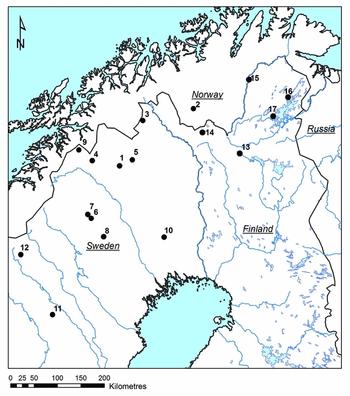
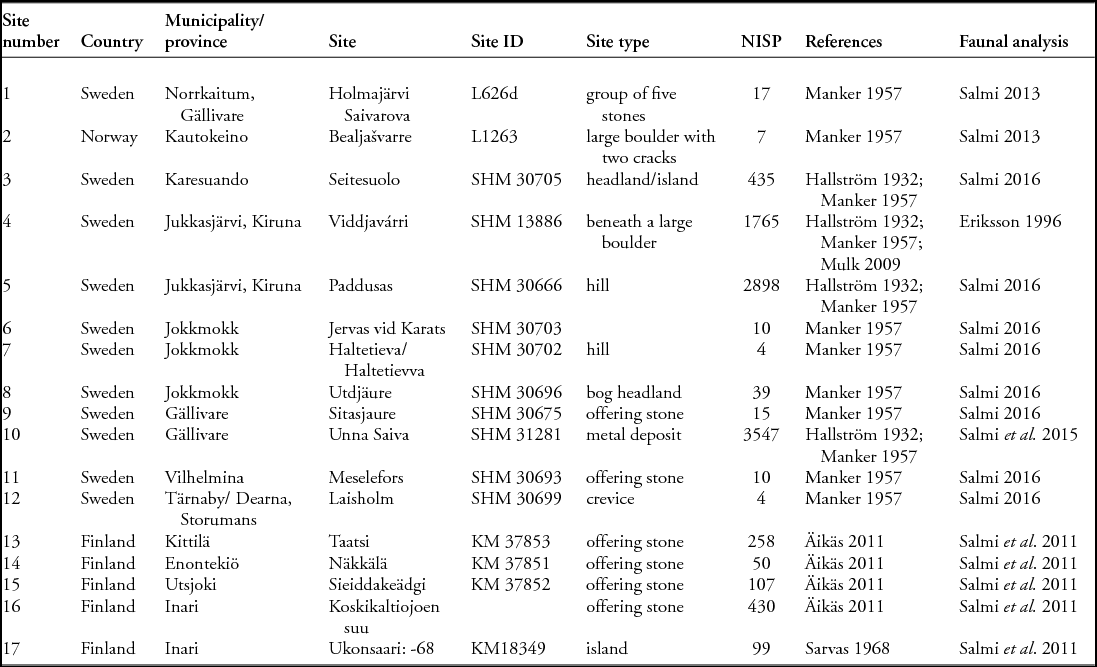
The present study analyses faunal material from 17 Sámi offering sites spread across the interior of Northern Fennoscandia (Figures 1 & 2; Table 1). For Finland, we collated data from all archaeological excavations of Sámi offering sites that have produced evidence for ancient faunal remains, with the exception of two sites reported by Okkonen (Reference Okkonen2007) and Harlin and Ojanlatva (Reference Harlin and Ojanlatva2008). For Sweden, we gathered information archived at the Statens Historiska Museet, excluding Swedish sites reported by Gejvall (Reference Gejvall1956)—the archive for which is incomplete—and for Norway, we collected data on excavations archived at the Tromsø University Museum. The 17 sites include offering stones and natural landscape features (Table 1). We have excluded finds from circular offering sites, as these structures have recently been reinterpreted as wolf traps (Spangen Reference Spangen2016). Due to historical gaps in research, no comparable archaeological data exist from offering sites located in coastal Norway, present-day Russia and the South Sámi area in central Sweden and Norway.
Map of Sámi offering sites: 1) Saivarova; 2) Baeljasvarre; 3) Seitesuolo; 4) Viddjavárri; 5) Paddusas; 6) Jervas vid Karats; 7) Haltetieva; 8) Udtjäure; 9) Sitasjaure; 10) Unna Saiva; 11) Meselefors; 12) Laisholm; 13) Taatsi; 14) Näkkälä; 15) Sieiddakeädgi; 16) Koskikaltiojoen suu; 17) Ukonsaari.

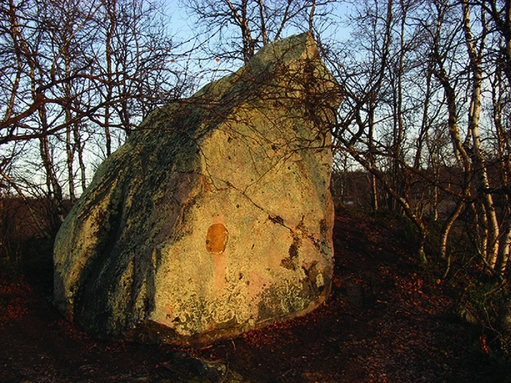
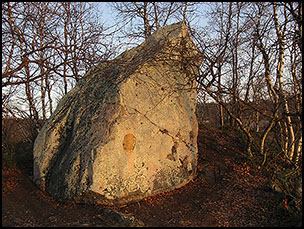
The sieidi stone of Näkkälä by Lake Näkkäläjärvi is located on a small hill. Photograph by T. Äikäs.

Archaeological sites.

Sites 3–5, 10 and 17 were excavated in the first half of the twentieth century, while sites 13–16 were examined in 2008–2010 (Hallström Reference Hallström and Edén1932; Manker Reference Manker1957; Sarvas Reference Sarvas1968; Äikäs Reference Äikäs2011; Salmi et al. Reference Salmi, Äikäs and Lipkin2011). The remaining sites are known only through small-scale surface sampling (Manker Reference Manker1957). Assemblages from sites 4, 10 and 13–17 have beenpublished (Mulk Reference Mulk and Äikäs2009; Salmi et al. Reference Salmi, Äikäs and Lipkin2011, Reference Salmi, Äikäs, Fjellström and Spangen2015). Unpublished osteological reports exist for the remaining assemblages (Eriksson Reference Eriksson1996; Salmi Reference Salmi2013, Reference Salmi2016). The results from these 17 sites are compared to those reported by Gejvall (Reference Gejvall1956), Okkonen (Reference Okkonen2007) and Harlin and Ojanlatva (Reference Harlin and Ojanlatva2008). These three datasets could not be combined with our dataset due to missing information in the 1956 faunal report and the preference of the authors responsible for the 2007 and 2008 data. Although we relied in part on faunal analyses and radiocarbon dates published by other researchers, all the analyses included in the dataset were performed using comparable methods. Moreover, the radiocarbon dates were obtained from only three laboratories in Sweden and Finland using comparable methods.
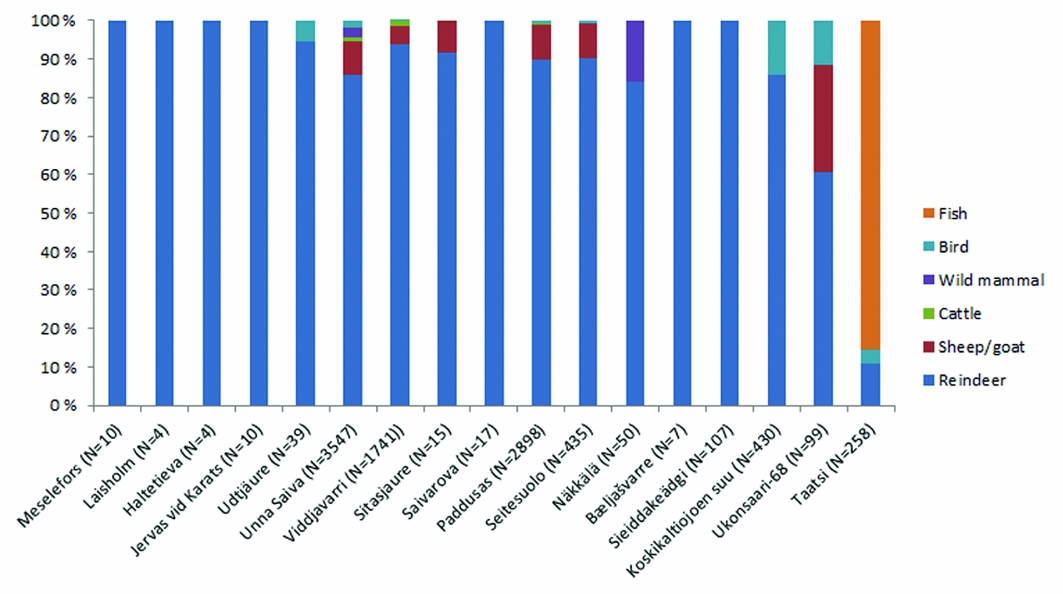
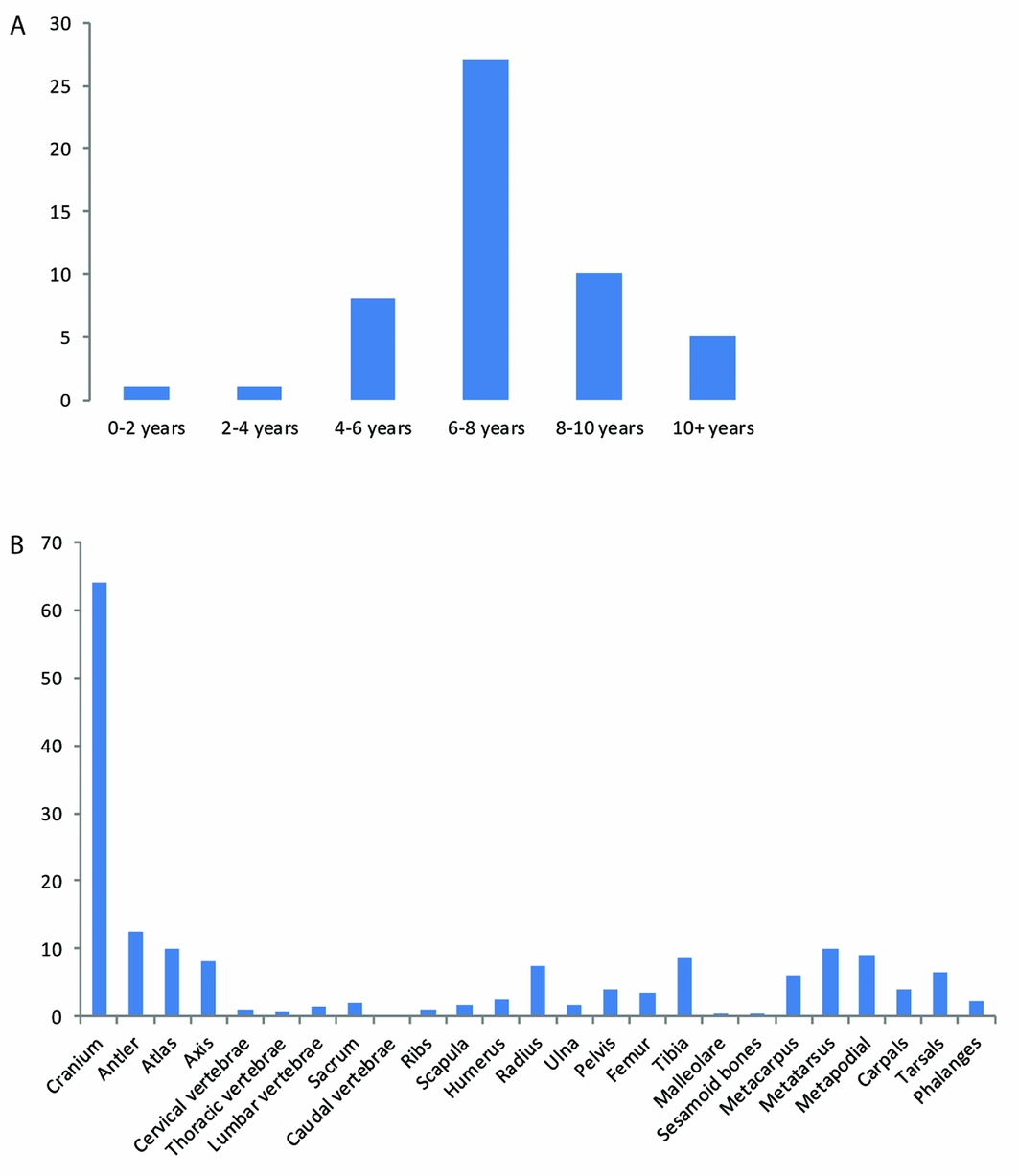
The animal species identified include reindeer (Rangifer tarandus), sheep (Ovis aries) or goat (Capra hircus) (ovicaprids), cattle (Bos taurus), birds (such as wood grouse (Tetrao urogallus) and swan (Cygnus sp.)), fish, and various wild mammals, such as brown bear (Ursus arctos) and beaver (Castor fiber). Reindeer dominate all assemblages (Figure 3; see Supplement 1 in the online supplementary material (OSM)), and based on tooth eruption and wear, the material relates mostly to adult individuals aged 4–10 years (i.e. individuals of reproductive age) (Figure 4A; see Supplement 2 in the OSM). The reindeer remains are comprised predominantly of antlers, cranial bones and uppermost vertebrae, but at most sites, all body parts—including the long bones and extremities—are represented (Figure 4B; see Supplement 3 in the OSM). Most of the assemblages include reindeer long bones, freshly broken for the extraction of marrow. Sex and size estimations reveal that most of the mandibles belong to male individuals of considerable size. In contrast, the long bones belong both to male and female individuals in equal proportions (Salmi Reference Salmi2013, Reference Salmi2016; Salmi et al. Reference Salmi, Äikäs, Fjellström and Spangen2015). Few of the ovicaprid bones are distinguishable to a particular species. In the majority of the assemblages, ovicaprid body parts are represented in roughly equal proportions, with most individual animals being less than one year of age. Brown bear bones comprise cranial fragments and teeth, whereas all the body parts of other wild mammals, as well as birds and fishes, are represented.
Species frequencies as number of identified specimens (NISP).

A) Reindeer age estimations based on tooth eruption and wear as numbers of individuals assigned to each age group (Miller Reference Miller1974; Nieminen et al. Reference Nieminen, Larmas and Saukko1981). Data from Viddjavárri is excluded due to missing information in the osteological report. B) Reindeer skeletal frequencies as modified anatomical units (MAU). Data from Viddjavárri is excluded due to missing minimum numbers of elements (MNE) in the osteological report.

Chronology
Wild animal offerings from AD 500–1200
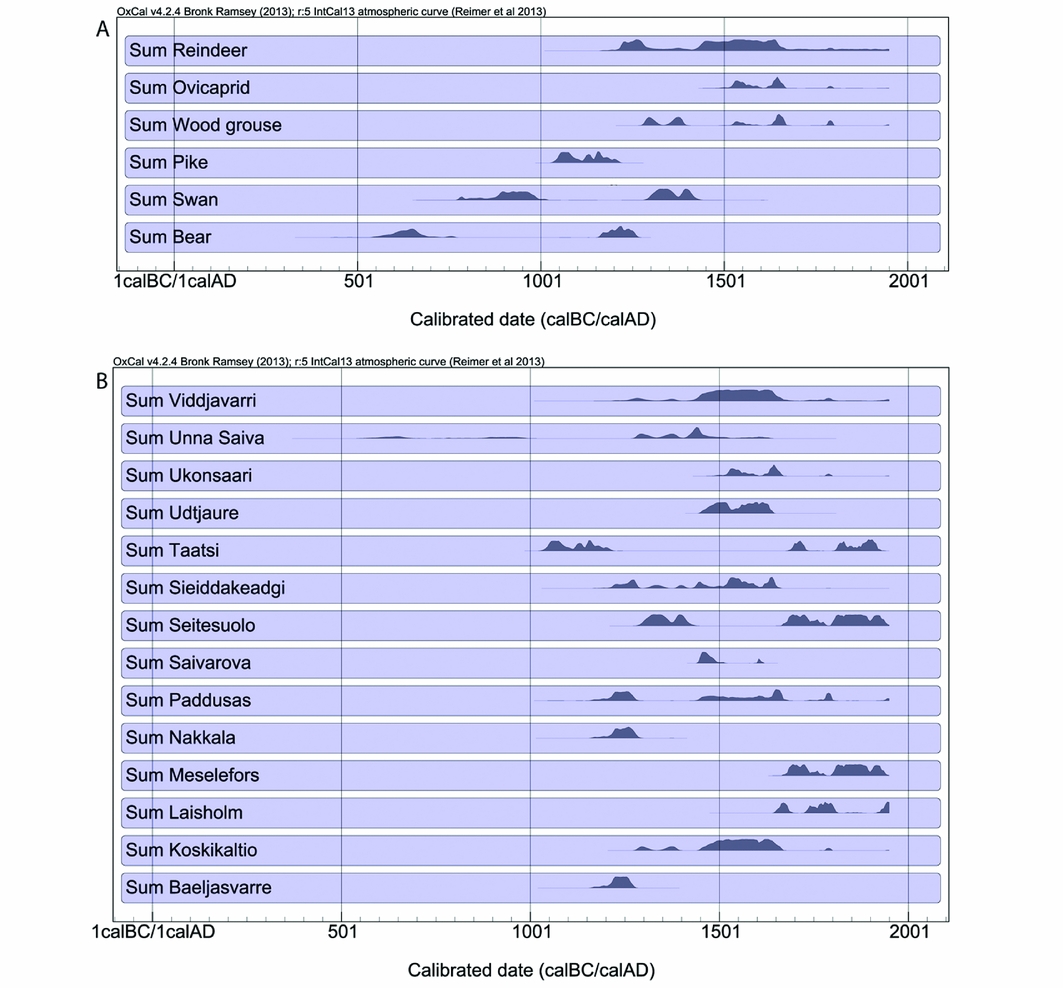
Radiocarbon dates for the animal bones range from AD 540 to the present day, with a clear peak in dated samples between c. AD 1200 and 1700 (Figure 5A; see Supplement 4 in the OSM). The oldest dates, AD 540–1200, are from wild species: pike (Esox lucius), swan and brown bear. The bear sample from Unna Saiva pushes back the beginning of animal offerings to the sixth to eighth centuries (Salmi et al. Reference Salmi, Äikäs, Fjellström and Spangen2015). This date is earlier than those for previously published animal remains, dated to c. AD 800–1000, and substantiates the idea that these sites were in use prior to the commencement of metal offerings at the turn of the millennium (Hallström Reference Hallström and Edén1932: 131; Manker Reference Manker1957: 52; Zachrisson Reference Zachrisson1984: 23). A possible reason for the scarcity of dates earlier than AD 800 may be a bias in the selection of sites for excavation. Most of the sites that have been investigated are associated with enduring oral traditions, and are located in areas where the landscape has remained in use through to the present (cf. Hedman Reference Hedman2003). It is therefore possible that older sites, located in mountainous areas used purely for hunting and subsequently abandoned when reindeer pastoralism became the main source of livelihood, are under-represented.
Radiocarbon dates calibrated with OxCal 4.2. (Bronk Ramsey & Lee Reference Bronk Ramsey and Lee2013), atmospheric data from Reimer et al. (Reference Ramqvist2013). A) Sums of probability distributions arranged by species; B) sums of probability distributions arranged by site.

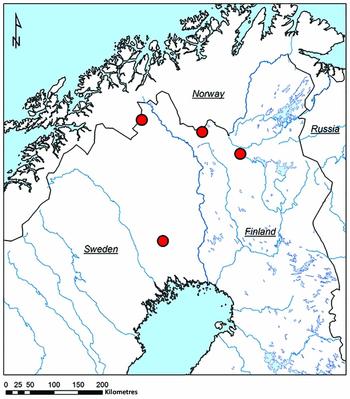
The ritual significance of wild species in early offerings probably reflects the importance of wild resources for subsistence; ethnographic accounts attest that economy and religion were deeply intertwined in the Sámi worldview (e.g. Äikäs et al. Reference Äikäs, Puputti, Núñez, Aspi and Okkonen2009). Intensified trade with cultural groups from southern Scandinavia and present-day Russia during the Viking and Early Middle Ages (c. AD 800–1200) increased the importance of products such as furs and reindeer hides (Hansen & Olsen Reference Hansen and Olsen2014: 127–31). This led to an escalation in wild reindeer hunts, as testified by the increased number of hunting pits in the interior of Fennoscandia (Mulk Reference Mulk1994; Ramqvist Reference Ramqvist2007; Hansen & Olsen Reference Hansen and Olsen2014: 81–82). This may have led to a greater concern with the success of hunts and subsequently enhanced the importance of rituals related to them. These rituals may also have acted as a method of regulating the accumulation of wealth in a traditionally egalitarian society (Mulk Reference Mulk1994, Reference Mulk1996). Our review of the dating of wild animal bones from Sámi offering sites, combined with the spatially distinct distribution of the earliest dates (Figure 6), suggests that the increased economic importance of hunting was reflected in a religious concern with hunting rituals across inland Fennoscandia.
Sites with early (c. AD 500–1200) wild animal bone dates.

Reindeer offerings and the shift to pastoralism from AD 1200–1700
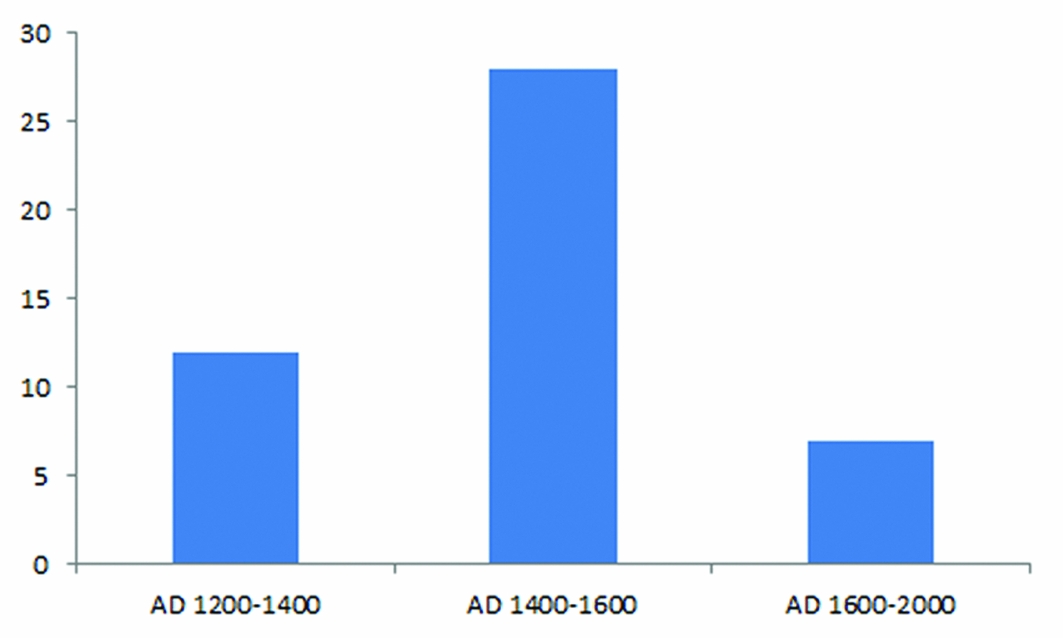
Research has suggested that the spread of reindeer pastoralism began in the mountain and forest areas of Sweden as early as AD 800–1050 (Hedman Reference Hedman2003; Bergman et al. Reference Bergman, Zackrisson and Liedgren2013). Alternatively, this evidence might indicate the taming of reindeer for use as hunting decoys and draft animals within a more market-oriented hunting society (Mulk Reference Mulk and Äikäs2009: 123–29). Despite these differing opinions on the exact timing of the emergence of reindeer husbandry in Northern Fennoscandia, growing archaeological and genetic evidence indicates the increased importance of reindeer pastoralism in the late medieval period, especially from AD 1400–1500 onwards (Wallerström Reference Wallerström2000; Mulk Reference Mulk and Äikäs2009; Sommerseth Reference Sommerseth2011; Bjørnstad et al. Reference Bjørnstad, Flagstad, Hufthammer and Roed2012; Bjørklund Reference Bjørklund2013; Hansen & Olsen Reference Hansen and Olsen2014: 195–206). Reindeer bones first appear as offerings c. AD 1200–1300, and reach a clear peak between 1400 and 1650 (Figure 7). These offerings reflect the growing importance of reindeer in ritual practices and probably relate to the increased demand for hides and furs created by trade with Novgorod and the Hanseatic League (through Scandinavian intermediaries, the birkarlar) (Hansen & Olsen Reference Hansen and Olsen2014: 146–55; Bergman & Edlund Reference Bergman and Edlund2016).
Number of reindeer bones dating to different periods.

The chronological peak of reindeer from Sámi offering sites is therefore contemporaneous with a marked increase in the economic role of the species; the religious importance of reindeer evidently grew at the same time as their changing economic role (Äikäs & Salmi Reference Äikäs and Salmi2015; Salmi et al. Reference Salmi, Äikäs, Fjellström and Spangen2015).
The identification of domesticated (rather than wild) reindeer based on faunal remains is challenging. Human intervention in the reindeer life cycle was limited, making it difficult to link specific skeletal morphologies with domestication (e.g. Helskog Reference Helskog2011). Stable isotope evidence, however, may suggest that some of the animals offered between AD 1400 and 1650 were domesticated (Salmi et al. Reference Salmi, Äikäs, Fjellström and Spangen2015), further emphasising that the intensification of reindeer offerings was linked with the development of reindeer pastoralism.
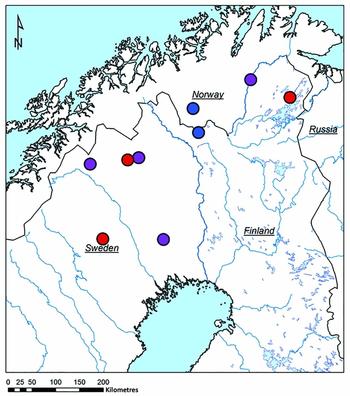
The shift towards reindeer pastoralism was probably set in motion by a complex interplay of economic, social and ecological factors. These may include the development of local hierarchies to organise and control the resources and technologies needed in the wild reindeer hunt (Hansen & Olsen Reference Hansen and Olsen2014: 203–14), economic pressures created by globalising trade relationships, and increased taxation (e.g. Wallerström Reference Wallerström2000). Sámi societies were increasingly interlinked with Hanseatic trade via Swedish and Norwegian intermediaries. The Swedish crown tightened its grip on northern areas by founding marketplaces and churches. These were first established in the fourteenth century, on the coast of the Gulf of Bothnia, at the mouths of major rivers. Then, from the early seventeenth century onwards, marketplaces and churches were built in the interior (Wallerström Reference Wallerström2000). Trade with both the Hanseatic League and local farmer-merchants, and taxation by the emerging states in Norway and Sweden, exerted pressure on the Sámi to produce more furs and hides than previously (Hansen & Olsen Reference Hansen and Olsen2014: 152–66). By the beginning of the sixteenth century, in the Swedish mountain area, the transition from hunting and gathering to pastoralism was complete; society was now based on the private ownership of reindeer and the consolidation of socially and economically autonomous kin-based sijda groups (Bergman et al. Reference Bergman, Zackrisson and Liedgren2013). (A sijda is a Sámi community with its own territory, formed of several, often related, nuclear families (Näkkäläjärvi Reference Näkkäläjärvi, Pennanen and Näkkäläjärvi2000)). It must be noted, however, that the shift to reindeer pastoralism was probably gradual and was certainly a very variable process across Fennoscandia as a whole (Tegengren Reference Tegengren1952; Wallerström Reference Wallerström2000; Mulk Reference Mulk and Äikäs2009; Sommerseth Reference Sommerseth2011; Bjørklund Reference Bjørklund2013; Hansen & Olsen Reference Hansen and Olsen2014: 195–206). For example, domesticated reindeer seem to have become important as a subsistence resource only in the seventeenth and eighteenth centuries in Finnmark in northern Norway (e.g. Vorren Reference Vorren1979: 255, Reference Vorren1998; Hansen & Olsen Reference Hansen and Olsen2014: 267). Recent research, however, suggests that reindeer herding was combined with hunting possibly as early as the eleventh century, at least in eastern Finnmark (Hedman et al. Reference Hedman, Olsen and Vretemark2015). Across most of the Finnish area (present-day Finland), reindeer pastoralism remained small scale and was complemented by fishing, hunting and gathering until the nineteenth century (Tegengren Reference Tegengren1952). Regardless of such variability within our area of investigation, the religious importance of reindeer seems to have grown simultaneously alongside the economic importance of pastoralism (Figure 8).
Sites with early (c. AD 1200–1300) and peak-time (c. AD 1400–1650) reindeer bone dates. Blue: only early dates; purple: early and peak dates; red: only peak dates.

Effects of Christianisation from AD 1700 onwards
It has been argued that the Sámi animal-offering tradition ceased in the eighteenth century and resurfaced only recently (Äikäs & Salmi Reference Äikäs and Salmi2015). This break partly corresponds with a period of intensified Lutheran missionary activity, particularly in the seventeenth and eighteenth centuries, and increased state control over Northern Fennoscandia (Kylli Reference Kylli2012). Our analysis, however, shows that 12 of the reindeer bone samples date approximately to between AD 1700 and the present day, including several clearly modern dates from Taatsi and Näkkälä (Figure 5B). Moreover, nineteenth-century coins and bottle glass, and twentieth- to twenty-first-century coins and other items have been recovered from several sites (Äikäs & Salmi Reference Äikäs and Salmi2015; Äikäs & Spangen Reference Äikäs and Spangen2016). These finds clearly demonstrate that some of the sites remained in use throughout recent centuries, regardless of the Christianisation and colonisation processes, even if the small number of animal bones indicates a shift away from animal offerings at this time. Nevertheless, the archaeological finds and written records reveal that, for example, coin offerings at sieidi stones continued into the twentieth century (e.g. Paulaharju Reference Paulaharju1932; Kjellström Reference Kjellström and Ahlbäck1987: 24–33). Contemporary offerings at sieidi sites include slices of meat, alcohol, candles and pieces of quartzite. They bear similarities both to the ancient offering tradition and to contemporary neo-pagan rituals, hence signalling ritual continuity and creativity (Äikäs et al. in press). Recent deposits at (perceived) Sámi offering sites should also be seen in relation to the Sámi cultural and political revival of the last 40 years, including the reclamation of traditional religion and rituals (Äikäs & Spangen Reference Äikäs and Spangen2016; Spangen Reference Spangen2016).
Local variations in offering practices
To assess the potential spatial and cultural variability in Sámi offerings, we compare species diversity, the presence of different reindeer body parts and the ages of the individual reindeer selected for offerings. We compare the data from individual sites and then group the sites according to the four Sámi languages (Ume, Lule, North and Inari Sámi) spoken in the areas where the sites are located. Languages can be used roughly to delineate Sámi cultural areas (Pentikäinen Reference Pentikäinen and Sihvo1971); these are similar to the local historical administrative divisions of Ume, Lule and Torne Laplands (Korpijaakko Reference Korpijaakko1989: 82–84) (see Supplements 1–3 in the OSM). The analysis shows no notable differences in reindeer offerings in terms of animal age or the frequencies of skeletal elements betweenindividual sites or between language areas. There are, however, some inter-site differences in species diversity and in the dates of offerings, dependent on site biography and local history.
The radiocarbon results show that the dates of the offerings varied considerably between sites (Figure 5B; see Supplement 4 in the OSM). Of the sites with several dated samples, the Näkkälä sieidi stone was used for animal offerings for a relatively short period between AD 1150 and 1300. At many sites, such as Unna Saiva, Viddjavárri, Taatsi, Seitesuolo and Paddusas, however, the radiocarbon dates of animal bone span hundreds of years. At Sieiddakeädgi and Koskikaltiojoen suu, for example, animal offerings began in the twelfth and thirteenth centuries and continued until the seventeenth and eighteenth centuries, respectively; at Sieiddakeädgi, the offering tradition then continued with coins and bottle glass (possibly an alcohol offering). Thus, there was remarkable continuity in the offering tradition at many sites, over generations and centuries, as well as some variation between different sites.
Once introduced, reindeer dominate virtually all the faunal assemblages (Figure 3; see Supplement 1 in the OSM), an exception being the Taatsi offering site (Figure 9), where fish bone represents the most common faunal category. Lake fishing was an important means of subsistence for the Sámi in many areas in the interior of Northern Fennoscandia (e.g. Itkonen Reference Itkonen1948: 536–40; Hansen & Olsen Reference Hansen and Olsen2014: 192–95), including Kittilä, where Taatsi is located. As well as reindeer, ovicaprid bones have been found at sites in Sweden and Finland, and cattle bones at three sites in Sweden. Agriculture, including cattle and sheep husbandry, was introduced to the Sámi in Norway during the medieval period, and was widely practised in fertile river valleys from the eighteenth century onwards. Sheep and goats may have been kept by the mobile pastoralist Sámi from the Viking period onwards, and more certainly by the Early Middle Ages (Aikio et al. Reference Aikio, Näkkäläjärvi, Pennanen, Pennanen and Näkkäläjärvi2000; Hansen & Olsen Reference Hansen and Olsen2014: 177, 190–200; Hedman et al. Reference Hedman, Olsen and Vretemark2015). As well as domesticated animals, the bones of wild birds and mammals have been identified at several sites in Sweden and Finland. Bear bones are present in the Näkkälä and Unna Saiva assemblages, and are also reported from several other sites in Sweden and Finland (Gejvall Reference Gejvall1956; Manker Reference Manker1957; Okkonen Reference Okkonen2007).
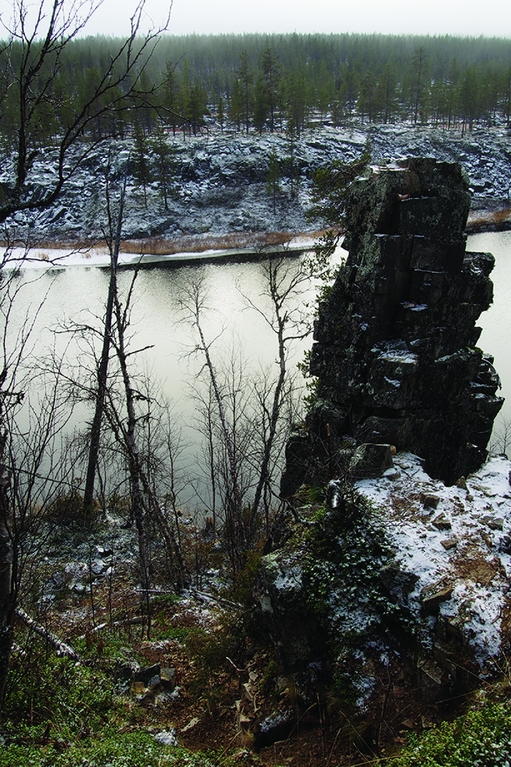
The sieidi of Taatsi is located near to Lake Rotkojärvi. Photograph by T. Äikäs.

The varying sample sizes from each site complicate the identification of species frequency and diversity patterns (Lyman Reference Lyman2008: 159–60). To address the issue of species richness, and to assess the variable economic and religious importance of different species at different sites, we employ a biodiversity metric. The Simpson's Index of diversity is a measure of heterogeneity, based on the number of species and their relative abundance in assemblages (Magurran Reference Magurran2004: 102). The calculated reciprocal Simpson's Index does not correlate (r = 0.153, p = 0.571) with the total number of identified specimens, indicating that there are other factors influencing species richness and evenness. Assemblages with a low reciprocal Simpson's Index value (Figure 10) are dominated completely by reindeer bones, while assemblages with mid-range values are dominated by reindeer, but with other species represented. At the other end of the spectrum, assemblages with high reciprocal Simpson's Index values comprise a number of different species with no one species dominant over the others. Sites mostly or completely dominated by reindeer offerings are located throughout the interior of Northern Fennoscandia. The two sites with the highest values for species diversity and evenness—Taatsi and Ukonsaari (Figure 1)—are situated in the eastern part of the Sámi area. Here, reindeer pastoralism traditionally played a minor role in comparison with hunting and fishing (Tegengren Reference Tegengren1952), apparently in both economic and religious senses.
Reciprocal Simpson's Index plotted against sample size.

Conclusion
Our results reveal remarkable continuity in the Sámi animal-offering tradition, from the sixth to the seventeenth centuries AD, and on to even the present day. Some sites were used continuously for hundreds of years; at other sites, animal offerings were made over a shorter period of time. Additional types of offerings, such as coins, were sometimes made during later periods. These sites retained their sacred significance, as evidenced by the oral traditions attached to them. Although there was spatial and temporal variation in the species chosen for offerings, and their relative abundance, there were also continuities and shared elements in the ritual practice across the study area. Major shifts in the dominant species selected for religious offerings occurred roughly simultaneously over most of the Sámi area, despite much regional variation in their economic and social organisation. This suggests that the offering rituals were a part of wider Sámi identity, as expressed through relations to the land and its spirits. Land, perceived as a living and active entity, was an important constituent of Sámi identity (Helander-Renvall Reference Helander-Renvall2010). The relationship between land and identity was mediated through activities, experiences, stories, rituals, social interactions and memories (Helander-Renvall Reference Helander-Renvall2010; Näkkäläjärvi Reference Näkkäläjärvi2013). Sacred sites and animal offerings were an integral part of the network of places relating to varied subsistence activities (Äikäs et al. Reference Äikäs, Puputti, Núñez, Aspi and Okkonen2009; Äikäs Reference Äikäs2011: 90–108). The remains of earlier rituals, often left visible at the offering sites (Salmi et al. Reference Salmi, Äikäs and Lipkin2011), were probably a means of social memory. The continuities and similarities documented here suggest that the Sámi groups within the study area have shared a means, for more than a millennium, of maintaining relationships with the land and with spirits, through the practice of animal-offering rituals. Moreover, this was probably an important factor in shaping both individual identities and group integration.
The major changes in Sámi society and human-animal interactions from the Late Iron Age onwards are reflected clearly in the animal-offering tradition. There were changes in the principal species of ritual focus, and these were intertwined with wider shifts in economy, subsistence and colonial history. The beginning of the tradition was tied to shifts in trade connections during the Late Iron Age, when the Sámi became increasingly integrated into trade networks that connected different parts of Fennoscandia. At that time, the economic importance of hunting was reflected in the offering of wild animals. The gradual transition from the hunting of wild reindeer to reindeer pastoralism was another major transformative factor. Reindeer pastoralism was initiated by a complex interplay of colonial and economic policies by the emerging states to the south, and by internal processes within Sámi communities. Reindeer became the principal species for offerings as the religious focus apparently shifted from seeking success for the hunt to ensuring the reproduction and well-being of reindeer herds. Moreover, Christianisation affected ritual practice as the focus shifted from animal offerings to coins, personal items and possibly alcohol and tobacco. Making offerings at sieidi stones today signifies both a continuation of ancestral traditions and new spiritual, as well as mundane, practices—in part related to overarching socio-political issues in current Sámi societies. The development of local Sámi religion and ritual practice was therefore connected with broader historical trajectories, such as economic history, state formation and colonialism.
There was variation in the range of species used for offerings, dependent on the complex interplay between ecological and economic factors, individual site history and the different communities concerned. Although there were no significant differences in animal offerings between areas where different Sámi languages were spoken, it is clear that the assemblages from each site reflect the changing needs and choices of individuals and groups. Reindeer dominate the majority of the assemblages; notably, the sites with most variation in the species offered are found in lake areas in Finland, where fishing, hunting and gathering remained of greater importance than reindeer pastoralism. Domesticates such as cattle and sheep were sometimes offered, and wild animals continued to be offered at many sites even after the transition to reindeer pastoralism. Moreover, a small number of animal offerings date to the post-Christianisation period. Such variation probably indicates that some Sámi offering sites were used by the whole community, whereas others were visited only by certain individuals and families (Paulaharju Reference Paulaharju1932: 10–21; Itkonen Reference Itkonen1948: 311; Rydving Reference Rydving1993: 104–106; Mebius Reference Mebius2003: 141). Both communities and individuals sought to express different concerns and desires when they visited the offering sites to communicate with non-human powers. They also adopted different strategies to engage with wider shifts in subsistence and economy, and in relation to colonial powers. The animal bone assemblages from offering sites reflect this variability of practice, and further studies of offering sites may therefore offer valuable insights into the social, political and religious trajectories of the Sámi communities.
Acknowledgements
This research was supported by the Arctic Domus project at the University of Aberdeen (ERC project 295458) and two Academy of Finland projects: ‘Human-environmental Relationships in the Colonial Encounter’ (285774) and ‘Religious Contacts and Religious Changes: Interdisciplinary Investigation of Site Biographies of Sámi Ritual Places’ (294626). Some of the radiocarbon dates were funded by Stiftelsen Lars Hiertas minne (FO2015-0071).
Supplementary material
To view supplementary material for this article, please visit https://doi.org/10.15184/aqy.2018.20