




No CrossRef data available.
Article contents
Borderline personality features in childhood: A short-term longitudinal study
Published online by Cambridge University Press: 12 December 2005
Abstract
Borderline personality disorder is a particularly devastating, yet understudied form of psychopathology. One of the most significant gaps in existing knowledge is the lack of systematic, prospective empirical attention to the developmental precursors of borderline personality. The present investigation was an exploratory attempt to address this limitation through (a) development of a psychometrically sound self-report instrument that assesses borderline personality features in childhood, the Borderline Personality Features Scale for Children (BPFS-C); (b) examination of the stability of BPF in childhood; (c) evaluation of gender differences in BPF in childhood; and (d) evaluation of the specificity of the BPFS-C for assessing borderline personality features. These goals were achieved through the prospective study of a normative sample of 400 (54% female) fourth though sixth graders who were assessed during the Fall of Year 1, Spring of Year 1, and Fall of Year 2. The use of linear mixed modeling techniques provided evidence for the construct validity of the BPFS-C. Further, borderline personality features as assessed with the BPFS-C were found to be moderately stable over the course of the study, with girls reporting higher levels of BPF than boys. Results also demonstrated that children's scores on the BPFS-C were uniquely related to indicators of borderline personality pathology above and beyond their scores on the Children's Depression Inventory. The implications of these results for the study of the development and etiology of borderline pathology are discussed.
This research was supported by a grant to the first author from the National Institute of Mental Health (MH063684). We acknowledge Leslie Morey and Carol Rockhill for their extensive assistance with the development of the BPFS-C. We also thank the staff of the School Buddies Project and the teachers and children who participated in this study for their significant contributions.
Information
- Type
- Research Article
- Information
- Copyright
- © 2005 Cambridge University Press
Borderline personality disorder (BPD) is a particularly devastating (Bleiberg, 2001) form of psychopathology. This disorder is a complex mental illness typically characterized by numerous deficits in cognitive, emotional, and behavioral functioning including affective instability; stormy, enmeshed relationships; unrealistic fears of abandonment by loved ones; dissociative thoughts; chronic feelings of emptiness; impulsivity; paranoid thoughts; and suicidal ideation or gestures (American Psychiatric Association [APA], 1994). Even though borderline pathology is commonly encountered by clinicians, it has been infrequently considered by researchers and almost never by developmental researchers.
Developmental psychologists' lack of attention to borderline pathology is likely due to the fact that, for many years, researchers, clinicians, and other mental health professionals have viewed personality as lacking in cohesiveness and durability prior to the age of 18. This perspective was (and for some personality disorders still is) supported by the DSM (APA, 1994) criteria for diagnosis of personality disorders. For instance, currently the identification of BPD is strongly discouraged during childhood and adolescence. One unfortunate implication of this approach has been that the study of precursors of personality disorders such as BPD has focused primarily on adults for many years. As a result, relatively little empirical understanding of the etiology and development of these disorders has been achieved (Bleiberg, 2001; Geiger & Crick, 2001; Kernberg, Weiner, & Bardenstein, 2000; Paris, 2003). In fact, much of the existing knowledge has been obtained through retrospective studies of adults (e.g., Links, Boiago, Huxley, Steiner, & Mitton, 1990), an approach with obvious, serious limitations.
The lack of attention to the development of personality disorders, as assessed prospectively in childhood, is surprising given that personality has been posited to begin forming early in life, substrates of which may be present at birth (Hartup & van Lieshout, 1995). Just as personality does not simply “appear” at age 18, it is highly unlikely that the symptoms or patterns of attributes characteristic of a personality disorder just appear at age 18. Thus, it is important to be attentive to individual differences in the way that personality develops as this developmental process may include variations that, for some children and adolescents, represent vulnerabilities for the development of personality disorders. Investigation of these vulnerabilities using prospective designs, psychometrically sound measures, and samples of children and adolescents is sorely needed to build a systematic knowledge base of the etiology and development of personality disorders, and to inform the generation and implementation of empirically supported intervention and prevention efforts.
The debate regarding the appropriateness of discussing borderline pathology in childhood has raged among psychologists and psychiatrists (Paris, 2003). Although some individuals argue that borderline pathology cannot and should not be assessed prior to adulthood, others have proposed that it is important to identify diagnostic criteria for assessment of borderline pathology in children (Bemporad, Smith, Hanson, & Cicchetti, 1982). Children identified as displaying borderline pathology exhibit similar symptoms and risk factors (e.g., histories of abuse, neuropsychological deficits) as adults with BPD (Zelkowitz, Paris, Guzder, & Feldman, 2001a), suggesting that borderline pathology may exist in childhood. However, one challenge to the study of borderline pathology in childhood has been the lack of clarity in the definitions of borderline pathology used by researchers (e.g., Paris, Zelkowitz, Guzder, Joseph, & Feldman, 1999). We believe that this problem may be partially ameliorated by considering possible heterotypic continuity in the manifestation of borderline pathology across development. That is, perhaps symptoms of borderline personality (e.g., impulsivity, overly close relationships) are manifested differently at different development periods. Despite differences in outward behavior or symptoms, however, we propose that the underlying meaning remains the same across development. Attentiveness to issues of heterotypic continuity across development is necessary in the measurements we employ to assess borderline personality features at various developmental stages.
The idea that pathological behavior in childhood may be associated with increased risk of personality disorder in adulthood has previously been acknowledged in the study of antisocial personality disorder. In particular, one of the criteria in the DSM-IV for diagnosis of antisocial personality disorder is a history of childhood conduct disorder (APA, 1994). In a similar vein, we propose that there may be a constellation of symptoms demonstrated in childhood that reflect the development of borderline personality problems. These symptoms, in turn, would increase the likelihood of a future diagnosis of BPD.
In the present study, we propose that although BPD is not clearly defined in childhood, some children do exhibit features characteristic of adult borderline pathology, reflecting the emergence of borderline pathology across development. Moreover, we believe that studying these features and their trajectories throughout development may provide us with a better understanding of the development of BPD. In effect, because personality is relatively malleable in childhood (Geiger & Crick, 2001), we do not believe that it is appropriate to classify children as exhibiting BPD. Nonetheless, we believe that some children do exhibit rather stable cognitive, affective, and behavioral tendencies, termed borderline personality features in the present paper, that resemble borderline pathology in adulthood. Additionally, we believe that certain types of information-processing patterns, relationship orientations, and behavioral characteristics exhibited in childhood may reflect maladaptations in personality development that place children at risk for a diagnosis of a personality disorder in adulthood. Thus, a primary goal of the present study was to examine whether borderline personality features could be reliably and validly measured in childhood.
Indeed, one major hindrance to the study of the etiology and development of borderline personality has been the lack of assessment tools that reliably and validly measure borderline personality pathology in childhood. To date, assessment has been hallmarked by two key features, both of which may be problematic for initial studies of borderline pathology in childhood. The first is that assessment has relied primarily on the categorical, psychiatric diagnostic scheme of BPD (i.e., as defined by the DSM) that was developed for adults (for an exception, see Bemporad et al., 1982). The degree to which this scheme is appropriate for use with children is unclear. For example, this categorical approach focuses narrowly on clinically relevant symptoms, and does not allow for the study of the entire range of borderline symptoms. Assessing a broad range of symptoms allows identification of not only those individuals who are demonstrating “clinically significant” levels of symptomatology, but also those who may be considered “at risk.” Indeed, the identification of at-risk individuals may be particularly important when studying the etiology of a personality disorder among an age group in which personality is believed to still be forming. When studying issues of development, the current categorical focus seriously limits our ability to identify and study all possible trajectories toward or away from psychopathology over time. For instance, biological, emotional, cognitive, and behavioral indexes of psychopathology may wax and wane with maturation. Thus, longitudinal studies including dimensional assessments that take into account heterotypic continuity in the manifestation of psychopathology are necessary. Moreover, subclinical levels of psychopathology or even characteristics that do not appear to be psychopathological at one point in development may portend future clinical levels of psychopathology.
A second key feature of past childhood studies is that clinical samples have been the primary focus. This issue is particularly salient when considering issues of development and etiology because clinical samples are unlikely to be representative of childhood populations exhibiting high rates of borderline pathology. For example, clinical samples are more likely to suffer from comorbid disorders, to experience difficulties that are relatively extreme in nature, and to have been the recipients of past treatment (Trull, 1995). Additionally, reliance on clinical samples is likely to introduce gender bias into our understanding of borderline personality among children and adolescents (e.g., Guzder, Paris, Zelkowitz, & Marchessault, 1996) because boys are far more likely than girls to appear in treatment facilities during childhood. For example, in one study of children recruited through day treatment centers (see Paris, 2003), girls comprised less than 20% of the sample. The composition of this sample and others like it contrasts sharply with adult studies of gender differences that demonstrate that BPD is more prevalent among females than males (e.g., Block, Westen, Ludolph, Widon, & Jackson, 1991). In fact, some research has shown that 70–75% of individuals diagnosed with BPD are female (Gunderson, Zanarini, & Kiesel, 1991; Swartz et al., 1990). Thus, existing studies of borderline personality pathology during childhood may be most relevant for the gender that is least likely to suffer from the disorder (i.e., boys). Biases such as these have led some researchers to conclude that “mental health care professionals are missing troubled girls” (Paris, 2003, p. 40; see also Crick & Zahn–Waxler, 2003).
To address these issues, the first goal of the present research was to develop a reliable and valid measure of borderline personality features for use with children that (a) allows for dimensional assessment of borderline pathology so that a wide range of severity levels can be captured and (b) is appropriate for use with normative (i.e., nonclinical) samples of children and adolescents. Toward this goal, we modified a widely used adult measure of borderline pathology, the BPD Scale (BOR) of the Personality Assessment Inventory (PAI; Morey, 1991) to create a dimensional measure of borderline personality features appropriate for use with children. The original PAI has demonstrated reliability and validity for use with subjects aged 18 years and older, and has been shown to be particularly useful for the assessment of psychopathology (including borderline personality) in nonclinical populations (e.g., Kurtz, Morey, & Tomarken, 1993; Morey, 1991). The instrument developed for use in the present study, the Borderline Personality Features Scale for Children (BPFS-C), was designed for use with children aged 9 years and older.
In the absence of other established, dimensional measures of borderline pathology appropriate for use with children that could be used to establish the validity of the newly developed BPFS-C, we relied on developmental psychopathology theory to guide our assessment of the construct validity of this instrument. This theory has been instrumental in guiding research on psychopathology during childhood and adolescence (Cicchetti & Cohen, 1995; Sroufe, 1997). The primary tenet of the developmental psychopathology approach is that deviant development can only be understood within the context of normative development. That is, at each phase of development, children utilize internal and external resources to master developmentally appropriate tasks (Price & Lento, 2001; e.g., learning to regulate emotion, developing successful and satisfying relationships with peers and friends). Multiple domains (e.g., social, emotional, biological) interact and influence one another over time as children negotiate these developmental tasks, a process that contributes to adaptive or maladaptive patterns of behavior. Children who successfully negotiate these challenges (adaptive pattern of functioning) are likely to develop in a normative manner, whereas those who do not (e.g., young children who experience difficulties developing secure attachments to caregivers or adolescents who fail to build appropriately intimate friendships) may be at risk for compromised adaptation or maladaptive patterns of functioning and the development of psychopathology (Cicchetti & Cohen, 1995; Sroufe & Rutter, 1984).
Based on the developmental psychopathology model, childhood features associated with atypical personality development may be best identified through consideration of difficulties in negotiating developmentally appropriate, normative tasks that have relevance for the particular disorder of interest. Moreover, there may be heterotypic continuity across development in the manifestation of various forms of psychopathology, which is influenced by one's developmental stage and the salient issues of that time. Consistent with the developmental psychopathology approach (e.g., Sroufe & Rutter, 1984), we recently conducted a content analysis of current DSM criteria for diagnosis of personality disorders (Geiger & Crick, 2001), which was guided by existing knowledge of normative development and of ways in which failure to successfully negotiate developmentally salient tasks in childhood might result in pathways toward personality pathology. In this theoretical model, five childhood indicators of BPD were identified: hostile, paranoid world view; intense unstable, inappropriate emotion; overly close relationships; impulsivity; and lack of sense of self. Each childhood indicator was theorized to capture a unique facet of BPD and to reflect difficulty in negotiating important developmental tasks in childhood.
With respect to the first childhood indicator, research and theory has shown that adults who exhibit borderline pathology tend to possess a hostile, paranoid world view that leads them to be preoccupied with negative information in the environment and to be suspicious of the intent of others (e.g., Kernberg, 1967; Morey, 1988a, 1988b). This characteristic may represent a failure to accomplish a key developmental task of childhood, which is to acquire the ability to recognize that others may have different intent and perspectives than the self, and to correctly identify the nature of those perspectives (Selman, 1980). Social information processing research has shown that children who fail to develop this ability at appropriate ages and who tend to incorrectly infer hostility in others (i.e., who exhibit hostile attributional biases) are at risk for serious concurrent and future adjustment problems such as aggressive behavior patterns (for a review, see Crick & Dodge, 1994). According to the Geiger and Crick (2001) model, this cognitive sensitivity may represent childhood vulnerability for borderline personality pathology.
The second proposed indicator of borderline pathology is intense, unstable, inappropriate emotion, particularly anger (APA, 1994, p. 654). Individuals with borderline pathology typically experience emotions intensely and to a degree that is often considered extreme relative to the situation with which they are faced (Morey, 1991). Their moods are often unpredictable, and may fluctuate widely within the space of a few hours (e.g., from anger to depression to anxiety). This pattern represents emotion regulation difficulties that may reflect a deviation from typical developmental trajectories. According to developmental theory, acquisition of emotion regulation skills typically begins in infancy (Mangelsdorf, Shapiro, & Marzolf, 1995) and continues throughout childhood and adolescence (Denham, 1998). The failure to master these abilities likely represents significant pathology that has relevance for borderline personality (Geiger & Crick, 2001). Among elementary school children, the expression of intense, inappropriate emotion may be assessed by examining children's emotional sensitivity to potentially benign situations (e.g., by evaluating whether they respond with anger to a provocation situation in which the intent of the other person is unclear; Geiger & Crick, 2001). Emotional sensitivity to an ambiguous social environment represents a failure to master emotion regulation skills, and may in turn, place children at risk for the expression of borderline features. Thus, emotional sensitivity may be an age-appropriate indicator of borderline features in childhood.
The third proposed indicator of borderline features in childhood is overly close relationships. The relationships of individuals exhibiting BPD have often been described as intense, stormy, dependent, and enmeshed (Block et al., 1991; Morey, 1991). Consistent with this pattern, borderline pathology has been shown to be significantly associated with a preoccupation with relationship concerns and heightened emotionality about relationships (e.g., fears of rejection or abandonment by loved ones; heightened emotional sensitivity to perceived relational difficulties or slights). These problems may reflect prior difficulty acquiring appropriate levels of autonomy and trust within close relationships, a key developmental process that begins in early childhood in the context of the parent–child relationship (Erikson, 1963, 1982; for a review, see Bartholomew, Kwong, & Hart, 2001). For example, young children who develop secure attachments with their caregivers (an optimal developmental outcome) learn to trust that their caregivers are responsive, predictable, and loving and this view of relationships is carried over into those established outside the family (e.g., with friends, teachers, romantic partners; Shaffer, 2000). In contrast, children who develop insecure attachments (e.g., those who develop resistant attachments) often have parents who are inconsistent in their parenting (Ainsworth, 1979; Isabella & Belsky, 1991). Faced with this situation, children commonly respond with desperate and continued attempts to gain the parents' affection, attention, and support, strategies that are followed by anger and resentment when the desired parental response is not forthcoming. This set of experiences often results in a view of relationships that is characterized by mistrust, heightened sensitivity to relationship difficulties, and fears and doubts about being truly cared for and supported. This pattern may represent a childhood precursor to the relationship problems that have been shown to be associated with BPD (Geiger & Crick, 2001). Among elementary school children, establishing and maintaining friendships is an important developmental task (Hartup, 1992); thus, friendships may provide a particularly salient context for overly enmeshed relationships in middle childhood. In particular, children who develop overly exclusive friendships with others may be at risk for the development of borderline features, and friendship exclusivity may be an age-appropriate indicator of borderline features in childhood.
The fourth indicator of borderline features is impulsivity, a key characteristic of borderline personality (Kernberg et al., 2000; Paris, 2003); one that typically manifests in two ways: the inability to inhibit excesses in behavior (e.g., lack of self restraint) and aggressive outbursts toward self and others (Geiger & Crick, 2001). These tendencies may have their roots in individual differences in the attainment of self-control (i.e., the ability to control impulses and actions that are inappropriate or that interfere with a goal), which is an important feature of normative development (Bandura, 1986; Kopp, 1987; Mischel, 1986). Early in life, children are unable to self-regulate, and must rely on external resources (e.g., parents) to help them control their behavior. As children mature, they gradually develop the capacity to internalize self-control strategies and societal norms, a skill that allows them to regulate their impulses independently. Children who fail to master these skills are at risk for the development of impulse-related difficulties such as aggressive and risk-taking behaviors (Coie & Dodge, 1998). This pattern may represent a developmental precursor to the impulsive characteristics associated with borderline pathology.
As previously stated, one of the key features of impulsivity is engagement in aggressive behavior (Geiger & Crick, 2001; Schmidt, 2003). Studies in which the association between aggression and borderline pathology has been examined have focused almost exclusively on forms of aggression that are most typical of males (i.e., physical aggression; e.g., McManus, Alessi, Grapentine, & Brickman, 1984). However, recent studies have identified a relational form of aggression that is more salient for females than the physical forms of aggression that have captured the majority of previous empirical attention (Crick et al., 1999). In contrast to physical aggression, in which physical damage is the agent of harm, relational aggression involves behaviors in which damage to relationships serves as the vehicle of harm. Given that BPD is more prevalent among females than males (i.e., at least among adults; Gunderson et al., 1991), assessment of indicators of impulsivity that are most typical of females, such as relational aggression, is particularly important for increasing our understanding of borderline pathology. Consistent with this idea, initial evidence indicates that, for adults, relational aggression is significantly associated with borderline personality features (Werner & Crick, 1999). Consequently, in the present study, both physical and relational forms of aggression were assessed as indicators of impulsivity.
In the present study, the association between these four developmentally appropriate indicators of borderline pathology (i.e., cognitive sensitivity, emotional sensitivity, exclusivity with a best friend, and aggression) and children's performance on the newly developed BPFS-C was examined to demonstrate the construct validity of the BPFS-C.1
We did not have an age-appropriate index of the fifth indicator of borderline pathology proposed by Geiger and Crick (2001), lack of sense of self, partly due to difficulties in identifying an appropriate instrument to assess this indicator among fourth- to sixth-grade children. Thus, only four of the five indicators included in the Geiger and Crick model were evaluated.
After establishing the favorable psychometric properties of the BPFS-C, we had several additional objectives for this research. Our second goal was to use the BPFS-C to evaluate the stability of borderline personality features in childhood. Given that numerous aspects of personality are likely to change and evolve to some degree during the childhood years, we hypothesized that individual differences in borderline personality features would be moderately, rather than highly, stable across the course of a year.
The third objective of this investigation was to evaluate gender differences in borderline personality features. Little information is available regarding the role of gender in borderline pathology during childhood. Further, the knowledge that does exist has been biased by the focus on clinical samples. In these studies, a larger percentage of boys than girls have been identified as exhibiting borderline pathology (Paris, 2003). However, as discussed previously, this pattern may be due to the fact that clinical samples include substantially greater numbers of boys than girls and/or that clinical samples differ from normative populations on a number of dimensions (e.g., severity of symptoms). In the present study of a nonclinical sample that included approximately equal numbers of boys and girls, we hypothesized that, if gender differences were apparent, they would follow the pattern shown to be typical in adult samples (i.e., girls would report higher levels of borderline personality features than boys at the first assessment period and/or girls would exhibit greater growth in borderline features over time than boys; Block et al., 1991).
Our fourth goal was to provide the first examination of the utility of the BPFS-C for distinguishing borderline personality from other forms of psychopathology (i.e., the specificity of the measure). Past studies have demonstrated that borderline pathology is often comorbid with depressive symptoms and disorders (Gunderson & Elliott, 1985; McGlashan, 1983). As a first step in evaluating the specificity of the BPFS-C for measuring borderline personality features, we tested the degree to which the BPFS-C provided unique information, relative to a widely used measure of depressive symptomatology (i.e., the Children's Depression Inventory [CDI]; Kovacs, 1985), in the concurrent and future prediction of four of the five childhood indicators of borderline pathology identified by Geiger and Crick (2001).
To address these four objectives, we recruited a large sample of fourth, fifth, and sixth graders (n = 400; 215 girls) through their elementary schools. Measures of borderline personality features (BPFS-C), depressive symptoms (CDI), and the four indicators of borderline pathology (i.e., hostile world view; inappropriate emotion; overly close, enmeshed relationships; and impulsivity) were group administered in children's classrooms during the Fall of Year 1, the Spring of Year 1, and the Fall of Year 2.
Method
Participants
Participants were a subsample of an ongoing longitudinal study examining the relation between aggression and adjustment. A total of 400 (54% female) fourth though sixth graders were recruited from public elementary schools in a large Midwestern city. The sample consisted of approximately 67% fourth graders, 32% fifth graders, and 1% sixth graders.2
Although fourth grade classrooms were targeted, some classrooms were mixed grade. As a result, the sample included some fifth- and sixth-grade students at the first assessment period.
Participants were assessed at three times: Time 1 (Fall of Year 1), Time 2 (Spring of Year 1, 87% of the original sample participating), and Time 3 (Fall of Year 2, 57% of the original sample participating). Despite efforts to include all participants at the three assessment waves, the majority of children who moved out of participating elementary schools or out of participating school districts were not assessed at Time 2 or Time 3. Thus, the sample exhibited relatively high attrition between Time 1 and Time 3. However, multivariate analyses exploring whether children who dropped out of the study differed from their peers who completed measures at all three assessment periods revealed that children who remained in the study did not differ from their peers on the measures included in the present study at Time 1, F (7, 394) = 1.45, ns. As such, children who completed the measures at all three time points were considered relatively representative of the larger sample.
Procedure
Assessments of borderline features, depressive symptoms, hostile paranoid world view (i.e., cognitive sensitivity), intense, unstable, inappropriate emotion (i.e., emotional sensitivity), overly close relationships (i.e., exclusivity with a best friend), and impulsivity (i.e., aggressive behaviors) were completed during each of the three time assessment periods. Self-report measures were used to assess participants' borderline personality features, depressive symptoms, cognitive sensitivity, emotional sensitivity, and their levels of exclusivity with a best friend. In addition, teachers completed reports of children's aggressive behavior.
Borderline personality features
The BPFS-C was constructed to examine the development of borderline personality features among children ages 9 and older. The BPFS-C is a modified version of the BOR Scale of the PAI (Morey, 1991), and was developed with extensive consultation with the author of the PAI. The PAI is a reliable and valid instrument used to assess borderline personality features among adults, and includes four domains: affective instability, identity problems, negative relationships, and self-harm. The BPFS-C includes age-appropriate items adapted from the original PAI to reflect these four domains. Thus, children report on their affective instability (six items; e.g., “My feelings are very strong. For instance, when I get mad, I get really, really mad. When I get happy, I get really, really happy”), identity problems (six items; e.g., “I feel that there is something important missing about me, but I don't know what it is”), negative relationships (six items; e.g., “I've picked friends who have treated me badly”), and self-harm (six items; e.g., “I get into trouble because I do things without thinking”). Children rated on a Likert scale how often each item described was true of them, with responses ranging from 1 (not at all true) to 5 (always true).
Children's scores for each of the 24 items on the BPFS-C were summed to yield a total borderline personality features score, with higher scores indicating greater levels of borderline features. In the present sample, the internal consistency of the BPFS-C was high with Cronbach's α > .76 at all three assessment periods.
Depressive symptoms
Participants also completed the CDI (Kovacs, 1985), a widely used self-report instrument that assesses children's depressive symptoms. For each of the items, children were read a set of three statements and asked to pick which statement most closely resembled their thoughts and feelings (e.g., “I am sad once in a while” versus “I am sad many times” versus “I am sad all the time”). Participants' responses to each item were scored on a scale from 0 to 2, with higher scores indicating greater depressive symptoms. For the present study, one item from the CDI that assesses suicidal ideation was dropped (resulting in 26 items administered), and four positively toned filler items (e.g., “I like swimming a lot” versus “I like swimming a little” versus “I do not like swimming”) were added (see Crick & Grotpeter, 1995). In the present sample, the CDI exhibited acceptable internal consistency, all Cronbach's α > .84 at each of the three assessment periods.
Childhood indicators of borderline personality pathology
Hostile, paranoid world view: Cognitive sensitivity
A hypothetical situation instrument developed in past research (Crick, 1995; Crick, Grotpeter, & Bigbee, 2002) was used to assess children's cognitive sensitivity regarding relationally toned provocations. The instrument consists of five hypothetical situations that describe relational peer conflicts (e.g., not getting invited to a friend's birthday party) in which the intent of the peer is ambiguous. For each hypothetical situation, children responded to two questions that assessed their cognitive sensitivity, or hostile attributions, for the provocation. First, children were offered four possible explanations, two of which depicted benign intent (e.g., “The kid did not invite me to the birthday party because they were planning to invite me later.”) and two of which depicted hostile intent (e.g., “The kid did not invite me to the birthday party because they were trying to get back at me for something.”). Participants were asked to identify the reason why the peer behaved as they did. In the second question, children were asked to indicate whether the peer was trying to be mean or not trying to be mean. Following procedures used in past research (Crick, 1995; Crick et al., 2002), children's responses to the two questions were summed within each story and across stories to yield a total cognitive sensitivity score (score range = 0–10). In the present sample, children's responses to this instrument were highly reliable, with Cronbach's α > .75 at each of the three assessment periods.
Intense, unstable, inappropriate emotion: Emotional sensitivity
Children also reported on their emotional distress following ambiguous peer provocations using an instrument developed in prior research (Crick, 1995; Crick et al., 2002). For each story used to assess children's cognitive sensitivity, children were asked to rate how mad or upset they would be “if the things in the story really happened to you” on a scale of 1 (not upset or mad at all) to 3 (very upset or mad). Children's responses were summed across stories to yield emotional sensitivity scores regarding relational peer provocations (score range = 5–15). In the present sample, children's emotional sensitivity scores exhibited high internal consistency with Cronbach's α > .75 at each of the three assessment periods.
Overly close relationships: Exclusivity with a best friend
An instrument developed in previous research was used to assess children's levels of exclusivity with a best friend. Children were asked to identify up to six best friends in their classroom and were then assigned one best friend to provide more extensive information on during the administration of the Friendship Qualities Measure (FQM; Grotpeter & Crick, 1996). Efforts were made to assign children a reciprocated best friend; in the present sample at least 80% of children at each assessment period reported on a friend who reciprocated their friendship nomination. Children were presented with three items describing high levels of desire for exclusivity with their best friend (e.g., “It bothers me if my friend hangs out with other kids even when I am busy.”) and three items describing high levels of their friend's desire for exclusivity with them (e.g., “It bothers my friend if I hang out with other kids even when s/he is busy.”). Children were then asked to identify how true each item was for them in the context of their relationship with their best friend. The scale ranged from 1 (not at all true) to 5 (almost always true). Consistent with previous research (Grotpeter & Crick, 1996), responses were summed across all six items, yielding a total exclusivity with a best friend score. Cronbach's alpha revealed that the internal consistency of the friendship exclusivity subscale of the FQM was acceptable in the present sample (α > .63) at all three assessment periods.
Impulsivity: Relational and physical aggression
The Children's Social Behavior Scale—Teacher Report was used to assess teacher reports of children's aggression (Crick, 1996). This instrument consists of three subscales: relational aggression (five items; e.g., “This student spreads rumors or gossips about some peers.”), physical aggression (four items; e.g., “This student hits, pushes, or shoves peers.”), and a prosocial behavior scale with four items each of which served as positively toned filler items. Teachers respond to the items on the teacher instrument by rating on a 5-point scale how true each item is for each of their participating students. In the present sample, both the relational aggression and physical aggression subscales were highly internally consistent, with Cronbach's α values of >.89 and >.94 for relational and physical aggression, respectively, at the three assessment periods.
Results
Analyses were conducted to address the four main objectives of the present study: (a) to examine the construct validity of the BPFC-S by investigating whether scores on the BPFC-S tracked over time with the theoretically related, developmentally appropriate indicators of borderline features; (b) to examine the stability of borderline features over time; (c) to explore gender differences in borderline features in childhood; and (d) to investigate the specificity of the BPFS-C for measuring borderline features in childhood.
Construct validation of the BPFS-C
To address the first objective of the present study, LMM (with SAS Proc Mixed 8.2) was used to examine whether scores on the BPFS-C were dynamically associated with theoretically related, age-appropriate indicators of borderline features (i.e., cognitive sensitivity, emotional sensitivity, friend exclusivity, and aggression). LMM was chosen for two reasons. First, unlike traditional methods of repeated measures analysis (e.g., repeated measures analysis of variance), LMM can accommodate missing data (see Long & Pellegrini, in press). Second, LMM can be used to explore the dynamic association among variables over time (e.g., can explore whether changes in a set of variables “track” with changes in an outcome variable over time; see Long & Pellegrini, in press). LMMs can be expressed as multilevel models (i.e., as a set of equations) to provide an interpretive framework for the parameters. Alternatively, LMMs can be conceptualized as a single equation including only Level 2 parameters. In the present study, an LMM approach was chosen as the framework for all analyses. Descriptive information regarding children's scores on each measure (i.e., means and standard deviations) at the three assessment periods are presented in Table 1.
Sample means and standard deviations across time

To address the first objective of the present study, participants' cognitive sensitivity, emotional sensitivity, exclusivity with a best friend, relational aggression, and physical aggression served as dynamic predictors of borderline personality features over time. Testing parameters requires the specification of an appropriate variance–covariance structure (Diggle, 1988). Model comparisons among covariance structures (e.g., autocorrelation, unstructured, random effects plus measurement error) using the most complex model tested in the present paper (Equation 5) revealed that the unstructured covariance structure yielded a superior fit with the data.3
In the analysis including all five predictors of borderline features and depressive symptoms (Equation 5), model fit comparisons indicated that the unstructured covariance structure was a better fit than the autocorrelation covariance structure. The model with the random effects plus measurement error covariance structure did not converge. Thus, the unstructured covariance structure was adopted.
In the first set of analyses, five separate linear mixed models were run to examine whether cognitive sensitivity, emotional sensitivity, exclusivity with a best friend, relational aggression, and physical aggression, respectively, each significantly tracked with borderline features over time. For each model, the equation used to estimate the fixed effects was

where μj is the mean level of borderline scores at time j, μpredictorj represents the mean score of the predictor at time j (predictor = cognitive sensitivity in Model 1, emotional sensitivity in Model 2, exclusivity with a best friend in Model 3, relational aggression in Model 4, and physical aggression in model 5), and γ0 indicates the strength of the dynamic association between borderline personality features and the predictor. As expected, the results revealed that each predictor significantly and positively tracked with borderline personality features (see Table 2). In other words, increases in each predictor (i.e., cognitive sensitivity, emotional sensitivity, exclusivity with a best friend, relational aggression, and physical aggression) were associated with time-dependent increases in borderline personality features.
Longitudinal association between indicators of borderline features and scores on the BPFS-C

In addition to examining whether each theoretically related predictor significantly tracked with borderline features over time, the present study also explored the unique longitudinal association between each predictor and borderline features. Indeed, given that the content analysis of borderline pathology conducted by Geiger and Crick (2001) indicated that impulsivity, hostile, paranoid world view, overly close relationships, and intense, unstable, inappropriate emotion were each important, unique facets of borderline features, we expected that each predictor would be uniquely associated with borderline features over time, even when controlling for the other four predictors. Thus, an additional linear mixed model with all five predictors entered simultaneously was conducted so that the unique longitudinal association between each predictor and borderline features could be assessed. The equation used to estimate the fixed effects was

where μj is the mean level of borderline scores at time j; μcog j, μemoj, μexcj, μragg j, and μpagg j represent the mean cognitive sensitivity, emotional sensitivity, exclusivity with a best friend, relational aggression, and physical aggression at time j, respectively; and γ0, γ1, γ2, γ3, and γ4 indicate the strength of the dynamic association between borderline personality features and cognitive sensitivity, emotional sensitivity, exclusivity with a best friend, relational aggression, and physical aggression, respectively. In other words, this analysis allowed us to examine whether borderline personality features uniquely tracked with the five predictors over time (i.e., whether changes in the predictors were associated with similar time-dependent changes in borderline features, when controlling for the longitudinal association between borderline features and the other four predictors).
We expected that borderline personality features, cognitive sensitivity, emotional sensitivity, friend exclusivity, relational aggression, and physical aggression would be related such that increases in children's borderline features over time would be uniquely associated with increases in their scores on each of the five predictors. The results of this analysis indicated that change in children's borderline personality scores were positively associated with change in their cognitive sensitivity, emotional sensitivity, exclusivity with a best friend, and relational aggression. However, change in borderline features was not associated with change in physical aggression over time (see Table 3). That is, as predicted, changes in cognitive sensitivity, emotional sensitivity, friend exclusivity, and relational aggression were each uniquely associated with changes in borderline personality features over time. In effect, each of these four predictors “tracked” with borderline features across time, even when controlling for the other predictors. In contrast, physical aggression did not uniquely track with borderline features, above and beyond the longitudinal association between borderline and the other four predictors.
Unique longitudinal association between indicators of borderline features and scores on the BPFS-C

Stability of borderline features over time
To assess the stability of borderline symptoms over time, correlations between scores on the BPFS-C at Time 1, Time 2, and Time 3 were conducted. As predicted, the results indicated that children's borderline features were moderately stable over the course of the study (see Table 4).
Stability of borderline personality features across three assessments (Fall, Winter, Spring)

Gender differences in scores on the BPFS-C in childhood
To examine gender differences in borderline personality features in childhood, a LMM was conducted exploring children's trajectories of borderline features over time. In addition, gender differences in these trajectories were assessed. In the present analysis, the equation used to estimate mean change in borderline features over time, and to explore whether this change was conditional on gender was

where μj is the mean borderline personality features as assessed with the BPFS-C at time j; lj represents the linear term at time j (lj = 0, 1, and 2 at Time 1, Time 2, and Time 3, respectively); g is the participant's gender (0 = male, 1 = female); γ0 and γ2 represent the intercept (i.e., mean borderline features at Time 1) and slope (i.e., linear change in borderline features over the course of the study) for boys, respectively; and γ1 and γ3 represent the interaction of gender with the intercept and the linear term, respectively. This analysis thus permitted the investigation of whether males and females differed in their borderline features at the first assessment (i.e., intercept difference), and whether they exhibited different trajectories of borderline features over the course of the study (i.e., slope difference).
Based on findings that, among adults, women report higher levels of borderline features than men (e.g., Block et al., 1991), we expected that girls would exhibit greater mean levels of borderline features at the first assessment and/or girls would display greater growth in borderline features over the course of the study. The results revealed that the Gender × Intercept interaction was statistically significant, suggesting that girls were exhibiting greater levels of borderline features at Time 1 (see Table 5). In addition, the interaction between gender and linear growth approached statistical significance (Table 5). It is surprising that, whereas boys did not exhibit changes in borderline features over time, girls displayed a decrease in their symptoms across the course of the study. However, it is important to note that this interaction did not reach conventional levels of statistical significance.
Trajectories of borderline personality features conditional on gender

Specificity of the BPFS-C
The fourth and final goal of the present investigation was to examine whether borderline personality features, as assessed with the BPFS-C, were associated with the proposed indicators of borderline personality features in particular, and not psychopathology in general. To address this objective, analyses were run to explore whether each of the proposed five indicators longitudinally tracked with borderline features, controlling for children's depressive symptoms. Depressive symptoms were chosen based on their high degree of comorbidity with borderline personality features (Gunderson & Elliott, 1985; McGlashan, 1983) and the high degree of overlap between borderline features and depressive symptoms observed in the present sample (correlations ranged from .52 to .58 across the three assessment periods). In the first set of analyses, five separate linear mixed models were conducted to explore whether cognitive sensitivity, emotional sensitivity, exclusivity with a best friend, relational aggression, and physical aggression, respectively, each significantly tracked with borderline features over time, controlling for the longitudinal association between borderline features and depressive symptoms. For each model, the equation used to estimate the fixed effects was

where μj is the mean level of borderline scores at time j; μcdij represents the mean depressive symptoms at time j; μpredictorj is the mean score of the predictor at time j (predictor = cognitive sensitivity in Model 1, emotional sensitivity in Model 2, exclusivity with a best friend in Model 3, relational aggression in Model 4, and physical aggression in Model 5); and γ0 and γ1 indicate the strength of the dynamic association between borderline personality features and depressive symptoms and each predictor, respectively. The results presented in Table 6 indicate that depressive symptoms and borderline personality features significantly tracked together over time. In addition, as expected, each predictor significantly and positively tracked with borderline personality features, even when controlling for the longitudinal association between borderline features and depressive symptoms (see Table 6). In other words, increases in each predictor were associated with time-dependent increases in borderline personality features, even when controlling for depressive symptoms over time.
Specificity of the association between indicators of borderline features and scores on the BPFS-C

The results presented in Table 6 suggest that each indicator of borderline features is associated with borderline features in particular, and not psychopathology in general. In other words, each indicator tracked significantly with borderline features over time, even when controlling for children's depressive symptoms. However, given that each predictor is theorized to be an important and unique facet of borderline pathology, a second important question concerns the specificity of each predictor to borderline features, controlling for the longitudinal association between the other four predictors and depressive symptoms. To accomplish this goal, an LMM, with all five predictors and depressive symptoms entered simultaneously, was conducted using the following equation to estimate the fixed effects

where μj is the mean level of borderline scores at time j; μcdij, μcog j, μemoj, μexcj, μragg j, and μpaggj represent the mean depressive symptoms, cognitive sensitivity, emotional sensitivity, exclusivity with a best friend, relational aggression, and physical aggression at time j, respectively; and γ0, γ1, γ2, γ3, γ4, and γ5 indicate the strength of the longitudinal association between borderline personality features and depressive symptoms, cognitive sensitivity, emotional sensitivity, exclusivity with a best friend, relational aggression, and physical aggression, respectively. Thus, this analysis allowed us to examine which predictors were uniquely associated with borderline features over time, controlling for the longitudinal association between borderline features, depressive symptoms, and the other four predictors.
The results of this analysis (Table 7) indicated that cognitive sensitivity, friend exclusivity, and relational aggression tracked with borderline symptoms, even when controlling for depressive symptoms and the other four predictors (although note that the significance of cognitive sensitivity was p < .07). In other words, three of the predictors found to exhibit specificity regarding borderline features in Table 6 remained significant longitudinal predictors of borderline features, even when controlling for depressive symptoms and the other four predictors. Overall, these results bolster the conclusion that children's scores on the BPFS-C are specific to borderline pathology in particular (as assessed via the four childhood indicators), and not psychopathology in general (i.e., as indexed by depressive symptoms).
Unique longitudinal association between indicators of borderline features and scores on the BPFS-C, controlling for depressive symptoms

Discussion
Despite the severity of symptoms associated with BPD, few researchers have examined the development of borderline pathology during childhood. The few studies of borderline personality pathology in childhood that do exist are limited by the reliance on clinical samples, the paucity of prospective research designs, and the lack of psychometrically sound dimensional measures appropriate for assessing this form of psychopathology in childhood. The goal of the present study was to develop a reliable and valid measure of borderline pathology in childhood so that the emergence of dimensional borderline features among nonclinical samples may be assessed prospectively. Results of this investigation provide initial evidence for the favorable psychometric properties of the newly developed BPFS-C and for the utility of this instrument for addressing important issues regarding the development of borderline personality pathology in childhood.
Evaluation of the construct validity of the BPFS-C showed that indexes (i.e., cognitive sensitivity, emotional sensitivity, friend exclusivity, and aggression) of four of the five indicators of borderline pathology in childhood identified by Geiger and Crick (2001) tracked together with children's borderline personality features as assessed by the BPFS-C over the course of a year. Further, each of the four indicators uniquely predicted borderline personality features over time, above and beyond the longitudinal association between borderline features and the other three indicators. These findings support the proposal that failure to master important developmental tasks in childhood (e.g., the ability to inhibit aggressive outbursts) places children at risk for borderline pathology. In addition, given the theoretical relation between each indicator and borderline pathology, the longitudinal association among these measures supports the construct validity of the BPFS-C.
The results of the present study also suggest that certain components of each indicator may be especially important in understanding the development of borderline pathology. For instance, the only index that did not uniquely predict borderline personality features was physical aggression, an aspect of the indicator, impulsivity. Although physical aggression has not typically been assessed in previous studies of borderline pathology, there is some evidence suggesting a relation between the two adjustment problems (McManus et al., 1984; Raine, 1993). However, in existing studies of the association between physical aggression and borderline pathology, relatively extreme forms of physical aggression were assessed (e.g., murder) and relational aggression was not examined. The present findings indicate that, although physical aggression is significantly associated with borderline personality features, it does not predict BPF once relational aggression is taken into account. This finding is consistent with previous work, indicating that relational aggression is significantly related to borderline personality features in young adults (physical aggression was not assessed in this study; Werner & Crick, 1999). Past studies of relational aggression may help to explain this pattern of results as highly relationally aggressive children, especially girls, have been shown to exhibit a number of characteristics that parallel borderline pathology. For example, the friendships of relationally aggressive children, but not physically aggressive children, have been shown to be characterized by relatively high levels of jealousy, enmeshment, and manipulation of the friend to gain control of the relationship (Grotpeter & Crick, 1996). Future research is needed to further disentangle the associations among relational aggression, physical aggression, and borderline personality features.
In addition to the distinction between physical and relational aggression, many of the other proposed indicators of borderline pathology can be assessed with an instrumental versus relational focus. For instance, in the present study we assessed cognitive sensitivity and emotional sensitivity in the context of relational peer provocations (e.g., not being invited to a peer's birthday party), despite a large body of literature examining children's attributions and emotional responses to instrumental provocations (e.g., being pushed; see Crick et al., 2002). Given the preoccupation with relational concerns characteristic of borderline pathology (Geiger & Crick, 2001), it is possible that the proposed indicators of borderline (i.e., hostile, paranoid world view; intense, unstable, inappropriate emotion; overly enmeshed relationships; impulsivity; and lack of sense of self) may be particularly associated with borderline features when expressed in the context of relational concerns (e.g., relational aggression versus physical aggression; cognitive sensitivity regarding relational conflicts versus cognitive sensitivity regarding instrumental conflicts). In the present study, all of the indicators of borderline, with the exception of physical aggression, pertained to relational issues. Given that physical aggression was the only indicator that did not uniquely predict borderline features over time, and given that physical aggression was the only indicator that did not have a relational focus, it is possible that, when assessing the proposed indicators of borderline pathology, measures with a relational focus may be particularly important. Future research would benefit from an exploration of the relative contribution of each indicator to borderline features when assessed in a relational versus nonrelational context.
As predicted, individual differences in borderline personality features were found to be moderately stable over the course of a year. This degree of stability was apparent even across the transition from one school year to another (i.e., from Spring of Year 1 to Fall of Year 2), a time when numerous aspects of children's functioning (e.g., relationships with peer and teachers, academic performance) may be expected to fluctuate somewhat due to the many changes that often occur during such a transition (e.g., a new classroom with a new teacher and a different group of classmates; different academic expectations associated with being in a higher grade level). The moderate stability of borderline personality features demonstrated in this research provides initial evidence that, although borderline personality pathology is unlikely to be completely formed or rigid during the childhood years, some degree of crystallization may occur prior to adulthood. Future investigations should assess the stability of borderline personality features across a longer time interval and a broader range of age periods to determine when in development borderline pathology begins to exhibit the rigidity observed in adulthood. Moreover, it will be important to engage in prospective, longitudinal studies to assess the specificity of childhood borderline features in predicting adult BPD versus other forms of pathology (Zelkowitz, Paris, Guzder, & Feldman, 2001b).
Evaluation of gender differences in the present research showed that, as hypothesized, girls exhibited higher levels of borderline personality features than boys. This finding stands in sharp contrast to those of previous investigations in which boys have been shown to be more likely than girls to exhibit borderline pathology (e.g., Paris, 2003). As described previously, this difference across studies is likely due, at least in part, to differences in the samples targeted. That is, past studies have targeted clinical samples and, as a result, have included substantially greater numbers of boys than girls (i.e., because boys are much more likely than girls to receive treatment during childhood). Thus, findings from these investigations are likely biased toward boys (although it should be noted that in some studies, being female was associated with greater severity of borderline features; Guzder et al., 1996). The use of a normative sample in the present study with approximately equal numbers of boys and girls allowed for an evaluation of gender differences in BPF that more likely represents the general population of children. Thus, borderline personality features may represent an important indicator of risk for an understudied group, young girls with adjustment problems (Crick & Zahn–Waxler, 2003). It will be important to replicate these findings in future studies utilizing normative samples of children to better clarify issues of differential vulnerability related to gender as well as rates of prevalence of borderline personality features among boys and girls in childhood.
One surprising finding regarding gender differences in borderline pathology was that girls, but not boys, exhibited a decrease in such features over time (although note that this finding did not reach conventional levels of statistical significance). Theoretically, it is unclear whether researchers should expect children to exhibit mean change in borderline features over time, and, if so, what pattern such change would take. Indeed, although personality researchers and theorists frequently discuss the stability of personality over time, few address mean differences in personality characteristics across development. However, based on the finding that BPD is more frequently reported by women in adult populations, we predicted that, if gender differences in growth in borderline features over time existed, girls would exhibit greater growth in such psychopathology than males. Thus, the finding that girls, but not boys, exhibited a linear decrease in borderline features over time was contrary to our expectations. However, given the relatively short period of time included in the present study, it is possible that linear growth in borderline features is evident among girls over larger developmental periods. For instance, as children transition to adolescence, researchers have found a marked increase is psychopathology among girls (e.g., increases in depressive symptoms; Nolen–Hoeksema & Girgus, 1994). It is possible that studies exploring the transition from elementary school to middle school might similarly find increases in borderline features, particularly among girls. Indeed, future research should examine growth in borderline features over larger developmental periods to clarify whether mean change is evident in borderline pathology and, if so, whether gender differences in such linear growth exist.
Evaluation of the utility of the BPFS-C for specifically identifying borderline personality pathology, as opposed to psychopathology in general, showed that the BPFS-C was uniquely associated with theoretically identified indicators of borderline personality in childhood, controlling for depressive symptoms. This is significant given the high degree of comorbidity of borderline pathology and depression observed in past studies (e.g., Gunderson & Elliott, 1985; McGlashan, 1983) as well as the moderately high correlations obtained in the current study between measures of these two constructs. These findings provide initial evidence to support the divergent validity of the BPFS-C; however, future research should evaluate the specificity of this instrument with respect to other forms of psychopathology. For example, concern has been expressed regarding the overlap of borderline symptoms with symptoms of other childhood disorders such as attention-deficit/hyperactivity disorder and autism spectrum disorders (e.g., Fitzgerald, 2001).
Although the results obtained in this study are compelling, this research is not without limitations. One limitation concerns the lack of inclusion of the fifth indicator of borderline pathology proposed in the Geiger and Crick (2001) model, lack of sense of self. It is also possible that this research was limited by the way in which we chose to measure the other four indicators of borderline pathology posited in this model (i.e., hostile, paranoid world view, intense unstable, inappropriate emotion, overly close relationships, and impulsivity). For example, we chose exclusivity with a best friend to serve as the indicator of overly close relationships. Although friendships have been shown to be highly salient for children of the ages studied here (Rubin, Bukowski, & Parker, 1998), other close relationships are also extremely important (e.g., with parents, siblings, or teachers) and should also be considered in future research. Therefore, a more comprehensive assessment of the indicators proposed by Geiger and Crick (2001) should be included in future research to further establish the construct validity of the BPFS-C. On the other hand, the validity of the constructs chosen here, based on a developmental psychopathology perspective, may shed some light on issues of heterotypic continuity of borderline personality features across development and what behaviors may reflect features of borderline personality at various stages of development.
A further limitation of the present study is that we were unable to assess biological, genetic, and environmental influences on the development of borderline personality features in childhood. Evidence that adult BPD is highly heritable (.69 in one Twin Study; Torgersen et al., 2000) suggests that genetic factors likely play an important role in the etiology of borderline personality features. However, the genetic contributors to borderline pathology may exert their influence through effects on a constellation of traits that then place individuals at risk for borderline pathology (e.g., aggression; Siever, Torgersen, Gunderson, Livesley, & Kendler, 2002). In the context of the present paper, then, a potentially fruitful direction for future research would be to explore the heritability of the proposed indicators of borderline pathology (e.g., aggression) that may then, in turn, increase the likelihood of borderline diagnosis. Indeed, given that borderline includes a number of potential cognitions and behaviors, we believe that it is likely that genetic effects will be best understood in the context of specific, well-defined traits, rather than personality pathology in general.
Genetic effects may also be exerted on neuropsychological functioning (e.g., executive functioning), which has been implicated as the diathesis in a stress-diathesis model proposed for the development of borderline personality pathology. More specifically, it has been hypothesized that deficits in aspects of neuropsychological functioning related to executive functioning serves as a biological vulnerability, which in the face of stressors such as abuse and witnessing violence, may contribute to the development of borderline pathology (Zelkowitz et al., 2001a). Moreover, children demonstrating higher levels of borderline pathology have also been found to be exposed to higher levels of parental dysfunction (e.g., divorce, criminality, substance abuse), which might reflect both genetic and environmental forms of risk factors (e.g., Guzder et al., 1996; Guzder, Paris, Zelkowitz, & Feldman, 1999).
Researchers who are interested in exploring the development of borderline pathology prospectively may benefit from focusing on genetically at risk samples (e.g., children of mothers diagnosed with BPD). Validation of the BPF-C measure with such a sample will likely be useful due to the inclusion of children with a greater preponderance of the biological and environmental risk factors (e.g., neuropsychological impairments, histories of abuse and/or parental dysfunction) that have often been linked with borderline pathology in children (e.g., Guzder et al., 1999; Zelkowitz et al., 2001a). We believe that studies examining the interplay of genetic, biological and environmental influences on borderline pathology in childhood and adulthood will offer important insight regarding the etiology of borderline pathology.
To our knowledge, this study is the first to examine borderline personality features during childhood using a prospective research design and a psychometrically sound dimensional assessment tool. The dearth of such work is likely due in part to the challenges associated with prospective, longitudinal research in this arena. One obstacle regarding research on the emergence of borderline pathology is the difficulty in identifying appropriate samples to follow across time. Given the low base rates of BPD in normative samples, it is often difficult to recruit enough participants in childhood to render a substantial number of individuals suffering from borderline pathology in adulthood. However, as noted previously, the use of clinical populations in which there are likely to be higher rates of borderline pathology has obvious limitations as well (e.g., low numbers of female participants). Nonetheless, we believe that prospective studies are necessary to advance our understanding of how borderline pathology develops over time. One potential method of dealing with these difficulties is to examine dimensional levels of borderline features. We propose that understanding variation on dimensional measures of borderline features may offer unique insights regarding the development of clinical borderline pathology. Moreover, dimensional measures of borderline features in childhood may allow for the identification of children who are at risk for clinical borderline pathology in adulthood. Indeed, some researchers (e.g., Zelkowitz et al., 2001a) have noted the importance of future follow-up studies with children who have been identified as demonstrating borderline pathology in childhood to assess its continuity into adulthood, thereby validating the construct of childhood borderline personality pathology. This, of course, entails the challenges inherent in any longitudinal study (i.e., time and finances). It has also been pointed out that a general challenge in doing research on childhood borderline pathology has been a lack of consistency amongst researchers in this area in how this construct is defined in childhood (Guzder et al., 1996). Thus, we believe that the development and use of the BPF-C instrument, a measure that has been theoretically validated against criteria based on developmental psychopathology in the current study, has the potential to open up new and significant avenues for substantially increasing our understanding of the etiology, manifestation, and developmental course of borderline personality pathology.
References
REFERENCES
Ainsworth, M. D. S.
(1979).
Attachment as related to mother–infant interaction.
In
J. S. Rosenblatt,
R. A. Hinde,
C. Beer, &
M. Busnel (Eds.),
Advances in the study of behavior
(Vol. 9).
Orlando, FL:
Academic Press.
American Psychiatric Association.
(1994).
Diagnostic and statistical manual of mental disorders
(4th ed.).
Washington, DC:
Author.
Bartholomew, K.,
Kwong, M. J., &
Hart, S. D.
(2001).
Attachment. In
W. J. Livesley (Ed.),
Handbook of personality disorders: Theory, research, and
treatment.
New York:
Guilford Press.
Bandura, A.
(1986).
Social foundation of thought and action: A social cognitive
theory.
Englewood Cliffs, NJ:
Prentice–Hall.
Bemporad, J. R.,
Smith, H. F.,
Hanson, G., &
Cicchetti, D.
(1982).
Borderline syndromes in childhood: Criteria for diagnosis.
American Journal of Psychiatry
139,
596–602.Google Scholar
Bleiberg, E.
(2001).
Treating personality disorders in children and adolescents: A
relational approach.
New York:
Guilford Press.
Block, M. J.,
Westen, D.,
Ludolph, P.,
Widon, J., &
Jackson, A.
(1991).
Distinguishing female borderline adolescents from normal and other
disturbed female adolescents.
Psychiatry
54,
89–103.Google Scholar
Cicchetti, D., &
Cohen, D. J.
(1995).
Perspectives on developmental psychopathology. In
D. Cicchetti &
D. J. Cohen (Eds.),
Developmental psychopathology: Theory and methods
(Vol. 1).
New York:
Wiley.
Coie, J. D., &
Dodge, K. A.
(1998).
Aggression and antisocial behavior. In
W. Damon (Ser. Ed.) &
N. Eisenberg (Vol. Ed.),
Handbook of child psychology: Vol. 3. Social, emotional, and
personality development
(5th ed.).
New York:
Wiley.
Crick, N. R.
(1995).
Relational aggression: The role of intent attributions, feelings of
distress, and provocation type.
Development and Psychopathology
7,
313–322.Google Scholar
Crick, N. R.
(1996).
The role of overt aggression, relational aggression, and prosocial
behavior in the prediction of children's future social
adjustment.
Child Development
67,
2317–2327.Google Scholar
Crick, N. R., &
Dodge, K. A.
(1994).
A review and reformulation of social-information-processing
mechanisms in children's social adjustment.
Psychological Bulletin
115,
74–101.Google Scholar
Crick, N. R., &
Grotpeter, J. K.
(1995).
Relational aggression, gender, and social–psychological
adjustment.
Child Development
66,
710–722.Google Scholar
Crick, N. R.,
Grotpeter, J. K., &
Bigbee, M. A.
(2002).
Relationally and physically aggressive children's intent
attributions and feelings of distress for relational and instrumental peer
provocations.
Child Development
73,
1134–1142.Google Scholar
Crick, N. R.,
Werner, N. E.,
Casas, J. F.,
O'Brien, K. M.,
Nelson, D. A.,
Grotpeter, J. K.,
et al.
(1999).
Childhood aggression and gender: A new look at an old
problem. In
D. Bernstein (Ed.),
Nebraska Symposium on Motivation.
Lincoln, NE:
University of Nebraska Press.
Crick, N. R., &
Zahn–Waxler, C.
(2003).
The development of psychopathology in females and males: Current
progress and future challenges.
Development and Psychopathology
15,
719–742.Google Scholar
Denham, S. A.
(1998).
Emotional development in young children.
New York:
Guilford Press.
Diggle, P. J.
(1988).
An approach to the analysis of repeated measures.
Biometrics
45,
1255–1288.Google Scholar
Erikson, E. H.
(1963).
Childhood and society
(2nd ed.).
New York:
Norton.
Erikson, E. H.
(1982).
The life-cycle completed: A review.
New York:
Norton.
Fitzgerald, M.
(2001).
Borderline pathology [Letter to the editor].
Journal of the American Academy of Child and Adolescent
Psychiatry,
40,
1124.Google Scholar
Geiger, T., &
Crick, N. R.
(2001).
A developmental psychopathology perspective on vulnerability to
personality disorders. In
R. Ingram &
J. M. Price (Eds.),
Vulnerability to psychopathology: Risk across the life span.
New York:
Guilford Press.
Grotpeter, J. K., &
Crick, N. R.
(1996).
Relational aggression, overt aggression, and friendship.
Child Development
67,
2328–2338.Google Scholar
Gunderson, J. G., &
Elliott, G. R.
(1985).
The interface between borderline personality disorder and affective
disorder.
American Journal of Psychiatry
142,
277–288.Google Scholar
Gunderson, J. G.,
Zanarini, M. C., &
Kiesel, C. L.
(1991).
Borderline personality disorder: A review of data on
DSM-III-R descriptions.
Journal of Personality Disorders
5,
340–352.Google Scholar
Guzder, J.,
Paris, J.,
Zelkowitz, P., &
Feldman, R.
(1999).
Psychological risk factors for borderline pathology in school-age
children.
Journal of the American Academy of Child and Adolescent
Psychiatry
38,
206–212.Google Scholar
Guzder, J.,
Paris, J.,
Zelkowitz, P., &
Marchessault, K.
(1996).
Risk factors for borderline pathology in children.
Journal of the American Academy of Child and Adolescent
Psychiatry
35,
26–33.Google Scholar
Hartup, W. W.
(1992).
Friendships and their developmental significance. In
H. McGurk, (Ed.),
Childhood and social development: Contemporary perspectives.
London:
Erlbaum.
Hartup, W. W., &
van Lieshout, C. F. M.
(1995).
Personality development in social context.
Annual Review of Psychology
46,
655–687.Google Scholar
Isabella, R. A., &
Belsky, J.
(1991).
Interactional synchrony and the origins of infant–mother
attachment.
Child Development
62,
373–384.Google Scholar
Kernberg, O. F.
(1967).
Borderline personality organization.
Journal of the American Psychoanalytic Association
15,
641–685.Google Scholar
Kernberg, P. F.,
Weiner, A. S., &
Bardenstein, K. K.
(2000).
Personality disorders in children and adolescents.
New York:
Basic Books.
Kopp, C. B.
(1987).
The growth of self-regulation: Caregivers and children. In
N. Eisenberg (Ed.).
Contemporary topics in developmental psychology (pp.
34–55).
New York:
Wiley.
Kovacs, M.
(1985).
The Children's Depression Inventory.
Psychopharmacology Bulletin
21,
995–998.Google Scholar
Kurtz, J. E.,
Morey, L. C., &
Tomarken, A. J.
(1993).
The concurrent validity of three self-report measures of borderline
personality.
Journal of Psychopathology and Behavioral Assessment
15,
255–266.Google Scholar
Links, P. S.,
Boiago, I.,
Huxley, G.,
Steiner, M., &
Mitton, J. E.
(1990).
Sexual abuse and biparental failure as etiologic models in
borderline personality disorder. In
P. S. Links (Ed.),
Family environment and borderline personality disorder.
Washington, DC:
Academic Press.
Long, J. D., &
Pellegrini, A. D.
(in press).
Studying change in dominance and bullying with linear mixed
models.
School Psychology Review.
Mangelsdorf, S. C.,
Shapiro, J. R., &
Marzolf, D.
(1995).
Developmental and temperamental differences in emotion regulation in
infancy.
Child Development
66,
1817–1828.Google Scholar
McGlashan, T.
(1983).
The borderline syndrome. Is it a variant of schizophrenia or
affective disorder?
Archives of General Psychiatry
40,
1319–1323.Google Scholar
McManus, M.,
Alessi, N. E.,
Grapentine, W. L., &
Brickman, A.
(1984).
Psychiatric disturbance in serious adolescents.
Journal of the American Academy of Child Psychiatry
23,
602–615.Google Scholar
Mischel, W.
(1986).
Introduction to personality
(4th ed.).
New York:
Holt, Rinehart, & Winston.
Morey, L.
(1988a).
The categorical representation of personality disorder: A cluster
analysis of DSM-III-R personality features.
Journal of Abnormal Psychology
97,
314–321.Google Scholar
Morey, L.
(1988b).
Personality disorders in DSM-III and DSM-III-R:
Convergence, coverage, and internal consistency.
American Journal of Psychiatry
145,
573–577.Google Scholar
Morey, L.
(1991).
Personality Assessment Inventory.
Odessa, FL:
Psychological Assessment Resources, Inc.
Nolen–Hoeksema, S., &
Girgus, J. S.
(1994).
The emergence of gender differences in depression during
adolescence.
Psychological Bulletin
115,
424–443.Google Scholar
Paris, J.
(2003).
Personality disorders over time: Precursors, course, and
outcome.
Arlington, VA:
American Psychiatric Publishing.
Paris, J.,
Zelkowitz, P.,
Guzder, J.,
Joseph, S., &
Feldman, R.
(1999).
Neuropsychological factors associated with borderline pathology in
children.
Journal of the American Academy of Child and Adolescent
Psychiatry
38,
770–774.Google Scholar
Price, J. M., &
Lento, J.
(2001).
The nature of child and adolescent vulnerability: History and
definitions. In
R. Ingram &
J. M. Price (Eds.),
Vulnerability to psychopathology: Risk across the life span.
New York:
Guilford Press.
Raine, A.
(1993).
Features of borderline personality and violence.
Journal of Clinical Psychology
49,
277–281.Google Scholar
Rubin, K. H.,
Bukowski, W., &
Parker, J. G.
(1998).
Peer interactions, relationships, and groups. In
W. Damon (Ser. Ed.) &
N. Eisenberg (Vol. Ed.),
Handbook of child psychology: Vol. 3. Social, emotional, and
personality development
(5th ed.).
New York:
Wiley.
Schmidt, C. A.
(2003).
Impulsivity. In
E. F. Coccaro (Ed.),
Aggression: Psychiatric assessment and treatment.
New York:
Marcel Dekker.
Selman, R. L.
(1980).
The growth of interpersonal understanding.
Orlando, FL:
Academic Press.
Shaffer, D. R.
(2000).
Social and personality development.
Belmont, CA:
Wadsworth.
Siever, L. J.,
Torgersen, S.,
Gunderson, J. G.,
Livesley, W., &
Kendler, K. S.
(2002).
The borderline diagnosis III: Identifying endophenotypes for genetic
studies.
Biological Psychiatry
51,
964–968.Google Scholar
Sroufe, L. A.
(1997).
Psychopathology as an outcome of development.
Development and Psychopathology
9,
251–268.Google Scholar
Sroufe, L. A., &
Rutter, M.
(1984).
The domain of developmental psychopathology.
Child Development
55,
17–29.Google Scholar
Swartz, M.,
Blazer, D.,
George, L., &
Winfield, I.
(1990).
Estimating the prevalence of borderline personality disorder in the
community.
Journal of Personality Disorders
4,
257–272.Google Scholar
Torgersen, S.,
Lygren, S.,
Oien, P. A.,
Skre, I.,
Onstad, S.,
Edvardsen, J.,
et al.
(2000).
A twin study of personality disorders.
Ccomprehensive Psychiatry
41,
416–425.Google Scholar
Trull, T. J.
(1995).
Borderline personality disorder features in nonclinical young
adults: I. Identification and validation.
Psychological Assessment
7,
33–41.Google Scholar
Werner, N. E., &
Crick, N. R.
(1999).
Relational aggression and social-psychological adjustment in a
college sample.
Journal of Abnormal Psychology
108,
615–623.Google Scholar
Zelkowitz, P.,
Paris, J.,
Guzder, J., &
Feldman, K.
(2001a).
Diathesis and stressors in borderline pathology of childhood: The
role of neuropsychological risk and trauma.
Journal of the American Academy of Child and Adolescent
Psychiatry
40,
100–105.Google Scholar
Zelkowitz, P.,
Paris, J.,
Guzder, J., &
Feldman, K.
(2001b).
Borderline pathology: Reply [Letter to the editor].
Journal of the American Academy of Child and Adolescent
Psychiatry
40,
100–105.Google Scholar
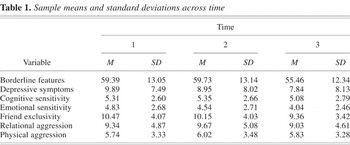
Sample means and standard deviations across time
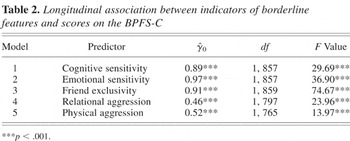
Longitudinal association between indicators of borderline features and scores on the BPFS-C

Unique longitudinal association between indicators of borderline features and scores on the BPFS-C

Stability of borderline personality features across three assessments (Fall, Winter, Spring)
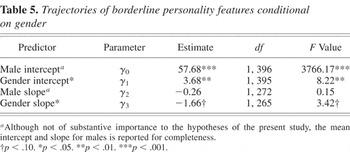
Trajectories of borderline personality features conditional on gender

Specificity of the association between indicators of borderline features and scores on the BPFS-C

Unique longitudinal association between indicators of borderline features and scores on the BPFS-C, controlling for depressive symptoms
 You have
Access
- 342
- Cited by