Introduction
Primary fungal laryngitis as an isolated entity involving only the larynx is rare,Reference Swain, Sahu, Debdta and Basisakh1 and often gets mistaken for other more common laryngeal diseases such as gastroesophageal reflux disease, granulomas or carcinoma.Reference Srinivasagam, Kumarasamy, Manab, Daud, Randhawa and Mohamad2 Endoscopic and radiologic appearance of fungal laryngitis can mimic the appearance of malignancy leading to misdiagnosis or delay in treatment.Reference Ravikumar, Prasanna Kumar, Somu and Sudhir3 The most common symptoms are hoarseness of voice, dysphagia, dysphonia, odynophagia and less commonly stridor and respiratory distress.Reference Thomas, Kew and Mat Baki4 Whilst a fungal infection including that of the larynx is generally a disease of the immunocompromised patient, it is important not to overlook this as a potential diagnosis in the immunocompetent patient, especially those who smoke or use inhaled steroids.Reference Mehanna, Kuo, Chaplin, Taylor and Morton5 Whilst there is evidence of electronic nicotine delivery service (ENDS) inducing epithelial injury and mucosal remodelling,Reference Lungova, Wendt and Thibeault6 and increasing rates of vaping associated pulmonary injuryReference Alavalapadu and Mattamal7 (VAPI) (also known as e-cigarette and vaping product use associated lung injury (EVALI)) there is not a known correlation between ENDS and fungal infections in the upper respiratory tract. A 2019 study showed that ENDS are known to harbour fungal and bacterial microbiomeReference Lee, Allen and Christiani8 but there has been no reported evidence of a direct causative link to fungal laryngitis.Reference St Helen and Eaton9–12
ENDS are deemed to pose a lower risk of health problems than the smoking of tobacco with no direct link to cancer known,Reference St Helen and Eaton9 although as a fairly new substance, it is recognised that their long term effects have yet to be fully recognised.Reference Sala and Gotti10, Reference McNeill, Brose, Calder, Hitchman, Hajek and McRobbie11 As such, they are recommended by the NHS as an effective way to help quit smoking, with patients being twice as likely to quit if they use an ENDS compared to alternative nicotine replacement products such as patches or chewing gum.12
Case report
We present the case of a 66-year-old male referred in by his general practitioner to the ENT clinic under the cancer referral pathway, for a six-week history of dysphonia. On review, he was found to have hoarseness of his voice, with no associated aerodigestive symptoms, neck lumps, stridor, unintentional weight loss nor a history of vocal abuse. His medical background included type 2 diabetes mellitus, hypercholesterolaemia, hypertension and anxiety. His regular medications included atorvastatin, gliclazide, mirtazapine, lisinopril and canaglifozin. He was an ex-smoker, with a 44 pack-year history. He started vaping four years prior to his presentation, using a single refillable vaping coil “arc” device which was used repeatedly over a three-year period.
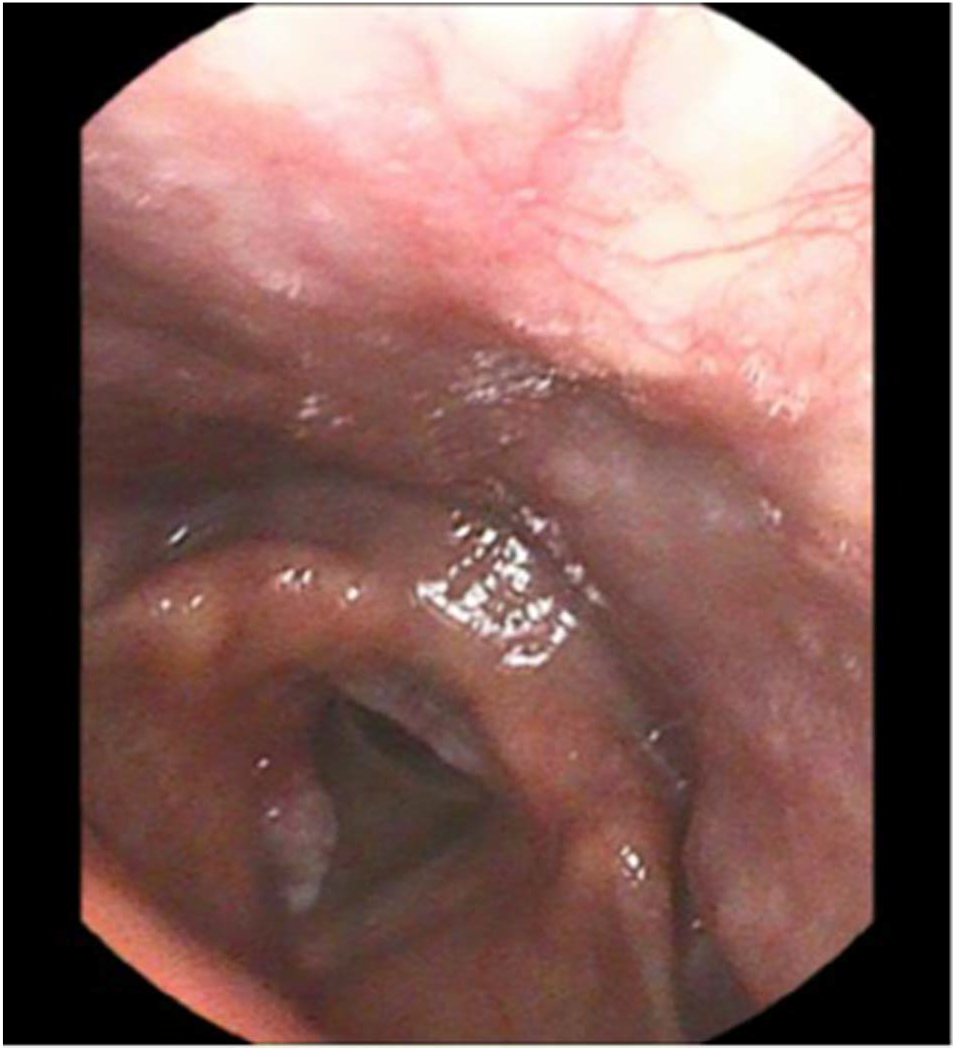
His ENT exam was unremarkable other than having advanced periodontal disease. Flexible nasal endoscopy revealed a thickened ulcerated lesion affecting the anterior two-thirds of the right vocal fold which was clinically suspicious of a vocal fold squamous cell carcinoma (Fig. 1). His vocal folds had normal mobility during examination.
He was subsequently referred for staging scans with an magnetic resonance imaging (MRI) scan of his neck and a computed tomography (CT) scan of his throrax. He was additionally listed for an urgent microlaryngoscopy and biopsy. Due to the high level of suspicion of a laryngeal malignancy, he was referred to the oral and maxillofacial team to have his upper left first incisor extracted due to advanced periodontal disease in preparation for potential radiotherapy.
Figure 1.

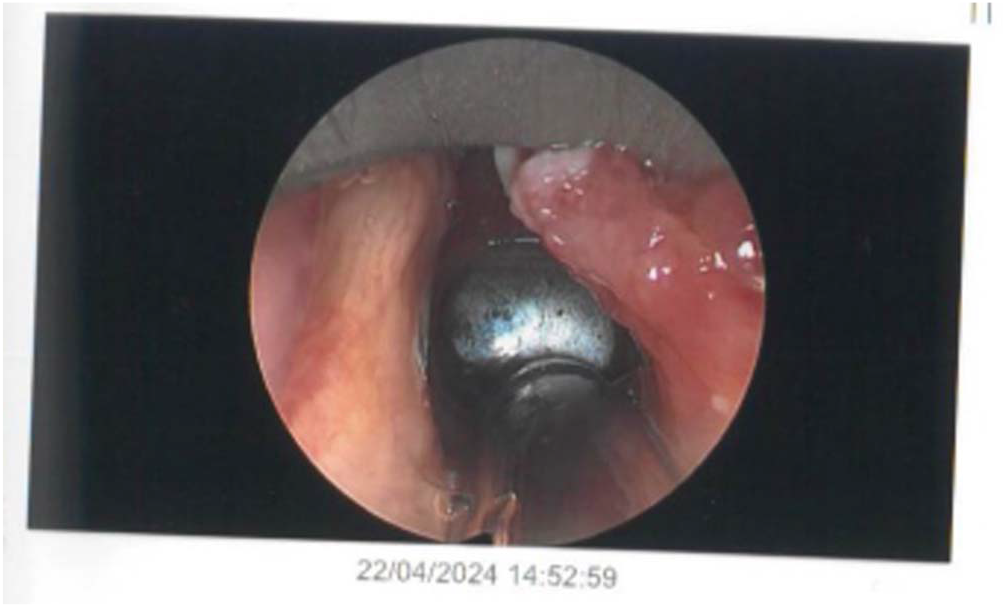
During his microlaryngoscopy and biopsy, he was found to have an exophytic lesion spanning the entire length of the right vocal fold (Fig. 2). which did not extend to the subglottis. Multiple biopsies were taken, and the histology described epithelial atypia with dense inflammation indefinite for dysplasia, with fungal infection being a likely diagnosis. The histology results along with MRI and CT imaging were discussed at the head and neck multi-disciplinary team (MDT) meeting, and the consensus opinion was that of a fungal infection instead of a malignancy. Therefore, the MDT recommendation was to manage this gentleman with oral antifungals, cease vaping and repeat clinical examination in six weeks.
Figure 2.

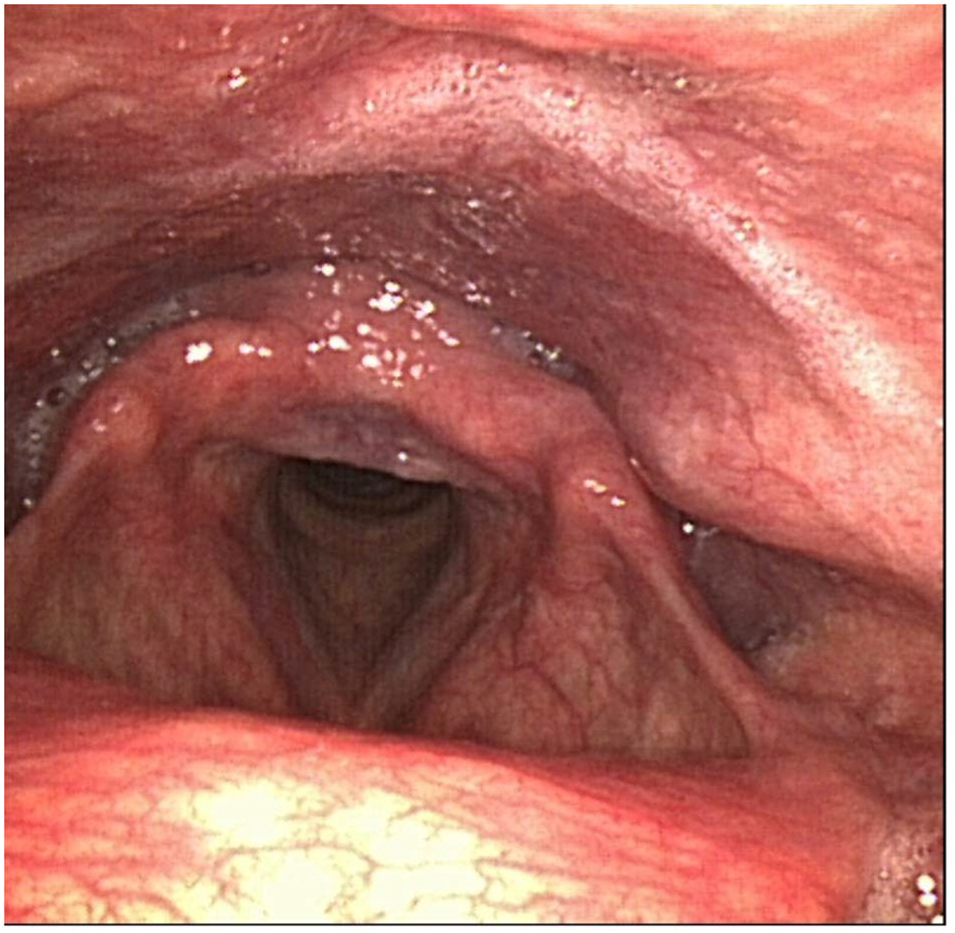
The patient was commenced on a week of oral fluconazole 50 mg daily. The MDT decision was to treat the patient with a lower than recommended dose (100 mg once daily as per the British National Formulary) due to the risk of drug interactions and potential side effects, particularly between fluconazole and atorvastatin which causes an increased risk of hepatotoxicity and rhabdomyolysis.Reference Hsiao, Chang, Hsieh, Kao, Yeh and Wu13 Six weeks later, his repeat flexible nasal endoscopy showed complete resolution of the lesion (Fig. 3). His symptoms had also improved with a resolution of his hoarse voice. He was subsequently discharged from clinic, and since then has stopped vaping.
Figure 3.

Discussion
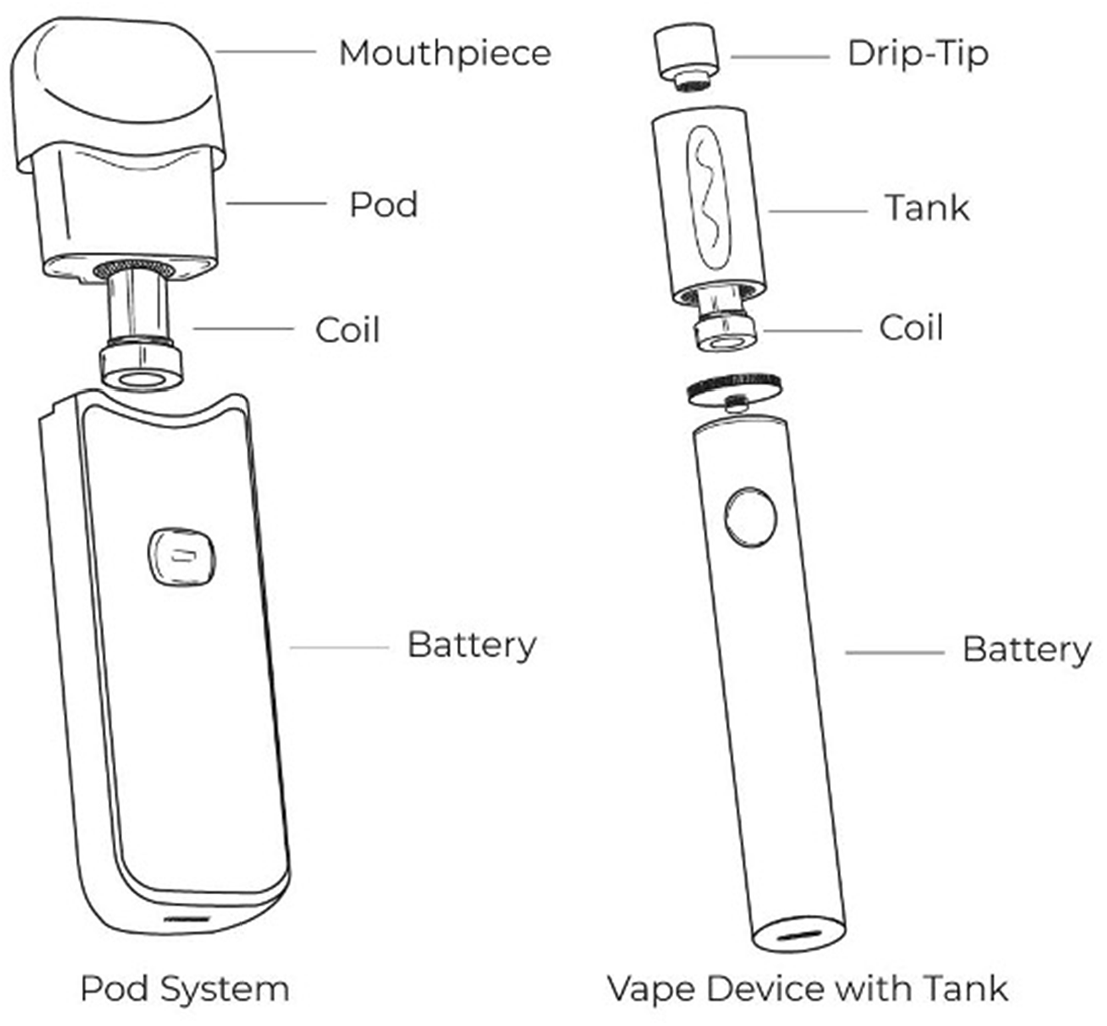
Electronic cigarettes first appeared in China in 2003 and by 2007 had made their way to the Western market.Reference Foulds, Veldheer and Berg14 The term “electronic nicotine delivery system” was first used by the World Health Organisation in 2009 and describes a battery-powered device that delivers aerosolised substances including nicotine and various flavouring agents from a solution (or “e-juice”) to a vapour form for inhalation, mimicking the smoking of traditional cigarettes.Reference Al-Delaimy, Myers, Leas, Strong and Hofstetter15 The battery powered devices heats a coil, which then heats up the “e-juice” which the user then inhales. The vapourised liquid then passes through the larynx into the lungs. As there is no combustion or smoke, users do not expose themselves to the other harmful components which include carbon monoxide and tar that traditional cigarettes release when tobacco is burnt.Reference Benowitz16, 17
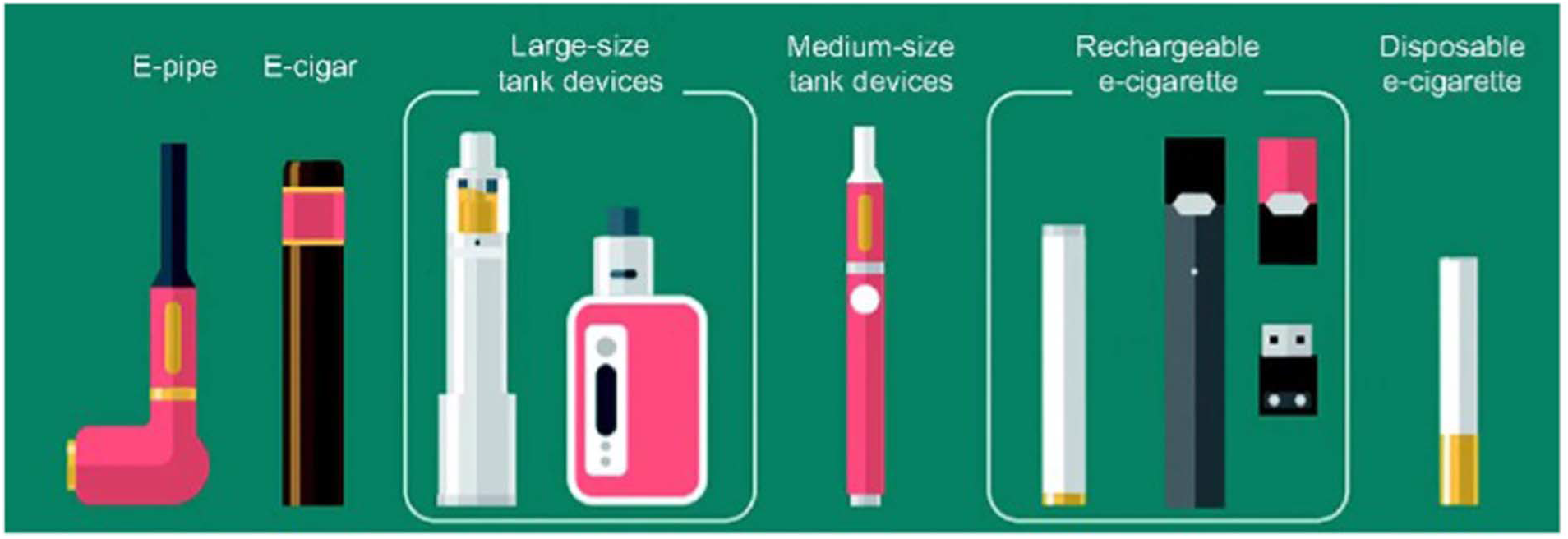
“E-cigarettes” have the appearance of a traditional cigarette, and there is a large selection of alternative devices such as bars, pens, mods (large tank devices) and pebbles that all electronically vaporise nicotine (Fig. 4). They have a battery component and pod system, which includes the coil that heats the e-liquid. (Fig. 5). They are broadly categorised into disposable vapes (lasting 1–2 days for the average user), pre-filled pod kits (where the user retains the battery but either purchases a new pre-filled pod or replaces an expired refillable pod as the coils tend to last around two weeks) or more expensive customisable devices (mods) with a completely replaceable coil and pod system.
Figure 4.

Figure 5.

Disposable vapes deliver a set concentration of preloaded aerosol and nicotine, with customisable devices having the ability to alter the quantity of aerosol and nicotine delivered. E-juice contents also typically consists of a solvent such as propylene glycol (PG) and vegetable glycerine (VG), along with nicotine salt, a cooling agent and may contain flavourings and sweeteners. PG produces an aerosol which provides more flavour and “throat hit” like a traditional cigarette, whereas VG gives less throat hit but more vapour production, producing the large clouds of smoke seen from certain users.
We propose that the patient’s vaping device was harbouring a fungal colony, and repeated use over the three-year period caused the fungal infection on the patient’s larynx. Fungi as well as bacteria are known to colonise such devices,Reference Lee, Allen and Christiani8 and whilst smoking is known to be worse than ENDS for promoting fungal and bacterial growth, ENDS still has a suppressive effect on protective oral pathogens.Reference Nelson, Cuadra and Palazzolo18 Due to the patient’s chronic use of a suspected colonised ENDS over a long time, in combination with his increased susceptibility to fungal infections as a diabetic, we propose this as the likely cause of his laryngeal candidiasis.
Fungal laryngitis has been known to mimic laryngeal carcinomaReference Thomas, Kew and Mat Baki4 due to its similar clinical appearances, and his initial nasal endoscopy images demonstrate why the diagnosis was suspected, especially with a 44 pack-year smoking history.
As clinicians, we are seeing an increasing cohort of patients using ENDS.Reference McNeill, Brose, Calder, Hitchman, Hajek and McRobbie11 This includes both long-term smokers trying to quit, but also a younger population of never smokers.Reference St Helen and Eaton9, Reference McNeill, Brose, Calder, Hitchman, Hajek and McRobbie11 Whilst the risks of long-term harm of using ENDS are undoubtedly less than those of smoking,Reference Nutt, Phillips, Balfour, Curran, Dockrell and Foulds19–Reference Niesłony, Niesłony and Mado22 these more novel ways of consuming nicotine will likely lead to as yet undiscovered risks to patients’ health and wellbeing.Reference Hwang, Lee, Mastrolonardo and Frasso23, Reference Sahu, Shah, Malviya, Paliwal, Sagar and Singh24 This particular case highlights the importance of a detailed history of not just tobacco consumption but also the newer more novel ways of nicotine consumption and other habits involving the upper respiratory system. For example, the link between areca nut and oral cancer is now well knownReference Awan and Patil25–Reference Warnakulasuriya and Chen27 but once was not. We hope that this case report serves as a reminder for head and neck health care professionals to continue to think outside of the (voice) box.
• Electronic nicotine delivery devices are known to harbour bacterial colonies
• Their relationship in habouring fungal colonies has not been clearly established
• Their use can lead to fungal infections in the larynx of non-immunocompromised patients, potentially mimicking cancer
Competing interests
The authors declare none.