Introduction
There is an urgent need to improve access to, and utilization of, care for the prevention of mother-to-child transmission (PMTCT) of HIV in Nigeria, as the country has one of the lowest coverage levels of MTCT prevention services, and consequently a high incidence of new paediatric infections. There has been only a 19% reduction in the number of new infections among children in Nigeria since 2009, compared with 50% or over in some other African countries (UNAIDS, 2016; Oladele et al., Reference Oladele, Khamofu, Asala, Saleh, Ralph-Opara and Nwosisi2017). While the PMTCT strategy holds the promise of reducing MTCT, there are tremendous challenges in the actual implementation of the approach in Nigeria, ranging from operational to persistent enrolment and retention bottlenecks (Oladele et al., Reference Oladele, Khamofu, Asala, Saleh, Ralph-Opara and Nwosisi2017). Without achieving success in the prevention of new infections, more women will become infected, and correspondingly, the number of children infected through their mothers will increase. Of the 36.7 million people living with HIV in 2016, 3.1 million were children, with 1.8 million being new infections of which children alone contributed 160,000. More than 90% of the children living with HIV were infected vertically through MTCT (Demissie et al., Reference Demissie, Deribew and Abera2010; FMoH & NASCP (2010); UNAIDS, 2017). In Nigeria, HIV infection among children occurs through MTCT during pregnancy (10%), labour and delivery (60–70%) or during breastfeeding (20–30%) (Nasidi & Harry, Reference Nasidi and Harry2006; NACA, 2014).
HIV counselling and testing offer a viable avenue for reducing MTCT. The national guidelines for PMTCT in Nigeria recommend counselling and screening at the prenatal stage, antenatal stage and during labour. Prenatal testing involves serologic screening during antenatal visits, preceded by pre-test counselling. After screening, post-test counselling is also recommended. Also, during labour, rescreening of women who tested negative during ANC is recommended (FMoH, 2010). Re-testing during labour is important, even among women who tested in the later stage of pregnancy. For women whose HIV status is unknown, testing services also need to be offered (FMoH, 2010). During antenatal visits, HIV testing interventions for women are effective to reduce transmission from mother-to-child as a cascade of action can be initiated to prevent the child from infection (Gumede-Moyo et al., Reference Gumede-Moyo, Filteau, Munthali, Todd and Musonda2017). HIV testing among women and the collection of results during antenatal care is a first important step towards MTCT prevention. In the case where a woman tests positive for HIV, the guidelines recommend the use of antiretroviral drugs. After birth, the baby is also expected to be started on ARV and safe breastfeeding for the appropriate period. In the absence of the recommended interventions for the prevention of MTCT, the risk of vertical transmission of HIV is between 30% and 45% (FMoH & NASCP, 2010).
Although the guidelines stipulate routine antenatal HIV testing in Nigeria as one of the measures for PMTCT of HIV, uptake and retention by users of this service has been lower than in many African countries, especially as users have the option to ‘opt-out’ of testing (Ogbo et al., Reference Ogbo, Mogaji, Ogeleka, Agho, Idoko, Tule and Page2017). In some cases, especially in facilities with scarce resources to handle HIV testing services, women are not offered HIV counselling and testing services (Ekanem & Gbadegesin, Reference Ekanem and Gbadegesin2004), notwithstanding the knowledge that antenatal testing is critical for identifying mothers in need of PMTCT.
Despite the importance of HIV counselling and testing as a critical first step in PMTCT, the factors that influence the non-acceptance of HIV testing in the opt-out policy are not fully understood. The experiences of PMTCT programmes in Nigeria, and indeed in other African nations, demonstrate that key indicators of success are the proportion of women who accept testing, receive their test results and subsequently accept the ARV prophylaxis if they are HIV positive (FMoH, 2013). The majority of pregnant women in Nigeria do not know their HIV status (Ojieabu et al., Reference Ojieabu, Femi-Oyewo and Eze2011; Deji et al., Reference Deji, Odu and Olasode2016) and therefore stand a higher risk of transmitting the infection to their children on occasions where they are seropositive. Achieving a significant reduction in MTCT of HIV requires the identification of the underlying factors limiting HIV testing and the design of a focused strategy towards PMTCT. This study aimed to assess these determinants of prenatal HIV testing among women receiving ANC in Nigeria.
Methods
Study setting
Nigeria is divided into six geopolitical zones, mirroring the North–South divide, for political convenience: North Central, North East, North West, South East, South-South and South West. This replaced the old regional system, which was not entirely based on geographic location, but rather on states with similar ethnic groups and common political histories. Thus, the three largest ethnic groups in Nigeria are the Hausa/Fulani (North) and the Yoruba and Igbo (South). While there are many religious groupings in Nigeria, the main point of division in the country is religion, which Islam and Christianity typify. While Islam is predominant in the geopolitical zones in the North, Christianity dominates in the South. With regards to urban–rural differences, according to the 2014 United Nations report, the percentage of the rural population in Nigeria is 50.4%. The Nigerian DHS provides a more detailed report on the composition and characteristics of Nigeria (NPC & ICF International, 2014).
Nigeria has a heterogeneous HIV situation with significant geographic and cultural variation in HIV prevalence and trends of the epidemic from states to zonal level. In a sentinel survey in 2014, the state prevalence of HIV among pregnant women ranged from 0.5% in Zamfara (North West) to 15.4% in Benue (North Central). By zones, the prevalence ranged from 1.9% in the North East to 5.8% in the North Central. Meanwhile, the prevalence was higher in urban (3.2%) than in rural locations (1.8%) (FMoH, 2015). It is pertinent to note that with Nigeria being the most populous country in Africa, these percentages represent large numbers of people. Antenatal HIV testing services prevalence is markedly different in the different geopolitical zones of the country. Available data show that only one state (Ebonyi) achieved greater than 80% coverage for HIV counselling and testing for PMTCT. Three states achieved greater than 70%, while four others achieved greater than 50% coverage. Overall, only 40% of pregnant women in 2015 had an HIV test and received the results during pregnancy, labour and delivery and in the postpartum period (NACA, 2016).
There is a disparity in access to HIV and PMTCT services in the country, particularly concerning demographic differences such as in urban–rural services, acceptability of health services due to cultural and social restrictions/beliefs and the unequal distribution of resources in the country. For instance, while there is a concentration of HIV care services in urban areas (urban areas experience a higher burden of HIV as a result of high-risk behaviour being more prevalent), rural areas face the challenges of infrastructure shortages and substandard health care delivery.
Vulnerability to HIV is also high due to traditional socio-cultural norms and practices (for example, wives’ inheritance, male dominance, especially where men must give permission for women to seek health care) in many Nigerian communities, despite the growing influence of globalization (NACA, 2017). Apparent tension exists between traditional values and modernization in many areas, with regards to health beliefs and health-seeking behaviour at the community and household levels. On the one hand, practices such as widowhood rites, female genital mutilation (FGM), denial of access of women to inheritance, encouragement of multiple sexual partners for males and marriage of girl-children to much older men in some communities, may increase vulnerability to HIV. On the other hand, several cultural norms and practices in Nigeria have positive values and implications for HIV prevention, treatment and care, such as the strong kinship and family network system, the emphasis on chastity and avoidance of premarital sex and male circumcision (NACA, 2017).
Mother-to-child transmission contributes significantly to new HIV infections with an annual birth of over 69,300 babies with HIV in Nigeria (Abah, Reference Abah2014) from over 5 million births annually, making Nigeria the country with the highest number of babies born with HIV. The achievement of PMTCT has not been sufficient, falling short of its targets (Okoli & Lansdown, Reference Okoli and Lansdown2014).
Data source
The study used Nigerian Demographic and Health Survey (NDHS) data for 2013. The DHS collects nationally representative data on health and demographic characteristics. The NDHS employed multilevel cluster sampling, selecting enumeration areas (EAs) from each locality in each state of the country. The survey used the EAs prepared for the 2006 National Population Census of Nigeria as the sampling frame. Detailed information on the sampling strategy for the DHS is available in the Nigerian Demographic and Health Survey 2013 (NNPC & ICF International, 2014). The 2013 survey had a representative sample of 40,680 households, but this study used a total of 13,352 women aged 15–49 years who had made at least one antenatal care (ANC) visit.
Definition of study variables
The individual factors in this study were assessed based on the literature account of the predictors of HIV testing, which included HIV knowledge, access to high-quality medical care (such as quality of interactions with health care providers), HIV-related stigma, health status, HIV-risk behaviour and socioeconomic characteristics (Weiser et al., Reference Weiser, Heisler, Leiter, Korte, Tlou and Demonner2006). Information on antenatal HIV testing among women was investigated, with regards to whether women took the test at any point during ANC and before delivery. The study also examined whether the women received the results of their screening. The independent variables included are given below.
Socio-demographic characteristics
These included age (5-year intervals for 15–49 years), marital status (never married, married/in union, separated/divorced/widowed); geopolitical zone (North Central, North East, North West, South East, South South and South West); place of residence (rural, urban), education (no formal education, primary, secondary, tertiary), currently working (yes, no) and religion (Christian, Islam, other).
Health care access variables
These included place of delivery (home or traditional birth attendant’s (TBA) home, private or government health facility), ANC from a skilled professional (presence of skilled birth attendant, i.e. nurse/midwife or doctor, or unskilled attendant, i.e. TBA or community extension health worker) and number of ANC visits.
Knowledge of HIV and MTCT variables
Concerning knowledge about MTCT, responses were that they knew someone who has/had HIV, and heard about the transmission of HIV to the baby during pregnancy, during delivery and during breastfeeding. Another question was whether respondents knew about drugs to prevent MTCT.
Health status and risk behaviour variables
Questions on health status and risk behaviour of the women included whether the woman had ever terminated a pregnancy and the number of children who had died. Other questions asked were whether the offer of an HIV test during ANC and at labour had been made or not, and whether counselling on MTCT had been provided.
Data analysis
The program IBM SPSS 20 was used to perform all analyses. Descriptive statistics were used to present the results. Multivariate logistic regression, using the backward stepwise method, was employed to model for factors that remained as predictors of the outcome of interest. Only variables that were statistically significant in the bivariate analysis (p<0.051) qualified for retention in the final model. Sampling weights were applied to account for the errors in the sampling strategy in the DHS sampling process.
Results
The mean age of the respondents was 29.7±7.1 years, with the highest proportion (26.8%) aged 25–29 years and nearly all being married (94%). More women were sampled from the North West region (24.2%), followed by the South West (20.9%), North Central (15.8%), North East (15.0%) and South East and South South (12.2% and 11.7%, respectively). Women’s levels of education were: higher education (9%), secondary (37.2%), primary (23%) and no education (30.4%). A higher proportion of women in the survey were in the richest wealth quintile (25.9%), next to richer (24.4%) and poorest (10.5%). About 80% of the women had made at least four ANC visits. The majority of the women (77.6%) knew a place to get HIV testing. The proportion of mothers who did not know about transmission of HIV from mother to child during pregnancy was 35.6%, with another 21% not knowing that HIV can be transmitted from a mother to child through breastfeeding.
The proportion of pregnant women who tested for HIV as part of an ANC visit was 52.5%, of which 85.1% received their test results. Of the 6% who got tested for HIV during labour, 60.8% received their test results.
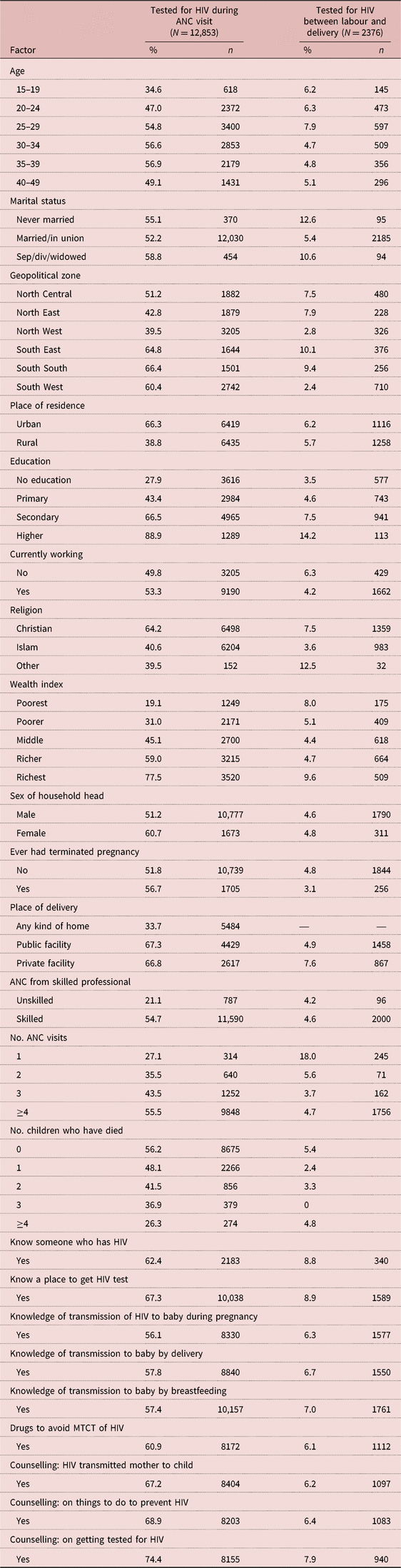
Table 1 presents information on the women who underwent HIV testing during ANC and just before delivery by selected characteristics. More mothers aged 25–29 years (54.8%), 30–34 years (56.6%) and 35–39 years (56.9%) tested for HIV during ANC visits than the younger women. HIV testing between labour and delivery was lower among younger women aged from 15 to about 29 years compared with older women. A small proportion of women who were in marital unions were tested for HIV during an ANC visit and even before delivery, compared with women who were never married or separated. The results also showed that fewer women in the northern region of the country had undergone HIV testing during ANC visits (North Central, 51.2%; North East, 42.8% and North West, 39.5%) compared with regions in the South (South East, 64.8%; South South, 66.4% and South West, 40.4%). HIV testing prior to delivery was generally low, but higher mainly in the South East (10.1%) and South South (9.4%) geopolitical zones. HIV testing during ANC among rural dwellers was markedly lower compared with women in urban areas (38.8% vs 66.3%). Pregnant women who were offered HIV testing, during ANC as well as at labour, tested for HIV.
Proportion of women who had HIV test during ANC visit or labour, NDHS 2013

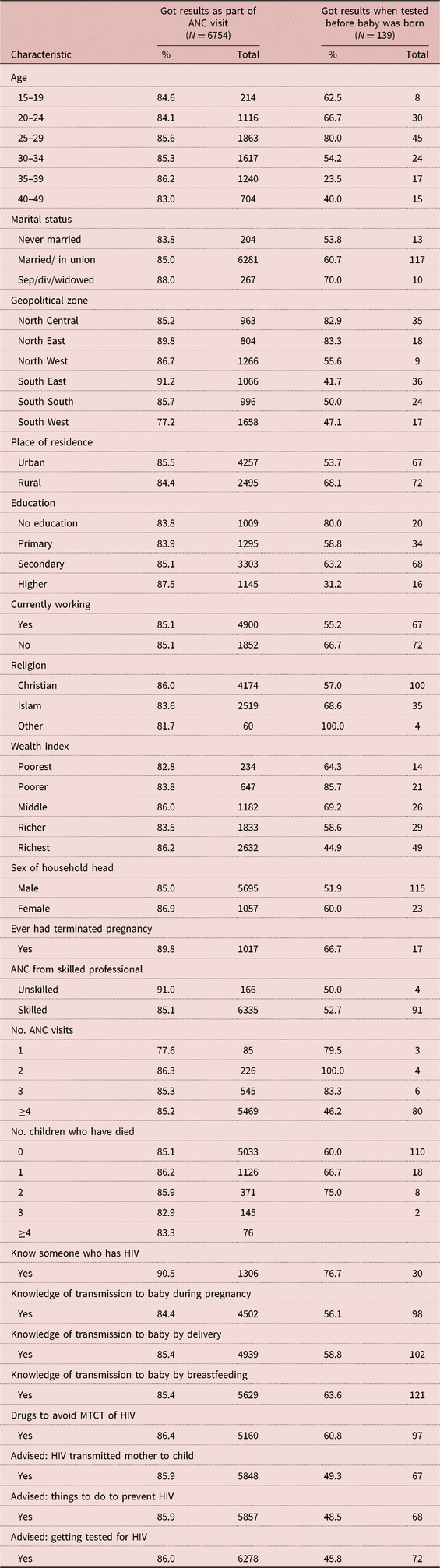
Table 2 presents the results for women who obtained/received their HIV test results during ANC visits and labour. Age was not a significant determinant of obtaining HIV test results during ANC; however, younger women aged 15–29 years were more likely to receive their pre-delivery test results than older women. The highest proportion receiving HIV test results during the ANC test was in the South East (91.2%) zone. Educational level determined the rate of receiving HIV test results, as women with more education were more likely to receive their test results than less-educated women during ANC HIV testing.
Distribution of women who obtained their HIV test results during ANC visits and pre-parturition, NDHS 2013

Results of multivariate analysis
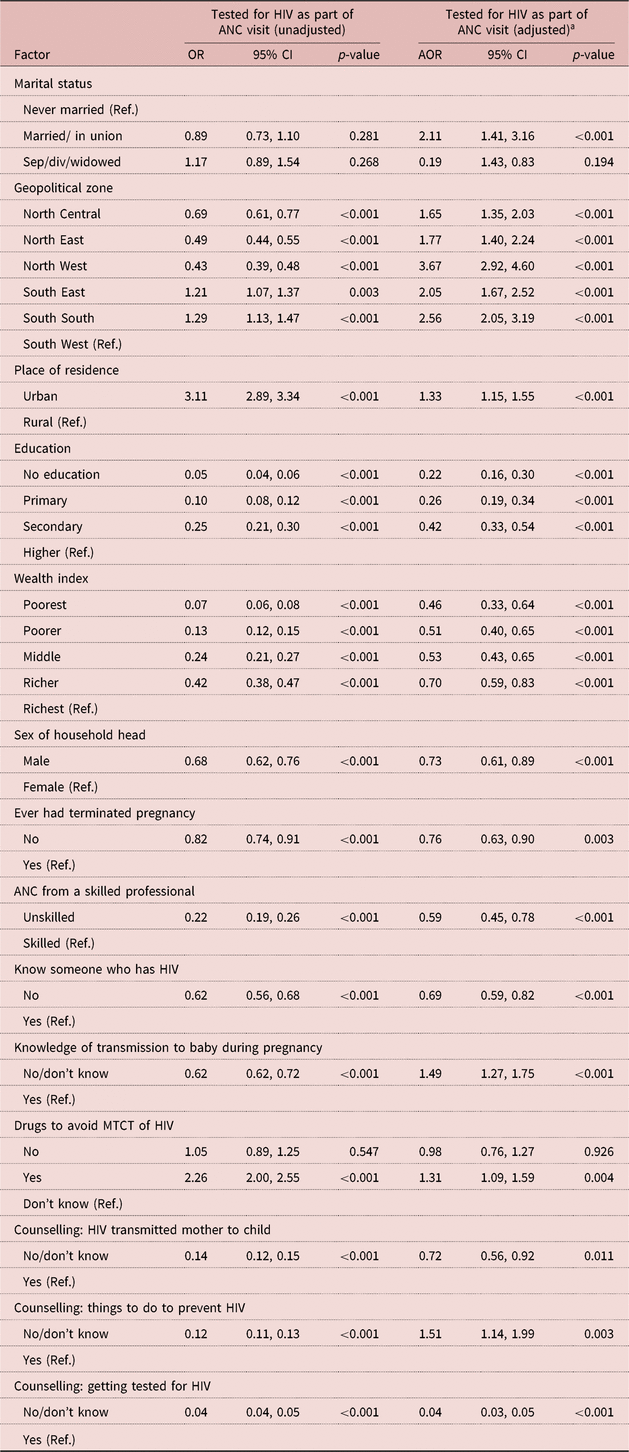
The predictors of HIV testing at the antenatal stage and during labour were modelled to explore the unadjusted and adjusted odds ratios of the predictor variables. Table 3 presents the odds ratios (ORs) and adjusted odds ratios (AORs) of the explanatory variables with the outcome: testing for HIV at ANC. Women who were married had lower odds of testing for HIV at ANC than the never married, in the bivariate model. However, this was not significant. With the inclusion of other independent variables in the model, the results showed a significantly higher likelihood of HIV testing during ANC among married women (AOR: 2.64; 95% CI: 1.61, 4.32) compared with women who were never married. Urban women were more likely to test for HIV during ANC than rural women, even after adjusting for other explanatory variables. There was a 33% excess probability (AOR: 1.33; 95% CI: 1.15, 1.55) for urban dwellers to test for HIV during ANC than their peers in rural areas. For education, in both the binary and multivariate models, as the level of education reduced, the likelihood of HIV testing during ANC also significantly decreased linearly. Women who had never had a terminated pregnancy were less likely to undergo HIV testing during the antenatal stage compared with women who had a prior pregnancy termination (AOR: 0.76; 95% CI: 0.63, 0.90). Women who did not have a skilled attendant during ANC showed lower odds of testing during ANC compared with those who were attended by a skilled professional. Women who did not have knowledge about MTCT during pregnancy were more likely to accept HIV testing during ANC (see details in Table 3).
Unadjusted and adjusted odd ratio (OR)estimates for HIV testing during ANC visits, NDHS 2013

All model factors were included in the final model but only the significant factors are presented in the table. Those not presented in the table were: Age, Sex of household head, Place of delivery, Number of children who have died, Offered HIV test during ANC/labour, Know a place to get HIV test, Knowledge of transmission to baby by delivery and Knowledge of transmission to baby by breastfeeding.
a Model χ 2 = 6309.311, p < 0.001, Negelkerke’s R 2 = 0.640.
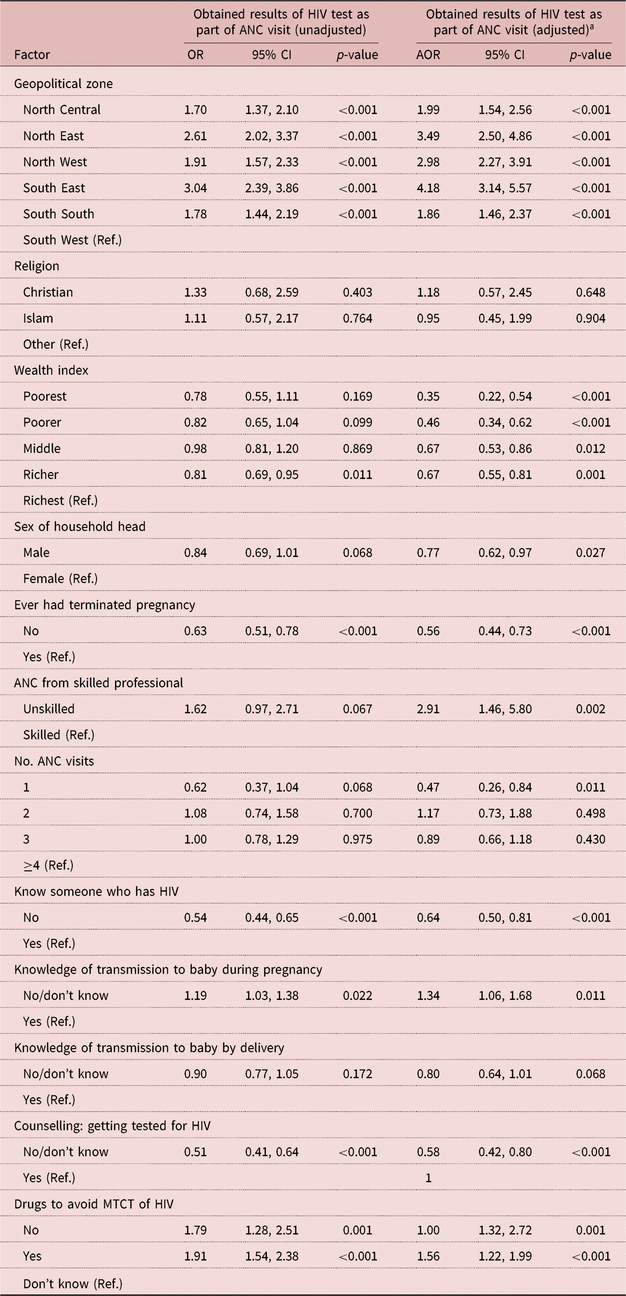
The unadjusted OR and adjusted OR for receiving HIV test results during the ANC visit are shown in Table 4. The geopolitical zone where the pregnant women lived remained a strong predictor of receiving HIV test results during an ANC visit as all other zones relative to the South West had between 2 and 4 times greater likelihood of receiving test results. Concerning the wealth index, there were significantly lower odds of women in the poor wealth category receiving their test results, both during ANC visits and before delivery, in the adjusted model. However, among women who did not know about MTCT during pregnancy, there was a 34% excess possibility of receiving HIV test results during the ANC visit against women who knew. On the other hand, women with no knowledge about MTCT during delivery had lower odds of receiving their test results than those who did have knowledge of MTCT.
Unadjusted and adjusted odds ratio (OR) estimates for obtaining HIV test result during ANC visit, NDHS 2013

All model factors were included in the final model but only the significant factors are presented in the table. Those not presented in the table were: Age, Marital status, Place of residence, Education, Currently working, Place of delivery, Number of children who have died, Know a place to get HIV test, Knowledge of transmission to baby by breastfeeding, Counselling: HIV transmitted mother to child, Counselling: on things to do to prevent HIV.
a Model χ 2 = 291.440, p < 0.001, Negelkerke ’ s R 2 = 0.090.
Discussion
HIV testing among pregnant women is very important in the strategy to prevent mother-to-child transmission. This study investigated the determinants of HIV testing among women attending antenatal care in Nigeria. The findings showed that although acceptance of HIV testing during antenatal care has improved, it remains low compared with other countries and the standard set to drive MTCT down. The national PMTCT target set for HIV testing among pregnant women is that at least 95% have access to quality HIV testing services by 2021 (NACA, 2017). This study also highlights some of the factors that influence HIV testing among mothers during the critical prenatal period; 89% of women who were offered HIV testing during ANC accepted and were tested.
The findings reveal that the uptake of HIV testing during ANC is unsatisfactory, as about 53% of all women attending antenatal care and offered an HIV test were tested, with 85.1% of all those who tested receiving the results of their tests. From the 2013 NDHS report, the statistic for accepting an HIV test together with receiving the results and post-test counselling during antenatal care equalled only 20% (NPC, 2014). The corollary is that as many as 80% of women accessing ANC are rejecting HIV. This has implications for the drive to universal testing to prevent MTCT. More women have to be encouraged and educated about the importance of testing during ANC. Thus, the role of service providers in offering services to women is critical to increasing the uptake thereof.
Despite the large proportion of women having four or more ANC visits, many did not get tested during any of the visits. There are two reasons that may explain this: 1) women may be declining the offer to get tested during their visits for ANC – on many occasions, women do not want to know their HIV status, and do not think it is necessary to undergo the test or are afraid of what the test results may reveal (Turan et al., Reference Turan, Bukusi, Onono, Holzemer, Miller and Cohen2011; Marrazzo et al., Reference Marrazzo, Ramjee, Richardson, Gomez, Mgodi and Nair2015); 2) health care providers may be failing to offer the test consistently to all women. Non-offer of the test may be as a result of dereliction of duties or non-availability of test apparatus.
The recommended rapid test that is offered during labour for all women, whether or not they had tested previously during ANC, was also poorly taken up as only 6% tested. Testing, particularly during labour, can be challenging, as Bello et al. (Reference Bello, Ogunbode, Adesina, Olayemi, Awonuga and Adewole2011) noted that in many instances patients are referred, or get to labour wards as emergency cases, and therefore do not benefit from the antenatal HIV counselling and testing services offered to registered patients. In such situations, health care providers must ensure that services are offered to all women, as unknown HIV status in mothers poses a serious risk to the child if ARV prophylaxis is not commenced as early as possible for the positive mother (FMoH, 2010). It is also possible that women who arrive experiencing labour pains or as emergency cases may not be aware of whether the provider conducted the test or not, and in responding to survey questions may indicate that they did not test.
The findings show that most women who did not test for HIV during antenatal care were mainly adolescents and young women aged 15–24 years, which is also the reported age with low acceptance of health and HIV services (Okonkwo et al., Reference Okonkwo, Reich, Alabi, Umeike and Nachman2007). Significant differences in the distribution of HIV testing rate exist among the geopolitical zones of Nigeria, with lower rates in the northern zones. The southern zones, particularly South East and South South, had a higher prevalence of testing compared with the northern zones, except the North West (Table 1). This finding is consistent with previous national estimates for testing and receipt of test results (NPC & ICF Macro, 2009). The most likely explanation for this geographic difference in testing is that there are socio-cultural and religious differences between the northern and southern regions in the country. In the northern region, the dominant populations are Muslims, while Christians make up the majority of the population in the southern regions. The culture and religion of a society play a major role in the adoption and non-adoption of health behaviour relating to HIV (Takyi, Reference Takyi2003; Zou et al., Reference Zou, Yamanaka, John, Watt, Ostermann and Thielman2009).
The study results further show that prenatal HIV testing was significantly higher among Christians than Muslims. Al-Mujtaba et al. (Reference Al-Mujtaba, Cornelius, Galadanci, Erekaha, Okundaye, Adeyemi and Sam-Agudu2016) cited the dichotomy between the significantly Muslim north and Christian-dominated south regarding maternal service uptake and maternal–infant outcomes. The authors cited better maternal health-seeking behaviour in the southern region in many instances, including the WHO recommended four ANC visits and childbirths attended by skilled birth attendants. Previous studies have linked these factors to a higher likelihood of accepting HIV testing (Demissie et al., Reference Demissie, Deribew and Abera2010; Gunn et al., Reference Gunn, Asaolu, Center, Gibson, Wightman, Ezeanolue and Ehiri2016). Al-Mujtaba et al. (Reference Al-Mujtaba, Cornelius, Galadanci, Erekaha, Okundaye, Adeyemi and Sam-Agudu2016) further noted some of the faith-related factors that have been described as barriers to health care utilization of maternal services in northern Nigeria, including having to obtain permission from significant others, parents, guardians, cultural or religious leaders, and unwillingness to be attended to by a male health care provider.
As expected, women in urban areas tested for HIV more than those residing in rural region because knowledge of where to undergo the test is commoner among urban than rural dwellers (NPC & ICF Macro, 2009). Lowered risk for non-acceptance of HIV screening during antenatal care was influenced by education and wealth as women who had higher education or who were in the richest wealth category tested more. The inverse effects of low education (Adeneye et al., Reference Adeneye, Brieger, Mafe, Adeneye, Salami and Titiloye2006) and low wealth status (Weiser et al., Reference Weiser, Heisler, Leiter, Korte, Tlou and Demonner2006; Worku & Enquselassie, Reference Worku and Enquselassie2007) on HIV testing were consistent with the findings of other studies. More so, women’s socioeconomic characteristics have been shown to affect health-seeking behaviour and use of quality ANC among women (Joshi et al., Reference Joshi, Torvaldsen, Hodgson and Hayen2014; Ebu & Gross, Reference Ebu and Gross2015). For example, access to health services is more difficult for uneducated and unemployed women, and women with a low income, as they are unable to afford health services.
Facility-level factors such as failing to offer HIV testing to mothers during ANC visits and stock-outs in the facility may also account for the poor level of ANC testing. Antenatal care from an unskilled professional, such as a traditional birth attendant or a community extension health worker, was a predictor for not testing during antenatal care. Gunn et al. (Reference Gunn, Asaolu, Center, Gibson, Wightman, Ezeanolue and Ehiri2016) reported similar findings where dependence on unskilled attendants at childbirth reduced the odds of having an HIV test in comparison to having a skilled attendant. Many health providers have little or no training and experience in meeting the special reproductive health needs of women and are ill-equipped to solve their problems. Provider skill deficiency has contributed to a reduction in the use of maternal health services by women (Fabiani et al., Reference Fabiani, Ayella and Nattibi2003). It was not surprising that women who received their ANC services from unskilled health workers were less likely to receive HIV testing compared with those who received their services from skilled workers, because unskilled workers may not have access to HIV testing resources (Gunn et al., Reference Gunn, Asaolu, Center, Gibson, Wightman, Ezeanolue and Ehiri2016). Women who attended antenatal care only once were significantly less likely to collect their test results. Possible reasons for this are that test results may be delayed, and women may only be able to get the results on their next visit. Also, the provider may not have initiated the opt-out HIV testing for the woman during the first visit.
Knowing someone who has HIV was associated with higher testing rates, both during ANC and labour, and with getting test results. Knowing about a certain disease affecting other people, especially a highly stigmatized disease like HIV and its consequences, can stimulate a greater consciousness and awareness towards the disease. Consciousness and awareness can influence an individual’s response towards the disease. Surprisingly, women who did not know about MTCT during pregnancy were slightly more likely to test for HIV compared with women who knew about MTCT. A possible explanation for this observation can be that women who knew about MTCT were less likely to test because they might have tested previously and thus had information about HIV and their status. Another reason may have been that women who are more aware of HIV/ MTCT may fear the outcome of the test and dread the consequences of carrying the disease – such as stigmatization. Other determining influences for testing for HIV among women, as Fabiani et al. (Reference Fabiani, Ayella and Nattibi2003) observed, arise from women’s perceptions of the reactions of their spouses. According to Fabiani et al. (Reference Fabiani, Ayella and Nattibi2003), women who perceived that their partners had negative reactions to testing were less likely to accept HIV testing than their counterparts who perceived that their partners would support them to test.
Knowledge of the availability of ARVs for MTCT permitted women to accept testing. The lack of awareness of ARVs represents a very important constraint to the prevention of mother-to-child transmission care and would deprive women of the known gains associated with antiretroviral therapy (Ekanem & Gbadegesin, Reference Ekanem and Gbadegesin2004). Lack of awareness is in itself symptomatic of the quality of PMTCT services available and offered to women during ANC. Counselling on the need for testing, and education on the risk of MTCT of HIV and availability of ARVs are, therefore, crucial to women during ANC as women’s decision-making is partly hinged on such services.
The study has one key limitation. Factors such as cultural and behavioural patterns, as well as the quality of the HIV counselling and testing services, that is, in terms of availability and confidentiality, which have defining influences on health choices or adoptions of health services, could not be assessed with the available data. Notwithstanding, this study makes a useful contribution in providing insight into some of the key issues that influence the adoption of PMTCT in Nigeria.
In conclusion, socio-demographic factors such as being married, residing in urban areas, higher educational status and knowledge of the availability of ARVs that prevent mother-to-child-transmission were found to have a positive influence on women’s choice to opt for HIV testing in Nigeria, while not being counselled on getting tested and on the transmission of HIV from mother-to-child had an influence on opting out of HIV testing during antenatal care. Also, attending only a single antenatal care appointment was associated with not receiving HIV test results. The rate of HIV testing from this study, slightly above half, suggests that current interventions in Nigeria must intensify to increase HIV counselling and testing among pregnant women attending ANC, and for the collection of HIV test results. In the light of the findings of this study, there is a need for adequate information sharing and sensitization in the community, especially amongst women and their spouses, to improve their knowledge of HIV/AIDS; this would encourage positive and informed decision-making and uptake of HIV counselling and testing during antenatal care, and also promote PMTCT. Importantly, it is necessary to improve the quality of ANC services for women and to ensure that all women presenting for an ANC test receive their test results. Programmers and health care providers in Nigeria need to be vigilant of the deterrents of provider-initiated opt-out HIV testing so as not to miss imperative issues that account for policy success.
Acknowledgments
The authors would like to thank the National Population Commission in Nigeria and ICF Macro for granting permission and making the NDHS data available for use.
Funding
This research received no grant from any funding agency, commercial entity or not-for-profit organization.
Conflicts of Interest
The authors declare that there are no competing interests to declare for this study.
Ethical Approval
No additional ethical approval was required. However, ICF Macro approved the use the dataset. The National Health Research Ethics Committee in Nigeria granted the initial approval.