Introduction
The rise of large-scale enterprise has been modeled through competition (primarily in the United States) or cooperation (for example, in Germany) among firms.Footnote 1 In practice, firms often exercise both competitive and cooperative strategies. Cooperating with erstwhile competitors may extend market power, increase efficiency, or lead to the exchange of knowledge. The returns to cooperation often depend on the type of industry. For example, cooperation is more attractive in industries where it is important to share infrastructure or information. The business history literature is replete with examples of interfirm activities. In most studies, cooperative behavior is based on a shared social anatomy of the individual participants or through periodic structural ties among the organizations such as cross-ownership, interlocking directorates, or long-term contracts.
We contribute an alternative perspective to the literature by analyzing the everyday interaction among leading firms and their senior managers in the Australian wool trade in the 1920s. This elite group of firms, all wool-selling brokers, dominated large-scale enterprises in Australia and had to temper their competitive spirits with the need to cooperate. For the trade to function effectively—and contemporaries believed Australia operated the most efficient wool auction system in the world—the brokers had to work together to conduct centralized auctions at each of the major port cities.Footnote 2 Through regular, and often lengthy, meetings, these brokers developed cooperative strategies. Utilizing an extensive set of minutes of meetings held in Melbourne, we deploy social network analysis, content analysis, and examples of cooperative decision making to evaluate their practices. Our contribution is to extend the literature on elites and business groups by analyzing a trade that could only function effectively through intense, quotidian interactions among competing firms.
Cooperation Among Business Elites
Business historians have examined the behavior of business elites from various perspectives. Interest has included background and recruitment into the group, shared values and interconnecting structures, the exercise of group power and influence, and the economic consequences of their activity. The literature bifurcates into two main streams. The first describes the social anatomy of members of business elites, such as the role of family background, education, and friendships for building business connections.Footnote 3 The second examines structural elements of the group, such as cross-shareholdings and interlocking directorates, and how these features encouraged information diffusion, the development of new techniques, the pursuit of strategic goals, as well as collusive practices.Footnote 4
Australian research has had little to say about its business elites. Studies of social elites have tended to neglect business connections.Footnote 5 The role of business groups in politics has received occasional attention.Footnote 6 Business history has focused on the rise of large corporations such as Broken Hill Propriety Co. rather than on the connections between companies.Footnote 7 Structural ties such as trade agreements and long-term contracts have been examined in several industries.Footnote 8 Interlocking directorates have also attracted some attention.Footnote 9 Although interfirm relations have been an important feature of the Australian business landscape, the negotiation of competition and cooperation among major enterprises remains largely unrecorded.
Our knowledge of the collective behavior of business elites in Australia is limited to several studies of the Collins House Group (CHG), based in the Melbourne central business district in the first half of the twentieth century.Footnote 10 The CHG is an example of a business group that operated through occasional, rather than daily, interaction. Geared toward mining and metallurgy, firms in the group were motivated to cooperate primarily by self-interested market power, which was exercised through interlocking directorates, cross-shareholdings, and long-term contracts; these were reinforced by personal friendships and family relationships. The group was formed in 1915 and was based in Collins House, which was located at 360-66 Collins Street. Seven leading mining companies, including those of the CHG, were occupants of the building. Thirty men occupied the sixty-three directorate seats on their boards, and interconnections among the firms were particularly designed to secure upstream and downstream markets.Footnote 11 Their strategic connections across the economy were extensive because many directors also held shares in, or sat on the board of, brewing, finance, pastoral agency, textiles, paper, vehicle production, chemicals, glass, rubber, packaging, engineering, or transport companies.
Our study of the woolbrokers varies in important respects from the CHG because of differences in the ways their international trade was conducted. The mining and metallurgy industries drew upon large-scale and periodic or “lumpy” capital investments in relatively homogenous products that could be secured through arms-length supply contracts. The wool trade similarly forged broad connections through interlocking directorates and social and political affiliations. This occurred through both their local and, in several cases, London boards. For example, Sir George Fairbairn served as a local director of the New Zealand Loan and Mercantile Agency (NZLMA) and also sat on the boards of Metropolitan Gas, Dunlop Rubber, Emu Bay Railways, North British, and Mercantile Company, and on a series of pastoral companies. However, it was the regular interactions among senior brokers that was crucial to the wool trade’s success.Footnote 12 Wool is a highly heterogeneous and tactile commodity, and sales in the 1920s required a complex physical auction market. It was the day-to-day interactions among the senior managers—primarily through regular and often lengthy meetings—that developed rules, accepted patterns of behavior, and a close-working business elite. This enabled them to resolve competitive differences and provide a single voice against external threats. While there is an extensive historical literature on international trade networks,Footnote 13 a focus on the study of quotidian interaction is uncommon. For example, Popp cites the “highly quotidian activities” of the Widnes Trade Association that “could meet and forge policies with regard to shared issues,” although these arguments are not developed in detail.Footnote 14 Our approach to studying daily cooperation and behavior integrates business history with the organisational routines literature.Footnote 15
Rise of the Australian Woolbrokers
When Australian wool exports came to prominence in the mid-nineteenth century, most wool was consigned to London, where it was sold at auction and the proceeds remitted to Australia through trading banks.Footnote 16 For various reasons, particularly the growing geographical diversification of buyers, including from Japan and continental Europe, the location of wool auctions gradually shifted from London to the Australian port cities by the end of the nineteenth century. Purchases could be shipped directly to the buying nation rather than via London as an entrepôt.Footnote 17 Many European woolbuyers set up offices in Australia to bid at auctions, and Australian growers could, in turn, observe the sale of their wool. This transition was largely complete by the 1920s.Footnote 18 By then, about 40 percent of the world’s wool was exported from Australia, most of which passed through the auction system. Australian cities became the center of the critical decision-making services for the international wool trade. It brought economic stimuli as Sydney and Melbourne became the largest wool markets in the world. A similar shift to domestic sale occurred in the other major wool-growing nations of New Zealand, South Africa, Argentina, and Uruguay, although the nature of the market varied between auctions and private sales.
As the wool market migrated to Australia, a new business model was needed by the trade. Previously, stock and station agents had, alongside a range of pastoral services, forwarded farmers’ wool to London for sale. Several larger agent firms realized that change was afoot and reinvented themselves as urban wool-selling brokers.Footnote 19 They received wool into store, weighed and organized it into different selling lots, catalogued and displayed it for buyer inspection, and conducted the sale by open-cry auction. Brokers were highly skilled wool handlers whose ability to accurately class and sell auction lots was critical to the success of the trade.
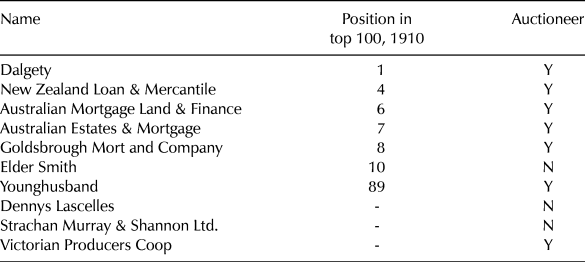
By the 1920s, Melbourne was home to about ten brokers, all of whom were closely located to one another in the “wool precinct” at the western end of the CBD (Table 1).Footnote 20 Several were local or regional Victorian firms (Victorian Producers’ Cooperative, Dennys Lascelles, and Younghusband). The others were national firms that sold at auctions from state branches across most Australian cities (Dalgety; NZLMA; Australian Mercantile, Land & Finance Company [AML&F]; Australian Estates and Mortgage Company [AEM]; Goldsbrough Mort and Company). Two of the selling brokers also operated in New Zealand (Dalgety, NZLMA), and four had offices in London (Dalgety, NZLMA, AML&F, AEM). These were elite companies: six were in the top ten companies in Australia, and Dalgety was the largest firm in Australia in 1910.Footnote 21
Melbourne woolbrokers in the 1920s

Note: List of top one hundred firms from Ville and Merrett, “Big Business in Australia.”
Brokers invested in display rooms, warehouses, and auction rooms. They competed for customers by expanding their network of branches and by lending to farmers in return for their wool business. Incorporation and stock exchange listings helped to fund their expansion. However, they soon understood that substantial overhead costs and the risk of competing auctions were best addressed by cooperating in a joint auction on shared premises in each city. Extending this coordination nationally by agreeing to a roster of auction dates between centers also ensured a good turnout of buyers at each sale. They were also motivated to cooperate by the opportunity to share commercial and technical information at a time of economic instability, and to strengthen their hand with a government that was inclined to extend state intervention in the industry.
The brokers formed into regional woolbroking associations to coordinate auctions, starting in the 1890s. By developing rules, regulations, and dispute resolution procedures, they created routines that enabled growing volumes of wool to pass smoothly and rapidly through the auction system.Footnote 22 In 1891 the Melbourne Woolbrokers Association was formed. In 1914 the Melbourne Wool Exchange was built on King Street, in the vicinity of the brokers’ offices and warehouses, to host auctions and most committee meetings. Further down the supply chain, the Victorian Wool Dumpers Association (est. pre-1923) dealt with the compression of wool prior to shipment. Finally, in 1920 a national body, the National Council of Wool Selling Brokers in Australia, was formed to coordinate national sales at a time of post-World War I oversupply. Many of the benefits provided by the brokers associations, particularly market coordination, information flows, and quality assurance, were common to other commodity trades including cotton, wine, indigo, and coffee.Footnote 23
Sources and Methods
In order to understand how these firms cooperated, we have drawn on a series of complementary methods, namely social network analysis (SNA), content analysis, and an evaluation of the meeting outcomes. SNA allows us to identify the key members of this community and how they interacted with each other. Content analysis intimates the atmosphere of their meetings, while archival sources reveal the outcomes of cooperative behavior. We draw primarily on the mostly complete and voluminous set of meeting minutes for the various Melbourne wool industry associations throughout the 1920s.Footnote 24 These sources reveal the regularity of meetings, who attended, how meetings were conducted, the issues discussed, and the decisions reached.
SNA is a collection of visual and numerical methods used to analyze the pattern of relationships among individuals. In a network, individuals, firms, or any set of related entities are referred to as nodes, with connections between them represented as ties. Thicker ties indicate stronger connections between entities. The concept of networks is widely used in economic and business history to highlight the role of interconnections among individuals, firms, industries, and communities.Footnote 25 However, the vast majority of this literature does not quantitatively visualize or analyze these networks. Exceptions include work on business associations in Liverpool’s eighteenth-century slave trade district;Footnote 26 accounting disclosure in merchant networks;Footnote 27 and interlocking firms in Mexico, Brazil, and Chile.Footnote 28 The use of SNA in business history lags behind its adoption in contemporary business and organizational studies literatures. Historical research faces scarce or piecemeal data that can make it a challenge to reconstruct business connections in a robust way.
For this article, SNA has been used to visualize connections among key members of Melbourne’s wool trade in the 1920s. The strong cooperative impetus of woolbrokers, and the variety of forums in which they came together, means that analyzing this business community as a network is appropriate. The large number of actors, the frequency of meetings, and the overlap among different forums also means that visualizing this network is a useful approach. For large communities such as ours, SNA highlights the community’s broad trends that are often hard to determine from the qualitative detail.Footnote 29 It also complements and directs archival research by pointing to new research questions and potentially fruitful areas of inquiry.Footnote 30 While visualizing ties reduces complex human relationships to a number, it is a valuable tool in concert with qualitative and archival methodologies.Footnote 31
We have built social networks based on attendance at industry meetings between 1920 and 1929. Meetings included the General Committee (GC) and the Trade Committee (TC) of the Melbourne Wool Brokers Association (MWBA), the Melbourne Wool Exchange (MWE), and the Victorian Wool Dumpers Association (VWDA). The National Council of Woolselling Brokers of Australia (NCWSBA) was a nationwide forum, but its head office was in Melbourne, and the Melbourne brokers held separate meetings. To be consistent with our focus on understanding the Melbourne community, we have included the Melbourne meetings of the NCWSBA but not its national executive or annual general meetings. Conferences with other trade groups such as the woolbuyers are included. Our data slightly undercalculates the total number of meetings, as there were occasional temporary or periodic committees.
If two individuals attended the same meeting, it is indicated by a tie between them; if they attended a greater number of the same meetings, it is shown by a thicker tie. Greater “weight” is attached to individuals listed as the chairman or acting chairman, as they likely had greater influence on meetings, and thus had an increased probability of interacting with other attendees. Interaction at one meeting between two regular attendees is given a score of 1. Interaction between one chairperson and one regular attendee at one meeting is given a score of 2. As a robustness test, we analyzed the network without weighting for the chairperson. Although some of the tie strengths change, the key results—identifying the core group of individuals and firms—remains the same. A network has also been constructed for interfirm connections, with stronger ties between firms if they sent a greater number of representatives to the same meetings. We do not have firm affiliation data for a relatively small number of individuals (thirty-five), all of whom were on the outer part of the network and so not central to our analysis. These nodes are included in the networks of individual connections but have been removed from the firm-level networks.
The network has been visualized with NetDraw.Footnote 32 NetDraw’s spring-embedding function, with Gower scaling, has been used to bring order to the myriad of ties, placing those with more shared ties closer together, and those with fewer shared ties further apart. Spring-embedding also repulses nodes near one another to avoid overlaps and hidden nodes. An overall network for 1920 to 1929 has been visualized, showing connections between individuals over this decade. This flattens the temporality of the data, visualizing connections between individuals on the same plane that may have been separated by many years. To combat this, we have taken cross-sections of the network for 1922 and 1926 as robustness tests. Key individuals and firms are stable in the overall network and in each cross-section, indicating that the 1920–1929 network is relatively representative of interactions between woolbrokers in a single year, and vice versa.
UCINET has been used to compute simple network metrics. These describe an actor’s prominence in the group, assuming that better-connected nodes are more important for the diffusion of contacts and ideas. Degree simply indicates the number of connections of each node and is a good representation of the actor’s potential to influence others or to develop new information and contacts. Betweenness measures the proportion of shortest paths to other nodes that pass through the particular actor. If the node has a high betweenness centrality, they were influential because they were the pathway through which ideas traveled. It is thus a good measure of those who were able to form connections, diffuse ideas, and broker contacts. The key alternative to betweenness is Bonacich power. Phillip Bonacich distinguished between centrality and power, arguing that if someone is connected to other well-connected people, they are probably central to the network, but they may not be able to exert much power over them. On the other hand, if an actor’s connections are largely isolates, they are probably not all that central, but they are powerful because other actors are dependent on them for information. Although Bonacich power is argued to be a superior measure of “power” in a network, this article is interested in those who were important for forming connections between individuals and groups. Thus, betweenness is a better conceptual match.Footnote 33
By identifying the central role of particular firms and individuals, the SNA complements our two other forms of analysis. We deployed a qualitative form of content analysis to infer the behavior and atmosphere at meetings. This involved searching meeting minutes for the presence or absence of conciliatory or conflictual language, analyzing procedural rules and expectations of behavior, and evaluating how particularly sensitive matters were addressed within the groups.Footnote 34
Finally, the article investigates the agendas of the meetings and the outcomes subsequently recorded in the minutes. This allows us to search for evidence of cooperative actions among firms and individuals in the wool trade.
The Web of Broking Firms and Their Employees
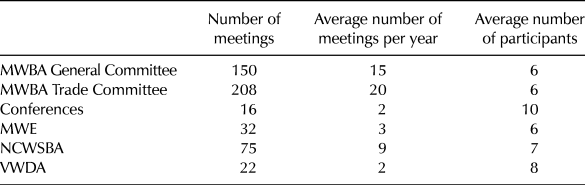
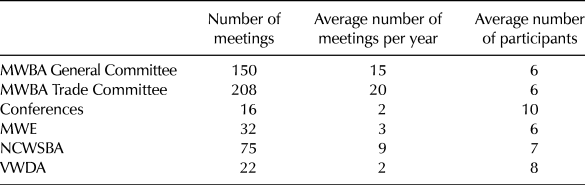
The meetings of Melbourne’s woolbroking associations provided the opportunity for interactions among firms and their key employees. This was crucial for the operation of the interwar wool precinct. From 1920 to 1929, 224 individuals attended meetings, with an average of between 6 and 10 people at each meeting (Table 2). They represented 41 different organizations, including woolbrokers from Melbourne and interstate, woolbuyers, shipping firms, producers’ cooperatives, and government committees.
Meetings and participants, 1920–1929
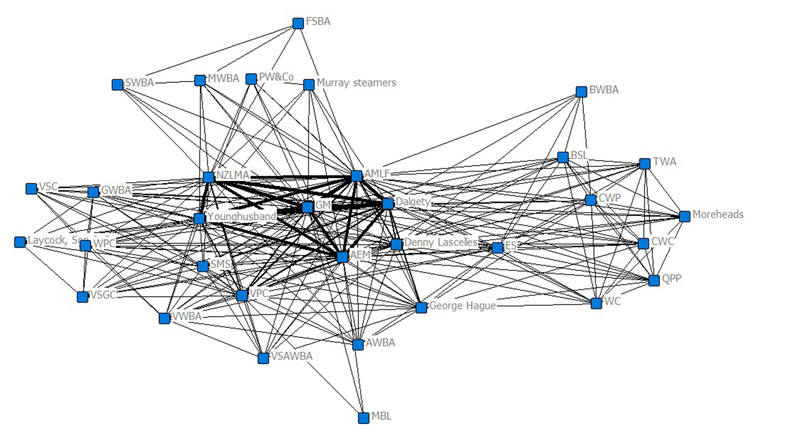
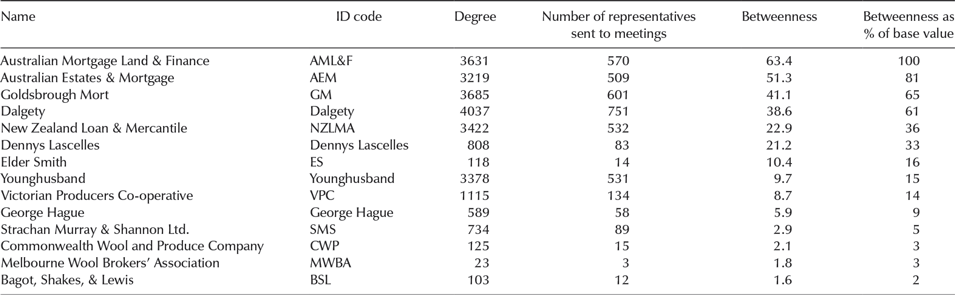
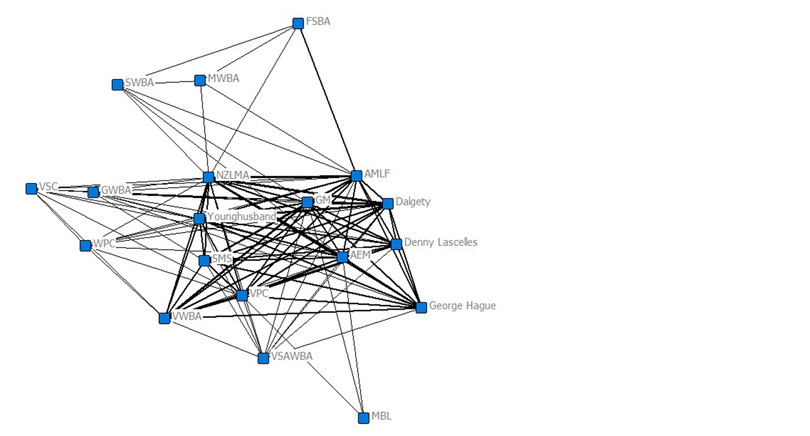
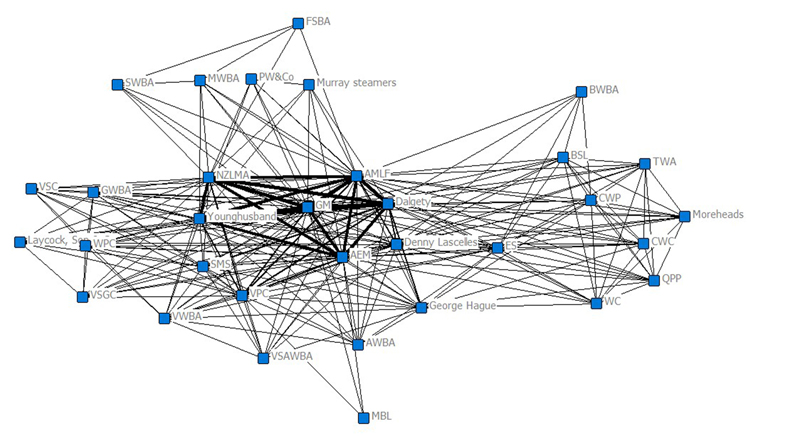
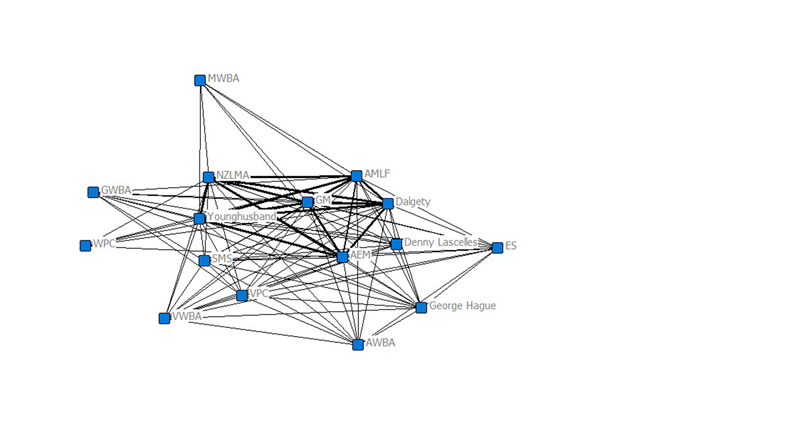
There was a highly connected core of firms that often sent representatives to the same meetings (Figure 1). The visual analysis is confirmed by centrality scores for this network, with key firms scoring highest in terms of betweenness (Table 3). There were very strong ties between AML&F, Dalgety, AEM, NZLMA, and Goldsbrough Mort and Company, as compared with the other organizations. The NZLMA, while sending representatives to many meetings, scored lower in terms of betweenness. This was largely due to less involvement in the NCWSBA meetings, which limited its access to the broader national networks of this organization. It may be significant that the NZLMA’s share of the wool market declined in the 1920s.Footnote 35 Several other firms had important ties, even though they were not quite as central to the network. The company Younghusband was closely connected to the other firms through the GC and TC, but lacked the broader ties to develop high betweenness. Elders was a major national firm but did not auction in Melbourne in the 1920s; Dennys Lascelles was a prominent firm in the nearby smaller center of Geelong; Victorian Producers’ Co-operative (VPC) was part of the Melbourne auctions but, as a cooperative, was not entitled to full membership of the MWBA.
Firm connections, overall network 1920–1929.
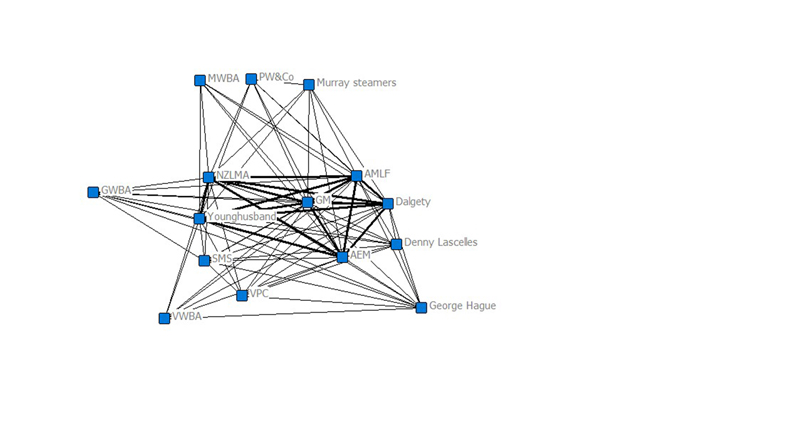
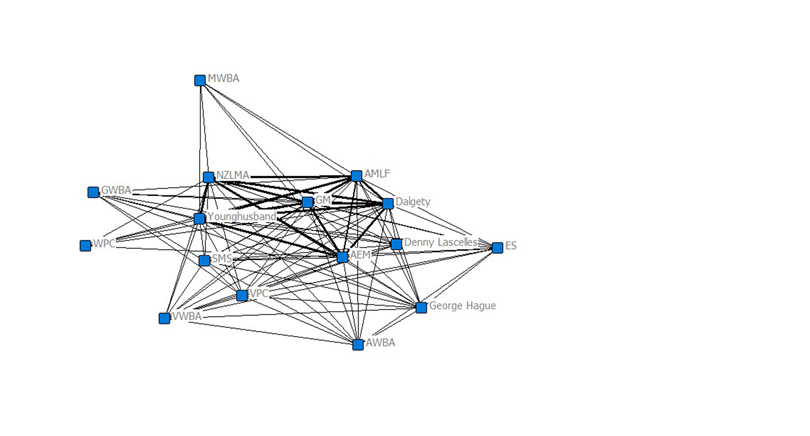
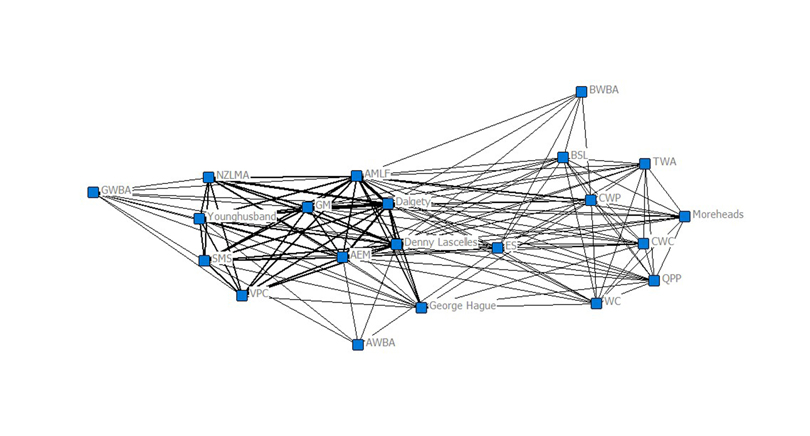
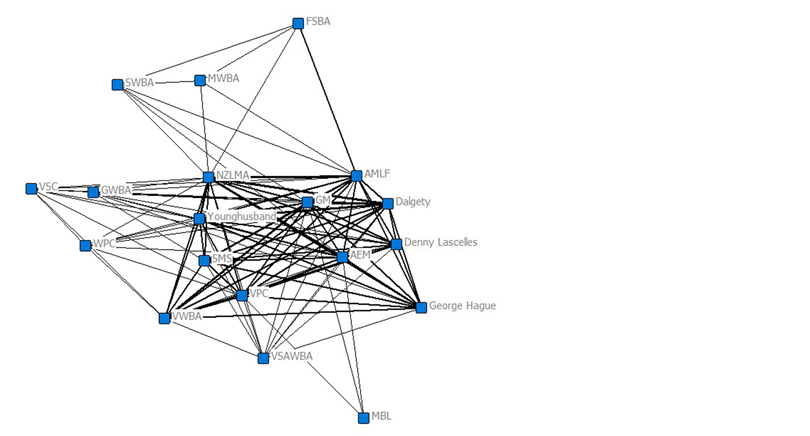
Notes for Figures 1, 4, 6, 7, 10, 11, and 14: Ties between nodes indicate firms sent at least one representative to the same meeting. Thicker ties indicate those firms sent a greater number of representatives to the same meetings.
Source: Authors’ compilation based on MWBA records.
Centrality of firms
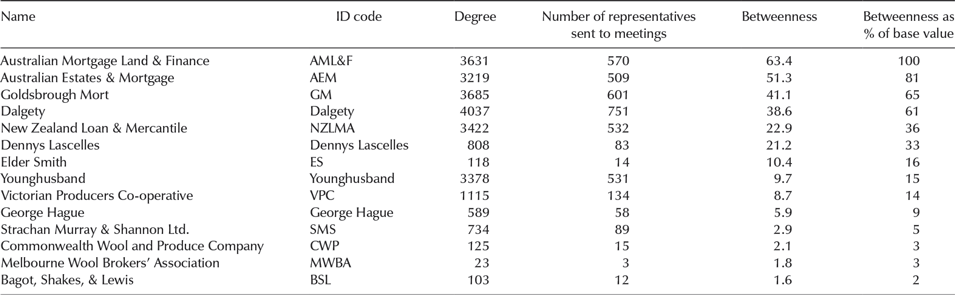
Note: Top twelve firms, ordered by betweenness, which is measured as the proportion of shortest paths to other nodes that pass through the particular actor. As the most prominent firm, AML&F’s betweenness is taken as the base value.
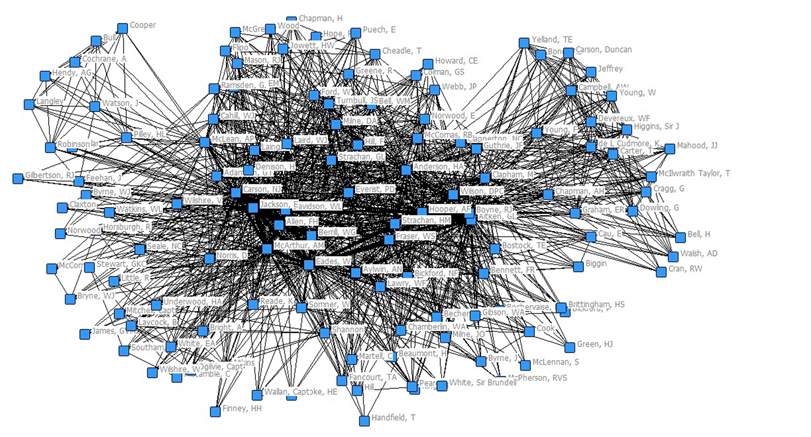
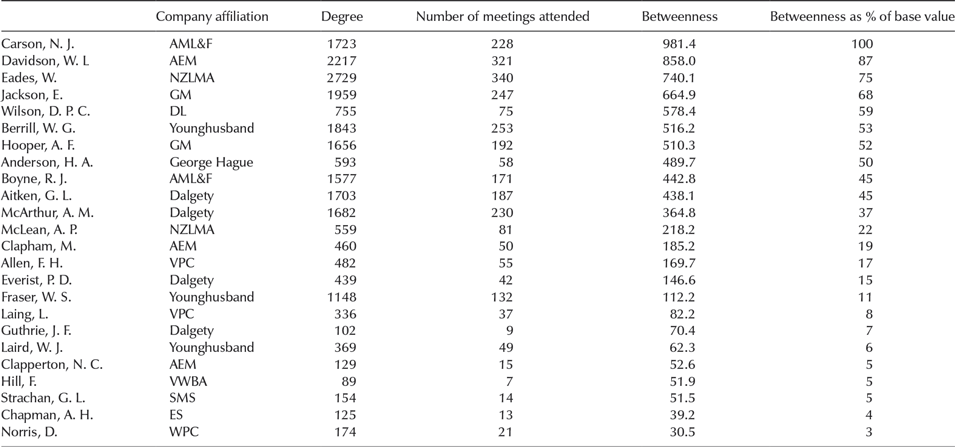
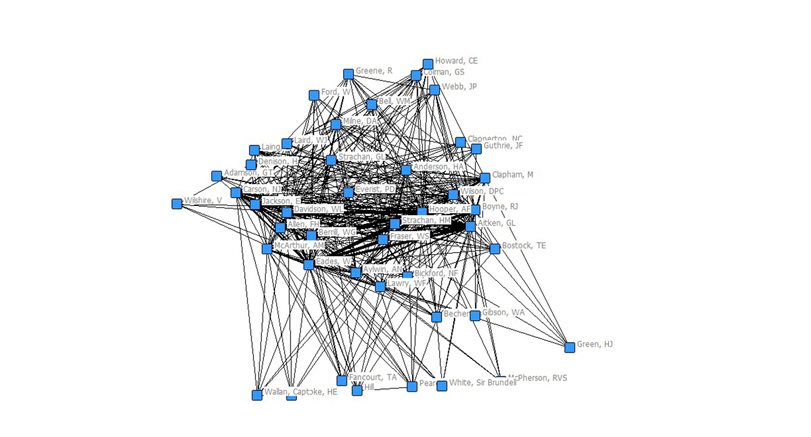
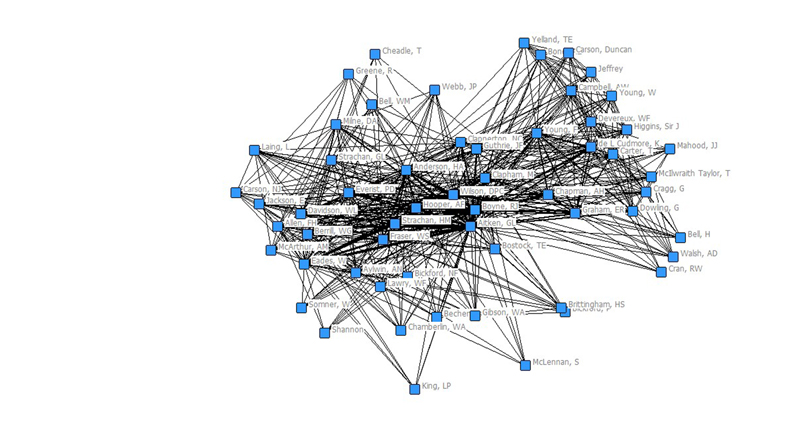
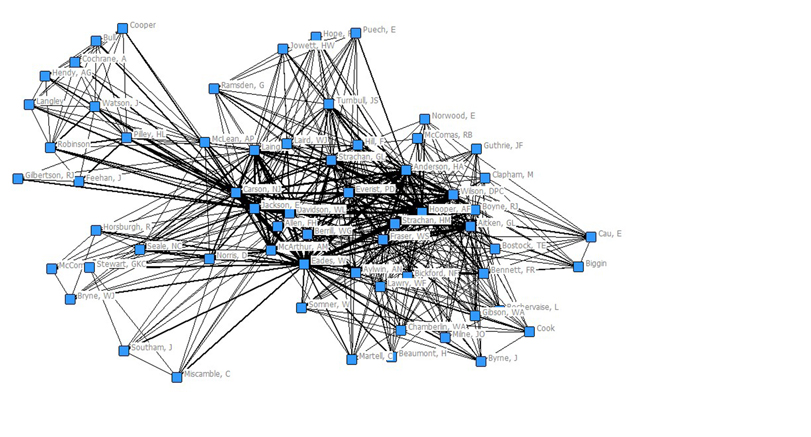
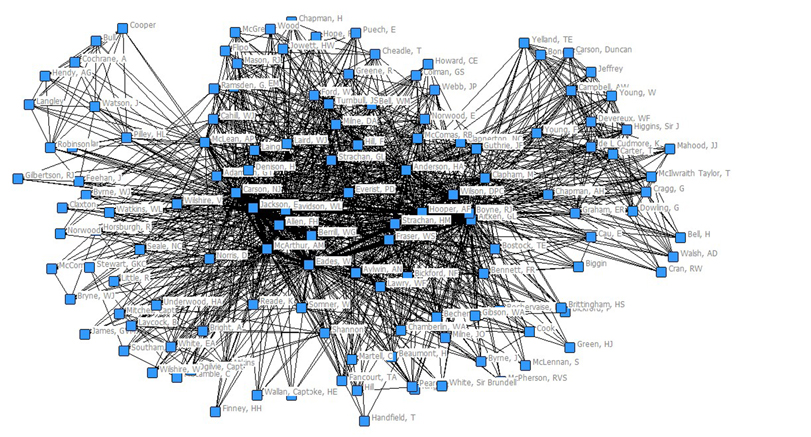
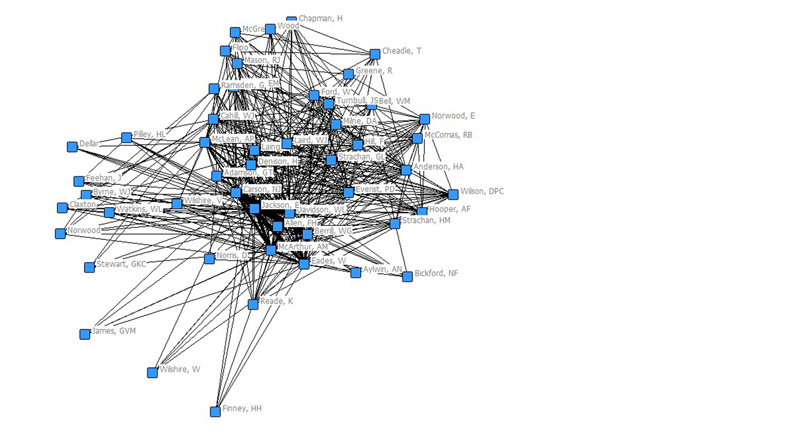
The overall network of individuals is presented in Figure 2. It reveals a group of around twenty-five individual brokers, mostly working for the main companies, who formed the “core” of this network. These individuals are identified based on betweenness in Table 4. The group, led by Sir Norman John Carson and W. L. Davidson, are located in the center of the network map. Prominence came from forming paths between different groups, with Donald Wilson developing strategic connections in various forums. They were also frequent participants in meetings, attending over 200 meetings each across the decade. Analyzed as dyads, they attended many meetings together. William Eades and Davidson attended 227 meetings together between 1920 and 1929, while Eades and Ernest Jackson attended 154 together, and Jackson and Archibald McArthur attended 190 of the same meetings. In 1922 alone, Eades and Davidson attended 33 of the same meetings. That means that on average in that year, Eades and Davidson spent a little over one day every two weeks in each other’s company in formal meetings.
Individual connections, overall network 1920–1929.
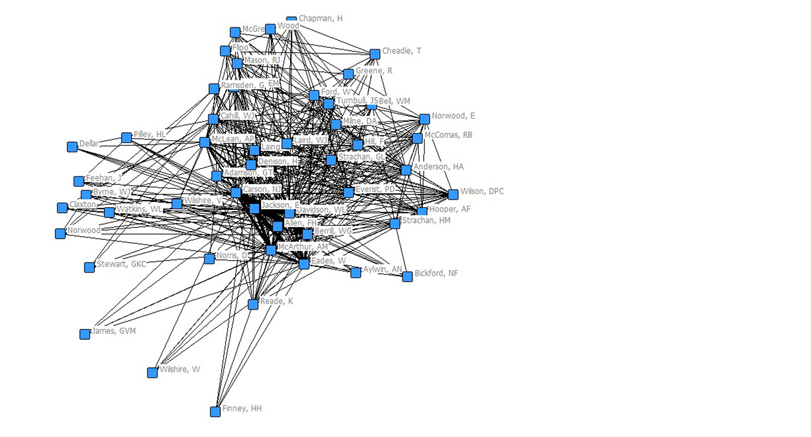
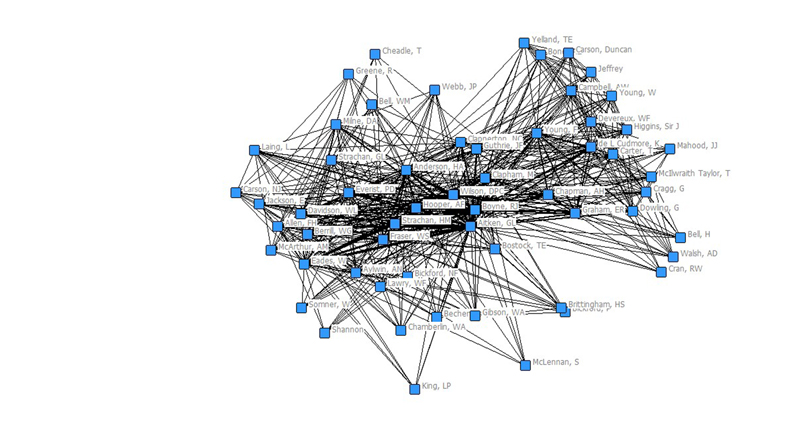
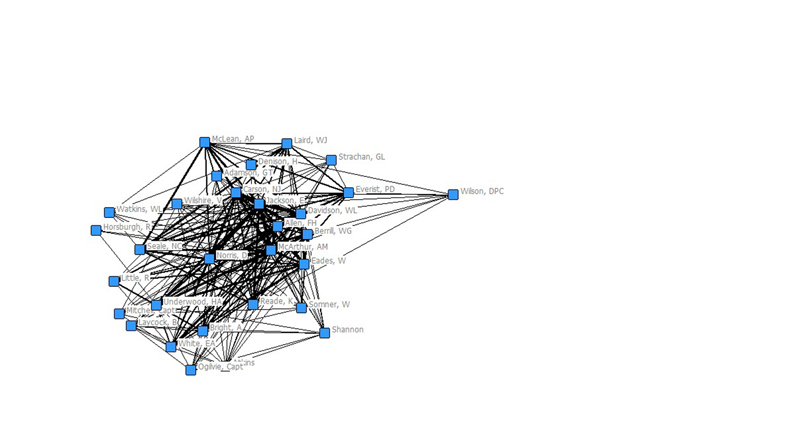
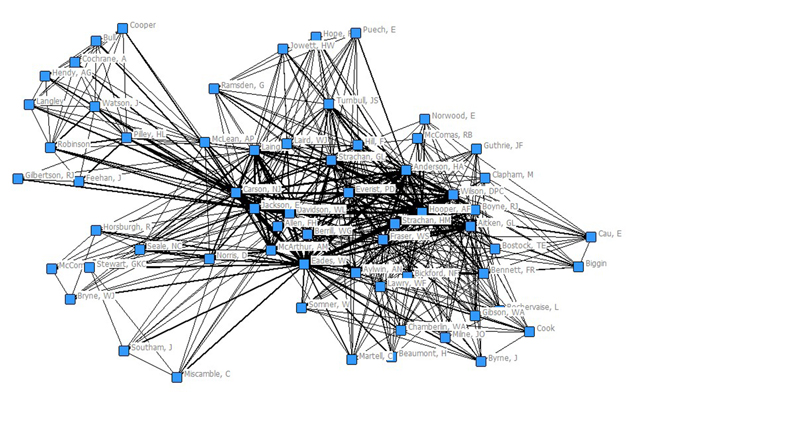
Notes for Figures 2, 3, 5, 8, 9, 12, and 13: Ties between nodes indicate individuals attended at least one meeting together. Thicker ties indicate individuals attended more of the same meetings.
Source: Authors’ compilation based on MWBA records.
Centrality of individuals.
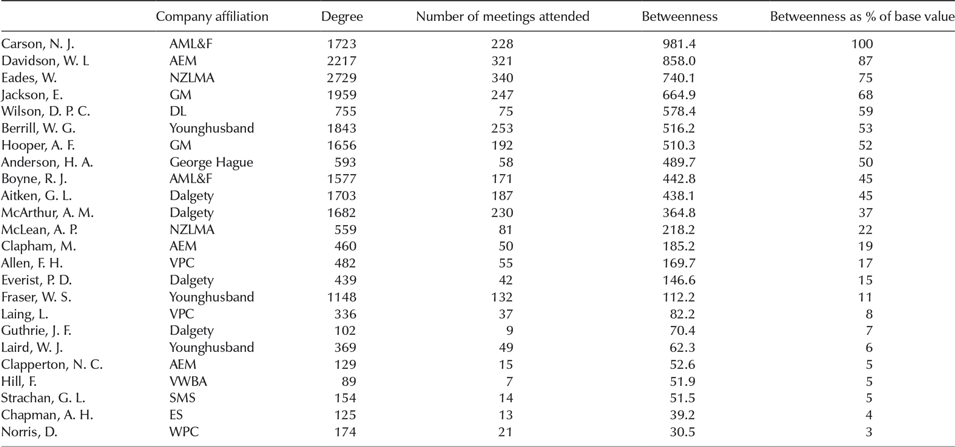
Note: Top twenty-four individuals, ordered by betweenness, which is measured as the proportion of shortest paths to other nodes that pass through the particular actor. As the most prominent individual, Carson’s betweenness is taken as the base value.
Strong ties among key individuals and firms fostered trust and cooperative behavior, and indicate intense investments of time, emotions, and reciprocal services.Footnote 36 Those with strong ties could understand and predict each other’s behavior, and they developed common lexicons. The investments of time and energy into their relationships gave actors the incentive to behave honorably and to maintain good standing with their partners. Simply put, strong ties developed trust through easy communication and an unlikeliness that members would deviate from group norms.Footnote 37 Trust in turn encouraged cooperation among the group and made it easier for them to develop routines and to coordinate the complex trade of wool (discussed below).
The core group also heavily influenced decision making for Melbourne’s wool industry. Broad meeting attendance allowed the elite brokers to coordinate both the trade itself and the flow of ideas and contacts in the community. They were key business leaders of the Melbourne wool trade because they controlled a large proportion of the industry’s wealth, conducted auctions, and operated the centralized infrastructure.
Many of the key brokers enjoyed lifetime employment in a single firm. Senior managers were highly valued for their skills in one of Australia’s key export industries and were among the earliest employees in Australia to benefit from company (nonportable) pensions as a means of retaining their loyalty.Footnote 38 Carson, the most central figure in our network, worked with the Australasian Mortgage & Agency from 1896 until the firm was taken over by AML&F in 1904. He then became AML&F’s Melbourne manager in 1929, and did not retire from the firm until 1945.Footnote 39 Eades worked for the NZLMA for nearly half a century (1880–1929), serving for a long period as their Melbourne manager.Footnote 40
Some spent several periods employed by, or on the boards of, related industries such as banking, pastoral estates, and insurance. Carson and Robert Boyne both served on the board of Northern Assurance Company.Footnote 41 Wilson expanded his interest vertically by establishing the Returned Soldiers’ woolen mill. In addition to representing their firms on wool industry committees, brokers participated in relevant government bodies. W. Stevenson Fraser served on the Central Wool Committee during World War I and the British Australian Wool Realisation Association Pty Ltd (BAWRA) in the interwar period. In both roles, he spent time with other members of the wool trade.Footnote 42 Wilson has been described as “one of the originators of BAWRA.” Similarly, Eades was a member of the Victorian State Wool Committee. Wilson and H. A. Anderson both served on the local Geelong Chamber of Commerce.Footnote 43
Routines and Complementarity
A closer examination of the nature and purpose of the meetings throws light on the cooperative behavior of this woolbroking elite. As noted above, these brokers were involved in many meetings; during the 1920s, they attended at least 503 meetings, effectively an average of one per week through the decade (see Table 2). Reflecting its operational role in overseeing auctions, the TC assembled with the greatest frequency (averaging 20 meetings per year). The GC focused on broader strategic directions, and it too met regularly. Other bodies, including conferences, the MWE Committee, and the Wool Dumpers’ Association, met occasionally. The association meetings reflected specialization and complementarity in their functions. Some focused on strategy; others on operations. Referrals between committees reflected the development of procedures for particular types of decisions. Some committees fostered dense ties among a restricted group, while others developed broader connections with the government or through the supply chain.
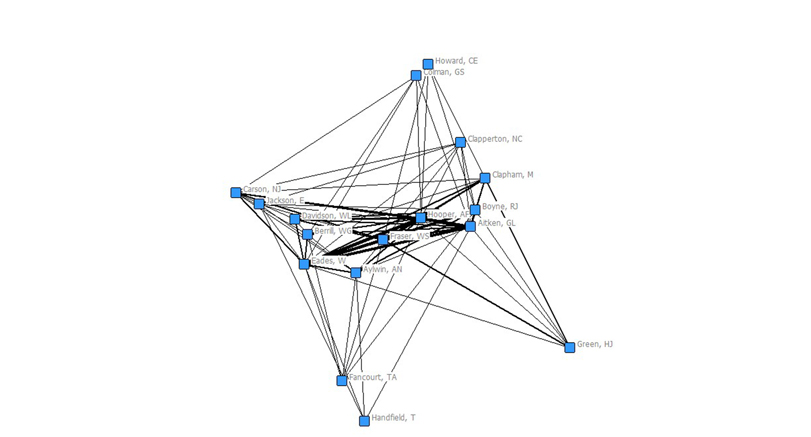
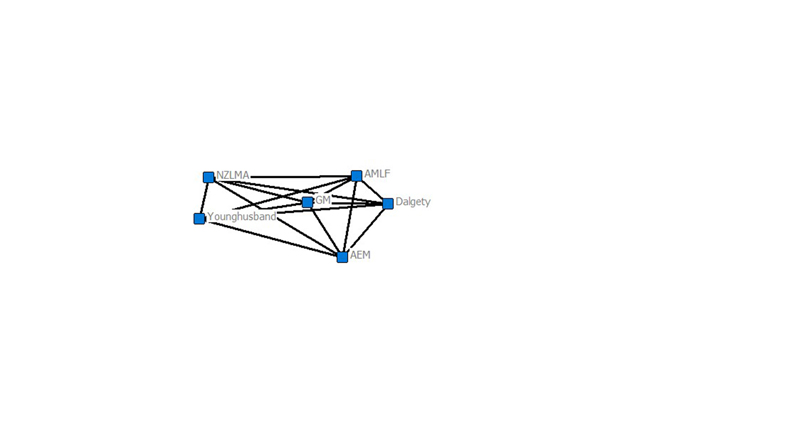
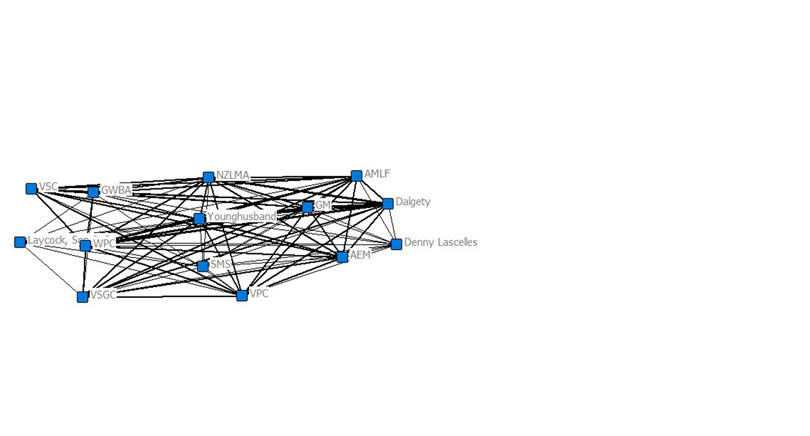
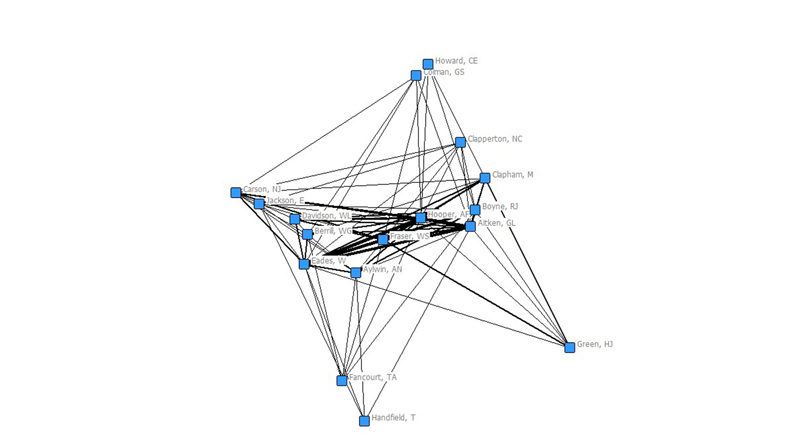
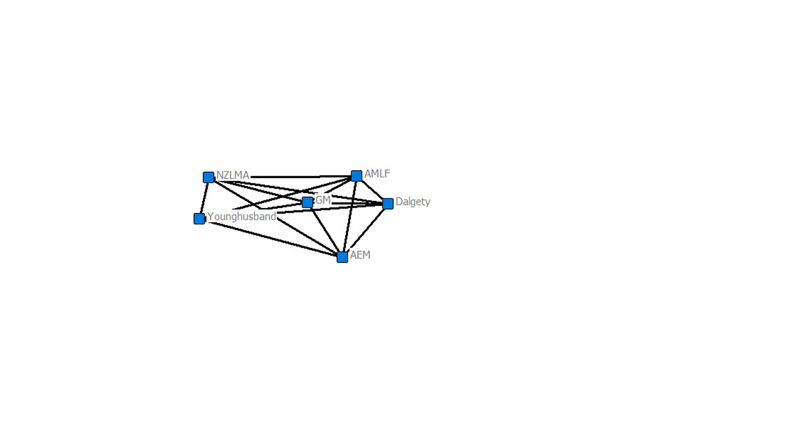
Meetings of the MWE were relatively “closed” affairs. As indicated in Figure 3, they involved dense interactions among a small group of individuals. Where other meetings had many occasional participants, the MWE had only six “outsiders” attend across the entire decade. The network of firm connections shows that participants were exclusively from the key firms that owned and operated the MWE (Figure 4). This committee was therefore an elite forum concerned with the operation and strategic leverage of the MWE.
Individual connections, MWE meetings, 1920–1929.
Firm connections, MWE meetings, 1920–1929.
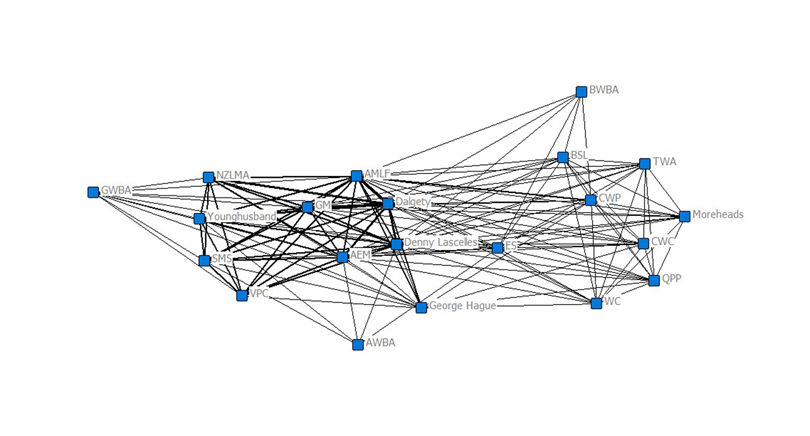
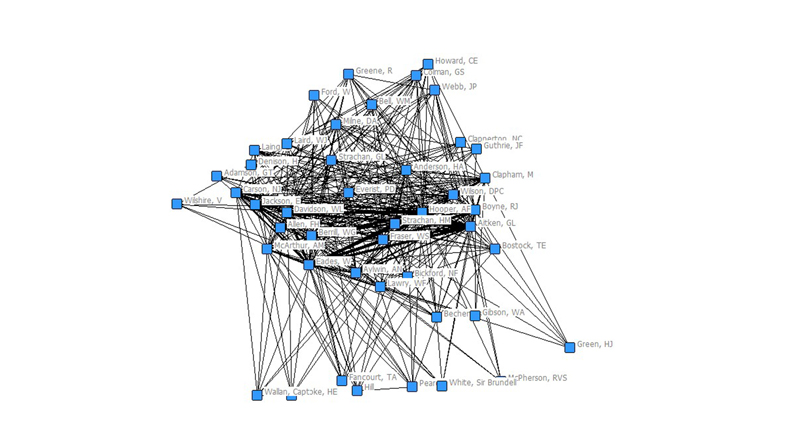
The GC was responsible for MWBA’s strategic decisions, such as changes to sales procedures. It included many of the core members of the MWE, notably Fraser, Davidson, Arthur Aylwin, Arthur Hooper, George Aitken, Murray Clapham, Carson, Jackson, and Eades (Figure 5). However, there was also a broad periphery of occasional participants. Connections between firms (Figure 6) indicates the same core brokers as the MWE, although there was also involvement from smaller woolbrokers (e.g., Denny Lascelles and SMS), shipping companies (e.g., Murray Steamers), and other auctioneers (e.g., George Hague and VPC). They were invited as outside parties when a relevant issue was on the agenda.
Individual connections, general committee meetings, 1920–1929.
Firm connections, general committee meetings, 1920–1929.
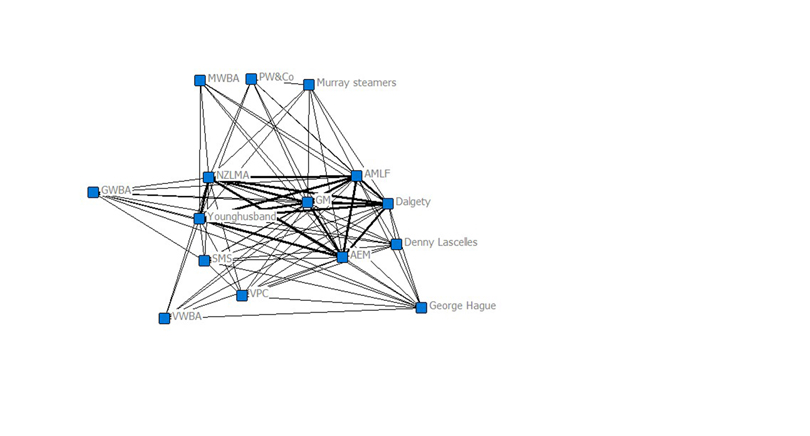
The TC was a permanent subcommittee of the GC, and it concerned itself with operational matters, such as the order of roster and complaints between brokers. Lengthy minutes with busy agendas reflect daylong meetings, which in some cases reconvened for a second day. Connections between firms were similar to that of the GC: they comprised the main six brokers and about ten peripheral companies (Figure 7). Producer cooperatives were central to the TC (but peripheral to the GC) meetings as they conducted wool auctions but were not members of the MWBA. Individual participation in the TC had a close core membership, but more diverse peripheral participation. Compared to the GC, which had a central core membership that overlapped with all other meetings in the community, the TC had a more restricted core group. Around half of the overall elite group participated, including G. T. Adamson, F. H. Allen, William George Berrill, P. G. Everist, McArthur, Carson, Jackson, Davidson, Eades, and Aylwin (Figure 8). There was also a comparatively large number of sparsely connected individuals. Firms may have rotated their representatives to the TC due to the frequency of meetings and the range of issues for discussion.
Firm connections, trade committee meetings, 1920–1929.
Individual connections, trade committee meetings, 1920–1929.
The NCWSBA, operational from 1920, was formed to coordinate national sales at a time of oversupply. It replaced a prior body, the Federation of Wool Selling Brokers (established in 1918), whose powers were considered too permissive to prosecute the brokers’ interests. The NCWSBA’s national membership included three representatives each from Victoria and New South Wales, two each from South Australia and Queensland, and one each from Western Australia and Tasmania. None of the large national woolbroking firms were permitted more than two representatives at a meeting. As we noted earlier, our focus is on the meetings of the Victorian members at the MWE, even though these sometimes involved invitations to interstate organizations. For individual participation, although there was a tight-knit core group, there were many peripheral individuals (see Figure 9 for the distinctive cluster to the right of the network; this was the only connection of these individuals to the operations of the precinct). This included Sir John Higgins, who was periodically invited to NCWSBA meetings because of his role as chair of the Central Wool Council (discussed below). Invitations to other organisations made for diverse firm participation and broke up the strong ties among the key firms to include representatives from further afield (Figure 10).
Individual connections, NCWSB meetings, 1920–1929.
Firm connections, NCWSB meetings, 1920–1929.
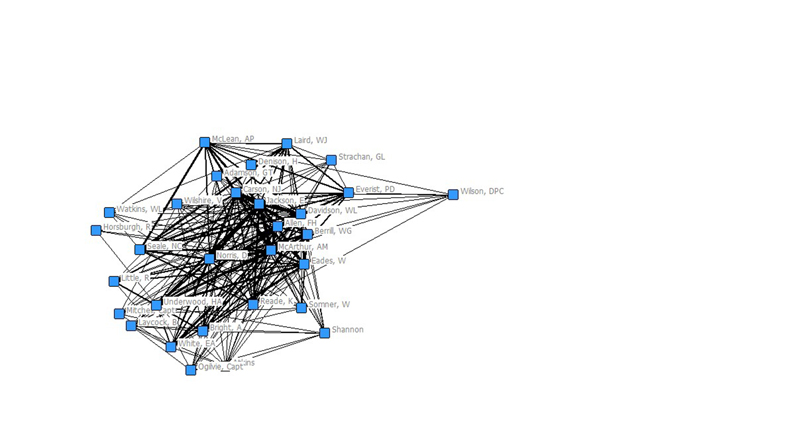
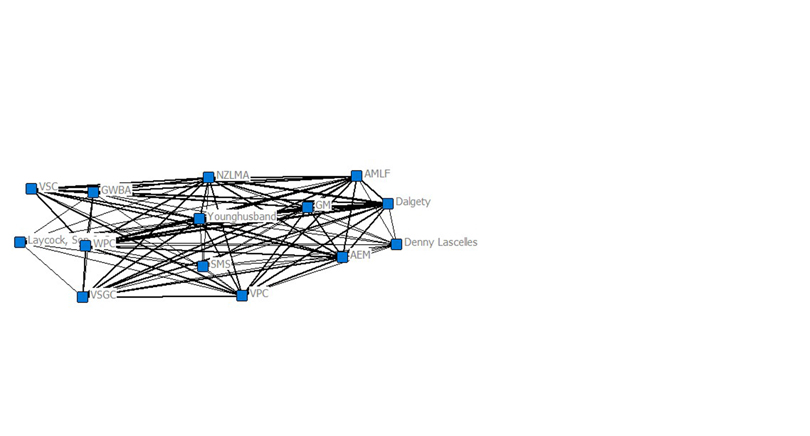
The VWDA connected the brokers to a broader network of participants in the wool trade. It included participation from stevedoring and specialist wool-pressing companies, as well as buyers, sellers, insurers, and shipping companies. In a similar way to the conferences and the NCWSBA, the VWDA had a relatively egalitarian firm network structure (Figure 11). The six large brokers had around the same level of connection among themselves as with smaller woolbrokers (e.g., Denny Lascelles and SMS), cooperatives (e.g., VPC), and woolbuyers (e.g., Laycock, Son & Co.). The network of individual connections shows a distinctive cluster for those who participated in the VWDA. There were low levels of overlap between the dumpers’ and other woolbrokers’ meetings. Members of the elite group participated—including Adamson, Carson, Jackson, Davidson, Allen, Berrill, McArthur, Everist, Wilson, and Eades—but like the network of firm connections, there was little to distinguish their ties from other group members (Figure 12). The concerns of the VWDA along the supply chain accounts for this distinctive network structure.
Firm connections, VWDA, 1920–1929.
Individual connections, VWDA, 1920–1929.
The conferences were convened infrequently, around twice per annum, but had the largest number and range of participants in this community (see Table 2). The conferences involved participation from all core members of the group, as revealed in Figure 13. Rather than a tightly connected core and sparse connections to outsiders, conference attendance involved strong connections among both core and non-core individuals. Similarly, the network of firm connections (Figure 14) indicates a balance of ties among the elite firms and smaller firms, such as Denny Lascelles and auctioneers like George Hague. Conferences also had participation from woolbroking associations beyond Melbourne. For example, the Geelong Woolbroking Association and Sydney Woolbroking Association used the conferences to settle disputes, share ideas, and coordinate activities more widely. These issues included agreeing to the national system of rosters to avoid duplication of sale dates and discouraging interstate railway rebates that diverted wool supply from one state to another.
Individual connections, conferences, 1920–1929.
Firm connections, conferences, 1920–1929.
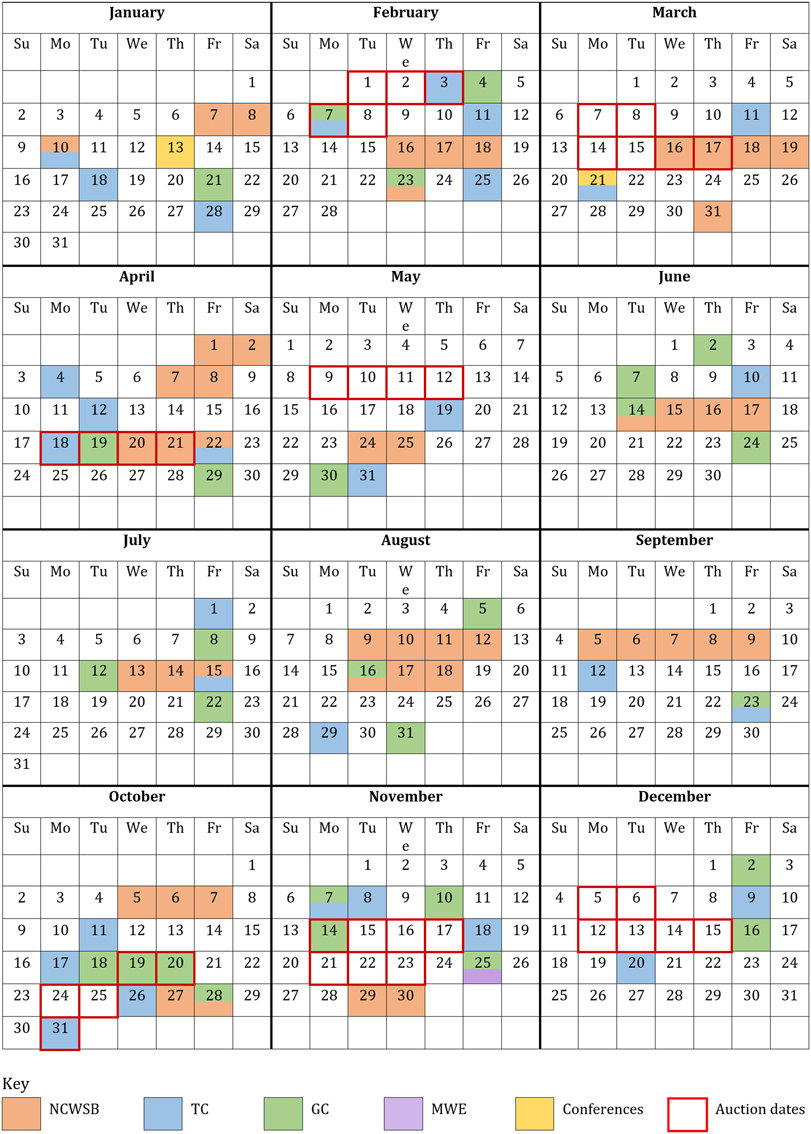
We constructed a year in the life of the woolbrokers (Figure 15) by inserting the dates of all of the known meetings and auction dates in 1921. In total, there were 96 days on which meetings were conducted, and a further 37 days on which auctions were held. Twelve of these days involved both meetings and auctions. Allowing for public holidays, this suggests that the wool traders came together in some format at least every second working day, and this excludes other forums, such as social interactions at gentlemen’s clubs and ad hoc meetings for which no minutes were required.
Wool broker meetings and auction dates, 1921.
Authors’ compilation based on MWBA records.
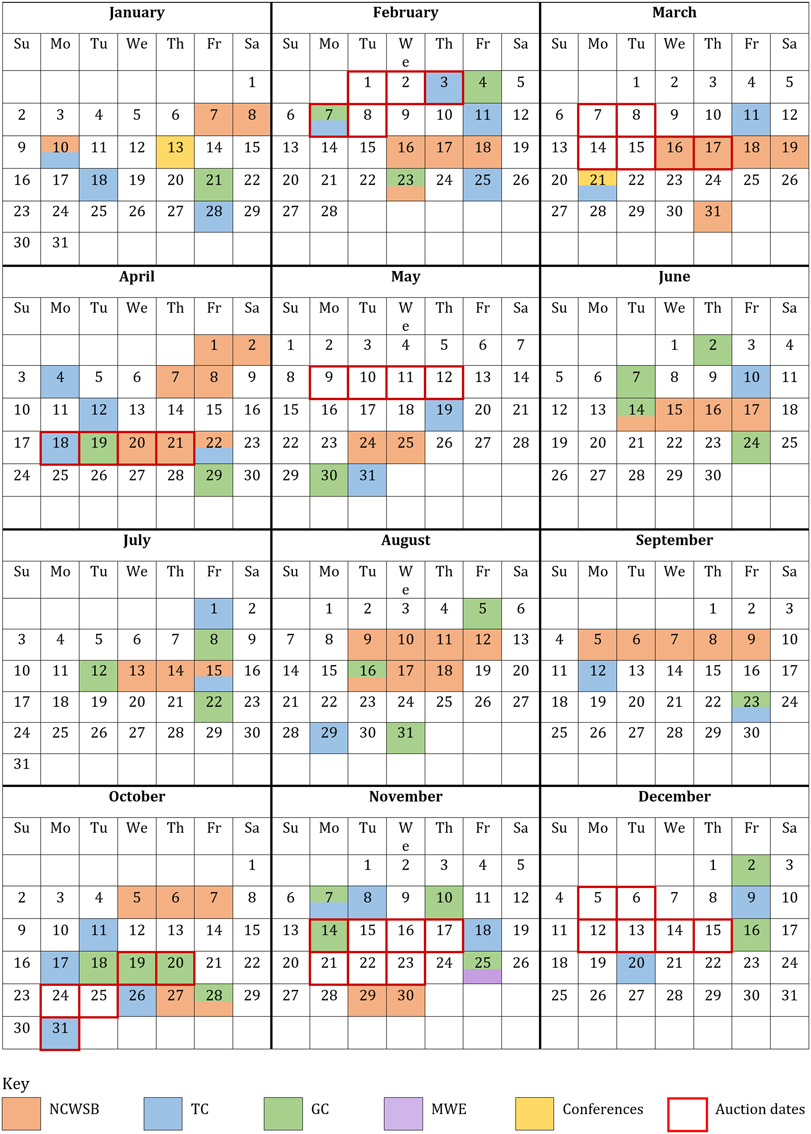
Meetings, auctions, and other interactions provided two main benefits. First, their frequency helped build strong ties, trust, and an understanding of each other’s perspectives. This fostered cooperation among brokers. Second, functional specialization among the committees aided the growth of routines; for example, a procedural concern would be raised and discussed at the TC, which would then refer the matter to the GC for a final decision on whether to amend the relevant rules. A large and complex wool trade necessitated a system in which differences could be resolved rapidly and standard procedures developed to facilitate the prompt completion of transactions.
Conduct and Mood of Meetings
The networks in the previous section reveal the structure of interactions among Melbourne’s woolbrokers. They identify a core group of individuals and firms that were involved in a complementary suite of forums to coordinate the trade. Our archival analysis focused on the conduct of their meetings because of the strong ties among this elite group, and their broad meeting attendance. In the absence of direct observation, it is difficult to divine closely the atmosphere during meetings, especially the degree to which they fostered and reflected cooperative behavior. We draw inferences by reading between the lines of the reporting; in other words, what is missing from minutes. Moreover, the brief phrases that brought discussion to a conclusion provide intimations of the atmosphere. The absence of conflictual language should be noted; indeed, silence suggests a cooperative atmosphere.
The constitutions of the committees provide few guidelines for the conduct of meetings, which may reflect a belief that obedience to rules was unnecessary. Reliance on the conventions of behavior rather than formal rules and regulations often reflects a trusting environment.Footnote 44 Indeed, committees were even prepared to put their own rules aside, “in view of the great inconvenience members are put to.”Footnote 45 Where members broke agreements, such as the fixed price of woolpacks in 1919, the minutes did not credit this as deliberate behavior but rather as “they must have been misinformed.”Footnote 46 Such acts were regarded as “misunderstandings” and explanations were accepted at face value to “clear up doubts.”Footnote 47 At worst, the punishment was to allow other firms a similar infringement. There is no evidence in the minutes of serious reprimands or dismissals of a firm from the MWBA. Of course, self-interest also served this purpose because none of the firms wanted an external competitor in their auction system or to spread the cost of the system over fewer firms.
The constitution provided for the election of a chair for each committee. The attitude toward the chair of the meeting reaffirms the cooperative milieu that prevailed. Although formally an election, the chair of the MWBA meetings was regularly rotated every year or two among the group of brokers. A high level of trust was reflected in the willingness of other members to leave an outstanding matter in the hands of the new chair.
In a similar vein, trust built through strong ties among the brokers is evident in decision-making processes at the meetings. Decisions were reached in most cases without formal voting procedures. Nonetheless, occasional differences of opinion would have been unavoidable among brokers who were also strong competitors. The agreeable resolution of differences tells us much about the constructive atmosphere. We noted that sometimes a decision was reached after “lengthy discussion,” “full discussion,” or “considerable discussion.” In contrast to a divisive majority vote, this form of consensus-building both reflected and reinforced the cooperative atmosphere. Where disagreements or differences of opinion occurred, these appear to have been mostly resolved at a single meeting with no implications for membership or office holding. Disagreeing parties were each given the opportunity to argue their case, and then the matter was resolved by the meeting. It was rare for a dispute to be raised at a second meeting.
When decisions were difficult to reach, matters were either deferred to the next meeting or referred to other committees. Deferring occurred when members wanted more time to reflect on a complex issue, possibly through informal discussion. Referring took advantage of the complementary specializations of the committees. The TC referred a matter to the GC if it was felt to be something requiring an executive-style decision. Alternatively, the GC referred to the TC if it wanted more information and analysis. Issues relating to wool buyers would normally await the next conference, or representatives of buyers would be invited to the next meeting. For example, a motion was put to a meeting of the TC in September 1918 that the storeroom be alcohol-free, thereby denying refreshments to inspecting buyers. When the motion and an amendment both lost, the matter was referred to the GC.Footnote 48
One of the key decisions for the TC was the organization of the sales roster. This was a sensitive issue among the brokers who generally believed that the earliest sales fetched the best prices.Footnote 49 Dates of Melbourne auctions also formed part of a national roster, with buyers requiring sufficient time to travel by rail between the different sales centers. When auction sales recommenced after the cessation of the British government’s wartime monopsony in 1920, brokers initially determined the order of sale randomly by drawing lots.Footnote 50 However, by November 1921 the firms had negotiated a fair and systematic process. After agreeing an order for the first sale of the season, for each subsequent sale the first selling firm from the previous auction moved to the back of the roster queue, and everyone moved up a place in sequence.Footnote 51
Meetings dates were generally interspersed with those of local auctions. This provided the opportunity to complete all procedures and enabled any disagreements to be promptly addressed rather than allow resentment to fester. For example, in November 1928 the other brokers accommodated AEM when the time between its two local sale days appeared to be insufficient to prepare for the second sale.
A complication in the 1920s was agreeing how much new wool could be auctioned by each broker while BAWRA was seeking to offload the wartime wool overhang. The challenges in reaching agreement might have been reflected in the minutes of a meeting in 1929: “The following roster was finally agreed to.”Footnote 52 Another key theater of negotiation concerned securing wool from the pastoral districts to sell at auction. Brokers received wool not only from various forwarders, including their own country branches, but also from local stock and station agents, and banks that “influenced” wool for the brokers in return for a commission. However, brokers did clash over the degree of proactive behavior by forwarders who actively sought out business on improved terms from one broker at the expense of another. Brokers periodically discussed what was considered reasonable competitive behavior, and an agreed list of forwarders was developed. Adding firms to this list appears to be one of the few issues that required a majority vote.Footnote 53
In some cases, rural organizations forwarded wool to brokers, which threatened established arrangements. The brokers’ concern was whether these were genuine wool agents or merely groups of farmers working together to secure a partial rebate of the selling brokers’ commission. Rather than provoking a rebate war among the brokers, the TC decided in 1927 to stop paying “rebate commissions to provincial farmers’ associations.”Footnote 54 Similarly, in March 1925, the MWBA in session with the Geelong Woolbrokers Association, resolved to not pay forwarding commissions to “shearing shed proprietors or shearing shed contractors” and no “special agents” were to be appointed by brokers unless part of a list approved by the MWBA.Footnote 55
Perhaps the most serious disagreement occurred in November 1928 when a GC meeting was called to discuss a breach of rules by AEM in paying a rebate commission to the Bank of Australasia. The exchanges recorded in the minutes were open but not especially adversarial in tone. Clapham, the company’s representative, conceded they “had not carried out the spirit of the rule…[which] was very regretful.” At length, the committee agreed to take no further action in light of AEM’s “explanation and admission.”Footnote 56
Cooperative Strategic Decision Making
A cooperative spirit can be evidenced when the brokers presented a single voice against external threats to the wool trade. WWI created many challenges. Surplus wool on the market meant low prices, competition from other fibers increased, challenges to the auction trading system occurred, and tensions among wool buyers from different nations emerged. Overall, this contributed to low profitability and disruption of the trade, and threatened the future of the auction system.
The brokers leveraged their power as a cohesive group of large firms to influence government decisions relating to the wool trade. Again, it was their quotidian interactions that served this purpose rather than generalized social, economic, and business connections. Starting in 1916, the British government acquired the entire annual Australian wool clip to clothe its armies and prevent this valuable resource from falling into enemy hands. In place of the auction system, there was a central appraisement of the relative value of different wool types to equate to an average sale price of 15.5d. The scheme continued until 1920, by which time there was a surplus of unused wool, much of which remained warehoused in Australia. The trade therefore faced two major and related questions at the start of the 1920s: How was it to dispose of this overhang without causing the wool market to collapse? What selling system should it use?
The brokers presented a single powerful voice in negotiation with the government over wool-selling systems. Sir John Higgins, a public servant and company director, had been chair of the Central Wool Council that administered the compulsory wartime acquisition. In 1921 he became chair of the BAWRA, an international body tasked with orderly disposal of the surplus. He was the chief advocate of continued intervention in the market in an attempt to limit the notorious fluctuations of the trade. In August 1921 George Aitken, chairing an NCWSBA meeting noted, “Our relations with the body [BAWRA] have not…been what you might term of the happiest description.”Footnote 57
During the 1920s, Higgins proposed a series of schemes to limit the amount of wool offered for sale in years when prices faced downward pressure. Withheld wool was purchased by the central authority—using the proceeds of either the resale of wartime wool or a general levy on sales—and offered for sale in a better year when prices improved. The brokers and most of the wool trade supported a temporary scheme that would dispose of the wartime stocks but opposed ongoing peacetime intervention. The brokers’ livelihoods, through sales commissions, were tied to the auction and its laissez-faire philosophy. The farming communities were divided in their views. Since the schemes were particularly focused on the falling price of cross-bred wool, a type more commonly grown in Victoria than other states, there was strong interest in Melbourne.
Higgins was a powerful, influential, and combative figure to deal with.Footnote 58 The brokers were prepared and able to take him on at every stage, even taking their cause to the press.Footnote 59 Events came to a head late in 1922 when Higgins proposed an extensive and ongoing scheme to manage the supply of wool and other farm products. At a meeting of the TC in December of that year, members were encouraged to refute statements and speeches made by Higgins in the press. In the following January, a subcommittee comprising Berrill, Jackson, and Davidson was entrusted with drafting a statement in response to the “BAWRA propaganda” put out by Higgins. In reality, the battle with Higgins was over who had control of the wool trade because the brokers were already prepared to hold back wool when the market appeared oversupplied.Footnote 60
The NCWSBA sent a delegation, including Hooper, to meet with the prime minister to discuss selling arrangements. By also reaching out to growers and offering concessions on storage and advances, they gained an agreement to work together to decide sale allocations as an alternative to Higgins’s schemes.Footnote 61 Regional associations such as the MWBA armed with both detailed supply and demand information and aided by local cooperation, could control the amount of wool offered for auction in a way that a central government agency could not. Higgins’s proposals were defeated by the BAWRA in 1922. When prices fell again in 1925, Higgins presented a similar scheme to the Federal Graziers Council, also without success. By contrast, the NCWSBA, recognizing the pressure on the market, again outmaneuvered him by negotiating directly with the growers for a significant reduction in the amount of wool offered for sale for three months.Footnote 62
Toward the end of the decade, the brokers crossed swords with the government again, this time over the proposal to form a central bank in Australia. Federal Treasurer E. G. Theodore introduced a Central Reserve Banking Bill into Parliament in May 1930. The MWBA immediately called a special meeting on May 15 to protest the legislation, and released a powerfully worded statement that was sent to the prime minister, treasurer, and members of the press:
They regard the Bill as not only most inopportune in the present critical financial condition of the country but fraught with danger to Australian banking and commercial interests. …A grave risk of restricting the facilities which the trading banks and financial houses will be required to give their customers…tend to cripple industry and increase unemployment.Footnote 63
The basis of this objection was the requirement that the commercial banks place a compulsory deposit with the new reserve bank, thereby reducing the commercial banks’ ability to lend to businesses, including farmers. The bill was unpopular through much of the business community.Footnote 64 The strong, swift, and united response of leaders of the largest export industry was likely crucial to the unsuccessful plight of the bill.Footnote 65
Further evidence of the collective voice of the brokers occurred in an industrial dispute in 1923. On June 12, Sir John Quick, deputy-president of the Commonwealth Arbitration Court, had changed the award of the employees of steamers on the Murray River. He had increased wages and established a forty-eight-hour work week, after which overtime rates would be paid. This was a complex matter because variations in tide levels and local weather created uncertainty for shipping companies and their onboard and land-based employees. Merchant Permewan Wright immediately indicated that it would not be able to continue to handle wool under these conditions.
The MWBA promptly called a special meeting of its GC on June 22, and following this they arranged a delegation to meet Acting Premier Sir William McPherson. The MWBA was led by Hooper and Fraser, and included pastoralists and the chairman of Permewan Wright. By July 16, Quick again changed his decision to provide a compromise between the workforce and the employers that limited the amount of overtime and only paid wages when the men were actually working.Footnote 66 Four days later, the GC reported that the meeting had occurred with McPherson, that Quick had made changes to the award, and that more changes were expected. Eight days later, in his final award, Quick gave further support to the employers by removing the forty-eight-hour work week for most employees. The Merchant Service Guild complained about the impact of the final decision on their members, wherein Quick was quoted as saying, “I cannot help that. I have done my best with a very difficult problem.”Footnote 67
While the brokers were not always on the right end of major national decisions, their ability to work jointly on such causes and to speak with a single voice were indicative of the powerful seams of cooperation and trust that had developed among this elite group of competitors.
Conclusion
Firms often need to cooperate with one another. The business history literature has focused on two major sources of cooperation—shared backgrounds and values breed trust and common perspectives while quasi-legal structural ties foster overlapping interests. Our article takes an uncommon approach by investigating quotidian behavior as a source of interfirm cooperation. Our focus was made possible by the survival of extensive records of meetings in the 1920s of the leading Melbourne woolbrokers who dominated the ranks of Australia’s largest firms.
Through social network analysis, we have demonstrated the existence of a core group of firms and their senior managers who met regularly, and almost daily, to discuss the issues of a busy, complex trade. The content analysis suggests that these meetings were conducted in a constructive atmosphere; and that firms, while experiencing some differences, negotiated solutions to these problems. Sometimes they found private ordering solutions to specific contested events, while on other occasions they developed a standard procedure or routine to guide future activity and reduce transactions costs. Archival analysis of the agendas of these committees illustrates how they spoke with a single voice to tackle external threats to their industry.
Not all trades required such close and daily attention by its participants. Wool is a tactile and heterogeneous commodity, and its sale necessitated close prior inspection and thick markets of buyers and sellers through central auctions. The long global supply chain of wool also privileged market coordination through expert and trusted intermediaries. Today, most Australian wool continues to be sold by brokers at physical auctions despite the availability of sophisticated electronic and futures markets. These two key features—auctions and expert brokers—are of primary importance to the quotidian behavior discussed in this article. Future research on international commodity trades and markets might analyze whether regular interaction was an important feature in comparison with structural ties and social networks.